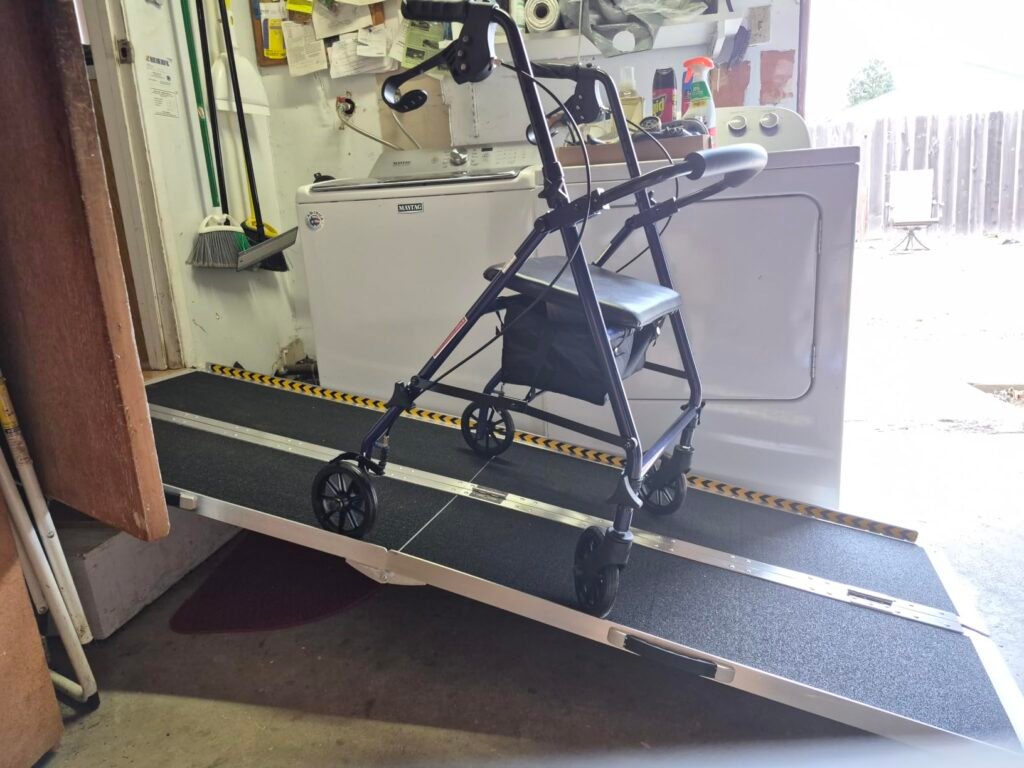
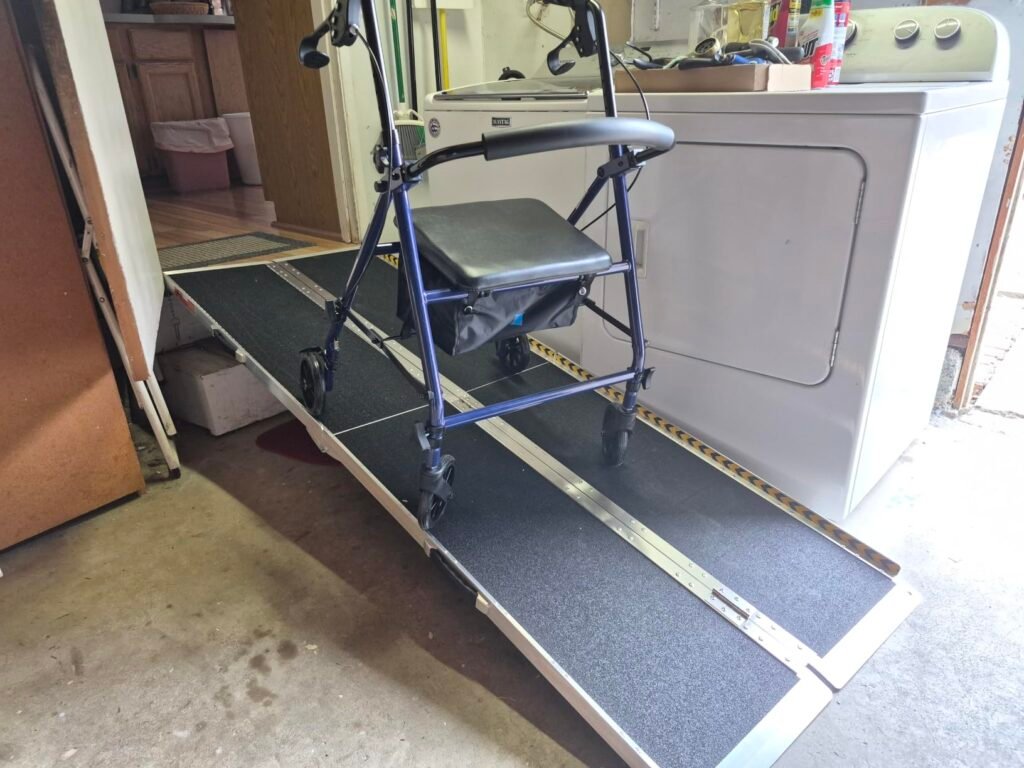
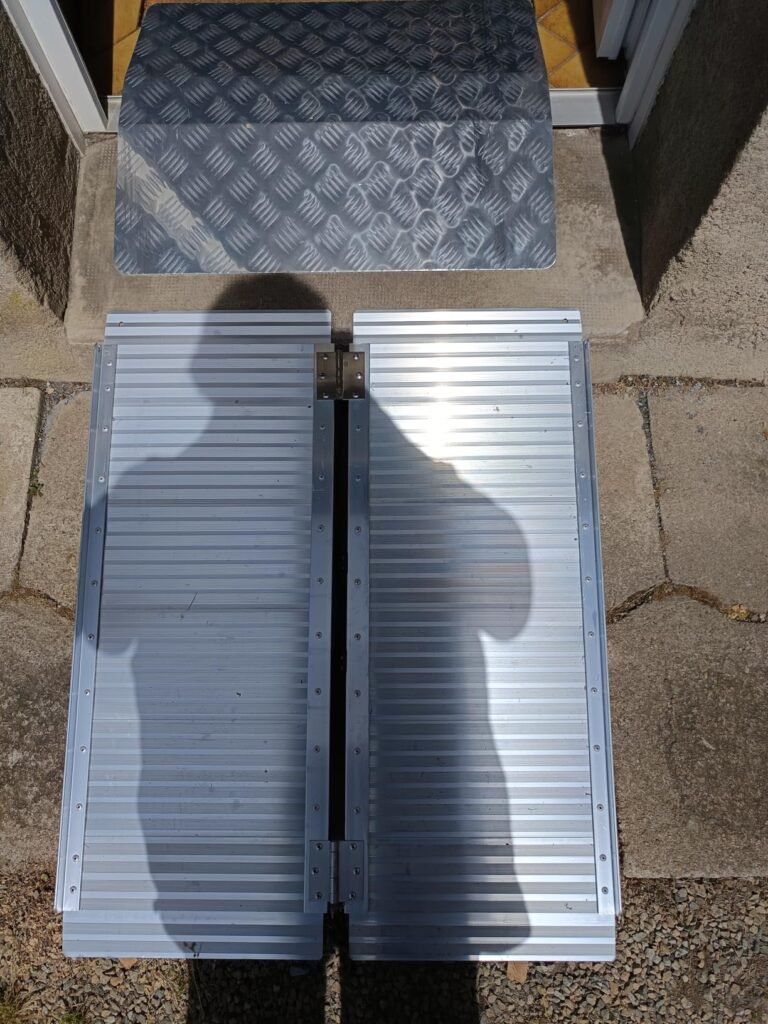
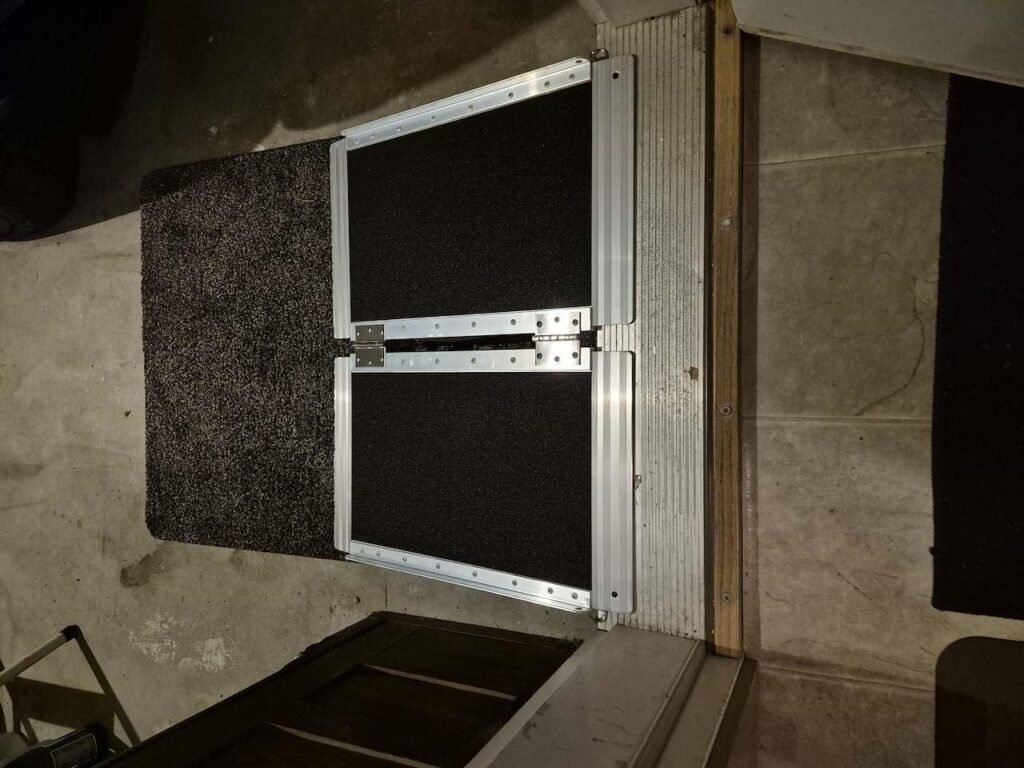
FACHNUO 2FT
8.8Editor score2-foot ramp length
800 lb capacity
10.9 lb lightweight
Built-in carry handle
Compare 10 wheelchair ramps by length, weight capacity, materials, portability, and safety features. Find the right ramp for home steps, doorways, or travel.
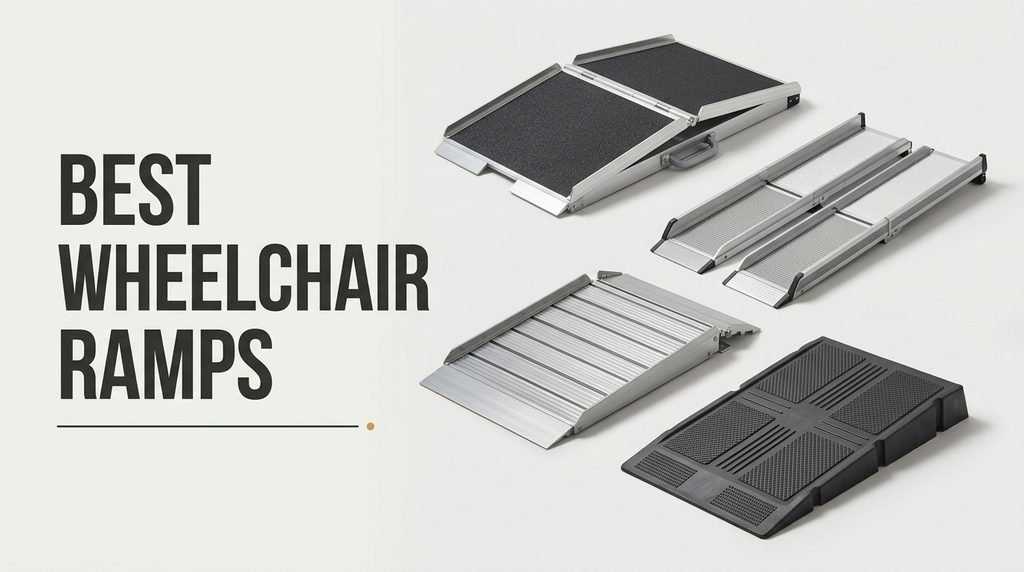
Choosing the right wheelchair ramp for 2026 means matching ramp length to your step rise, confirming weight capacity for your mobility equipment, and weighing portability against stability. We compare 10 standout options across lengths from 2 feet to 12 feet, covering portable folding ramps, telescoping designs, and ramps with handrails or support legs for different home access needs.
The right ramp depends heavily on step height, user weight, how often the ramp needs to move, and whether it serves temporary or permanent needs. ADA guidelines recommend a 1:12 slope ratio, meaning each inch of rise needs 12 inches of ramp length. Understanding this relationship helps you avoid buying a ramp that is too steep for safe daily use.
This guide breaks down each ramp’s strengths, limitations, and best-use scenarios so you can decide between a compact threshold ramp for a single step, a longer folding ramp for porch access, or a heavy-duty model with handrails for seniors. Each review highlights practical tradeoffs around weight, folding design, surface traction, and real-world installation.
We compared 10 wheelchair ramps using the specifications that matter most for safe home access: length and step-rise compatibility, maximum weight capacity, materials and corrosion resistance, surface traction, folding or telescoping design, portability, safety features like side rails and reflective strips, support leg stability, installation requirements, and overall value. The notes focus on practical trade-offs between portability and length, slope angle versus storage size, and the specific needs of manual versus powered mobility equipment.

Compare key features, scores, and current prices side by side. A shorter feature list means fewer details were available, not necessarily fewer capabilities.


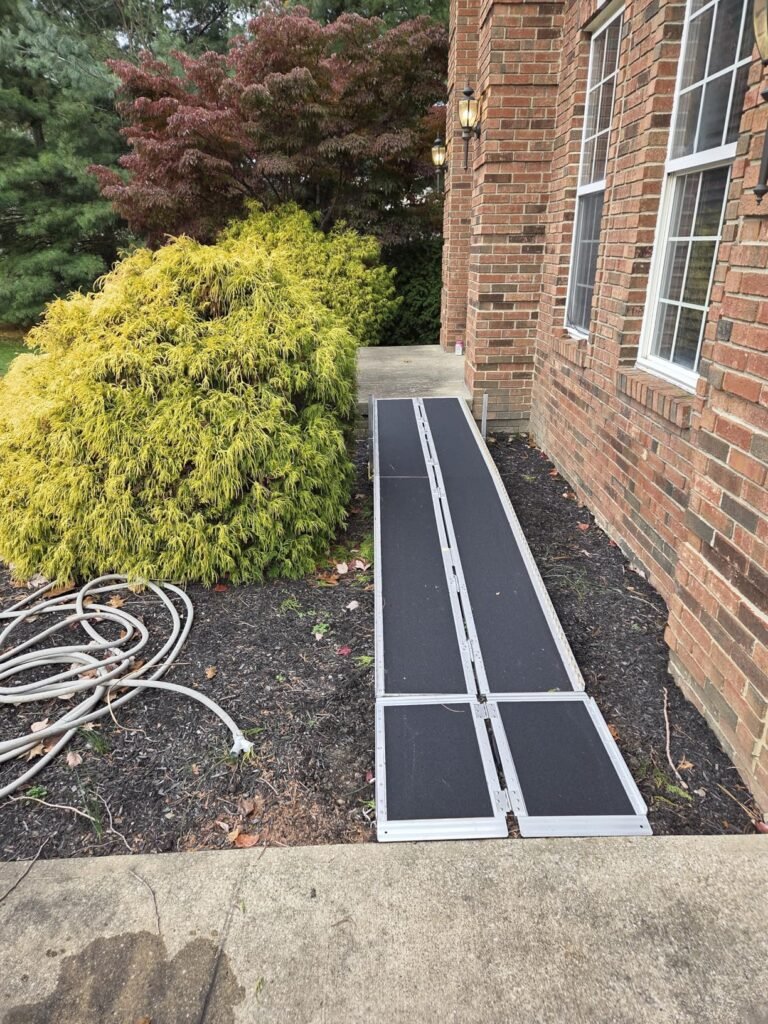
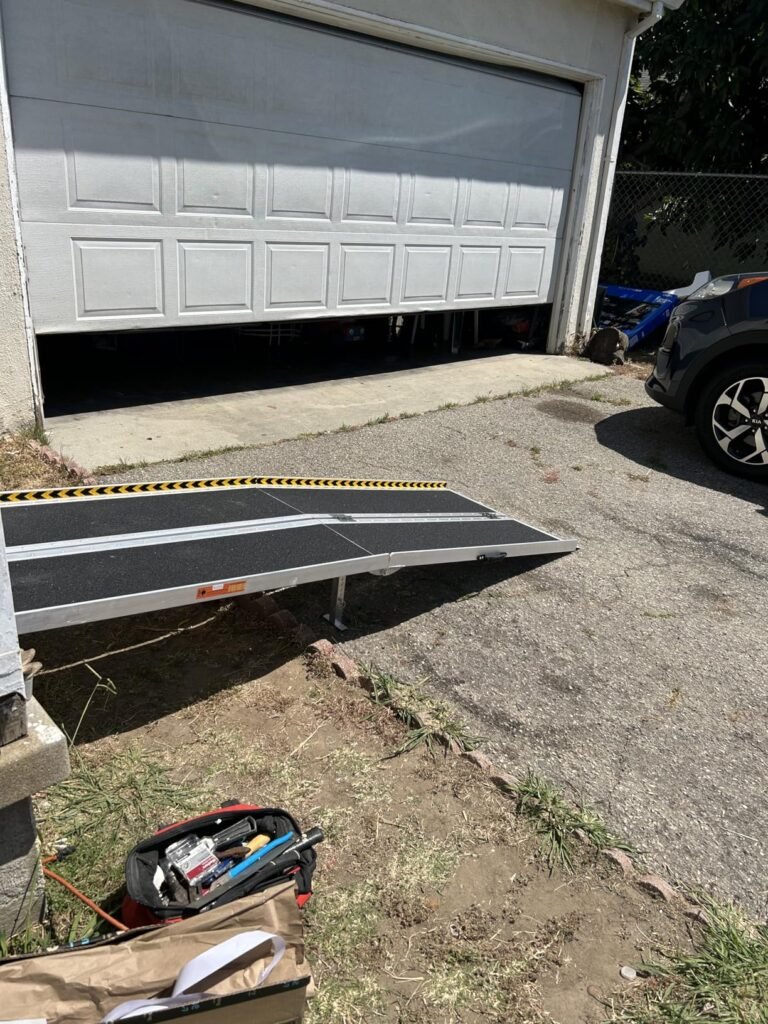
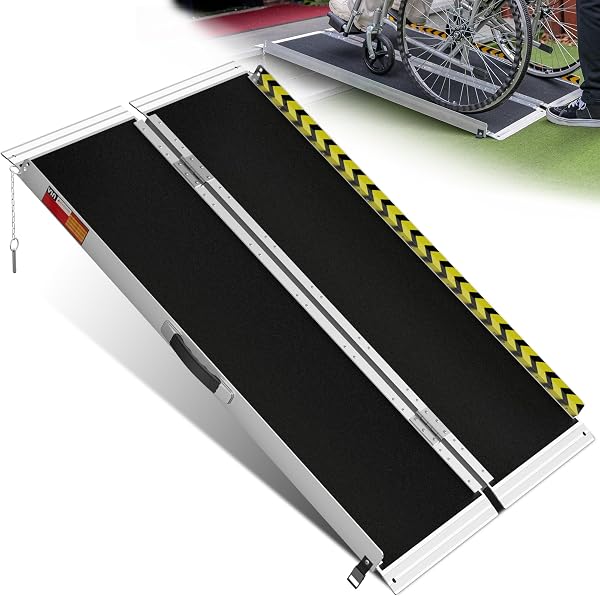
The VNN 4FT portable ramp hits a practical sweet spot for most residential step heights, serving front doors, garage entries, and raised thresholds in the 4-12 inch range. The 4-foot length provides an appropriate slope for typical home steps without becoming unwieldy to move or store. For families managing a wheelchair user's daily entry and exit, this length balances safe grade with manageable size.
We may earn a commission when you buy through this link, at no additional cost to you.
The dual non-skid surface design pairs a folded aluminum texture with an additional non-skid coating, which addresses one of the most important safety concerns with mobility ramps. Side baffles on both edges prevent wheels from drifting off the ramp during use, and reflective warning stickers improve visibility in low-light conditions like early mornings or evenings. The transition plates at the top and bottom help the ramp sit flush against both the step and the ground surface.
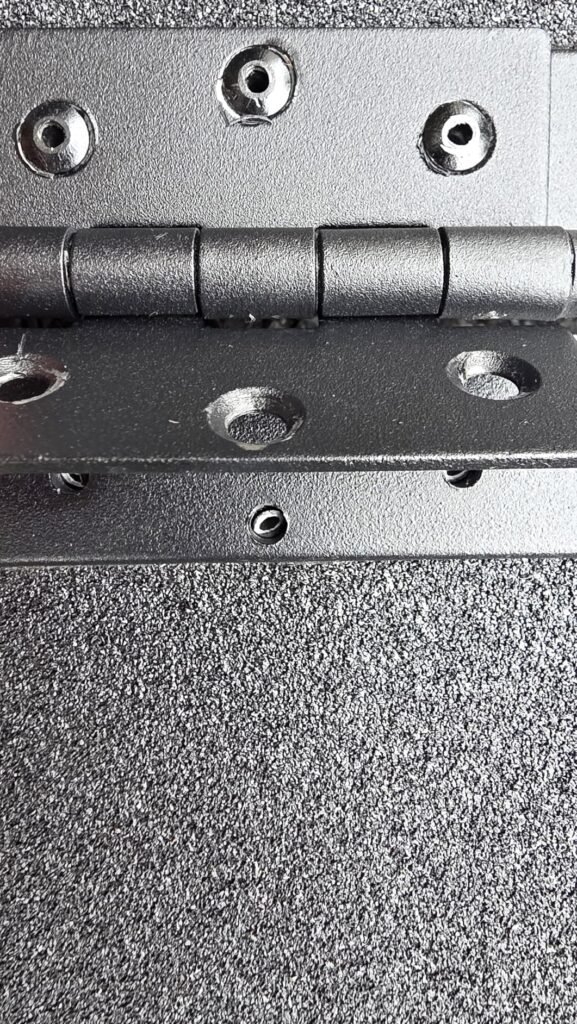
The 800-pound weight capacity accommodates most mobility equipment plus the user, including heavier power wheelchairs and scooters. Stainless steel hinges resist corrosion and rust, which matters for ramps used outdoors or stored in garages where moisture can be a factor. The complimentary screws let you fix the ramp to a wooden platform for a semi-permanent installation when you want extra stability.
It’s normal for longer portable aluminum ramps to flex slightly under load, which can feel like sinking in the middle. This flex is a designed characteristic that absorbs weight without permanent deformation; the ramp rebounds immediately after the load passes. If you prefer a completely rigid feel, consider ramps with support legs underneath or shorter lengths that don’t span as much unsupported distance.
This ramp is a strong fit for homeowners who need reliable daily access over moderate step heights and value the extra safety that side baffles and dual-layer traction provide. If you need a longer ramp for higher rises or a shorter unit for just a threshold, consider the 2FT or 7FT options in this guide. For 4-12 inch steps, the VNN offers an excellent balance of safety features, capacity, and portability.
Homes with step rises above 12 inches, which require a longer ramp to maintain a safe slope angle.
We may earn a commission when you buy through this link, at no additional cost to you.
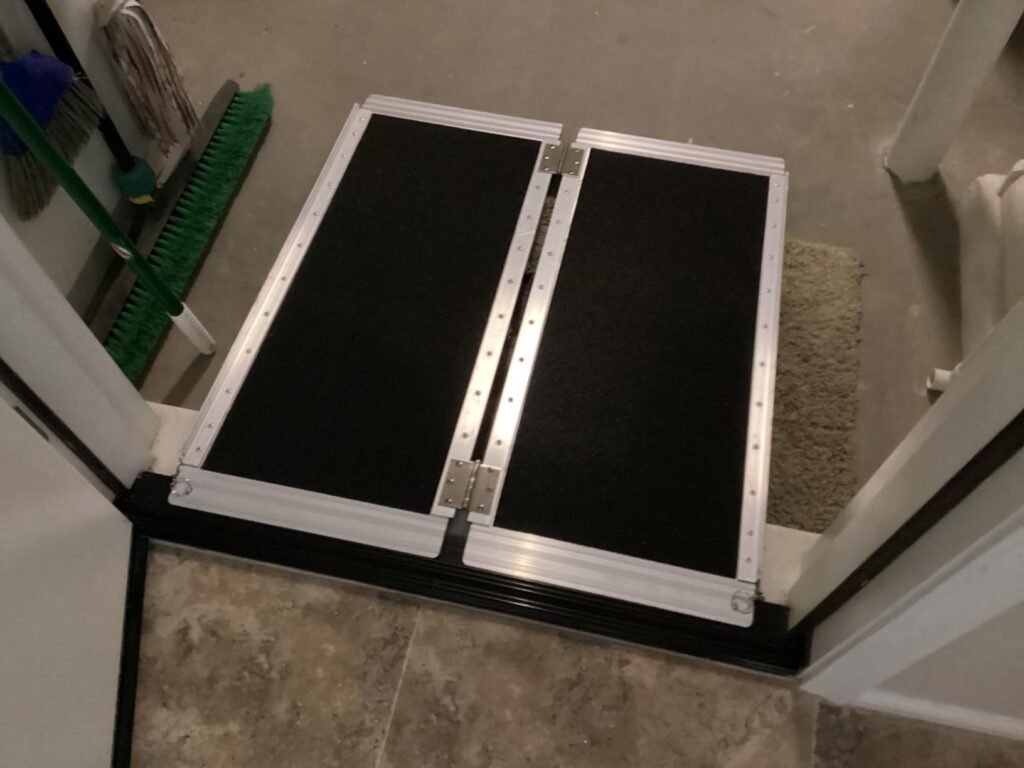
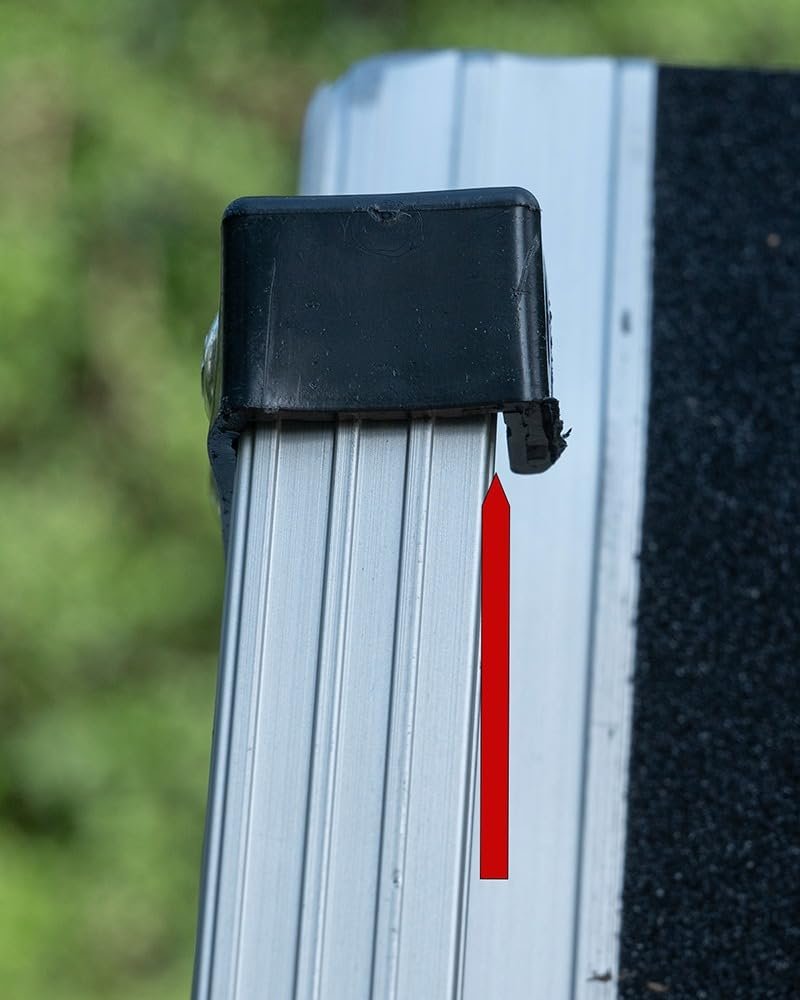
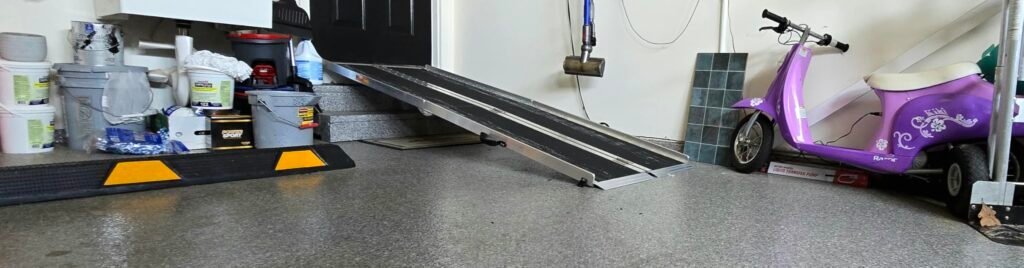
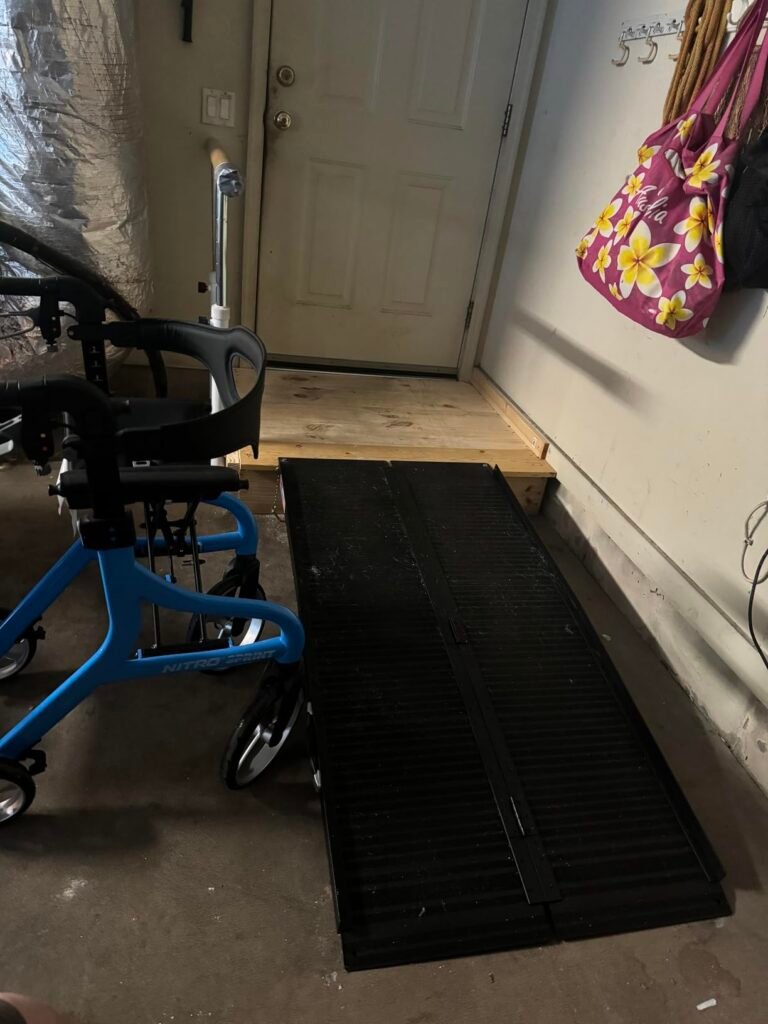
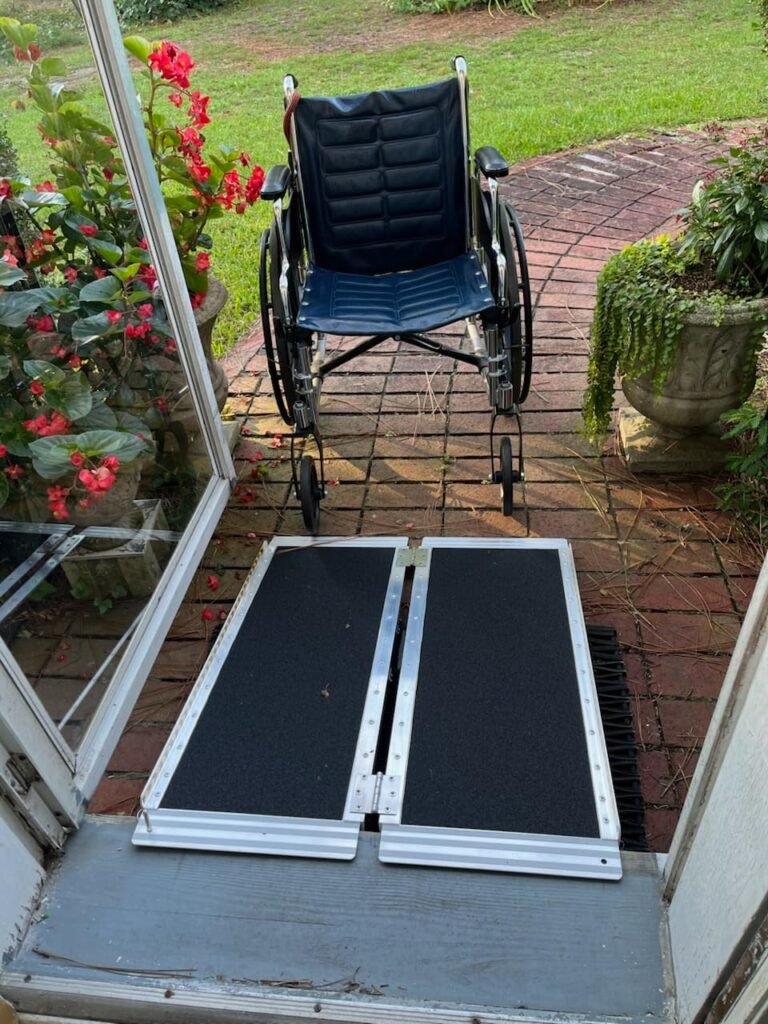
The FACHNUO 2FT ramp is purpose-built for shorter step heights and threshold applications where a longer ramp would be overkill. At just 10.9 pounds and 24 inches wide, it handles small rises of 2-6 inches with the recommendation to stay under 4 inches when used as a true wheelchair ramp. For single-step entries, raised thresholds, or doorway transitions, this compact design is ideal.
We may earn a commission when you buy through this link, at no additional cost to you.
The upgraded safety features include baffles along both sides and reflective strips for low-light visibility, which address common concerns about threshold ramps. Extended guide rails at both ends help prevent wheels from drifting off during the short transition, and the textured non-slip aluminum surface provides reliable traction in dry and wet conditions. Front and rear extension plates ensure the ramp sits flush against both the step and ground for stable use.
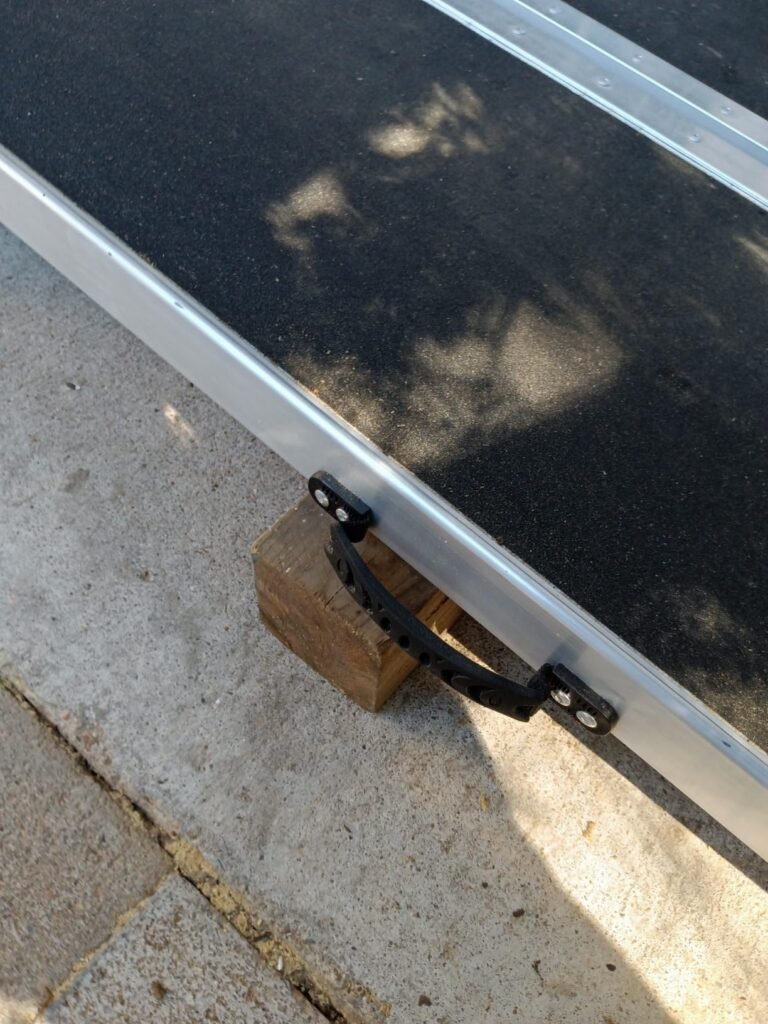
The built-in carrying handle makes the ramp genuinely portable, which is a meaningful advantage for users who need temporary ramp access at different locations like relatives’ homes, medical appointments, or outings. The 800-pound weight capacity is generous for a ramp this size, and the aluminum construction with stainless steel hinges supports long-term durability for indoor and outdoor use. The ramp works with scooters, electric wheelchairs, and walkers within the 27-inch wheelbase limit.
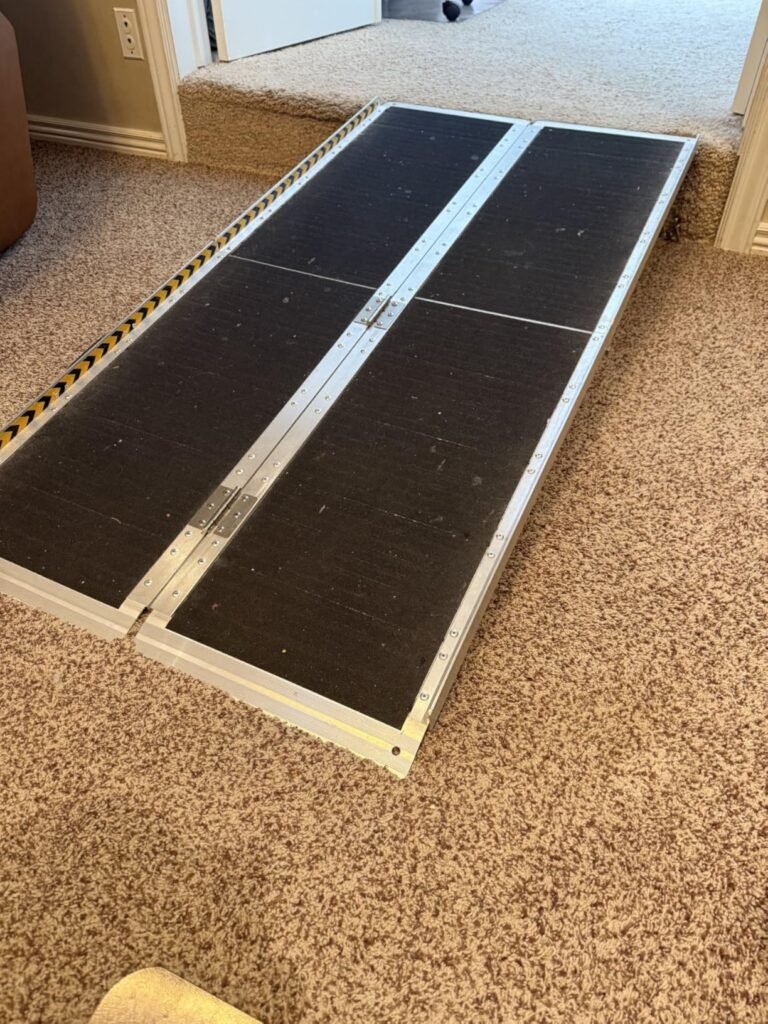
Threshold ramps with vertical side walls can interfere with sliding doors if placed too close to the track. Before buying, verify there’s enough clearance for the ramp extension plate to extend beyond the sliding door track; otherwise the door may not open. For sliding glass doors specifically, measure the available space between the threshold and the door’s full open position before selecting a threshold ramp.
This ramp is a strong fit for users who need to overcome short step heights or thresholds and want a lightweight, easy-to-move solution. If you have a step height above 6 inches or need wider cargo capability, choose a longer ramp from this guide. For threshold access and single-step applications, the FACHNUO is an excellent compact option that doesn’t overbuy on length you don’t need.
Homes with step heights above 6 inches or wheelchairs with wheelbases exceeding 27 inches.
We may earn a commission when you buy through this link, at no additional cost to you.
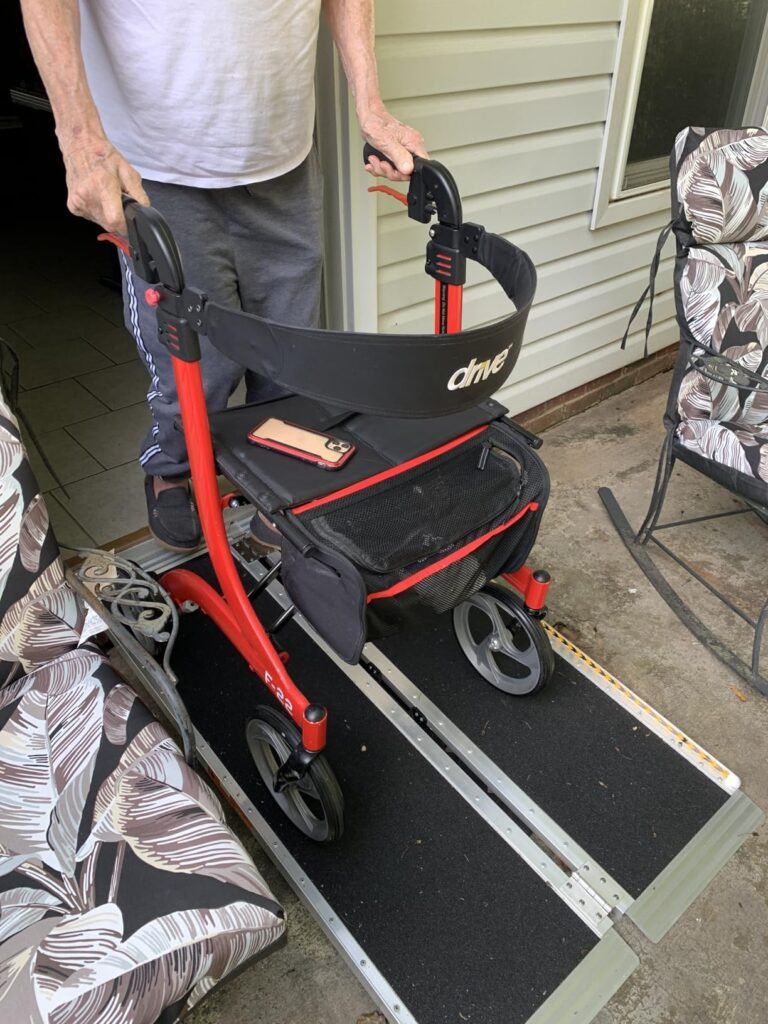
This 3-foot portable ramp fills the useful middle ground between threshold ramps and longer folding units. It handles 1-2 steps with rises of 3-9 inches, which covers a huge portion of residential entry situations. At 18.7 pounds folded, it's manageable for one person to move and reposition, though not quite as effortless as the 2-foot units. The 36-inch unfolded length balances usable slope with practical storage size.
We may earn a commission when you buy through this link, at no additional cost to you.
The 800-pound weight capacity provides substantial headroom for most mobility equipment combinations, including heavier power wheelchairs with users and cargo. The high-strength aluminum alloy construction resists corrosion and rust for indoor and outdoor use, and the included anti-slip back mat helps reduce movement during use. Safety side baffles and reflective warning strips add visibility and prevent wheels from drifting off the ramp edges.
The folded dimensions of 36 by 14.6 by 3.2 inches store easily in closets, vehicles, or garage shelves when not in use. The ramp accommodates manual and electric wheelchairs, scooters, walkers, trolleys, and baby strollers, making it versatile for households with multiple mobility needs. The 29.2-inch width provides comfortable clearance for standard wheelchair widths without wasted ramp surface.
The ADA recommends a 1:12 slope ratio for permanent accessible ramps, meaning 12 inches of ramp length per inch of rise. For home use with assistance, slightly steeper ratios like 1:6 or 1:8 are often acceptable. A 3-foot ramp over a 9-inch rise creates roughly a 1:4 slope, which is quite steep and best handled with caregiver assistance rather than independent navigation. For independent use, aim for gentler slopes.
This ramp is a good fit for homes with 1-2 steps up to about 9 inches total rise and users who want balanced portability and capacity. For higher step heights, remember that 3 feet of ramp length over 9 inches of rise creates a slope approaching the maximum safe angle for assisted use. If you have higher rises or want a more gradual slope, step up to a 4-foot or longer ramp from this guide.
Independent wheelchair users on steep slopes, who may need a longer ramp for safer unassisted navigation.
We may earn a commission when you buy through this link, at no additional cost to you.
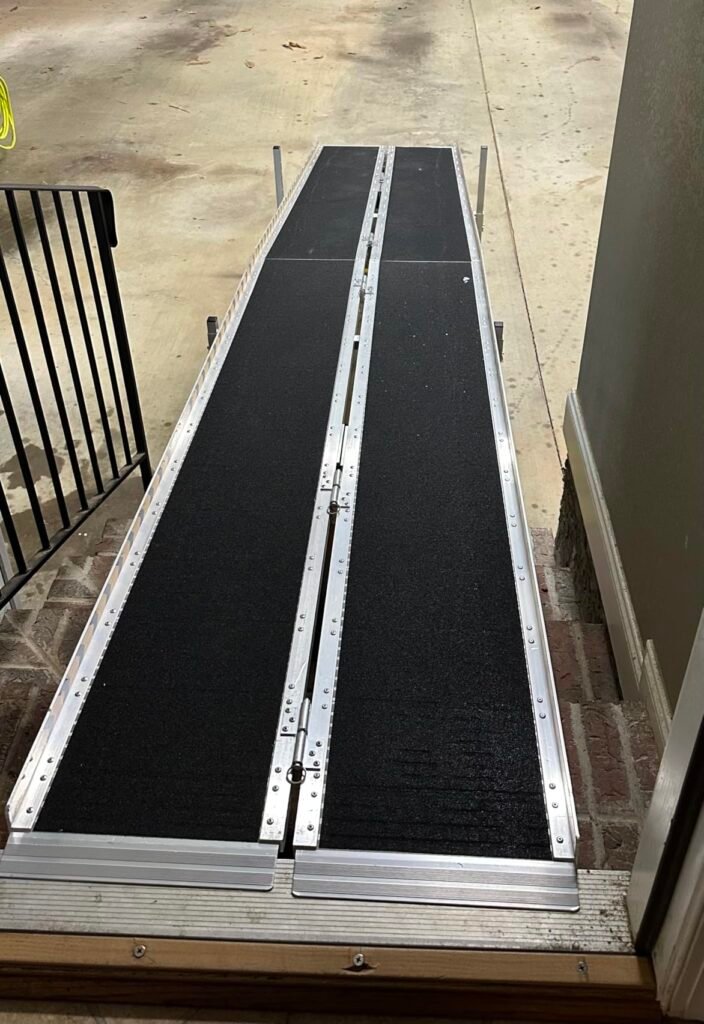
The MAASTERS 12-foot ramp is designed for applications where a gentle slope matters more than compact storage. At 12 feet long, this ramp provides a near-ADA-compliant slope for step heights up to about 12 inches, which supports independent wheelchair navigation for users who have the strength to push themselves up moderate inclines. For vehicle loading, higher porches, or situations where power wheelchair users want to maintain independence, the extra length is genuinely valuable.
We may earn a commission when you buy through this link, at no additional cost to you.
The composite aluminum construction supports up to 600 pounds, which is lower than some shorter ramps but still accommodates most wheelchair-and-user combinations. The 28.7-inch width meets ADA guidelines for accessible routes, providing comfortable clearance for all standard wheelchairs, power chairs, and mobility scooters. Safety features include anti-slip rubber surfaces, reflective warning strips, non-skid surface texture, adjustable support legs, and security pins to keep the ramp sections locked together.
The two-piece folding design with carrying handles makes a 12-foot ramp practical to transport and store, though it’s still a significant piece of equipment. The included adjustable support leg provides extra stability under the ramp midpoint, which helps reduce flex and makes the ramp feel more secure during use. The extra support is particularly valuable at this length where unsupported aluminum would otherwise flex noticeably.
While ADA guidelines technically apply to commercial and public spaces, their principles translate well to home installations. A 1:12 slope allows most self-propelled wheelchair users to navigate the ramp without assistance, which preserves independence and reduces caregiver burden. For permanent home installations serving a long-term wheelchair user, matching ADA slope recommendations is often worth the additional ramp length.
This ramp is a strong fit for installations where ADA-compliant slopes matter: higher porches, vehicle loading, independent wheelchair users, or situations where multiple users will share the ramp long-term. If you have a short step height or need maximum portability, a shorter ramp will serve you better. For gentle-slope applications and ADA considerations, the MAASTERS 12FT is an excellent choice.
Homes with short step heights where a 12-foot ramp would be excessive and difficult to position.
We may earn a commission when you buy through this link, at no additional cost to you.
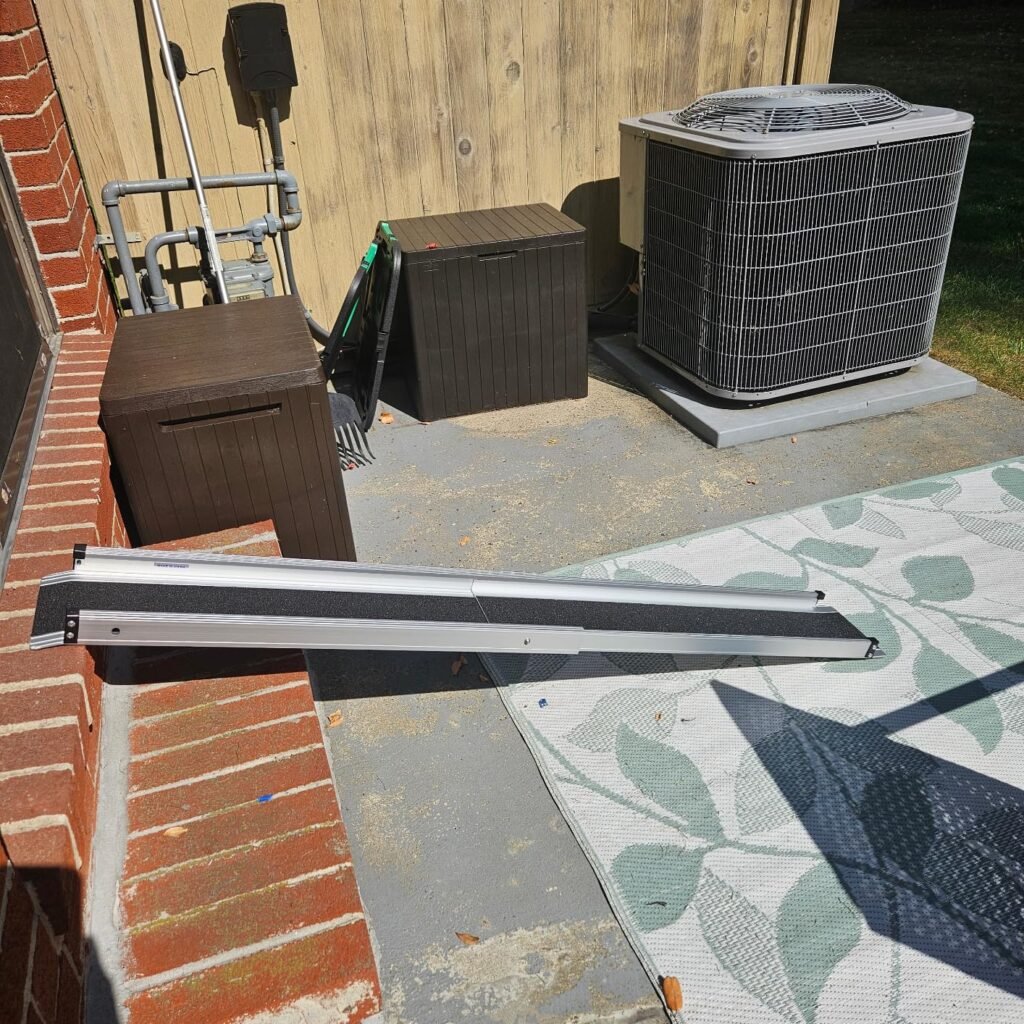
The KOLOTOOL telescoping ramp takes a different approach to portability by using two track-style ramps that extend from 48 inches to 84 inches, giving you flexibility to match the exact length needed for each situation. This design is particularly useful for vehicle loading where ramp length requirements vary depending on the vehicle and parking position. The 20-pound total weight for both ramps makes them easy to carry and quick to deploy without any assembly.
We may earn a commission when you buy through this link, at no additional cost to you.
The telescoping mechanism uses press-lock buttons for secure positioning at the desired length. The quick setup is a meaningful advantage for caregivers who need to deploy and stow the ramp multiple times per day, particularly in situations like helping a family member in and out of a vehicle. The included storage bag keeps the ramps organized and protects them during transport in a car trunk.
The 600-pound combined weight capacity supports manual wheelchair users and most mobility aids, but these ramps are not rated for power wheelchairs or scooters. The triple anti-skid design with waterproof, rustproof surfaces provides reliable traction in various weather conditions. The two-track design works well for wheelchairs because each wheel has its own dedicated ramp surface, though it requires careful alignment during use.
Track-style ramps work with two separate rails under each wheel, while solid platform ramps provide a continuous surface. Tracks are typically lighter and more adjustable but require careful wheel alignment and don’t support walkers, canes, or foot traffic. Solid platforms are heavier but more forgiving to use and support a wider range of mobility aids. Choose based on your primary mobility equipment and whether you need foot traffic access.
This ramp set is a strong fit for manual wheelchair users and caregivers who need adjustable-length portability for vehicle loading, travel, and varied step heights. If you use a power wheelchair or scooter, choose a solid-platform ramp with higher capacity. For manual wheelchair users who prioritize portability and length flexibility, the KOLOTOOL telescoping design offers unique advantages.
Power wheelchair or scooter users, or anyone who needs ramp access for walking aids like canes and walkers.
We may earn a commission when you buy through this link, at no additional cost to you.
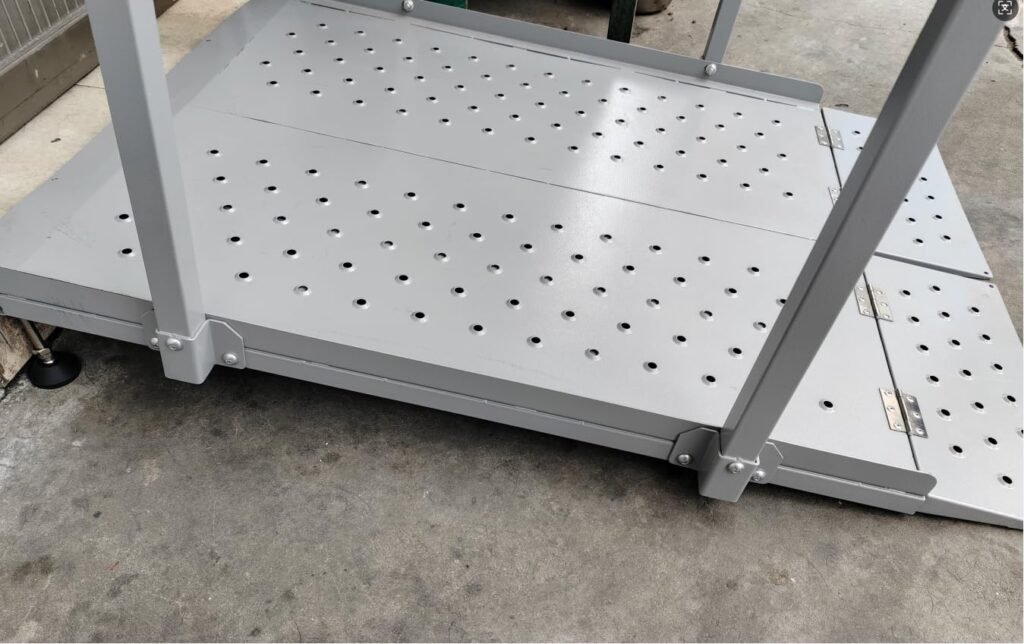
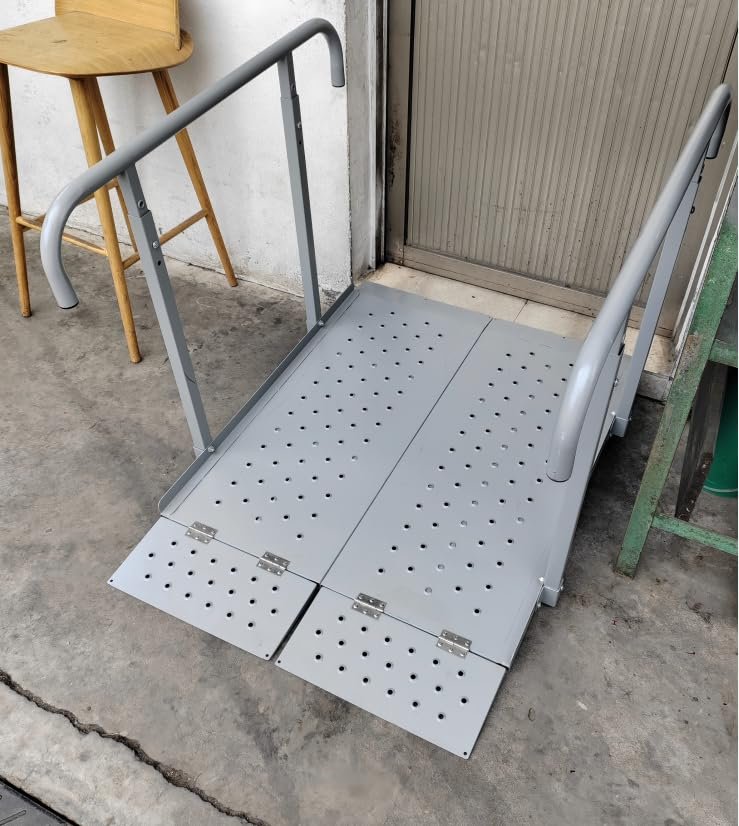
The RDCMKL ramp stands out as the only unit in this guide with built-in dual handrails, which transforms the safety profile for seniors, caregivers, and users with balance concerns. Handrails provide essential support for ambulatory users with walkers or canes, give caregivers something to hold while assisting wheelchair users, and add a layer of fall protection that most portable ramps simply cannot match. For aging-in-place installations, this safety feature can genuinely enable continued independence.
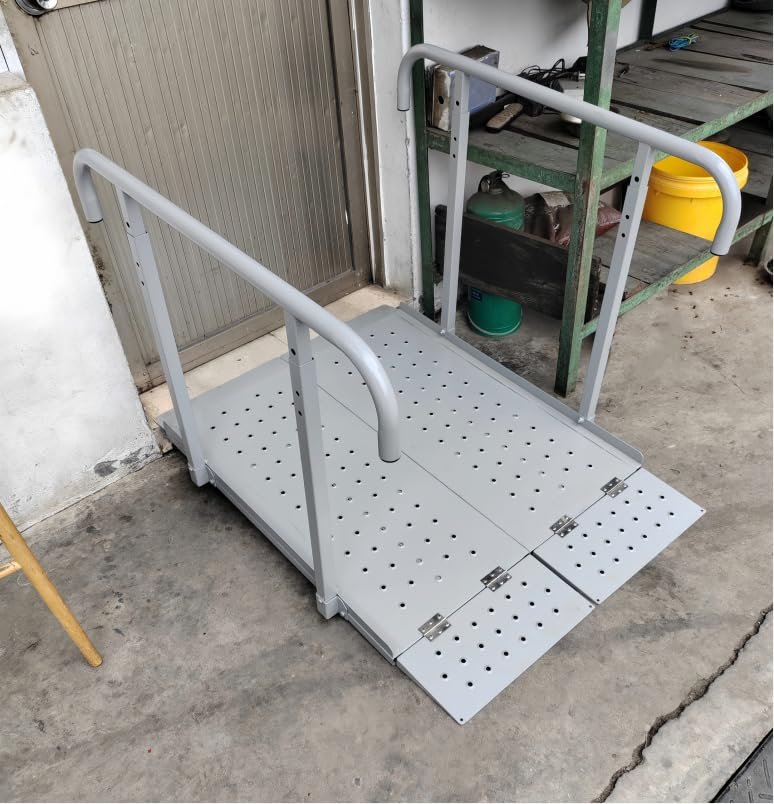
We may earn a commission when you buy through this link, at no additional cost to you.
The adjustable base support feet accommodate common step heights of 2.3, 5.1, and 7 inches, with the option to secure the ramp through pre-drilled holes for heights up to 30 inches total rise. This range covers virtually any residential step configuration, from single-step entries to full porch access. The carbon steel construction supports an impressive 850-pound capacity, which is the highest in this guide and accommodates even the heaviest mobility equipment plus caregivers.
The textured traction surface works for wheelchairs, strollers, carts, walkers, and mobility equipment, making this a true multi-use access solution. Reflective strips add visibility in garages, shaded areas, and low-light conditions. The folding design allows storage when not in continuous use, though at this weight, the ramp is best suited for semi-permanent installation rather than frequent repositioning.
Handrails provide essential support that benefits users beyond just wheelchair access. Seniors with walkers or canes can use handrails to steady themselves on the slope, caregivers can brace against them while assisting wheelchair users, and anyone navigating the ramp gains a safety point of contact that reduces fall risk. For households with multiple mobility needs or users at varying ability levels, handrails are often the single most important ramp feature.
This ramp is an excellent fit for aging-in-place scenarios, households with seniors, multi-user installations, and situations where ambulatory users with walkers need handrail support. The 4.0-star rating is lower than some competitors, so reading recent owner feedback about specific installation and durability concerns is worthwhile. For the handrail safety feature alone, this ramp fills a meaningful gap in the portable ramp category.
Users who need maximum portability or who have very short step heights where a simpler ramp would be sufficient.
We may earn a commission when you buy through this link, at no additional cost to you.
The TaiH Leo 7-foot ramp handles medium-to-tall step heights of 7-21 inches, which covers typical porch access, raised entries, and vehicle loading scenarios. The 7-foot length provides a more gradual slope than shorter ramps at these step heights, which improves safety for both independent and assisted navigation. For homes with 2-3 steps or elevated porches, this length hits a practical balance between usable slope and manageable storage.
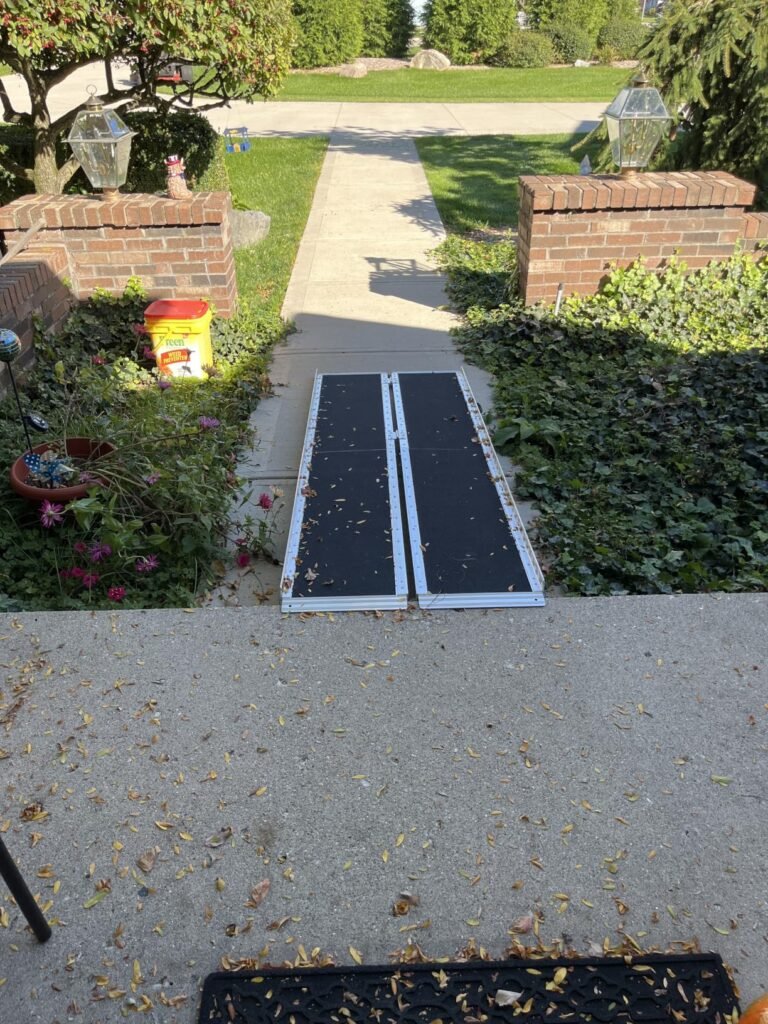
We may earn a commission when you buy through this link, at no additional cost to you.
Adjustable support legs with 8-11 inch height range provide meaningful stability under the ramp, reducing flex and making the ramp feel more secure during use. This support system transforms the ramp’s performance at longer lengths where unsupported aluminum would otherwise bend noticeably under load. The 800-pound weight capacity accommodates most mobility equipment combinations, including heavier power wheelchairs with users.
The frosted layer paired with textured non-slip aluminum provides double traction protection, and both sides feature baffles and reflective warning strips for safety. Transition plates at both ends help the ramp sit flush against the step and ground surfaces, which eliminates small gaps that can catch wheels or trip walkers. Stainless steel hinges resist corrosion for long-term outdoor use.
Support legs under a long ramp reduce the amount of unsupported span, which dramatically decreases flex under load. This makes the ramp feel more rigid during use and reduces the sinking sensation that can concern some users. Adjustable height legs let you level the ramp on uneven surfaces, which is especially useful for outdoor installations where the ground may slope or settle over time.
This ramp is a strong fit for homes with medium step heights or porch access and users who want the added stability of support legs. The 48-pound weight means this isn’t a solo-move item for most users; plan for two-person positioning or install it semi-permanently. For buyers who need reliable access over higher steps with maximum stability, the TaiH Leo 7FT delivers excellent capability.
Solo users who need to deploy and stow the ramp regularly, since 48 pounds requires two people to move safely.
We may earn a commission when you buy through this link, at no additional cost to you.
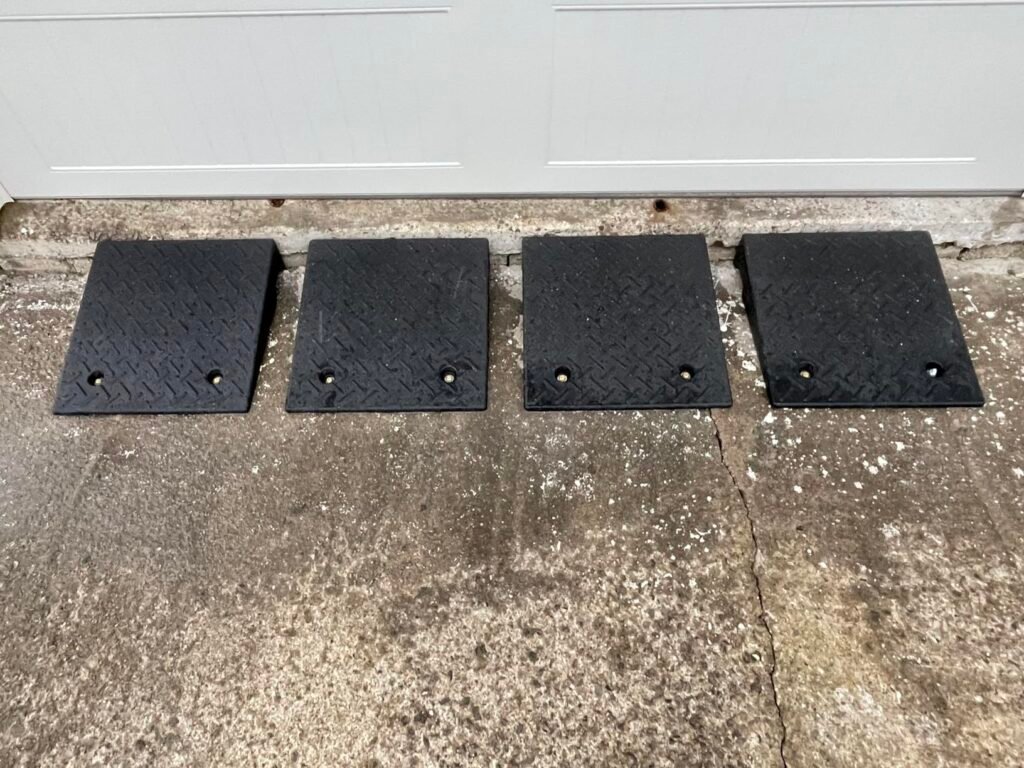
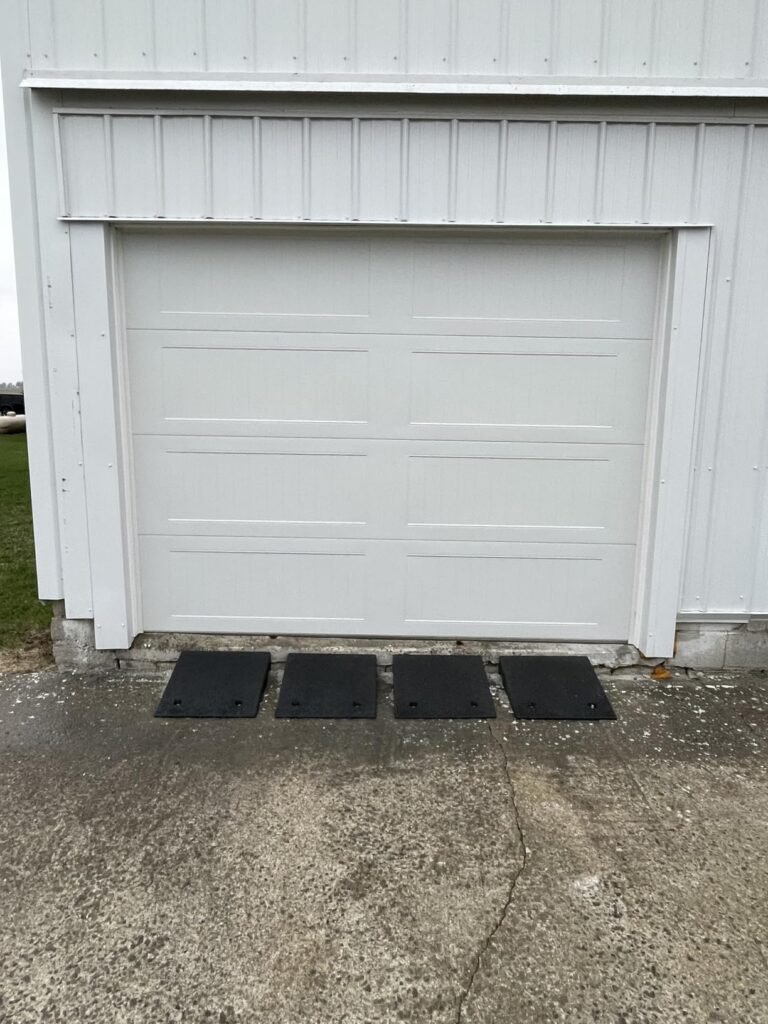
This 2-pack of rubber curb ramps serves a different need than longer wheelchair ramps: bridging short, consistent-height curbs or ledges with maximum durability. At 3.9 inches of rise, these ramps match the standard height of most residential curbs, driveway lips, and low thresholds. The pair format works well for driveways where you need to bridge the same rise on both sides of a vehicle path, or for garage door thresholds.
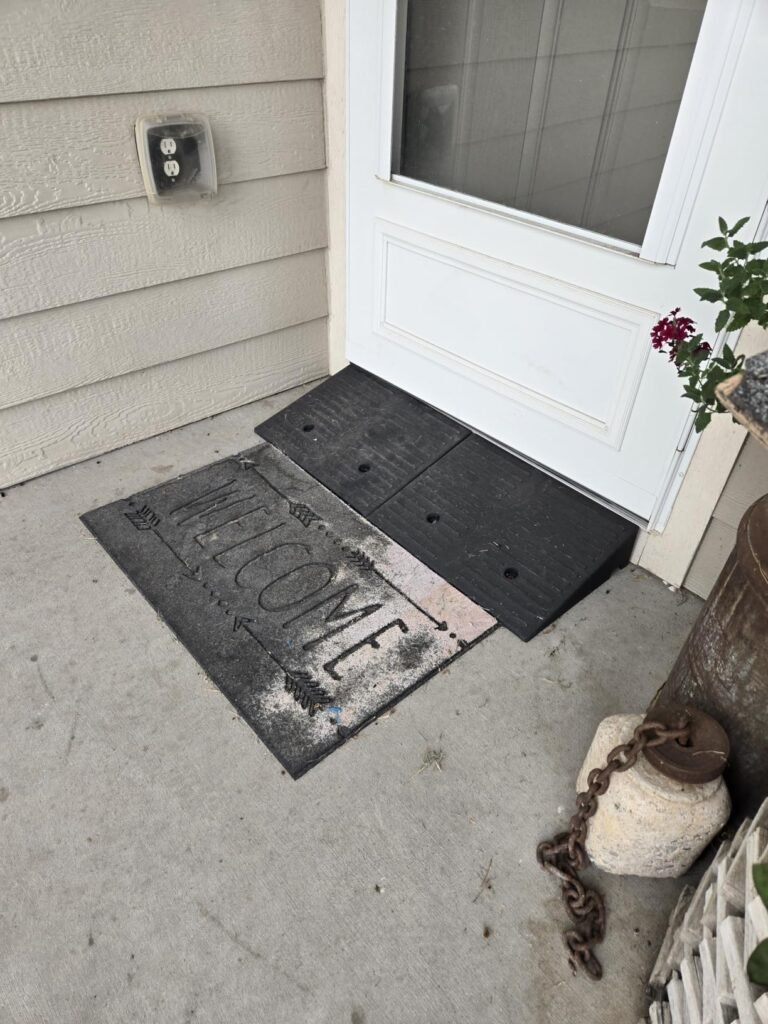
We may earn a commission when you buy through this link, at no additional cost to you.
The heavy-duty rubber construction supports up to 7,000 pounds, which is dramatically higher than any aluminum ramp in this guide and reflects the ramp’s design for vehicle use rather than just mobility equipment. This capacity allows cars, motorcycles, and even light commercial vehicles to roll over the ramps without damage. For households that need both wheelchair access and vehicle access over the same curb, this dual capability provides real value.
Pre-drilled mounting holes allow permanent installation with a 12mm drill bit and M8x80 bolts (bolts not included), which creates a stable, non-moving ramp for high-traffic areas. The anti-slip textured surface provides safe traction in dry and wet conditions, and the built-in cable channel underneath allows wires, hoses, or pipes to run under the ramp without obstruction. This cable management feature is particularly useful in workshop or outdoor settings.
Rubber ramps excel for short rises, outdoor permanent installations, and situations needing vehicle compatibility. They’re heavier than aluminum per unit but handle UV exposure, moisture, and temperature changes without corrosion. Aluminum ramps dominate for longer lengths, portability, and higher-rise applications. Match the material to the application: rubber for driveways and curbs, aluminum for steps and porches.
This ramp pair is an excellent fit for driveway curb access, garage thresholds, and any application needing a durable, permanent rubber ramp solution for consistent 3.9-inch rises. If you need variable height adjustment or longer ramp length for stairs, choose an aluminum ramp instead. For curb and threshold applications, the combination of massive weight capacity and cable channel feature makes this a uniquely useful solution.
Users who need to overcome step heights greater than about 4 inches, where a longer aluminum ramp with proper slope is required.
We may earn a commission when you buy through this link, at no additional cost to you.
The WHALEMOTOR 4FT ramp is another strong 4-foot option in this guide, differentiating itself through its particularly aggressive jagged surface texture designed specifically for wet-condition performance. For users in rainy climates or households where outdoor access over damp steps is a regular occurrence, this enhanced traction can make a meaningful difference in daily safety. The ramp handles 4-12 inch step heights, matching the typical residential rise range.
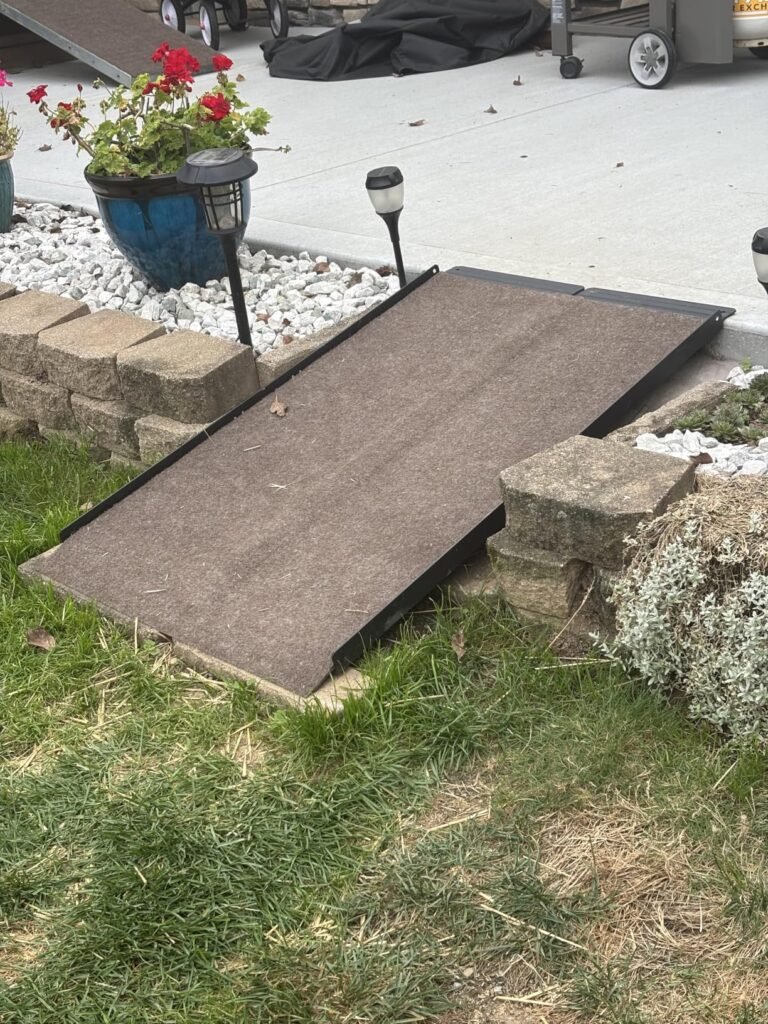
We may earn a commission when you buy through this link, at no additional cost to you.
The 800-pound weight capacity accommodates most mobility equipment combinations, and the aluminum folding design allows portability when needed. Transition plates at the top and bottom of the ramp provide smooth entry and exit points that help wheelchair wheels bridge the gap between surfaces without catching. The anti-slip mat under the transition plate adds another layer of stability by reducing ramp movement during use.
The folding design facilitates storage in closets, car trunks, or garage shelving when the ramp isn’t in continuous use. Users can position the ramp quickly for temporary needs like deliveries, visitors with mobility aids, or occasional access to raised areas. The portable format works well for households that only need ramp access intermittently, as well as for travel to locations that don’t have accessible entries.
Wheelchair wheels can slip on wet aluminum surfaces, which creates serious safety concerns during rainy weather. Enhanced surface textures like jagged patterns or heavily knurled finishes maintain grip even when water is present on the ramp. For outdoor installations or any ramp that might be exposed to rain, snow, or morning dew, prioritizing traction performance over pure appearance is a worthwhile tradeoff.
This ramp is a sensible choice for buyers prioritizing wet-condition traction and wanting a well-rated 4-foot option. The feature set largely overlaps with the VNN 4FT ramp, so choice between them often comes down to availability, specific color options, and current pricing. For 4-12 inch step heights where traction in all conditions is a priority, the WHALEMOTOR delivers solid performance.
Buyers specifically needing a ramp for very short thresholds or step heights above 12 inches.
We may earn a commission when you buy through this link, at no additional cost to you.
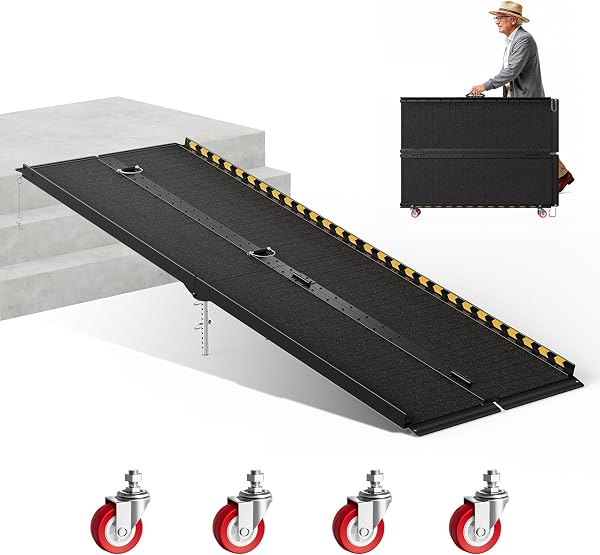
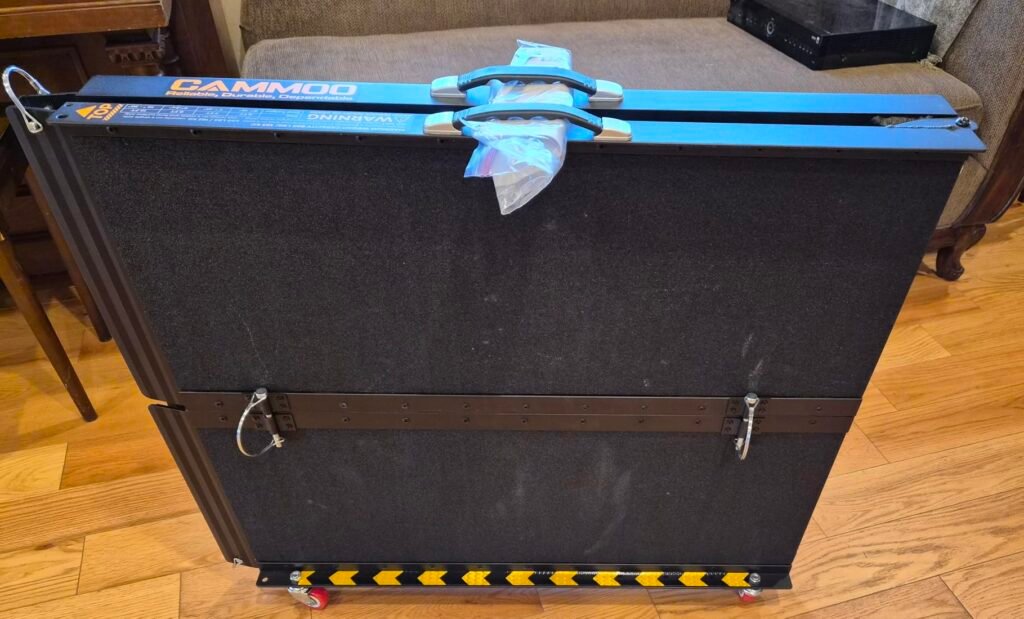
The CAMMOO 7-foot ramp offers unique dual folding options: a 2-fold configuration that's easier to move with wheel installation, and a 4-fold configuration that minimizes storage footprint. This flexibility lets users choose the configuration that best matches their current needs, whether that's quick deployment to a frequently used location or compact storage when the ramp isn't in regular use. For households with varied usage patterns, this adaptability has real practical value.
We may earn a commission when you buy through this link, at no additional cost to you.
The 800-pound heavy-duty capacity supports larger users or dual-person passage, and the 4 adjustable bottom support legs provide solid stability with enhanced anti-slip performance. The support leg system is more comprehensive than most ramps in this length class, which translates to reduced flex and a more rigid feel during use. The ramp fits step heights of 7-21 inches with a 5-14 degree ramp-to-ground angle, covering typical home threshold scenarios.
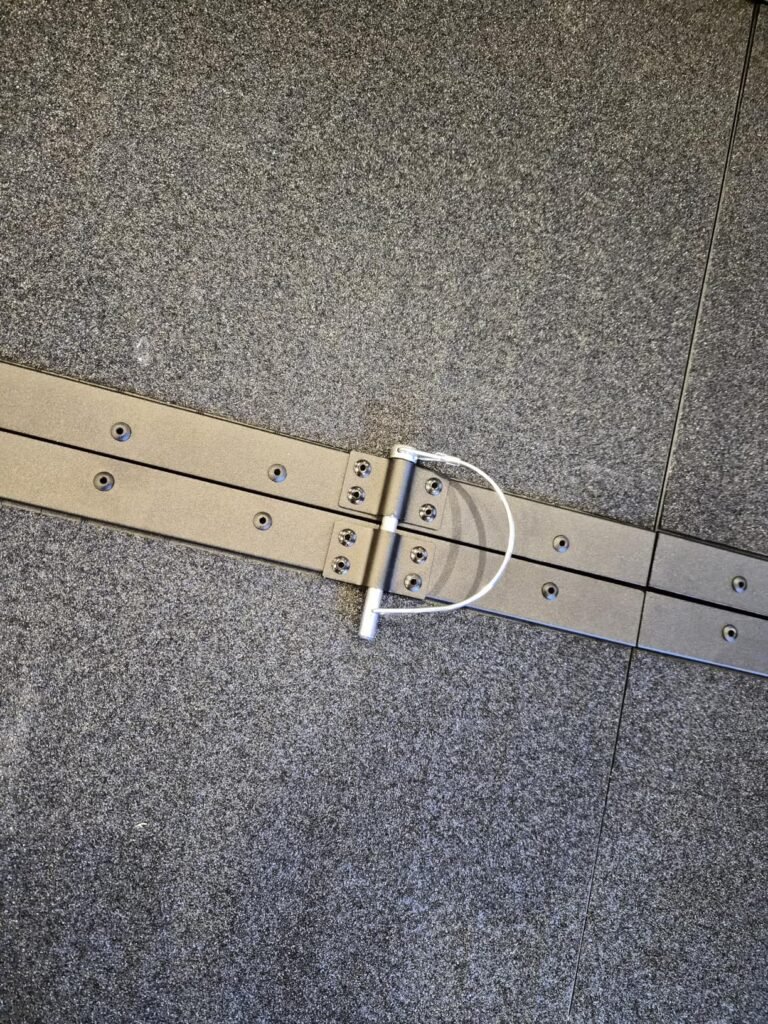
D-shaped center safety latches provide a tight, non-loosening lock that resists coming apart during use, which is a meaningful safety feature for folding ramps where latch failure could cause serious injury. The seamless structure between ramp sections boosts stability, and stainless steel latches resist corrosion for long-term outdoor use. Triple anti-slip protection on the ramp surface handles various weather conditions.
Folding ramps rely on hinges and latches that experience significant stress during deployment and use. Quality latches with secure locking mechanisms are essential for safe operation, as a latch failure under load could cause the ramp to collapse. When evaluating folding ramps, look for stainless steel hardware, clear safety-lock indicators, and user reviews that specifically address long-term latch durability.
This ramp is a potential fit for users who want the flexibility of multiple folding configurations and extensive support leg stability. The 3.9-star rating is lower than other 7-foot options in this guide, so reading recent owner feedback carefully is important before purchasing. For buyers specifically wanting dual-fold flexibility, the CAMMOO offers unique features, though competing 7-foot ramps with higher ratings may provide more consistent long-term satisfaction.
Buyers who prioritize simplicity and consistent owner feedback over the flexibility of dual-fold configurations.
We may earn a commission when you buy through this link, at no additional cost to you.
Selecting the right wheelchair ramp involves balancing length, weight capacity, materials, portability, and safety features against your specific step height, mobility equipment, and usage frequency. The factors below cover the most important decision points so you can make a safe, practical choice rather than being overwhelmed by product specifications.
The relationship between step rise (vertical height) and ramp length determines the slope angle, which is the single most important safety factor for any wheelchair ramp. The ADA recommends a 1:12 slope ratio, meaning you need 12 inches of ramp length for every inch of rise. For a standard 6-inch step, this means a 6-foot ramp for ADA-compliant unassisted use. Steeper slopes are acceptable for assisted use but become increasingly difficult and potentially dangerous for independent navigation.
For home use with caregiver assistance, slopes of 1:6 or 1:8 are often acceptable, which allows shorter ramps for the same step height. A 4-foot ramp handles a 6-inch step at approximately 1:8 slope, while a 3-foot ramp over the same step creates roughly a 1:6 slope. These steeper slopes work when a caregiver provides pushing assistance but may be too steep for self-propelled users to navigate safely.
Measure your step rise accurately from the ground to the top of the step surface, then choose a ramp length that creates a safe slope for your intended user. When in doubt, choose longer; a gentler slope is always safer than a steeper one.
Weight capacity must account for the user, mobility equipment, and any cargo combined. A powered wheelchair can weigh 150-300 pounds on its own, and adding a user at 150-250 pounds puts you well into the 400-500 pound range before considering any additional loads. For caregiver-assisted use where someone pushes the wheelchair up the ramp, add another 150-200 pounds for the caregiver’s weight transfer during pushing.
The ramps in this guide range from 600 to 850 pounds of capacity, with most offering 800 pounds. This headroom accommodates virtually any wheelchair-user combination, including larger power chairs with heavier users. For curb ramps and rubber threshold ramps, capacities can reach 7,000 pounds because they’re designed for vehicle traffic in addition to mobility equipment.
Choose a ramp with a capacity that comfortably exceeds the heaviest combined load the ramp will support. A safety margin of 25-50% above your actual load provides reassurance against manufacturing variations and long-term wear.
Portable ramps offer flexibility to move the ramp between locations, store it when not needed, and travel with it to inaccessible destinations. The tradeoff is that portable ramps typically rely on their own weight and transition plates for stability, which can allow some movement during use. Fully portable 2-4 foot ramps weigh 10-20 pounds and are easy for one person to carry, while longer 7-foot ramps often weigh 40-50 pounds and may require two-person handling.
Permanent or semi-permanent installations provide maximum stability by securing the ramp to the step, deck, or ground. Pre-drilled holes and included hardware let you fix the ramp in place for consistent, non-moving use. The ramp with handrails and the 12-foot ADA-compliant unit in this guide are often best used in semi-permanent configurations where their size and features justify a fixed installation.
If you need daily access at a single location, consider a semi-permanent installation for maximum stability. If you need portability for travel or occasional use at multiple locations, choose a lighter folding ramp that one person can manage.
Aluminum dominates the wheelchair ramp category because it combines strong structural properties with low weight and excellent corrosion resistance. Aluminum ramps work well indoors and outdoors, don’t rust in rain or snow, and can be folded or disassembled for storage. The tradeoff is that aluminum can flex under heavy loads, especially at longer lengths, which some users perceive as feeling less secure even though the ramp is structurally sound.
Rubber ramps excel for short rises and permanent installations, particularly for curbs and thresholds. The weight provides stability without needing mechanical fastening in many applications, and rubber handles UV exposure and temperature changes without degrading. Carbon steel ramps like the one with handrails offer maximum rigidity and capacity but add significant weight and require corrosion protection for outdoor use.
For most residential applications, aluminum provides the best combination of weight, durability, and corrosion resistance. Choose rubber for short permanent installations and steel for maximum capacity or when handrails are required.
The ramp surface must provide reliable traction in all conditions, including wet weather, snow, and ice. Quality aluminum ramps use textured surfaces, often described as jagged, knurled, or raised patterns, that provide grip for wheelchair tires and prevent slipping. Some ramps add a coated anti-slip layer on top of the textured surface for enhanced wet-weather performance. Rubber ramps rely on the natural grip of the rubber material plus molded surface patterns.
Side baffles or raised edges along both sides of the ramp prevent wheels from drifting off the surface, which is essential for safe navigation, especially for users who may have reduced control or caregivers managing wheelchair movement. Reflective warning strips improve visibility in low-light conditions like early mornings, evenings, or dimly lit garages. Transition plates at the top and bottom of the ramp eliminate the small gap between ramp and surface that can catch wheels.
Prioritize ramps with multiple traction features: textured surface, side baffles, reflective markings, and transition plates. These safety elements work together to prevent the common accidents that threaten independent and assisted ramp use.
Folding mechanisms vary significantly across portable ramps. Single-fold designs halve the length for storage, which works well for ramps up to about 4-5 feet. Multi-fold designs can reduce longer ramps to compact packages suitable for closet or trunk storage. Telescoping designs use sliding sections to adjust length, offering flexibility but requiring more careful handling to ensure secure extension.
Latching mechanisms are critical safety components in folding ramps. D-shaped safety latches, security pins, and multiple-point locking systems all prevent accidental folding during use. When evaluating folding ramps, examine how the latching system works and whether the mechanism feels secure. A latch failure under load could cause the ramp to collapse, creating serious injury risk for the user.
Choose a folding configuration that matches your actual storage space and portability needs. More complex multi-fold designs offer compactness but add mechanisms that could fail. For frequent portable use, prioritize simpler, more robust folding mechanisms.
Ramp width must accommodate your specific wheelchair’s wheelbase and overall width. Standard manual wheelchairs typically have 24-28 inch wheelbases, while larger power wheelchairs and scooters can exceed 30 inches. ADA guidelines specify 36 inches minimum width for accessible routes, but most portable ramps are 28-30 inches wide, which works for standard mobility equipment with careful alignment.
Measure your specific wheelchair or scooter wheelbase before purchasing a ramp, especially track-style telescoping ramps where each wheel has its own narrow track. The FACHNUO 2FT ramp specifically limits wheelbase to 27 inches, which is important to verify against your equipment. Wider wheelchairs may need either a wider platform ramp or a track-style ramp with adjustable spacing between the two tracks.
Confirm your wheelchair width and wheelbase against the ramp’s specifications before purchase. If you plan to use multiple mobility aids on the same ramp, choose the width that accommodates your largest equipment.
Outdoor installation requires materials and components that resist weather, UV exposure, and temperature extremes. Aluminum frames with stainless steel hinges handle outdoor conditions well, as do rubber ramps. Carbon steel ramps need rust-resistant coatings for outdoor use, though these coatings may wear over time with heavy traffic. Check the manufacturer’s specifications for intended use environments before installation.
Indoor use allows more flexibility in material selection but introduces its own considerations. Indoor ramps often work with hardwood or tile flooring, which can scratch under heavy ramp use. Non-slip bases or protective pads under the ramp protect floors and prevent sliding. For ramps that transition between indoor and outdoor use, choose materials and finishes that handle both environments.
Specify indoor-only or outdoor-rated construction based on your installation location. For outdoor use, prioritize corrosion-resistant materials and components; for indoor use, consider floor protection and ramp mobility.
Portable ramps rely on their own weight, transition plates, and non-slip bases for stability without permanent attachment. This flexibility supports frequent repositioning but can allow some movement during use, particularly on smooth indoor surfaces. For users who want added stability from a portable ramp, consider adding non-slip rubber mats underneath or securing the ramp with removable fasteners.
Semi-permanent installations use pre-drilled holes in the ramp to attach it to the step or ground surface with screws or bolts. This creates a stable, non-moving ramp that still allows removal if needed. Several ramps in this guide include pre-drilled mounting holes, including the curb ramps and the handrail model. Verify that mounting hardware is included or available separately before purchasing.
For frequent use at a single location, semi-permanent installation provides superior stability. For portable or occasional-use ramps, non-slip bases and transition plates are usually sufficient to prevent movement.
Wheelchair ramps in this guide range from under $50 for small curb ramps to over $700 for premium handrail-equipped models. Portable aluminum ramps in the 2-4 foot range typically cost $70-$150, which is affordable for most households needing basic access. Longer 7-foot ramps run $130-$250, while specialty ramps with handrails, telescoping mechanisms, or ADA-compliant lengths command $200-$700.
When evaluating long-term value, consider the ramp’s expected lifespan, warranty coverage, and whether the design meets your access needs for several years as mobility requirements may change. A ramp that lasts 10 years and continues to serve a growing level of need provides much better value than a cheaper ramp that must be replaced after a few years of heavy use. For semi-permanent installations, factor in installation costs if you need professional help.
Set a budget that accounts for the actual access needs rather than purely upfront cost. For long-term mobility support, investing in appropriate length, capacity, and safety features typically pays off over the ramp’s useful life.
Before first use, carefully position the ramp against the step with the transition plates fully flush against both the top of the step and the ground. Verify that any locking mechanisms are fully engaged, support legs are properly adjusted, and the ramp sits level without rocking. For portable ramps, place non-slip mats underneath on smooth indoor surfaces to prevent sliding. Test the ramp with a trial run before daily use, ideally without a wheelchair user on board, to confirm stability and smooth transitions at both ends.
During regular use, maintain alignment of wheelchair wheels within the ramp’s side baffles to prevent drift off the edges. For track-style telescoping ramps, carefully align both wheels in their respective tracks before beginning the ramp traversal. Caregivers should maintain firm control and gradual movement, especially on steeper slopes. For independent users, practice navigating the ramp in a controlled environment before relying on it for daily access. Avoid overloading the ramp beyond its rated capacity, which includes the combined weight of user, equipment, and any additional cargo.
Regular maintenance extends ramp life and preserves safety. Wipe down the ramp surface periodically to remove dirt, mud, and debris that can reduce traction. Check all hinges, latches, and fasteners monthly for signs of wear, looseness, or corrosion. For outdoor ramps, rinse off salt residue after winter use to prevent corrosion damage. Store portable ramps in dry locations when not in use, and keep aluminum ramps away from direct contact with incompatible metals that can cause galvanic corrosion. Replace any ramp that shows cracks, significant deformation, or compromised safety features immediately rather than attempting repairs.
The ADA recommends 12 inches of ramp length for each inch of rise, which creates a safe 1:12 slope for independent use. For home use with caregiver assistance, shorter ramps with slopes of 1:6 or 1:8 are often acceptable. A 4-foot ramp handles a 4-6 inch rise for independent use or up to 8-10 inches for assisted use. Measure your step rise carefully and choose a ramp length that creates a safe slope for your specific user.
Most ramps in this guide support both manual and power mobility equipment within their weight capacities. Verify the ramp's maximum weight rating against your equipment's weight plus the user's weight. Note that telescoping track-style ramps often have lower capacity (around 600 pounds) and may not be rated for power wheelchairs. Solid-platform ramps with 800-pound capacity accommodate most power equipment comfortably.
Portable ramps are safe when properly positioned with transition plates flush against both surfaces and the ramp sitting level without rocking. Non-slip mats underneath prevent sliding on smooth surfaces. Permanent installations provide greater stability but reduce flexibility. For daily use at a single location, consider semi-permanent installation using the pre-drilled holes many ramps include. For portable use, position carefully and verify stability before each use.
Threshold ramps are typically 1-3 inches tall and designed to bridge door thresholds or very small rises. Wheelchair ramps are longer and handle greater step heights, typically 4 inches or more. A 2-foot ramp like the FACHNUO 2FT serves as a transitional product that handles both threshold use (very low rises) and small-step wheelchair access up to about 4-6 inches with assistance.
Most aluminum wheelchair ramps with stainless steel hardware are rated for outdoor use in various weather conditions. Textured surfaces provide traction in wet conditions, though snow and ice reduce traction significantly on any ramp material. For outdoor use, consider ramps with enhanced wet-weather textures and clear snow and ice promptly. After winter use with road salt, rinse the ramp to prevent corrosion damage over time.
Most portable wheelchair ramps don't include handrails because they would interfere with folding and portability. The RDCMKL ramp in this guide is a notable exception, offering dual handrails that significantly improve safety for seniors, ambulatory users with walkers, and caregivers assisting wheelchair users. For most permanent installations where handrails are needed, custom installation or separate handrail accessories are typical solutions.
Standard aluminum wheelchair ramps in this guide support 600-850 pounds, which accommodates most wheelchair-user combinations including heavier power chairs. Rubber curb ramps designed for vehicle use can support 7,000 pounds or more. When calculating required capacity, include the user's weight, the mobility equipment weight, any cargo, and additional load from a caregiver pushing. Choose a ramp with 25-50% capacity headroom above your calculated load for safety.
Most portable wheelchair ramps are 28-30 inches wide, which accommodates standard wheelchairs with careful alignment. ADA-compliant ramps are 36 inches wide for accessible route standards. For track-style telescoping ramps, verify that the tracks can be positioned to match your wheelchair's wheelbase. Measure your specific equipment width and wheelbase before purchasing, especially for power wheelchairs that may be wider than standard manual chairs.
Most portable ramps require no installation; simply position them against the step with transition plates flush. Semi-permanent installations using pre-drilled holes require basic tools like a drill and appropriate screws or bolts. For installations into concrete or specialized surfaces, consulting a contractor may be worthwhile. Larger ADA-compliant permanent ramps for porches or decks typically benefit from professional installation to ensure code compliance and long-term safety.
Measure the step rise (vertical height from ground to top of step), the available landing space at the top of the step, and the clear floor space in front of the step where the ramp will sit. Compare these measurements to the ramp's unfolded dimensions and transition plate specifications. Watch for door clearance issues when ramps are positioned against sliding doors or doors that open outward. Many manufacturers provide sizing guides to help match ramps to specific installations.
The VNN 4FT portable ramp stands out as the strongest overall choice for typical residential needs, combining a practical 4-foot length that handles 4-12 inch step heights, 800-pound weight capacity, dual non-skid surfaces, side baffles, and reflective warning strips in an affordable, well-rated package. For most families managing a wheelchair user's daily entry and exit over standard home steps, this ramp delivers the right balance of capability, safety, and value.
For different needs, the RDCMKL ramp with dual handrails offers unmatched safety features for seniors and multi-use installations, the KOLOTOOL telescoping pair provides unique length flexibility for travel and vehicle loading, and the MAASTERS 12FT delivers ADA-compliant slopes for independent wheelchair users on higher step heights. The 2-pack curb ramps serve the specialized but common need for durable curb and driveway access.
The right wheelchair ramp depends on your specific step height, user needs, mobility equipment, and whether the ramp will serve temporary or permanent access requirements. Measure your step rise carefully, verify weight capacity against your equipment and user combined, and prioritize safety features like side baffles and non-slip surfaces over the lowest possible price. For daily access that supports independence and reduces caregiver strain, investing in the right ramp length and features pays off every single day.