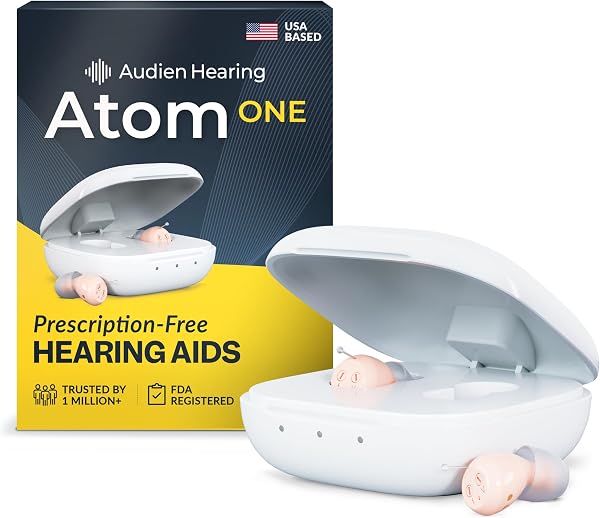
Audien Atom One
7.6Editor scoreFDA-registered OTC device
Analog volume and frequency
24-hour rechargeable battery
Nano discreet design
Find the right hearing amplifiers for 2026. We compare 10 standout options by build quality, useful features, owner feedback, value, and everyday trade-offs.
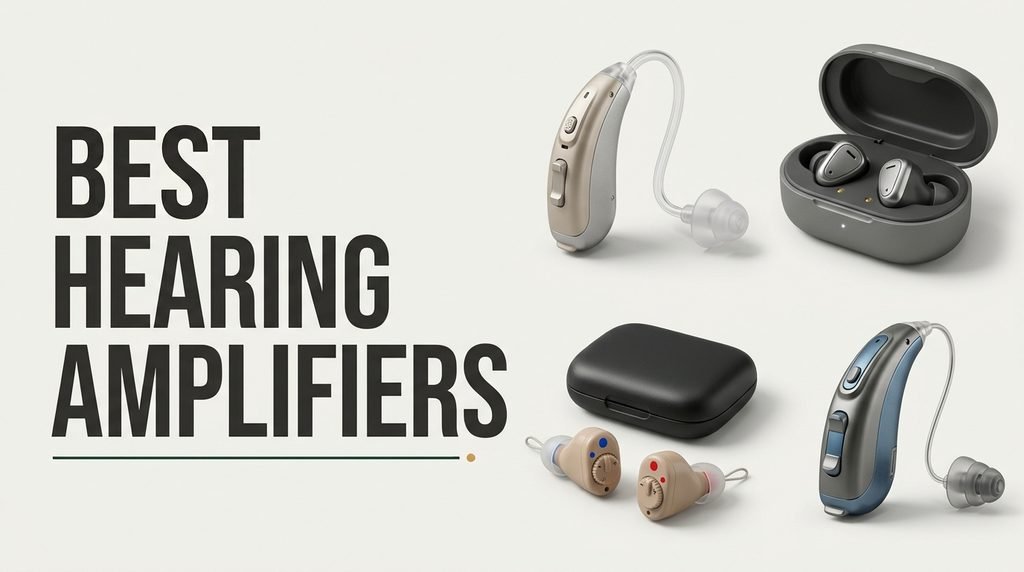
Find the right hearing amplifiers for 2026. We compare 10 standout options for seniors and adults with mild to moderate hearing challenges, evaluating sound quality, noise reduction, battery life, fit comfort, control simplicity, discreet design, included accessories, and value for improving everyday conversations, television listening, and social situations at home.
Hearing amplifiers vary significantly in approach, from FDA-registered OTC hearing aids with analog dials to Bluetooth-enabled rechargeable models and classic handheld amplifiers with headphones. Price points range from under thirty dollars for basic amplification to over two hundred dollars for premium systems with extended battery life and professional-grade accessories.
Choosing the right amplifier depends on the user’s technical comfort, hearing situation, lifestyle, and whether discreet in-ear fit or a traditional handheld system works better. This guide breaks down the practical differences across the lineup so you can match an amplifier to the user’s actual needs rather than paying for features that may not be used in daily listening situations.
We compared 10 hearing amplifiers using the details that actually help a buyer decide: sound amplification range, noise reduction capability, battery life, charging convenience, fit comfort, control simplicity, included accessories, Bluetooth connectivity options, warranty coverage, FSA and HSA eligibility, owner feedback, and overall value. The notes focus on practical trade-offs so each pick connects to how seniors and adults actually use amplification in conversations, television listening, social gatherings, and daily activities at home or on the go.


Compare key features, scores, and current prices side by side. A shorter feature list means fewer details were available, not necessarily fewer capabilities.






This 2-in-1 Bluetooth hearing aid earns the highest rating in this comparison at 4.9 stars by combining hearing amplification with Bluetooth earbud functionality in a single device. For users who struggle to hear phone calls or who want to enjoy music or podcasts, this dual-purpose design eliminates the need to swap between hearing aids and separate earbuds throughout the day. The built-in smart DSP chip intelligently identifies and enhances human voices for clearer conversations.
We may earn a commission when you buy through this link, at no additional cost to you.
The 42 dB sound increase provides substantial amplification across 5 adjustable volume levels, giving users the range needed for most listening environments. The 3-level noise reduction can reduce background noise by up to 18 dB, which allows clearer conversations in restaurants, family gatherings, or other noisy social situations. Operation uses just one button for both amplification control and Bluetooth function, keeping the interface simple despite the dual capability.
The 2000mAh charging case is a standout feature because it can fully charge the hearing aids in just 1 hour, provides 17 total charges before needing to recharge the case, and also serves as a power bank for charging phones or other small devices. For users who worry about phone battery life during travel or long days away from power sources, this backup power capability adds genuine practical value beyond just hearing device charging.
Users who need hearing amplification often also want to enjoy music, podcasts, or audiobooks and need to make phone calls. Traditional hearing devices require users to remove them to use separate Bluetooth earbuds, which is inconvenient and risks losing or damaging small devices. A combined 2-in-1 device like this one eliminates the switching problem by handling both functions through the same hardware. For technology-comfortable users, this integration provides genuine quality-of-life improvement over single-purpose devices.
This amplifier is the right choice for users who want the convenience of Bluetooth integration for calls and media alongside hearing amplification. The 4.9-star rating confirms exceptional user satisfaction. The flexible ear hook design prevents the devices from falling off even during active movement like running. The main considerations are that the ear hooks are less discreet than deep in-canal designs and the Bluetooth functionality adds slight complexity compared to simple analog devices.
Users who prefer the most discreet in-canal design or those who want pure amplification without Bluetooth complexity.
We may earn a commission when you buy through this link, at no additional cost to you.
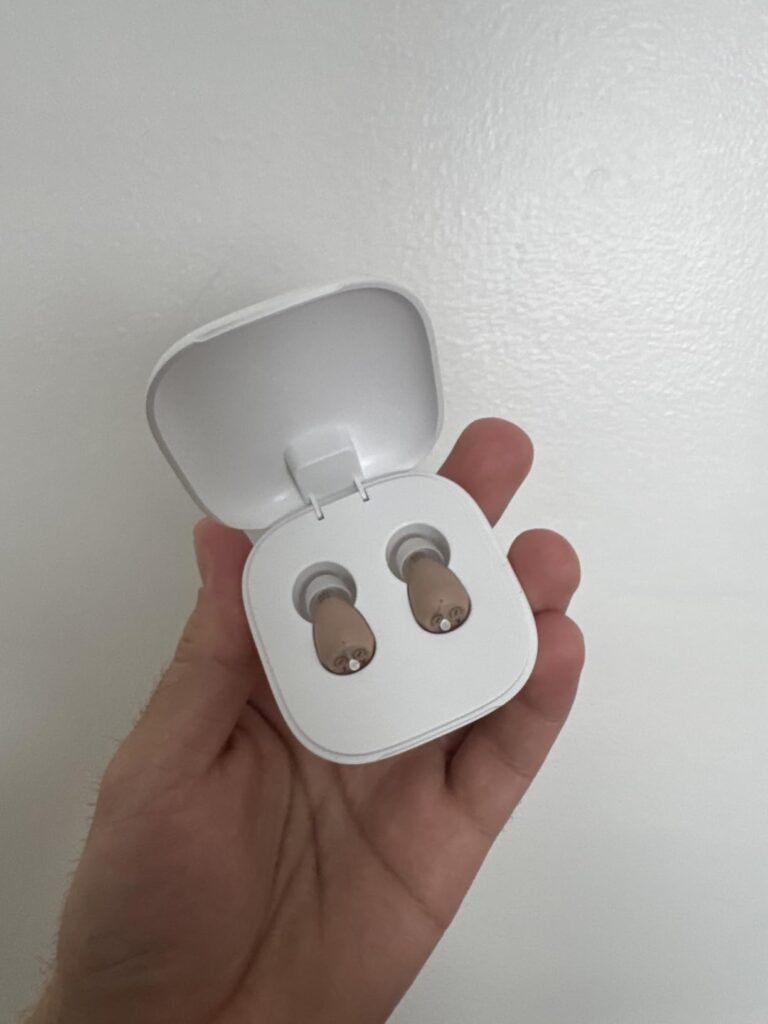
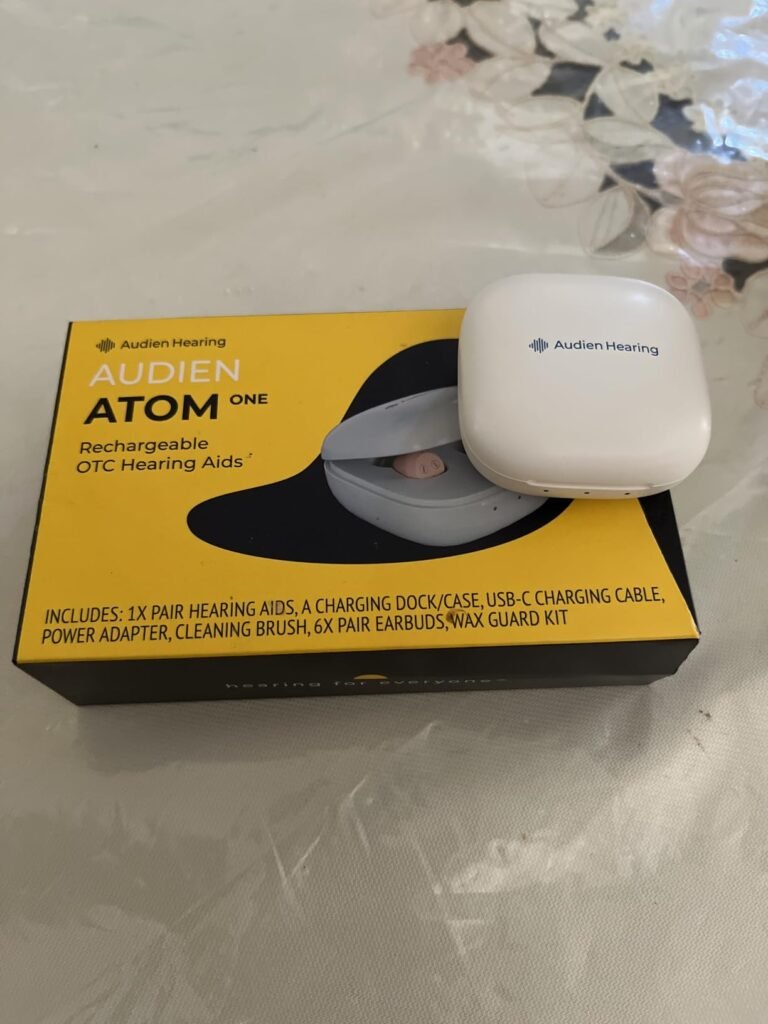
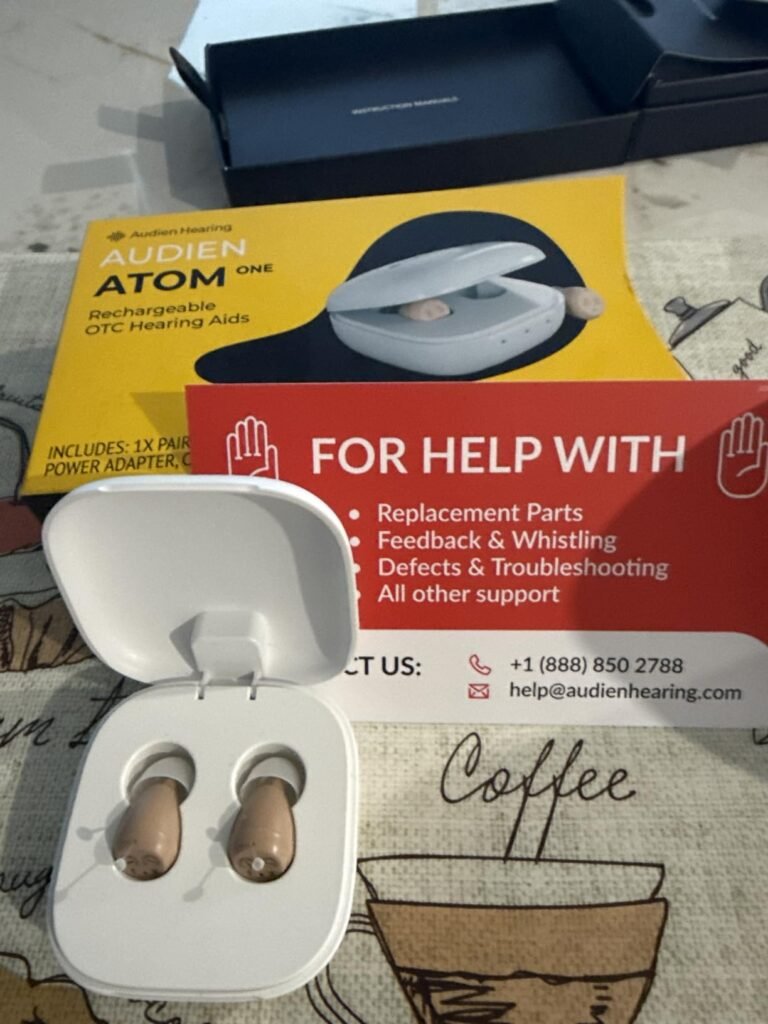
The Audien Atom One stands apart from most products in this comparison because it is an FDA-registered over-the-counter hearing aid rather than a basic sound amplifier. This distinction matters legally and practically: FDA-registered OTC hearing aids meet specific regulatory requirements for safety and effectiveness, and they are designed specifically for adults with mild to moderate hearing loss rather than for general sound amplification. For buyers who want genuine hearing aid technology without a prescription or audiologist visit, this is a meaningful alternative.
We may earn a commission when you buy through this link, at no additional cost to you.
The analog dial approach deliberately avoids the complexity of app-based controls that can frustrate seniors and first-time users. Two physical dials control volume and frequency separately, with intuitive clockwise-to-increase operation that works by feel rather than requiring vision or technical skills. Starting low and gradually working up to find the right setting is a sensible approach that reduces the risk of over-amplification causing discomfort or feedback issues.
The 24-hour rechargeable battery eliminates the frustration of tiny disposable batteries that plague traditional hearing aids. The USB-C charging dock automatically powers the devices on when removed and off when docked, which removes another potential source of confusion. The included Audien Sound Check expert-guided setup session is a genuinely valuable addition because proper initial configuration dramatically affects user satisfaction with any hearing device.
FDA-registered OTC hearing aids are regulated medical devices designed to treat perceived mild to moderate hearing loss in adults. They must meet specific requirements for maximum output, distortion, and safety features. Personal sound amplifiers (PSAPs) are not medical devices and are legally intended only for recreational amplification by people with normal hearing. For actual hearing loss, OTC hearing aids like the Audien Atom One provide the appropriate category of product, while PSAPs are better suited to specific listening situations rather than compensating for hearing impairment.
This hearing aid is the right choice for adults with diagnosed mild to moderate hearing loss who want FDA-registered OTC quality with simple analog controls and no technical learning curve. The 3.8-star rating is lower than some basic amplifiers in this comparison, which may reflect the higher expectations buyers have for actual hearing aids versus simple amplifiers. The main consideration is that the device targets a specific hearing loss range, so users with more severe loss or those seeking general amplification may be better served by other options.
Users with severe hearing loss who need prescription-strength devices, or those who prefer app-based controls with smartphone integration.
We may earn a commission when you buy through this link, at no additional cost to you.
The Flaygo Hearing Amplifiers combine advanced digital signal processing with an exceptionally lightweight invisible design, making them a strong value choice for seniors who want sophisticated sound technology without the complexity or price of premium hearing aids. The built-in 16-channel digital chip provides more granular sound processing than simpler single-channel amplifiers, which translates to better clarity in different listening situations like quiet conversations versus noisy restaurants.
We may earn a commission when you buy through this link, at no additional cost to you.
The intelligent noise reduction technology actively filters out background noise so the user can focus on important sounds like speech. The whistling suppression system eliminates the annoying feedback squeal that commonly affects less sophisticated amplifiers, particularly when the device is adjusted or when the user puts a hand near the ear. Together, these features deliver meaningfully better sound quality than basic amplification can provide at the same price point.
At only 3.5 grams per device, these amplifiers are among the lightest in this comparison and remain comfortable even during all-day wear. The ergonomic design fits the contours of the ear canal, and the invisible profile works well with eyeglasses without interference. The USB-C fast charging gives 2 hours of use per charge, and the charging box provides 4 total recharges for 80 hours of total standby time before needing to recharge the case itself.
Hearing amplifiers with multiple digital processing channels can analyze and adjust sound across different frequency ranges independently rather than applying a single blanket amplification to all sounds. The 16-channel processing in the Flaygo amplifiers allows the device to boost speech frequencies while reducing other ranges, which produces clearer conversations without making background noise seem louder. Single-channel amplifiers amplify everything equally, which can actually make noisy environments harder to understand rather than easier.
These amplifiers are the right choice for budget-conscious buyers who want digital processing quality in an ultralight invisible design. The simple one-button operation with four preset volume levels avoids the complexity of app-based controls while still providing enough adjustment range for different environments. The main considerations are the limited four preset levels and the absence of smartphone integration, but for users who want simplicity, these characteristics may actually be advantages rather than limitations.
Users who need more than four preset volume levels or those who want smartphone app connectivity for detailed customization.
We may earn a commission when you buy through this link, at no additional cost to you.
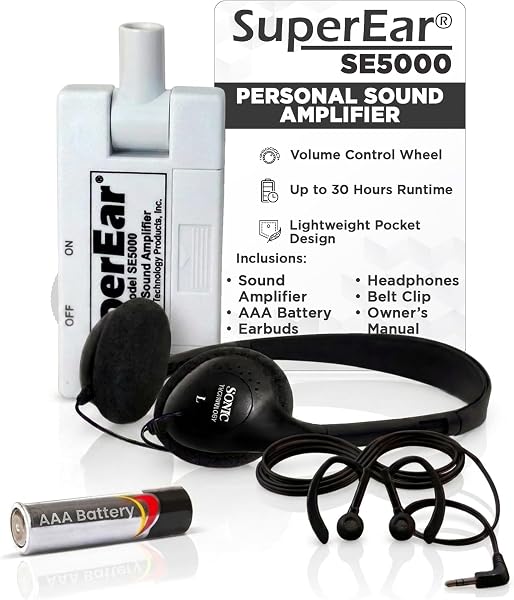
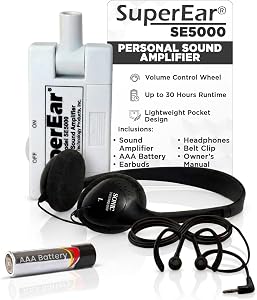
The SuperEar SE5000 represents the classic handheld sound amplifier category: a pocket-sized unit with a built-in microphone that captures surrounding sound and amplifies it through headphones or earbuds. This fundamentally different approach from in-ear hearing aids has specific advantages for certain users, particularly those who want to use amplification in defined situations like watching television or attending a meeting rather than throughout the day.
We may earn a commission when you buy through this link, at no additional cost to you.
The 50+ dB of ambient sound gain is substantial amplification that handles most everyday listening needs effectively. The tactile volume control wheel allows users to adjust sound levels by feel without needing to see the device, which matters for users with limited vision or those who want to make adjustments discreetly. The surface mount microelectronics deliver crystal clear stereo amplification across the full frequency range.
The package includes both deluxe stereo headphones for home listening and discreet stereo earbuds for situations where a lower profile matters. The included AAA battery, belt clip, and compatibility with disposable earpad covers address practical daily use needs. The 30-hour battery life with moderate to heavy use means the device needs infrequent battery changes, and standard AAA batteries are easy to find anywhere.
Handheld sound amplifiers excel in defined listening situations where the user can set the device on a table, place it near a sound source, or position it strategically for best sound capture. Watching television, having one-on-one conversations in quiet settings, attending lectures or worship services, and participating in meetings are all situations where handheld amplifiers often outperform in-ear devices. The ability to point the microphone directly at the sound source gives handheld units a directional advantage that in-ear devices cannot match.
This amplifier is the right choice for users who want situational amplification rather than all-day in-ear wear, and for those who prefer the simplicity of a handheld unit over tiny in-ear devices. The main considerations are the external wire connecting to the headphones, which is less discreet than wireless in-ear options, and the appearance that clearly identifies the user as using assistive listening equipment. For specific listening situations where sound quality and reliability matter more than appearance, this is an excellent choice.
Users who want discreet in-ear amplification or those who need all-day continuous wear during normal activities.
We may earn a commission when you buy through this link, at no additional cost to you.
This rechargeable amplifier pair stands out with exceptional battery performance that leads most of the comparison. A single charge provides up to 60 hours of use, and the portable charging case provides 110 hours of additional backup power. For users who travel frequently or who want to minimize charging interruptions, this extended battery life essentially eliminates power anxiety during normal daily use. The portable case also allows charging on the go without needing wall power.
We may earn a commission when you buy through this link, at no additional cost to you.
The ultra-miniature microelectronics deliver clear sound in a device that weighs only 2 grams per unit, which is among the lightest in this comparison. The medical-grade silicone construction and ergonomic shape designed to match the natural curve of the ear canal provide a secure, slip-free fit that remains comfortable during all-day wear. The devices fit deep in the ear canal for a virtually invisible appearance.
The intelligent features include a single-button five-volume-level control with long-press power on/off, plus smart storage case automation that turns the devices on automatically when removed from the case and off when returned. This smart automation addresses one of the common frustrations with hearing devices: forgetting to turn them off when not in use, which drains batteries unnecessarily. The adaptive noise reduction automatically adjusts to different environments without requiring manual mode switching.
Hearing devices that automatically power on when removed from their charging case and power off when returned eliminate a common source of user error and battery waste. Users who forget to turn devices off when not wearing them can drain batteries in a single day, which disrupts the normal usage routine. Automatic case-triggered on and off operation means the devices are always ready when picked up and always charging when stored, which simplifies daily use significantly.
This amplifier pair is the right choice for users who prioritize extended battery life and want ultra-discreet in-ear design with smart automation features. The 4.4-star rating reflects strong owner satisfaction. The main considerations are the lack of app-based customization and the blue and red color scheme that is less discreet than beige or clear alternatives. For users who want long battery life with simple automatic operation, this delivers excellent value.
Users who want detailed app-based customization or those who prefer the more traditional beige color of medical devices.
We may earn a commission when you buy through this link, at no additional cost to you.
The EarCentric EasyCharge takes a different design approach by using a behind-the-ear (BTE) configuration where the main electronics sit comfortably behind the ear and connect to the ear canal through a thin tube and silicone dome. This design has specific advantages: BTE devices typically offer better sound quality and amplification power than in-canal designs because the larger housing can accommodate better electronics and microphones.
We may earn a commission when you buy through this link, at no additional cost to you.
The dual-charger approach is a thoughtful solution that few competitors offer. The desktop charging dock stays beside the bed or on a dresser for overnight charging, while the portable charging case travels with the user for weekend trips, hotel stays, or extended travel. This eliminates the need to pack and unpack charging equipment or risk forgetting cables, which is particularly valuable for users who travel frequently to visit family.
A single quick charge provides 3 full days of hearing, and the portable case holds 3 additional charges for up to 12 days of total battery capacity. The BTE design works well with eyeglasses because the device sits behind the ear rather than competing with eyeglass arms for ear canal space. Multiple ear dome sizes and both regular and long tubes help users find a comfortable fit for different ear shapes and preferences.
Behind-the-ear hearing devices separate the main electronics from the ear canal, which offers advantages in sound quality, battery size, and durability but reduces the discreet appearance of in-canal designs. BTE devices work well with eyeglasses because they do not compete for ear space, and they are easier to insert and remove than tiny in-canal devices for users with dexterity limitations. In-canal designs offer better aesthetic discretion but can be harder to handle and may conflict with eyeglass arms during insertion and removal.
This amplifier is the right choice for users who want BTE design advantages with the convenience of dual-charger support and US-based customer service. The main considerations are that BTE devices are generally more visible than deep in-canal alternatives and the tubes may need periodic replacement as they age. For users who value sound quality, comfort with glasses, and travel convenience, this is an excellent choice.
Users who prioritize the most discreet appearance possible or those who want deep in-canal placement for maximum invisibility.
We may earn a commission when you buy through this link, at no additional cost to you.
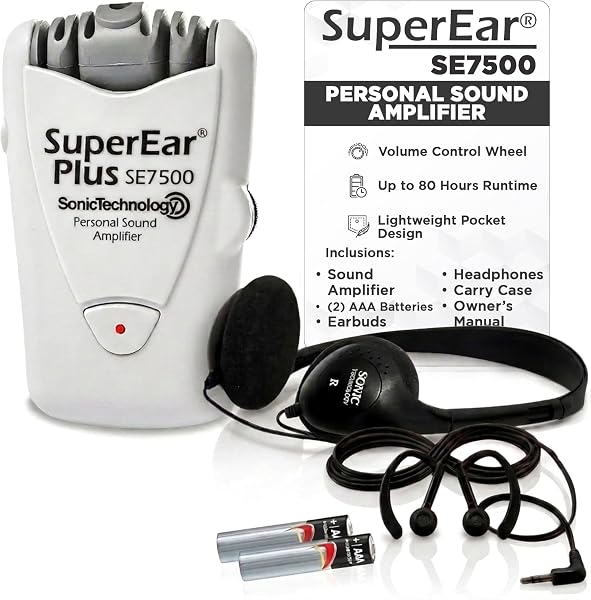
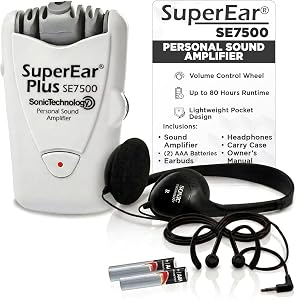
The SuperEar SE7500 Plus builds on the SE5000 platform with extended battery life that nearly triples the usage time between battery changes. The 80-hour battery life with automatic shut-off is particularly valuable for users who use the amplifier for extended TV listening sessions, worship services, or lectures where swapping batteries mid-event would be disruptive. Standard AAA batteries are easy to find and inexpensive to replace when needed.
We may earn a commission when you buy through this link, at no additional cost to you.
The 50+ dB of ambient sound gain is substantial amplification suitable for most everyday listening situations, from quiet one-on-one conversations to larger group settings. The redesigned microphone helps minimize the carrying noise that can affect handheld amplifiers when the device moves against clothing or hands. For users who hold the device during conversations or clip it to their clothing, this reduced interference meaningfully improves sound quality.
The package includes lightweight earbuds for discreet public use alongside full-size headphones for home use, giving users flexibility based on the listening situation. The included carry case with belt clip and the compact overall size make the device practical to carry throughout the day. Compatibility with disposable ear pad covers and the SuperEar extension cable allows for hygienic sharing and extended placement flexibility.
Battery-powered devices that lack automatic shut-off features can drain batteries quickly if accidentally left on when not in use. Users who set the amplifier down during a break or forget to turn it off at bedtime can wake up to a dead device the next morning. Automatic shut-off features detect periods of inactivity and power the device down to preserve battery life, which prevents the frustration of unexpected battery depletion and extends the practical usage time between battery changes significantly.
This amplifier is the right choice for users who want the proven SuperEar handheld platform with longer battery life than the SE5000 provides. The automatic shut-off feature prevents battery waste when the device is accidentally left on. The main considerations are the external wire that connects to the headphones and the larger overall profile compared to in-ear alternatives. For users who prioritize battery life and sound quality in a handheld amplifier, this is a strong choice.
Users who want a discreet in-ear design or those who need Bluetooth connectivity for phone calls and media playback.
We may earn a commission when you buy through this link, at no additional cost to you.
This rechargeable hearing device delivers an exceptional 120 hours of battery life on a single 1-hour charge, which is among the longest in this entire comparison. For users who want to minimize charging frequency and maintain reliability during travel or extended trips, this battery performance eliminates the daily charging routine that affects most competing devices. The fast 1-hour charge time means the device can be topped off quickly if the battery does run low.
We may earn a commission when you buy through this link, at no additional cost to you.
The 65 dB maximum sound gain is the highest amplification capability in this comparison, providing substantial power for users with more significant hearing challenges or for difficult listening environments. The automatic gain control actively adjusts amplification levels in real time based on the input sound, which prevents the user from being blasted by sudden loud noises while still boosting quieter sounds appropriately. This dynamic range adjustment is more sophisticated than simple fixed-level amplification.
The directional noise-canceling microphone focuses on sounds coming from directly in front of the user, which is particularly valuable for conversations where you naturally face the speaker. By reducing amplification of sounds from behind or beside the user, this directional approach enhances speech clarity in noisy environments better than omnidirectional microphones that pick up sound equally from all directions. The simple one-knob volume control keeps operation straightforward.
Standard omnidirectional microphones pick up sound equally from all directions, which means they amplify background noise just as much as the speech you want to hear. Directional microphones focus their sensitivity on sounds coming from a specific direction, typically straight ahead. In practical use, this means a directional amplifier makes the person you are talking to easier to hear while reducing the distracting amplification of surrounding conversations, air conditioning noise, or restaurant clatter. For social situations, this directional focus can be transformative.
This device is the right choice for users who want maximum battery life, high amplification power, and directional microphone performance in a traditional handheld amplifier. The 2-year warranty plus lifetime repair service provides exceptional long-term support. The main considerations are the larger pocket-sized unit compared to in-ear alternatives and the external headphone connection. For users who need powerful amplification with extended battery life, this is an excellent choice.
Users who want a discreet in-ear amplifier or those who need Bluetooth connectivity for integrated phone and media use.
We may earn a commission when you buy through this link, at no additional cost to you.
The Williams Sound PockeTalker Ultra DUO is a professional-grade personal sound amplifier used in medical offices, schools, places of worship, and senior care facilities around the country. The 5-year manufacturer warranty is dramatically longer than the typical 1-year coverage of consumer alternatives and reflects the professional-grade construction quality. For buyers who view the amplifier as a long-term investment, this warranty commitment provides significant peace of mind.
We may earn a commission when you buy through this link, at no additional cost to you.
The 20-40 dB acoustic gain provides substantial amplification suitable for most hearing challenges, and the separate external volume and tone controls allow more precise sound customization than simple volume-only alternatives. The tone control is particularly valuable because it allows users to adjust the frequency response to compensate for specific hearing loss patterns, which single-knob volume controls cannot address.
The removable microphone with extension cord allows unique flexibility that other amplifiers cannot match. Users can position the microphone close to a sound source like a television speaker, lecturer’s podium, or church sound system while keeping the main unit comfortably in their pocket or on their belt. The included 12-foot TV listening cord is specifically designed to connect to television audio for enhanced TV viewing without disturbing other household members with increased volume.
Professional-grade personal sound amplifiers like the Williams Sound PockeTalker are engineered for institutional use in hospitals, nursing homes, schools, and houses of worship where reliability under constant daily use is essential. This professional heritage translates to consumer purchases through superior build quality, longer warranties, and better long-term reliability compared to products designed primarily for occasional consumer use. The 5-year warranty backs this quality claim with substantial manufacturer confidence.
This amplifier is the right choice for users who want professional-grade quality, extended warranty protection, and the flexibility of a removable microphone with extension cable. The 100-hour battery life using standard AAA batteries provides excellent operational longevity. The main considerations are the premium price compared to consumer alternatives and the traditional appearance that clearly identifies the user as using assistive listening equipment. For serious users who want the best handheld amplifier available, this is the premium choice.
Budget-conscious buyers who do not need professional-grade construction or those who want a discreet in-ear design.
We may earn a commission when you buy through this link, at no additional cost to you.
The MSA PRO Sound Amplifier represents the entry-level price point for in-ear amplification, making it an accessible way to try personal sound amplification without a significant investment. For buyers who are uncertain whether in-ear amplification will work for them, or who want a backup device at low cost, this amplifier delivers basic functionality at an accessible price. The 30x sound amplification claim indicates the device provides substantial volume boost for typical listening situations.
We may earn a commission when you buy through this link, at no additional cost to you.
The small lightweight design is barely noticeable in daily use, and the clear tubing is designed to blend with skin tones for discreet appearance. The unisex design works for both men and women, and the device can be worn in either ear without being configured as left or right specific. The 6 included silicone ear tips allow users to customize the fit for comfort and secure placement.
The rechargeable design eliminates the need to replace small batteries, which is particularly valuable for users with limited dexterity. The included fast charging station provides up to 20 hours of continuous use per charge. The included cleaning brush helps maintain hygiene over extended use, and the overall package provides a complete starter kit for first-time amplification users.
Budget hearing amplifiers like the MSA PRO serve specific legitimate purposes even though they cannot match the sound quality of premium alternatives. Trying amplification for the first time without a significant financial commitment helps buyers decide whether in-ear devices work for their lifestyle before investing more. Keeping a backup device for travel or in case the primary amplifier is lost or broken provides insurance against unexpected equipment problems. For these purposes, budget amplifiers deliver appropriate value despite their limitations.
This amplifier is the right choice for budget-conscious buyers who want to try in-ear amplification at the lowest possible price, or for anyone who needs a backup device without significant investment. The 3.7-star rating is modest and reflects the budget nature of the product, with some owners experiencing quality consistency issues. The main consideration is that this is simple amplification without the noise reduction, directional microphones, or digital processing of more sophisticated alternatives. For users with specific hearing needs, stepping up to a mid-range option like the Flaygo will likely deliver meaningfully better results.
Users who need noise reduction, directional microphones, or the sophisticated digital processing of mid-range and premium alternatives.
We may earn a commission when you buy through this link, at no additional cost to you.
Selecting a hearing amplifier involves matching the device type, sound quality, and feature set to the user’s hearing situation, lifestyle, and technical comfort. The following factors cover the most important decision points to help you choose an amplifier that genuinely improves daily listening without creating frustration.
The first major decision is whether you need an FDA-registered OTC hearing aid like the Audien Atom One or a personal sound amplifier like the SuperEar or MSA PRO models. OTC hearing aids are regulated medical devices designed specifically for adults with perceived mild to moderate hearing loss. They must meet FDA requirements for maximum output levels, distortion, and safety features. For users with actual hearing loss, OTC hearing aids provide the appropriate category of product.
Personal sound amplifiers (PSAPs) are not medical devices and are legally intended for recreational amplification by people with normal hearing. They work well for specific situations like watching television, attending lectures, or outdoor activities like birdwatching. However, they are not designed to compensate for hearing impairment and lack the regulatory safeguards of OTC hearing aids. For users with diagnosed hearing loss, PSAPs may provide inadequate sound quality or inappropriate amplification characteristics.
If you have had a hearing evaluation showing mild to moderate hearing loss, prioritize OTC hearing aids. If you have normal hearing but want amplification for specific situations, PSAPs are appropriate and often more affordable.
In-ear amplifiers like the Audien Atom One, Flaygo, and MSA PRO sit discreetly in the ear canal and provide hands-free continuous amplification throughout the day. This design works well for users who want always-on sound enhancement during normal activities and who value discreet appearance. The trade-off is that in-ear devices are tiny and can be challenging for users with limited dexterity to handle, insert, and remove safely.
Handheld amplifiers like the SuperEar SE5000, SE7500 Plus, and Williams Sound PockeTalker are pocket-sized units that pick up sound through a built-in microphone and deliver it through headphones or earbuds connected by wire. This design excels in defined listening situations where the user can position the microphone optimally, and it is easier to use for people with limited dexterity. The visible nature of handheld amplifiers and headphones is less discreet than in-ear alternatives.
For continuous all-day wear and maximum discretion, choose in-ear designs. For situational use with easier handling and superior sound capture in defined settings, handheld amplifiers offer practical advantages worth considering.
Modern hearing amplifiers use digital signal processing to enhance sound quality beyond simple amplification. Multi-channel processing like the 16-channel chip in the Flaygo amplifiers can analyze different frequency ranges independently, boosting speech frequencies while reducing background noise. Noise reduction technology, directional microphones like those on the Auto Gain Hearing Device, and whistling suppression systems all contribute to clearer, more comfortable listening in challenging environments.
Simple amplifiers without digital processing like the budget MSA PRO provide basic sound increase but amplify everything equally, which can actually make noisy environments harder to understand rather than easier. For users who spend time in restaurants, family gatherings, or other complex listening situations, digital processing provides meaningful quality advantages that justify the modest price premium over basic amplifiers.
For quiet one-on-one conversations and simple listening, basic amplification is often adequate. For social situations, restaurants, or any environment with background noise, prioritize digital processing with noise reduction features.
Battery performance varies dramatically across hearing amplifiers. The 48-Hour Rechargeable Pair and EarCentric EasyCharge offer multi-day battery life with portable charging cases, which eliminates daily charging anxiety and makes travel significantly easier. The Auto Gain Hearing Device leads this comparison with 120-hour battery life on a single charge. Handheld amplifiers like the Williams Sound PockeTalker use standard AAA batteries that provide 100 hours of use and can be easily replaced anywhere.
Charging convenience matters as much as raw battery life. USB-C charging ports have become standard and work with ubiquitous cables and chargers. Charging docks that automatically power the devices on and off when removed or inserted eliminate another source of user error. Portable charging cases that double as power banks like the Bluetooth 2-in-1 Hearing provide useful backup charging capability for phones and other small devices.
For users who travel frequently, prioritize models with portable charging cases that provide multiple full charges. For home-focused users, simple desktop charging docks are sufficient and often more economical.
User interface design matters enormously because an amplifier that is too complex to adjust will often sit unused in a drawer. The Audien Atom One uses purely analog dials with no electronic complexity, which works well for seniors uncomfortable with technology. The Flaygo and 48-Hour Rechargeable Pair use single-button operation with 4 to 5 preset volume levels, which balances simplicity with useful adjustment range.
App-controlled amplifiers offer the most detailed customization but require smartphone comfort that many seniors lack. For users who struggle with smartphones, physical buttons and dials are nearly always preferable. Automatic features like adaptive noise reduction eliminate the need for manual mode switching while still providing environment-appropriate processing. Case-triggered automatic on and off features like those on the 48-Hour Rechargeable Pair reduce user errors and conserve battery.
Match control complexity to the user’s technical comfort. For technology-averse users, prioritize analog dials or simple single-button operation. For technology-comfortable users, app-based customization offers meaningful advantages worth the learning curve.
In-ear amplifier fit matters enormously because an uncomfortable device will not be worn long enough to provide benefit. Multiple silicone ear dome sizes like those included with the Audien Atom One, Flaygo, and MSA PRO allow users to find a comfortable fit that stays securely in place. Behind-the-ear designs like the EarCentric EasyCharge work well with eyeglasses because they do not compete for ear canal space.
Weight affects all-day comfort significantly. Ultra-lightweight designs like the 2-gram 48-Hour Rechargeable Pair and 3.5-gram Flaygo amplifiers remain comfortable during extended wear, while heavier devices may cause ear fatigue over long listening sessions. For handheld amplifiers, consider whether the user prefers belt clips, pocket carry, or lanyard options, and whether the device will be worn or set down most of the time.
For all-day wear comfort, prioritize ultralight in-ear designs with multiple ear tip sizes. For eyeglass wearers, consider BTE designs that avoid ear canal competition. For situational use, handheld amplifiers that spend most time in a pocket matter less for weight considerations.
When first using a hearing amplifier, start with low volume settings and gradually increase to find a comfortable level. Over-amplification can cause discomfort, feedback whistling, and even hearing damage over time, so patience during the adjustment period is important. For in-ear devices, make sure you have selected the right ear dome size for a secure, comfortable fit without pressure points. For handheld amplifiers, experiment with microphone placement to find the optimal position for your typical listening situations. Many users benefit from using the amplifier initially in quiet environments to adapt before testing in more challenging settings like restaurants or family gatherings.
Clean your amplifier regularly to maintain sound quality and prevent ear health issues. Use the included cleaning brush or a soft dry cloth to remove earwax and debris from in-ear devices, paying particular attention to the microphone ports and sound outlets where blockages most commonly occur. The wax guard systems included with devices like the Audien Atom One should be replaced according to the manufacturer’s recommendations. For handheld amplifiers, wipe down the device and headphones with a slightly damp cloth, and periodically replace earbud tips or earpad covers for hygiene. Avoid submerging any device in water unless it is specifically rated as waterproof.
Charge batteries according to the manufacturer’s recommendations and store the device properly when not in use. For rechargeable devices with charging cases, develop a routine of placing the device in the case overnight to ensure it is always ready for the next day. For devices with disposable batteries, keep spare batteries in a convenient location so you are not caught without power unexpectedly. Store the device in its case or a dedicated location to prevent loss, and keep it away from extreme temperatures and humidity. If the device includes a desktop charger and portable case like the EarCentric EasyCharge, use the appropriate charger for each situation to prolong battery life. Replace batteries, ear tips, and wax guards as needed to maintain optimal performance over the device’s lifetime.
Hearing aids are FDA-regulated medical devices designed to compensate for hearing loss, with specific requirements for safety and effectiveness. Personal sound amplifiers (PSAPs) are not medical devices and are legally intended for recreational amplification by people with normal hearing. OTC hearing aids like the Audien Atom One occupy a middle ground as FDA-registered devices available without a prescription. For diagnosed hearing loss, choose OTC hearing aids. For situational amplification needs, PSAPs are often adequate and more affordable.
You do not need a hearing test to purchase a personal sound amplifier or OTC hearing aid, but having one performed by an audiologist provides valuable information about your specific hearing situation. A hearing test can identify whether you have mild, moderate, or severe hearing loss, which affects what type of device will work best. For severe hearing loss, prescription hearing aids typically provide significantly better results than OTC alternatives, so professional evaluation is worthwhile before purchasing any device.
Most users need 2 to 4 weeks to fully adjust to using a hearing amplifier. Start by wearing the device for short periods in quiet environments, then gradually increase the duration and complexity of listening situations. Your brain needs time to recalibrate how it processes amplified sounds, and voices and ambient noise may initially sound unusual. Patience during the adjustment period is important for successful long-term use. If discomfort persists after a month of regular use, consult with an audiologist for professional guidance.
Most hearing amplifiers should not be worn while sleeping or showering unless specifically rated for those uses. Sleeping with devices in place can cause ear canal irritation and potential damage to the devices from pressure or moisture. Water exposure can permanently damage internal electronics on devices not rated as waterproof. Remove hearing amplifiers before showering, swimming, or sleeping, and store them in their case to protect them from moisture and physical damage.
Original Medicare typically does not cover hearing amplifiers or OTC hearing aids. Some Medicare Advantage plans and private insurance policies may provide partial coverage, especially for prescription hearing aids with proper medical documentation. FSA and HSA accounts generally qualify FDA-registered OTC hearing aids like the Audien Atom One as eligible medical expenses, which can effectively reduce the cost through pre-tax funding. Check with your specific insurance provider or account administrator for coverage requirements.
Battery life varies significantly by model. Entry-level amplifiers typically provide 15 to 30 hours per charge, while premium models like the Auto Gain Hearing Device can run for 120 hours on a single charge. Devices with portable charging cases like the 48-Hour Rechargeable Pair extend total usage time to 100+ hours before needing wall power. For daily all-day use, aim for at least 24-hour battery life to avoid mid-day charging interruptions.
Yes, hearing amplifiers can significantly improve television listening without requiring volume increases that bother other household members. Handheld amplifiers like the SuperEar SE5000 and Williams Sound PockeTalker work particularly well for TV listening because you can position the microphone near the television speaker for direct sound capture. Some devices like the Williams Sound PockeTalker include dedicated TV listening cords that connect to the television audio output for optimal sound quality without ambient room noise interference.
Hearing amplifiers are not designed to treat tinnitus directly, but they may provide some relief indirectly by increasing environmental sound awareness, which can make tinnitus less noticeable through masking effects. True tinnitus treatment typically requires specialized devices or therapies prescribed by audiologists or ENT specialists. If tinnitus is your primary concern rather than hearing loss, consult with a healthcare provider for appropriate treatment options before purchasing a general-purpose hearing amplifier.
Behind-the-ear (BTE) designs like the EarCentric EasyCharge offer better sound quality and are easier to handle for users with limited dexterity, but they are more visible than in-canal alternatives. In-canal designs like the Audien Atom One and Flaygo provide more discreet appearance and work well for users who prioritize invisible fit. BTE designs typically work better with eyeglasses because they do not compete for ear canal space, which can be a decisive factor for eyeglass wearers.
Feedback whistling usually indicates that amplified sound is leaking back into the microphone, which can happen if the ear tip does not seal properly or if the volume is set too high. Try a different size ear tip for a better seal, reduce the volume setting, or reposition the device in your ear. Many modern amplifiers like the Flaygo include whistling suppression systems that automatically address feedback, which can reduce or eliminate the problem. Persistent feedback issues may indicate the device is not suitable for your ear shape or hearing loss pattern.
The Audien Atom One OTC Hearing Aids stand out as the strongest overall choice for users with mild to moderate hearing loss because they combine FDA-registered OTC hearing aid status with the simplicity of analog dial controls, 24-hour rechargeable battery, discreet nano design, and included expert setup consultation. The combination of medical device regulatory compliance and user-friendly design addresses the main needs that drive buyers to this product category. For adults who want genuine hearing aid technology without a prescription or audiologist visit, this is the top recommendation.
For buyers with different needs, several alternatives excel in their respective niches. The Flaygo Hearing Aids offer excellent value with 16-channel digital processing in an ultralight design. The Williams Sound PockeTalker provides professional-grade quality with a 5-year warranty for serious users. The Bluetooth 2-in-1 Hearing earns the highest rating by combining amplification with Bluetooth earbud functionality. The EarCentric EasyCharge offers behind-the-ear design with dual charging convenience for travelers. The Auto Gain Hearing Device delivers maximum 65 dB amplification with 120-hour battery life for users who need powerful amplification.
Your best choice ultimately depends on your hearing situation, lifestyle, technical comfort, and whether discreet in-ear fit or handheld amplifier design matches your needs better. Consider getting a professional hearing evaluation to understand your specific situation before purchasing, especially if you suspect significant hearing loss. For situational amplification needs, personal sound amplifiers deliver appropriate value at lower costs. For actual hearing loss, FDA-registered OTC hearing aids provide the appropriate category of product. Any of the ten options in this guide can meaningfully improve daily listening when matched to the right user and situation.