Titan Soft Leather
9.2Editor score14-inch diameter
PU leather exterior
Double-stitched seams
Side loop handles
Find the right wall balls for 2026. We compare 9 standout options by build quality, useful features, owner feedback, value, and everyday trade-offs.
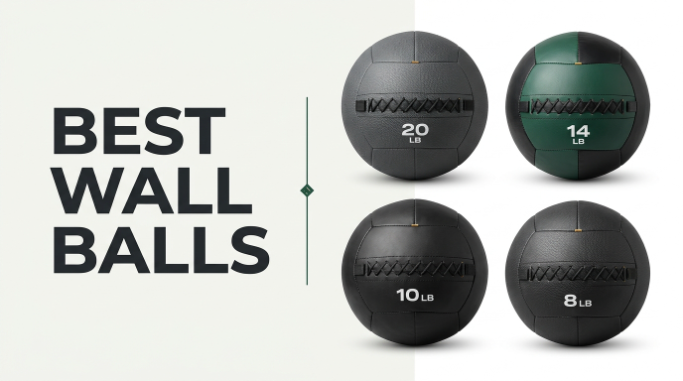
Choosing the right wall ball in 2026 means matching weight, shell material, diameter, and grip texture to your training style and fitness level. We compare 9 standout options across seam construction, bounce characteristics, slam compatibility, surface feel, weight distribution, and long-term durability so you can pick a ball that holds up to your programming.
Wall balls differ significantly from slam balls and medicine balls despite overlapping designs. A true wall ball features a softer shell that absorbs impact against concrete or drywall without damaging the surface or the ball, while slam balls use denser, no-bounce construction for ground strikes. Confusing these categories leads to premature wear or damaged walls.
This guide breaks down each option by the specifications that matter most to functional fitness athletes: shell composition, internal fill balance, grip loop placement, diameter consistency across weight ranges, and whether the ball is rated for wall throws only or can handle occasional slams. The goal is a confident purchase that matches your workout demands.
We compared 9 wall balls and weighted training balls using the details that actually help a buyer decide: shell material and texture, internal weight distribution, diameter consistency, seam reinforcement, grip features like loops or tacky surfaces, slam compatibility, weight range availability, and owner feedback. The notes focus on practical trade-offs so each pick connects to how athletes actually use these balls for wall throws, squats, partner drills, and functional conditioning in home garages and commercial gym spaces.


Compare key features, scores, and current prices side by side. A shorter feature list means fewer details were available, not necessarily fewer capabilities.





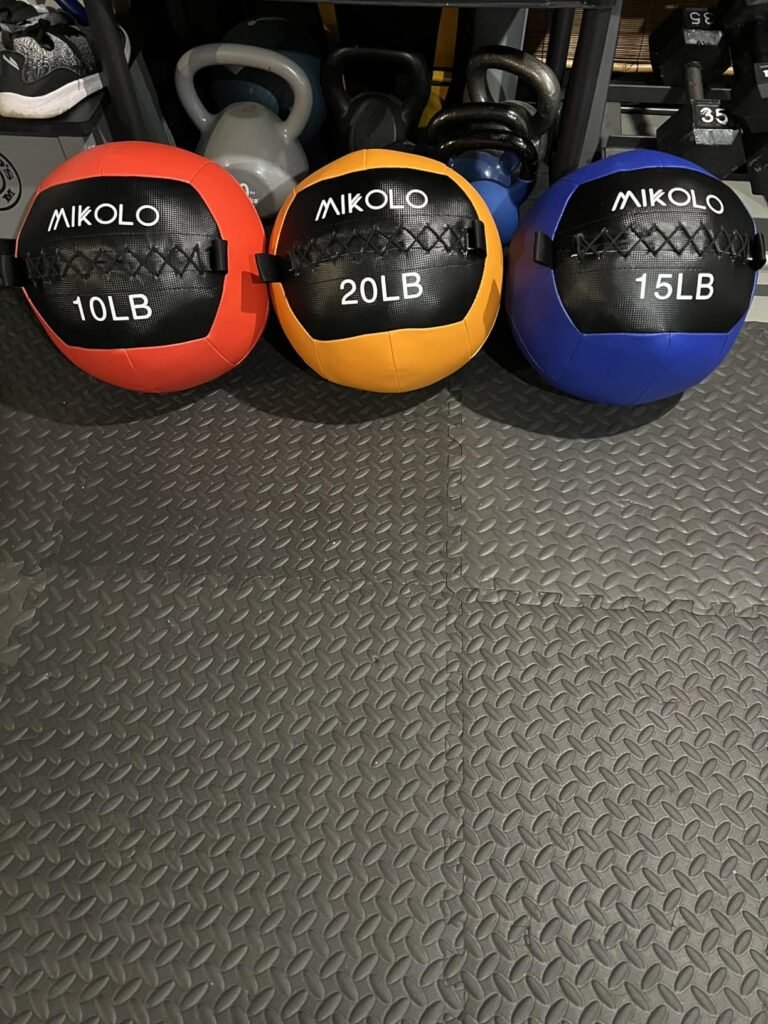
The Mikolo Medicine Ball Set is the strongest overall pick in this guide because it delivers a complete weight progression in a single purchase. The set includes 10, 15, 20, and 25-pound balls, which covers the range most athletes need from beginner wall ball work through advanced conditioning. For home gym owners building out their equipment, this eliminates the need to buy individual balls over time.
We may earn a commission when you buy through this link, at no additional cost to you.
Construction quality stands out with a double-layer exterior combining PVC and mesh fabric with over 20 stitches per inch at the seams. The internal metal sand weight is secured by double-layer Oxford cloth and two reinforced seals, which prevents the weight shifting that plagues cheaper balls after months of use. This zero-leak, zero-shift design means the ball maintains its balance and shape through thousands of throws.
The upgraded wide finger loops measuring 36mm in width with an 80cm circumference are noticeably larger than the thin loops on most wall balls. This extra grip space makes the ball easier to control during dynamic movements like overhead slams, rotational throws, and one-handed carries. The included wall-mount exercise chart adds practical value for buyers who want structured workout guidance.
Progressive overload is the foundation of strength and conditioning improvement, and having multiple ball weights lets you increase resistance as your fitness improves without changing your movement patterns. A 10-pound ball is appropriate for learning wall ball mechanics and high-rep endurance work, while a 20 or 25-pound ball challenges your legs, core, and shoulders during strength-focused sessions. Having the full range available means your equipment grows with your fitness rather than becoming obsolete.
This set is the right pick for home gym owners and functional fitness athletes who want a complete wall ball solution without piecing together individual purchases. The higher upfront cost is offset by the per-ball value compared to buying four separate balls. Buyers who only need a single weight should look at individual options like the Champion Leather Medicine Ball for a lower entry price.
Not for buyers who need only a single weight or prefer to select individual balls at specific increments.
We may earn a commission when you buy through this link, at no additional cost to you.
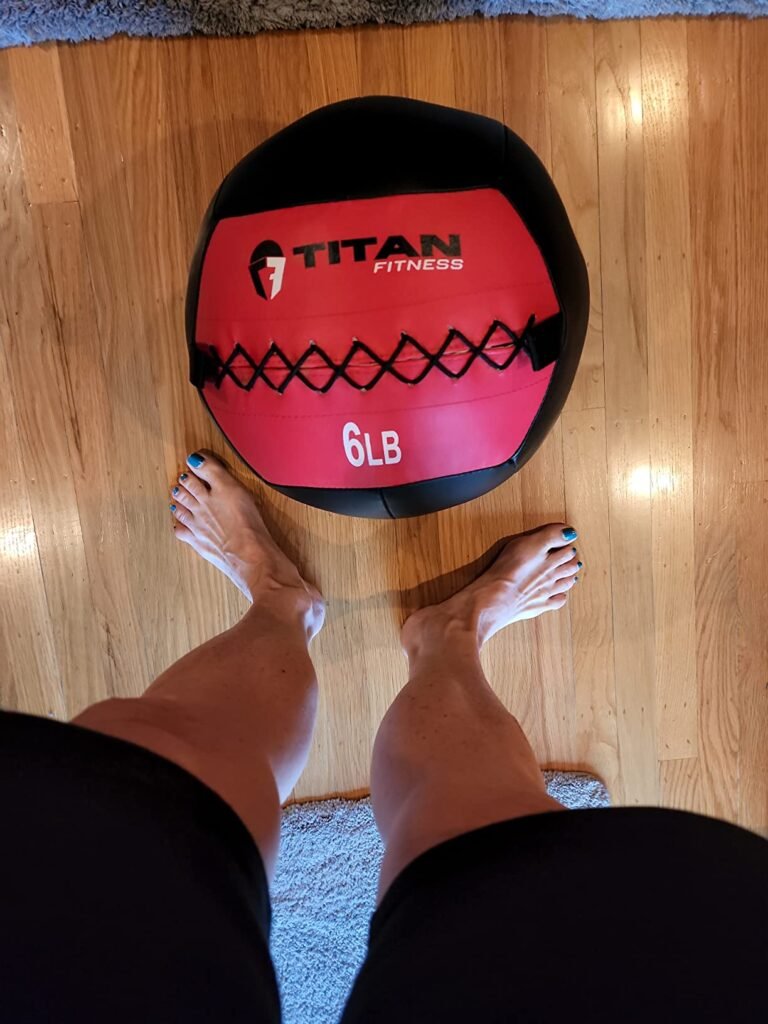
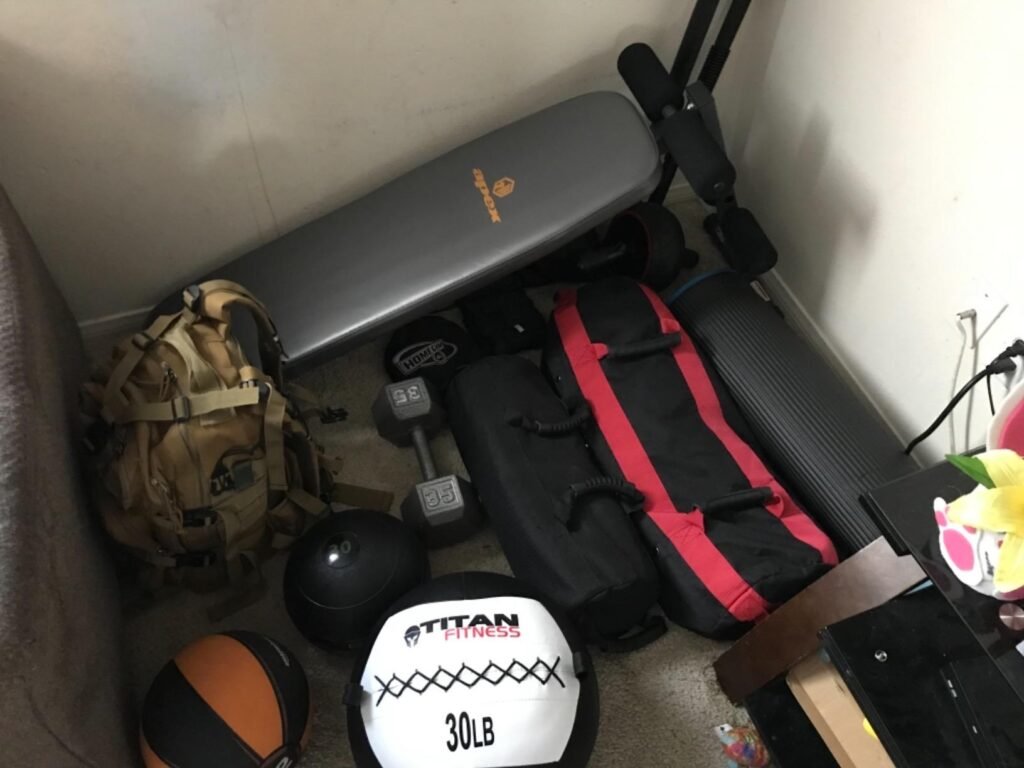
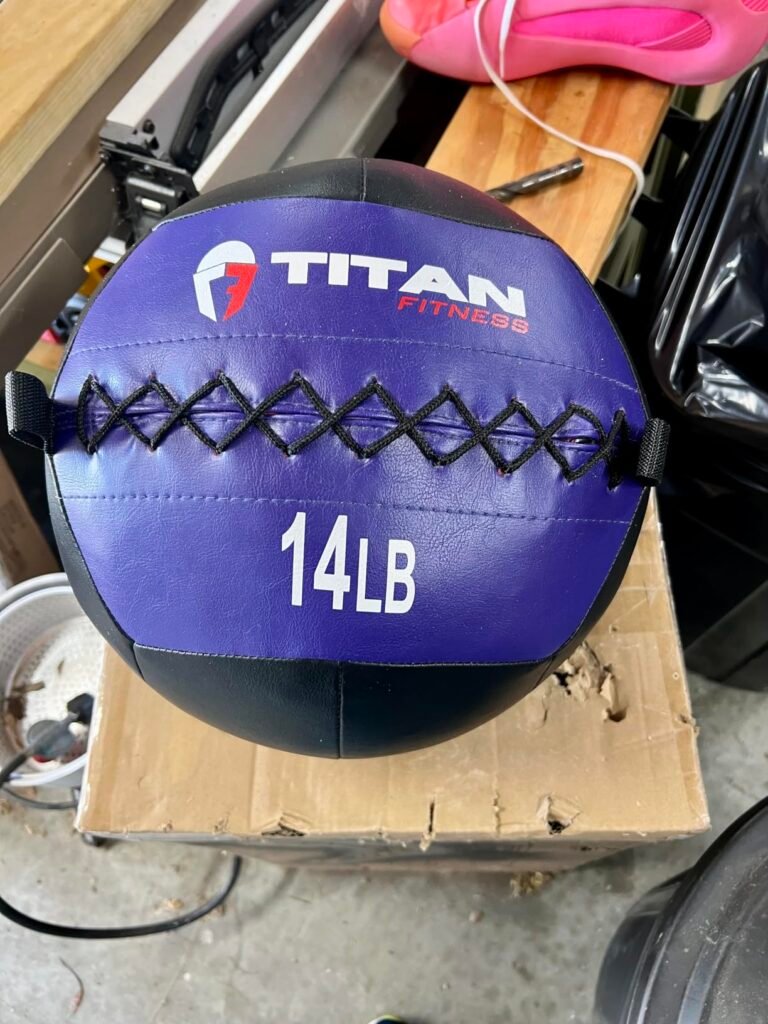
The Titan Fitness Soft Leather wall ball is built specifically for wall throw routines and core conditioning, and its design reflects that singular focus. The 14-inch diameter and even internal weight distribution create a predictable flight path that makes catching rebound throws more consistent, which matters during high-rep WODs where a wobbling ball costs you time and rhythm.
We may earn a commission when you buy through this link, at no additional cost to you.
The PU leather exterior with PP cotton filling gives the ball a soft, forgiving surface that absorbs impact against walls without bouncing back aggressively. This is a genuine safety advantage in shared gym spaces where an over-bouncy ball can ricochet into nearby athletes. The material also maintains grip when your hands are sweaty, reducing the fumbles that interrupt wall ball sets.
Double-stitched seams reinforce every panel connection, which is where most wall balls eventually fail after months of repeated wall contact. The small side loop handles are a practical addition for quickly repositioning the ball between exercises like transitioning from wall throws to Russian twists or overhead lunges. The color-coded system makes weight identification fast in a multi-ball gym environment.
A wall ball with uneven internal fill will wobble in flight and rebound unpredictably off the wall, forcing you to adjust your catch position on every rep. This inconsistency adds unnecessary fatigue to your forearms and shoulders during high-volume sets. Even weight distribution means the ball flies true and returns to roughly the same spot, letting you focus on your squat depth and throw mechanics rather than chasing the ball.
This ball is the right pick for athletes who primarily do wall throws, squat-to-press movements, and partner tosses. The explicit limitation is that it is not designed for slam ball exercises, so if your programming includes overhead ground slams, you need a dedicated slam ball instead. For dedicated wall ball work, the balanced construction and soft shell deliver reliable performance.
Not for athletes who need a ball for overhead ground slams or high-impact floor exercises.
We may earn a commission when you buy through this link, at no additional cost to you.
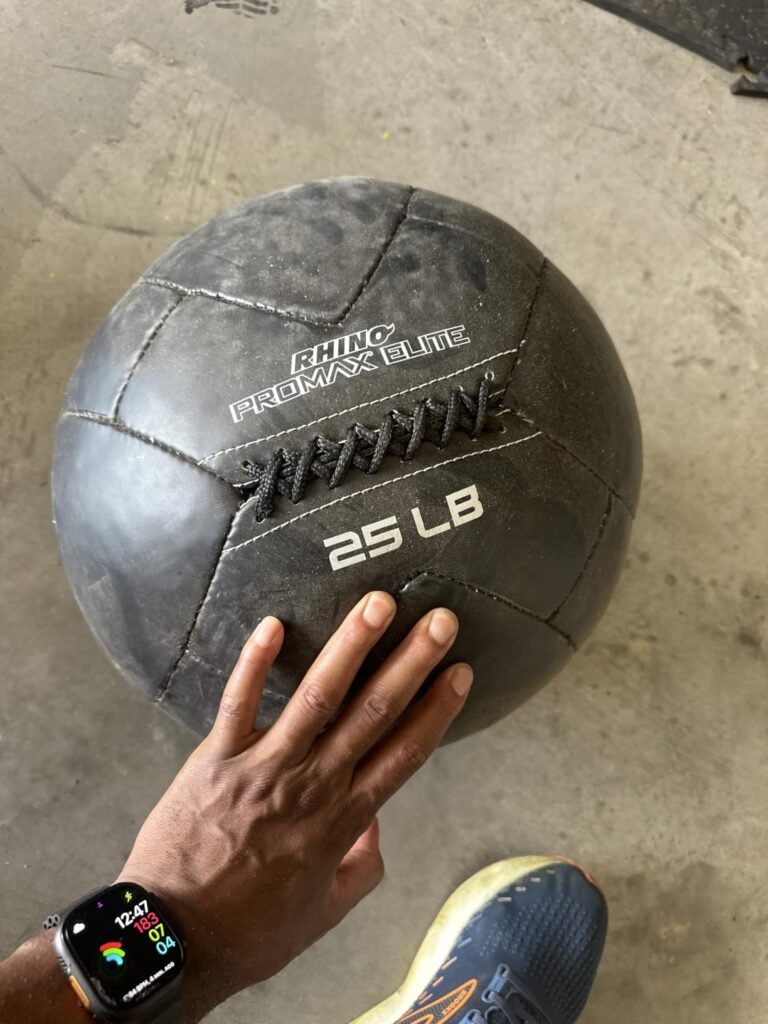
The Champion Sports Rhino ProMax Elite Slam Ball occupies a middle ground between a traditional dead-bounce slam ball and a softer wall ball. The Rhino Skin tacky vinyl exterior provides a secure grip that holds up during sweaty conditioning sessions, and the shell has more give than typical slam balls, which makes it more forgiving to catch during partner drills and wall rebounds.
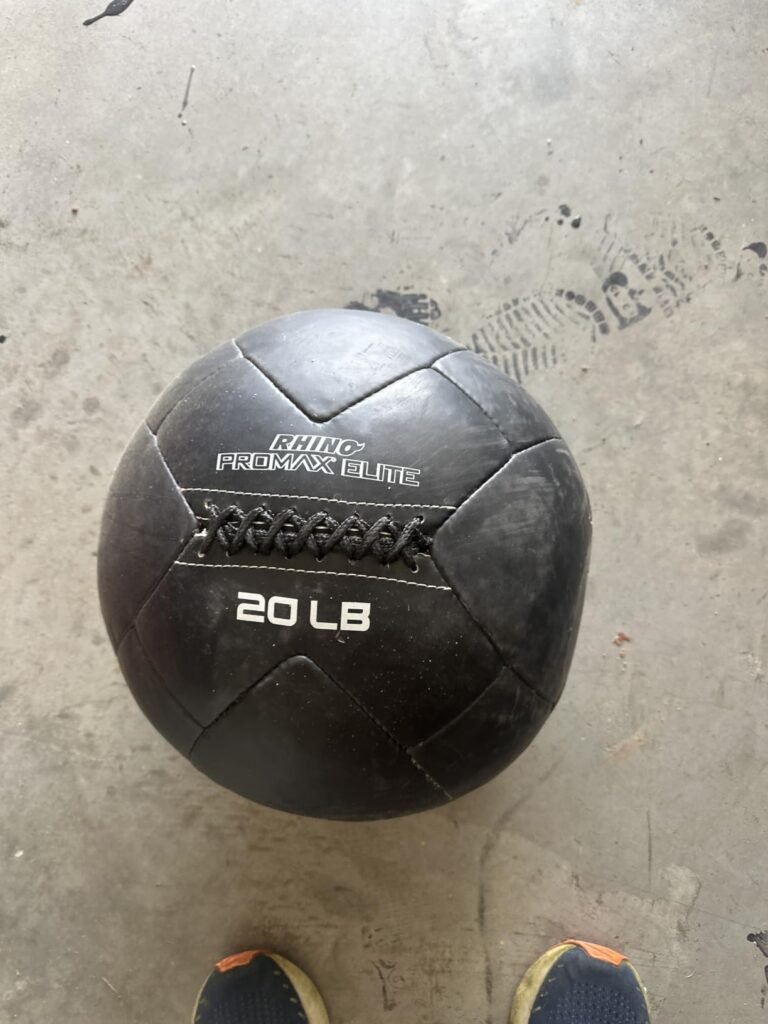
We may earn a commission when you buy through this link, at no additional cost to you.
The construction is designed for significant wear and tear from repeated ground contact, though it is worth noting that the warranty specifically excludes damage from repeated impact on rough surfaces or overhead ground slams. This is a common limitation in the slam ball category and reflects the reality that no ball is truly indestructible under extreme abuse. On smooth gym flooring, the ball holds up well.
The ergonomic build and larger profile make the ball comfortable to hold during overhead throws, squat-to-press movements, and rotational exercises. The additional bounce compared to dead-bounce slam balls means it works for wall throws and partner tosses in addition to ground slams, giving it more versatility than a pure slam ball. This multi-use capability is valuable for home gym owners who want one ball for multiple movement patterns.
Dead-bounce slam balls absorb nearly all impact energy and stay on the ground after a slam, which is the desired behavior for overhead slam exercises. Wall balls are designed to rebound off a wall and return to the athlete, requiring a softer, bouncier shell. The Rhino ProMax sits between these extremes with moderate bounce, making it a compromise option for mixed programming but not the specialist choice for either pure slams or pure wall throws.
This ball is the right pick for athletes whose programming mixes slams, wall throws, and functional conditioning. The slight bounce makes it less ideal for pure slam ball work where a dead-bounce ball is preferred, but the versatility compensates for that trade-off. Buyers who exclusively do wall throws should consider a softer shell option instead.
Not for athletes who need a true dead-bounce slam ball for competitive slam ball workouts.
We may earn a commission when you buy through this link, at no additional cost to you.
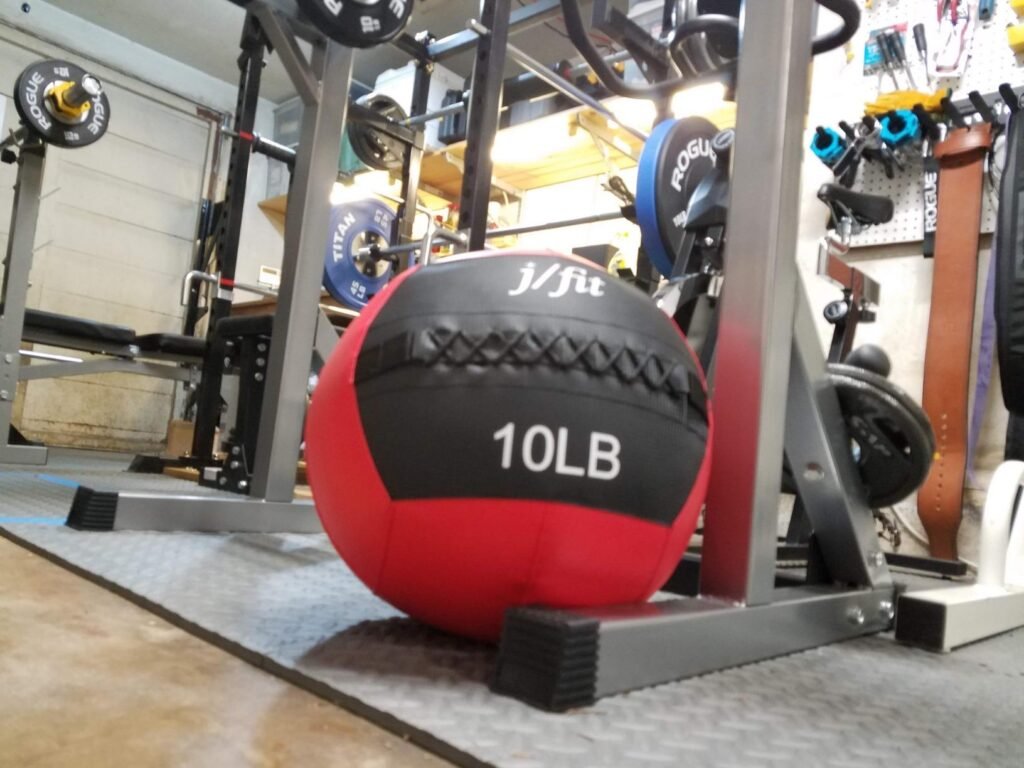
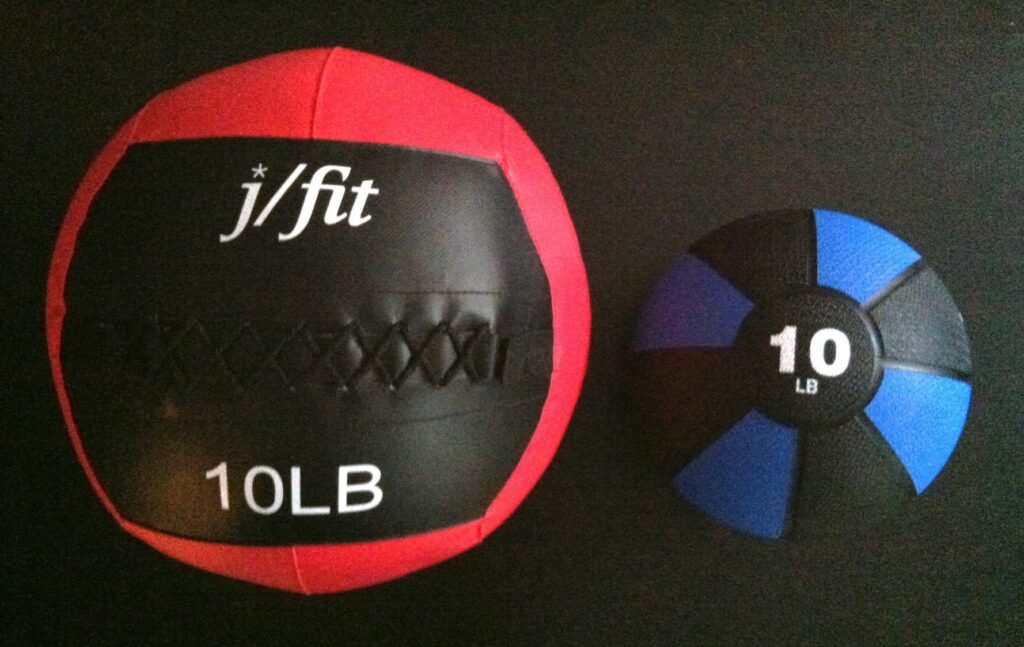
The JFit Wall Ball is a versatile soft-shell option that covers a broad weight range from 4 to 30 pounds, making it one of the most flexible single-purchase options in this guide. Each ball is laser cut, double stitched, and hand stuffed to maintain even weight distribution, and the balance testing ensures consistent behavior during wall throws and overhead movements.
We may earn a commission when you buy through this link, at no additional cost to you.
The heavy-duty vinyl coated shell provides a non-slip grip that holds up during sweaty conditioning sessions, and the soft construction absorbs wall impact without damaging drywall or concrete surfaces. The 14-inch diameter across most weights gives the ball a comfortable, familiar feel that matches the standard wall ball size used in most CrossFit boxes and functional fitness gyms.
An interesting secondary use is myofascial release: the ball’s firm yet forgiving surface works well for rolling out tight muscle fibers in the back, glutes, and legs by using your body weight against the ball on the floor. This dual-purpose functionality adds value for home gym owners who want to minimize equipment. The 4-pound ball is an exception with a 9-inch diameter, which makes it better suited for rehabilitation and lighter conditioning work.
The firm, rounded surface of a wall ball makes it an effective tool for self-myofascial release when placed between your body and a wall or the floor. Rolling the ball along tight muscle groups like the upper back, lats, and glutes applies targeted pressure that helps release trigger points and improve tissue mobility. This secondary use is particularly valuable for home gym owners who do not have a dedicated foam roller or lacrosse ball on hand.
This ball is the right pick for athletes who want a reliable, well-constructed wall ball across a wide weight range. The explicit exclusion from slam exercises means you need a separate slam ball for ground impact work. For wall throws, partner drills, squats, and core conditioning, the JFit delivers consistent performance at a reasonable price point.
Not for athletes who need a ball rated for overhead ground slams or high-impact floor work.
We may earn a commission when you buy through this link, at no additional cost to you.
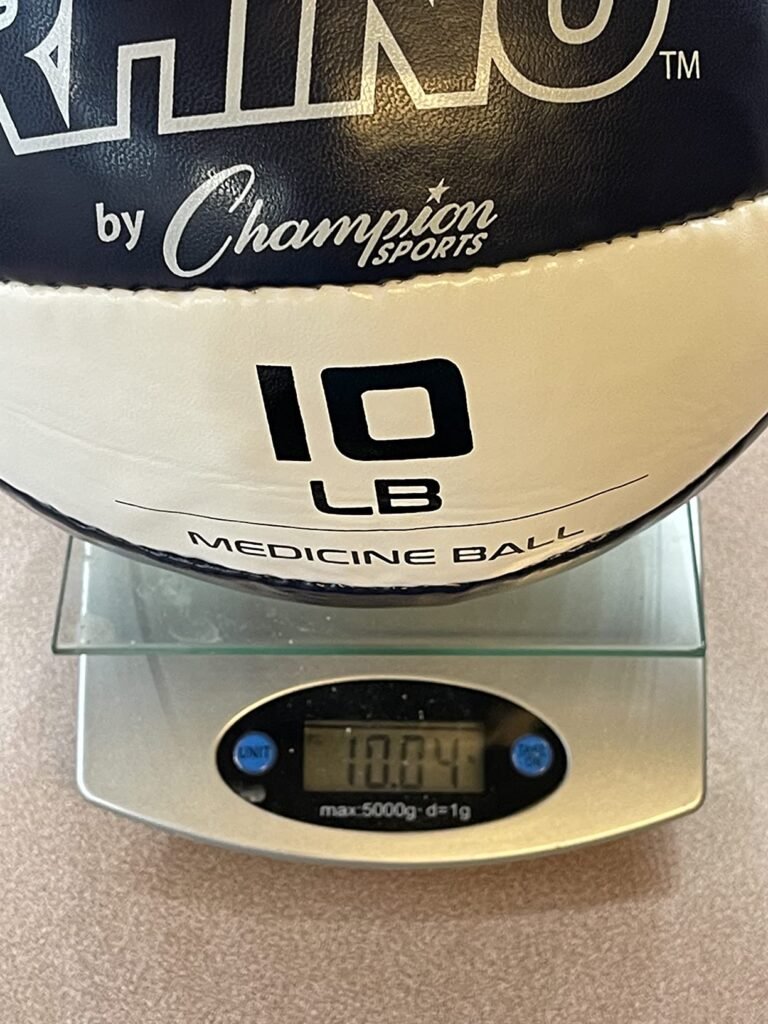
The Champion Sports Leather Medicine Ball is the most affordable quality option in this guide and a strong pick for buyers entering functional fitness or adding a versatile weighted ball to an existing home gym. The synthetic leather exterior provides a supple, non-slip grip that works well for floor exercises, partner throws, and moderate wall ball work.
We may earn a commission when you buy through this link, at no additional cost to you.
Reinforced stitching and professional-grade materials give the ball durability that exceeds its price point. The construction holds up to throws, lifts, and conditioning drills without the seam splitting that affects cheaper medicine balls after a few months of regular use. The range of available sizes, colors, and weights lets you select the exact ball that matches your current fitness level.
The multi-purpose design works across pilates, yoga, aerobics, and cross training, which makes this ball a practical addition for buyers who want one piece of equipment for varied workouts rather than a specialized wall ball for a single movement pattern. The supple texture is comfortable to hold during extended sets and does not irritate the skin during high-rep work.
Traditional medicine balls like this Champion model typically range from 8 to 12 inches in diameter, while standard wall balls used in CrossFit and functional fitness measure 14 inches. The larger diameter of a wall ball makes it easier to catch during rebound throws and provides a more consistent target area against the wall. If your primary use is wall ball shots, a 14-inch ball is the better choice. For general conditioning, the smaller medicine ball size is perfectly adequate.
This ball is the right pick for beginners, budget-conscious buyers, and anyone who wants a versatile medicine ball for general conditioning rather than a dedicated wall ball for high-rep CrossFit-style workouts. The smaller diameter compared to standard 14-inch wall balls makes it less ideal for competitive wall ball work, but for general fitness and core training, it delivers strong value.
Not for athletes who need a standard 14-inch wall ball for CrossFit-style wall ball shots.
We may earn a commission when you buy through this link, at no additional cost to you.
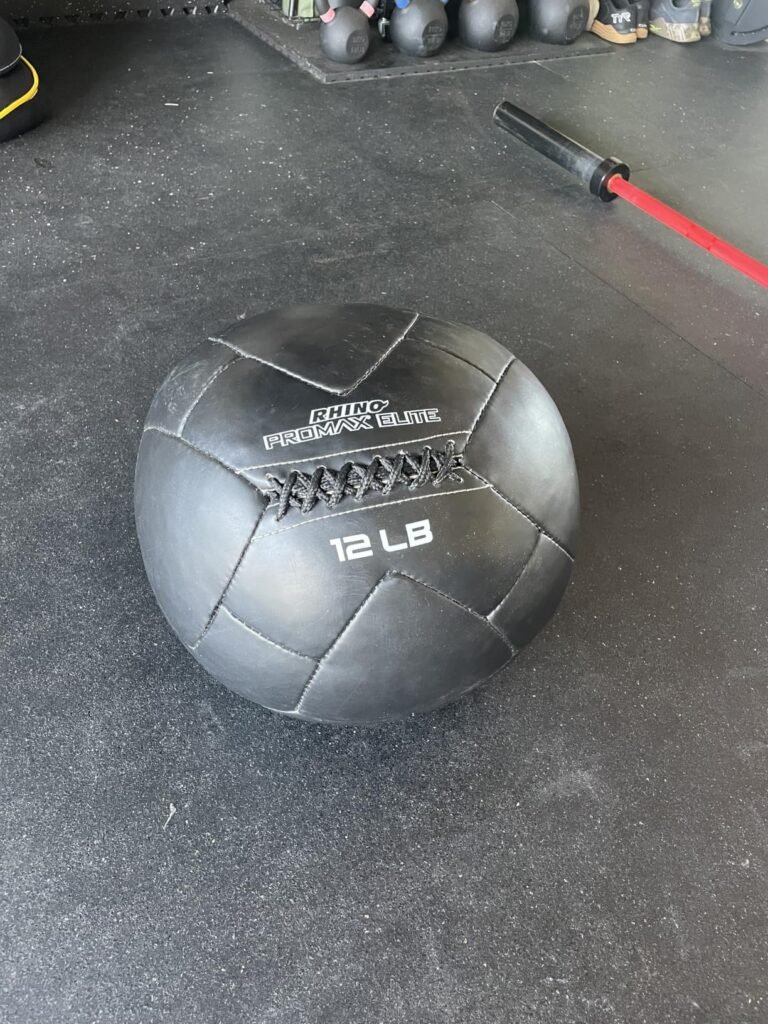
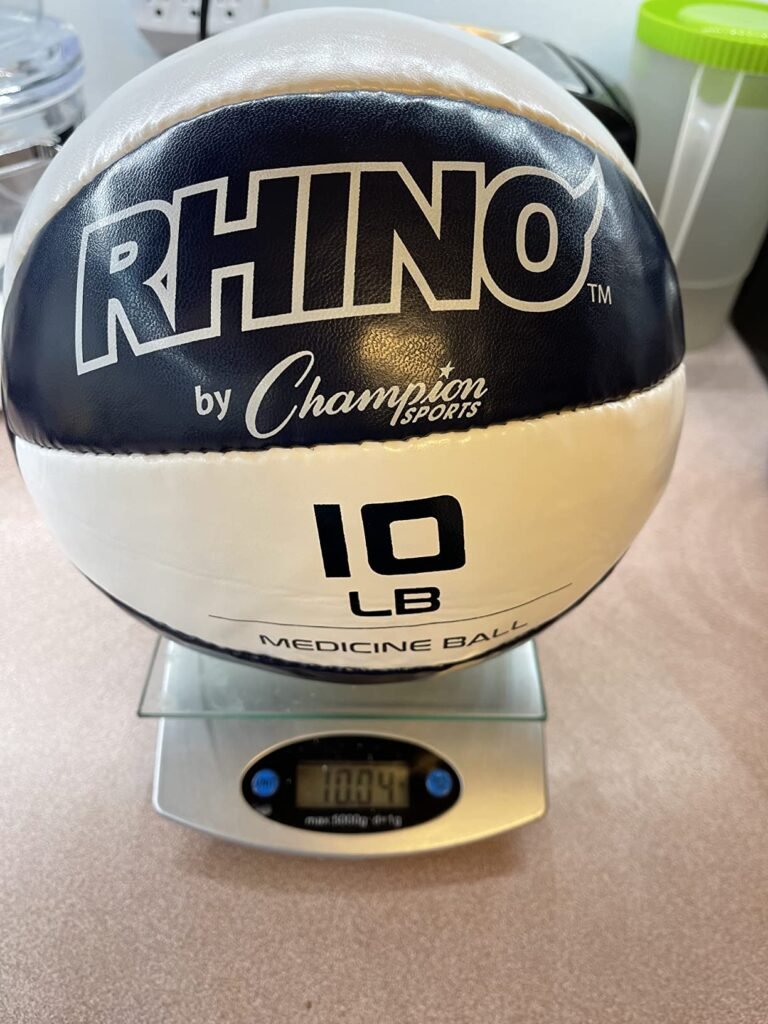
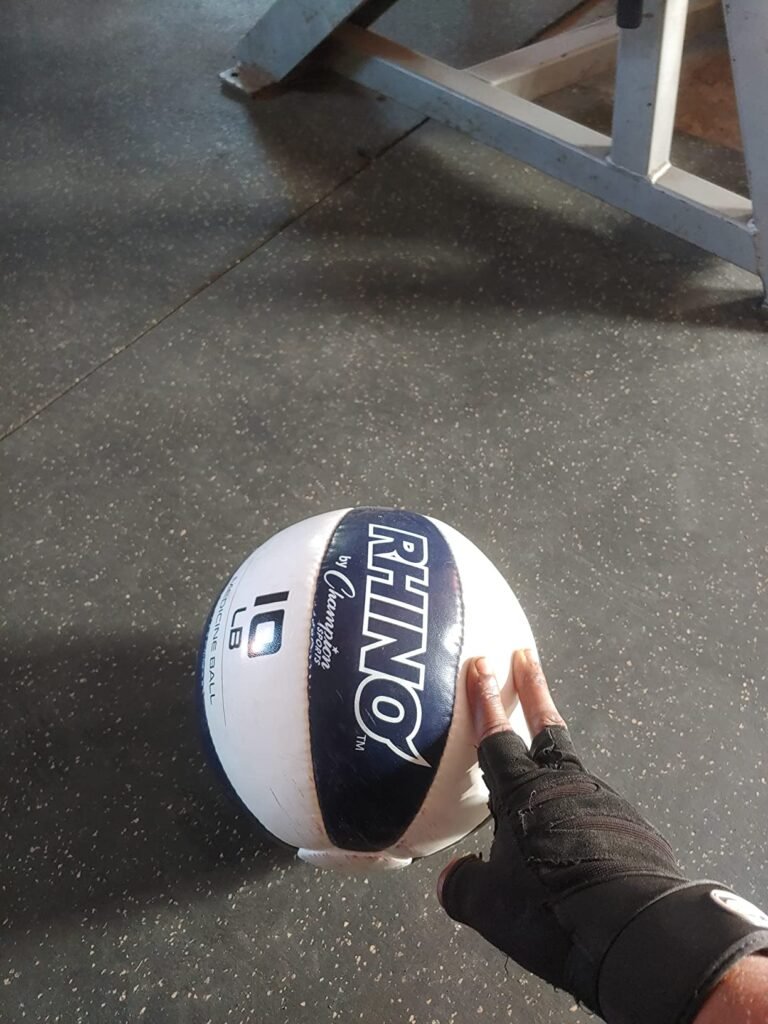
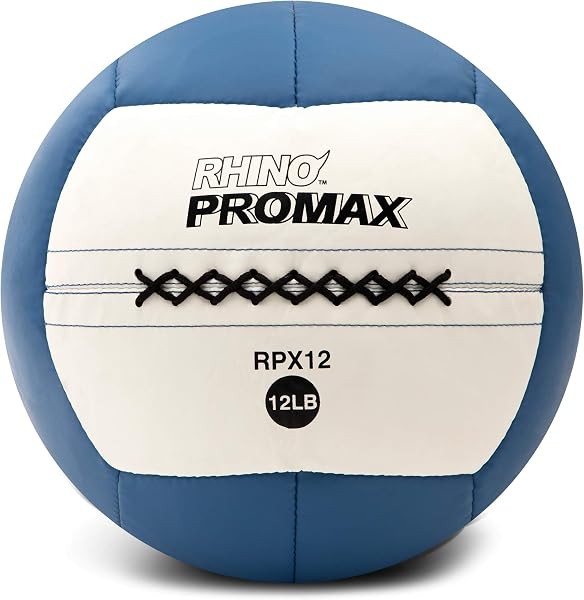
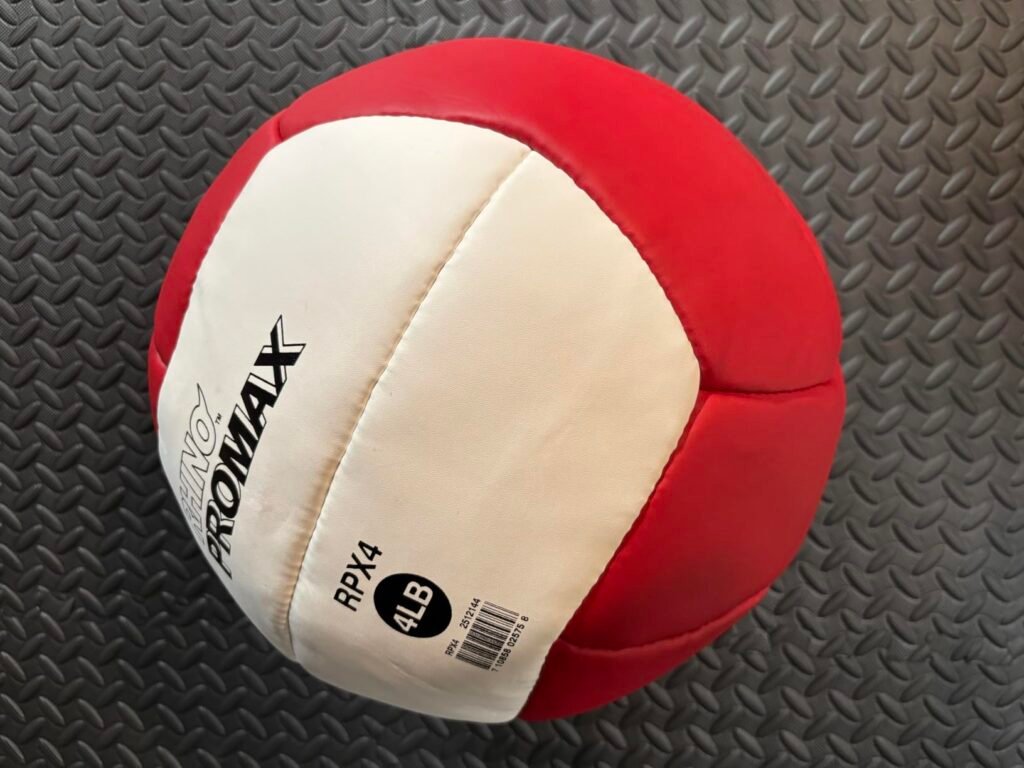
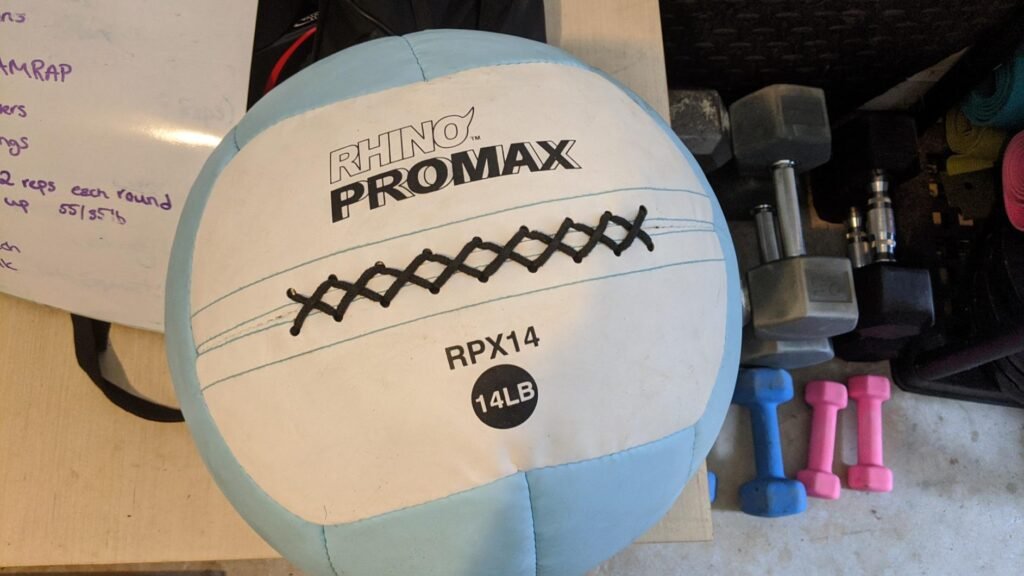
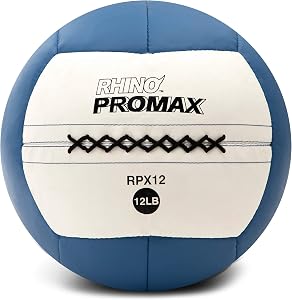
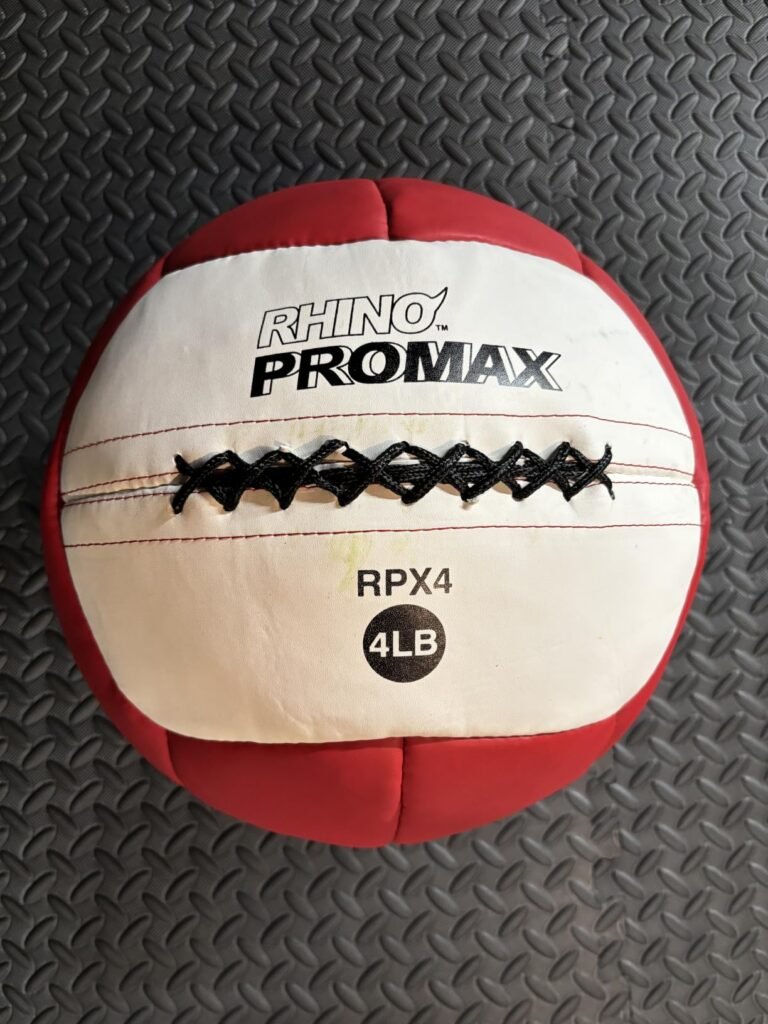
The Champion Sports Rhino ProMax Elite stands out for maintaining a uniform 14-inch diameter across all weight options, which is a meaningful design choice for athletes who progress through different weights. When every ball in your collection shares the same size, your throwing mechanics, catch position, and squat depth remain consistent regardless of the load. This eliminates the adjustment period that comes with switching between differently sized balls.
We may earn a commission when you buy through this link, at no additional cost to you.
The Rhino Skin leather shell provides a comfortable, non-slip grip that performs well during sweaty workouts, and the cushioned construction absorbs impact force during wall throws and partner drills. The heavy-duty double-stitched seams reinforce the high-stress panel connections that typically fail first on wall balls subjected to repeated wall contact.
The ball is designed specifically for wall ball workouts, squats, presses, explosive partner drills, and functional fitness training. The impact-absorbing construction protects both the ball and the wall surface during high-volume throw sessions, which matters in home gyms where wall repair is a real concern. The consistent sizing also makes this a strong choice for gym owners outfitting multiple stations.
When you switch between wall balls of different diameters, your hand placement, catch timing, and throw angle all need to adjust, which introduces inconsistency into your training. A uniform 14-inch diameter across all weights means the only variable changing is the load, letting you focus purely on strength progression. This is particularly important for athletes tracking wall ball performance metrics over time, since consistent ball size eliminates a confounding variable.
This ball is the right pick for athletes who plan to own multiple weights and want consistent handling across their entire collection. The 14-inch standard diameter matches what most CrossFit boxes use, so transitioning between gym and home training is seamless. Buyers who need slam ball capability should pair this with a dedicated slam ball.
Not for athletes who need a ball rated for overhead ground slams.
We may earn a commission when you buy through this link, at no additional cost to you.
The Sky Bounce Ball 3-pack is included in this guide because it appears in the wall ball category, but it is important to clarify that these are 2-inch rubber bouncy balls rather than weighted training equipment. They serve a fundamentally different purpose from the other products in this guide and should not be confused with wall balls used for functional fitness.
We may earn a commission when you buy through this link, at no additional cost to you.
Where these balls do have a training application is in hand-eye coordination and reaction time drills. Their high bounce and small size make them useful for wall-rebound catching exercises that develop reflexes and tracking ability, particularly for younger athletes or as a warm-up activity before more demanding training sessions. The assorted colors add a visual tracking element to reaction drills.
The rubber construction provides the characteristic high bounce that defines this type of ball, and the 2-inch diameter makes them easy to pocket or store in a gym bag. At the price point, they are essentially an impulse purchase that can add variety to coordination training without any significant investment.
Small, high-bounce rubber balls are a staple in sports performance training for developing hand-eye coordination and reaction speed. Throwing them against a wall and catching the unpredictable rebound trains visual tracking and hand speed in ways that larger, heavier balls cannot replicate. They are particularly useful for athletes in ball sports like tennis, baseball, and basketball who need quick reflex development as part of their warm-up routine.
This product is the right pick for buyers looking for reaction and coordination training tools rather than weighted wall balls. If you are searching for a ball to use in wall ball shots, squat-to-press movements, or CrossFit-style conditioning, every other option in this guide is a more appropriate choice. These are a supplementary training accessory, not a primary piece of strength equipment.
Not for anyone seeking a weighted wall ball for strength training or functional fitness workouts.
We may earn a commission when you buy through this link, at no additional cost to you.
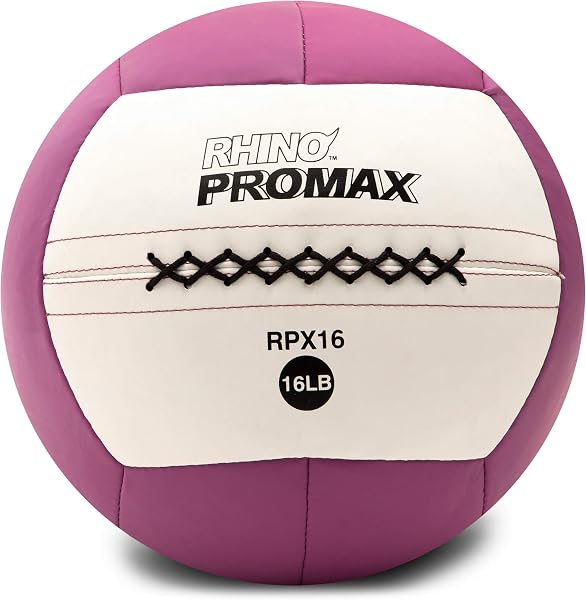
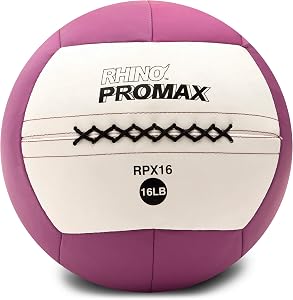
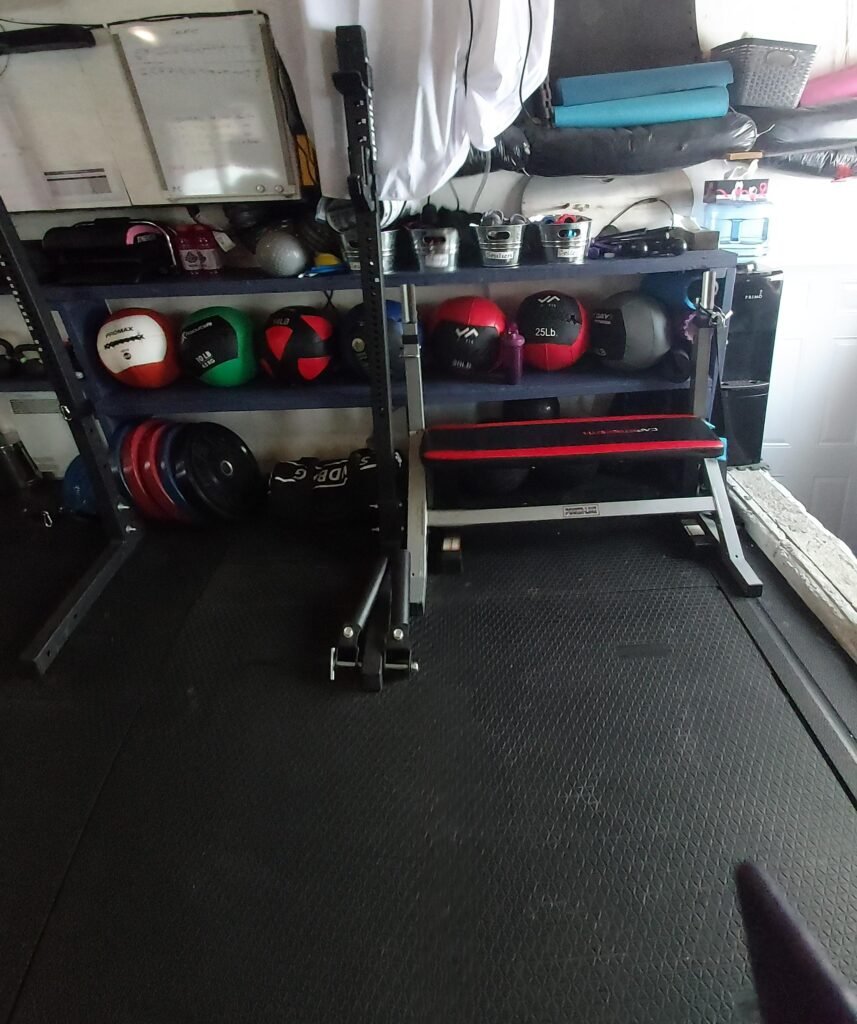
This heavier variant of the Champion Sports Rhino ProMax Elite shares the same construction DNA as the lighter model but targets athletes who have progressed beyond entry-level wall ball weights. The Rhino Skin leather shell, 14-inch uniform diameter, and cushioned impact-absorbing construction carry over, providing the same reliable grip and wall-friendly performance at a more demanding load.
We may earn a commission when you buy through this link, at no additional cost to you.
The consistent 14-inch diameter is particularly valuable at heavier weights because a larger ball distributes the load across a wider grip surface, reducing hand and wrist strain during high-rep sets. The cushioned construction also matters more as weight increases, since a heavier ball generates more force on both the wall and your hands during catches.
Double-stitched seams and the durable Rhino Skin exterior handle the increased stress that comes with heavier throws without premature wear. The ball is designed for wall ball workouts, squats, presses, and explosive partner drills, making it a strong addition to advanced functional fitness programming where heavier loads are needed for continued strength development.
A good guideline for progressing wall ball weight is when you can complete your target rep scheme with clean form and consistent depth at your current weight without excessive fatigue. If your squat depth starts breaking down or your throw mechanics deteriorate in the final reps, the weight is too heavy. Most athletes benefit from having two or three weight options available so they can use heavier balls for strength days and lighter balls for high-rep endurance work.
This ball is the right pick for experienced athletes who have built up their wall ball proficiency and need a heavier load to continue progressing. Beginners should start with lighter weights and work up to this level to avoid shoulder and wrist strain. The ball pairs well with the lighter Champion Rhino models for a complete weight progression.
Not for beginners or athletes who have not yet mastered wall ball mechanics at lighter weights.
We may earn a commission when you buy through this link, at no additional cost to you.
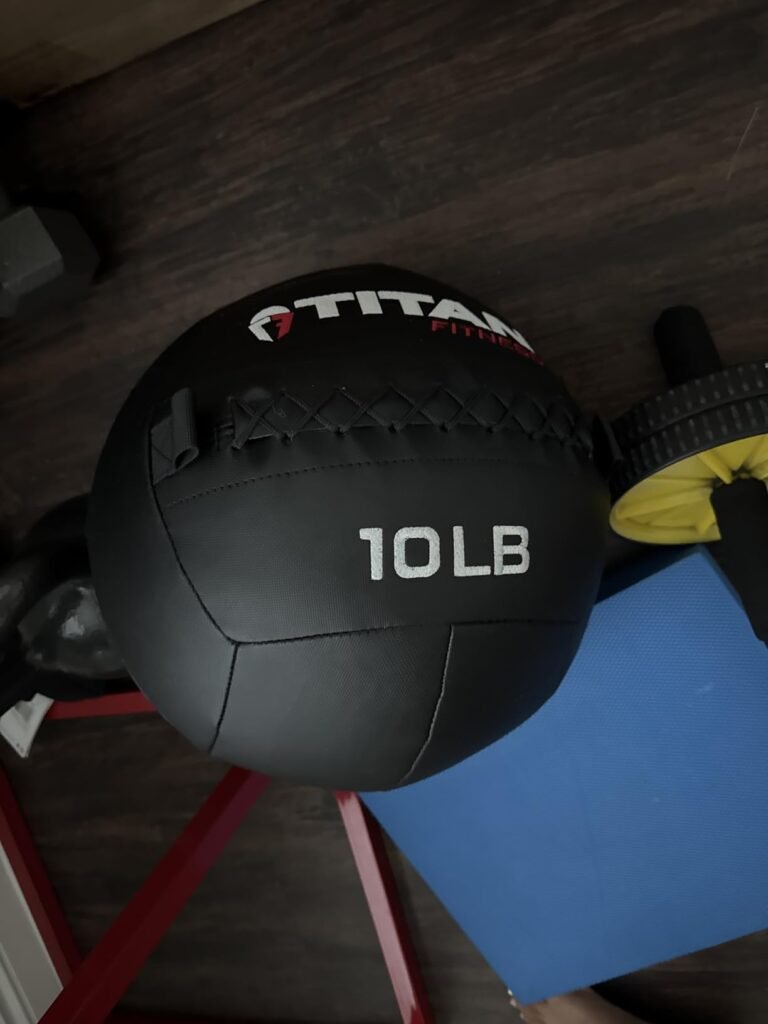
The Titan Fitness 5-Pack is the most comprehensive wall ball set in this guide, covering 6, 8, 10, 12, and 14 pounds in a single purchase. This progression range is specifically designed to take a beginner from introductory wall ball work through intermediate conditioning, with small 2-pound increments that allow gradual strength development without overwhelming jumps in load.
We may earn a commission when you buy through this link, at no additional cost to you.
All five balls share a 13-inch diameter, which is slightly smaller than the 14-inch standard but provides a consistent feel across the entire weight range. The poly-composite laminate shell with polypropylene fiberfill interior creates a soft, grippable texture that absorbs wall impact effectively. Tight double stitching reinforces each shell for long-term durability through thousands of throws.
The ergonomic dual side loops on each ball make pickup, carrying, and hanging between sets convenient, which is a practical advantage when you are cycling through multiple weights during a workout. The loops also provide an alternative grip for exercises like Russian twists and overhead carries where a traditional wall ball hold is awkward.
Jumping from a 10-pound ball to a 20-pound ball is a 100 percent increase in load, which can compromise form and increase injury risk. The 2-pound increments in this set allow much finer progression, letting you increase the challenge by 15 to 25 percent at each step. This gradual approach is particularly important for wall ball training because the movement combines a deep squat with an overhead press, placing significant demand on the shoulders, core, and legs simultaneously.
This set is the right pick for home gym owners who want a complete wall ball progression and are willing to invest in a premium multi-ball package. The 6 to 14-pound range is ideal for beginners and intermediate athletes but may not challenge advanced users who need 20-pound or heavier balls. The explicit exclusion from ground slam use means you need a separate slam ball for that movement pattern.
Not for advanced athletes who need wall balls heavier than 14 pounds or for ground slam exercises.
We may earn a commission when you buy through this link, at no additional cost to you.
Selecting a wall ball requires matching weight, shell material, diameter, and construction quality to your training goals and experience level. The factors below walk through the decisions that most affect performance, durability, and safety during wall throws and functional conditioning work.
Wall ball weight is the most important specification because it directly determines the training stimulus and safety of the movement. Standard CrossFit prescriptions use 14 pounds for women and 20 pounds for men, but these are competition standards that assume significant training experience. Beginners should start with 6 to 10 pounds to develop proper squat depth and throw mechanics before increasing load.
Having multiple weights available is more valuable than owning a single heavy ball. Lighter balls allow high-rep endurance work and technique practice, while heavier balls build strength during lower-rep sets. Sets like the Mikolo multi-weight kit or the Titan Fitness 5-pack provide built-in progression that grows with your fitness, eliminating the need for sequential individual purchases.
Start lighter than you think you need and progress gradually. A ball that compromises your squat depth or throw form is too heavy, regardless of what the prescribed workout calls for.
Wall ball shells come in several materials, each with distinct grip and durability characteristics. PU leather and synthetic leather, found on the Titan Fitness and Champion Sports models, provide a soft, supple surface that grips well even when hands are sweaty. Vinyl coated shells like the JFit option offer a slightly firmer feel with excellent durability. Tacky vinyl surfaces like Champion’s Rhino Skin provide the most aggressive grip but can feel sticky during extended sets.
The shell material also affects how the ball interacts with the wall. Softer shells absorb more impact energy and are gentler on drywall and painted surfaces, which matters significantly in home gyms where wall repair is a real cost. Firmer shells transfer more energy to the wall and may leave marks or cause damage over time, particularly on softer wall materials.
For home gym use, prioritize softer shells that protect your walls. For commercial gym environments with concrete or reinforced walls, grip texture and durability become more important than wall protection.
Standard wall balls measure 14 inches in diameter, which is the size used in CrossFit competitions and most functional fitness programming. This diameter provides a comfortable grip surface for most hand sizes and creates a predictable rebound pattern off the wall. Some balls, like the Champion Rhino ProMax line, maintain this 14-inch diameter across all weight options, which keeps your mechanics consistent as you progress in load.
Smaller diameters like the 13-inch Titan Fitness 5-pack or the sub-14-inch medicine balls change the grip geometry and may require adjustment if you are accustomed to the standard size. The 4-pound JFit ball at 9 inches is an extreme example that handles very differently from full-size wall balls and is better suited for rehabilitation and light conditioning.
If you train in a CrossFit box or plan to compete, match the 14-inch standard diameter. For home use where competition standards are less relevant, slight diameter variations are acceptable as long as the ball feels comfortable in your hands.
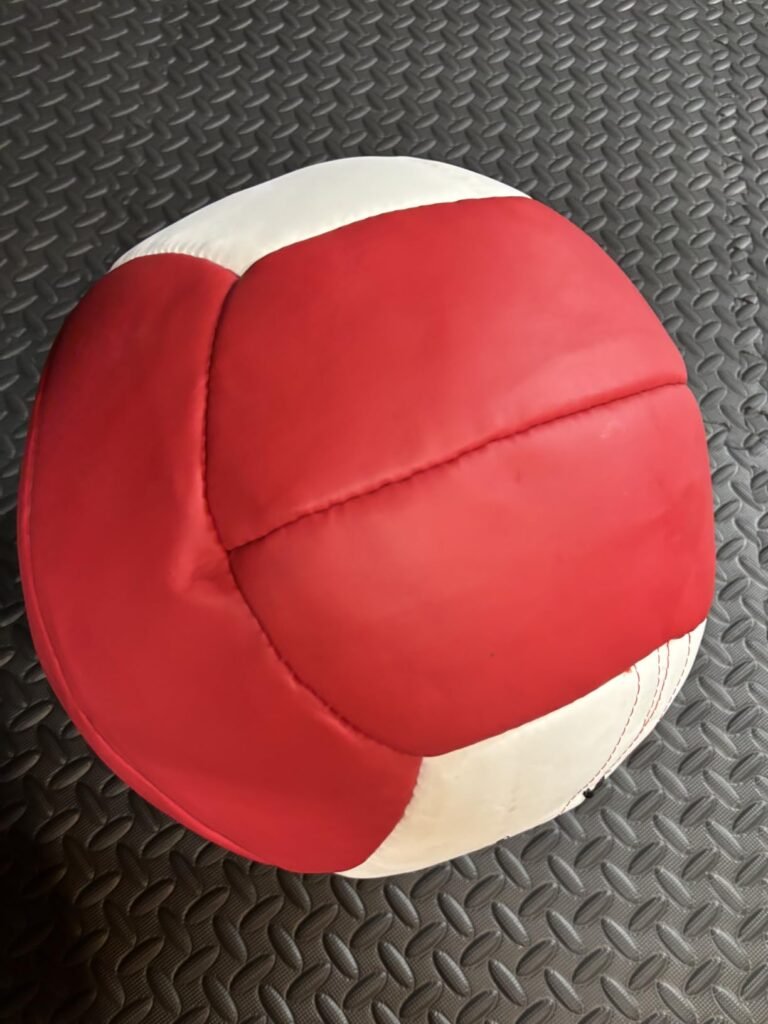
Seam failure is the most common way wall balls die. The repeated impact of throwing a weighted ball against a wall places enormous stress on the panel connections, and poorly constructed seams split open after months of regular use. Double-stitched seams, found on nearly every quality ball in this guide, provide significantly more durability than single-stitch construction.
The Mikolo set takes seam construction further with over 20 stitches per inch and a double-layer PVC and mesh fabric exterior, which distributes impact stress across a wider area. The Champion Rhino line uses heavy-duty double stitching reinforced by the Rhino Skin shell material, which adds structural integrity beyond the stitching alone. These details matter most for high-volume athletes who throw hundreds of wall balls per week.
Inspect seam quality before buying by looking at the panel connections in product images. Even, tight stitching with no gaps or loose threads is a reliable indicator of construction quality that will hold up to regular use.
The internal fill material and how it is distributed inside the shell directly affect the ball’s flight characteristics and handling. Evenly distributed fill creates a balanced ball that flies true and rebounds predictably, while uneven fill causes wobbling and inconsistent catches. The Titan Fitness Soft Leather ball specifically highlights even internal weight balance as a design priority.
Fill materials vary from PP cotton and polypropylene fiberfill in softer wall balls to metal sand cores in more durable options like the Mikolo set. Metal sand provides permanent weight retention and prevents the shifting that can occur with loose fill materials over time. The Mikolo’s double-layer Oxford cloth and reinforced seals around the metal sand core are specifically designed to eliminate weight migration.
For long-term reliability, prioritize balls with secured internal fill systems that prevent weight shifting. A ball that starts balanced but develops a heavy spot after six months of use will frustrate your training and may need replacement.
This is the most common source of confusion and premature equipment failure in the weighted ball category. Wall balls are designed with softer shells that absorb wall impact and provide a controlled rebound. Slam balls are built with dense, no-bounce construction that absorbs ground impact without returning energy. Using a wall ball for overhead ground slams will damage the shell and seams, while using a slam ball for wall throws produces unpredictable, potentially dangerous rebounds.
Most wall balls in this guide explicitly state they are not designed for slam exercises, including the Titan Fitness models, the JFit, and the Champion Rhino ProMax. The Champion Rhino ProMax Elite Slam Ball is the exception, with a construction that tolerates ground impact, though even this ball has warranty limitations on rough surface use.
If your programming includes both wall throws and ground slams, plan to own at least two balls: a soft-shell wall ball for throws and a dedicated slam ball for ground work. Trying to use one ball for both movements will shorten its lifespan and compromise performance in both applications.
Grip features range from simple textured shells to integrated finger loops and side handles. The Mikolo set features upgraded 36mm wide nylon finger loops that provide a secure grip during dynamic movements and make the ball easier to pick up between sets. The Titan Fitness models include small side loop handles for quick repositioning during exercise transitions.
These grip aids matter most during high-rep workouts where hand fatigue compromises your hold on a smooth ball. They also help during exercises like Russian twists and overhead carries where a traditional two-handed wall ball grip is awkward. However, some athletes find loops and handles interfere with the clean catch-and-throw rhythm of standard wall ball shots.
For traditional wall ball shots, a smooth, tacky shell without loops provides the cleanest handling. For mixed functional training that includes carries, twists, and single-arm work, integrated loops add genuine practical value.
Position yourself approximately two to three feet from the wall with feet shoulder-width apart for standard wall ball shots. Hold the ball at chest level with your hands spread evenly on the sides, squat to parallel or below, and drive upward explosively to throw the ball to a target height of 9 to 10 feet on the wall. Catch the ball with soft hands and immediately descend into the next squat to maintain rhythm. Start with lighter weights to dial in your mechanics before progressing to heavier loads.
Clean your wall ball regularly by wiping the shell with a damp cloth and mild soap to remove sweat, chalk, and dirt that accumulate during training. Avoid submerging the ball in water or using harsh chemical cleaners that can degrade the shell material and stitching. Allow the ball to air dry completely before storing it, as trapped moisture inside the seams can weaken the stitching and promote mold growth in the fill material.
Store your wall ball in a cool, dry location away from direct sunlight, which can degrade synthetic leather and vinyl shells over time. Avoid leaving the ball in a hot car or garage during summer months, as extreme heat can soften the shell and affect the internal fill distribution. If your ball has grip loops, hanging it from a wall hook by the loops keeps it off the floor and prevents flat spots from developing on the shell.
Beginners should start with a 6 to 10-pound wall ball to develop proper squat depth and throwing mechanics before increasing load. The standard CrossFit competition weights are 14 pounds for women and 20 pounds for men, but these assume significant training experience. Starting too heavy compromises form and increases the risk of shoulder and lower back strain during the combined squat-and-press movement.
Most wall balls are not designed for overhead ground slams and will suffer shell damage and seam failure if used that way. Wall balls have softer shells optimized for wall impact and controlled rebound, while slam balls use dense, no-bounce construction for ground strikes. If your programming includes both movements, purchase a dedicated slam ball alongside your wall ball to protect both pieces of equipment.
The standard wall ball diameter for CrossFit and functional fitness is 14 inches, which provides a comfortable grip and predictable rebound for most athletes. Some sets use 13-inch balls for a slightly more compact feel, and lighter weights may come in smaller diameters. For competition preparation, match the 14-inch standard. For general home gym use, slight variations are acceptable.
Increase weight when you can complete your target rep scheme with clean form, consistent squat depth, and controlled throws at your current weight without excessive fatigue. If your form breaks down in the final reps or your throw height drops significantly, the current weight is still appropriate. Small incremental increases of 2 to 4 pounds are safer and more effective than large jumps.
Repeated wall ball throws can damage standard drywall over time, especially with heavier balls. Softer shell materials like PU leather and poly-composite laminate are gentler on walls than harder vinyl or rubber shells. For home gym use, consider installing a plywood target board on the wall at your throw height to absorb impact and protect the drywall behind it.
A well-constructed wall ball with double-stitched seams and quality shell material should last several years of regular use. The most common failure points are seam splitting from repeated wall impact and shell degradation from UV exposure or extreme temperatures. Balls with reinforced construction like the Mikolo's 20-plus stitches per inch or the Champion Rhino's heavy-duty seams tend to outlast budget options significantly.
Wall balls are a specific type of medicine ball designed for throwing against walls, typically featuring a larger diameter of 13 to 14 inches and a softer shell that absorbs wall impact. Traditional medicine balls are often smaller, denser, and designed for a wider range of exercises including partner throws, rotational work, and floor exercises. All wall balls are medicine balls, but not all medicine balls are suitable for wall throws.
Having two or three wall balls at different weights is more useful than a single ball because it lets you match the load to the workout. Lighter balls work well for high-rep endurance WODs and technique practice, while heavier balls build strength during lower-rep sets. Multi-ball sets like the Mikolo or Titan Fitness 5-pack provide this versatility in a single purchase.
Wall balls can be used outdoors on concrete or brick walls, but the shell material will degrade faster when exposed to sunlight, moisture, and rough surfaces. If you plan to train outdoors regularly, choose a ball with a durable vinyl or Rhino Skin shell rather than softer PU leather. Store the ball indoors between sessions to extend its lifespan.
The Mikolo Multi-Weight Set stands out as the strongest overall pick because it delivers a complete four-ball weight progression with the highest owner rating in this guide and construction details that address the most common failure points. The double-layer PVC shell, metal sand core, and upgraded wide finger loops create a ball system that handles wall throws, slams, and functional conditioning with equal competence across a broad weight range.
Different priorities point to different picks. The Champion Sports Leather Medicine Ball offers the best entry price for beginners and general conditioning, while the Champion Rhino ProMax line provides the consistent 14-inch diameter that serious wall ball athletes need across multiple weights. The Titan Fitness Soft Leather ball excels at dedicated wall throw work with its even weight balance, and the JFit Wall Ball covers the widest single-ball weight range for versatile home gym use.
The right decision starts with an honest assessment of your training goals and experience level. Match the weight to your current fitness, choose a shell material that protects your training space, and invest in a slam ball separately if your programming includes ground strikes. Any ball in this guide will deliver reliable service when paired to the right use case, so focus on the model that fits your specific programming rather than chasing the heaviest or most expensive option.