First Ride On
8.8Editor score36V 9Ah battery
Dual 200W motors
Fourteen-inch EVA wheels
132-pound maximum load
Find the right utvs for 2026. We compare 10 standout options by build quality, useful features, owner feedback, value, and everyday trade-offs.
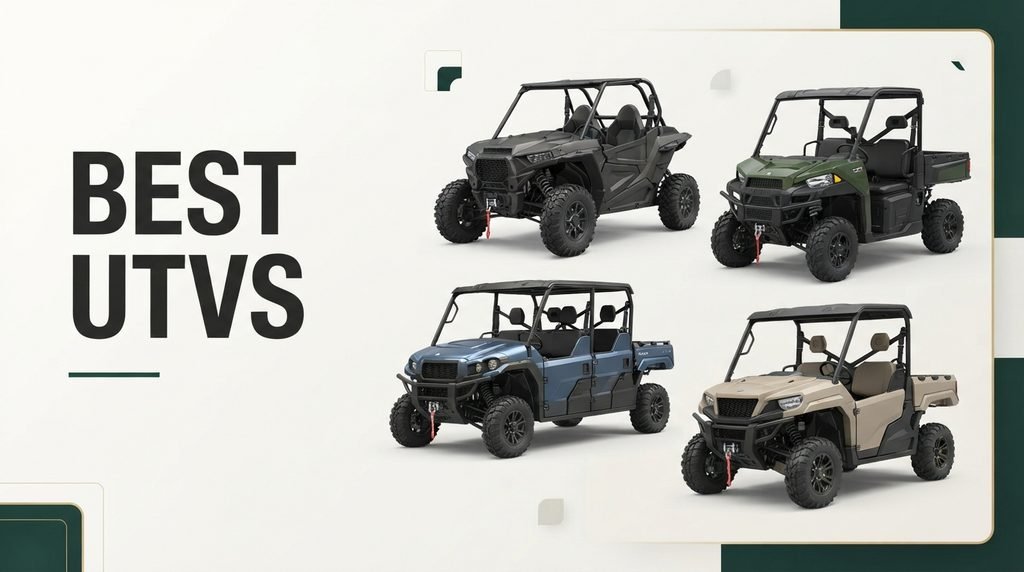
Choosing the right UTV in 2026 means separating full-size gas utility machines from youth ATVs and electric ride-on side-by-sides. This guide compares 10 options by power source, rider size, speed, suspension, tires, safety controls, owner feedback, terrain suitability, and everyday trade-offs.
The largest difference is intended rider and use. Gas-powered utility models offer more capability for recreational off-road riding, while electric kids UTVs emphasize controlled speeds, seat belts, parental remotes, and backyard-friendly operation. A vehicle that fits the rider’s age, weight, and skill level matters more than simply choosing the most powerful option.
Look beyond the exterior styling before buying. Battery voltage, motor output, suspension, tire material, available reverse gear, load capacity, and charging or fueling needs all affect how a UTV works in real conditions. The comparisons below help match each vehicle to the right family, property, or trail plan.
We compared 10 UTVs and ATV-style vehicles using the details that genuinely shape ownership: rider age range, power source, motor or engine output, speed, seating capacity, weight limits, tire construction, suspension, safety controls, terrain capability, owner feedback, and value. The notes focus on practical trade-offs, including when a parent remote matters, why EVA tires help on rough ground, and when a gas-powered machine is more appropriate than an electric ride-on.


Compare key features, scores, and current prices side by side. A shorter feature list means fewer details were available, not necessarily fewer capabilities.


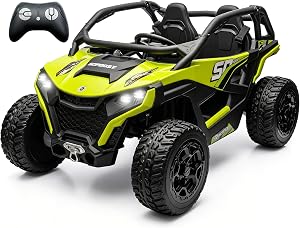


The MOOITZ 24V stands out through its 4.9 rating, substantial four-motor layout, and roomy two-seat design. It is intended for children ages three and older, though adult judgment should always determine whether a particular child has the coordination and maturity for independent electric vehicle operation.
We may earn a commission when you buy through this link, at no additional cost to you.
Four 200W motors, a 24V 7Ah battery, and a 3 to 6 MPH listed speed range give this model a useful blend of controlled pace and outdoor capability. Its oversized 14-inch tires, reinforced frame, and rear spring suspension are more relevant than decorative details when the route includes grass or gravel.
The 20-inch double seat can hold two smaller riders or one larger child within the 135-pound capacity. Dual three-point belts provide a more secure restraint arrangement than simple lap belts, but safe use still requires level terrain, low congestion, and attentive supervision.
Motor count and wattage can help a ride-on UTV maintain momentum over grass and mild grades, while the 3 to 6 MPH speed range remains more manageable than gas-powered youth vehicles. That balance is useful for family property use, provided terrain stays within the vehicle’s limits.
This is the strongest overall electric two-seater for buyers who prioritize power, suspension, seating room, and favorable owner feedback. The key compromise is the absence of a listed remote control, so it is better for children ready to manage their own steering and stopping.
Parents who require remote takeover control during every ride.
We may earn a commission when you buy through this link, at no additional cost to you.
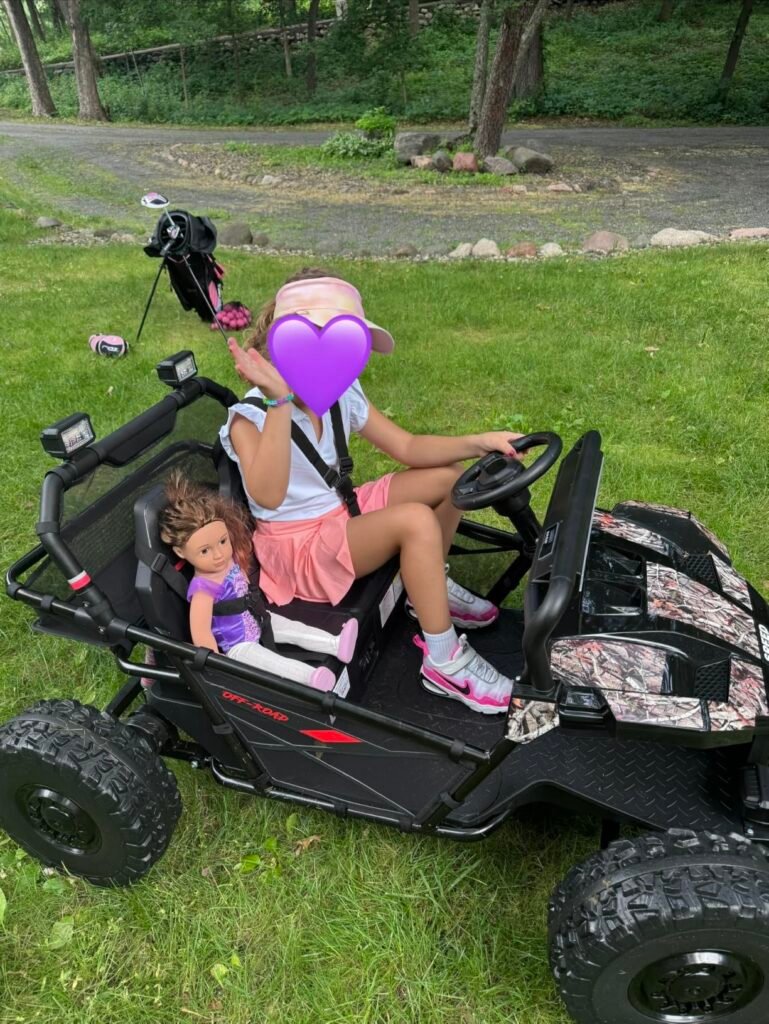
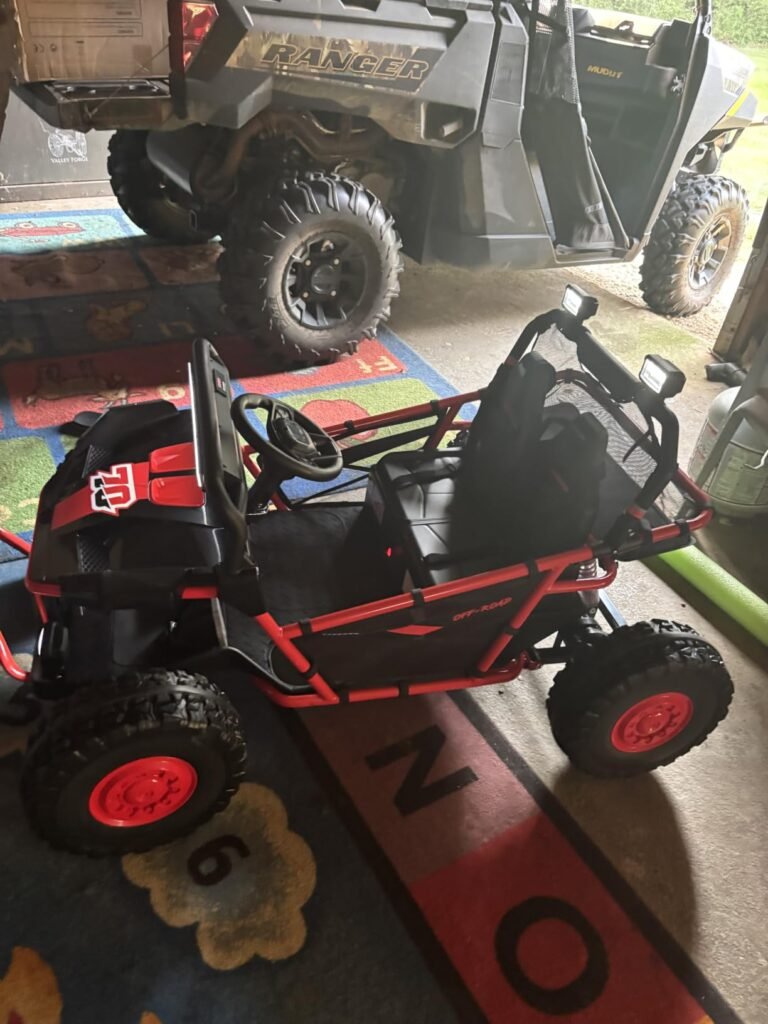
The First Ride On 36V is aimed at children ages six and older who have outgrown smaller ride-on toys and want a more substantial side-by-side format. Its 36V battery and combined 400W motor output give it a stronger foundation than many 12V or 24V models.
We may earn a commission when you buy through this link, at no additional cost to you.
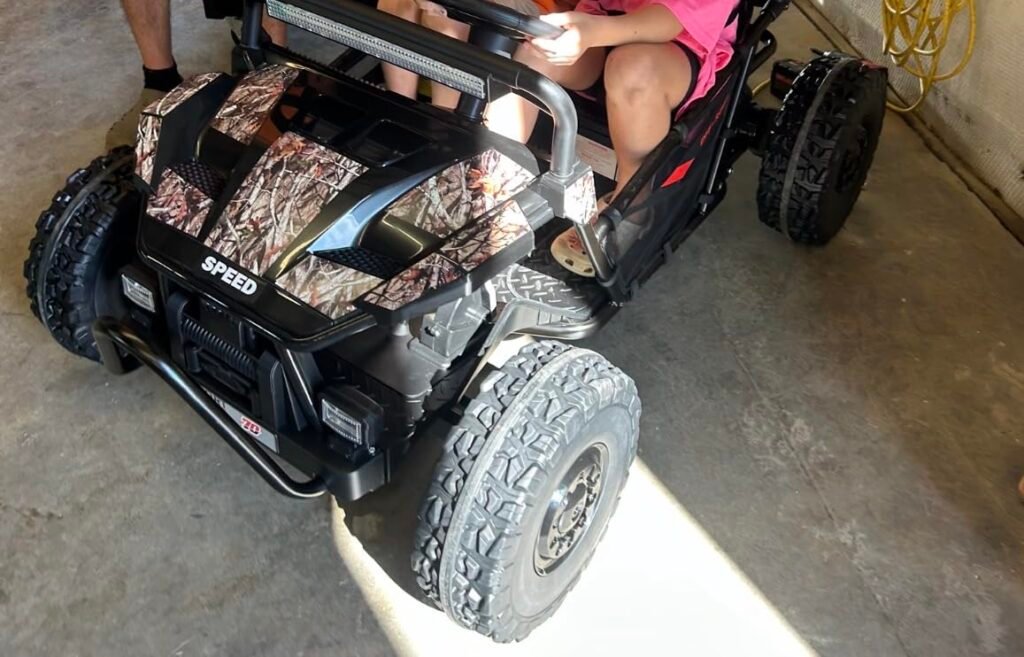
Fourteen-inch EVA wheels, a reinforced metal chassis, and rear metal spring suspension are the practical highlights. EVA tires are more suitable than hard plastic wheels for grass, dirt, and gravel because they offer more grip and absorb more vibration.
The vehicle uses pedal acceleration, forward and reverse selection, gradual starting, and electronic braking. These features make operation feel more vehicle-like, but they also make adult supervision important because there is no remote override.
A 36V platform can provide more available power than common lower-voltage ride-on systems, especially when driving over grass or mild slopes. It does not remove the need to match terrain to the vehicle, but it gives older children more usable performance than a basic indoor-oriented toy.
Choose this model for a confident older child who will ride on private outdoor space and benefits from the wider two-seat layout. Its 40 to 60 minute claimed runtime means charging planning is still part of each outing.
Families who need a parental remote for a new or less confident young driver.
We may earn a commission when you buy through this link, at no additional cost to you.
The MotoTec Titan is a gas-powered side-by-side rather than a children’s electric ride-on, making it a fundamentally different choice from most products in this guide. Its 200cc air-cooled four-stroke engine is designed for buyers seeking a compact off-road machine with substantially greater speed and range.
We may earn a commission when you buy through this link, at no additional cost to you.
A listed maximum speed of 31 MPH, electric start, and forward-neutral-reverse transmission provide more conventional vehicle operation. Independent hydraulic double shocks at the front and rear should be a priority feature for riders using uneven property or established off-road routes.
The eight-inch LCD speedometer and LED headlights, turn signals, and brake lights add useful operating awareness. Even so, lighting should never be treated as permission to ride in unsuitable conditions, and local regulations may control where gas UTVs can be operated.
A gas-powered UTV needs more planning than an electric ride-on. Fuel, engine oil, air filtration, tire condition, brakes, fasteners, and suspension components should be checked according to the owner documentation before regular use.
This is the pick for buyers who specifically need a gas side-by-side and understand fuel storage, routine inspection, protective equipment, and responsible trail use. It is not a substitute for a lower-speed electric UTV intended for small children.
Young children or buyers seeking a quiet, low-speed electric vehicle for backyard play.
We may earn a commission when you buy through this link, at no additional cost to you.
The X-PRO Cougar UT 200 is an ATV rather than a side-by-side, but it belongs in this comparison for shoppers considering a youth-oriented utility off-road vehicle. The 169cc air-cooled four-stroke engine, automatic transmission, and reverse gear reduce some of the operating complexity for riders moving into a larger machine.
We may earn a commission when you buy through this link, at no additional cost to you.
Its 21-inch front and 20-inch rear tires are notable because tire diameter contributes to ground clearance and obstacle rollover ability. Aluminum wheels also distinguish this model from basic steel-wheel configurations, while the front bumper and rear rack support its utility-focused design.
Electric starting is useful after a stall or rest break, and the automatic transmission lets the rider concentrate on steering, throttle control, terrain awareness, and braking. The listed 165-pound maximum load should be treated as a firm limit, not a target for carrying passengers or extra cargo.
An automatic transmission does not make an ATV risk-free, but it removes manual shifting from the learning process. That can help a developing rider focus on throttle smoothness, line choice, braking distance, and safe turning technique.
This model makes sense for an appropriately sized rider who needs a simple automatic ATV with reverse and a small gear rack. Plan for assembly, confirm local ATV rules, and ensure the rider has proper protective gear before use.
Buyers who specifically need enclosed side-by-side seating or a two-person ride-on vehicle.
We may earn a commission when you buy through this link, at no additional cost to you.
The ELEMARA 24V is a practical two-seat electric UTV for families that want children to share rides while retaining adult control when needed. Its remote mode is especially useful during early learning, while manual driving gives children room to build confidence gradually.
We may earn a commission when you buy through this link, at no additional cost to you.
The 24V four-wheel-drive system offers two listed speed choices between 4 and 5 MPH. Four large 13.8-inch tread wheels and shock absorption are intended to make the ride more manageable across firm ground, grass, shallow sand, and gently uneven surfaces.
Two separate three-point belts and widened seating are meaningful family-friendly details. Entertainment features including Bluetooth, music playback, and colored rear lighting add fun, but they should remain secondary to using helmets where appropriate and selecting a safe riding area.
Parental remote control can be useful while a child is learning steering and pedal coordination. Use it on clear, level ground first, then transition to independent operation only when the child can stop, steer, and respond calmly to instructions.
With a 4.7 rating and a moderate price relative to similarly sized models, this is a strong value choice for shared backyard use. It is best for parents who place remote supervision and two-seat versatility ahead of maximum motor output.
Children needing a faster vehicle for demanding or deeply rutted off-road terrain.
We may earn a commission when you buy through this link, at no additional cost to you.
The X-PRO Storm 125 is a youth-focused gas ATV with safety-oriented controls that deserve close attention. Its remote engine cutoff and adjustable speed governor give parents tools to limit operation as a rider gains experience.
We may earn a commission when you buy through this link, at no additional cost to you.
The 125cc four-stroke engine is presented as a stable, air-cooled powerplant, while the upgraded steel casting spindle is designed for a more durable steering assembly. A 2.25-meter minimum turning radius can be helpful on tighter property routes, though riders still need to slow down before turns.
The ability to set the speed governor as low as 5 km/h is especially useful for introducing a child to throttle response. The remote cutoff operates up to 20 meters according to the product information, but it should never replace direct adult supervision or pre-ride instruction.
Start at the lowest practical speed setting on a wide, clear surface. Increase the limit only after the rider consistently demonstrates controlled acceleration, braking, turning, and awareness of obstacles.
Consider the Storm 125 for a family seeking a gas ATV with staged learning controls. It is a more serious vehicle than an electric ride-on and should be reserved for an appropriately sized, trained rider with proper safety equipment.
Buyers wanting two-seat seating, electric charging convenience, or quiet operation.
We may earn a commission when you buy through this link, at no additional cost to you.
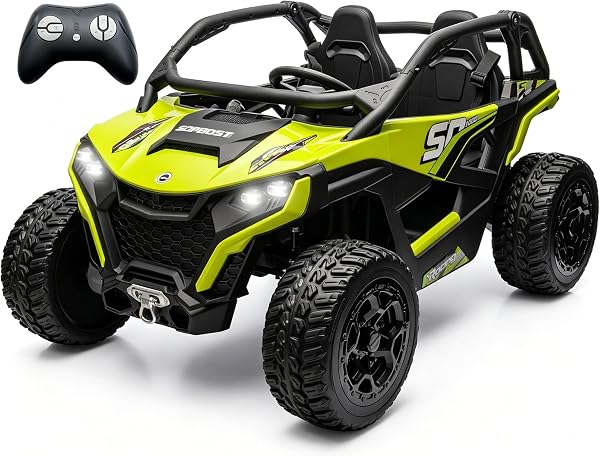
The sopbost XL focuses on interior space, with a 21.85-inch seat that gives siblings or a larger single rider more room than narrower two-seat ride-ons. It combines this wide seat with four 200W motors and a 24V rechargeable lead-acid battery.
We may earn a commission when you buy through this link, at no additional cost to you.
EVA tires are a welcome practical feature because they are described as puncture-proof and better suited to grass, gravel, and uneven ground than basic plastic wheels. Four spring suspension supports the same goal by helping reduce jolts over imperfect outdoor surfaces.
Parents can use the included remote control when assistance is needed, while children can operate the vehicle independently as their skills improve. The music panel supports preset audio, USB connection, and wireless connection, but control setup and belt adjustment should happen before any ride begins.
A wider bench improves comfort, but it does not increase the stated 135-pound load limit. Check both children’s combined weight, including bulky clothing or carried toys, and do not use extra seat room as a reason to exceed the capacity.
This is a sensible option for households with multiple children where seat width is a priority. Its 4.1 rating is lower than some electric alternatives here, so buyers should inspect assembly instructions and verify dimensions against their available storage space.
Buyers who need longer high-speed riding sessions rather than shared, supervised play.
We may earn a commission when you buy through this link, at no additional cost to you.
The JOYRACER 24V 4×4 is designed around parent-guided progression. Its 2.4GHz remote offers three listed speed settings of 1.86, 2.68, and 5 MPH, allowing adults to begin at a low pace before permitting more independent driving.
We may earn a commission when you buy through this link, at no additional cost to you.
Four 200W motors provide 800W total output, paired with a 24V 7Ah battery. The product lists one to two hours of runtime, but real duration will depend on rider weight, surface resistance, temperature, and how often the vehicle climbs or stops.
A 20-inch seat, independent belts, lockable doors, spring suspension, and soft start and braking systems make this a well-rounded family model. The high chassis and wear-resistant tires are intended for grass and mild slopes rather than extreme trails.
Different remote speed settings allow a more controlled learning process than a single fixed maximum speed. Begin with the lowest setting and increase only after the child can steer away from boundaries, stop smoothly, and follow rules consistently.
Choose this model when adjustable remote speed settings are more valuable than a higher top speed. It is particularly useful for families with children at different confidence levels who will share one electric UTV.
Buyers seeking an electric vehicle intended for high-speed riding or adult use.
We may earn a commission when you buy through this link, at no additional cost to you.
The MotoTec Raider is the most electrically powerful kids UTV in this group on its stated specifications, using a 48V system and 1200W motor output. Full suspension is another key distinction for buyers seeking a more substantial chassis than basic ride-on vehicles provide.
We may earn a commission when you buy through this link, at no additional cost to you.
Higher voltage and motor output can be useful for maintaining performance under load or on uneven ground, but they also make rider suitability, space, and supervision especially important. Buyers should seek complete operating, charging, and safety documentation before purchase.
The available product details are limited compared with other models in this guide, and its 3.0 rating is lower than most alternatives. That does not establish a specific fault, but it is a reason to examine return terms, parts availability, support, and setup requirements carefully.
When a vehicle has limited published specifications, confirm basics before ordering: rider age guidance, load capacity, dimensions, charging time, replacement parts, and the scope of any support. These details affect whether a powerful electric model will actually fit your family’s needs.
The Raider fits buyers who specifically want a 48V, 1200W electric kids UTV with full suspension and are prepared to do more pre-purchase diligence. It is less compelling for shoppers who value extensive published details and stronger owner feedback.
Buyers who want extensive published operating details and a high volume of favorable owner feedback.
We may earn a commission when you buy through this link, at no additional cost to you.
The X-PRO 200 Utility is an ATV for riders who prioritize larger tire dimensions and a more robust off-road stance. Its 23-inch front and 22-inch rear steel tires are intended to improve ground clearance, stability, and traction over uneven terrain.
We may earn a commission when you buy through this link, at no additional cost to you.
The 177.3cc engine includes a balance shaft intended to reduce vibration from unbalanced forces. Combined with automatic transmission and reverse, that setup favors practical operation over manual-shift involvement, especially in tight areas where backing out is necessary.
Buyers should factor in the required assembly, which can include wheels, rear shock, fuel tank, roll cage bars, steering wheel, seats, gas lines, and battery depending on the model. Confirm who will perform assembly and conduct a thorough pre-ride inspection afterward.
Larger tires can improve clearance and ride comfort over obstacles, but they do not eliminate rollover risk or make unsafe terrain appropriate. Riders still need to reduce speed before turns, avoid side slopes, and use routes suited to their experience.
This is a good fit for an eligible buyer who values wheel size and automatic operation in a gas ATV. It cannot be sold to California, so location is an immediate purchase consideration before evaluating any other feature.
California buyers or families seeking a quiet, low-maintenance electric ride-on UTV.
We may earn a commission when you buy through this link, at no additional cost to you.
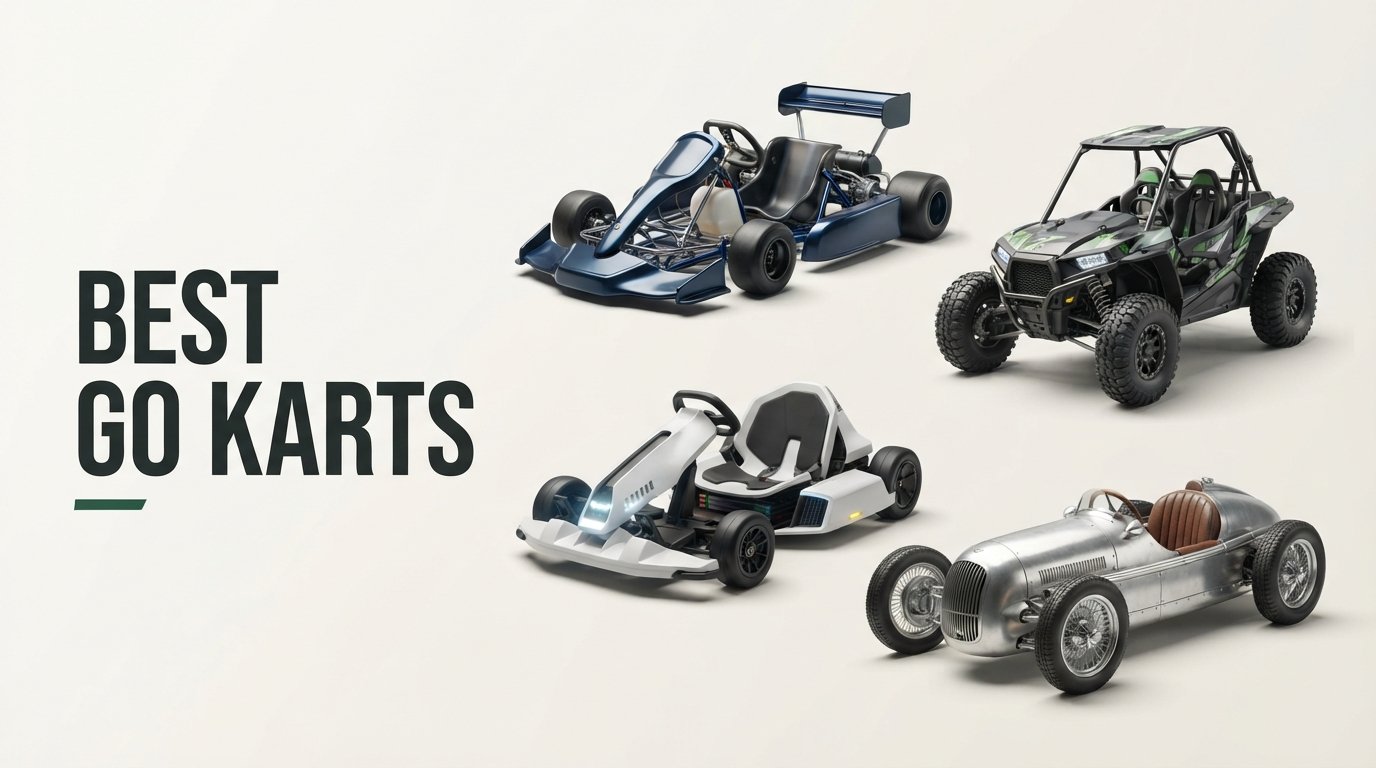
This list includes several vehicle types under the broad UTV and ATV umbrella. Start with rider age, supervision needs, terrain, and intended use, then compare the powertrain and safety equipment that fit those conditions.
Electric ride-on UTVs are designed for children and usually operate at controlled speeds on private property. They commonly include battery power, small seats, belts, lights, music features, and sometimes a parental remote. The MOOITZ, ELEMARA, sopbost, JOYRACER, and First Ride On models belong in this category.
Gas-powered ATVs and side-by-sides are more demanding machines. The MotoTec Titan, X-PRO Cougar, X-PRO Storm, and X-PRO 200 use combustion engines and need fuel, inspection, maintenance, rider instruction, and appropriate protective equipment. They are not direct upgrades from toy-grade electric vehicles simply because they are larger or faster.
Choose the category before comparing price. A child’s electric UTV and a gas-powered ATV solve different transportation and recreation needs.
Battery voltage and motor wattage provide useful context for electric models. A 24V ride-on with four 200W motors can offer better movement across grass than a basic low-voltage toy, while the 36V First Ride On and 48V MotoTec Raider represent more substantial electrical systems. Actual performance still changes with terrain, rider weight, battery charge, and temperature.
For gas vehicles, engine displacement and top speed require more caution. The MotoTec Titan lists a 31 MPH maximum, while the X-PRO Storm includes a speed governor that can help adults begin with a lower limit. Do not use maximum speed as a buying goal; controlled operation is much more important.
Buy the least aggressive vehicle that comfortably meets the rider’s needs. A manageable power level encourages better learning and safer habits.
Two-seat ride-on UTVs are appealing for siblings, but their weight rating remains important. The First Ride On lists a 132-pound limit, while the MOOITZ and sopbost list 135 pounds and the ELEMARA and JOYRACER list 130 pounds. Combined rider weight, clothing, and carried items all count toward that limit.
Seat width affects comfort but not capacity. The sopbost offers a 21.85-inch seat, while MOOITZ and JOYRACER use 20-inch seating. Check dimensions against the children who will actually use the vehicle, especially if it will regularly carry two riders.
Never exceed the stated load capacity. Overloading can reduce steering control, strain motors, shorten runtime, and make braking less predictable.
Hard plastic wheels are best reserved for smooth surfaces. EVA tires, such as those on the First Ride On and sopbost, are generally more appropriate for grass and gravel because they provide more cushioning and grip. Larger treaded wheels and spring suspension can also help reduce jolts on mild outdoor terrain.
Gas ATVs use much larger tires and can address tougher routes, but capability does not erase terrain risk. Ruts, loose slopes, mud, water crossings, and off-camber surfaces require judgment and training. Larger tires on the X-PRO 200 may improve clearance, yet riders must still slow down and avoid unstable ground.
Select terrain that matches the vehicle, not the other way around. Start electric ride-ons on flat, dry, open ground and reserve challenging routes for trained riders on suitable machines.
For ride-on UTVs, look for secure restraints, soft starts, manageable speed, and remote supervision where needed. The ELEMARA, sopbost, and JOYRACER include parental remote control, while the JOYRACER adds three remote speed choices. These features are useful for early learning but do not replace direct adult oversight.
For gas youth ATVs, a speed governor and remote cutoff can be especially valuable. The X-PRO Storm offers both, allowing an adult to reduce speed as the rider learns and shut down the engine from a stated distance. Proper helmets, protective clothing, safe boundaries, and rider education remain essential.
Treat safety features as layers, not guarantees. The best setup combines suitable terrain, close supervision, proper fit, mechanical checks, and a rider who understands basic controls.
Electric models need a reliable charging location that stays dry and protected from weather. Runtime claims vary from around 40 minutes to two hours depending on model and operating conditions. Avoid planning a long outing around the best-case runtime because hills, heavy riders, and rough surfaces consume more power.
Gas machines need safe fuel storage, routine maintenance, and a place where engine noise and exhaust are appropriate. Confirm local rules before riding on trails, roads, or public land. Assembly requirements can also be significant, especially on the X-PRO ATV models.
Choose an ownership routine you can maintain. An electric UTV suits families wanting simpler backyard use, while a gas machine is better only when its added capability justifies the added responsibility.
Before each ride, inspect tires, steering response, seat belts, visible fasteners, and battery charge or fuel level. Choose an open route without traffic, water hazards, steep drop-offs, loose debris, or pedestrians. Children should learn starting, stopping, reverse, and steering on level ground before riding near slopes or rougher surfaces.
Charge electric UTVs only with the supplied or specified charging equipment in a dry, ventilated area. Let the vehicle cool after a long ride before charging when practical, and follow the owner’s instructions for battery storage during periods of nonuse. Do not leave a charging vehicle unattended where children can access cables or controls.
For gas-powered models, follow the maintenance schedule for engine oil, fuel, air filtration, brakes, tires, and fasteners. Store fuel safely and keep the vehicle away from open flames. Clean mud and debris after use, but avoid directing high-pressure water at electrical components, bearings, or engine openings unless the manufacturer specifically permits it.
A UTV usually uses side-by-side seating with a steering wheel or similar vehicle-style controls. An ATV is typically straddled like a quad and steered with handlebars. This guide includes both because shoppers often compare them for youth recreation and utility riding.
A 24V model with multiple motors, EVA or treaded tires, and suspension can be better suited to grass than a basic low-voltage ride-on. Performance still depends on grass height, slope, rider weight, and battery charge. Flat, dry grass is generally easier than thick, wet, or deeply uneven ground.
A two-seat model is useful for siblings or for a larger child who benefits from extra room. Check the combined rider weight against the stated load capacity. Two seats do not mean the vehicle should carry an adult unless its capacity and intended use explicitly allow that.
They are valuable for younger children and for early practice sessions. A remote can help an adult guide the vehicle or take over if the child becomes confused. It should be used alongside direct supervision and a carefully selected riding area.
Runtime varies widely with voltage, battery capacity, terrain, payload, speed, and driving style. Several models here list roughly 40 to 60 minutes, while the JOYRACER lists up to one to two hours. Treat all runtime figures as estimates rather than guaranteed outing lengths.
EVA tires generally offer better traction and shock absorption than hard plastic wheels. They can make a ride-on UTV more comfortable and usable on grass, packed dirt, and gravel. They do not make a kids vehicle suitable for extreme off-road terrain.
At minimum, riders should use a properly fitted helmet and footwear suitable for off-road riding. Additional protective clothing and eye protection are sensible depending on vehicle type and terrain. Follow local regulations and the vehicle maker's safety guidance.
Rules vary by state, county, municipality, and specific road or trail system. Many off-road vehicles are not permitted on public roads without meeting special legal requirements. Verify local laws before purchase and before operating anywhere beyond private property or approved riding areas.
Some shipped ATVs arrive partially assembled to reduce shipping size. Wheels, battery, steering components, racks, shocks, fuel-related parts, and other items may require installation. If you are not comfortable completing and inspecting that work, arrange qualified assembly.
For a family-focused electric side-by-side, the MOOITZ 24V is the strongest overall choice thanks to its four 200W motors, roomy two-seat layout, suspension, metal frame, and the highest listed owner rating in this group. It offers a capable middle ground for supervised outdoor riding without moving into gas-powered complexity.
The ELEMARA 24V is a compelling value alternative for families that want parental remote control, while the JOYRACER adds three remote speed settings for more gradual learning. For buyers who genuinely need a gas-powered off-road vehicle, the MotoTec Titan and X-PRO utility models offer very different capability levels and require more preparation.
Make the final choice around rider maturity, the terrain you actually have, available storage, and the supervision you can provide. A properly sized vehicle used on suitable ground will be more rewarding and safer than a more powerful model that exceeds the rider’s experience or the family’s maintenance routine.