GSOU SNOW Baggy
9.0Editor score15,000mm waterproof polyester shell
10,000g breathable underarm vents
Smooth YKK zipper hardware
Integrated elastic powder skirt
Find the right ski jackets for 2026. We compare 10 standout options by build quality, useful features, owner feedback, value, and everyday trade-offs.
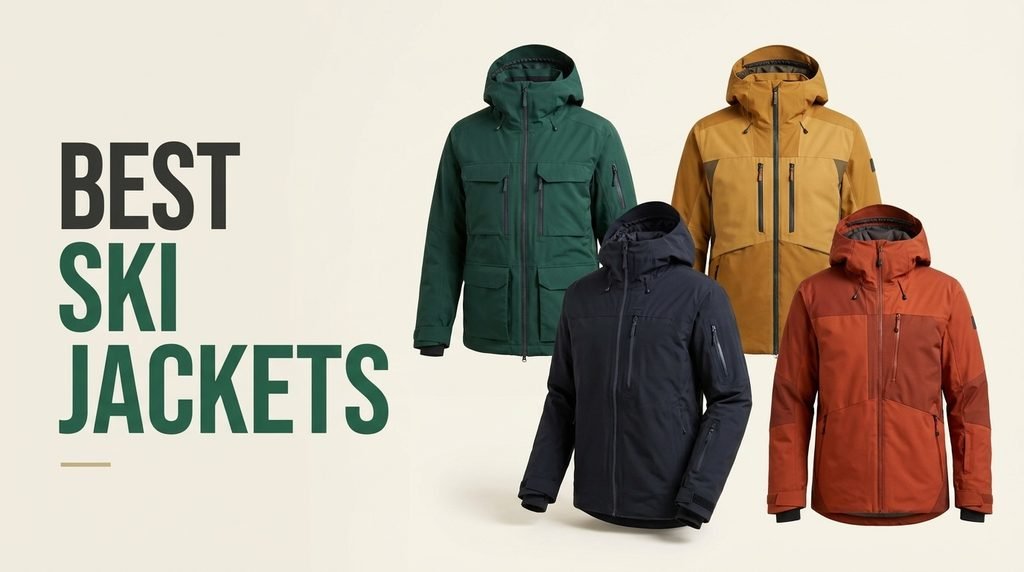
Choosing the right ski jackets for 2026 starts with matching storm protection and thermal regulation to how you ride. We compare 10 standout options across waterproof ratings, breathability, seam sealing, synthetic versus fleece insulation, underarm ventilation, powder skirts, helmet compatibility, pocket layouts, and overall mountain value.
Alpine weather can shift from freezing chairlift winds to damp, heavy afternoon slush in a single session. A technical shell with a 10,000mm to 15,000mm membrane, zippered pit vents, and mapped synthetic fill handles active resort laps far differently than a heavy fleece-lined winter coat built for casual cold-weather recreation.
Before buying, weigh whether you need a modular 3-in-1 layering system, a streamlined insulated shell for high-output runs, a complete jacket-and-pant snow suit, or an affordable fleece-lined barrier for occasional trips. Our breakdown highlights the real-world strengths and fit trade-offs of each design so you can buy with confidence.
We compared 10 ski jackets by evaluating the technical details that directly affect comfort and dryness on the mountain: hydrostatic head waterproof ratings, breathability metrics, seam-sealing construction, insulation mapping, underarm ventilation, hood helmet compatibility, snow-sealing hardware, and pocket organization. Our analysis focuses on practical trade-offs between high-output alpine shells, modular 3-in-1 systems, oversized freestyle silhouettes, and budget-friendly fleece coats so you can match the right outerwear to your local climate and riding style.


Compare key features, scores, and current prices side by side. A shorter feature list means fewer details were available, not necessarily fewer capabilities.


Not every shopper wants a specialized ski shell that sits in the closet 350 days a year. If you want one rugged, affordable winter coat that handles occasional weekend snowboarding, ATV and UTV trail riding, ice fishing, snow shoveling, and outdoor jobsite shifts, the Yufawow Men's Insulated Fleece Lined Jacket is built specifically for that crossover lifestyle.
We may earn a commission when you buy through this link, at no additional cost to you.
Instead of a boxy, shapeless cut, this coat uses ergonomic 3D tailoring to create a structured, broad-shouldered profile while preserving arm and torso articulation. The windproof outer shell is treated for grade 3-4 lotus-effect water resistance, causing light rain and dry snow to bead up and roll off the surface, while a full front storm flap over heavy-duty SBS zippers stops cold gusts from penetrating the center closure.
Inside, comfort is the top priority. A plush thermal fleece lining covers the interior to lock in body heat instantly, and the inner collar is lined with soft fleece so cold, stiff nylon never rubs against your chin and neck during long hours outside. A removable drawstring hood lets you customize your coverage depending on whether you are wearing a helmet, a beanie, or a hard hat, and four zippered pockets keep your phone, wallet, gloves, and goggles secure when riding over bumpy terrain.
When you zip a standard shell all the way to your chin, condensation from your breath can freeze against bare synthetic fabric and irritate your skin. A dedicated soft fleece inner collar stays warm to the touch and blocks drafts around your jawline without requiring a separate neck gaiter.
It is important to match this jacket to the right conditions: because it uses water-resistant lotus-effect fabric rather than a 15,000mm alpine membrane and omits a waist powder skirt, it is not meant for diving into wet, waist-deep backcountry powder bowls. However, at under $47, it is an outstanding everyday workhorse for casual dry-snow skiing, snowmobiling, winter camping, and outdoor work.
Dedicated alpine skiers riding in heavy, wet coastal snowstorms who require seam-sealed 10K to 15K waterproof membranes.
We may earn a commission when you buy through this link, at no additional cost to you.
Freestyle skiers, snowboarders, and all-mountain riders who want serious storm protection without paying resort-boutique prices will find an impressive spec sheet in the GSOU SNOW Baggy 15K Ski Jacket. Designed as a unisex, relaxed H-line shell with built-in thermal insulation rated for temperatures down to 5°F, it gives riders plenty of room to bend, twist, and layer a heavyweight fleece or back protector underneath without feeling constricted.
We may earn a commission when you buy through this link, at no additional cost to you.
Where this coat separates itself from typical sub-$100 winter jackets is its 15,000mm waterproof rating and 10,000g/m²/24h breathability rating. Most entry-level snow coats top out around 3,000mm to 10,000mm, which can wet out when sitting on slushy chairlifts or kneeling in damp afternoon snow. By pairing a 15K barrier with zippered underarm vents and smooth, cold-resistant YKK zippers, the shell sheds heavy precipitation outside while dumping excess heat and sweat during steep mogul runs or terrain park laps.
Snow-sealing hardware and pocket organization are equally well thought out for full days on the mountain. Adjustable hook-and-loop outer cuffs work alongside windproof thumb-loop inner gaiters to keep snow from shooting up your sleeves during a fall, while an integrated anti-slip elastic powder skirt and drawstring hem seal the waist. You also get five dedicated storage zones: two fleece-lined hand warmer pockets, a left-sleeve ski pass pocket for hands-free RFID gate scanning, an inner phone pocket, and an internal mesh goggle pocket.
Coastal ranges and spring ski sessions often expose riders to high-moisture snow that quickly saturates untreated fabric. A 15,000mm hydrostatic head rating provides the pressure resistance needed to stay dry when leaning against wet lift chairs or riding through sleet, while the zippered underarm vents allow instant airflow regulation without unzipping your main front collar into the wind.
The main consideration before ordering is the intentionally oversized, baggy cut. If you love the modern freestyle look or plan to stack thick midlayers for sub-zero snowmobiling and alpine skiing, ordering your standard size gives you effortless mobility. However, if you prefer a closer, traditional alpine fit, sizing down by one full size will keep the shoulders and hem from feeling overly long.
Skier profiles seeking a contoured, form-fitting alpine race silhouette rather than a relaxed, street-inspired freestyle cut.
We may earn a commission when you buy through this link, at no additional cost to you.
Women who frequently get chilled on breezy chairlift rides yet dislike the restrictive feel of heavy, over-stuffed winter parkas will appreciate the Columbia Women's Snowy Summit Insulated Jacket. Built specifically for alpine resort days, it combines weather-sealed outer protection with heat-reflective interior technology to keep weight low and mobility high from first chair to last tracks.
We may earn a commission when you buy through this link, at no additional cost to you.
At the core of its weather defense is Columbia’s Omni-Tech multilayered shell, which uses seam-sealed waterproof construction to block prolonged exposure to snow and moderate rain while allowing internal moisture vapor to escape. Inside, the signature Omni-Heat reflective lining works alongside Microtemp XF II insulation made from 85% recycled polyester. Instead of relying solely on thick batting to trap warm air, the metallic dot pattern reflects radiant body heat back toward your core while leaving breathable spaces between the dots so moisture can dissipate.
On the mountain, the jacket checks the essential boxes that resort skiers look for when gearing up at the car. The attached hood is sized to fit comfortably over a ski helmet, preventing the neck tension that happens when you try to pull a standard street-coat hood over hard shell headgear. An integrated powder skirt and adjustable hem cinch block updrafts and snow spray, while specialized pockets for your goggles and lift pass eliminate fumbling at the base area turnstiles.
Traditional winter coats add warmth by increasing insulation thickness, which can restrict shoulder rotation when planting ski poles. Because the Omni-Heat lining reflects your own body heat back to you, you can often wear a lighter merino or synthetic base layer underneath and maintain warmth without feeling weighed down.
Because the Snowy Summit relies on integrated synthetic fill and heat-reflective lining rather than zip-out layers or dedicated underarm pit zips, it shines brightest in consistently cold to moderate winter temperatures. For resort skiers who want dependable brand engineering, recycled insulation materials, and a flattering, low-bulk profile at a mid-range price, it is one of the easiest everyday alpine jackets to live with.
High-output backcountry tourers or warm-weather spring skiers who require large underarm pit zips to dump heat on steep ascents.
We may earn a commission when you buy through this link, at no additional cost to you.
If you ski from icy December mornings through sun-drenched April slush—or travel between coastal and continental mountain ranges where weather is unpredictable—The North Face Men's ThermoBall Eco Snow Triclimate is the most adaptable jacket in our lineup. Rather than locking you into a single insulation weight, this 3-in-1 system pairs a fully seam-sealed DryVent 2L waterproof outer shell with a zip-out insulated liner jacket that can be worn together or independently.
We may earn a commission when you buy through this link, at no additional cost to you.
The technical engineering inside both pieces is exceptional. The 100% recycled polyester DryVent 2L outer shell sheds wet snow and wind with a non-PFC durable water-repellent finish, while zippered underarm vents let you dump excess heat on aggressive runs. Beneath the shell, the removable inner puffer utilizes body-mapped synthetic insulation: 118g of ThermoBall in the core for down-like warmth that still insulates when damp, paired with sleeker 60g Heatseeker insulation in the collar, yoke, and sleeves so your arms and shoulders move freely without bunching.
Every snow-specific detail has been addressed on the outer shell. You get a packable, helmet-compatible hood with a hidden cord-lock adjustment system, a snap-down powder skirt with gripper elastic, and an internal hem cinch-cord to lock out deep powder. Storage includes a wrist pass pocket with an integrated goggle wipe, a media-ready chest pocket, an internal mesh stash pocket for spare lenses, and zippered hand pockets. Even the inner jacket has its own DWR finish, making it a sharp standalone puffer for apres-ski walks or dry, cold hikes.
On frigid midwinter days or windy summit lifts, zip the ThermoBall liner directly into the DryVent shell for maximum heat retention. When spring temperatures climb above freezing or you are hiking inbounds bowls, remove the inner puffer and wear the breathable DryVent shell over a light base layer with the underarm vents open. Around town or in the lodge, wear the DWR-treated inner jacket on its own.
While the $420 price tag places it firmly in the premium tier, you are effectively buying three garments in one: a weatherproof alpine shell, a standalone ThermoBall puffer, and a combined deep-winter fortress. For committed skiers who want one high-performance kit that handles every day of the season without compromise, it earns our top overall recommendation.
Occasional weekend skiers on a tight budget who only ride a few days a year in mild conditions.
We may earn a commission when you buy through this link, at no additional cost to you.
For women planning a family ski weekend, learning the basics on groomed green and blue trails, or looking for a single warm coat that transitions from the mountain to daily winter errands, this Women's 10K Fleece-Lined Ski Jacket delivers strong value at just over $50. It focuses on cozy, immediate warmth and straightforward waterproof protection without the steep cost of technical pro-shop shells.
We may earn a commission when you buy through this link, at no additional cost to you.
Unlike stiff budget raincoats that crinkle in the cold, this jacket uses a matte, stretchy outer shell made from recycled fabric backed by a 10,000mm/H2O waterproof polyurethane membrane. That 10K rating keeps sleet, wet snow, and coastal fog from soaking through during a day outdoors, while the slight stretch in the fabric allows natural shoulder and arm extension when turning or catching yourself on the snow. Inside, recycled down-alternative padding teams up with a thick, fluffy fleece lining to trap body heat immediately when you step outside.
Wind defense is handled through a detachable fleece-lined storm hood, an internal drawstring hem, and adjustable hook-and-loop wrist cuffs that cinch tightly over gloves. For carrying essentials, the coat provides two zippered hand pockets and one chest pocket—all equipped with waterproof zippers to protect your phone and keys from melting snow—plus two interior stash pockets for small gear or a wallet.
Many entry-level waterproof coats use rigid nylon that pulls tightly across the upper back when you reach forward. The matte recycled fabric on this model provides subtle give, making it much more comfortable whether you are strapping into snowboard bindings or loading luggage into a roof box.
The trade-off at this price point is the absence of specialized high-output resort features like an elastic waist powder skirt, underarm pit zips, or a forearm RFID pass pocket. If you regularly charge through waist-deep off-piste powder or work up a heavy sweat in the terrain park, a vented shell like the Roxy Meade 10K is a better fit. However, for recreational resort cruisers, snow tubers, and winter hikers who prioritize cozy fleece warmth and a wallet-friendly price, this coat hits the mark.
Aggressive powder skiers or warm-blooded riders who need a snap-down snow skirt and zippered pit vents.
We may earn a commission when you buy through this link, at no additional cost to you.
First-time skiers, occasional winter travelers, and outdoor enthusiasts who want a dependable, warm men's snow coat without spending triple digits should look closely at the GEMYSE Men's Winter Ski Jacket. Priced right around $50, it brings cold-sealing wrist hardware and multi-pocket storage to a price bracket where most jackets offer only basic windbreaker construction.
We may earn a commission when you buy through this link, at no additional cost to you.
The exterior uses a wear-resistant, water-repellent breathable fabric with reinforced stitching designed to hold up against ski edges, tree branches, and rough cargo racks. Waterproof zippers on the exterior pockets help keep moisture out of your electronics during snowy chairlift rides, while the thick, soft internal fleece lining traps body heat so you do not have to buy an expensive down midlayer just to stay warm on cold days.
One standout detail for a sub-$50 jacket is the dual cuff system: adjustable Velcro outer tabs work with stretchable inner wrist gaiters featuring integrated thumb holes. Sliding your thumbs through the inner cuffs before pulling on your ski gloves bridges the gap at your wrists so cold air and snow never creep up your forearms. A high stand collar and detachable drawstring storm hood protect your neck and face, while five pockets—two zippered hand pockets, one zippered chest pocket, one secure internal pocket with an earphone cord fixture, and one large internal mesh pocket—keep goggles, passes, and phones organized.
Exposed wrists are one of the fastest ways to lose heat on the slopes whenever your jacket sleeves ride up. Built-in stretch thumb-hole gaiters anchor the inner sleeve across the palm of your hand, creating a continuous thermal seal inside your gloves or mittens.
Because this coat prioritizes thick fleece insulation and lacks underarm ventilation zippers or a waist powder skirt, it is best suited for cold-weather groomed runs, snow tubing, winter camping, and everyday cold climates rather than high-exertion backcountry climbs. Be sure to check the size chart before ordering, as its relaxed cut is designed to leave comfortable room for a sweater or thermal top underneath.
Deep-powder riders who require a waist snow skirt and high-airflow pit zips for vigorous off-piste runs.
We may earn a commission when you buy through this link, at no additional cost to you.
Shoppers who need both a high-performance jacket and matching snow pants often spend upwards of $350 to $500 buying pieces separately. The GSOU SNOW Women's Ski Jacket and Pants Set solves that problem in a single purchase around $174, delivering a coordinated, baggy-fit two-piece snow suit engineered for snowboarding and alpine skiing.
We may earn a commission when you buy through this link, at no additional cost to you.
Both the jacket and the pants are built around a 15,000mm waterproof membrane and a 10,000g/m²/24h breathability rating. That level of protection is especially valuable on the lower body when sitting on snow-covered terrain to strap into snowboard bindings or riding damp chairlifts. Lightweight synthetic insulation inside the jacket traps warmth without making you feel stiff, while underarm ventilation zippers let you dump excess heat quickly when hiking a ridge or riding hard in afternoon sun.
Practical mountain features are integrated throughout the suit. The jacket includes a built-in windproof snow skirt that grips around your waist to block powder from sliding up your back during a tumble, along with intentionally extended sleeves designed to maintain full wrist coverage when reaching forward. Storage is plentiful across both pieces, featuring zippered hand pockets, a chest pocket, interior stash pockets, and a dedicated left-arm pocket for effortless scanning through electronic lift gates.
Many riders pair a decent waterproof jacket with bargain snow pants that soak through at the knees and seat within an hour. Getting a matched 15,000mm/10,000g membrane across both pieces ensures your entire kit resists slush and wet snow equally all day.
Before choosing your size, pay close attention to the cut: this set is tailored with a relaxed, oversized freestyle fit and long sleeves for maximum range of motion. If you are between sizes or prefer a closer, more tailored resort look, ordering one size down is recommended. Also keep in mind that because the jacket and pants ship as a matched size set, it works best for riders whose top and bottom measurements fall within the same size bracket.
Buyers who wear significantly different top and bottom sizes and need to purchase their jacket and snow pants separately.
We may earn a commission when you buy through this link, at no additional cost to you.
For women who want a flattering, tailored silhouette that still packs every technical snow-sealing feature needed for full days on the mountain, the Roxy Women's Meade 10K Waterproof Insulated Snow Jacket hits the sweet spot between price and authentic resort engineering. At roughly $152, it bridges the gap between entry-level fleece coats and $300-plus high-alpine shells.
We may earn a commission when you buy through this link, at no additional cost to you.
Weather protection starts with Roxy’s DryFlight 10K/10K technology, delivering 10,000mm of waterproofing and 10,000g of breathability backed by critically taped seams and a PFAS-free durable water-repellent treatment. Inside, instead of using a single heavy sheet of batting everywhere, Roxy utilizes body-mapped WarmFlight synthetic insulation made from 70% recycled fibers: 120g in the core for serious warmth on cold lifts, 100g in the sleeves for easier arm movement, and a light 60g in the hood so it never pulls backward on your neck. A recycled taffeta lining with brushed tricot adds cozy softness where the fabric touches your skin.
The snow-sealing and ventilation hardware rivals jackets costing twice as much. When you work up a sweat on steeper trails, mesh-lined underarm vents let you dump heat without allowing snow to fall inside the openings. To seal out powder, you get a three-way adjustable and removable hood, a snap-away fixed powder skirt, a jacket-to-pant attachment system, and adjustable cuffs with internal stretch wrist gaiters. Storage is equally dialed, featuring hand pockets with a convenient key clip, a sleeve lift-pass pocket, and internal media and goggle pockets.
Your torso needs significantly more thermal protection than your arms and head, which generate heat through movement or are already covered by a helmet. Putting 120g of WarmFlight fill in the body while dropping to 100g in the sleeves and 60g in the hood keeps your core toasty while preserving a sleek, agile fit.
Because the Meade features a streamlined, tailored women’s cut with 120g of core insulation, you only need a slim thermal base layer and a light fleece on most winter days. If you want a stylish, fully equipped resort jacket with real seam taping, pit vents, and smart insulation mapping at a mid-range price, this is our favorite women’s pick.
Riders seeking an ultra-loose, baggy street-style fit or an uninsulated shell for backcountry skinning.
We may earn a commission when you buy through this link, at no additional cost to you.
Active skiers and snowboarders who spend their days lapping steep groomers, navigating tree runs, or riding terrain parks often find heavy 120g-plus insulated coats too hot after the second run. The North Face Women's Descendit Jacket is engineered specifically for high-output mountain days, combining a fully seam-sealed waterproof exterior with trim, athletic synthetic insulation that keeps you warm without trapping clammy sweat.
We may earn a commission when you buy through this link, at no additional cost to you.
The exterior is built from 100% recycled polyester DryVent 2L fabric with full seam sealing and a non-PFC durable water-repellent finish, blocking driving wind, wet snow, and sleet across changing mountain conditions. Beneath that barrier, lightweight Heatseeker synthetic insulation is mapped with 80g in the body and 60g in the sleeves and helmet-compatible hood. That lighter thermal profile hits the sweet spot for active riders: it takes the chill off windy chairlift ascents while pairing with underarm vents to prevent overheating when you are working hard on the descent.
Thoughtful alpine details make daily use effortless. Instead of exposing your bare hands to freezing wind to tighten the bottom of your coat, the cinch-cord hem adjusts directly through the zippered hand pockets. A snap-down powder skirt with gripper elastic and hook-and-loop cuff tabs seal out deep snow, while a wrist pass pocket comes with an integrated goggle wipe so you can clear fog or snow spray without searching your pockets. Inside, a large mesh drop-in pocket holds spare goggles and a secure-zip chest pocket includes a media port.
Once you start linking turns down a long run, your body generates substantial heat. A lighter 80g torso / 60g sleeve insulation profile keeps the jacket remarkably supple and prevents sweat buildup, while leaving just enough room to add a midlayer when temperatures plunge.
Because the Descendit uses 80g core fill rather than heavy padding, cold-natured skiers riding in sub-zero January conditions will want to pair it with a quality fleece or lightweight synthetic midlayer underneath. For confident all-mountain women who value clean styling, recycled DryVent 2L protection, and freedom of movement from park laps to powder bowls, it is a top-tier technical choice.
Stationary spectators or riders who get cold easily and want maximum built-in insulation without wearing a midlayer.
We may earn a commission when you buy through this link, at no additional cost to you.
Selecting the right winter outerwear requires looking past colorways and examining how waterproof membranes, insulation types, ventilation, and snow-sealing hardware work together in real mountain weather.
The most important job of any ski or snowboard jacket is keeping external moisture from reaching your base layers. Waterproof performance is commonly measured in millimeters using a hydrostatic head test, which gauges how tall a column of water the fabric can support before leaking. Entry-level water-resistant windbreakers with grade 3 to 4 lotus-effect coatings—such as the Yufawow 3D Fleece Jacket—readily shed dry flurries and light drizzle during cold-weather work or dry resort days. Step up to a 10,000mm membrane like the Roxy Meade 10K or the Women’s 10K Fleece-Lined Jacket, and the fabric can handle prolonged moderate snowfall and damp lift seats. For heavy wet snow, sleet, or sitting in slush while strapping into snowboard bindings, a 15,000mm rating (found on the GSOU SNOW Baggy Jacket and Women’s Suit Set) or a proprietary multi-layer membrane like The North Face DryVent 2L or Columbia Omni-Tech provides superior storm resilience.
Equally critical is how the panels of fabric are joined together. Even the highest-rated waterproof textile will leak if water can seep through thousands of tiny needle holes along the shoulders, hood, and chest. Critically taped seams seal the most exposed upper-body stitching, while fully seam-sealed construction—used on the Columbia Snowy Summit, The North Face ThermoBall Eco Triclimate, and The North Face Descendit—tapes every interior seam across the garment. On the outside face fabric, a durable water-repellent (DWR) finish causes moisture to bead up and roll off rather than soaking into the outer threads, which preserves breathability.
If you primarily ski in cold, dry continental climates or only head out on bluebird days, a water-repellent fleece-lined coat or 10K critically taped jacket is plenty. If you ride in the Pacific Northwest, the Northeast, or spring slush conditions, prioritize a 15,000mm rating or a fully seam-sealed two-layer shell.
Staying dry on the slopes is a two-way street: while the exterior blocks snow, the interior must allow sweat vapor to escape before it condenses and chills you on the next chairlift ride. Breathability is measured in grams of water vapor that can pass through a square meter of fabric over 24 hours (g/m²/24h). Jackets with a 10,000g breathability rating, such as the Roxy Meade 10K and both GSOU SNOW models, allow steady vapor transfer during active downhill runs so your base layer stays dry against your skin.
Mechanical ventilation is just as important as membrane breathability when your heart rate climbs on mogul runs, hike-to terrain, or sunny afternoon laps. Zippered underarm vents—commonly called pit zips—let you open large vents directly beneath your arms where heat accumulates fastest, dumping warm air immediately without exposing your chest or throat to cold headwinds. Models like The North Face ThermoBall Eco Triclimate, The North Face Descendit, the Roxy Meade 10K, and the GSOU SNOW jackets all include dedicated underarm vents, with some adding internal mesh linings to keep snow out if you take a tumble with the vents open.
Warm-blooded riders, snowboarders who exert themselves strapping in and skating across flats, and spring skiers should treat zippered underarm vents as a non-negotiable feature. Riders who stick to gentle groomed cruisers in midwinter cold can comfortably choose non-vented jackets like the Columbia Snowy Summit or GEMYSE Fleece Jacket.
Ski jackets in this guide use three distinct approaches to thermal insulation, and choosing the wrong one is the most common reason buyers end up too hot or too cold. Budget-friendly models like the GEMYSE, TACVASEN, Yufawow, and Women’s 10K coat rely on thick, plush internal fleece linings (sometimes paired with down-alternative padding). Fleece feels warm the instant you put it on and works well for stationary warmth or sub-freezing recreational days, but it is heavier, packs down larger in a suitcase, and retains more heat during vigorous exercise.
Dedicated resort shells typically use lightweight synthetic microfibers—such as Columbia Microtemp XF II ( paired with Omni-Heat reflective lining), Roxy WarmFlight, or The North Face Heatseeker. Synthetic fill traps warmth without bulk and continues to insulate even if damp. Better still, advanced jackets use body-mapped insulation weights: the Roxy Meade places 120g in the core, 100g in the sleeves, and 60g in the hood, while the athletic North Face Descendit uses 80g in the body and 60g in the sleeves and hood so your arms move without resistance. At the top end of versatility, 3-in-1 Triclimate systems like The North Face ThermoBall Eco combine an uninsulated waterproof shell with a zip-out 118g ThermoBall / 60g Heatseeker inner puffer.
Choose a 3-in-1 Triclimate jacket if you want one coat for frigid January blizzards, mild April slush, and town wear. Choose body-mapped synthetic insulation (80g to 120g) paired with reflective or taffeta linings for agile all-mountain skiing, or pick a fleece-lined coat if you want cozy, ready-to-wear warmth under $55 without buying separate midlayers.
A jacket’s fabric rating means little if snow and freezing air can blow straight up your waist, down your collar, or into your sleeves. A built-in powder skirt (or snow skirt) is an elasticized inner waistband with gripper tape and snaps that wraps snugly around your hips inside the jacket, creating a physical barrier that stops snow from packing against your lower back during a fall or deep powder turn. Models like the Roxy Meade go a step further by adding jacket-to-pant attachment loops that connect the skirt directly to your snow pants.
At the extremities, look at the cuffs and hood. Adjustable hook-and-loop outer cuffs let you cinch the sleeve tightly over low-profile gloves or slide gauntlet mittens over the cuff. Inner stretch wrist gaiters with thumb holes—featured on the GSOU SNOW Baggy Jacket, GEMYSE, and Roxy Meade—bridge the gap between your sleeve and glove so bare skin is never exposed when reaching forward. Up top, a helmet-compatible hood (found on Columbia Snowy Summit and both North Face models) is cut with extra volume so it pulls smoothly over a ski helmet during blinding chairlift snowstorms, whereas standard detachable hoods are sized primarily for beanies.
If you wear a ski or snowboard helmet and ride in stormy conditions, verify that your jacket has either a helmet-compatible hood or a fully removable hood that will not bunch awkwardly behind your helmet neck roll. Always look for an internal powder skirt if you ride off-piste or are still learning and likely to fall.
Fit affects both your range of motion and how many layers you can comfortably stack underneath. Baggy, oversized H-line silhouettes—exemplified by the GSOU SNOW Baggy 15K Jacket and Women’s 15K Suit Set—are purposefully cut wide through the chest, shoulders, and hem with slightly elongated sleeves. This gives snowboarders and freestyle skiers completely unrestricted movement when grabbing boards, twisting in the air, or wearing impact shorts and back protectors, though buyers who want a standard silhouette need to size down by one size.
Regular and ergonomic 3D fits, like those on The North Face ThermoBall Eco Triclimate, The North Face Descendit, and the Yufawow 3D Jacket, follow natural shoulder contours while leaving enough interior volume for a base layer and a midweight fleece or zip-in puffer. Tailored women’s fits, such as the Roxy Meade 10K and Columbia Snowy Summit, contour slightly at the waist for a streamlined resort look while relying on body-mapped insulation or heat-reflective linings so you do not need bulky hoodies underneath.
Before ordering, decide how you dress underneath. If you prefer wearing thick oversized sweatshirts under your coat, choose a baggy freestyle cut in your normal size. If you wear technical merino base layers and want a trimmer silhouette that reduces wind drag on fast groomers, choose a tailored or regular alpine fit.
Fumbling with thick gloves at the lift gate or dropping your phone into the snow from an open pocket can quickly frustrate a ski day. Dedicated resort jackets include a zippered forearm or left-sleeve lift pass pocket—present on the GSOU SNOW models, Roxy Meade, Columbia Snowy Summit, and both North Face jackets—which lets you brush your arm past automated RFID turnstiles without ever reaching into your coat. Internal mesh drop-in pockets are sized to hold spare goggle lenses or gloves against your body warmth so they do not fog or freeze.
Pay attention to zipper hardware and small conveniences as well. Cold metal and cheap plastic teeth can jam when crusted with ice; YKK zippers (used on the GSOU SNOW Baggy Jacket) and tested SBS zippers (on the Yufawow) are built to glide reliably in sub-freezing temperatures. Extras like integrated goggle wipes tethered inside wrist pockets (on both North Face jackets), internal media cord ports, key clips, and pocket-accessible hem cinch cords make a noticeable difference over dozens of days on the hill.
Make a quick checklist of what you carry on the mountain. If your local resort uses electronic RFID gates and you carry spare goggle lenses for changing light, prioritize a jacket with a dedicated sleeve pass pocket and an internal mesh goggle stash.
To get the best thermal regulation from your ski jacket, dress using a three-layer moisture-management system rather than throwing a single heavy cotton sweatshirt underneath. Start with a moisture-wicking synthetic or merino wool base layer next to your skin to pull sweat away from your body. On mild days or when wearing heavily insulated coats like the 120g Roxy Meade or fleece-lined GEMYSE, that base layer alone is often sufficient. When temperatures drop toward single digits or when wearing lighter shells like the 80g North Face Descendit, add a breathable fleece or synthetic midlayer, and open your underarm pit vents before you start sweating on steep runs.
Proper washing is essential to maintain waterproof breathability, as body oils, sunscreen, and dirt eventually clog membrane pores and flatten durable water-repellent (DWR) coatings. Before washing, empty every pocket, detach removable hoods if applicable, close the main front zipper and pit vents, and fasten all hook-and-loop cuff tabs so they do not snag the inner lining. Follow the garment care label—most technical shells and fleece-lined coats can be washed gently in cold water using a mild, non-detergent technical wash without fabric softeners or bleach, which strip waterproof membranes.
After washing, hang your jacket to dry in a well-ventilated area away from direct radiant heaters, and make sure both the outer shell and inner fleece or taffeta lining are completely dry before storing. Never cram a damp ski jacket into the bottom of a gear bag after a trip, as trapped moisture degrades polyurethane coatings and fosters mildew. At the end of the winter season, store your clean jacket unconsolidated on a wide-shouldered hanger in a cool, dry closet so the synthetic insulation retains its full loft for next winter.
For most resort riders, a 10,000mm waterproof rating with critically or fully taped seams provides reliable protection against steady snowfall and cold chairlift seats. If you frequently ride in wet coastal climates, sleet, or deep spring slush—or if you snowboard and spend time sitting or kneeling directly on wet snow—stepping up to a 15,000mm rating or a fully seam-sealed two-layer membrane like DryVent 2L will keep you drier over a full day. Basic water-resistant windbreakers work fine for dry, cold days and outdoor work but can saturate in wet storms.
An insulated ski jacket with 80g to 120g of synthetic fill or a heat-reflective lining is simpler, lighter, and more affordable if you primarily ride in consistent midwinter temperatures. A 3-in-1 Triclimate system like The North Face ThermoBall Eco costs more upfront, but it gives you a zip-out insulated puffer and a standalone waterproof shell that you can wear together in sub-zero storms or separately in warm spring slush. If you ride from November through April in varying climates, the 3-in-1 design offers the widest temperature range.
Most dedicated resort ski jackets use between 60g and 120g of synthetic insulation, often mapped with heavier fill in the torso and lighter fill in the sleeves and hood. Around 80g in the body (such as on The North Face Descendit) is ideal for active riders who generate plenty of body heat and layer a fleece underneath on frigid days. Around 118g to 120g in the core (found on the Roxy Meade and North Face ThermoBall liner) provides substantial warmth for cold chairlifts and riders who get chilly easily.
Baggy, H-line ski and snowboard jackets are intentionally cut wider through the shoulders, torso, and sleeves to give freestyle riders maximum range of motion when twisting, crouching, and reaching for grabs. The extra volume also makes it easy to layer thick hoodies or spine protectors underneath without binding at the elbows. If you like the features of a baggy model like the GSOU SNOW 15K Jacket but prefer a closer, traditional alpine fit, ordering one size down will give you a cleaner silhouette.
A powder skirt is an internal elastic waistband built into the inside of a ski jacket that snaps snugly around your hips to seal off the bottom hem. When you fall in deep snow or ride through waist-deep powder, it prevents snow from sliding up under your coat and melting against your base layers. Many powder skirts can be snapped flat against the inside lining when not in use, making them a highly worthwhile feature for all-mountain riders and beginners alike.
Skiing and snowboarding involve alternating cycles of high physical exertion on the run down and stationary cooling on the chairlift ride back up. If you sweat heavily inside a sealed jacket, that moisture will chill you rapidly once you stop moving. Zippered underarm vents let you dump excess heat directly from your core during active runs without unzipping your main front collar into the freezing wind.
Yes, fleece-lined winter ski jackets like the Yufawow, GEMYSE, and TACVASEN models are among the most popular crossover coats for commuting, snow shoveling, ATV riding, and outdoor jobsite work. Because they have soft fleece interiors and detachable hoods without stiff alpine shells, they feel immediately cozy over a regular shirt and look natural off the mountain. Just keep in mind that they run warmer during heavy cardio than technical vented shells.
Body-mapped insulation places thicker synthetic fill around your vital core organs while using thinner, less bulky insulation in the sleeves, collar, and hood. For example, a jacket might use 120g of fill in the chest and back, 100g in the arms, and 60g in the hood. This keeps your torso warm on windy lifts while preventing your arms from feeling stiff when planting ski poles or turning.
Standard winter jacket hoods are patterned around a bare head or a knit beanie and will pull tightly across your shoulders if forced over a hard ski helmet. If you like pulling your hood up during snowy chairlift rides, look specifically for models labeled helmet-compatible, such as the Columbia Snowy Summit, The North Face ThermoBall Eco Triclimate, or The North Face Descendit. Otherwise, choose a coat with a detachable hood so you can remove it on helmet days.
For skiers who want one exceptionally versatile kit that handles everything from frigid January blizzards to sunny spring slush, The North Face Men's ThermoBall Eco Snow Triclimate stands out as our top overall choice. Its seam-sealed DryVent 2L waterproof shell, zip-out 118g ThermoBall and 60g Heatseeker liner, underarm vents, and helmet-compatible hood deliver true all-season adaptability.
Women looking for a dedicated resort jacket have three strong paths depending on budget and riding style: the Roxy Women's Meade 10K balances critically taped 10K waterproofing, body-mapped recycled insulation, and pit vents at a mid-range price; the Columbia Women's Snowy Summit offers lightweight Omni-Heat reflective warmth; and The North Face Women's Descendit provides athletic 80g/60g Heatseeker performance for high-output riders. Meanwhile, the GSOU SNOW Baggy 15K Jacket and Women's 15K Suit Set deliver unbeatable 15,000mm waterproof value for freestyle riders.
If you only hit the slopes a few weekends a year or want a warm, fleece-lined coat under $55 that doubles for snow shoveling, hiking, and daily wear, the GEMYSE, Yufawow, TACVASEN, and Women's 10K Fleece-Lined jackets offer dependable cold-weather value. Match your choice to your local snow moisture, how warm you run on the mountain, and whether you prefer a tailored alpine cut or a roomy freestyle silhouette.