BILT HARD Poly
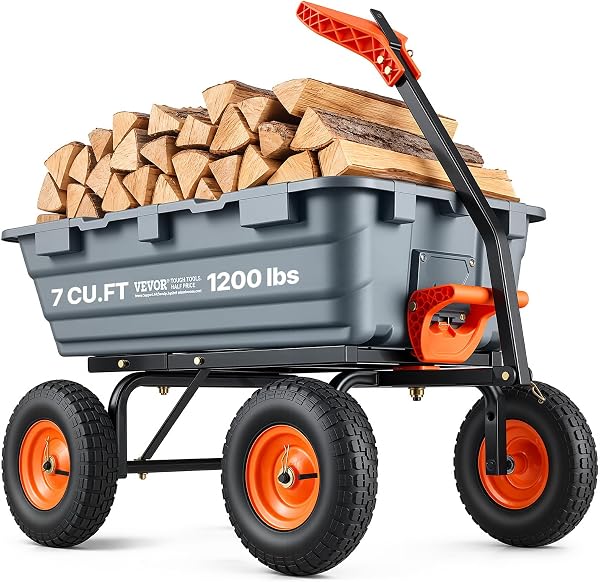
9.0Editor score1200-pound load capacity
Seven cubic foot bed
13-inch no-flat tires
Two-in-one convertible handle
Find the right utility vehicles for 2026. We compare 9 standout options by build quality, useful features, owner feedback, value, and everyday trade-offs.
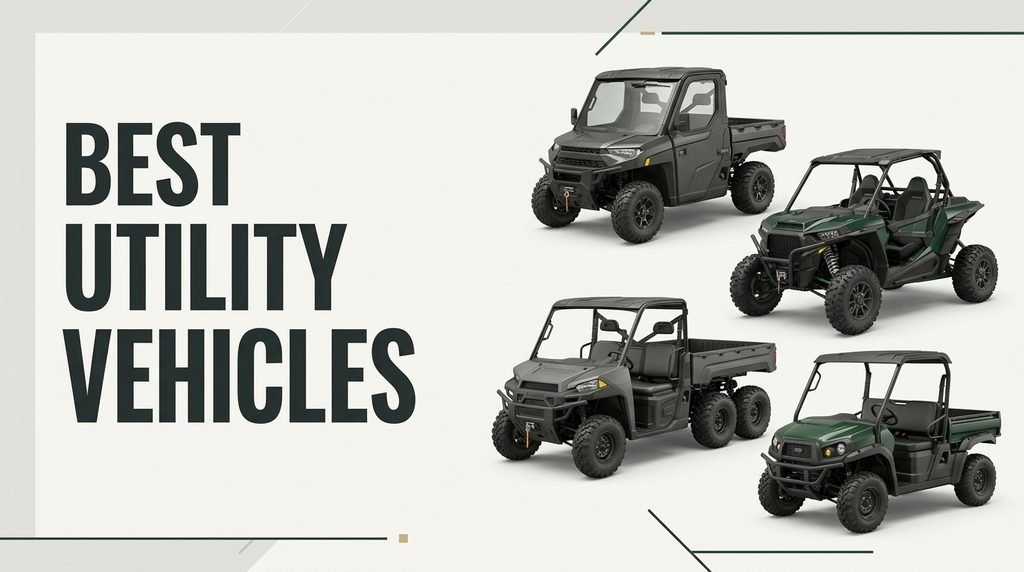
Finding the right utility vehicle starts with matching the machine to the work. We compare 9 standout options by the details that matter in this category: load capacity, cargo bed size, power source, terrain handling, hitch compatibility, and the practical trade-offs between pushing, towing, and riding your hauler.
The range here runs from simple poly dump carts under $170 to a four-wheel-drive electric wagon approaching $2,000, with folding road trailers, off-road steel haulers, and powered platform carts in between. The best pick depends less on raw specifications and more on how often you haul, what you carry, and where the work happens.
Each model below is broken down by its genuine strengths, meaningful limitations, and the buyer it suits best. A detailed buying guide follows the reviews, covering capacity ratings, bed materials, tire choices, hitch types, and power systems, so you can weigh the decisions that actually affect daily use before spending anything.
We compared 9 utility vehicles using the details that help a buyer decide: rated load capacity, cargo volume, frame and bed materials, tire type, dumping convenience, hitch compatibility, power and battery systems, owner feedback, and price relative to capability. The notes focus on practical trade-offs so each pick connects to how people actually move soil, mulch, firewood, gear, and tools around yards, farms, campsites, and work sites.

Compare key features, scores, and current prices side by side. A shorter feature list means fewer details were available, not necessarily fewer capabilities.


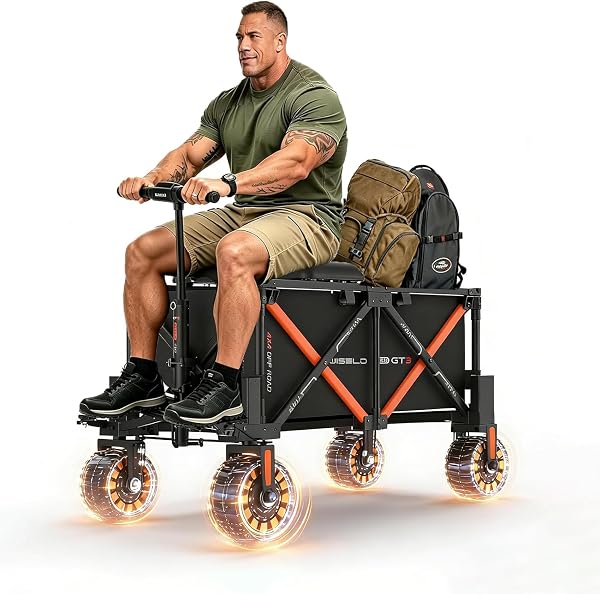
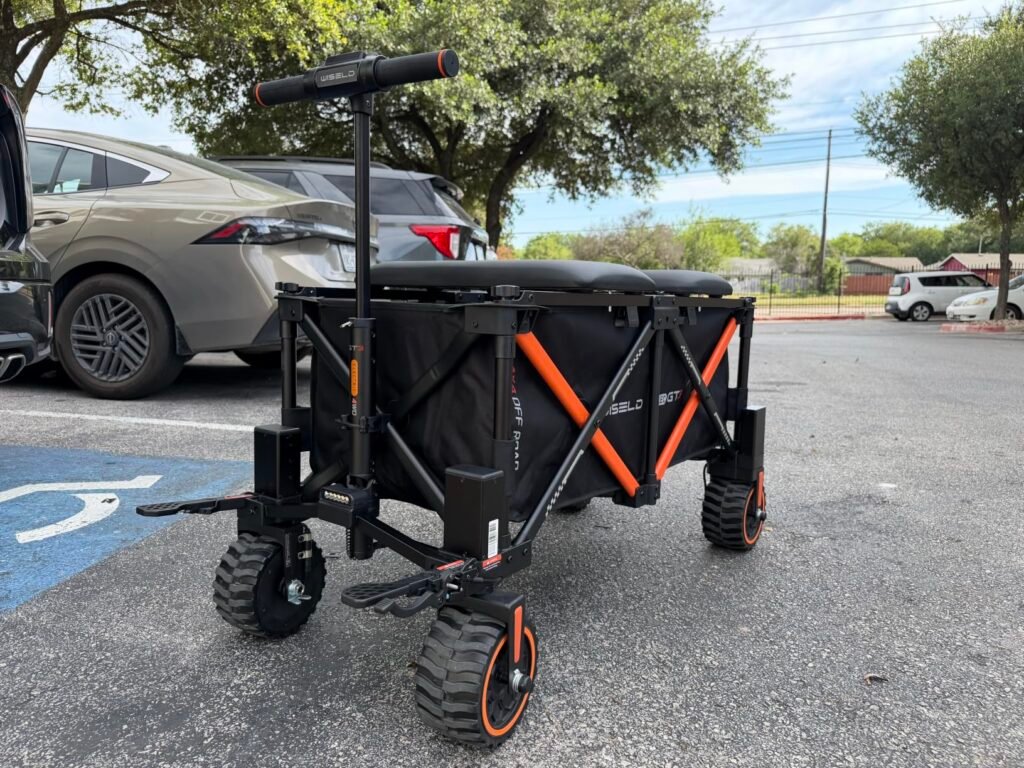
The WISELD GT3 sits at the top of this category in both price and capability. It is a folding wagon reimagined as a four-wheel-drive electric utility vehicle, aimed at camping families, event vendors, sports parents, and property owners who want one machine to ride, tow, and haul. The four-wheel-drive version delivers 3000W of power and a 10 mph top speed, with a ride-on seat rated for a 330-pound rider.
We may earn a commission when you buy through this link, at no additional cost to you.
The construction mixes 6061 aluminum alloy, carbon steel, and 304 stainless steel, with a 2.4-inch full-color LCD instrument display for monitoring the drive. Load ratings come in at 771 pounds dynamic and 1300 pounds static in four-wheel-drive trim. Handling features go well beyond a typical wagon: folding Ackermann steering, reverse mode, cruise control, regenerative braking, hill-assist, and rear mechanical drum brakes, enough control to climb slopes up to 30 percent with confidence.
Power comes from a quick-release 36V 12Ah LiFePO4 battery backpack with an 8-layer battery management system, and a full charge takes about three hours. Expect roughly 9.4 miles of range in four-wheel drive, with the two-wheel-drive configuration stretching that to 18.6 miles. The 600D Oxford fabric liner is waterproof and washable, and the whole cart folds at a 1-to-4 ratio to fit in a car trunk. When the battery runs flat, it still functions as a regular utility wagon.
The direction lever switches the GT3 between ride-on mode, full electric towing, manual towing, and folded power towing. Ride-on mode turns it into a small vehicle, electric towing walks your gear along behind you, manual towing behaves like a conventional wagon, and folded power towing keeps the electric drive working even when the cart is collapsed for tight spaces like elevators and campsite paths. Few carts at any price offer that range of configurations.
This is a significant investment, and there are practical notes worth knowing before ordering. The battery ships separately and typically arrives a day or two after the wagon because of hazardous-material shipping rules. The maker also advises rinsing with fresh water after any seawater exposure to protect the folding mechanism. For buyers who haul gear across campsites, fields, or event grounds every week, the GT3 replaces several separate tools at once. Casual gardeners will never use enough of its capability to justify it.
Casual gardeners or buyers whose hauling is occasional and light.
We may earn a commission when you buy through this link, at no additional cost to you.
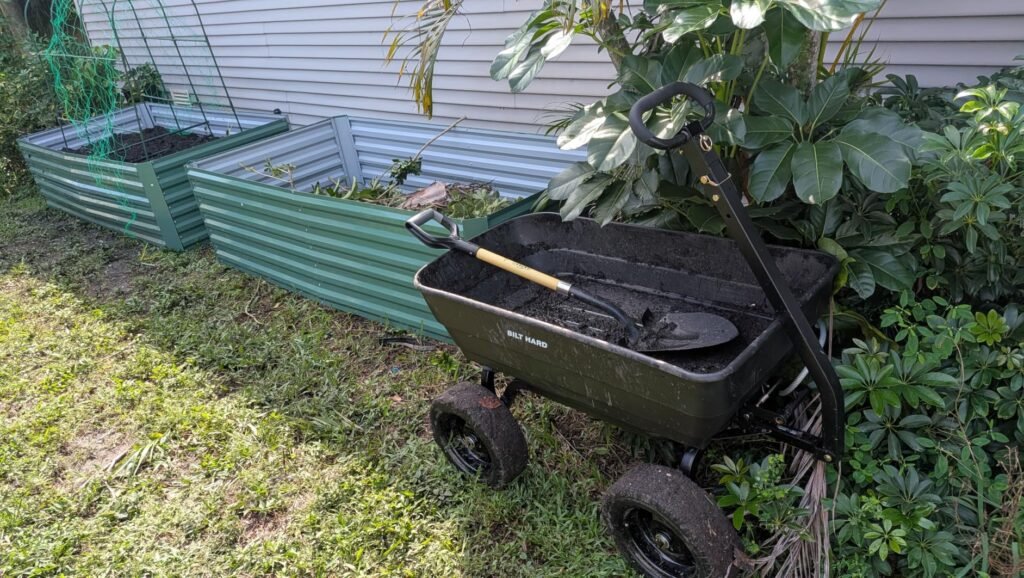
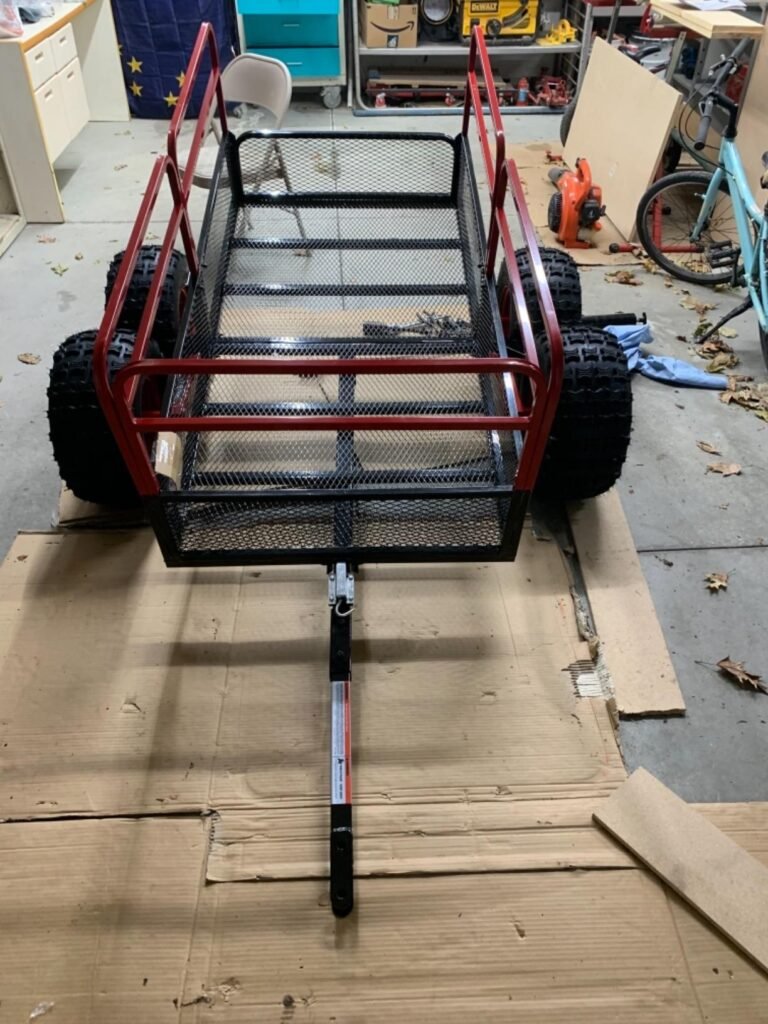
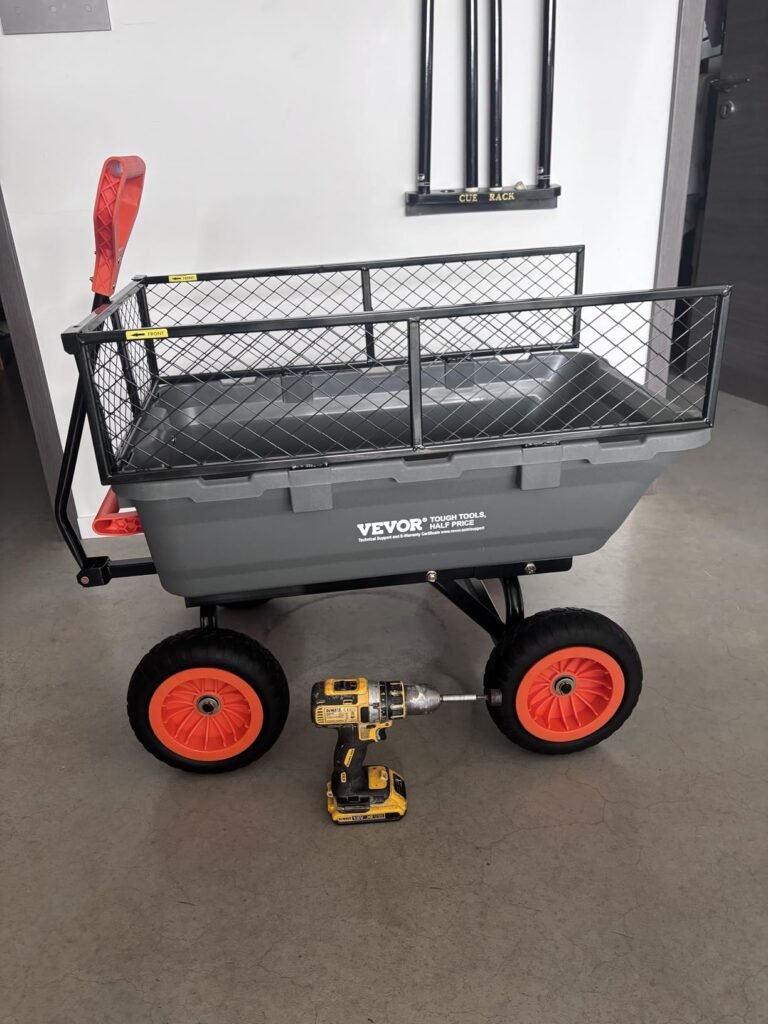
The BILT HARD poly dump cart is aimed at homeowners and weekend gardeners who regularly move mulch, soil, gravel, firewood, or yard debris and want capacity without complexity. Its 1200-pound rating puts it near the top of the manual cart class, and the seven-cubic-foot bed is sized for the kind of loads a typical property generates during an afternoon of cleanup or planting.
We may earn a commission when you buy through this link, at no additional cost to you.
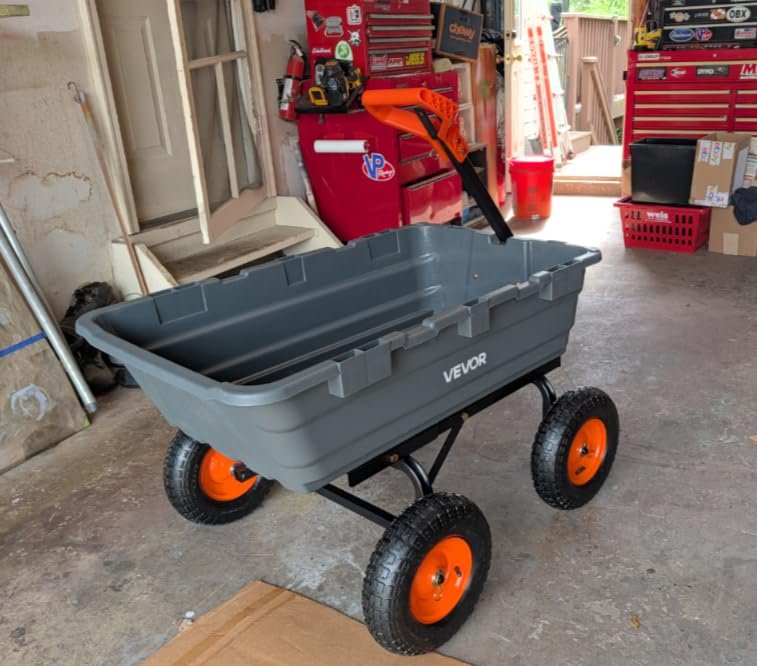
The bed itself is a rust-proof poly tub measuring 42 by 23 inches, mounted on a steel frame. That combination matters in practice: poly shrugs off wet soil, fertilizer, and weather without corroding the way bare steel can, while the steel frame carries the structural load. Four wheels also give it a stability advantage over a classic two-wheel wheelbarrow, especially on uneven ground where a loaded single-axle barrow wants to tip.
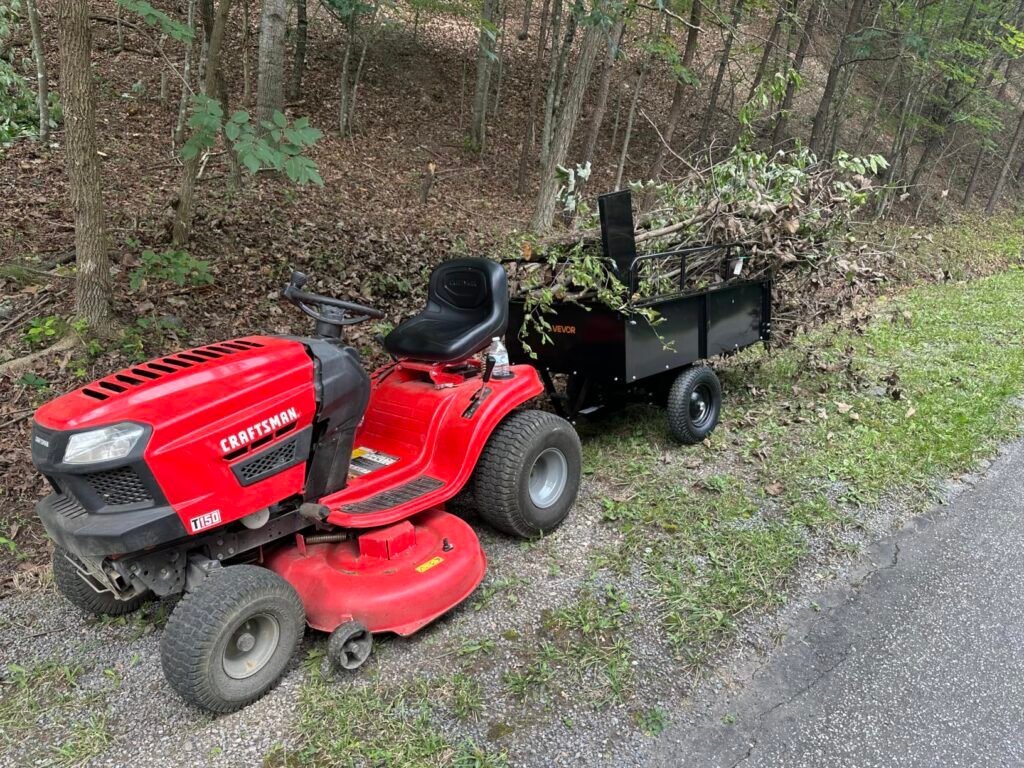
Daily usability centers on two features. The quick-release dumping mechanism lets you tilt the bed forward and empty it without shoveling material out by hand, which saves real time when you are moving soil or gravel in repeated trips. The two-in-one handle converts from a pull handle to a tow hitch, so you can walk it around the yard yourself or hook it behind a lawn tractor or ATV for longer hauls.
Pneumatic tires ride softly but eventually pick up thorns, nails, and valve leaks, and a flat cart mid-project is deeply frustrating. Solid no-flat tires trade a little cushioning for total reliability, and at 13 inches they are large enough to roll over lawn seams, driveway edges, and packed gravel without digging in. If your yard has thorny plants or leftover construction debris, this tire type alone can decide the purchase.
The main trade-off is that this remains a manual cart on flat ground and hills alike; there is no motor to help when the bed is full and the grade is against you. The 13-inch no-flat tires remove puncture worries entirely, which is a genuine convenience for a tool that lives near the garage door. For most residential hauling, this cart hits a balance of capacity, durability, and price that is difficult to beat.
Buyers who need powered assistance for heavy loads or long, hilly routes.
We may earn a commission when you buy through this link, at no additional cost to you.
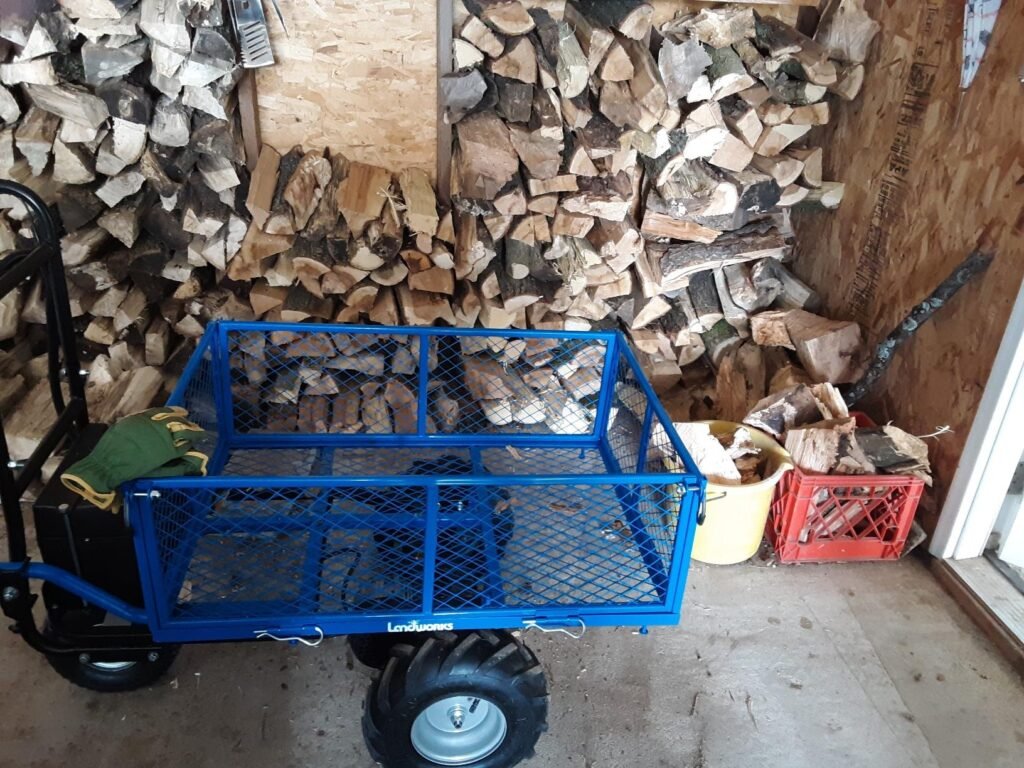
The Landworks electric utility cart is built for a different kind of user: someone who walks alongside the load rather than riding or towing it. Warehouses, nurseries, estates, and campgrounds are the natural habitat for a powered platform cart. With a 500-pound payload and a 1000-pound towing rating, it handles supplies and equipment that would otherwise mean repeated trips or a strained back.
We may earn a commission when you buy through this link, at no additional cost to you.
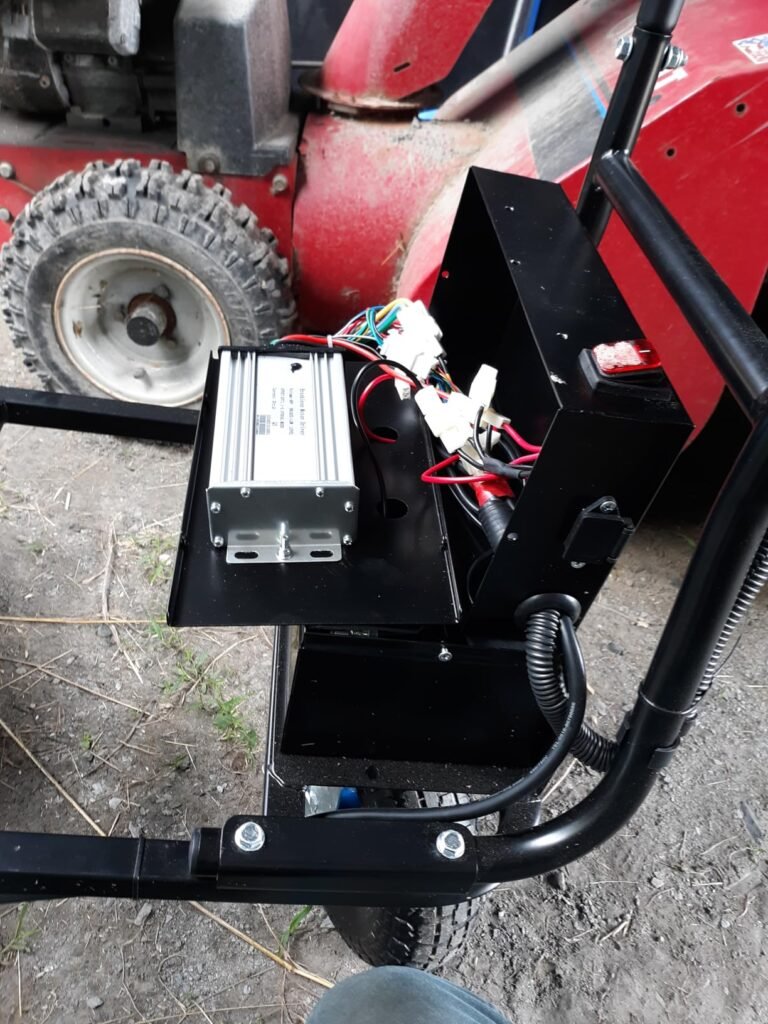
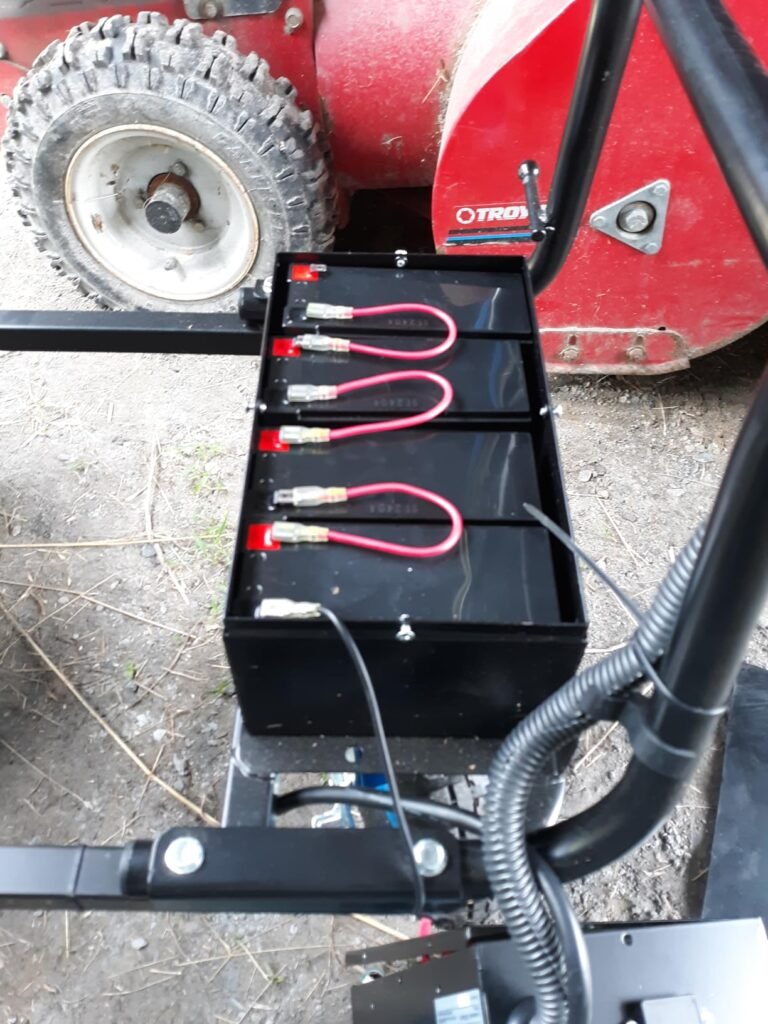
Power comes from a 500W brushless motor running on a 48V system fed by four 12V 7Ah sealed lead-acid batteries. The deep-cycle design is spill-proof and performs reliably in cold conditions, and the brushless motor keeps operation quiet enough for residential areas and indoor use. Speed is variable from zero to 3.1 mph forward and 2.2 mph in reverse, which is deliberately walking pace.
The six-cubic-foot modular bed is the practical highlight. Panels can be removed or folded to convert the cart into a flatbed, which changes what you can carry: boxed cargo stays contained with the panels up, while awkward items like lumber, pots, or equipment ride the open deck. Thirteen-inch pneumatic wheels inflated to around 30 PSI absorb bumps and keep the load stable over rough ground.
A 3.1 mph ceiling looks like a limitation on paper, but it matches the pace of a person walking beside the cart, which is exactly how this machine is used. Slower speeds give you time to steer around obstacles, keep the load balanced, and stop precisely where you need it. In warehouses, greenhouses, and crowded yards, that control matters more than pace.
The honest trade-offs are pace and price. At just over three miles per hour, this cart is not for covering large properties quickly, and sealed lead-acid batteries hold their life longest when charged regularly rather than left drained. For buyers whose work happens within a warehouse, a worksite, or a few acres at walking speed, the powered assistance justifies the cost. Buyers who want to ride or move faster should look at the electric wagons in this guide.
Anyone who wants to ride along or cover large properties quickly.
We may earn a commission when you buy through this link, at no additional cost to you.
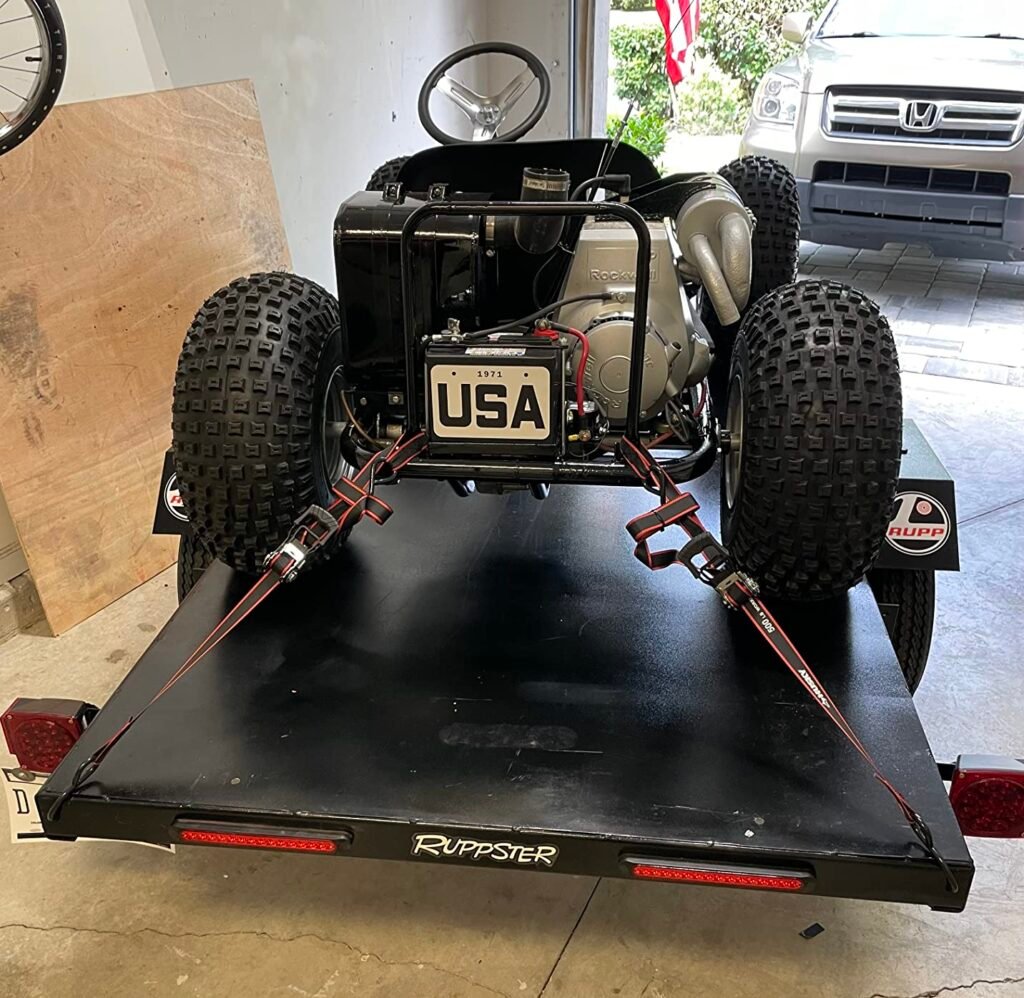
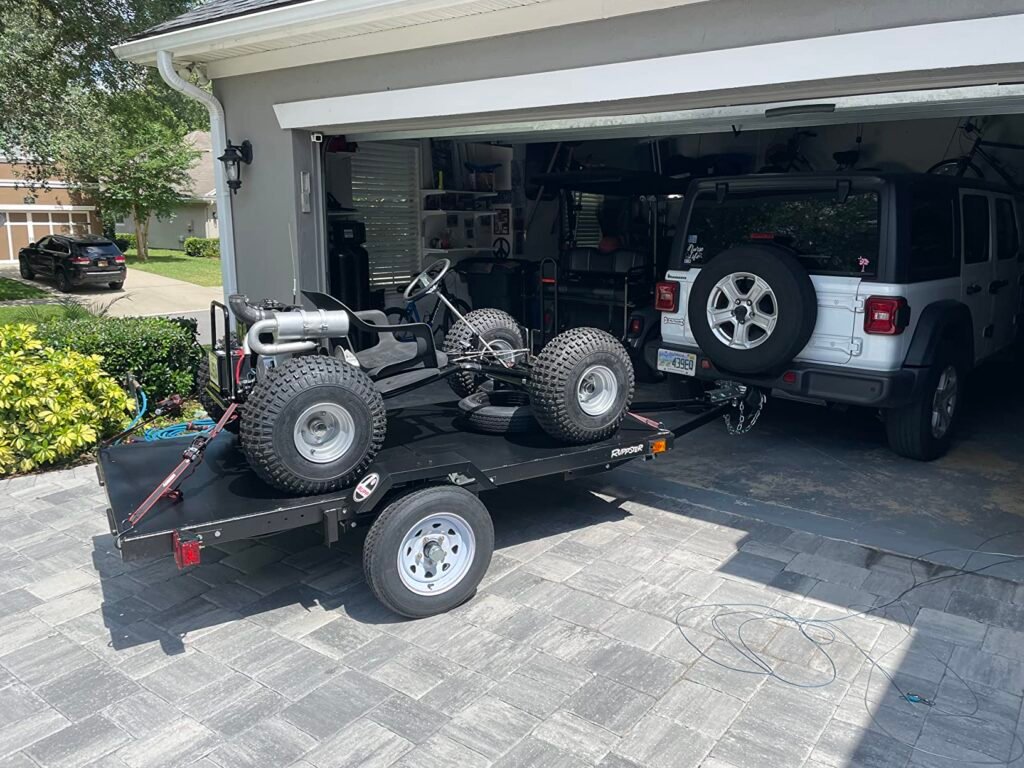
The DK2 MFT4X8 takes utility hauling onto the road. This folding single-axle trailer offers a full 4-by-8-foot deck and a 1450-pound payload, the highest rating in this lineup, making it the right tool for mulch runs, furniture moves, appliances, and equipment that simply will not fit in a cart or wagon. It connects through a 2-inch coupler with safety chain and S-hook, and can be pulled behind appropriately equipped vehicles, lawn tractors, or ATVs.
We may earn a commission when you buy through this link, at no additional cost to you.
The frame is welded tubular steel with an anti-slip textured bed finished in UV-resistant powder coat. Leaf springs and a pair of 5.30-12 six-ply tires carry the load, and the deck texture helps keep cargo from shifting during transport. The folding design is the headline feature: the trailer breaks down into a compact package that stores upright in a garage corner rather than occupying a parking spot year-round.
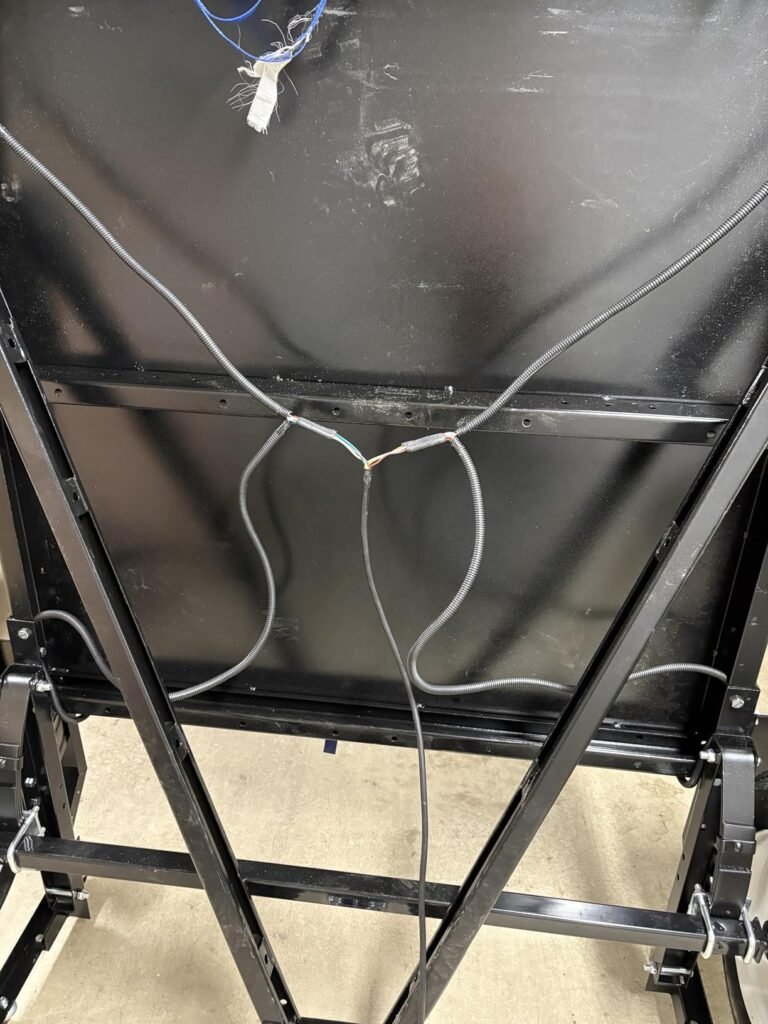
Road readiness is what separates this from every garden cart here. It arrives pre-wired with quick-connect DOT LED lighting on a flat four-wire harness, so it is set up for legal road use where trailers require lights. The light set, hardware kit, coupler, and safety chain all ship with the unit, and the trailer is backed by a one-year warranty against defects in material and workmanship.
A fixed 4-by-8 trailer consumes garage floor space year-round whether you use it monthly or twice a year. The DK2 folds down to a fraction of its footprint, so it can live against a wall or in a shed corner between hauling days. For suburban garages that already hold cars, bikes, and tools, that recovered space can matter as much as the payload rating.
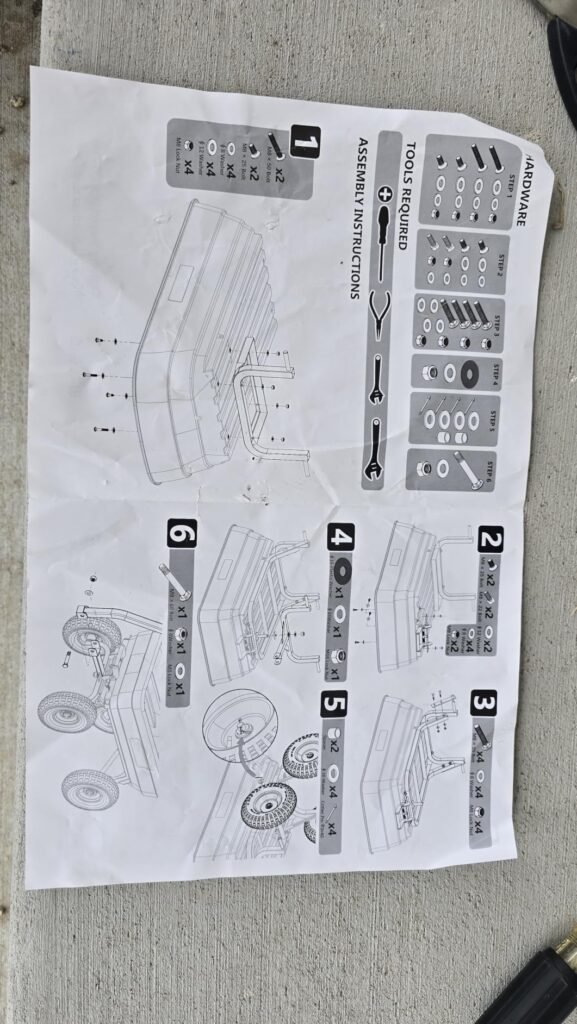
Two caveats deserve attention. This is a kit, so expect a real assembly session rather than a bolt-on-and-go experience, and the 3.6 owner rating is the lowest in this guide, suggesting some buyers find the build process or the paperwork frustrating. Registration requirements vary by state and province, and an NVIS form accompanies the bill of sale where required. If you need to move real cargo on public roads and have the storage constraints that make folding valuable, nothing else here matches it.
Buyers unwilling to assemble a trailer kit or handle registration paperwork.
We may earn a commission when you buy through this link, at no additional cost to you.
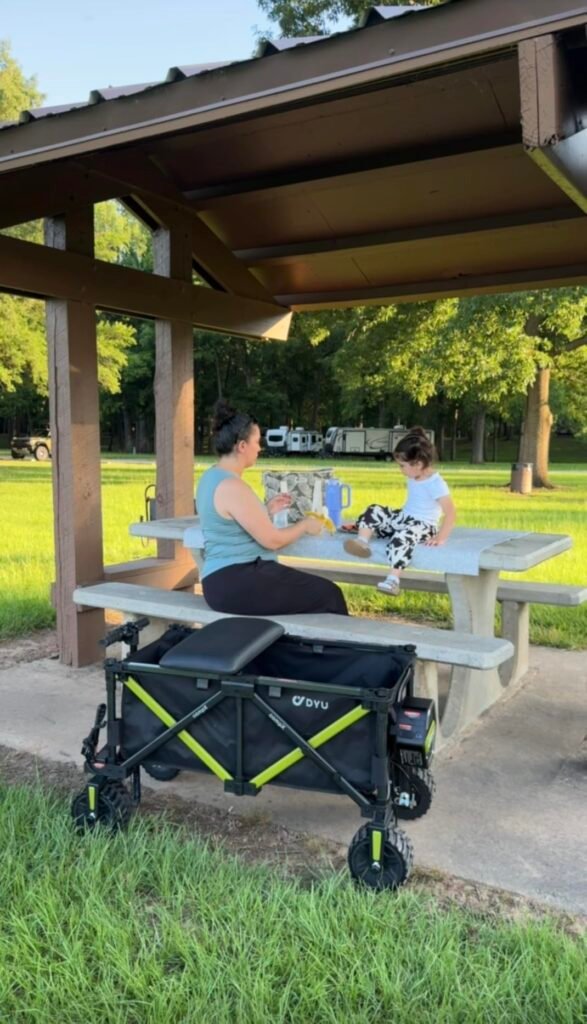
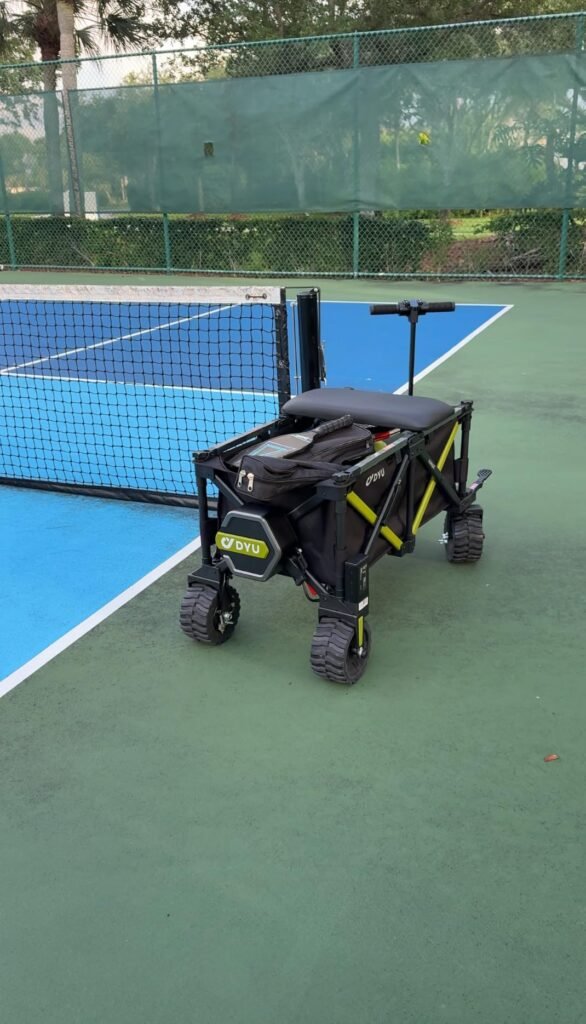
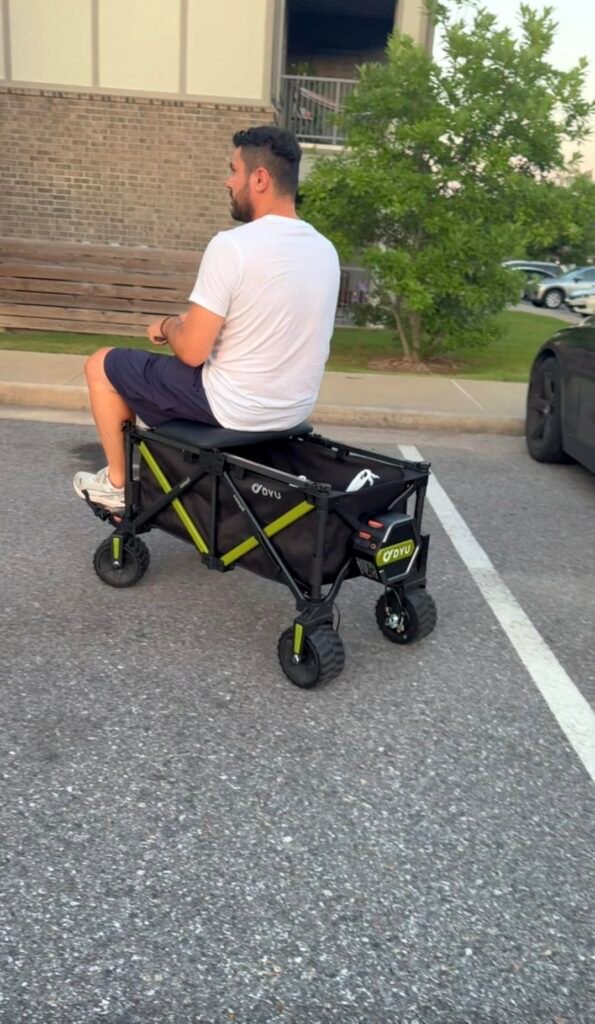
The Electric e-Wagon targets the space between powered wagons and full utility vehicles: enough motor to erase the effort of hauling, enough folding to live in a car trunk. With a 1200W motor and a 772-pound capacity, it is built for camping families, beach trips, sports events, and anyone who regularly moves gear across parking lots, sand, grass, and gravel.
We may earn a commission when you buy through this link, at no additional cost to you.
Two modes define its flexibility. Riding mode carries you along at up to 7.5 mph, which turns the return trip from a long walk into a short ride, while towing mode walks heavy loads alongside you across campsite terrain. The cargo area holds 183 liters, opening to roughly 47 by 23 by 23 inches, and the whole cart folds down to about 19 by 11 by 30 inches, roughly the size of a large duffel bag for trunk storage.
The 36V 8Ah lithium battery detaches from the frame, so you can charge it wherever an outlet is convenient rather than parking the entire wagon near power. A full charge takes about three hours. No-flat all-terrain tires eliminate punctures on rough ground, and Ackermann steering geometry gives it tighter, more stable turning behavior than the basic pull-carts it competes with.
Getting the most from a folding electric wagon is partly about how you pack. Use soft bags rather than rigid bins so cargo conforms to the 36 by 19 by 13 inch cargo well, and keep heavier items low and centered to preserve stability at riding speed. When the trip ends, fold the frame first, then stow the battery separately so it stays cool and protected in transit.
The trade-offs are scale and stamina. The 183-liter cargo bay is smaller than the beds on the tow-behind dump carts in this guide, so it suits gear and supplies rather than bulk material like soil or gravel. The three-hour recharge also means a full day of heavy use calls for planning. For campers, vendors, and sports families who value portability above raw volume, those are acceptable compromises.
Property owners hauling bulk material like soil, mulch, or gravel.
We may earn a commission when you buy through this link, at no additional cost to you.
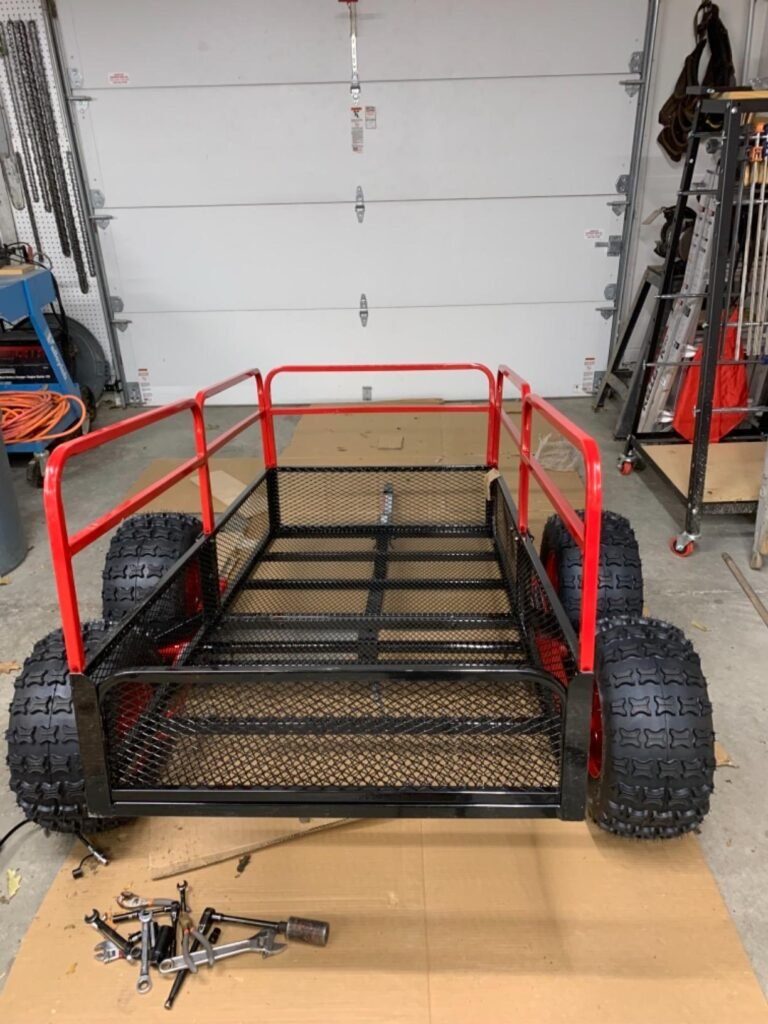
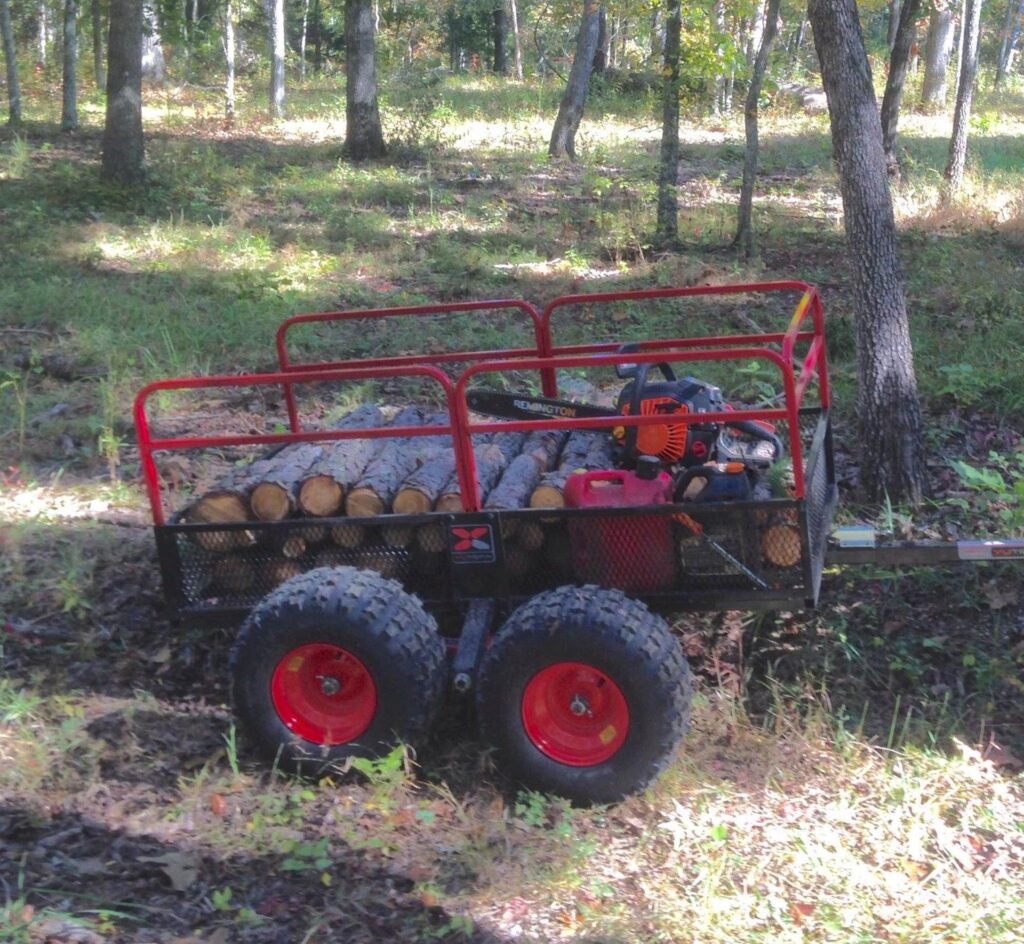
The Yutrax Trail Warrior X4 is a tow-behind trailer engineered specifically for off-road use behind ATVs and UTVs. With a 1250-pound capacity and all-steel construction, it is aimed at hunters, landowners, and trail riders who need to haul feed, firewood, tools, and gear over ground that would stop a yard cart cold.
We may earn a commission when you buy through this link, at no additional cost to you.
The build is straightforward heavy-duty: a powder-coated all-steel frame, a solid steel floor, and removable side rails plus a tailgate. The removable rails matter for bulky or awkward loads, and the pivoting, tilting bed with an easy-release dump latch means you can empty a full load of gravel or firewood without unlatching multiple pins. The powder coat defends the steel against corrosion through seasons of weather exposure.
Trail-specific engineering shows up in the details. Pivoting tracking beams let the suspension walk the wheels over logs, rocks, and ruts instead of high-centering, and the pass-through axle design keeps brush from wrapping around the underside and stopping you mid-trail. Large knobby flotation tires absorb shock and add traction in soft ground, while sealed roller bearings keep the wheels turning smoothly without routine greasing.
On rough trails, a rigid trailer axle can lift a wheel or jam when it meets a log or rock. Pivoting tracking beams let each side of the suspension articulate independently, so one wheel can climb an obstacle while the other stays planted. Combined with generous ground clearance, that keeps the trailer tracking behind your ATV instead of becoming an anchor in the woods.
The limitations are the flip side of the steel-heavy design. This trailer is for off-road use, not road hauling, and it is not light, so plan for a proper hitch setup on your towing machine. If your work happens on trails, wooded acreage, or hunting land, the X4 is one of the most capable values here. Suburban lawn work is better served by a lighter poly dump cart.
Road hauling or light suburban lawn duty.
We may earn a commission when you buy through this link, at no additional cost to you.
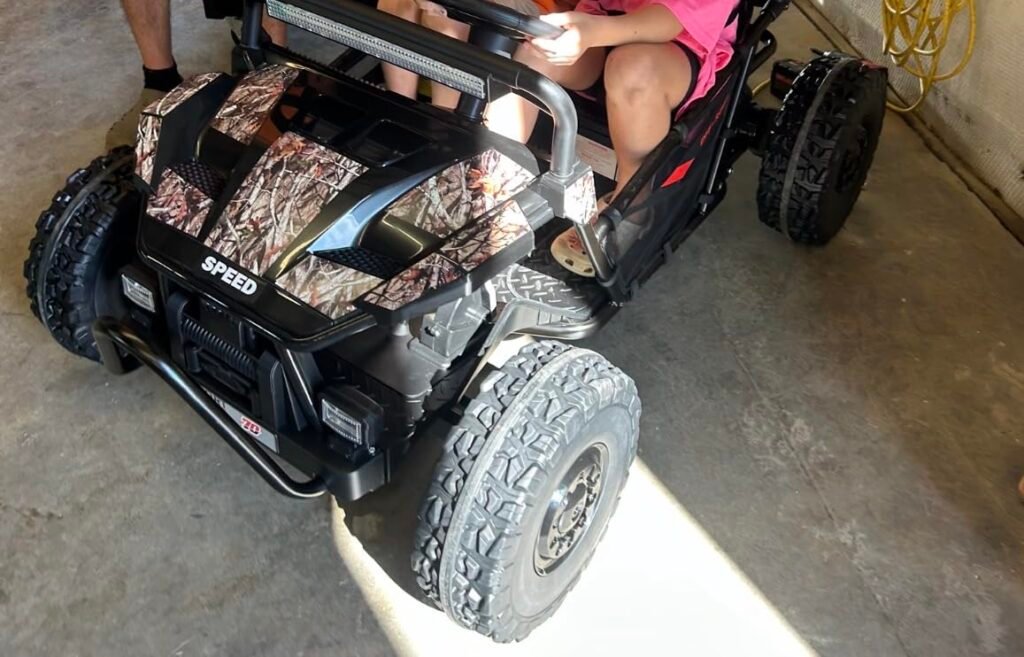
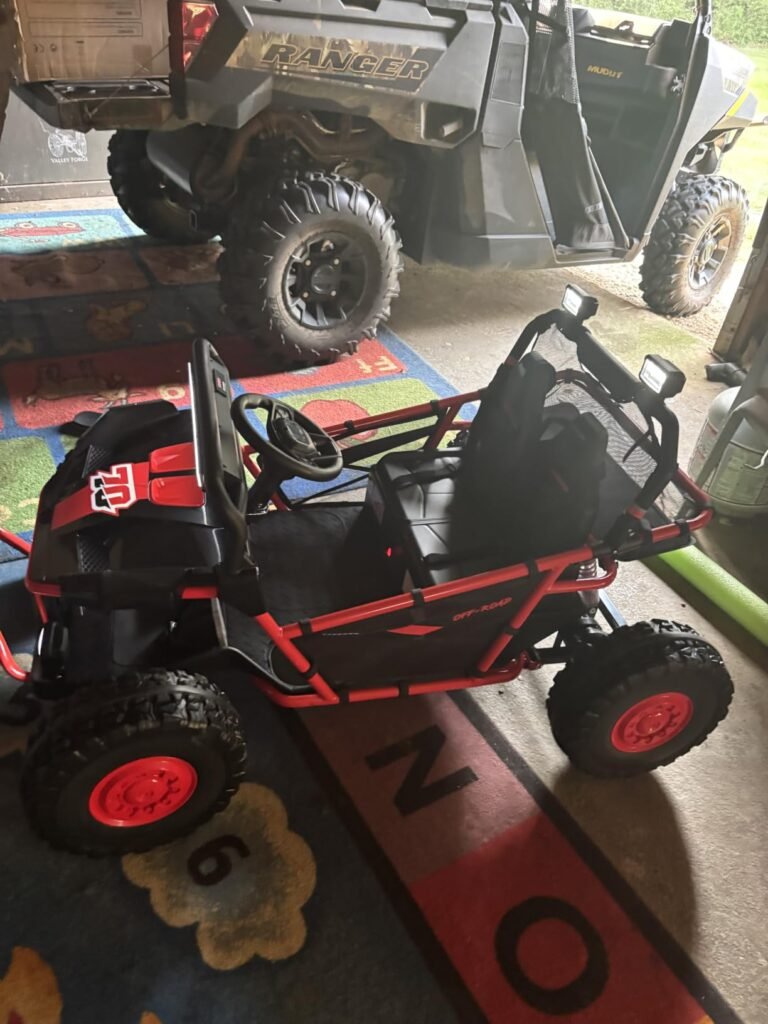
The First Ride On 36V UTV is the family-oriented entry in this lineup: a genuine two-seat electric vehicle for children six and up, rather than a slow remote-controlled toy. It fits two children or a single rider up to 132 pounds, with a 20.5-inch-wide bench and a three-point safety belt at each seat, and its 55-inch overall length gives it a real-vehicle presence in the yard.
We may earn a commission when you buy through this link, at no additional cost to you.
The powertrain is a step above typical 12V and 24V ride-ons. A 36V 9Ah battery feeds dual 200W high-torque motors, good for a 5 to 8 mph top speed with enough torque for grass, dirt, and gravel. Control is deliberately realistic: a variable throttle pedal, forward and reverse shifting, gradual starts, and an electronic brake teach actual vehicle handling rather than an on-off switch experience.
Comfort and durability get real attention. Fourteen-inch EVA tires grip and absorb bumps better than hard plastic wheels, a reinforced metal chassis carries the structure, and rear metal spring suspension smooths rough ground. Runtime lands between 40 and 60 minutes depending on terrain. Extras like Bluetooth music, FM radio, LED lights, and a rear storage box make it feel like a machine kids grow attached to.
Skipping the remote makes this UTV more engaging but shifts supervision onto the rider and the parent. Start on flat, open grass, walk alongside for the first sessions, and practice the electronic brake before letting speed climb toward the top of the 5-to-8 mph range. The gradual-start throttle softens launches, which helps newer riders build confidence without lurching.
Know what you are buying. The 40-to-60-minute runtime per charge will end sessions, and there is no parental remote, so this is best for kids who already show good judgment with ride-ons and a clearly bounded riding area. For families with responsible six-and-up riders and space to roam, it delivers an experience few toys match. Parents who want speed limits and remote override should consider models built around those features.
Parents who want remote control or speed-limiting supervision features.
We may earn a commission when you buy through this link, at no additional cost to you.
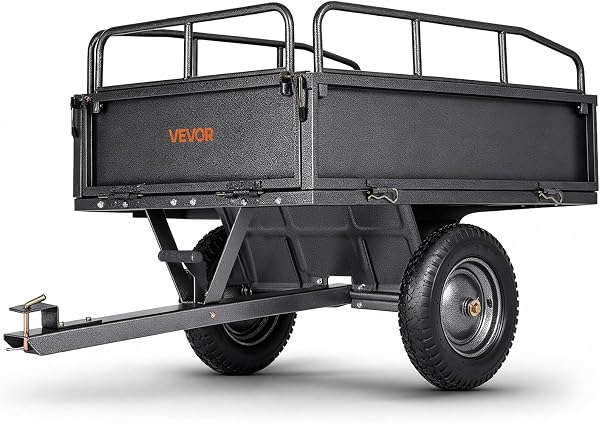
The VEVOR 10-cubic-foot dump cart is a tow-behind workhorse for lawn tractor and ATV owners whose priority is moving the most material per trip. Ten cubic feet is the largest bed volume in this guide, sized for leaves, brush, soil, and compost, with a three-sided guardrail that keeps loose loads contained and cuts down repeat trips across a large yard.
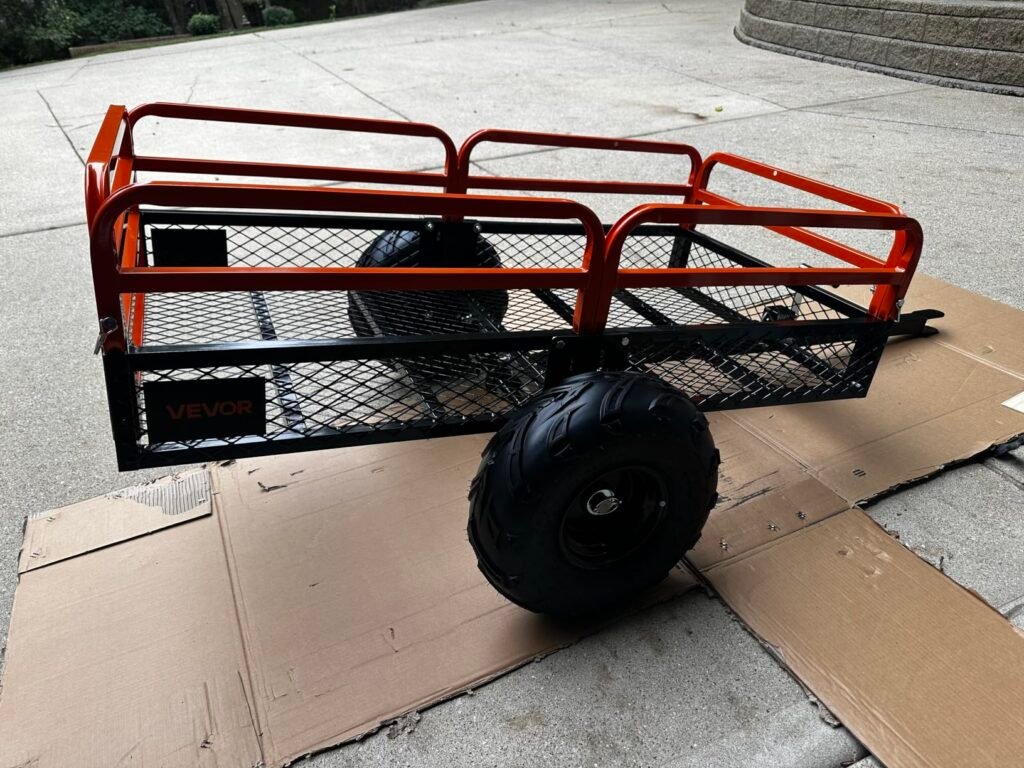
We may earn a commission when you buy through this link, at no additional cost to you.
Capacity for bulk comes with a 500-pound load rating, and the structure is built to hold shape under it: 1mm-thick steel side panels, eight reinforcement ribs under the floor, and a hammer-tone painted finish that adheres and wears better than standard spray finishes. The ribs matter over time, since thin dump-cart floors are prone to bowing when loaded repeatedly.
Attachment and unloading are both flexible. A universal 0.47-inch, 12mm pin fits tractors, ATVs, UTVs, and lawnmowers, so it moves between whatever machine is doing the work that day. Dumping works two ways: a hand-pull latch for controlled, precise unloading and a foot-pedal release for quick bulk dumps. Fourteen-by-3.5-inch pneumatic tires on a powder-coated axle handle grass, mud, sand, and gravel.
The two dump controls are not redundant. Hand-pull dumping gives you measured release, useful when spreading material along a bed or dropping a partial load in a compost area. Foot-pedal dumping drops the bed in one motion, which saves your back when emptying full loads of leaves repeatedly. Matching the method to the material is a small habit that saves real effort over a full afternoon.
The 500-pound rating is the honest limitation, well below the 1200-pound class of carts like the BILT HARD and VEVOR’s own smaller model, so this is a volume tool rather than a heavy-material tool. Steel construction also asks for basic rust care if the finish gets scratched. For leaf season, brush clearing, and compost runs behind a mower, the bed size does the work of two smaller carts.
Hauling loads heavier than 500 pounds.
We may earn a commission when you buy through this link, at no additional cost to you.
The VEVOR 1200-pound dump cart is the value anchor of this guide: the lowest price here with a load rating that matches carts costing noticeably more. For homeowners whose hauling is mostly soil, mulch, and yard debris on a standard suburban lot, it covers the essential jobs without paying for capability you will not use.
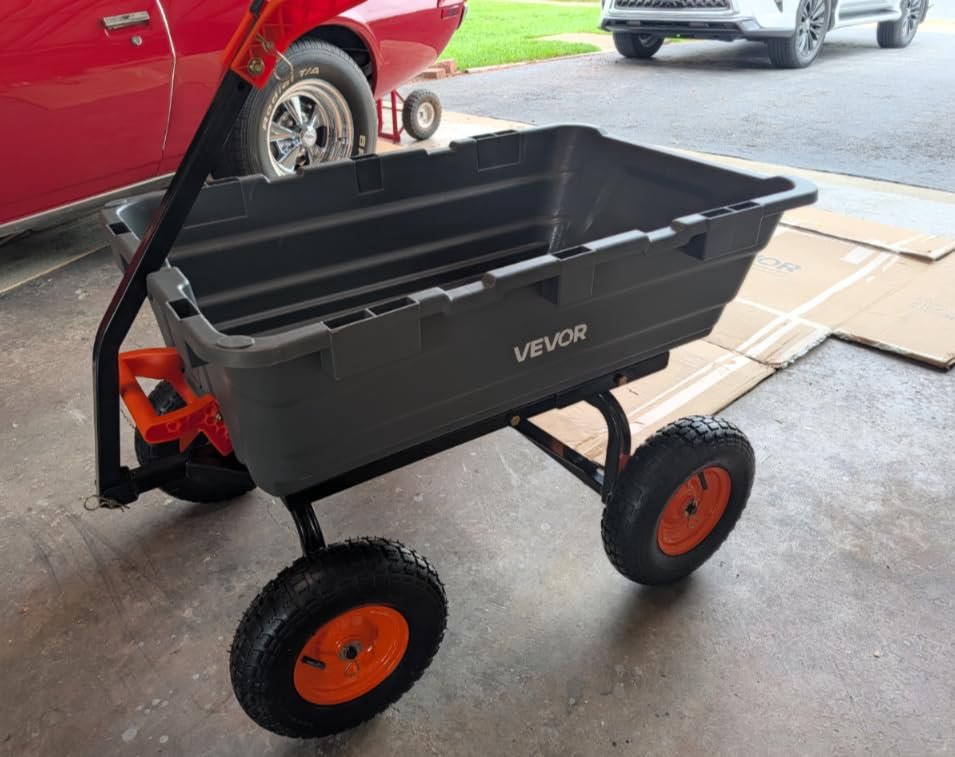
We may earn a commission when you buy through this link, at no additional cost to you.
The bed holds 6.48 cubic feet in a metal frame with a protective surface coating, riding on four 13-inch rubber tires that cushion the trip over lawn seams and gravel. That coating does quiet but important work, standing between damp soil and bare steel, and a quick rinse after wet loads of leaves or compost helps keep it intact for the long term.
The two-in-one handle mirrors the BILT HARD approach: pull it by hand for short moves, or convert it to a tow hitch for longer hauls behind a tractor, ATV, UTV, or lawnmower. The handle adjusts through 180 degrees for comfortable positioning, and the quick-release front dumping frame empties the bed without manual shoveling. A mesh cover and cushion ship with the cart to secure loose or delicate loads.
A two-in-one handle earns its keep most when you split work between walking and towing. Use pull mode for loading near the garden and small repositioning moves, then hitch the cart to a mower or tractor once it is full and the destination is across the property. Keep the pivot mechanism clean so the conversion takes seconds rather than a wrestling match.
Trade-offs come down to size and effort. The bed is smaller than the 10-cubic-foot VEVOR, so count on more trips for bulky material, and every pound still travels on your legs or your tractor’s engine. If your budget leads the decision and your hauling is moderate, this cart delivers the core dump-cart experience with the strongest capacity-per-dollar in the lineup.
Buyers who want powered help for heavy loads or large properties.
We may earn a commission when you buy through this link, at no additional cost to you.
A utility vehicle is only as useful as its fit with your property, your towing equipment, and the material you move. The factors below explain how to read load ratings, bed sizes, tire types, and power systems so you can match the machine to the work instead of paying for capability you will never use.
Every option in this category splits into three power models: human-powered carts you pull or push, tow-behind trailers that borrow power from a tractor, ATV, or vehicle, and self-powered electric machines with their own motors and batteries. Manual carts like the VEVOR 1200-pound model and the BILT HARD are the simplest and cheapest, with nothing to charge and almost nothing to break, but every pound of cargo travels on your effort. Tow-behind designs such as the Yutrax Trail Warrior and the VEVOR 10-cubic-foot cart move the work to a machine you already own, which is efficient if you already have a mower or ATV and useless if you do not.
Electric utility vehicles change the equation by adding their own power. The Landworks cart motors along at walking pace for warehouse and grounds work, while the WISELD GT3 and the Electric e-Wagon offer ride-on speeds up to 10 and 7.5 mph respectively, along with towing modes. Electric power costs more upfront, adds battery management to your routine, and introduces recharge time between sessions. In exchange, you get hauling that does not depend on another vehicle or your own back, which matters most for people who haul frequently or across real distances.
Choose manual for occasional yard work on modest properties, tow-behind if you already own a tractor or ATV, and electric if you haul weekly, cover distance, or want to ride. When in doubt, buy for the work you actually do rather than the work you imagine.
Capacity ratings range from 500 pounds on the VEVOR 10-cubic-foot cart to 1450 pounds on the DK2 trailer, and reading them correctly is the single most important spec decision. Some manufacturers distinguish between dynamic load, what the structure carries while moving, and static load, what it holds at rest. The WISELD GT3 rates 771 pounds dynamic and 1300 pounds static in four-wheel-drive trim, and that gap exists because impacts from bumps and braking multiply forces well beyond the resting weight.
Matching capacity to material is where buyers most often go wrong. Soil, gravel, and sand are dense enough that a seven-cubic-foot bed can approach a four-figure weight when heaped, so a 500-pound cart reaches its limit long before it looks full. Firewood, brush, and leaves are the opposite: bulky and light, so bed volume matters more than the load rating. Overloading bends axles, flattens tires, and erodes the safety margin the rating represents.
Add up the density of what you actually move, then buy capacity with headroom. A cart rated comfortably above your typical load lasts longer and handles the occasional heavy surprise without complaint.
Bed volume determines trips, and trips determine how long yard work takes. This lineup spans from 6 cubic feet on the VEVOR 1200-pound cart and Landworks to 10 cubic feet on the VEVOR tow-behind, with the BILT HARD at 7 cubic feet. For leaf collection and brush hauling, the difference between a 6- and a 10-cubic-foot bed is nearly two full wheelbarrow loads saved every cycle, and that compounds quickly over an afternoon.
Bed material shapes durability and maintenance. Poly beds, like the BILT HARD’s rust-proof tub, ignore wet soil and weather entirely but can flex under concentrated point loads such as a single heavy rock. Steel beds, on the VEVOR carts and the Yutrax, take abuse and point loads better but ask for finish care, since scratches through the coating are where rust starts. The DK2’s anti-slip powder-coated deck adds cargo security for road hauling, where a shifting load is a safety issue rather than an inconvenience.
Match material to cargo: poly for wet, routine garden work and steel for rocks, tools, and rough handling. Whatever you choose, rinse the bed after hauling compost or wet leaves, since organic acids and standing moisture are the fastest route to a shortened life.
Tire choice decides where a utility vehicle can actually go. No-flat solid tires on the BILT HARD and the Electric e-Wagon eliminate punctures entirely, which is ideal for properties with thorns, nails, or construction debris, at the cost of a slightly firmer ride. Pneumatic air-filled tires, like the 14-inch pair on the VEVOR 10-cubic-foot cart and the 13-inch wheels on the Landworks, cushion loads and grip better but eventually need pressure checks and can go flat.
Terrain ambition should drive the decision. Smooth lawns and driveways are easy on any tire. Grass, mud, sand, and gravel call for larger pneumatic tires and flotation designs. True off-road trails with logs and rock want the Yutrax’s knobby flotation tires and pivoting suspension, which is a different class of capability than any yard cart. Electric four-wheel drive on the WISELD GT3 adds traction that matters on loose or sloped ground where two driven wheels would spin.
Be honest about your worst terrain, not your average one. A cart that handles the lawn fine but fails at the gravel path or the damp corner of the yard will frustrate you every single time you meet that spot.
Tow-behind utility vehicles are only useful if they connect to what you own. Most garden dump carts use a simple pin-style hitch, like the VEVOR’s universal 12mm pin, which fits the standard hitch plates on lawn tractors, mowers, and most ATVs. The Yutrax is designed for ATV and UTV towing setups. Road trailers like the DK2 use a 2-inch coupler with safety chains and require a vehicle with a proper hitch receiver and wiring for lights.
Check three things before buying anything towed: the hitch type on your towing machine, the weight it is rated to pull, and whether your route includes slopes. A lawn tractor that labors with a loaded cart on flat ground will struggle more on a grade, and electric mowers in particular have towing limits that are easy to exceed with a full bed of soil. Safety chains, like the DK2’s S-hook setup, are not optional equipment on road trailers.
Measure and confirm before ordering, not after the box arrives. Hitch incompatibility is one of the most common reasons utility trailers and carts get returned.
How a cart empties matters as much as how it carries. Quick-release dump mechanisms, found on the BILT HARD, the VEVOR 1200-pound model, and the Yutrax’s tilting bed, let the bed pivot forward so gravity does the unloading, which is the difference between a five-second dump and five minutes of shoveling. The VEVOR 10-cubic-foot cart offers both hand-pull and foot-pedal release, trading precision against speed depending on the load.
Removable panels extend what dumping can do. The Yutrax’s removable side rails and tailgate let you load wide or tall cargo that a fixed-bed cart cannot accept, and its easy-release latch combines with the tilt for fast emptying. For loose granular material, a bed that seals at the seams keeps soil and sand from leaking onto the lawn during transport, a small detail that becomes obvious the first time you leave a trail behind you.
If you move heavy granular material often, prioritize a dump mechanism you can operate while loaded, and test the release action when the cart is full rather than trusting how it works empty.
Storage is the quiet dealbreaker for utility equipment. A steel trailer or wide dump cart occupies real garage floor all year, and buyers with two-car garages feel it. The DK2 folds to a fraction of its footprint for upright storage, and the electric wagons take it further: the WISELD GT3 folds at a 1-to-4 ratio and the Electric e-Wagon collapses to roughly 19 by 11 by 30 inches, small enough for a car trunk, which makes them travel tools rather than just property tools.
Transport cuts both ways. A foldable electric wagon can ride to campsites, sports fields, and trade shows, doing work far from home. Fixed carts and trailers stay put unless you own a truck or trailer to carry them. If your hauling happens at events, beaches, and campgrounds as much as in the yard, portability deserves equal weight with capacity in your decision.
Measure your storage space before you buy, including doorways and turning room. The best utility vehicle is the one you can actually put away.
Prices in this lineup run from about $154 for the VEVOR 1200-pound cart to $1,998 for the WISELD GT3, and the spread reflects genuinely different machines rather than markup alone. Manual carts deliver capacity per dollar that nothing powered can touch, and a well-chosen dump cart in the $150-to-$200 range can serve a household for many years with basic care. Electric models add battery cost, charger management, and eventual battery replacement to the total cost of ownership, which is worth factoring in rather than ignoring.
Warranty signals vary and deserve a read before purchase. DK2 covers the trailer for one year against defects, and WISELD backs the GT3 with a 30-day refund and one-year replacement policy. Owner ratings also tell a story: the BILT HARD’s 4.5 and the Yutrax’s 4.4 reflect broad satisfaction, while the DK2’s 3.6 suggests assembly and paperwork friction. Look at what owners complain about specifically, since a rating dragged down by assembly difficulty means something very different from one dragged down by structural failure.
Spend to your usage frequency, not your ambition. A cart used monthly justifies less investment than one used weekly, and the money saved on an over-spec’d purchase funds the next tool.
Start with a careful setup. Whether it is a dump cart, a trailer kit, or an electric wagon, check every fastener during assembly and again after the first few uses, since bolts settle under initial load. Confirm tire pressure on pneumatic wheels before the first heavy haul, verify that the dump latch and hitch pin seat fully, and give electric models a complete first charge before the maiden run. For the DK2 trailer, keep the NVIS form with your bill of sale, since you will need it for registration where required.
Use the machine within its ratings and terrain. Load heavy material low and centered, stay under the stated capacity, and remember that dynamic limits are lower than static ones on vehicles like the WISELD GT3. On slopes, keep loads light, use the hill-assist and braking features on electric models, and never ride a cart that is not designed to carry a rider. For the kids’ UTV, a helmet and a clear riding area are baseline practice, and sessions will end at the 40-to-60-minute runtime mark, so plan charges accordingly.
Maintenance is simple but pays. Rinse beds after wet or organic loads, touch up scratches on steel promptly, and store everything under cover out of direct sun. Keep pneumatic tires inflated to spec, lubricate hinges and pivots occasionally, and for electric vehicles follow battery best practice: charge after use, avoid leaving lithium packs fully depleted, and keep lead-acid batteries topped up over winter. Avoid seawater exposure on folding electric models, and rinse with fresh water promptly if contact happens.
The term covers a wide band of hauling equipment, from manual garden dump carts and tow-behind trailers to self-powered electric wagons and even kids' ride-on UTVs. What they share is a job: moving material or people across a property more efficiently than carrying it by hand. The useful question is not the label but whether a manual, towed, or powered machine fits your actual workload.
In most cases, yes, if two things line up. The cart needs a compatible hitch, and most pin-style carts, like those using a universal 12mm pin, fit standard tractor and mower hitch plates. You also need to respect your mower's towing capacity, which is often lower than expected, especially on slopes. Keep loads conservative and centered for stable handling.
They are if you haul often, cover distance, or want to ride rather than walk. Electric power removes the physical effort that limits manual carts and the dependence on a tractor that tow-behind models require. If your hauling amounts to a few weekends a year across a flat suburban lot, a manual dump cart at a fraction of the price will do the same job.
Static load is what a vehicle or bed can hold while sitting still; dynamic load is what it can carry while moving, and it is always lower. Bumps, braking, and turns multiply forces on the frame beyond resting weight. The WISELD GT3, for example, is rated 771 pounds dynamic and 1300 pounds static in four-wheel-drive trim. Use the dynamic figure for anything you plan to move.
Road-going trailers generally do, and requirements vary by state and province covering lights, weight classes, and paperwork. The DK2 ships with an NVIS form to accompany the bill of sale for registration and arrives pre-wired with DOT LED lighting. Off-road yard carts and garden trailers used entirely on private property typically do not require registration, but check your local rules to be sure.
Rust starts wherever the coating is breached, so the routine is simple: rinse off soil and organic matter after use, let the bed dry, and touch up scratches with paint promptly. Store the cart under cover, out of rain and direct sun. Hammer-tone and powder-coat finishes, like those on the VEVOR and DK2 products, resist wear better than standard paint, but no coating survives neglect forever.
Runtime depends on terrain, load, and speed. The kids' UTV runs 40 to 60 minutes per charge, the WISELD GT3 covers roughly 9.4 miles in four-wheel drive and up to 18.6 miles in two-wheel-drive configuration, and the Landworks runs on four sealed lead-acid batteries sized for a work session rather than a full shift. Expect about three hours for a full charge on the lithium models, and plan sessions around it.
It depends on the machine and the grade. The WISELD GT3 is engineered for slopes up to 30 percent with hill-assist and regenerative braking, and the kids' UTV climbs grass and dirt with its dual motors. Manual and tow-behind carts handle gentle grades fine but require lighter loads and extra caution on steeper ground, since a loaded cart pushes downhill on whatever is controlling it.
For most regular yard work, yes. A four-wheel dump cart carries more, stays balanced without constant input from you, and can be towed, while a wheelbarrow demands lifting and balancing every trip. Wheelbarrows still win in tight spaces, on very rough single-track ground, and for precise dumping into holes, since a cart's width and turning radius work against you there.
The BILT HARD poly dump cart earns the top overall spot for the way it balances the factors most buyers care about: a 1200-pound rating, a seven-cubic-foot rust-proof bed, no-flat tires, quick-release dumping, and a handle that converts between pulling and towing, all at a mid-range price. For typical property work, it removes the most common frustrations of yard hauling without asking you to maintain a battery or own a tractor.
Different needs point elsewhere. The VEVOR 1200-pound cart matches most of that capability at the lowest price in the guide. The WISELD GT3 sits at the opposite extreme as a four-wheel-drive electric wagon that rides, tows, and folds for travel. The DK2 trailer is the road-legal answer for real cargo, the Yutrax handles off-road trails behind an ATV, and the Landworks serves walking-pace powered hauling around warehouses and grounds.
Let the work pick the machine. Count how often you haul, what the material weighs, how far it travels, and whether the route includes slopes or rough ground, then buy the capacity and power that fit that reality with a little headroom. A utility vehicle matched to its job becomes a tool you reach for without thinking; one mismatched to it becomes an expensive reminder sitting in the garage.