Ortofon 2M Blue
9.4Editor scoreNude elliptical diamond
Moving magnet design
Replaceable stylus unit
Universal turntable fit
Compare 10 turntable cartridges by stylus shape, mount type, output, and upgrade path. Find MM options from Audio-Technica, Ortofon, and Nagaoka.

Find the right turntable cartridge for 2026 by matching stylus shape, mount type, output level, and upgrade path to your tonearm and records. This guide compares moving-magnet designs from elliptical and conical tips to nude elliptical, microlinear, and Shibata profiles so you can hear more groove detail without buying the wrong generator for your phono stage.
A cartridge is the only part of a turntable that actually touches the vinyl. Conical styli are forgiving on worn pressings, elliptical tips add treble clarity, and line-contact shapes such as microlinear or Shibata reach deeper into the groove. Half-inch standard mounts dominate modern decks, while P-mount T4P bodies fit linear-tracking arms that a VM95 body will not.
Installation ease, replaceable styli, and whether you need a pre-mounted headshell matter as much as brand prestige. The reviews below explain who each pickup is for, what it cannot do, and the alignment and tracking-force habits that protect both the diamond and your records.
We compared these turntable cartridges using the details that actually help a listener decide: generator type, stylus profile, cantilever, mount standard, replaceable stylus options, housing design, typical upgrade path, owner feedback, and price relative to capability. The notes focus on practical trade-offs so each pick connects to real vinyl use, from replacing a worn conical tip on a budget deck to fitting a Shibata stylus on a carefully aligned tonearm.


Compare key features, scores, and current prices side by side. A shorter feature list means fewer details were available, not necessarily fewer capabilities.


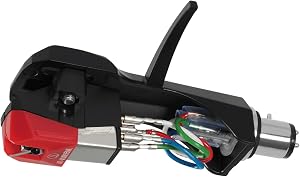


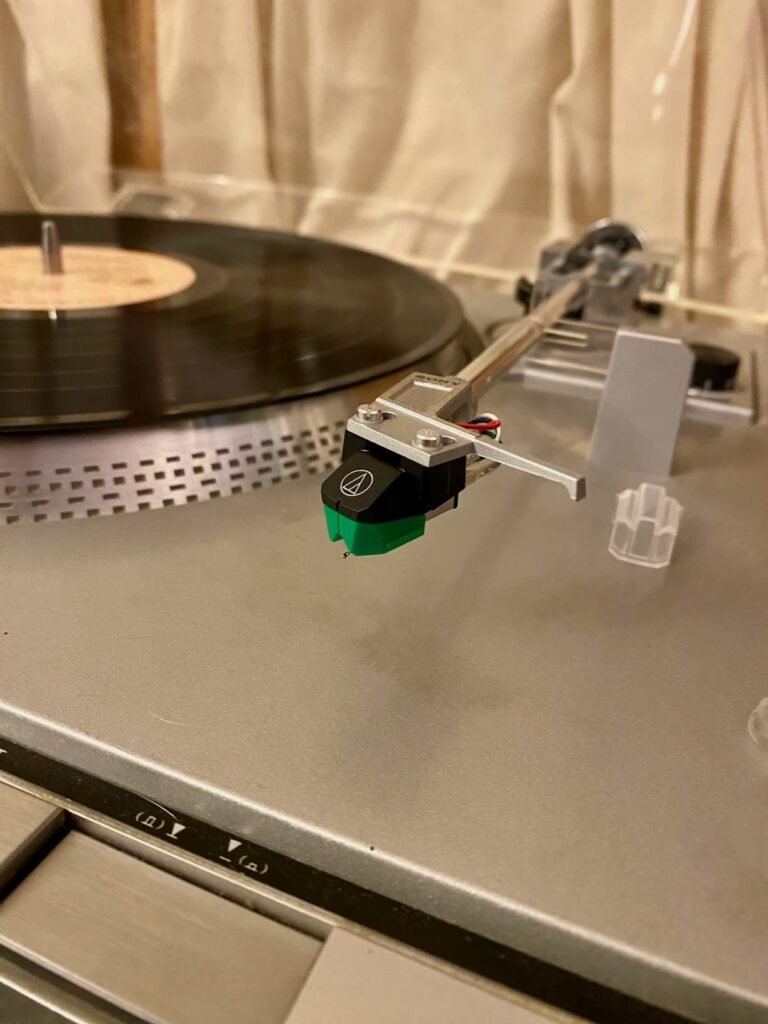
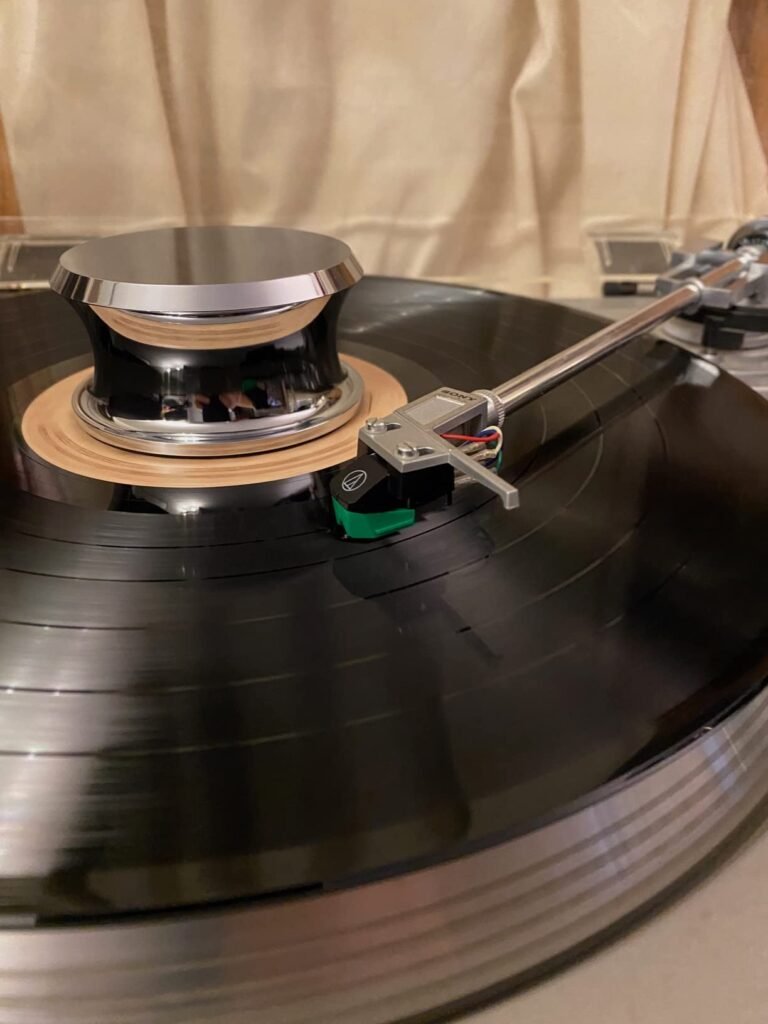
The AT-VM95E is the workhorse elliptical cartridge for listeners replacing a conical stock stylus on a standard half-inch mount turntable. Dual moving magnets and specially wound coils are meant to keep output healthy into a typical MM phono stage, so you are not fighting a weak signal or adding a step-up transformer.
We may earn a commission when you buy through this link, at no additional cost to you.
The 0.3 x 0.7 mil elliptical diamond tracks more of the groove wall than a round conical tip, which usually means cleaner treble and less inner-groove smear on well-pressed records. An aluminum cantilever is the expected material at this price. The green VM95 body uses a low-resonance polymer housing rather than a heavy metal shell, which keeps mass reasonable for many medium-mass tonearms.
Threaded inserts in the body are a practical gift during installation. You only need two screws, not a fiddly pair of nuts behind the headshell. That reduces the chance of dropping hardware onto a platter. After mounting, set overhang with a protractor, check azimuth by eye, and confirm tracking force with a gauge rather than trusting the tonearm dial alone.
Tiny nuts behind a headshell are easy to lose and hard to start while you hold a cartridge square. Threaded inserts let you align the body, start both screws, then tighten evenly. Still use a non-magnetic screwdriver and do not crush the body by over-torquing. A snug, even mount is enough for good contact with the headshell.
Buy the VM95E if you want a clear step up from a conical stylus without paying for a nude elliptical or microlinear tip. It is not the last word in groove tracing, and it will not fit P-mount linear trackers. If you later want more resolution, the same body accepts other AT-VMN95 styli, which is a cheaper path than replacing the entire generator.
Owners of P-mount T4P linear-tracking turntables, or listeners who already want a Shibata or microlinear stylus on day one.
We may earn a commission when you buy through this link, at no additional cost to you.
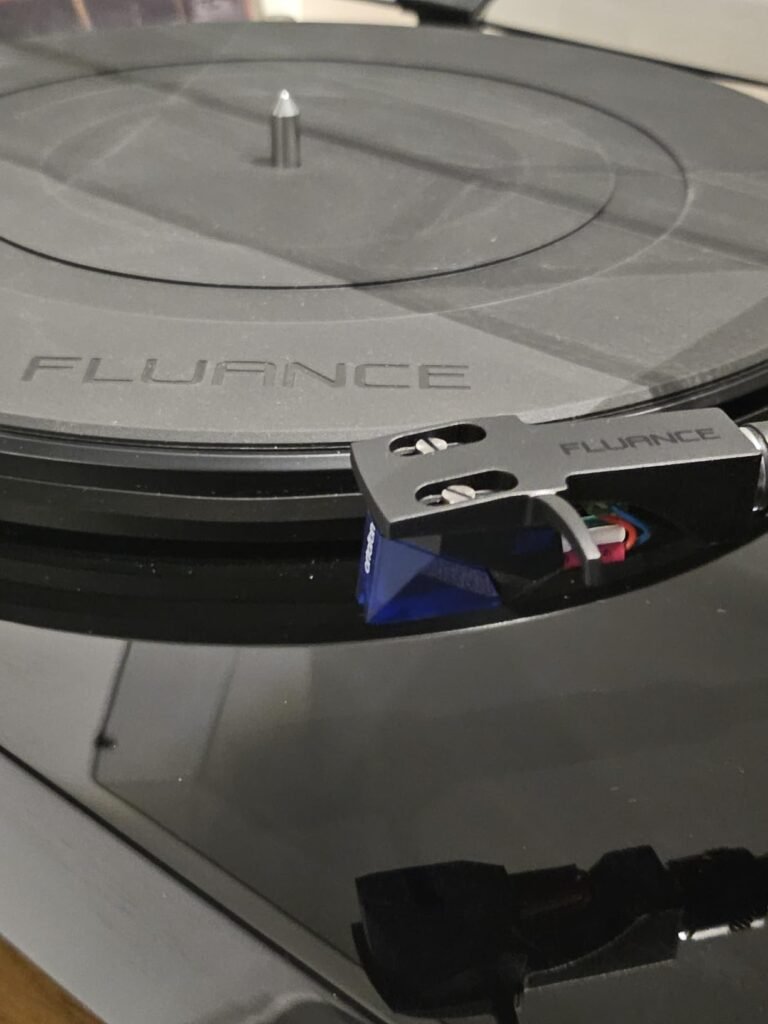
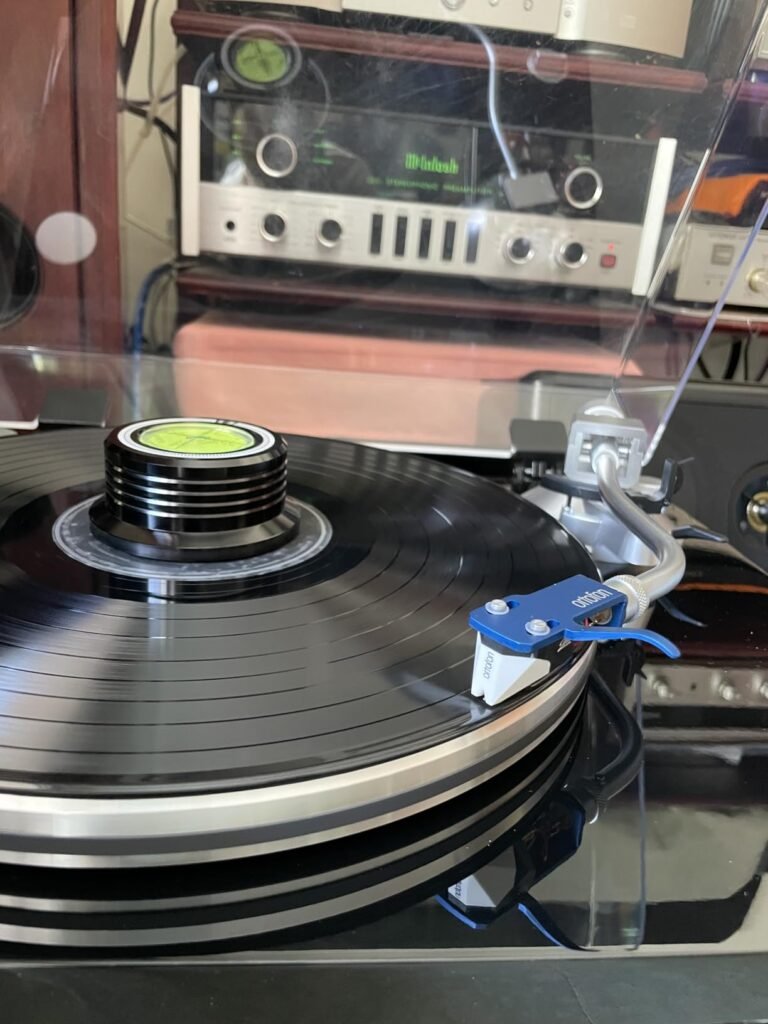
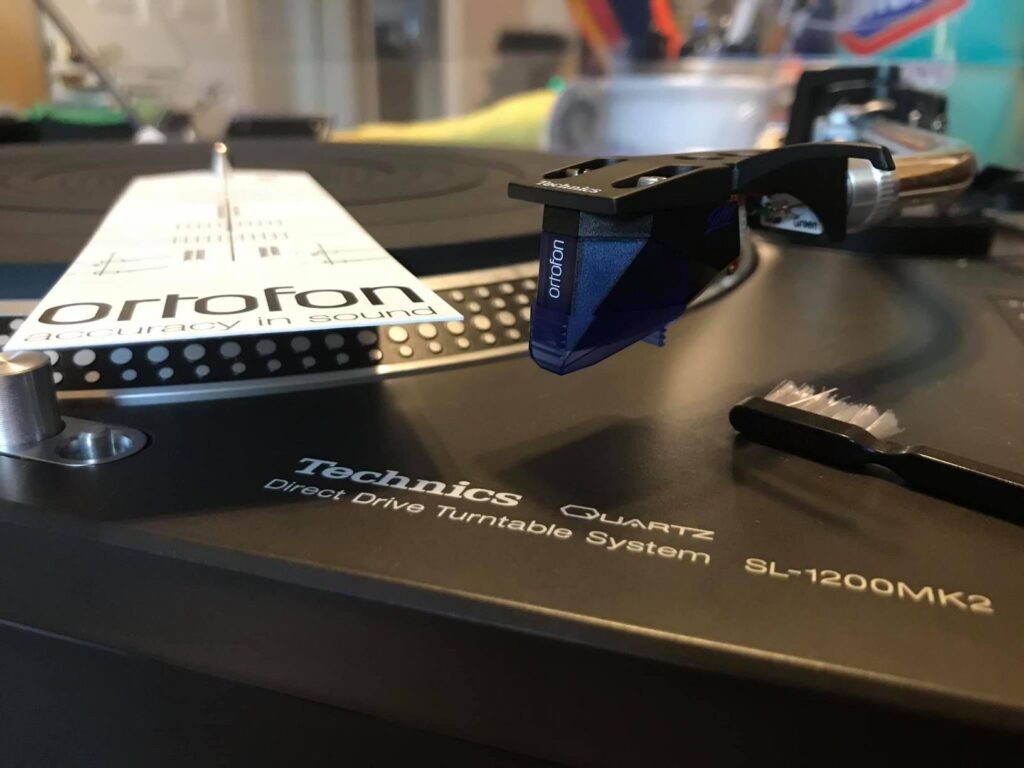
The Ortofon 2M Blue is the cartridge many vinyl listeners choose when a bonded elliptical still sounds a bit closed-in. It is a moving-magnet design with a nude elliptical diamond, so the whole gem is shaped as the tip rather than glued to a metal shank. That lower tip mass is why this model is described as more dynamic, open, and detailed than the 2M Red.
We may earn a commission when you buy through this link, at no additional cost to you.
Universal half-inch mounting means it fits most modern headshells and tonearms that accept standard cartridges. You still need to set overhang, VTA if your arm allows it, and anti-skate. A nude elliptical rewards that extra five minutes of setup more than a conical stylus does, because a misaligned line of contact will not sit correctly in the groove.
The stylus is replaceable, which matters for long-term cost. When the diamond wears, you swap the assembly rather than discarding a working generator. If you already own a 2M Red, a Blue stylus is a documented upgrade path on that body. Starting with the Blue simply skips a step if your budget allows it now.
A bonded elliptical glues a small diamond to a metal post. A nude elliptical is a diamond cut so the tip itself is the cantilever interface, which typically lowers moving mass. The practical result is often better high-frequency tracking on complex passages. Either type still wears out and still needs a clean record; nude is not magic against dust or a warped disc.
This is the strongest all-around pick for a carefully set up MM system that plays a mixed collection of rock, jazz, and well-pressed reissues. It will not transform a poorly isolated suitcase player, and it is not a moving-coil cartridge. If your phono stage is a basic MM input and your arm can be aligned, the 2M Blue is the cartridge to beat in this group.
Buyers who need a P-mount plug-in cartridge or who are not willing to align a half-inch mount with a protractor.
We may earn a commission when you buy through this link, at no additional cost to you.
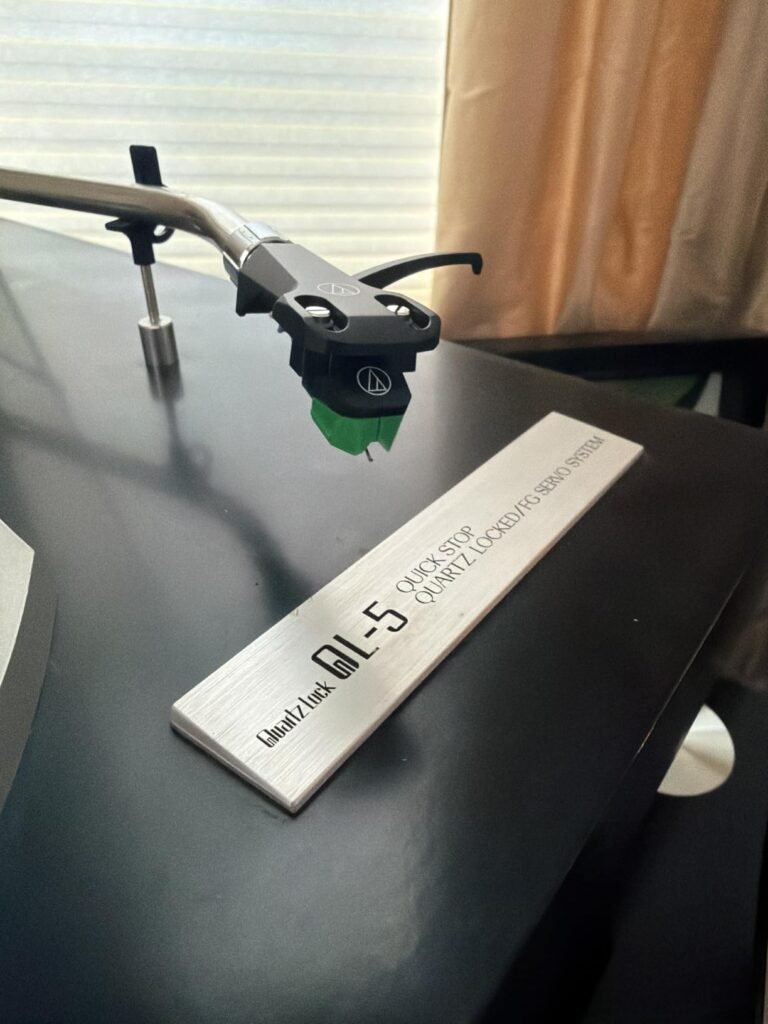
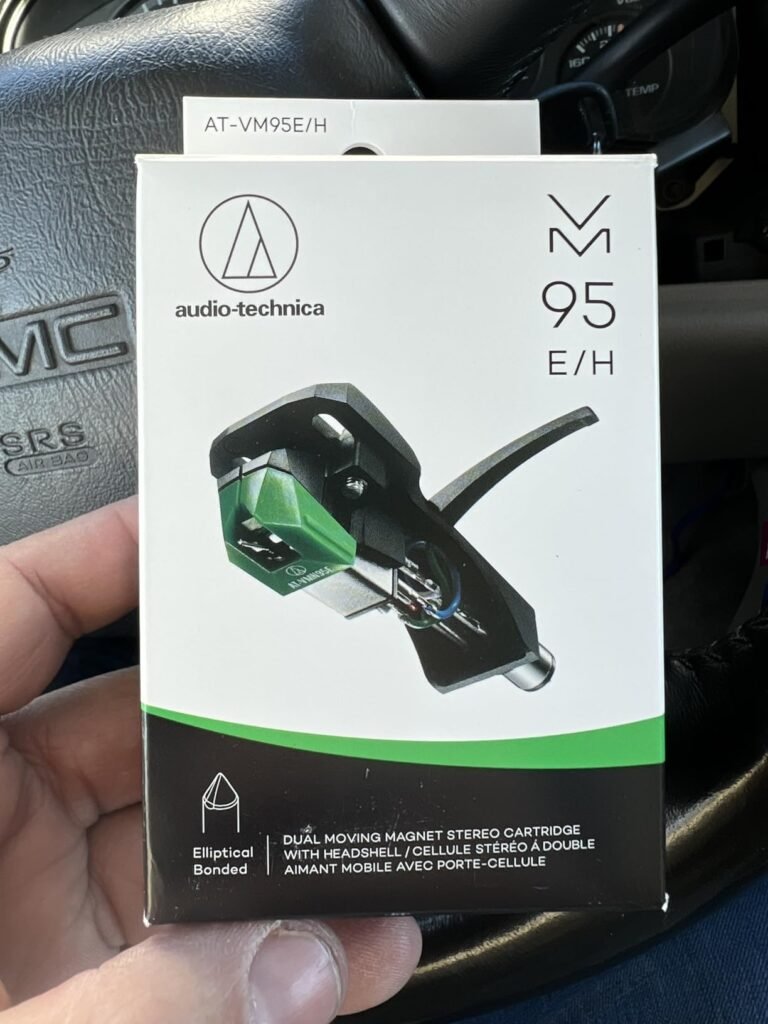
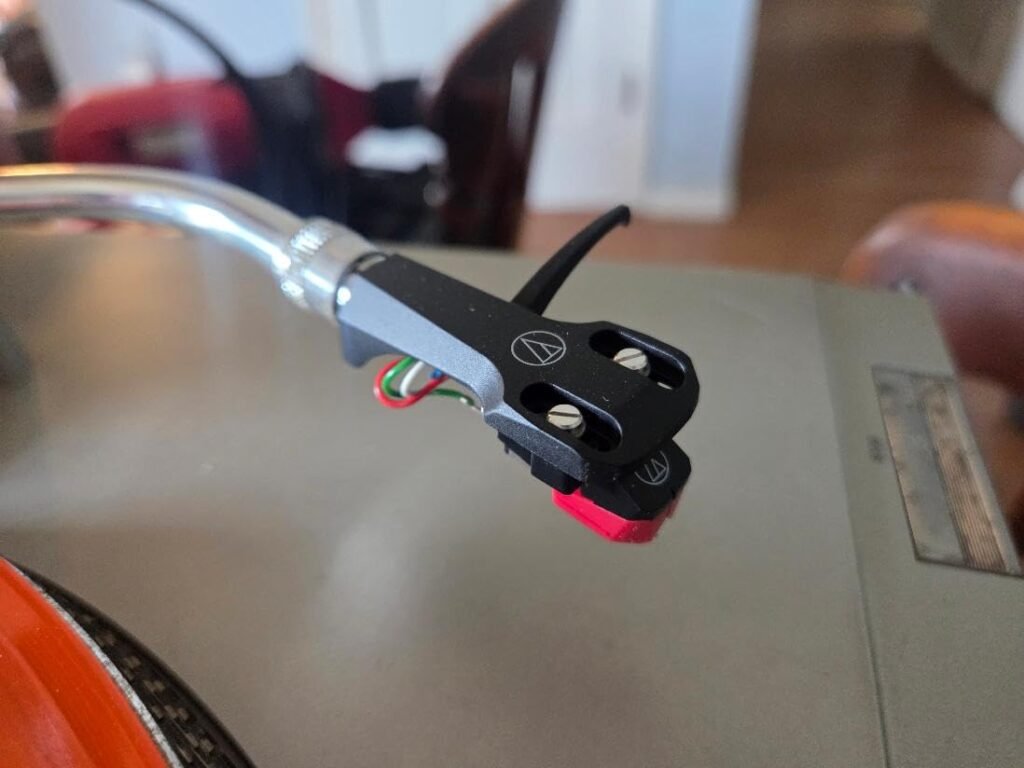
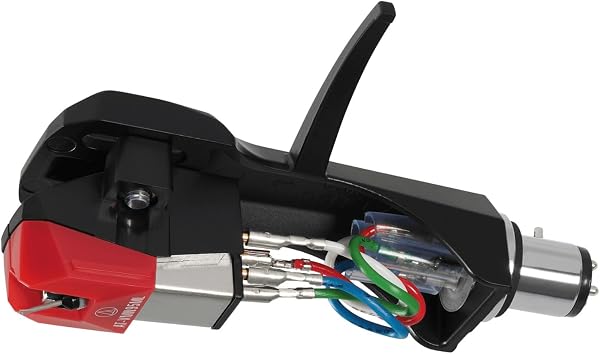
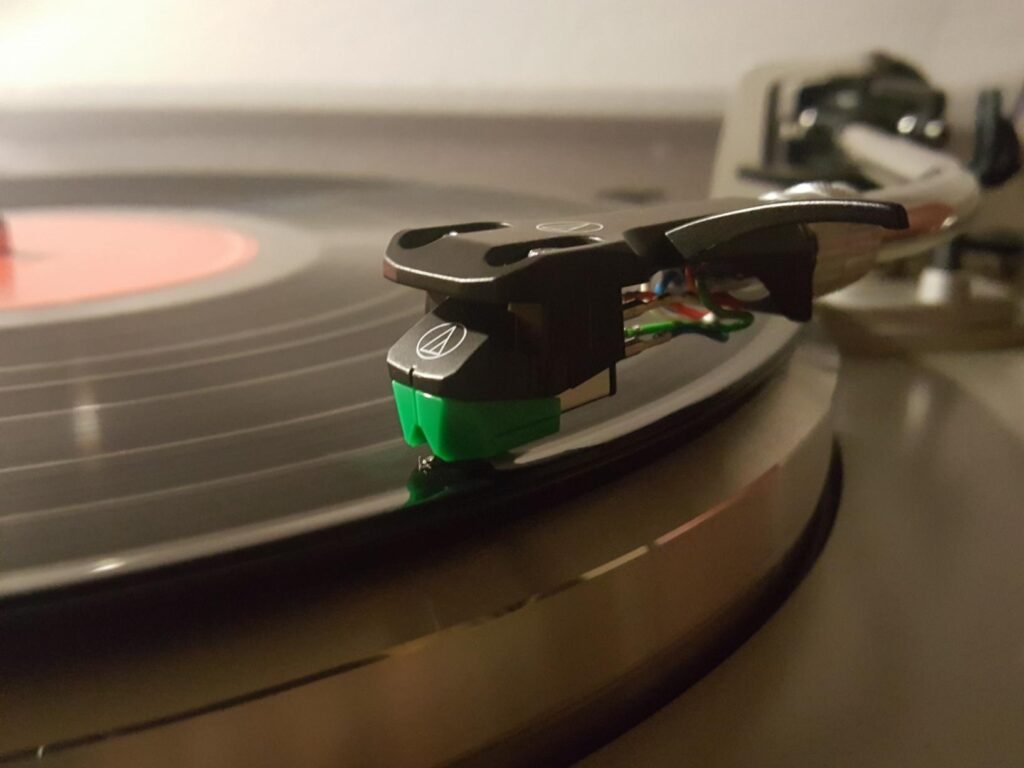
The AT-VM95E/H kit is for owners whose tonearm uses a removable universal half-inch headshell. Instead of wiring four color-coded pins while hovering over a platter, you slide a finished shell onto the arm’s collet, tighten the collar, and set tracking force. The cartridge itself is the same VM95 Series dual-magnet elliptical as the standalone green body.
We may earn a commission when you buy through this link, at no additional cost to you.
A universal 1/2-inch-mount headshell for 4-pin cartridges is the common SME-style connection found on many Japanese and European arms. Confirm your arm takes that bayonet, not a proprietary plug or a P-mount socket. If it does, keeping a second headshell with a different stylus becomes an easy way to switch between elliptical and, later, a microlinear VM95 tip.
You still must check overhang. Factory mounting is a starting point, not a substitute for a two-point protractor. Azimuth and tracking force remain your responsibility. The convenience is mechanical assembly, not a free pass on geometry.
Look at the end of your tonearm. A collar that unscrews to release a four-pin shell is the usual match. Integrated P-mount arms and some straight arms with a captive cartridge will not accept this kit. When in doubt, check the turntable manual for “universal headshell” or “SME bayonet” language before ordering.
Pay the kit premium if you dislike cartridge wiring or want a spare headshell ready to drop in. If your tonearm has a fixed, non-removable headshell, buy the bare AT-VM95E instead. If you already own a quality shell, the extra headshell in this kit may be redundant.
Turntables with P-mount sockets or fixed headshells that cannot accept a removable universal shell.
We may earn a commission when you buy through this link, at no additional cost to you.
The 2M Red is Ortofon’s all-purpose moving-magnet cartridge for listeners leaving a generic conical or tired elliptical behind. It is described as open and dynamic with a slight touch of warmth, which is often a good match for bright solid-state systems and for mixed-condition used records that do not need a surgical line-contact tip.

We may earn a commission when you buy through this link, at no additional cost to you.
The elliptical diamond is the expected profile at this step. It still requires alignment, but it is more forgiving of small setup errors than a Shibata. Universal fit for most turntables assumes a standard half-inch mount. P-mount decks still need a T4P body such as the AT85EP instead.
The long-term argument for the Red is the stylus ladder. When you want more resolution, an Ortofon Stylus 2M Blue can go on this generator rather than forcing a full cartridge swap and another wiring session. That is useful if you are still learning setup and expect to improve the rest of the system later.
Swapping a 2M Blue stylus onto a Red body keeps your alignment hardware in place and reduces handling of fragile cantilever assemblies. Buy from a reputable seller so you receive a genuine Ortofon assembly. After the swap, recheck tracking force, because a different stylus assembly can shift the recommended range slightly within the 2M family.
Choose the 2M Red if you want a known Ortofon body, a slightly warmer everyday sound, and a documented path to the Blue. If you already know you want the nude elliptical, skip straight to the 2M Blue and avoid paying twice. If budget is tight, the AT-VM95E offers elliptical tracing and a stylus family of its own.
Listeners who already decided they need a nude elliptical or Shibata and do not want to buy the Red as a stepping stone.
We may earn a commission when you buy through this link, at no additional cost to you.
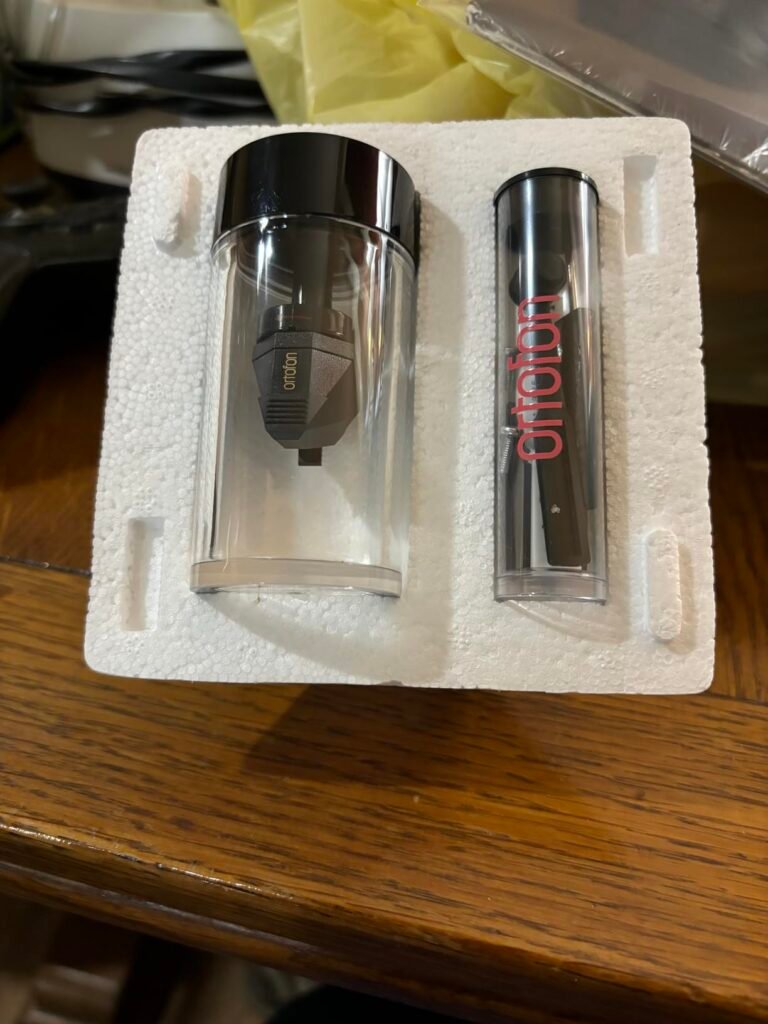
The 2M Black sits at the top of Ortofon’s 2M moving-magnet line and is the cartridge to consider when you want line-contact tracing without switching to a low-output moving coil. The Shibata diamond uses a slim, highly polished profile that contacts more of the groove wall than an elliptical, which is why it is marketed as true to the groove relative to the Red, Blue, and Bronze steps below it.
We may earn a commission when you buy through this link, at no additional cost to you.
Because the contact patch is longer and narrower, setup errors show up as distortion or uneven channel wear faster than they do with a conical tip. Use a two-point protractor, a tracking-force gauge, and a clean, level platter. A worn or dirty record will also be more obvious, so this is not the ideal first cartridge for a crate of unwashed thrift-store LPs.
The stylus remains replaceable, which protects the investment if the diamond eventually wears. You still need a standard MM phono input; this is not an MC cartridge. Universal fit applies to half-inch mounts on most turntables, not to P-mount linear trackers.
Line-contact styli like Shibata ride a longer section of the groove. That can mean lower distortion and better high-frequency retrieval when VTA and alignment are right. It also means more sensitivity to a tilted headshell or a warped disc. Keep the stylus clean with a dedicated brush from back to front, never side to side, and replace it when sibilance rises on records that used to play cleanly.
Buy the 2M Black if your tonearm geometry is correct, your records are mostly clean pressings, and you want the most ambitious stylus in this 2M set. If you are still learning to set overhang, start with the 2M Blue or VM95E. The Black will not forgive a rushed install the way a 0.6 mil conical will.
Beginners still learning cartridge alignment, P-mount turntable owners, or collectors who mostly play dirty, heavily worn records.
We may earn a commission when you buy through this link, at no additional cost to you.
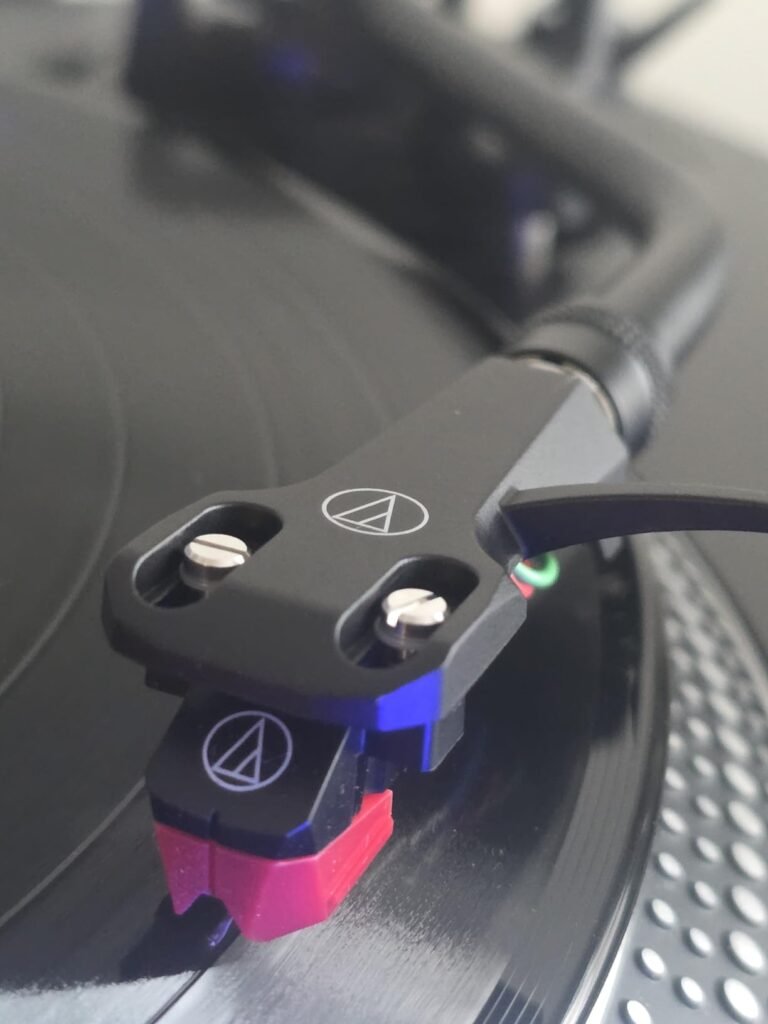
The AT-VM95ML puts a 2.2 x 0.12 mil microlinear stylus on the familiar VM95 dual-magnet body. Microlinear is Audio-Technica’s line-contact shape, intended to follow groove modulation more faithfully than the elliptical VM95E or conical VM95C. If you already like the VM95 platform, this is the resolution-oriented stylus rather than a whole new brand ecosystem.
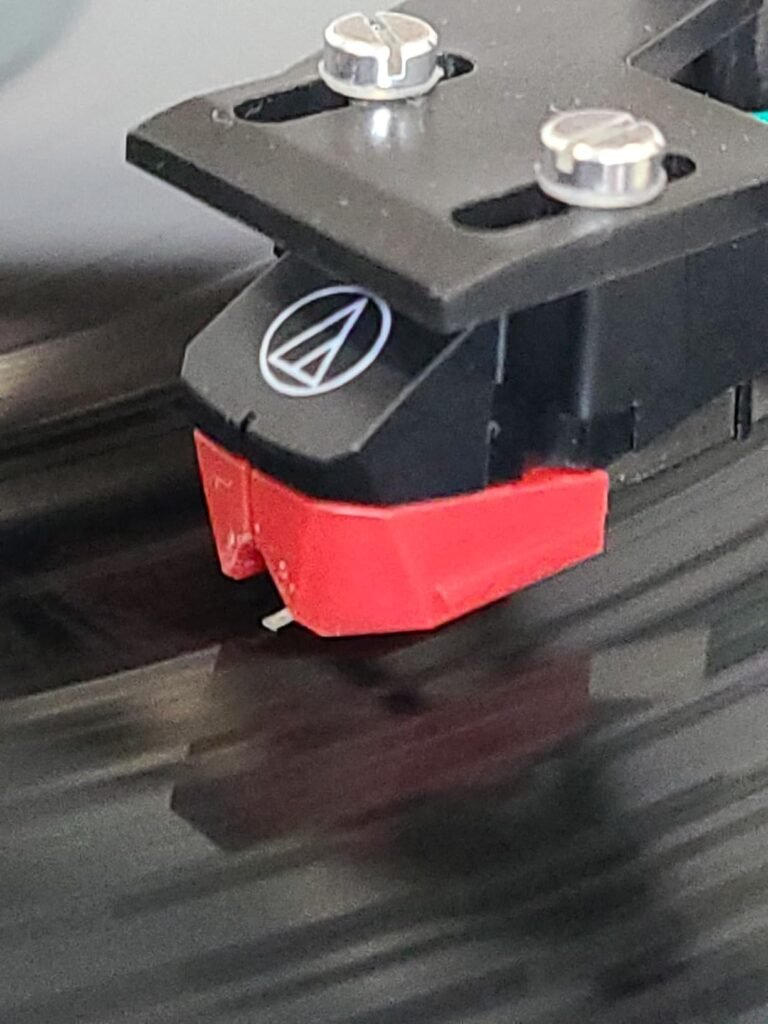
We may earn a commission when you buy through this link, at no additional cost to you.
The red housing still uses an aluminum cantilever, polymer body, and threaded inserts. Compatible with any AT-VMN95 replacement stylus means you could later fit a different VM95 tip if you sell this one or want a conical for rough records. That modularity is a genuine advantage over cartridges with unique, hard-to-find styli.
Treat alignment as mandatory. A microlinear tip that is rotated or set with wrong overhang will not deliver the extra inner-groove performance you paid for and can wear records unevenly. A two-point protractor and a stylus force gauge are not optional accessories at this level.
Elliptical tips are a balanced everyday choice. Microlinear tips typically retrieve more high-frequency information and can reduce inner-groove distortion when geometry is correct. They also show surface noise and setup errors more clearly. If your collection is mixed and dusty, an elliptical VM95E may be the happier daily driver until your cleaning routine catches up.
Pick the VM95ML if you want line-contact performance at less than 2M Black money and you are comfortable with VM95 mounting. It is not the right first cartridge for a child learning to cue, and it is wasted on a turntable that cannot be aligned. Pair it with clean vinyl and a stable arm.
Casual users who will not align the cartridge, or anyone needing a P-mount T4P body.
We may earn a commission when you buy through this link, at no additional cost to you.
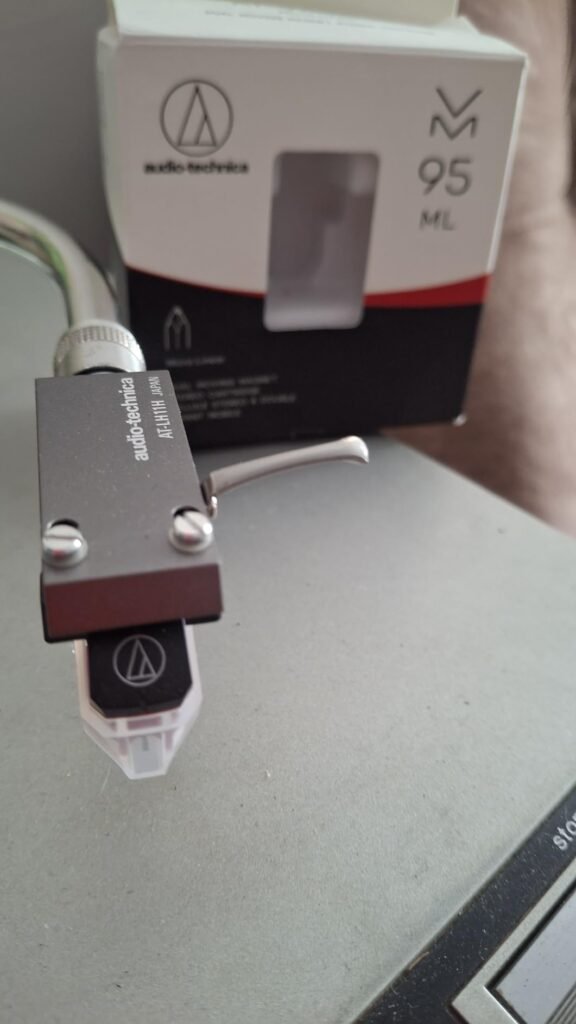
The AT-VM95ML/H kit combines the microlinear VM95 cartridge with a universal half-inch headshell. It is the version to buy when you want line-contact tracing and you do not want to solder or press four tiny clips onto cartridge pins. The generator matches the standalone red VM95ML: dual magnet, aluminum cantilever, polymer housing, threaded inserts.
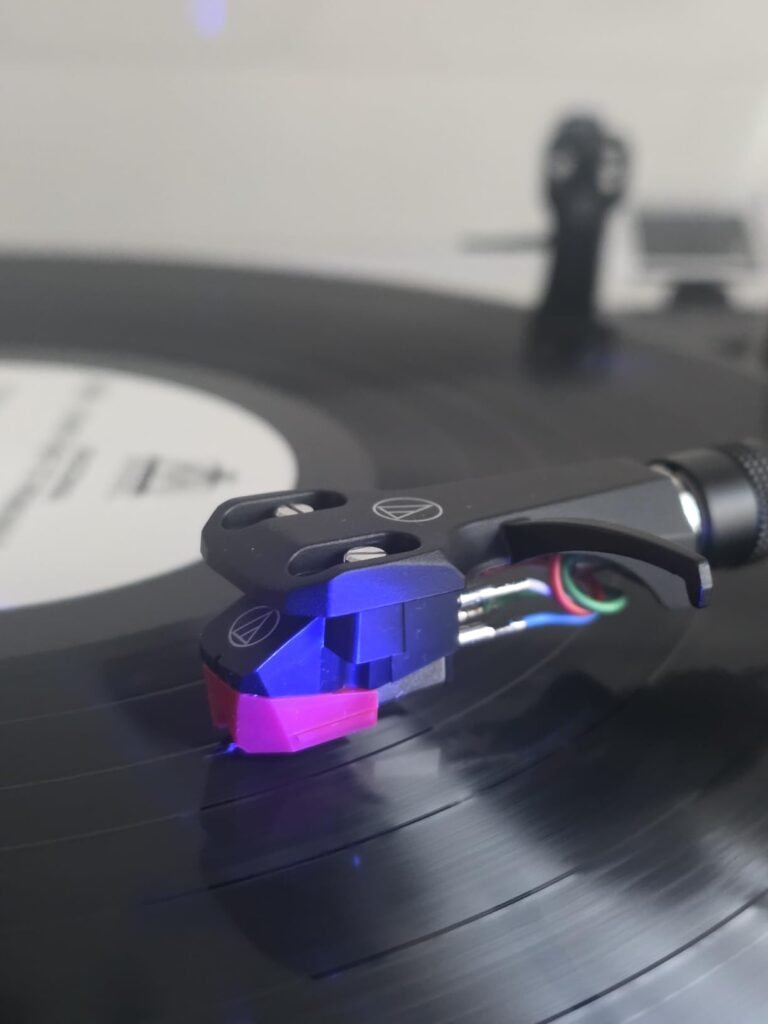
We may earn a commission when you buy through this link, at no additional cost to you.
A removable headshell also lets you keep a second shell with a conical or elliptical VM95 stylus for rough records, then swap back to microlinear for clean pressings. That workflow is one of the smarter uses of the VM95 family. Confirm the arm collar matches the kit’s universal 1/2-inch four-pin shell before you order.
Factory mounting still needs a geometry check. Slide the cartridge in the slots if overhang is off, then lock the screws evenly. Set tracking force to the range appropriate for VM95 microlinear use as listed in Audio-Technica’s documentation for the stylus, and set anti-skate near that value as a starting point.
Keep microlinear for clean, well-centered discs and a conical or elliptical stylus for garage-sale finds. Label each shell. After a swap, recheck tracking force because headshell-plus-cartridge mass can differ. Never cue a microlinear onto a visibly gritty record without cleaning first.
This kit is for listeners with SME-style removable headshells who want microlinear performance with less fiddly assembly. If your arm is fixed, buy the bare AT-VM95ML. If you are not ready for a line-contact tip, the VM95E/H kit is the more forgiving combo.
Turntables without a removable universal headshell, or buyers who only need a simple conical replacement.
We may earn a commission when you buy through this link, at no additional cost to you.
The Nagaoka MP-110 is the non-Audio-Technica, non-Ortofon moving-magnet option in this guide, aimed at listeners who want a different house sound while staying in MM voltage territory. Nagaoka describes the MP series as delivering clarity across the frequency range, fluidity, and full dynamic range using up-to-date construction materials.
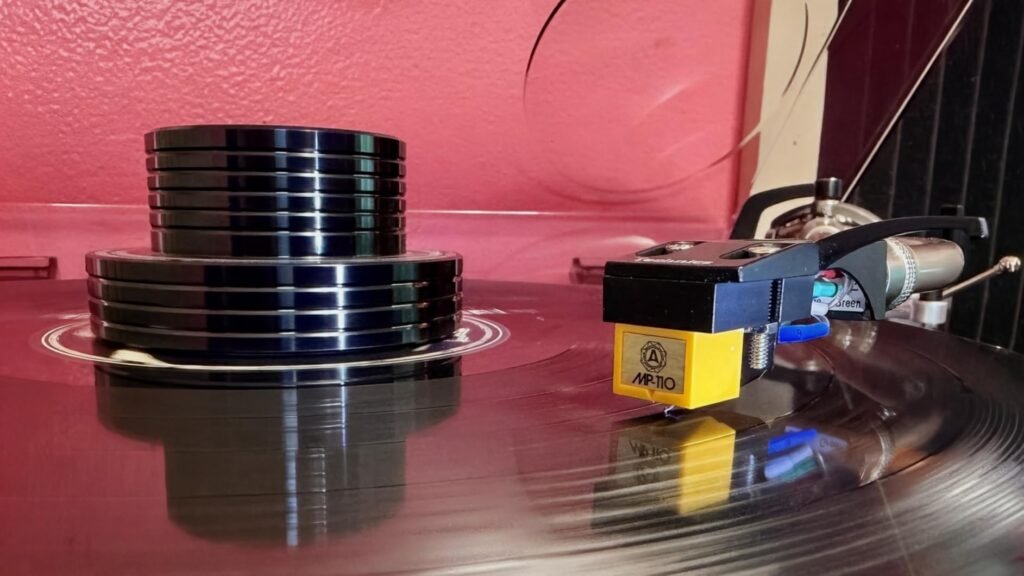
We may earn a commission when you buy through this link, at no additional cost to you.
Because this listing does not spell out a nude Shibata or a specific mil size the way the VM95 and 2M models do, you should treat the MP-110 as a complete cartridge choice rather than a documented stylus ladder like 2M Red to Blue. Confirm mount type on your turntable: this is a conventional record cartridge for standard installations, not a T4P P-mount plug-in.
Setup still follows the universal MM playbook: overhang, tracking force per Nagaoka’s sheet that arrives with the cartridge, anti-skate, and a clean stylus. If you like to swap styli as often as Audio-Technica VM95 owners do, research current MP-110 stylus availability in your region before you commit, because local shops stock AT and Ortofon tips more often.
Audio-Technica and Ortofon dominate replacement counters, which is convenient but not mandatory. A different generator and body can complement speakers that already sound bright or dark. Compare return policies, because cartridge preference is personal. Keep the same alignment tools regardless of brand; geometry does not change because the logo does.
Choose the MP-110 if you specifically want Nagaoka’s moving-magnet character and your phono stage is MM. If you need a clearly specified elliptical or microlinear upgrade path with widely stocked styli, the VM95 or 2M lines are easier to live with over a decade of replacements.
Buyers who want a clearly listed nude elliptical or Shibata profile and a stylus that every local hi-fi shop keeps in a drawer.
We may earn a commission when you buy through this link, at no additional cost to you.
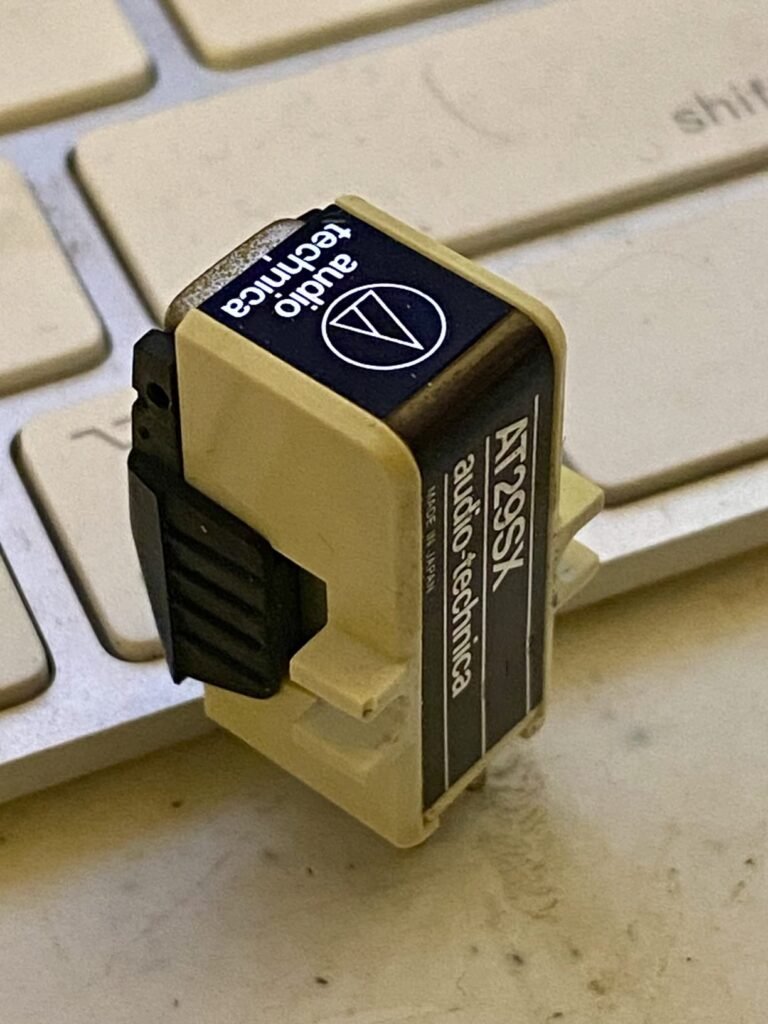
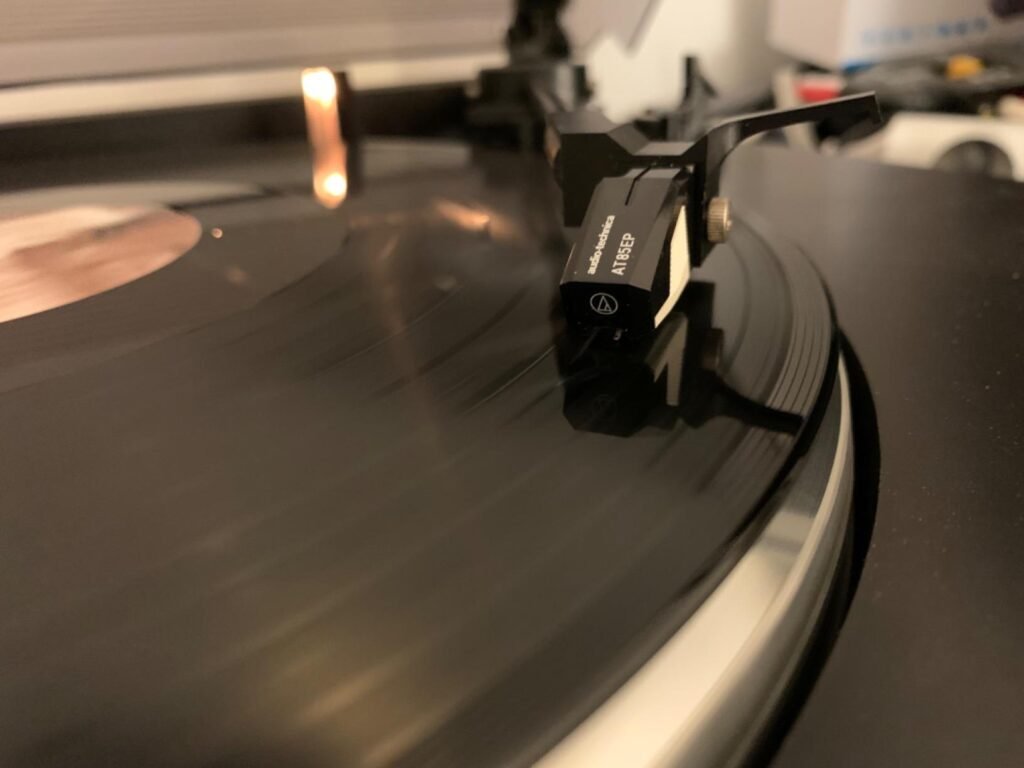
The AT85EP exists because many 1980s linear-tracking turntables use a T4P P-mount socket, not a two-screw headshell. Forcing a VM95 into that arm is the wrong answer. This cartridge is a 0.3 x 0.7 mil elliptical dual moving-magnet design made to plug into those connectors regardless of the deck’s brand.

We may earn a commission when you buy through this link, at no additional cost to you.
Para-toroidal coil construction is Audio-Technica’s approach to channel separation and clarity in this small body. Output remains moving-magnet, so a standard MM phono input is appropriate. Installation is typically a plug-in with a small mounting screw specified by the turntable maker, not a four-clip wiring job.
Do not buy this cartridge for a modern Technics, Rega, or similar half-inch mount arm. Conversely, do not buy a 2M Blue for a Technics SL-J, Pioneer PL-L, or other T4P linear tracker without an adapter that those arms were never designed around. Match the mount first, then the stylus.
P-mount cartridges are roughly a small rectangular plug with contacts on the back, often secured by one top screw, and they sit parallel in a short arm. Half-inch cartridges have two slotted screw holes and four colored pins. If you see two long screws and a headshell, you need VM95 or 2M, not the AT85EP.
This is the correct elliptical upgrade for a working P-mount turntable whose original conical stylus is worn. It will not help a standard gimbal arm. If your linear tracker’s tonearm electronics are failing, a new cartridge cannot fix that mechanism.
Any turntable that uses a standard half-inch headshell and four-pin cartridge wiring.
We may earn a commission when you buy through this link, at no additional cost to you.
The AT-VM95C is the conical-stylus member of the VM95 family and the least expensive way onto that body. A 0.6 mil conical diamond is round in cross-section, so it sits in the groove with more forgiveness for imperfect alignment and for records that are slightly worn. That makes it a sensible choice for mixed used vinyl and for first-time installers.
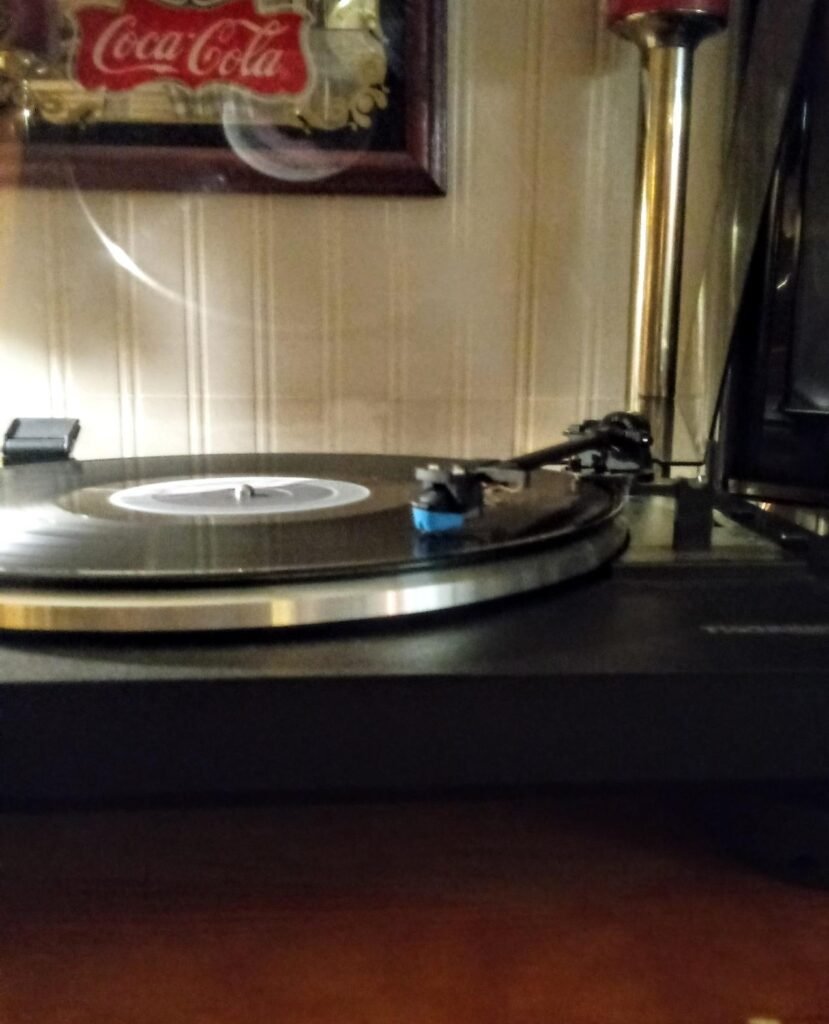
We may earn a commission when you buy through this link, at no additional cost to you.
You still get the aluminum cantilever, dual magnets, specially wound coils, polymer housing, and threaded inserts. The point is not maximum resolution. The point is a durable, easy-to-mount generator that can later accept an elliptical or microlinear AT-VMN95 stylus if you decide the collection and the rest of the system deserve it.
Conical tips typically sound a bit rounder in the treble and can increase inner-groove distortion compared with a well-aligned elliptical. If your records are mostly new 180-gram pressings and your arm is already aligned, skip to the VM95E. If you play 1960s club copies and garage-sale finds, the conical contact patch is often kinder.
Conical styli are common on DJ and entry hi-fi cartridges because they tolerate less-than-perfect cueing and older groove wear. They are not “worse” in every context. They are a mismatch for listeners chasing last-bit inner-groove clarity. Match the tip to the records you actually own, then upgrade the stylus on the same VM95 body when your habits change.
Buy the VM95C as a budget replacement for a destroyed stock stylus or as a starter body you plan to re-tip later. It is not the cartridge to choose when you already know you want microlinear or Shibata performance. It also will not fit P-mount arms.
Listeners who want elliptical or line-contact detail immediately, or owners of T4P P-mount turntables.
We may earn a commission when you buy through this link, at no additional cost to you.
A cartridge has to match your tonearm mount, phono stage, and how obsessively you will set geometry. Stylus shape then decides how much groove information you retrieve and how unforgiving the setup becomes.
Most modern hi-fi turntables use a half-inch mount: two screws through a headshell, four colored lead wires, and a cartridge body such as the Audio-Technica VM95 or Ortofon 2M series. Linear-tracking and many compact 1980s decks use a T4P P-mount, which is a plug-in body like the AT85EP. These standards are not interchangeable without awkward adapters that often ruin geometry.
Before you fall in love with a Shibata 2M Black, look at the end of your tonearm. If you see a small socket and a single screw on top of a short arm, you need P-mount. If you see a removable headshell with a collar, a combo kit such as the VM95E/H or VM95ML/H can save assembly time. If the headshell is fixed, buy a bare cartridge and wire it yourself.
Choose mount first, stylus second. The best diamond in the catalog is useless on the wrong connector. When listings say universal fit for most turntables, they almost always mean half-inch MM bodies, not T4P.
A conical or spherical tip, such as the 0.6 mil VM95C, contacts a small round patch of the groove. It is durable and forgiving. An elliptical tip, such as the VM95E, 2M Red, or AT85EP’s 0.3 x 0.7 mil diamond, contacts a narrower vertical strip and usually traces high frequencies more accurately. A nude elliptical like the 2M Blue reduces tip mass further.
Line-contact shapes go further. The VM95ML’s 2.2 x 0.12 mil microlinear stylus and the 2M Black’s Shibata diamond ride a longer section of the groove wall. That can lower distortion and improve inner-groove performance when alignment, VTA, and cleanliness are correct. Those same tips punish dirty vinyl and sloppy overhang.
If you play mixed used records and are new to protractors, start conical or elliptical. If your arm is aligned and your records are clean, microlinear or Shibata is the upgrade that actually uses that care. Do not buy a line-contact tip as a substitute for a good phono stage or isolation.
Every cartridge in this guide is a moving-magnet or MM-style design meant for a standard phono input with roughly 47k ohm loading. You do not need a moving-coil step-up device. Dual moving-magnet generators, as used in the VM95 series and AT85EP, and Ortofon’s 2M magnets, produce enough voltage for typical built-in phono stages on receivers, powered speakers, and entry phono preamps.
If your amplifier only has a line input labeled AUX, you still need a phono preamp, regardless of which MM cartridge you buy. If you already own a dedicated MM stage, any of these pickups can work electrically. Matching then becomes about gain headroom and whether a brighter stylus makes a bright system fatiguing.
Stay in MM unless you have a specific MC preamp already. The 2M Black is still MM despite its price. Do not confuse “premium stylus” with “needs MC loading.”
A replaceable stylus is how you avoid throwing away a working generator every few years. Ortofon documents a path from 2M Red to a 2M Blue stylus on the same body. Audio-Technica’s VM95 bodies accept the AT-VMN95 family, so a VM95C or VM95E can later wear a microlinear tip. That modularity is often worth more than a small difference in first-day sound.
Not every brand is equally easy to restock. Nagaoka MP-series styli exist but are less commonly sitting in big-box inventory than AT and Ortofon tips. Factor five to ten years of stylus cost, not just the unboxed price. A cheap cartridge with an unobtainable stylus becomes landfill.
If you like to tinker, buy into VM95 or 2M. If you want one-and-done and will replace the whole cartridge, any MM body works, but you will pay for another alignment session.
Combo kits such as the AT-VM95E/H and AT-VM95ML/H arrive with the cartridge on a universal half-inch headshell. That reduces dropped nuts and reversed channels during a first install. You still set overhang. The extra cost buys time and a spare shell if your arm uses the SME-style collar.
Bare cartridges cost less and fit fixed headshells. They require patience with four color-coded clips: red right hot, green right ground, white left hot, blue left ground is the usual standard. Work with the stylus guard on, and never force a clip onto a pin.
If your arm has a removable shell and you are nervous, buy the combo. If you already own a preferred headshell with azimuth slots you like, buy the bare body and keep the shell you know.
Even a conical VM95C will sound dull and wear records if tracking force is far too high or the cantilever is visibly skewed. Use a digital stylus gauge. Follow the manufacturer’s force range for that specific stylus. Set anti-skate near the tracking-force value as a starting point, then adjust if the arm skates hard to the center on a blank or groove-less area.
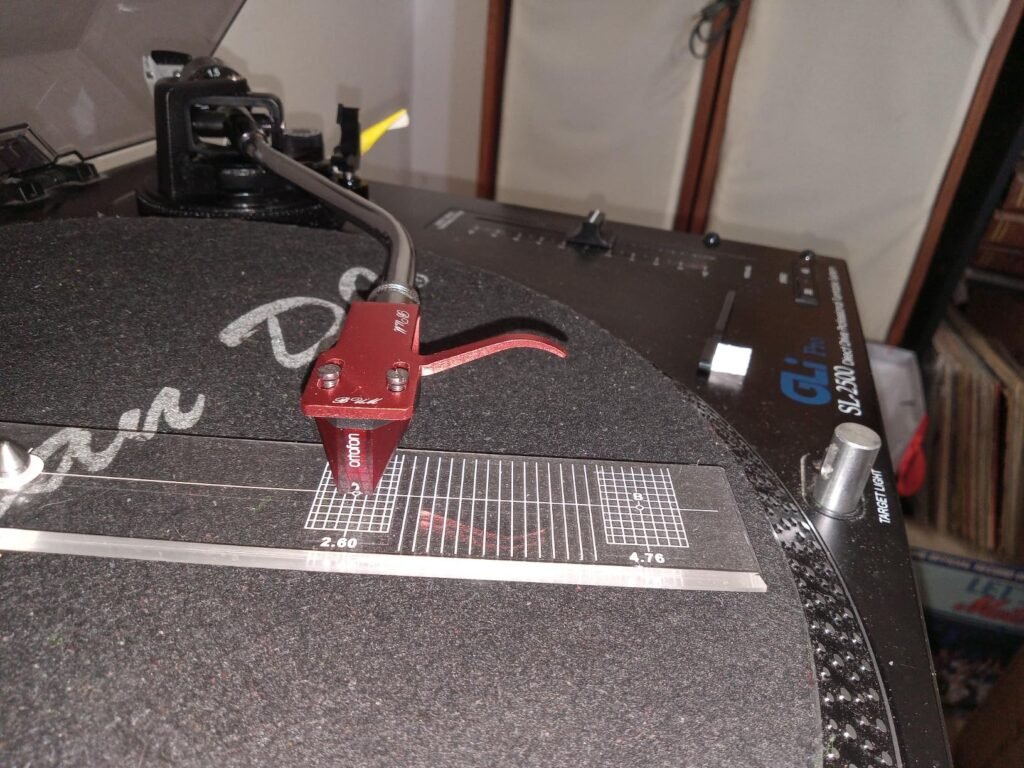
Overhang alignment with a two-point protractor matters more as the stylus gets more sophisticated. A Shibata or microlinear tip that is rotated in the headshell will not sit in the groove correctly. Take the extra minutes. A flashlight and a magnifier help you see whether the cantilever is straight when viewed from the front.
Never drop the stylus as a way to cue. Use the cueing lever. Clean records before chasing a more expensive diamond. A $50 conical on a clean disc often beats a $500 Shibata on a gritty one.
New audiophile pressings and well-kept jazz reissues are where microlinear and Shibata tips earn their keep. Club copies, DJ history, and flea-market classical sets often do better with elliptical or conical tips that do not dive as aggressively into damaged groove walls. Many collectors keep two headshells for exactly this reason.
If you own a linear-tracking P-mount deck that still works, the AT85EP is the honest upgrade, not a 2M Blue hanging off an adapter. If you own a modern half-inch arm and a basic MM stage, the VM95E or 2M Red is the rational daily cartridge. Stretch to 2M Blue, VM95ML, or 2M Black when the rest of the chain is already sorted.
Buy for the records you play weekly, not the one mobile-fidelity disc on the shelf. Stylus shape should follow collection quality, and mount type should follow the arm you already own.
Install with the stylus guard in place whenever possible. For half-inch mounts, attach the four clips by color, set rough overhang, snug the screws, then fine-tune with a protractor. For P-mount T4P bodies, plug the cartridge in fully and use the specified screw without overtightening. Set tracking force with a gauge, then set anti-skate. Recheck force after the suspension settles for a day.
Cue with the lever, not your fingers. Brush the stylus from back to front with a dedicated carbon or gel cleaner; never scrub side to side. Clean records so the diamond is not plowing grit. Keep the turntable cover closed when idle to limit dust, but open it during play if the lid resonates. Replace a stylus when distortion rises on previously clean inner grooves or when the cantilever is bent.
Store spare styli in their cases, away from heat and loose tools. When moving the turntable, lock the arm and fit the guard. Do not leave a cartridge sitting stylus-down on a mat. If you swap headshells, recheck tracking force because mass may change. Treat the cantilever as the most fragile part of the entire analog chain, because it is.
Moving-magnet cartridges, including every model in this guide, produce a relatively high output that matches a standard phono input. Moving-coil cartridges usually need more gain and different loading. You do not need an MC preamp for a 2M Black, VM95ML, or Nagaoka MP-110. Stay with MM unless your electronics were chosen specifically for low-output coils.
If the Audio-Technica uses a standard half-inch headshell, yes, the 2M series is a universal-fit MM body. If the deck is a P-mount linear tracker, no. Match the mount, then set overhang for that specific arm’s geometry rather than assuming factory slots are perfect.
Choose conical, such as the AT-VM95C, for durability and mixed, worn records. Choose elliptical, such as the VM95E, 2M Red, or AT85EP, for clearer treble on typical hi-fi collections. Choose nude elliptical, microlinear, or Shibata when alignment is solid and records are clean. The “better” shape is the one that matches your vinyl and your setup patience.
On Audio-Technica VM95 bodies, AT-VMN95 styli are interchangeable across that series. On Ortofon 2M, a Blue stylus can upgrade a Red body. Always buy the correct family stylus. Mixing brands on a generator is not a safe assumption. Re-check tracking force after any stylus swap.
P-mount, or T4P, is a plug-in standard used on many linear-tracking turntables. The Audio-Technica AT85EP is built for those sockets. Standard VM95 and 2M cartridges use two screws and four wires on a half-inch mount and will not plug into a T4P arm correctly.
Buy a combo such as the VM95E/H or VM95ML/H if your tonearm uses a removable universal headshell and you want less fiddly wiring. Buy a bare cartridge if the headshell is fixed or you already have a shell you prefer. Combos do not skip alignment; they only skip most of the hardware juggling.
There is no single hour count that fits every diamond and every dusty collection. Replace when distortion, sibilance, or fuzzy inner grooves appear on records that used to play cleanly, or if the cantilever is bent. Clean vinyl and correct tracking force extend life. A worn stylus can damage records, so do not wait until the sound is obviously wrecked.
Line-contact tips reveal bright mastering, dirty grooves, and alignment error. A conical tip can sound smoother simply because it retrieves less treble grit. Clean the record, verify tracking force, and check overhang before assuming the cartridge is defective. A bright speaker and a Shibata tip can also stack in a fatiguing way.
You can mount it, but you should not skip geometry if you care about channel balance and record wear. Printer-paper protractors exist for common arms, and a two-point gauge is enough for elliptical tips. Microlinear and Shibata styli especially deserve a proper alignment. Guessing by eye is how inner grooves get chewed.
Yes. It is a moving-magnet cartridge intended for normal MM phono stages. You still need a phono input or an external MM preamp if your amplifier is line-level only. Confirm your tonearm is a standard half-inch mount, not a P-mount socket.
For most half-inch mount systems with a standard MM phono stage, the Ortofon 2M Blue is the strongest all-around choice in this group: a nude elliptical diamond, a replaceable stylus, and a clear step up from bonded ellipticals without requiring a moving-coil preamp. It rewards a careful alignment and stays practical as a long-term pickup.
Budget-minded listeners should start with the Audio-Technica AT-VM95E or the more forgiving AT-VM95C and climb the VMN95 stylus ladder later. Premium tracing belongs to the AT-VM95ML and Ortofon 2M Black if geometry is already correct. Combo kits simplify removable-headshell arms, the AT85EP is the right answer for T4P linear trackers, and the Nagaoka MP-110 is the alternative MM voice if you want to leave the two biggest brands.
Match mount type first, then stylus shape to the condition of your records, then decide whether a pre-mounted headshell is worth the extra money. A conical tip on a clean, well-aligned P-mount deck will always beat a Shibata hanging off the wrong arm. Buy the cartridge your turntable can actually use, set it with a gauge and protractor, and the rest of the system will finally have a chance to show what the groove still holds.