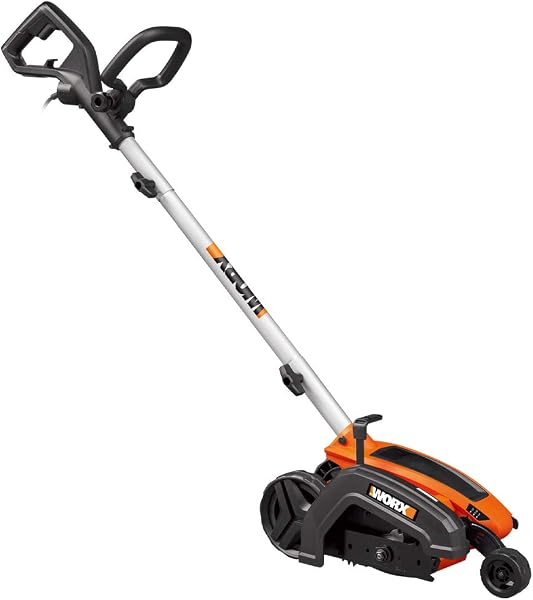
WORX WG896 Electric
8.8Editor score12 Amp motor
7.5-inch cutting blade
4700 RPM speed
3 depth adjustments
Find the right trenchers for 2026. We compare 10 standout options by build quality, useful features, owner feedback, value, and everyday trade-offs.
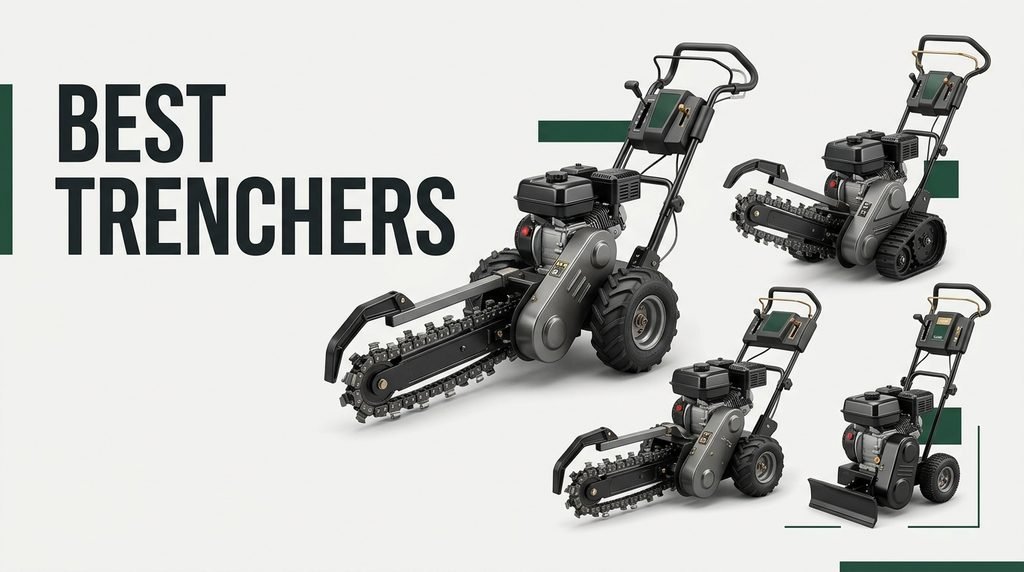
Find the right trenchers for 2026. We compare 10 standout machines by the factors that matter most for digging work, including engine power, cutting depth and width, soil compatibility, chain or blade design, maneuverability, safety features, power source options, and overall value for homeowners, landscapers, and property owners tackling irrigation, drainage, or cable installation projects.
The right choice depends heavily on scale. A corded electric edger-trencher handles weekend garden borders and shallow wire runs, while a 420cc gas-powered machine with carbide teeth chews through hardpack to install drainage pipes. Hitch-mounted ripper attachments offer a third path for tractor and ATV owners who want trenching capability without a dedicated machine.
This guide breaks down each option with practical advice so you can match the right trenching tool to your soil type, trench depth, project frequency, and existing equipment. Choosing wisely prevents the frustration of underpowered gear bogging down or overbuying a commercial machine for occasional backyard use.
We compared 10 trenchers using the details that genuinely help a buyer decide: engine power or motor amperage, trench depth and width capacity, cutting chain or blade quality, soil type compatibility, wheel and balance design, safety controls, portability, included accessories, warranty terms, and value for the intended use case. The notes focus on practical trade-offs so each pick connects to how people actually dig trenches for irrigation, drainage, cable installation, and landscaping projects.


Compare key features, scores, and current prices side by side. A shorter feature list means fewer details were available, not necessarily fewer capabilities.


The MechMaxx TCR1500 earns a rare perfect 5-star rating, which signals strong real-world satisfaction among its owners. Like the BILT HARD, it pairs a 420cc 15HP four-stroke engine with a chain of 27 carbide alloy teeth and 9 soil scrapers to cut trenches up to 24 inches deep and 4 inches wide. For serious utility and drainage work on a property, this machine delivers professional-grade performance.
We may earn a commission when you buy through this link, at no additional cost to you.
A couple of specific engineering choices stand out. The Kevlar belt is more wear-resistant than ordinary rubber belts, which translates into fewer maintenance cycles and longer periods between service work. The upgraded electric start positions the ignition key between the two handles for faster, easier starting compared to designs that require reaching awkwardly for the key. The 12V 20Ah lead-acid battery is larger than many competing machines, providing more reliable ignition and longer trenching sessions.
Operator safety is addressed through the three-wheel balance system with 15-inch wheels in a one-front, two-rear configuration and dedicated depth and anti-forward control handles. The depth lever lets you dial in precise excavation depth, while the anti-forward lock prevents the wheels from rolling during start-up or when you need to pause mid-trench. On uneven ground or when working alone, these controls meaningfully reduce the risk of losing control of a heavy machine.
The drive belt on a trencher transfers engine power to the cutting chain, which means it absorbs significant shock and wear during every use. Standard rubber belts stretch, crack, and fail more quickly, often requiring replacement after moderate use. Kevlar-reinforced belts cost more initially but last several times longer, which reduces total ownership cost. For a trencher you plan to use frequently, Kevlar belt construction is a worthwhile upgrade to prioritize.
One important limitation deserves attention. This machine is designed for relatively uniform and loose sandy soil. Buried rocks, large tree roots, or gravelly ground can overload the chain and cause damage. Before buying, assess your soil honestly. If your property has significant rock content, consider a different approach, such as hand digging or hiring a professional with a more robust machine designed for mixed debris. For the right soil, this trencher excels.
Properties with rocky soil, significant tree roots, or gravelly ground that could damage the chain.
We may earn a commission when you buy through this link, at no additional cost to you.
The WORX WG896 is a sensible first trencher for homeowners who want clean lawn edges and the ability to dig shallow trenches for landscape lighting, irrigation tubing, or garden borders. The 12 Amp motor and 7.5-inch blade spin at 4,700 RPM, which is enough speed to slice through established turf and soft to moderate soil without bogging down. For the vast majority of weekend yard projects, this corded electric machine delivers solid performance at a reasonable price.
We may earn a commission when you buy through this link, at no additional cost to you.
Three depth settings at 1, 1.25, and 1.5 inches cover the most common edging and shallow trenching tasks. The cutting line indicator helps you follow a straight path along a driveway or sidewalk, which matters more than beginners expect because wavering lines show up clearly in a finished edge. The adjustable shaft and D-grip handle let users of different heights find a comfortable working position, reducing back strain during longer sessions.
The corded design is both a strength and a limitation. On the plus side, you never worry about battery runtime, charging schedules, or fuel mixing. The 12 Amp motor delivers consistent full power from the first minute to the last. On the downside, you need an outdoor-rated extension cord of adequate gauge, and your working radius is limited to whatever that cord allows. For properties with convenient outdoor outlets, this is a non-issue.
A corded trencher pulling 12 Amps needs an outdoor-rated extension cord with sufficient gauge to prevent voltage drop. For runs up to 50 feet, 14-gauge cord works well. For 100-foot runs, step up to 12-gauge. Thinner cords cause the motor to run hot and lose power, which shortens its life and reduces cutting performance. Always unroll the cord fully before use to prevent heat buildup inside a coiled bundle.
This machine suits homeowners with small to medium yards who want a reliable edger-trencher hybrid without the complexity of gas power or the expense of cordless batteries. If your projects involve laying soaker hoses, burying low-voltage cable, or maintaining crisp borders along concrete, the WG896 covers those needs well. If you need to dig deep drainage trenches or work far from any outlet, step up to a cordless or gas model.
Properties without convenient outdoor outlets or buyers needing deep drainage trenches.
We may earn a commission when you buy through this link, at no additional cost to you.
The BILT HARD is a serious tool for serious trenching work. The 420cc 15HP four-stroke engine delivers the torque needed to drive a chain of 27 tungsten carbide teeth through clay, hardpack, and dense loam. If your project list includes installing underground drainage, running electrical conduit, or burying irrigation main lines across a property, this is the kind of machine that gets the job done in hours rather than days.
We may earn a commission when you buy through this link, at no additional cost to you.
A 24-inch maximum depth and 4-inch width give you enough capacity for most residential utility installations, including French drains that need to sit well below the frost line. The 81.5-inch chain with 9 soil scrapers keeps the cut clean and reduces re-digging because debris clears efficiently as the chain rotates. The adjustable depth lever lets you control exactly how deep the chain descends, which matters when you need shallow trenches for some runs and deeper ones for others.
Operator comfort and safety are addressed through the three-wheel design, with a single front wheel and two larger rear wheels for stability on uneven ground. The electric start, powered by a 12V 14Ah battery, means no pull-cord struggles that can lead to shoulder strain. An anti-forward safety lock prevents the machine from lurching unexpectedly, which is particularly important when working on slopes or near existing utilities.
Electric trenchers hit their practical limits around 2 inches of depth and soft to moderate soils. Once you need to go deeper than frost line, cross driveways, or work in hard clay and rocky soil, gas power becomes essential. A 420cc engine provides the sustained torque needed to drive carbide teeth through resistance without stalling. The tradeoff is weight, noise, fuel handling, and higher purchase cost, which only make sense when the job genuinely demands it.
This trencher represents a significant investment, and that cost is justified only for buyers with real heavy-duty needs. Contractors, large property owners, farms, and ambitious DIYers tackling multi-day projects will get genuine value. Occasional users with one shallow project per year will overspend dramatically. If you can rent a comparable machine locally for a weekend, do that math before buying. For frequent users, ownership quickly becomes more economical.
Occasional users with small shallow trenching needs who can rent a machine instead.
We may earn a commission when you buy through this link, at no additional cost to you.
BLACK+DECKER has decades of experience in homeowner-focused yard tools, and the LE760FF reflects that polish. The 4.5-star rating is the highest in this guide, which signals strong real-world owner satisfaction. The 12 Amp motor and 7.5-inch blade with 3/16-inch thickness handle both crisp edging along concrete and shallow trenching for cables, wire, and irrigation lines in the same session.
We may earn a commission when you buy through this link, at no additional cost to you.
What sets this machine apart is the quick conversion between edging and trenching modes, which eliminates the need for a separate tool for each task. The three-position blade depth adjustment and pull-up edge guide give you precise control over how aggressively the blade cuts into soil or sod. For homeowners who maintain their own landscape beds and occasionally run new drip lines, this versatility delivers genuine convenience.
Usability details matter in yard tools, and BLACK+DECKER got the small things right. No-tool setup means you can swap modes or clean the blade without hunting for wrenches. The accessible blade guard simplifies cleaning after a muddy session. The right or left-handed assist handle accommodates different user preferences and reduces fatigue during longer runs along a driveway or walkway. These small touches add up to a tool that feels thoughtfully designed.
Owning a dedicated edger and a dedicated trencher doubles your storage requirement and your tool budget. A combo machine like the LE760FF covers both functions competently, which is usually more than enough for homeowner use. The tradeoff is that neither function is as specialized as a dedicated tool, so professional landscapers typically still prefer separate machines. For residential users, the convenience of a single tool outweighs that specialization.
The 2-year limited warranty is a meaningful signal in a category where some competitors offer much shorter coverage. For a homeowner who edges a lawn weekly and digs occasional shallow trenches, this is the kind of all-around machine that handles most needs without compromise. If you need to go deeper than roughly 1.5 inches or work beyond cord reach, step up to a cordless or gas option. For everything else, this is a top recommendation.
Users who need to dig trenches deeper than approximately 1.5 inches.
We may earn a commission when you buy through this link, at no additional cost to you.
The cordless WG898 removes the cord management challenge that limits corded trenchers, which matters especially for larger properties or yards far from outdoor outlets. The brushless 20V motor delivers more consistent power and longer life than brushed alternatives, and the included 4.0Ah battery provides up to 2,800 feet of edging per charge. For a typical suburban yard, that is usually enough runtime for a full session without a battery swap.
We may earn a commission when you buy through this link, at no additional cost to you.
Three depth positions at 1.5, 1.75, and 2 inches give you slightly more depth range than many corded competitors. The integrated edge guide and blade indicator help you follow straight lines along sidewalks and driveways, which produces more professional-looking results. The dual-wheel stabilizing design keeps the tool tracking straight even when you encounter minor dips or obstacles in the lawn.
At 7 pounds without the battery, this is one of the lighter options in the category, which reduces fatigue during longer edging sessions. The adjustable handle and telescopic shaft accommodate different user heights, and the shaft collapses for compact garage storage. If you already own WORX 20V tools, the Power Share battery system means you can use existing batteries, which effectively reduces the cost of adding this machine to your toolkit.
Power tool platforms like WORX Power Share, DeWalt 20V, and Milwaukee M18 let you share batteries across multiple tools. This dramatically reduces the real cost of adding each new tool because you can often buy bare tools without batteries. Before committing to a cordless trencher, consider which battery platform you already use. Sticking with your existing ecosystem is almost always more economical than starting a new one for a single tool.
The main compromises are inherent to the cordless category. A 20V brushless motor delivers less raw torque than a corded 12 Amp motor, so dense sod or compacted soil may slow it down more than a plug-in machine would. Battery runtime also limits continuous use, though a spare battery solves that. For WORX ecosystem owners or anyone who prioritizes cord-free convenience over absolute power, this is a strong pick.
Large properties with dense soil that demand sustained high torque.
We may earn a commission when you buy through this link, at no additional cost to you.
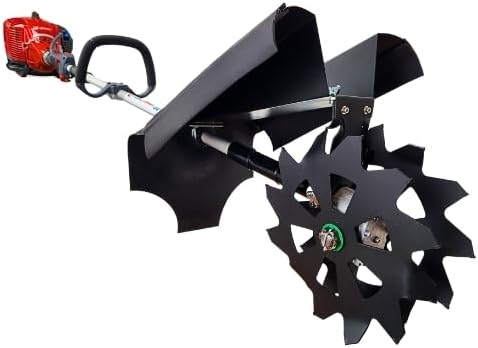
The CAMMOO hitch-mounted ripper takes a completely different approach to trenching. Instead of being a standalone powered machine, it attaches to the 2-inch receiver on a tractor, ATV, UTV, or similar vehicle, letting the vehicle's power pull the ripper through the soil. For property owners who already own a capable tow vehicle, this approach eliminates the need for a separate powered trencher entirely.
We may earn a commission when you buy through this link, at no additional cost to you.
Build quality addresses the common weakness in budget hitch attachments. The 2-inch receiver tube is reinforced with a high-strength alloy rod rather than being hollow, which prevents the breakage that plagues cheaper competitors. The 20mm shank is 11 percent thicker than typical designs, which resists bending when you hit resistance in the soil. These construction details matter because a bent or broken attachment leaves you stranded mid-project.
The 3-in-1 tooth kit is unusually comprehensive. You get pointed, flat, and wide teeth that you can swap depending on the task. Pointed teeth break through hard ground, flat teeth create cleaner furrow walls, and the wide tooth extends trench width when you need more room for pipes or cables. Four depth positions from 12.5 to 18.5 inches let you dial in exactly how deep the ripper cuts, with the actual depth depending on your vehicle’s receiver height off the ground.
The effective trench depth of any hitch-mounted ripper equals the shank depth minus the ground clearance of your receiver. For example, if your ATV receiver sits 10 inches off the ground and the ripper shank extends 18 inches below the mount point, your actual trench depth is only 8 inches. Measure your receiver clearance before buying so you can confirm the attachment delivers the depth your project actually needs.
This attachment makes most sense for property owners who already use a tractor or heavy ATV for other chores. The 3000 lb capacity and heavy-duty construction handle demanding work, but you need a vehicle with enough weight and traction to pull it through resistant soil. Before trenching, inspect the area for large tree roots, rocks, or buried hard objects, which can overload or damage the attachment. For the right user, this is a cost-effective alternative to a dedicated powered trencher.
Buyers without a suitable tractor, ATV, or UTV with a 2-inch receiver hitch.
We may earn a commission when you buy through this link, at no additional cost to you.
The Kingway 3-point ripper offers an entry point into hitch-mounted trenching for buyers who want the vehicle-powered approach without the premium price. The adjustable shank height from 12.5 to 17.5 inches and maximum plow depth of 10 to 12 inches handle typical small-farm and garden tasks like loosening soil, planting single rows, burying water pipes, or installing drainage. For modest projects, this is a cost-effective choice.
We may earn a commission when you buy through this link, at no additional cost to you.
The thickened sheet construction and hard alloy steel plow teeth address the common failure point of cheap ripper attachments: teeth that bend or snap in hard soil. These components are built to resist deformation during normal use, though no attachment is immune to damage from hidden rocks or buried debris. The 4 adjustment holes on the Box Blade Shank, spaced at 1.7-inch intervals, let you fine-tune the working depth to match your soil conditions and project needs.
Compatibility is broad. The 2-inch receiver mount works with CAT 0 and CAT 1 tractors, ATVs, UTVs, and some lawn mowers equipped with a receiver hitch. This flexibility makes the attachment useful for hobby farmers, large-garden homeowners, and small-acreage property owners who already have a tow vehicle. The Kingway brand backs the product with 30-day refund and 12-month free replacement coverage, which reduces risk if quality issues arise.
Tractor category ratings refer to the size and spacing of 3-point hitch connections. CAT 0 is for sub-compact tractors under 20 horsepower, while CAT 1 covers compact tractors up to about 45 horsepower. Attachments listed as compatible with both categories often use a 2-inch receiver bushing that adapts between them. Before buying any hitch attachment, verify your tractor’s category to ensure physical compatibility with the mounting hardware.
This attachment is lighter duty than the premium CAMMOO option, which is reflected in both the lower price and the shallower maximum depth. For single-row planting, shallow pipe burial, or soil loosening in small gardens, it does the job. For deeper utility trenching or heavy-use agricultural work, step up to a thicker-shank design. The important caveat is that depth on fixed-height ATV or UTV receivers requires subtracting the receiver ground clearance, so measure before buying.
Heavy-use agricultural projects or professional landscaping requiring deeper, stronger digging capacity.
We may earn a commission when you buy through this link, at no additional cost to you.
This hitch-mounted trencher splits the difference between the Kingway's budget approach and the CAMMOO's premium build. The 16-inch trenching shank with adjustable 12.5 to 18.5-inch range provides more depth capacity than many competitors, and the thickened material reinforces the long-term durability that budget attachments sacrifice. For buyers who want serious hitch trenching without stepping up to specialty equipment, this is a sensible middle option.
We may earn a commission when you buy through this link, at no additional cost to you.
The ripper teeth are made from cemented carbide alloy, which the industry calls industrial alloy because of its use in military, aerospace, and machining applications. In practical trenching terms, this translates to teeth that stay sharp longer and resist chipping when they encounter small obstacles. Two different tooth types ship with the attachment, letting you match the tooth profile to your soil conditions and project type.
The reinforced connection point addresses the most common failure mode in hitch attachments, which is cracking or fatigue at the weld where the shank meets the receiver tube. By thickening and strengthening this junction, the design extends the usable life considerably. Powder coating over the carbon steel body prevents rust and corrosion even when the attachment sits outside between uses, which is a practical reality for most property owners.
The most common damage to hitch trenchers comes from three sources: hitting buried rocks or roots, backing up with the ripper engaged, and installing the teeth backward. Scout your work area before trenching, lift the attachment fully before reversing, and double-check tooth orientation during installation. These habits protect your investment and prevent the frustration of mid-project failures that halt your work until replacement parts arrive.
Compatibility covers ATVs, UTVs, and tractors with 2-inch receivers, including CAT 0 and CAT 1 tractors. The important setup detail is tooth direction. The ripper teeth must face forward in the direction of travel because the force during use pushes against them. Reverse installation causes misaligned holes and shortens the service life considerably, so take care during the initial setup. For buyers who want hitch trenching with better longevity than entry-level options, this is a reasonable upgrade.
Users without a 2-inch receiver or those requiring powered standalone trenching.
We may earn a commission when you buy through this link, at no additional cost to you.
The TrenchBadger Pro 12 fills a specific niche: a lightweight, handheld gas trencher that one person can carry, transport in a pickup bed, and operate without a trailer or helpers. At just 24 pounds, this is the lightest trencher in its class, which matters enormously for contractors who move between job sites throughout the day or homeowners who need portability more than brute capacity.
We may earn a commission when you buy through this link, at no additional cost to you.
The dual-blade standard configuration cuts a 2.5-inch wide trench, which is sufficient for low-voltage wiring, fiber optic cable, drip irrigation, silt fencing, and similar narrow installations. Switching to a single blade reduces the trench width to 0.75 to 1 inch, which is useful for even smaller cable runs or decorative edging. The 12-inch cutting depth handles most residential utility installations without needing to dig to frost line depths.
A 2HP gas engine provides enough power to cut through tough soils, roots, and moderately rocky ground. The company offers two blade options: Standard blades for roots and loam soils, and BadgerClaw blades for compact soils. Matching the blade to your soil conditions improves cutting speed and reduces wear. The handheld form factor means you walk the machine along the trench line rather than following a wheeled unit, which gives you precise control over the cutting path.
Handheld trenchers excel in tight spaces, around obstacles, and on job sites where transport logistics matter more than raw digging speed. Wheeled trenchers cut faster and straighter on open ground but become unwieldy in gardens, between buildings, or on terraced slopes. For irrigation and low-voltage installers who work in finished landscapes, the handheld approach causes less collateral damage and reaches areas a wheeled machine cannot. Choose based on your typical work environment.
The 3.7 rating is the lowest in this comparison, which suggests mixed owner feedback. The narrow trench width and handheld operation represent genuine tradeoffs against larger wheeled machines, so expectations matter. For contractors who need rapid deployment and portability for irrigation, low-voltage, or fiber optic work, this is a specialized tool with a clear use case. For homeowners with occasional needs, the price-to-use ratio is harder to justify compared to renting.
Users who need wide trenches for drainage pipes or deep utility conduit installations.
We may earn a commission when you buy through this link, at no additional cost to you.
The CRAFTSMAN CMCED400B is a bare-tool cordless edger-trencher designed for existing V20 platform owners. Buying it bare, meaning without a battery or charger, keeps the price low because you reuse the batteries and chargers you already own. If your garage already has CRAFTSMAN V20 power tools, string trimmers, or leaf blowers, this edger slots into that ecosystem without duplicating accessories.
We may earn a commission when you buy through this link, at no additional cost to you.
Weighing 8 pounds, this is one of the lighter options in the category, which reduces fatigue during longer sessions along driveways and sidewalks. The integrated edge guide helps you follow clean lines along hardscapes, producing the sharp borders that make a well-maintained lawn stand out. The design is paired with a 2.0Ah battery for the intended runtime, which is sufficient for typical residential edging but limits sustained use on larger properties.
VERSATRACK compatibility is a thoughtful detail. The integrated hook lets you hang the tool directly on the VERSATRACK garage wall organization system, which keeps it visible, accessible, and off the floor. For homeowners who have invested in a tidy garage setup, this detail makes daily use more convenient and encourages keeping the tool where it belongs rather than leaning against a wall somewhere.
Bare tool purchases make sense when you already own compatible batteries and chargers. The math changes dramatically if you need to add those accessories to use the tool. Before buying any bare tool, add the real cost of a compatible battery to the tool price and compare that total against competing all-in-one kits. For single-tool purchases without an existing ecosystem, kits usually offer better value. For adding to an existing platform, bare tools are the economical choice.
The main consideration is whether you already own CRAFTSMAN V20 batteries. If yes, this bare tool is an economical addition. If no, you need to budget for a compatible battery and charger, which brings the total cost closer to competitors that include batteries. For CRAFTSMAN loyalists, the integration and shared battery platform make this a logical choice. For buyers starting fresh, compare the all-in cost against competing cordless options before committing to the V20 ecosystem for this single tool.
First-time cordless buyers who do not already own CRAFTSMAN V20 batteries.
We may earn a commission when you buy through this link, at no additional cost to you.
Choosing a trencher comes down to matching the machine to your soil, trench depth, project scale, and existing equipment. The following factors cover the decisions that determine whether you end up with a tool that handles your projects well or one that fights you every step of the way.
Trenchers come in four basic power configurations, and each suits a different user profile. Corded electric machines like the WORX WG896 and BLACK+DECKER LE760FF deliver consistent power at a reasonable price but tether you to an outlet. Cordless battery trenchers like the WORX WG898 and CRAFTSMAN V20 eliminate the cord but trade raw torque for mobility. Gas-powered machines like the BILT HARD and MechMaxx deliver maximum power and runtime but require fuel handling, maintenance, and higher purchase cost. Hitch-mounted attachments use a tow vehicle’s power, which eliminates the need for a dedicated powered machine entirely.
Matching the power source to your actual use case prevents expensive mistakes. A homeowner edging a quarter-acre lawn does not need a 420cc gas engine, and a contractor cutting multiple deep trenches per week should not try to make do with a corded electric tool. Think honestly about trench depth, project frequency, and how far from power sources you typically work. For most homeowners, corded or cordless electric handles 90 percent of needs. For professionals and large property owners, gas becomes essential.
Choose the smallest and simplest power source that reliably handles your actual projects. Overbuying costs money and storage space, while underbuying leads to frustration and premature tool failure.
Different projects demand different trench dimensions. Low-voltage landscape lighting needs trenches only 2 to 4 inches deep. Drip irrigation lines typically sit 4 to 6 inches below the surface. Underground electrical conduit requires 18 inches minimum for low-voltage and 24 inches for higher-voltage runs. Water supply lines in freezing climates need to sit below the frost line, which varies by region but often means 36 inches or more. Drainage pipes depend on grade and application, but French drains commonly sit 18 to 24 inches deep.
Match the trencher’s maximum depth to your deepest planned trench, with some margin for error. If you need to install a 24-inch deep conduit, a trencher with 24-inch maximum capacity will work but leaves no room for topping off backfill or adjusting during the dig. A machine with 30-inch capacity gives you flexibility. Conversely, a 2-inch electric edger-trencher is perfectly adequate for shallow cable or drip line installation and would be wildly overspecified for anything deeper.
List every trenching project you reasonably expect to tackle in the next few years, note the required depths, and buy for the deepest realistic need rather than the shallowest.
Soil varies enormously by region and even by property. Sandy loam cuts easily and lets most trenchers perform near their rated capacity. Clay soils resist cutting and demand more torque and sharper teeth. Rocky soils punish any trencher without heavy-duty carbide teeth and robust construction, and some machines explicitly warn against use in rocky or gravelly conditions. Tree-root-filled soil requires BadgerClaw-style aggressive teeth or dedicated root cutters.
Before buying, dig a small test hole in a typical work area to assess your soil composition. If you encounter frequent rocks, buried construction debris, or dense clay, step up to a machine with carbide teeth and avoid any trencher explicitly limited to loose sandy soil. The MechMaxx and BILT HARD both specify that they work best in uniform loose sandy soil and warn against rocky conditions, so understand these limitations before committing to a specific model.
Match the trencher to your worst-typical soil conditions, not your best. A machine that struggles in your usual soil will frustrate you daily, while one that handles your toughest soil easily cruises through everything else.
Smaller trenchers typically use a single rotating blade similar to a circular saw blade, while larger machines use a chain of toothed cutters similar to a chainsaw bar. Blade trenchers like the WORX, BLACK+DECKER, and CRAFTSMAN models cut shallow trenches cleanly and work well for edging and light utility installation. Chain trenchers like the BILT HARD and MechMaxx cut deeper and faster but are more complex, heavier, and require more maintenance.
The blade or chain material also matters significantly. Standard steel blades work for soft soils but dull quickly in abrasive conditions. Carbide-tipped teeth and blades hold an edge much longer and resist chipping when they encounter small obstacles. For the chain-driven machines, 27-tooth configurations with tungsten carbide tips represent the professional standard. Scraper blades mounted alongside the cutting chain help clear debris from the trench as you work.
Choose blade or chain based on required trench depth, and prioritize carbide-tipped cutters if you expect frequent use or challenging soil.
Being able to set and adjust trench depth matters for both quality of cut and operator safety. Entry-level machines offer two or three fixed depth settings, which cover most common needs but limit precision. Mid-range and premium machines include adjustable depth levers that let you dial in exactly how deep the cutter descends, which is essential when you need to cross varying terrain or match existing trench depths.
Beyond depth control, look for safety features like anti-forward locks that prevent the machine from rolling or lurching unexpectedly. The three-wheel balance design on gas trenchers improves stability on uneven ground compared to two-wheel configurations. Cutting line indicators and edge guides on smaller machines help you follow straight lines, which produces more professional-looking results and reduces re-work.
Prioritize adjustable depth over fixed settings if your projects involve varied requirements, and never skip safety features on gas-powered machines where the consequences of losing control can be severe.
A trencher’s physical size and weight determine how easily you can move it between projects and store it between uses. Handheld electric and cordless trenchers typically weigh 7 to 10 pounds and fit in any garage. The TrenchBadger Pro 12 at 24 pounds represents the light end of gas machines and can travel in a pickup bed without a trailer. Full-size gas trenchers like the BILT HARD and MechMaxx are substantially larger and often require a trailer for transport between properties.
For contractors moving between job sites, the transport question is often the deciding factor. A machine you cannot easily load into a truck becomes a logistical burden regardless of its cutting performance. For homeowners using the trencher on a single property, size matters less because the machine can live in a garage or shed. Hitch-mounted attachments bypass this question entirely because they travel with your tow vehicle.
Factor transport logistics into your decision alongside performance specifications, especially if you need to move the machine between multiple locations.
Trencher prices range from under $100 for basic electric edger-trenchers to $2,000 or more for gas-powered chain machines. The right spending level depends on how often you will actually use the tool and whether rental is a practical alternative. A $2,000 gas trencher amortized over 20 projects costs $100 per use, which is roughly the rental cost for a single day at many equipment rental stores. If you only need a trencher once every few years, renting almost always makes more financial sense.
Ownership becomes economical when you use the tool regularly or when rental logistics are inconvenient. Contractors and professional landscapers obviously need to own their equipment. Homeowners with ongoing landscape projects, multiple properties, or specific recurring needs like annual irrigation adjustments also benefit from ownership. For a one-time drainage project, renting lets you access professional-grade equipment without the ongoing storage and maintenance obligations of ownership.
Count the realistic number of times you will use the trencher over the next five years. If that number is less than 5 or 6 uses, strongly consider renting instead of buying.
Before starting any trenching project, call 811 or your local underground utility locator service to mark buried electrical, gas, water, and communication lines. This free service prevents dangerous and expensive accidents. Walk your intended trench line and remove surface debris, mark the path with marking paint or chalk, and visually scan for signs of tree roots, buried stones, or old construction debris that could damage the machine. For powered trenchers, start on the shallowest depth setting and increase depth gradually to gauge soil resistance before committing to full cutting depth.
During operation, let the machine work at its own pace rather than forcing it forward. Pushing a trencher too hard reduces cutting efficiency, overloads the motor or engine, and shortens the life of blades and chains. Maintain a steady walking pace that matches the cutting rate, and pause briefly if you hear the engine or motor laboring. For gas machines, keep the air filter clean and check oil levels before each use. For electric machines, use properly sized extension cords and avoid tangling the cord around the machine during turns.
After each use, clean soil and vegetation from the cutting blade or chain while it is still fresh and before it hardens into a crust. A stiff brush and water handle most cleanup, though stubborn debris may require a plastic scraper. Inspect blades and teeth for chips or wear, and replace them before they become dangerously dull. For gas trenchers, drain fuel before long-term storage to prevent carburetor gumming. Store the machine in a dry location, and for cordless models, keep batteries at roughly 50 percent charge for long-term storage to maximize lifespan.
Most residential irrigation systems sit 6 to 12 inches below the surface, which falls well within the capacity of handheld gas trenchers or large hitch-mounted attachments. For a simple drip irrigation retrofit, a corded electric edger-trencher like the BLACK+DECKER LE760FF handles the job. For a full sprinkler system main line installation, step up to a gas machine or rent a professional trencher. Match the trench depth requirement to the machine's capacity before buying.
Small roots up to roughly half an inch typically cut without issue on quality trenchers with carbide teeth. Larger roots can damage blades, bend shanks, or stall engines. If you expect significant root resistance, choose a machine specifically designed for rooty soil, such as the TrenchBadger with BadgerClaw blades. For known large roots, hand digging around them or using a dedicated root cutter is often safer and faster than trying to force a trencher through.
Electric is better for most homeowners because projects tend to be shallow, infrequent, and near power outlets. Gas becomes essential only when you need to cut deep trenches, work far from any power source, or tackle hard clay and dense soil. Electric machines are quieter, require no fuel handling, and start reliably every time. Gas machines deliver more power but add fuel costs, maintenance, and complexity. Choose based on your actual project needs, not perceived capability.
An edger creates clean borders along hardscapes like driveways and sidewalks, typically cutting only 1 to 2 inches deep. A trencher cuts deeper and wider trenches for burying utilities, drainage, or irrigation. Many homeowner-grade machines combine both functions, like the WORX WG896 and BLACK+DECKER LE760FF, which switch between edging and shallow trenching. Dedicated trenchers for utility work go much deeper and lack the precision edging features.
Rent if you need the tool fewer than 5 or 6 times over the next five years. Rental gives you access to professional-grade equipment without storage, maintenance, or ownership costs. Buy if you have ongoing landscape projects, multiple properties, or specific recurring needs. For small electric edger-trenchers under $150, ownership often makes sense even for occasional use because the price is low. For gas machines costing $1,500 or more, rental economics usually win for homeowners.
The effective depth equals the shank depth minus your vehicle's receiver ground clearance. For example, an 18-inch shank mounted on an ATV with a receiver 10 inches off the ground delivers only 8 inches of actual trench depth. Tractors with 3-point hitches offer height adjustment that compensates for this, which is why they achieve rated depths more consistently than fixed-height ATV mounts. Always measure your receiver clearance before buying.
Wear safety glasses to protect against flying debris, closed-toe work boots with good tread, long pants, and work gloves. Hearing protection is important for gas trenchers because of engine noise. Avoid loose clothing or jewelry that could catch in the moving parts. Keep bystanders and pets well clear of the work area. For deeper trenches that may be entered, follow confined space protocols including shoring and never work alone.
Most trenchers work on gentle slopes but become dangerous on steep terrain. The three-wheel balance design on gas trenchers like the BILT HARD and MechMaxx improves stability compared to two-wheel configurations, but no trencher is designed for extreme slopes. Always trench across the slope rather than up and down, use the anti-forward safety lock when available, and avoid wet or muddy conditions on any slope. Hire a professional for severe terrain.
Lifespan depends heavily on soil conditions and maintenance. Carbide-tipped teeth and blades can last through many projects in soft soils, while standard steel wears out quickly in abrasive conditions. Expect to replace standard blades after 20 to 50 hours of hard use and carbide blades after 100 hours or more. Chain-type cutters on gas trenchers often need individual tooth replacement rather than full chain replacement. Keep spare teeth on hand for larger projects.
Yes, always. Calling 811 or your local utility locator service is free and typically required by law before any digging project. Technicians mark the location of buried utilities within a few business days, preventing dangerous strikes on electrical, gas, water, or communication lines. Even shallow trenches can damage buried infrastructure, and the consequences of hitting a utility line range from expensive repairs to serious injury. Make the call before you start.
The BLACK+DECKER LE760FF earns our top overall recommendation for homeowners because it combines the highest owner rating in this guide with genuine 2-in-1 versatility, a 12 Amp motor, and backing from a trusted brand with a 2-year warranty. For the vast majority of residential edging and shallow trenching tasks, this corded electric machine delivers reliable performance at a reasonable price without the complexity of gas power or the ongoing cost of batteries.
Buyers with heavier needs have excellent alternatives. The BILT HARD 24-inch gas trencher is the right choice for serious utility and drainage work where 420cc of power and 24-inch depth capacity matter. The MechMaxx TCR1500 offers similar specifications with the added confidence of a 5-star owner rating and Kevlar belt durability. For tractor and ATV owners, the CAMMOO hitch-mounted ripper and heavy-duty hitch trencher provide a cost-effective path to trenching without a standalone powered machine. The WORX WG898 and CRAFTSMAN V20 cover cordless needs within their respective battery ecosystems.
Make your final decision based on three honest answers: how deep your trenches actually need to be, what kind of soil you work with, and how often you will use the tool. Match those answers to the machine specifications rather than the other way around. The best trencher for your situation is the one that handles your real projects reliably without burdening you with capability you will never use or forcing you to work around limitations that make every project frustrating.