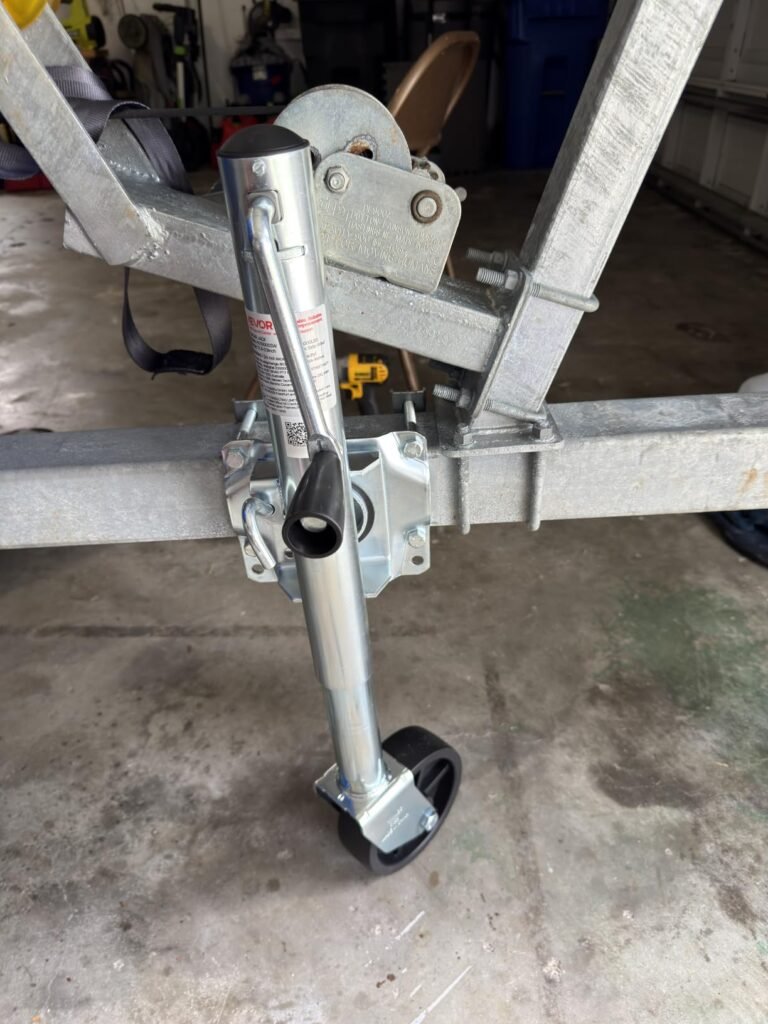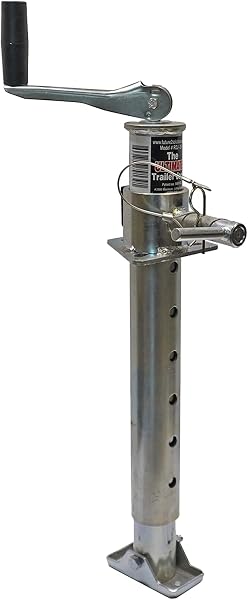
USA-Owned 2000lb No-Crank
9.2Editor score2000lb lift capacity
12-inch drop leg
Zinc-coated steel build
Topwind crank handle
Find the right trailer jacks for 2026. We compare 10 standout options by build quality, useful features, owner feedback, value, and everyday trade-offs.
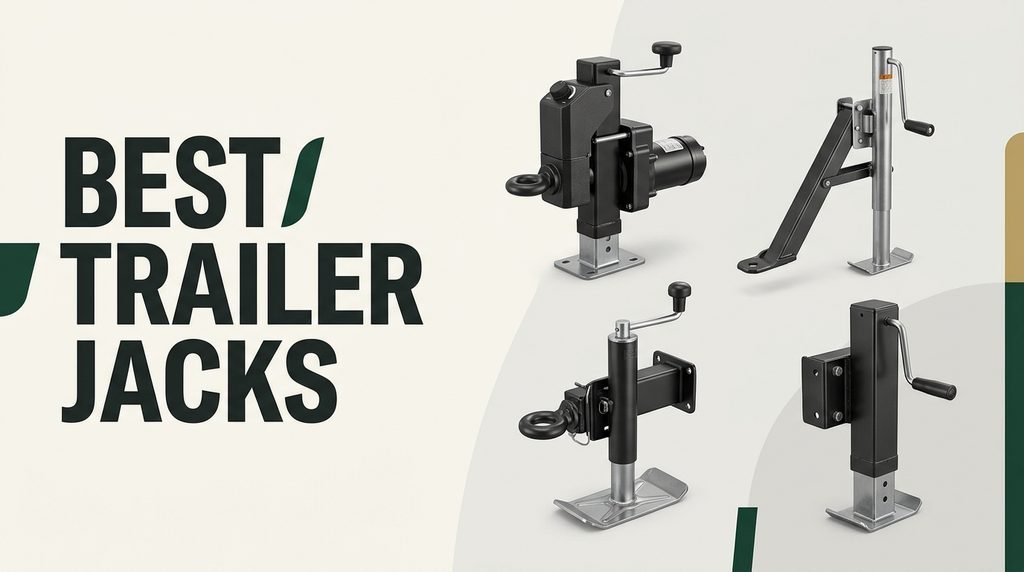
Find the right trailer jacks for 2026. We compare 10 standout options by the factors that matter most for towing and hitching, including lift capacity, mount type, travel range, corrosion resistance, crank effort, wheel mobility, and overall value for different trailer weights.
Choosing a tongue jack means matching lift capacity to your trailer’s tongue weight, not its gross weight. A-frame, swivel, and side-wind designs each solve different clearance and convenience problems, and the wrong style can make hitching frustrating or even unsafe on uneven ground.
This guide breaks down manual, electric, and drill-powered options across a range of budgets. Whether you haul a lightweight boat or a heavy travel trailer, the comparisons below focus on the specs and trade-offs that actually affect daily use at the hitch.
We compared 10 trailer jacks using the details that actually help a buyer decide: lift capacity, travel range, mount style, drop leg adjustment, corrosion protection, crank mechanism, wheel type, and owner feedback. The notes focus on practical trade-offs so each pick connects to how people actually hitch, level, and store trailers in real conditions.

Compare key features, scores, and current prices side by side. A shorter feature list means fewer details were available, not necessarily fewer capabilities.
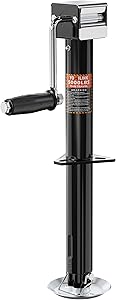


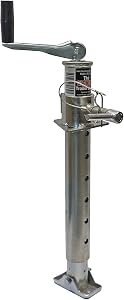


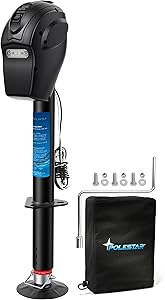
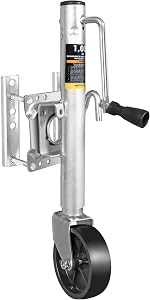
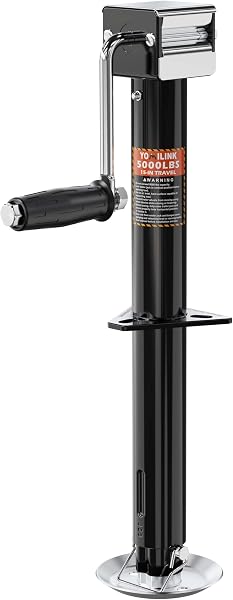
The YOMILINK 5000-pound A-frame jack stands out with the highest owner rating in this comparison and a feature set that covers most heavy-duty towing needs. Its 15 inches of lift travel and adjustable height range from roughly 23 to 46 inches make it compatible with both low-slung utility trailers and taller travel trailers that sit higher off the ground.
We may earn a commission when you buy through this link, at no additional cost to you.
Five drop leg adjustment levels give you more granularity when leveling on uneven terrain, which is a real advantage at campsites where the ground is rarely perfectly flat. The heavy-duty carbon steel construction, galvanized inner and outer tubes, and powder-coated finish work together to resist rust and structural fatigue over multiple seasons of use.
Installation is straightforward with either bolt-on or weld-on mounting, and the wind handle delivers smooth cranking under load. The use of Grade 5 and GB 8.8 hardware for the studs is a detail that signals better long-term durability compared to jacks that use lower-grade fasteners, especially when the jack is under constant static load during storage.
Most A-frame jacks offer three drop leg positions, which can leave you cranking more than necessary to reach the right height. The five-level system on this YOMILINK model reduces the gap between each pin position, letting you get closer to the target height before you start cranking. That saves time and effort, particularly when switching between different tow vehicles or hitch heights.
The main limitation is the lack of a wheel, which means repositioning the trailer by hand at a storage lot or campsite requires more effort. If you primarily park on stable ground and need reliable high-capacity lifting with precise leveling, this jack offers an excellent balance of strength, durability, and price.
Buyers who need to frequently reposition a loaded trailer by hand on soft or uneven ground where a wheel would help.
We may earn a commission when you buy through this link, at no additional cost to you.
This tongue jack takes an unusual approach to speed by letting the 12-inch drop leg handle the bulk of height adjustment before you ever touch the crank. That means you spend far less time winding the handle at the hitch, which is a genuine advantage when you connect and disconnect frequently at campsites or boat ramps.
We may earn a commission when you buy through this link, at no additional cost to you.
The 2,000-pound lift capacity and 3,000-pound support capacity put this jack in the mid-range category, making it a solid fit for most boat trailers, smaller travel trailers, and utility rigs. Internal roller bearings reduce the effort needed for the final 15.5 inches of cranking travel, so fine-tuning the coupler height stays manageable even under load.
Zinc-coated steel construction gives the exterior a meaningful layer of corrosion protection, which matters for anyone who stores a trailer outside or launches boats in saltwater environments. The jack retracts flush against the trailer frame, helping preserve ground clearance on the road and reducing the chance of catching on steep driveways.
Most of the height change when hitching comes from the first several inches of travel, and the drop leg covers that range instantly by sliding into position and pinning. The crank then handles only the final fine-tuning, which is where precision matters most for lining up the coupler with the hitch ball. This two-stage approach is faster in practice than a longer-travel crank alone.
The main trade-off is that mounting hardware is not included, so you will need to source bolts separately or plan for a weld-on installation. If your tongue weight stays under 2,000 pounds and you value fast hitch setup over raw lifting power, this no-crank design is a practical choice that saves time at every stop.
Trailers with tongue weights exceeding 2,000 pounds or buyers who need a bolt-on kit with all hardware included.
We may earn a commission when you buy through this link, at no additional cost to you.
VEVOR delivers 5,000 pounds of lift capacity at a price point that undercuts most competitors in the same weight class, making this A-frame jack a compelling option for budget-conscious buyers who still need serious lifting power. The 15 inches of vertical travel covers a practical range from about 9.65 to 24.64 inches, which suits many standard travel and utility trailer setups.
We may earn a commission when you buy through this link, at no additional cost to you.
The swivel function is a notable convenience feature that lets you fold the jack up parallel to the tongue during travel, preserving ground clearance and reducing the risk of damage on rough roads. Heavy-duty carbon steel construction with galvanized inner and outer tubes and a powder finish provides solid corrosion resistance for outdoor storage and wet-weather use.
A detachable handle allows manual operation if you ever need to crank the jack without the standard setup, which can be useful in emergency situations or when the primary mechanism is temporarily inaccessible. The three-level drop leg adjustment is simpler than some competitors but still covers the most common hitch height scenarios adequately.
A swivel-mount jack folds up alongside the trailer tongue when you are on the road, which eliminates the ground clearance issues that fixed A-frame jacks can create on steep inclines or rough terrain. If you frequently travel to remote campsites or launch ramps with uneven approaches, the ability to tuck the jack out of the way is a practical benefit that reduces the chance of scraping or impact damage.
The trade-off for the lower price is a slightly narrower adjustment range and fewer drop leg positions compared to premium options. If your tongue weight falls within the 5,000-pound limit and you want a reliable, no-frills A-frame jack that folds out of the way during travel, this VEVOR model offers strong value.
Buyers who need more than three drop leg positions for precise leveling on highly uneven terrain.
We may earn a commission when you buy through this link, at no additional cost to you.
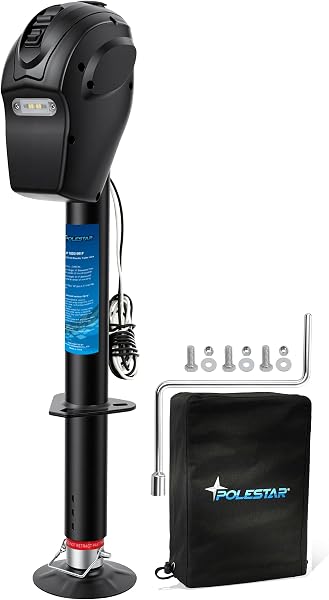
The POLESTAR electric tongue jack removes the physical effort from hitching entirely, using a 12V motor and ball screw mechanism to raise and lower trailers up to 5,000 pounds at the push of a button. This is a meaningful upgrade for anyone who hitches frequently, deals with heavy tongue weights, or simply wants to avoid the repetitive strain of manual cranking.
We may earn a commission when you buy through this link, at no additional cost to you.
The ball screw design is the key engineering advantage here, replacing the traditional gear-driven lift with a smoother, more efficient mechanism that generates less friction and wear over time. Combined with a powerful brake motor, the result is consistent, stable lifting that holds position reliably even on inclines or uneven surfaces at the campsite.
Practical touches like the built-in LED lights that shine down on the coupler and hitch ball make nighttime hookups far easier, and the waterproof rain cover adds a layer of protection for the motor and electronics. The automatic circuit breaker trips and resets if amperage spikes, which helps prevent motor damage during heavy lifts or if the jack binds under load.
Traditional electric jacks use a gear-driven mechanism that can wear down over time and generate more noise during operation. A ball screw replaces the gear teeth with recirculating ball bearings that roll along a threaded shaft, dramatically reducing friction. The result is quieter operation, faster lift speeds, and a longer service life for the internal components, which matters when you are relying on the jack multiple times per trip.
Installation requires hardwiring to your trailer’s 12V battery, which adds complexity compared to a bolt-on manual jack and means you need a functioning battery on the trailer at all times. If you are willing to invest in the electrical setup and want the convenience of push-button operation, this POLESTAR model is the most capable electric option in this lineup.
Buyers without a 12V trailer battery or those who prefer a simple manual setup with no electrical wiring.
We may earn a commission when you buy through this link, at no additional cost to you.
Boat trailer owners who deal with soft sand, muddy launch ramps, and gravel parking areas will appreciate the dual polypropylene wheel setup on this YOMILINK swivel jack. The wider contact patch distributes weight more effectively than a single wheel, reducing the tendency to sink into soft ground when you are trying to maneuver the trailer into position at the water's edge.
We may earn a commission when you buy through this link, at no additional cost to you.
The 2,000-pound lift capacity covers most single-axle and smaller tandem-axle boat trailers, and the height adjustment range from 25.5 to 37.8 inches accommodates a variety of tongue heights. The swivel mount lets you fold the entire jack assembly up and out of the way during towing, which is essential for boat trailers that encounter steep launch ramp angles.
Galvanized inner and outer tubes with a powder finish provide the corrosion resistance that marine environments demand, especially if you regularly launch in brackish or saltwater. The wind handle delivers smooth cranking, and the bolt-on or weld-on installation gives you flexibility depending on your trailer’s existing tongue configuration.
A single caster wheel concentrates the trailer’s tongue weight on a small contact area, which causes it to dig into sand, mud, or loose gravel. Dual wheels spread that load across a wider footprint, similar to how dual tires on a truck axle improve traction and flotation. The result is significantly easier repositioning by hand, especially when the trailer is fully loaded and the tongue weight is at its highest.
The dual wheel does add some width at the front of the trailer, which is worth checking if your tongue area is already tight for space. If your boat trailer stays within the 2,000-pound tongue weight range and you frequently launch from unimproved ramps, the dual-wheel design solves one of the most common frustrations of boat trailer ownership.
Heavier boat trailers or travel trailers with tongue weights above 2,000 pounds.
We may earn a commission when you buy through this link, at no additional cost to you.
The FZZD 5000-pound A-frame jack occupies a clever middle ground between fully manual and fully electric operation by letting you attach a 20-24V cordless drill to the crank mechanism for power-assisted lifting. This approach gives you the speed of an electric jack without the need to hardwire anything to a trailer battery, which is ideal for buyers who already own a compatible drill.
We may earn a commission when you buy through this link, at no additional cost to you.
When you do not have the drill handy or the battery is dead, the manual crank still works as a reliable backup, so you are never stranded at the hitch. The 5,000-pound capacity and 10.5 to 33.4-inch lift range handle most travel trailers and utility rigs, and the five-level drop leg provides fine height control for leveling on uneven ground.
The nine-hole mounting pattern is a practical detail that gives you more installation flexibility than the standard three-hole design, letting you orient the jack in the direction that works best for your specific trailer tongue layout. Heavy-duty carbon steel construction with a spray-coated surface provides the corrosion resistance needed for outdoor storage and all-weather use.
A fully electric jack like the POLESTAR offers true push-button convenience but requires permanent wiring to a 12V battery and adds complexity to your trailer’s electrical system. A drill-powered jack avoids all of that wiring while still delivering power-assisted speed when you need it. The trade-off is that you must remember to bring the drill and keep its battery charged, which is a minor inconvenience compared to running new wiring on a trailer that was not originally set up for electric accessories.
The main consideration is that you need to keep a compatible cordless drill charged and accessible whenever you plan to use the power feature, which adds one more item to your towing checklist. If you already use a 20-24V drill platform for other projects and want faster hitching without permanent electrical modifications, this drill-powered design is a smart compromise.
Buyers who do not own a 20-24V cordless drill or who want completely hands-free electric operation.
We may earn a commission when you buy through this link, at no additional cost to you.
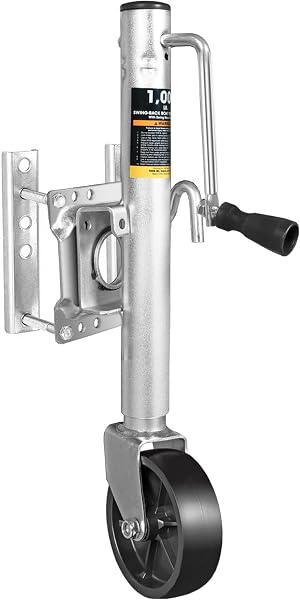
The Torin 1,000-pound swivel jack is the most affordable option in this guide and targets the light-duty end of the trailer spectrum, including small boat trailers, jet ski rigs, and lightweight utility trailers. Its compact size and 10.5 to 20.5-inch height range make it a straightforward upgrade for trailers that came with a flimsy stock jack or no jack at all.
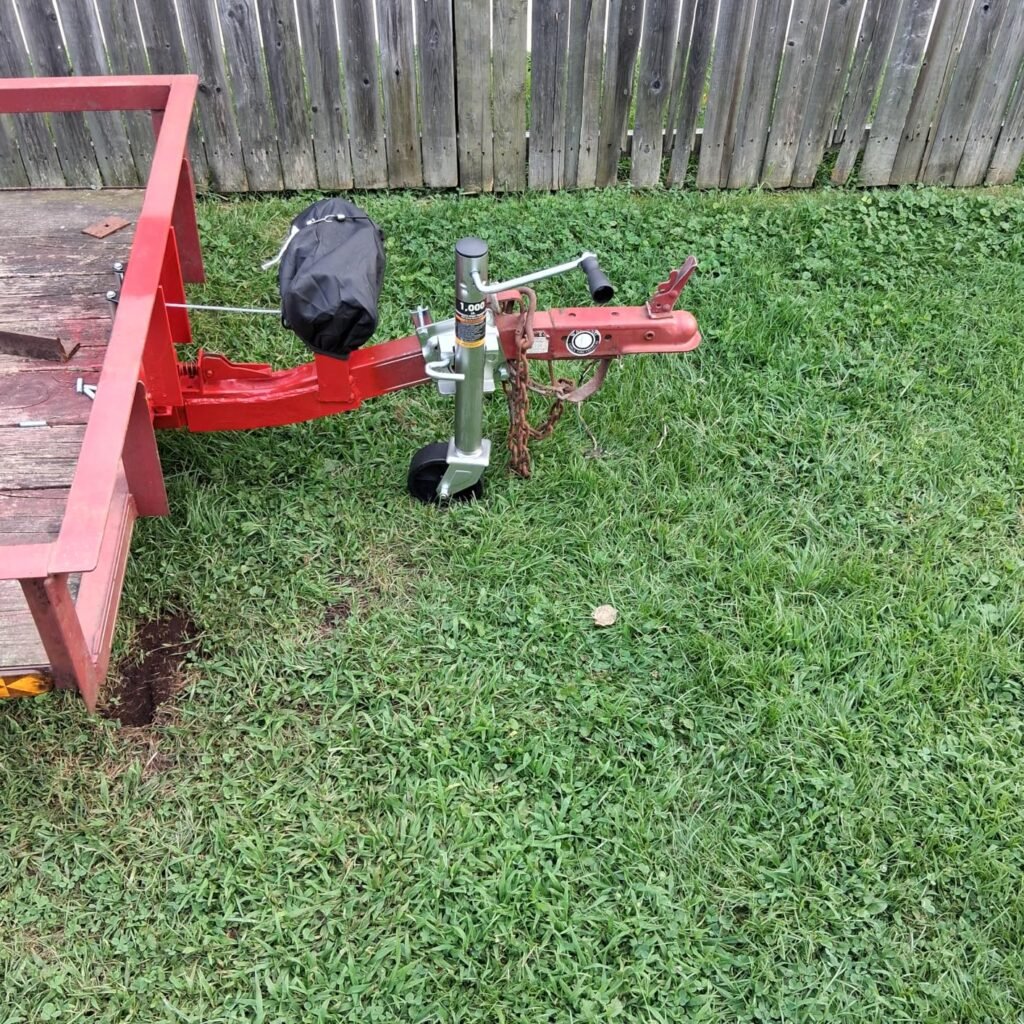
We may earn a commission when you buy through this link, at no additional cost to you.
The 6-inch wheel provides low-friction mobility that makes it easy to push a light trailer into position in a garage or storage lot, and the swing-back bolt-on mount lets you fold the jack up parallel to the tongue when towing. The zinc-painted finish offers basic corrosion protection, which is adequate for freshwater boat use and general outdoor storage.
Installation is simple with the bolt-on bracket that fits trailer tongues from 3 to 5 inches wide, and the wind handle delivers smooth cranking for the relatively light loads this jack is designed to handle. The one-year manufacturer warranty provides some peace of mind, though the lower owner rating compared to other models in this guide suggests that long-term durability may vary.
A common mistake is selecting a jack based on the trailer’s gross vehicle weight rating rather than the actual tongue weight, which is typically 10 to 15 percent of the total loaded weight. A 1,000-pound jack is appropriate for trailers with a gross weight of roughly 7,000 pounds or less, assuming a standard tongue weight percentage. Always weigh your loaded trailer tongue before choosing a jack to ensure you have adequate capacity with some margin for safety.
This jack is best viewed as an entry-level solution for trailers that genuinely stay under the 1,000-pound tongue weight threshold. If you try to push it beyond its rated capacity, you risk premature wear on the gear mechanism and wheel assembly. For light-duty applications where budget is the primary concern, the Torin gets the job done at a minimal cost.
Any trailer with a tongue weight approaching or exceeding 1,000 pounds, including most travel trailers and larger boats.
We may earn a commission when you buy through this link, at no additional cost to you.
This VEVOR 1,000-pound swivel jack distinguishes itself from the Torin model above with a significantly higher owner rating and a 360-degree caster wheel that makes repositioning a light trailer in tight storage spaces remarkably easy. The single polypropylene wheel spins freely in any direction, which is especially helpful when you are threading a boat trailer between parked vehicles or into a narrow garage bay.
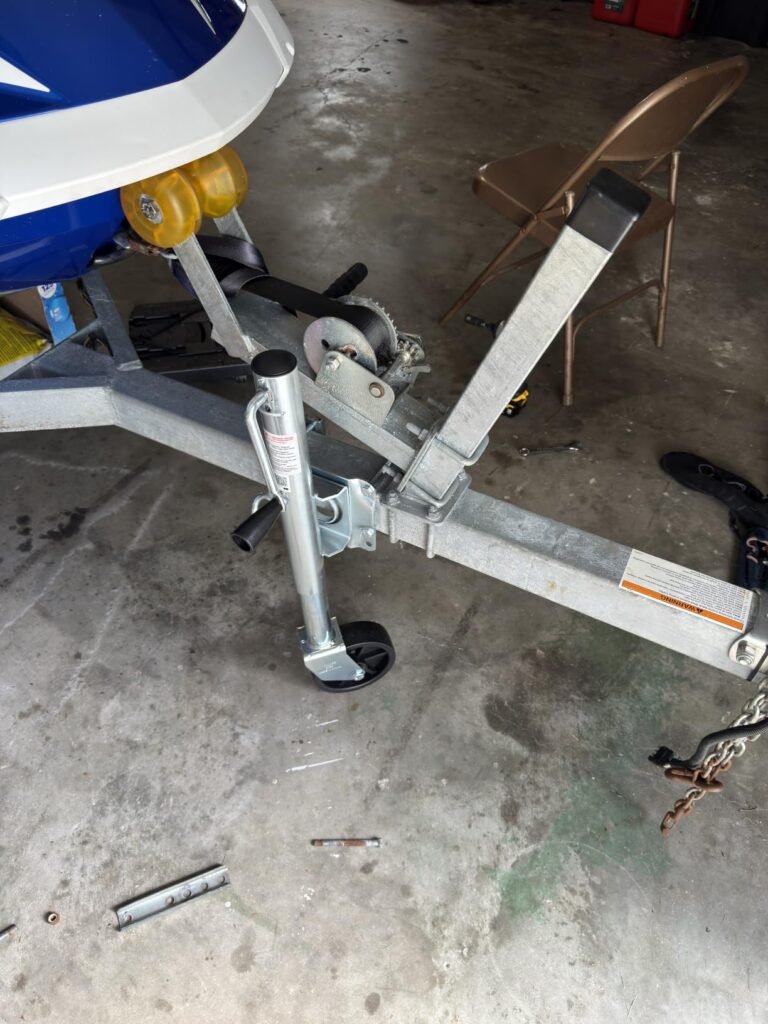
We may earn a commission when you buy through this link, at no additional cost to you.
The alloy steel construction with a unique inner and outer tube design provides a stable structure that resists flexing under load, and the corrosion-resistant finish handles wet and salty conditions well. The ergonomic handle is a small but appreciated detail that reduces hand fatigue during cranking, particularly when you are making multiple height adjustments at the hitch.
The swivel fold-up mechanism works smoothly and tucks the jack out of the way during towing, preserving ground clearance on the road. The 12.8 to 23-inch lifting range covers most light-duty hitching scenarios, and the bolt-on installation includes all necessary parts and instructions for a straightforward setup on tongues from 3 to 5 inches wide.
A standard trailer jack wheel rolls forward and backward like a shopping cart wheel, which works fine on open ground but can be frustrating in tight spaces where you need to pivot the trailer sideways. A 360-degree caster wheel eliminates that limitation by allowing movement in any direction, making it far easier to angle a trailer into a narrow storage spot or align it precisely with a hitch ball in a crowded driveway.
The 10-inch lift range is shorter than some competitors, which means you may need to rely more on the drop leg or choose your parking spot carefully if the ground is uneven. For light trailers where maneuverability in confined spaces is a priority and tongue weight stays well under 1,000 pounds, this VEVOR caster jack offers excellent usability at a competitive price.
Trailers with tongue weights near or above 1,000 pounds or situations requiring significant lift height on uneven terrain.
We may earn a commission when you buy through this link, at no additional cost to you.
The side-wind crank position on this 5,000-pound A-frame jack solves a specific and common problem: interference from propane tanks, battery boxes, or other accessories mounted on the trailer tongue. When a top-wind handle hits an obstruction, a side-wind design lets you crank from the side of the jack where clearance is typically better, making it a practical choice for travel trailers with crowded tongue setups.
We may earn a commission when you buy through this link, at no additional cost to you.
The 15-inch lift range spans from 8 inches retracted to 23 inches extended, and the 10-inch drop leg handles the bulk of height adjustment quickly before you fine-tune with the crank. This two-stage approach minimizes the number of handle rotations needed at the hitch, which saves time and effort when you are connecting or disconnecting after a long drive.
High-strength steel construction with a powder-coated finish provides reliable corrosion protection, and the jack is manufactured to SAE International standards, which indicates adherence to recognized quality and safety benchmarks in the automotive and trailer industry. The one-year warranty adds a layer of buyer protection for the investment.
Top-wind jacks place the crank handle above the jack body, which provides the most natural cranking motion and the best leverage for heavy loads. However, if your trailer tongue has propane tanks, a battery box, or a weight distribution hitch head mounted close to the jack, the top-wind handle may collide with those obstructions during rotation. A side-wind jack positions the crank to the side, clearing most tongue-mounted accessories at the cost of a slightly less ergonomic cranking angle.
The side-wind handle position can feel less natural if you are used to top-wind jacks, and it may be awkward in extremely tight spaces where lateral clearance is limited. If your trailer tongue is crowded with accessories and a top-wind jack would not clear them, this side-wind design is the most practical solution in the 5,000-pound capacity range.
Trailers with very tight lateral clearance around the jack or buyers who prefer the more natural feel of a top-wind crank.
We may earn a commission when you buy through this link, at no additional cost to you.
The Big RED 2,000-pound pipe mount jack is one of the most affordable options in this guide and takes a no-nonsense approach to trailer support with a weld-on installation that creates a permanent, rock-solid connection to the trailer tongue. This type of mount is preferred by many experienced trailer owners because it eliminates the potential for bolt loosening over time, which can be a concern with bolt-on brackets on heavily used rigs.
We may earn a commission when you buy through this link, at no additional cost to you.
The 10.5 to 20.5-inch height range covers standard hitching scenarios for mid-size boat trailers, utility trailers, and smaller travel trailers. The zinc-plated steel construction provides reliable corrosion resistance, and the top-wind handle with an integrated grip makes cranking comfortable even when the jack is under full load.
The swivel mechanism lets you fold the jack up parallel to the tongue during travel, and the fixed sturdy base provides a stable footprint on hard surfaces like concrete and asphalt. The pipe mount bracket welds directly to the trailer tongue, creating a connection that is as strong as the trailer frame itself when done properly.
Bolt-on jacks are easier to install and replace, but the mounting bolts can loosen over time due to vibration, road shock, and repeated loading cycles. A weld-on mount fuses the jack bracket directly to the trailer tongue, creating a permanent connection that will not loosen under normal use. The trade-off is that removal or replacement requires cutting and re-welding, so a weld-on jack is best suited for trailers where you do not anticipate changing the jack frequently.
The obvious requirement is access to welding equipment and the skill to use it, which makes this jack less suitable for buyers who want a simple bolt-on installation they can do in a driveway with basic hand tools. If you have welding capability or can have the mount welded professionally, this Big RED jack delivers dependable 2,000-pound performance at a very low price point.
Buyers without welding equipment or those who prefer a bolt-on installation they can complete with basic hand tools.
We may earn a commission when you buy through this link, at no additional cost to you.
Selecting a trailer jack involves more than picking the highest capacity number on the shelf. The right jack matches your trailer’s actual tongue weight, fits your tongue geometry, and offers the convenience features that make hitching easier in the conditions where you actually tow.
The single most important specification on any trailer jack is its lift capacity, and the most common mistake buyers make is confusing lift capacity with the trailer’s gross vehicle weight rating. The jack only needs to support the tongue weight, which is the downward force the trailer coupler exerts on the hitch ball. For most conventional trailers, tongue weight is roughly 10 to 15 percent of the fully loaded trailer weight, so a 5,000-pound gross trailer typically generates 500 to 750 pounds of tongue weight.
Choosing a jack with a lift capacity that comfortably exceeds your actual tongue weight provides a safety margin and reduces wear on the internal gears and bearings. A jack that operates near its maximum rated capacity on every use will wear out faster and may struggle on uneven ground where dynamic forces increase the effective load. Most experienced trailer owners recommend selecting a jack rated for at least 1.5 to 2 times the expected tongue weight to ensure smooth operation and long service life.
Weigh your loaded trailer tongue at a scale or use a tongue weight gauge before shopping. Then choose a jack with a lift capacity that provides a comfortable margin above that number, keeping in mind that cargo shifts and water tanks can change tongue weight significantly between trips.
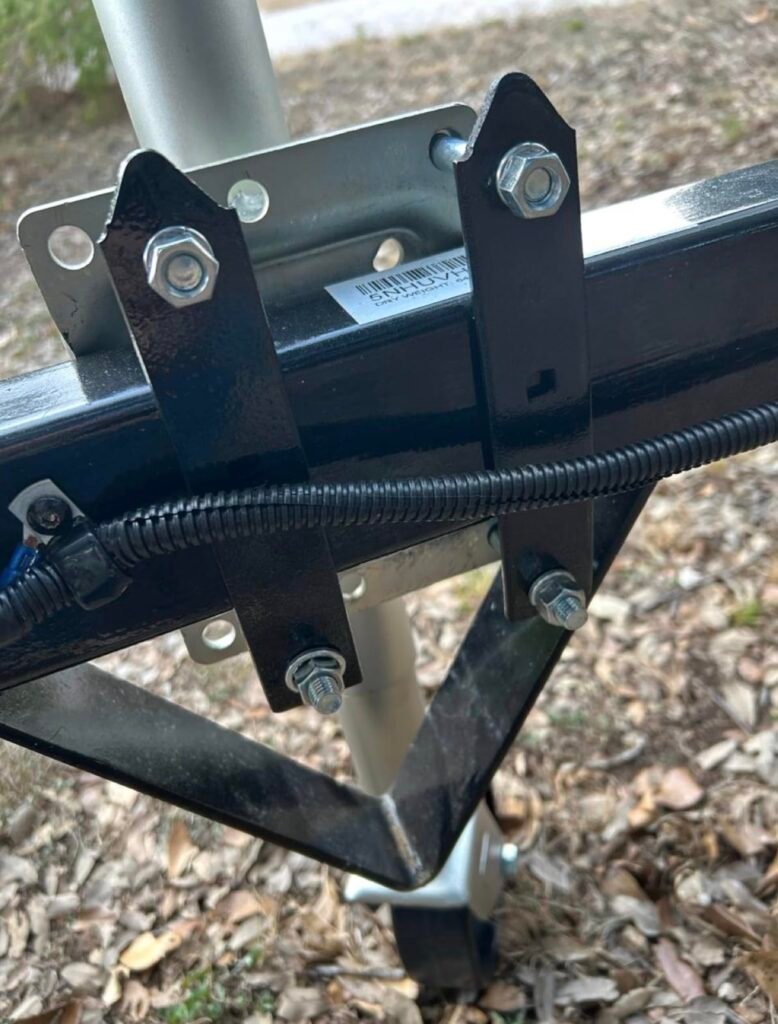
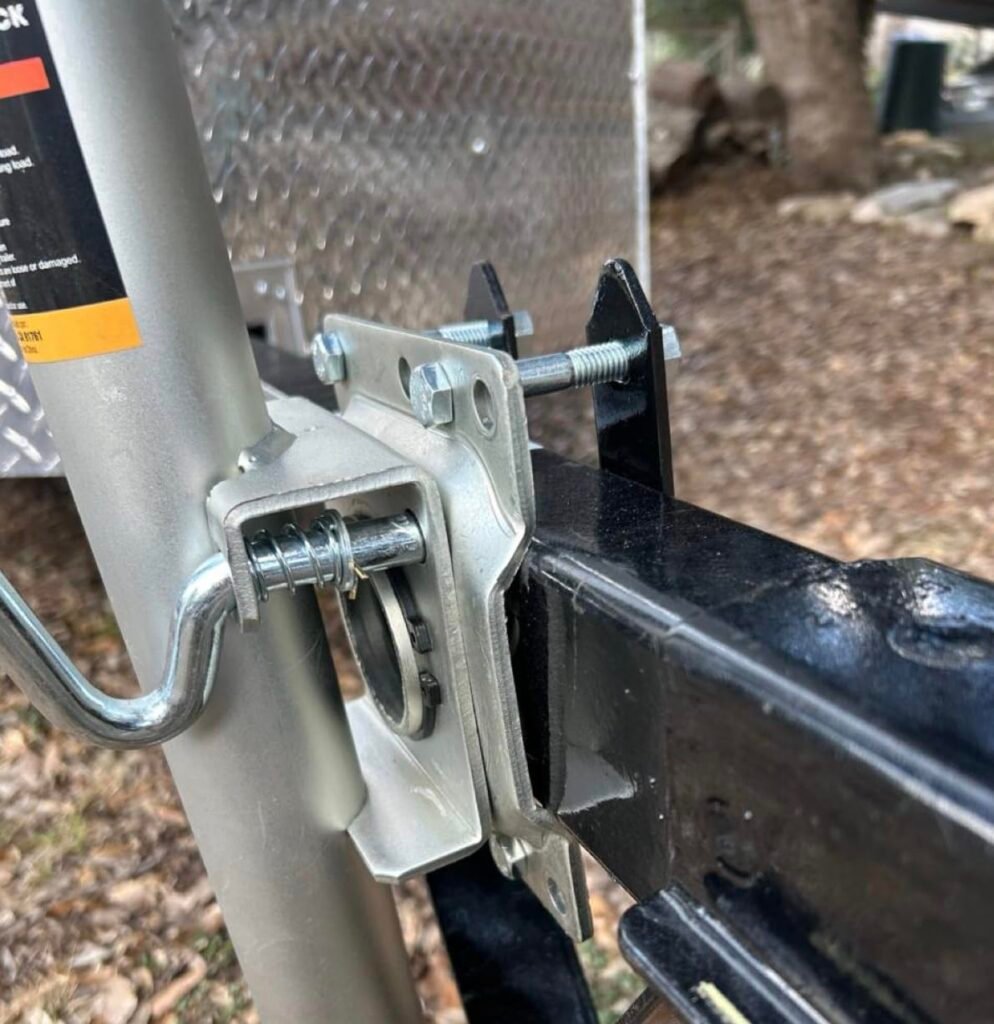
Trailer jacks attach to the tongue in several ways, and the right mount style depends on your trailer’s construction and your installation capabilities. A-frame jacks bolt or weld directly to the converging rails at the front of the trailer tongue and are the most common style for travel trailers and heavier utility rigs. Swivel jacks mount to the side of the tongue with a bracket and pivot upward for travel clearance, which is the standard setup for most boat trailers. Pipe mount jacks weld onto a collar that is attached to the tongue and offer a very secure permanent connection.
Before purchasing, measure your trailer tongue width and check the available clearance around the mounting area. Some tongues have propane tanks, battery boxes, weight distribution hitch brackets, or spare tire carriers that limit where the jack can be installed. A-frame jacks require clearance between the converging rails, swivel jacks need lateral space for the pivot arc, and pipe mounts require a clean section of tongue for welding the collar.
If you are replacing an existing jack, match the mount style to avoid modifying the trailer tongue. If you are adding a jack to a trailer that did not have one, consider which style provides the best clearance for your specific tongue layout and whether you have the tools and skills for a weld-on installation or need a bolt-on option.
Travel range refers to the total vertical distance the jack can move from its fully retracted position to its fully extended position, and it determines whether the jack can bridge the gap between your trailer coupler and the hitch ball in various parking situations. A jack with insufficient travel range may not reach the ground on a lifted truck or may not retract high enough to clear the ground during towing, both of which create real-world problems at the hitch.
The drop leg is a telescoping section inside the main jack tube that extends downward and pins into place, providing a quick coarse adjustment before you use the crank for fine-tuning. Models with more drop leg positions, such as the five-level design on the YOMILINK 5000-pound A-frame, let you get closer to the target height with fewer crank rotations, which saves time and effort. A 10 to 15-inch drop leg combined with 15 or more inches of crank travel provides the versatility to handle most hitching scenarios.
Measure the distance from your trailer coupler to the ground when the trailer is level and unhitched, then compare that to the jack’s retracted and extended heights. Make sure the jack can reach the ground when fully extended and retract high enough to clear obstacles during towing, with some margin for uneven terrain.
Manual jacks use a hand crank and gear mechanism to raise and lower the trailer, and they remain the most common and affordable option for most trailer owners. They are simple, reliable, and require no electrical connections, but they demand physical effort that can become tiresome with heavy tongue weights or frequent hitching. A well-designed manual jack with internal roller bearings and a comfortable handle grip can significantly reduce cranking effort compared to a basic model.
Electric jacks connect to the trailer’s 12V battery and use a motor to raise and lower the trailer at the push of a button, eliminating physical effort entirely. They are ideal for heavy travel trailers, frequent campers, and anyone who wants to avoid the strain of manual cranking. The trade-off is higher cost, the need for a functioning trailer battery, and more complex installation that involves wiring and circuit protection. Drill-powered jacks offer a middle ground by accepting a cordless drill attachment for power-assisted operation while retaining a manual crank backup.
Choose manual if you want simplicity and low cost, electric if you value push-button convenience and have a reliable trailer battery, or drill-powered if you want power-assisted speed without permanent electrical modifications. Consider how often you hitch and unhitch, your physical comfort with cranking, and whether your trailer already has an electrical system that can support an electric jack.
Trailer jacks live in a harsh environment, exposed to rain, road salt, mud, and in the case of boat trailers, direct immersion in freshwater or saltwater during launching. The materials and finishes used in the jack’s construction have a direct impact on how long it will function reliably before rust seizes the gears, corrodes the tubes, or weakens the structural components. Zinc plating, galvanization, and powder coating are the most common protective treatments, and they vary significantly in durability.
Zinc plating provides a basic sacrificial layer that protects the underlying steel from rust, and it is adequate for utility trailers that see occasional outdoor use. Galvanization involves a thicker zinc coating applied through a hot-dip process, offering substantially better protection for marine environments and year-round outdoor storage. Powder coating adds a durable painted layer on top of the metal treatment, providing additional resistance to chips, scratches, and UV degradation that can expose bare metal to moisture.
If you launch boats in saltwater or store your trailer outside in a coastal or snowy climate, prioritize jacks with galvanized tubes and powder-coated finishes. For occasional freshwater use or indoor storage, a zinc-plated jack will typically provide adequate corrosion protection at a lower cost.
Trailer jacks come with either a fixed foot plate or a wheel at the bottom, and the right choice depends on how you use your trailer. A fixed foot provides maximum stability when the trailer is parked and under load, distributing the tongue weight over a solid base that will not roll or shift. This is the preferred setup for travel trailers and heavy utility rigs that are parked for extended periods on firm ground.
A wheel or dual-wheel assembly makes it possible to reposition the trailer by hand without lifting the tongue off the jack, which is invaluable for boat trailers at launch ramps, storage lots, and tight garage spaces. Polypropylene wheels resist corrosion and handle wet conditions well, but they can sink into soft sand or mud under heavy loads. Dual-wheel designs spread the load over a wider area and perform better on soft surfaces than single wheels.
Choose a fixed foot if your trailer stays parked on hard surfaces and stability under load is the priority. Choose a wheel if you frequently reposition the trailer by hand, especially on boat launch ramps or in storage facilities. If you need both stability and mobility, consider a jack with a removable wheel or a dual-wheel setup that provides better flotation on soft ground.
The position of the crank handle affects both comfort and compatibility with your trailer’s tongue layout. Top-wind jacks place the handle above the jack body, providing the most natural cranking motion and the best leverage for heavy loads. This is the most common configuration for A-frame jacks and works well when there is clear space above the jack for the handle to rotate without hitting obstructions.
Side-wind jacks position the crank to the side of the jack body, which is essential when propane tanks, battery boxes, or weight distribution hitch hardware block the space above the jack. The side-wind motion is slightly less ergonomic but solves clearance problems that would make a top-wind jack unusable. The handle grip design also matters, as an integrated rubber or contoured grip reduces hand fatigue during extended cranking sessions.
Before choosing a crank position, visualize the full rotation arc of the handle on your specific trailer tongue and check for interference with any mounted accessories. If clearance is tight, a side-wind design may be the only practical option, even if a top-wind would feel more comfortable in an open setup.
Installation complexity varies widely across trailer jack types, and it is worth considering before you buy. Bolt-on jacks require only basic hand tools and a few minutes of work, making them accessible to anyone who can turn a wrench. Most bolt-on kits include the mounting bracket and hardware, though some models like the USA-Owned 2000-pound jack require you to source bolts separately.
Weld-on jacks demand access to a welder and the skill to create a strong, safe weld on the trailer tongue. A poorly executed weld can fail under load, creating a dangerous situation at the hitch. If you do not have welding experience, factor in the cost of professional installation when comparing prices. Electric jacks add another layer of complexity with 12V wiring, circuit breakers, and battery connections that must be done correctly to avoid electrical problems.
Be honest about your installation capabilities and tools before purchasing. A bolt-on jack that you can install yourself in 20 minutes may be a better choice than a weld-on model that requires a trip to a fabrication shop, even if the weld-on design offers a marginally more secure mount.
Before each trip, inspect the jack’s mounting bolts or welds for signs of loosening, cracking, or corrosion, and check that the drop leg pins engage securely at every adjustment position. Lubricate the crank mechanism and internal gears with a light grease or spray lubricant at least twice a year, or more frequently if you tow in dusty, muddy, or saltwater environments. Proper lubrication reduces cranking effort and prevents the gears from seizing during the times you need the jack most.
When hitching, extend the drop leg to the nearest position above the ground first, then use the crank for the final adjustment to bring the coupler down onto the hitch ball. Avoid forcing the crank if you encounter heavy resistance, as this can strip the internal gears or bend the jack tube. If the jack struggles to lift the tongue weight, verify that the load is within the rated capacity and that the trailer is not shifted forward on the axles, which increases tongue weight beyond normal levels.
After each use, especially in marine environments, rinse the jack with fresh water to remove salt, sand, and debris that accelerate corrosion. Store the trailer with the jack retracted and the wheel or foot off the ground when possible to reduce prolonged stress on the internal components. If the jack will not be used for an extended period, apply a protective spray coating to the exposed tubes and moving parts to prevent surface rust from forming during storage.
Your jack's lift capacity should exceed your trailer's actual tongue weight, not its gross vehicle weight rating. Tongue weight is typically 10 to 15 percent of the loaded trailer weight, so a 5,000-pound trailer usually generates 500 to 750 pounds of tongue weight. Choosing a jack rated for at least 1.5 to 2 times your measured tongue weight provides a comfortable safety margin and smoother operation.
An A-frame jack mounts between the converging rails at the front of the trailer tongue and is common on travel trailers and heavier rigs. A swivel jack mounts to the side of the tongue on a bracket and pivots upward for travel clearance, which is the standard style for boat trailers. The right choice depends on your trailer's tongue design and the clearance available around the mounting area.
No, electric trailer jacks require a 12V power source, typically the trailer's onboard battery, to operate the motor. If your trailer does not have a battery, you will need to install one and wire it to the jack before use. Some electric jacks include a manual crank backup for emergencies, but the primary lifting function depends on electrical power.
The most accurate method is to place a bathroom scale or dedicated tongue weight gauge under the coupler with the trailer loaded as you would tow it and the trailer level. Alternatively, you can use a commercial scale at a truck stop and weigh the trailer with and without the tongue on the scale. The difference between the two readings is your tongue weight.
A drop leg is not strictly necessary but is highly recommended for any jack with more than a few inches of travel. The drop leg provides quick coarse height adjustment by sliding and pinning into position, which eliminates the need for dozens of crank rotations to reach the approximate hitch height. This saves significant time and effort, especially when switching between tow vehicles with different hitch heights.
Lubricate the crank mechanism, gears, and drop leg at least twice a year under normal use conditions. If you tow frequently in dusty, muddy, or saltwater environments, increase the frequency to every few months. Use a light grease or penetrating spray lubricant on the moving parts, and wipe away excess to prevent dirt and grit from accumulating inside the mechanism.
Yes, you can switch from a bolt-on to a weld-on jack, but you will need to remove the bolt-on bracket and weld a new pipe mount collar to the trailer tongue. This requires welding equipment and skill, and the weld must be strong enough to handle the full tongue weight under dynamic towing conditions. If you are not experienced with welding, have the installation done by a qualified professional.
A side-wind crank is positioned to the side of the jack body, which provides clearance when propane tanks, battery boxes, or weight distribution hitch hardware block the space above the jack. If a top-wind handle would hit an obstruction during rotation, a side-wind design is the practical solution. The trade-off is a slightly less natural cranking angle compared to the overhead position of a top-wind handle.
A wheel is helpful if you frequently reposition the trailer by hand, such as at boat launch ramps, storage lots, or tight garage spaces. It allows you to roll the tongue into position without lifting the entire jack off the ground. For travel trailers and heavy rigs that are parked on firm ground and rarely moved by hand, a fixed foot provides better stability under load and is the more common choice.
Choose a jack with galvanized or zinc-plated steel construction and a powder-coated finish for the best corrosion resistance. Rinse the jack with fresh water after exposure to saltwater or road salt, and apply a protective spray coating to exposed metal surfaces before long-term storage. Regular lubrication of moving parts also helps prevent internal corrosion that can seize the gears and drop leg mechanism.
The YOMILINK 5000-pound A-frame jack earns the top spot in this comparison for its combination of high lift capacity, five-level drop leg precision, heavy-duty carbon steel construction, and the highest owner rating among the 10 models reviewed. It handles most travel trailers, utility rigs, and horse trailers with room to spare, and its price point makes it accessible for buyers who need serious lifting power without paying a premium.
For buyers with different priorities, the VEVOR 5000-pound A-frame offers nearly identical capacity at an even lower price with the added convenience of a swivel fold-up design, while the POLESTAR electric jack eliminates manual cranking entirely for those willing to invest in 12V wiring. Light-duty boat trailer owners will find the YOMILINK dual-wheel swivel or the VEVOR 1000-pound caster jack more practical for maneuvering on soft launch ramps and in tight storage spaces.
The best trailer jack for your setup is the one that matches your actual tongue weight, fits your trailer's tongue geometry without interference, and provides the convenience features you will use on every trip. Start by measuring your loaded tongue weight and checking your tongue clearance, then use the comparisons above to narrow the field to the mount style and capacity range that fits your specific towing routine.