LEXIVON LX-183
9.4Editor score1/2-inch drive
10-150 ft-lb range
±4% pre-calibrated
Made in Taiwan
Find the right torque wrenches for 2026. We compare 10 standout options by build quality, useful features, owner feedback, value, and everyday trade-offs.
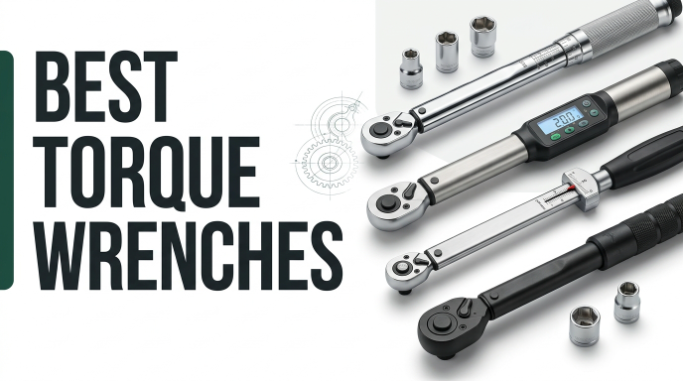
Find the right torque wrench for your garage or toolbox in 2026. We compare 10 standout models by the factors that actually matter when tightening critical fasteners: drive size, torque range, calibration accuracy, ratchet tooth count, dual-scale readability, build materials, storage options, owner feedback, and value at each price bracket.
A quality torque wrench turns guesswork into precision, letting you tighten lug nuts, spark plugs, engine bolts, and bike components to manufacturer specifications every time. The difference between models ranges from simple single-drive click wrenches under $30 to full multi-drive sets with adapters, high-torque wrenches for heavy trucks, and premium micrometer-style tools from established professional brands.
This guide covers single-wrench options for specific tasks, multi-piece kits that cover a wide torque range, and specialized high-capacity wrenches for commercial work. Whether you are a weekend DIYer tightening wheel lugs or a professional mechanic building engines daily, the picks below help match capability to your workflow without overspending on features you won’t use.
We compared 10 torque wrenches using the details that genuinely help a buyer decide: drive size options, torque range coverage, calibration accuracy specification, ratchet tooth count and swing arc, dual-scale readability, click feedback quality, handle materials and grip comfort, included accessories and storage cases, owner ratings, and value at each price point. The notes focus on practical trade-offs so each pick connects to how mechanics and DIYers actually use these tools on automotive, bicycle, motorcycle, and industrial fastening tasks.


Compare key features, scores, and current prices side by side. A shorter feature list means fewer details were available, not necessarily fewer capabilities.


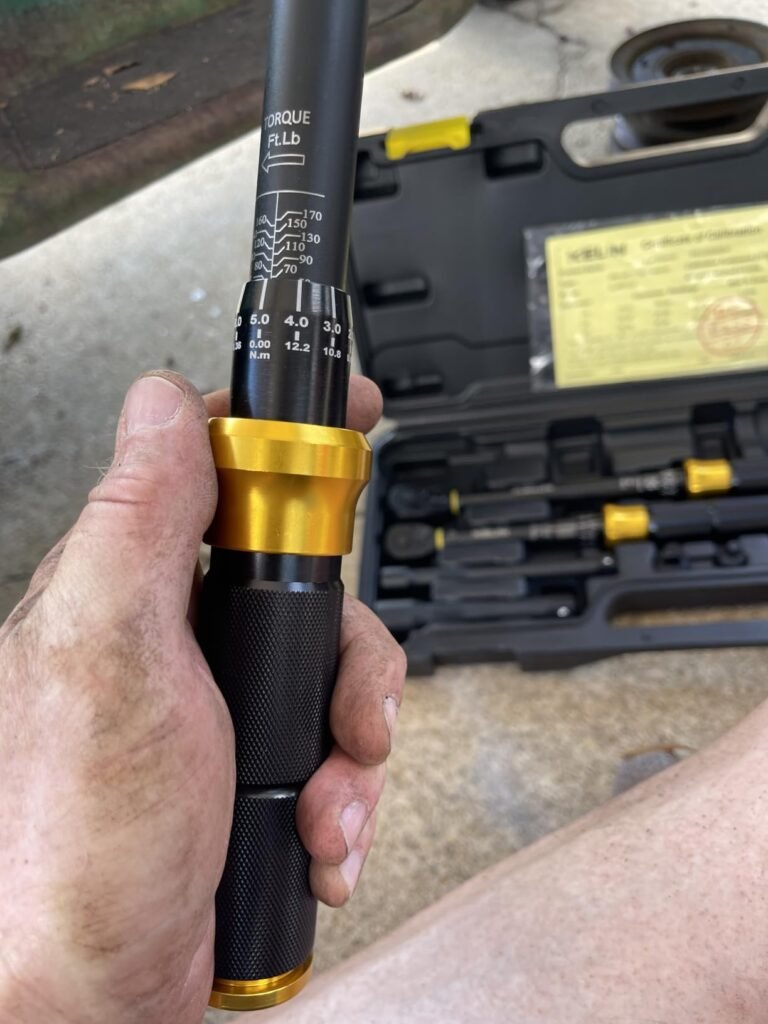
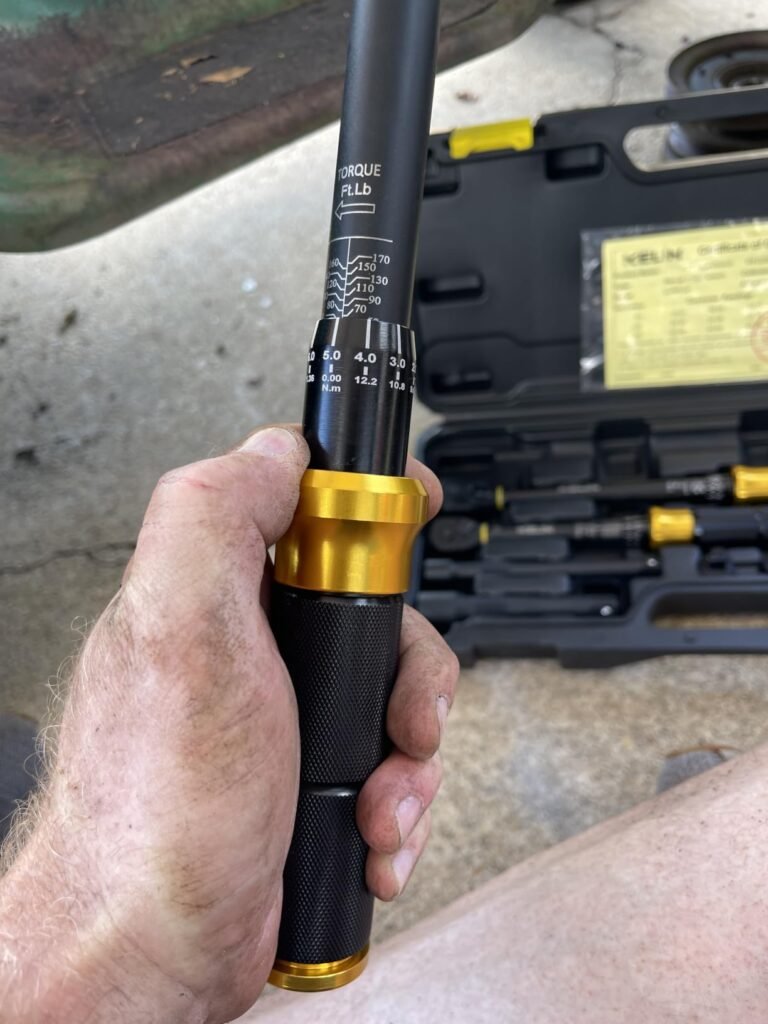
The KELIN 12-piece set earns the highest owner rating in this guide by delivering an unusually complete torque wrench solution that's ready for immediate use out of the box. Beyond the three drive-size wrenches and six adapters common to competing sets, KELIN includes the three most common wheel lug nut sockets (17mm, 19mm, and 21mm), eliminating the need to shop separately for socket compatibility.
We may earn a commission when you buy through this link, at no additional cost to you.
The bundled sockets address a practical frustration with torque wrench sets: you buy the wrench, get it home, and discover you need to shop for compatible sockets before you can actually use it. Having the three most common lug nut sizes included means most buyers can install wheels immediately after unboxing. This attention to real-world usability likely contributes significantly to the high owner satisfaction ratings.
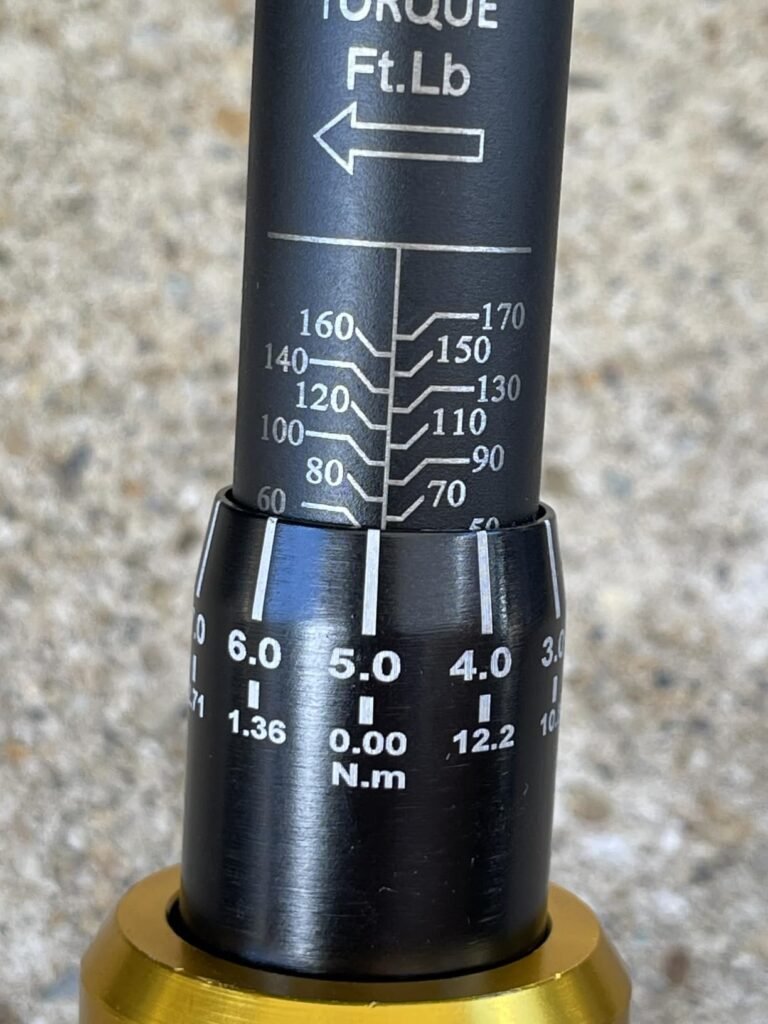
The ±3% factory calibration with included certificate matches the accuracy of premium single wrenches, and the dual-range scales cover both Imperial and metric values with clear laser-etched markings. The 72-tooth ratchet with 5-degree swing arc handles tight spaces well, and the upgraded audible click mechanism produces a distinctly louder sound above 5 Nm to prevent missed signals in noisy shop environments.
Wheel installation is one of the most common torque wrench uses, and passenger vehicle lug nuts typically require 17mm, 19mm, or 21mm sockets. Buying these sockets separately in impact-rated versions can cost $20-40 additional, and finding sockets with the right combination of size, drive, and depth for lug work takes research. Bundled sockets sized specifically for common lug applications save both money and shopping time.
This is the smart pick for buyers who want a complete solution rather than piecing together wrenches, adapters, and sockets separately. The Cr-Mo steel ratchet heads and aerospace aluminum handles combine durability with reduced weight, and the 24-month support commitment adds confidence for a longer-term tool investment.
Buyers who already own extensive socket sets and don’t need the bundled sockets.
We may earn a commission when you buy through this link, at no additional cost to you.
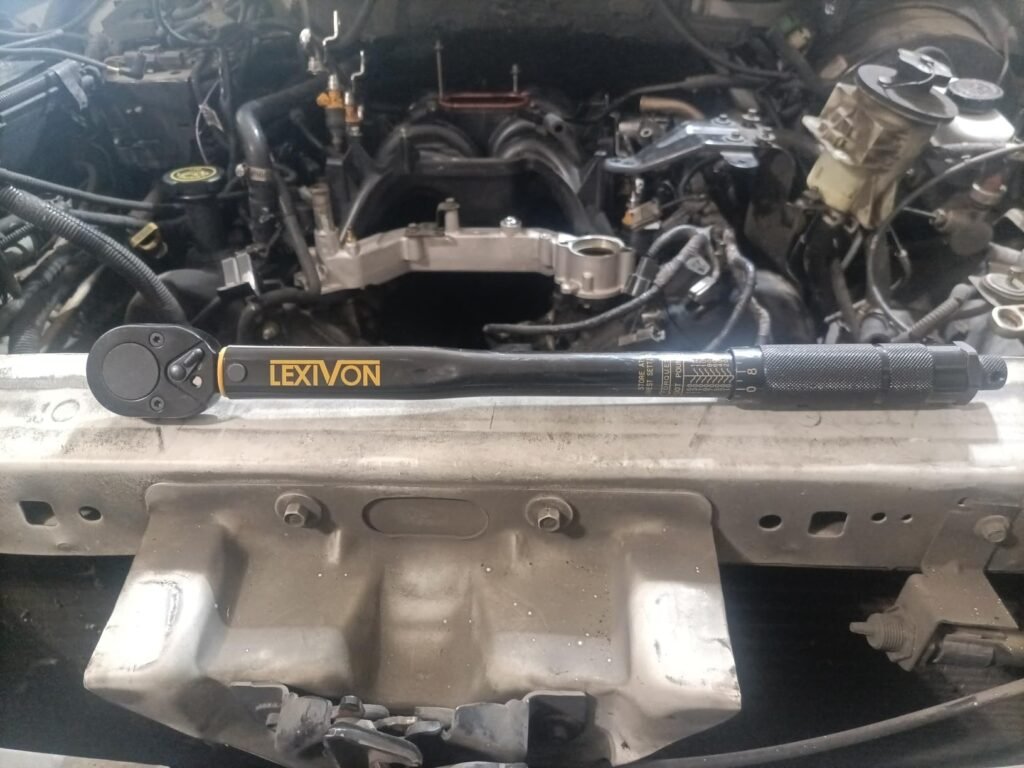
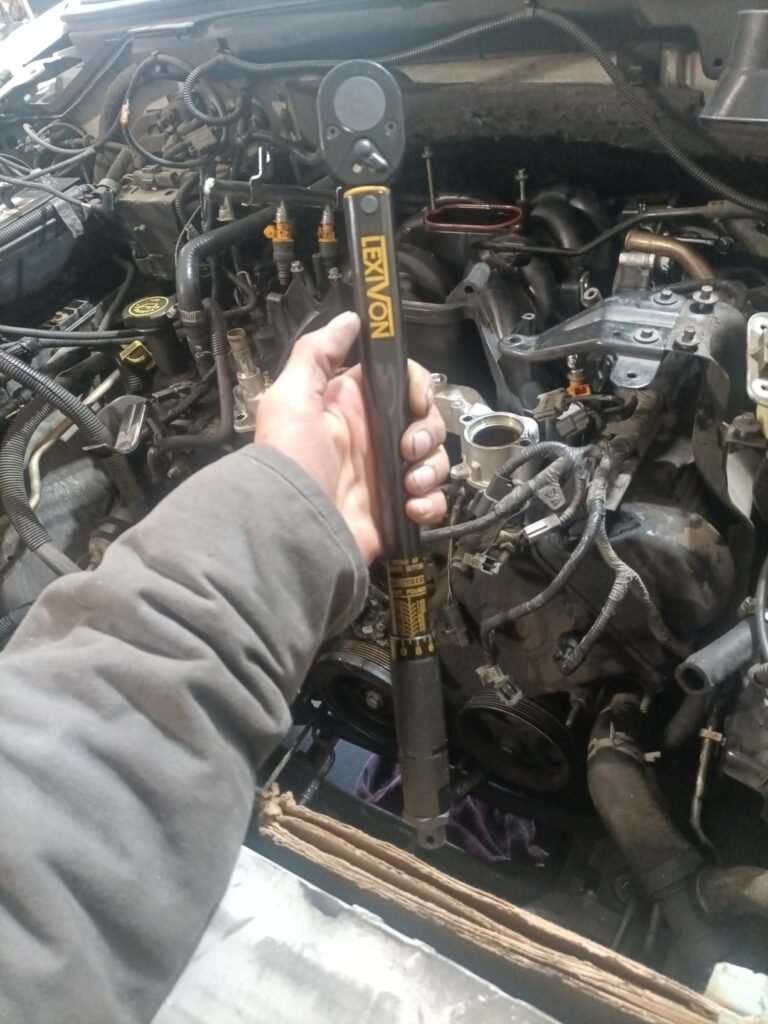
The LEXIVON LX-183 targets DIYers and pro mechanics who need one dependable 1/2-inch drive wrench for automotive work, from wheel lug nuts to suspension bolts and engine fasteners. Its high owner rating reflects genuine satisfaction with a tool that gets the fundamentals right: precise calibration, durable construction, and clear scales you can read even in a poorly lit garage.
We may earn a commission when you buy through this link, at no additional cost to you.
The 10 to 150 ft-lb range hits the sweet spot for automotive use, covering most passenger vehicle torque specifications comfortably. The ratchet gear head is forged from heat-treated chrome vanadium alloy steel, which is the standard material for quality torque wrenches because it resists deformation under load. The reversible ratchet drives in both directions, though torque measurement itself only works clockwise.
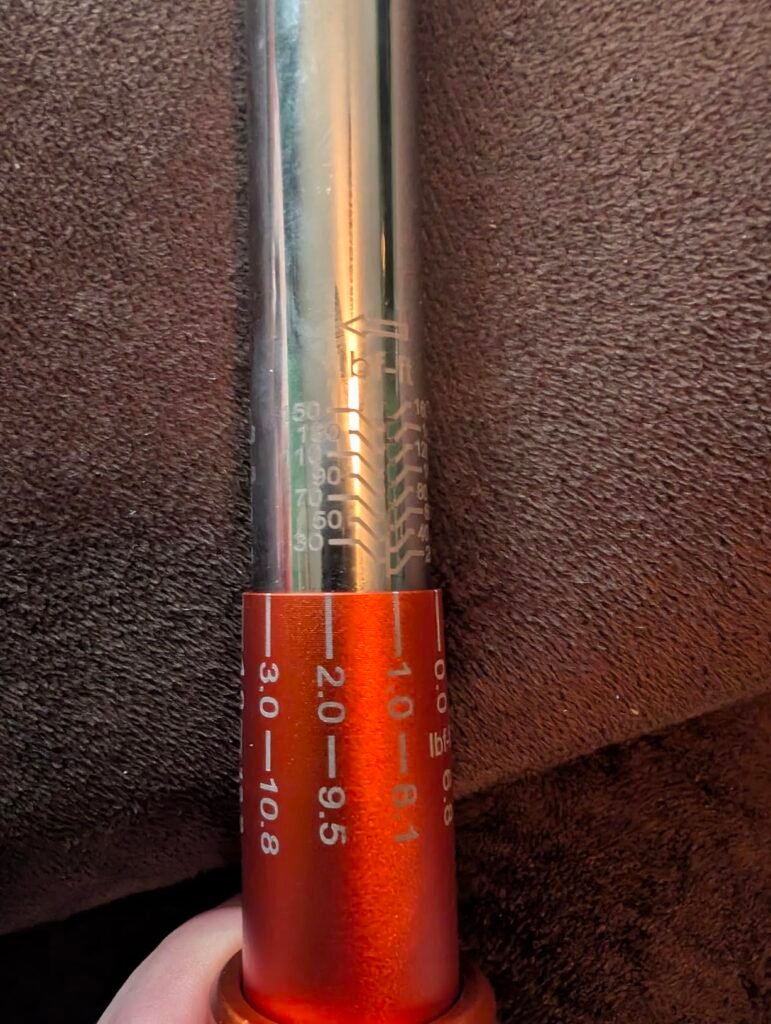
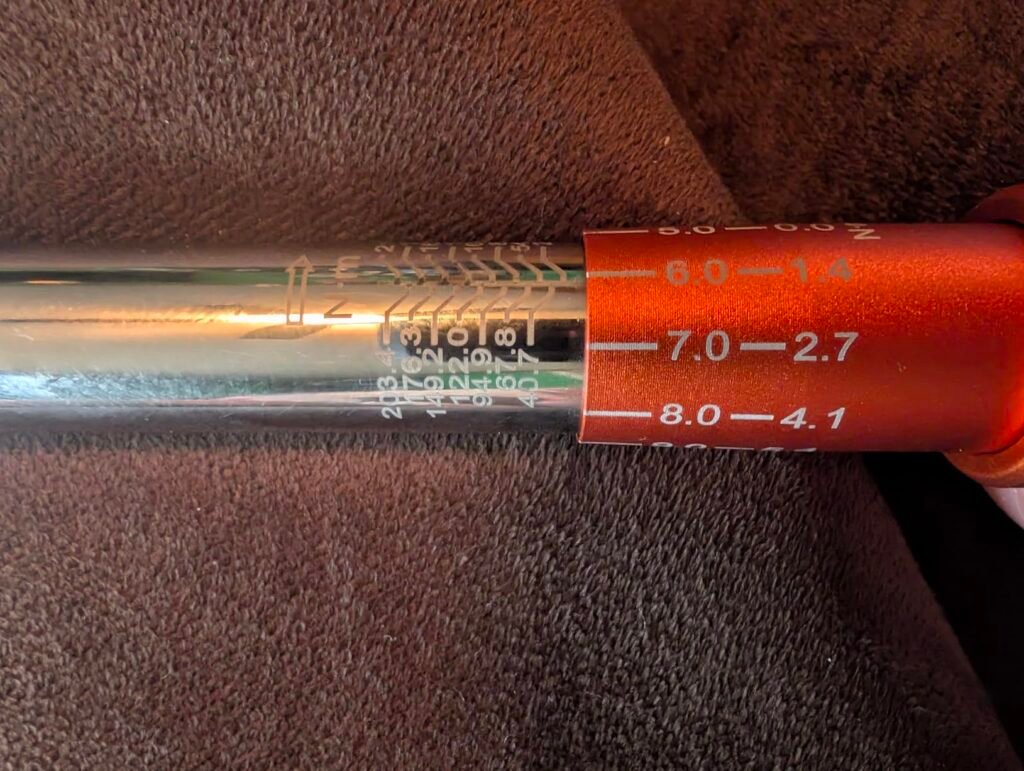
The dual-range scale with yellow-on-black markings deserves special mention because scale legibility is a persistent problem with many torque wrenches. Being able to quickly read both ft-lb and Nm values without squinting saves real time when switching between different fastener specifications. The Electro-Black finish provides corrosion protection that extends tool life significantly for anyone working in humid environments or storing tools in less-than-ideal conditions.
A serialized calibration certificate documents that your specific tool was tested and verified to meet its accuracy specification before shipping. Cheap torque wrenches often ship without any calibration verification, meaning you have no way to know if your wrench is actually accurate. The traceable serial number also lets you send the tool back for professional recalibration in the future, extending its useful life.
This is the right pick for buyers who want one solid 1/2-inch drive wrench without committing to a multi-piece set. If you routinely work on smaller fasteners like spark plugs or bike components that need lower torque values, add a 3/8-inch wrench separately or consider a multi-drive set instead.
Users who need to measure torque in the counterclockwise direction or need coverage below 10 ft-lb.
We may earn a commission when you buy through this link, at no additional cost to you.
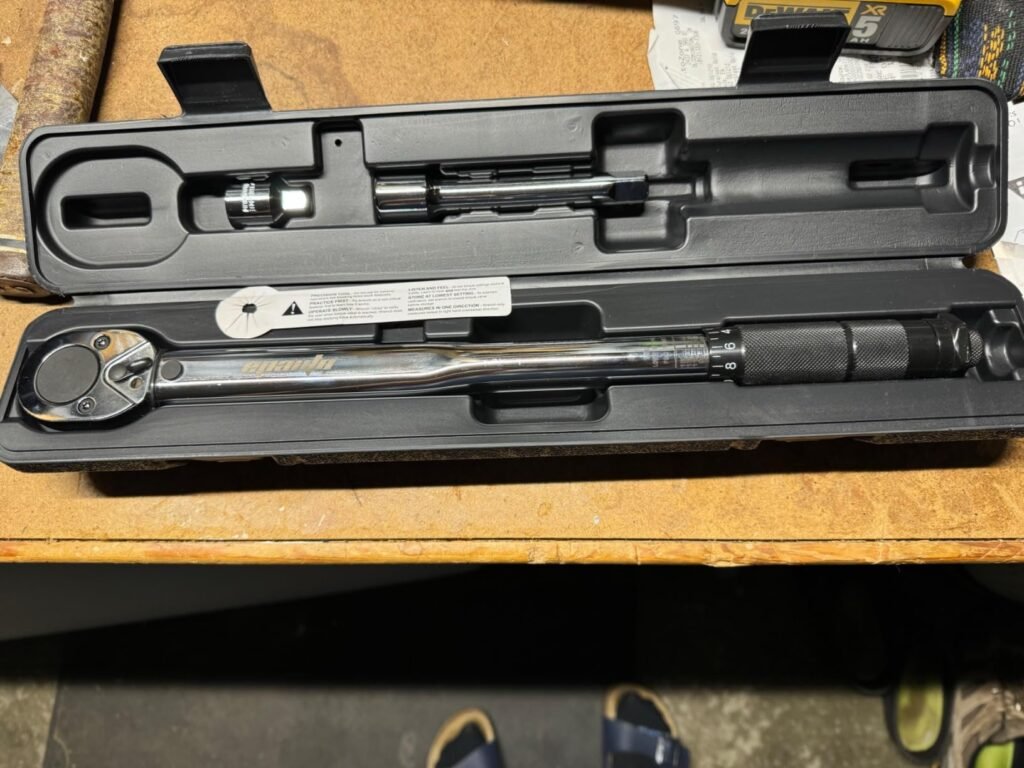
The EPAuto 1/2-inch click wrench has become one of the most consistently recommended budget torque wrenches available, and its enduring popularity reflects solid value engineering. It covers the same 10 to 150 ft-lb range as many premium wrenches at a noticeably lower price point, making it a smart entry point for DIYers who want reliable accuracy without professional-tier spending.
We may earn a commission when you buy through this link, at no additional cost to you.
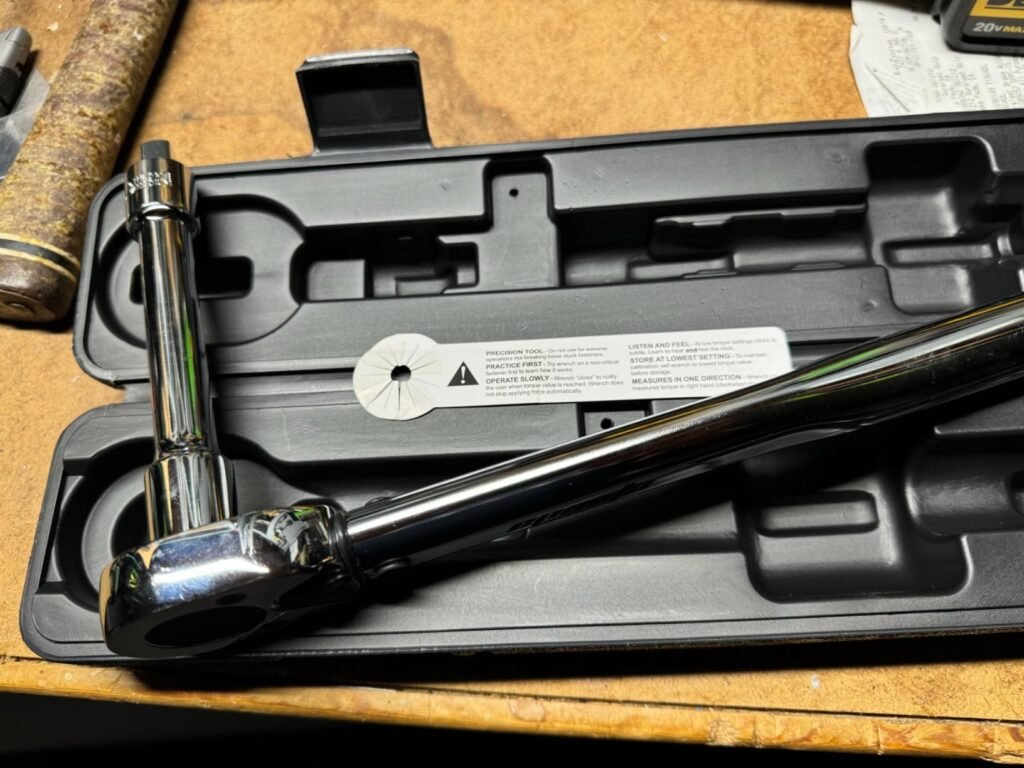
The chrome vanadium steel construction and ±4% pre-calibrated accuracy meet the industry standard for consumer torque wrenches, and the satin corrosion-resistant finish protects the tool from garage moisture. The knurled grip provides confident handling even with oily hands, and the clear high-contrast dual-range scale eliminates guesswork when reading both Imperial and metric values.
The included 5-inch extension bar is a genuinely useful bonus that adds functional value beyond the wrench itself. Extension bars are essential for reaching recessed fasteners like those in engine bays or wheel wells, and buying one separately typically costs $10 to $15. Bundling it with the wrench saves that cost and ensures compatibility with the drive size. The sturdy plastic storage case keeps everything organized between uses.
Extension bars let you reach fasteners in tight spaces where a standard wrench head cannot fit directly. Wheel lug nuts on some vehicles, engine mount bolts, and suspension components often require extensions for proper access. Buying a torque wrench with a matching extension bar saves you the trouble of shopping for a compatible extension separately and ensures the sizes match without guessing.
This is the smart pick for DIYers who need a capable 1/2-inch wrench without paying premium prices. The feature set is deliberately practical rather than flashy, which keeps the price accessible while still delivering the accuracy needed for automotive maintenance tasks like brake work, wheel installation, and suspension repairs.
Buyers who need premium features like ratcheting torque measurement or ultra-tight tolerance calibration.
We may earn a commission when you buy through this link, at no additional cost to you.
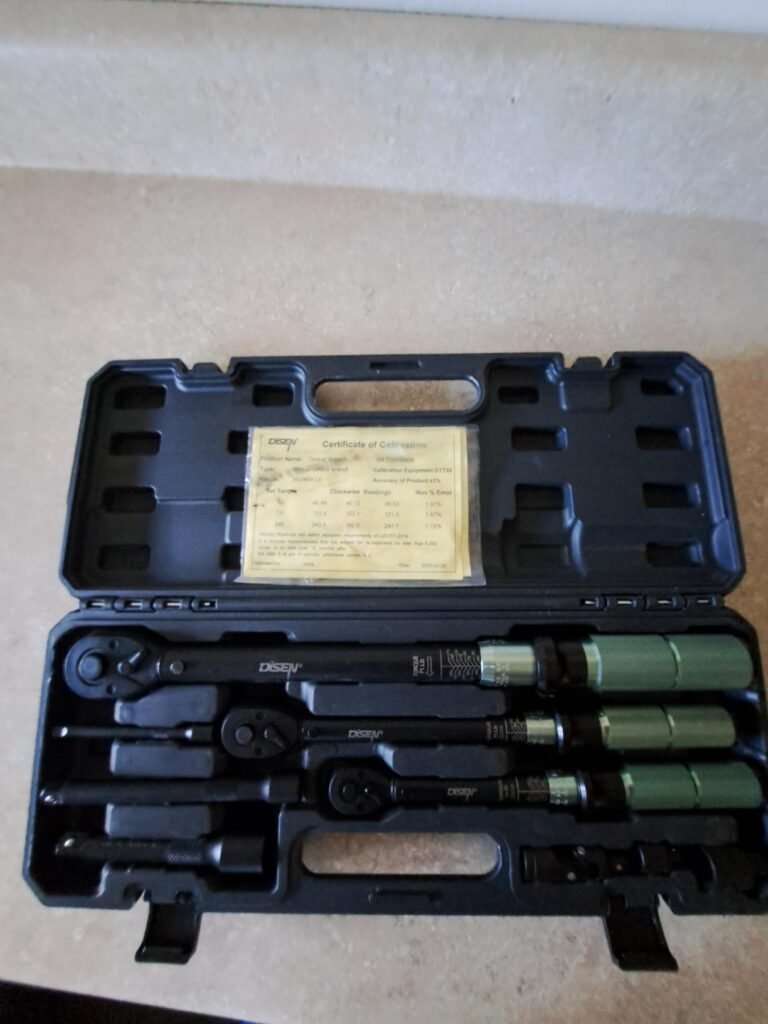
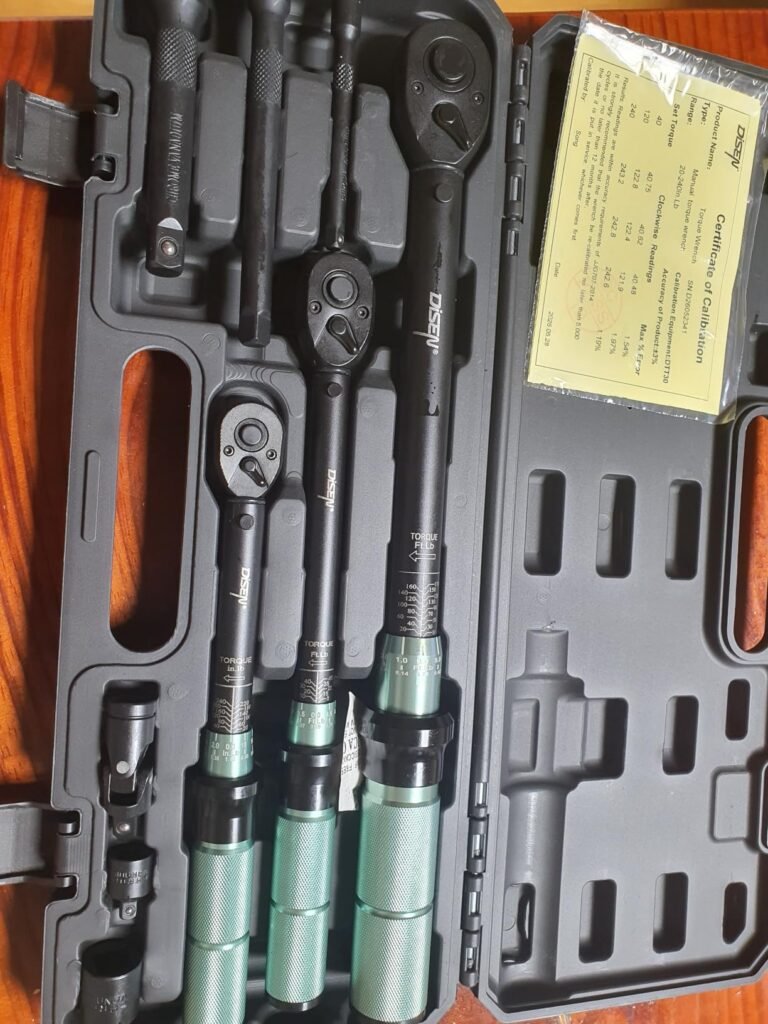
The DISEN 9-piece set targets buyers who want comprehensive torque coverage across the three most common drive sizes without buying three separate wrenches at higher combined cost. Including 1/4-inch, 3/8-inch, and 1/2-inch drive click wrenches plus six essential adapters, this kit handles everything from delicate electronics fasteners to full-size wheel lug nuts.
We may earn a commission when you buy through this link, at no additional cost to you.
The tighter ±3% accuracy specification is a meaningful upgrade over the ±4% typical of budget single wrenches. Each wrench includes a calibration certificate documenting the actual measured accuracy, and the smaller torque increments possible with three matched wrenches gives you more precise control across the full range. The dual-range scales on each wrench cover both Imperial and metric values with clear laser-etched markings.
The 72-tooth ratchet head with 5-degree swing arc addresses a real usability issue in cramped engine bays and wheel wells. Fewer teeth per rotation would require larger swing angles to engage the next tooth, which is problematic when the wrench cannot swing freely. The universal joint adapter enables angled access to fasteners that would otherwise be unreachable with straight extensions.
The swing arc is the minimum angle a ratchet must rotate before engaging the next tooth. A 5-degree arc from a 72-tooth ratchet means you can advance the fastener with very small handle movements, which is essential in tight spaces. Wrenches with fewer teeth might require 15 to 30 degrees of swing, which becomes frustrating when working near obstructions.
This kit works best for DIYers and prosumers who work on multiple vehicle types or perform diverse projects from bike maintenance to car repair. If you consistently work on the same vehicle with the same fastener sizes, a single well-chosen wrench may serve you better at lower cost. For versatile workshop use, the DISEN set delivers strong value.
Users who only need one specific drive size and prefer a dedicated single wrench.
We may earn a commission when you buy through this link, at no additional cost to you.
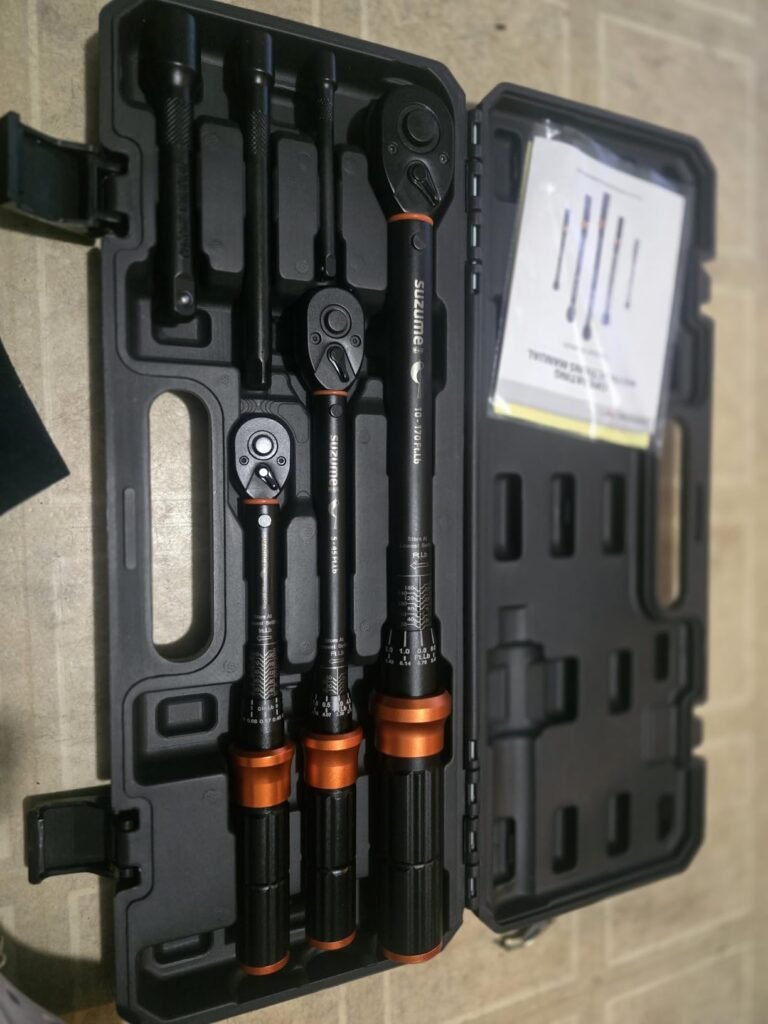
The SUZUME three-wrench set differentiates itself with explicit fatigue testing data showing the wrenches maintain ±3% accuracy after more than 10,000 use cycles. This is a meaningful specification because torque wrench accuracy naturally degrades with heavy use, and knowing the tool has been engineered for durability provides confidence for buyers who plan to use it heavily.
We may earn a commission when you buy through this link, at no additional cost to you.
The CR-V steel construction with chrome plating serves both durability and aesthetic purposes. The mirror-like chrome finish resists corrosion and wear while giving the tools a premium appearance that reflects careful manufacturing. The aluminum alloy handles reduce the total weight significantly compared to all-steel wrenches, which reduces hand fatigue during extended sessions and makes overhead work more manageable.
The bi-directional ratchet head lets you tighten fasteners in either direction while still measuring torque accurately in the clockwise direction. When the preset torque value is reached, both an audible click and a distinct vibration signal you to stop applying force, providing tactile confirmation that supplements the sound. The 6-piece bundle includes three extension bars matched to each drive size for immediate versatility.
Torque wrenches use a spring-loaded mechanism that gradually wears with use, causing accuracy to drift over time. Wrenches without documented fatigue testing may lose accuracy quickly under heavy use, requiring professional recalibration sooner. Fatigue-tested wrenches provide documented evidence of accuracy retention, which is especially valuable for professionals whose work depends on consistent torque measurement.
This set fits buyers who prioritize long-term accuracy over the absolute lowest price. The fatigue testing and quality materials suggest genuine durability rather than budget engineering, making this a smart choice for regular users. For occasional DIYers who only need a wrench a few times per year, more budget-focused options may deliver adequate value at lower cost.
Occasional users who don’t need enhanced fatigue resistance or three matched wrenches.
We may earn a commission when you buy through this link, at no additional cost to you.
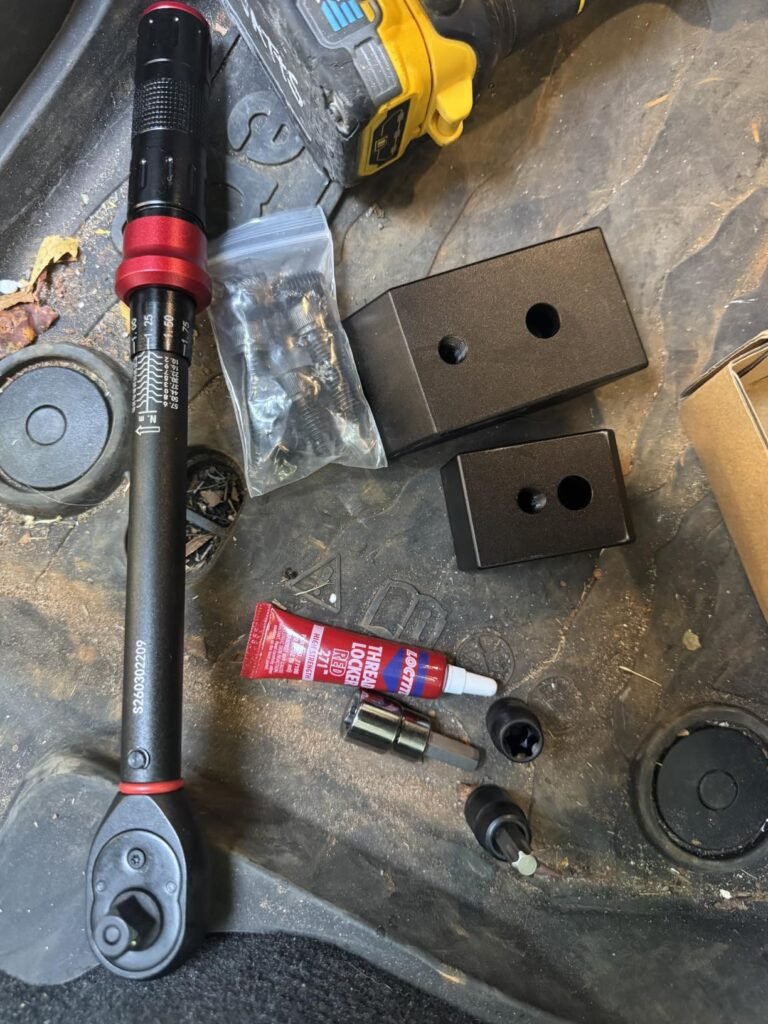
The SUERCUP 3/8-inch wrench fills the specific need for a precision tool covering the 5 to 45 ft-lb range where bikes, motorcycles, small engines, and spark plugs live. This range is too low for most 1/2-inch wrenches and too high for most 1/4-inch wrenches, making a dedicated 3/8-inch tool the right solution for these tasks.
We may earn a commission when you buy through this link, at no additional cost to you.
The ±3% accuracy specification, validated through 20,000 test cycles during production, provides the precision needed for delicate fasteners like spark plugs where overtightening damages the threads and undertightening allows leaks. The high-contrast dual-range scale reads clearly under garage lighting, and the quick-set locking knob makes torque adjustments fast and intuitive compared to twist-lock designs.
The 72-tooth ratchet head is made from chrome-molybdenum steel, which is more durable than standard chrome vanadium under repeated stress. The bi-directional ratchet mechanism drives in both directions while maintaining torque measurement in the tightening direction. The ergonomic knurled handle inspired by flashlight grips provides confident non-slip control even with oily hands.
Torque wrenches perform best in the middle 20-80% of their range and lose accuracy at the extremes. Using a 5-45 ft-lb wrench for a 40 ft-lb spark plug gives you a reading near the wrench’s high end, which may push accuracy limits. For consistent results, choose a wrench whose middle range covers your typical fastener specifications rather than pushing a single wrench to its extremes.
This wrench is ideal for buyers who need a precision tool specifically for bikes, motorcycles, spark plugs, or other small-to-medium fasteners. Do not try to use it as your only torque wrench for automotive work since its maximum 45 ft-lb range falls well short of wheel lug torque specifications, which typically require 80 to 100 ft-lb or more.
Users who need to torque wheel lug nuts or other high-torque automotive fasteners above 45 ft-lb.
We may earn a commission when you buy through this link, at no additional cost to you.
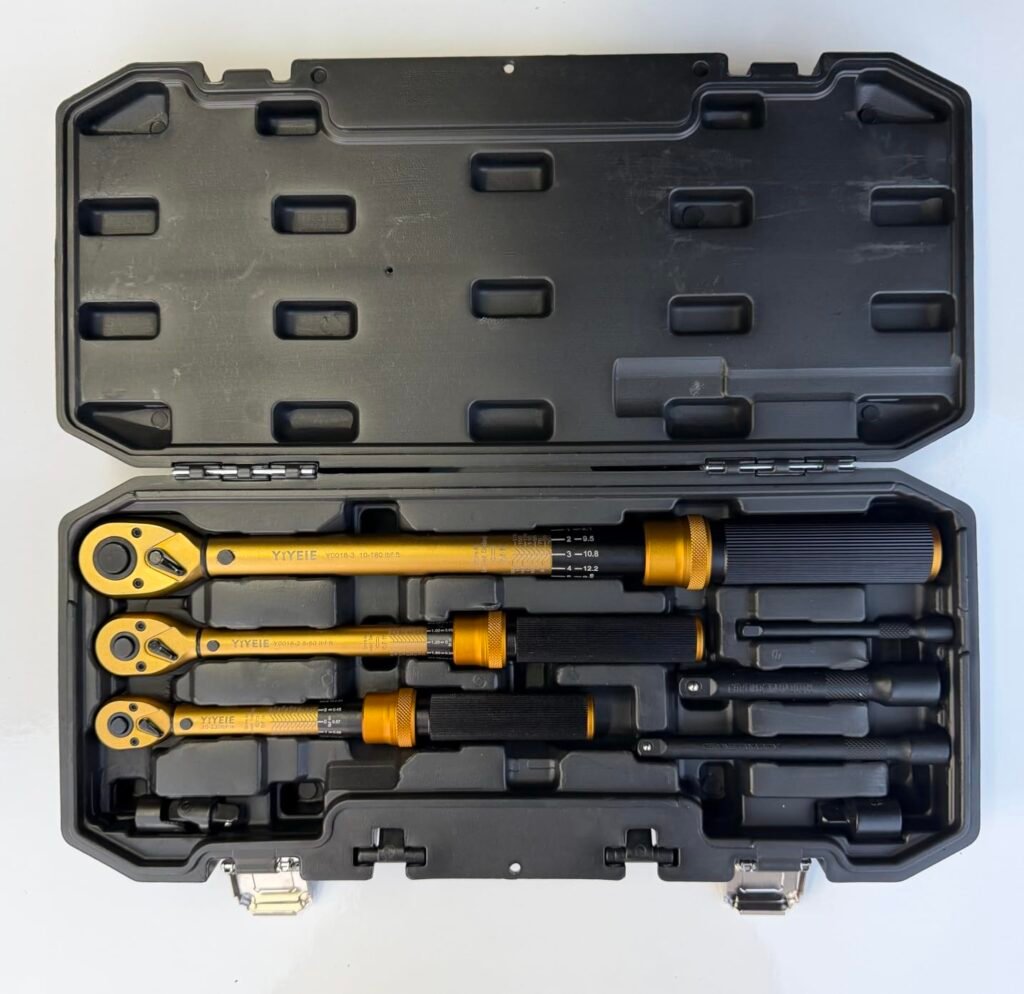
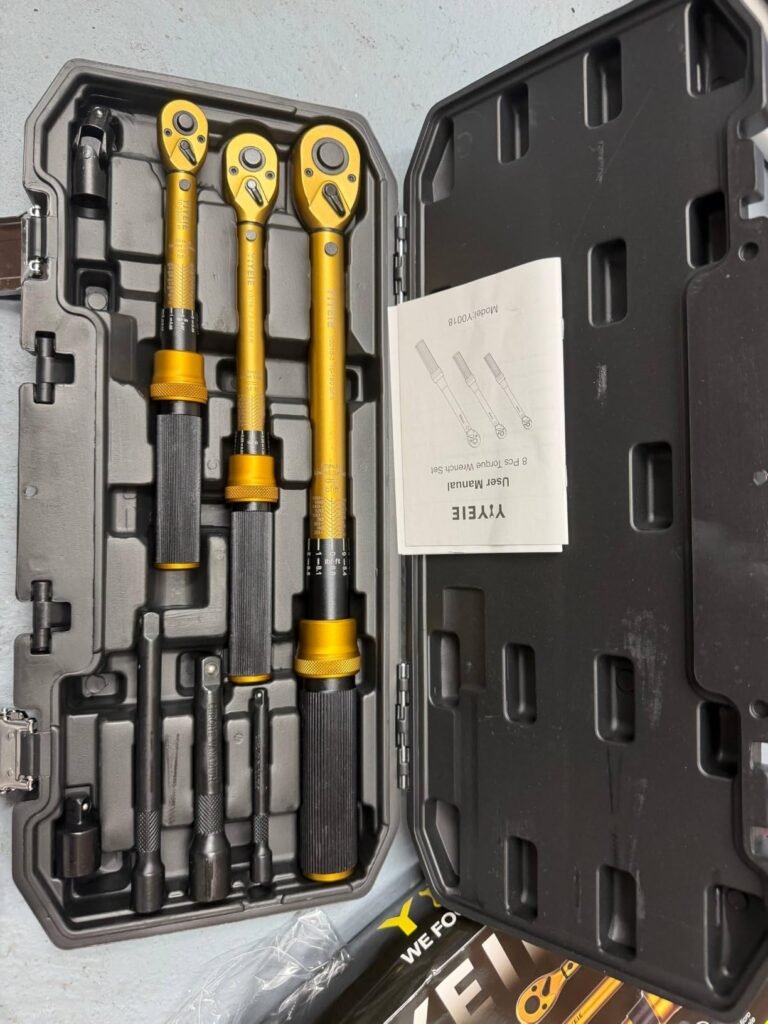
This 8-piece set stands out for its exceptionally fine micro-adjustment capability, letting you dial in torque values with unusual precision across all three drive sizes. The 1/4-inch wrench offers 1 in-lb increments, the 3/8-inch offers 0.25 ft-lb increments, and the 1/2-inch offers 1 ft-lb increments, which enables truly precise torque application even for critical fasteners.
We may earn a commission when you buy through this link, at no additional cost to you.
The upgraded audible click mechanism addresses a common complaint with cheaper wrenches: quiet clicks that are easily missed in noisy shop environments. This set produces a distinctly louder click above 5 Nm, ensuring you can hear it clearly even with an air compressor running or a radio playing. Below 5 Nm, the subtler click still provides feedback appropriate to the smaller loads.
The complete adapter package includes extension bars for each drive size, a 3/8-inch universal joint for angled access, and a 1/2-inch to 3/8-inch drive adapter that adds cross-compatibility. All adapters are phosphate-treated for wear resistance, and the ratchet heads are hardened Cr-Mo steel that resists deformation under high torque loads. Aerospace aluminum handles keep the total weight manageable.
Most consumer torque specifications are given as ranges like 80-90 ft-lb, where any value within the range is acceptable. For these applications, standard 1 ft-lb increments are perfectly adequate. Precision micro-adjustment becomes important for specialized applications like race car assembly, precision instrumentation, or engine internals where torque values might be specified as 22.5 ft-lb rather than a range.
This set is the right choice for detail-oriented users who need precise torque values rather than approximate ones. Applications like engine bearing caps, high-performance vehicle suspension work, or motorcycle assembly benefit from the fine micro-adjustment. For general automotive maintenance where standard torque increments are sufficient, simpler sets may deliver adequate value at lower cost.
General maintenance users who don’t need sub-1 ft-lb torque precision.
We may earn a commission when you buy through this link, at no additional cost to you.
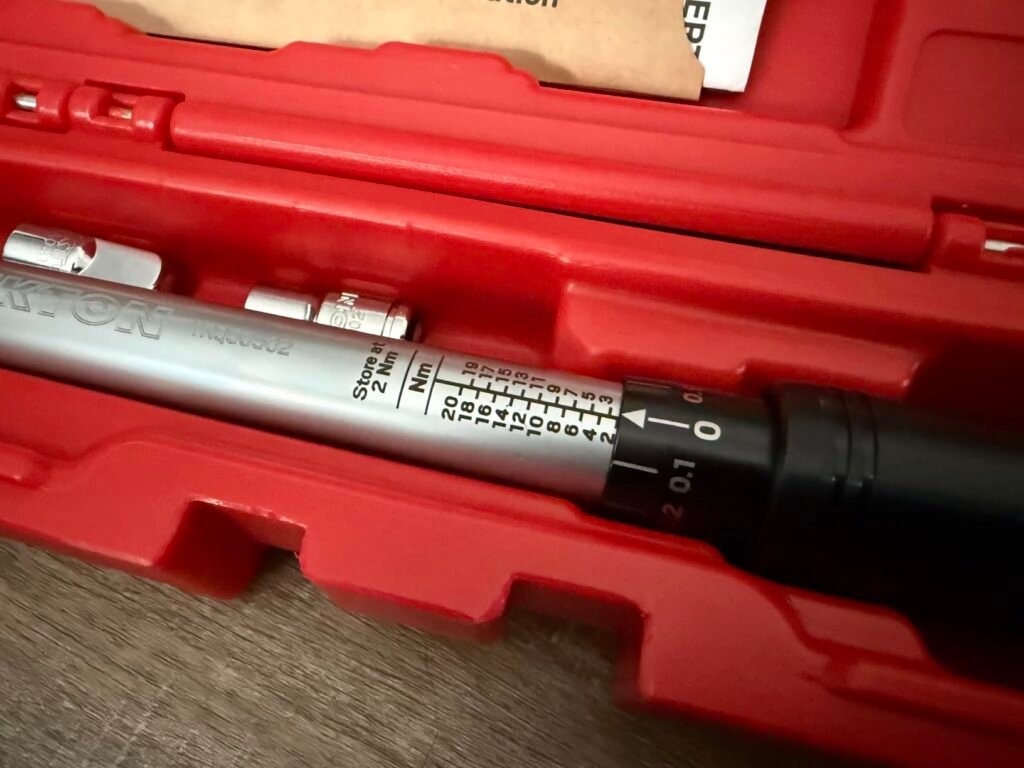
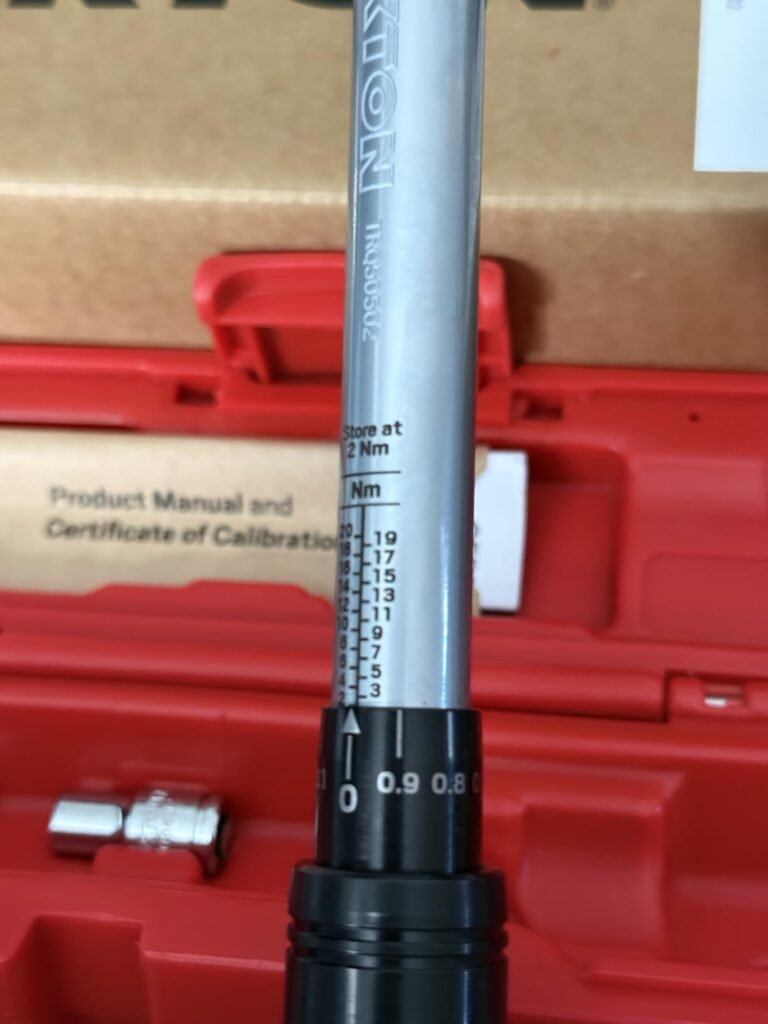
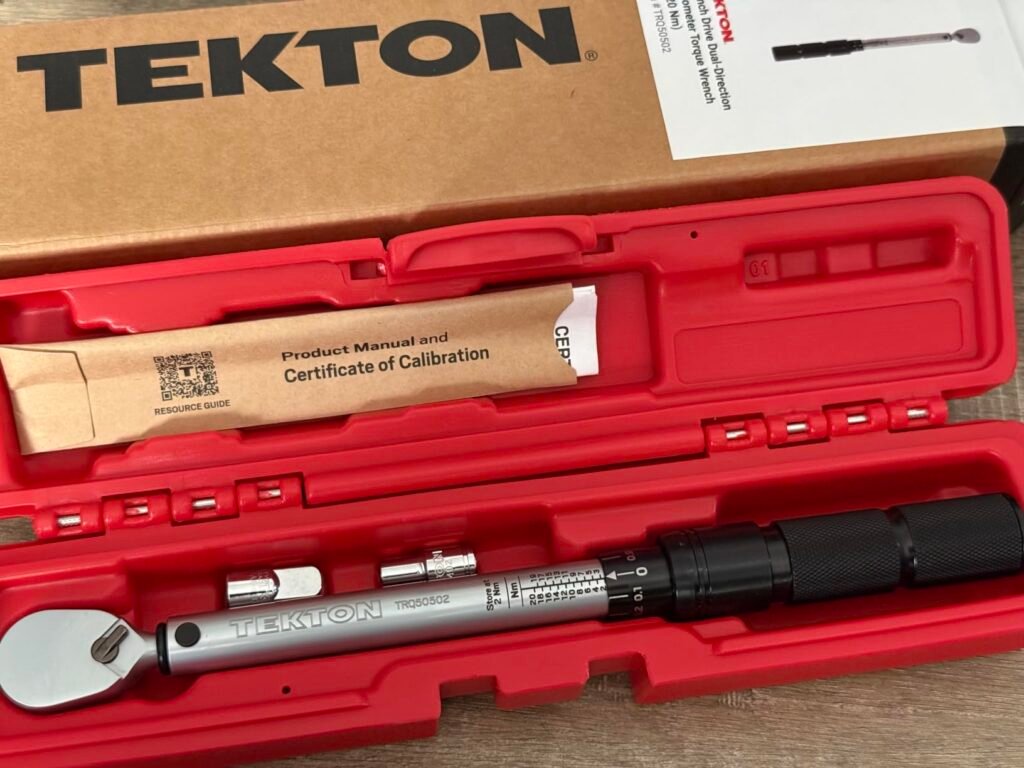
The TEKTON TRQ51402 targets professional mechanics and serious DIYers who prioritize documented accuracy and rugged construction over price. TEKTON is a well-established American tool brand, and this wrench reflects genuine investment in professional-grade features like full-range ISO calibration and bi-directional accuracy that most budget wrenches cannot match.
We may earn a commission when you buy through this link, at no additional cost to you.
The ISO-standard full-range calibration is significant because it exceeds the less rigorous ASME standard typical of consumer wrenches. This means the wrench meets stricter accuracy requirements across its entire torque range, not just at the middle of the scale. Bi-directional ±3% accuracy is particularly valuable because it lets you measure torque during loosening operations as well as tightening, which is important for tasks like verifying existing bolt torque.
The 90-tooth fixed ratchet head with a 4-degree swing arc offers the finest tooth engagement in this guide. The single half-moon pawl maintains nine teeth engaged with the gear at all times, which prevents the tooth skipping that can occur with cheaper ratchets under high stress. The satin-finished handle body with high-contrast laser markings reduces glare and improves readability in bright shop lighting.
The ASME standard, common for consumer torque wrenches, requires accuracy only at 20% and 60% of the wrench’s range. The stricter ISO standard requires accuracy across the full range at multiple test points. Meeting ISO calibration standards indicates a wrench designed for professional-grade accuracy across all fastener specifications, not just the middle of the scale.
This wrench is the right investment for mechanics who need documented professional accuracy for warranty work, certification requirements, or high-stakes engine assembly. The premium features justify the price for professional use, but casual DIYers who don’t need ISO-level accuracy can achieve reliable results with less expensive options.
Budget-conscious DIYers who don’t need ISO-standard calibration accuracy.
We may earn a commission when you buy through this link, at no additional cost to you.
The VEVOR 3/4-inch wrench addresses the specific needs of heavy-duty applications where standard 1/2-inch wrenches cannot deliver enough torque. Its 100 to 600 ft-lb range covers heavy truck lug nuts, semi-trailer suspension components, industrial machinery, and construction equipment fasteners that require torque values far beyond passenger car specifications.

We may earn a commission when you buy through this link, at no additional cost to you.
The six-stage heat treatment process applied to the high-quality alloy steel construction is a professional-grade manufacturing detail that ensures the wrench withstands the enormous stresses involved in high-torque work. The chrome-plated finish provides rust protection while making the tool easier to clean when it inevitably gets covered in grease from heavy equipment work. The ±3% accuracy with included calibration certificate meets professional standards.
The laser-etched dual-range scale features high-visibility markings designed to remain readable in poor lighting and harsh conditions common on jobsites. The reversible ratchet head drives efficiently in both directions with one-handed socket changes for improved workflow. The included heavy-duty impact-resistant case protects the wrench during transport between shops, jobsites, and warehouses.
Passenger cars typically require maximum torque values around 100-150 ft-lb for lug nuts and 150-250 ft-lb for larger fasteners like crankshaft bolts. 3/4-inch drive wrenches become necessary for heavy trucks with lug torques of 300-500 ft-lb, semi-trailer axle nuts that can exceed 500 ft-lb, and industrial fasteners on large equipment. If you don’t work on this class of equipment, a 1/2-inch drive wrench will serve you better.
This wrench is essential for anyone working on heavy trucks, RVs, construction equipment, or industrial machinery where high-torque fasteners are common. It is definitively overkill for passenger car maintenance where 1/2-inch wrenches with 150-250 ft-lb capacity are more appropriate. Understand your torque requirements before investing in this level of capacity.
Passenger car mechanics who don’t need capacity above 250 ft-lb.
We may earn a commission when you buy through this link, at no additional cost to you.
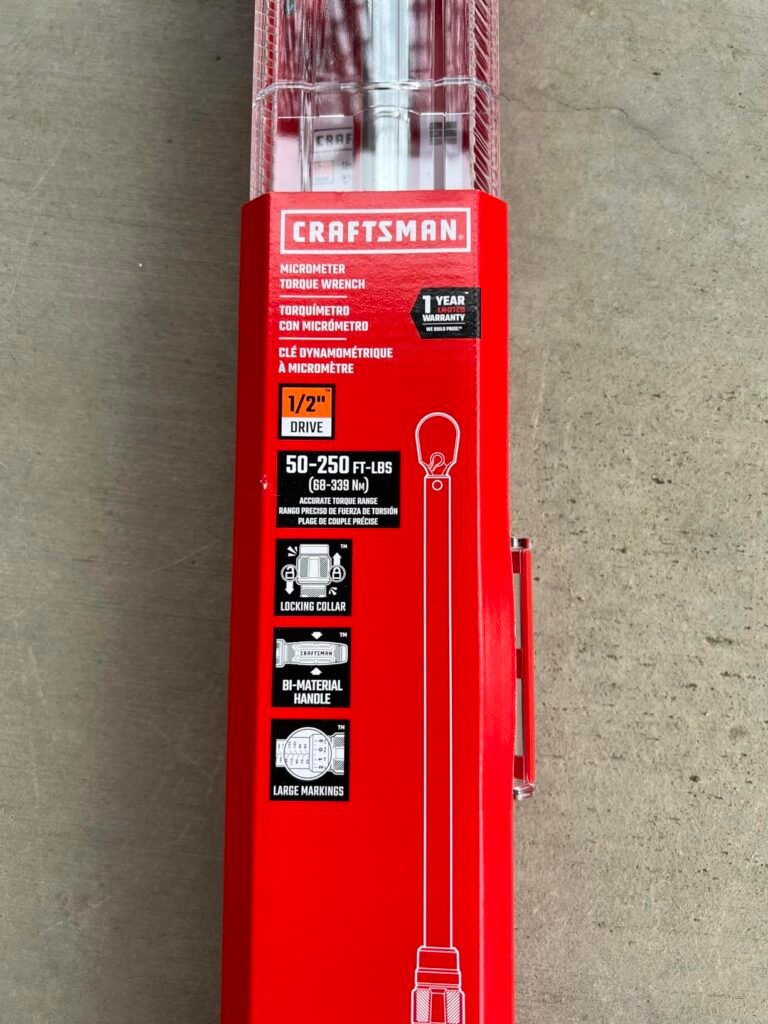
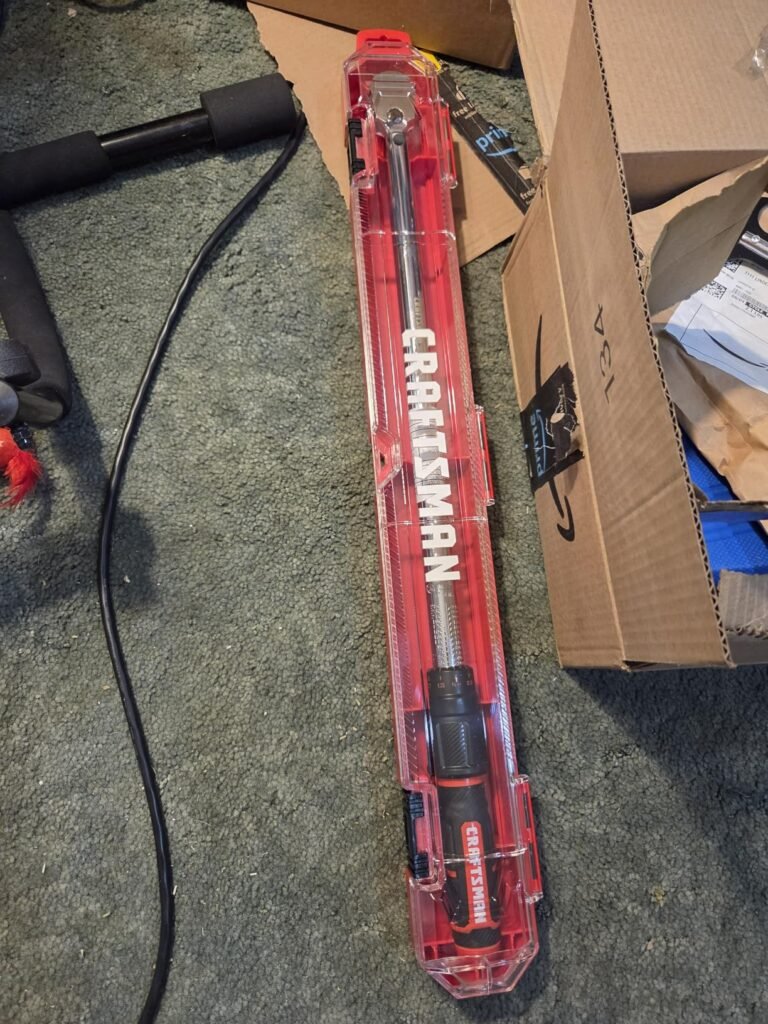
The CRAFTSMAN CMMT99434 leverages one of the most trusted names in American tool manufacturing to deliver a torque wrench focused on higher-torque automotive applications. The 50 to 250 ft-lb range picks up where standard 10-150 ft-lb wrenches leave off, making this an ideal complement wrench for heavy-duty tasks like axle nuts, crankshaft bolts, and pickup truck lug nuts.
We may earn a commission when you buy through this link, at no additional cost to you.
The bi-material handle combines rigid plastic structure with softer overmolded grip zones that provide comfort and slip resistance without sacrificing the leverage control needed for high-torque applications. This ergonomic detail matters more at higher torque values where the wrench requires substantial hand pressure to reach preset values, and slippage could cause both bruised knuckles and inaccurate measurements.
Meeting or exceeding ASME specifications provides the standard American tool industry accuracy certification. The scales stamped directly into the housing rather than printed labels resist wear far better than surface markings, ensuring the torque values remain readable throughout the tool’s life. The locking mechanism adjusts quickly and easily for hassle-free operation, and the included durable case keeps the tool protected between uses.
Torque wrenches lose accuracy at the extremes of their range, so a single 10-250 ft-lb wrench would be inaccurate at both ends. Two complementary wrenches, one covering 10-150 ft-lb and another covering 50-250 ft-lb, keep every torque value in the middle of a wrench’s range where accuracy is highest. This approach provides better overall accuracy than a single wide-range wrench.
This wrench is the right pick for buyers who value established brand reputation and need higher-torque coverage than typical automotive wrenches. Pair it with a lower-range 1/2-inch wrench or a 3/8-inch wrench for comprehensive coverage across all common automotive fasteners. Users who only work on lighter-torque applications should look at wrenches with lower minimum ranges instead.
Users who need to torque low-value fasteners below 50 ft-lb.
We may earn a commission when you buy through this link, at no additional cost to you.
Choosing a torque wrench requires matching drive size, torque range, and accuracy specifications to your actual work. The factors below break down what genuinely matters when comparing models and how to decide with confidence.
Drive size determines both the maximum torque a wrench can handle and which sockets it accepts. Quarter-inch drive wrenches cover 20-220 in-lb typical of electronics and small mechanical assemblies, 3/8-inch drives cover 5-75 ft-lb for spark plugs and light mechanical work, 1/2-inch drives cover 20-250 ft-lb for most automotive work, and 3/4-inch drives cover 100-600 ft-lb for heavy trucks and industrial equipment. Choose the drive size based on your typical fastener specifications.
The most important guideline is to match your fastener torque specifications to the middle portion of the wrench’s range, since accuracy degrades near both range extremes. A wrench used at its maximum or minimum torque values may miss the target by significantly more than its rated accuracy. For general automotive maintenance, a 1/2-inch drive wrench covering 10-150 ft-lb handles most common tasks, but pair it with a 3/8-inch wrench for smaller fasteners.
For most home garages, a 1/2-inch drive wrench in the 10-150 ft-lb range plus a 3/8-inch wrench for smaller torque values covers 90% of automotive and bike maintenance. Add a 1/4-inch or 3/4-inch wrench only if your work regularly requires those specific ranges.
Accuracy specifications typically range from ±2% for professional-grade wrenches to ±6% for budget models. Most consumer wrenches specify ±3% or ±4% accuracy, which is adequate for typical automotive work where torque values are given as ranges rather than exact specifications. Look for wrenches that ship with serialized calibration certificates documenting the specific measured accuracy of your individual tool, which is standard on quality wrenches and absent from many cheap models.
The calibration standard matters as much as the accuracy number. The stricter ISO standard requires accuracy across the full range at multiple test points, while the more common ASME standard only requires accuracy at 20% and 60% of range. Wrenches meeting ISO standards, like the TEKTON TRQ51402, provide documented accuracy across their full range, which matters for professional use where torque specifications may fall anywhere in the wrench’s range.
For DIY use, ±3-4% accuracy meets most needs. Professionals and users working on critical fasteners should prioritize ±3% accuracy with ISO calibration and serialized certificates for documented traceability.
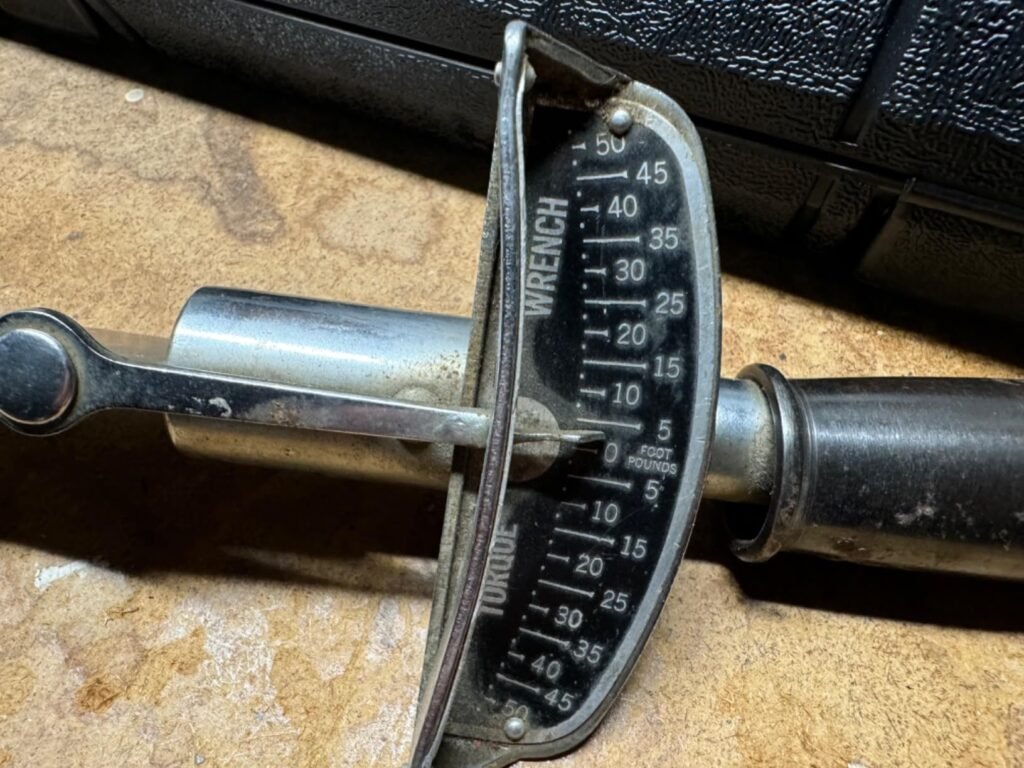
Click-type wrenches are the most common consumer torque wrench design, using a spring-loaded mechanism that produces an audible click and tactile bump when the preset torque value is reached. All wrenches in this guide are click-type, which suits nearly all consumer and professional applications. Digital wrenches display exact torque readings on an LCD screen and can log data for compliance requirements, while beam-type wrenches use a mechanical indicator that shows real-time torque as you apply force.
Click wrenches offer the best combination of accuracy, ease of use, and price for most applications. Digital wrenches add features like data logging, angle measurement, and pass/fail indicators that benefit professional shops with documentation requirements. Beam wrenches are simpler and more affordable but require you to watch the indicator continuously while applying torque, making them awkward for cramped work spaces.
Choose click wrenches for the best balance of accuracy and convenience. Consider digital wrenches only if you need advanced features like data logging or angle measurement, and beam wrenches only if simplicity and low cost are your absolute priorities.
The number of teeth in the ratchet head determines how small a swing angle you need to engage the next tooth. Higher tooth counts like 72 or 90 teeth allow smaller swing arcs of 5 degrees or less, which is essential in tight spaces where you cannot swing the wrench through a wider angle. Cheaper wrenches with 36 or 48 teeth require larger swings that become frustrating or impossible in cramped engine bays and wheel wells.
Consider where you actually work when evaluating tooth count. If most of your work happens in accessible spaces with room to swing, 72-tooth ratchets provide plenty of capability. If you regularly work in tight spaces like engine bays, near suspension components, or in cramped machinery, look for 90-tooth ratchets like the TEKTON with 4-degree swing arcs for maximum access flexibility.
For general automotive work, 72-tooth ratchets are the sweet spot for cost and capability. Choose 90-tooth ratchets if you regularly work in confined spaces, and avoid ratchets with fewer than 48 teeth unless the wrench will only see open-access use.
Handle design significantly affects usability during extended work sessions or high-torque applications. Knurled steel handles provide the best combination of grip and durability, though they can be uncomfortable during long sessions. Bi-material handles with rubber or foam overmolding add comfort at the cost of some slip resistance when oily. Aluminum handles like those on the SUZUME and 8-piece sets reduce total weight significantly compared to steel handles, which reduces fatigue during overhead work.
Handle length affects both leverage and control. Longer handles reduce the hand force needed to reach high torque values, which matters for wrenches with 200 ft-lb or higher capacity. Shorter handles offer more precision for lower-torque work but require more hand strength for high-torque applications. Most quality wrenches balance handle length appropriately for their torque range.
For occasional use, standard steel handles are adequate. For extended shop use, prioritize bi-material or aluminum handles for reduced fatigue. High-torque wrenches benefit from longer handles that provide leverage without excessive hand force.
Quality storage cases protect torque wrenches from impacts and moisture that can affect calibration. Hard plastic cases with molded interiors provide the best protection and are standard on most quality wrenches. Multi-piece sets typically include organizer cases with dedicated spaces for each wrench and adapter, which is genuinely useful for keeping components together and preventing loss of small accessories.
Portability matters if you work in multiple locations or need to transport wrenches to remote job sites. Individual wrenches in slim cases are easier to carry than multi-piece sets in larger organizers. For mobile mechanics, jobsite workers, or anyone traveling with tools, the case quality and portability affect daily usability significantly. The VEVOR wrench specifically includes a heavy-duty impact-resistant case designed for jobsite transport.
Prioritize hard-shell cases with molded interiors for regular transport or storage. For dedicated garage tools that stay in place, basic cases are adequate as long as they close securely to keep out dust and moisture.
Bundled accessories can add significant value beyond the wrench itself. Extension bars enable access to recessed fasteners in engine bays and wheel wells, universal joints allow angled access to fasteners that straight tools cannot reach, and drive adapters let you use sockets designed for different drive sizes. Comprehensive multi-piece sets like the KELIN 12-piece kit include these adapters plus common sockets ready for immediate use.
Consider what accessories you already own when evaluating bundled kits. If you have extensive socket collections and various adapters from other tools, buying a bare wrench without accessories may save money. If you’re building a tool collection from scratch or want a self-contained solution for a specific vehicle, comprehensive kits provide better long-term value and eliminate compatibility concerns.
Choose comprehensive kits for new tool collections or dedicated single-vehicle use. Choose standalone wrenches when you already own compatible accessories or when you need specific torque capabilities that kits don’t cover.
Before each use, verify that the torque wrench is set to the correct value by carefully checking both the main scale and the vernier scale if present. For click-type wrenches, always release the tension by dialing back to the lowest setting after use. Storing a click wrench under tension for extended periods gradually weakens the internal spring, causing accuracy to drift over time. This simple step significantly extends the useful life between recalibrations. Never use a torque wrench as a breaker bar for loosening stuck fasteners since the shock loads can damage the internal mechanism and destroy calibration.
When applying torque, use smooth, steady force rather than sudden jerks or hammer blows. Position the wrench so the drive is perpendicular to the fastener, and grip the handle at the marked position near the middle of the grip. Applying force at the end of the handle or on the head itself gives inaccurate readings because the leverage calculation assumes force applied at the standard grip position. Stop applying force immediately when you feel the click and hear the audible signal, since continuing to apply force past the click point overtightens the fastener beyond the preset value.
Keep the wrench clean by wiping down the exterior after use, and avoid submerging it in solvents or exposing it to excessive moisture that can penetrate the internal mechanism. Store the wrench in its case in a temperature-controlled environment away from extreme heat or cold that can affect the internal spring. Professional users should have wrenches recalibrated annually or after any suspected impact, while occasional DIYers can extend intervals to 2-3 years if the wrench is properly stored and lightly used. If you drop the wrench or use it as a breaker bar accidentally, have it recalibrated before trusting it for critical fasteners since impacts can shift the internal calibration significantly.
Professional torque wrenches should be recalibrated annually or every 5,000 uses, whichever comes first. Occasional home users can extend this to every 2-3 years if the wrench is properly stored with tension released after each use. Always recalibrate after any impact or if you use the wrench as a breaker bar, since these events can shift the calibration significantly. Professional calibration services typically cost $30-60 per wrench.
Yes, always dial the torque setting back to the lowest value after each use. Storing a click wrench under tension gradually weakens the internal spring, causing calibration drift over time. This is one of the most important habits for maintaining accuracy over the wrench's life. The simple step of releasing tension can double or triple the interval between required recalibrations.
Never use a torque wrench as a breaker bar for loosening stuck bolts. The shock loads and forces required to break loose seized fasteners can damage the internal mechanism and destroy calibration. Use a standard ratchet or breaker bar for loosening fasteners, and reserve the torque wrench for tightening operations where you need precise torque application.
For typical automotive maintenance like wheel lugs, brake components, and suspension bolts, ±3-4% accuracy is more than adequate since manufacturer torque specifications are usually given as ranges. Professional applications requiring documentation, warranty work, or precision assembly may need ±2% accuracy with ISO calibration. Most consumer wrenches meet the ±3-4% standard which suits nearly all DIY and semi-professional needs.
Click wrenches use a spring-loaded mechanism that clicks audibly when the preset torque is reached, letting you stop applying force immediately. Beam wrenches use a mechanical pointer that indicates real-time torque as you apply force, requiring you to watch the scale continuously. Click wrenches are more common and easier to use in cramped spaces, while beam wrenches are simpler and less prone to calibration drift.
Yes, most workshops benefit from multiple torque wrenches covering different ranges since a single wrench cannot cover both delicate spark plug torques and heavy wheel lug torques accurately. A typical setup includes a 3/8-inch drive wrench for 5-75 ft-lb work and a 1/2-inch drive wrench for 25-250 ft-lb work. Torque wrenches are most accurate in the middle of their range, so having appropriate wrenches for different torque values ensures better overall accuracy.
Yes, torque wrenches are compatible with any socket of the correct drive size regardless of whether the socket itself is metric or SAE. A 3/8-inch drive torque wrench works with any 3/8-inch drive socket. The wrench simply measures the twisting force applied to the drive shaft, not the socket size or fastener type.
Wheel lug torque varies by vehicle and typically ranges from 80-100 ft-lb for compact cars up to 140-150 ft-lb for full-size trucks. Always check your owner's manual or a torque specification chart for your specific vehicle. Never guess with lug nuts since undertightened wheels can come off while driving, and overtightened wheels can warp brake rotors or damage wheel studs.
Quality budget torque wrenches like the EPAuto and LEXIVON models can provide adequate accuracy for typical DIY automotive work when properly calibrated. Look for models with serialized calibration certificates and ±3-4% specified accuracy. Very cheap unbranded wrenches without documented calibration should be avoided since their accuracy may be significantly worse than claimed.
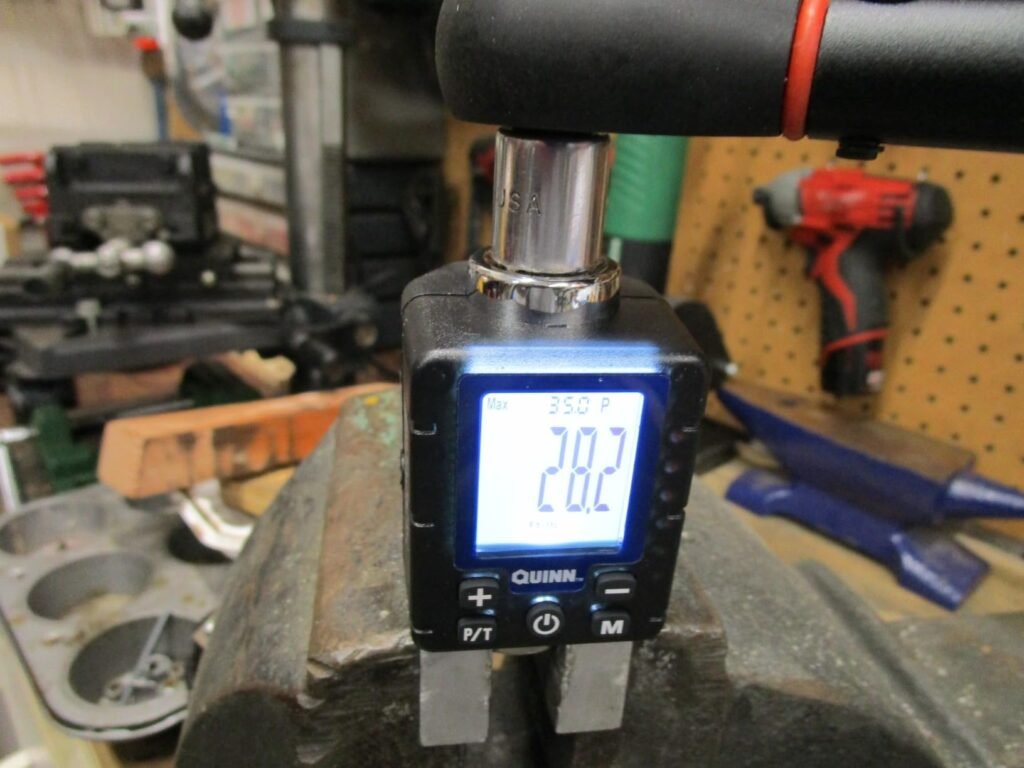
The best way to verify torque wrench accuracy is professional calibration testing with certified equipment. For informal checking, you can compare two wrenches with overlapping ranges on the same fastener, though this only reveals gross calibration errors. Any wrench that has been dropped, used as a breaker bar, or stored under tension for extended periods should be recalibrated before trusting it for critical fasteners.
The LEXIVON LX-183 stands out as the strongest overall pick for most DIY mechanics and prosumers. Its combination of a well-tuned 10-150 ft-lb range covering most automotive tasks, ±4% pre-calibrated accuracy with serialized certificate, durable chrome vanadium construction, and highly readable dual-range scale delivers dependable performance that has earned strong owner satisfaction. The reversible ratchet head and comfortable knurled grip make it practical for extended work sessions.
For budget-conscious buyers, the EPAuto 1/2-inch wrench delivers the same essential capabilities as premium models at a noticeably lower price with a helpful extension bar included. Those needing complete torque coverage from small fasteners to lug nuts should consider the KELIN 12-piece set with its highest-in-guide owner rating and bundled sockets. Professional mechanics working on heavy trucks or industrial equipment will find the VEVOR 3/4-inch wrench essential for high-torque work, while the TEKTON TRQ51402 offers ISO-standard calibration for buyers prioritizing documented accuracy.
Match your choice to your actual work: identify your typical fastener torque values and choose wrenches whose middle range covers those values, prioritize documented calibration accuracy with serialized certificates for critical work, consider multi-piece sets if you need coverage across small and large fasteners, and factor in adapter and socket compatibility when comparing standalone wrenches versus complete kits. With the right torque wrench matched to your specific needs, you can tighten critical fasteners to manufacturer specifications every time, avoiding both the safety risks of undertightening and the damage caused by overtightening.