Citizen Promaster Skyhawk
9.0Editor scoreSuper Titanium case
200m water resistance
Atomic timekeeping accuracy
5-year limited warranty
Find the right titanium watches for 2026. We compare 10 standout options by build quality, useful features, owner feedback, value, and everyday trade-offs.

Titanium watches offer something stainless steel cannot: significantly lighter weight, better skin comfort, and stronger corrosion resistance without sacrificing durability. We compare 10 standout picks for 2026 across dive watches, pilot chronographs, dress-sport hybrids, and rugged smartwatches, weighing case construction, movement type, water resistance, bracelet finish, and how each performs in genuine daily wear.
The category spans a wide range, from Citizen’s proprietary Super Titanium solar-powered pilot watches to Swiss automatic divers from Certina, Mido, and Tissot, plus the Garmin fenix 8 and Samsung Galaxy Watch Ultra2 for buyers who want titanium in a smartwatch form. Understanding movement type, water resistance, and finish helps you spend wisely.
This guide breaks down each option’s strengths, limitations, and ideal buyer so you can match a watch to your actual wrist and lifestyle. Whether you want a lightweight everyday dress-sport piece, a serious dive-rated tool, or a titanium-clad smartwatch built for the outdoors, the picks below cover a broad range of budgets and priorities.
We compared 10 titanium watches using the details that actually matter when spending real money: case grade and finish, movement type and accuracy, water resistance rating, bracelet quality, dial legibility, crystal material, weight relative to size, brand heritage, warranty coverage, and long-term value. The notes focus on practical trade-offs so each pick reflects how buyers actually wear titanium timepieces across diving, aviation, sport, dress, and everyday use throughout the year.


Compare key features, scores, and current prices side by side. A shorter feature list means fewer details were available, not necessarily fewer capabilities.



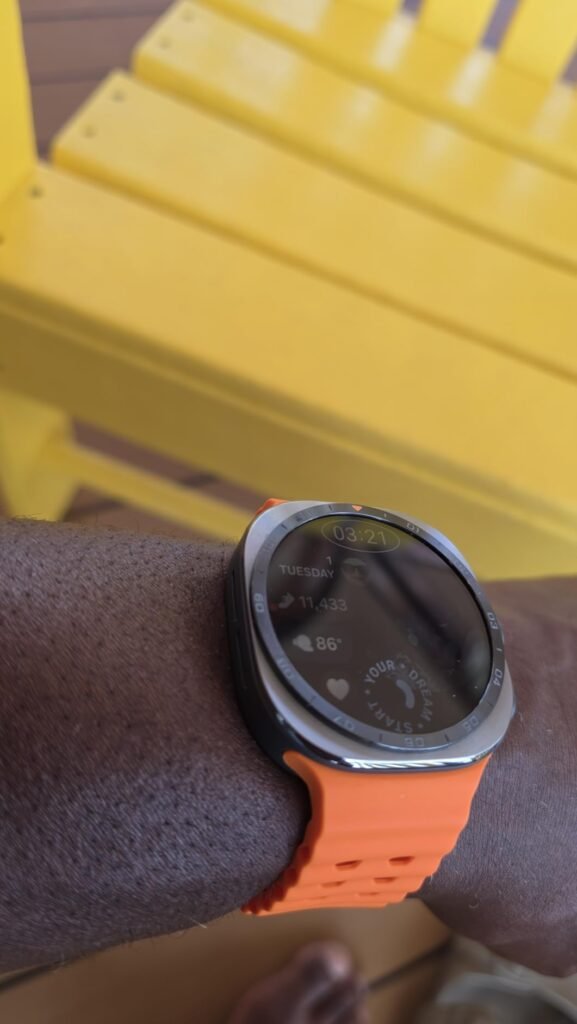
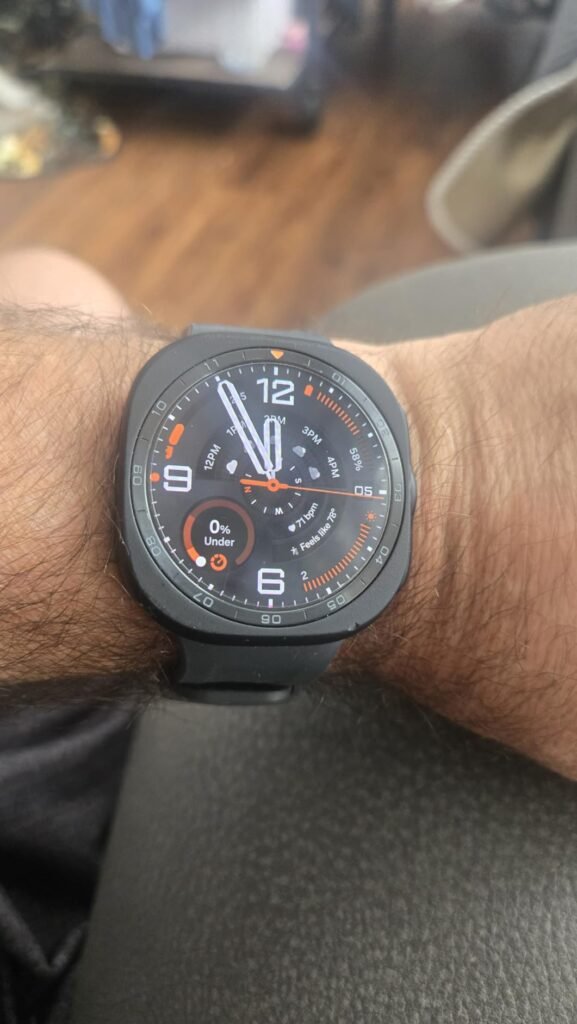
Samsung's Galaxy Watch Ultra2 brings titanium construction to the smartwatch category with genuine outdoor credentials. The 47mm titanium case is IP69K rated and water resistant to 100 meters, making it one of the toughest smartwatches available. For Android users who want the durability of a mechanical titanium watch combined with modern smart features, this hits a specific sweet spot no traditional watch can match.
We may earn a commission when you buy through this link, at no additional cost to you.
The 5,000-nit display is genuinely exceptional. Outdoor visibility in bright sunlight is one of the biggest weaknesses of most smartwatches, and this display handles direct sun without any legibility issues. The built-in Mares dive computer app is EN13319-certified and provides real-time ascent monitoring, depth notifications, and safety stop information, extending its usefulness beyond fitness tracking into a genuine dive tool.
AI assistance activates simply by raising your wrist and speaking, without needing a wake phrase. LTE connectivity means you can make calls, receive texts, and get updates without carrying your phone, which is particularly useful for trail runs and outdoor adventures. Heart health monitoring produces a single personalized score that removes guesswork from interpreting complex data, and trail navigation shows path, elevation, and pace guidance.
Traditional titanium watches offer heritage, craftsmanship, and mechanical charm but limited functionality. The Galaxy Watch Ultra2 sacrifices some of that heritage for genuinely useful features like health monitoring, GPS navigation, cellular calls, and app integration. For active users who want one watch to handle workouts, diving, hiking, and daily life, the smartwatch approach makes practical sense despite lacking the timeless appeal of a mechanical piece.
The main considerations are Android compatibility only and the premium price. If you use an iPhone, this watch simply won’t work for you. At $700, it also costs as much as many premium Swiss watches, though it delivers capabilities they cannot. For Android outdoor enthusiasts who want titanium construction with smartwatch functionality, it’s the strongest pick available.
iPhone users or buyers who prefer traditional mechanical watches over battery-powered smart devices.
We may earn a commission when you buy through this link, at no additional cost to you.
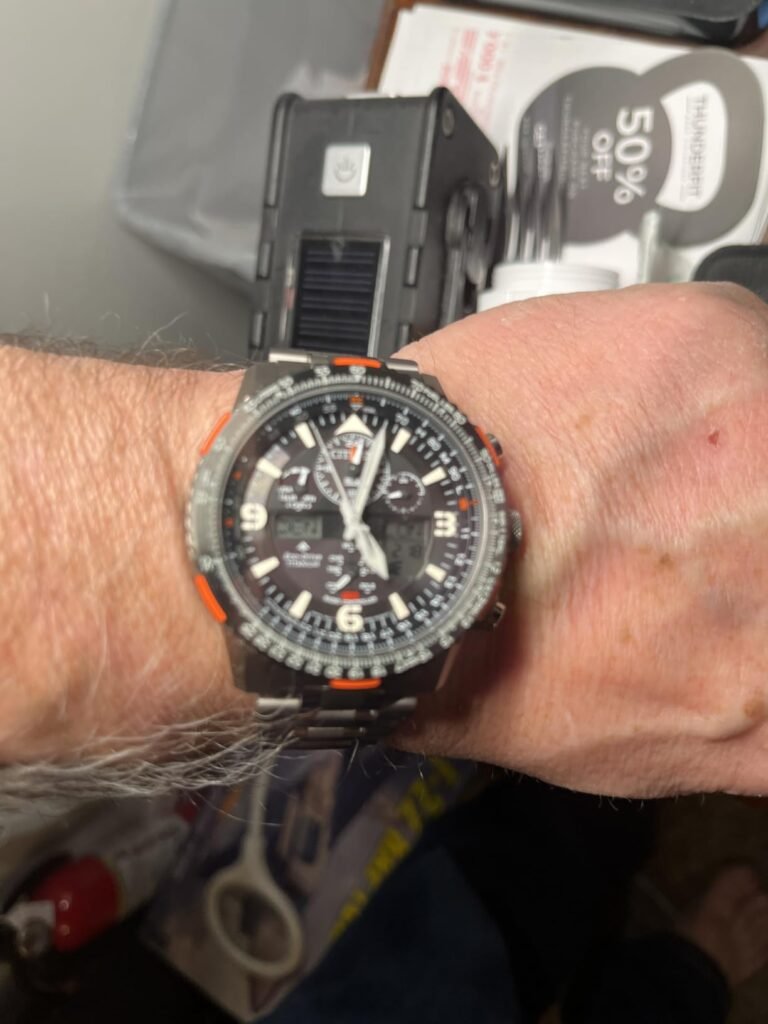
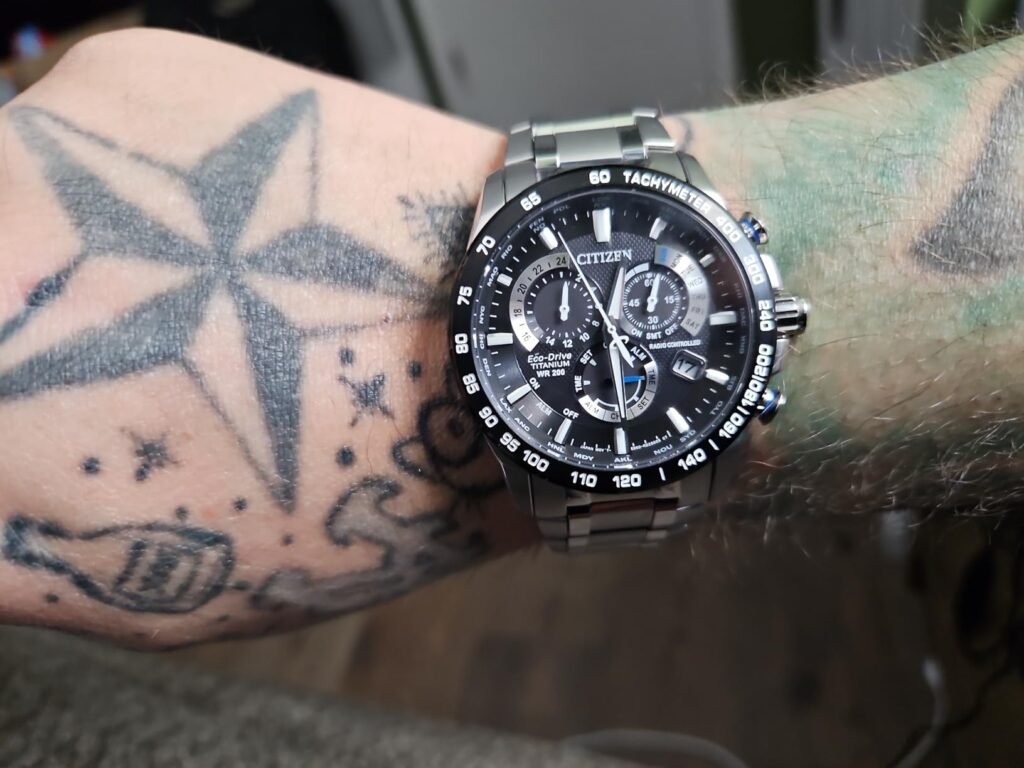
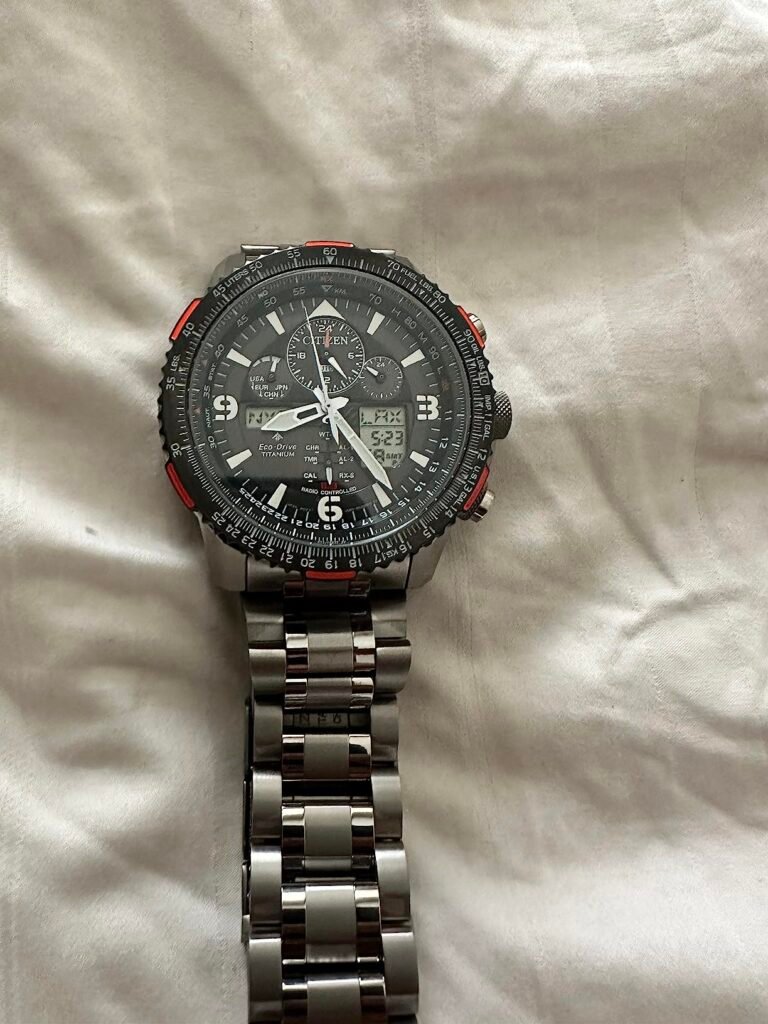
The Promaster Air Skyhawk represents Citizen's decades of experience with titanium watchmaking, dating back to their industry-first titanium watch in 1970. Their proprietary Super Titanium is five times harder and 40% lighter than stainless steel, delivering a scratch-resistant, skin-friendly case that outperforms typical grade 2 or grade 5 titanium in daily use. For pilots and travelers who want serious functionality with all-day comfort, this is a benchmark option.
We may earn a commission when you buy through this link, at no additional cost to you.
Atomic timekeeping synchronizes with atomic clocks worldwide with a margin of error of just one second in 100,000 years. Time adjustment automatically works across 43 world cities, which is genuinely useful for frequent international travelers. The chronograph measures 1/100 second up to 24 hours, and the watch includes perpetual calendar, dual time, two alarms, and a 99-minute countdown timer for practical daily and travel use.
Eco-Drive solar technology means the watch never needs a battery replacement, running indefinitely on any light source including artificial indoor lighting. Combined with the 5-year limited warranty and 200-meter water resistance, this is a watch that’s genuinely built for decades of reliable service. The pilot-inspired design pays homage to aviation heritage without becoming a costume piece.
Citizen’s proprietary Super Titanium involves a surface hardening process called Duratect that significantly increases scratch resistance compared to standard titanium. Standard titanium is naturally softer than steel and can show scratches from everyday contact with desks, keyboards, and door frames. Duratect-treated Super Titanium resists these marks far better while retaining the lightness and hypoallergenic properties that make titanium desirable in the first place.
The main tradeoff is dial complexity. With multiple subdials, digital displays, and function indicators, reading the watch takes some familiarization. The 46mm case also wears larger and bolder than most dress watches, which is intentional for its aviation purpose but may feel oversized on smaller wrists. For serious travelers, pilots, or anyone who values maximum functionality in titanium, it’s difficult to beat.
Buyers who want a simple dress watch dial or those who prefer smaller cases under 40mm.
We may earn a commission when you buy through this link, at no additional cost to you.
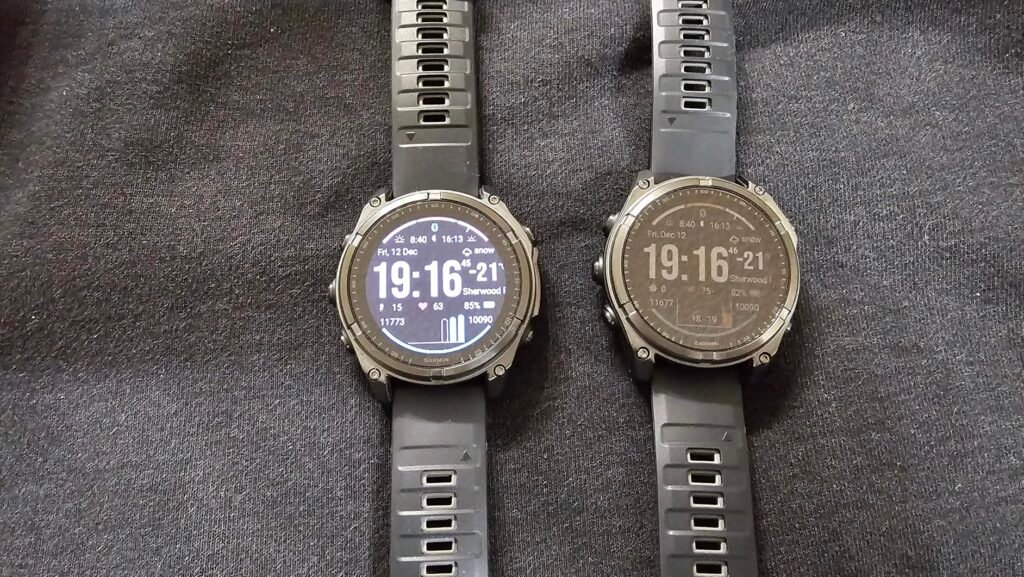
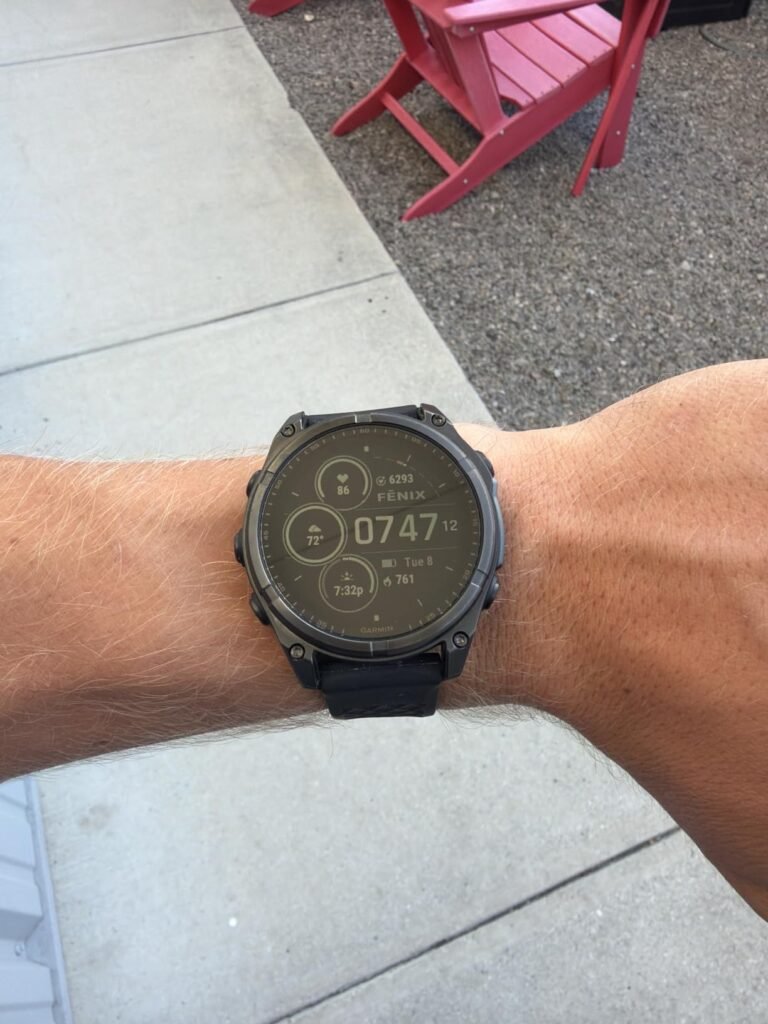
The Garmin fenix 8 Solar Sapphire represents the pinnacle of Garmin's outdoor smartwatch line, with a DLC-coated titanium bezel and scratch-resistant sapphire lens that survive genuinely rough use. For athletes and adventurers who push into terrain where reliability matters more than style, this delivers a level of ruggedness and functionality that few other watches can match, titanium or otherwise.
We may earn a commission when you buy through this link, at no additional cost to you.
Battery life reaches up to 28 days in smartwatch mode with solar charging assumed, and 92 hours in GPS mode with continuous solar exposure. Multi-band GPS with SatIQ technology provides positioning accuracy that meaningfully improves over single-band GPS in challenging environments like dense forests or urban canyons. Built-in 3-axis compass, gyroscope, and barometric altimeter handle serious navigation tasks.
Health and training features are extensive. Targeted strength training plans, real-time stamina tracking, training readiness scores based on sleep and HRV, plus ECG for atrial fibrillation detection cover both fitness and health monitoring comprehensively. The built-in speaker and mic support phone calls and voice assistant use, while off-grid voice command works even without smartphone connection.
Diamond-like carbon (DLC) coating creates an extremely hard surface layer on titanium, dramatically improving scratch resistance while maintaining the underlying material’s lightness. Untreated titanium can show marks from regular use, but DLC-coated titanium survives contact with rocks, gear, and other equipment that would scuff standard finishes. The black DLC finish also provides a distinctive tactical appearance appropriate for the fenix 8’s outdoor purpose.
At $1,000, this is a serious investment, and the 4.1 rating reflects that expectations run high at this price. The 40-meter dive rating supports scuba and apnea diving activities, and the LED flashlight is genuinely useful for camping, night runs, or trailside emergencies. For serious outdoor athletes who want titanium construction combined with the most capable outdoor smartwatch platform, the fenix 8 Solar Sapphire is difficult to beat.
Buyers seeking classic mechanical watches or those unwilling to invest $1,000 in a smartwatch.
We may earn a commission when you buy through this link, at no additional cost to you.
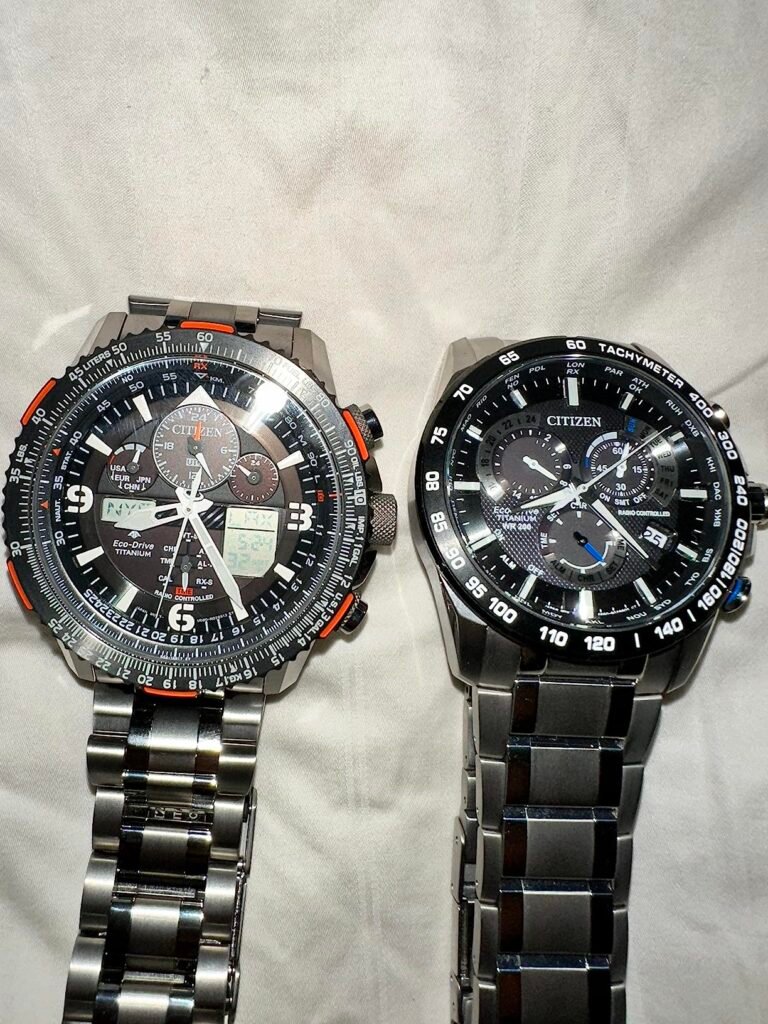
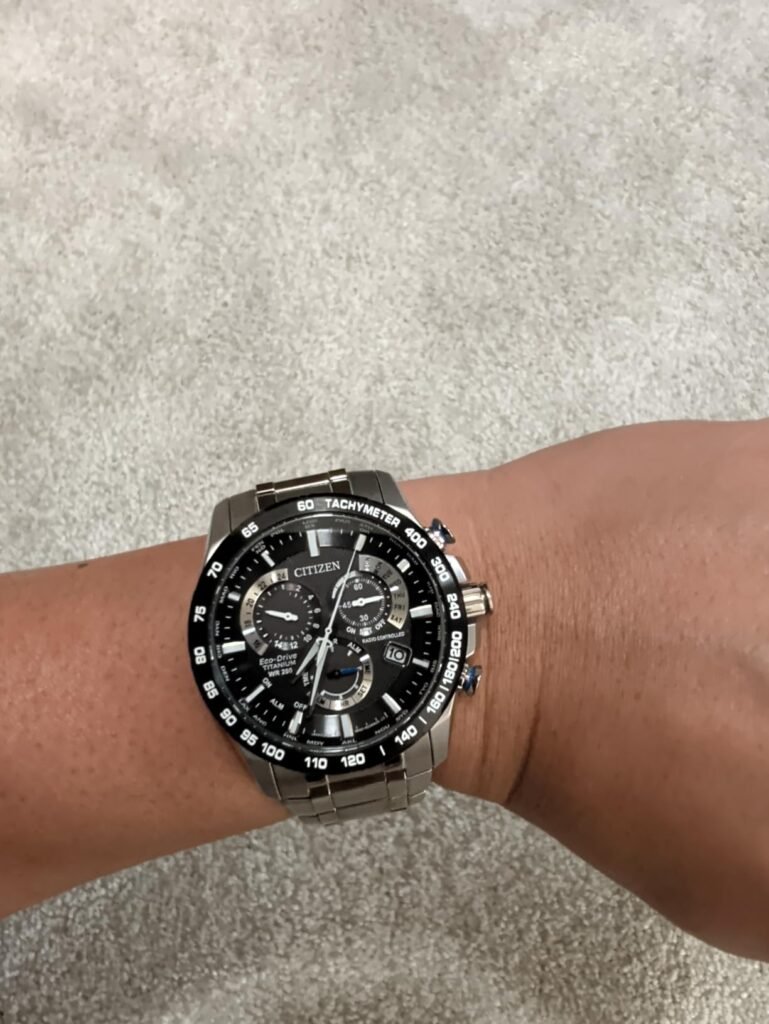
The PCAT Chronograph blends sport luxury styling with Citizen's proven atomic timekeeping and Super Titanium construction. For buyers who want a chronograph they can wear from office to weekend adventures without concern for scratches, sweat, or occasional water exposure, this delivers the kind of do-everything capability that makes it worth carrying as a primary watch.
We may earn a commission when you buy through this link, at no additional cost to you.
Atomic timekeeping synchronizes automatically with radio signals from atomic clocks, maintaining an accuracy of one second in 100,000 years. The 1/5 second chronograph measures up to 60 minutes, complemented by 12/24 hour time display and standard date function. Anti-reflective sapphire crystal keeps the dial legible in bright conditions without the glare that plagues many polished-crystal watches.
Super Titanium construction delivers the same 40% weight reduction and 5x hardness improvement over stainless steel found across Citizen’s Promaster line. The 200-meter water resistance is far more than most people need for daily wear but provides genuine capability for swimming, snorkeling, and occasional shallow diving. Eco-Drive solar technology eliminates battery replacements permanently, and the 5-year warranty backs the long-term investment.
Atomic timekeeping automatically adjusts for daylight saving time, time zone changes when traveling, and drift over time, without any user intervention. For frequent travelers or anyone who values never having to manually set the time, this is genuinely useful. If you rarely change time zones and don’t mind occasional adjustments, standard quartz movement works fine at lower cost.
The chronograph function does add visual complexity and case thickness compared to a simple three-hand watch. At around $600, it also occupies a more premium price point that some buyers may consider stretching for a Swiss automatic instead. For Citizen enthusiasts who want the best chronograph in Super Titanium with atomic precision, though, the PCAT is one of the strongest picks in the lineup.
Buyers seeking a simple dress watch or those who prefer mechanical movements over solar-powered quartz.
We may earn a commission when you buy through this link, at no additional cost to you.
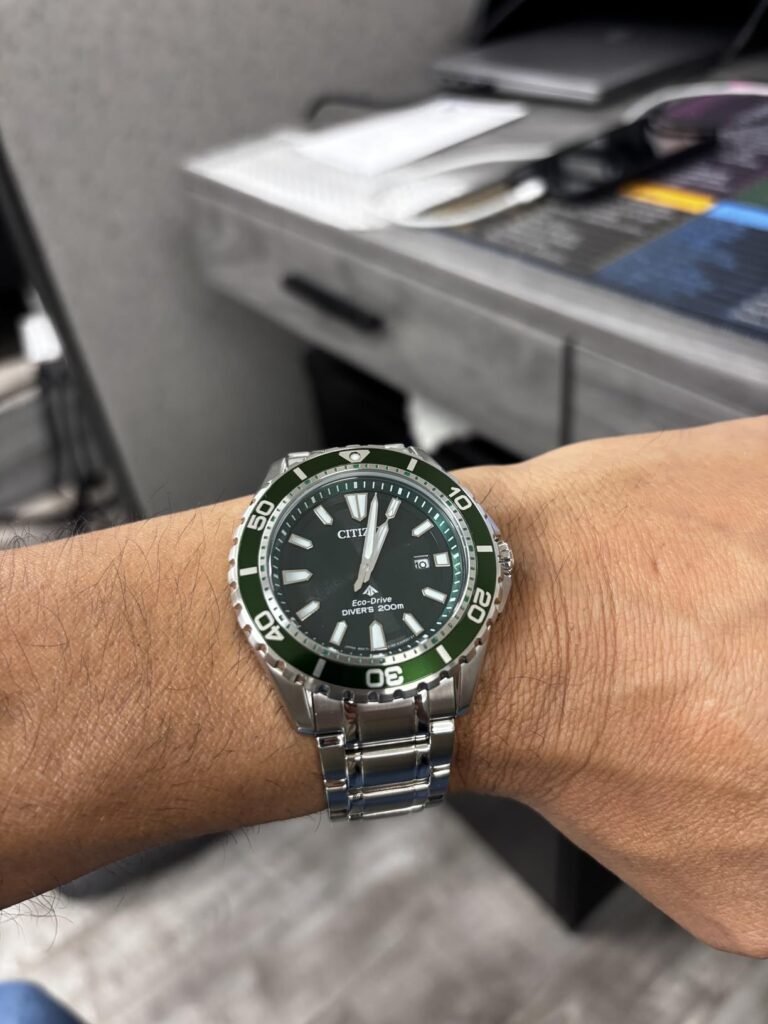
The Promaster Sea is Citizen's dive watch that meets ISO 6425 dive certification, which involves rigorous water resistance and functional testing beyond simply carrying a depth rating. For divers and snorkelers who want a genuine tool watch with the reliability of solar power and the corrosion resistance of Citizen's Super Titanium construction, this hits an appealing price-to-capability ratio.
We may earn a commission when you buy through this link, at no additional cost to you.
The 200-meter water resistance combined with a one-way rotating bezel and screw-down crown creates a legitimate diving instrument. The one-way rotation prevents accidental bezel movement that could indicate more remaining bottom time than actually exists, which is a safety-critical feature ISO certification requires. Luminous hands and markers ensure legibility underwater and in low-light conditions.
Eco-Drive solar technology means never worrying about battery death during a dive trip, and the 5-year warranty protects against manufacturer defects. The traditional dive watch styling looks appropriate both underwater and worn casually with jeans or a suit, giving the watch versatility beyond its primary purpose. Weight is comfortable thanks to titanium construction despite the 200m case robustness.
ISO 6425 is the international standard for actual dive watches, requiring testing for water resistance, condensation resistance, magnetic resistance, shock resistance, and functional reliability underwater. Many watches marketed for water use carry only pressure ratings without meeting these full requirements. If you plan to actually scuba dive rather than just wear a watch that looks aquatic, ISO 6425 certification confirms genuine diving capability.
The main considerations are that this uses mineral crystal rather than the more scratch-resistant sapphire found on more expensive alternatives, and the quartz movement lacks the mechanical charm of Swiss automatic divers. For divers who prioritize reliability, solar convenience, and Super Titanium comfort over sapphire crystal and mechanical prestige, though, the Promaster Sea delivers strong value in the sub-$500 range.
Buyers who prefer sapphire crystal, mechanical movements, or larger case sizes than this diver offers.
We may earn a commission when you buy through this link, at no additional cost to you.
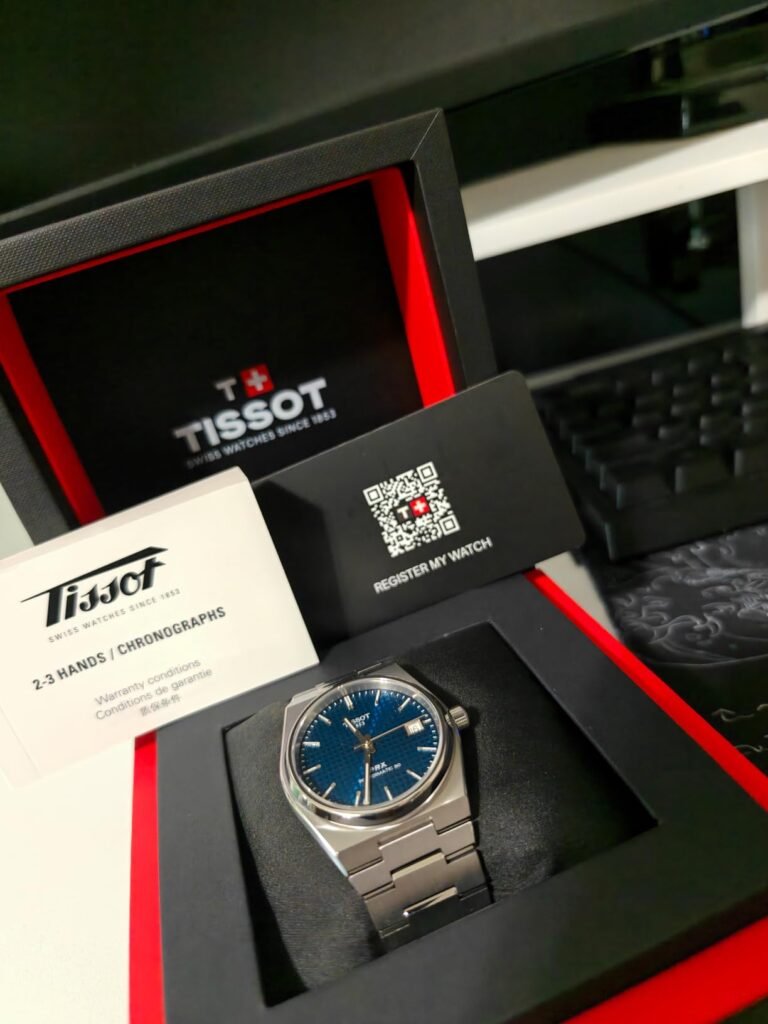
The Tissot PRX in titanium takes one of the most talked-about watch designs of recent years and delivers it in a lighter, more comfortable material. The 38mm case and integrated bracelet create the classic sport-luxury silhouette pioneered by watches like the Royal Oak and Nautilus, but at a genuinely accessible price point for a Swiss automatic titanium timepiece.
We may earn a commission when you buy through this link, at no additional cost to you.
The Swiss automatic movement provides the mechanical charm that many enthusiasts value: no batteries, self-winding through wrist motion, and the quiet satisfaction of a heartbeat visible through the display back. The 100-meter water resistance handles swimming and showering without concern, though it’s not rated for diving or snorkeling. The 38mm case size wears well on both smaller and larger wrists, making it a true unisex option.
The integrated titanium bracelet is the design’s defining feature. Rather than attaching via separate lugs, the bracelet flows seamlessly from the case, creating a distinctive profile that reads as intentionally designed rather than assembled from parts. Titanium construction keeps the watch comfortable for all-day wear despite the substantial-looking bracelet, which would feel heavy in stainless steel.
Integrated bracelet watches merge the case and bracelet into a unified design rather than treating them as separate components. This creates a distinctive silhouette but also means the bracelet cannot be easily swapped for a leather strap or NATO. If you value the ability to change straps to match different outfits or occasions, a traditional lug-and-strap watch offers more flexibility. If you love the seamless look, integrated designs like the PRX are the definitive expression.
At $975, this occupies premium territory but delivers genuine Swiss watchmaking with titanium construction. The main considerations are that the sport-luxury aesthetic is polarizing (you either love the integrated bracelet look or you don’t) and the movement lacks some of the higher-end features found on more expensive Swiss watches. For buyers who want iconic PRX styling in a comfortable titanium package, this is one of the most desirable options in the collection.
Buyers who prefer larger case sizes, want strap-swap versatility, or need higher water resistance for diving.
We may earn a commission when you buy through this link, at no additional cost to you.
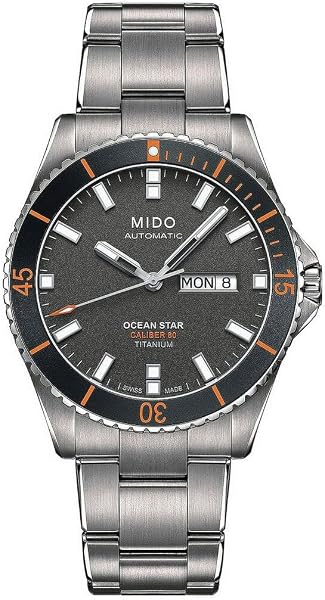
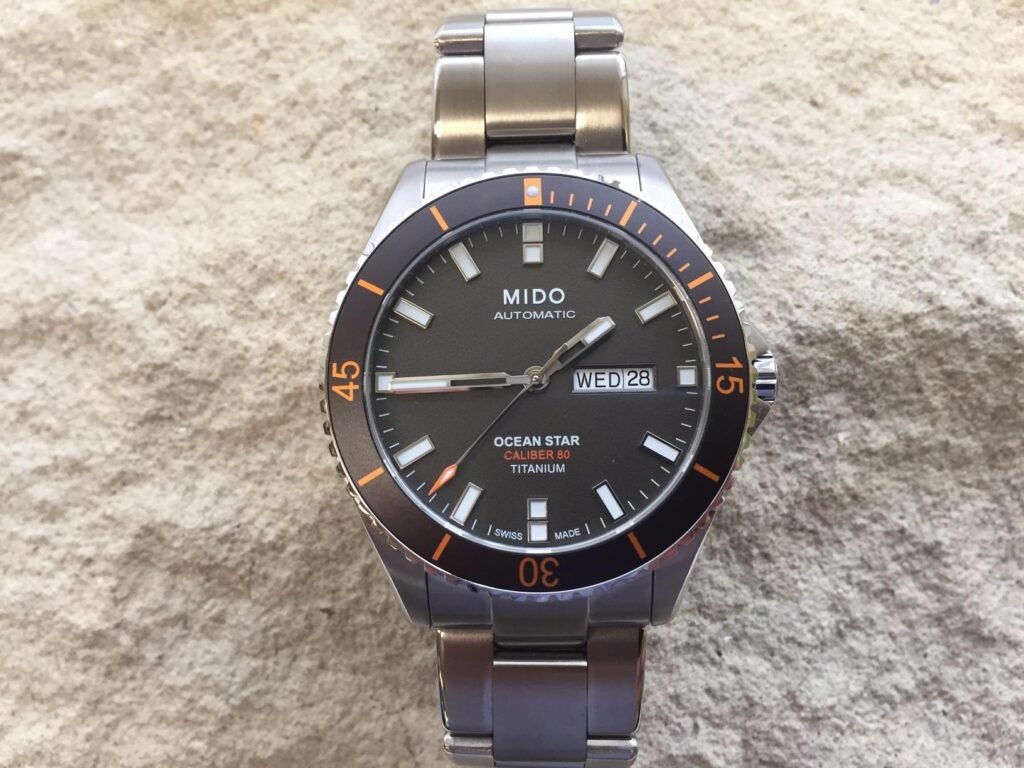
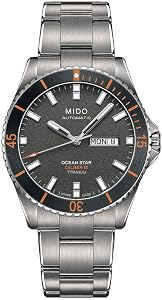
The Mido Ocean Star 200 in titanium delivers proper Swiss dive watch pedigree at a price that undercuts many better-known competitors. The 42.5mm diver-style case with black rotating bezel and screw-down crown creates a watch that looks and functions as a serious tool while remaining comfortable enough for daily wear thanks to titanium construction.

We may earn a commission when you buy through this link, at no additional cost to you.
The 80-hour power reserve is a genuine highlight. Standard automatic movements typically offer 40 to 48 hours of reserve, meaning the watch stops running if you don’t wear it over a weekend. An 80-hour reserve means you can leave the watch off Friday evening and pick it back up Monday morning still ticking, which is genuinely more convenient for people who rotate between multiple watches.
The anthracite dial with Super-Luminova filled indexes and skeletonized hands delivers excellent legibility in all lighting conditions. Sapphire crystal with double-sided anti-reflection treatment eliminates the glare that can plague less refined watches. The 200-meter water resistance combined with screw-down crown makes this genuinely dive-capable rather than just water resistant.
An automatic watch’s power reserve determines how long it will keep running without wrist motion to wind it. Standard 40-hour reserves mean the watch stops if you don’t wear it overnight and following morning. Longer reserves like 80 hours allow you to skip weekends without needing to reset the time, date, and day when you pick the watch back up. For rotation collectors or occasional wearers, this is a genuinely useful convenience.
At $1,230, this is the most expensive traditional watch in this comparison, which reflects the combination of Swiss automatic movement, titanium case, and dive-watch construction. The 42.5mm case size wears bold and may feel oversized on wrists under 7 inches, though the titanium keeps weight manageable regardless. For serious divers or Swiss watch enthusiasts who value the 80-hour reserve, the Ocean Star 200 justifies its price.
Buyers with smaller wrists who prefer 40mm or smaller cases, or those on a tighter budget.
We may earn a commission when you buy through this link, at no additional cost to you.
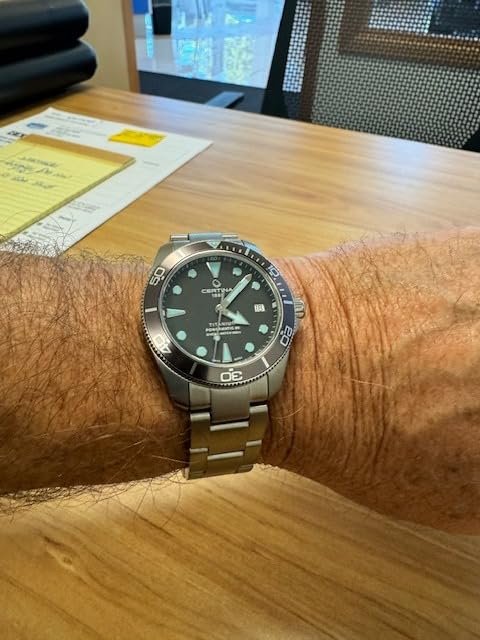
The Certina DS Action Diver in 38mm titanium serves a specific and underserved niche: buyers who want serious dive watch specifications without the oversized case that dominates modern dive watch design. At 38mm, it wears comfortably on smaller wrists while still delivering 300 meters of water resistance and Swiss automatic reliability.

We may earn a commission when you buy through this link, at no additional cost to you.
The Powermatic 80 movement provides the same 80-hour power reserve found on the Mido Ocean Star, allowing weekend-long breaks without needing to reset the watch. Swiss automatic construction delivers the mechanical charm that watch enthusiasts value, with reliable long-term performance and traditional craftsmanship. ISO 6425 compliance (per the 300m rating) means this is a genuine dive tool rather than just a water-resistant timepiece.
The anthracite dial provides subtle sophistication that works both underwater and in office settings, and the titanium construction keeps daily wear comfortable despite the dive watch build. The 2-year international warranty is more limited than Citizen’s 5-year coverage but standard for Swiss watchmaking at this price point.
Modern dive watches have trended toward 42mm and larger cases, which look bold but overwhelm many wrists. Historical dive watches from the 1950s and 60s often measured 38-40mm, which is where the classic proportions were established. A 38mm modern diver with proper specifications delivers vintage-inspired sizing with contemporary capabilities, which is increasingly popular among enthusiasts who value wearability over presence.
At $1,080, this delivers serious dive watch capability at a reasonable price for genuine Swiss automatic construction in titanium. The 38mm sizing is the standout feature, since finding true dive watches in this compact size is genuinely difficult. For buyers with wrists under 7 inches or those who simply prefer more subtle dive watches, this Certina is one of the best options available.
Buyers who want bold, oversized dive watch styling or those who prefer solar-powered quartz over mechanical movements.
We may earn a commission when you buy through this link, at no additional cost to you.
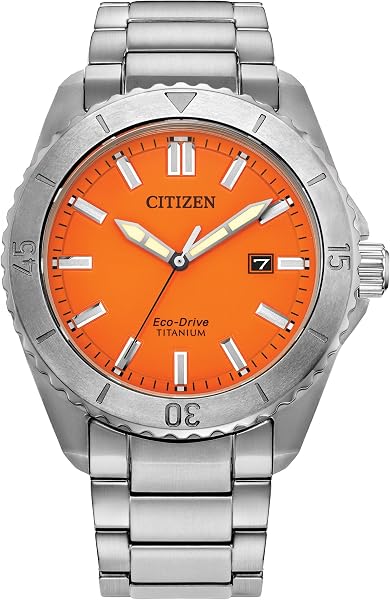
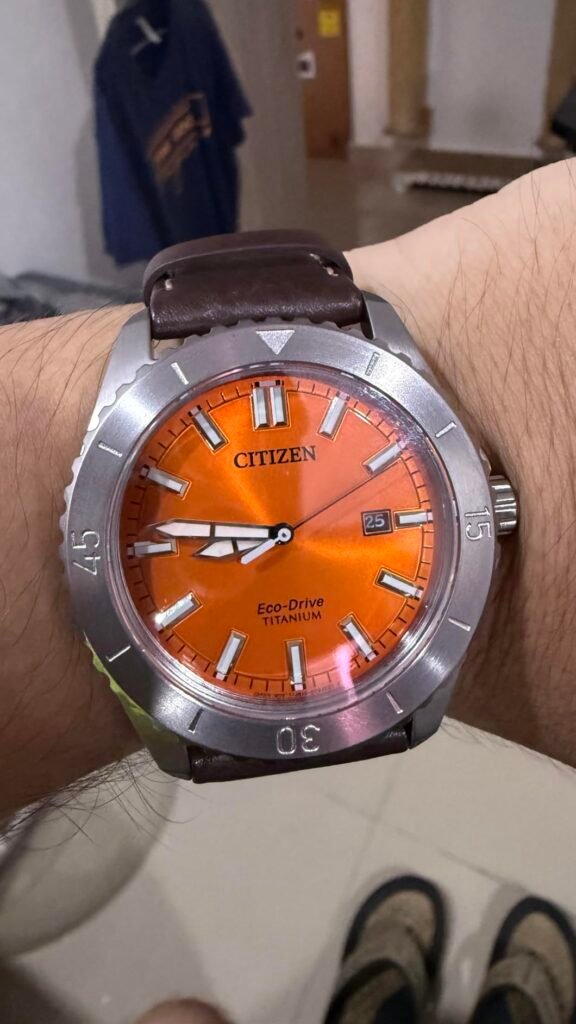
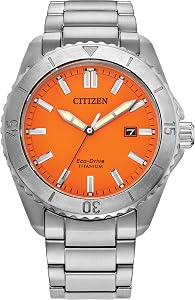
The Brycen Sport represents Citizen's approach to making Super Titanium accessible without sacrificing the material's benefits. At around $315, it delivers the same lightweight, scratch-resistant, hypoallergenic construction found on much more expensive Promaster models, but in a design that reads as everyday sport casual rather than serious tool watch.

We may earn a commission when you buy through this link, at no additional cost to you.
The 41mm case sits in the modern mainstream sweet spot for men’s sport watches, and the distinctive sunray orange dial provides personality that stands out from the sea of black and blue sport dials. The 3 o’clock date window handles daily utility without cluttering the design. The triple-link bracelet with brushed finish keeps the visual weight balanced and comfortable on most wrists.
Eco-Drive solar technology delivers the same battery-free convenience found across Citizen’s premium models, meaning the watch will run indefinitely on light exposure without ever needing service. The bi-directional rotating bezel adds utility for tracking elapsed time or timing casual activities, though it lacks the safety features of one-way dive bezels.
Super Titanium construction typically adds $100 to $300 to the price of a comparable stainless steel watch. Under $320, the Brycen Sport delivers this premium material at a price where the value equation makes clear sense for buyers who prioritize comfort and durability. If you find stainless steel watches uncomfortably heavy or develop skin reactions from steel, the material upgrade is worth every dollar of the price premium.
The main considerations are that the bi-directional bezel is less useful for diving than one-way alternatives, and the dial color choice may be too bold for buyers seeking a conservative daily watch. For Weekender collection styling with Super Titanium comfort at an accessible price, though, the Brycen Sport delivers genuine value that competes well against watches costing significantly more.
Buyers who prefer conservative dial colors or need one-way rotating bezels for actual diving activities.
We may earn a commission when you buy through this link, at no additional cost to you.
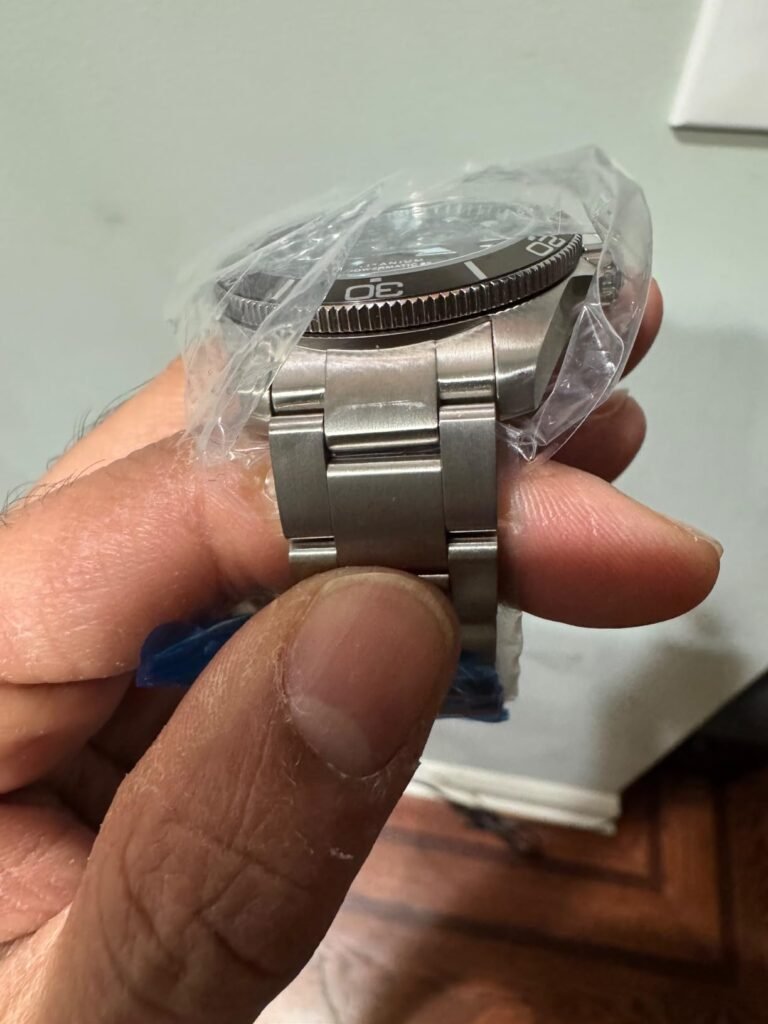
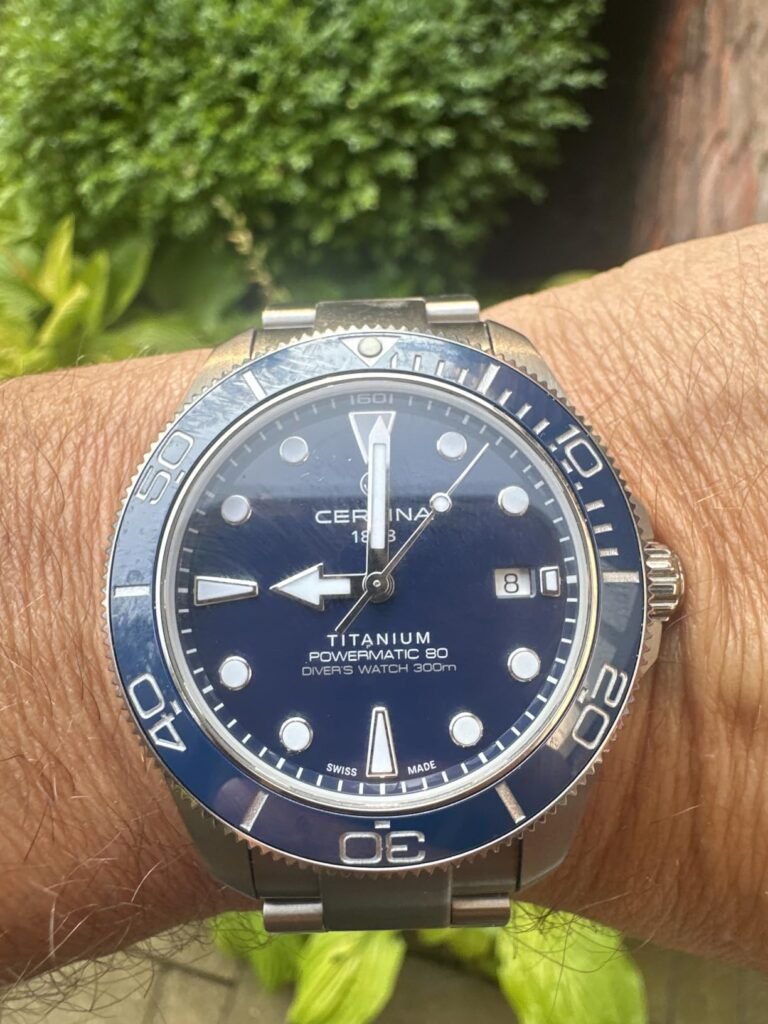
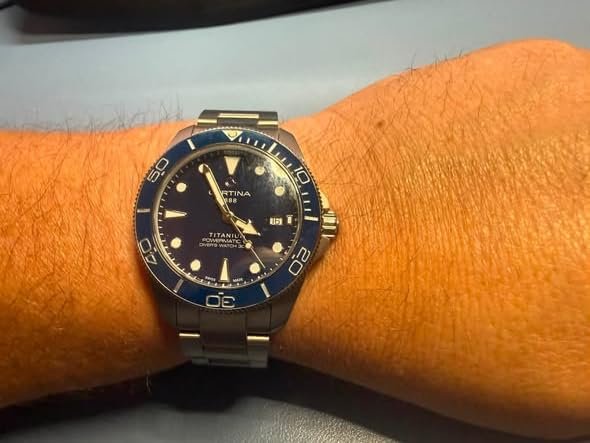
The Certina DS Action Gent brings the Powermatic 80 movement and titanium construction to a slightly larger 40.5mm case that many buyers will find better proportioned than the compact 38mm sibling. The blue dial adds visual interest without becoming flashy, making this a versatile daily wearer that also delivers serious 300-meter diving credentials.
We may earn a commission when you buy through this link, at no additional cost to you.
The Nivachron hairspring is a technology worth understanding. Traditional hairsprings can be affected by magnetic fields common in modern life (from phones, laptops, and electronic devices), which can cause timekeeping to drift. Nivachron significantly reduces this vulnerability, keeping the watch accurate even after regular exposure to household electronics. For daily wearers in modern environments, this is a genuinely valuable feature.
The 80-hour power reserve provides the same weekend-friendly convenience found on other Powermatic 80 movements, and the 300-meter water resistance combined with titanium construction creates a watch that handles diving, swimming, and any water activity without concern. The 40.5mm case size sits in the sweet spot where the watch looks substantial without becoming oversized, and titanium keeps weight comfortable despite the diving-grade build.
Modern life exposes wristwatches to magnetic fields from smartphones, laptops, tablets, and even magnetic clasps on bags. Traditional metal hairsprings can become magnetized, causing timekeeping errors that require professional demagnetization to correct. Nivachron is a specialized alloy that resists magnetic influence, keeping the watch accurate in environments where standard automatics may struggle. For daily wearers, this substantially reduces the frequency of accuracy issues over time.
At $1,060, this occupies similar premium territory to the 38mm version, and the 14.10mm case thickness is noticeable when wearing under cuffs. For buyers who want proper diving specs, anti-magnetic protection, and Powermatic 80 reserve in a case that reads as classic sport rather than compact vintage, this Certina delivers genuine Swiss watchmaking value in titanium construction.
Buyers who prefer thinner watches under 12mm or those who don’t need the 300-meter water resistance capability.
We may earn a commission when you buy through this link, at no additional cost to you.
Titanium watches offer unique advantages over stainless steel, but the category includes everything from solar-powered pilot watches to Swiss automatic divers to titanium-clad smartwatches. This guide walks through the decision factors that actually affect long-term satisfaction with a titanium watch purchase.
Not all titanium is created equal. Grade 2 titanium is the most common in watchmaking, offering good corrosion resistance and light weight but relatively soft surface hardness that can scratch easily. Grade 5 titanium (Ti-6Al-4V) is stronger and harder, commonly used in aerospace and medical applications. Citizen’s proprietary Super Titanium uses a Duratect surface treatment that makes the case up to five times harder than standard titanium while maintaining the material’s characteristic lightness and hypoallergenic properties.
Surface finish also affects how titanium looks and wears. Brushed finishes hide small scratches better than polished ones, which is why most sport titanium watches use predominantly brushed surfaces with polished accents. DLC (diamond-like carbon) coatings, as found on the Garmin fenix 8, add substantial scratch resistance and create distinctive dark finishes. If you plan to wear the watch daily in environments where it may contact hard surfaces, prioritize surface-hardened titanium or DLC-coated options.
For maximum long-term looks, choose Super Titanium or DLC-coated cases. For traditional titanium warmth and standard performance, grade 2 or grade 5 titanium works well at lower cost. Match the finish to your lifestyle and how much visible wear you can accept.
The watches in this comparison use three fundamentally different movement types. Swiss automatic movements like those in the Tissot PRX, Mido Ocean Star, and Certina DS Action self-wind through wrist motion and deliver mechanical charm valued by enthusiasts. Solar-powered quartz movements like Citizen’s Eco-Drive never need battery replacement and offer atomic timekeeping precision. Digital smartwatch movements like Samsung and Garmin provide modern connectivity but require regular charging.
Each movement type suits different priorities. Automatics offer heritage and the satisfaction of mechanical craftsmanship but need periodic service every 5-10 years costing $200-$500. Solar quartz eliminates battery worry and often includes features like atomic timekeeping, but lacks the mechanical soul of an automatic. Smartwatches offer the most features but become outdated as technology advances and require charging every few days or weeks.
Choose automatic if you value tradition and mechanical craftsmanship. Choose solar quartz if you want a set-and-forget watch with modern precision. Choose smart if you want maximum functionality and don’t mind regular charging.
Case sizes in this comparison range from 38mm (Tissot PRX, Certina DS Action Diver) to 47mm (Samsung Galaxy Watch Ultra2, Garmin fenix 8). Modern watch buying has trended toward larger cases, but wrist fit fundamentals haven’t changed. A watch case should generally not extend beyond the sides of your wrist bone, since watches that overhang look and feel oversized regardless of intended styling.
Titanium’s light weight lets you wear slightly larger cases comfortably than stainless steel would allow, which is one reason why sport and dive watches often use titanium. Case thickness also matters, particularly for people who wear cuffed shirts. Watches over 13mm thick may not fit comfortably under dress cuffs, while cases under 11mm slide easily beneath tailored shirts. Consider both diameter and thickness when evaluating fit.
For wrists under 7 inches, prioritize 38-40mm cases with thickness under 12mm. For 7-8 inch wrists, 40-44mm cases work well. For wrists over 8 inches, up to 47mm can look proportional. Try to try watches on before buying whenever possible, or measure carefully.
Water resistance ratings in this comparison range from 100 meters (Tissot PRX) to 300 meters (both Certina DS Action models). Understanding what these numbers mean practically matters more than the number itself. 50 meters (5 ATM) handles swimming in shallow water but not diving. 100 meters (10 ATM) supports recreational swimming and showering. 200 meters covers snorkeling and shallow scuba diving. 300 meters and above handles serious professional diving.
ISO 6425 certification, held by the Citizen Promaster Sea and Certina DS Action models, involves rigorous testing beyond just water pressure resistance. It confirms magnetic resistance, shock resistance, condensation resistance, and functional reliability underwater. For actual diving use, prioritize ISO-certified watches over those with only pressure ratings, since the certification confirms real-world diving capability.
Choose 100m if you only swim and shower with the watch. Choose 200m for snorkeling and casual water sports. Choose 300m with ISO certification if you plan to scuba dive regularly. Don’t pay extra for capability you won’t use.
The crystal is the transparent surface protecting the dial, and material choice significantly affects long-term appearance. Mineral crystal is the least expensive option, found on the Citizen Promaster Sea, and offers good scratch resistance for the price but can develop marks over years of use. Sapphire crystal, found on the Garmin fenix 8 Sapphire, Citizen PCAT, and most Swiss watches in this comparison, is dramatically more scratch resistant and remains clear indefinitely under normal use.
Anti-reflective coatings on sapphire crystals eliminate the glare that can make watches hard to read in bright conditions. Double-sided anti-reflection treatment, as found on the Mido Ocean Star, works better than single-sided but costs more to apply. For daily-wear watches that you’ll own for years, sapphire crystal is worth the modest additional cost over mineral, since crystals can be replaced but scratched mineral crystals affect the watch’s appearance meaningfully.
Prioritize sapphire crystal for any watch you plan to wear regularly. Accept mineral crystal only if the watch is significantly cheaper and you value other features more. Anti-reflective coating is a genuinely useful addition for outdoor use.
Watch brand heritage affects both resale value and service availability decades into the future. Citizen has produced titanium watches since 1970, giving them the most mature production and service network in the industry. Swiss brands like Tissot, Certina, and Mido have strong heritage backed by parent company Swatch Group, ensuring long-term service support. Samsung and Garmin bring different heritage from consumer electronics rather than watchmaking, with service typically handled through their standard warranty channels.
Warranty coverage varies significantly. Citizen offers 5-year limited warranties on their premium lines, which is substantially longer than the industry norm. Certina and most Swiss brands offer 2-year international warranties, which is standard for luxury watchmaking. Smartwatches typically offer 1-year warranties with additional coverage available through purchase.
For long-term ownership, established watch brands like Citizen, Certina, Mido, and Tissot offer the most reliable service networks. For maximum warranty coverage, Citizen leads at 5 years. Consider brand heritage as an investment factor beyond just the initial purchase.
The bracelet accounts for a significant portion of a watch’s daily comfort and appearance. Titanium bracelets share the case material’s lightness and hypoallergenic properties, making them substantially more comfortable than stainless steel alternatives for extended wear. Bracelet design ranges from traditional three-link (like the Citizen Brycen Sport) to integrated designs (like the Tissot PRX) that flow seamlessly from the case.
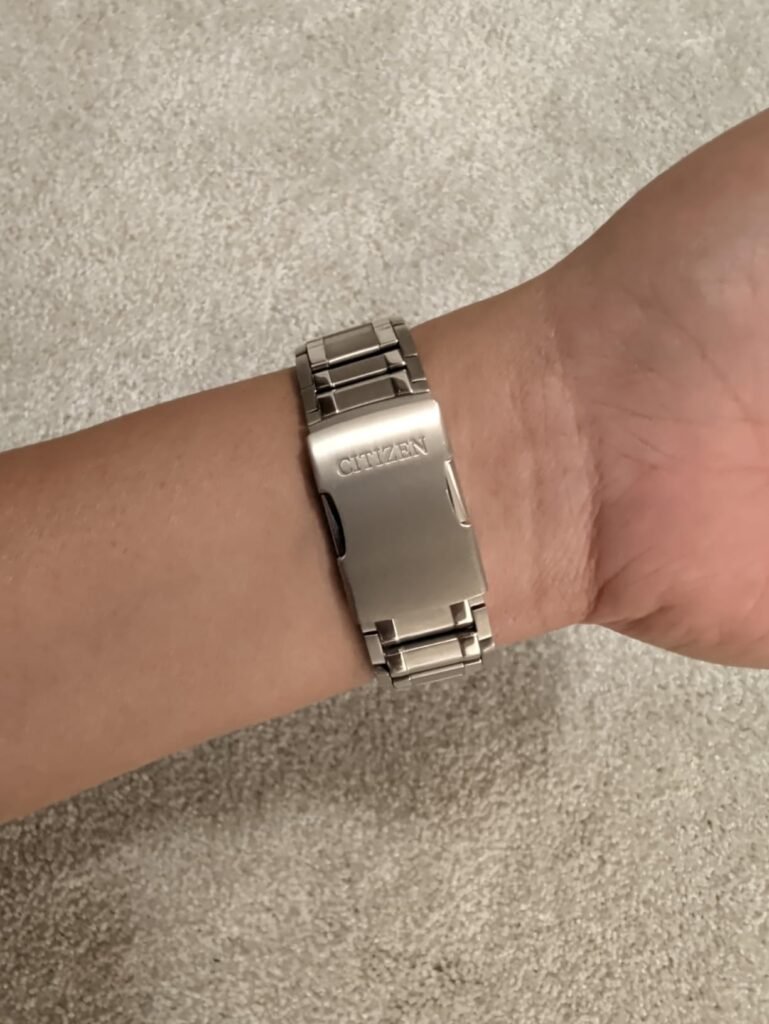
Clasp design also affects daily use. Butterfly clasps look clean but can be harder to size. Traditional deployment clasps offer more adjustment options. Folding clasps with diving extensions, found on the Mido Ocean Star, add practical utility for wearing over wetsuits. Screw links (rather than pin links) allow easier bracelet resizing without special tools, which matters if you want to adjust the fit yourself.
For daily wear, prioritize comfortable clasp mechanisms and bracelets that fit your wrist size without excessive extra links. If you plan to swap between wrist sizes (like adding a wetsuit), diving extension clasps add meaningful convenience. Match bracelet style to case style for coherent visual design.
Titanium’s biggest advantage over stainless steel is weight, which typically ranges from 40 to 50 percent lighter for equivalent construction. This matters enormously for daily wearability. A steel dive watch might weigh 180 grams and feel heavy after several hours, while an equivalent titanium version at 100 grams disappears on the wrist for all-day comfort. For people who currently avoid substantial watches due to weight, titanium can be transformative.
Weight also affects perceived quality in interesting ways. Some buyers initially find titanium watches feel too light, expecting substantial weight to indicate premium construction. This is purely psychological, since titanium’s lightness reflects a superior material rather than reduced quality. Given a few days of wear, most buyers come to prefer the titanium lightness over the fatigue that heavier steel watches produce.
If you’ve struggled with heavier watches or plan to wear the watch for full days regularly, titanium’s weight advantage is genuinely significant. If you specifically enjoy the heft of substantial steel watches, titanium may feel too light. Consider trying both if possible before committing.
Setting up a new titanium watch starts with proper sizing of the bracelet. Most bracelets ship with extra links to accommodate larger wrists, and these need to be removed to fit properly. If your watch uses screw links, you can adjust yourself with a small screwdriver, though be careful not to lose the small screws. Pin-link bracelets require a special punch tool or should be sized at a jeweler. Aim for a fit that allows one finger to slide between the bracelet and your wrist for the optimal balance of security and comfort.
Maintenance for titanium watches is generally simpler than steel watches, since titanium doesn’t rust and resists most environmental damage. Wipe the watch down with a soft cloth after exposure to sweat, saltwater, or heavy dirt. For deeper cleaning, use warm water with mild soap and a soft toothbrush to gently work between bracelet links, then rinse thoroughly and dry with a lint-free cloth. Automatic movements should be serviced every 5-10 years by a qualified watchmaker, while solar and quartz movements rarely need service. Check water resistance seals every 2-3 years, especially if you dive or swim regularly with the watch.
Long-term care includes storing the watch properly when not in use. Titanium watches can develop small scratches over years of wear, and while these are cosmetic rather than functional, storing in a soft pouch or watch box prevents unnecessary damage. Automatic watches benefit from being wound periodically or kept in a watch winder if you own multiple pieces and rotate between them. Avoid exposing any watch to strong magnetic fields (like MRI machines or industrial magnets), and keep all watches away from extreme temperatures that can affect lubricants and seals. If you notice condensation inside the crystal or hear unusual sounds, have the watch inspected promptly by a qualified service center.
Titanium offers meaningful advantages including 40 to 50 percent lighter weight, superior corrosion resistance, and hypoallergenic properties that prevent skin reactions common with nickel-containing steels. The main tradeoff is that standard titanium is softer than steel and can scratch more easily unless treated with surface hardening like Citizen's Duratect or DLC coatings. For daily comfort and long-term skin compatibility, titanium wins clearly.
Standard titanium is softer than steel and can develop small scratches from regular contact with hard surfaces. However, surface-treated titanium like Citizen's Super Titanium or DLC-coated titanium (as found on the Garmin fenix 8) offers scratch resistance that meets or exceeds stainless steel. If scratches concern you, look specifically for surface-hardened titanium or accept that some minor marks are the tradeoff for the material's other benefits.
Yes, provided the specific watch has adequate water resistance rating. Titanium itself resists saltwater corrosion better than steel, making it particularly well-suited for water use. For swimming, look for at least 50-meter (5 ATM) rating. For snorkeling, 100-200 meters is safer. For scuba diving, choose watches rated 200 meters or higher, ideally with ISO 6425 certification like the Certina DS Action Diver or Citizen Promaster Sea.
Quality titanium watches from established brands can easily last 20-30 years or more with proper care. Titanium cases and bracelets resist corrosion and structural degradation better than most materials, so the limiting factor is usually the movement rather than the case. Solar quartz movements from Citizen and mechanical movements from Swiss brands can operate reliably for decades with periodic service. Smart watches have shorter useful lives due to software obsolescence, typically 4-7 years.
Yes, titanium is one of the most biocompatible metals used in consumer products, which is why it's commonly used in medical implants. People with nickel allergies who react to standard stainless steel watches can typically wear titanium without issue. This makes titanium watches particularly valuable for anyone with sensitive skin or contact dermatitis from other watch materials.
Titanium is more difficult to machine than steel, requiring specialized tools and slower manufacturing processes. The raw material also costs more than steel. These production factors typically add $100 to $300 to the price of a comparable titanium watch versus its steel equivalent. For watches you plan to wear regularly for many years, this premium usually pays off through improved comfort and durability.
Automatic movements offer mechanical craftsmanship and the tradition of watchmaking heritage, but require winding through wear or a winder, and need service every 5-10 years. Solar quartz movements never need battery replacement and offer atomic timekeeping precision, but lack the mechanical soul enthusiasts value. Choose based on whether you value tradition and craftsmanship (automatic) or convenience and precision (solar quartz).
Use warm water with mild soap and a soft toothbrush to gently clean between bracelet links, working carefully to reach into all the crevices where skin oils and debris accumulate. Rinse thoroughly with clean water and dry with a lint-free cloth. For deeper cleaning, an ultrasonic cleaner works well for the bracelet alone (with the watch case protected from the water). Avoid harsh chemicals or abrasive cleaners that could damage the surface finish.
For active users who value both durability and comfort during long wear, titanium smartwatches like the Samsung Galaxy Watch Ultra2 or Garmin fenix 8 justify their premium prices. The material is lighter than steel for all-day comfort, more scratch-resistant than aluminum, and offers better corrosion resistance for outdoor use. If you'll wear the smartwatch primarily indoors or for lighter activities, aluminum versions offer most of the same functionality at lower cost.
The Citizen Promaster Air Skyhawk stands out as the strongest overall pick for buyers who want the most complete titanium watch package available today. Super Titanium construction delivers durability and comfort well beyond standard titanium, atomic timekeeping keeps time perfectly accurate across international travel, Eco-Drive solar power eliminates battery worry indefinitely, and the 5-year warranty backs the long-term investment. For pilots, travelers, and anyone who values maximum functionality, it's difficult to find a stronger combination.
Meaningful alternatives fill important niches for different buyers. The Garmin fenix 8 Solar Sapphire delivers premium outdoor smartwatch capability with DLC titanium construction for serious athletes. The Samsung Galaxy Watch Ultra2 brings titanium construction to Android smartwatch enthusiasts. Swiss automatic options like the Tissot PRX, Mido Ocean Star, and both Certina DS Action models satisfy traditional watch enthusiasts who value mechanical craftsmanship. The Citizen Brycen Sport delivers exceptional value in Super Titanium under $320.
The right choice ultimately depends on your priorities and daily wear context. If you value atomic timekeeping and solar convenience, choose a Citizen Eco-Drive model. If you want Swiss automatic mechanical heritage, choose a Certina, Mido, or Tissot. If you need modern smartwatch functionality with titanium construction, choose Samsung or Garmin. Match the watch to your genuine use case rather than the flashiest specifications, and it will serve you well for years or decades to come.