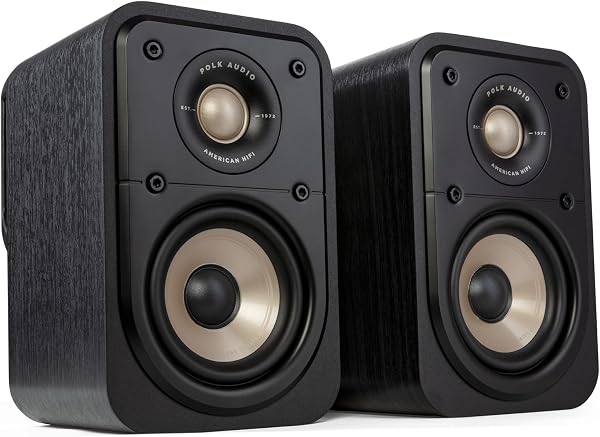
Polk Audio Signature
9.2Editor scorePassive bookshelf pair
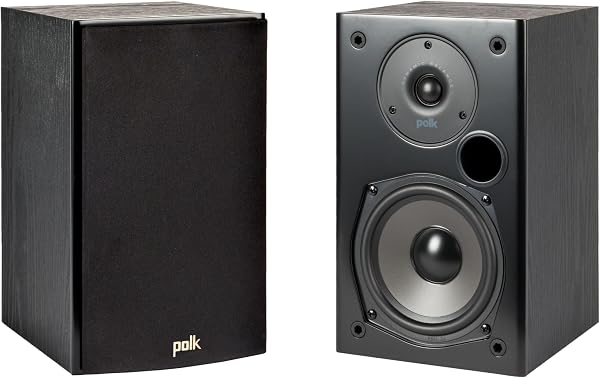
One-inch Terylene tweeter
Four-inch woofer
Power Port bass
Find the best surround sound speakers for movies and games. We compare 10 systems by channel count, Dolby Atmos, bass, wireless rear speakers, and value.

Finding the right surround sound speakers for 2026 means matching channel count, Dolby Atmos support, bass depth, and rear-speaker wiring to your room and budget. We compare 10 standout options by driver configuration, amplification, connectivity, app tuning, placement flexibility, and overall value for movies, games, and music.
The category spans passive bookshelf pairs and complete soundbar systems with wireless rears and subwoofers. Some focus on true discrete channels and timbre matching, while others prioritize easy setup and 3D audio formats. Bass response, room size, and whether you already own an AV receiver will shape which path makes sense for you.
Use this guide to sort compact 2.0 bars from full 7.1 and 5.1.4 systems. Think about your seating layout, ceiling height, and tolerance for cables before choosing. Whether you want an easy upgrade for a TV or a serious home theater foundation, the right mix of channels, bass, and features will transform your listening.
We compared 10 surround sound speaker systems using the details that actually help a buyer decide: channel configuration, Dolby Atmos support, subwoofer size and bass extension, wireless rear flexibility, power ratings, app tuning, placement options, and value. The notes focus on practical trade-offs so each pick connects to how people actually set up, wire, and listen in real rooms.


Compare key features, scores, and current prices side by side. A shorter feature list means fewer details were available, not necessarily fewer capabilities.




The ULTIMEA Aura 420W is a 7.1 Dolby Atmos soundbar system with a 5.25-inch subwoofer and a 420W peak power rating. It combines a soundbar, four surround speakers, and a subwoofer to distribute audio around the room. HDMI eARC provides a single-cable connection to compatible TVs, supporting higher-bandwidth audio than standard ARC and simplifying the setup.
We may earn a commission when you buy through this link, at no additional cost to you.
The rear right surround speaker connects wirelessly to the soundbar, while the rear left connects by wire to the right rear. This hybrid approach reduces long cable runs between the front and rear of the room. Dolby Atmos processing adds height and movement cues, and the 5.25-inch subwoofer with BassMX technology handles low-frequency impact for action scenes and music.
The Ultimea app offers 121 EQ presets, a 10-band equalizer, and six modes including Movie, Music, Voice, Sport, Game, and Night. HDMI eARC also enables CEC control, so your TV remote can handle power and volume. The system is recommended for rooms of 108 to 270 square feet, which suits most living rooms and media rooms.
HDMI eARC supports higher bandwidth than optical or standard ARC, allowing lossless surround formats from your TV. It also simplifies cabling and enables CEC control with a single remote.
This system is a strong pick for shoppers who want a high-power 7.1 Atmos setup with eARC and app tuning without separate components. It offers more power and a larger subwoofer than the A60 Pro, making it a better fit for dedicated movie rooms.
Buyers who want a fully wireless rear speaker pair with no wires at all.
We may earn a commission when you buy through this link, at no additional cost to you.
The Polk Audio Signature Elite ES10 is a pair of passive bookshelf speakers designed for listeners building a proper component-based home theater. They work as side, rear, or elevation surrounds, and their timbre matching with the wider Signature Elite series makes them a smart choice if you plan to add a matching center channel, towers, and subwoofer later. The Dynamically Balanced Acoustic Array with precision crossovers keeps the sound cohesive across the front and rear of the room.
We may earn a commission when you buy through this link, at no additional cost to you.
Each speaker uses a one-inch Terylene tweeter and a four-inch woofer. The patented Power Port technology is the standout bass feature, delivering roughly 3dB more output than a conventional port while reducing turbulence and distortion. High sensitivity and compatibility with 4- and 8-ohm amplifiers mean they are easy to drive from most AV receivers, including those handling Dolby Atmos and DTS:X.
Placement is flexible: use them on stands, or mount them on the wall using the screw inserts and keyhole slots for directional firing. Because they are passive, you will need an AV receiver or amplifier to power them, and a subwoofer is advisable for full-range bass. The bold modern cabinet design looks at home in most living rooms.
Timbre matching keeps the tonal character consistent as sound pans from front to rear speakers. Mixing brands can make surround effects sound detached, so matching within the Signature Elite series is a practical advantage.
Choose the ES10 pair if you already own or plan to buy an AV receiver and want surround speakers that blend seamlessly with a larger Polk system. They are not a standalone solution, but as part of a component setup they offer strong value and upgrade potential.
Buyers who want an all-in-one system without a separate AV receiver.
We may earn a commission when you buy through this link, at no additional cost to you.
The ULTIMEA Aura A40 Pro is a complete 7.1 soundbar system for shoppers who want surround sound without an AV receiver. It combines three main channels with four surround speakers, two wired front surrounds and two rear surrounds, to spread audio around the listening area. The hybrid rear connection pairs the right rear speaker wirelessly with the soundbar while the left rear connects by wire to the right, reducing long cable runs across the room.
We may earn a commission when you buy through this link, at no additional cost to you.
VocalMatrix processing extracts vocals and redistributes them across the rear channels to maintain accurate dialogue positioning, while VoiceMX boosts the 120Hz to 6kHz vocal range for clearer speech. The subwoofer uses an 18mm high-excursion driver and a 6.1L tuned cabinet with BassMX technology, reaching down to 45Hz for stronger action-scene impact than compact subs. Bluetooth 6.0 improves connection stability over older versions.
The Ultimea app adds a 10-band graphic EQ, 121 sound presets, and 13 adjustable surround levels, so you can tune the system to your room and preferences. Setup is simpler than a component system, but the rear-left speaker still requires a wire to the right rear, so plan the placement around a nearby power outlet and short cable run.
The right rear speaker connects wirelessly to the soundbar, and the left rear connects by wire to the right rear. This cuts the longest cable run but still requires a short wire between the rear pair, so place them near a power source.
This system suits renters, apartment dwellers, and anyone who wants enveloping 7.1 sound without separate components. It is not a true Dolby Atmos setup, but for standard surround content and gaming it offers a lot of channels for the price.
Listeners who specifically want overhead Dolby Atmos height effects.
We may earn a commission when you buy through this link, at no additional cost to you.
The ULTIMEA Aura A60 Pro adds Dolby Atmos processing to a 7.1 channel layout, aiming to create a more three-dimensional soundscape than a standard surround bar. It includes three main channels, four surround speakers, and a 5.25-inch wired subwoofer with BassMX technology. The rear right speaker pairs wirelessly with the soundbar, while the rear left connects by wire to the right rear, keeping cable clutter manageable.
We may earn a commission when you buy through this link, at no additional cost to you.
Dolby Atmos processing enhances the sense of height and movement in compatible content, though the system relies on virtualization rather than dedicated up-firing drivers. The 5.25-inch subwoofer produces deeper bass than smaller compact subs, and the optimized magnetic structure helps with control at higher volumes. The system is recommended for rooms between 108 and 270 square feet, which covers most living rooms.
The Ultimea app offers 121 professionally tuned EQ presets, a 10-band equalizer, and six tailored modes including Movie, Music, Voice, Sport, Game, and Night. Setup is straightforward for a soundbar system, and the wired front surrounds add width to the front stage. Plan the rear speaker placement around a power outlet for the wireless right rear and a short wire to the left rear.
Virtual Atmos processing creates height cues from surround speakers, while up-firing drivers bounce sound off the ceiling for a more physical height effect. Virtual processing is easier to set up but less convincing in rooms with high ceilings.
Choose the A60 Pro if you want Dolby Atmos processing and a larger subwoofer without a receiver-based system. It is a strong value for movie lovers, though shoppers seeking true overhead effects should consider up-firing designs.
Listeners with very high ceilings who want the most convincing overhead effects.
We may earn a commission when you buy through this link, at no additional cost to you.
The Saiyin Sound Bar with Subwoofer is a budget-friendly 2.1-style system for shoppers who want better TV audio without spending much. It pairs a compact soundbar with a dedicated subwoofer for deeper bass than a TV's built-in speakers. Three EQ modes let you switch between news, movie, and music profiles, and the 28-degree sound dispersion is designed to keep the listening experience consistent for viewers sitting close and far.
We may earn a commission when you buy through this link, at no additional cost to you.
Connectivity includes Bluetooth for streaming from phones and computers, plus optical and auxiliary inputs for TVs and other devices. The three-color LED indicator helps identify the active connection mode, and a volume progress bar shows the level. A remote control is included, and the system is compatible with some Fire TV remotes.
The key limitation is format support: the system is not compatible with Dolby or DTS audio, so you need to set your TV and streaming device to PCM or stereo output for consistent sound. It also lacks discrete rear surround speakers, so the surround effect relies on processing rather than true channel separation. Setup is simple, but note that the subwoofer must connect to the SUB OUT port, not the AUX IN port.
Because the system does not decode Dolby or DTS, set your TV and streaming device to PCM or stereo output. This avoids silence or distortion when playing content with surround soundtracks.
Choose this system if you want an inexpensive upgrade for a bedroom, small living room, or PC setup and do not need true surround channels or premium formats. It delivers strong value for casual viewing and music.
Buyers who want true discrete surround channels or Dolby Atmos support.
We may earn a commission when you buy through this link, at no additional cost to you.
The ULTIMEA Skywave X50 is a premium 5.1.4 wireless surround system built for shoppers who want immersive home theater without running speaker cables around the room. Dual 5GHz wireless transmission connects the rear and height speakers, and the system is engineered to minimize interference and dropouts. The 5.1.4 layout adds height channels to the traditional surround configuration, so sound can move above and around you.
We may earn a commission when you buy through this link, at no additional cost to you.
Gravus Ultra-Linear Bass technology delivers sub-bass down to 28Hz through an oversized waveguide and precision acoustic chamber. A GaN amplifier provides up to 98% efficiency and faster response than silicon, with lower heat and clean audio at high volumes. The NEURACORE multi-channel engine uses a triple-core DSP and dual-core MCU for 24-bit/192kHz processing with under 0.5% distortion, supporting up to 17 channels for precise imaging.
With 760W peak power, the X50 has ample headroom for action movies and bass-heavy music. 4K HDR pass-through preserves video quality from source to TV, and the metal grille, rose gold accents, and wood-crafted subwoofer give the system a premium look. Because the rear speakers are fully wireless, placement is flexible, but a stable 5GHz network environment helps ensure reliable performance.
The 5.1.4 configuration includes five ear-level channels, one subwoofer channel, and four height channels. The height channels create overhead effects for Dolby Atmos and DTS:X content, adding a sense of vertical space.
This system suits dedicated home theater enthusiasts who want a wireless 5.1.4 setup with strong bass and high power. It costs significantly more than budget bars, but the channel count, wireless freedom, and amplification justify the investment for serious movie rooms.
Budget-focused shoppers or rooms with crowded 5GHz wireless environments.
We may earn a commission when you buy through this link, at no additional cost to you.
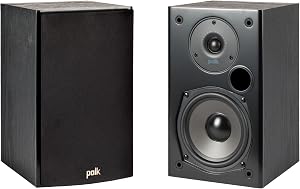
The Polk Audio T15 is a pair of passive bookshelf speakers that serves as an affordable entry point into component-based surround sound. A 0.75-inch tweeter and 5.25-inch Dynamic Balance driver deliver clear, balanced sound with reasonable bass even at low volumes. They can be used as front, left-right, or rear speakers in a home theater setup, and they are wall-mountable for flexible placement.
We may earn a commission when you buy through this link, at no additional cost to you.
Because they are passive, the T15 pair requires an AV receiver or amplifier to power them. That is a downside for shoppers who want an all-in-one solution, but an advantage for anyone building a system gradually. Polk designed the T15 to pair with T50 towers, a T30 center channel, and a subwoofer, so you can start with a pair and expand to a full 5.1 setup over time.
Setup is straightforward: connect speaker wire to your AV receiver and you are ready to listen. The 5.25-inch driver provides more low-end output than the smaller woofer on the ES10, though a subwoofer is still recommended for full-range bass. The speakers are compact enough for bookshelves or stands and can be wall-mounted with appropriate brackets.
A passive bookshelf pair lets you start with two speakers and add a center, subwoofer, and surrounds later. This gradual approach spreads the cost and lets you upgrade as your budget allows.
Choose the T15 pair if you want an inexpensive, reliable foundation for a component surround system and are willing to add a receiver and subwoofer. They are a strong value for beginners and a good match for Polk’s T-series expansion path.
Buyers who want a complete surround system in one box without separate components.
We may earn a commission when you buy through this link, at no additional cost to you.
The ULTIMEA 5.1.2 Atmos soundbar uses dedicated up-firing drivers to create height effects without a receiver-based system. The 5.1.2 configuration includes five ear-level channels, one subwoofer channel, and two up-firing height channels. Neodymium internal magnets and 18-core voice coils in the up-firing drivers enhance vertical throw and high-frequency dynamics, helping the Atmos effect feel more focused.
We may earn a commission when you buy through this link, at no additional cost to you.
SurroundX technology combines two rear surround speakers and dual up-firing Atmos drivers to build a 360-degree sound field with intelligent spatial algorithms. HDMI eARC supports up to 37Mbps bandwidth for lossless 5.1.2-channel audio, and CEC lets the TV and soundbar work as one for power, volume, and input sync. The system is not compatible with DTS, so DTS-heavy discs may need conversion.
The Ultimea app provides a 13-step surround level adjustment from -6 to +6, a 10-band graphic EQ, and 121 preset sound settings. Up-firing height effects work best in rooms with flat, reflective ceilings at a typical height; very high or heavily treated ceilings can weaken the effect. Rear surround speakers add envelopment, and the subwoofer handles low-frequency impact.
Up-firing drivers bounce sound off the ceiling, so a flat, reflective ceiling at a standard height improves the effect. Avoid placing the soundbar under a shelf or in a cabinet that blocks the upward drivers.
Choose this system if you want true up-firing height channels and lossless eARC audio without separate components. It is a good middle ground for Atmos-curious shoppers, though DTS compatibility is limited.
Listeners with DTS-heavy media libraries or very high, absorptive ceilings.
We may earn a commission when you buy through this link, at no additional cost to you.
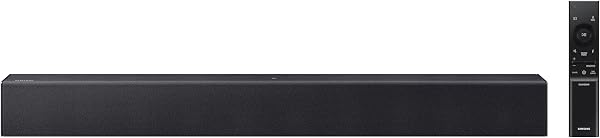
The Samsung HW B400F is a 2.0 channel soundbar with a built-in subwoofer, aimed at shoppers who want a cleaner TV setup without extra boxes or rear speakers. It delivers fuller, more balanced sound than most TV speakers, with a built-in woofer providing bass. One remote control lets you use your Samsung TV remote for power, volume, and sound effects, reducing remote clutter.
We may earn a commission when you buy through this link, at no additional cost to you.
Surround sound expansion processing projects audio in all directions to create a wider listening zone, though it is not a true discrete surround system. Voice enhance mode automatically amplifies dialogue so you do not miss quiet lines, and night mode lowers volume and bass so you can watch without waking the house. It connects to your TV wirelessly for a clutter-free setup.
This is the simplest system in the group, and that simplicity is its main appeal. It lacks rear speakers and dedicated height channels, so it cannot match a 5.1 or 7.1 setup for immersion. The built-in subwoofer is convenient but less powerful than a separate subwoofer, so bass-heavy movies may feel restrained compared with larger systems.
A 2.0 soundbar is best for small rooms where rear speakers are impractical. It improves dialogue and adds some bass without the setup complexity of a multi-speaker system.
Choose the B400F if you want a minimalist sound upgrade for a bedroom or secondary TV and use a Samsung TV. It is not a serious surround solution, but it is easy to live with and improves dialogue clarity significantly.
Listeners who want true surround immersion or deep, room-shaking bass.
We may earn a commission when you buy through this link, at no additional cost to you.
The Logitech Z906 is a THX-certified 5.1 speaker system built for gamers and movie lovers who want powerful, discrete surround sound without an AV receiver. It delivers 1000W peak power and 500W RMS, with built-in Dolby Digital and DTS decoding for authentic surround from compatible sources. Five satellite speakers and a subwoofer create a traditional surround layout with clear channel separation.
We may earn a commission when you buy through this link, at no additional cost to you.
Connectivity is unusually generous: 3.5mm, RCA, six-channel direct, digital coaxial, and optical inputs let you connect up to six devices at once. A control console and wireless remote let you adjust power, volume, and individual speaker levels. The satellite speakers and center channel are wall-mountable, giving you flexibility in placing the surround channels.
Because the speakers are wired, you will need to plan cable runs around the room. The system also lacks HDMI, Bluetooth, and modern app tuning, so it is best paired with a PC, game console, or TV with optical output. For pure 5.1 playback of Dolby Digital and DTS content, it remains a capable and powerful option.
THX certification indicates the system meets specific performance standards for volume, distortion, and imaging in a home theater setting. It is a useful quality signal, though it does not guarantee compatibility with every modern format.
Choose the Z906 if you want a proven THX-certified 5.1 system for gaming or a dedicated media room and do not need the latest wireless or Atmos features. It is a strong value for buyers who prioritize raw power and discrete channels.
Buyers who want wireless rear speakers, HDMI eARC, or Dolby Atmos support.
We may earn a commission when you buy through this link, at no additional cost to you.
A surround sound system can transform movie night, but the category spans passive bookshelf pairs, all-in-one soundbars, and THX-certified 5.1 packages. This guide covers the factors that genuinely matter—channel configuration, Dolby Atmos, bass, wireless rears, connectivity, room size, and expandability—so you can choose a system that fits your space and habits.
Channel count describes how many discrete audio channels a system can reproduce. A 2.0 or 2.1 system uses front speakers and optionally a subwoofer, creating a wide stage but no true rear envelopment. A 5.1 system adds two rear surrounds, while a 7.1 system adds side surrounds for smoother pans around the listener. Height channels, denoted by the third number in formats like 5.1.2 or 5.1.4, add overhead effects.
More channels generally mean more immersion, but room layout matters as much as the number. A 7.1 system in a small room with rear speakers crammed behind the couch may not outperform a well-placed 5.1 setup. Consider where you can place rear and height speakers before chasing a higher channel count. Virtual processing can widen the soundstage, but discrete speakers create more convincing separation.
Decision advice: Choose 5.1 or 5.1.2 for most living rooms. Step up to 7.1 or 5.1.4 only if your seating and room shape allow proper rear and height placement.
Dolby Atmos adds height information to surround content, allowing sounds to move above and around you. There are two main approaches in this category: up-firing drivers that bounce sound off the ceiling, and virtual processing that creates height cues from ear-level speakers. Up-firing drivers can be more convincing in rooms with flat, reflective ceilings at standard heights.
Atmos performance depends heavily on the room. High ceilings, beams, or absorptive treatments can weaken the bounce effect. Virtual Atmos is easier to set up and less dependent on ceiling geometry, but it is generally less precise. If Atmos is a priority, look for systems with dedicated up-firing drivers and place the soundbar where the upward drivers are not blocked.
Decision advice: Prioritize up-firing drivers if you have a standard flat ceiling and want the most convincing height effect. Choose virtual Atmos if your room layout makes ceiling bounce impractical.
Bass is what gives movies and music weight. A dedicated subwoofer generally outperforms a built-in woofer, moving more air and reaching lower frequencies. Subwoofer size matters: a 5.25-inch driver typically digs deeper than a compact 18mm high-excursion driver, though cabinet tuning and amplification also play a role. Look for bass extension figures and technology names as clues, but trust your room size when deciding.
Small rooms and apartments may not need a large subwoofer, and a built-in woofer can be sufficient for dialogue-focused viewing. Larger rooms and action-movie fans benefit from a separate subwoofer with more output. Placement matters too: a subwoofer in a corner can sound boomy, while a mid-wall position may be cleaner. Some systems offer bass tuning in an app.
Decision advice: Choose a separate subwoofer for movie rooms and larger spaces. A built-in woofer is fine for bedrooms and dialogue-heavy viewing.
Rear speakers are essential for true surround, but running cables across a room is a common obstacle. Many soundbar systems use a wireless connection for the rear speakers, though the speakers still need power outlets. Some designs use a hybrid approach: one rear speaker connects wirelessly to the soundbar while the other connects by wire to the first, reducing the longest cable run.
Fully wireless rear systems offer the most placement freedom but can be sensitive to wireless interference. Hybrid systems are a practical compromise, requiring only a short wire between the rear pair. Passive bookshelf speakers require speaker wire to an AV receiver, which is the most flexible but also the most cable-intensive option.
Decision advice: If cable clutter is a dealbreaker, choose a system with wireless or hybrid rear speakers. If you have an AV receiver and can run wire, passive speakers offer the most upgrade flexibility.
HDMI eARC is the best connection for modern TVs because it supports higher bandwidth and lossless surround formats. Optical is common and reliable but limited in bandwidth. Bluetooth is useful for streaming music from phones but not ideal for critical movie watching due to latency. Check which formats the system decodes, especially Dolby Digital, DTS, and Dolby Atmos.
Some systems do not support Dolby or DTS at all, requiring you to set your TV to PCM output. That is fine for casual viewing but limits immersion with surround content. If you have a Blu-ray player or game console that outputs DTS, confirm compatibility before buying. Multiple inputs are handy if you connect several devices.
Decision advice: Prioritize HDMI eARC if your TV supports it. Confirm Dolby Atmos and DTS support if you watch Blu-rays or play console games with surround audio.
Room size affects how much power and bass you need, and how far apart speakers should be placed. Soundbar systems often specify a recommended room size range, such as 108 to 270 square feet. Larger rooms need more output and a bigger subwoofer to fill the space, while small rooms can become boomy with too much bass.
Placement is equally important. The soundbar should sit at ear level or slightly below, centered with the TV. Rear speakers should be behind and slightly above the listening position, angled toward the seats. Up-firing Atmos drivers need a clear path to the ceiling. Avoid placing speakers inside cabinets or behind furniture.
Decision advice: Measure your room and seating distances before buying. Match system power and subwoofer size to the space, and plan speaker placement before committing to a layout.
Some shoppers want a system they can grow over time. Passive bookshelf speakers like the Polk ES10 and T15 pairs let you start with two speakers and add a center channel, subwoofer, and surrounds as budget allows. This component path requires an AV receiver but offers the most flexibility and upgrade potential.
All-in-one soundbar systems are simpler but less expandable. You generally cannot add a better subwoofer or upgrade individual channels later. If you expect to build a serious home theater over several years, a component path may be worth the extra complexity. If you want a one-and-done solution, a soundbar system is more practical.
Decision advice: Choose a component path if you plan to upgrade gradually and want the best long-term flexibility. Choose an all-in-one system if simplicity and a fixed budget matter more.
Start by placing the soundbar or front speakers at ear level, centered with your TV. Position rear speakers behind and slightly above the listening position, angled toward the seats, and ensure up-firing Atmos drivers have a clear path to the ceiling. Connect the system using HDMI eARC where possible, and set your TV’s audio output to the correct format, such as bitstream or Dolby Atmos.
Use the system’s calibration or app EQ to tune bass and surround levels to your room. Start with neutral settings, then adjust the subwoofer level and rear channel volume until effects feel balanced rather than distracting. For late-night viewing, use night mode or lower the bass to avoid disturbing others.
Keep speakers away from direct sunlight and heat, and dust them regularly with a soft cloth. Ensure ventilation around amplifiers and subwoofers. Check cables and wireless connections periodically, and update firmware through the app if available. Proper placement and modest tuning will get more from your system than aggressive EQ boosts.
It depends on the system. Passive bookshelf speakers like the Polk ES10 and T15 pairs require an AV receiver or amplifier to power them. Soundbar systems with built-in amplification, like the ULTIMEA and Samsung models, do not need a receiver. Choose based on whether you want a simple all-in-one setup or a component system with upgrade flexibility.
A 5.1 system uses five ear-level channels (front left, center, front right, and two surrounds) plus a subwoofer. A 7.1 system adds two more surround channels, typically placed to the sides, for smoother pans around the listener. The benefit of 7.1 depends on room size and speaker placement; a well-placed 5.1 system can outperform a cramped 7.1 setup.
Dolby Atmos can add height and immersion even in a small room, but the effect depends on ceiling height and reflectivity. Up-firing drivers work best with flat, standard-height ceilings. In rooms with high or absorptive ceilings, virtual Atmos processing may be more practical. If you watch a lot of Atmos content, it is worth considering.
Only if the soundbar system is designed to support optional rear speakers. Many all-in-one systems do not allow adding rear channels later. Check the product specifications before buying if expandability is important. Passive component systems with an AV receiver offer the most flexibility for adding speakers over time.
Some budget soundbar systems do not include Dolby or DTS decoders, so they require your TV or source device to output PCM or stereo audio. This is a cost-saving design choice. If you watch Blu-rays or play games with surround soundtracks, choose a system that explicitly supports Dolby Digital and DTS.
Subwoofer placement affects bass quality. A corner can reinforce bass but may sound boomy, while a mid-wall position often sounds cleaner. Try a few locations and listen for the most balanced response. Keep the subwoofer off hard, resonant surfaces and ensure it has some breathing room from walls.
Yes, wireless rear speakers still need power from a wall outlet or power strip. The wireless connection only replaces the audio cable from the soundbar to the rear speakers. Plan placement near outlets, and consider cable covers if you need to run power cords along walls.
HDMI eARC (Enhanced Audio Return Channel) supports higher bandwidth than standard ARC or optical, allowing lossless surround formats like Dolby TrueHD and DTS-HD Master Audio. It also simplifies cabling with a single HDMI cable from the TV to the soundbar and often enables CEC control with one remote.
Yes, bookshelf speakers like the Polk ES10 and T15 pairs work well as side or rear surround speakers. They are passive and require an AV receiver, but they offer flexible placement and can be wall-mounted. For the most cohesive sound, choose speakers that are timbre-matched to your front stage.
Choose a system with wireless or hybrid rear speakers to reduce long cable runs. Hybrid designs connect one rear speaker wirelessly and the other by a short wire. For component systems, use cable raceways or under-carpet tape to hide speaker wire. Plan placement near power outlets to avoid extension cords.
The Polk Audio Signature Elite ES10 stands out as the best choice for shoppers building a component home theater, thanks to its timbre matching, Power Port bass, and flexible wall-mounting. If you want a complete system without a receiver, the ULTIMEA Aura A40 Pro offers 7.1 channels and app tuning at a strong value. For premium wireless immersion, the ULTIMEA Skywave X50 delivers 5.1.4 channels and 760W of peak power.
Budget shoppers should look at the Saiyin Sound Bar for a simple, affordable upgrade with a dedicated subwoofer, or the Polk T15 pair for an entry into component surround. The ULTIMEA Aura 420W and 5.1.2 Atmos systems offer a middle ground with eARC and height effects. The Logitech Z906 remains a powerful THX-certified 5.1 option for gaming and media rooms.
Ultimately, choose a system based on your room, budget, and willingness to run cables or add components. Prioritize Dolby Atmos and up-firing drivers if height effects matter, and choose wireless rears if cable clutter is a concern. A well-matched surround system will make movies, games, and music feel more immersive for years.