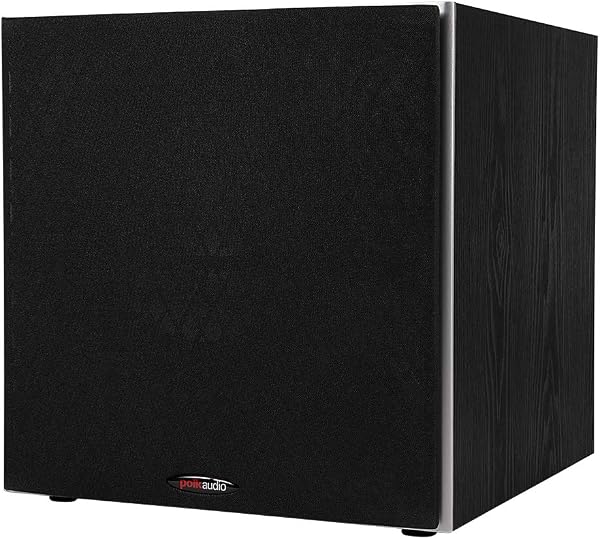
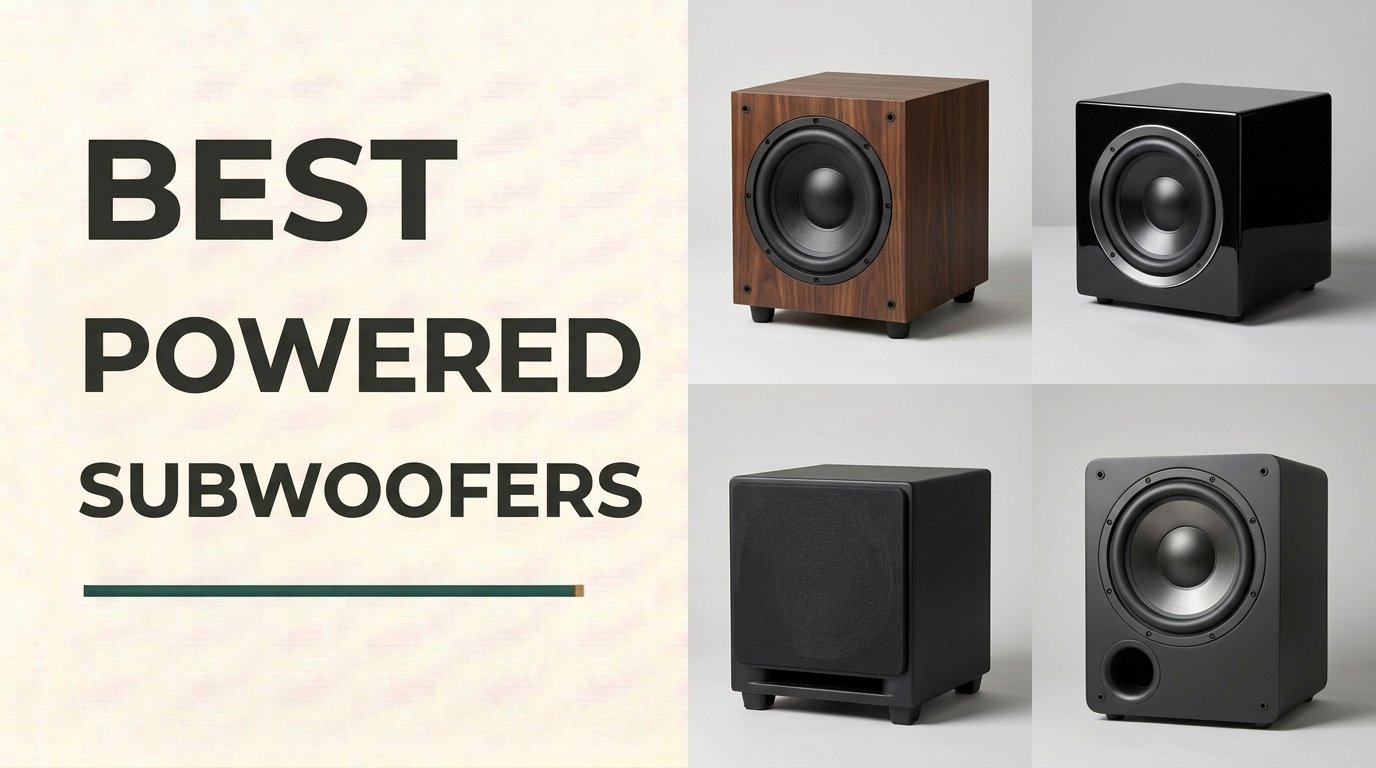
Klipsch R-120SW
9.6Editor scoreTwelve inch copper woofer
200W continuous RMS power
29Hz deep bass extension
Rear firing bass port
Find the right bass shakers for 2026. We compare 10 standout options by build quality, useful features, owner feedback, value, and everyday trade-offs.
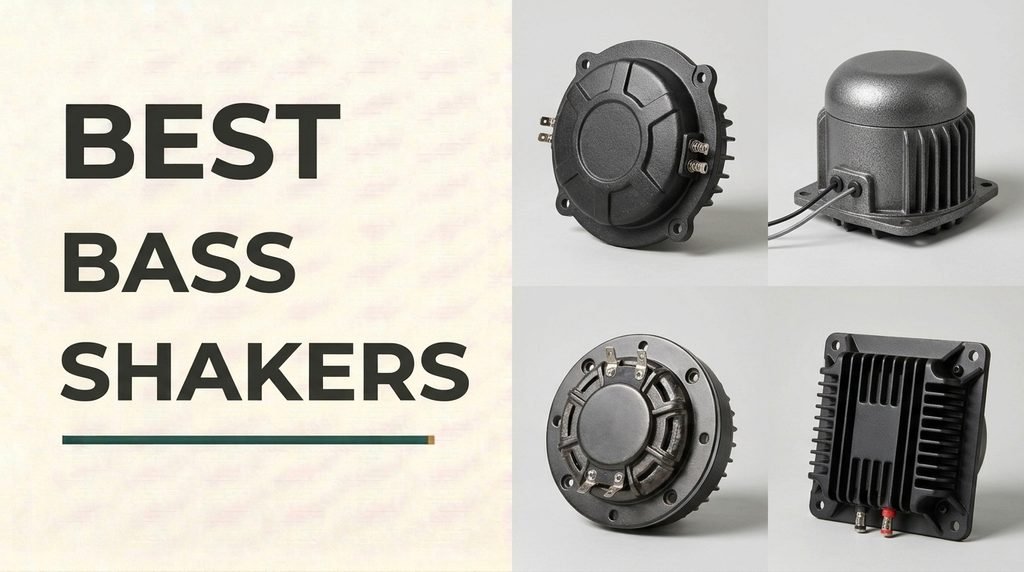
Find the right bass shakers for 2026. We compare 10 standout options by the factors that matter in this category, such as driver diameter, continuous RMS power, low-frequency extension, cabinet acoustic loading, physical floor coupling, connectivity, owner feedback, and real-world room-shaking impact.
Physical bass impact transforms how you experience home cinema, gaming rigs, and stereo music by delivering low-frequency energy you feel in your chest and seat. Whether generating floor-shaking room pressure through high-excursion cones or coupling acoustic vibrations into furniture, the right hardware bridges the gap between hearing sound and feeling it.
Choosing the right bass-shaking setup requires balancing driver excursion, amplifier headroom, cabinet placement, and signal connectivity. From compact down-firing units that directly vibrate flooring to high-output 12-inch and 15-inch acoustic powerhouses capable of visceral sub-30Hz rumble, our independent comparison helps you find the right physical bass solution.
We compared 10 bass shakers and room-shaking audio units using the details that actually help a buyer decide: driver displacement, continuous RMS and peak wattage, low-frequency extension limits, cabinet resonance damping, acoustic port tuning, floor-coupling efficiency, input compatibility, and owner feedback. The notes focus on practical trade-offs so each pick feels connected to how people actually feel visceral low-end rumble during movies, music, and gaming sessions.


Compare key features, scores, and current prices side by side. A shorter feature list means fewer details were available, not necessarily fewer capabilities.




For many gamers and movie lovers, standard cube-shaped subwoofers are simply too bulky to position near seating where physical bass is felt most intensely. The BESTISAN Basscore 80 solves this space dilemma with an innovative side-firing design that trims cabinet width down to an ultra-slim 6.2 inches (11.3"H x 6.2"W x 15.4"D), allowing it to tuck directly beside your couch, recliner, or computer desk.
We may earn a commission when you buy through this link, at no additional cost to you.
Placing a subwoofer directly against the frame of your seating creates a nearfield bass shaker effect. Because the Basscore 80 houses an 8-inch driver powered by a 100W RMS (150W peak) Class-D amplifier, having it mere inches from your chair transmits visceral 35Hz vibrations into your seat cushion without requiring excessive room volume. An adjustable low-pass filter ensures that upper vocal frequencies don’t leak into your seating area.
Practical engineering details abound on this slim enclosure. It features universal connectivity—including LFE, stereo RCA/AUX, and high-level speaker wire terminals—alongside an energy-saving 15-minute auto-standby circuit. The included 24V power adapter uses a right-angle DC plug, and BESTISAN supplies a 1.5-meter stereo RCA cable, allowing you to back the enclosure nearly flush against baseboards.
Sound energy drops over distance according to the inverse-square law. Positioning the slim Basscore 80 directly adjacent to your sofa frame maximizes tactile vibrations transferred into your body while keeping overall room volume neighbor-friendly.
If you want nearfield tactile bass shaking right at your sofa or desk without consuming floor space, the Basscore 80 is an ingenious, high-value option. Just remember to keep the side-firing woofer face unobstructed by thick blankets or sofa skirts so the driver can breathe freely.
Large home theater rooms where a single slim subwoofer must pressurize a massive open floor plan from across the room.
We may earn a commission when you buy through this link, at no additional cost to you.
The Klipsch R-120SW is built for home cinema enthusiasts and gamers who want legitimate tactile bass shaking throughout their viewing room without having to install hidden mechanical actuators. Equipped with an authoritative 12-inch front-firing driver, this high-output unit generates the physical air displacement required to vibrate floors, seat frames, and chest cavities during deep cinematic explosions and heavy musical drops.
We may earn a commission when you buy through this link, at no additional cost to you.
Acoustic impact is anchored by Klipsch’s high-excursion spun-copper Injection Molded Graphite (IMG) woofer. Because the large 12-inch cone maintains remarkable structural rigidity under extreme stroke lengths, it achieves a frequency floor of 29Hz (+/- 3dB). Backed by an internal digital amplifier supplying 200 watts of continuous RMS power and 400 watts of peak headroom, the system pushes maximum acoustic sound pressure up to an astonishing 116dB, ensuring that high-energy soundtrack transients hit with unrestrained physical force.
The cabinet utilizes a bass-reflex design tuned via a flared rear-firing port. When positioned near a corner, the rear port loads against room boundaries to amplify tactile low-end resonance across your seating area. The package includes a protective front grille, an AC power cord, and a manual, though you should pair it with a quality shielded RCA/LFE cable to connect cleanly to your AV receiver’s dedicated sub-out channel.
Generating physical vibrations that shake room surfaces requires moving massive amounts of air at frequencies below 35Hz. The R-120SW’s 12-inch diaphragm provides roughly 44 percent more cone area than standard 10-inch drivers, translating electrical wattage directly into tangible kinetic energy.
If you want genuine sub-30Hz physical bass response that shakes the room and delivers true cinema-grade tactile feedback, the Klipsch R-120SW is the benchmark choice. Buyers living in thin-walled apartment buildings or those with cramped desk setups should consider a smaller 8-inch or 10-inch model to keep structural vibration manageable.
Small bedrooms or shared apartments where 116dB of deep 29Hz vibration will travel through shared walls.
We may earn a commission when you buy through this link, at no additional cost to you.
The Klipsch Synergy Black Label Sub-100 brings visceral low-frequency slam into small and midsize entertainment spaces without commanding a premium price tag. Featuring a 10-inch front-firing driver driven by an efficient all-digital amplifier, this unit bridges the gap between modest bookshelf audio and room-energizing tactile performance.
We may earn a commission when you buy through this link, at no additional cost to you.
At the core of the Sub-100’s punch is its spun-copper Cerametallic cone material. Engineered for maximum stiffness-to-weight ratio, Cerametallic drivers execute rapid start-and-stop transients without acoustic overhang, giving kick drums, gunshots, and car crashes tight, tactile precision. The amplifier outputs 150 watts of continuous power and 300 watts of dynamic burst capability, ensuring the cone maintains controlled excursion when soundtracks demand sudden low-end energy.
Placement plays a major role in how much tactile shaking this 10-inch box delivers. Placing the Sub-100 directly into a room corner allows the two converging walls and floor to act as a natural acoustic horn, reinforcing sub-bass waves and driving mechanical energy into your floor joists. Because connection cables are not included, you will need an RCA subwoofer cable to link it with your AV receiver or processor.
Tucking the Sub-100 into a room corner boundary naturally boosts low-frequency sound pressure by several decibels. This boundary loading maximizes the physical rumble transferred through the flooring without overworking the 150W amplifier.
For shoppers seeking a budget-friendly way to introduce room-shaking tactile energy to movies and gaming consoles, the Synergy Sub-100 represents outstanding value. Users with vintage stereo amplifiers that only have bare speaker wire outputs will need to look elsewhere, as this unit requires line-level inputs.
Shoppers with older stereo gear lacking dedicated RCA sub-out jacks, or those needing high-level speaker wire terminals.
We may earn a commission when you buy through this link, at no additional cost to you.
When your goal is to shake an entire event hall, gym, or dance floor rather than just a couch, consumer living room gear falls short. The JBL IRX-115S is an uncompromising professional live sound bass shaker engineered for mobile DJs, live bands, and event producers who need chest-pounding low frequencies that physically energize an audience.
We may earn a commission when you buy through this link, at no additional cost to you.
Centering around a massive 15-inch low-frequency transducer and a muscular 1,300-watt internal power amplifier, the IRX-115S generates massive sound pressure waves that travel effortlessly across open spaces. It produces the kind of physical kick-drum punch that you feel in your sternum from thirty feet away, delivering high-output performance without thermal choking.
To make sound system setup intuitive, JBL equipped the IRX-115S with selectable crossover presets that cleanly filter low frequencies away from your top full-range PA cabinets. A hardware polarity switch lets you invert the phase instantly if boundary reflections cause low-end cancellation in tricky rooms. The top-mounted threaded pole cup allows you to mount a PA speaker directly above the sub, directing all vibrational force along a unified vertical axis.
In live sound environments, room reflections can cause the subwoofer’s output to cancel out mid-bass frequencies from main speakers. Toggling the IRX-115S polarity switch instantly flips acoustic phase 180 degrees, restoring lost low-end punch without moving heavy cabinets.
If you need high-wattage, floor-shaking low frequencies for live performances or large gathering spaces, the JBL IRX-115S is a proven performer. Home theater buyers looking for an RCA-based unit to slide next to a TV stand should stick to residential active subwoofers.
Standard home living rooms where professional XLR cabling and high-decibel PA output are inappropriate.
We may earn a commission when you buy through this link, at no additional cost to you.
The JBL Stage 2 200P in Latte proves that room-shaking low-frequency power does not have to come inside an unattractive industrial black box. Designed for critical music listeners and design-conscious home theater owners, this 10-inch unit delivers tight, rhythmic tactile punch while blending seamlessly into contemporary living rooms.
We may earn a commission when you buy through this link, at no additional cost to you.
The driver utilizes a 10-inch (250mm) polycellulose ribbed cone. The molded concentric ribs add crucial radial stiffness to the paper pulp matrix, allowing the cone to move in a true pistonic motion under heavy loads without flexing. Driven by a 150-watt RMS amplifier with 300 watts of dynamic headroom, it vents through dual rear-firing tuned ports that divide air velocity, eliminating the distracting port chuffing that plagues lesser bass-reflex cabinets.
Rear controls offer continuous dials for low-pass crossover frequency and output level, alongside a phase toggle switch to align wave timing with your main stereo speakers. This level of fine-tuning ensures that bass energy integrates tightly into the front soundstage, delivering musical rhythm you feel in your chair rather than disconnected, boomy noise.
Forcing air through a single small port tube creates high-velocity air friction that manifests as whistling or chuffing. The Stage 2 200P uses dual flared ports to distribute airflow evenly, preserving clean low-frequency wave transmission.
For buyers who want refined, articulate tactile bass that looks as sophisticated as it sounds, the Stage 2 200P is a premier choice. If your subwoofer lives out of sight inside an enclosed theater rack where aesthetic styling is irrelevant, higher-excursion 12-inch alternatives offer more raw decibels per dollar.
Dedicated dark-room theater builds where pure dollar-per-watt acoustic output outweighs aesthetic furniture design.
We may earn a commission when you buy through this link, at no additional cost to you.
Desktop gamers and nearfield PC audiophiles often struggle to find a compact subwoofer that delivers physical bass without requiring an expensive AV receiver. The Edifier T5s solves this dilemma, packing an 8-inch long-throw driver and a 70W RMS Class-D amplifier into a space-saving cabinet that sits right under a computer desk to vibrate your chair and floor.
We may earn a commission when you buy through this link, at no additional cost to you.
Despite its modest external dimensions, the T5s extends down to an impressive 35Hz, giving competitive shooters, racing simulators, and action games authentic tactile depth. The cabinet is constructed from thick 18mm medium-density fiberboard (MDF) with a front-firing driver and a right-firing acoustic port, keeping internal box resonance low so rapid bass transients stay tight, punchy, and articulate.
Connectivity is where the T5s truly leads its class. It offers two setup configurations: connect directly to any speaker system with a dedicated Sub Out, or use its RCA Signal In and Signal Out pass-through jacks to route an audio source through the sub and onward to your powered bookshelf speakers. Edifier even supplies both 3.5mm-to-RCA and dual-RCA cables in the box, alongside a 15-minute auto-standby circuit.
If your active speakers lack a dedicated sub output, the T5s acts as an analog bridge. Connect your PC or DAC to the T5s Signal In, and run the T5s Signal Out into your main speakers to add deep bass without upgrading your monitors.
For computer setups, gaming chairs, and bedroom listening stations where a giant 12-inch sub is impractical, the Edifier T5s is an ingenious, low-distortion tactile companion. Buyers looking to fill a large open-concept living room should step up to a higher-wattage 10-inch or 12-inch unit.
Large home theater rooms that require high acoustic wattage to pressurize vast open air volume.
We may earn a commission when you buy through this link, at no additional cost to you.
The Sony SA-CS9M2 is designed for listeners who want the kinetic slam of a 10-inch active driver without the distracting cabinet buzz or rattling that plagues poorly braced budget boxes. Engineered to complement Sony Core Series speakers or any standard surround setup, it delivers tight, rhythmic low-end energy suited for movies and games.
We may earn a commission when you buy through this link, at no additional cost to you.
A critical acoustic priority in the SA-CS9M2’s design is mechanical resonance suppression. Sony employs specialized bass reflex ducts engineered to suppress aerodynamic turbulence while reinforcing low-frequency sound reproduction. Simultaneously, the reinforced internal baffle suppresses unwanted cabinet vibrations, ensuring that motor energy translates into clean acoustic output rather than muddy panel resonance.
Because it balances acoustic punch with a compact footprint, the SA-CS9M2 slips comfortably into tight corners next to entertainment centers. In action movies, sudden concussive blasts register cleanly, while musical bass guitar lines maintain pitch clarity without droning overhang.
Cheap bass ports often introduce whistling noise when high-energy bass pushes air through the vent. Sony’s engineered reflex ducts smooth out air velocity, preserving low-end definition during intense movie action sequences.
If you want a dependable, resonance-controlled 10-inch subwoofer from a major audio manufacturer that delivers clean physical punch in a modest living space, the SA-CS9M2 is a solid contender. Enthusiasts seeking subterranean 20Hz-to-30Hz tactile rumble should look toward larger, higher-powered 12-inch enclosures.
Large, open-concept basements requiring extreme sound pressure levels and sub-30Hz infrasonic depth.
We may earn a commission when you buy through this link, at no additional cost to you.
The Polk Audio PSW10 has long been a staple in entry-level audio due to its bulletproof versatility and warm, accessible low-frequency response. What makes it uniquely valuable for physical bass enthusiasts running older equipment is its full array of high-level speaker wire inputs and outputs, allowing it to vibrate rooms even when connected to vintage stereo receivers that lack RCA sub outs.
We may earn a commission when you buy through this link, at no additional cost to you.
The front baffle houses a 10-inch Dynamic Balance polymer composite woofer backed by an internal 50-watt RMS amplifier capable of 100-watt dynamic peaks. Working with a tuned, front-directed port, it covers a 40Hz to 160Hz (-3dB) frequency range. While it does not delve into the infrasonic sub-30Hz territory of massive theater subs, it produces plenty of warm, tactile kick in the 40Hz to 80Hz zone where rock drums and television explosions live.
Connecting the PSW10 into an existing system is refreshingly adaptable. Run speaker wire directly from your receiver’s speaker terminals into the sub, and then continue onward to your bookshelf speakers from the sub’s output terminals. A variable 80Hz-160Hz low-pass crossover dial and a 0/180-degree phase toggle let you blend the unit seamlessly with your main soundstage.
You do not need a modern receiver with an LFE jack to get physical bass. The PSW10’s spring-clip speaker terminals pull audio signal directly from standard speaker wire without drawing power away from your main stereo amplifier.
For small-to-midsize rooms powered by traditional stereo receivers or entry-level surround gear, the Polk PSW10 remains a dependable, easy-to-use low-frequency generator. Shoppers who crave floor-shaking, sub-35Hz home theater rumble will find greater extension in Klipsch’s 10-inch and 12-inch offerings.
Dedicated home theaters requiring deep sub-35Hz infrasonic rumble or high-volume performance in vast rooms.
We may earn a commission when you buy through this link, at no additional cost to you.
The BESTISAN Down-Firing Powered Subwoofer is tailored specifically for budget-conscious shoppers who want physical, floor-transmitted tactile bass without investing hundreds of dollars. By aiming its woofer cone directly downward toward the floor rather than outward into the room, it couples acoustic energy into floorboards to generate an enveloping tactile sensation across small-to-midsize rooms.
We may earn a commission when you buy through this link, at no additional cost to you.
A major practical advantage of this down-firing architecture is physical durability. With the driver recessed safely underneath the cabinet, there is no delicate front cone or fabric grille for curious toddlers or pets to damage. Bass disperses uniformly in a 360-degree radial pattern across the floor surface, providing a smooth, room-filling low end that brings gaming consoles, soundbars, and TV audio to life.
Connectivity on this compact box is surprisingly comprehensive. The rear panel accommodates single-cable LFE outputs, stereo RCA jacks, a 3.5mm mini-jack AUX port, and high-level spring-clip speaker wire inputs and outputs. You can connect it to pre-amped turntables, TVs with analog audio outs, gaming PCs, or standard AV receivers. Just note that the input stage is optimized for signals at or below 850mV, so avoid overdriving it with high-gain line amplifiers.
Down-firing subwoofers use the physical floor as an acoustic loading baffle. The downward-directed sound pressure waves travel directly across the flooring material, producing an immediate tactile rumble under your feet and chair.
If you want an ultra-affordable way to physically vibrate your floor and fill out thin soundbar audio, this down-firing BESTISAN sub is a remarkably cost-effective solution. High-end home theater purists seeking massive decibel output and precise sub-30Hz acoustic calibration should budget for a larger, higher-powered unit.
Large entertainment rooms or high-power theater systems that require high continuous RMS wattage.
We may earn a commission when you buy through this link, at no additional cost to you.
The JBL Professional PRX915XLF sits at the pinnacle of high-output low-frequency reproduction, engineered for commercial event spaces, touring musicians, and production companies that need clean, tour-grade bass shaking across hundreds of audience members. Powered by a colossal 2,000-watt Class-D amplifier and a 915SG 15-inch ferrite magnet transducer, it produces concert-level physical impact with ultra-low distortion.
We may earn a commission when you buy through this link, at no additional cost to you.
Beyond brute wattage, the PRX915XLF incorporates a class-leading onboard Digital Signal Processor (DSP) accessible via a rear color LCD screen or wirelessly through the JBL Pro Connect app over Bluetooth Low Energy. Sound engineers can deploy a 6-band parametric EQ to carve out boomy room resonances, set exact low-pass filter slopes, and dial in up to 20 milliseconds of digital delay to phase-align the sub with main arrays.
Durability is uncompromising. The enclosure is constructed from road-ready 18-millimeter birch plywood reinforced with optimized internal bracing. This rigid wooden matrix prevents cabinet flexing under extreme sound pressure levels, ensuring that all 2,000 watts of motor drive translate into tight, visceral bass projection rather than lost cabinet vibration.
Walking a venue while adjusting sub-bass is critical for even coverage. Using the JBL Pro Connect app, you can stand in the audience and adjust the 6-band parametric EQ and delay in real time from your mobile device.
For commercial venues, live sound engineers, and event producers who need wireless system tuning alongside concert-grade physical bass slam, the PRX915XLF is an unmatched professional tool. Casual home theater enthusiasts looking for a living room sub should select a residential RCA-based model.
Home theater or desktop setups requiring consumer RCA connections and compact residential styling.
We may earn a commission when you buy through this link, at no additional cost to you.
Choosing equipment to generate physical, visceral bass requires understanding how low-frequency acoustic energy interacts with room boundaries, furniture, and your body. Whether you want an active subwoofer that moves massive air volume to shake the room, a slim unit placed near your seating, or a direct down-firing design that couples with your floorboards, the technical criteria below will help you select the ideal setup.
Low-frequency audio is unique because humans perceive it through tactile sensation as well as auditory hearing. Frequencies below 40Hz produce long acoustic wavelengths that physically flex floorboards, vibrate furniture frames, and resonate in your chest cavity. To achieve this bass-shaking effect through acoustic speakers, a driver must displace a significant volume of air or be placed in close physical proximity to your body.
Large front-firing active subwoofers like the 12-inch Klipsch R-120SW generate room-shaking energy by pressurizing the entire air volume of the space, creating uniform physical impact throughout the room. Conversely, ultra-slim units like the 6.2-inch BESTISAN Basscore 80 are designed for nearfield placement directly beside a couch, recliner, or computer desk. Nearfield placement leverages proximity to transfer tactile vibrations directly into furniture cushions before acoustic energy dissipates across the room.
If you have a dedicated room and want everyone on the couch to feel the rumble, choose a high-displacement 10-inch or 12-inch active sub. If you live in an apartment with neighbors nearby, placing a slim nearfield unit right against your seating delivers strong tactile sensation at lower overall room volume.
A subwoofer’s physical cone area and excursion capability directly dictate how low it can play and how much tactile vibration it can generate. Compact 8-inch drivers, such as those found in the Edifier T5s and BESTISAN Basscore 80, feature lighter moving mass and nimble motor response, making them ideal for desktop gaming and nearfield music down to roughly 35Hz. However, they lack the raw surface area needed to generate concussive subterranean theater effects in large spaces.
Stepping up to 10-inch drivers—like the Klipsch Synergy Sub-100, JBL Stage 2 200P, Sony SA-CS9M2, and Polk PSW10—strikes a versatile balance between punchy mid-bass speed and room-filling low-end weight. For authentic cinematic rumble down to 29Hz, a 12-inch high-excursion driver like the Klipsch R-120SW moves substantially more air per stroke, pressurizing medium-to-large home theaters with 116dB of acoustic force. In live sound spaces, 15-inch woofers like those on the JBL IRX-115S and PRX915XLF project physical kick-drum punch across open halls.
Target an 8-inch model for desks or small bedrooms, a 10-inch unit for balanced living room home theater use, and a 12-inch or larger cone if your primary goal is sub-30Hz floor-shaking movie impact.
Amplifier ratings on low-frequency equipment are frequently listed as continuous (RMS) wattage and peak (dynamic) wattage. Continuous RMS power measures the sustained clean electrical output the internal amplifier can deliver without clipping or overheating—ranging from 50W RMS on the Polk PSW10 and 70W RMS on the Edifier T5s, up to 150W RMS on the Klipsch Sub-100 and JBL Stage 2 200P, 200W RMS on the Klipsch R-120SW, and 2,000W Class-D on the JBL PRX915XLF.
Peak or dynamic wattage indicates the short-term burst power the amplifier can supply for fractions of a second during concussive movie explosions or sudden bass drops. Having ample dynamic headroom prevents the amplifier from squaring off the audio waveform, which causes harsh distortion and voice coil overheating. Modern digital and Class-D amplifiers operate with high electrical efficiency, generating substantial motor drive while running cool inside enclosed cabinets.
Evaluate subwoofers primarily by continuous RMS power rather than marketing peak numbers. For small rooms, 50W to 100W RMS is sufficient, while medium and large rooms require 150W to 200W+ RMS for convincing tactile authority.
Where the woofer cone points has a direct influence on how vibrational energy transfers into your room. Down-firing subwoofers, such as the budget BESTISAN Down-Firing Sub, direct the driver straight into the floor surface. This acoustic loading couples pressure waves directly into floorboards, creating an immediate tactile vibration under your feet while radiating sound omnidirectionally in 360 degrees.
Front-firing subwoofers, such as the Klipsch R-120SW, Klipsch Sub-100, and Sony SA-CS9M2, launch pressure waves horizontally into the room toward your listening position, delivering punchy mid-bass impact. Side-firing models like the BESTISAN Basscore 80 relocate the cone to a side panel, allowing the front profile to remain slim enough to fit tight gaps between walls and furniture frames.
Choose a down-firing model if you want direct floor-transmitted kinetic rumble and have pets or children who might damage exposed cones. Choose a front- or side-firing unit if you prefer punchy, directional impact and want the option for close furniture placement.
A bass shaker can only deliver clean, tactile low-end if its cabinet is structurally inert. When an enclosure flexes or vibrates sympathetically with the woofer cone, that panel resonance smears acoustic timing, turning crisp basslines into muddy, droning noise. Premium cabinets use dense 18mm MDF or braced birch plywood—seen on the Edifier T5s and JBL PRX915XLF—to lock the baffle rigid so all motor energy moves air rather than wood.
Port design is equally important in ported (bass-reflex) enclosures. As high-excursion cones push air rapidly through port tubes, sharp internal edges create turbulence known as port chuffing. Advanced enclosures mitigate this using flared rear reflex ports (Klipsch R-120SW), dual tuned ports (JBL Stage 2 200P), or engineered noise-suppressing ducts (Sony SA-CS9M2) that divide airflow velocity for whisper-quiet port operation.
Inspect cabinet build materials and port geometries before buying. Heavy cabinets made from thick MDF or braced wood provide tighter, punchier physical feedback than lightweight, thin-walled enclosures.
Connecting low-frequency equipment to your existing electronics requires matching input ports. If you own a modern AV receiver or television soundbar with a dedicated subwoofer output, a single RCA cable connected to the sub’s LFE (Low-Frequency Effects) or mono Line In port is all you need—supported by virtually all residential units in our comparison.
If you want to add bass to active desktop speakers lacking a sub out, choose an enclosure with RCA Signal In and Signal Out pass-through ports like the Edifier T5s. For older two-channel stereo amplifiers with no pre-outs, you must have high-level spring-clip speaker wire terminals, such as those on the Polk Audio PSW10 and BESTISAN models. Professional live sound applications require balanced XLR connections, as found on the JBL IRX-115S and PRX915XLF.
Check the rear panel of your source equipment before ordering, and verify whether signal cables are included or need to be purchased separately.
Room positioning strongly impacts how much physical shaking you experience from low-frequency audio gear. Placing an active subwoofer or bass unit directly into a room corner boundary naturally reinforces low-frequency output by reflecting acoustic energy off adjacent walls and the floor, boosting tactile rumble at your seating area. To find the ideal location in an irregular room, place the unit temporarily in your main listening chair, play a bass-heavy track, crawl along the perimeter floor, and relocate the cabinet permanently to the spot where low-frequency punch sounds cleanest and feels most solid.
Calibrating your crossover and volume gain correctly prevents boomy, one-note distortion. When connecting to an AV receiver via an LFE cable, set your receiver’s digital crossover to 80Hz and turn the subwoofer’s physical low-pass dial all the way up to its maximum bypass position. If connecting directly to stereo speakers, set the crossover knob around 70Hz to 90Hz so the sub seamlessly takes over where your bookshelf speakers roll off, and keep the gain knob around 10 to 11 o’clock rather than maxing it out.
Protect your equipment by powering off amplifiers before connecting or disconnecting RCA signal cables, preventing voltage spikes from reaching the voice coil. Ensure rear amplifier heat sinks and reflex ports have at least four to six inches of clear breathing space from walls to prevent thermal shutdown and port chuffing. Clean the cabinet exterior periodically with a soft, dry microfiber cloth, avoiding liquid solvents near driver surrounds and port openings.
An acoustic subwoofer uses an amplified cone and enclosure to move room air, creating deep sound waves that physically resonate in your chest and vibrate floors and furniture. A mechanical tactile bass shaker (transducer puck) bolts directly onto a chair or couch frame to vibrate the furniture directly without producing airborne sound. High-excursion subwoofers provide both audible sound and room-shaking tactile energy, while mechanical shakers provide silent physical vibration.
To maximize physical vibration, place your subwoofer in a room corner where floorboards and intersecting walls act as an acoustic boundary horn, boosting low-frequency output. Alternatively, choose a down-firing model that radiates kinetic energy directly into the floor or place an ultra-slim unit like the BESTISAN Basscore 80 in the nearfield right against your couch frame. Proper phase alignment and setting crossover levels around 80Hz also prevent frequency cancellation that robs impact.
Yes, provided you choose a unit with analog pass-through connections such as the Edifier T5s. With this design, you run your computer, TV, or DAC output into the subwoofer's RCA Signal In, and run a second RCA cable from the subwoofer's Signal Out into your active bookshelf speakers. If using a traditional passive stereo receiver without pre-outs, select a subwoofer equipped with high-level speaker wire inputs like the Polk Audio PSW10.
Corner placement creates a boundary loading effect known as acoustic horn loading. When a low-frequency driver fires into the junction of two walls and the floor, sound waves reflect outward into the room with less acoustic dispersion loss. This boundary reinforcement can add several decibels of perceived output and mechanical floor coupling without requiring extra amplifier wattage.
Tactile bass sensation primarily occurs between 20Hz and 50Hz, where long acoustic sound waves physically vibrate solid objects and human tissue. Frequencies between 25Hz and 35Hz create the deep, visceral rumble felt in couches, floors, and chest cavities during movie explosions, while frequencies from 40Hz to 80Hz provide the punchy kick felt in your stomach during live music and gaming.
The phase switch toggles driver movement timing between 0 degrees and 180 degrees relative to your main speakers. If your subwoofer and main speakers push and pull air out of sync, their sound waves can cancel each other out at the crossover point, creating a hollow mid-bass dip. Flipping the phase switch to the setting that sounds fuller and punchier from your listening seat ensures maximum acoustic and tactile impact.
Front-firing and side-firing units are generally more neighbor-friendly in apartments because they project primary acoustic energy horizontally into the room air rather than directly down into floorboards. Down-firing subwoofers couple mechanical energy straight into the floor structure, which can cause pronounced thumping for neighbors living directly below. Pairing any unit with rubber isolation feet helps decouple cabinet vibration from shared flooring.
No, all 10 products featured in this guide are powered units with integrated internal amplifiers that plug directly into AC wall power. However, residential models still require an audio signal source such as an AV receiver sub-out, a soundbar sub port, a PC audio jack, or high-level speaker wire feeds from an existing stereo amplifier.
Physical bass waves naturally cause loose objects like picture frames, cabinet doors, and window panes to vibrate sympathetically at specific resonant frequencies. You can resolve unwanted rattles by placing small adhesive felt or silicone pads behind picture frames, tightening loose furniture screws, pulling rear-ported cabinets a few inches away from walls, and using rubber isolation pads beneath the subwoofer feet to decouple mechanical vibration from the floor.
For movie lovers and gamers seeking the most authoritative, visceral room-shaking impact, the Klipsch R-120SW stands out as our top overall recommendation. Its high-excursion 12-inch spun-copper woofer and 200W continuous RMS amplifier dig down to an authentic 29Hz and produce 116dB of acoustic output, delivering the physical displacement required to pressurize medium-to-large home theaters.
Shoppers looking for high-impact kinetic punch at an accessible price will appreciate the Klipsch Synergy Sub-100, while those wanting direct floor-coupled tactile energy on a strict budget will find the BESTISAN Down-Firing Sub an ideal plug-and-play solution. If space is tight, the ultra-slim 6.2-inch BESTISAN Basscore 80 slides directly beside a couch for nearfield tactile rumble, and the Edifier T5s brings 35Hz low-frequency punch to desktop gaming setups. For commercial venues and stage performance, the 1,300W JBL IRX-115S and 2,000W DSP-equipped JBL PRX915XLF provide tour-grade venue-shaking slam.
Before finalizing your choice, evaluate your available floor space and verify whether your existing audio equipment uses LFE RCA jacks, stereo line outs, or traditional speaker wire terminals. Matching driver diameter and amplifier wattage to your room size will ensure you enjoy immersive, physical low frequencies every time you power on your system.