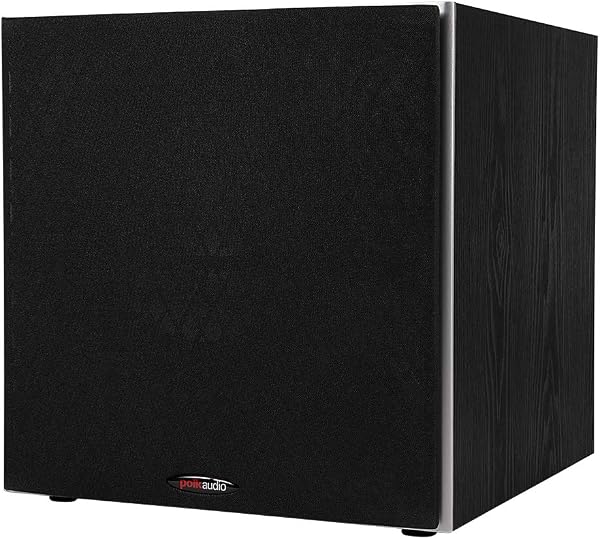
Klipsch R-120SW
9.6Editor scoreTwelve inch copper woofer
200W continuous RMS power
29Hz deep bass extension
Rear firing bass port
Find the right powered subwoofers for 2026. We compare 10 standout options by build quality, useful features, owner feedback, value, and everyday trade-offs.

Find the right powered subwoofers for 2026. We compare 10 standout options by the factors that matter in this category, such as woofer diameter, continuous RMS versus peak amplifier wattage, low-frequency extension, port orientation, input versatility, owner feedback, and room-size trade-offs.
Adding a dedicated active subwoofer transforms flat television audio, bookshelf stereo pairs, and portable PA rigs by offloading heavy low-frequency excursion from your main speakers. However, choosing the wrong enclosure design or input layout can leave you with boomy one-note bass or incompatible wiring.
Whether you need a compact 8-inch slim cabinet that tucks beside a living room sofa, a 12-inch home theater powerhouse capable of 29Hz rumble, or a 2,000-watt 15-inch portable PA unit with onboard DSP, this guide breaks down the specifications that matter.
We compared 10 powered subwoofers using the details that actually help a buyer decide: driver size and cone composition, continuous RMS and dynamic wattage, low-end frequency response, acoustic port geometry, crossover and phase controls, wired input options, cabinet dimensions, owner feedback, and overall value. The notes focus on practical trade-offs so each pick feels connected to how people actually integrate bass into home theaters, desktop setups, and live venues.


Compare key features, scores, and current prices side by side. A shorter feature list means fewer details were available, not necessarily fewer capabilities.




Standard cube-shaped subwoofers are notoriously difficult to hide in compact apartments, small living rooms, or under crowded desks. The BESTISAN Basscore 80 solves this spatial puzzle by mounting an 8-inch woofer on the side of an ultra-slim cabinet measuring just 11.3 inches high, 6.2 inches wide, and 15.4 inches deep. At barely over six inches wide, it slides effortlessly into narrow gaps between a sofa and an end table or beneath a computer desk.
We may earn a commission when you buy through this link, at no additional cost to you.
Despite its slender profile, the Basscore 80 delivers respectable acoustic punch via an efficient Class-D amplifier rated at 100W RMS and 150W peak. It extends down to 35Hz, filling in the missing lower octaves for soundbars and compact bookshelf speakers without sounding boomy. An adjustable low-pass crossover filter lets you dial in the exact upper frequency roll-off so vocals and midrange stay clean.
Every detail of the Basscore 80 is optimized for tight quarters and universal compatibility. It offers dedicated LFE, stereo RCA/AUX, and high-level speaker inputs and outputs, plus a 15-minute auto-standby mode for energy savings. Even the included 24V/1.5A power adapter features a smart 180-degree right-angle DC plug and a 1.5-meter stereo RCA cable, allowing you to push the back of the subwoofer nearly flush against the wall without bending power cords.
A front-firing 8-inch subwoofer requires a front baffle at least 10 inches wide. By relocating the 8-inch woofer to the long side panel of the enclosure, the Basscore 80 shrinks its front width down to 6.2 inches while maintaining internal cabinet air volume.
For apartment dwellers, desktop gamers, and minimalist living rooms where a traditional 14-inch cube simply will not fit, the BESTISAN Basscore 80 is an ingenious space-saving solution. Just be sure to leave a few inches of open air facing the side-mounted 8-inch woofer so its sound waves are not muffled by upholstery.
Large, open-plan home theaters that require a high-excursion 12-inch woofer to pressurize the room.
We may earn a commission when you buy through this link, at no additional cost to you.
The Klipsch R-120SW is engineered for home theater enthusiasts and music listeners who want visceral, chest-thumping low frequencies that smaller 8-inch and 10-inch subwoofers physically cannot reproduce. Anchored by a full 12-inch front-firing driver, it excels in medium to large living rooms or dedicated media spaces where action movie explosions, synthesizer sub-bass, and pipe organ pedals need genuine physical weight.
We may earn a commission when you buy through this link, at no additional cost to you.
Its acoustic authority stems from the combination of a high-excursion Injection Molded Graphite (IMG) spun-copper woofer and an internal amplifier rated at 200 watts continuous (RMS) with 400 watts of peak dynamic headroom. Because the 12-inch cone remains rigid while moving significant air volume, the R-120SW achieves a frequency response of 29Hz to 120Hz (+/- 3dB) and a staggering maximum acoustic output of 116dB. That extra headroom ensures clean, uncompressed transient slam during intense cinematic crescendos without bottoming out.
To maximize efficiency in the lowest octaves, Klipsch employs a bass-reflex enclosure with a rear-firing port. When positioning the subwoofer in your room, leave a few inches of clearance behind the cabinet so the rear port can vent freely into the room or load cleanly into a corner. The unit ships with a removable protective grille, power cord, and manual, though you will want to have a dedicated RCA/LFE subwoofer cable on hand to connect it to your AV receiver.
Reproducing frequencies down to 29Hz requires moving exponentially more air than mid-bass notes at 60Hz. The R-120SW’s 12-inch spun-copper IMG diaphragm provides roughly 44 percent more surface area than a 10-inch driver, allowing it to pressurize a room with significantly less cone distortion.
If your primary goal is authentic sub-30Hz extension and room-shaking home theater dynamics without crossing into luxury audiophile pricing, the Klipsch R-120SW is our top overall recommendation. Apartment dwellers with thin shared floors or shoppers needing a tiny under-desk cube should look toward a more compact 8-inch or 10-inch alternative.
Small bedrooms or tight desktop workspaces where a 12-inch enclosure and 116dB output would overwhelm the space.
We may earn a commission when you buy through this link, at no additional cost to you.
The Klipsch Synergy Black Label Sub-100 delivers impressive acoustic punch and refined driver engineering at a price point usually dominated by entry-level paper-cone budget subs. Designed for small-to-medium home theaters and living room stereo setups, it pairs a 10-inch front-firing driver with a contemporary cabinet measuring just 14 inches high, 12.5 inches wide, and 15.7 inches deep.
We may earn a commission when you buy through this link, at no additional cost to you.
A standout feature at this price tier is Klipsch’s spun-copper Cerametallic woofer. Exceptionally light yet structurally rigid, the Cerametallic cone starts and stops rapidly in response to the audio signal, minimizing cone breakup and delivering tight, articulate kick drums alongside authoritative movie sound effects. It is driven by a high-efficiency all-digital amplifier producing 150 watts of continuous power and 300 watts of dynamic peak power, ensuring true-to-source accuracy even during demanding action sequences.
Setting up the Sub-100 is straightforward, provided you pair it with the proper upstream electronics. Because this model relies on line-level connectivity, it must be connected to an AV receiver, home theater processor, or pre-amplifier—and since signal wires are not included in the box, you should pick up an RCA subwoofer cable alongside your order. Placing the cabinet in a room corner naturally reinforces its acoustic output, using adjacent walls as a natural horn to boost low-end weight.
Positioning the Sub-100 near a room corner couples the 10-inch front-firing driver with the surrounding wall boundaries. This boundary reinforcement increases perceived bass output by several decibels, allowing the 150W amplifier to run cooler with extra headroom.
For shoppers who want genuine Klipsch acoustic engineering and 150 watts of continuous RMS muscle under two hundred dollars, the Synergy Sub-100 is the clear value leader. Only skip it if you are trying to wire bare speaker cables from an older vintage amplifier that lacks dedicated subwoofer pre-outs.
Users without an AV receiver or pre-amp, or those who need high-level bare speaker wire inputs.
We may earn a commission when you buy through this link, at no additional cost to you.
Unlike consumer home theater subwoofers built for quiet living rooms, the JBL IRX-115S is a purpose-built live sound workhorse designed for mobile DJs, gigging musicians, fitness studios, and event venues. Packing a substantial 15-inch woofer backed by a 1,300-watt internal amplifier, it moves the sheer volume of air required to make dance floors and open halls feel the kick drum and bassline.
We may earn a commission when you buy through this link, at no additional cost to you.
Integrating the IRX-115S with full-range PA loudspeakers is remarkably fast thanks to its selectable hardware crossover. Instead of fiddling with external rack processors, you can toggle the onboard crossover frequency to match your top cabinets so the 15-inch woofer handles the heavy low end while your main speakers project crisp vocals and midrange. A dedicated polarity switch lets you flip phase alignment at the push of a button, preventing bass cancellation when the sub is placed slightly ahead of or behind your main PA stacks.
For portable event setups where floor space is tight, the enclosure incorporates a built-in pole mount cup on top of the cabinet. This allows you to mount a full-range PA speaker directly above the subwoofer on a single vertical shaft, eliminating bulky tripod speaker stands that create tripping hazards for guests.
By using the built-in top pole receptacle to elevate a full-range PA speaker directly over the IRX-115S, you keep the high-frequency horn and low-frequency woofer on the same vertical axis for cleaner phase coherence and a smaller stage footprint.
If you need reliable, high-output low end for live events, mobile DJ gigs, or garage rehearsal spaces without spending over a thousand dollars per cabinet, the JBL IRX-115S delivers proven pro-audio capability. Home theater shoppers looking to connect a consumer TV soundbar or living room receiver should stick to residential RCA/LFE subwoofers instead.
Residential home theater setups that rely on consumer RCA connections and compact living room aesthetics.
We may earn a commission when you buy through this link, at no additional cost to you.
The JBL Stage 2 200P in Latte is crafted for discerning music and movie lovers who want refined, articulate 10-inch bass performance housed in an enclosure that doesn't look like a generic black industrial cube. Its warm Latte finish complements modern light-wood floors and bright living room decor while housing serious acoustic engineering.
We may earn a commission when you buy through this link, at no additional cost to you.
Front and center is JBL’s signature 10-inch (250mm) polycellulose ribbed cone woofer. Those concentric ribs are not merely decorative—they add structural stiffness to the lightweight pulp diaphragm, preventing the cone from flexing unevenly during high-excursion bass notes. Powered by a 150W RMS amplifier capable of 300W dynamic bursts, the driver pairs with dual rear-firing tuned ports that divide air velocity across two flared openings, dramatically reducing port turbulence and audible chuffing during deep movie effects.
Dialing in the Stage 2 200P to blend seamlessly with bookshelf or floorstanding speakers is effortless thanks to its rear-panel controls for crossover frequency, output level, and phase alignment. Whether you are crossing over small satellite speakers at 100Hz or large tower speakers at 60Hz, you can tailor the transition so bass feels like it is coming directly from the front soundstage rather than a separate box.
When a high-excursion 10-inch woofer pushes air through a single narrow port tube, high air speeds can create wind noise known as port chuffing. Using dual rear-firing tuned ports lowers air velocity per port for cleaner, tighter low-frequency extension.
For buyers who value both clean, musical bass accuracy and interior design harmony in a living room setup, the JBL Stage 2 200P is a standout choice. If your equipment stays hidden inside a dark theater room and pure dollar-per-watt output is your only metric, the Klipsch R-120SW offers a larger 12-inch cone for less money.
Strict budget shoppers who do not care about cabinet finish aesthetics or refined ribbed-cone acoustics.
We may earn a commission when you buy through this link, at no additional cost to you.
The Edifier T5s solves one of the most common frustrations in desktop and stereo audio: how to add a powered subwoofer to active bookshelf speakers or computer setups that do not have a dedicated subwoofer output jack. Built around an 8-inch long-throw front-firing woofer and a 70W RMS Class-D amplifier, it brings genuine 35Hz low-end foundation to PC gaming stations, studio desks, and bedroom stereo systems.
We may earn a commission when you buy through this link, at no additional cost to you.
Despite its space-saving slim profile, the T5s is constructed from dense 18-millimeter MDF wood rather than thin plastic or particleboard. That thick wall construction—paired with a right-firing acoustic port—keeps cabinet vibration and resonance remarkably low, ensuring that fast basslines sound tight and punchy rather than muddy. On the rear panel, a continuously adjustable low-pass filter spanning 30Hz to 160Hz and a 0-degree/180-degree phase selector let you blend the sub smoothly with any pair of compact desktop monitors.
Connectivity is where the T5s truly shines. If your speakers or AV amp have a dedicated Sub Out port, you can connect directly to the T5s’s Signal In. If your powered speakers lack a Sub Out port, you simply run your audio source into the T5s’s RCA Signal In, and then run a second cable from the T5s’s Signal Out to your main speakers’ wired Line In. Edifier even includes both 3.5mm-to-RCA and RCA-to-RCA cables in the box, plus an automatic 15-minute standby circuit to save electricity.
For speakers equipped with a 3.5mm or RCA Sub Out jack (like the Edifier R1280DBs), a single cable to the T5s preserves Bluetooth functionality on the main speakers. For older speakers without a Sub Out, the T5s’s analog RCA pass-through acts as a bridge between your PC or DAC and your stereo monitors.
Whether you own Edifier R1280Ts, R1280DBs, R1700BTs, or any other brand of active desktop speakers, the T5s is the smartest compact upgrade available. Just note that if you use the pass-through Signal Out method, your audio source must feed the subwoofer via a wired connection rather than streaming Bluetooth directly to the main speakers.
Large open-concept living rooms that require high-wattage 12-inch theater pressurization.
We may earn a commission when you buy through this link, at no additional cost to you.
The Sony SA-CS9M2 is built for home audio fans who want the surface area and authority of a true 10-inch active woofer without sacrificing precious floor space to an oversized enclosure. Designed to slot neatly beside a television stand or bookshelf, it rounds out Sony Core Series speakers and third-party home theater setups with clean, controlled low frequencies.
We may earn a commission when you buy through this link, at no additional cost to you.
A common weakness of compact 10-inch subwoofers is cabinet rattle and port turbulence when pushed hard. Sony addresses both issues by incorporating specialized bass reflex ducts engineered to suppress unwanted airflow noise while reinforcing low-frequency reproduction. At the same time, the enclosure structure is damped to suppress mechanical vibration before it can color the sound, keeping acoustic bass plucks, cello resonances, and action movie impacts tight and accurate.
In everyday living room use, the SA-CS9M2 transitions effortlessly between stereo music listening and multi-channel surround sound. Because the 10-inch cone doesn’t suffer from overhang or boomy resonance, dialogue remains clear and unclouded even when deep atmospheric soundtrack effects kick in.
When a subwoofer cabinet vibrates sympathetically with the woofer, those panel resonances smear the timing of bass notes. By suppressing cabinet vibration and smoothing airflow through its bass reflex ducts, the SA-CS9M2 lets you hear the pitch of every bass note distinctly.
If you want a dependable, compact 10-inch active subwoofer from a trusted audio brand that fits cleanly into modest living spaces, the Sony SA-CS9M2 is an easy recommendation. Buyers seeking earth-shaking sub-30Hz output in a cavernous basement theater should step up to a larger 12-inch model like the Klipsch R-120SW.
Massive home theater rooms that demand extreme wattage and sub-30Hz infrasonic extension.
We may earn a commission when you buy through this link, at no additional cost to you.
The Polk Audio PSW10 has earned a long-standing reputation as one of the most approachable, easy-to-integrate 10-inch subwoofers for small-to-midsize rooms. What makes it uniquely practical is its comprehensive rear connectivity panel, which supports modern home theater receivers via line-level RCA jacks as well as older two-channel stereo receivers via speaker-level inputs and outputs.
We may earn a commission when you buy through this link, at no additional cost to you.
At the heart of the PSW10 is a 10-inch Dynamic Balance woofer crafted from resonance-free composite materials and paired with a configured directed bass port. Driven by an internal 50-watt RMS amplifier (100 watts peak), it covers a frequency response of 40Hz to 160Hz (-3dB). While it doesn’t dig into the 29Hz subterranean depths of larger, higher-wattage units, it delivers warm, full-bodied punch in the 40Hz to 100Hz upper-bass region where rock kick drums, bass guitars, and television soundtracks live.
Integration is straightforward whether you are running a single sub or a dual-subwoofer layout. The rear panel provides a continuously variable 80Hz to 160Hz low-pass crossover alongside a Phase Toggle Switch to align the driver’s acoustic wave with your main speakers. A sleek detachable front grille lets you customize the look to match your living space.
Many classic two-channel stereo amplifiers lack a dedicated RCA subwoofer output. With the PSW10, you can run speaker wire from your amplifier to the subwoofer’s speaker-level inputs, and then wire your bookshelf speakers directly to the subwoofer’s speaker-level outputs.
If you want a dependable, uncomplicated 10-inch subwoofer that connects just as easily to a vintage stereo amp via speaker wire as it does to a modern surround receiver, the Polk Audio PSW10 is a rock-solid pick. Home theater purists chasing deep sub-35Hz LFE movie effects or high-volume headroom should look to the Klipsch Sub-100 or R-120SW.
Home theater enthusiasts who want deep sub-35Hz bass extension or high-wattage output in large rooms.
We may earn a commission when you buy through this link, at no additional cost to you.
The BESTISAN Down-Firing Powered Subwoofer is built for budget-conscious shoppers who want to add noticeable low-end warmth to a thin-sounding soundbar, bedroom TV setup, or compact bookshelf stereo without spending hundreds of dollars. Utilizing a compact enclosure with a downward-firing woofer, it uses your floor as an acoustic boundary to spread low frequencies evenly across small rooms.
We may earn a commission when you buy through this link, at no additional cost to you.
Because the driver faces the floor rather than outward into the room, there is no exposed front fabric grille for pets or young children to accidentally puncture. The down-firing orientation also makes placement forgiving in tight dorm rooms, apartments, or home offices, providing smooth, enveloping warmth for casual movie watching, video gaming, and daily music streaming.
Few subwoofers at any price match this unit’s input flexibility. The rear panel accommodates single-cable LFE receiver connections, stereo RCA jacks, a 1/8-inch (3.5mm) mini-jack AUX input, and high-level spring-clip speaker inputs and outputs. That means you can hook it up to soundbars with a sub-out port, TVs with analog variable audio outputs, pre-amplified turntables, gaming consoles, or standard AV receivers. Keep in mind that it is engineered for line-level input signals at or below 850mV to avoid input clipping.
Front-firing subwoofers place a delicate woofer cone and fabric grille right at floor level where pets or toddlers can damage them. Facing the driver downward toward the floor protects the cone while coupling bass energy directly into the room boundary.
If you want the most affordable, plug-and-play way to give a budget soundbar or desktop speaker pair genuine low-end body, this BESTISAN down-firing sub delivers undeniable value. Shoppers building a high-decibel surround theater in a large family room should invest in a higher-wattage 10-inch or 12-inch unit.
Large home theaters or audiophile systems that demand high SPL output and deep sub-30Hz accuracy.
We may earn a commission when you buy through this link, at no additional cost to you.
The JBL Professional PRX915XLF is a flagship portable PA subwoofer engineered for touring bands, professional mobile DJs, houses of worship, and commercial performance venues that require uncompromising low-frequency authority and precision system tuning. Combining a heavy-duty 915SG 15-inch ferrite magnet transducer with a 2,000-watt high-efficiency Class-D amplifier, it delivers clean, low-distortion sub-bass at concert sound pressure levels.
We may earn a commission when you buy through this link, at no additional cost to you.
What elevates the PRX915XLF above standard powered PA subwoofers is its comprehensive onboard Digital Signal Processing (DSP), accessible via the rear LCD screen or wirelessly over Bluetooth Low Energy using the JBL Pro Connect app. Audio engineers can sculpt room acoustics using a 6-band parametric EQ, set exact low-pass crossover filters, apply up to 20 milliseconds of time-alignment delay, and load factory-optimized presets tailored for JBL EON ONE MK2, PRX ONE, and EON700 full-range speakers.
Built to survive the rigors of constant loading and road transport, the enclosure is crafted from 18-millimeter birch plywood reinforced with computer-optimized internal bracing. This rigid birch structure eliminates cabinet flex at extreme volumes, ensuring that all 2,000 watts of amplifier energy translate into tight, visceral acoustic wave projection rather than wasted panel vibration.
Every live venue has troublesome resonant frequencies and physical stage placement challenges. Using the JBL Pro Connect app from out in the audience, you can notch out boomy room modes with the 6-band parametric EQ and dial in up to 20ms of delay so the subwoofer hits in lockstep with flown or distant main speakers.
For working audio professionals and live performers who want wireless tablet control over up to 10 networked PA speakers alongside tour-grade 15-inch bass output, the PRX915XLF is in a class of its own. Home theater shoppers should note that this is a commercial XLR pro-audio system, not a residential living room subwoofer.
Home television or living room stereo buyers looking for a compact consumer RCA subwoofer.
We may earn a commission when you buy through this link, at no additional cost to you.
Shopping for a powered subwoofer involves matching acoustic physics to your room volume, listening habits, and existing audio equipment. Because the market spans everything from slim 8-inch desktop companions and 12-inch home theater rumblers to 2,000-watt 15-inch live sound enclosures, understanding the core specifications below will ensure you invest in the right design.
The very first step in selecting a powered subwoofer is separating residential home audio models from professional portable PA subwoofers. Home theater and stereo subwoofers—such as the Klipsch R-120SW, Klipsch Synergy Sub-100, JBL Stage 2 200P, Sony SA-CS9M2, and Polk Audio PSW10—are voiced to reproduce deep low-frequency extensions down into the 29Hz to 40Hz range inside enclosed domestic rooms. They utilize unbalanced RCA/LFE or speaker-wire inputs and feature furniture-grade finishes designed to blend into living spaces.
Compact desktop and apartment subwoofers—such as the Edifier T5s and BESTISAN Basscore 80—focus on space-saving footprints and nearfield integration with active bookshelf speakers or soundbars. By contrast, professional PA subwoofers like the JBL IRX-115S and JBL PRX915XLF use 15-inch transducers, 1,300W to 2,000W amplifiers, balanced XLR connections, and rugged birch or road-ready enclosures engineered to project high-decibel punch across large venues, wedding halls, and stages.
Confirm your primary environment and upstream signal outputs first. Never buy a commercial PA subwoofer for a consumer RCA receiver without a mixer, and never expect a 70W desktop subwoofer to fill a live event venue.
Low-frequency sound reproduction is governed by how much air a speaker cone can displace. An 8-inch woofer—found in the Edifier T5s and BESTISAN Basscore 80—has a smaller surface area and lighter moving mass, allowing it to fit inside slim enclosures and deliver snappy, articulate mid-bass down to roughly 35Hz in bedrooms, offices, and small living rooms. Stepping up to a 10-inch woofer—used in the Klipsch Sub-100, JBL Stage 2 200P, Sony SA-CS9M2, and Polk PSW10—provides a versatile balance of speed and air displacement that suits the vast majority of standard living rooms.
When you want to physically feel movie explosions, earthquake rumbles, and deep electronic sub-bass in a medium-to-large room, a 12-inch driver like the one in the Klipsch R-120SW moves substantially more air with less mechanical strain, reaching down to 29Hz at 116dB. Cone composition is equally critical: materials like spun-copper Cerametallic, Injection Molded Graphite (IMG), ribbed polycellulose, and Dynamic Balance composites resist flexing under heavy excursion, preventing muddy distortion.
Choose an 8-inch driver for desktop or small-room setups, a 10-inch driver for balanced music and movies in medium rooms, a 12-inch driver for dedicated home theater impact, and a 15-inch driver for live PA applications.
Subwoofer power specifications are frequently misunderstood because listings display two different numbers: continuous (RMS) wattage and peak (dynamic) wattage. Continuous RMS power measures how much wattage the internal amplifier can deliver steadily over extended periods without overheating or clipping—for example, 50W RMS on the Polk PSW10, 70W RMS on the Edifier T5s, 100W RMS on the BESTISAN Basscore 80, 150W RMS on the Klipsch Sub-100 and JBL Stage 2 200P, and 200W RMS on the Klipsch R-120SW.
Peak or dynamic wattage—such as 300W on the Sub-100 and Stage 2 200P or 400W on the R-120SW—indicates the short-term burst power the amplifier can supply for fractions of a second during sudden musical transients or explosive movie sound effects. Modern Class-D and all-digital amplifiers run cool and efficiently, converting wall power into clean driver motion without requiring massive external heat sinks.
Always compare subwoofers primarily by their continuous RMS rating rather than peak numbers. For small rooms, 50W to 100W RMS is plenty; for medium-to-large home theaters, aim for 150W to 200W+ RMS.
A subwoofer’s frequency response indicates the lowest and highest pitches it can reproduce, ideally accompanied by a tolerance window such as +/- 3dB. Standard human hearing extends down to 20Hz, though frequencies between 25Hz and 35Hz are felt in your chest and floor almost as much as they are heard. Music instruments like four-string bass guitars typically bottom out around 41Hz, meaning a subwoofer rated to 35Hz or 40Hz (like the Edifier T5s, BESTISAN Basscore 80, or Polk PSW10) covers nearly all musical fundamentals cleanly.
However, modern Hollywood Low-Frequency Effects (LFE) audio tracks regularly contain intense sound effects between 25Hz and 32Hz. A larger cabinet with a 12-inch driver—such as the Klipsch R-120SW rated down to 29Hz (+/- 3dB)—will reveal an entire layer of subterranean cinematic atmosphere that smaller enclosures roll off before reaching.
If you listen primarily to acoustic, rock, or pop music in a modest space, 35Hz to 40Hz extension is completely satisfying. If you are building a cinema setup for sci-fi and action blockbusters, prioritize sub-30Hz capability.
Where the woofer and acoustic ports are positioned on the cabinet dictates how you must place the subwoofer in your room. Front-firing subwoofers project sound directly toward your seating area and are popular for punchy mid-bass impact. Down-firing models like the budget BESTISAN subwoofer point the driver at the floor, protecting the cone from pets while radiating bass equally in 360 degrees. Side-firing designs like the BESTISAN Basscore 80 mount the driver on the side panel so the cabinet width can shrink to a slim 6.2 inches.
All 10 subwoofers in our guide utilize ported (bass-reflex) enclosures, which use tuned air ducts to reinforce low-frequency output and boost efficiency. Models with rear-firing ports—such as the Klipsch R-120SW and the dual-port JBL Stage 2 200P—must be placed at least four to six inches away from the wall behind them so air can move freely without chuffing. Front-ported or side-ported designs like the Edifier T5s can sit closer to a back wall.
Inspect your available floor space before buying. If the cabinet must sit flush against a wall or inside a narrow furniture gap, pay close attention to which panels house the woofer and the bass-reflex port.
Even the most powerful subwoofer is useless if it cannot connect to your existing audio gear. If you own a modern home theater AV receiver or a soundbar with a dedicated subwoofer output, you only need a single RCA cable connected to the subwoofer’s LFE (Low-Frequency Effects) or mono Line In jack—found on every residential model in our lineup.
If you want to add a subwoofer to active powered bookshelf speakers that lack a Sub Out jack, choose a model with RCA Signal In and Signal Out pass-through jacks like the Edifier T5s, which lets you route your source through the subwoofer first and then out to your speakers. Conversely, if you have an older two-channel stereo amplifier with no RCA pre-outs at all, you must choose a subwoofer with high-level spring-clip speaker wire inputs and outputs, such as the Polk Audio PSW10 or the two BESTISAN models.
Check the back of your receiver, soundbar, or speakers before ordering, and verify whether an RCA, 3.5mm AUX, or coaxial cable is included in the box or needs to be purchased separately.
A well-integrated subwoofer should disappear acoustically so you never hear it as a separate box booming in the corner. The low-pass crossover knob (typically adjustable from 30Hz/40Hz up to 160Hz) sets the upper frequency limit where the subwoofer stops playing and hands duties over to your main speakers. When using an AV receiver’s LFE output, the receiver handles this crossover digitally, so you simply turn the subwoofer’s physical crossover dial all the way up to its maximum LFE bypass position.
Phase controls—offered as a 0/180-degree toggle switch or variable dial on models like the JBL Stage 2 200P, Edifier T5s, and Polk PSW10—ensure that the subwoofer cone pushes outward at the exact same moment as your main speaker cones. If they are out of phase, their sound waves cancel each other out at the crossover point, leaving a hollow gap in the upper bass. On the professional end, advanced DSP units like the JBL PRX915XLF add 6-band parametric EQ and millisecond time-delay controls via smartphone app.
Use the onboard low-pass crossover dial whenever connecting via stereo RCA or speaker wire, and always test both the 0-degree and 180-degree phase positions from your main listening chair to see which setting produces fuller mid-bass.
Where you place a powered subwoofer in your room affects bass smoothness just as much as the subwoofer’s price tag. Pushing a subwoofer deep into a room corner maximizes sheer volume through boundary reinforcement, which works well for home theater impact on models like the Klipsch Sub-100, though pulling the cabinet a foot or two out along a front wall often produces tighter, more even musical notes. If bass sounds weak at your sofa, try the classic ‘subwoofer crawl’: place the subwoofer temporarily on your main listening seat, play a bass-heavy music track, crawl around the perimeter of the room where the sub could realistically live, and place the subwoofer permanently at the floor spot where the bass sounded tightest and deepest.
Once positioned, take five minutes to calibrate the gain (volume), crossover, and phase settings properly. Start with the subwoofer’s volume knob at the 10 o’clock or 11 o’clock position rather than cranking it to maximum, which causes distortion and amplifier clipping. If connected to an AV receiver via the single LFE jack, set your main speakers to ‘Small’ in the receiver menu with an 80Hz crossover and turn the subwoofer’s physical crossover dial to its highest LFE setting; if connected directly to stereo speakers without bass management, set the subwoofer’s low-pass dial between 60Hz and 90Hz so it blends smoothly where your bookshelf speakers naturally roll off.
To protect the internal amplifier and driver over years of service, always power down your audio system before plugging or unplugging RCA signal cables, as hot-plugging can send a loud voltage pop into the woofer voice coil. Leave several inches of unobstructed airflow around rear amplifier plates and bass-reflex ports to prevent thermal buildup, and enable auto-standby mode if your unit features it so the amplifier sleeps after 15 minutes of silence. Dust the cabinet and driver surround gently with a dry microfiber cloth, avoiding liquid household cleaners around the woofer cone and suspension.
For desktop setups, bedrooms, and small apartments under 150 square feet, an 8-inch subwoofer with 70W to 100W RMS provides plenty of clean low-end extension without overwhelming the space. Medium living rooms between 150 and 300 square feet are well served by a quality 10-inch subwoofer with 100W to 150W RMS of continuous power. For large open-concept living rooms or dedicated home theaters over 300 square feet, step up to a 12-inch subwoofer like the Klipsch R-120SW so the cone can move enough air to pressurize the room.
Yes, provided you choose a subwoofer equipped with the right pass-through connections for your specific speakers. If you own active powered bookshelf speakers, choose a subwoofer with stereo RCA Signal In and Signal Out ports like the Edifier T5s, which sits inline between your audio source and your speakers. If you own passive bookshelf speakers powered by a traditional stereo amplifier without pre-outs, choose a subwoofer with high-level speaker wire inputs and outputs, such as the Polk Audio PSW10 or BESTISAN Basscore 80.
An LFE (Low-Frequency Effects) input is a single mono RCA jack designed to connect to the dedicated Subwoofer Out port on an AV receiver or soundbar that already performs internal bass crossover filtering. Stereo Line In (Left and Right RCA) jacks are used when connecting a two-channel stereo pre-amp, computer DAC, or audio source that sends a full-range left and right audio signal, allowing the subwoofer's own internal low-pass filter to strip out high frequencies.
If you are connecting your subwoofer to a home theater AV receiver using a single LFE cable, turn the physical crossover knob on the back of the subwoofer all the way up to its maximum setting (typically 120Hz or 160Hz/LFE) and set the crossover digitally inside your receiver's menu to 80Hz. If you are connecting via stereo RCA or speaker wire without an AV receiver, set the subwoofer's crossover knob roughly 10Hz higher than the lowest frequency your main bookshelf speakers can comfortably play—usually between 70Hz and 90Hz.
The phase control adjusts the timing of the subwoofer cone's inward and outward movement relative to your main speakers. Depending on how far the subwoofer sits from your listening chair compared to your front speakers, their bass waves can arrive out of sync and partially cancel each other out. Play a music track with a steady bassline, sit in your primary chair, and have a friend flip the phase switch between 0 and 180 degrees—leave it in whichever position produces the fullest, punchiest upper bass.
Side-firing and front-firing subwoofers direct their primary mechanical cone energy horizontally into the room air rather than straight down into the floorboards, which can slightly reduce mechanical vibration transfer to downstairs neighbors compared to down-firing designs. However, deep low-frequency sound waves are omnidirectional and travel through walls and floors regardless of driver orientation. For apartment use, pairing an 8-inch or 10-inch front- or side-firing subwoofer with isolation feet and moderate gain settings is the most neighbor-friendly approach.
While technically possible with RCA-to-XLR signal converters, professional PA subwoofers are not ideal for standard home theater use. Live sound subwoofers are tuned to maximize high-decibel punch in the 40Hz to 100Hz chest-thump region across large rooms rather than quiet, ultra-low 25Hz cinematic extension, and their industrial enclosures and fan/amp noise floor are meant for stages rather than quiet living rooms. Stick to residential home theater subwoofers like the Klipsch R-120SW for movie rooms.
Boomy, one-note bass is almost always caused by three common setup mistakes: setting the subwoofer's volume (gain) dial too high, setting the crossover frequency too high (above 100Hz to 120Hz so the sub plays muddy lower-midrange vocals), or jamming a rear-ported subwoofer flush into a tight corner. Pull the subwoofer a few inches away from the walls, lower the crossover toward 80Hz, and turn the gain dial down until the bass blends seamlessly with your main speakers.
Included accessories vary significantly by brand and model. Compact subwoofers aimed at desktop and soundbar users—such as the Edifier T5s, BESTISAN Down-Firing Sub, and BESTISAN Basscore 80—include RCA or coaxial signal cables right in the box, whereas traditional home theater models like the Klipsch R-120SW and Klipsch Synergy Sub-100 ship with only the AC power cord and require you to purchase a shielded RCA/LFE subwoofer cable separately.
For home theater enthusiasts and music lovers seeking the strongest combination of deep low-frequency extension and dynamic headroom, the Klipsch R-120SW stands out as our top overall choice. Its 12-inch spun-copper IMG woofer and 200-watt continuous (400-watt peak) amplifier dig down to an authoritative 29Hz and reach up to 116dB, bringing genuine cinema impact to medium and large living spaces.
Shoppers looking for maximum value in a slightly more compact 10-inch footprint will be well served by the Klipsch Synergy Black Label Sub-100, while design-conscious listeners will appreciate the ribbed polycellulose clarity and warm Latte finish of the JBL Stage 2 200P. If you need to add tight bass to powered desktop speakers or fit a subwoofer into a narrow apartment gap, the Edifier T5s and ultra-slim 6.2-inch BESTISAN Basscore 80 offer clever connectivity and compact dimensions. Finally, for live musicians, mobile DJs, and commercial venues, the 1,300W JBL IRX-115S and 2,000W DSP-equipped JBL Professional PRX915XLF deliver true tour-grade 15-inch authority.
Before finalizing your purchase, double-check the available outputs on your AV receiver, soundbar, or speakers to ensure seamless wiring compatibility, and measure your floor space to allow proper breathing room for the woofer and bass-reflex ports. Matching the driver size and RMS wattage to your room volume will guarantee tight, musical, and immersive low end for years to come.