KastKing Megatron
9.0Editor score5.2:1 gear ratio
Over 30 lb drag
7 plus 1 bearings
Zinc alloy drive
Find the right spinning reels for 2026. We compare 10 standout options by build quality, useful features, owner feedback, value, and everyday trade-offs.
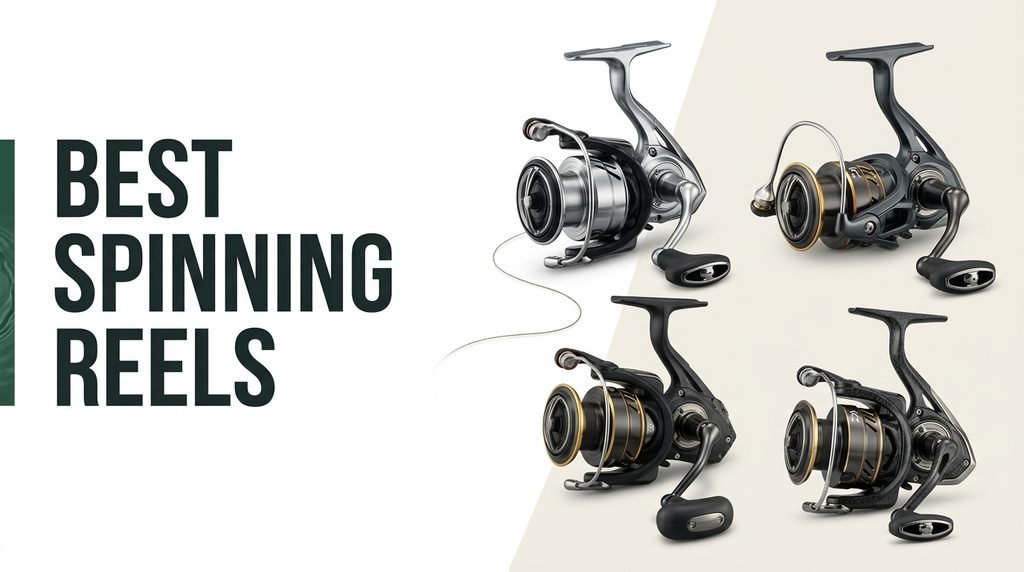
Find the right spinning reels for 2026 by matching drag strength, gear ratio, body material, bearing count, line capacity, and saltwater sealing to the fish you actually chase. This guide compares aluminum workhorses, lightweight LT designs, and budget graphite frames so you do not buy a 30-pound drag reel for panfish or a felt-drag inshore reel for heavy surf.
A 5.2:1 retrieve and a 6.2:1 high-speed pickup change how lures swim and how fast you take up slack. Carbon-fiber stacks start smoother than felt. Aluminum frames shrug off crush better than graphite, while AIRDRIVE and Zaion-style rotors cut fatigue on all-day casts. Size and spool depth still have to match your rod and line.
Price, corrosion resistance, and whether the handle folds for a travel kit matter as much as a headline drag number. The reviews below explain who each reel is for, what it cannot do, and the spooling and rinse habits that keep a spinning reel casting instead of grinding after a season in spray.
We compared these spinning reels using the details that actually help an angler decide: frame material, drag type and claimed max pressure, gear ratio and retrieve, bearing layout, spool design and line capacity, saltwater versus freshwater intent, handle ergonomics, owner feedback, and price relative to build. The notes focus on practical trade-offs so each pick connects to real fishing, from ice and panfish to inshore braid and heavier saltwater runs.
Compare key features, scores, and current prices side by side. A shorter feature list means fewer details were available, not necessarily fewer capabilities.

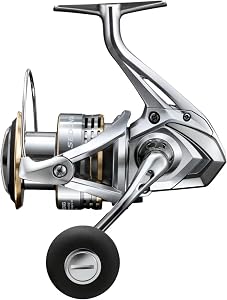



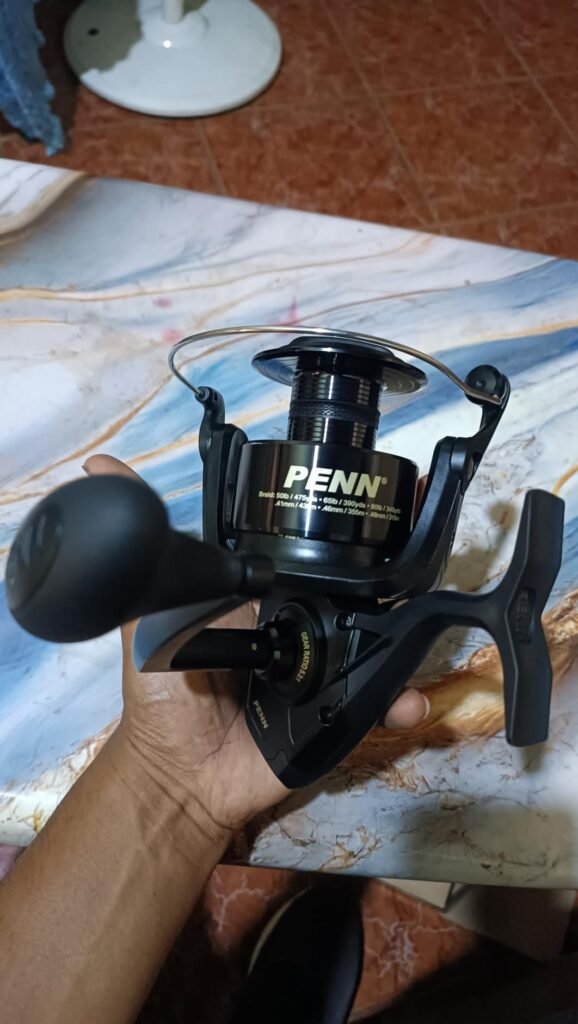
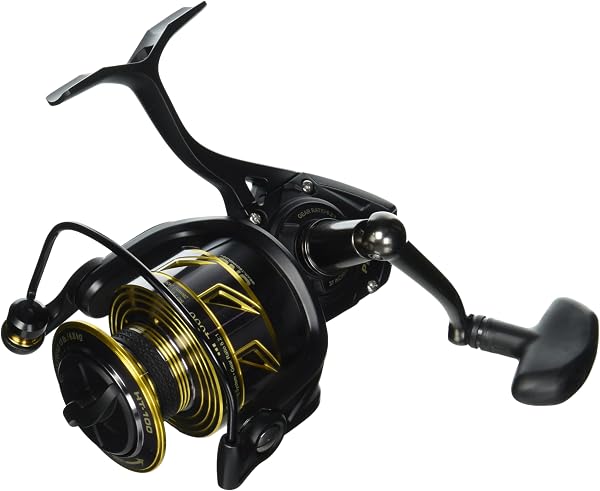
The Penn Battle IV is the inshore spinning reel most anglers in this guide should look at first if they mix braid, jetties, and the occasional freshwater weekend. An all-aluminum body and sideplates plus a forged, machined aluminum spool with line-capacity rings is a durability-first layout. Owner rating of 4.7 is the best here alongside the Daiwa Regal LT.
We may earn a commission when you buy through this link, at no additional cost to you.
CNC gearing at 6.2:1 recovers 35 inches per crank, which is the high-speed class compared with 5.2:1 torque reels. Mono capacity is listed at 200/8, 165/10, and 120/12, with braid at 250/15, 180/20, and 130/30. The superline spool is meant to hold braid without a mono backing if you seat it correctly. HT-100 carbon washers are rated to 15 pounds of max drag.
Five stainless ball bearings plus instant anti-reverse are a realistic saltwater count. The handle swaps right or left. Aluminum will still corrode if you skip rinsing; it just flexes less than graphite when you horse a fish. Capacity rings help you stop before you overfill, which is how wind knots start with braid.
Tape or a short mono pad still helps braid bite the arbor on the first wraps. Pack the line under light tension so it does not dig in on a hard run. Leave a couple of millimeters below the lip. The Battle’s capacity rings are a guide, not a substitute for watching the spool as you fill it from a line winder or a second rod.
This is the default salt-capable spinning reel in the set for anglers who want metal, a fast retrieve, and a proven drag washer material. If you need 30-plus pounds of drag, the Megatron or Sharky list higher numbers. If you want the lightest lake reel, the Regal LT’s Zaion V body is the better match.
Ultralight trout kits where every ounce matters, or anglers who need 30-pound-class drag on a spinning setup.
We may earn a commission when you buy through this link, at no additional cost to you.
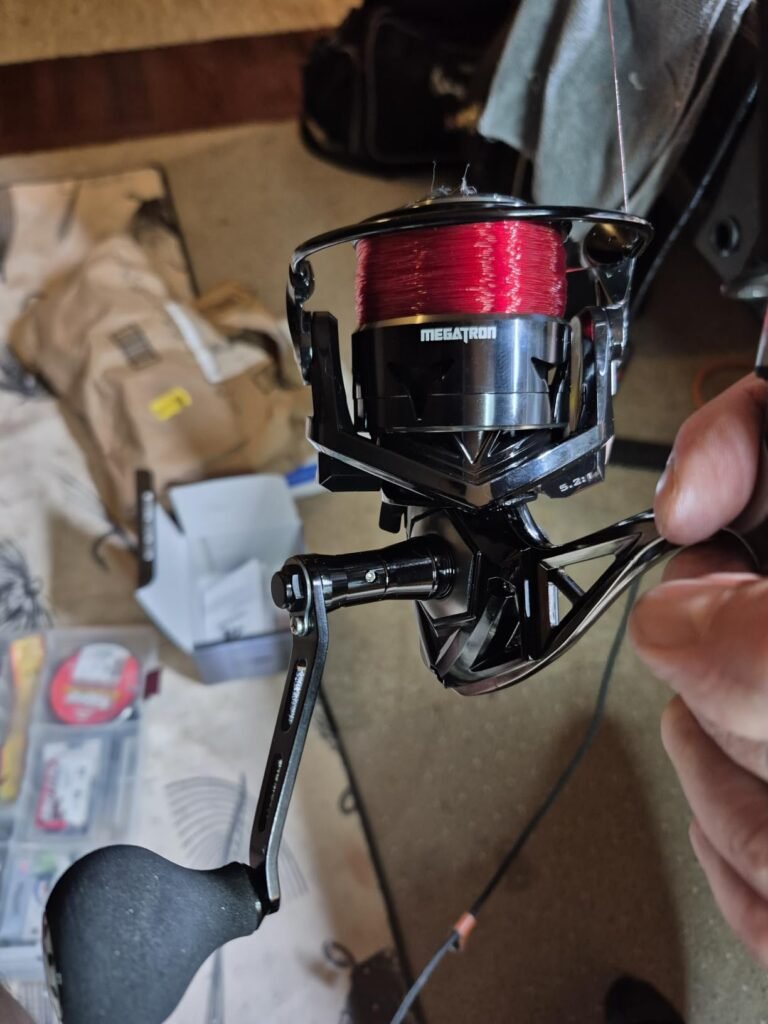
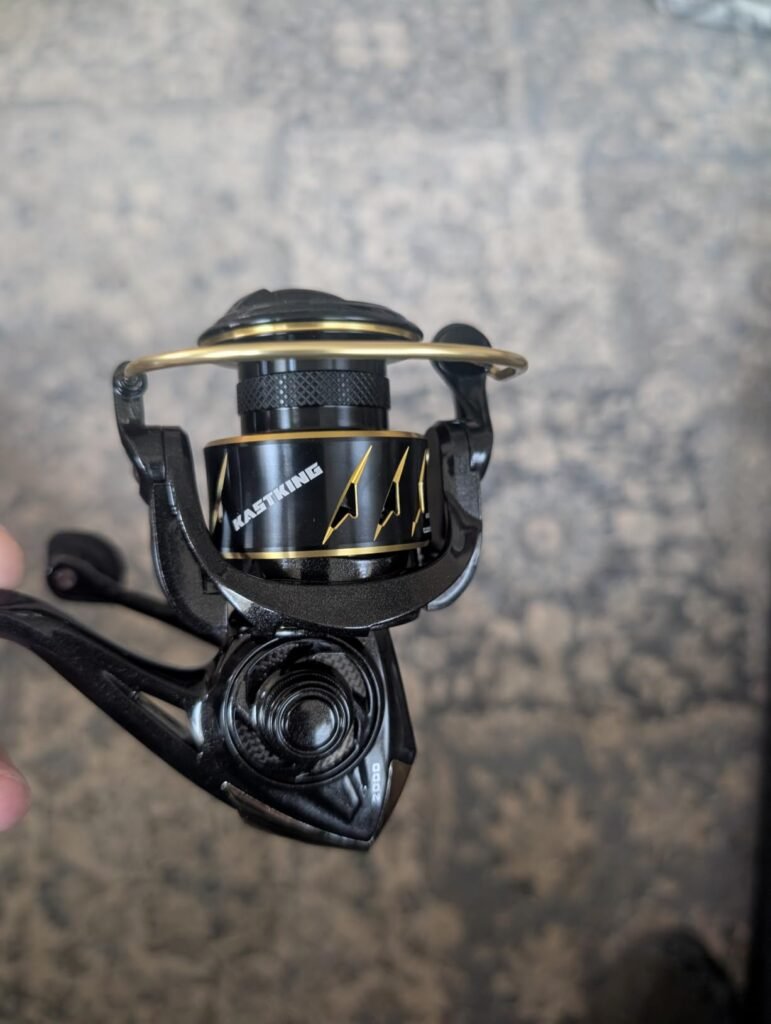
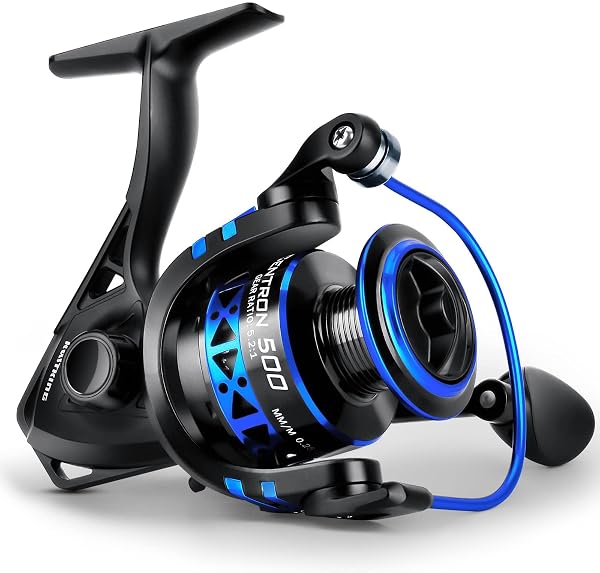
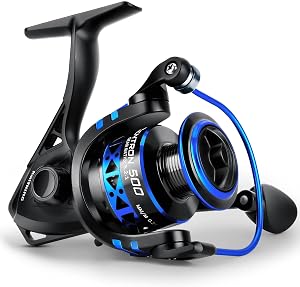
The KastKing Megatron is built for anglers who want a metal-framed spinning reel that can clamp down on hard runs in fresh or salt water without stepping into flagship pricing. A 5.2:1 gear ratio favors torque over lightning retrieve, which suits crankbaits, heavier jigs, and fish that try to bury you in structure rather than pelagic speed retrieves.
We may earn a commission when you buy through this link, at no additional cost to you.
The aerospace aluminum alloy skeletal frame is there to keep the sideplates from flexing when the carbon stack is tightened. KastKing rates the triple-disc carbon fiber drag at more than 30 pounds with an emphasis on avoiding the sticky start-up that snaps light leaders. A zinc alloy main gear meshed with a solid brass pinion is a strength-first pairing, and the CNC T6061 spool plus aluminum handles match that metal theme.
Seven MaxiDur double-shielded stainless ball bearings plus instant anti-reverse support hooksets in both freshwater and salt. Shielded bearings still need a freshwater rinse after spray, because no spinning reel is maintenance-free in brine. The geometric body cuts some mass versus a fully boxed aluminum housing, but it remains a substantial reel compared with LT graphite designs.
Max drag is a ceiling, not a daily setting. Tighten only until the fish can take line before the rod or knot fails. For inshore leaders, many anglers fish a fraction of the stack and leave the rest as reserve. If your rod is rated for 8-pound line, a Megatron-class drag is insurance, not a reason to lock the star down.
Choose the Megatron if you want high claimed drag, a rigid aluminum frame, and a slower, stronger retrieve on a mixed-water kit. Skip it if you live on 6.2:1 twitchbaits or want a stealthy, traditional look. Pair it with a rod that can actually use 30-pound-class drag; most light spinning rods cannot.
Ultralight panfish setups, or anglers who need a high-speed 6.2:1 pickup for reaction baits.
We may earn a commission when you buy through this link, at no additional cost to you.
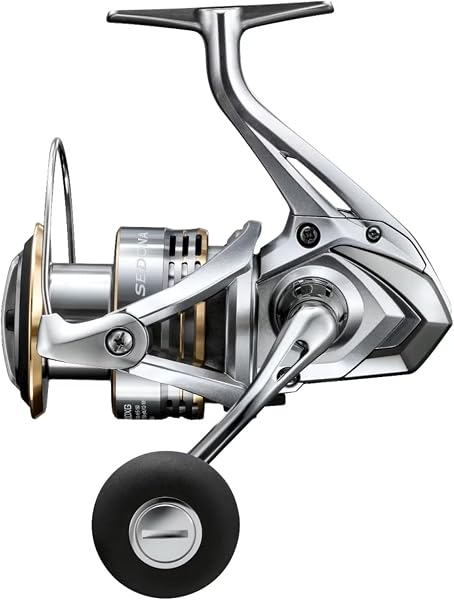
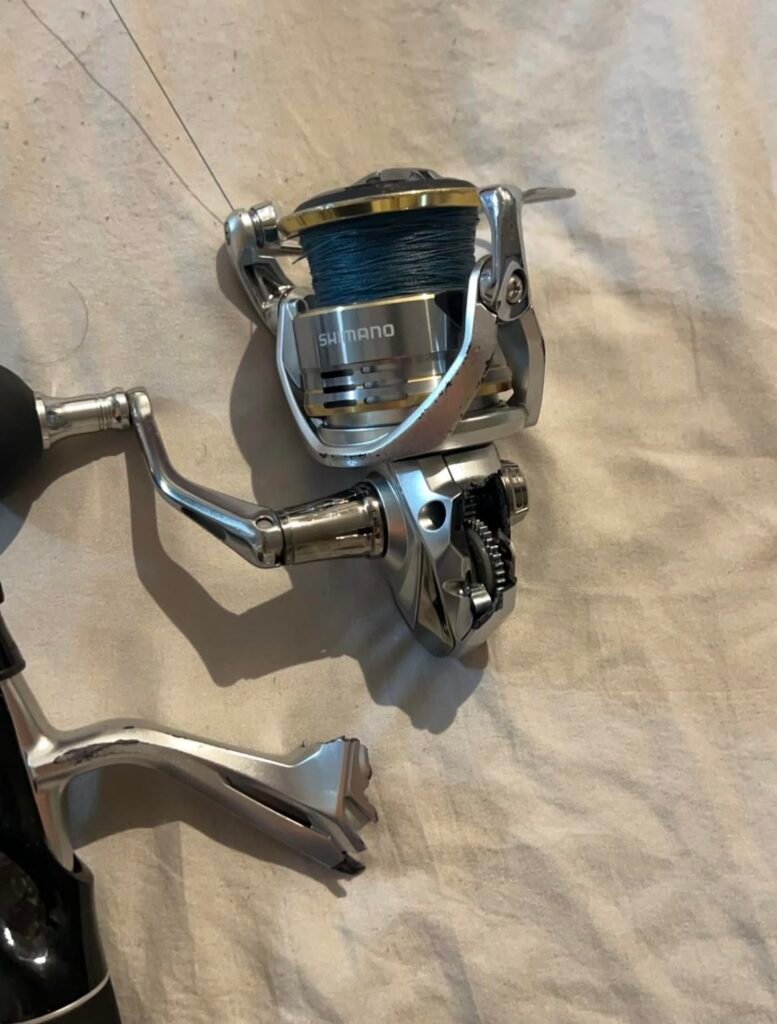
The Shimano 23 Sedona is for anglers who want a known Japanese brand at a mid price and a reel that will not feel like a brick on a 7-foot spinning rod. At 11.2 ounces with a 54 mm spool diameter and 17 mm stroke, it sits in everyday freshwater and light inshore territory rather than surf-heavy metal.
We may earn a commission when you buy through this link, at no additional cost to you.
Maximum drag is listed at 24.3 pounds, with a practical drag figure of 13.3 pounds and another listed value of 14.2 pounds in the spec block. That spread is a reminder to fish the practical range, not the peak. Retrieve is 105 cm per handle turn with a 55 mm handle. Line capacity is given in Japanese numbering for nylon, fluoro, and PE braid, so convert to the line you actually buy before you assume a full spool of 20-pound braid.
The bearing count is 3 ball plus 1 roller, which is fewer than KastKing or Pflueger counts in this guide. Smoothness in a Shimano often comes from gear mesh and rotor balance as much as bearing quantity, but you should not expect the silky feel of a 10+1 stack. Rinse after sand or spray and do not store it wet.
Nylon 4-190 style listings use Japanese line size, not U.S. pound-test. PE numbers describe braid class. If you spool Western 10-pound mono, do not assume it matches “nylon 4.” Check a conversion chart or the printed spool and leave a 1–2 mm lip so line does not explode off on the first cast.
Buy the Sedona if you trust Shimano’s parts pipeline and want moderate weight with a high listed max drag. Look elsewhere if you want a fully aluminum saltwater housing like the Penn Battle IV or Daiwa BG. Confirm the exact body size in the variant you order, because Sedona is a family name covering multiple sizes.
Anglers who want a high bearing count, a fully sealed aluminum saltwater body, or a clearly labeled U.S. mono/braid yardage chart on the box.
We may earn a commission when you buy through this link, at no additional cost to you.
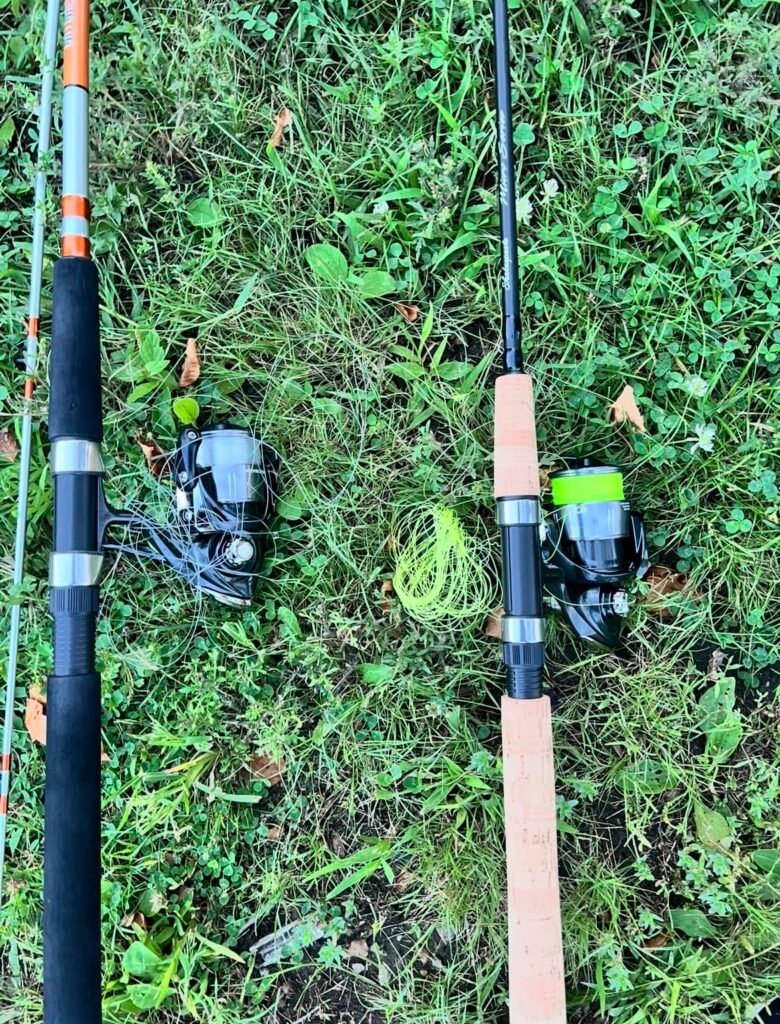
The Daiwa Crossfire LT is the inexpensive way onto Daiwa’s light-and-tough spinning concept. AIRDRIVE is meant to reduce rotor resistance so the bail spins up with less effort, which matters when you make hundreds of casts for bass, trout, or panfish. It is aimed at skill levels from beginner to casual rather than boat-side tuna.
We may earn a commission when you buy through this link, at no additional cost to you.
Tough Digigear is Daiwa’s digitally cut gear concept for consistent mesh. The LC-ABS spool is designed to let line flow with less lip friction for distance. ATD Type-L drag uses Daiwa’s smoother start-up behavior so light leaders are less likely to pop when a fish first surges. None of that replaces correct drag setting with a scale or pull test.
At this price you should treat the Crossfire as a freshwater and light inshore reel, not a substitute for the BG’s aluminum Hard Bodyz housing. Rinse sand promptly. The 4.1-star rating is the lowest in this group, so read recent comments about QC and size variants before you buy a travel kit’s only reel.
A lighter rotor can make the handle feel more free on the drop and slightly quicker to start. That helps with finesse retrieves. It does not add drag pressure. If you lean on the reel against snags, gear mesh and frame stiffness still decide whether the housing flexes. Keep expectations matched to the Crossfire’s price.
Pick the Crossfire LT if you want Daiwa technologies on a budget and you fish ponds, rivers, and light bay work. Step up to the Regal LT for Zaion V body material and a higher rating, or to the BG if salt and aluminum matter more than an AIRDRIVE rotor.
Heavy surf, big-game spinning, or buyers who want the highest owner score in this roundup.
We may earn a commission when you buy through this link, at no additional cost to you.
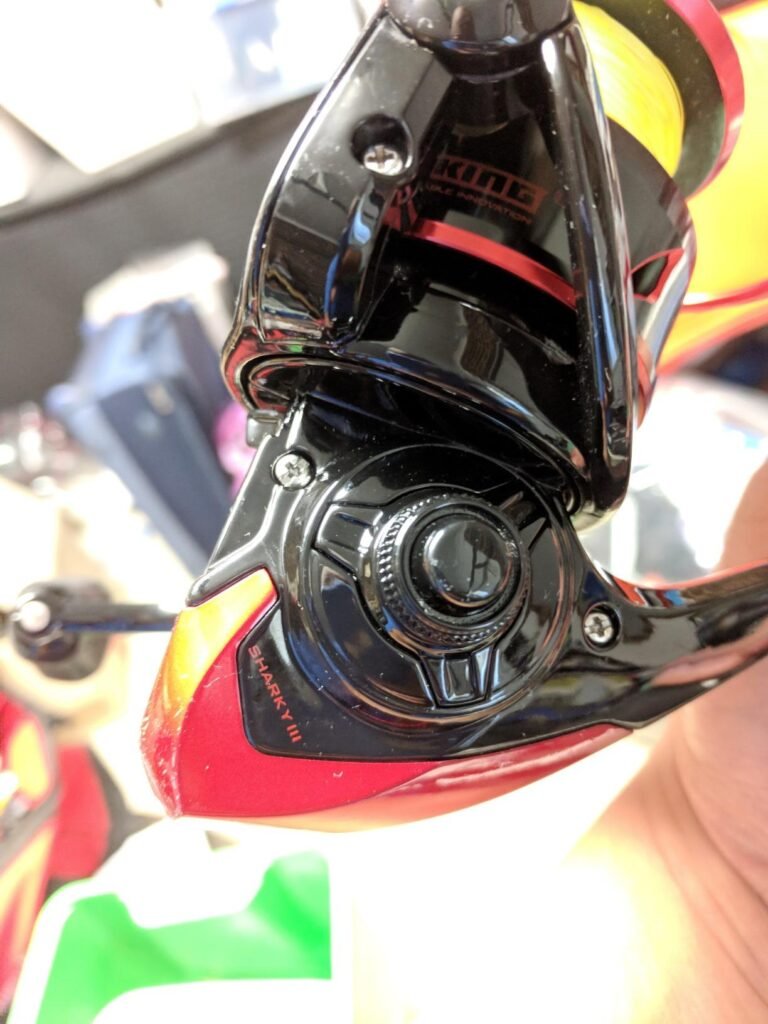
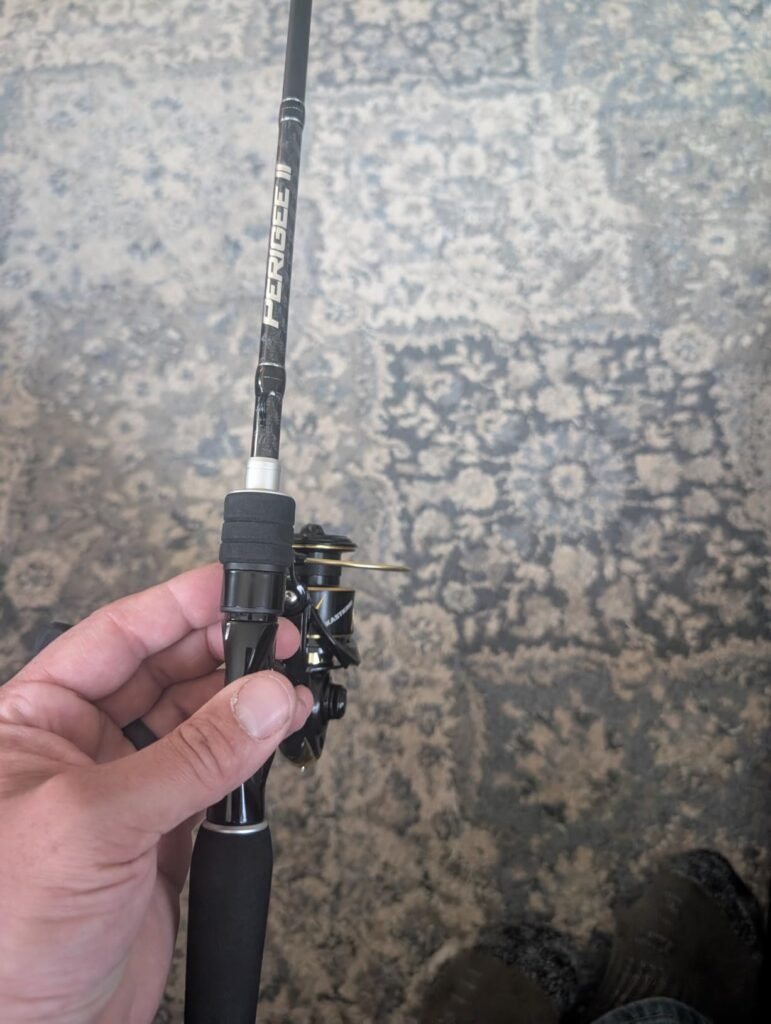
The KastKing Sharky (listed as the Sharky X generation in the feature notes) is for anglers who want high-speed retrieve and very high carbon drag without an all-aluminum Battle-style housing. Nylitech construction is claimed 22 percent lighter than Sharky III, with improved compression and impact resistance versus that prior body.
We may earn a commission when you buy through this link, at no additional cost to you.
The 6.2:1 hybrid gearset uses a zinc alloy drive, manganese brass pinion, and stainless main shaft, with D.S.S.R. tech aimed at quieter mesh. Sizes 2000/3000 get a double-disc carbon stack up to 33 pounds; 4000/5000 get triple-disc up to 39.5 pounds. That is among the highest claimed spinning drag in this guide, again subject to rod and knot limits.
A patented long-cast spool, 10+1 MaxiDur shielded stainless bearings, an oversize EVA knob, and a folding CNC aluminum handle round out a travel-friendly, wet-hands design. Folding handles help a packed rod tube. Ten bearings still need salt rinses; more shields are not a waterproof rating.
Smaller 2000/3000 bodies pair with lighter inshore and freshwater rods and the 33-pound double-disc stack. 4000/5000 bodies hold more line and the triple-disc 39.5-pound stack for heavier leaders. Oversizing a reel on a light rod makes hooksets clumsy. Undersizing on a surf rod dumps capacity on the first run.
Choose Sharky if you want 6.2:1 speed, folding storage, and drag numbers that rival or exceed the Megatron, with less metal weight. Choose Battle IV or BG if you prefer aluminum plates you can see and service. Confirm the body size you order so you get the drag stack you expect.
Anglers who insist on a full aluminum frame and sideplates, or who will not check which Sharky size they are buying.
We may earn a commission when you buy through this link, at no additional cost to you.
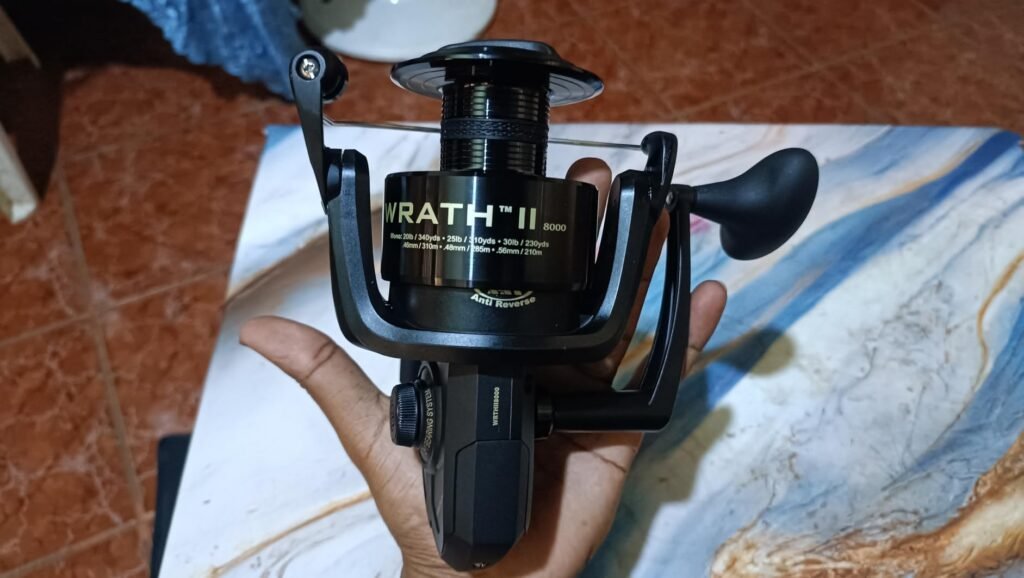
The Penn Wrath II is the less expensive Penn spinning option for anglers who want the name and a machined anodized aluminum spool without paying Battle IV aluminum-body money. A lightweight graphite body is corrosion-resistant in the sense that it will not galvanically rot like neglected aluminum, though sand still wrecks drags.
We may earn a commission when you buy through this link, at no additional cost to you.
Gear ratio is 6.2:1 with 37 inches of retrieve per turn, slightly more line pickup than the Battle IV’s 35 inches. Max drag is 15 pounds on a felt front drag, which Penn notes for rapid start-up. Felt can grab more suddenly than carbon when wet or dry-inconsistent, so keep it clean and do not soak it in grit. Capacities are 270/8, 220/10, 165/12 mono and 360/15, 260/20, 185/30 braid.
The bearing system is two shielded stainless balls plus instant anti-reverse. That is a workmanlike, not luxurious, smoothness target. Line-capacity rings on the aluminum spool help with fill level. Rinse, dry, and do not store the felt stack wet after a beach trip.
Felt washers can swell or glaze if they stay soaked with salt. After fishing, rinse the reel externally, back the drag off for storage, and let it dry. If the start-up becomes jerky, service the stack rather than cranking the knob harder. Carbon stacks generally tolerate wet-dry cycles with less drama, which is why they cost more on Battle-class reels.
Buy Wrath II if you want Penn, fast retrieve, and braid capacity at a lower price than Battle IV. Step up to Battle IV if you want carbon HT-100 and a full aluminum frame. If felt drag makes you nervous in the surf, look at carbon stacks on KastKing or Daiwa instead.
Anglers who want carbon-fiber drag washers and a high ball-bearing count in a fully aluminum housing.
We may earn a commission when you buy through this link, at no additional cost to you.
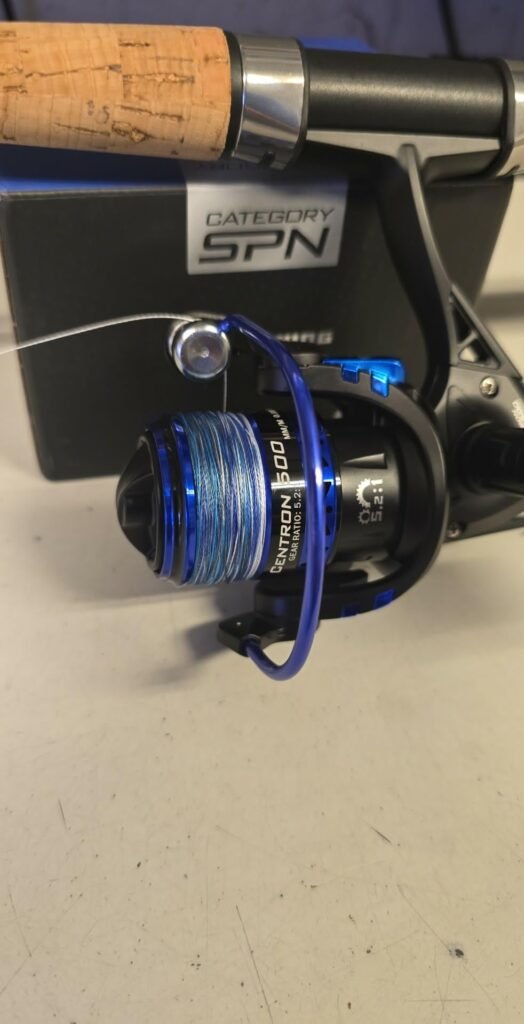
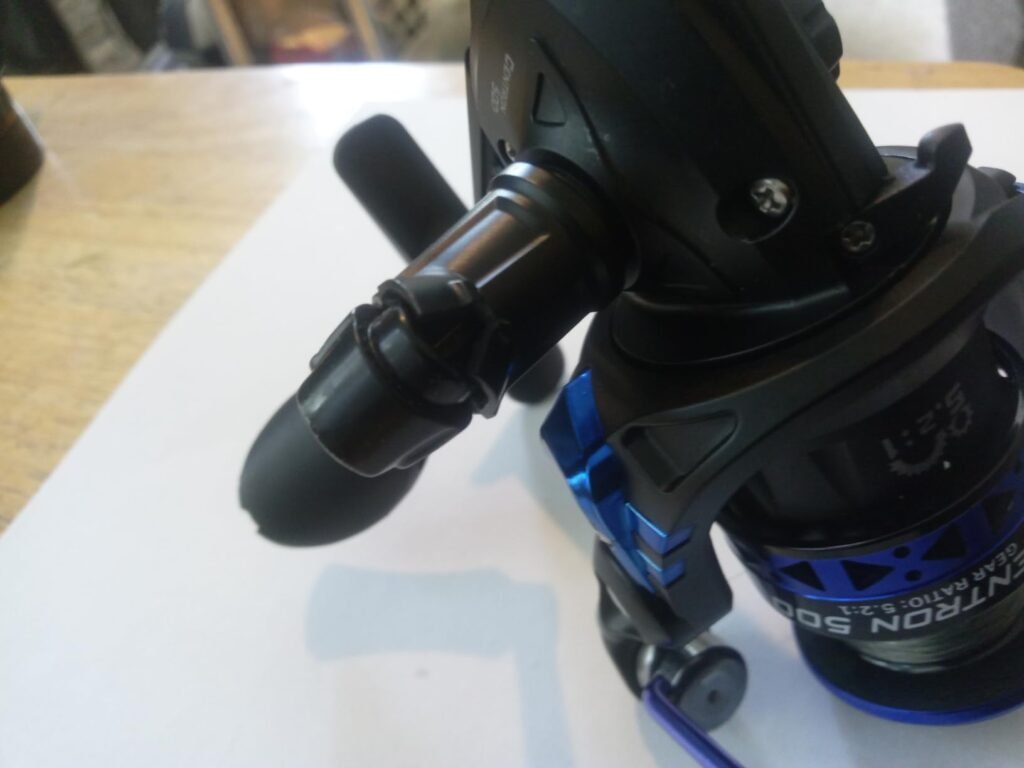
The KastKing Centron and Centron Lite line is the budget spinning reel for first rods, backup kits, and small-size ice fishing. Claimed drag goes to 17.5 pounds, which is plenty for bass and trout if the rod matches. A CNC machined aluminum spool with internal lube grooves and a power-launch lip is more spool than you usually get at this price.
We may earn a commission when you buy through this link, at no additional cost to you.
Nine ball bearings plus instant anti-reverse, a hardened metal main shaft, and machined pinion are the internal story. The narrow graphite frame keeps the package compact. Centron Lite in white-blue adds a collapsible handle for a rod case. Sizes 500 and 1000 are called out as ice-fishing friendly, where a huge 4000 body is clumsy in gloves.
Two-color anodized spool cosmetics do not catch fish, but the extra line capacity versus some same-size competitors can matter on a 1000-size spool. Do not expect Battle-level aluminum rigidity if you winch snags. Rinse if you take it to the brackish dock, and do not store it collapsed with a wet drag.
Small frames clear ice holes and weigh less on short rods. Collapsible handles keep the reel from snapping in a crowded sled bag. Spool enough line for the depth you actually fish; a 1000-size still overfills easily with thick mono. Keep the bail from icing by dipping in ice-out water only as needed and drying before the ride home.
This is the reel to put on a kid’s combo or a second panfish rod without guilt. It is the wrong primary reel for tarpon or heavy surf. If you outgrow it, the same rod can wear a Pflueger President or Daiwa Regal LT later without changing techniques.
Primary saltwater setups, heavy braid and 30-pound drag fishing, or anglers who want a forged aluminum body.
We may earn a commission when you buy through this link, at no additional cost to you.
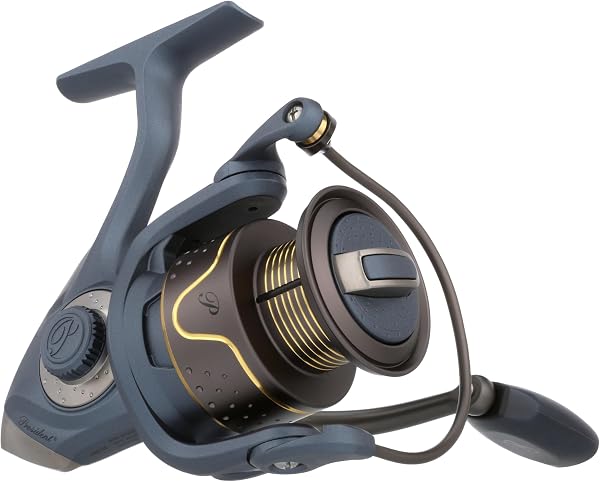
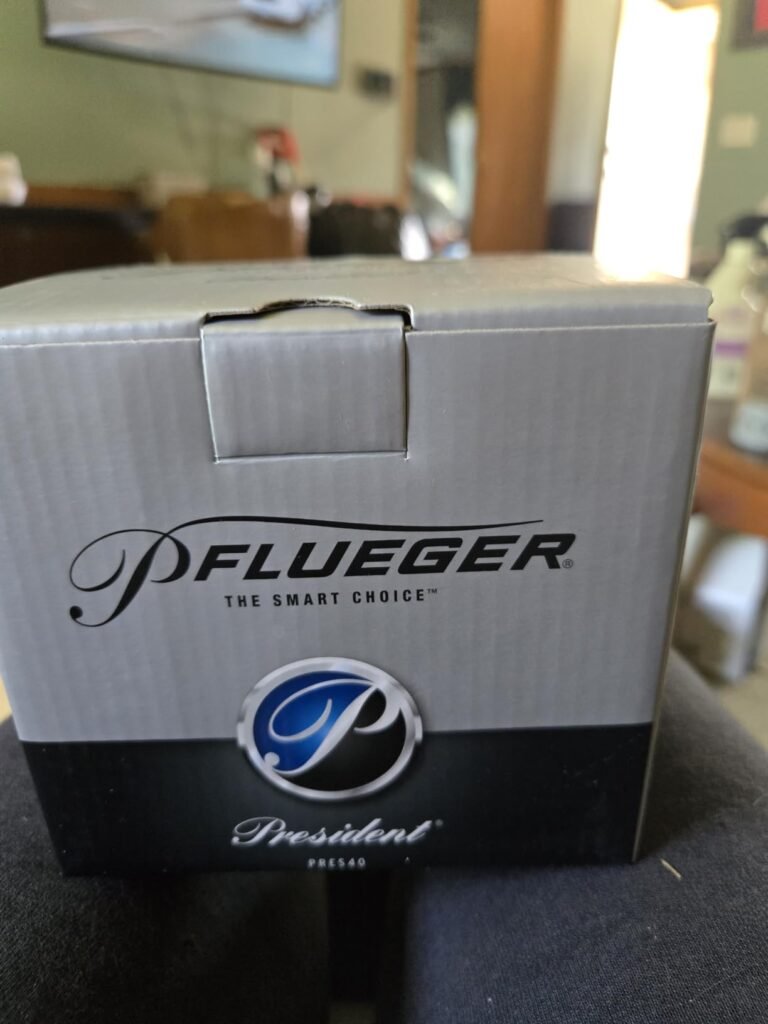
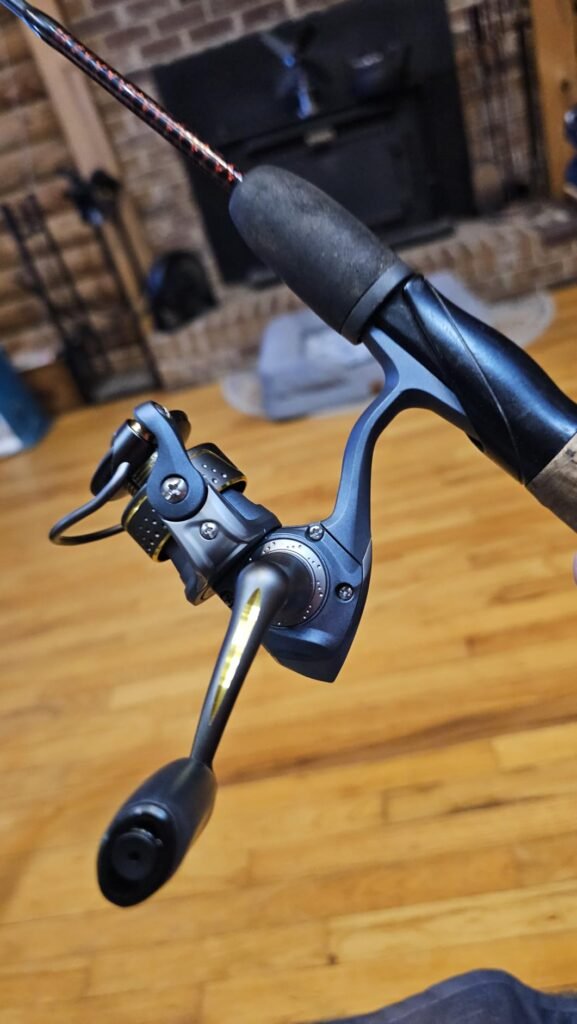
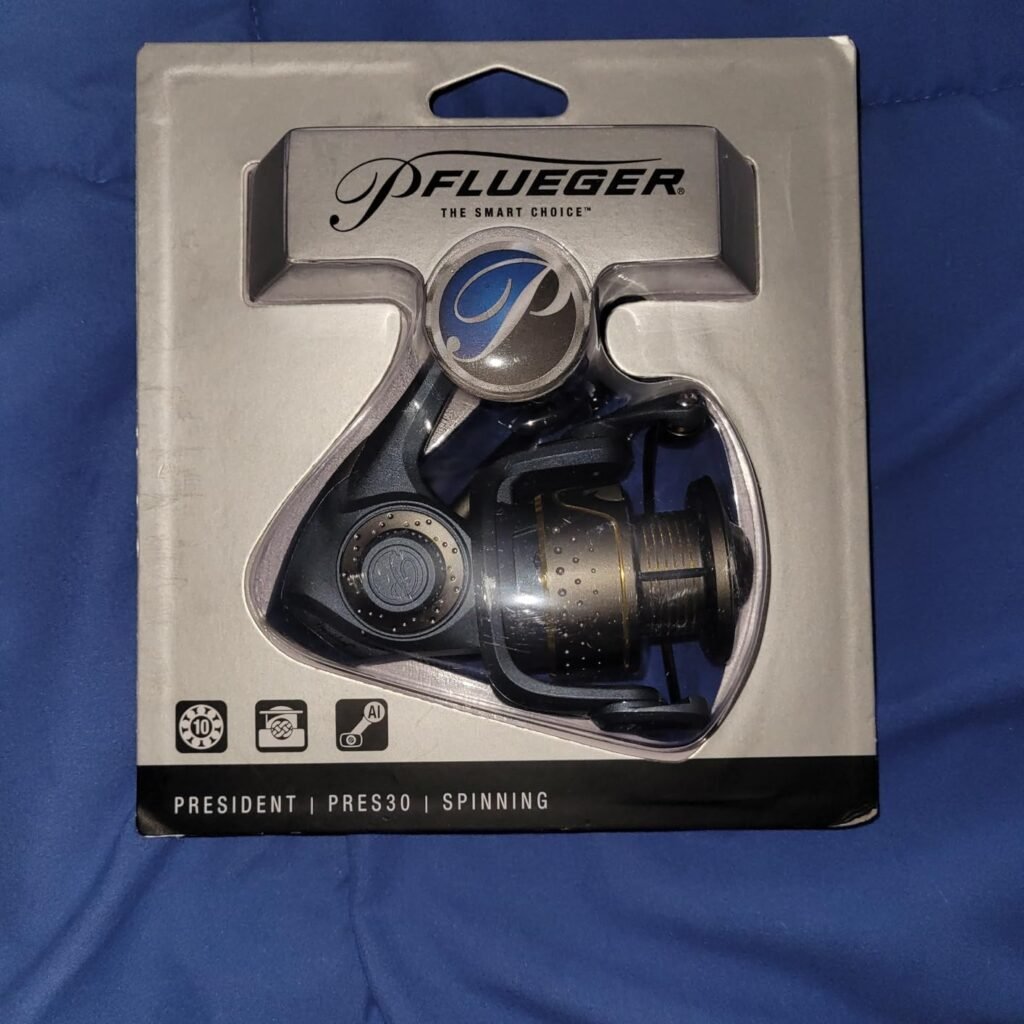
The Pflueger President in size 35 is a classic “smart choice” freshwater spinning reel for anglers who want smoothness without a Daiwa or Shimano badge. A graphite body and rotor keep weight and corrosion modest. The aluminum handle and soft-touch knob swap for right- or left-hand retrieve.
We may earn a commission when you buy through this link, at no additional cost to you.
Slow oscillation and Total Line Control are meant to reduce twists and wind knots across mono, fluoro, and braid. Gear ratio is 5.2:1 with 28.1 inches of retrieve, a torque-oriented pickup similar in spirit to the Megatron’s 5.2:1 rather than Penn’s 6.2:1. Sealed oil felt front drag is rated at 12 pounds. The aluminum spool lists 230/6, 185/8, 155/10 mono and 250/8, 220/10, 160/14 braid.
Ten ball bearings plus instant anti-reverse are why many owners describe the President as smoother than its price. That smoothness is at its best on clean freshwater. Felt still wants to be backed off after wet days. Size 35 pairs with many 6-6-foot-6 to 7-foot medium spinning rods used for bass and walleye.
Even line lay from slow oscillation helps braid sit in even layers so the next cast does not grab a buried loop. You still need a properly filled spool and a closed bail after every cast. If you get wind knots, check fill level and whether you are turning the handle while the bail is still open. The President’s system helps; it does not fix sloppy bail habits.
Buy the President if freshwater smoothness, line management, and value matter more than aluminum salt armor. If you live in spray, the Battle IV or BG is the more honest housing. If 12 pounds of drag feels small, you are probably on the wrong rod class, not just the wrong reel.
Heavy inshore spinning that needs 15-plus pounds of carbon drag and an aluminum frame.
We may earn a commission when you buy through this link, at no additional cost to you.
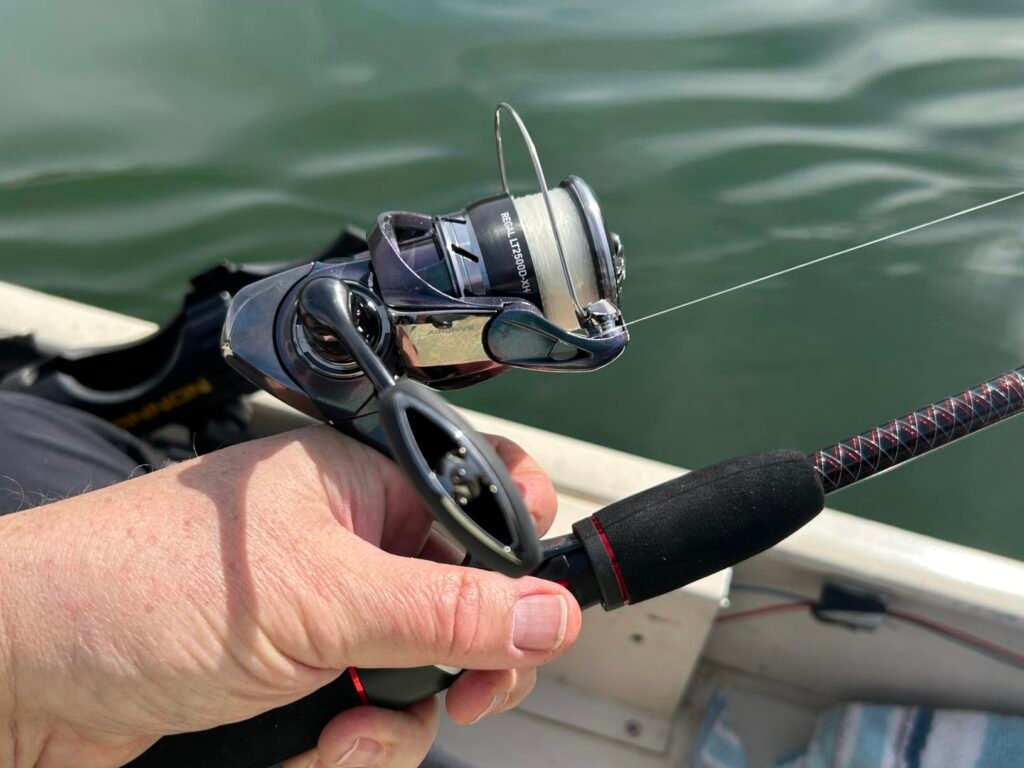
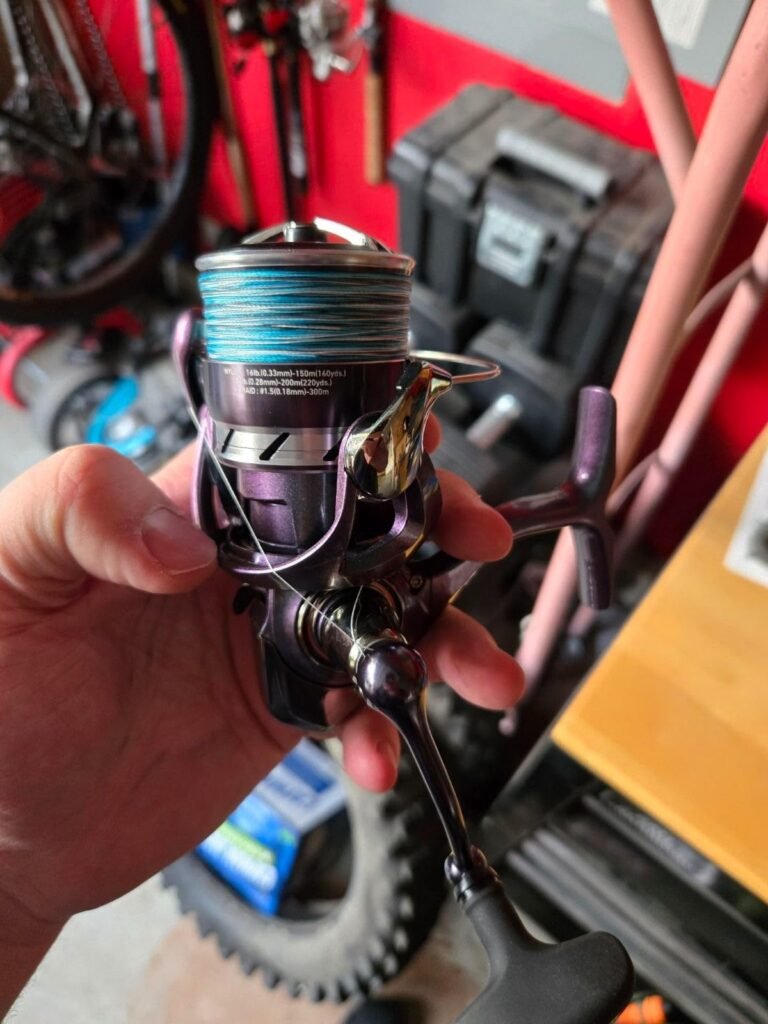
The Daiwa Regal LT Deep Spool is aimed squarely at lakes, ponds, and rivers, and it shares the 4.7 owner rating with the Penn Battle IV. Zaion V is Daiwa’s resin-and-carbon body material: lighter than aluminum, stiffer than cheap graphite. That is the point of an LT reel on a long casting day.
We may earn a commission when you buy through this link, at no additional cost to you.
Air Rotor is meant to improve rotational balance and sensitivity versus older, heavier rotors. ATD drag uses grease that stays thin at rest and thickens as the drag starts, reducing the first-jerk that breaks trout and walleye leaders. A deep spool holds more line for open-water runs and trolling-style freshwater work than a shallow tournament spool.
This is not marketed as the BG’s saltwater aluminum tank. Use it where the listing points: inland water. You can take any spinning reel to a jetty, but Zaion V plus a light LT concept is happier if you rinse obsessively and keep it off sand. Match it to medium freshwater rods, not surf blanks.
Deep spools hold more mono or braid for long runs and reduce the chance of seeing arbor on a big fish. They add a little rotating mass. Shallow spools cast lighter lures efficiently and empty faster. For lakes and rivers with mixed line types, deep is the more forgiving choice, which is why Daiwa labels this Regal that way.
Choose Regal LT if you want Daiwa’s current lightweight recipe, a deep spool, and a top rating without BG money. Choose Crossfire LT if the budget is tighter and you accept a lower rating. Choose BG if you need machined aluminum and a waterproof drag system for salt.
Dedicated saltwater anglers who need a waterproof aluminum housing and braid capacities printed for 20- and 30-pound inshore line.
We may earn a commission when you buy through this link, at no additional cost to you.
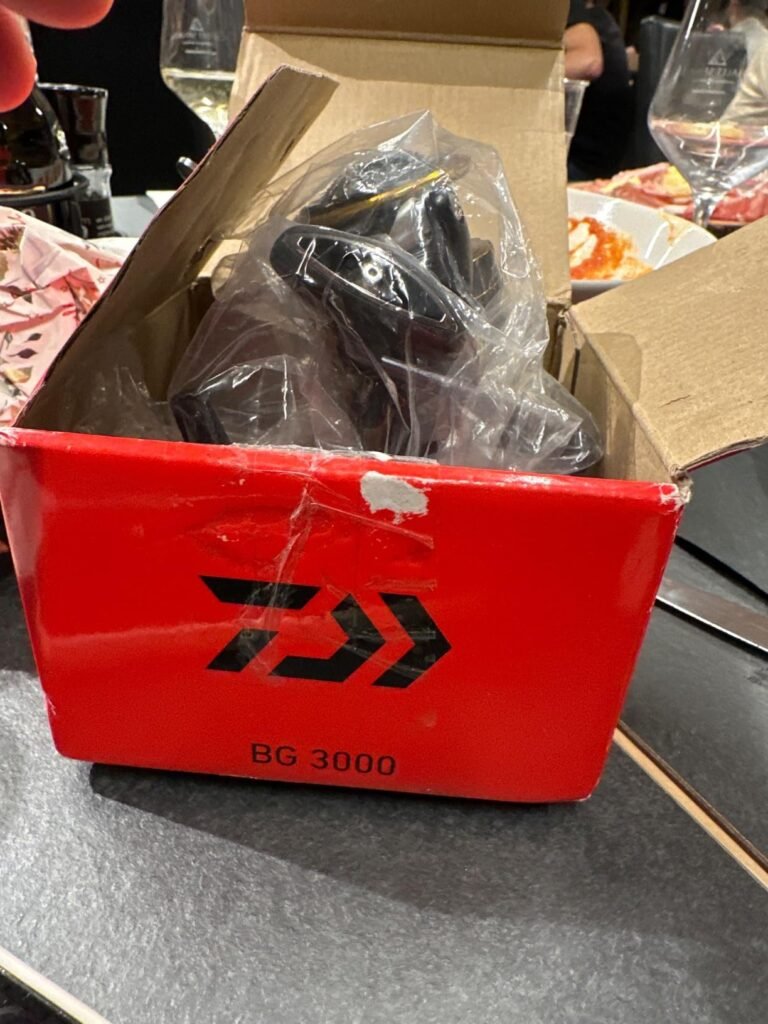
The Daiwa BG is the premium saltwater spinning reel in this comparison: black-anodized machined aluminum housing, Hard Bodyz body and side cover, oversized Digigear, and a waterproof carbon ATD drag. It is for anglers who will actually put a spinning reel in spray, sand, and braid-heavy inshore work and want metal that can be washed.
We may earn a commission when you buy through this link, at no additional cost to you.
Dynamic-cut aluminum ABS spool is braid-ready. Line per handle turn is 37.4 inches at 5.6:1, a middle retrieve versus 6.2:1 Penns and 5.2:1 torque reels. Max drag is 15.4 pounds. Capacities include 8/240, 10/200, 12/170 and J-Braid 15/280, 20/240, 30/190. Bearing layout is 6BB+1RB. Infinite anti-reverse applies on 4000 and smaller; 4500 and larger use infinite dual anti-reverse and a manual-return bail.
A solid screw-in handle beats a cheap screw-on knob when you crank against current. Manual bail on larger sizes is a saltwater tradition to avoid bail-spring failures; you close it by hand. That is a technique change, not a defect. Weight will exceed a Zaion V lake reel, which is the trade for aluminum.
On 4500 and larger, you open the bail to cast and close it with your hand before turning the handle. Flipping the handle to auto-close is how bail wires and springs get wrecked on big salt reels. Practice the extra motion at home. If you refuse to close a bail manually, stay with smaller BG sizes that use infinite anti-reverse without that manual-return design.
Buy the BG if saltwater is the main job and you want Daiwa’s classic aluminum spinner. Buy Battle IV if you prefer Penn’s 6.2:1 and HT-100 at a slightly lower price. Buy Regal LT if you almost never see salt. The BG is wasted on a 5-foot ultralight trout rod.
Ultralight freshwater-only anglers, or anyone unwilling to rinse an aluminum saltwater reel after every trip.
We may earn a commission when you buy through this link, at no additional cost to you.
Match body size to rod, drag to leader, retrieve to lure style, and materials to salt or freshwater. Bearing count is a secondary spec compared with gear mesh, drag washers, and whether you will rinse the reel.
Aluminum frames and sideplates, as on the Penn Battle IV and Daiwa BG Hard Bodyz, resist flex when you tighten drag or winch a snag. That rigidity keeps gears meshed. Graphite bodies, as on the Penn Wrath II, Pflueger President, and KastKing Centron, cut weight and do not corrode like neglected aluminum, but they can flex under heavy load. Nylitech on the Sharky and Zaion V on the Regal LT sit in the engineered-composite middle: lighter than metal, stiffer than bargain graphite.
Saltwater favors metal you can wash, plus anodized spools. Freshwater all-day casting favors LT composites. The Megatron’s skeletal aluminum tries to give metal strength with some weight relief. None of these materials forgive sand in the roller. A light Zaion V reel in the surf is possible if you rinse, but the BG exists because aluminum housings survive that abuse more honestly.
Choose aluminum for inshore and boat decks. Choose Zaion V or LT graphite for lakes and long walks. Choose Nylitech or graphite if weight and price matter more than crush-proof sideplates.
Carbon-fiber stacks (Megatron triple-disc, Sharky double or triple, Battle IV HT-100, Daiwa ATD) generally start more smoothly than felt. Felt on the Wrath II and President can be fine in freshwater and is noted on the Wrath for quick start-up, but it needs drying and is less ideal as a soaked surf drag. ATD Type-L and ATD grease are Daiwa’s answer to sticky first inches of run.
Claimed max drag ranges from the President’s 12 pounds to Sharky 4000/5000 at 39.5 pounds and Megatron over 30. Your rod, knots, and line fail far below those peaks. A practical approach is to set drag with a small scale to about a quarter to a third of line strength, then use the reel’s extra capacity as heat reserve. Shimano even lists a practical drag below its 24.3-pound maximum on the Sedona.
Buy carbon if you fight fish in current or salt. Felt is acceptable on budget freshwater reels if you back the knob off after the trip. Never set max drag on a trout rod just because the box printed a huge number.
A 5.2:1 reel such as the Megatron or Pflueger President picks up less line per crank and often feels stronger on the handle against weight. A 6.2:1 Penn Battle IV or Wrath II, or the Sharky hybrid 6.2:1, burns slack faster for twitchbaits, walking baits, and keeping a hook in a jumping fish. The BG’s 5.6:1 and 37.4-inch retrieve sit in the middle. The Sedona lists 105 cm, which is a long pull per turn for its size class.
Inches per turn also depends on spool diameter. A full spool retrieves more than a half-empty one. If you fish both deep crankbaits and fast topwaters, many anglers own two reels rather than hunting one perfect ratio. High speed is not “better”; it is worse if you overwork a slow-moving jig.
Pick 5.2:1 for power and slower presentations. Pick 6.2:1 for reaction baits and inshore popping. Pick 5.6:1 if you want one saltwater reel to do mixed jobs.
This group runs from the Wrath II’s 2+1 and Sedona’s 3/1 up to Sharky and President 10+1 and Centron 9+1. Extra shielded stainless bearings can reduce handle play if they are quality. Cheap extra bearings add little. Instant anti-reverse eliminates back play for hooksets on every reel here that lists it. Larger BG sizes add dual anti-reverse and manual bail for salt reliability.
Smoothness you feel on the first crank often comes from rotor balance (Air Rotor, AIRDRIVE) and gear cutting (Digigear, CNC Penn) as much as bearing count. A 3-bearing Shimano can feel better than a poorly meshed 10-bearing budget reel. Saltwater still prefers shielded stainless over open bearings, which the KastKing MaxiDur and Penn stainless lists address.
Do not buy on bearing count alone. Prioritize shielded stainless, a decent gear material story, and instant anti-reverse. Then rinse the reel so those bearings stay that way.
Braid-ready or superline spools on the Battle IV, President, and BG reduce the chance of braid spinning on a slick arbor. LC-ABS and long-cast lips on Daiwa Crossfire and KastKing Sharky are about reducing friction at the lip. Deep spools on the Regal LT hold more line for open water. Capacity rings on Penn aluminum spools help you stop before overfilling.
Listed capacities use different systems. Penn and Pflueger print U.S. yards per pound. Shimano Sedona uses Japanese nylon/fluoro/PE numbers. Daiwa BG lists both mono and J-Braid. Convert before you buy 300 yards of 30-pound braid for a 1000-size body. Overfilling braid is the leading cause of wind knots that get blamed on the reel.
Match spool size to rod: 1000–2500 for light, 3000–4000 for all-around bass and inshore, 4500+ for bigger salt. If you live on braid, prefer a labeled superline spool and still use a mono pad or tape on the arbor.
Reels openly built for salt in this guide include the Megatron, Sharky, Battle IV, Wrath II, and BG. Freshwater-forward models include the Regal LT (lakes, ponds, rivers), Pflueger President, Crossfire LT as a light all-rounder, Centron for ice and general use, and the Sedona as a compact daily reel. You can splash any of them, but aluminum waterproof-drag designs like the BG are the ones meant to be washed down.
Corrosion kills drags and bearings, not just frames. Graphite will not pit, but screws, bails, and spools still will. After salt, rinse with fresh water, let it drain, and back off the drag. Do not submerge a spinning reel to “clean” it unless you are prepared to reservice grease.
If 80 percent of your days are inland, save money with President, Regal, or Centron. If 80 percent are inshore, spend on Battle IV or BG. Mixed-use anglers often keep two spools or two reels rather than one compromised tool.
A reel that balances at the reel seat reduces wrist fatigue. Heavy aluminum on an ultralight rod tips the setup forward. Tiny 500–1000 Centron bodies belong on ice and panfish rods. Size 35 President and mid Sedona weights around 11.2 ounces fit general spinning rods. Folding CNC handles on Sharky and collapsible Centron Lite handles help travel; they must lock solid before you fight a fish.
Ambidextrous handles on Penn and Pflueger matter if you share rods or switch hands. Oversize EVA knobs help wet gloves. Screw-in handles on the BG reduce the chance of a knob backing off. Handle length, such as the Sedona’s 55 mm, changes cranking torque; longer is usually more powerful and slightly slower feeling.
Mount the reel, hold the rod at the grip, and see if the tip sits level. If the reel is a brick, go LT composite. If the rod is a surf blank, go aluminum. Travel anglers should confirm the handle actually folds on the exact SKU, because Centron and Centron Lite differ.
Seat the reel so the foot is fully in the seat and the locknut is snug, not crushed. Spool line in the same direction the bail wraps, under light tension, and stop a couple of millimeters below the lip. Set drag by pulling line from the reel with the bail closed until it slips before the rod overloads. Close the bail by hand on models that specify manual return, especially larger Daiwa BG sizes.
Cast with the line on your fingertip, open the bail fully, and do not tick the spool with a finger on the way out unless you mean to feather. After the lure lands, close the bail, point the rod, and turn the handle to pick up slack. If you fish braid, watch for loops on the spool after a slack-line blow; pick them off before the next cast. Keep the roller clean so line does not groove it.
Rinse salt and sand with a gentle freshwater stream, never a pressure washer into the bearings. Back the drag off for storage so washers do not flatten. Dry the reel before the bag. Once or twice a season, add a drop of reel oil to the handle knobs and bail roller if the maker allows it; do not soak graphite bodies in solvent. Store in a dry place, handle folded only if the design locks, and inspect the line before the next trip.
Match the body to the rod: 500–1000 for ice and panfish, 2500–3000 for most freshwater, 3000–4000 for inshore, and 4500-plus for heavier salt. The Pflueger President size 35 is a typical all-around freshwater size. Sharky drag specs change between 2000/3000 and 4000/5000, so the number on the box is not cosmetic. An oversized reel makes a light rod handle-heavy.
No. Megatron and Sharky advertise 30 to 39.5 pounds, but light spinning rods and 10-pound leaders cannot use that. Set drag to protect the line, not to match the box. Carbon stacks still help because they start smoothly and have reserve. A 12-pound President drag is enough for a lot of bass fishing if the rod is matched.
Carbon, as on Battle IV HT-100, Daiwa ATD, and KastKing carbon discs, is usually smoother when wet and better for salt. Felt, as on Wrath II and President, can start quickly and costs less, but it needs to dry and stay clean. If you fish beaches, prefer carbon. If you fish ponds and rinse rarely, felt is still common at this price.
5.2:1 favors torque and slower lures. 6.2:1, used on Battle IV, Wrath II, and Sharky, picks up line faster for slack and reaction baits. 5.6:1 on the Daiwa BG is a saltwater middle ground. Inches per turn also depend on spool diameter, so a full spool retrieves more than a half-empty one.
Enough quality shielded bearings to keep the handle and rotor smooth, not the highest number on the internet. Wrath II uses 2+1 and still has a job. President and Sharky use 10+1. Sedona uses 3/1. Instant anti-reverse for hooksets matters more than going from 7 to 10 balls. Poorly sealed extra bearings can fail faster in salt.
Yes on models with braid-ready or superline spools such as the Penn Battle IV, Pflueger President, and Daiwa BG. Use tape or mono backing so braid cannot spin on the arbor. Do not overfill. Convert Shimano’s PE numbers before you buy a bulk spool of Western braid. Braid shows wind knots faster if the lip is overfilled.
The Daiwa BG and Penn Battle IV are the most complete aluminum salt options here, with waterproof or HT-100 carbon drags and braid-friendly spools. Megatron and Sharky also list fresh and salt use with shielded stainless bearings and carbon drag. Wrath II is a cheaper Penn with felt drag and graphite. Rinse every salt trip regardless of brand.
The KastKing Centron is the lowest-cost way to get a real drag and aluminum spool. The Daiwa Crossfire LT adds AIRDRIVE ease if you want a light Daiwa. The Pflueger President is a smoother freshwater step-up. Beginners on inshore water should skip the cheapest graphite and look at Wrath II or Battle IV so the reel survives spray.
Only if you pack rods in tubes or tight luggage. Sharky’s CNC folding handle and Centron Lite’s collapsible handle help there. Confirm the handle locks before fishing. A folding joint that loosens mid-fight is worse than a fixed handle. Boat anglers with rod holders usually prefer a solid screw-in handle like the BG.
Rinse after salt or sand every trip. Back off the drag for storage. A full internal service once a year is reasonable for heavy salt use, less often for clean freshwater. If the drag stutters or the handle grinds, stop fishing it and service rather than forcing carbon or felt washers. Cheap reels are often cheaper to replace than to rebuild, which is a reason to buy Battle or BG if you fish hard.
For most inshore and mixed anglers who want metal, braid capacity, and a fast 6.2:1 retrieve, the Penn Battle IV is the strongest all-around spinning reel in this group: aluminum body and sideplates, HT-100 carbon drag, and the top 4.7 owner rating. It is the reel to buy when the water can be salty and the lure needs slack taken up quickly.
Freshwater specialists should look at the Daiwa Regal LT for Zaion V weight and Air Rotor balance, or the Pflueger President for 10-bearing smoothness and line control. Heavy drag fans can consider KastKing Megatron or Sharky. The Daiwa BG remains the premium aluminum saltworkhorse. Budgets stretch farther with Centron, Crossfire LT, or Penn Wrath II, each with clearer limits in drag type or bearings.
Match size to the rod, drag to the leader, and housing to salt or freshwater before you chase bearing counts. A 39-pound drag on a panfish rod is unused capacity, and a felt-drag graphite reel in the surf is a weekend of maintenance. Pick the category first, spool it correctly, rinse it after hard days, and the spinning reel you buy will still click smoothly when the next season starts.