EGO Power+ TR4204
42-inch steel deck
Six 56V batteries
20,000 watts peak
1.5-acre runtime
8.6
Check priceCompare top garden tractors by power, deck size, fuel type, cutting capacity, and durability. Find the right riding mower for your property size.
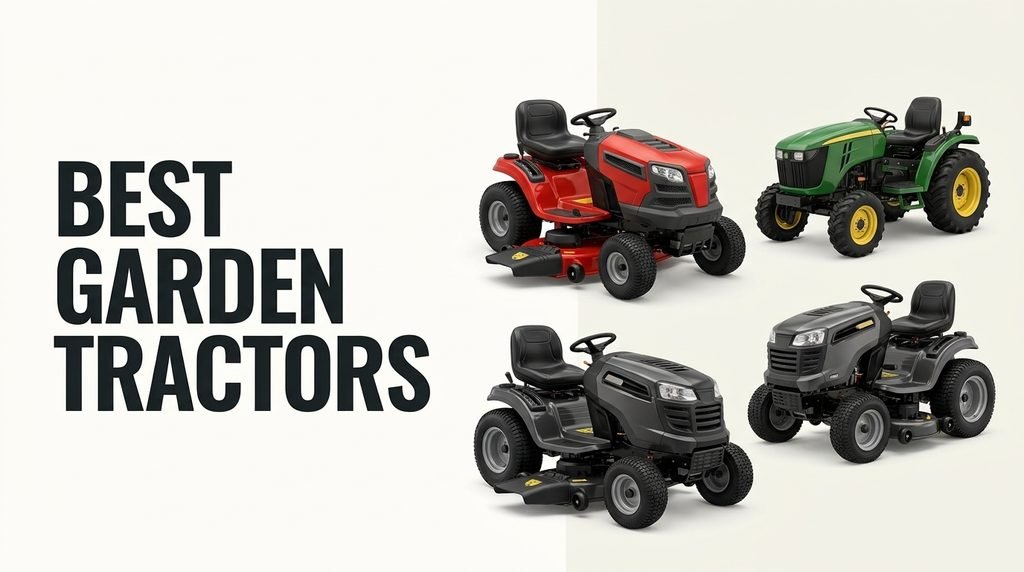
Find the right garden tractor for 2026. We compare standout options by the factors that matter most for property maintenance, including engine power, deck width, fuel type, cutting height range, terrain capability, towing capacity, and long-term durability across different property sizes.
Garden tractors range from electric riding mowers suited for suburban lawns to heavy-duty tow-behind units built for clearing overgrown acreage. The right choice depends on your lot size, terrain conditions, and whether you need a machine for regular mowing or rough land management.
This guide breaks down each option with clear specifications, practical trade-offs, and honest limitations. Whether you maintain a manicured half-acre or manage several acres of mixed brush, you will find a focused comparison to help you choose the right machine.
We compared these garden tractors using the details that actually help a buyer decide: engine or motor power, deck width, cutting height range, runtime or fuel capacity, terrain handling, hitch and towing capability, build quality, warranty coverage, and long-term ownership costs. The notes focus on practical trade-offs so each pick feels connected to how people actually mow, clear, and maintain their properties throughout the growing season.
Compare key features, scores, and current prices side by side. A shorter feature list means fewer details were available, not necessarily fewer capabilities.
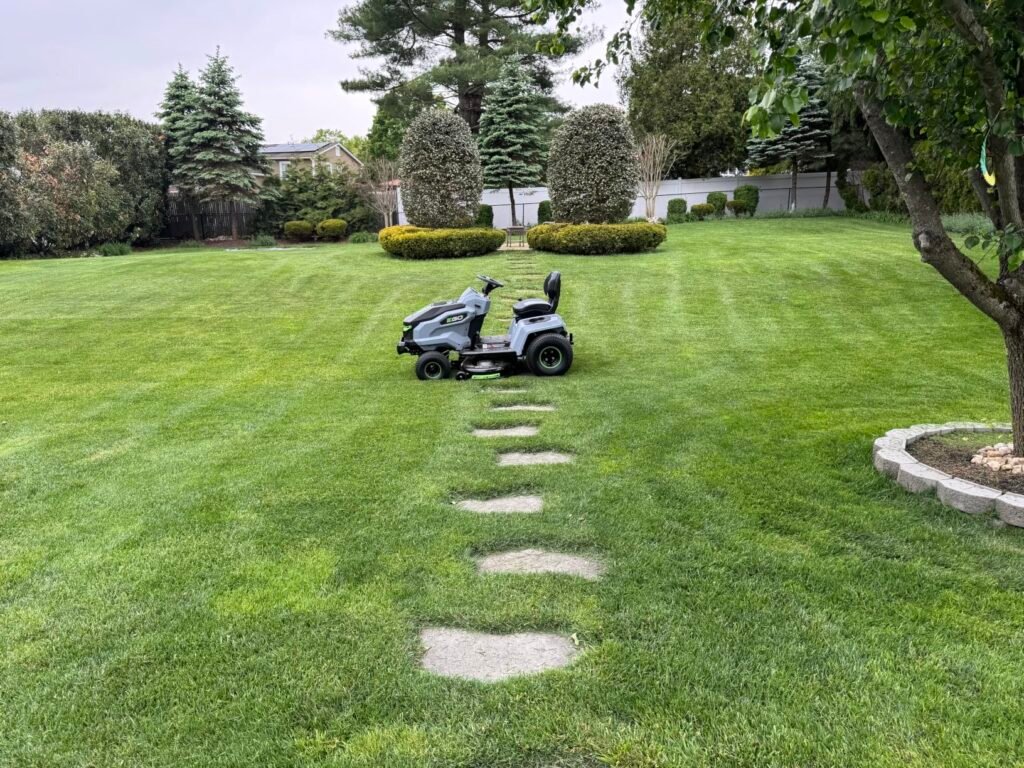
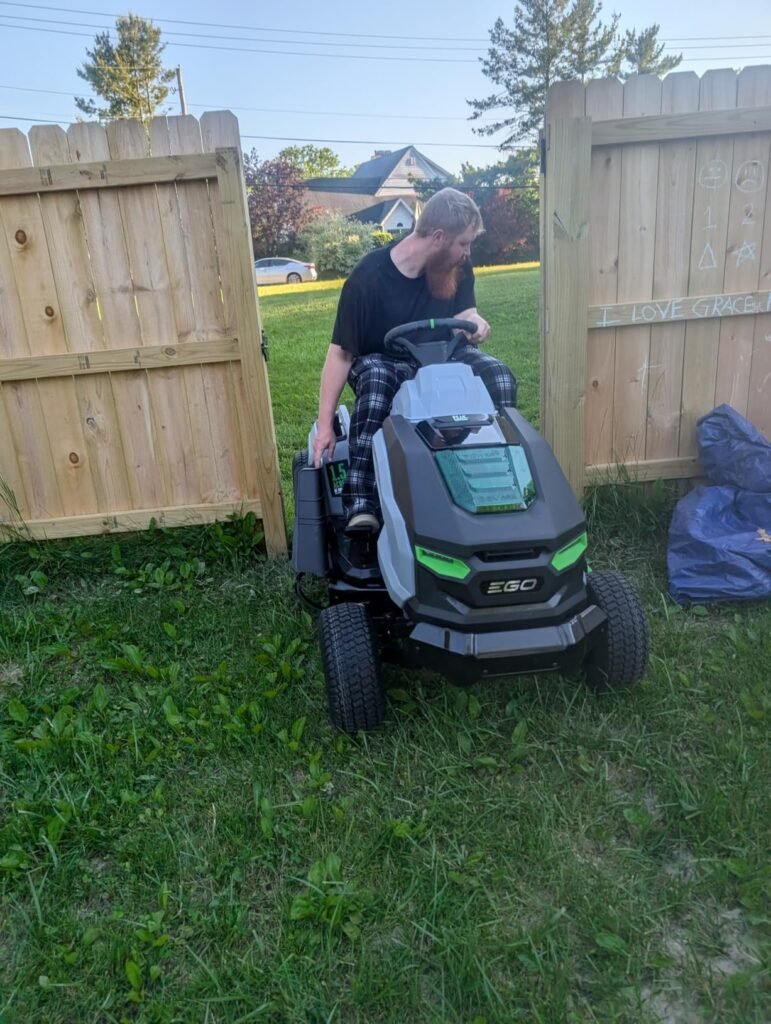
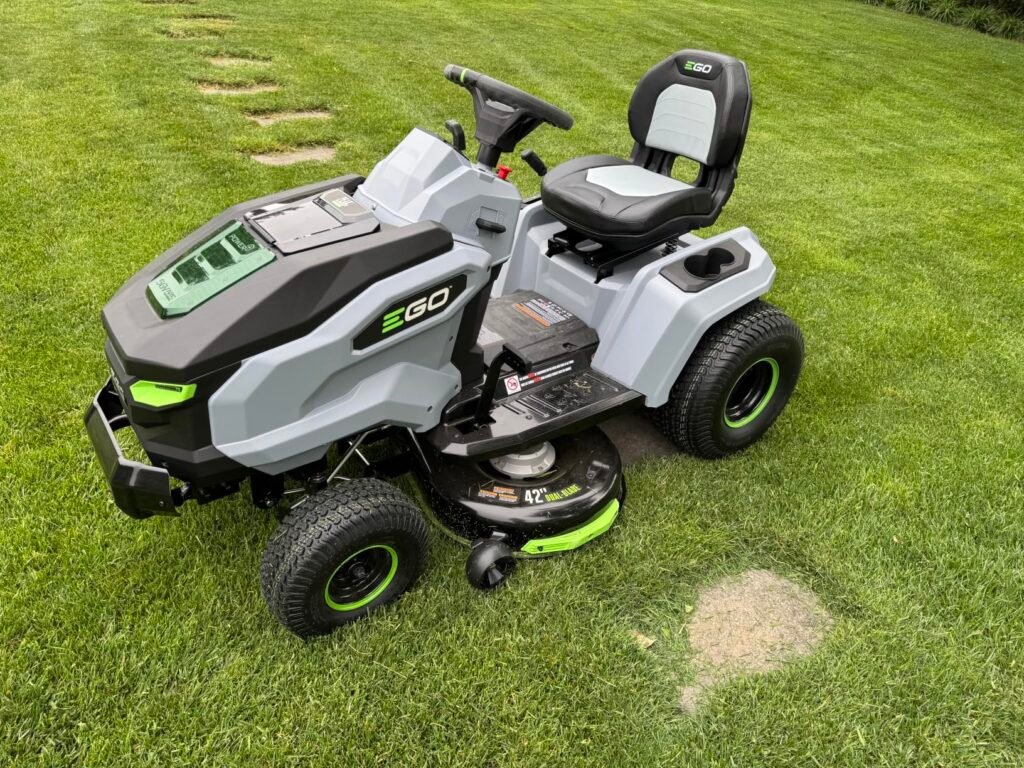
The EGO Power+ TR4204 is built for property owners who want the convenience of a riding mower without the noise, fumes, and recurring maintenance of a gas engine. It draws power from up to six EGO 56V ARC Lithium batteries, combining their output to deliver roughly 20,000 watts of peak power, which EGO rates as equivalent to a 21-horsepower gas engine. That is a significant amount of electric power for a residential riding mower, and it translates into confident cutting through thick or tall grass that would bog down lesser electric mowers.
We may earn a commission when you buy through this link, at no additional cost to you.
The 42-inch stamped steel deck uses dual brushless cutting motors instead of a traditional belt-driven spindle system. Eliminating belts removes one of the most common maintenance headaches on gas tractors, since belts stretch, crack, and need periodic replacement. The twelve cutting height positions, adjustable from 1.5 to 4.5 inches, give you fine-grained control over your lawn finish. Three blade speed settings let you dial back power for lighter mowing to conserve battery or ramp up for denser growth, and the cruise control feature is a welcome convenience on larger, open sections of lawn.
Usability is a strong point. The digital LCD display makes it easy to monitor battery levels, speed, and blade settings at a glance. LED headlights extend your mowing window into early morning or evening, and the USB charging port is a small but practical touch for keeping your phone topped up during longer sessions. The rear tow hitch adds versatility for hauling yard waste or light loads around the property. Because the tractor runs on the broader EGO 56V battery platform, any additional EGO batteries you own for handheld tools can extend your mowing runtime without purchasing dedicated mower batteries.
One of the most practical advantages of the EGO system is cross-compatibility with the entire EGO 56V ARC Lithium battery lineup. If you already own EGO string trimmers, blowers, or chainsaws, their batteries can be swapped into the riding mower to extend runtime during heavy mowing weeks. This ecosystem approach reduces the per-tool cost of battery ownership over time and makes the TR4204 a more logical investment for households already committed to the EGO platform.
The main trade-off is the relationship between runtime and property size. With six 6.0Ah batteries, the TR4204 covers up to 1.5 acres on a single charge, which is generous for an electric rider but may fall short for larger properties. If your lot exceeds that threshold, you will need to pause for recharging or invest in additional battery packs, which adds to the already substantial upfront cost. For homeowners with up to about an acre of mowable lawn who value quiet operation, minimal maintenance, and zero emissions, the TR4204 is a compelling and forward-looking choice backed by a five-year warranty.
Property owners with more than 1.5 acres of mowable terrain who cannot accommodate mid-session recharging delays.
We may earn a commission when you buy through this link, at no additional cost to you.
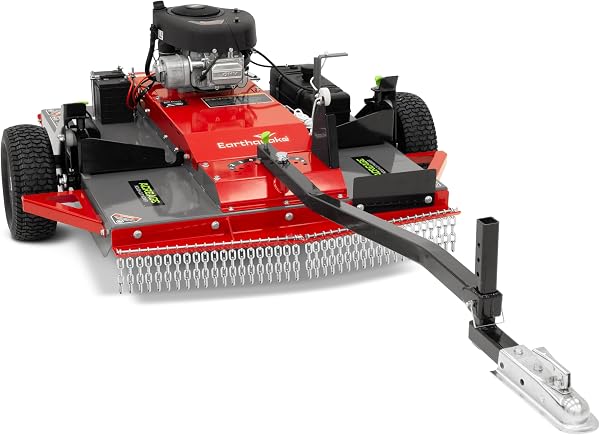
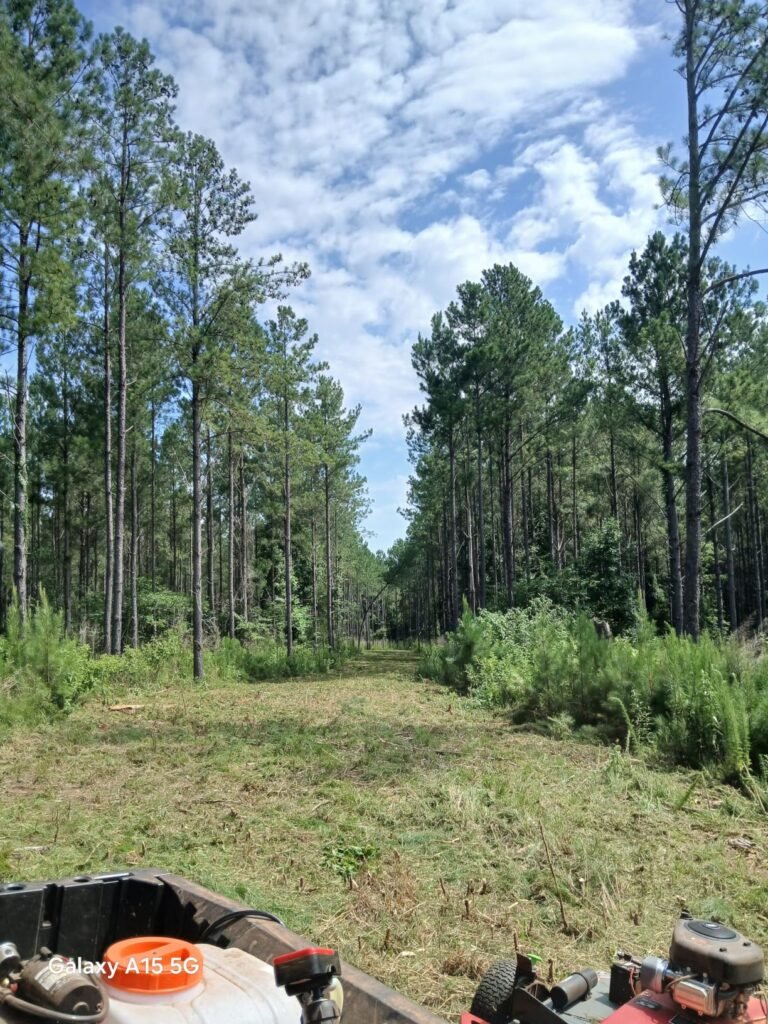
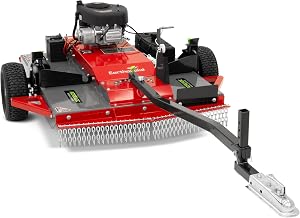
The Earthquake Acreage 42795 is not a traditional riding garden tractor but rather a tow-behind rough-cut mower designed for property owners who need to reclaim overgrown land, clear trails, or manage fields of tall grass and brush. It connects to an ATV, UTV, or garden tractor via a 2-inch ball coupler hitch and uses its own onboard 17.5-horsepower Briggs & Stratton engine to power two pivoting break-away blades across a 44-inch cutting width. This is a machine built for work that would destroy a standard lawn mower deck.
We may earn a commission when you buy through this link, at no additional cost to you.
The defining capability of the Acreage is its ability to cut saplings up to 3 inches thick in a single pass. The two pivoting blades swing out of the way when they encounter immovable obstacles like rocks or stumps, which protects both the blades and the drive system from impact damage. This break-away design is essential for rough terrain where hidden obstacles are common. The 11-gauge steel deck is substantially thicker than the stamped decks found on residential mowers, and the front and rear chain guards help contain flying debris while the steel wheel bumpers prevent the unit from hanging up on trees and fence posts.
Operational flexibility is another strength. The adjustable offset feature lets you shift the entire mower up to 4 feet to either side of the tow vehicle, which is invaluable for mowing along fence lines, under low tree limbs, or on ditch slopes where you cannot drive the tow vehicle directly over the cutting path. Cutting height adjusts from 3.5 to 7.5 inches without tools, so you can raise the deck for first-pass clearing of tall growth and then lower it for a finishing pass. The keyed electric start eliminates the frustration of pull-starting a large engine, and the blade engagement lever is within easy reach from the tow vehicle seat.
The Earthquake Acreage is a rough-cut mower, which means it is designed to clear tall grass, weeds, brush, and small saplings rather than produce a manicured lawn finish. The cutting height range of 3.5 to 7.5 inches is much higher than a residential lawn tractor, and the break-away blades prioritize durability over a clean, even cut. If your primary need is maintaining a neat suburban lawn, a traditional riding mower or the EGO electric tractor above is the better fit. The Acreage excels at the heavy-duty land management tasks that would overwhelm a standard garden tractor.
The most important thing to understand before purchasing is that this is a tow-behind implement, not a self-propelled riding mower. You need an ATV, UTV, or garden tractor with adequate towing capacity and a 2-inch ball hitch to use it. The shipping logistics also deserve attention: the unit arrives in a steel crate weighing nearly 770 pounds, which requires a forklift or trailer with removable sides for pickup and delivery. For landowners managing several acres of overgrown property who already have a suitable tow vehicle, the Earthquake Acreage offers serious clearing capability backed by a five-year product warranty and U.S.-based support.
Homeowners looking for a self-contained riding mower for regular lawn maintenance on flat, groomed terrain.
We may earn a commission when you buy through this link, at no additional cost to you.
Garden tractors and riding mowers come in many configurations, and the differences between them matter more than the similarities. The following factors will help you narrow down the right type of machine for your property, terrain, and maintenance routine.
The power source is the most fundamental decision when choosing a garden tractor. Gas-powered models, like the Earthquake Acreage with its 17.5-horsepower Briggs & Stratton engine, deliver sustained high torque for demanding tasks such as pulling heavy attachments, climbing slopes, and cutting thick vegetation. Gas engines are well understood, widely serviceable, and easy to refuel during long work sessions, but they require regular oil changes, air filter replacements, spark plug maintenance, and winterization. They also produce noise and exhaust emissions that may be a concern in residential neighborhoods.
Electric riding mowers, represented in this guide by the EGO Power+ TR4204, eliminate nearly all of that routine maintenance. There is no engine oil, no spark plugs, no fuel stabilizer, and no carburetor to clean. The trade-off is finite runtime dictated by battery capacity. The EGO delivers up to 1.5 acres per charge with six batteries, which covers most suburban properties but may require mid-session recharging on larger lots. Electric motors also deliver instant torque, which provides responsive blade engagement and smooth acceleration that many riders find more intuitive than a gas engine’s power curve.
Match the fuel type to your property size and tolerance for maintenance. If you mow less than an acre and want the quietest, lowest-maintenance option, electric is the clear winner. If you manage multiple acres of varied terrain or need to run power-hungry attachments like snow blowers or tillers, a gas engine still offers the most versatile and sustained power output.
Deck width determines how much grass you cut in each pass and directly affects mowing time. A 42-inch deck, common on residential garden tractors, is a practical width for most suburban lots because it balances cutting efficiency with the ability to navigate through standard yard gates and around landscaping features. Wider decks, such as the 44-inch rough-cut deck on the Earthquake Acreage, cover more ground per pass but may be harder to maneuver in tight spaces and are typically designed for open-field clearing rather than precision lawn mowing.
The cutting system design also matters. Traditional belt-driven decks use one or more spindles connected by a belt to the engine, which is a proven and repairable design but introduces a wear component that needs periodic attention. The EGO TR4204 uses dual brushless motors that drive the blades directly without belts, reducing maintenance and eliminating a common failure point. For rough-cut applications, pivoting break-away blades like those on the Earthquake Acreage protect the drivetrain from impact damage when striking rocks, stumps, or other hidden obstacles in overgrown terrain.
Choose a deck width that fits your property layout, not just your acreage. A wider deck saves time on open, flat lawns but becomes a liability if you need to navigate between closely spaced trees, garden beds, or narrow gates. Measure your tightest passage points before committing to a deck size.
Cutting height range determines how short or tall you can mow, and the number of adjustment positions affects how precisely you can dial in the grass length. Residential lawn tractors typically offer cutting heights from about 1.5 to 4.5 inches, which covers the ideal range for most common turf grasses. The EGO TR4204 provides twelve distinct positions within that range, giving you fine-grained control that is useful for adapting to seasonal growth patterns and varying grass types across your property.
Rough-cut mowers operate at much higher cutting heights because their purpose is clearing overgrowth rather than maintaining a manicured lawn. The Earthquake Acreage adjusts from 3.5 to 7.5 inches, which is appropriate for first-pass clearing of tall weeds and brush. The tool-less height adjustment on the Earthquake is a practical feature for field work where you may need to raise the deck for an initial clearing pass and then lower it for a second pass to achieve a more uniform cut.
If you maintain a traditional lawn, look for a cutting height range that starts at or below 2 inches and offers at least six adjustment positions. If you are clearing fields or managing pasture, prioritize a higher maximum cutting height and a robust deck that can handle the increased load of cutting tall, dense vegetation.
Your property’s terrain should heavily influence your garden tractor selection. Flat, even lawns are forgiving and can be mowed effectively by almost any riding mower. Sloped, uneven, or rough terrain demands more from the machine, including a lower center of gravity, wider wheelbase, and adequate traction to prevent slipping or tipping. Garden tractors with heavier frames and larger rear tires generally handle slopes better than lightweight lawn tractors, but even the best riding mower has safe slope limits that should never be exceeded.
For seriously rough or overgrown terrain, a tow-behind rough-cut mower like the Earthquake Acreage may be a better solution than a riding tractor because the tow vehicle handles the navigation while the mower follows behind on its own wheels. This separation of functions means the mower deck can be built heavier and tougher without worrying about rider comfort or steering geometry. The offset mowing capability on the Earthquake also lets you reach slopes and ditches that would be unsafe or impossible to drive a riding tractor across directly.
Assess your terrain honestly before purchasing. If your property includes steep hillsides, rocky ground, or heavily rutted areas, prioritize stability and ground clearance over cutting speed. A slower, more capable machine that handles your actual terrain safely is worth more than a faster mower that sits in the garage on wet or uneven days.
A true garden tractor distinguishes itself from a basic lawn tractor through its ability to pull ground-engaging attachments such as dump carts, aerators, dethatchers, spreaders, and snow blades. The presence of a rear tow hitch, like the one on the EGO TR4204, indicates at least basic towing capability, but the actual weight limit and hitch type vary significantly between models. A standard garden tractor should handle a loaded yard cart with several hundred pounds of material, while heavier-duty models can pull substantially more.
The Earthquake Acreage takes the opposite approach: it is itself the attachment, designed to be towed behind an existing vehicle rather than to tow implements behind it. This is an important distinction for buyers who are assembling a property maintenance system. If you already own an ATV or UTV, adding a tow-behind mower may be more cost-effective than purchasing a dedicated garden tractor. If you need a single machine that mows and tows, a traditional garden tractor with a hitch and PTO or hydraulic connections is the more versatile choice.
Before buying, list the attachments and tasks you realistically expect to perform beyond mowing. If you only need to pull a lightweight yard cart a few times per season, a basic hitch is sufficient. If you plan to run a snow blower, tiller, or box blade, you will need a garden tractor with a more robust frame, higher towing rating, and compatible attachment mounting points.
Warranty terms provide a useful signal of manufacturer confidence and can significantly affect your long-term ownership costs. Both products in this guide carry five-year warranties on the main unit, which is above average for the category and suggests durable construction. However, warranty details matter: the Earthquake separates its product warranty from its engine warranty, with the Briggs & Stratton engine covered for two years rather than five. The EGO covers the tool for five years, but battery warranties may differ, so it is worth verifying the specific terms for the battery pack before purchasing.
Beyond the warranty period, consider the ongoing costs of ownership. Gas-powered tractors require annual tune-ups, oil and filter changes, blade sharpening, belt replacement, and seasonal fuel stabilization, which can add up to several hundred dollars per year in parts and labor if you do not perform the work yourself. Electric tractors eliminate most of these costs but introduce battery replacement as a future expense. Lithium-ion batteries typically last several hundred charge cycles before noticeable capacity loss, and replacement battery packs represent a significant investment.
Calculate the five-year total cost of ownership, including fuel or electricity, maintenance, and potential battery replacement, rather than focusing solely on the purchase price. A higher upfront cost for an electric tractor may be offset by years of minimal maintenance, while a less expensive gas tractor may cost more over time in consumables and service.
Before each mowing session, walk the area to remove sticks, rocks, toys, and other debris that could damage the deck or become dangerous projectiles. Check tire pressure, blade condition, and fluid levels on gas models, or verify battery charge levels on electric models. Mow when the grass is dry for the cleanest cut and to prevent clumping, which can smother the lawn and strain the cutting motors or engine. Vary your mowing pattern from week to week to prevent soil compaction and ruts from forming in the same tracks.
For gas-powered tractors, follow the manufacturer’s recommended maintenance schedule for oil changes, air filter cleaning or replacement, and spark plug inspection. At the end of the mowing season, either drain the fuel tank or add a fuel stabilizer to prevent the carburetor from gumming up during storage. For electric models, store batteries in a cool, dry location and charge them to roughly 50 to 70 percent capacity if they will sit unused for several months, as this helps preserve long-term battery health. Keep the cutting deck clean by scraping off accumulated grass clippings after each use to prevent corrosion and maintain airflow.
Store your garden tractor in a covered, dry location to protect it from rain, snow, and UV exposure that can degrade paint, rubber seals, and plastic components over time. If storing outdoors is unavoidable, use a fitted tractor cover and elevate the unit slightly off bare ground to reduce moisture exposure. Inspect the deck underside, belts, and blade mounting hardware at least twice per season, and sharpen or replace blades when you notice ragged grass tips or uneven cutting patterns.
Garden tractors are generally heavier, more powerful, and built to handle ground-engaging attachments like tillers, snow blowers, and box blades in addition to mowing. Lawn tractors are lighter machines designed primarily for mowing flat to moderately sloped residential lawns. Garden tractors typically have stronger frames, larger engines, and more robust transmissions to handle the additional stress of pulling and powering attachments.
A gas-powered garden tractor can typically mow 2 to 4 acres in a single session depending on deck width, terrain, and grass conditions, limited mainly by fuel tank capacity and operator endurance. Electric riding mowers are constrained by battery runtime, with models like the EGO TR4204 covering up to 1.5 acres per charge. Additional batteries or mid-session recharging can extend electric range for larger properties.
Electric garden tractors can handle moderate slopes, but their performance on steep terrain depends on motor torque, weight distribution, and tire traction. Electric motors deliver instant torque, which helps with hill climbing, but the heavy battery pack can shift the center of gravity in ways that affect stability. Always check the manufacturer's maximum slope rating and mow across slopes rather than up and down to reduce tipping risk.
A riding garden tractor is the right choice if you need a single self-contained machine for mowing and light towing on maintained or moderately rough terrain. A tow-behind mower like the Earthquake Acreage makes more sense if you already own an ATV or UTV and need to clear overgrown fields, trails, or brush that would damage a standard mower deck. The tow-behind approach separates the power and navigation from the cutting, allowing each component to be optimized for its role.
Most garden tractor blades benefit from sharpening at least once or twice per mowing season, depending on how frequently you mow and whether your lawn contains sandy soil or hidden debris that dulls the cutting edges faster. Dull blades tear grass rather than cutting it cleanly, which leads to brown tips, increased disease susceptibility, and a ragged lawn appearance. Inspect the blade edges monthly during peak growing season and sharpen or replace them when you notice nicks or rounding.
For a one-acre lot, a garden tractor with a 42 to 48-inch deck and an engine in the 18 to 22 horsepower range provides a good balance of mowing speed and maneuverability. A 42-inch deck can mow one acre in roughly 45 to 60 minutes under normal conditions. If the acre includes significant landscaping, tight turns, or obstacles, a smaller deck may actually be faster because it reduces the number of multi-point turns needed around flower beds and trees.
Lithium-ion batteries in electric garden tractors typically maintain strong performance for 500 to 1,000 charge cycles, which translates to roughly 5 to 10 years of typical residential use depending on mowing frequency and storage conditions. Capacity gradually decreases over time rather than failing suddenly, so you may notice shorter runtimes in later years. Proper storage at moderate temperatures and avoiding deep discharge cycles can extend battery lifespan significantly.
Many garden tractors support snow removal attachments such as front-mounted snow blowers, snow blades, or snow plows, provided the tractor has sufficient engine power, frame strength, and the correct mounting hardware. Gas-powered garden tractors with at least 20 horsepower and a heavy-duty transmission are generally the best candidates for snow removal. Electric tractors may struggle with the sustained high-load demands of blowing heavy, wet snow, and cold temperatures can reduce battery performance.
The EGO Power+ TR4204 stands out as the strongest all-around choice for homeowners who want a quiet, low-maintenance riding mower for regular lawn care on properties up to about 1.5 acres. Its belt-free electric drivetrain, twelve cutting height positions, and integration with the broader EGO 56V battery platform make it a practical long-term investment for anyone looking to move away from gas-powered mowing without sacrificing cutting performance.
For property owners dealing with overgrown acreage, brush, and saplings, the Earthquake Acreage 42795 fills a completely different role as a heavy-duty tow-behind rough-cut mower. It requires a separate tow vehicle but delivers clearing capability that no residential riding tractor can match, making it the right tool for reclaiming neglected land or maintaining trails and field edges on larger rural properties.
Your best choice depends on the specific work you need to accomplish. If you are maintaining a groomed suburban lawn and value quiet operation with minimal upkeep, the EGO electric tractor is the clear pick. If you are managing rough, overgrown acreage and already own a capable tow vehicle, the Earthquake Acreage offers serious land-clearing power at a reasonable price. Define your primary use case first, and the right machine becomes much easier to identify.