ENEACRO 13 Amp
9.2Editor score13 Amp motor
7.4 joules impact
820 RPM speed
12.58 lbs weight
Find the right rotary hammers for 2026. We compare 10 standout options by build quality, useful features, owner feedback, value, and everyday trade-offs.
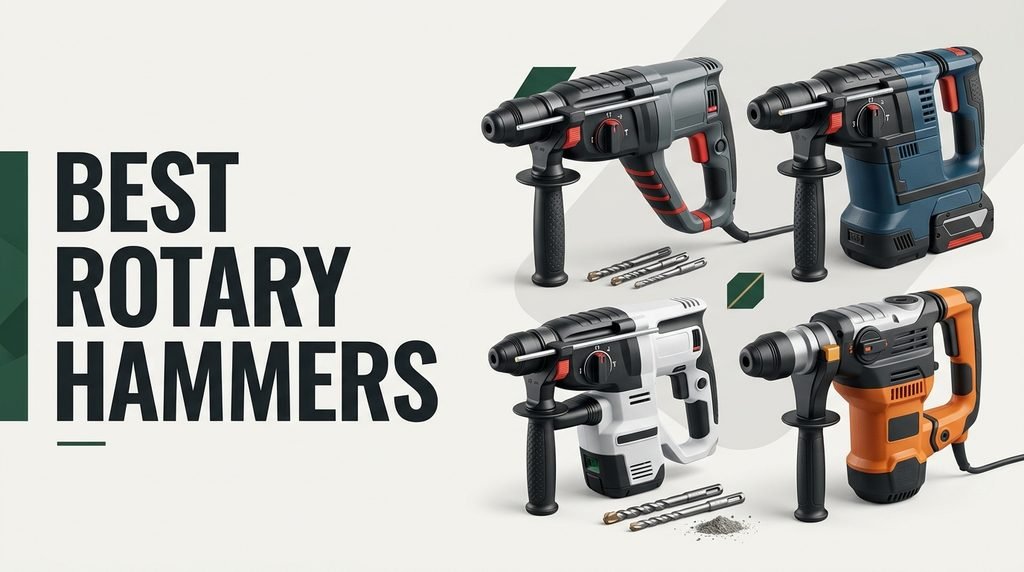
Find the right rotary hammer for your concrete and masonry projects in 2026. We compare 10 standout models by impact energy, drilling capacity, vibration control, motor type, operating modes, weight, and real-world trade-offs that affect daily performance on the job site.
Rotary hammers vary significantly in power delivery, chuck compatibility, and whether they run on corded or cordless platforms. Choosing the wrong type can mean slow progress through reinforced concrete or unnecessary fatigue during overhead drilling sessions.
This guide breaks down the specifications and practical differences that matter most, from joules of impact energy to anti-vibration systems and safety clutches. Use the comparison and reviews below to match a model to your drilling frequency, material types, and budget.
We compared 10 rotary hammers using the specifications and features that directly affect drilling performance and user comfort: impact energy in joules, motor amperage or voltage, operating modes, vibration reduction technology, chuck type, weight, safety mechanisms, and overall value. The analysis focuses on practical trade-offs between corded power and cordless convenience, heavy-duty demolition capability and lightweight handling, so each recommendation connects to how these tools actually perform in concrete, masonry, and chiseling applications.


Compare key features, scores, and current prices side by side. A shorter feature list means fewer details were available, not necessarily fewer capabilities.


The DEWALT DCH133B earns its high rating by combining cordless freedom with a brushless motor and a durable German-engineered hammer mechanism. At 2.6 joules of impact energy, it handles the most common professional tasks such as rod hanging, structural connections, beam and column anchorage, and bracket mounting without the drag of a power cord across the job site.
We may earn a commission when you buy through this link, at no additional cost to you.
The brushless motor is a significant upgrade over brushed designs because it generates less heat, runs more efficiently, and typically delivers longer runtime per battery charge. The rotating dial on the side of the tool lets you switch between drill, hammer drill, and chip modes without fumbling with small switches, which is convenient when you are working from a ladder or lift and need to change modes quickly.
The lightweight D-handle design makes this rotary hammer particularly well-suited for overhead drilling, where a heavier corded tool would cause rapid arm fatigue. The included 360-degree side handle and depth rod provide good control for precision hole placement. Because this is a bare tool, you will need to supply your own DEWALT 20V MAX batteries and charger, which is ideal if you are already invested in the platform.
Overhead drilling is where cordless rotary hammers shine most clearly. Without a cord pulling against the tool or snagging on scaffolding, you can position the hammer more precisely and maintain better balance on a ladder. The DCH133B’s compact form factor and D-handle grip give you the control needed for accurate hole placement in ceiling slabs and steel stanchion mounting.
Choose this model if you are a professional who drills anchor holes and structural connections daily and already owns DEWALT 20V batteries. The tradeoff is lower peak impact energy compared to heavy-duty corded hammers, so it is not the right tool for large-diameter holes in heavily reinforced concrete or extended demolition work.
Buyers who do not already own DEWALT 20V MAX batteries or who need heavy demolition capability.
We may earn a commission when you buy through this link, at no additional cost to you.
The ENEACRO ENRH3201 targets users who need serious demolition and drilling power without paying premium brand prices. Its 13-amp motor generates 7.4 joules of impact energy, which places it well above most rotary hammers in this price range and makes it a practical choice for breaking through thick concrete, removing tile, and chiseling brickwork on a regular basis.
We may earn a commission when you buy through this link, at no additional cost to you.
Four distinct operating modes give this tool unusual flexibility for a corded hammer in its class. You can switch between drill-only for wood and steel, hammer-only for chiseling, combined rotary hammer for concrete, and an adjustable chisel position mode. The dual-switch design is a thoughtful detail that reduces wear on the mode selector and helps the mechanism last longer over years of frequent switching.
Comfort features include a 360-degree adjustable auxiliary handle, a PU soft-grip main handle, and a dual-layer anti-vibration system that takes some of the sting out of prolonged drilling sessions. The safety clutch disengages when the bit binds, which is an important protection for your wrists during unpredictable masonry work. The SDS-Plus chuck accepts standard bits up to 1-1/4 inches in concrete and allows quick changes without a separate key.
The included carrying case, three SDS-Plus drill bits, two chisels, replacement carbon brushes, lubricant grease, and dust cap make this one of the most complete packages in this guide. Buyers who are setting up their first rotary hammer will appreciate not having to purchase accessories separately, which can easily add thirty or forty dollars to the total cost of a bare-tool purchase.
This rotary hammer makes the most sense for DIYers and semi-professional users who regularly face heavy concrete tasks but do not want to invest in a premium cordless platform. The tradeoff is weight and corded operation. At nearly 13 pounds bare, it demands two-handed control for overhead work, and the power cord limits range. If your projects are mostly light anchor drilling, a lighter model will serve you better.
Users who need a lightweight tool for overhead drilling or cordless portability on large job sites.
We may earn a commission when you buy through this link, at no additional cost to you.
The DEWALT D25263K is built around the brand's SHOCKS Active Vibration Control system, which uses internal dampening mechanisms to reduce the vibration transmitted to your hands and arms during extended drilling and chiseling. For professionals who spend hours each day drilling anchor holes in concrete or running chisels along tile lines, this feature can make a meaningful difference in comfort and long-term joint health.
We may earn a commission when you buy through this link, at no additional cost to you.
The 8.5-amp motor delivers 3.0 joules of impact energy, which is well-suited for standard concrete drilling tasks such as setting anchors, running conduit holes, and light chipping. The rotating brush ring maintains full torque in both forward and reverse, which is useful when backing a bit out of a deep hole or removing a fastener. An integral clutch helps prevent sudden torque reactions if the bit jams in rebar or dense aggregate.
One practical advantage is compatibility with the DEWALT D25301D dust extraction system, which matters on job sites where silica dust regulations apply. Connecting an extractor directly to the hammer helps keep the work area cleaner and supports OSHA compliance without requiring a separate shroud attachment. The 115-volt corded design ensures consistent power delivery without worrying about battery charge levels during long shifts.
Silica dust regulations continue to tighten across the construction industry, and having a rotary hammer that pairs with a dedicated extraction system simplifies compliance. The D25263K connects directly to the D25301D extractor, which captures dust at the drilling point and reduces airborne particulates. This setup is worth considering if you regularly work on commercial or institutional projects where dust control documentation is required.
This model is a strong fit for professional installers and tradespeople who value vibration comfort and dust management over raw demolition power. If your primary work involves drilling hundreds of small to medium holes rather than breaking up slabs, the D25263K provides a balanced combination of performance, comfort, and job-site compliance features.
Users who need high-impact demolition power for breaking thick concrete or heavy chiseling tasks.
We may earn a commission when you buy through this link, at no additional cost to you.
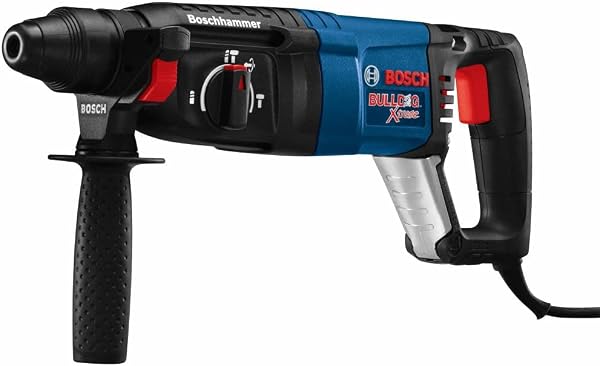
The BOSCH Bulldog Xtreme 11255VSR has been a staple on job sites for years, and its reputation rests on reliable performance and a D-handle design that provides excellent control during both overhead and downward drilling. The 7.5-amp motor produces 2.0 foot-pounds of impact energy with speeds up to 1,300 RPM and 5,800 BPM, which is sufficient for most anchor setting, conduit routing, and light chiseling tasks.
We may earn a commission when you buy through this link, at no additional cost to you.
Three operating modes cover the standard range of rotary hammer applications: rotation-only for drilling into wood or steel, rotary hammer for concrete and masonry, and hammer-only for chiseling. The variable-speed trigger with reverse gives you fine control when starting a hole in smooth tile or backing a bit out of a deep bore. The SDS-Plus chuck locks bits automatically and includes dust protection to keep the mechanism clean during masonry work.
A standout feature is the Vario-Lock positioning system, which offers 36 chisel positions so you can set the exact angle for tile removal, groove cutting, or surface scaling. This level of adjustability is especially useful for tile and flooring contractors who need precise chisel orientation to avoid damaging surrounding material. The vibration control system also helps reduce fatigue during all-day use.
When removing tile or cutting channels in masonry, the angle of the chisel relative to the work surface matters enormously. The Vario-Lock system lets you rotate and lock the chisel in any of 36 positions, giving you the precise orientation needed to slide under tile edges or follow a mortar line without unnecessary surface damage. This feature alone can save significant time on renovation projects.
The Bulldog Xtreme is a dependable choice for general contractors and skilled DIYers who want a proven corded rotary hammer with excellent chiseling control. It is not the most powerful option here, so buyers who regularly drill large-diameter holes in reinforced concrete should consider a higher-impact model instead.
Users who need high-impact energy for breaking thick reinforced concrete or heavy demolition.
We may earn a commission when you buy through this link, at no additional cost to you.
At under fifty-five dollars, this lightweight SDS-Plus rotary hammer offers a surprisingly capable entry point for homeowners and DIYers who occasionally need to drill into concrete, brick, or masonry. The 9-amp motor delivers 3.0 joules of impact energy at up to 1,100 RPM and 5,300 BPM, which is enough for setting wall anchors, mounting shelving brackets, and running small conduit holes through block walls.
We may earn a commission when you buy through this link, at no additional cost to you.
Four operating modes provide good versatility for the price. Rotary hammer mode handles standard concrete drilling, rotary-only mode works for lighter masonry tasks, hammer-only mode is designed for tile removal, and the chisel position adjustment lets you set the angle for scraping and scaling. The variable-speed trigger with a locking button helps maintain consistent speed during extended drilling without constant finger pressure.
The 7.19-pound weight is the lightest in this guide, which makes a real difference when you are drilling overhead or working in tight spaces where a heavier tool would be difficult to control. The built-in safety clutch disengages if the bit binds, and the vibration control system provides reasonable comfort for the price point. Just be aware that this tool accepts only SDS-Plus bits, not standard drill bits or SDS-Max accessories.
A common mistake with budget rotary hammers is attempting to use standard twist drill bits or SDS-Max accessories in an SDS-Plus chuck. This tool only accepts SDS-Plus bits, which have a specific shank design with grooves that lock into the chuck mechanism. Before ordering, verify that your existing bit collection is SDS-Plus compatible, or budget for a starter set of SDS-Plus masonry bits.
This rotary hammer is best suited for occasional DIY use and light renovation projects where you need concrete drilling capability without a major investment. It is not designed for daily professional use or heavy demolition, and the lower star rating reflects the tradeoffs you accept at this price. If you plan to drill frequently or tackle reinforced concrete, investing in a more powerful model will save time and frustration.
Professionals who drill daily or users who need heavy demolition and large-diameter concrete boring.
We may earn a commission when you buy through this link, at no additional cost to you.
The DEWALT DCH273B stands out for its OSHA Table 1 compliance when paired with the DWH303DH on-board dust extractor, making it a practical choice for contractors who work on regulated commercial and institutional job sites. Meeting silica dust standards without cumbersome external shrouds simplifies setup and helps keep your crew in compliance during anchor drilling and mounting tasks.
We may earn a commission when you buy through this link, at no additional cost to you.
With 2.1 joules of impact energy from a brushless motor, this cordless hammer is designed for the high-volume, small-to-medium hole drilling that defines much of the mechanical and electrical trades. Rod hanging, seismic and safety attachments, cable tray and strut mounting, clamp mounting, and rail mounting are all well within its capability. The German-engineered mechanism and brushless motor work together to maximize runtime from each battery charge.
The SHOCKS Active Vibration Control system reduces the vibration felt at the handles compared to rotary hammers without this technology, which matters when you are drilling dozens of holes in a single shift. The lightweight design and three-mode rotating dial make it easy to switch between drilling, hammer drilling, and chipping without stopping to adjust separate switches or controls.
OSHA Table 1 outlines specific dust control methods for construction tasks, and rotary hammer drilling in concrete is one of the most heavily regulated activities. The DCH273B paired with the DWH303DH extractor provides a documented compliance path that can simplify site inspections and reduce the need for separate respiratory protection plans. This is a significant practical advantage on projects where dust documentation is routinely reviewed.
This model is ideal for MEP contractors and installers who need a cordless rotary hammer that meets dust regulations out of the box. The lower impact energy means it is not intended for heavy demolition, and you will need to supply your own DEWALT 20V MAX batteries. If compliance and cordless convenience are your top priorities, this is one of the strongest options available.
Users who need high-impact demolition power or who do not already own DEWALT 20V MAX batteries.
We may earn a commission when you buy through this link, at no additional cost to you.
The ENEACRO 12.5-amp rotary hammer delivers 7.0 joules of impact energy at a price point that undercuts most competing heavy-duty models by a significant margin. This combination of high impact force and aggressive pricing makes it one of the best value propositions in this guide for users who need genuine demolition and drilling capability without the cost of a premium brand name.
We may earn a commission when you buy through this link, at no additional cost to you.
The heat-resistant copper-wire motor and sealed anti-dust design are built to handle extended drilling sessions in harsh conditions without overheating or internal contamination. The three-mode operation covers drill-only for wood and steel, hammer-only for light chiseling, and rotary hammer for concrete and masonry. The dual-switch control mechanism is engineered to last twice as long as single-switch designs, which is a meaningful durability advantage for frequent users.
Ergonomic features include a 360-degree adjustable auxiliary handle, a PU soft-grip main handle, and a dual-layer anti-vibration system that reduces fatigue during prolonged use. The safety clutch automatically disengages during bit jams to protect your wrists from sudden torque spikes. At 11.1 pounds bare, it is slightly lighter than the 13-amp ENEACRO model while still delivering nearly identical impact energy.
The 12.5-amp and 13-amp ENEACRO rotary hammers share many features, but the 12.5-amp version is slightly lighter and less expensive while delivering nearly the same impact energy. The 13-amp model offers four modes including a dedicated chisel position adjustment, while the 12.5-amp model provides three modes. If you do not need the extra chisel positioning mode, the 12.5-amp version provides better value for most users.
This is an excellent choice for DIYers and part-time professionals who need a powerful corded rotary hammer for concrete drilling, tile removal, and light demolition. The included kit with drill bits, chisels, carbon brushes, lubricant, dust cap, and carrying case means you can start working immediately. The main limitation is corded operation, which may not suit large outdoor job sites without convenient power access.
Professionals who need cordless portability or a lightweight tool for all-day overhead drilling.
We may earn a commission when you buy through this link, at no additional cost to you.
The BOSCH GBH2-28L Bulldog Xtreme Max distinguishes itself with KickBack Control, an integrated sensor that detects sudden bit bind-up and stops tool rotation almost instantly. This feature addresses one of the most common and dangerous situations in rotary hammer use, when a bit catches on rebar or dense aggregate and the tool twists violently in your hands. For users who drill in unpredictable concrete conditions, this protection is genuinely valuable.
We may earn a commission when you buy through this link, at no additional cost to you.
The 8.5-amp motor delivers 2.4 foot-pounds of impact energy, which is a step up from the standard Bulldog Xtreme and provides noticeably faster drilling in medium-density concrete. The counter-balanced vibration control system works differently from simple dampening by actively offsetting the internal hammer mechanism’s oscillation, resulting in smoother operation and less hand fatigue over long drilling sessions.
The D-handle design, Vario-Lock chisel positioning, and HammerHook for hanging the tool on a ladder or scaffold round out a well-thought-out feature set. The variable-speed trigger with reverse provides precise control for starting holes in smooth surfaces and extracting stuck bits. The SDS-Plus chuck allows tool-free bit changes with automatic locking, keeping workflow interruptions to a minimum.
Bit bind-up occurs when the drill bit catches on an obstruction inside the hole, such as rebar, a dense aggregate pocket, or a change in material density. Without a safety mechanism, the rotational force transfers directly to the tool body and your wrists, which can cause sprains or worse. The GBH2-28L’s KickBack Control sensor detects the sudden deceleration and cuts power to the motor within a fraction of a second, dramatically reducing the torque reaction you feel.
This model is best suited for professionals who prioritize safety and comfort in a corded rotary hammer and are willing to pay a premium for advanced protection features. The moderate impact energy means it excels at anchor drilling and light chiseling rather than heavy demolition. If you frequently encounter rebar or work in conditions where bit binding is common, the KickBack Control alone may justify the higher price.
Buyers on a tight budget or users who need maximum impact energy for heavy concrete demolition.
We may earn a commission when you buy through this link, at no additional cost to you.
The Milwaukee 2912-20 M18 Fuel rotary hammer is engineered for speed, and its claim to the fastest drilling in its class is backed by the POWERSTATE brushless motor and REDLINK Plus intelligence that optimize power delivery under load. For professionals who measure productivity in holes per hour, this tool can meaningfully reduce the time spent on repetitive anchor drilling and structural connection tasks.
We may earn a commission when you buy through this link, at no additional cost to you.
The AUTOSTOP Control feature senses bind-up situations and shuts down the tool to prevent sudden torque reactions, similar in concept to the BOSCH KickBack system but integrated into Milwaukee’s cordless platform. This protection is especially important on a high-torque cordless hammer where the sudden release of stored energy can be more violent than on a lower-powered tool. The SDS-Plus chuck handles bits up to one inch in diameter.
As part of the M18 system with over 200 compatible tools, this rotary hammer integrates seamlessly into an existing Milwaukee cordless ecosystem. If you already run M18 batteries on your job site, adding this hammer means one less charger and battery platform to manage. The brushless motor maximizes runtime from each charge, which is critical when you are drilling far from a charging station.
One of the strongest arguments for choosing the 2912-20 is its place within the broader M18 ecosystem. If your crew already uses M18 drills, impacts, saws, and lights, the shared battery platform means you can rotate high-capacity XC or High Output packs across tools throughout the day. This flexibility reduces downtime and simplifies charging logistics on busy job sites where multiple trades are working simultaneously.
This is the right choice for Milwaukee-loyal professionals who need the fastest possible cordless drilling performance and value the AUTOSTOP safety feature. The premium price reflects the M18 Fuel platform’s performance tier, and you will need to supply your own batteries and charger. If you are not already invested in the M18 system, the total cost of entry will be significantly higher than the bare tool price suggests.
Buyers who are not already invested in the Milwaukee M18 battery platform or who need corded power for continuous heavy drilling.
We may earn a commission when you buy through this link, at no additional cost to you.
The Milwaukee M18 Brushless D-Handle rotary hammer achieves something remarkable for a cordless SDS-Plus tool: it weighs just 5.3 pounds without a battery, making it the lightest option in this entire guide. This ultra-low weight transforms overhead drilling and extended mounting sessions from an endurance test into a manageable task, which is why it earns one of the highest ratings in this comparison.
We may earn a commission when you buy through this link, at no additional cost to you.
Despite its compact size, this hammer drills 3/8-inch by 2-inch holes faster than many corded one-inch D-handle rotary hammers, according to its specifications. The M18 brushless motor delivers over 50 percent longer runtime than brushed equivalents, and Milwaukee rates the tool for up to 100 holes of 3/8-inch by 2-inch diameter per charge when paired with an M18 XC5.0 battery. That level of productivity from a tool this light is a significant advantage for installation professionals.
The AVS Anti-Vibration System minimizes vibration transfer to the user’s hands, which complements the low weight by further reducing fatigue during high-volume drilling. The D-handle grip provides secure two-handed control for precise hole placement, and the SDS-Plus chuck accepts standard bits for quick changes. The brushless motor also runs cooler and requires less maintenance over the tool’s lifespan compared to brushed designs.
The difference between a 5.3-pound rotary hammer and a 12-pound model may not seem dramatic on paper, but over hundreds of overhead holes in a single shift, the cumulative effect on shoulder and arm fatigue is substantial. A lighter tool allows you to maintain better positioning accuracy later in the day when fatigue would normally degrade your precision, which can reduce rework and improve overall installation quality.
This rotary hammer is ideal for electricians, HVAC technicians, and sprinkler installers who drill large numbers of small to medium anchor holes throughout the day and need a tool that will not wear them out by lunchtime. The tradeoff is that it is limited to the M18 battery platform and is not designed for heavy demolition or large-diameter boring. If lightweight cordless drilling is your primary need, this model is difficult to beat.
Users who need heavy demolition capability or who are not already using the Milwaukee M18 battery system.
We may earn a commission when you buy through this link, at no additional cost to you.
Selecting a rotary hammer involves balancing impact power, drilling capacity, vibration comfort, and power source against the specific demands of your projects. The factors below cover the most important decision points and common mistakes buyers make when shopping for these tools.
Impact energy, measured in joules or foot-pounds, is the single most important specification for understanding how effectively a rotary hammer will penetrate concrete and masonry. Higher impact energy means the tool delivers a more forceful blow with each strike of its internal piston, which translates to faster drilling in hard materials and the ability to handle larger-diameter holes. In this guide, impact energy ranges from about 2.1 joules on lighter cordless models to 7.4 joules on the most powerful corded option.
The practical difference between a 2.1-joule and a 7.0-joule rotary hammer is substantial. A lower-energy tool will handle 1/4-inch to 1/2-inch anchor holes in standard concrete efficiently but will struggle with larger diameters or heavily reinforced sections. A higher-energy model can bore 1-inch or larger holes through dense concrete and handle light demolition tasks such as tile removal and brick chiseling without excessive strain on the motor or mechanism.
Match the impact energy to your most common drilling tasks rather than the most extreme scenario you might encounter. If 90 percent of your work involves 3/8-inch anchor holes, a 2.5 to 3.0-joule hammer will serve you better than a heavier 7-joule model that is overkill for the application and harder to control.
Corded rotary hammers deliver consistent, unlimited power as long as you have access to an electrical outlet or generator. They typically offer higher impact energy and are better suited for sustained heavy-duty drilling and demolition work. The tradeoff is reduced mobility on the job site, the need for extension cords or temporary power, and the inconvenience of managing a cord while working from ladders or scaffolding.
Cordless rotary hammers have improved dramatically in recent years thanks to brushless motors and high-capacity lithium-ion batteries. Modern cordless models from DEWALT, Milwaukee, and other major brands can drill hundreds of anchor holes on a single charge and provide the freedom to work anywhere without power infrastructure. The tradeoff is lower peak impact energy compared to heavy-duty corded models, limited runtime under continuous heavy loads, and the ongoing cost of batteries and chargers.
Choose corded if your primary work involves heavy demolition, large-diameter boring, or continuous drilling near a reliable power source. Choose cordless if you value mobility, work on sites without temporary power, drill primarily overhead, or already own batteries in a compatible platform. Many professionals eventually own both types for different applications.
All 10 rotary hammers in this guide use the SDS-Plus chuck system, which is the industry standard for light to medium-duty rotary hammers. SDS-Plus bits feature a slotted shank that locks into the chuck without a key, allowing fast bit changes and efficient transfer of impact energy from the tool to the bit. This system handles bits up to approximately 1-1/4 inches in diameter for concrete drilling, which covers the vast majority of anchor and conduit hole applications.
It is important to understand that SDS-Plus bits are not interchangeable with SDS-Max bits, which are designed for larger, more powerful rotary hammers used in heavy demolition. SDS-Max bits have a larger shank diameter and different slot configuration. Attempting to use the wrong bit type will damage the chuck and the bit. Some budget rotary hammers also cannot accept standard twist drill bits, so verify compatibility before purchasing accessories.
Before buying a rotary hammer, inventory the bits you already own or plan to purchase. If you need to drill holes larger than 1-1/4 inches in concrete, you will need to step up to an SDS-Max rotary hammer, which is a different tool category entirely. For most residential and commercial drilling tasks, SDS-Plus provides the right balance of capability and convenience.
Rotary hammers generate significant vibration as their internal piston strikes the back of the bit thousands of times per minute. Prolonged exposure to this vibration can cause hand-arm vibration syndrome, a serious occupational health condition that affects circulation and nerve function in the hands and fingers. Modern rotary hammers incorporate various vibration reduction technologies to mitigate this risk and improve comfort during extended use.
Vibration control systems range from simple rubber dampening grips to sophisticated counter-balanced mechanisms and active vibration reduction systems. DEWALT’s SHOCKS technology, BOSCH’s counter-balanced vibration control, and Milwaukee’s AVS system all use different engineering approaches to reduce the vibration transmitted to the user’s hands. The effectiveness of these systems varies, but any dedicated vibration reduction technology is a meaningful improvement over a basic design.
If you use a rotary hammer for more than an hour per day on a regular basis, prioritize models with dedicated vibration control systems. The additional cost is modest compared to the long-term health benefits, and the improved comfort will also help you maintain accuracy and productivity throughout the workday.
Most rotary hammers offer at least three operating modes: rotation-only for drilling into wood, metal, or plastic without hammering action; rotary hammer for combined rotation and impact when drilling into concrete and masonry; and hammer-only for chiseling, tile removal, and light demolition without rotation. Some models add a fourth mode for chisel position adjustment, which lets you rotate and lock the chisel at a specific angle for precise scaling and groove cutting.
The number of modes matters less than the quality of the mode switching mechanism and the tool’s performance in each mode. A rotary hammer with excellent hammer-drilling performance but weak chiseling capability may not serve a renovation contractor who needs both functions equally. Conversely, a demolition-focused tool with high impact energy may be unnecessarily aggressive for precision anchor drilling.
Consider which modes you will actually use on a regular basis. If you only need to drill holes in concrete, a two-mode tool may be sufficient. If you also remove tile, cut channels for wiring, or scale rough surfaces, look for a model with reliable hammer-only mode and adjustable chisel positioning.
Rotary hammer weight varies dramatically across this guide, from just over 5 pounds for the lightest cordless model to nearly 13 pounds for the heaviest corded option. Weight affects not only how long you can use the tool comfortably but also how precisely you can position it, especially during overhead drilling or when working from a ladder. A heavier tool may deliver more impact energy, but it will also cause faster fatigue and may increase the risk of repetitive strain injuries.
Ergonomic features such as D-handle designs, adjustable auxiliary handles, soft-grip surfaces, and balanced weight distribution all contribute to how a rotary hammer feels during actual use. A well-balanced 10-pound tool may feel more comfortable than a poorly balanced 8-pound model because the weight is distributed closer to your hands rather than pulling forward or backward during operation.
If your work involves frequent overhead drilling or extended sessions on ladders and scaffolding, prioritize lighter models with D-handle designs. For ground-level demolition and heavy drilling where the tool can rest on the work surface or be braced against your body, weight is less critical and higher impact energy may be the better priority.
Modern rotary hammers incorporate several safety features that protect both the user and the tool. Safety clutches disengage the drive mechanism when the bit binds, preventing sudden torque reactions that can twist the tool violently and injure your wrists. Electronic bind-up detection systems like Milwaukee’s AUTOSTOP and BOSCH’s KickBack Control go further by sensing the bind-up condition and stopping the motor almost instantly.
Dust management is another safety consideration that has become increasingly important as silica dust regulations tighten across the construction industry. Some rotary hammers are compatible with integrated dust extraction systems that capture particulates at the drilling point, helping you comply with OSHA Table 1 requirements without additional external shrouds or separate vacuum setups.
When comparing safety features, look for both mechanical protections like safety clutches and electronic systems like bind-up detection. If you work on regulated commercial sites, also verify that the tool can be paired with a compatible dust extraction system to meet current silica exposure limits.
Before drilling, always verify that your SDS-Plus bit is fully seated and locked in the chuck by pulling back on the bit after insertion. Set the correct operating mode for your material: rotary hammer for concrete and masonry, rotation-only for wood or metal, and hammer-only for chiseling. Start the hole at a low speed with light pressure to establish a guide point, then increase speed and let the tool’s weight and impact mechanism do the work rather than forcing the bit with excessive downward pressure.
During extended drilling sessions, periodically withdraw the bit from the hole to clear concrete dust and debris, which can bind the bit and reduce drilling efficiency. If the bit becomes stuck, switch to reverse mode if your tool supports it, or use the hammer-only mode to gently work the bit free. Avoid applying lateral force to the bit while the hammer is running, as this can bend the bit or damage the chuck mechanism.
After each use, clean the SDS-Plus chuck and bit shank of concrete dust and apply a small amount of grease to the bit shank before storage to prevent corrosion and ensure smooth insertion next time. Store the rotary hammer in its carrying case in a dry location, and inspect the carbon brushes periodically on brushed-motor models for signs of wear. For cordless models, store batteries at a partial charge in a temperature-controlled environment to maximize their lifespan.
A rotary hammer uses a piston-driven mechanism to deliver powerful impact blows along the axis of the bit, making it far more effective for drilling into concrete and masonry. A standard hammer drill uses a simpler mechanical clutch system that produces less impact energy and is better suited for light masonry and brick. For any serious concrete drilling, a rotary hammer is the appropriate tool.
No, rotary hammers require SDS-Plus or SDS-Max bits depending on the chuck type. Standard twist drill bits have smooth round shanks that will not lock into the SDS chuck and cannot transfer impact energy effectively. Always use bits specifically designed for your rotary hammer's chuck system to ensure safe operation and optimal performance.
For small anchor holes up to 1/2 inch in standard concrete, 2.0 to 3.0 joules is generally sufficient. For larger holes up to 1 inch or drilling in reinforced concrete, 3.0 to 5.0 joules provides better performance. For heavy demolition and holes larger than 1 inch, look for 5.0 joules or more. Match the energy level to your most common drilling tasks.
Modern cordless rotary hammers from major brands like DEWALT and Milwaukee deliver enough power for the majority of professional drilling tasks, including anchor setting, structural connections, and mounting work. They may not match the peak impact energy of heavy-duty corded models for large-diameter demolition, but for high-volume small to medium hole drilling, cordless performance is more than adequate.
SDS stands for Slotted Drive System, and SDS-Plus is the most common chuck standard for light to medium-duty rotary hammers. The bit shank has grooves and indentations that lock into the chuck mechanism, allowing the bit to slide back and forth freely for efficient impact transfer while remaining securely held during rotation. SDS-Plus handles concrete drilling up to approximately 1-1/4 inches in diameter.
Use steady, moderate pressure and let the tool's impact mechanism do the work rather than forcing the bit. Periodically withdraw the bit to clear dust from the hole, especially in deep drilling. If you encounter rebar, reduce speed and pressure to work through the metal gradually. A safety clutch or electronic bind-up detection system provides additional protection if the bit does catch.
Yes, most rotary hammers with a hammer-only or chisel mode can be used for tile removal. Set the tool to hammer-only mode, attach a flat chisel bit, and work the chisel under the tile edges at a shallow angle. Models with adjustable chisel positioning, such as the BOSCH Bulldog Xtreme, provide additional control for precise tile removal without damaging the underlying substrate.
Battery life depends on the battery capacity, the tool's motor efficiency, and the drilling application. A high-capacity battery like the Milwaukee M18 XC5.0 can deliver up to 100 holes of 3/8-inch by 2-inch depth per charge in favorable conditions. Heavier drilling in dense concrete will reduce this number significantly. Carrying spare batteries is recommended for full-day professional use.
If you work on commercial or institutional job sites subject to OSHA silica dust regulations, a dust extraction system is strongly recommended and may be legally required. For residential DIY use, dust extraction is less critical but still beneficial for keeping your workspace clean and reducing inhalation of concrete dust. Several models in this guide are compatible with dedicated extraction attachments.
The DEWALT DCH133B stands out as the strongest overall choice for most professional users, combining cordless convenience, brushless efficiency, and a lightweight D-handle design that excels in overhead and structural drilling applications. Its high customer rating and German-engineered mechanism reflect a well-balanced tool that handles the most common rotary hammer tasks with minimal compromise.
For buyers who need maximum impact energy on a budget, the ENEACRO 12.5-amp and 13-amp models deliver 7.0 to 7.4 joules of impact force at prices well below competing heavy-duty options, complete with full accessory kits. On the cordless side, the Milwaukee M18 D-Handle offers the lightest weight and fastest drilling for high-volume anchor work, while the DEWALT DCH273B provides OSHA compliance for regulated job sites.
Your final decision should come down to three factors: the type of concrete work you do most often, whether you need corded or cordless power, and which battery platform you already own if you choose cordless. Match the impact energy and weight to your daily tasks, prioritize vibration control if you drill for extended periods, and choose a model with the safety features that matter most for your working conditions.