Flysky FS-GT3B
9.0Editor score3-channel wheel radio
2.4GHz frequency hopping
Unique transmitter ID
Includes FS-GR3E receiver
Find the right rc transmitters for 2026. We compare 10 standout options by build quality, useful features, owner feedback, value, and everyday trade-offs.
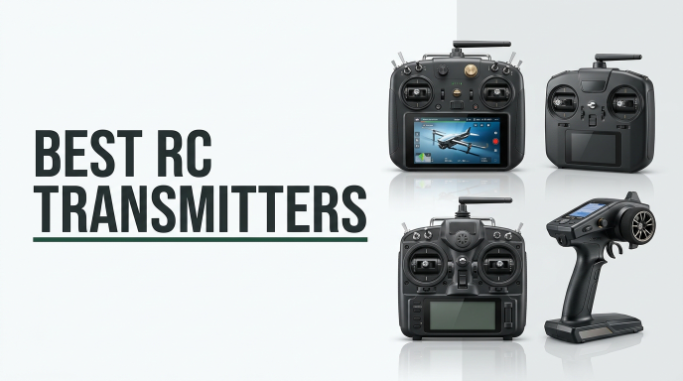
Choosing the right RC transmitter for 2026 depends on far more than channel count. We compare 10 standout radios across the factors that shape everyday driving and flying: signal protocol, range, ergonomics, screen quality, model memory, receiver compatibility, programming depth, and value. The goal is helping you match a controller to the vehicles you run and the way you like to fine-tune them.
Transmitters range from simple three-channel wheel radios for crawlers to full-color touchscreen units built for competition pilots. The most important differences involve how many models you can store, how much telemetry the radio supports, whether the receiver ecosystem locks you in, and how easily you can adjust throttle curves, dual rates, and mixing on the fly.
This guide breaks down each transmitter by real use cases, so you can weigh whether a budget-friendly wheel radio, a versatile stick unit for aircraft, or a premium multi-model controller fits your hobby. Whether you drive rock crawlers or fly fixed-wing planes, the comparisons below should help you invest confidently and avoid buying twice.
We compared 10 RC transmitters using the details that actually help a buyer decide: channel count, signal protocol, control range, receiver compatibility, model memory, screen and interface quality, programming depth, ergonomics, power options, and overall value. The notes focus on practical trade-offs so each pick connects to how hobbyists actually run cars, crawlers, boats, and aircraft across different scales and skill levels.


Compare key features, scores, and current prices side by side. A shorter feature list means fewer details were available, not necessarily fewer capabilities.


The Flysky FS-GT5 stands out as one of the most well-rounded surface radios in this guide, and its high rating reflects that. It pairs with the FS-BS6 receiver over the AFHDS 2A protocol to deliver six channels of clean output. Beyond the raw channel count, its combination of ABS braking, gyro stability, and a purpose-built crawler mode makes it appealing across a wide range of vehicles from stadium trucks to rock rigs.

We may earn a commission when you buy through this link, at no additional cost to you.
The ABS function only affects the throttle channel, but it gives you six brake profiles so you can dial in how the vehicle sheds speed on different tracks. Fail-safe protection moves servos to a preset position if the receiver loses signal, which is a genuine safety feature on faster models running near people or obstacles. The gyro-assisted smart vehicle control helps counter oversteer on drift builds and stabilizes on-road cars at speed.
Model memory holds 20 profiles with editable names, so you can jump between a nitro basher, an electric buggy, and a scale crawler without reprogramming. The crawler mode changes throttle response to make the low-speed control that trail rigs demand feel more natural. Ergonomically the radio is compact, well balanced, and built around a familiar wheel-and-trigger layout.
The gyro-assisted control works best when your servo and gyro are correctly calibrated to the vehicle. Spend a few minutes going through the setup menu with the wheels off the ground so you can verify the corrections are applied in the right direction before you drive at speed.
The FS-GT5 is the pick for hobbyists who want one radio to comfortably cover several vehicle types with programming depth that lasts as skills grow. It costs more than a bare-bones three-channel unit, but the added features are the kind of tools you actually reach for once you start tuning cars for different surfaces and driving styles.
Casual drivers who only want simple throttle and steering with no interest in learning programming menus.
We may earn a commission when you buy through this link, at no additional cost to you.
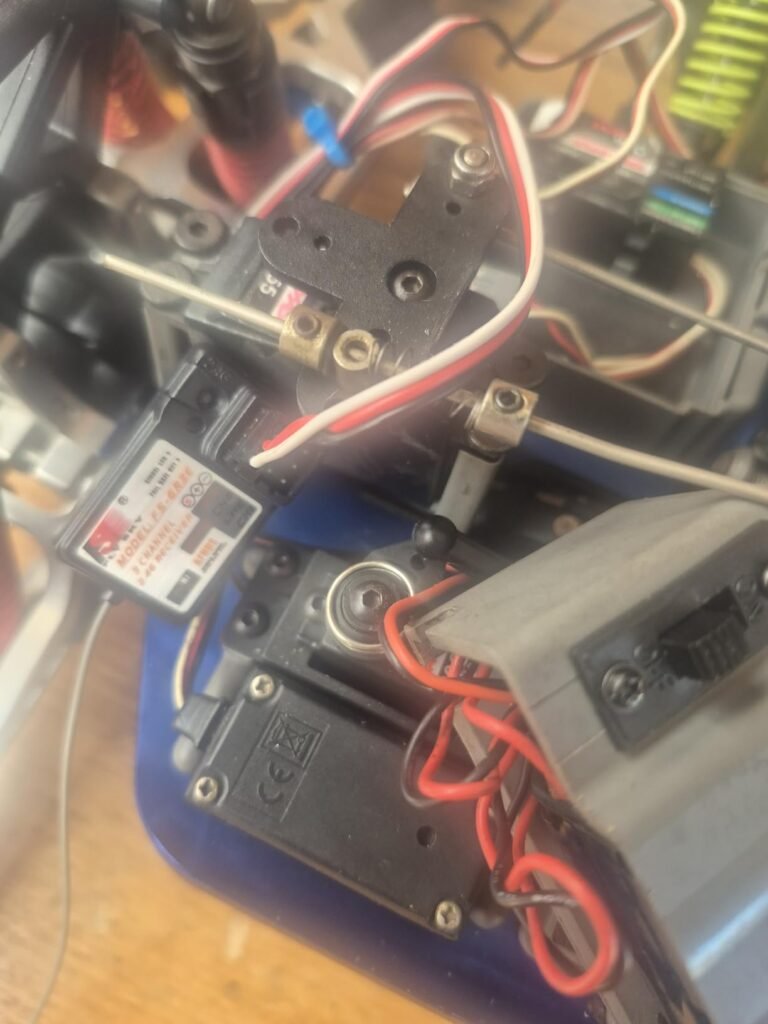
The Flysky FS-GT3B is a wheel-style radio aimed at newcomers who want dependable performance without paying for features they will not use right away. With three channels and a matched FS-GR3E receiver in the box, it covers the essentials for RC cars, trucks, crawlers, and boats. The 2.4GHz system splits its band into 160 frequency points and hops across 16 of them, which helps the signal stay clean when other radios are running nearby.
We may earn a commission when you buy through this link, at no additional cost to you.
The programming set is straightforward but complete for casual driving. You get servo reverse, steering and throttle trim, dual rate, endpoint adjustment, ABS settings, and exponential curves. These let you tune how aggressively the throttle and steering respond, which is especially useful when a young driver is learning or when a fast electric truck feels twitchy at full lock. Model memory keeps your setup saved between sessions so you do not have to re-tune every time you power on.
Ergonomically, the FS-GT3B is a familiar pistol-grip shape with a moderate weight that most drivers can hold for long track sessions without fatigue. The unique transmitter ID handles pairing automatically after the first bind, and the anti-jamming behavior means you can run at busy bash spots without dropouts. A trainer port lets the radio double as a simulator controller through a compatible dongle, which is a nice bonus for practicing indoors.
Most beginners assume more channels are always better, but for a typical crawler, boat, or basher truck you really only need throttle, steering, and one auxiliary channel for a winch or dig unit. If you never plan to add lights, sound modules, or a two-speed transmission, three channels is plenty and keeps the interface simple to learn.
This is the radio to pick when you want a reliable step up from toy-grade controllers without spending on features you will not use. It will not fit competitive drivers who need telemetry, dozens of model slots, or programmable mixing, but for a first hobby-grade wheel radio it delivers solid range, clean signal, and a workable feature set at an approachable price.
Drivers who want telemetry, multi-model storage, or more than three auxiliary channels for advanced scale accessories.
We may earn a commission when you buy through this link, at no additional cost to you.
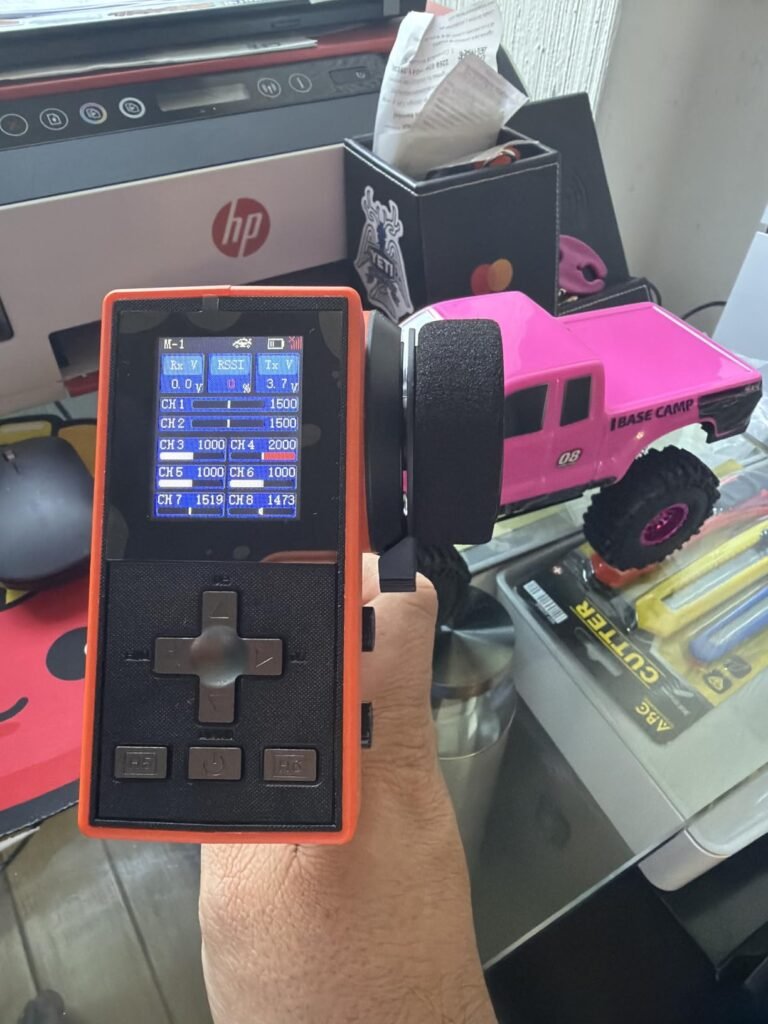
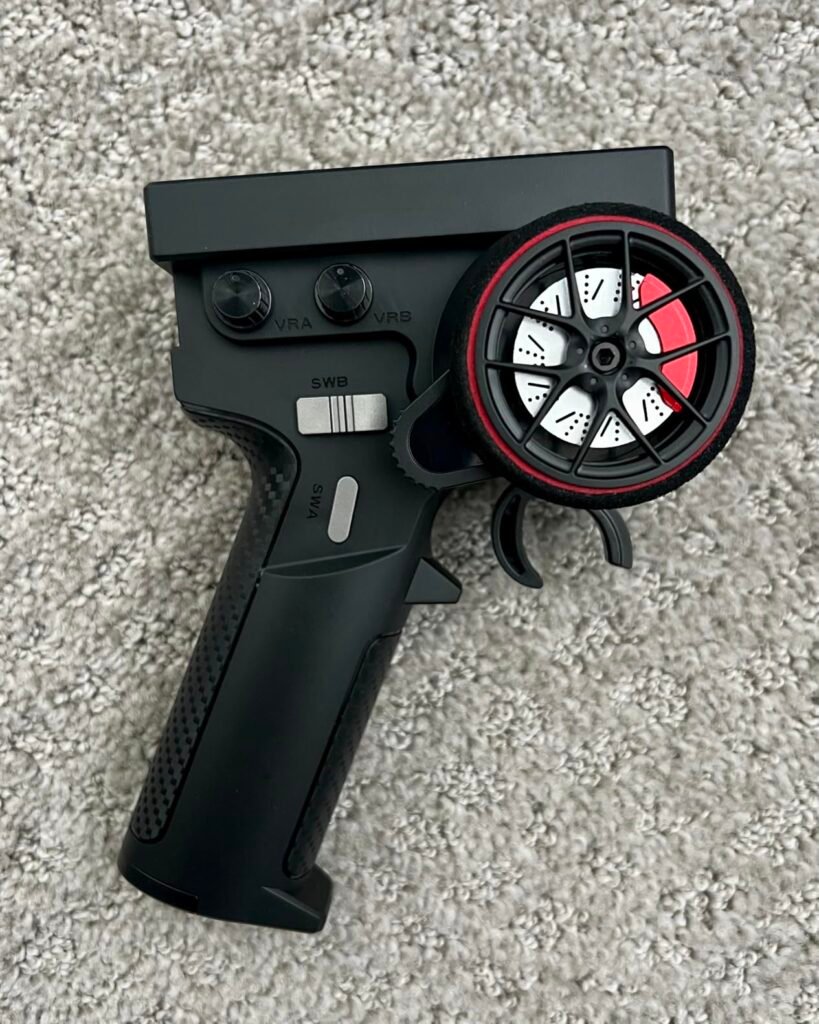
The MEUS Racing ME-8B in orange is a compelling proposition for scale crawler and truck fans who want eight channels without paying premium prices. The layout covers throttle and steering as the main controls, plus a three-position switch, two knobs, and three button channels, giving you real flexibility to trigger lights, winches, dig units, sound modules, and gear shifts on a well-loaded rig. That level of channel access at this price point is unusual.

We may earn a commission when you buy through this link, at no additional cost to you.
The 2.4GHz system uses a built-in power amplifier to push ground range up to about 300 meters and air range to around 800 meters, which is more than most crawler drivers ever need. The color screen shows real-time values for every channel, making it easier to fine-tune endpoints or verify a switch is doing what you expect. Fail-safe and low-voltage warnings help protect a receiver-only rig from runaway situations when the signal drops.
Comfort is a real strength here. The four-bearing wheel spins smoothly, and the trigger tension and position both adjust to suit your hand size and driving style. A screen lock prevents accidental menu changes during a run, and the 15-second auto-off saves power when you set the radio down. Charging is handled internally, which removes the ongoing cost of AA cells for drivers who log a lot of hours.
Eight channels shine on detailed scale trucks with independent front and rear lights, a winch, a two-speed transmission, and sometimes a smoke or sound module. If your rig is a basic bash truck with no accessories, most of these channels will go unused. Think about your build plans before choosing between a three-channel and eight-channel radio.
The main tradeoff is that this transmitter does not store multiple model profiles, so switching between vehicles requires a fresh bind each time. It also only works with MEUS receivers, which locks you into a smaller ecosystem. If you run one primary rig or do not mind rebinding, the ME-8B delivers exceptional value; if you juggle several vehicles at every session, a radio with model memory will save time.
Drivers who regularly switch between multiple vehicles and want to store separate model profiles without rebinding.
We may earn a commission when you buy through this link, at no additional cost to you.
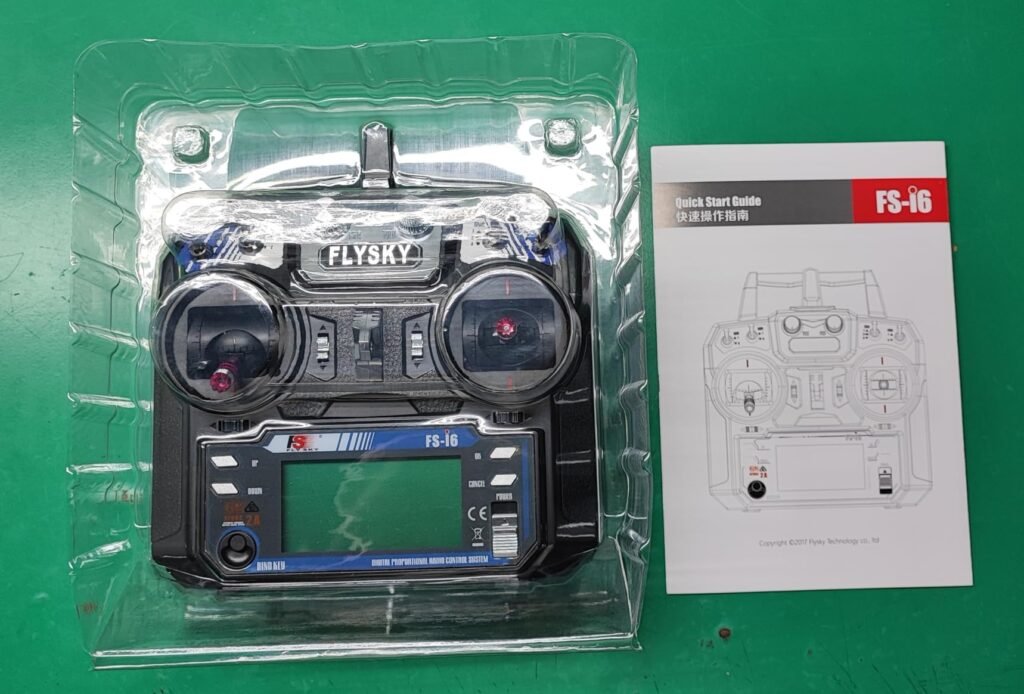
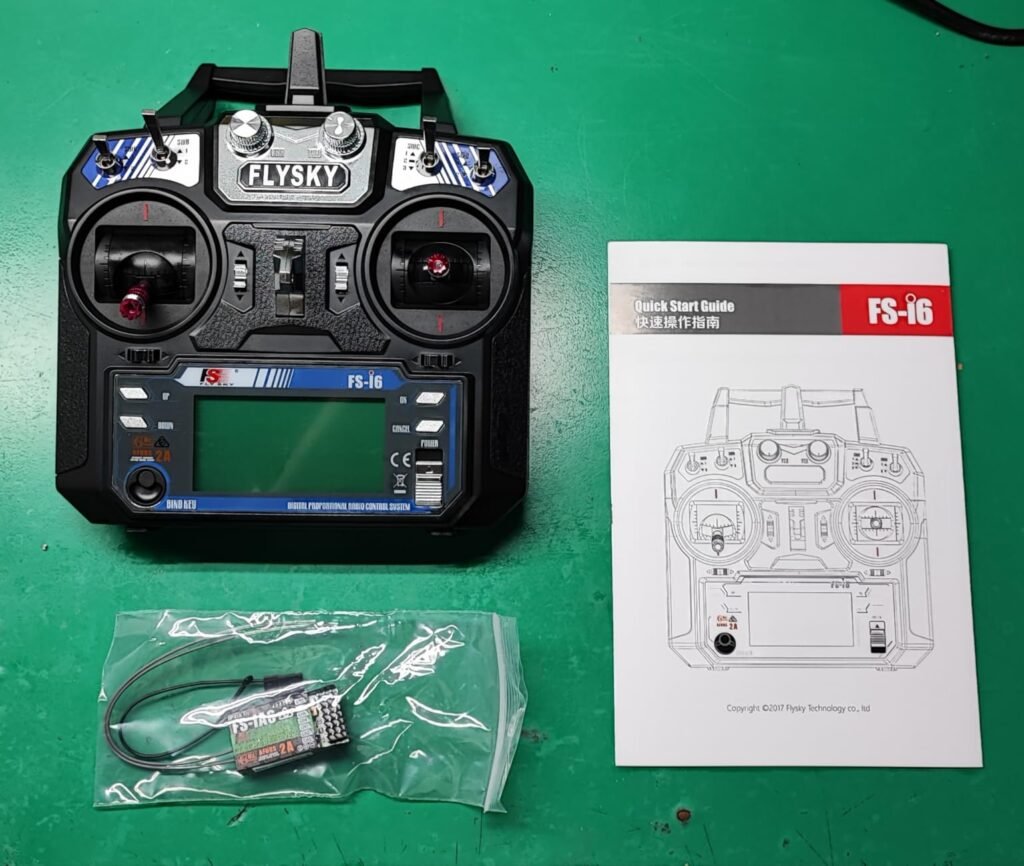
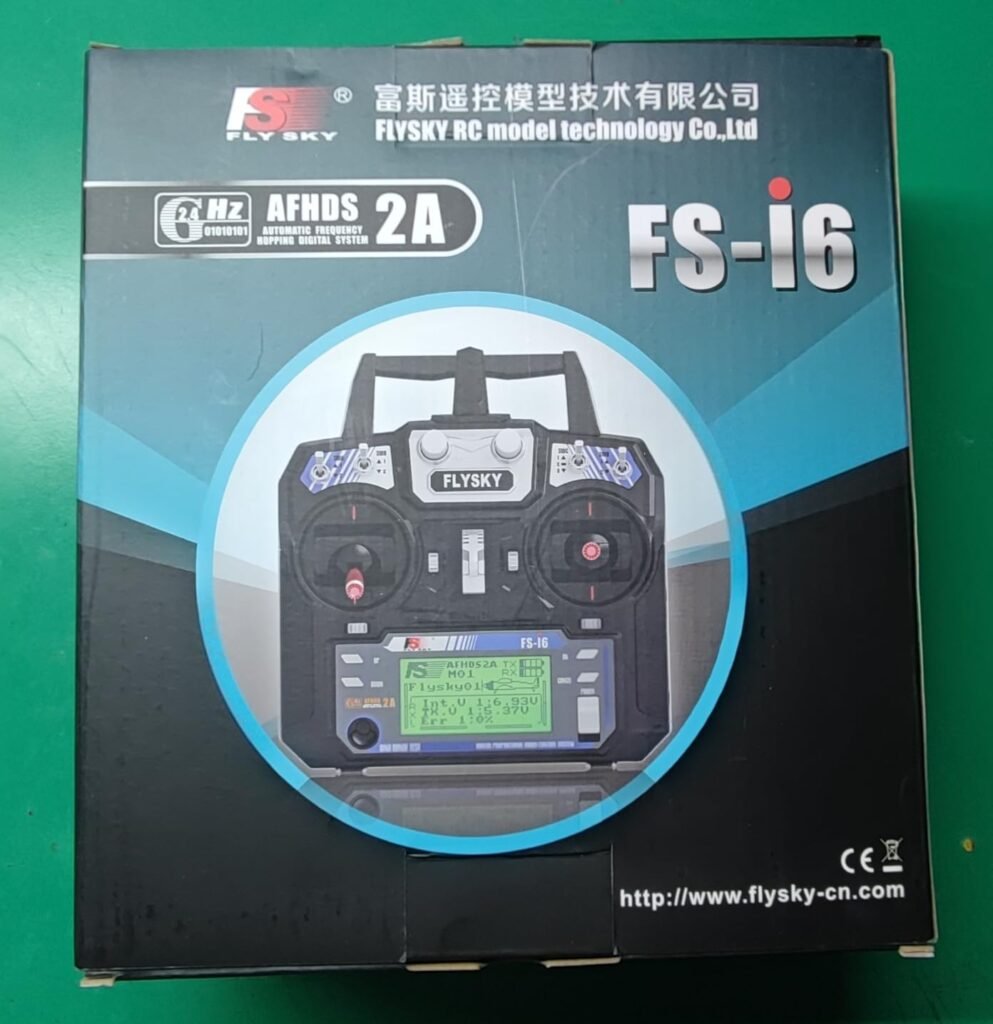
The Flysky FS-i6 stick radio is a longtime favorite for pilots getting into fixed-wing planes, gliders, and helicopters. Bundled with the FS-iA6 receiver, it uses the AFHDS 2A protocol to deliver about 500 meters of air range, which comfortably covers park flying and most trainer scenarios. The radio also works with a wider Flysky receiver lineup, including the FS-iA6B and FS-A8S, so upgrading to different aircraft later does not require a new transmitter.
We may earn a commission when you buy through this link, at no additional cost to you.
Programming is more capable than the price suggests. You get six channels with a three-stage switch, three two-stage switches, and two knobs, plus customizable assignment for the fifth and sixth channels. Auxiliary channel support, throttle curves, and three mixing slots enable elevon setups for flying wings and other layouts that need coordinated control surfaces. Memory holds 20 model profiles, which is generous for a hobbyist with a few planes.
Unique ID pairing means once a receiver is bound, it will only listen to that specific transmitter, cutting the risk of accidental cross-talk at busy flying fields. While the interface icons are aircraft-focused, the radio also drives cars and boats, so a DIY sticker or note reminds you of custom assignments. The monochrome LCD is not flashy, but it clearly displays channel data, trims, and battery status.
The FS-i6 can pair with 10-channel receivers like the FS-iA10B, giving you room to run more servos or add accessories as your builds get more complex. Buying a compatible transmitter early prevents you from having to replace the radio later when you graduate to bigger models.
The FS-i6 is the right pick for pilots who want a real stick radio with proven programming depth without a triple-digit spend. It is not the choice if you need in-radio telemetry displays or a color touchscreen, but for learning aircraft fundamentals and building a small fleet, it hits a very sensible balance of features and cost.
Pilots who want a color touchscreen, live telemetry displays, or advanced logging out of the box.
We may earn a commission when you buy through this link, at no additional cost to you.
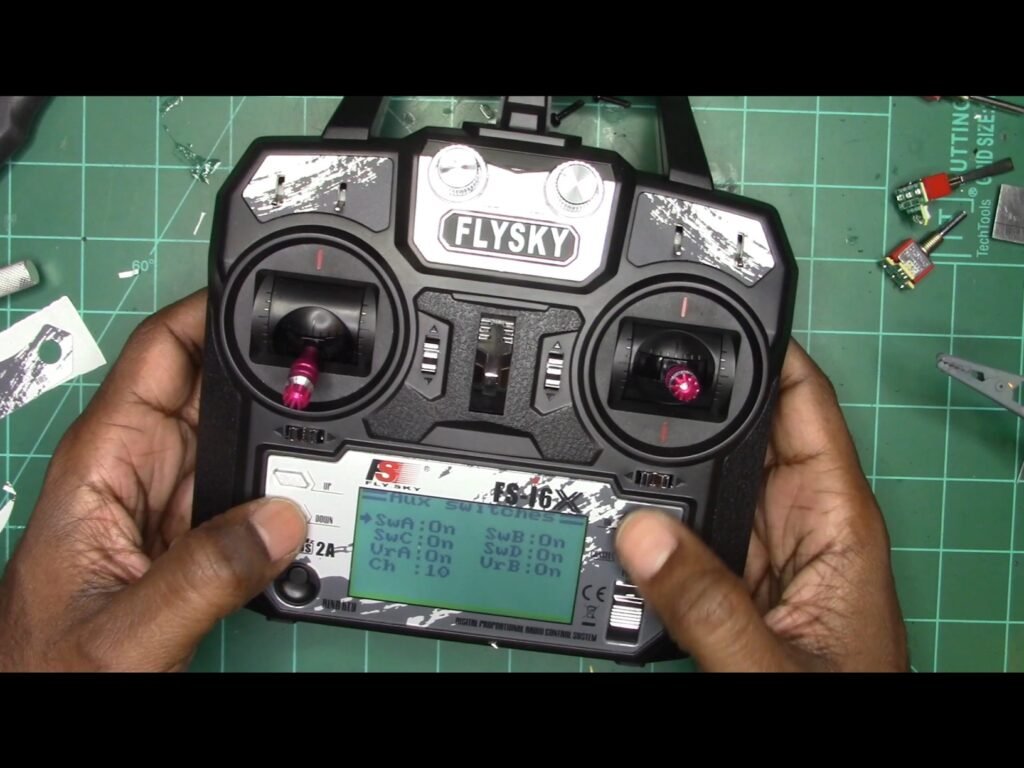
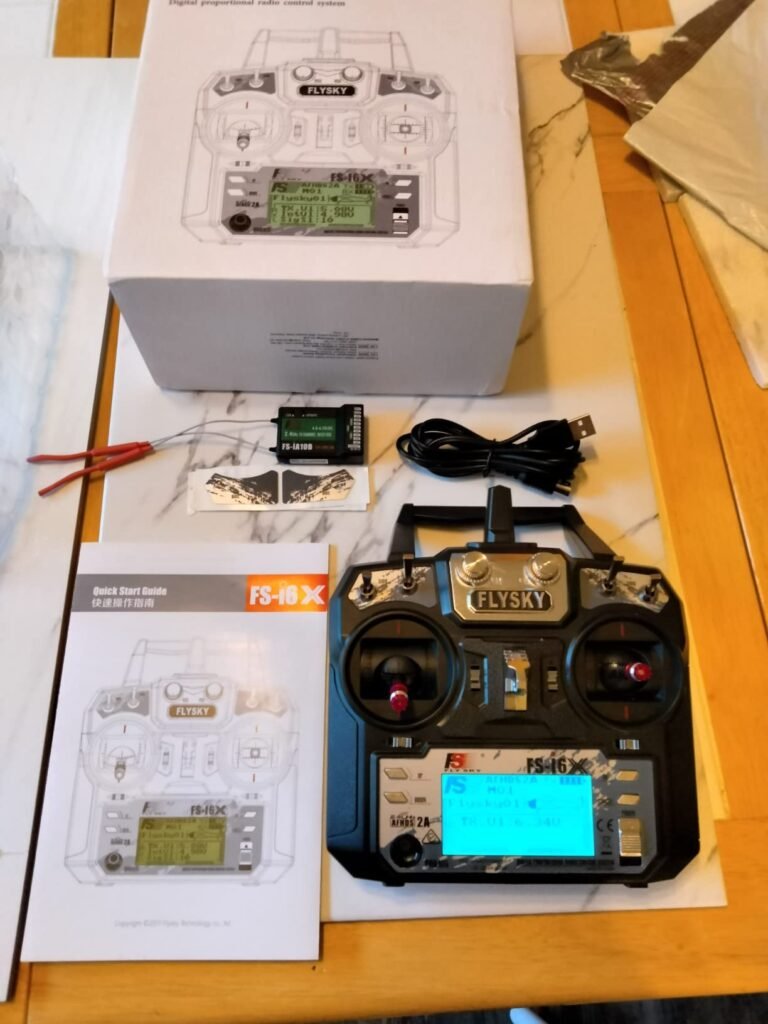
The Flysky FS-i6X ships as a six-channel radio with the FS-iA6B receiver, but its real appeal is the ability to unlock ten channels when paired with a compatible FS-iA10B receiver. That upgrade path makes it a smart pick for pilots and drivers who want to start with a straightforward setup and expand later without buying a new transmitter. The AFHDS 2A protocol keeps signal reliable, and unique ID pairing prevents crossed connections at busy fields.

We may earn a commission when you buy through this link, at no additional cost to you.
Bidirectional communication is a highlight that sets this radio above simpler models. The transmitter can receive data from temperature, altitude, and voltage sensors, and it supports servo calibration and i-BUS wiring on the receiver side. For pilots building larger aircraft or drivers running lipo packs with voltage monitoring, this feedback gives you real information about your model without needing extra ground equipment.
The system hops across 16 channels within a 135-channel band, which cuts interference from nearby radios. An omni-directional high-gain antenna maintains signal strength while using less power than older FM-style systems, and Flysky claims dramatically longer battery life as a result. The radio is comfortable to hold for extended sessions, though the interface icons and menu design show their age compared to newer touchscreen units.
i-BUS lets you daisy-chain multiple servos through a single serial connection instead of running individual leads to each channel port. This simplifies wiring in tight airframes and makes it easier to add or move servos later without re-routing cables through the fuselage.
The FS-i6X is the right radio if you want a proven stick controller with room to grow into more channels and telemetry. It is a weaker choice if you want a modern color display or plan to run mostly surface vehicles that benefit more from a wheel-style unit. For aircraft and mixed-use hobbyists who value flexibility, it remains a strong option.
Buyers who prefer touchscreen menus or need more than 10 channels for very complex scale builds.
We may earn a commission when you buy through this link, at no additional cost to you.
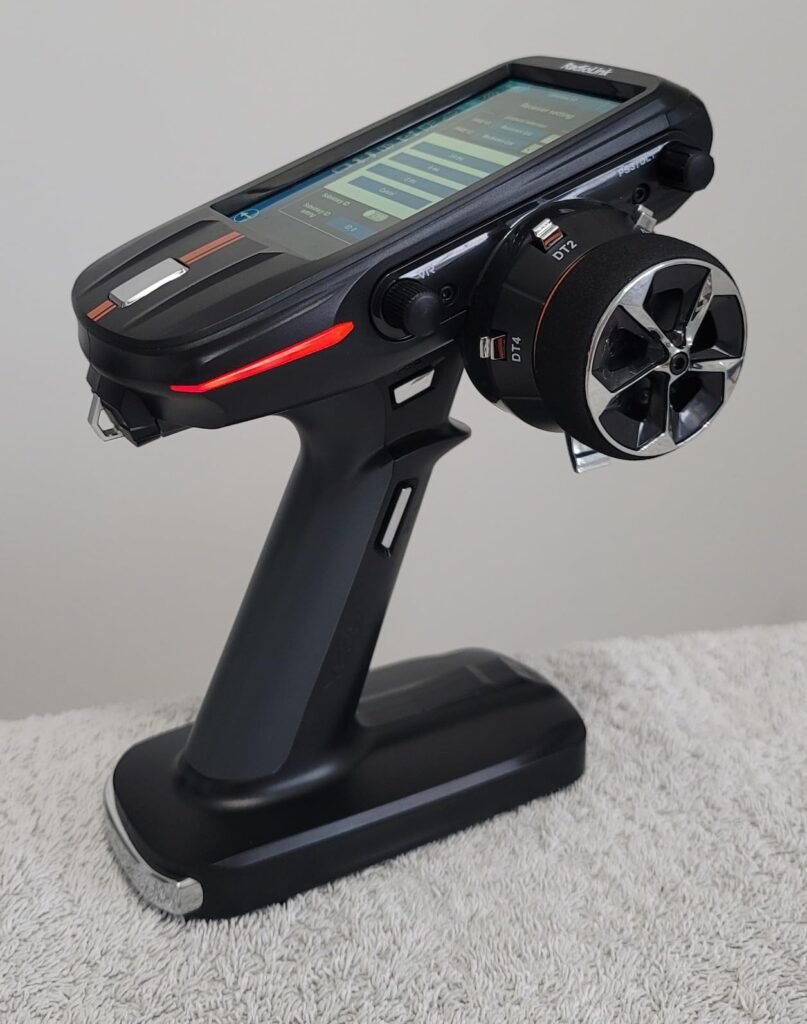
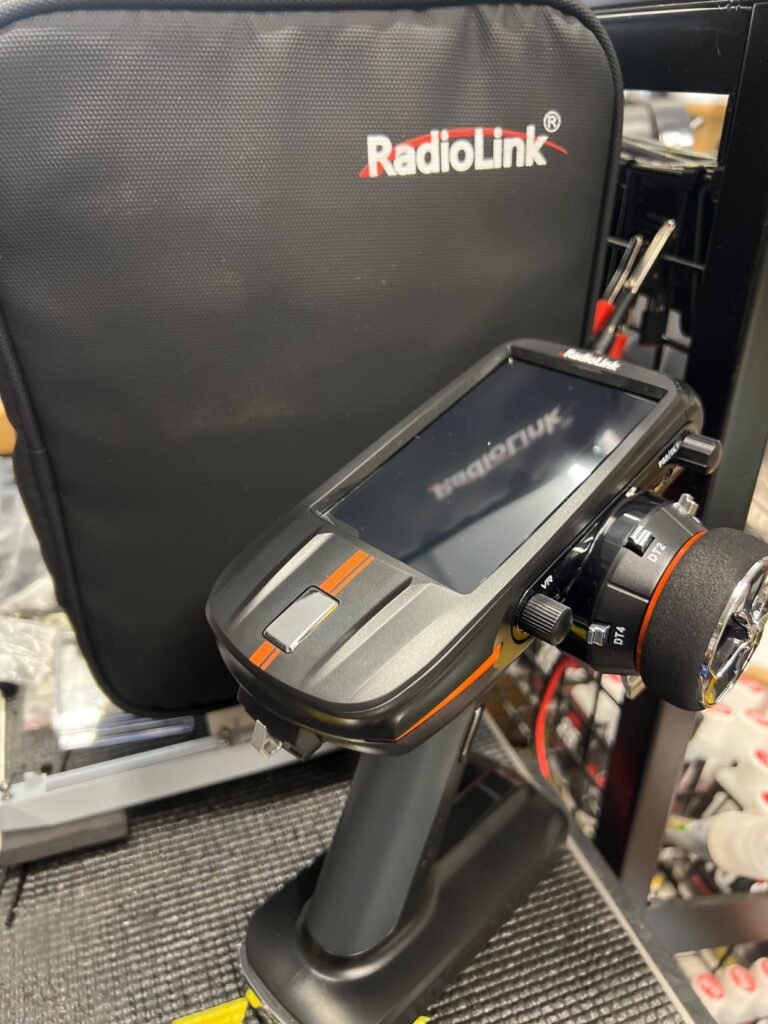
The Radiolink RC8X takes a big leap in interface design with a 4.3-inch IPS color touchscreen that responds like a modern smartphone. Scrolling menus, adjusting parameters, and switching model profiles feels much closer to a mobile app than a traditional radio, which shortens the time between having an idea and applying a change to your vehicle. For hobbyists running many rigs, that speed adds up over a driving session.
We may earn a commission when you buy through this link, at no additional cost to you.
The technical specs back the polished interface. A pseudo-random frequency hopping algorithm delivers strong anti-interference performance out to about 600 meters, which is well beyond typical surface use cases. Eight channels with eight programmable mix control groups let you build advanced setups including four-wheel steering, tank-style mixing, and tilt mixing for scale rigs with articulating features. Model storage handles 200 groups, which is more than most drivers will ever fill.
The touchscreen doubles as an FPV display when you connect a compatible 5.8GHz receiver module. That eliminates the need for a separate goggle setup for casual video and gives you a compact all-in-one solution for scale trail runs where seeing the terrain from the vehicle helps. Personalization runs deep, including custom voice broadcasts, menu themes, fonts, and button assignments.
Mixing lets you tie two channels together so an input on one automatically affects another. On a four-wheel-steer crawler, this can make the rear wheels steer opposite the front for tight turns or in the same direction for crab-walking. Sketch what you want before opening the menu so the setup goes faster.
The RC8X is a strong choice for enthusiasts and racers who want a modern interface and the room to grow into truly complex builds. The price sits well above simpler wheel radios, so it is not the right pick for hobbyists who only run one or two basic vehicles. If you plan to run tanks, four-wheel-steer crawlers, or a full fleet with different setups, the interface alone justifies the upgrade.
Buyers on a tight budget or drivers who only want a simple point-and-drive radio without menu diving.
We may earn a commission when you buy through this link, at no additional cost to you.
The MEUS Racing ME-8B in black offers the same feature set as the orange version with a more subdued look that some scale drivers prefer. The eight channels break down into throttle and steering plus a three-position switch, two knobs, and three buttons, which is more than enough capacity to control lights, a winch, a dig unit, a two-speed transmission, and a sound module on a fully outfitted trail truck.
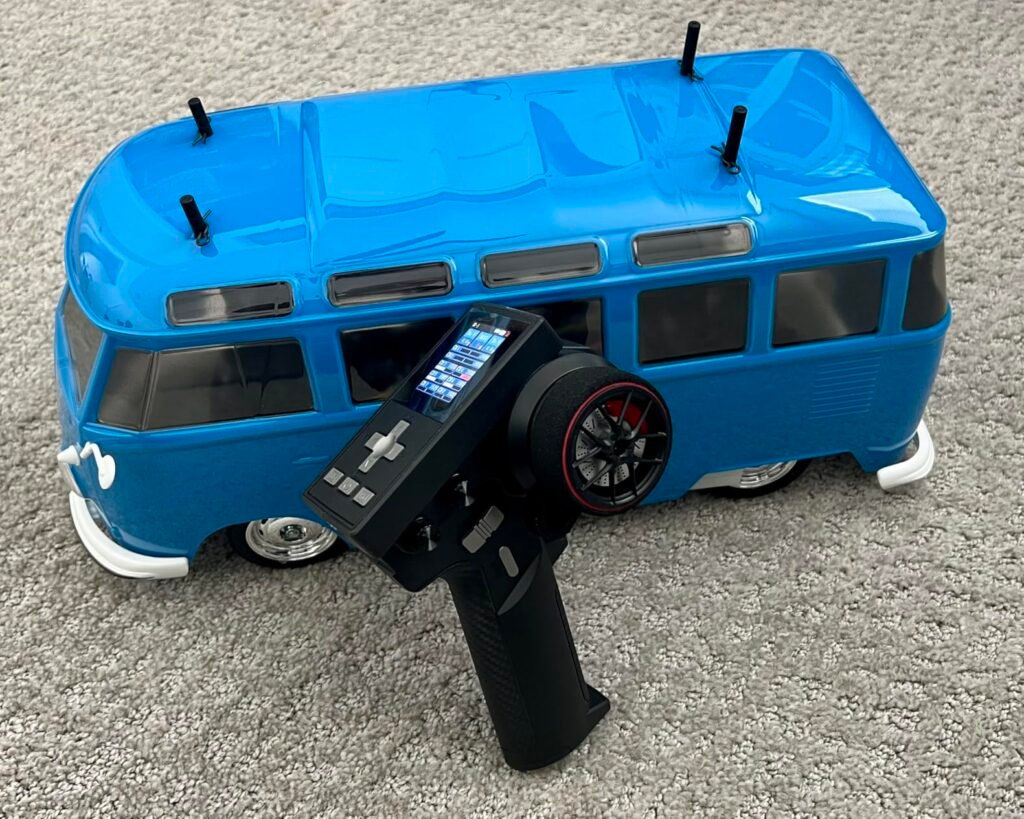
We may earn a commission when you buy through this link, at no additional cost to you.
Signal performance runs on a self-developed 2.4GHz system with a built-in power amplifier that pushes ground range to about 300 meters and air range to around 800 meters. Fail-safe and low-voltage warnings help you avoid runaway situations, and the color screen gives you a clear picture of channel activity at a glance. The four-bearing wheel spins smoothly, and the trigger tension and position adjustments help you fine-tune the feel to match your hand.
Convenience touches include a screen lock to prevent accidental changes, a 15-second auto-off to save battery, and internal rechargeable operation that eliminates the need for a steady supply of AA cells. Setup covers the essentials for most crawler and boat use cases, with practical customization options like endpoint limits, subtrim, and channel reversing.
Rebinding takes about a minute per vehicle and is not a deal-breaker for occasional swaps. If you find yourself at a bash event with four rigs and need to switch between them constantly, a radio that stores separate model profiles will save meaningful time and keep your custom trim settings intact.
This variant is best for drivers who want the ME-8B feature set in a stealthier finish and are comfortable rebinding when they switch vehicles. If you run one main rig or do not mind the extra step, the value here is genuinely hard to match. Drivers who juggle several models regularly will want a radio with true multi-model memory to save time.
Drivers who run three or more vehicles in the same session and want to switch between saved model setups instantly.
We may earn a commission when you buy through this link, at no additional cost to you.
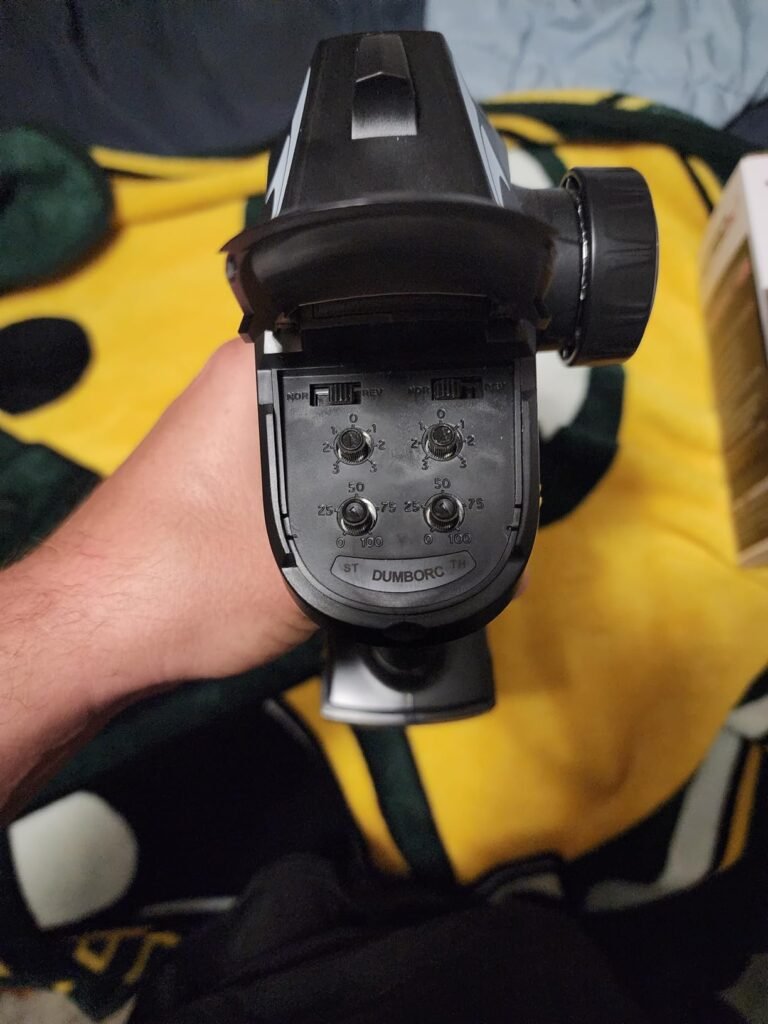
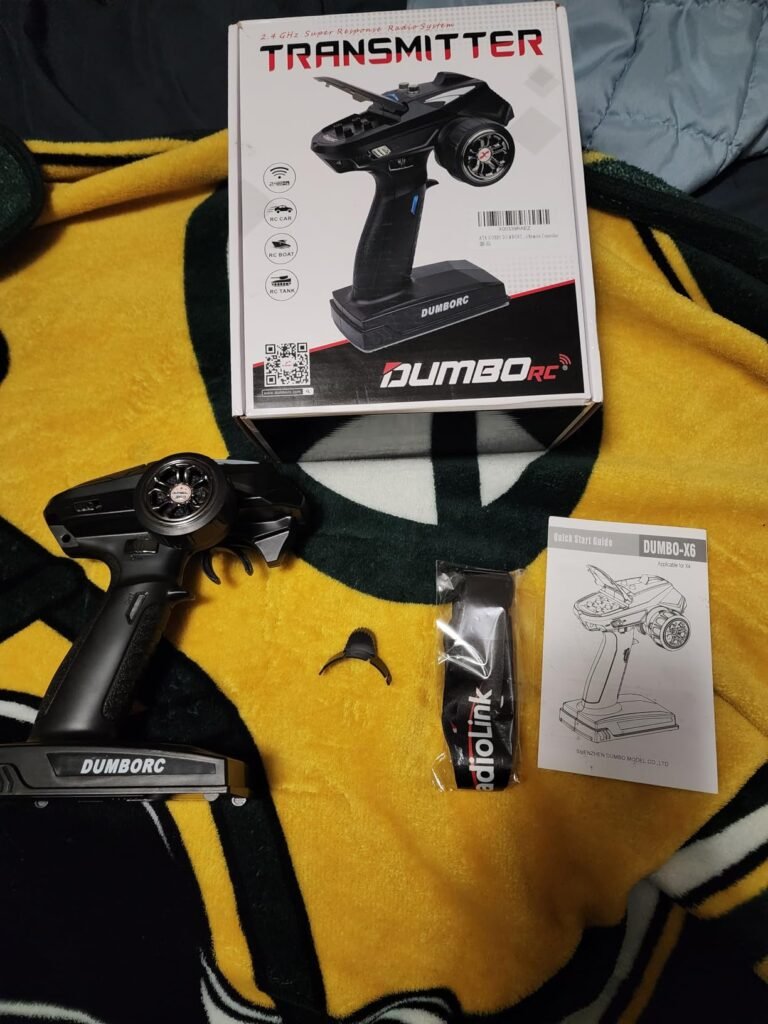
The DumboRC X4 is a four-channel radio that punches above its price for casual bashers, tank hobbyists, and scale drivers who want more capability than a three-channel unit without paying for premium features. Response time of about 3 milliseconds keeps steering feel sharp, and control range extends to roughly 400 meters, which is well beyond typical yard and park distances.
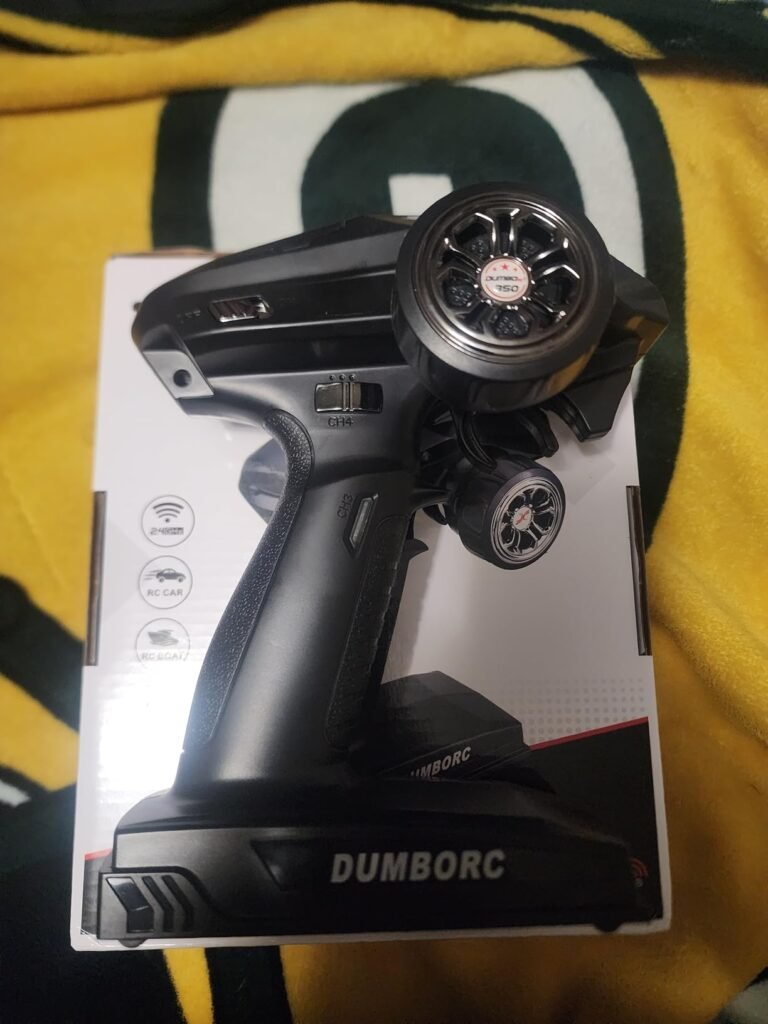
We may earn a commission when you buy through this link, at no additional cost to you.
One of the most useful features for parents and beginners is the ability to limit throttle output with a single switch, so a fast electric truck does not need to be driven at full speed while the operator is still learning. Fail-safe kicks in if the signal drops, and a low-voltage alarm at 7.2V or 4.1V helps prevent battery damage. Channels one and two support programmable mixing, while channels three and four can drive lights, a dig, or a winch when paired with an accessory switch board.
Power options are unusually flexible. You can run the radio on four AA batteries, plug in through USB, or use a two-cell or three-cell lithium pack via the internal socket. The lithium interface includes reverse polarity protection, which is a thoughtful safety touch. A one-hand control accessory and a controller neck strap ship in the box, along with support for a simulator dongle if you want to practice indoors.
Reducing top throttle output is one of the easiest ways to help a new driver build confidence without spinning out on every launch. Start with the limit around 30 to 40 percent and raise it gradually as steering and braking control improve, then remove the cap once the driver is comfortable at full speed.
The X4 is the right radio for hobbyists who want an affordable, dependable four-channel controller with practical safety features. Serious racers will want more channels and telemetry, but for weekend bashers and scale drivers with modest accessory needs, it hits a strong balance between capability and cost.
Competitive racers who need telemetry, extensive model storage, or a modern color interface.
We may earn a commission when you buy through this link, at no additional cost to you.
This bundle pairs the FS-i6X transmitter with the FS-iA10B receiver, unlocking ten channels of PWM output in a package that stays notably affordable for its channel count. The receiver also supports 8-channel PPM, 10-channel S.bus, and 10-channel i.bus, with the output mode selectable from the transmitter menu. That flexibility covers everything from a straightforward car servo lead to a bus-wired multirotor or complex aircraft.
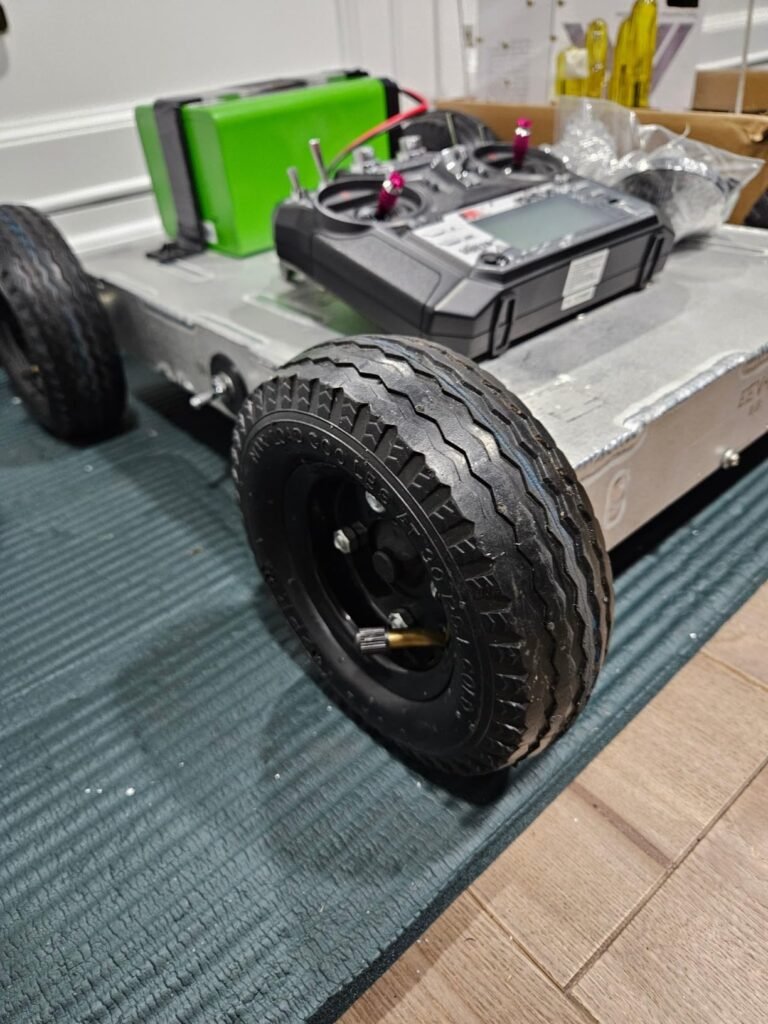
We may earn a commission when you buy through this link, at no additional cost to you.
Signal performance uses the AFHDS 2A protocol, which is well-regarded for stable connections with minimal latency. Real-world response feels nearly instantaneous, which matters most for fast aircraft and quick-steering surface vehicles. The system stores up to 20 model profiles and includes three mixing slots and throttle hold, giving you the programming tools needed to configure multiple aircraft or vehicles without compromise.
Physical controls include three two-position switches, one three-position switch, and two knobs, plus the LCD that shows both transmitter and receiver voltage in real time. Voltage monitoring at both ends is a genuine safety benefit, especially on larger aircraft where an unexpected receiver brownout can end a flight badly. Icon-based menus keep model selection quick even without a touchscreen.
PWM sends one signal per channel over its own wire, which is simple but adds cabling on larger builds. S.bus and i.bus combine all channels onto a single serial line, cleaning up wiring and making it easier to add or reassign channels later. For modest projects PWM is fine, but bus wiring pays off on aircraft or scale builds with many servos.
This is the right bundle for pilots and drivers who want ten channels and reliable AFHDS 2A performance without spending on a touchscreen or aluminum-gimbal radio. The tradeoff is a monochrome interface that lacks the polish of higher-end options, but the underlying reliability and expanded channel count make it a smart long-term buy for building a small mixed fleet.
Buyers who want a color touchscreen interface or need advanced logging and telemetry displays.
We may earn a commission when you buy through this link, at no additional cost to you.
The Spektrum iX14+ SE is the flagship pilot-focused radio in this guide, aimed squarely at experienced hobbyists and semi-professionals flying complex fixed-wing aircraft, jets, and scale helicopters. Machined aluminum gimbals with magnetic encoders provide the kind of smooth, low-friction feel that matters when tiny stick inputs translate into major control surface movements at speed. The gimbals also require less maintenance than traditional potentiometer designs.
We may earn a commission when you buy through this link, at no additional cost to you.
With 20 channels at a 22ms frame rate, this radio can drive extremely elaborate aircraft that use many servos and mixing functions simultaneously. AS3X+ Forward Programming lets you adjust flight stabilization settings directly from the radio when paired with compatible receivers, which streamlines setup for aircraft that use Spektrum’s stabilization system. Smart Technology compatibility works out of the box, so telemetry from newer Smart batteries and speed controllers flows straight into the radio.
The 4.5-inch full-color Android-powered touchscreen is the fastest way to navigate deep menu structures, and it makes managing dozens of model profiles feel natural rather than tedious. This interface approach is a significant leap over button-driven radios for pilots who spend a lot of time tuning setups between flights. Because this is a transmitter-only package, you will need to buy compatible Spektrum receivers separately.
Flagship radios often ship without receivers because experienced pilots typically already own compatible receivers and prefer to choose the specific model that suits each aircraft. Factor the cost of receivers into your total budget when comparing this radio to bundled options, and confirm that the receivers you plan to use support the features you want.
The iX14+ SE is the pick for pilots who fly high-value aircraft where signal reliability, ergonomic precision, and advanced programming justify a serious investment. It is a poor value for casual drivers or beginners who will not use most of its capabilities. For pilots building or flying complex airframes with premium stabilization and telemetry needs, it delivers a level of polish and capability that budget radios simply do not match.
Beginners, casual bashers, or anyone who does not fly complex aircraft that justify a premium 20-channel radio.
We may earn a commission when you buy through this link, at no additional cost to you.
Buying a transmitter involves weighing several intersecting factors: what you drive or fly, how many channels you actually need, which receivers you already own, and how deeply you want to program the radio. This section walks through the decisions that make the biggest difference so you can spend confidently and avoid a controller that outgrows or underserves you.
The most fundamental fork in the road is choosing between a pistol-grip wheel radio and a stick radio. Wheel radios like the Flysky FS-GT5, MEUS ME-8B, and DumboRC X4 dedicate a wheel to steering and a trigger to throttle, which mirrors the muscle memory of driving a real car. This layout is the natural choice for RC cars, trucks, crawlers, and boats, where lateral steering and forward-reverse throttle are the primary controls.
Stick radios like the Flysky FS-i6 and FS-i6X use two dual-axis gimbals that give you four analog control inputs plus assorted switches and knobs. This layout suits aircraft because it maps directly to ailerons, elevator, rudder, and throttle. Some stick radios can drive cars and boats, but the ergonomics feel awkward compared to a wheel unit. Similarly, driving a plane with a wheel radio is not practical.
Pick the layout that matches what you actually run most. If you drive surface vehicles almost exclusively, choose a wheel radio. If you fly aircraft or want to run both aircraft and drones, choose a stick radio.
Channel count determines how many independent functions the radio can control. A basic RC car needs only two channels for steering and throttle, a crawler with a winch or dig might use three or four, and a scale trail truck loaded with lights, a two-speed transmission, and sound modules can easily use six to eight. Aircraft channel needs vary from four for a simple trainer to ten or more for complex scale planes and helicopters with retractable gear, flaps, and stabilization systems.
Buying too few channels is a common mistake because hobbies tend to grow. If you think you might add scale accessories, upgrade to a larger aircraft, or expand into multiple vehicle types, a six- or eight-channel radio provides meaningful headroom. Some radios, like the Flysky FS-i6X, ship as six-channel units but can unlock ten channels with a compatible receiver, which is a smart hedge against future needs.
Do not chase channel count for its own sake. If you know your rigs will never use more than three channels, save the money and put it toward a receiver upgrade or a better model.
Almost all modern hobby radios run on 2.4GHz frequency-hopping systems that resist interference far better than older FM units. Different brands use different proprietary protocols, however, which affects receiver compatibility. Flysky’s AFHDS 2A powers many of the radios in this guide and works with a broad range of Flysky receivers. MEUS Racing uses its own protocol that only pairs with MEUS receivers. Spektrum radios use DSMX and Spektrum’s newer Smart protocol.
Range specifications vary widely, from about 300 meters on entry-level surface radios to 600 meters or more on premium units. For most casual driving and park flying, anything beyond 200 meters is adequate because you lose visual contact with the model before signal becomes the limiting factor. Long-range specs matter more for FPV pilots, long-distance boat runners, and large-scale aircraft flown far from the operator.
Choose a protocol that either matches receivers you already own or has broad receiver availability. Being locked into a small ecosystem is not a problem if the ecosystem meets your needs, but it limits flexibility if you switch vehicles frequently.
Model memory lets a single radio store separate settings for multiple vehicles. Trim positions, endpoint limits, dual rates, exponential curves, and mixing setups all live inside each profile, so you can switch from a nitro basher to a scale crawler with a menu selection instead of retuning. Basic radios like the MEUS ME-8B lack this feature and require rebinding when you change vehicles, while units like the Flysky FS-GT5 store 20 models and premium radios like the Radiolink RC8X store hundreds.
The practical value of model memory depends on how many vehicles you run and how often you switch. If you own one main rig and rarely change, the missing feature is a minor inconvenience. If you attend bash events with four different trucks or fly a hangar of aircraft, the ability to load a preset profile in seconds is genuinely valuable and reduces the risk of driving with wrong settings.
Estimate your active fleet honestly, and pick a radio with model memory if you regularly rotate between three or more vehicles.
Programming features let you tailor how the radio responds to your inputs. Basic tools include steering and throttle trim, dual rates, endpoint adjustment, and exponential curves that soften response near the neutral position. More advanced tools include throttle curves, ABS braking profiles, mixing between channels, gyro control, and crawler-specific modes. The Flysky FS-GT5 offers a solid mid-range programming set, while the Radiolink RC8X and Spektrum iX14+ SE offer far deeper customization.
Mixing is a particularly powerful capability. It lets one channel input trigger changes on another, enabling setups like four-wheel steering that automatically counters the front wheels with the rear, tank-style differential control, or elevon mixing on flying wings. If your builds include coordinated multi-servo systems, look for a radio with at least three programmable mixes; complex builds benefit from six or more.
Match programming depth to your actual builds. A twin-motor tank or four-wheel-steer crawler needs mixing, but a basic touring car does not.
Radio interfaces range from small monochrome LCDs on units like the Flysky FS-i6 to full color touchscreens on the Radiolink RC8X and Spektrum iX14+ SE. The interface directly affects how quickly you can find settings, adjust parameters between runs, and manage multiple model profiles. A touchscreen with responsive scrolling makes deep menus feel navigable; a small monochrome display with button navigation can turn simple changes into tedious sequences of clicks.
Color screens also improve at-a-glance information. Live channel value displays, voltage readings, and status indicators are easier to interpret quickly on a color IPS panel than on a small monochrome LCD. On the other hand, monochrome screens use less power and are easier to read in direct sunlight without glare, which some outdoor pilots prefer.
If you tune settings frequently or manage many models, invest in a color screen. If you set the radio once and forget it, a monochrome LCD saves money without limiting core function.
How a radio powers on matters for long-term convenience. Rechargeable models like the MEUS ME-8B eliminate the recurring cost of AA cells, while radios that accept AA, USB, or lithium packs like the DumboRC X4 offer flexibility for different situations. On flagship units, expect internal rechargeable packs with robust charging circuits and multi-hour runtime.
Ergonomics matter more than beginners often realize. A poorly balanced radio becomes tiring during long sessions, and cheap trigger tension can cause finger fatigue on tracks that demand constant modulation. Adjustable trigger tension and position, four-bearing wheel movement, and comfortable grip contours are the marks of a radio designed for real driving hours rather than showroom pickup. Machined aluminum gimbals on the Spektrum iX14+ SE represent the top of build quality for stick radios.
Handle the radio if you can before buying, or read reviews from long-session users. Comfort features that seem minor often become the ones you appreciate most.
When you first pair a new radio with a receiver, complete the binding process in a quiet RF environment away from other transmitters, and confirm that the fail-safe positions are set correctly before you drive or fly. Fail-safe tells the vehicle what to do if the signal is lost, and setting the throttle to neutral or a slow brake position can save a runaway situation. Take a few minutes in the menu to verify servo direction, endpoint limits, and trim positions with the wheels or control surfaces where you can see them respond.
Between sessions, store the radio in a dry environment away from direct sunlight to protect the screen and internal electronics. If your radio uses AA batteries, remove them before long-term storage to prevent leakage that can damage the battery contacts. For rechargeable radios, top off the battery every few weeks rather than leaving it fully discharged, and follow the manufacturer’s charging recommendations to preserve lithium cell health. Keep the antenna clean and check that it is oriented correctly during use, since a mispositioned antenna can shorten your effective range.
Basic maintenance keeps a radio feeling new for years. Wipe the exterior with a slightly damp cloth to remove dust and skin oils, and use compressed air to clear grit from around the wheel or gimbals. Avoid solvent-based cleaners that can damage plastic housings or screen coatings. If the trigger or wheel starts to feel gritty, most radios can be opened for careful cleaning of the mechanism, though check your warranty terms before disassembling anything. Firmware updates from the manufacturer occasionally add features or fix bugs, so check the support page for your radio every few months.
For a basic RC car or boat, two channels handle steering and throttle. Crawlers and trail trucks with a winch or dig unit typically need three to five channels. Fully outfitted scale rigs with lights, sound, and multi-speed transmissions can use six to eight. Aircraft range from four channels for simple trainers to ten or more for complex scale planes. When in doubt, buy one or two channels beyond your current needs to leave room for growth.
Generally no. Most brands use proprietary 2.4GHz protocols, so a Flysky transmitter only pairs with Flysky receivers, a MEUS transmitter only pairs with MEUS receivers, and a Spektrum transmitter only pairs with Spektrum receivers. Some receivers accept multiple protocols, but the transmitter typically dictates which receiver families you can use. Check the protocol before buying if you already own receivers you want to keep.
Model memory lets a single radio store separate settings for multiple vehicles, so you can switch from one rig to another without rebinding or retuning. If you own one main vehicle, this feature is a nice-to-have but not essential. If you regularly rotate between three or more vehicles, model memory saves significant time and helps prevent accidents from running the wrong settings on the wrong vehicle.
Fail-safe defines what the receiver commands each servo to do if the signal from the transmitter is lost. Typically you set the throttle to neutral or a gentle brake position and leave steering centered. This prevents a runaway vehicle if you drop out of range or the battery dies. Always configure fail-safe before running a new model, especially with fast electric or nitro rigs that can cover a lot of ground quickly.
Choose a wheel radio if you primarily drive RC cars, trucks, crawlers, or boats. The pistol-grip layout with a steering wheel and throttle trigger mirrors driving a real car and feels natural for surface vehicles. Choose a stick radio if you primarily fly aircraft, since the dual-gimbal layout maps directly to ailerons, elevator, rudder, and throttle. Some radios can serve both roles, but ergonomics always favor one use case over the other.
A better radio does not automatically translate to better driving, but it removes obstacles. Premium radios have smoother gimbals, faster processing, more programming depth, and reliable signal that lets you focus on driving instead of fighting the equipment. If you are a beginner, a mid-range radio is usually a better investment than a flagship unit, since developing skill matters more than having the fanciest hardware.
PWM sends one signal per channel over its own wire, which is simple but requires many wires on large builds. PPM combines multiple channels into a single wire but is older and slower. S.bus and i.bus are modern serial protocols that carry all channels over one wire with fast update rates, simplifying wiring on complex aircraft. For most hobbyists, PWM is fine, but bus wiring pays off on builds with many servos.
Runtime depends heavily on the radio and battery type. AA-powered radios usually run 10 to 20 hours on a fresh set of alkalines, while rechargeable lithium radios often run 15 to 30 hours per charge depending on screen brightness and telemetry use. Radios with color touchscreens tend to consume more power than monochrome LCDs. Always start a session with a charged or fresh battery to avoid mid-run dropouts.
Technically yes, but ergonomics work against you. A wheel radio can drive a plane through workarounds, and a stick radio can drive a car, but neither feels natural outside its intended use case. If you seriously pursue both hobbies, buying two dedicated radios usually delivers a better experience than compromising with one. Stick radios like the Flysky FS-i6X are the more flexible choice if you must pick one for mixed use.
Telemetry sends data from the receiver back to the transmitter, showing information like battery voltage, temperature, altitude, or GPS position. This is valuable for aircraft, where knowing pack voltage in flight helps you land before the battery dies, and for advanced surface vehicles running expensive lipos. If you mainly drive short bash sessions with fresh packs, telemetry is a nice bonus rather than a necessity.
The Flysky FS-GT5 emerges as the strongest overall wheel radio in this guide, thanks to its combination of six channels, gyro-assisted stability, dedicated crawler mode, 20-model memory, and impressive real-world ratings. It sits at a fair price for the depth of features and covers the widest range of surface driving scenarios, from bashers to competitive touring cars to scale rock rigs, without leaving beginners overwhelmed or advanced drivers wanting.
For pilots, the Flysky FS-i6X 10-channel bundle offers exceptional value with proven AFHDS 2A signal reliability and the flexibility to grow into more complex aircraft. Budget-focused drivers should look at the MEUS Racing ME-8B for eight channels at an entry price, while enthusiasts who want a modern touchscreen interface will find the Radiolink RC8X well worth the premium. Serious pilots with high-value aircraft should consider the Spektrum iX14+ SE for its precision gimbals and 20-channel capacity.
Match the radio to how you actually spend your time in the hobby. Casual drivers running one or two rigs will be well-served by a solid mid-range wheel radio like the FS-GT5 or DumboRC X4. Multi-vehicle owners benefit from model memory found on the FS-GT5 and Radiolink RC8X. Aircraft pilots should pick a stick radio matched to their receiver ecosystem, and competitive or professional users will find long-term value in premium units like the iX14+ SE. Buy the features you will use, and leave headroom for the next step in your hobby.