LEAMBE P51 Blue-Red
8.4Editor score4-channel control
3 skill modes
656ft control range
12-minute flight time
Find the right rc planes for 2026. We compare 8 standout options by build quality, useful features, owner feedback, value, and everyday trade-offs.

Finding the right RC plane for 2026 comes down to matching channel count, gyro stability, and motor type to your skill level and flying environment. We compare 8 standout models across ease of control, flight time, durability, control range, aerobatic capability, and value to help you pick a plane that matches how you actually want to learn or fly.
The biggest decision most new pilots face is choosing between a simple 2-channel glider for basic flight and a 3 or 4-channel warbird with full aerobatic control. Getting this wrong means either quickly outgrowing a too-basic plane or crashing an advanced one before you have built the necessary skills.
This guide breaks down each model’s strengths and tradeoffs so you can match a plane to your experience, budget, and flying goals. Whether you want a forgiving first glider, a scale warbird replica, or a brushless-powered performer with 30-minute flight times, there is a right option in this lineup.
We compared 8 RC planes using the details that actually help a buyer decide: channel count, gyro stability system, motor type, foam durability, flight time per battery, control range, skill-level modes, propeller protection, and value. The notes focus on practical trade-offs so each pick connects to how people actually learn to fly, practice aerobatics, and enjoy scale flight in parks and open fields, whether they are new to the hobby or returning after years away.

Compare key features, scores, and current prices side by side. A shorter feature list means fewer details were available, not necessarily fewer capabilities.


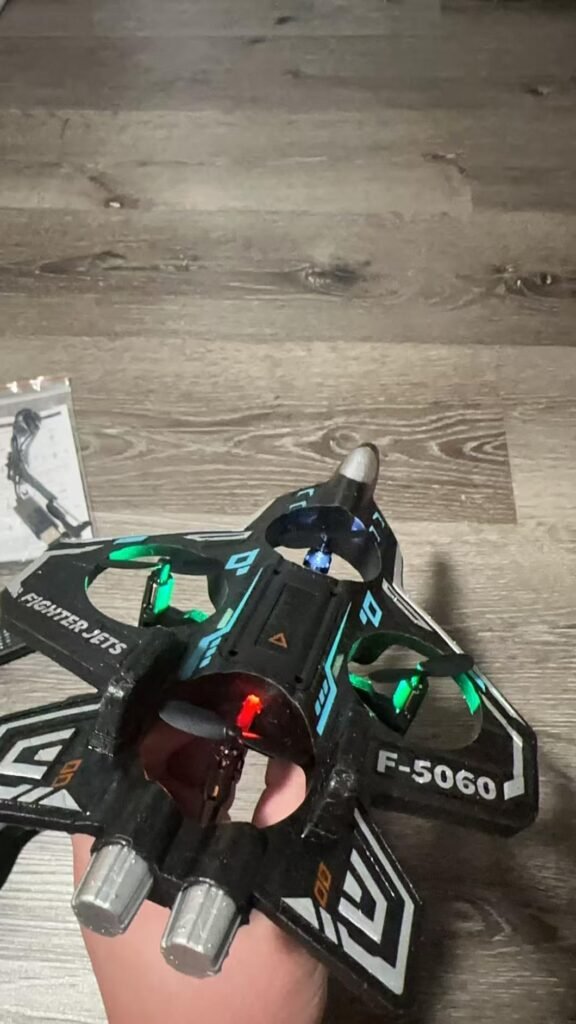
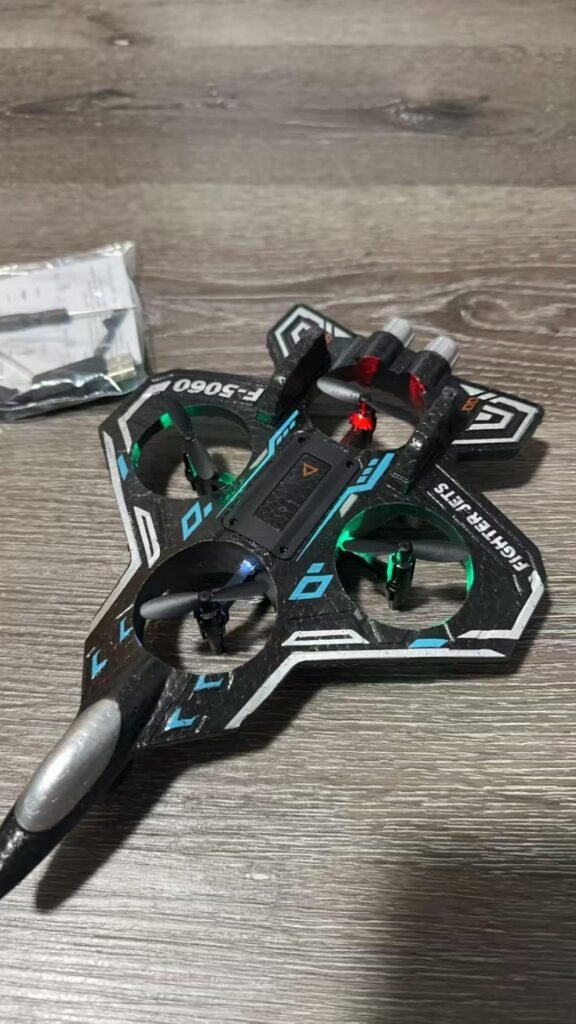
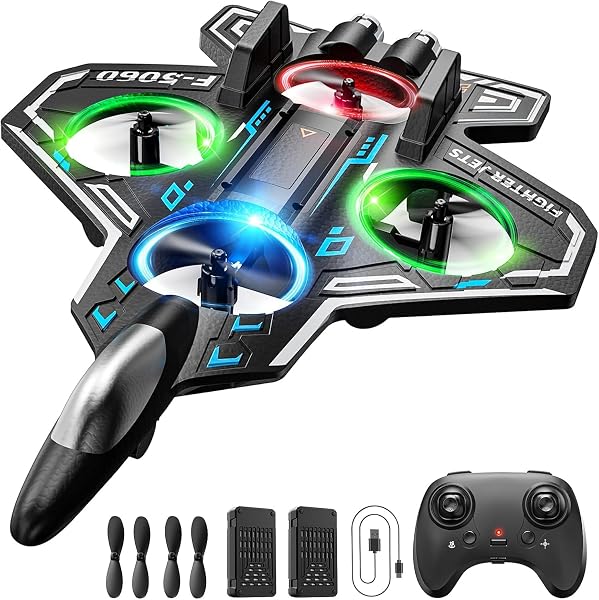
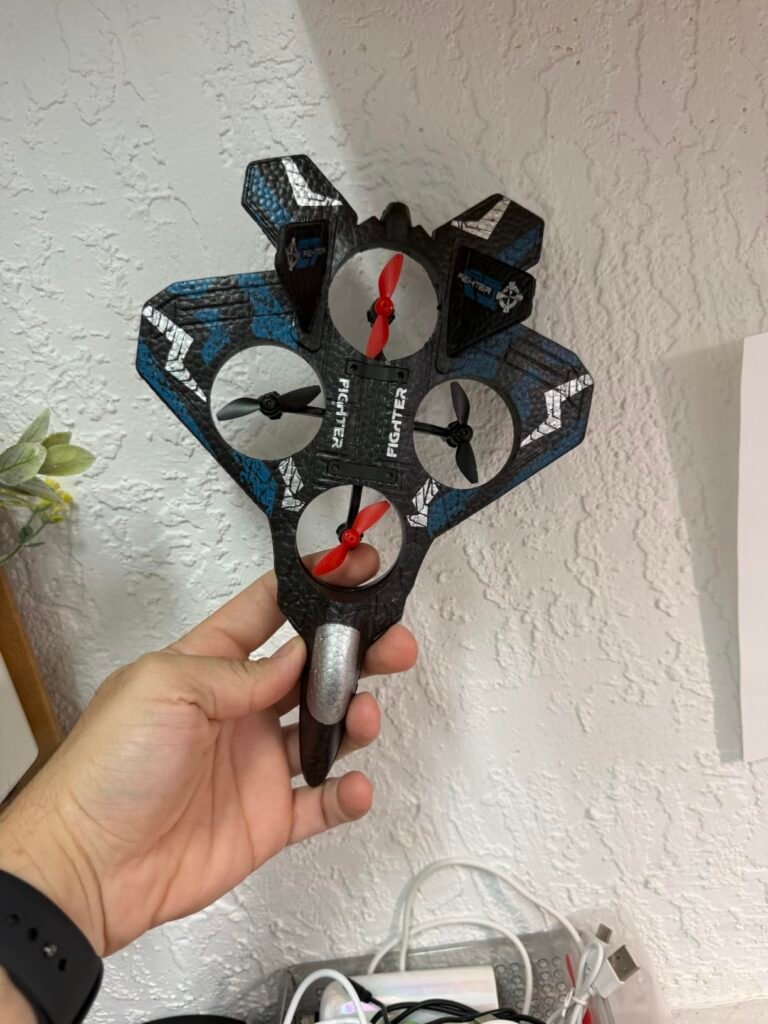
This foam fighter jet drone blends traditional plane styling with drone-like flight characteristics, delivering approachable fun for kids and casual adult pilots. The altitude hold feature keeps the aircraft hovering stably at a fixed height, which is a drone feature rather than a traditional plane behavior, but it makes learning easier than pure fixed-wing flight. Headless mode ensures directional control remains intuitive regardless of which way the plane is facing, eliminating one of the trickiest aspects of RC flight for beginners.
We may earn a commission when you buy through this link, at no additional cost to you.
The stunt capabilities distinguish this aircraft from traditional trainer planes. 360-degree flips, auto rotation, and circle fly modes deliver aerobatic maneuvers at the push of a button, and built-in LED lights make the moves visible even at dusk. Three speed modes — low, medium, and high — let kids match the aircraft’s speed to their current confidence level, starting slow while learning and progressing to faster flight as skills develop. One-key takeoff and landing simplify the trickiest moments of any flight.
Safety features address the specific concerns of buying an aircraft for children. Full-side propeller guards protect little hands from spinning blades, and CPSC testing and certification back up the safety claims with formal validation. Two included 3.7V 1200mAh Li-Po batteries with overcharge protection deliver up to 16 minutes of flight time, and low-battery plus out-of-range alerts help prevent lost or crashed aircraft during practice sessions. The durable EPP foam construction survives the bumps and crashes that come with youth flying.
Traditional RC planes teach fixed-wing flight skills that transfer to real aviation concepts. Drones and drone-like aircraft with altitude hold and headless mode are easier to learn but teach different skills. This aircraft sits somewhere in between, offering plane-like styling with drone-like assistance features. For kids just wanting fun, that combination works well. For anyone wanting to develop genuine fixed-wing flight skills, a traditional 2 or 3-channel plane is a better educational choice.
This aircraft is the right choice for parents buying a first flying toy for kids or for adults wanting casual stunt-focused fun rather than serious RC hobby aircraft. The drone-like flight characteristics make it more approachable than traditional planes but less educational for someone wanting to develop real fixed-wing skills. For its intended audience — kids and casual users prioritizing fun and safety over skill development — the combination of stunt capabilities, safety features, and durability delivers strong value.
Not for pilots serious about learning traditional fixed-wing flight skills or those seeking a scale realistic aircraft.
We may earn a commission when you buy through this link, at no additional cost to you.
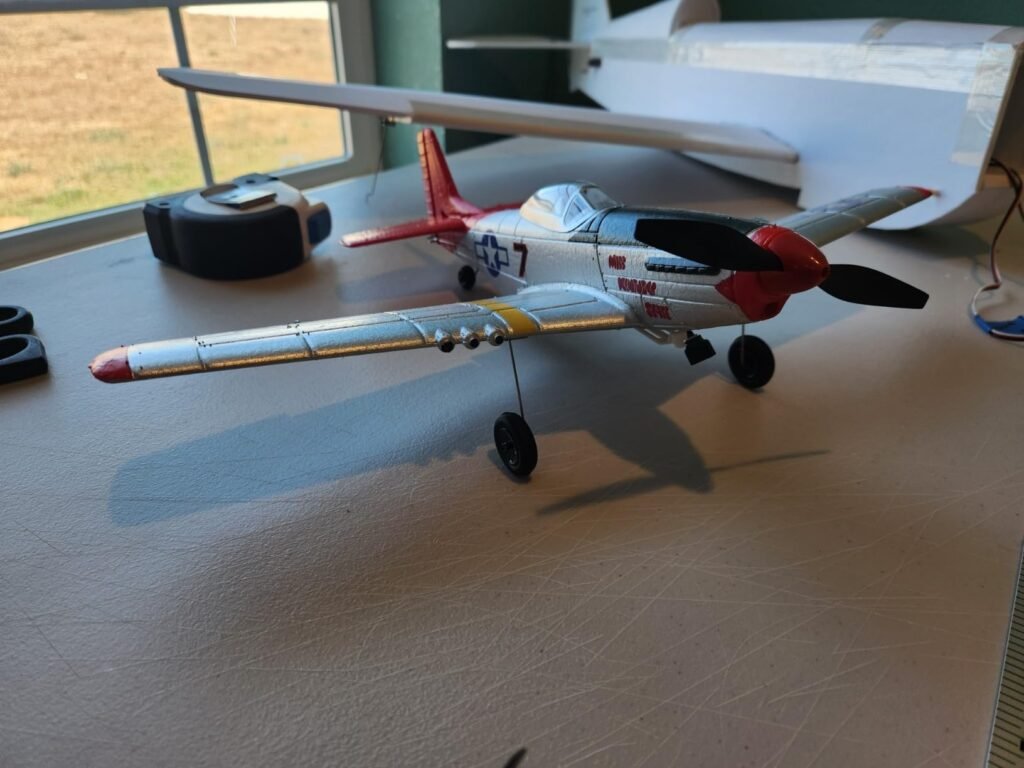
This LEAMBE P51 Mustang stands out for delivering genuine 4-channel aerobatic control at a price point that welcomes newer pilots who want a real growth platform. The three progressive skill modes let you start with maximum stability assistance while learning, then gradually reduce electronic help as your reflexes develop. This is the kind of plane you can grow into over months of flying rather than outgrowing in an afternoon.

We may earn a commission when you buy through this link, at no additional cost to you.
The Xpilot gyro stabilization system is the technology that makes 4-channel flight approachable for newcomers. Without gyro assistance, coordinated turns and level flight demand constant small corrections that take experienced pilots hundreds of hours to internalize. The gyro handles those micro-corrections automatically in beginner mode, then hands increasing control back to you in the more advanced modes as your skills develop. The powerful over-grade motor provides enough thrust for basic aerobatic maneuvers like loops and rolls once you are ready.
Construction uses lightweight elastomer foam that survives typical learning crashes without immediately becoming trash. The Propeller Saver Technology is a genuinely practical detail — propellers pop off cleanly during impacts rather than snapping, and reinstalling them takes seconds. The 656-foot 2.4GHz radio range is more than enough for park and field flying, and the 12-minute flight time on the 8mm coreless motor delivers meaningful stick time per battery.
Start every new flying session in beginner mode until you are consistently landing without crashes. Once takeoffs, gentle turns, and controlled landings feel natural, switch to intermediate mode where the gyro provides less correction and demands more input from you. Only move to experienced mode once you can fly figure-eights, maintain altitude, and land on demand in intermediate. Skipping steps typically results in expensive crashes rather than faster progress.
This plane makes the most sense for adults or older teens learning RC flight who want a scale warbird look and a real progression path from stabilized to fully manual control. The 15.75-inch wingspan keeps the plane manageable in modest spaces but limits how it handles in windy conditions — save flights for calm mornings or evenings when you are still learning. If you want a plane that supports genuine skill development beyond just gentle gliding, this is a strong choice.
Not for young children who need very simple 2-channel controls or pilots wanting extended flight times per battery.
We may earn a commission when you buy through this link, at no additional cost to you.
The AIGIMU P-51 Mustang earns Editor's Choice by hitting the sweet spot between scale realism, beginner accessibility, and practical flight time. The 3-channel design keeps controls manageable for newer pilots while the 6-axis intelligent gyro automatic stabilization system handles the micro-corrections that would otherwise trip up first-time flyers. Two speed modes let you match plane behavior to your current skill level, and both hand-launch and ground takeoff modes give you flexibility in different environments.

We may earn a commission when you buy through this link, at no additional cost to you.
The scale reproduction of the P-51 Mustang fighter is genuinely impressive for this price segment, with sculpted details that make the plane look great both in the air and on display. Dual extra-large horsepower motors deliver robust power for confident climbs and clean maneuvers, and the enhanced tail servo combined with efficient aerodynamic design produces the kind of responsive handling that keeps flying rewarding as your skills grow. The 3-channel setup handles ascents, descents, left and right turns, and even climbs and dives.
Battery life is one of this plane’s strongest practical advantages. Two included high-efficiency batteries deliver over 40 minutes of total flight time, which is substantially more than most planes in this segment. The 2.4GHz radio system provides a stable connection within 500 feet and supports multiple planes flying simultaneously without interference — useful when friends or family also own compatible aircraft. The EPP foam construction handles the bumps and crashes that come with learning without immediate structural failure.
Ground takeoffs require a smooth surface like a paved path or hard-packed dirt and demand accurate rudder inputs to keep the plane tracking straight during acceleration. Hand launches are more forgiving of uneven terrain but require a firm forward toss with the plane level. Beginners generally find hand launches easier to master first, then progress to ground takeoffs once they can consistently maintain heading during the takeoff roll.
This plane is the right pick for adults, teens, and older children who want a scale warbird experience with genuine beginner-friendly features and enough flight time per session to actually build skill. The 180-day warranty and included spare propellers and metal undercarriage add meaningful long-term value. The 3-channel limitation means you cannot perform advanced aerobatics like rolls, but for pilots focused on learning coordinated flight and enjoying scale realism, that tradeoff is entirely reasonable.
Not the right choice for experienced pilots wanting full 4-channel aerobatic control including aileron rolls.
We may earn a commission when you buy through this link, at no additional cost to you.
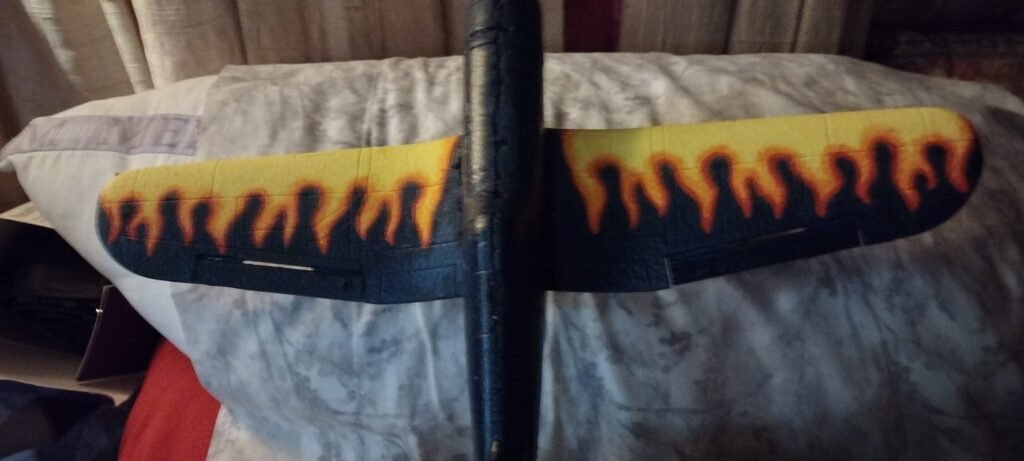
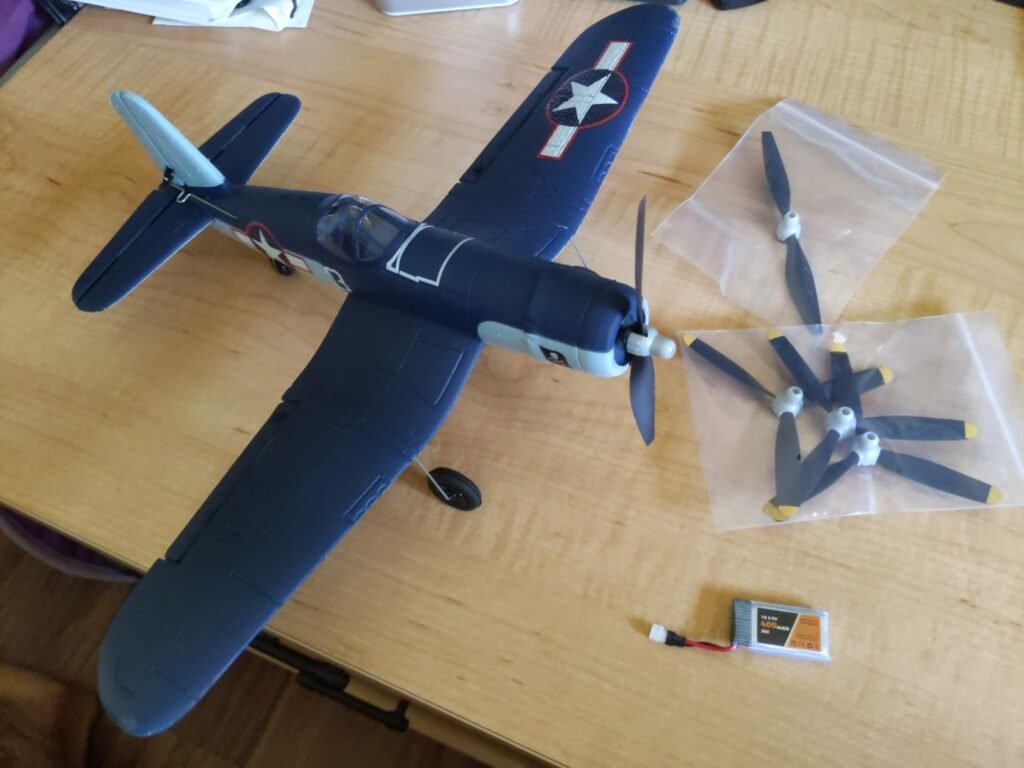
The LEAMBE F4U Corsair delivers premium hobby-grade capability that separates it from typical beginner-focused foam planes. The high-performance brushless motor provides superior power and efficiency compared to standard brushed motors, translating into faster climbs, more authoritative maneuvers, and better performance in mild wind. Upgraded components including spring-loaded landing gear, rear-wheel steering clutch, and accessible maintenance ports signal the kind of engineering that serious hobby pilots appreciate.
We may earn a commission when you buy through this link, at no additional cost to you.
Scale details set this plane apart visually from generic foam warbirds. The simulated dashboard, 3D pilot figure, 4-bladed propeller, and finely crafted landing gear all contribute to a realistic appearance both in flight and on display. Three levels of flight control assistance let you dial in exactly how much help the gyro provides, starting stable for learning and progressing to full manual control as your skills develop. This flexibility keeps the plane rewarding across skill levels rather than becoming boring once you master the basics.
The one-button functions are a genuinely useful convenience for both new and experienced pilots. Automated takeoff, aerobatic stunts, return-to-you, and position tracking reduce cognitive load during flight, letting newcomers focus on developing feel while giving veterans a chance to just enjoy the flight. The 656-foot range and advanced anti-interference technology support flying at proper open fields, and low-battery plus over-range alarms help prevent lost or crashed planes. Two included batteries deliver up to 30 minutes of total flight time.
One-button takeoff removes one of the trickier moments in RC flight, letting you focus on flying rather than getting airborne. One-button return is invaluable when a plane drifts farther than you expected or when you lose orientation momentarily. One-button aerobatics let newer pilots experience loops and rolls safely before they can execute those moves manually. Use these features to build confidence, then gradually rely on them less as your manual skills develop.
This plane makes sense for pilots ready to invest in a hobby-grade experience or intermediate flyers looking to upgrade from basic beginner planes. The brushless power demands more respect than gentle beginner planes, so absolute newcomers should start with a simpler platform first. For pilots who want genuine performance, refined details, and features that support both learning and long-term enjoyment, this is one of the strongest options at its price point.
Not the right choice for absolute beginners or budget-conscious buyers wanting basic learning platforms.
We may earn a commission when you buy through this link, at no additional cost to you.
This blue livery version of the LEAMBE P51 Mustang delivers the same technical package as its blue-red sibling in a different visual scheme. If you prefer classic solid-color military styling over two-tone schemes, this variant provides identical performance and features. The 4-channel control, three skill modes, Xpilot gyro stabilization, and Propeller Saver Technology all match the alternate colorway, so choose based purely on visual preference.
We may earn a commission when you buy through this link, at no additional cost to you.
The 4-channel platform supports genuine aerobatic maneuvers including loops, rolls, and inverted flight once you progress to experienced mode. The powerful coreless motor provides the thrust needed to execute these moves cleanly, and the 15.75-inch wingspan produces the responsive handling that aerobatic flight demands. Xpilot stabilization takes the anxiety out of learning by keeping the plane stable when you release the sticks, letting you focus on developing feel rather than fighting for basic control.
The 656-foot 2.4GHz radio range supports flying at legitimate open fields, and the 12-minute flight time on the 8mm coreless motor provides meaningful stick time per battery. Consider purchasing a spare battery to double your practice time per session, which meaningfully accelerates skill development. The lightweight elastomer foam construction survives normal learning crashes, and the propeller saver system prevents the most common damage vector by letting propellers detach cleanly on impact.
A single 12-minute flight is not enough time to build muscle memory efficiently. Serious learning requires multiple flights per session with time to think between them about what worked and what did not. Consider buying two or three spare batteries so you can fly for 30-40 minutes total per session while maintaining time for the plane and radio to cool down between flights. This approach dramatically accelerates skill development compared to single-battery sessions.
This variant makes sense when you prefer its color scheme over the blue-red version or want a second plane in matching capability for multi-plane flying with friends. The performance profile is identical, so decision-making comes down to aesthetics. For adults or teens learning 4-channel flight who want scale warbird looks and a real progression path from stabilized to fully manual control, either variant delivers the same strong value.
Not for kids under a supervising adult, since 4-channel control demands coordination beyond most young children’s abilities.
We may earn a commission when you buy through this link, at no additional cost to you.
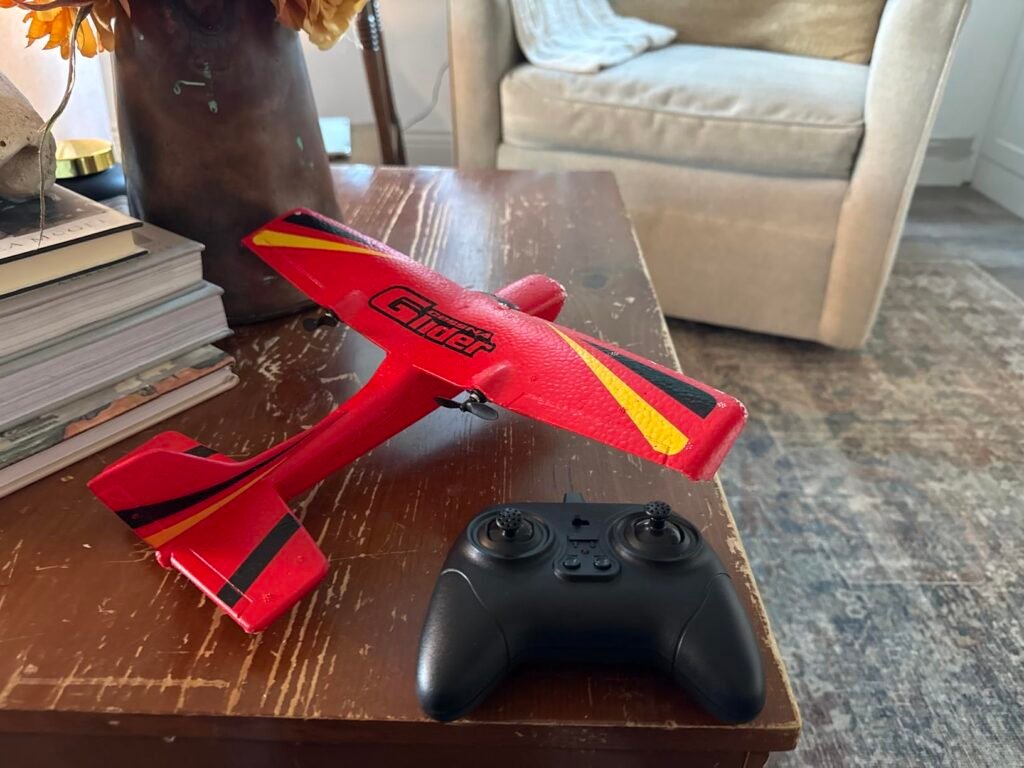
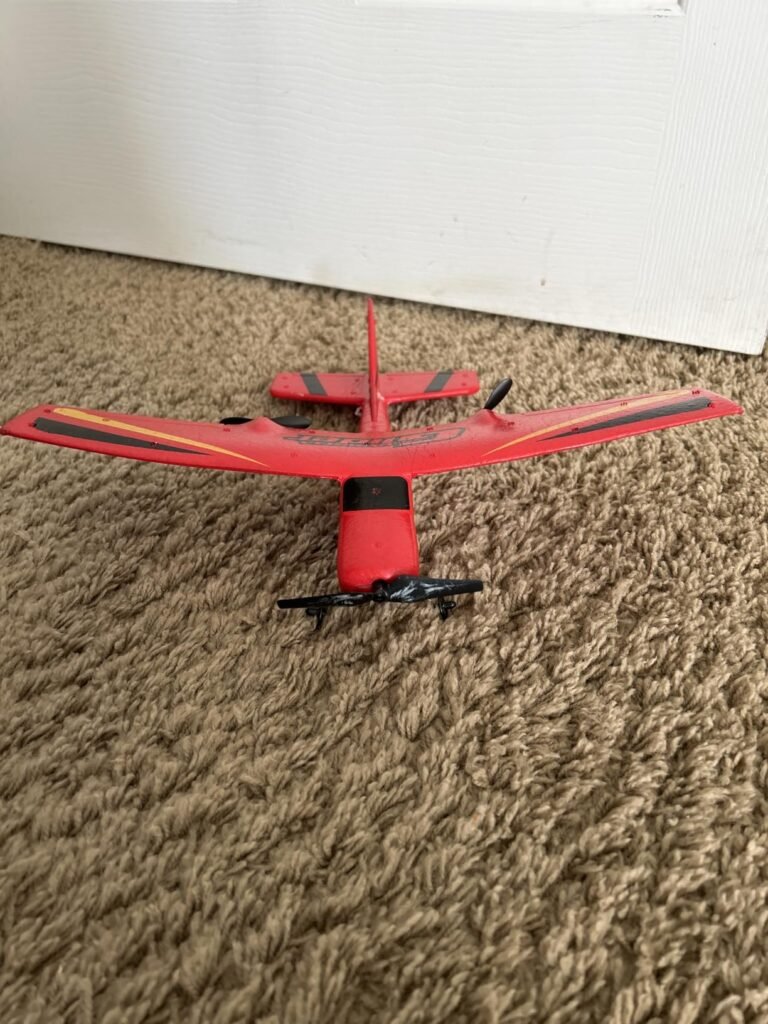
The HAWK'S WORK 2CH glider strips RC flight down to its most approachable form for genuine first-time pilots. With only two control channels — throttle and rudder — the learning curve is dramatically flatter than 3 or 4-channel planes, letting new pilots focus on the fundamentals of orientation, altitude management, and steering without being overwhelmed by aileron and elevator coordination. This simplicity is exactly what most first-time pilots need.
We may earn a commission when you buy through this link, at no additional cost to you.
The built-in self-stabilization system keeps the plane level and flying straight when you release the sticks, which is the single most valuable feature a beginner plane can have. New pilots typically panic and overcorrect, causing crashes that a more experienced pilot would easily prevent. Self-stabilization gives you time to think, reset your orientation, and make measured control inputs rather than reactive ones that spiral out of control. The 2.4GHz radio supports multiple planes flying simultaneously without interference.
The lightweight, durable foam construction survives the slight crashes that inevitably happen while learning. Foam absorbs impacts far better than plastic or wood construction, and the light weight means impact forces are much lower to begin with. The 1-year aircraft warranty and 3-month battery warranty add meaningful long-term value, and available technical support helps navigate the common problems new pilots encounter with any hobby-grade aircraft.
Even without ailerons, a 2-channel plane teaches the most important RC flight skills: reading orientation from a distance, managing altitude with throttle, and steering with subtle rudder inputs. Practice flying gentle figure-eights over an open field to build orientation awareness. Once you can consistently land where you intend to, you have mastered the fundamentals and are ready to progress to a more capable 3 or 4-channel platform.
This glider is the right choice for genuine first-time pilots, older kids learning under adult supervision, or anyone who wants the simplest possible RC flight experience. The tradeoff is that you will likely outgrow the 2-channel platform within a few months as your skills develop, at which point moving up to a 3 or 4-channel plane becomes appealing. For its intended role as an entry-level teaching platform, however, the combination of simplicity, stability, and durability makes it a solid choice.
Not for pilots who want aerobatic capability like rolls, inverted flight, or advanced maneuvers.
We may earn a commission when you buy through this link, at no additional cost to you.
This 3-channel P-51D Mustang delivers scale warbird styling with beginner-friendly features at an accessible price point. The 6-axis gyro stabilization system keeps the plane manageable while you develop flight skills, and dual brushed motors provide the thrust needed for confident climbs and clean maneuvers. Two speed modes let pilots switch between slower learning speeds and faster expressive flight as skills develop.

We may earn a commission when you buy through this link, at no additional cost to you.
The two take-off modes add practical flexibility for different flying environments. Hand launch works well in fields where a smooth takeoff surface is not available, while taxiing takeoff provides a more realistic experience from paved paths or hard-packed dirt strips. Learning both modes broadens where you can fly and adds variety to practice sessions. The EPP foam construction handles the bumps and crashes that come with learning, with high-performance airframe design that resists deformation during hard landings.
Battery life is a real strength. Two rechargeable batteries deliver approximately 40 minutes of total flight time across 20-minute sessions each, which is generous compared to many single-battery beginners planes. This means meaningful practice time per session, and the ability to swap in a fresh battery when the first runs low without ending the flying day. The included spare parts and 1-year aircraft warranty add long-term value.
Practice hand launches first since they work in more environments and require only forward toss coordination. Hold the plane level, apply throttle, and release with a firm forward push. Once comfortable, try taxiing takeoffs on a smooth surface, using rudder to keep the plane tracking straight during the takeoff roll. Different environments favor different techniques, so learning both expands where you can fly.
This warbird makes sense for adults and older teens who want scale P-51 styling with a beginner-friendly 3-channel control setup. The lower star rating versus the AIGIMU alternative suggests slightly less consistent build quality, so factor that into your decision. If price is a consideration and you can accept slightly higher variance in owner experience, this platform delivers meaningful capability at a fair price. For pilots wanting the most polished 3-channel experience, the higher-rated AIGIMU alternative is worth the modest premium.
Not for pilots seeking the highest-rated build quality or those wanting full 4-channel aerobatic capability.
We may earn a commission when you buy through this link, at no additional cost to you.
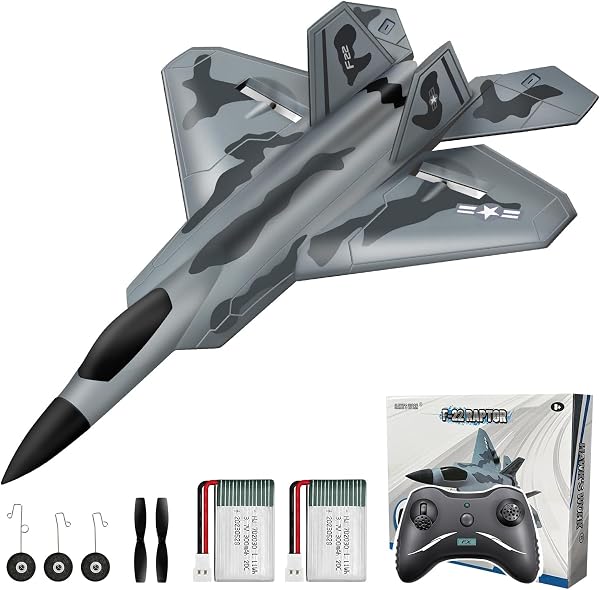
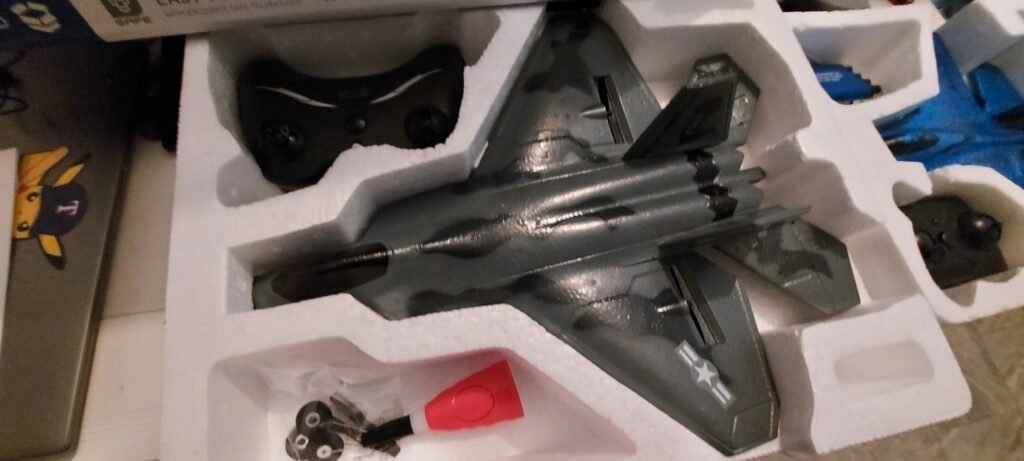
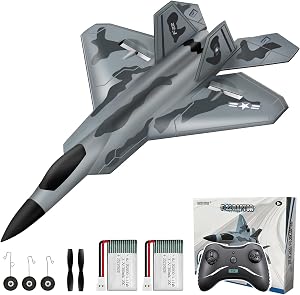
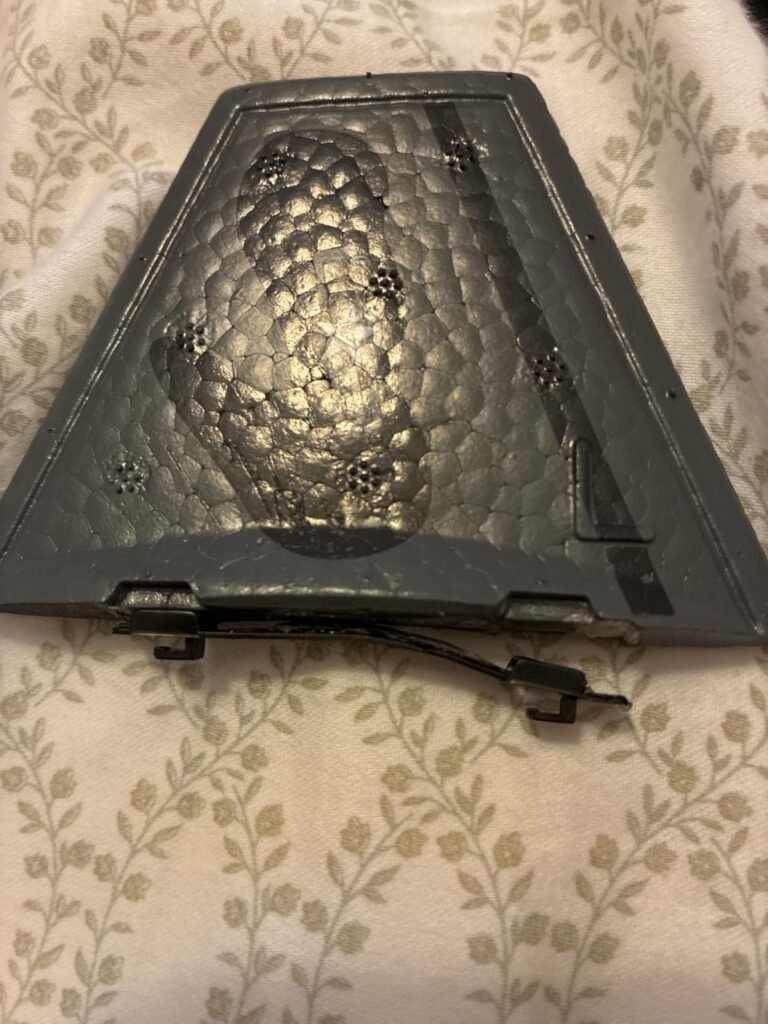
This 2-channel F-22 Raptor glider brings modern fighter jet styling to the beginner-friendly 2-channel platform. Pilots who want a contemporary military look rather than classic World War II warbird styling will appreciate the F-22's aggressive lines. The 2-channel controls remain the simplest introduction to RC flight, focusing pilots on throttle management and rudder steering without the complexity of aileron and elevator coordination.
We may earn a commission when you buy through this link, at no additional cost to you.
The built-in self-stabilization system is the key feature that makes this plane approachable for genuine beginners. When you release the sticks, the plane maintains level flight rather than diving or spiraling — an essential safety net when learning. The 2.4GHz radio supports flying multiple planes simultaneously without interference, so friends or family with compatible aircraft can fly together without signal issues. Four directional control provides everything a new pilot needs to build fundamental skills.
The lightweight foam structure handles the slight crashes that come with learning, and foam repairs are straightforward with hobby glue when small tears occur. The 1-year aircraft warranty and 3-month battery warranty back the platform for the typical learning period, and available technical support helps navigate the common questions that come with any hobby-grade aircraft. The plane’s design suggests it appeals particularly to kids and teens drawn to modern military aircraft styling.
Young pilots benefit enormously from starting with 2-channel aircraft and building fundamental skills before progressing to more complex planes. Fly in large open spaces free of trees, power lines, and buildings, and always supervise flights with children. Keep first flights short — 5 to 10 minutes — to prevent fatigue-related crashes, and always land immediately when the battery indicator warns of low charge. Building good habits early prevents bad habits from becoming ingrained later.
This glider is the right choice for young pilots or beginners who prefer modern jet aesthetics over classic warbird looks. The 3.9 star rating suggests slightly variable owner experiences, so approach with realistic expectations about foam plane durability. For its intended role as a beginner-friendly, visually appealing 2-channel platform, it delivers enough capability to develop fundamental skills. As with all 2-channel planes, expect to outgrow it within a few months and progress to more capable 3 or 4-channel aircraft.
Not for pilots wanting aerobatic capability or those interested in learning full 4-channel control.
We may earn a commission when you buy through this link, at no additional cost to you.
Choosing an RC plane involves matching channel count, gyro assistance, motor type, and construction to your skill level and flying goals. This guide walks through the factors that genuinely affect your flying experience and how long you will enjoy the plane.
Channel count is the most important specification to understand when choosing an RC plane because it directly determines how the plane flies and how difficult it is to learn. 2-channel planes control only throttle and rudder, providing the simplest possible flight experience with limited maneuverability. 3-channel planes add elevator control, enabling altitude adjustment and gentle climbs and dives. 4-channel planes add ailerons, unlocking full aerobatic capability including rolls, inverted flight, and coordinated turns.
The tradeoff is straightforward: more channels mean more capability but also a steeper learning curve. New pilots who start with 4-channel planes typically crash frequently while learning to coordinate multiple control inputs, sometimes destroying the plane before developing the skills to fly it. Pilots who start with 2-channel planes learn fundamentals quickly but often outgrow the platform within a few months and want to move up.
For genuine first-time pilots, start with a 2-channel plane to build orientation and basic control skills. For adults and older teens willing to invest in learning, a 3-channel plane offers a better long-term platform. For pilots ready to invest time in real skill development, a 4-channel plane with progressive skill modes is the strongest long-term choice.
Gyroscopic stabilization systems detect small deviations from level flight and apply corrective control inputs automatically. In beginner-focused planes, this means the aircraft stays level when you release the sticks, giving new pilots time to think and reset rather than reactively overcontrolling into crashes. 6-axis gyros provide the most comprehensive stabilization across all three flight axes plus rate stabilization, making them significantly more effective than simpler 3-axis systems.
Progressive skill modes are the natural extension of gyro technology. Rather than always providing maximum stabilization, quality planes offer beginner, intermediate, and advanced modes that gradually reduce electronic intervention as your skills develop. This means one plane can serve you through years of skill development rather than becoming obsolete after a few months. Look for planes that explicitly offer multiple skill levels with clear differences between them.
Prioritize gyro stabilization if you are new to RC flight or returning after a long break. Choose planes with progressive skill modes if you want a platform that will remain rewarding as your abilities grow. Skip gyro assistance only if you already have significant RC flight experience and want authentic manual control.
Motor type affects power delivery, efficiency, longevity, and price. Brushed motors are less expensive and simpler in construction but produce less power per gram, generate more heat, and wear out faster due to physical brush contact. Most beginner-focused planes use brushed motors because the lower cost matches the entry-level positioning and the reduced power keeps the plane manageable for new pilots.
Brushless motors use electronic commutation instead of physical brushes, delivering higher power output, better efficiency, less heat, and dramatically longer service life. Brushless-powered planes climb faster, handle wind better, and execute maneuvers more crisply than brushed equivalents. The tradeoff is higher cost and slightly steeper handling that rewards more experienced pilots. Brushless motors are the standard for hobby-grade and competition aircraft.
Choose brushed motors for entry-level learning platforms and budget-conscious purchases. Choose brushless motors for hobby-grade performance, better wind tolerance, and long-term durability. If you plan to fly frequently and want a platform that will serve you for years, brushless is worth the price premium.
Foam construction dominates the beginner and intermediate RC plane market for good reason: foam is lightweight, absorbs impacts well, and repairs easily with common hobby glue. EPP foam is generally more resilient and flexible than lighter EPO or expanded polystyrene alternatives, absorbing crashes without fragmenting. Lightweight elastomer foam adds flexibility that helps planes survive the inevitable hard landings and clumsy takeoffs of new pilots.
Beyond the foam itself, look for reinforced components at high-stress points. Metal landing gear resists deformation better than plastic. Metal or reinforced wing spars keep wings straight and true under aerodynamic loads. Propeller saver technology lets propellers detach cleanly during impacts rather than snapping, saving repair time and money. Spare propellers and hardware included in the box add long-term value.
Prioritize durability in beginner planes since new pilots crash frequently while learning. Foam repair supplies and spare parts availability matter more than premium materials for entry-level aircraft. For advanced planes, focus on precision components and reinforced high-stress areas that handle aerobatic loads.
Per-charge flight time ranges from 10-15 minutes for smaller planes with modest batteries up to 20-30 minutes for larger planes with high-capacity cells. Planes shipping with two or three included batteries dramatically extend total session flight time because you can swap packs while the depleted ones charge. Total session flight time of 30-40 minutes is meaningful for skill development because it allows for multiple flights with time to reflect between them.
Charging method affects convenience. USB-C charging lets you power the plane from any modern phone charger, laptop, or portable power bank, eliminating the need to bring dedicated charging equipment to the flying field. Traditional proprietary chargers work fine at home but limit where you can top up batteries between sessions. Fast charging that fully replenishes batteries in 30-60 minutes minimizes downtime for sequential flying.
For casual flyers taking single-battery flights, factory-included battery capacity is usually adequate. For learning pilots who need extensive practice time, prioritize planes that ship with multiple batteries or support convenient USB-C charging. Consider purchasing spare batteries as part of your initial investment to extend practice time meaningfully.
Radio range determines how far you can safely fly from your position. Most beginner and intermediate planes offer 500-656 feet of control range on 2.4GHz radio systems, which is more than adequate for park and small-field flying. Larger open spaces and higher-altitude flight benefit from longer range, but pushing the limits of any radio system risks losing control and crashing the plane far from your position.
2.4GHz radio systems are the standard for modern RC aircraft, offering strong interference resistance and support for multiple planes flying simultaneously without signal conflicts. Low-battery alarms warn you to land before the plane runs out of power, and over-range alarms prevent you from accidentally flying beyond safe control distance. These safety features are especially valuable for new pilots still developing spatial awareness in the air.
For park flying with modest ranges, standard 500-656 foot radios are entirely adequate. For open-field flying at longer distances, verify the radio range meets your intended flying environment. Prioritize radios with low-battery and range warnings if you are new to RC flight.
Ready-to-fly (RTF) planes ship assembled and configured, requiring only battery charging and radio binding before your first flight. This dramatically reduces the barrier to entry for new pilots who lack the tools, workspace, or knowledge to build a plane from scratch. Almost every beginner-focused plane on the market today is RTF, making assembly complexity essentially a non-issue for most buyers.
Verify what actually comes in the box. Most RTF planes include the aircraft, radio transmitter, one or more batteries, USB or dedicated charger, spare propellers, and basic instructions. AA batteries for the transmitter are frequently not included, so plan to have those on hand for your first flight. Spare parts availability affects long-term ownership — planes from brands with established parts pipelines are much easier to maintain over time than obscure imports.
Prioritize RTF designs unless you specifically want the educational experience of building a plane from scratch. For gifts to new pilots, RTF is essentially mandatory to ensure the plane can actually be flown out of the box without hobby-shop-level knowledge.
Before your first flight, fully charge all included batteries and install fresh AA batteries in the transmitter if required. Read the manual carefully to understand your specific plane’s binding procedure, skill mode selection, and any safety features like low-battery alarms. Choose a large, open flying area free of trees, power lines, buildings, and people, and check that weather conditions are calm with wind speeds under 5-8 mph before your first flights.
Practice basic control inputs on the ground before your first launch to confirm the control surfaces respond correctly. Verify that ailerons, elevator, and rudder move in the right directions when you move the sticks — reversed controls can cause immediate crashes. Start every session in beginner or maximum-stabilization mode until you have consistently proven you can take off, fly a simple pattern, and land without crashing. Progress to more advanced modes only after mastering each stage.
After each flight, inspect the plane for damage including bent propellers, cracked foam, and loose control surfaces. Repair small foam tears with hobby glue before they grow into structural problems, and replace bent propellers immediately since imbalance vibrations cause additional damage. Store batteries at approximately 50-60 percent charge for long-term storage, and never store fully depleted or fully charged batteries for extended periods. Keep the plane in a dust-free environment away from direct sunlight and temperature extremes to preserve foam integrity and electronics.
A 2-channel plane with throttle and rudder is the simplest starting point and works well for genuine first-time pilots. A 3-channel plane adds elevator control for altitude management and provides a better long-term platform for skill development. 4-channel planes offer full aerobatic capability but demand significantly more coordination. Most beginners benefit from starting with 2 or 3 channels and progressing to 4 as their skills develop.
Brushed motors use physical brush contacts to transfer power, which is cheaper but generates heat and wears out faster. Brushless motors use electronic commutation for higher efficiency, more power, less heat, and dramatically longer service life. Brushless motors also enable more aggressive aerobatic performance and better wind tolerance. Beginners typically start with brushed motors, then upgrade to brushless as they progress in the hobby.
Flight time varies by plane size, motor type, and flying style but typically ranges from 10-30 minutes per charge. Aggressive full-throttle flying drains batteries faster than gentle cruising. Many planes ship with two or three included batteries to extend total session flight time. Consider purchasing spare batteries to double or triple your practice time per session, which meaningfully accelerates skill development.
Wind tolerance depends on plane size and weight. Smaller and lighter planes struggle in wind speeds above 5-8 mph, while larger and heavier planes with brushless motors can handle 10-15 mph or more. Never fly in gusty conditions or when wind speed exceeds your comfort level for that specific plane. Beginners should always fly in calm conditions — early morning and early evening typically offer the calmest weather.
A gyroscope detects small deviations from level flight and applies corrective control inputs automatically. For beginners, this means the plane stays level when you release the sticks, giving you time to think rather than reactively overcorrecting into crashes. 6-axis gyros provide the most comprehensive stabilization and are strongly recommended for new pilots. Advanced pilots often prefer planes with adjustable or defeatable gyros so they can develop authentic manual control skills.
Choose large open areas free of trees, power lines, buildings, and people. Public parks with open fields work well when RC flying is permitted, and dedicated RC flying clubs offer the best facilities with fellow pilots for guidance. Always check local ordinances since some parks and municipalities prohibit RC aircraft. Never fly near airports, over crowds, or in areas where a crash could injure people or damage property.
EPP and elastomer foam construction handles typical learning crashes far better than plastic or wood alternatives. Foam absorbs impact energy through deformation rather than fracturing, and small tears repair easily with hobby glue. However, foam planes will eventually accumulate damage from repeated crashes, and structural components like landing gear and propellers may need periodic replacement. Beginner planes typically last one to two seasons of active learning before showing significant wear.
Most modern beginner planes ship ready-to-fly (RTF) with the aircraft fully assembled, requiring only battery charging and radio binding before your first flight. Some planes require basic assembly like attaching wings or landing gear, which typically takes just a few minutes. AA batteries for the transmitter are commonly not included, so plan to have those on hand. Always read the manual before your first flight to confirm proper setup.
Adult beginners benefit from 3 or 4-channel planes with gyro stabilization and progressive skill modes. These planes are approachable enough to learn on but capable enough to grow with over months of practice. Scale warbird styling appeals to many adult pilots and adds visual interest to the hobby. Look for planes that ship with multiple batteries for extended practice sessions and offer clear paths for skill progression.
When specifications are similar, prioritize owner review ratings, warranty coverage, and spare parts availability. Higher-rated planes generally have more consistent build quality and better customer support. Longer warranties suggest manufacturer confidence in the product. Spare parts availability matters enormously for long-term ownership because foam planes inevitably need repairs. Between visually similar options, personal preference for color scheme or scale styling is a valid tiebreaker.
For most pilots seeking the strongest overall combination of scale realism, beginner-friendly features, and practical flight time, the AIGIMU 3CH P-51 Mustang stands out as the top choice. Its 6-axis gyro stabilization, 40+ minute total flight time, dual take-off modes, and impressive scale detailing deliver a well-rounded package that supports genuine skill development. The 4.7 star rating and 180-day warranty add meaningful confidence in the purchase.
Buyers with different priorities have strong alternatives to consider. Genuine first-time pilots should start with the HAWK'S WORK 2CH glider, which strips flight controls to their simplest form for the flattest possible learning curve. Pilots ready to invest in hobby-grade performance should look at the LEAMBE F4U Corsair with its brushless motor, one-button aerobatic stunts, and 30-minute flight time. Aerobatic enthusiasts wanting full 4-channel control can choose between the LEAMBE P51 variants in blue-red or solid blue liveries.
The best RC plane for your needs depends on your current skill level, flying environment, and long-term goals. Match channel count to your experience, prioritize gyro stabilization if you are new to flight, and consider battery life if you want extended practice sessions. Foam construction protects against learning crashes, and progressive skill modes let one plane serve you across months or years of development. Whichever plane you choose, the joy of controlled flight is one of the most rewarding experiences in the hobby, and any of these eight options will get you into the sky with confidence.