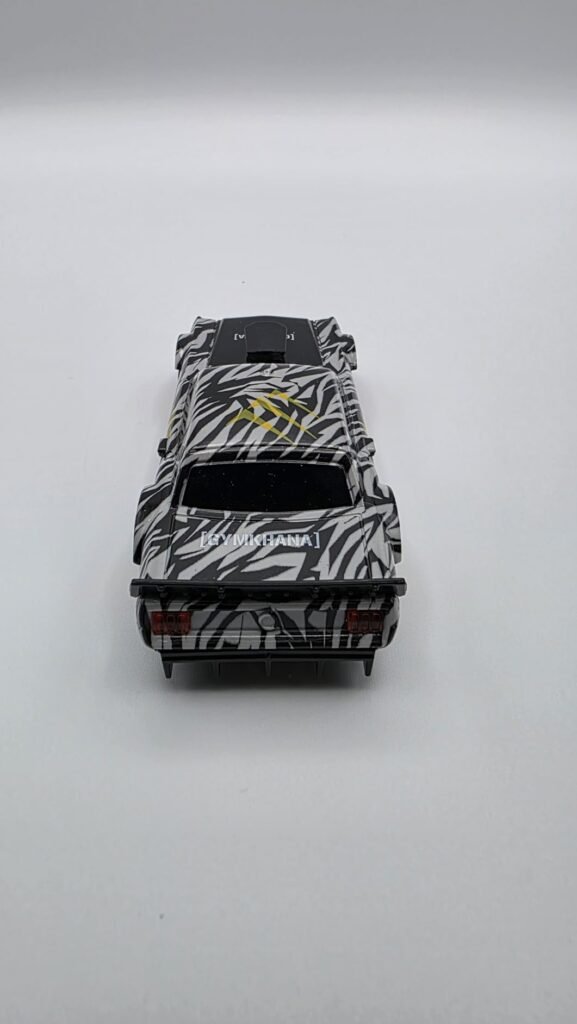
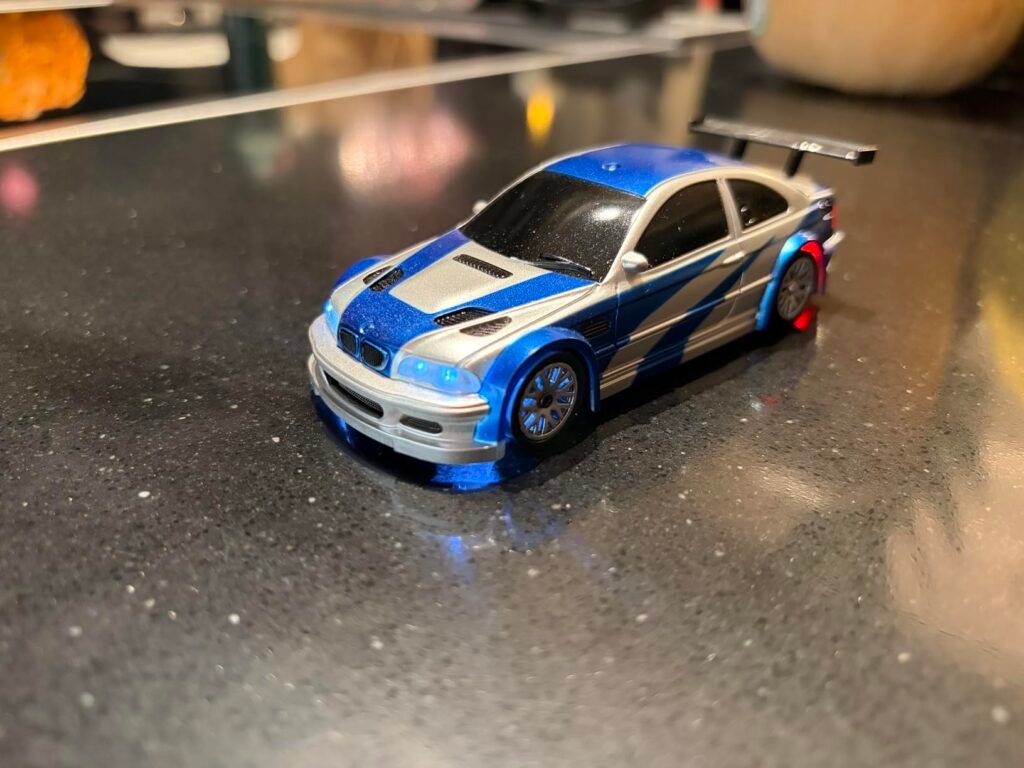
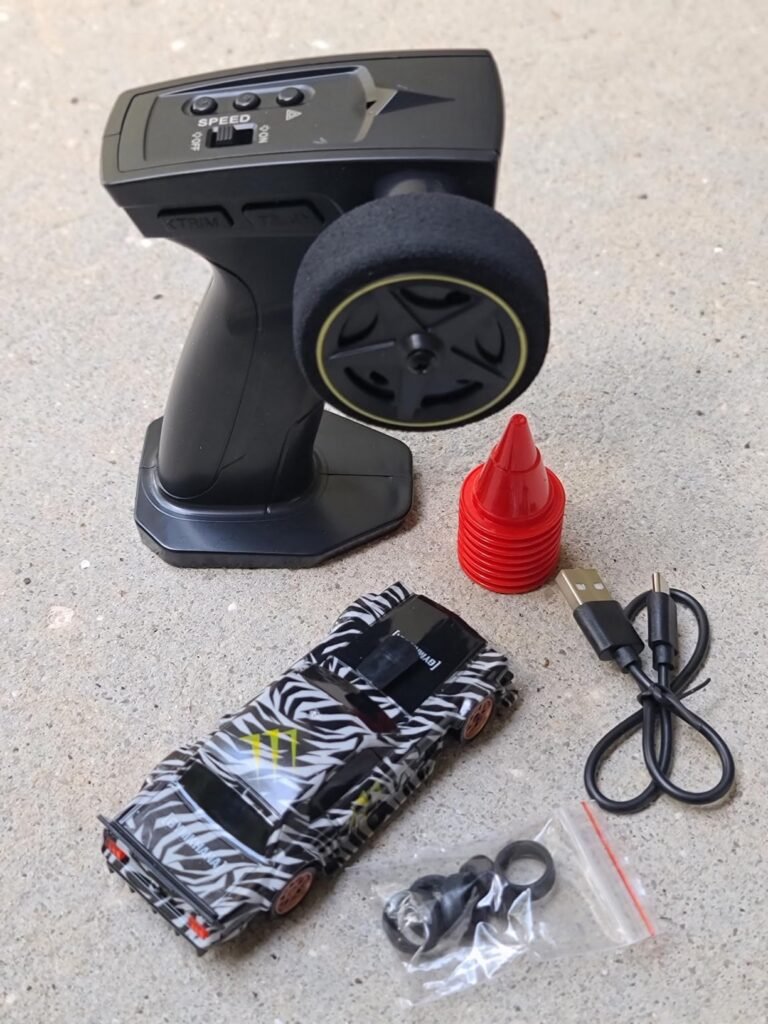
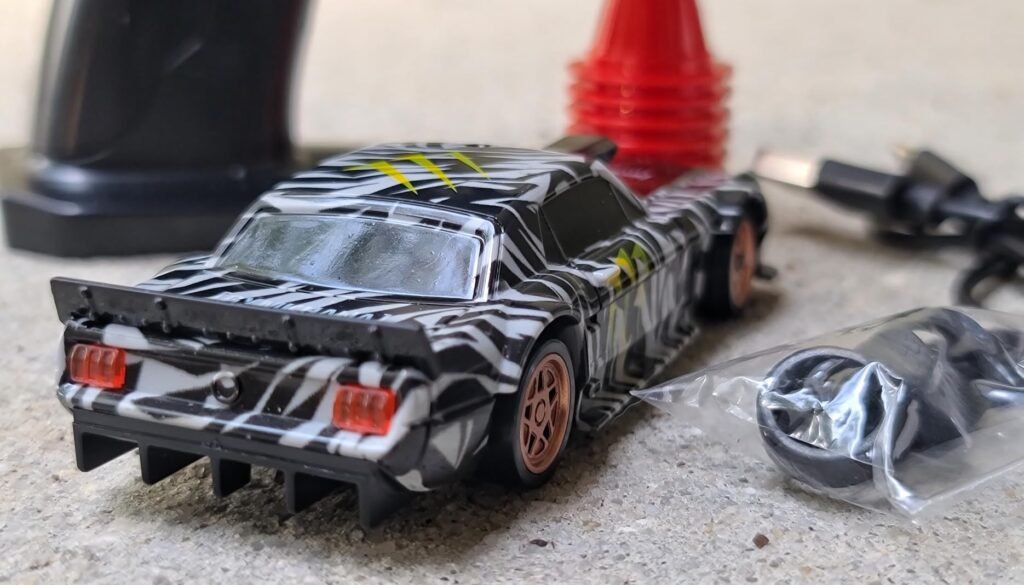
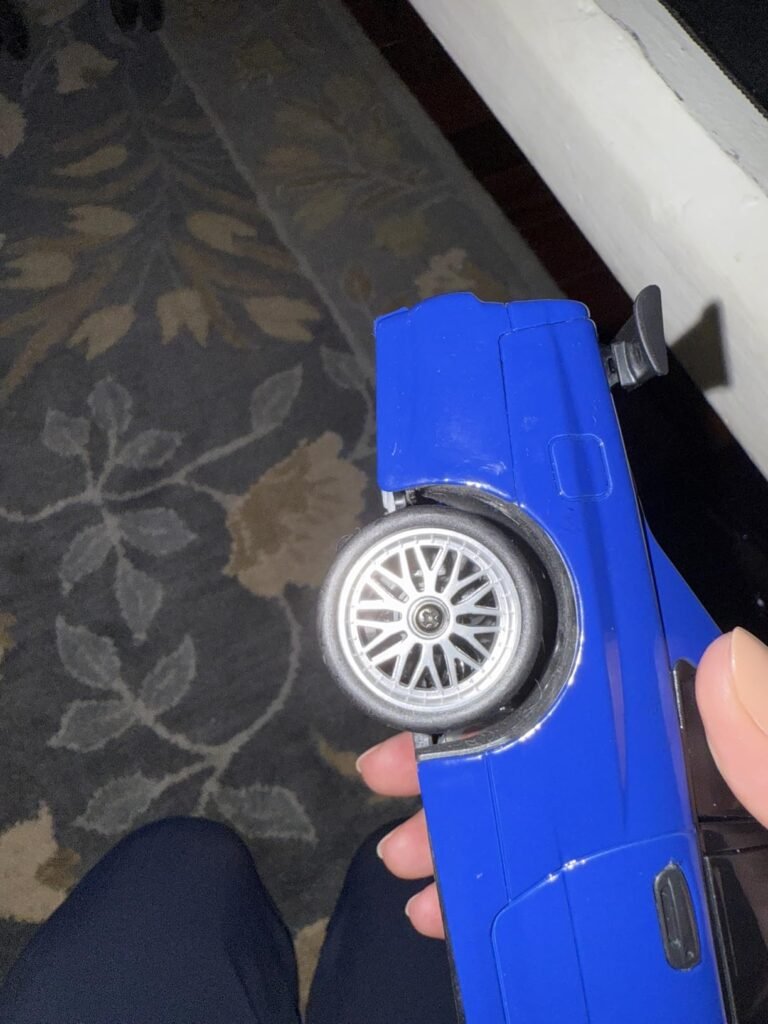
Sakeye 1:16 Drift
9.0Editor score1/16 scale 4WD
18 km/h speed
Two rechargeable batteries
LED lights sprayer
Find the right rc drift cars for 2026. We compare 10 standout options by build quality, useful features, owner feedback, value, and everyday trade-offs.
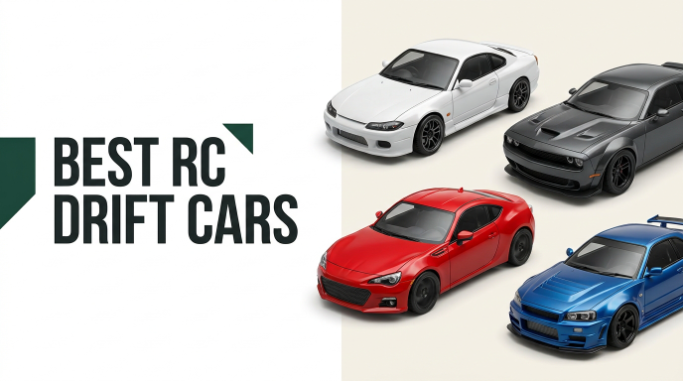
Finding the right RC drift car in 2026 comes down to matching scale, drivetrain, and gyro assistance to where and how you plan to drive. We compare 10 standout models across chassis quality, motor type, tire options, battery life, control precision, and overall value to help you land smooth slides on tile, hardwood, or purpose-built drift mats.
The key decision most buyers face is whether to prioritize a compact indoor drifter, a full-scale hobby-grade rally car, or something in between. Scale affects speed, space requirements, and durability, while drivetrain choice — 4WD versus RWD — dramatically changes how forgiving the car feels when you start learning to slide.
This guide breaks down each model’s strengths and tradeoffs so you can match a car to your skill level, available space, and budget. Whether you want a desktop drifter for tight indoor spaces or a rally-inspired machine that hits 38+ mph outdoors, there is a right choice in this lineup.
We compared 10 RC drift cars using the details that actually help a buyer decide: scale, drivetrain layout, motor type, gyro stability, tire options, battery life, controller precision, chassis durability, and value. The notes focus on practical trade-offs so each pick connects to how people actually drive drift cars indoors, on driveways, or on purpose-built tracks, whether they are new to the hobby or looking for a more capable upgrade.

Compare key features, scores, and current prices side by side. A shorter feature list means fewer details were available, not necessarily fewer capabilities.


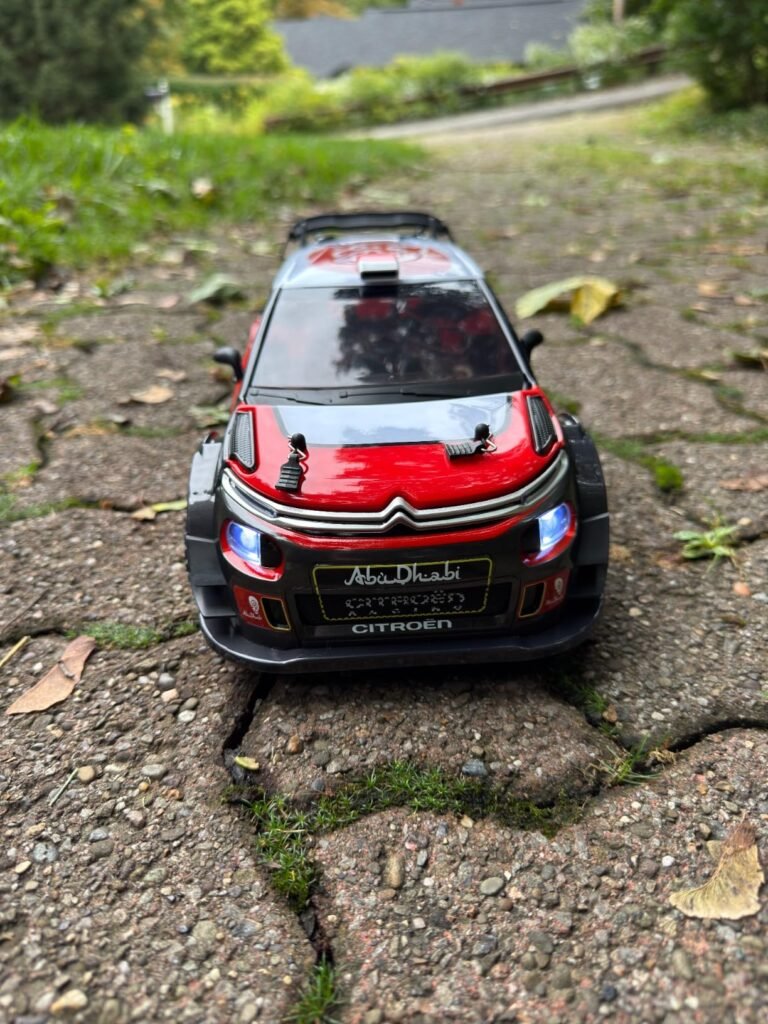
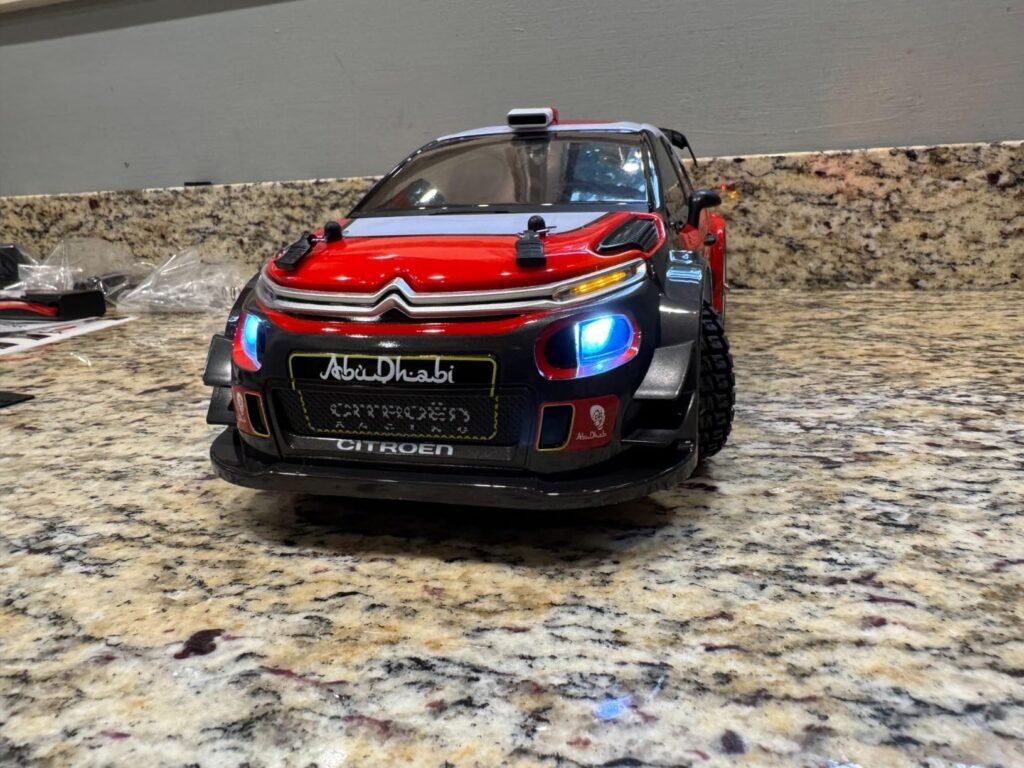
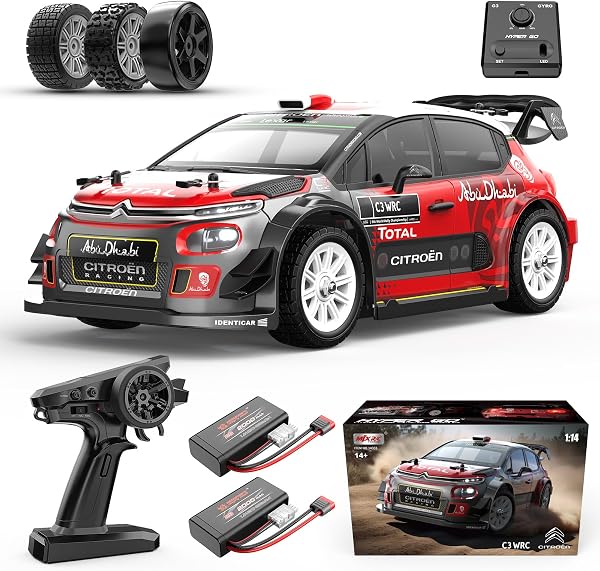
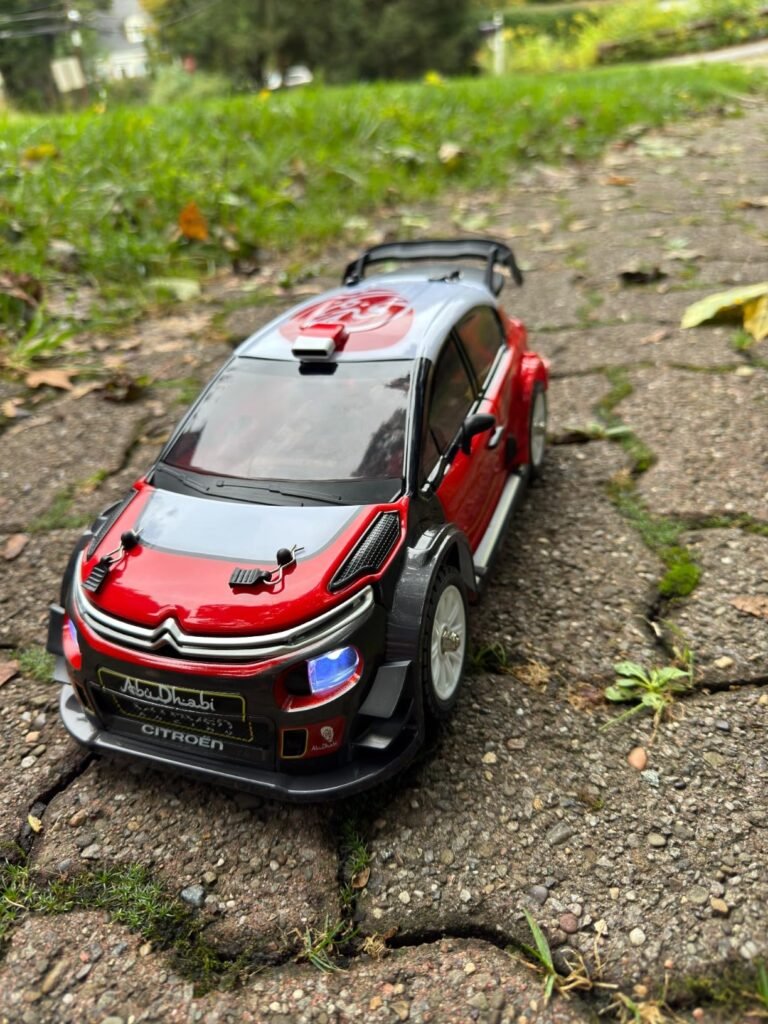
The MJX Hyper GO 14303 stands out as a genuine hobby-grade rally car at a price point that welcomes serious enthusiasts without demanding a professional-level budget. The licensed 1/14 scale Citroen C3 WRC body includes accurate details like bumpers, air intakes, exhaust, and a wide-body spoiler, giving it the presence of a scale replica alongside its driving capability. This is the kind of car that appeals to buyers who want authentic rally styling paired with real performance.
We may earn a commission when you buy through this link, at no additional cost to you.
Under the shell, a brushless 2845 3900KV motor with metal heatsink and dual cooling fans delivers 26+ mph on the included 2S 7.4V 2000mAh battery, and the 45A ESC unlocks 38+ mph when paired with an optional 3S 11.1V LiPo pack. The independent gyro is more than a stability aid — set around 75%, it actively helps you initiate and maintain controlled drifts, which shortens the learning curve for anyone new to rally-style driving. Powder-metallurgy transmission gears and differentials deliver the torque needed to make 4WD drifting feel responsive rather than sluggish.
The 6061 aluminum alloy chassis and oversized metal support rods give this car the structural integrity to absorb hits from curbs, roll into embankments, and keep running. Three tire sets cover different surfaces, from tarmac to loose gravel, and the oil-filled shock absorbers combined with built-in sponge inserts produce a planted stance that maintains grip through fast corners. The 400ft 2.4GHz 3-channel transmitter includes light control and a 70% speed limiter that beginners should engage until they build confidence.
Setting the gyro to approximately 75% strikes a balance between stability and driver control. Higher gyro values make the car more forgiving during high-speed drifts but reduce the tactile feedback experienced drivers rely on. If you find the car feels overly corrective, dial the gyro down gradually as your skills improve. For pure high-speed straight-line runs, more gyro helps prevent unwanted spins; for tight technical drifts, less gyro gives you more direct steering feel.
This is the drift car to buy if you want long-term hobby potential rather than a disposable toy. The upgrade path via 3S batteries and aftermarket parts means the car can grow with your skills, and the metal chassis holds up to the abuse that comes with learning. New drivers should absolutely start with the speed limiter engaged — this car has enough power to make control genuinely difficult at full throttle until you have logged some seat time.
Not ideal for very young beginners or shoppers who want a simple toy-grade drift car without an upgrade path.
We may earn a commission when you buy through this link, at no additional cost to you.
This Sakeye 1:16 drift car packs a surprising number of features into an accessible price point, making it an easy recommendation for shoppers who want to try RC drifting without spending on a hobby-grade platform. The 4WD system delivers proportional forward, reverse, and steering control up to 18 km/h — quick enough to feel exciting indoors or in a driveway without becoming unmanageable. The included pair of rechargeable batteries provides roughly 40 minutes of total run time, which meaningfully extends single-session play.
We may earn a commission when you buy through this link, at no additional cost to you.
The tire configuration is one of the most practical inclusions in this price bracket. Four racing tires provide traction for straight-line speed runs, while four dedicated drift tires reduce grip for controlled slides on smooth surfaces like tile, hardwood, or a drift mat. This gives you two distinct driving experiences from a single car, which is unusual at this cost and adds meaningful play value. The removable, replaceable wheel design also means that worn tires can be swapped rather than sending the whole car to a drawer.
The LED lighting system and rear water-mist sprayer add visual flair that appeals to younger drivers and party settings. The 2.4GHz radio supports simultaneous multi-car racing without interference, which is helpful if friends or siblings also own compatible RC cars. The impact-resistant shell absorbs the inevitable crashes that come with learning to drift, and the tires themselves are described as thickened and durable enough to handle regular use.
Racing tires deliver grip that suits acceleration and cornering on rougher surfaces, while drift tires have a slick, low-grip compound designed to break traction predictably on smooth floors. Swap to drift tires when driving on tile, wood, or a drift mat, and switch back to racing tires for driveways or garage floors where you want the car to grip and go. Keeping both sets clean of dust and debris helps them perform as intended.
This drift car is best suited for casual hobbyists, older kids, and adults who want an entertaining drift experience without the complexity of tuning a hobby-grade machine. The tradeoff is that toy-grade construction limits long-term upgradability — you cannot swap in a brushless motor or a larger battery pack. For its intended audience and price, however, the feature set is genuinely strong and provides an enjoyable entry into RC drifting.
Not suitable for buyers who want a hobby-grade platform with brushless power, high top speed, or aftermarket upgrade support.
We may earn a commission when you buy through this link, at no additional cost to you.
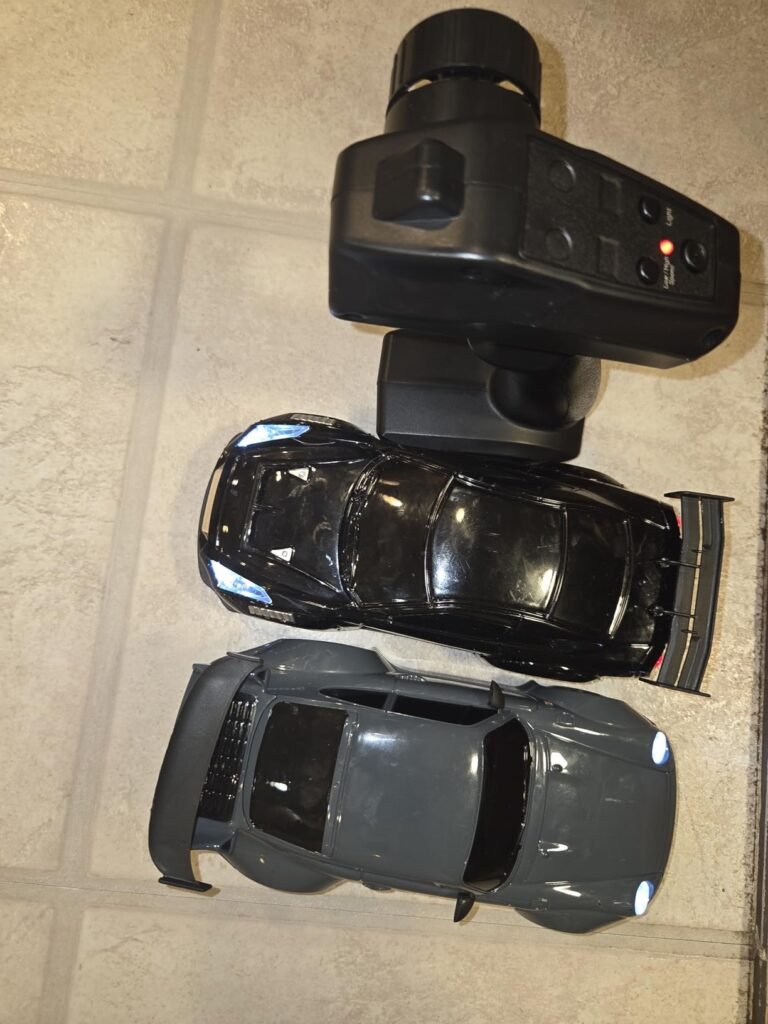
At under twenty dollars, this 1/24 scale 4WD drift car is one of the most accessible ways to experience RC drifting. Despite the entry-level price, it delivers a legitimate four-wheel-drive system with differential coordination, proportional throttle, and adjustable steering sensitivity — features that some more expensive toys skip. The 20 km/h top speed is fast enough to feel exciting in a hallway or on a hardwood floor without becoming unmanageable for beginners.
We may earn a commission when you buy through this link, at no additional cost to you.
The dual-mode tire system mirrors what pricier models offer: four drift tires for smooth indoor surfaces like tile and wood floors, plus four racing tires for outdoor terrain and driveways. The quick-release design makes swapping tires straightforward, so you can adjust the car’s behavior based on where you are driving. Two speed modes — a slower setting for new drivers and a faster mode for experienced users — give the car meaningful range of skill accommodation.
The high-toughness PVC shell handles minor bumps and drops without cracking, and the streamlined design includes headlights, taillights, and underbody LED lights that create a genuinely eye-catching look during evening driving sessions. Two 3.7V 500mAh rechargeable batteries deliver approximately 50 minutes of total play time across quick-swap cycles, and the impact-resistant battery housing protects the cells from crash damage.
The two speed modes on this car exist for a genuine practical reason. New drivers benefit from the slower mode while learning steering timing, throttle control, and drift initiation. Progressing to the higher mode too quickly typically leads to spins, crashes, and frustration. Spend a few sessions in beginner mode until you can consistently execute smooth corner exits before switching to full speed for more advanced drift practice.
This is the drift car to consider when budget is the main constraint, or when you want to give a curious beginner a real 4WD drift experience without a large investment. The tradeoff is durability — PVC construction and toy-grade internals are not built for hard driving or aftermarket upgrades. For casual indoor drifting and gift-giving, however, the value proposition is difficult to beat at this price point.
Not for buyers who want top speeds above 20 km/h or a durable platform for extended outdoor use.
We may earn a commission when you buy through this link, at no additional cost to you.
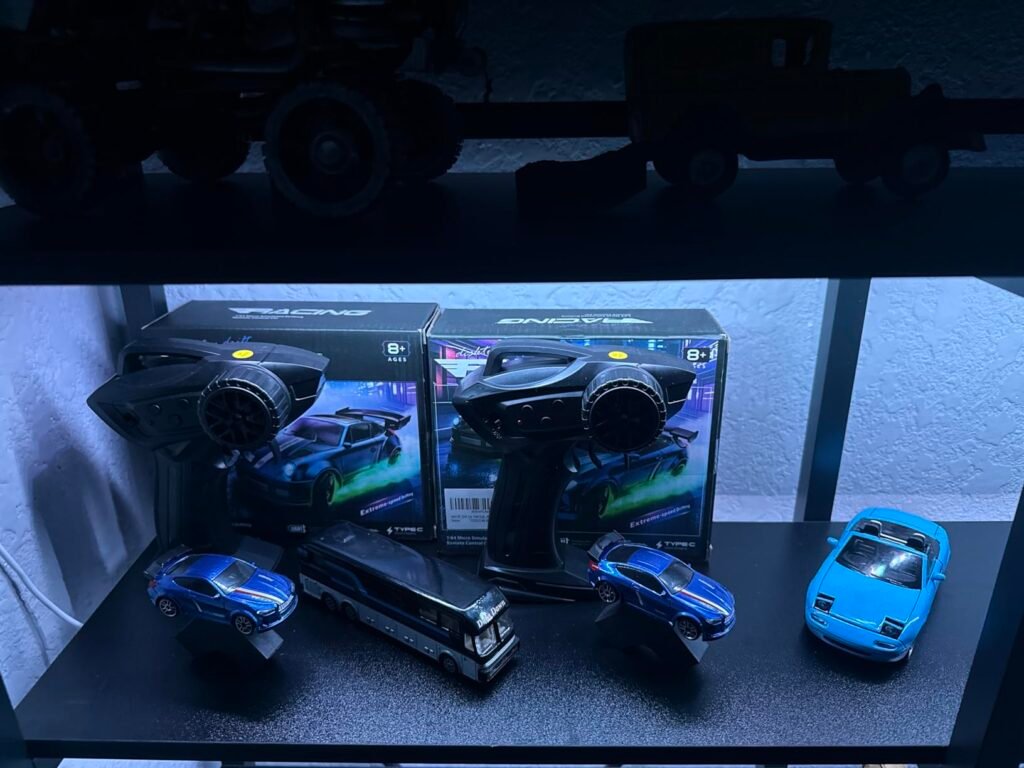
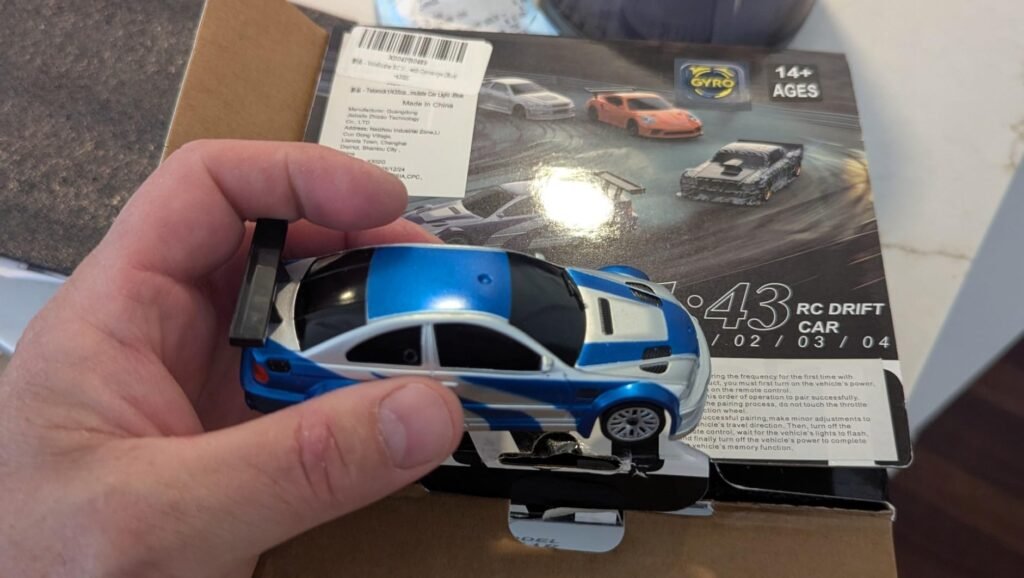
This 1/43 scale mini drift car brings serious features into a footprint small enough to run on a desk or in a tight indoor space. The full-size 2.4GHz remote delivers control precision that far exceeds what typical mini RC toys offer, with ±60° front-wheel steering and linear throttle response that lets you execute intentional drifts rather than just spinning out. For enthusiasts who want the drift experience but lack the room for a larger car, this compact design solves a real problem.
We may earn a commission when you buy through this link, at no additional cost to you.
The integrated gyroscope is the standout technical feature. For beginners, it stabilizes the body during drifts to prevent unwanted spins, dramatically reducing the frustration that often derails first-time drifters. For more experienced drivers, the gyro retains about 30% control feedback, allowing natural corrections rather than fully automating the driving experience. This dual-purpose behavior means the car remains engaging as your skills improve.
The brushless 4WD system powers three adjustable speed modes reaching up to 15 km/h. Low speed suits absolute beginners, medium balances control with pace, and high mode delivers the challenge experienced drivers seek. Type-C fast charging fully replenishes the high-density lithium battery in about 30 minutes, and continuous drift-mode operation runs beyond 30 minutes per charge. Racing-grade ABS construction survives 8-foot drops, which matters when small cars inevitably fly off surfaces.
The included cones enable structured practice routines that build drift skill faster than random driving. Try setting up three cones in a straight line spaced about a foot apart for slalom practice, then progress to a circular pattern that forces continuous drifting around a fixed point. Consistent practice with defined targets develops the throttle and steering coordination that separates controlled drifting from lucky slides.
This is the drift car to buy if your driving space is limited to a room, hallway, or dedicated indoor drift area. The included practice cones make it easy to set up slalom courses and U-turn drills that build genuine driving skill. The main limitation is scale — at 1/43, this car is too small for outdoor terrain or windy conditions, and the 15 km/h top speed will not satisfy shoppers who want raw speed.
Not suitable for outdoor driving, rough surfaces, or shoppers who want higher top speeds and larger scale presence.
We may earn a commission when you buy through this link, at no additional cost to you.
This alternate colorway of the 1/43 mini drift platform delivers the same technical package as its sibling but in a different visual style. The compact 1/43 scale, gyroscope-equipped chassis, and brushless 4WD system make it a strong pick for indoor drifting enthusiasts who want a specific aesthetic to match their setup or personal preference. The full-size 2.4GHz remote provides the millimeter-level control that separates this platform from typical mini RC toys.
We may earn a commission when you buy through this link, at no additional cost to you.
The three adjustable speed modes cover the full range from beginner-friendly low speed to more demanding high-speed drifts up to 15 km/h. The gyroscope behaves as it does across the 1/43 lineup — actively stabilizing the body for new drivers while leaving meaningful control feedback for experienced ones. This balance means the car remains rewarding to drive as your skills advance rather than feeling either too twitchy or too automated.
Battery life is a real strength here. The high-density lithium cell delivers 30+ minutes of continuous drift-mode operation, and even under high-speed driving it runs beyond 25 minutes. Type-C fast charging brings the car back to full in about 30 minutes, minimizing downtime between sessions. The racing-grade ABS chassis survives 8-foot drops, which is meaningful reassurance for a small car that will occasionally launch off desks or table edges.
The 2.4GHz radio system supports multiple cars running simultaneously without signal interference, which makes head-to-head drift battles or coordinated practice possible when two people each own a compatible mini drifter. Set up a shared drift course with cones, then take turns running clean laps or chase each other through the pattern. This social element adds meaningfully to the appeal of small-scale drifting.
This colorway makes sense when you specifically prefer its styling over the other 1/43 variants, or when you want a second mini drifter for head-to-head practice with a friend. The performance profile is identical to its siblings, so choose based on visual preference. As with the rest of the 1/43 lineup, this is an indoor-focused car — outdoor use on rough surfaces or in windy conditions will disappoint due to the small scale and light weight.
Not for outdoor use or shoppers who want a car with visible size presence or higher speeds.
We may earn a commission when you buy through this link, at no additional cost to you.
This 1:18 scale 4WD combines a genuine 40 km/h top speed with useful drift features, making it one of the faster options in this lineup. The 380 brushed motor provides plenty of power for high-speed driveway runs and outdoor drifting, and the 4WD system with independent suspension keeps the car composed at speed. Buyers who want more presence and pace than mini scales can deliver — without stepping up to a hobby-grade brushless setup — will find this a compelling middle ground.

We may earn a commission when you buy through this link, at no additional cost to you.
The adjustable drift assist is a smart design choice. The system detects real-time body dynamics and automatically adjusts steering to help maintain your intended trajectory, and sensitivity is adjustable so drivers can dial in how much intervention they want. Higher sensitivity produces more active correction that helps beginners maintain clean drifts; lower sensitivity gives experienced drivers full manual control for advanced techniques. The premium gear differential and anti-skid vacuum tires provide the traction and cornering behavior needed to execute controlled slides.
The two interchangeable monster-style shells in red and green add real play value by letting drivers switch the car’s look on demand. Both shells use tough PVC that protects internals during rough play. Four extra drift tires ship in the box alongside the racing tires, so you can convert between grip-focused and drift-focused driving without extra purchases. Metal shock absorbers provide meaningful cushioning during crashes, which matters at 40 km/h impact speeds.
Start with drift assist at maximum sensitivity if you are learning, then reduce it in small steps as you gain confidence. The system’s active corrections can mask driver mistakes at high sensitivity, which slows skill development if you leave it there permanently. As you progress, lower sensitivity forces you to rely on your own throttle and steering inputs to hold a drift, which is how you actually develop as a driver.
This car is best for buyers who prioritize speed and adjustable drift behavior over scale realism. The monster truck styling appeals to younger drivers and enthusiasts who prefer aggressive looks, but shoppers who want a realistic sports car or rally-inspired body should look elsewhere. The 2.4GHz proportional radio with 280ft range and comfortable ergonomics rounds out a strong package for outdoor and mixed-surface drifting.
Not for scale enthusiasts who prefer realistic body styling over monster truck aesthetics.
We may earn a commission when you buy through this link, at no additional cost to you.
This variant of the 1/43 mini drift platform delivers the same well-engineered package in yet another visual treatment. The gyroscope-equipped chassis, brushless 4WD system, and full-size 2.4GHz remote combine to give this compact car genuine drift capability that scales far beyond its physical size. The ±60° front-wheel steering angle is particularly generous for a car this small and enables tighter drift arcs than most mini RC options can achieve.
We may earn a commission when you buy through this link, at no additional cost to you.
The three-speed configuration lets the car adapt to different drivers and scenarios. New drivers can start slowly and progressively build confidence, while experienced hands can push the platform to its 15 km/h upper limit. The gyroscope’s dual behavior — stabilizing for beginners while retaining feedback for experts — keeps the driving experience engaging rather than feeling artificially assisted. This balance is one of the strongest arguments for the 1/43 lineup as a whole.
Type-C fast charging brings the high-density lithium battery to full in about 30 minutes, and run time exceeds 30 minutes even in continuous drift mode. Two tire sets — a 53° grip compound for controlled corners and a 72D drift compound for slippery slides — let you tune the car’s behavior to different surfaces. The eight included cones support structured practice routines that develop real skill over time.
Mini 1/43 drift cars perform best on smooth, uncluttered indoor surfaces. Tile, sealed hardwood, laminate, and dedicated drift mats all work well. Carpet stops these cars almost instantly due to the small tire diameter, and rough concrete quickly wears down the drift compound. Setting up a dedicated indoor space with clear boundaries produces the most enjoyable and consistent driving experience with this scale of RC.
Choose this variant if its styling matches your preferences over the other 1/43 options. The mechanical package is identical to its siblings, so the decision comes down to visual taste. As with the rest of this platform, indoor use on smooth floors is the sweet spot — outdoor terrain, rough surfaces, or breezy conditions will overwhelm the small scale and light weight.
Not for shoppers who need outdoor performance or want a car with substantial physical presence.
We may earn a commission when you buy through this link, at no additional cost to you.
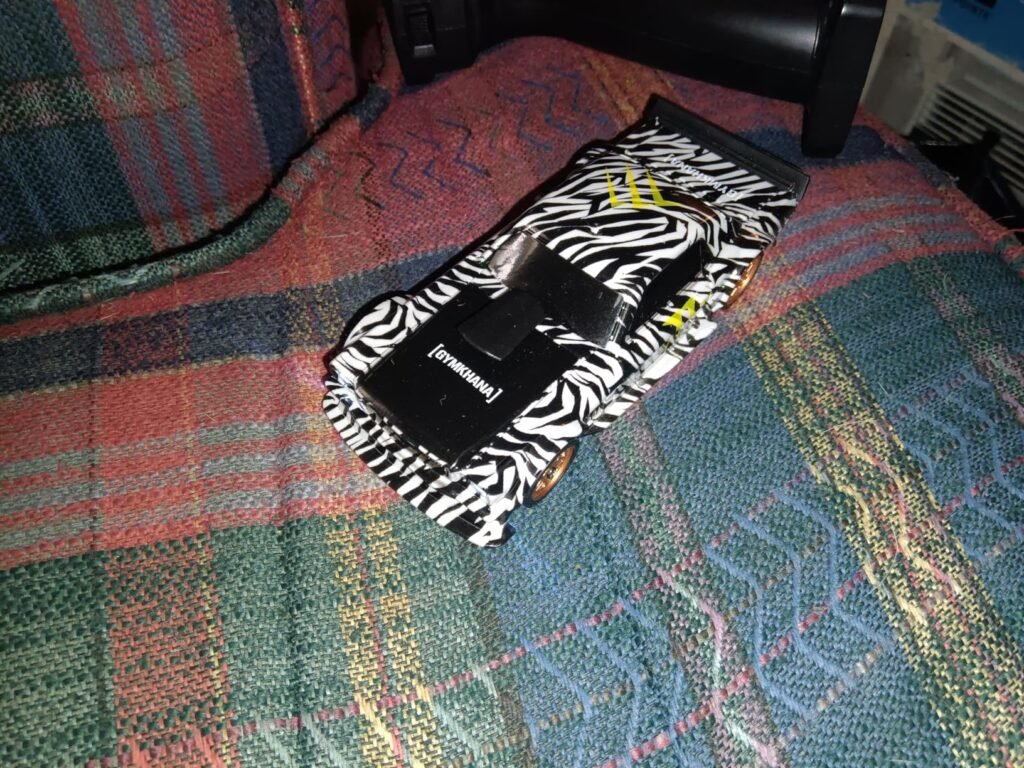
This 4WD edition of the 1/43 mini drift platform delivers a slightly more budget-friendly entry into the same compact-drifting concept, trading the gyroscope for a lower price. The brushless 4WD system, full-size 2.4GHz remote, and three adjustable speed modes remain intact, so the fundamental driving experience is very similar to the gyro-equipped variants. For drivers who prefer pure manual control without electronic stability assistance, this is actually the more authentic drift experience.
We may earn a commission when you buy through this link, at no additional cost to you.
The ±60° steering angle and linear throttle response deliver the precision needed for intentional drift initiation and control. Without the gyroscope smoothing out mistakes, this variant demands more from the driver — which can be either a plus or a minus depending on your goals. Skilled drivers may appreciate the direct feedback and full manual control, while beginners may find the learning curve steeper without electronic assistance to catch overcorrections.
Type-C fast charging fully replenishes the battery in about 30 minutes, and run time reaches beyond 30 minutes in continuous drift mode. The two tire compounds — grip and drift — cover different surfaces and driving styles, and the eight included cones enable the same structured practice drills that make the 1/43 platform genuinely useful for skill development. Racing-grade ABS construction survives 8-foot drops, matching the durability of the gyro-equipped variants.
Driving a drift car without gyro assistance is significantly more challenging but also more rewarding when you master it. Start in low-speed mode and focus on smooth, deliberate steering inputs rather than rapid corrections. Practice initiating drifts by combining throttle and steering with intention, then use counter-steering to hold the slide. Expect more spins early on — this is part of the learning process and how you develop real driver feel.
This variant makes sense for drivers who prefer manual drift control without gyro intervention, or shoppers who want to save a little compared to the gyro-equipped models. The tradeoff is steeper learning for beginners and less consistency during high-speed drifts. For experienced drivers seeking authentic manual feel in a compact package, however, this is a rewarding choice.
Not the best choice for absolute beginners who benefit from gyroscope stability while learning.
We may earn a commission when you buy through this link, at no additional cost to you.
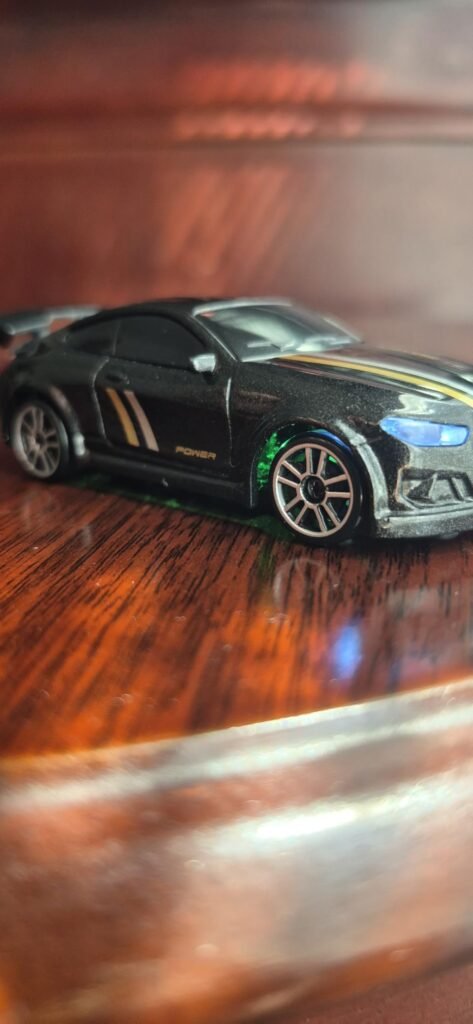
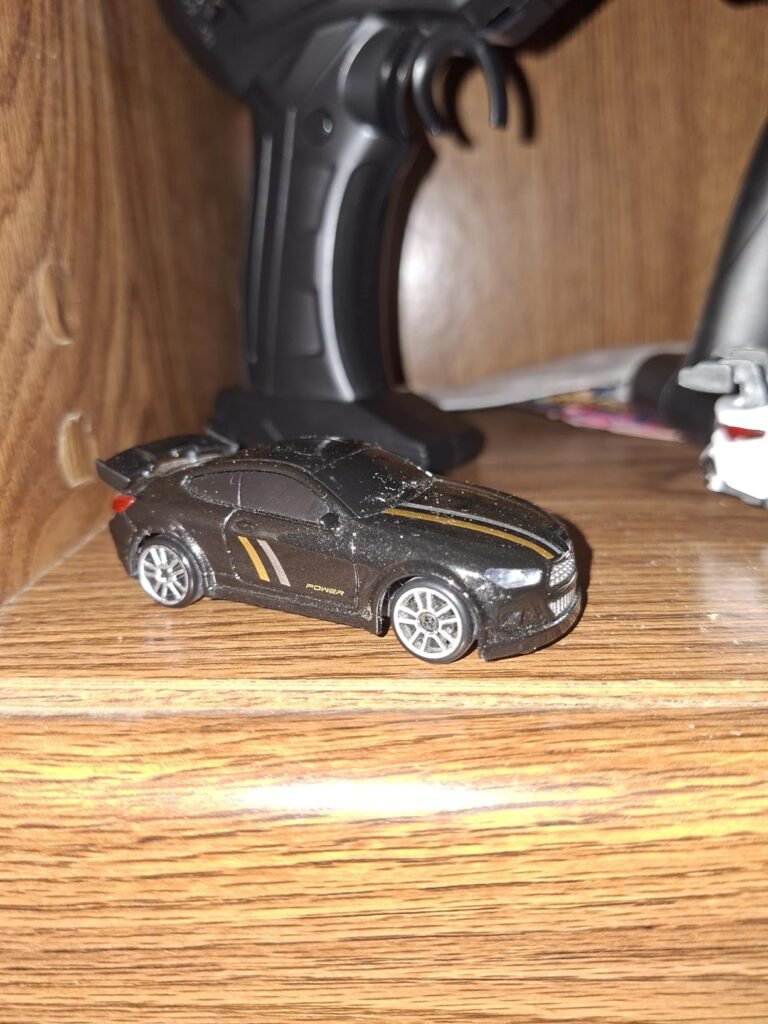
This 1:64 scale drifter takes the compact-drifting concept even smaller, delivering RC drift fun that fits on a desk, coffee table, or kitchen countertop. Despite the tiny footprint, the car includes proportional throttle and steering, 4WD drivetrain, and a full-size pistol-grip remote — features usually reserved for larger scales. This makes it an ideal choice for apartment dwellers, office workers, and anyone who wants to drift without dedicating floor space to the hobby.
We may earn a commission when you buy through this link, at no additional cost to you.
The two-speed system lets drivers switch between a 15 km/h high mode for thrilling desktop races and a slower mode for precision drifts through tight spaces. Front and rear LED lights add visual appeal during evening driving sessions, and the 30-meter 2.4GHz control range is far more than you need for indoor desktop use but useful when you want to run the car across a whole room. The pistol-grip pro remote provides better ergonomics than the small controllers often bundled with micro RC toys.
The included accessory kit turns this into a genuine ready-to-drift package. Four road barriers, a drift mat, Type-C charging cable, user manual, and screwdriver mean everything you need to set up an immediate drift course is in the box. The drift mat in particular is a valuable inclusion because it defines a low-friction surface where the car can slide predictably, which is not always possible on random tables or floors.
The included drift mat and barriers make it easy to create a defined drift course on any flat surface. Arrange the barriers to create a track outline, then place the drift mat where you want the car to break traction and slide predictably. This setup produces consistent driving conditions and prevents the car from launching off table edges. It also makes head-to-head races or timed laps genuinely competitive.
This micro drifter is best suited for shoppers who want a genuinely portable, desk-friendly drift experience or a novel gift that stands out from typical RC cars. Type-C charging brings the car to full in about 25 minutes and delivers roughly 20 minutes of drift time, so plan for shorter sessions than larger cars provide. The tradeoff is that 1:64 scale is too small for outdoor use or large rooms, but for its intended desktop application it delivers surprising fun.
Not suitable for outdoor use, rough surfaces, or shoppers who want extended battery life.
We may earn a commission when you buy through this link, at no additional cost to you.
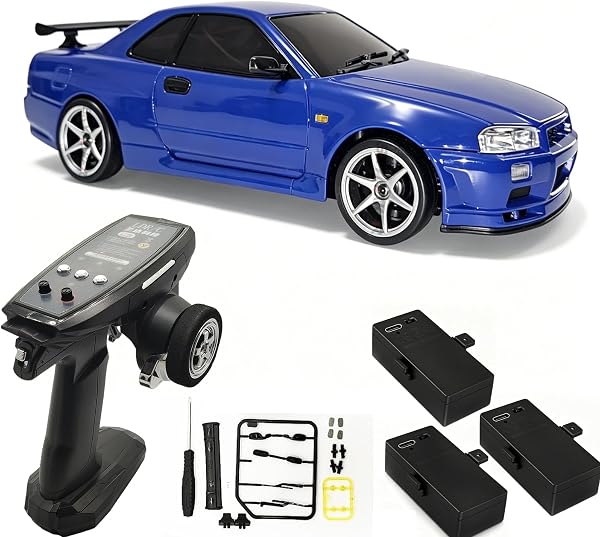
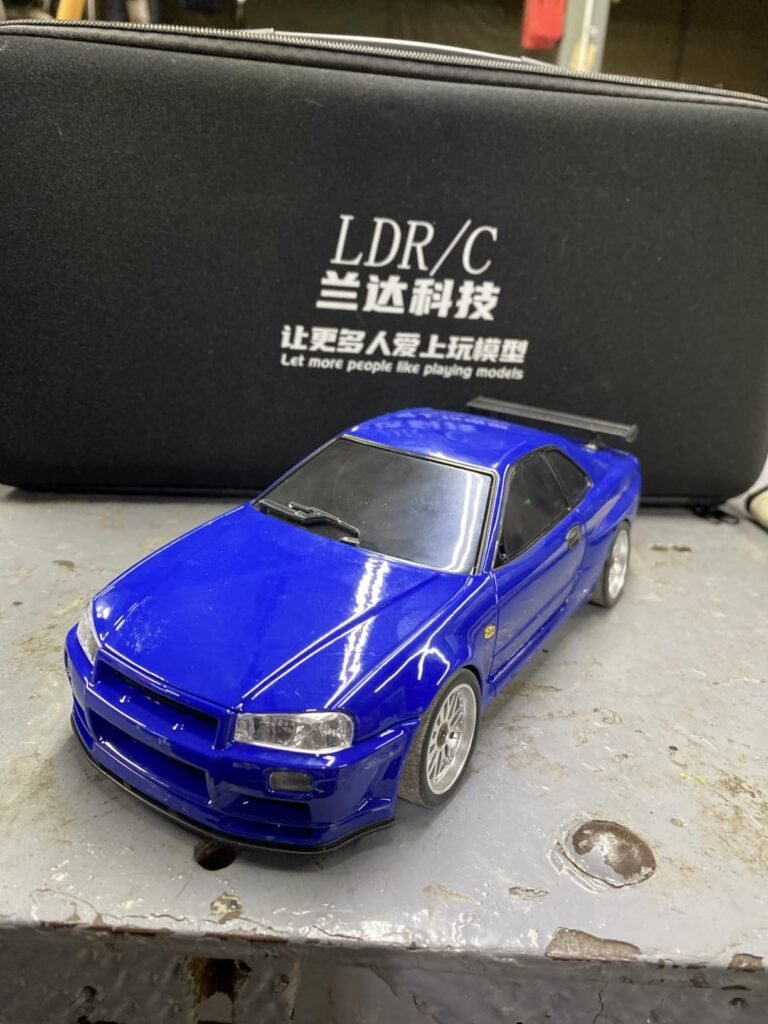
The LDRC LD1899 stands apart in this lineup as a genuine rear-wheel-drive drift car, which is the same drivetrain layout used in most real-world drift competition cars. RWD delivers a more authentic and demanding drifting experience compared to 4WD because power delivery to only the rear wheels forces the driver to master throttle-steering coordination in a way that 4WD systems can partially automate. For enthusiasts who want to develop real drift skill, RWD is the more educational and rewarding choice.

We may earn a commission when you buy through this link, at no additional cost to you.
The ESP gyro system helps maintain stability during high-speed drifting and racing, providing enough electronic assistance to make the car controllable for newcomers to RWD driving without eliminating the challenge. With the gyro engaged, you can execute clean U-drifts, O-drifts, and figure-8 drifts more consistently, and multi-car races become possible without constant spinouts. The powerful steering servo and unique independent suspension complete a chassis that feels genuinely purpose-built for drifting.
Three included 7.4V 500mAh rechargeable batteries deliver approximately 20 minutes of drive time each, providing an hour of total driving before you need to recharge. The Type-C charging port simplifies power management, and the anti-interference 2.4GHz radio supports simultaneous multi-car races within the 30-meter range. The alloy car shell adds visual appeal and impact resistance, and the drift tires included with the car are matched to the RWD chassis dynamics.
RWD drift cars require you to balance throttle and steering to break rear traction while maintaining forward momentum. Too much throttle mid-drift causes the rear to swing wide and spin the car; too little throttle causes the drift to end early. This constant balancing act is what makes RWD drifting so rewarding once mastered. Practice long, sweeping drifts on smooth surfaces first before attempting tight corners, and use the ESP gyro to help build initial confidence.
This is the drift car to buy if you want an authentic RWD experience and appreciate the challenge of learning proper drift technique. Beginners should expect a steeper learning curve than 4WD alternatives — RWD punishes mistakes more visibly, but the payoff is developing real driving skill. Age 16 and up is a reasonable guideline given the coordination required. For enthusiasts who want to progress in the hobby and eventually explore competitive drifting, RWD provides the most transferable skill foundation.
Not the easiest starting point for absolute beginners who would benefit from more forgiving 4WD dynamics first.
We may earn a commission when you buy through this link, at no additional cost to you.
Choosing an RC drift car involves matching scale, drivetrain, and features to your intended driving environment and skill level. This guide walks through the factors that genuinely affect how enjoyable and rewarding your drift car will be over time.
RC drift cars come in a wide range of scales, from ultra-compact 1:64 desktop drifters up to full 1:14 hobby-grade rally machines. Larger scales like 1:14 and 1:18 have more visual presence, higher top speeds, and better outdoor stability, but they require more open space to drive safely. Smaller scales like 1:43 and 1:64 fit on desks and in tight indoor areas but cannot handle rough surfaces or windy conditions.
The scale you choose should match your primary driving environment. If you have a garage, driveway, or open outdoor space, a 1:14 or 1:18 car takes advantage of that room and delivers a more dramatic driving experience. If you drift on tile floors, hardwood, or a dedicated indoor mat, smaller scales offer enough performance without the space demands. Buyers who overreach on scale often end up not driving their car because the required space is not consistently available.
Consider where you will actually drive most often before committing to a scale. A car that fits your typical environment gets used far more than one that requires special conditions to enjoy.
Drivetrain layout dramatically affects how a drift car behaves and how difficult it is to learn. Four-wheel-drive systems distribute power to all wheels and generally feel more forgiving to new drivers because forward momentum is easier to maintain during drifts. Most beginner-friendly drift cars use 4WD for this reason, and it allows more predictable driving on mixed surfaces where grip varies.
Rear-wheel-drive systems replicate the drivetrain layout of real drift competition cars and produce a more authentic drifting experience. RWD forces the driver to master throttle and steering coordination because only the rear wheels provide propulsion, which means overpowering the rear tires breaks traction and initiates a slide. This is more challenging to learn but ultimately develops real drift skill that transfers to any RC platform or even real-world driving concepts.
Choose 4WD if you want an easier learning curve, more consistent behavior on varied surfaces, or a car for younger drivers. Choose RWD if you want to develop authentic drift skill and are willing to accept a steeper learning curve in exchange for a more rewarding driving experience over time.
Motor type affects power output, efficiency, longevity, and upgrade potential. Brushed motors use physical brushes to transfer power to the motor’s internal components, which produces friction, heat, and gradual wear. They are less expensive and simpler, which is why many entry-level drift cars use brushed motors. Brushless motors use electronic commutation instead of physical contact, delivering higher efficiency, less heat, longer service life, and more power in a similar package size.
For casual driving on smooth surfaces at moderate speeds, a brushed motor performs adequately and keeps the price accessible. For high-speed driving, extended run times, or serious hobby use where you expect the car to last for years, brushless motors are meaningfully superior. Brushless-equipped cars also tend to have more sophisticated electronic speed controllers (ESCs) that provide smoother throttle response and better protection against overload damage.
If budget is your primary constraint, a brushed motor drift car will get you started. If you plan to use the car frequently, drive at higher speeds, or explore upgrade options later, spending more upfront on a brushless setup pays off through better performance and longer service life.
Gyroscopes and electronic stability programs (ESP) detect body rotation and automatically apply small steering corrections to help maintain intended driving direction. In drift cars, this assistance helps beginners initiate and hold controlled slides that would otherwise turn into spinouts, dramatically flattening the learning curve for new drivers. Most gyro systems allow sensitivity adjustment so you can dial in how much intervention you want.
The tradeoff is that too much gyro assistance can mask driver mistakes and slow skill development. Experienced drift drivers typically prefer lower gyro settings because they want direct feedback and manual control over every steering input. The best gyro systems retain enough driver feedback to feel engaging while still catching the most severe corrections that would otherwise end the drift.
If you are new to drifting, prioritize a car with an adjustable gyro and start with higher sensitivity while learning. Reduce the assistance as your skills improve. Advanced drivers who want the most authentic experience may prefer non-gyro cars or those with gyros they can fully disable.
Tire choice is the single biggest factor in how a drift car behaves. Dedicated drift tires use hard, low-grip compounds that break traction predictably on smooth surfaces like tile, sealed hardwood, or drift mats. Racing tires use softer, high-grip compounds designed for cornering speed and acceleration on rougher outdoor surfaces. Many drift cars ship with both tire types so you can adapt the car to your driving surface.
Surface compatibility matters as much as tire compound. Smooth indoor floors give drift tires the low-friction environment they need to slide predictably, while textured concrete, asphalt, and carpet either grip too much or wear tires down quickly. Dedicated drift mats provide a consistent low-grip surface that transforms even ordinary rooms into viable drift spaces, and they protect flooring from tire marks.
Match your tire choice to your primary driving surface. If you drift mostly on hard indoor floors, prioritize a car that includes quality drift tires. If you drive on driveways or outdoor terrain, racing tires may be more useful most of the time. Cars that include both tire types provide the most flexibility.
Drift car battery life directly affects how long each driving session can last before you need to recharge. Most drift cars deliver 15 to 30 minutes of run time per charge depending on battery capacity, motor efficiency, and driving intensity. Cars that ship with two or three batteries dramatically extend total playtime because you can swap packs while the depleted one recharges.
Charging method has become an important consideration as USB-C charging becomes more common in the RC hobby. USB-C charging lets you power the car from any modern phone charger, laptop, or portable power bank, which is far more convenient than proprietary chargers or bulky AC adapters. Fast charging that brings the battery to full in 30 minutes or less minimizes downtime between sessions.
For extended play sessions, prioritize cars that include multiple batteries or offer fast USB-C charging. If you drift casually for shorter sessions, a single battery is adequate, but always verify the run time meets your expectations before purchasing.
Drifting inherently involves controlled crashes into walls, curbs, and other obstacles, so chassis durability matters. Metal chassis materials like 6061 aluminum alloy provide meaningful structural integrity for hobby-grade cars that will see hard use. High-quality ABS and PVC shells absorb impacts well on smaller and lighter cars where full metal construction is impractical. Metal shock absorbers, gears, and drive components significantly extend service life compared to plastic equivalents.
Upgrade potential separates true hobby-grade cars from disposable toys. Hobby-grade drift cars support motor swaps, battery upgrades, aftermarket suspension components, and modified body shells that let the car grow with your skills and preferences. Toy-grade cars are typically sealed platforms with no meaningful upgrade path, which means you replace the entire car when you outgrow it or when internal components fail.
If you see drifting as a long-term hobby, invest in a durable hobby-grade platform with a genuine upgrade path. If you want an inexpensive introduction to see whether the hobby appeals to you, a well-reviewed toy-grade car provides enough experience to make an informed decision without significant financial commitment.
Before your first drive, fully charge all included batteries and verify the transmitter batteries are fresh. Pair the transmitter with the car according to the included instructions, then start driving in a low-speed mode on a smooth, uncluttered surface. Practice basic steering and throttle control before attempting drifts, and if your car has an adjustable gyro, start with higher sensitivity while learning to keep spinouts to a minimum.
Keep tires clean of dust and debris by wiping them down between sessions, as accumulated grit dramatically reduces both grip and drift consistency. Check screws and body clips regularly, especially after crashes, because vibrations can loosen fasteners over time. Metal chassis and suspension components benefit from occasional inspection for bent parts or worn bearings, and swapping worn drift tires for new ones restores predictable behavior when performance starts to feel off.
Store batteries at approximately 50-60% charge if you will not use the car for several weeks, as lithium cells last longest when stored partially charged. Avoid leaving batteries fully charged or completely depleted for extended periods. Keep the car itself in a dust-free environment, and if you drive outdoors, wipe down the chassis after sessions to prevent dirt from working its way into moving parts. Charging batteries on a non-flammable surface and never leaving them charging unattended are basic safety practices that protect both your car and your home.
Drift cars are specifically designed to slide predictably around corners rather than simply gripping the road. They typically include harder, low-friction drift tires, tuned suspension geometry that promotes controlled oversteer, and often a gyroscope or ESP system to help manage rear-wheel behavior. Regular RC cars prioritize traction and forward speed rather than the controlled loss of grip that defines drifting.
4WD drift cars are generally more forgiving for beginners because power delivery to all four wheels helps maintain forward momentum during drifts and makes recovery from mistakes easier. RWD cars replicate real drift competition dynamics and demand better throttle-steering coordination, which produces more authentic drifting but takes longer to learn. New drivers usually enjoy 4WD more initially, while dedicated hobbyists eventually appreciate RWD for its skill-building potential.
Smooth hard surfaces produce the best drift experience. Tile, sealed hardwood, laminate flooring, polished concrete, and dedicated drift mats all provide the low-friction conditions that drift tires need to slide predictably. Carpet stops most drift cars quickly and rough asphalt wears down drift tires rapidly. If you lack ideal flooring, a purpose-made drift mat transforms nearly any flat area into a viable drift surface.
A gyroscope is not strictly required but significantly flattens the learning curve for new drivers. Gyros stabilize the car during drifts and prevent unwanted spinouts, which reduces early frustration and speeds up skill development. Experienced drivers sometimes prefer non-gyro cars for authentic manual control, but for most buyers — especially those new to drifting — an adjustable gyro is a valuable feature worth prioritizing.
Battery life varies by scale, motor type, and driving intensity, but most drift cars deliver 15 to 30 minutes of run time per charge. Smaller-scale cars with efficient brushless motors often reach the upper end of this range, while high-power hobby-grade cars driven aggressively may last closer to 15 minutes. Buying a car that includes multiple batteries or supports fast USB-C charging significantly extends practical playtime per session.
Larger scales like 1:14 and 1:18 handle outdoor driving well, especially on smooth concrete, asphalt driveways, or empty parking lots. Small scales like 1:43 and 1:64 are generally too light and low-powered for outdoor use, particularly in wind or on rough surfaces. Match your car scale to your intended environment before purchasing to avoid disappointment.
A brushless motor uses electronic commutation instead of physical brushes to transfer power, which results in higher efficiency, less heat, longer service life, and more power in the same physical size. Brushless motors also work with better electronic speed controllers that provide smoother throttle response. Brushed motors are cheaper and simpler but wear faster and produce more heat, making them better suited to casual toy-grade cars than serious hobby use.
Age appropriateness depends on the car. Simple toy-grade drift cars with moderate speeds work well for kids as young as eight, especially with parental guidance. Hobby-grade cars with high top speeds and complex controls are typically better suited to older teens and adults because they demand more control skill and can be damaged by inexperienced driving. Check the manufacturer's recommended age range before buying for a younger user.
Common upgrades include swapping to higher-capacity batteries for longer run times, installing a more powerful brushless motor for higher top speeds, replacing plastic drivetrain components with metal versions for durability, and fitting aftermarket suspension parts for better handling. Upgrade potential depends heavily on the car — hobby-grade platforms support extensive modification while toy-grade cars usually cannot be meaningfully upgraded. Always verify compatibility before purchasing upgrade parts.
Dedicated drift tires use hard, low-grip compounds designed to break traction predictably on smooth indoor surfaces. Racing tires have softer, higher-grip compounds better suited to outdoor terrain and cornering speed. Most quality drift cars include both tire sets so you can adapt the car to your driving environment. Swap to drift tires for tile, wood, or drift mats, and use racing tires for driveways or outdoor spaces where you want the car to grip more aggressively.
For most enthusiasts seeking the best combination of performance, durability, and upgrade potential, the MJX Hyper GO 14303 stands out as the strongest overall choice. Its brushless motor, aluminum alloy chassis, independent gyro system, and 3S battery upgrade path deliver hobby-grade capability that grows with your skills. The licensed Citroen C3 WRC body adds authentic rally styling that separates it from generic toy-grade options in the same price range.
Buyers with different priorities have several strong alternatives. The Sakeye 1:16 drift car offers excellent value with 4WD, dual tire sets, and included LED effects at an accessible price. The 1/43 mini gyro drifters excel at indoor drifting in tight spaces and include gyro assistance that helps beginners find success quickly. For authentic rear-wheel-drive dynamics, the LDRC LD1899 provides the most realistic drift experience with three included batteries for extended sessions.
The best drift car for your needs depends on where you plan to drive, how much space you have, and whether you want easy fun or a long-term hobby with upgrade potential. Match scale to your environment, choose drivetrain based on your skill level and learning goals, and prioritize gyro assistance if you are new to the hobby. Whatever you choose, RC drifting is one of the most rewarding niches in the hobby, and any of these ten options will get you sliding through corners with a satisfying grin.