HYPER GO H14BM
8.8Editor score1/14 scale truggy
2852 4400KV brushless
50 mph top speed
6061 aluminum chassis
Find the right rc cars for 2026. We compare 10 standout options by build quality, useful features, owner feedback, value, and everyday trade-offs.
Finding the right RC car in 2026 comes down to matching speed, drivetrain, battery life, and durability to how and where you plan to drive. This guide compares 10 standout models across scales from 1/18 to 1/5, covering brushed and brushless motors, terrain capability, upgrade potential, transmitter range, and real value for beginners and hobby enthusiasts.
The RC car market spans a wide range, from affordable ready-to-run trucks under $100 to hobby-grade racers pushing past 70 mph. Each format targets a different buyer, and the differences in chassis materials, electronic speed controllers, and battery compatibility can meaningfully affect performance, longevity, and repair costs over time.
Rather than chase a single number like top speed, smart buyers weigh scale, battery runtime, spare parts availability, and skill-appropriate throttle limiting. The picks below span budget-friendly starter trucks, mid-tier brushless bashers, and premium 1/8 and 1/5 platforms, so you can find the right fit whether you drive in a backyard, park, or open field.
We evaluated 10 RC cars using the criteria that matter most to real buyers: scale and size, motor type (brushed vs brushless), top speed, battery capacity and runtime, drivetrain layout, suspension quality, chassis materials, waterproofing, transmitter range, and upgrade path. We also weighed beginner-friendly features like throttle limiters, plus owner feedback, spare-parts availability, and price-to-performance ratio, so each pick reflects genuine trade-offs between speed, durability, and daily usability.


Compare key features, scores, and current prices side by side. A shorter feature list means fewer details were available, not necessarily fewer capabilities.


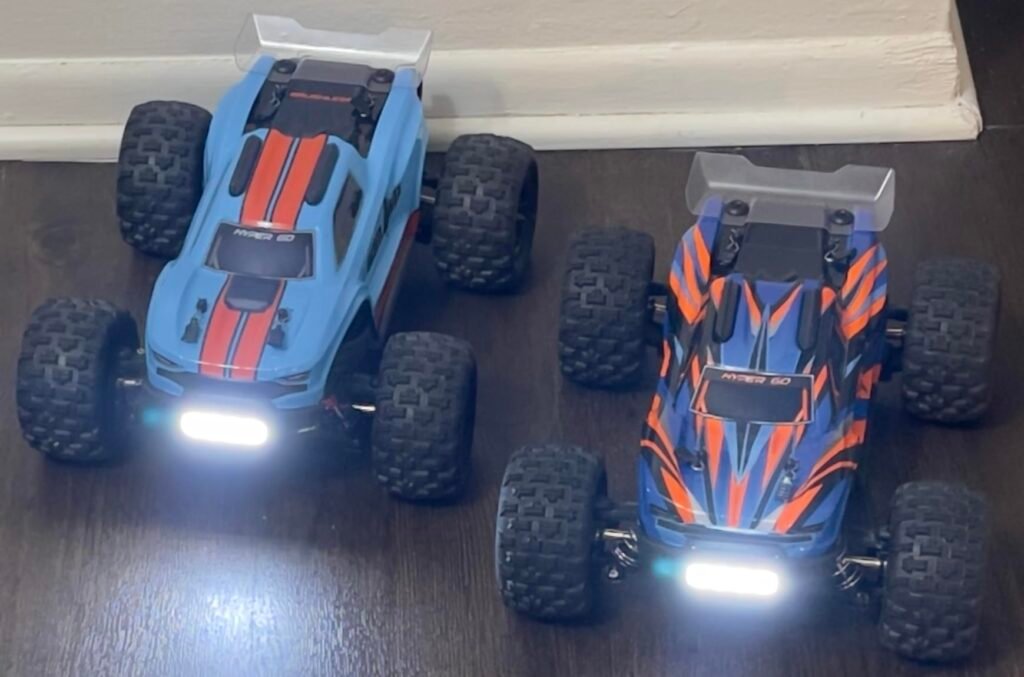
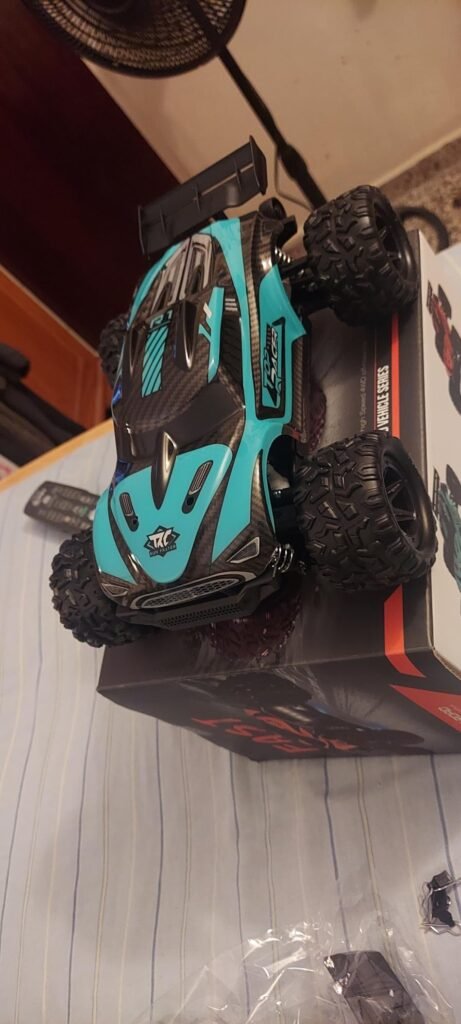
This 1/14 truck stands out on paper for its combination of a 390 motor, up to 50 kph top speed, and an anti-interference 2.4GHz radio rated for roughly 850 feet of range. That kind of range makes it genuinely useful in larger fields or open parks where a shorter link would leave you nervous every time the car crested a hill. Multi-car sessions with friends stay stable thanks to the interference-resistant radio.

We may earn a commission when you buy through this link, at no additional cost to you.
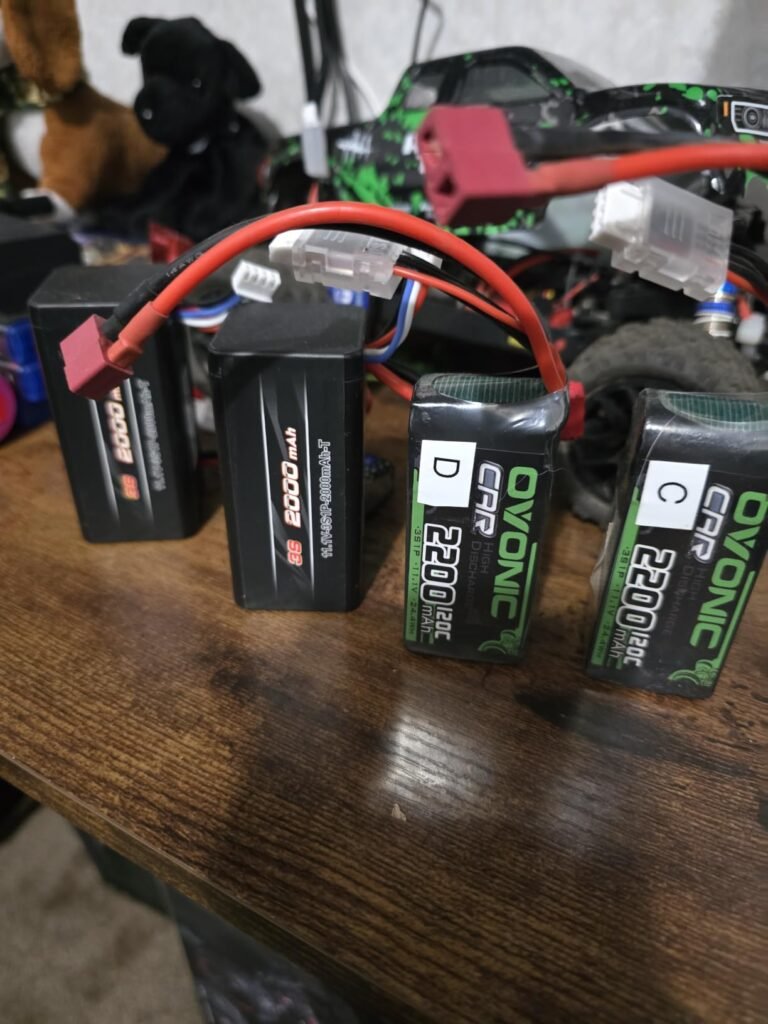
Two included 7.4V 2000mAh batteries push total runtime to around 60 minutes depending on how aggressively you drive. Both packs include a management system that guards against overcharging, over-discharging, and short circuits. The adjustable speed dial is smart, letting parents cap top speed for kids and unlock full power for teens and adults.
Durability comes from a reinforced composite-bracing chassis, impact-resistant front bumper, and shock-absorbing independent suspension. The aggressive deep-tread tires and 4WD system give it grip on backyard grass, muddy trails, gravel, and packed sand. It is not marketed as fully waterproof, so plan around dry surfaces or light dampness.
Start younger drivers at the lowest setting and step up only after they can consistently steer straight lines and controlled turns. This staged approach reduces crashes and extends the life of tires, suspension arms, and body shells.
For buyers who prioritize runtime, control range, and family-friendly speed adjustability over premium brushless internals, this truck offers a lot for the price. Its excellent rating reflects satisfaction from casual users who want a fun outdoor toy rather than a competition platform.
Not for hobby drivers seeking brushless power, LiPo 3S support, or serious upgrade potential.
We may earn a commission when you buy through this link, at no additional cost to you.
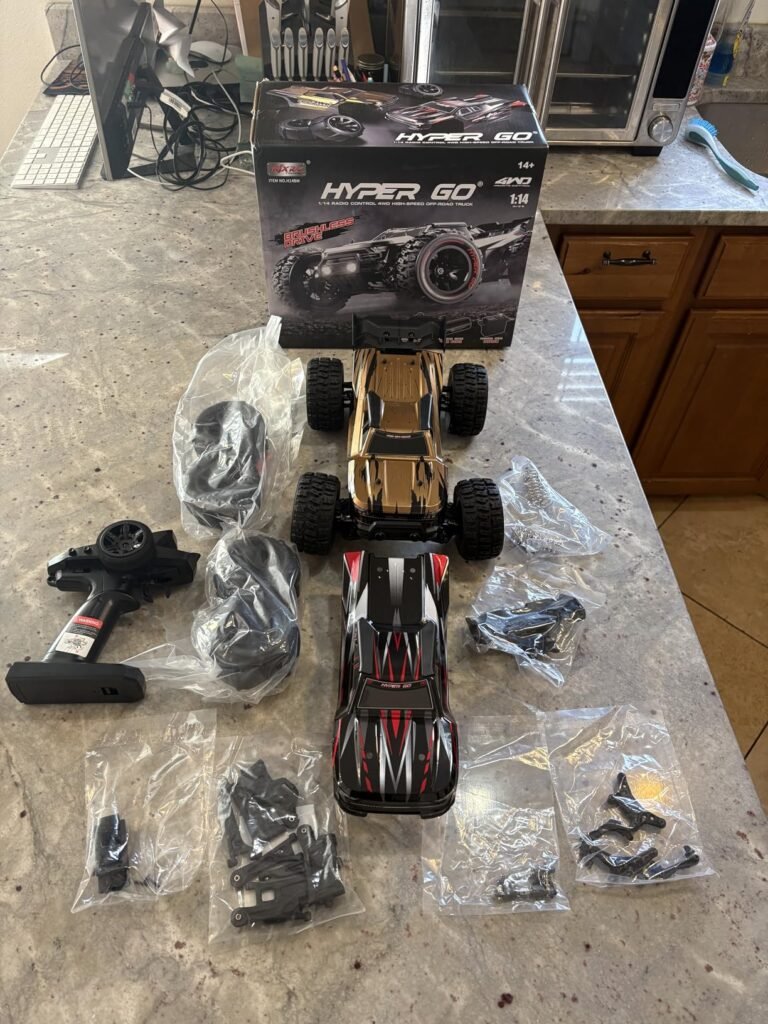
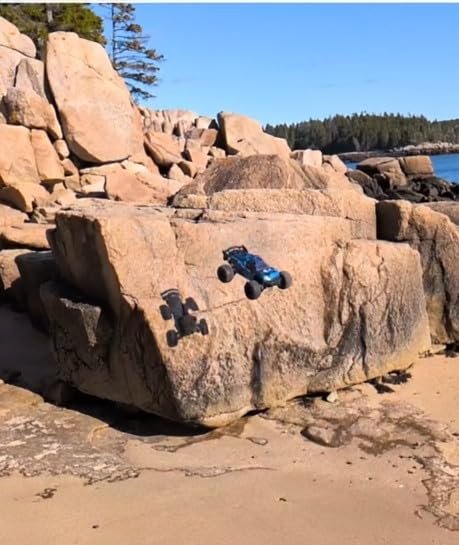
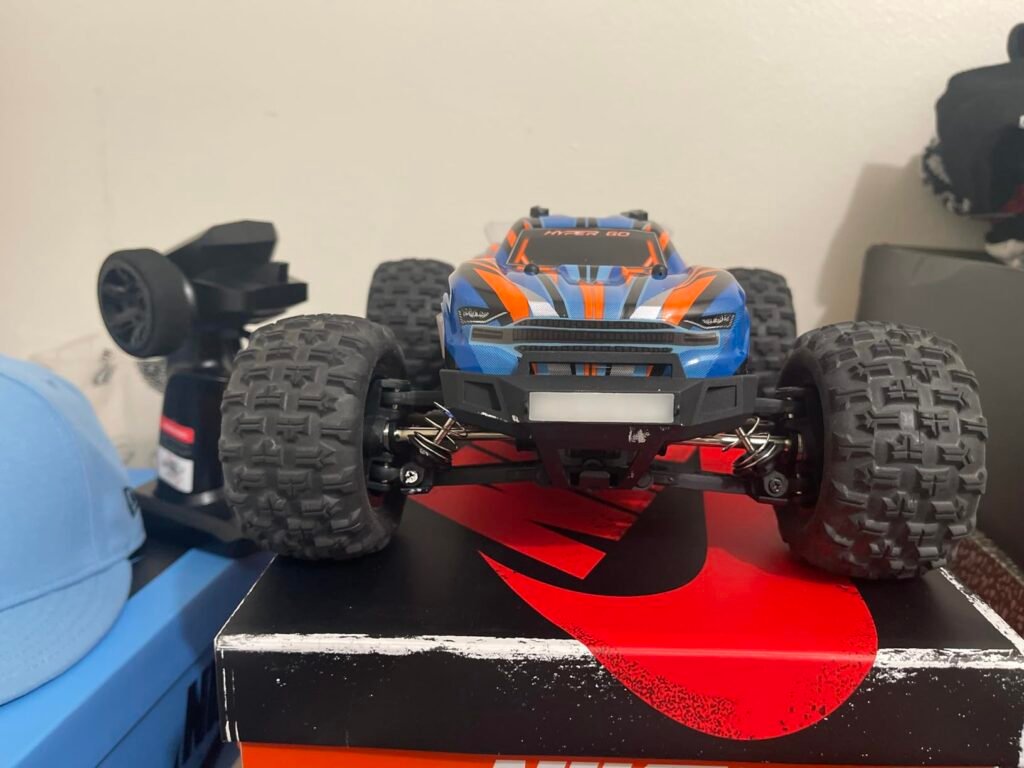
The H14BM V3 sits in a sweet spot for hobby-minded drivers who want brushless power without stepping up to a $500-plus platform. It ships ready to run, but it is built around a real 1/14 truggy layout with steel differential outdrives, metal gearbox internals, and a laser-etched aluminum chassis plate. That combination gives the truck the kind of drivetrain rigidity that matters once you start jumping and hitting curbs regularly.

We may earn a commission when you buy through this link, at no additional cost to you.
Power comes from a 2852 4400KV four-pole brushless motor paired with a 45A ESC that accepts either 2S or 3S LiPo packs. Out of the box, the factory limits top speed to about 33 mph, which is plenty for learning the throttle behavior. Once you unlock the speed lock and drop in a 3S pack, the truck can climb toward 45+ mph and reach a claimed 50 mph in ideal conditions. The step from stock to unlocked is dramatic, so the built-in limiter is genuinely useful.
Handling holds together thanks to oil-filled adjustable shocks and 111mm airless-style tires that grip well on gravel, dirt, and short grass. Extra paddle tires expand its usable terrain to sand and snow. The 2.4GHz 3-channel transmitter offers over 300 feet of range with steering and throttle trim, plus a 70% throttle cap that is helpful when a newer driver is behind the wheel.
This truck fits enthusiasts who already own or plan to buy a 3S LiPo pack and want a bashable brushless platform. Complete beginners can still enjoy it thanks to the throttle limit, but the real value shows once you unlock the higher speed tiers.
If you want brushless speed, decent build quality, and a clear upgrade path without paying premium ARRMA prices, the H14BM V3 is a very balanced pick. Just plan on buying a 3S battery to unlock its potential, and treat the first few packs as time to learn the throttle before removing the speed limit.
Not ideal for buyers who only want to run stock and never invest in a 3S battery or upgrades.
We may earn a commission when you buy through this link, at no additional cost to you.
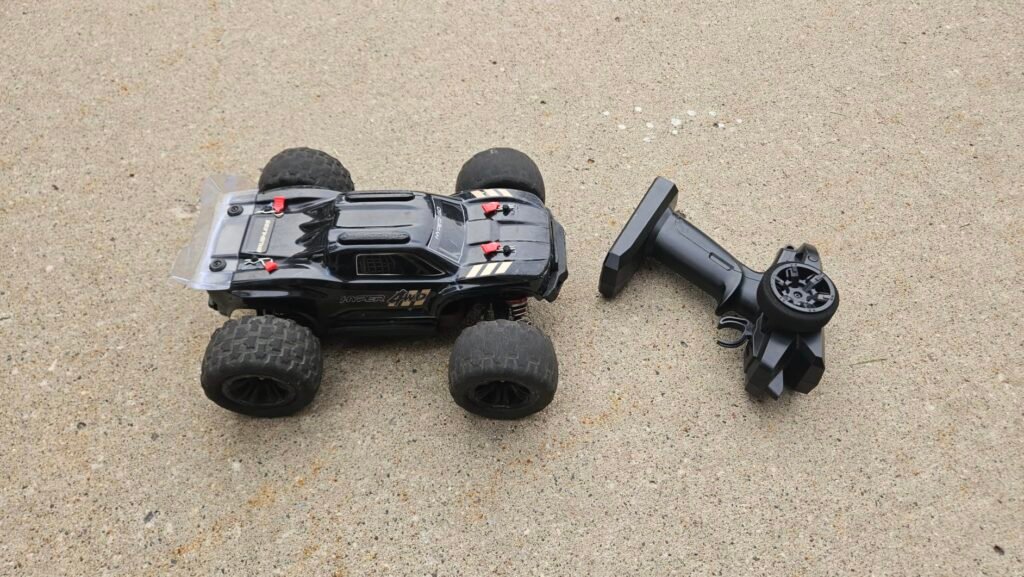
The H16BM condenses a lot of hobby-grade tech into a compact 1/16 truck that is easier to store, transport, and run in tighter spaces. Its 2845 4200KV four-pole brushless motor and 45A ESC give it a serious power-to-weight ratio, so it delivers quick launches and easy wheelies for its size. That makes it a good option for buyers who want brushless performance but do not have a large open area to drive.
We may earn a commission when you buy through this link, at no additional cost to you.
On a stock 2S 1050mAh LiPo, the truck bursts out at 27+ mph, which feels lively at this scale. Step up to a 3S pack and top speed climbs toward 42 mph. The metal gears, metal differential, 5.5mm axle, and 16 ball bearings keep power delivery efficient and reduce the driveline slop that plagues cheaper models. F/R zinc-reinforced sheets add impact protection at the ends of the chassis.
Handling holds up well thanks to oil-filled shocks and pre-mounted tires with sponge inserts, which help the truck stay planted on jumps. The 2.4GHz 3-channel radio includes a light bar control and a 70% throttle limiter, so parents or beginners can dial the aggression down. Safety-minded touches like a flame-retardant battery casing are a nice bonus at this price.
Smaller scale means lower kinetic energy in a crash, easier repairs, and less demanding storage. It also lets you run in more places without needing a full field, which is often the biggest limitation of larger trucks.
Choose the H16BM if you want brushless performance in a package that is easier to run in a driveway, cul-de-sac, or park path. If you need serious ground clearance for rough trails, a larger 1/10 or 1/8 platform will suit you better.
Not for buyers who need a large-scale basher for very rough outdoor terrain.
We may earn a commission when you buy through this link, at no additional cost to you.
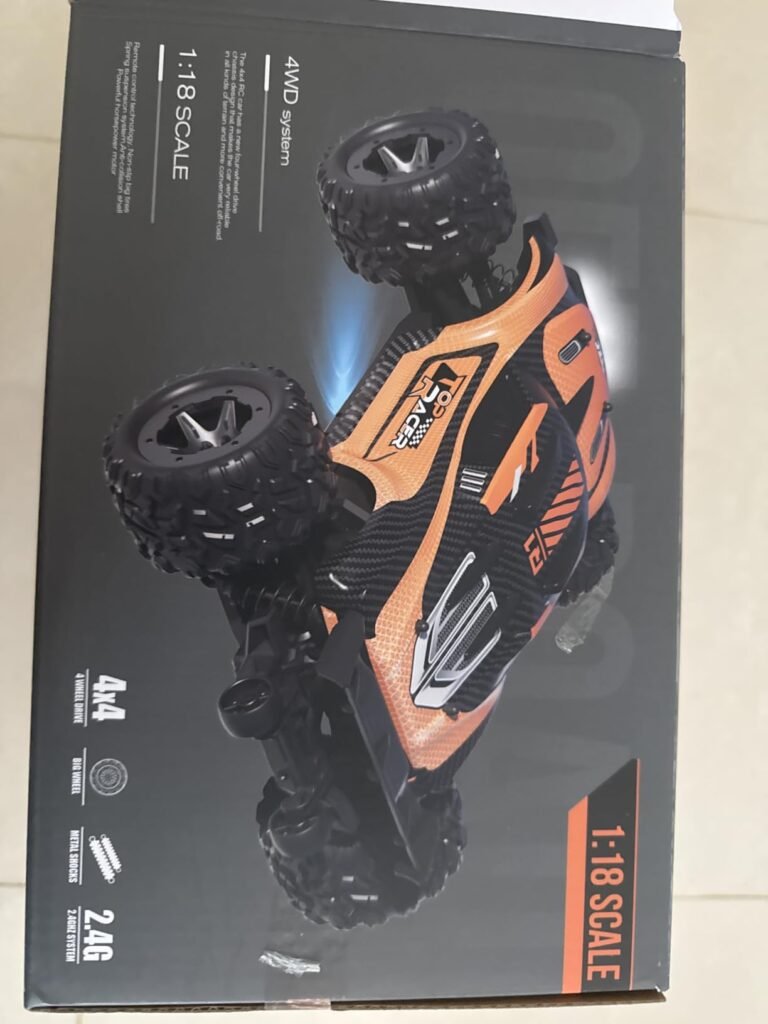
This 1/18 RC car targets first-time buyers and younger drivers who want a real 4WD experience without spending hobby-grade money. The 380 brushed motor delivers up to 40 kph, which is quick enough to feel exciting on hard packed dirt or pavement while remaining manageable when someone is learning throttle control. Independent suspension and metal shocks smooth out small bumps and short jumps.

We may earn a commission when you buy through this link, at no additional cost to you.
A standout feature is the pair of interchangeable PVC shells in red and green, which let a driver refresh the look and provide crash protection at the same time. The included set of drift tires is useful for practicing controlled slides on smooth surfaces, while the standard vacuum tires handle grass and gravel more confidently. A pro drift assist system helps stabilize the vehicle during aggressive steering inputs.
The 2.4GHz remote offers a stable 280 foot range with true proportional throttle and steering, which is a step up from the on-off controls of many toy-grade cars. That responsiveness makes the car feel more predictable and helps newer drivers develop real skill rather than fight the electronics.
With two shells, drift tires, and a full radio set, this package makes a strong gift for a teen or preteen who wants an exciting first RC without a steep learning curve.
If you need a well-rounded starter RC that offers 4WD grip, real proportional control, and useful accessories, this 1/18 truck delivers strong value. It is not built for the extreme speeds of brushless models, but it is a smart bridge between toy-grade and hobby-grade driving.
Not for buyers chasing 40+ mph brushless performance or planning frequent hobby-level upgrades.
We may earn a commission when you buy through this link, at no additional cost to you.
The Womaqu 1/14 truck is a strong option for buyers who want a well-equipped 4WD car that can shrug off wet grass, puddles, and light rain. Its IPX4 rating and sealed electronics area make it easier to relax about condensation on cool mornings or the occasional splash from a lawn sprinkler. The RC390 motor drives it to about 40 kph, giving it a lively but manageable pace.

We may earn a commission when you buy through this link, at no additional cost to you.
Two 7.4V 1300mAh LiPo batteries are included, delivering a combined runtime of roughly 40 minutes. Built-in overcharge, over-discharge, low-voltage, and thermal shutdown protections make daily use safer, especially for younger drivers. Metal adjustable coilover shocks, a 1.5kg high-torque servo, and a 30-degree steering angle give the truck responsive turning and confident bump absorption.
Reinforced bumpers, an LED lighting system, an alloy differential cup, and an alloy center drive shaft show a focus on durability that is not always present at this price. All-terrain tires provide traction across sand, grass, and wilderness paths, and the 2.4GHz radio offers up to 229 feet of stable range with anti-interference behavior when multiple cars are running nearby.
Even with an IPX4 rating, dry the chassis after wet driving, inspect the battery bay for moisture, and let the motor cool before recharging. That routine will meaningfully extend the lifespan of any weather-friendly RC.
If you value weatherproof electronics, dual batteries, and metal drivetrain components more than raw brushless speed, this 1/14 truck offers a lot of practical value. Just remember that IPX4 protects against splashes, not full submersion.
Not for buyers expecting full submersion capability or brushless top speeds.
We may earn a commission when you buy through this link, at no additional cost to you.
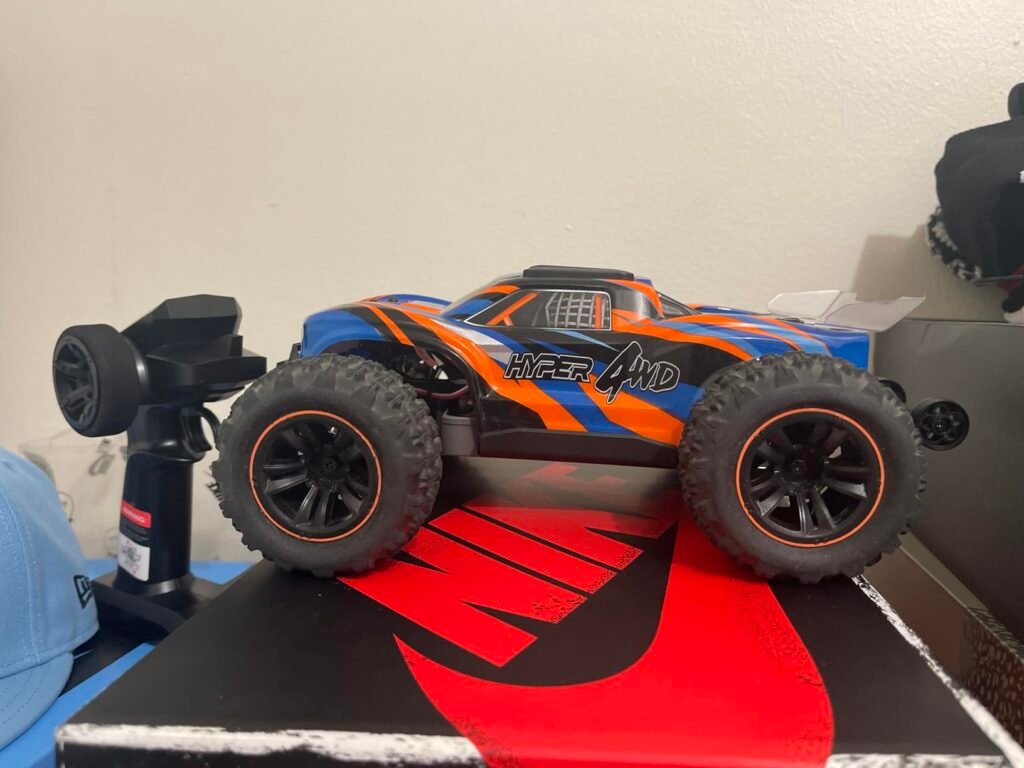
The H16DR is a smart entry point into the HYPER GO ecosystem for buyers who want an RTR basher that leaves room to grow. Out of the box, the 390 brushed motor and 2S 1050mAh LiPo push it to around 20 mph, which is a comfortable pace for learning wheelies, small jumps, and controlled backflips. The 70% throttle limiter helps beginners avoid overshooting corners while they build reflexes.
We may earn a commission when you buy through this link, at no additional cost to you.
Underneath, the honeycomb-style chassis, alloy steel drive shaft, F/R zinc reinforcement sheets, metal bearings, and gear differentials give the truck the kind of durability you would expect from a more expensive platform. A LiPo pack with a flame-retardant shell adds a nice safety margin during rough sessions and bumpy landings.
The real appeal is the smart 2S/3S ESC, which lets you skip a full motor swap and just drop in a 3S 11.1V LiPo to push speeds toward 27+ mph. That upgrade path lets a beginner start slow, get comfortable, and then unlock more performance without buying a second truck. Aluminum-capped oil-filled shocks keep the ride composed at both power levels.
Wait until you can complete clean laps at the limited throttle without frequent crashes. Adding 3S power to unrefined driving usually means shorter tire life, broken links, and more repairs than fun.
If you want a durable, upgrade-friendly 1/16 monster truck that ships with two batteries and can grow with your skills, the H16DR is a well-rounded pick. Drivers focused on maximum top speed from day one may prefer the brushless H16BM instead.
Not for buyers who want brushless top speed straight out of the box.
We may earn a commission when you buy through this link, at no additional cost to you.
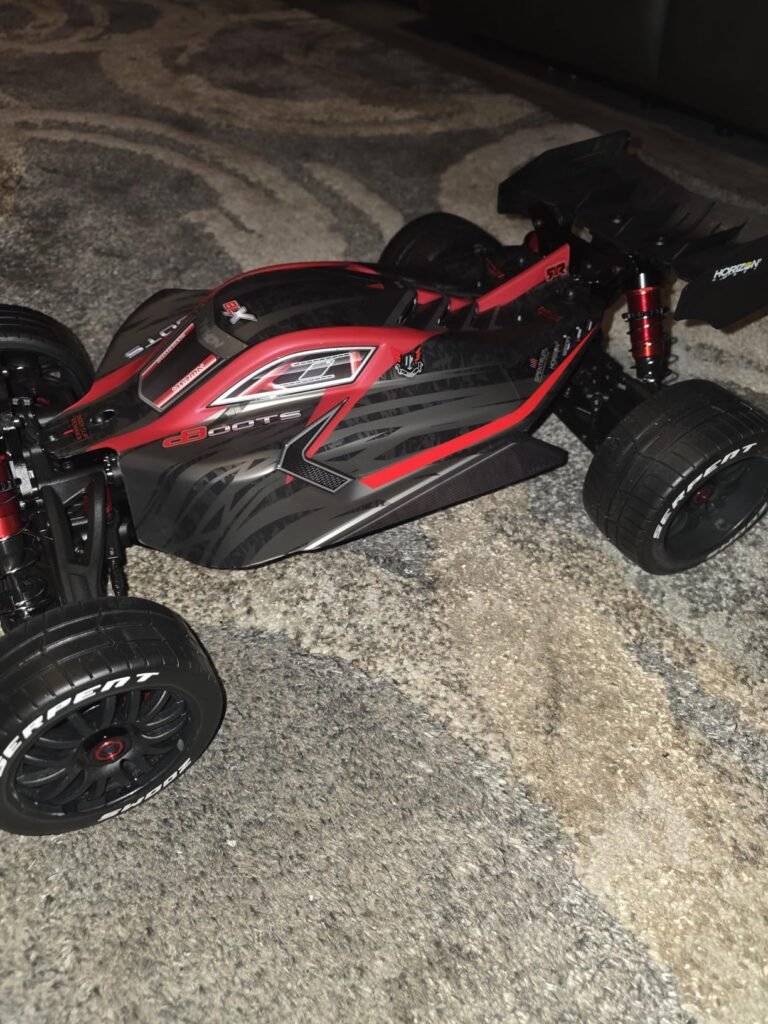
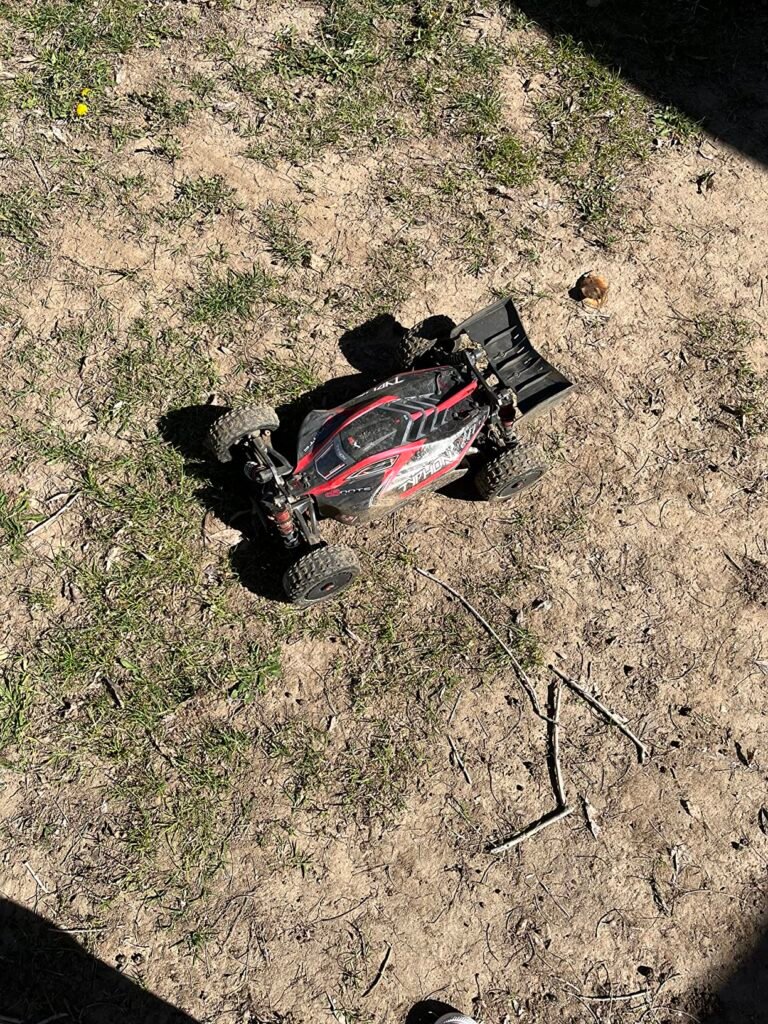
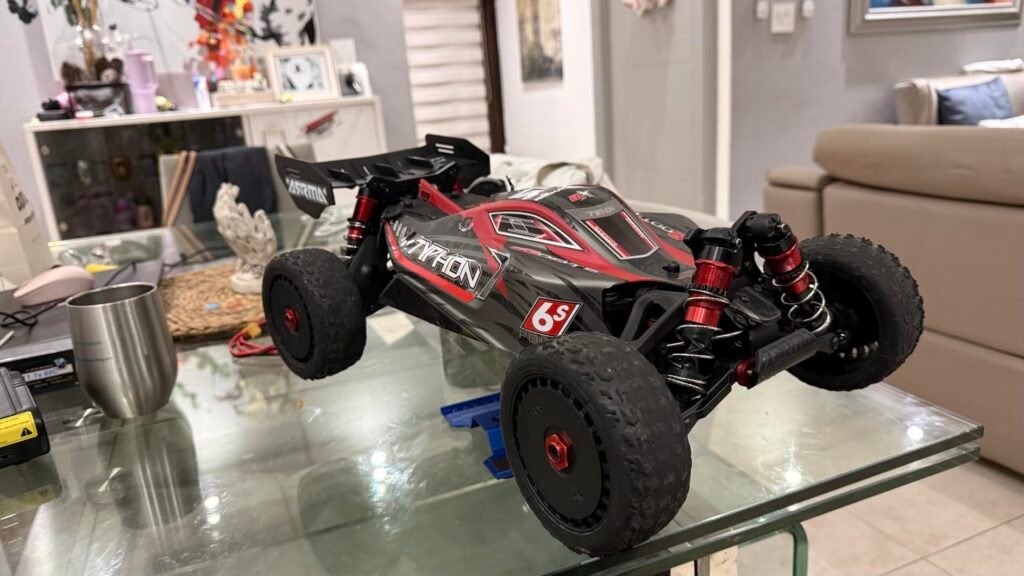
The ARRMA Typhon 6S V5 is a genuine step into hobby-grade RC. This 1/8 4WD buggy runs on Spektrum Firma electronics and is designed to hit 70+ mph when paired with a 6S LiPo pack and the correct optional pinion gear. It is meant for open spaces, hard-packed dirt, and drivers who understand that at those speeds, precision and preparation matter as much as raw power.
We may earn a commission when you buy through this link, at no additional cost to you.
The platform is loaded with meaningful upgrades over earlier V-series revisions. The waterproof receiver box protects the electronics on wet grass or damp dirt, the EXB compatible front brace stiffens the front end for higher-speed stability, and the overall drivetrain is built around long-term durability. Spektrum Smart compatibility opens the door to telemetry-capable batteries and connected accessories.
As a ready-to-run kit, the buggy ships with the radio and receiver installed, but you supply the 4S or 6S LiPo battery and charger. That approach is standard in hobby-grade RC and lets drivers choose battery capacity, brand, and connector to match their existing gear. Expect a real learning curve if you are new to LiPo handling, gearing, and setup adjustments.
Budget for one or two quality LiPo packs, a proper balance charger, safe LiPo storage bags, and basic tools. Skipping any of these is where new hobby drivers most often run into trouble.
Choose the Typhon 6S V5 if you are ready to commit to hobby-grade RC, want a platform with a deep aftermarket, and have access to open areas where high speeds are safe. Casual buyers looking for a simple backyard toy will get more value from a smaller 1/14 or 1/16 model.
Not for beginners without access to open space or unwilling to invest in a LiPo battery and charger.
We may earn a commission when you buy through this link, at no additional cost to you.
The Hosim 1/10 monster truck takes a smart approach for buyers who care more about climbing, backflips, and obstacle work than absolute top speed. Its 2852 3100KV brushless motor is tuned lower than typical racing motors, trading peak rpm for stronger low-end torque. In practice, that means more confident starts from a standstill, better crawling over debris, and stronger flip performance.

We may earn a commission when you buy through this link, at no additional cost to you.
Even with a torque focus, the truck still hits about 42 mph on the stock 2S setup, with room to grow when running 3S. The upgraded 40Cr chrome steel helical differential reduces friction and noise compared to typical powder metallurgy gears, which translates into smoother power delivery and better long-term durability. The aluminum alloy chassis and full metal drivetrain reinforce that hobby-adjacent feel.
Two 7.4V 2600mAh LiPo batteries deliver up to 40 minutes of total runtime, and the 45A ESC with dedicated cooling supports 3S upgrades for extra performance. The 6KG high-torque servo, adjustable oil-filled shocks, and upgraded all-terrain rubber tires help the truck stay planted on uneven ground. A 2.4GHz transmitter with 262 feet of range and LED headlights round out the practical features.
A lower KV motor spins slower per volt but produces more torque at a given amperage, which is ideal for wheelies, backflips, and technical climbing. Higher KV motors trade some of that grunt for higher top-end speed.
Pick the Hosim 1/10 if you want torque-forward power for climbing and stunts more than pure straight-line speed. Just follow the guidance to cool down between 3S battery packs to protect motor and ESC lifespan.
Not for drivers whose only goal is the highest possible straight-line speed.
We may earn a commission when you buy through this link, at no additional cost to you.
The HOMETALL 1/18 RC car is a value-oriented buggy that blends useful features with a compact footprint. A 380 brushed motor delivers up to 38 kph, which is quick enough to feel exciting on a driveway or grass but stays approachable for younger drivers. Two 7.4V 1500mAh LiPo batteries are included, and both include automatic power-off protection to reduce overcharging risk.
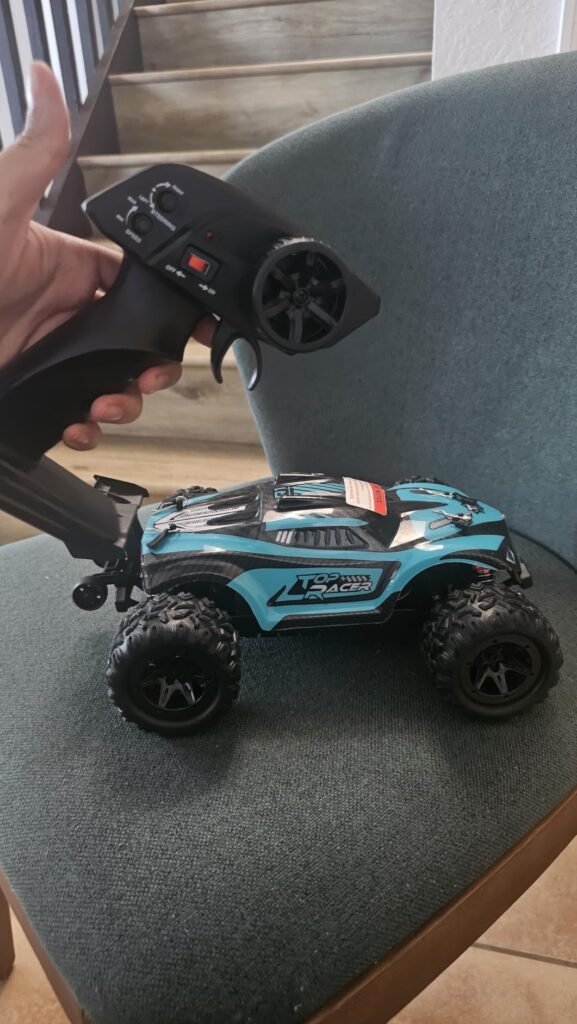
We may earn a commission when you buy through this link, at no additional cost to you.
The 2.4GHz radio provides up to 80 meters of range and supports speed level control, drifts, wheelies, and obstacle crossing. Inside, a 35A splash-proof ESC pairs with a high-response servo and thermal protection features to keep the truck reliable during longer play sessions. Four-wheel independent suspension with metal shocks helps the car handle bumps and small jumps without immediately damaging the chassis.
Durability is helped by a reinforced PA chassis, metal drive shafts, and ball bearings that reduce friction and heat. Two PVC shells with shark-inspired styling and RGB lighting effects give it visual appeal on top of the practical hardware. It is not marketed as a hobby-grade upgrade platform, but the mix of features is generous for the price.
Smaller RCs shine on smooth pavement, packed dirt, and short grass. If your usual driving area has tall grass or rough gravel, a 1/14 or 1/16 truck will give you a better experience.
For a first RC gift or a fun second car to keep in the trunk for park visits, the HOMETALL 1/18 offers a lot for the money. Just treat the splash-proof rating as protection from puddles and wet grass rather than an invitation to run through streams.
Not for buyers who want serious speed, brushless power, or true off-road ground clearance.
We may earn a commission when you buy through this link, at no additional cost to you.
The ARRMA KRATON 4X4 8S BLX is a flagship 1/5 monster truck designed for drivers who already understand hobby-grade RC and want to move into the largest common scale. Its sheer size, combined with laser-etched EXtreme Bash 7075-T6 aluminum parts, gives it a physical presence that smaller trucks simply cannot match. The engineering focus is on improved strength, handling, durability, and control at scale.

We may earn a commission when you buy through this link, at no additional cost to you.
Power comes from a Spektrum brushless system rated for up to 8S LiPo input. That level of power places this truck firmly in enthusiast territory, where you plan runs around large open areas and use quality LiPo packs with a proper charger. The Spektrum DX3 three-channel 2.4GHz DSMR radio system is included, so you have a competent radio in hand from day one.
As a ready-to-run kit, the mechanicals, electronics, and radio arrive assembled, but batteries and a charger are not included. Given the 1/5 scale and 8S ceiling, expect a meaningful investment in packs, a suitable charger, and safe storage. In return, you get a platform that can move a lot of mass at serious speeds while remaining supported by ARRMA’s parts ecosystem.
1/5 scale trucks are heavier, faster, and more expensive to run. Tires, shock oil, and repair parts all cost more, and transport typically requires a larger vehicle. Understand the ongoing cost before buying.
Choose the KRATON 8S BLX if you already own hobby-grade batteries, have space to store and transport a large truck, and want the biggest step you can take in mainstream RC without going custom. Newer buyers should start on a smaller platform before committing to this one.
Not for beginners, small yards, or anyone without a strong LiPo battery and charging setup.
We may earn a commission when you buy through this link, at no additional cost to you.
The best RC car for you depends on where you drive, what skills you already have, and how much you are willing to invest in batteries, chargers, and spare parts. Here are the factors that really shape the decision.
RC cars come in a range of scales from small 1/18 models up to large 1/5 platforms. Scale determines physical size, weight, ground clearance, and how the truck handles different terrain. A 1/18 truck fits easily in a backpack and works in a driveway or small yard, while a 1/8 buggy or 1/5 monster truck needs a genuine open space to be enjoyed safely. Larger scales generally handle rough ground better because their bigger tires and suspension travel absorb obstacles that would flip a smaller model.
Weight matters too, both for storage and for safety. A larger truck carries much more kinetic energy at any given speed, which means crashes cause more damage to the vehicle and more risk to bystanders. If you plan to drive around family or in tighter neighborhood settings, a 1/14 or 1/16 model like the H14BM V3, Womaqu 1/14, or H16BM strikes a smart balance between excitement and manageable size. Buyers who have a park, field, or private lot available can consider stepping up to 1/10 or 1/8 platforms.
Decision advice: pick the smallest scale that still handles your typical driving surface without struggling. This saves money on batteries, keeps storage easy, and reduces the size of the field you need to run safely.
Motor type is one of the biggest performance factors. Brushed motors, like the 380 and 390 units used in many entry-level trucks, are affordable, simple, and easy to replace. They typically limit top speeds to the 20-40 kph range, which is more than exciting enough for most casual driving. Brushed systems are also very forgiving for beginners because they respond smoothly and rarely deliver instant torque spikes.
Brushless motors, like the 2845 and 2852 units in the HYPER GO H16BM, H14BM V3, and Hosim 1/10, deliver dramatically more power, higher efficiency, and less maintenance because they have no physical brushes to wear out. They also open the door to LiPo battery upgrades from 2S to 3S or beyond, which further increases speed. The trade-off is aggressive throttle response that can overwhelm new drivers if the throttle limit is disabled too early.
Decision advice: choose brushed for first-time drivers or younger family members, and brushless if you plan to invest in the hobby, want long-term performance, and can commit to learning proper LiPo battery handling.
Most modern RC cars run on LiPo batteries, typically 2S 7.4V for entry-level trucks and 3S 11.1V, 4S 14.8V, 6S 22.2V, or 8S 29.6V for hobby-grade platforms. Higher cell counts deliver more voltage, which means higher motor rpm and higher top speeds when paired with a compatible ESC. Runtime depends on capacity, driving style, and motor efficiency. Most 1/14 and 1/16 trucks with two included 1300-2000mAh packs deliver 30-60 minutes of combined driving.
LiPo batteries require care. Never charge them unattended, never leave them fully discharged for long periods, and store them at a proper storage voltage when not in use. Look for features like flame-retardant battery casings, over-discharge protection, and thermal shutdown, all of which appear in several picks in this guide. When a truck advertises higher speeds on 3S than 2S, plan for the extra cost of the 3S pack and a compatible charger.
Decision advice: check whether batteries and chargers are included. Budget-focused buyers benefit from packages that include two batteries, while hobby buyers should budget separately for high-quality named packs.
Serious RC durability starts with the drivetrain and chassis. Look for metal differentials, metal gears, steel drive shafts, and ball bearings throughout the vehicle. The H14BM V3 uses steel differential outdrives and a 6061 aluminum chassis, while the Hosim 1/10 features chrome steel helical gears. These details reduce driveline slop, extend service life, and give the truck a more precise driving feel.
Chassis materials matter too. Aluminum plates offer great rigidity but can bend under severe impact, while reinforced composite or PA chassis absorb impact and can flex without breaking. Zinc or metal reinforcement plates at the front and rear help protect vulnerable areas during rollovers. Impact-resistant bumpers and honeycomb chassis designs, common across the HYPER GO lineup, extend usable life during bashing.
Decision advice: if you plan to drive on rough terrain or perform jumps, prioritize metal drivetrains and reinforced chassis features rather than paying only for higher top speed.
Every tire is a compromise between grip, weight, wear resistance, and terrain range. Multi-terrain airless-style tires handle gravel, dirt, and grass well. Aggressive deep-tread tires provide better bite on soft or muddy ground, and dedicated paddle tires excel on sand and snow. Some trucks like the H14BM V3 include extra paddle tires, while the 1/18 4WD car includes drift tires alongside standard treads.
Suspension geometry, ground clearance, and shock quality matter as much as tire choice. Oil-filled adjustable shocks, present on many picks here, absorb landings better than simple friction dampers and stay consistent as they warm up. Independent four-wheel suspension and reinforced bumpers protect the car from repeated impacts, letting you focus on driving instead of worrying about damage.
Decision advice: match the tire and suspension style to your primary surface, and buy a second set of tires if you plan to switch between environments regularly.
The transmitter is your only connection to the car, so quality matters. A 2.4GHz radio provides interference-resistant control that allows multiple cars to run at once without signal conflicts. Range figures vary from about 80 meters on entry-level radios up to 850 feet on models like the 1/14 Fast RC Truck, and hobby-grade radios like the Spektrum DX3 offer even more precise control and telemetry options.
Beginner features are often overlooked but genuinely useful. Throttle limiters that cap top speed at 70% help newer drivers avoid crashes, while adjustable speed dials on cars like the 1/14 Fast RC Truck let a parent choose the appropriate power level for each user. Proportional steering and throttle, rather than simple on-off controls, allow smooth, controlled inputs that build real driving skill.
Decision advice: prioritize a radio with proportional control, a throttle limiter, and range that comfortably exceeds your typical driving distance.
Even durable RC cars eventually need spare parts. Before buying, check whether the manufacturer sells common items like tires, shock oil, driveshafts, and body shells. Established brands like ARRMA and popular models from HYPER GO and Hosim tend to have solid parts availability, while less established brands may leave you stuck when a common part fails. This is one reason experienced hobbyists often stick to a small set of well-supported platforms.
Upgrade capacity matters too. A truck with an ESC that already supports 3S batteries lets you unlock more performance without a full component swap. Adjustable shocks, replaceable pinion gears, and modular battery bays make it easy to keep improving a platform as your skills grow. If you want a car that will still be interesting in a year, choose one with clear upgrade pathways.
Decision advice: check whether replacement parts and upgrade options are easy to find. A slightly more expensive truck with strong parts support is usually a better long-term buy than a cheaper truck that becomes disposable when something breaks.
Start with an unhurried break-in session. Before your first fast run, walk through the transmitter controls, test the steering trim, confirm the throttle limiter is engaged if you are new, and inspect all visible screws and body clips. Charge new LiPo packs on a fireproof surface, ideally in a LiPo safety bag, and never leave a pack charging unattended. For trucks that support both 2S and 3S batteries, start with the lower voltage until you are comfortable with the truck’s behavior.
After every session, clean debris from the chassis, wheels, and shock shafts. Grass and gravel can wrap around drive shafts and damage seals if left in place. Check tire foam inserts, look for loose screws around the shock towers and suspension arms, and confirm that no wires are chafed near moving parts. If you drove on damp grass with a splash-resistant truck like the Womaqu 1/14 or HOMETALL 1/18, dry the chassis thoroughly and remove the battery to prevent corrosion.
For storage, keep LiPo batteries at their proper storage voltage rather than fully charged or fully drained. Remove batteries from the transmitter if you will not be driving for several weeks, and store the truck in a cool, dry location away from direct sunlight. Once you are comfortable with basic operation, learn simple upgrades like replacing tires and shock oil. That small amount of hands-on care meaningfully extends the life and enjoyment of any RC platform in this guide.
Hobby-grade cars use replaceable components, standardized batteries, and dedicated radios that allow tuning and upgrades. Toy-grade cars are typically sold as a single sealed unit with limited spare parts. Hobby-grade platforms like the ARRMA Typhon and KRATON are meant to last for years with maintenance, while toy-grade cars are usually not economical to repair once major parts fail. Most models in this guide sit in a helpful middle ground with hobby-inspired features at accessible prices.
No. Brushless RC cars ship configured to run safely on their included 2S packs, and the stock speeds are still exciting for most driving. A 3S battery mainly unlocks higher top speeds and more aggressive acceleration. If you are new to RC or driving in tighter areas, run the stock configuration until you have real seat time. Add 3S later once you can control the truck confidently at stock power.
Many RC cars are appropriate for older kids, especially models with 70% throttle limiters and adjustable speed dials. Younger drivers do best with 1/14 to 1/18 brushed models that respond predictably. Larger scales and brushless power systems require more experience and space to use safely. Always supervise LiPo charging, since improper handling can be a fire risk regardless of the driver's age.
Typical runtime on a single LiPo pack is 10-25 minutes depending on capacity, motor size, and driving style. Models that include two batteries, like the H16DR and the 1/14 Fast RC Truck, effectively double that runtime. Aggressive driving with brushless motors and 3S packs drains batteries faster. Always stop driving once the truck slows noticeably to avoid over-discharging the pack, which shortens battery lifespan.
It depends on the model. Trucks with IPX4 ratings or splash-proof ESCs, like the Womaqu 1/14 and HOMETALL 1/18, handle light moisture and damp grass fine. However, no consumer RC car is truly submersible, so avoid deep puddles and standing water. Dry the chassis and remove the battery after wet driving to prevent corrosion in the electronics bay and around metal drivetrain parts.
For most beginners, a 1/14 or 1/16 truck offers the best balance of excitement, control, and manageable repair costs. These sizes fit in a typical driveway or park path and generally cost less to maintain than 1/8 or 1/5 platforms. If space is very limited, a 1/18 model works well. Save the larger and faster hobby-grade platforms for after you have real driving experience and a battery-charger setup you trust.
Basic maintenance requires only a small set of hex drivers, needle-nose pliers, and a soft brush. Many RC cars include a screwdriver for common fasteners. As you get deeper into the hobby, adding shock oil, ball bearing lubricant, and a quality balance charger becomes useful. For LiPo batteries, a fireproof charging bag is a small investment that meaningfully improves safety during charging.
Most LiPo systems include low-voltage cutoff protection that reduces power once the battery reaches a safe minimum voltage. This prevents damage to the cells and extends battery life. If the truck slows suddenly, park it, remove the pack, and let it cool before recharging. Continuing to drive at that point can permanently damage the battery and shorten its usable lifespan.
Most casual drivers find 25-40 mph plenty exciting in a backyard, driveway, or park setting. At those speeds, the car remains manageable and crashes usually cause limited damage. Speeds beyond 50 mph require open spaces, careful setup, and quick reflexes. If you rarely have access to large empty areas, you will get more enjoyment from a moderate-speed truck than a 70+ mph platform sitting on a shelf.
Ready-to-run kits include the car and radio assembled and paired. Entry-level RTR models often include batteries and a basic charger, so you can drive immediately after unboxing. Hobby-grade RTR platforms like the ARRMA Typhon and KRATON leave the battery and charger up to you, so you can choose parts that match your existing setup. Always read the listing carefully to confirm what is included before buying.
For most buyers who want a strong blend of speed, durability, and upgrade potential, the HYPER GO H14BM V3 stands out as the top overall pick. Its brushless power system, 6061 aluminum chassis, and 2S/3S compatibility give it the performance of a hobby-grade platform at a price closer to mid-tier bashers. The included beginner-friendly throttle limiter also makes it approachable while you build up experience.
Other picks suit different priorities well. The ARRMA KRATON 8S BLX and Typhon 6S V5 are the choices for serious hobbyists ready to commit to premium platforms. The 1/14 Fast RC Truck and Womaqu 1/14 stand out for buyers who prioritize runtime, range, or weather resistance at a friendly price. Smaller 1/18 models like the HOMETALL and the 1:18 4WD car offer excellent gift-friendly value for beginners or younger drivers.
Before making a final decision, think about where you will actually drive, how much you want to invest in batteries and chargers, and how important upgrade paths are for you. Match those answers to the scale, motor type, and radio features that fit your situation. The right RC car is not always the fastest one on paper, but the one you will actually take out and enjoy consistently.