Tenergy 7.2V 3000mAh
9.0Editor score7.2V six-cell NiMH
3000mAh rated capacity
30A max discharge
Two-pack Tamiya connector
Find the right rc car batteries for 2026. We compare 10 standout options by build quality, useful features, owner feedback, value, and everyday trade-offs.
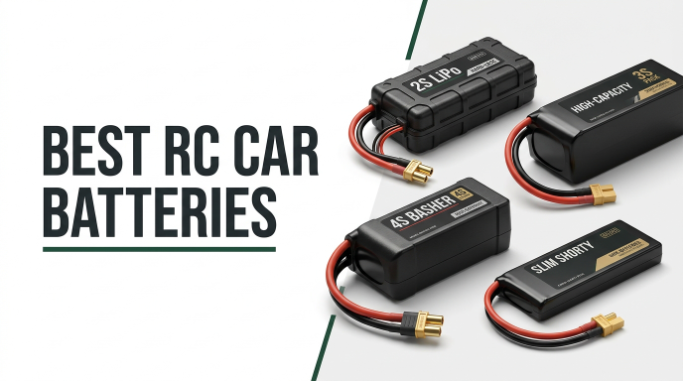
Finding the right RC car batteries for 2026 comes down to matching a pack to your vehicle rather than chasing the biggest number on the label. We compare 10 standout NiMH packs by voltage, capacity, discharge rate, connector type, cell layout, physical dimensions, charging convenience, owner feedback, and long-term value so you can buy once and run longer.
The packs in this guide span 7.2V six-cell flat packs, 9.6V eight-cell AA packs, and an 8.4V seven-cell hump pack, with capacities from 1500mAh to 5000mAh. Those differences translate directly into runtime, top speed, and whether the pack physically fits your battery tray and plugs into your speed controller without an adapter.
Before comparing capacity, confirm the three things that decide compatibility: the voltage your vehicle expects, the connector it uses, and the space inside the battery compartment. Once those are settled, the comparison below helps you weigh runtime against weight, discharge rate against price, and single packs against multi-pack bundles with included chargers.
We compared 10 RC car batteries using the details that actually help a buyer decide: nominal voltage, rated capacity, cell count and cell size, maximum discharge rate, connector type, pack dimensions and weight, included charging accessories, brand compatibility claims, owner feedback, and price per pack. The notes focus on practical trade-offs so each pick connects to how hobbyists actually run, charge, and store packs for bashers, crawlers, boats, tanks, and vintage kits.


Compare key features, scores, and current prices side by side. A shorter feature list means fewer details were available, not necessarily fewer capabilities.


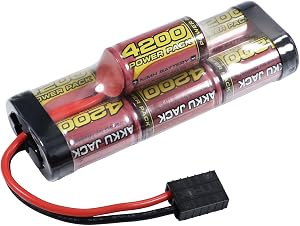
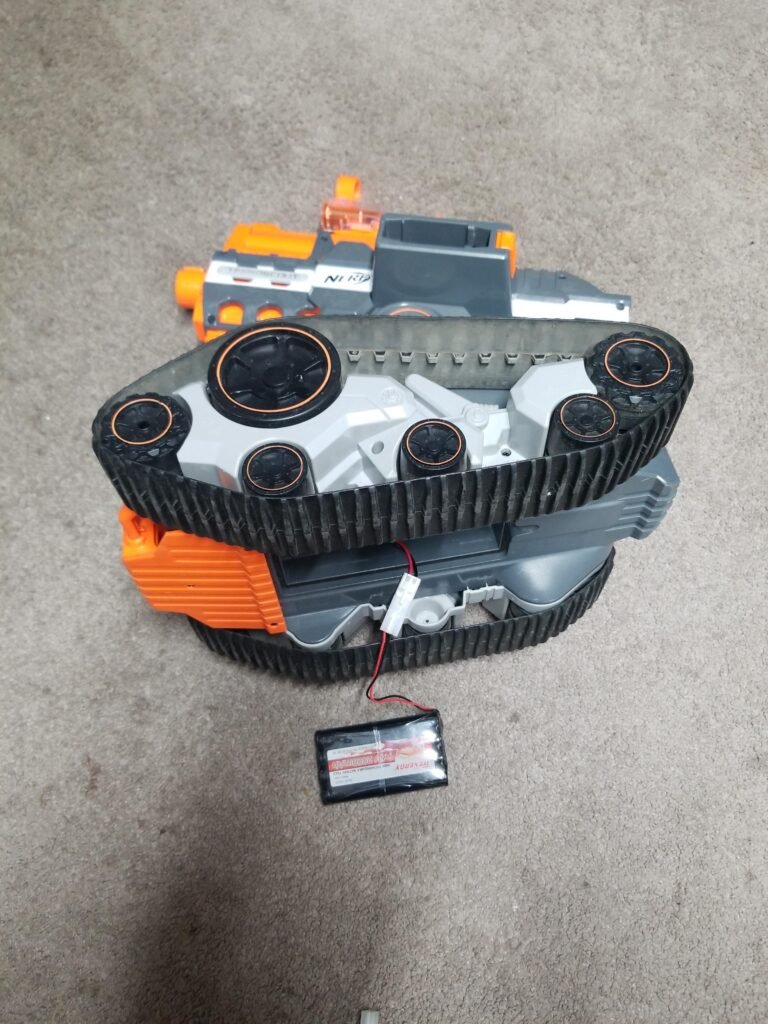
Tenergy's 9.6V 2000mAh flat pack is the go-to replacement for a whole generation of eight-cell vehicles and toys, from Tyco and Nikko cars to Tonka trucks and the Lionel Polar Express train. It carries the highest owner rating in this roundup, which speaks to how consistently it revives older models whose original packs have faded.
We may earn a commission when you buy through this link, at no additional cost to you.
At 2000mAh it offers solid rather than exceptional runtime, but for toy-grade motors that draw modest current, the pack typically delivers longer play than the batteries these products shipped with years ago. The flat configuration measures 4.09 by 2.32 by 0.63 inches, and the built-in standard Tamiya connector matches the majority of these vehicles. Tenergy specifically notes it is not compatible with Spike the Dinosaur, so check your model if it is a toy rather than a car.
NiMH chemistry means no memory effect and no need to run the pack flat before recharging, which makes it easy for casual users to keep it topped up. No charger is included, so you will need a 9.6V-compatible NiMH charger or the original charger that came with the vehicle if it still works and uses the same plug.
Before installing a fresh pack in a vehicle that has sat for years, inspect the battery contacts and wiring for corrosion and confirm the switch and motor still operate freely. A new pack cannot fix a seized gearbox, and a corroded connector can heat up under load.
This is the smart, economical choice for reviving a favorite older vehicle or keeping a well-loved toy running. Buyers who want maximum runtime in the same format should compare it against the 2400mAh AA pack earlier in the guide, accepting that brand track record and the higher capacity number are the main differences.
Vehicles that require 7.2V, since installing a 9.6V pack in a system designed for six cells can damage the electronics.
We may earn a commission when you buy through this link, at no additional cost to you.
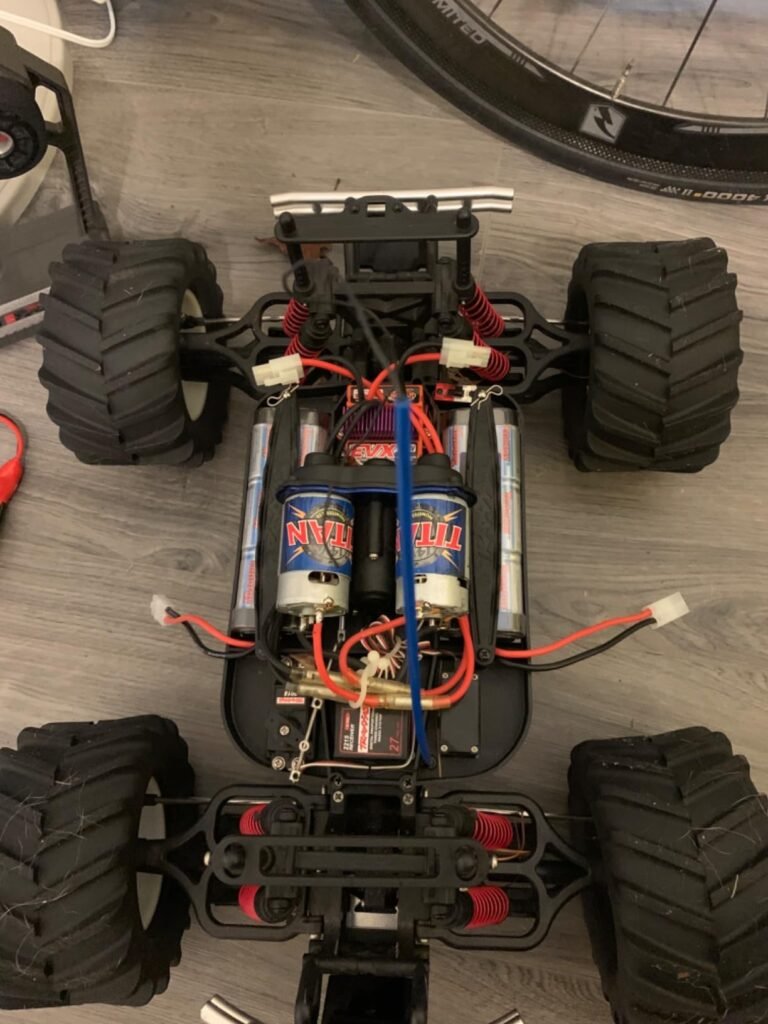
The two-pack version of Tenergy's 7.2V 3000mAh flat pack is the practical default for anyone running a classic six-cell electric vehicle. Whether you drive a Tamiya buggy, a vintage RC10, a brushed monster truck, or a tank, having a second pack in the box means one can charge while the other runs, which roughly doubles the time you actually spend driving on a given afternoon.
We may earn a commission when you buy through this link, at no additional cost to you.
The 30-amp maximum discharge rating is the headline performance figure here and it sets this pack apart from many budget alternatives rated at 5C or 10C. Higher discharge capacity means the pack can supply current without voltage sagging under hard acceleration, so a brushed 540 motor pulls cleanly instead of feeling soggy when you punch the throttle. For casual bashing the difference is subtle; for a lightly modified racer it is noticeable.
Physically this is a standard Sub-C six-cell flat pack measuring 5.39 by 1.87 by 0.95 inches, which is the form factor most 7.2V trays and hold-down straps were designed around. The Tamiya connector is the same plug found on the majority of ready-to-run brushed vehicles, and the pack supports rapid charging on a compatible NiMH charger. Because NiMH chemistry has no memory effect, you can top off a partially used pack before a run without worrying about capacity loss over time.
A 5000mAh pack runs longer per charge, but it also takes longer to recharge and leaves you idle while it does. Two 3000mAh packs let you rotate continuously with a single charger, and you can keep the total pack weight lower in the vehicle. If you already own a charger and mainly run at home or the park, the two-pack approach usually delivers more driving per hour.
The trade-off is capacity. At 3000mAh, each pack will give shorter runs than the 3800mAh and 5000mAh options later in this guide, though it typically weighs less and charges faster. Choose this bundle if you value a strong discharge rating, a trusted name, and the convenience of two packs over the absolute longest single run.
Vehicles that use a high-current connector such as Deans or XT60 with a brushless system, where a Tamiya-plug NiMH pack becomes the performance bottleneck.
We may earn a commission when you buy through this link, at no additional cost to you.
This 9.6V pack targets the large world of toy-grade and entry-level vehicles that ship with an eight-cell AA-format battery: small tanks, older Tyco and Nikko cars, ride-on train sets, and similar models. Rather than the 1500mAh or 2000mAh capacity these vehicles usually come with, it offers 2400mAh, which translates into meaningfully longer play sessions in the same footprint.
We may earn a commission when you buy through this link, at no additional cost to you.
The cells are AA-sized rather than Sub-C, which keeps the pack thin at roughly 100 by 56.8 by 14.2 millimeters and light at 172 grams. That slim profile is exactly what these compact battery bays were built for, but it also means the pack is not designed for high current draw. It suits the modest brushed motors in toy-grade vehicles well and would be a poor match for a hobby-grade 1/10 buggy.
Charging is handled through the included USB cable, which lets you replenish the pack from a wall adapter, laptop, car port, or power bank. The indicator glows red while charging and goes dark when finished, which is simple enough for younger users to manage with light supervision. Expect USB charging to take several hours; it is convenient rather than fast, and a dedicated NiMH charger will be quicker if you already own one.
Toy-grade vehicles rarely have adjustable speed controllers, so running a higher voltage than the original pack can overheat the motor or electronics. Stay at 9.6V if that is what your vehicle shipped with, and gain runtime through capacity rather than voltage.
The most important step before ordering is verifying that your vehicle uses the Tamiya KET-2P plug and a 9.6V pack of these dimensions. If it does, this is a straightforward runtime upgrade. Buyers with hobby-grade vehicles should look at the Sub-C 7.2V options instead.
Hobby-grade 1/10 vehicles with 540-size or brushless motors that need a Sub-C or LiPo pack with a much higher discharge rating.
We may earn a commission when you buy through this link, at no additional cost to you.
If your main complaint about your current pack is that runs end too quickly, this 5000mAh two-pack is the most direct fix in the guide. With roughly two-thirds more capacity than a 3000mAh pack, each charge delivers substantially longer driving on a brushed monster truck, buggy, boat, or tank, and the second pack extends the session further still.

We may earn a commission when you buy through this link, at no additional cost to you.
The 10C discharge rating works out to a healthy current ceiling for a pack of this size, which is plenty for stock and mildly upgraded brushed setups. It does not match the 30-amp rating of the Tenergy pack in raw punch, so serious racers may prefer that option, but for bashing and trail use the steady current delivery is more than adequate. Each pack weighs 320 grams, which is reasonable for the capacity but still noticeably heavier than a 3000mAh unit.
The included USB Tamiya cables are handy for charging from a power bank in the field, though charging a 5000mAh pack over USB is a slow process that can stretch across many hours. A dedicated NiMH charger with a Tamiya lead will be much faster and is worth owning if you run these packs regularly. The 140 by 45 by 25 millimeter footprint matches standard 7.2V flat pack trays.
Charge both packs the night before an outing rather than relying on field charging, and set your charger current appropriately for the capacity so you do not overheat the cells. Rotating two 5000mAh packs with one proper charger keeps most hobbyists driving continuously through an afternoon.
Weigh the added weight and charge time against the runtime gain. Drivers who prioritize long, uninterrupted sessions and are comfortable planning charging in advance will get the most from this bundle. Racers chasing acceleration or anyone who charges only between short bursts of driving may be happier with a lighter pack.
Lightweight race builds where every gram matters, or vehicles whose battery tray cannot accept a 25mm-thick pack.
We may earn a commission when you buy through this link, at no additional cost to you.
This is the single-pack version of the Tenergy 7.2V 3000mAh Sub-C flat pack, and it makes sense for hobbyists who need one replacement for an aging stock battery or who want to try the brand before committing to a pair. The same 5.39 by 1.87 by 0.95 inch dimensions and Tamiya connector mean it slides into RC10 cars and most brushed 1/10 vehicles from Traxxas, Losi, Team Associated, HPI, Kyosho, and Tamiya without modification.
We may earn a commission when you buy through this link, at no additional cost to you.
Performance characteristics mirror the two-pack: 3000mAh capacity from six Sub-C cells, support for rapid charging, and NiMH chemistry that lets you top off between runs without gradually losing capacity. The Sub-C format matters because these larger cells inherently handle higher current than AA cells, which keeps acceleration crisp on a 540 brushed motor.
Because nothing comes in the box beyond the pack itself, you will need a compatible NiMH charger with a Tamiya lead. Many ready-to-run kits include a basic wall charger that works, but a smart charger with delta-peak detection will charge faster and protect the cells better over the long term. Store the pack partially charged in a cool place if it will sit unused for weeks.
Measure your battery tray and compare it against the pack’s 5.39 by 1.87 by 0.95 inch size, then check that the vehicle’s connector is a standard Tamiya plug. Vintage kits occasionally used different connectors, and an adapter adds resistance you would rather avoid.
For a single, reliable, standard-format pack that fits nearly everything in the 7.2V brushed category, this is an easy recommendation. If you find yourself wishing for more driving time, the two-pack version or a higher-capacity alternative is the natural next step.
Anyone who wants to drive continuously through a session, since a single pack forces a charging break after each run.
We may earn a commission when you buy through this link, at no additional cost to you.
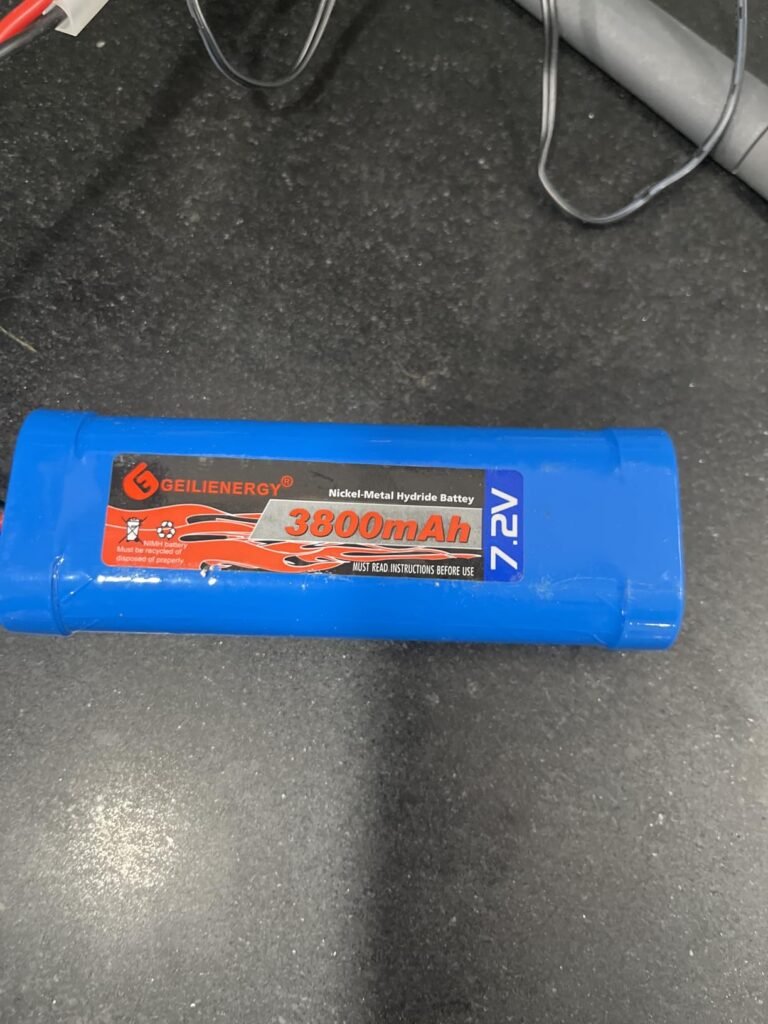
This bundle is aimed at buyers who lack a proper charger, whether because their vehicle came with a slow wall unit or because they are returning to the hobby with an old kit and nothing else. Two 3800mAh Sub-C packs and a 7.2V smart charger arrive together, so you can charge one pack while running the other from day one.
We may earn a commission when you buy through this link, at no additional cost to you.
The 3800mAh capacity lands between the 3000mAh Tenergy and the 5000mAh option, offering a sensible compromise: longer runs than a stock pack without the extra bulk of the biggest cells. The 10C discharge rating gives a steady current curve suited to brushed motors in trucks, buggies, boats, and tanks. Like all Sub-C six-cell flat packs, the 5.39 by 1.87 by 0.95 inch dimensions match standard trays.
The included smart charger is the real convenience, since it removes the guesswork of timing a dumb charger and reduces the risk of overcharging. Note that with one charger and two packs, you still charge sequentially, so a second charger becomes worthwhile if you want both packs ready at the same moment. NiMH chemistry allows topping off without a full discharge first.
Let packs cool for several minutes after a run before charging, since warm cells can cause the charger to terminate early or stress the chemistry. Charging at a moderate rate rather than the fastest setting generally extends the number of cycles you get from a NiMH pack.
Choose this bundle if you need the whole kit rather than just cells. Hobbyists who already own a good charger can save money with pack-only options, and racers who want maximum punch should look at the higher-discharge Tenergy pack instead.
Buyers who already own a quality NiMH charger and only need cells, since the bundle price includes hardware they would not use.
We may earn a commission when you buy through this link, at no additional cost to you.
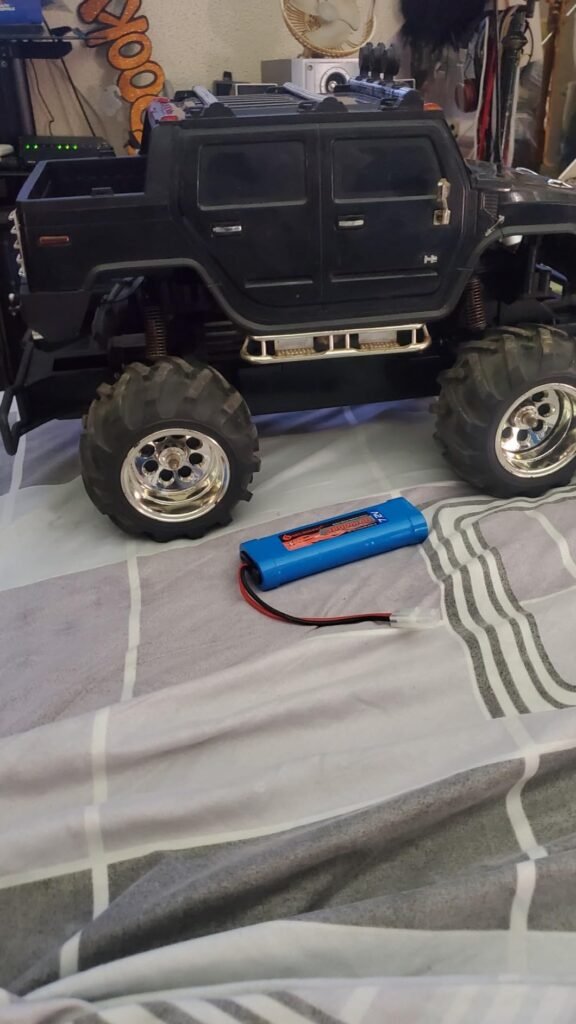
Many ready-to-run vehicles ship with a weak battery and a slow trickle charger, and this single-pack bundle replaces both in one inexpensive purchase. You get a 3800mAh Sub-C flat pack with a Tamiya connector plus a 7.2V smart charger, which is a meaningful upgrade over the typical starter setup without spending on a two-pack.
We may earn a commission when you buy through this link, at no additional cost to you.
The 3800mAh capacity gives noticeably longer runs than the 1800mAh to 3000mAh packs commonly bundled with entry-level trucks and buggies. The 10C discharge rating provides a steady voltage curve under load, which keeps a brushed motor pulling consistently rather than fading as the pack drains. Standard 5.39 by 1.87 by 0.95 inch dimensions mean it fits the same trays as the other Sub-C packs here.
The smart charger handles termination automatically, sparing you from timing charges by hand and reducing the chance of cooking the cells. It is a straightforward unit rather than a multi-chemistry hobby charger, so if you later move to LiPo you will need different equipment. For NiMH use it is perfectly serviceable.
Starting with this bundle and adding a pack-only option later is a sensible path. Because all the Sub-C 7.2V packs here share the same connector and dimensions, mixing brands in your rotation is practical as long as you charge each pack according to its own capacity.
This is the right pick if you have one vehicle, run it casually, and want a better battery and charger than what came in the box. Frequent drivers will outgrow a single pack quickly and should step up to the two-pack bundle.
Drivers who run multiple long sessions per outing and need at least two packs cycling through a charger.
We may earn a commission when you buy through this link, at no additional cost to you.
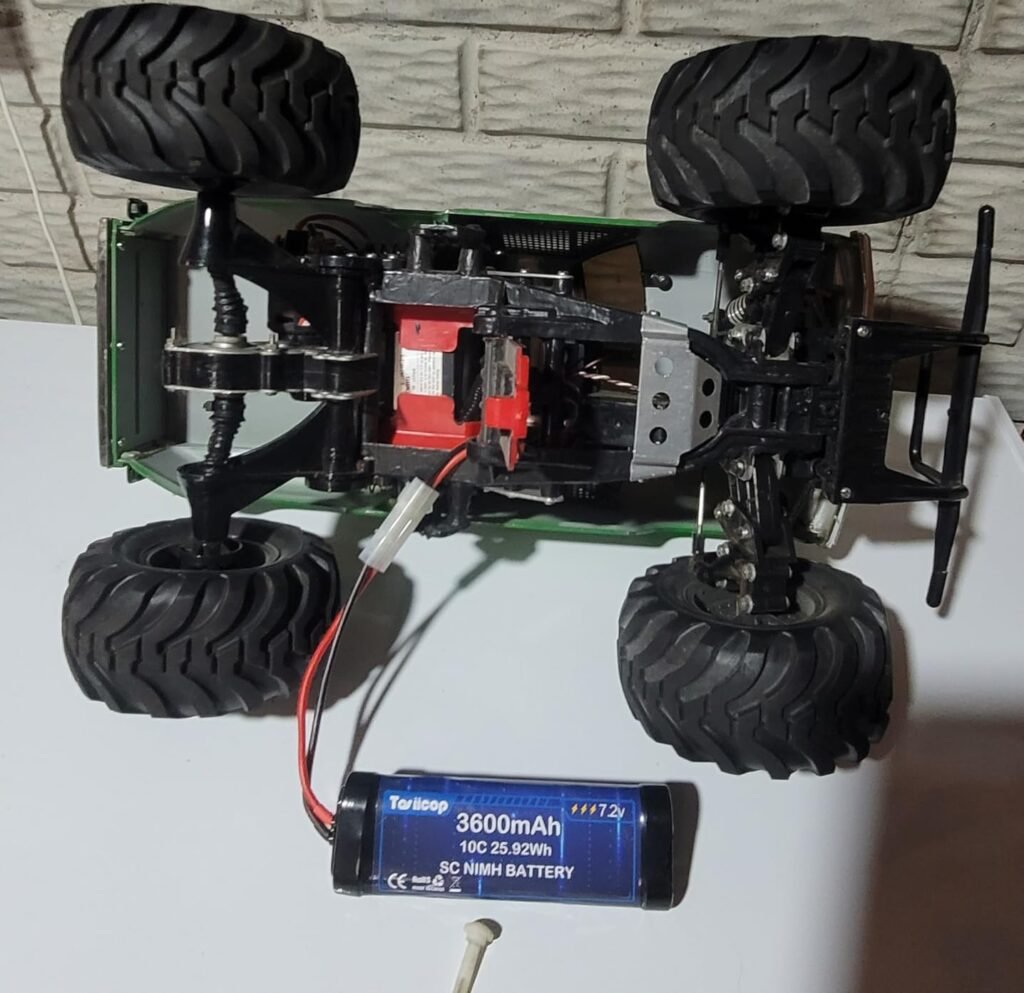
For hobbyists on a budget who want two packs rather than one, this 3600mAh two-pack is the least expensive way in this guide to get a rotation going. It suits casual monster trucks, buggies, boats, and tanks from Tamiya, HPI, Losi, Kyosho, Redcat, and similar brands running brushed motors at stock power.
We may earn a commission when you buy through this link, at no additional cost to you.
The capacity is respectable and each pack is fairly light at 318 grams, but the 5C discharge rating is the lowest in the roundup. In practice that means the pack is fine for gentle bashing and cruising but may sag under heavy throttle on a motor that pulls a lot of current, producing slower acceleration than a 10C or 30A pack in the same vehicle. For a beginner’s truck or a slow crawler this rarely matters; for a punchy buggy it will.
Two USB Tamiya charge cables come in the box, and the packs show a red indicator while charging. As with all USB charging of larger NiMH packs, patience is required, so a dedicated charger is a worthwhile companion if you plan to run often. The 140 by 45 by 25 millimeter dimensions match standard 7.2V flat pack compartments.
A 5C rating on a 3600mAh pack means the recommended continuous draw tops out at a modest level. Stock brushed motors in many entry-level vehicles stay within that range, but upgraded motors or heavy vehicles climbing steep terrain can exceed it, causing voltage sag and warmer packs.
This is a value play with a clear compromise. If price per pack is your top priority and your vehicle is a mild brushed model, it does the job. If you notice your truck feeling sluggish under hard acceleration, that is the discharge rating talking, and a higher-rated pack will fix it.
Modified or high-draw brushed setups that need a pack with a higher continuous discharge rating to deliver full acceleration.
We may earn a commission when you buy through this link, at no additional cost to you.
This is the most affordable pack in the roundup, built for the same family of eight-cell toy-grade vehicles as the Tenergy 9.6V pack: Tyco, Nikko, and Radio Shack cars, Tonka Ricochet trucks, Polar Express train sets, small boats, and hobby robots. If the goal is simply to get a beloved toy running again without spending much, it is hard to argue with.
We may earn a commission when you buy through this link, at no additional cost to you.
Capacity is 1500mAh from eight AA cells, which is close to what many of these products originally shipped with, so expect comparable rather than extended runtime. The upside is a light, compact pack measuring roughly 100 by 56 by 14 millimeters that fits the original compartment without forcing. AA cells are appropriate for the small brushed motors in these toys but should not be asked to power hobby-grade vehicles.
A 9.6V USB charger cable comes in the box, so you can charge from any USB source. It is convenient for households without a hobby charger, though charging will take a few hours. NiMH chemistry lets you top up anytime without draining the pack first, which keeps things simple for kids and casual users.
Small toy-grade cars and trains draw little current, so a 1500mAh pack often provides a satisfying play session before recharging. It becomes limiting mainly on larger toy monster trucks that run longer and pull harder; those benefit from the higher-capacity 9.6V options.
Choose this pack when price and basic compatibility are what matter most. If you want longer play in the same footprint, the 2400mAh AA pack earlier in the guide is the better option at a slightly higher price.
Anyone seeking extended runtime or powering a hobby-grade vehicle with a 540-size or larger motor.
We may earn a commission when you buy through this link, at no additional cost to you.
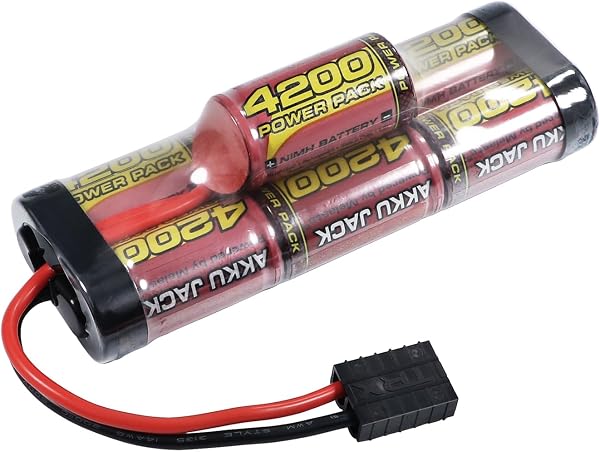
The Melasta 8.4V hump pack serves a specific but very large audience: owners of 1/10 scale and larger Traxxas vehicles that ship with a seven-cell NiMH and a TRX connector. Because the seventh cell sits on top in the classic hump layout and the plug is TRX rather than Tamiya, this pack drops in where the other options in this guide simply would not fit or connect.

We may earn a commission when you buy through this link, at no additional cost to you.
Two figures make it appealing for bigger trucks. The 8.4V nominal voltage gives a modest speed bump over a six-cell pack, and the 42-amp maximum discharge current means the pack can feed a hungry brushed motor in a heavy Stampede, Slash, or Rustler without excessive sag. At 4200mAh, runtime is generous for the format. Dimensions are 140 by 46.8 by 44.5 millimeters measured to the top of the hump.
Melasta suggests charging at 0.1C or 0.2C, which means a gentle rate that prioritizes cell longevity over speed. Any NiMH charger with a TRX lead or a Traxxas-compatible charger will work. The pack can be recharged at any state of charge, and letting it cool before charging is good practice after a hard run in a heavy truck.
Hump packs need vertical clearance for the seventh cell under the body or battery strap. Compare the 44.5mm hump height against your vehicle’s tray and hold-down before ordering, especially on models with low-profile bodies or aftermarket battery straps.
This is the clear choice for Traxxas owners who want more capacity and current than a stock seven-cell pack without moving to LiPo. It is not a fit for vehicles with flat trays or Tamiya connectors, and its lower owner rating suggests checking dimensions and plug carefully before ordering to avoid a return.
Vehicles with flat six-cell trays or Tamiya connectors, and anyone whose speed controller is not rated for 8.4V input.
We may earn a commission when you buy through this link, at no additional cost to you.
Picking a battery is mostly a matter of eliminating packs that will not work and then comparing the ones that will. Voltage, connector, and physical size decide compatibility; capacity, discharge rate, and pack count decide how the vehicle feels and how long you drive. This section explains each factor so you can make a confident choice.
Nominal voltage is set by the number of NiMH cells in series, with each cell contributing about 1.2 volts. Six cells make a 7.2V pack, seven cells make 8.4V, and eight cells make 9.6V. Your vehicle’s speed controller and motor were designed for a specific voltage, and running higher than intended can overheat components or burn out a brushed motor, while running lower leaves performance on the table and may not even power the electronics reliably.
Most hobby-grade brushed 1/10 vehicles use 7.2V six-cell packs, which is why the majority of options in this guide are that format. Traxxas ready-to-run trucks historically shipped with 8.4V seven-cell hump packs, and a wide range of toy-grade cars, trains, and tanks use 9.6V eight-cell AA packs. The quickest way to confirm your requirement is to read the label on the pack that came with the vehicle or check the electronic speed control’s input rating.
Match the original voltage exactly unless your manual explicitly permits a higher cell count. Gain runtime through capacity, not voltage.
The connector is the second hard compatibility requirement. The standard Tamiya plug is the most common connector on brushed ready-to-run vehicles and on nearly every pack here, while Traxxas vehicles use the TRX connector found on the Melasta hump pack. Some toy-grade packs specify a Tamiya KET-2P plug, which is the same family but worth confirming against your vehicle’s socket.
Adapters exist, but every extra connection adds resistance and a potential failure point under load. Tamiya connectors in particular are known to heat up on high-current setups, which is one reason serious brushless racers solder on Deans or XT-style plugs. For stock and mildly upgraded brushed vehicles, the Tamiya plug is adequate and convenient because it is what the charger and the vehicle already use.
Buy a pack whose connector matches your vehicle directly. If you eventually upgrade connectors, do it on the vehicle and all packs at once so everything stays interchangeable.
Battery trays are unforgiving. A Sub-C six-cell flat pack is roughly 5.4 by 1.9 by 0.95 inches, and most 7.2V vehicles were built around that footprint, but hold-down straps, foam spacers, and body clearance vary. Hump packs like the Melasta 8.4V add a raised cell on top, so they need vertical room that a flat tray may not offer. Toy-grade 9.6V AA packs are thin and rectangular and rarely interchange with Sub-C packs.
A common mistake is assuming that because two packs share a voltage and connector, they will both fit. Slight thickness differences can prevent a battery door from closing or a strap from latching, and a loose pack can shift during a crash and pull its connector. Measure your tray with the original pack removed and compare against the listed dimensions, paying attention to height as much as length.
If the listed dimensions are within a couple of millimeters of your original pack in every direction, you are likely fine. Any larger discrepancy warrants a different pack.
Capacity, expressed in milliamp-hours, is the closest thing to a runtime figure. A 5000mAh pack stores roughly two-thirds more energy than a 3000mAh pack of the same voltage, and in the same vehicle it will run correspondingly longer. The packs in this guide range from 1500mAh in the budget 9.6V AA pack to 5000mAh in the largest 7.2V two-pack, which is a wide spread with real implications for how long an outing lasts.
Capacity is not free. Higher-capacity NiMH packs are heavier, which slightly reduces acceleration and adds stress to suspension and drivetrain on jumps, and they take proportionally longer to charge. For a slow crawler or a boat, weight matters less and long runtime is a pure win. For a jumping basher or a light buggy, a mid-capacity pack around 3000mAh to 3800mAh often feels better and charges faster between runs.
Decide how long you actually want to drive between charges and whether you would rather rotate two mid-capacity packs or run one large one. Two smaller packs with a charger are usually the more flexible setup.
Discharge rate describes how much current a pack can safely deliver. It is expressed either as a C rating multiplied by capacity or as a plain amperage figure. The Tenergy 3000mAh packs list 30 amps maximum, the Melasta hump pack lists 42 amps, and several budget packs list 10C or 5C. A higher figure means the pack can supply hard acceleration without voltage dropping, which you feel as crisp throttle response rather than a soft, delayed pull.
Buyers often focus on capacity alone and end up disappointed when a big pack feels sluggish. If your motor draws more current than the pack can comfortably supply, the pack heats up, voltage sags, and runtime suffers despite the high capacity number. Stock brushed motors in entry-level trucks are forgiving, but upgraded motors, heavy vehicles, and steep terrain all push demand higher.
For casual stock vehicles, 5C to 10C is workable. For anything modified or driven aggressively, prioritize a pack with a higher rated discharge such as the 30-amp or 42-amp options.
Several options here come as two-packs, some include a smart charger, and others include only USB charging cables. The right combination depends on what you already own. A hobbyist with a good NiMH charger should buy packs only, while someone whose vehicle came with a slow wall charger or no charger at all benefits from the bundles with a proper smart charger, because correct charge termination protects the cells and shortens charge times.
USB charging cables are a genuine convenience for charging from a power bank or car port, but they charge slowly, and charging a 5000mAh pack over USB can take most of a day. Treat included USB cables as a backup rather than a primary charging method. Two-packs are worth the extra cost for almost anyone who drives more than one short run per outing, since a pack can charge while the other is in use.
Buy the bundle that fills the gaps in your current setup. Do not pay for a charger you already have, and do not skip the second pack if you know you will want it within a month.
Every pack in this guide uses nickel-metal hydride chemistry, and there are good reasons it remains popular. NiMH packs are tolerant of partial charging, do not need balance charging, do not require a fireproof charging bag, and can sit partially charged for storage without special handling. They are also the chemistry most ready-to-run brushed vehicles and toy-grade products were designed around, so compatibility is simple.
The trade-off is energy density and power delivery. Lithium polymer packs are lighter for the same capacity and deliver higher current with less voltage sag, which is why brushless racers overwhelmingly use them. LiPo also requires a compatible speed controller with low-voltage cutoff, a balance charger, and careful storage habits. For brushed vehicles, toy-grade models, boats, and tanks, NiMH usually delivers the better balance of simplicity, cost, and safety.
Stay with NiMH if your vehicle shipped with it and you value low maintenance. Consider LiPo only if you are upgrading to a brushless system and are prepared to adopt the extra charging and storage discipline.
New NiMH packs often deliver their best capacity after a few full charge and discharge cycles, so do not judge a pack on its first run. Charge with a NiMH-compatible charger set for the correct cell count and a current appropriate for the pack’s capacity; a moderate rate around 0.5C to 1C balances speed and cell health, and the gentler 0.1C to 0.2C rate some makers recommend extends lifespan further when time allows. Always confirm the charger lead matches the pack connector and that the polarity is correct before plugging in.
Let packs cool for ten to fifteen minutes after a hard run before charging, and stop driving when the vehicle slows noticeably rather than running the pack completely flat, since deep discharge stresses NiMH cells. Inspect connectors periodically for melted plastic or loose pins, which signal that the connector is running hot and may need replacement. Keep the pack secured in its tray so it cannot shift during crashes and tug on the wiring.
For storage, leave NiMH packs partially charged in a cool, dry place away from direct sunlight, and top them up every month or two if they sit unused, since NiMH self-discharges over time. Never store or charge a pack that is swollen, damaged, or leaking. When a pack no longer holds a useful charge, recycle it through a battery drop-off program rather than discarding it in household trash.
Check the label on the battery that came with the vehicle or the input rating printed on the speed controller. Most hobby-grade brushed 1/10 cars use 7.2V six-cell packs, many Traxxas trucks use 8.4V seven-cell hump packs, and a wide range of toy-grade cars and trains use 9.6V eight-cell packs. Match that voltage exactly unless your manual specifically allows a higher cell count.
No. Capacity affects how long the car runs, not how fast it goes. Speed is governed by voltage, motor, and gearing, while acceleration under load is influenced by the pack's discharge rating. A higher-capacity pack of the same voltage will run longer but is usually heavier, which can slightly reduce acceleration.
It is not recommended. The extra voltage can overheat or damage a brushed motor and speed controller designed for six cells, and the pack dimensions and connector often differ anyway. If you want more speed, look into motor or gearing changes rated for your vehicle rather than raising voltage beyond the manufacturer's specification.
The C rating multiplied by the pack's capacity gives its rated discharge current. A 10C rating on a 3800mAh pack allows roughly 38 amps, while a 5C rating on the same capacity allows about half that. Higher ratings mean the pack can deliver hard acceleration without sagging. Stock brushed vehicles are fine with modest ratings, but upgraded or heavy setups benefit from higher figures.
Modern NiMH packs have negligible memory effect, so you can recharge them from any state without first draining them. Avoid running packs completely flat, since deep discharge stresses the cells more than partial cycling. Occasional full cycles are fine but not required for maintenance.
It depends on the charger current and pack capacity. A proper NiMH charger at around 1C can fill a 3000mAh pack in roughly an hour, while the bundled USB cables included with some packs charge far more slowly and can take many hours for a large pack. If you drive regularly, a dedicated smart charger is a worthwhile investment.
For most hobbyists, yes. A second pack lets you keep driving while the first charges, which effectively doubles usable session time with a single charger. Two mid-capacity packs are often more flexible than one very large pack because they charge faster individually and keep vehicle weight lower. Buy a single pack only if you drive short sessions infrequently.
New NiMH packs frequently need several charge cycles before reaching full capacity. If performance is still poor afterward, check that the pack's discharge rating is adequate for your motor, that the connector is not heating up, and that you are charging with a suitable charger. A worn motor or dirty drivetrain can also make a good pack feel weak.
Store NiMH packs partially charged in a cool, dry location away from heat and direct sunlight. Top them up every one to two months because NiMH self-discharges over time. Remove packs from the vehicle so they are not accidentally drained by a switch left on, and inspect them for swelling or damage before the first charge of the new season.
Only if your speed controller supports LiPo with a low-voltage cutoff and you are willing to use a balance charger and follow safe storage practices. LiPo offers lighter weight and stronger power delivery, which matters most for brushless racing. For brushed vehicles, boats, tanks, and toy-grade models, NiMH remains simpler, safer, and usually sufficient.
The Tenergy 7.2V 3000mAh two-pack earns the top overall recommendation for the largest group of buyers. It fits the standard six-cell Sub-C format that most brushed 1/10 vehicles use, its 30-amp maximum discharge rating delivers crisper acceleration than the lower-rated budget packs, and having two packs in the box solves the most common frustration of short sessions.
Different needs point to different picks. Drivers who want the longest possible runs should consider the 7.2V 5000mAh two-pack, while those without a charger will appreciate the 3800mAh bundles that include one. Owners of older eight-cell toy-grade vehicles are well served by the Tenergy 9.6V 2000mAh pack or the budget 1500mAh alternative, and Traxxas owners with hump-style trays and TRX connectors should look to the Melasta 8.4V 4200mAh pack.
Start by confirming voltage, connector, and tray dimensions, because no amount of capacity helps a pack that does not fit or plug in. Then decide whether you value runtime, acceleration, or price most, and whether one pack or two suits how you drive. Match those answers to the options above and you will end up with a battery that keeps your vehicle running the way it was meant to.