Uniden BC125AT
8.0Editor scoreAnalog handheld scanner
500 alpha-tagged channels
Close Call RF capture
Ten preset search bands
Find the right radio scanners for 2026. We compare 10 standout options by build quality, useful features, owner feedback, value, and everyday trade-offs.
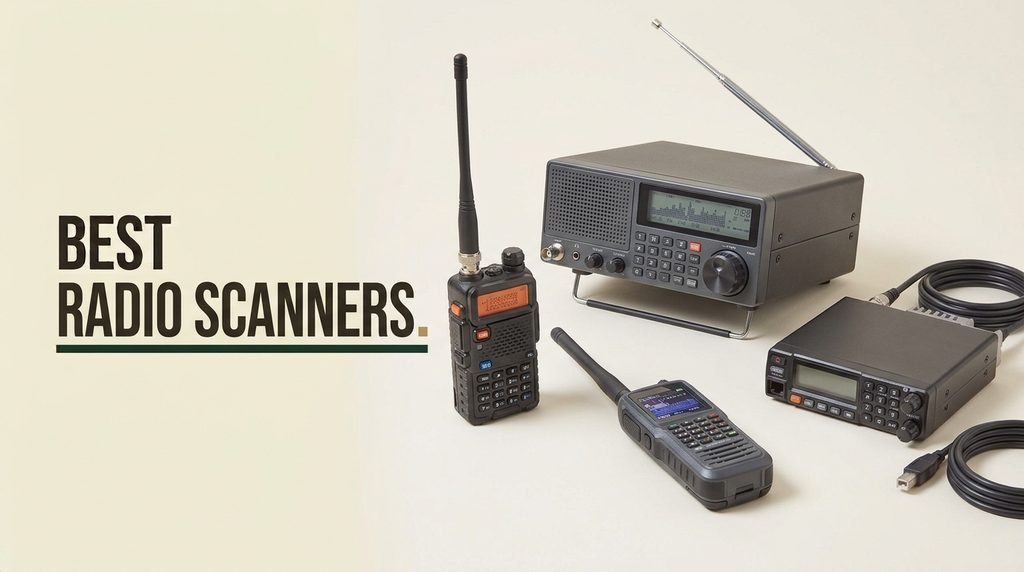
Find the right radio scanners for 2026. We compare 10 standout models by the factors that actually matter in this category, including analog versus digital decoding, trunking support, Phase 1 and Phase 2 compatibility, channel capacity, display quality, GPS features, portability, programming ease, and overall reception performance in both strong and weak-signal environments.
The scanner market splits sharply between affordable analog receivers and advanced digital trunking models. Buyers in rural areas may be fine with a basic analog unit, while anyone near a modern Project 25 or DMR system needs a true digital scanner. Simulcast interference, firmware support, and database updates also separate casual listeners from serious monitoring enthusiasts.
This guide covers handheld, mobile, and desktop options from Uniden, Whistler, and BTECH. Each review explains who the scanner suits, which systems it decodes, how easy it is to program, and what tradeoffs you accept at each price point so you can choose a model that genuinely matches your local radio environment.
We compared 10 radio scanners using the details that actually help a buyer decide: analog versus digital decoding, trunking protocols supported, Phase 1 and Phase 2 compatibility, channel capacity, programming method, GPS and location-based scanning, display readability, battery or power options, build durability, firmware support, and real-world reception quality. The notes focus on practical trade-offs so each pick connects to how people actually monitor public safety, aviation, railroad, marine, and amateur radio traffic in their area.

Compare key features, scores, and current prices side by side. A shorter feature list means fewer details were available, not necessarily fewer capabilities.



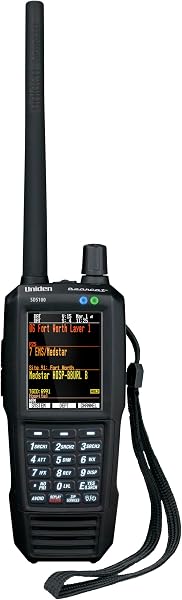
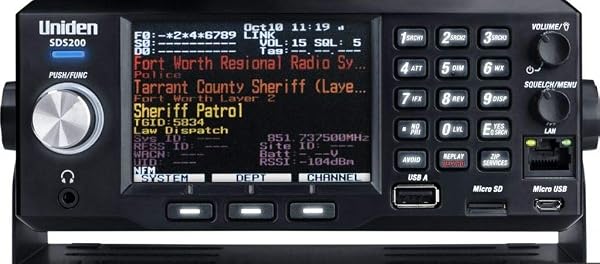
The Uniden SDS200 is widely regarded as a reference-grade digital scanner for base and mobile use, and it earns that reputation through its True I/Q receiver and TrunkTracker X technology. For listeners who need reliable decoding on challenging simulcast systems, which are increasingly common in large metropolitan areas, this receiver consistently delivers clearer audio than earlier generations of digital scanners.
We may earn a commission when you buy through this link, at no additional cost to you.
The 3.5-inch customizable color display is a genuine quality-of-life upgrade over the small monochrome screens on older models. You can configure what information appears for each system, which fields to display, and even the color scheme for different data types. The HomePatrol database includes every known radio system in the United States and Canada, with weekly updates through the Sentinel software, so adding a new system is often as simple as entering your zip code.
Location-based scanning works with GPS coordinates or zip codes to automatically select the systems you want to monitor. For mobile users, connecting an external GPS receiver enables continuous reselection as you travel, so the scanner always knows which local systems to prioritize. Favorites Lists let you organize your preferred systems independently of the full database, which is useful once you have identified the specific agencies you care about most.
In simulcast systems, multiple transmitter sites broadcast the same signal on the same frequency to provide broad coverage. The overlapping signals arrive at your receiver at slightly different times, which creates interference patterns that traditional scanners struggle to decode. True I/Q receivers like the SDS200 capture the complete signal waveform in three dimensions, allowing advanced error correction algorithms to reconstruct the clearest version. The result is dramatically fewer dropouts and garbled transmissions in affected areas.
This scanner is the right choice for serious listeners who want desktop or vehicle-mounted monitoring with the best possible decoding performance. The main consideration is form factor: because the SDS200 is designed for base or mobile use rather than handheld portability, it requires either a desk setup or a vehicle installation. If you need to carry a scanner into the field, the SDS150 or SDS100 are better matches.
Not ideal for users who need a portable handheld scanner for walking around events or field work.
We may earn a commission when you buy through this link, at no additional cost to you.
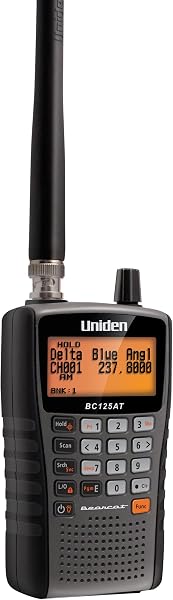
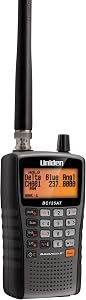
The Uniden BC125AT is a practical starting point for newcomers who want to monitor local radio traffic without spending several hundred dollars. Its 500 alpha-tagged channels divide into 10 storage banks, making it straightforward to organize transmissions by agency, service type, or geographic area. For listeners in rural regions where most public safety communications remain on conventional analog frequencies, this handheld covers the essentials well.
We may earn a commission when you buy through this link, at no additional cost to you.
Close Call RF Capture is the standout feature at this price point. It instantly tunes to signals from nearby transmitters, which is useful when you are near an active scene or event and want to catch unfamiliar frequencies you have not programmed. The Do Not Disturb mode prevents these checks from interrupting an active transmission, so you do not miss important traffic while the scanner searches for new signals.
Pre-programmed search bands cover police and fire on non-digital systems, ham radio, marine, railroad, civil air, military air, CB, FRS/GMRS/MURS, and racing. This lets you start listening immediately without manual programming. The orange backlight is easy to read in low light, and the compact form factor fits comfortably in a pocket or glove box for mobile use.
Analog scanners remain practical in rural counties, small towns, and specific hobby bands like aviation, marine, and amateur radio that often continue using conventional analog modes. If you primarily want to monitor airport tower traffic, railroad channels, or ham repeaters, an analog unit like the BC125AT delivers everything you need at a fraction of the cost of a digital model. Just verify your target systems before committing to analog-only hardware.
This scanner is best suited for budget-conscious buyers who live in areas where public safety communications still use analog systems. The critical limitation is that it cannot decode Project 25, DMR, NXDN, or any trunked digital system. Before buying, check your local radio environment on a resource like Radio Reference to confirm that the agencies you want to monitor still broadcast in analog format.
Not suitable for monitoring digital trunked systems used by many urban and suburban public safety agencies.
We may earn a commission when you buy through this link, at no additional cost to you.
The Uniden SDS150 represents the top of the current digital scanner lineup and is aimed at serious monitoring enthusiasts, public safety professionals, and journalists who need reliable decoding in challenging RF environments. The software defined radio architecture and True I/Q receiver deliver exceptional performance on simulcast systems, where traditional scanners often struggle with distortion caused by overlapping signals from multiple transmitter sites.
We may earn a commission when you buy through this link, at no additional cost to you.
The built-in GPS receiver is a meaningful upgrade over earlier models that required an external GPS accessory. With GPS on board, the scanner can automatically select the correct talkgroups and systems based on your current location, which is especially valuable for mobile users who cross multiple radio system coverage areas. The charge cradle includes an extra battery charging slot, making it easier to keep a spare powered up for extended field work.
Durability is a clear priority with the JIS4 IPX4 water resistance rating, which protects against splashing water from any direction. The simplified interface and new control layout aim to make the advanced capabilities more approachable than earlier Uniden flagship models, though newcomers should still expect a learning period. Smartphone connectivity through the U/AWARE app adds another dimension for logging and sharing monitored activity.
Software defined radio moves signal processing from fixed hardware into software, which allows the scanner to adapt its decoding algorithms as new standards emerge and firmware updates arrive. This architecture is particularly valuable for handling simulcast interference, where multiple transmitters broadcast the same signal on the same frequency. SDR designs like the SDS150 can analyze the full signal waveform and reconstruct the clearest version, significantly reducing dropouts and garbled audio.
This scanner is the right choice for buyers who need the best possible digital decoding performance and are willing to invest accordingly. If your local public safety agencies use complex Phase 2 trunked systems or you live in an area with difficult simulcast reception, the SDS150 is likely to outperform anything else in a handheld form factor. Casual listeners and budget buyers will find more affordable options that meet their needs.
Not practical for casual listeners who only need basic analog monitoring of local traffic.
We may earn a commission when you buy through this link, at no additional cost to you.
The Uniden BC365CRS takes a different approach than most scanners by combining monitoring capability with everyday utility. The all-in-one design integrates a 500-channel analog scanner, FM radio with 30 preset stations, and a full-featured alarm clock with snooze and sleep timer. For someone who wants scanner access on a nightstand or desk without dedicating space to a separate radio and clock, this consolidation is genuinely practical.
We may earn a commission when you buy through this link, at no additional cost to you.
The pre-programmed search bands cover the most popular categories, including non-digital police and fire, weather, marine, aircraft, amateur radio, and railroad. This gets you listening within minutes of unboxing, with no manual frequency entry required for common services. The priority channel feature with Do Not Disturb checks your most important frequencies every two seconds, improving the odds of catching time-sensitive transmissions.
Design-wise, the BC365CRS prioritizes readability and ease of use. The LCD backlit display is clear enough to glance at from across the room, and the button layout is designed for intuitive operation in low light. Setting it to wake you to weather alerts, your favorite FM station, or active scanner traffic adds a layer of utility that pure monitoring hardware does not offer.
Phone-based scanner apps rely on volunteer-operated internet feeds that can drop out, lag, or go offline entirely. A dedicated receiver like the BC365CRS pulls signals directly from the airwaves in real time, with no dependence on third-party streaming servers or internet connectivity. For weather alerts and emergency monitoring where every second counts, direct radio reception is more reliable than any smartphone solution.
This scanner is ideal for home users who want a stationary monitoring solution with bonus features, especially in areas where analog public safety communications are still active. The core limitation remains the analog-only design, which means it cannot receive Project 25 or DMR digital systems. Buyers in rural areas and small towns will get the most value, while urban users with digital public safety networks should look at the HomePatrol or SDS models instead.
Not appropriate for monitoring digital public safety systems common in larger metropolitan areas.
We may earn a commission when you buy through this link, at no additional cost to you.
The BAOFENG BF-F8HP PRO occupies a unique position in this guide because it is primarily an amateur radio transceiver that also doubles as a capable analog receiver. For licensed ham operators who want to monitor airband aviation, NOAA weather, broadcast FM, and conventional analog public safety channels without carrying a separate scanner, this handheld delivers a lot of functionality at an exceptionally low price.
We may earn a commission when you buy through this link, at no additional cost to you.
The organizational structure is more thoughtful than earlier Baofeng models. You get 1,000 memory channels divided into 10 named zones, so you can group frequencies by use case such as home, travel, club, event, or receive-only. The clear English menus and full keypad make common adjustments manageable without constantly reaching for the manual, which has historically been a weakness in budget ham radios.
USB-C charging is a welcome modern touch that eliminates the need for a dedicated proprietary charger. Dual Watch alternates reception between two displayed channels, while Single Watch mode gives you a full-screen view of a single channel’s name, zone, and frequency. Firmware is updatable through BTECH CPS software with a separately sold PC03 cable, which means new features and refinements can arrive over time rather than requiring new hardware.
A handheld like the BF-F8HP PRO can replace both a basic analog scanner and an entry-level ham radio for operators who want to carry fewer devices. The analog scanning covers aviation, weather, and conventional public safety where available, while the transmit side gives licensed operators access to amateur VHF and UHF bands for emergency communications, repeaters, and simplex contacts. Just remember that scanning is limited to analog modes and does not substitute for a true digital trunking scanner in modern urban environments.
This radio is best for amateur operators who want transmit capability on tri-band frequencies plus flexible receive-only listening on airband, weather, and broadcast FM. The important limitation is that scanning only works on conventional analog channels, so it cannot decode DMR, Project 25, or trunked digital systems. Transmit also requires a valid amateur license in the US. For listeners who want a pure scanner for digital public safety, a dedicated Uniden or Whistler model is a better fit.
Not suitable for monitoring digital trunked public safety systems used in most large US cities.
We may earn a commission when you buy through this link, at no additional cost to you.
The Uniden SDS100 is the handheld counterpart to the SDS200 and brings True I/Q receiver technology into a portable form factor. For first responders, journalists, storm spotters, and serious hobbyists who need to monitor digital systems on the move, this scanner delivers decoding performance that remains ahead of most competing handhelds, particularly in simulcast and weak-signal environments.
We may earn a commission when you buy through this link, at no additional cost to you.
Programming is dramatically simpler than earlier generations of digital scanners. Entering your zip code loads the appropriate systems from the HomePatrol database, which Uniden updates weekly through the Sentinel software. You can refine your setup from there using Favorites Lists to focus on specific agencies or departments, but you do not need to be an expert to start listening within minutes of unboxing.
The JIS 4 weather-resistant construction protects against splashing water, which matters for anyone who uses a scanner outdoors in variable conditions. The customizable color display lets you tailor the information shown to your workflow, prioritizing talkgroup names, department tags, signal strength, or any combination that suits your monitoring style. The built-in USB battery charger means you can top up from any USB port, including a laptop or vehicle outlet.
A JIS 4 rating protects against splashing water from any direction but is not a submersion rating, so you still want to avoid full immersion. For storm spotters, outdoor event monitors, and anyone who scans during inclement weather, this level of protection prevents the kind of accidental moisture damage that can quickly ruin an unsealed receiver. It also provides peace of mind during routine outdoor use where sudden rain or spilled drinks could otherwise cause expensive problems.
This scanner is the right choice for buyers who need handheld portability without sacrificing the decoding performance of a flagship base unit. The main tradeoff is price: you pay a significant premium over basic digital handhelds like the BCD436HP. If your primary use case is stationary monitoring at home, the SDS200 offers the same core technology with a larger display at a similar price. For field use, the SDS100 is the stronger choice.
Not necessary for home-only users who would benefit from the larger display of a desktop or mobile unit.
We may earn a commission when you buy through this link, at no additional cost to you.
The Uniden BCD996P2 is a mobile and base scanner designed for buyers who want extensive channel capacity and strong digital capabilities in a traditional format. With 25,000 dynamically allocated channels, you have essentially unlimited room to organize systems, talkgroups, and conventional frequencies across all the areas you want to monitor. For vehicle installations where you spend time in multiple radio system coverage zones, this capacity is genuinely useful.
We may earn a commission when you buy through this link, at no additional cost to you.
TrunkTracker V handles APCO 25 Phase 1 and Phase 2, X2-TDMA, Motorola, EDACS, and LTR trunked systems, along with conventional analog and P25 digital channels. This broad protocol support covers nearly every public safety system a typical US listener will encounter. Close Call RF Capture with Do Not Disturb automatically identifies nearby transmissions without interrupting active channels, which is particularly helpful when driving through unfamiliar areas.
SAME weather alerts tune into NOAA broadcasts and respond to location-specific severe weather codes, so you receive warnings relevant to your immediate area rather than a general region. Connecting a compatible GPS receiver enables location-based scanning that automatically selects the right systems as you travel, eliminating the need to manually switch between zones as you cross jurisdictional boundaries.
HomePatrol-based scanners like the SDS200 and BCD436HP simplify setup by letting you enter your zip code to automatically load local systems. Traditional scanners like the BCD996P2 require you to manually program systems, trunking parameters, and talkgroups, which gives you more control but takes significantly more time. If you want to start listening quickly without learning trunking theory, choose a HomePatrol model. If you prefer granular control over every aspect of your scanner’s configuration, traditional programming rewards the effort.
This scanner is best for buyers who want mobile or base installation with high channel capacity and comprehensive trunking support. The main consideration is that programming is more involved than zip-code-based HomePatrol scanners like the SDS200 or BCD436HP. Users comfortable with the free Sentinel software, third-party ARC-536 software, or manual front-panel programming will find the BCD996P2 highly capable. Beginners may prefer a HomePatrol-based model for an easier setup experience.
Not ideal for first-time scanner buyers who want the simplest possible setup experience.
We may earn a commission when you buy through this link, at no additional cost to you.
The Uniden BC355N is a straightforward analog scanner designed for buyers who want flexible base or mobile use at an entry-level price. The included AC adapter, DC power cable, and automotive power plug let you move the scanner between a desk at home and a vehicle without additional purchases. For listeners who split time between home and the road, this versatility is a practical convenience that more expensive scanners sometimes lack.
We may earn a commission when you buy through this link, at no additional cost to you.
The 300-channel capacity is modest compared to the thousands available on digital scanners, but it is sufficient for most analog-only use cases. Close Call RF Capture Technology automatically tunes to nearby transmitters, which is useful for discovering active local frequencies you have not yet programmed. The six pre-programmed service banks cover non-digital police, fire, emergency medical services, marine, air, weather, and CB, giving you immediate access to common bands.
The backlit display is readable in low light, and the overall interface is designed for buyers who want simplicity over advanced features. Aircraft band reception covers the 108.0000 to 136.9916 MHz range in AM mode with 8.33 kHz steps, matching the standard spacing used for modern aviation communications. This makes the BC355N a reasonable choice for airport monitoring where it is applicable.
A scanner that works equally well on a desk and in a vehicle gives you more use cases from a single purchase. The included power options for the BC355N mean you can monitor from your kitchen in the morning, move the scanner to your car for a commute, and set it up again at a weekend cabin or camping trip. For buyers who travel frequently or want backup coverage in multiple locations, this flexibility is worth considering alongside pure monitoring performance.
This scanner is best for budget-conscious buyers who want flexible analog monitoring in both home and vehicle environments. The core limitation is the same as other analog units in this guide: it cannot receive Project 25, DMR, or trunked digital systems. In areas where public safety has moved to digital, this scanner will miss most of the traffic you want to hear. Confirm your local radio environment before buying.
Not appropriate for monitoring digital trunked public safety systems used in most metropolitan areas.
We may earn a commission when you buy through this link, at no additional cost to you.
The Uniden BCD436HP was the first scanner to bring HomePatrol-style ease of use into a traditional handheld form factor, and it remains an excellent choice for buyers who want digital capability without the complexity of manual programming. Turn it on, enter your zip code, and TrunkTracker V does the rest, immediately beginning to receive public safety, police, fire, EMS, aviation, military, and weather communications in your area.
We may earn a commission when you buy through this link, at no additional cost to you.
The 85 channels per second scan speed keeps up with busy radio environments, so you are unlikely to miss transmissions due to slow cycling. Instant Replay stores up to 240 seconds of recent audio, which is genuinely useful when you catch the tail end of a transmission and want to replay the full message. The large display makes it easy to see talkgroup names, system information, and signal details even when the scanner is clipped to a belt.
Custom alerts let you program specific tones, colors, and flash patterns for channels, unit IDs, Close Call hits, emergency alerts, and tone-outs. This is particularly valuable for firefighters, EMS personnel, or hobbyists who want to be notified of specific activity without actively watching the screen. GPS connectivity with a compatible receiver enables location-based scanning that automatically adjusts to your current position.
Before HomePatrol-based scanners, programming a digital trunking receiver required learning trunking theory, understanding talkgroups and control channels, and manually entering dozens of parameters. The zip code approach reduced this to a single input, dramatically expanding the audience for digital scanners. For buyers who want to monitor their local area without becoming experts in radio system architecture, this simplification is the single most important feature in modern scanner design.
This scanner is the right choice for buyers who want digital trunking in a handheld form factor and value simple setup over the latest True I/Q technology. The main consideration is that the SDS100 offers improved simulcast and weak-signal performance for a higher price. If your local systems are not simulcast and you want to minimize cost and complexity, the BCD436HP remains highly capable. If you need best-in-class decoding in challenging RF environments, step up to the SDS100 or SDS150.
Not the best choice if you need the strongest possible decoding in challenging simulcast environments.
We may earn a commission when you buy through this link, at no additional cost to you.
The Whistler WS1065 offers an alternative to the Uniden lineup for desktop users who want digital trunking capability with a different approach to programming and features. Automatic Adaptive Digital Tracking adjusts decoding more than 50 times per second to compensate for shifting signal conditions caused by multipath or fading, which can improve reception in environments where signals bounce off buildings or terrain.
We may earn a commission when you buy through this link, at no additional cost to you.
The free-form memory structure stores over 37,800 objects with dynamic allocation, meaning you do not waste space on empty banks the way traditional scanners sometimes do. The 1,800 memory channels give you ample room for serious programming projects, and V-Scanner technology lets you maintain multiple configurations that can be swapped as needed. For users who monitor radically different environments, this flexibility is a meaningful advantage.
Multi-color LED alerts with up to eight user-defined colors from thousands of combinations provide visual notifications tailored to specific channels or events. The high-speed PC interface transfers programming data up to six times faster than previous generations and enables cloning between units at eight times the speed. Skywarn storm spotter access gives direct entry to severe weather monitoring frequencies, which matters for anyone in tornado or severe thunderstorm country.
P25 Phase 1 uses a different modulation scheme than Phase 2, and scanners that only support Phase 1 cannot decode Phase 2 transmissions. Many large metropolitan areas have migrated to Phase 2 for improved spectrum efficiency, while smaller cities and rural areas often remain on Phase 1. Before buying any digital scanner, check your local public safety systems on a resource like Radio Reference to confirm which phase they use, and choose a scanner that matches your requirements.
This scanner is a strong choice for buyers who want desktop digital monitoring with Motorola, EDACS, LTR, and P25 Phase 1 trunking support. The important limitation is that it does not decode P25 Phase 2 systems, which many major metropolitan areas have adopted. Before buying, verify that your local public safety agencies still use Phase 1 or conventional systems. For Phase 2 coverage, the Uniden SDS200, SDS100, or BCD996P2 are better choices.
Not suitable for areas where public safety has upgraded to P25 Phase 2 trunked systems.
We may earn a commission when you buy through this link, at no additional cost to you.
Buying a scanner is more complicated than most consumer electronics purchases because the right choice depends heavily on your local radio environment. This section walks through the factors that actually determine whether a scanner will work for you, from digital versus analog decoding to form factor, programming method, and reception performance.
The single most important question before buying a scanner is whether your local public safety agencies broadcast in analog or digital format. Analog scanners can only receive conventional analog frequency modulation signals, which were the standard for public safety radio for decades. Over the past twenty years, many agencies, especially in larger cities, have migrated to digital systems like Project 25, DMR, and NXDN that provide better audio quality, encryption options, and spectrum efficiency.
If you live in a rural area or small town where police, fire, and EMS still use analog VHF or UHF channels, an analog scanner like the Uniden BC125AT, BC365CRS, or BC355N will cover your needs at a fraction of the cost of a digital model. If you live in a metropolitan area where public safety has migrated to a trunked digital system, you need a digital scanner such as the Uniden SDS200, SDS100, SDS150, BCD436HP, or BCD996P2. Buying an analog scanner for a digital environment is one of the most common mistakes new scanner buyers make.
Before purchasing, look up your local agencies on a resource like Radio Reference to confirm what systems they use. If you see Project 25 Phase 1, Phase 2, DMR, or NXDN listed, you need a digital scanner. If the systems are listed as conventional analog or VHF/UHF, an analog scanner will work fine.
Trunking is a technology that allows multiple agencies to share a small group of frequencies by dynamically assigning them as needed. A trunked system uses a control channel to direct scanners and radios to the correct voice channel for each transmission. Scanners that cannot follow this process miss most of the traffic on trunked systems, even if they can technically receive the frequencies involved.
Modern digital scanners support multiple trunking protocols, including Project 25 Phase 1 and Phase 2, Motorola, EDACS, LTR, and X2-TDMA. The Uniden SDS200, SDS100, SDS150, BCD436HP, and BCD996P2 all include TrunkTracker technology that follows these systems automatically. The Whistler WS1065 handles Motorola, EDACS, LTR, and P25 Phase 1 but does not support P25 Phase 2, which matters in areas that have upgraded to Phase 2 for better spectrum efficiency.
Check your local trunked systems carefully before buying. If any of them use P25 Phase 2, choose a scanner that explicitly supports it. If your area only uses Phase 1 or older protocols, you have more flexibility and can consider less expensive models.
Scanners come in handheld, mobile, base, and combined form factors. Handheld scanners like the SDS100, SDS150, BCD436HP, and BC125AT run on rechargeable batteries and clip to a belt or fit in a bag, making them ideal for storm spotters, event monitors, journalists, and anyone who wants to monitor while moving. The tradeoff is a smaller display and shorter battery life than fixed installations.
Mobile and base scanners like the SDS200, BCD996P2, BC355N, BC365CRS, and WS1065 are designed for stationary use on a desk or installation in a vehicle. They offer larger displays, more extensive power options, and often better audio quality through larger speakers or external connections. The tradeoff is that you cannot easily take them with you into the field. Some models like the BC355N include both AC and DC power options to support flexible use between home and vehicle.
If you need to monitor on the go, choose a handheld. If you primarily listen at home or in a vehicle, a mobile or base unit provides a better experience. If you want both, consider owning a handheld plus a base unit rather than compromising with a single device.
Programming a scanner used to require detailed knowledge of frequencies, talkgroups, control channels, and system architecture. HomePatrol-based scanners like the Uniden SDS200, SDS100, SDS150, and BCD436HP changed this by letting users enter a zip code to automatically load local systems from a continuously updated database. This dramatically lowers the barrier for new scanner owners who want to start listening immediately.
Traditional scanners like the BCD996P2 and WS1065 require manual programming through PC software, keypad entry, or imported data files. They offer more granular control for experienced users who want to customize every aspect of their configuration, but they take significantly more time to set up initially. Analog scanners like the BC125AT and BC365CRS use preset search bands to simplify setup for common services like aviation, marine, and weather.
If you are new to scanning, prioritize a HomePatrol model or an analog scanner with preset bands. If you are experienced and want fine-grained control, traditional programming rewards the effort with highly customized monitoring that exactly matches your interests.
Simulcast systems broadcast the same signal from multiple transmitter sites on the same frequency to provide broad coverage. These overlapping signals arrive at your receiver at slightly different times and create interference patterns that can produce garbled audio or complete dropouts on traditional scanners. Simulcast is increasingly common in large metropolitan radio systems.
Uniden’s True I/Q receivers in the SDS200, SDS100, and SDS150 capture the complete signal waveform in three dimensions, allowing advanced algorithms to reconstruct the clearest version. The Whistler WS1065’s Automatic Adaptive Digital Tracking adjusts decoding more than 50 times per second to compensate for signal variations. These features matter most in urban environments or areas with challenging terrain where simulcast interference is common.
If you live in a large metropolitan area with simulcast systems, invest in a scanner with True I/Q or equivalent adaptive decoding. If you live in a smaller city or rural area without simulcast, you can save money with a scanner that offers standard decoding performance.
Modern digital scanners rely on database updates to stay current with changing radio systems. Uniden updates the HomePatrol database weekly through the Sentinel software, which keeps HomePatrol-based scanners aligned with system changes nationwide. Scanners without database support require manual updates whenever local agencies modify their systems, which can involve rewriting significant portions of your programming.
Firmware updates also matter because they can add new features, improve decoding performance, and extend the useful life of your scanner. Uniden has a strong track record of releasing firmware updates for its flagship models, and the BAOFENG BF-F8HP PRO similarly supports firmware updates through BTECH CPS software. When you buy a scanner, you are also buying into a software ecosystem that may or may not continue receiving support over time.
Prioritize scanners from manufacturers with active firmware development and database support. The investment pays off over years as new systems emerge and existing systems change. Avoid orphaned or discontinued models that no longer receive updates, even if the hardware price is attractive.
Start by setting up your scanner in a location with good antenna reception. For handheld scanners, extending the included antenna fully and positioning yourself away from large metal objects or dense buildings will improve signal quality. For base and mobile units, consider an external antenna mounted outdoors or on a vehicle, which can dramatically improve reception compared to the stock antenna. Keep the scanner away from computers, monitors, and LED lighting that can generate interference on sensitive frequencies.
Programming is where most of your initial time investment will go. For HomePatrol-based Uniden scanners, enter your zip code to load local systems automatically, then refine your setup with Favorites Lists for the agencies you care about most. For traditional scanners, download the appropriate PC software and plan your channel organization before entering data. Consult online resources like Radio Reference for accurate frequency and talkgroup information, and update your programming periodically as local systems change.
Maintain your scanner by keeping firmware and database information current. Uniden releases weekly HomePatrol updates through Sentinel, and manufacturers periodically release firmware updates that improve performance or add features. Charge rechargeable batteries fully before storage and avoid letting them sit at zero charge for long periods. For base and mobile units, protect the scanner from moisture, excessive heat, and direct sunlight, which can degrade displays and shorten component life.
Yes, owning and listening to a scanner is legal in nearly all US states, though a few states restrict mobile use of scanners in vehicles. Using scanner information to commit crimes or interfere with public safety operations is illegal everywhere. Check your state and local laws before using a scanner in your vehicle to confirm compliance.
No, scanners cannot decode encrypted transmissions, and attempting to decrypt them would be illegal. When an agency encrypts a system, their communications become inaudible to scanners even if the scanner otherwise supports the digital protocol in use. Check your local agencies' encryption status before investing in a scanner for public safety monitoring.
P25 Phase 1 uses FDMA modulation with 12.5 kHz channels, while Phase 2 uses TDMA modulation that fits two voice channels into the same spectrum. Phase 2 is more spectrum-efficient and has been adopted by many large metropolitan systems. Scanners must specifically support Phase 2 to decode those systems, so check compatibility before buying.
Stock antennas work adequately for strong local signals, but an external antenna mounted outdoors or on a vehicle can dramatically improve reception of weaker or distant signals. Base scanners especially benefit from a quality outdoor antenna with proper coaxial cable. For handheld use, a longer aftermarket whip antenna often outperforms the included rubber duck antenna.
HomePatrol-based Uniden scanners let you enter your zip code to automatically load local systems from the built-in database. Traditional scanners require manual programming through PC software or keypad entry, using frequency and talkgroup information from resources like Radio Reference. Allow a few hours for initial programming on complex systems, and refine your setup over time as you learn what you want to monitor.
Close Call automatically tunes your scanner to signals from nearby transmitters, even if you have not programmed those frequencies. This is useful for discovering active local radio traffic you did not know about and for catching unexpected transmissions near your location. Do Not Disturb mode prevents Close Call checks from interrupting active transmissions you are currently listening to.
Many scanners include NOAA weather radio reception, and some models like the Uniden BCD996P2 support SAME alerts that trigger for your specific location when severe weather occurs. This provides earlier warnings than most consumer weather radios because the alerts come directly from NOAA transmitters. Check the specifications before buying if weather alerting is important to you.
Basic analog scanners start around 120 dollars and work well in areas without digital public safety systems. Entry-level digital trunking scanners range from 400 to 550 dollars, while flagship models with True I/Q technology run 700 to 1,000 dollars. Match your spending to your local radio environment: do not pay for digital capability you do not need, but do not buy an analog scanner for a digital environment.
No, modern scanners cannot receive cellular phone conversations. Federal law has prohibited scanners from receiving cellular frequencies since 1994, and all modern cellular systems use encryption and digital modulation that scanners cannot decode. Any product claiming to receive cell phone calls is either illegal or misrepresenting its capabilities.
A GPS receiver is only required if you want location-based scanning that automatically selects systems based on your position. For stationary home use, GPS is unnecessary. For mobile use crossing multiple radio system coverage areas, GPS adds convenience by eliminating manual system switching. Models like the Uniden SDS150 include a built-in GPS, while others require a separately purchased external GPS unit.
The Uniden SDS200 earns the top spot in this guide for its combination of True I/Q decoding performance, HomePatrol database integration, and large customizable color display. For base or mobile installation, no scanner currently matches the combination of ease of use and advanced technical capability. If you need the best possible digital decoding performance in a stationary setup, the SDS200 is the clear choice.
For buyers with different priorities, the Uniden SDS100 brings the same True I/Q technology into a weather-resistant handheld form factor, while the newer SDS150 adds built-in GPS and refined ergonomics for serious field use. The BCD436HP offers HomePatrol simplicity in a handheld at a lower price, and the BC125AT remains an excellent entry point for analog monitoring in rural areas. The BAOFENG BF-F8HP PRO deserves consideration for licensed ham operators who want both transmit and receive capability.
Your final decision should come down to three factors: whether your local public safety agencies use digital or analog systems, whether you need handheld portability or stationary installation, and how much you want to spend. Check your area on Radio Reference before buying any scanner, match the protocol support to your local systems, and choose the form factor that fits how you actually plan to listen. Any scanner in this guide can deliver years of monitoring enjoyment when matched to the right use case.