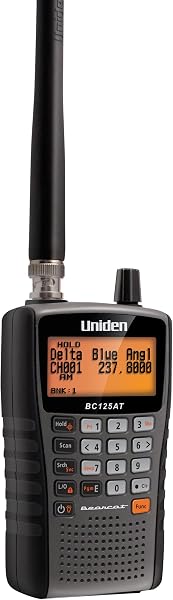
Uniden BC125AT
8.0Editor scoreAnalog handheld scanner
500 alpha-tagged channels
Close Call RF capture
Ten preset search bands
Find the right police scanners for 2026. We compare 10 standout options by build quality, useful features, owner feedback, value, and everyday trade-offs.
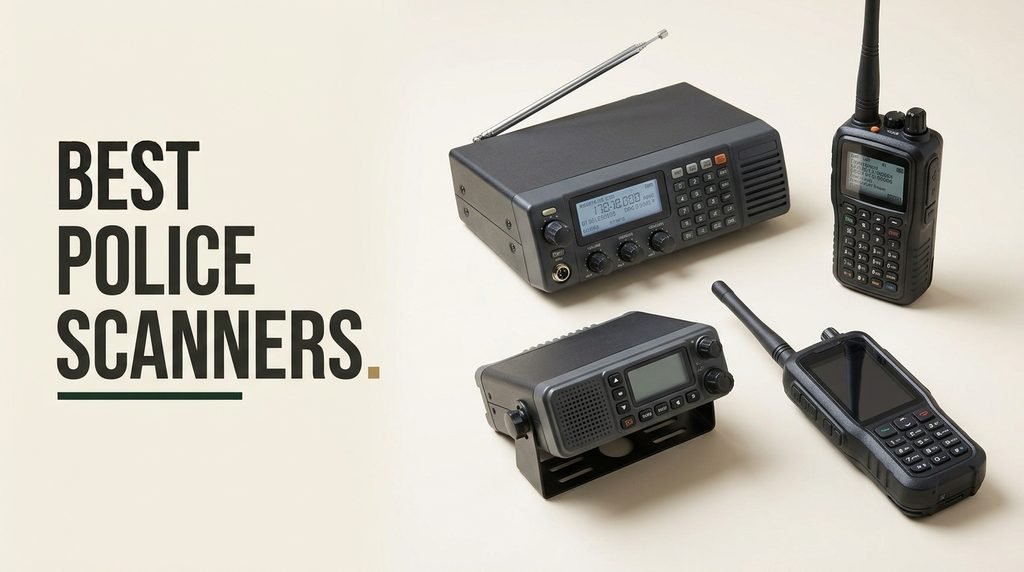
Choosing the right police scanner for 2026 means navigating a genuine divide between affordable analog receivers and advanced digital trunking models. We compare 10 standout radio scanners by the factors that matter most: analog versus digital capability, trunking system support, channel capacity, display quality, programming ease, GPS integration, portability, and whether the scanner can actually decode the systems used in your specific area.
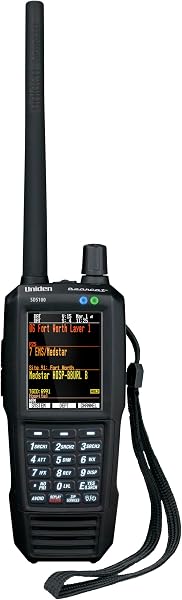
The scanner market splits sharply along the digital line. Analog models like the Uniden Bearcat BC125AT remain excellent for rural areas, racing events, aviation, and marine use. Digital TrunkTracker scanners like the Uniden SDS200 and SDS100 handle Project 25 Phase 1 and Phase 2 systems that most urban public safety agencies now use.
Whether you want an affordable handheld for weather alerts and local analog traffic, a dedicated base station for home monitoring, or a professional-grade I/Q receiver for challenging simulcast environments, the picks below cover the most practical options available. Read on to find the scanner that matches your area’s radio systems, your technical comfort level, and your budget.
We compared 10 police scanners using the details that actually help a buyer decide: analog or digital capability, trunking system support, channel capacity, programming method, display readability, GPS integration, battery and power options, build durability, and value against competing models. The notes focus on practical trade-offs so each pick connects to how listeners actually use scanners, from monitoring local public safety and weather alerts to tracking aviation, railroad, and marine traffic in real-world conditions.

Compare key features, scores, and current prices side by side. A shorter feature list means fewer details were available, not necessarily fewer capabilities.



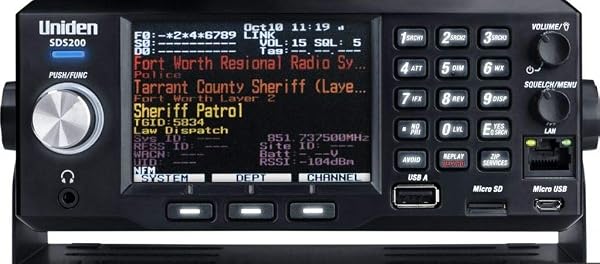
The Uniden SDS200 represents the current reference standard for digital scanner performance in challenging RF environments. Software Defined Radio combined with True I/Q technology captures the complete signal waveform in three dimensions, which dramatically improves digital decoding on simulcast systems that defeat lesser scanners. For serious enthusiasts and professionals monitoring urban Project 25 Phase 2 systems, this performance advantage is the primary justification for the premium price.
We may earn a commission when you buy through this link, at no additional cost to you.
The HomePatrol database includes all known radio systems in the US and Canada, with weekly updates through the free Sentinel software. Programming can be as simple as entering your zip code or GPS coordinates, and the auto-locate feature determines your general location if you are unsure. For buyers intimidated by manual scanner programming, this database-driven approach removes virtually all technical barriers to getting the scanner working with local systems.
The 3.5-inch fully customizable color display is one of the standout features for daily use. You can set display colors for each field, choose which information to show, and tailor the interface to match how you actually use the scanner. Favorites Lists let you organize systems by category, geographic area, or any logical grouping, and the scanner can mix custom Favorites with the full database for comprehensive coverage.
Simulcast digital systems transmit the same signal from multiple towers simultaneously, which creates interference patterns that confuse most scanners and cause audio dropouts or missed transmissions. True I/Q technology captures the signal in a way that allows advanced error correction and signal recovery even when multiple tower signals arrive at slightly different times. If you live near a simulcast Project 25 system and have struggled with poor digital reception, True I/Q scanners like the SDS200 and SDS100 often resolve problems that no other scanner can.
This scanner is the right choice for serious enthusiasts, hobbyists in difficult simulcast environments, and professionals who need the best digital decode performance available in a base or mobile scanner. The main tradeoffs are the significant price and the lack of handheld portability. For home base stations, vehicle installations, and dedicated monitoring setups, however, the SDS200 delivers capabilities that no handheld can match.
Buyers on a tight budget or those who need a portable handheld scanner for mobile monitoring away from a vehicle or desk.
We may earn a commission when you buy through this link, at no additional cost to you.
The Uniden Bearcat BC125AT is designed for buyers who want a quality handheld analog scanner at a reasonable price point. With 500 alpha-tagged channels organized into 10 storage banks, it provides enough capacity to cover local public safety, aviation, marine, railroad, and amateur radio activity in areas where analog systems still dominate. For rural communities, racing events, and specialty hobbyist monitoring, this scanner remains highly relevant despite the general industry shift toward digital.
We may earn a commission when you buy through this link, at no additional cost to you.
The Close Call RF capture technology is a genuinely useful feature that automatically tunes to nearby strong transmissions. This is particularly valuable at events like NASCAR races, air shows, or marine gatherings where you want to catch activity from any transmitter in range without pre-programming every possible frequency. Do Not Disturb mode prevents these Close Call checks from interrupting an active conversation, which solves a common annoyance with the feature on other models.
The preset search bands cover the most popular monitoring categories out of the box, which lowers the barrier to entry for first-time scanner users. You can start listening to civil aviation, military air, marine, railroad, CB radio, or ham bands immediately without any programming knowledge. Alpha tagging lets you assign readable names to channels as you learn your local radio landscape, making the scanner more useful over time as you organize what you find.
Most urban and suburban public safety agencies have migrated to digital trunking systems, which an analog-only scanner like the BC125AT cannot decode. Before buying any analog scanner, search your county or city on RadioReference.com to see which radio systems your local police, fire, and EMS agencies use. If your area shows mostly Project 25 Phase 1 or Phase 2 systems, you will need a digital scanner like the SDS100 or BCD436HP to hear meaningful public safety traffic.
This scanner is the right choice for buyers in areas where analog systems still carry important traffic, hobbyists who focus on aviation and marine monitoring, or anyone who wants an affordable introduction to the hobby before potentially upgrading to digital. The critical limitation is that it cannot decode Project 25, DMR, or NXDN digital systems. Before purchasing, check your local public safety communications on RadioReference to confirm whether analog monitoring will actually give you useful content.
Buyers in urban areas where public safety agencies have migrated to Project 25 digital trunking systems that analog scanners cannot decode.
We may earn a commission when you buy through this link, at no additional cost to you.
The Uniden BC365CRS takes a unique approach by combining a 500-channel analog scanner with an FM radio and alarm clock in a single desktop unit. For buyers who want home scanning capability without dedicating a separate device solely to radio monitoring, this all-in-one design fits naturally on a nightstand or kitchen counter where it does double duty throughout the day.
We may earn a commission when you buy through this link, at no additional cost to you.
The scanner side covers the same analog territory as the BC125AT handheld, with preset search bands for non-digital police and fire, weather, marine, aircraft, amateur radio, and railroad communications. The 500-channel capacity is organized into priority groups so your most important frequencies get checked every 2 seconds during normal scanning. This priority system helps ensure you do not miss activity on key channels while the scanner cycles through less critical frequencies.
The FM radio stores up to 30 presets for your favorite local stations, and the alarm clock function can wake you to scanning, a weather channel, or FM broadcasts. The clean backlit LCD display is designed for nighttime readability, and the button layout avoids the cluttered feel of some multi-function devices. For home office or bedroom use, this combination makes the scanner part of your daily routine rather than a dedicated hobby device.
Priority Do Not Disturb mode is a thoughtful detail that prevents the scanner from jumping to priority channel checks while you are actively listening to a conversation on another channel. Without this feature, scanners can cut off mid-sentence to check priority frequencies, which is frustrating when the current conversation matters. For home listening where you want to track multiple agencies without missing context, Do Not Disturb significantly improves the practical experience.
This scanner is the right choice for home users in areas with active analog traffic who want multi-purpose functionality from a single device. The analog-only limitation is the same consideration as other non-digital Uniden models. If your local public safety has gone digital, this scanner will serve mainly as an FM radio and clock with weather alert capability, which still provides value but not the public safety monitoring that most buyers want from a scanner purchase.
Buyers who need portability or who live in areas where digital trunking has replaced analog public safety communications.
We may earn a commission when you buy through this link, at no additional cost to you.
The Uniden SDS150 is the newest flagship handheld in the Uniden digital lineup, incorporating SDR technology with meaningful improvements over the earlier SDS100. The built-in GPS receiver is a particularly welcome addition, eliminating the need for an external GPS accessory to enable location-based scanning. For mobile users who want the scanner to automatically select appropriate systems as they travel, this integrated GPS removes a significant hassle.
We may earn a commission when you buy through this link, at no additional cost to you.
True I/Q receiver technology delivers the exceptional simulcast and weak-signal performance that defines the top of Uniden’s digital lineup. Enhanced sensitivity, improved signal reception, and refined filtering help eliminate interference that would defeat older scanners. The simplified interface and new digital display aim to make the advanced capabilities more accessible to users who found earlier SDR scanners complex to configure.
The included charge cradle with an extra battery charging slot is a thoughtful convenience that lets you keep one battery charging while the scanner runs on another. Water resistance to JIS4 or IPX4 standards means the scanner handles splashing rain and wet conditions without concern, which matters for field use by first responders, event coordinators, and outdoor enthusiasts. Bluetooth connectivity for the U/Aware smartphone app extends functionality beyond the scanner itself.
Previous Uniden handhelds required an external GPS receiver to enable automatic system selection based on your location. This added cost, cable clutter, and the need to buy a compatible accessory. The SDS150’s built-in GPS eliminates all of this and makes location-based scanning work out of the box. For travelers, truckers, event monitors, and anyone who moves between radio system coverage areas, integrated GPS is a genuine quality-of-life improvement over previous generations.
This handheld is the right choice for buyers who want the absolute latest digital scanner technology in a portable form factor and are willing to pay for the premium position. The main tradeoff is the top-of-market pricing and the fact that as a newer product, long-term user feedback is still accumulating. For professionals and serious hobbyists who need handheld portability combined with the most advanced digital decode available, the SDS150 is the current state of the art.
Buyers who want proven long-term reliability from an established model or those on tight budgets who cannot justify the premium pricing.
We may earn a commission when you buy through this link, at no additional cost to you.
The Uniden BCD996P2 serves as a strong middle-ground option between affordable analog scanners and the premium SDR-based SDS200. With TrunkTracker V operation that scans APCO 25 Phase 1 and Phase 2, X2-TDMA, Motorola, EDACS, and LTR trunked systems alongside conventional analog and P25 digital channels, this scanner handles the vast majority of radio systems a US-based listener will encounter.
We may earn a commission when you buy through this link, at no additional cost to you.
The 25,000 dynamically allocated channels provide essentially unlimited capacity for even the most ambitious monitoring setups. Dynamic allocation means you are not limited by rigid memory banks, so you can organize systems however makes sense for your use case. The 4-line alpha display provides clear visibility of scanner activity, channel information, and system details even when driving.
Close Call RF Capture technology with Do Not Disturb matches the convenience of other Uniden models, instantly tuning to nearby strong transmissions without interrupting active channel reception. SAME weather alert decoding is particularly valuable for mobile installations, providing targeted warnings for your specific county rather than broad regional alerts. Location-based scanning with a compatible GPS receiver automatically selects relevant programmed systems as you travel.
Scanners like the BCD996P2 designed for base and mobile use typically ship with mounting hardware, multiple power options including DC cords for vehicles, and connections for external antennas. For mobile use, invest in a quality externally mounted antenna rather than relying on the included back-of-set telescoping antenna, which has limited performance in vehicles. A good mobile antenna can transform scanner performance by delivering stronger signals from distant transmitters that the built-in antenna cannot capture.
This scanner is the right choice for buyers who want solid digital trunking capability including Phase 2 at a mid-range price, particularly for mobile installation in a vehicle. The main tradeoff is that the interface and digital decode performance lag behind the newer True I/Q scanners like the SDS200. For most everyday use outside challenging simulcast environments, however, the BCD996P2 delivers reliable performance that justifies its price position.
Buyers in heavy simulcast digital environments who need the superior decode performance of True I/Q receivers like the SDS200 or SDS100.
We may earn a commission when you buy through this link, at no additional cost to you.
The Whistler WS1065 provides a compelling alternative to the Uniden desktop lineup for buyers who want digital trunking capability from a different brand. V-Scanner technology is the standout feature, allowing you to store multiple complete scanner configurations and swap between them as needed. For users who monitor different radio systems depending on travel location or seasonal activity, V-Scanner profiles make switching between setups much faster than reprogramming.
We may earn a commission when you buy through this link, at no additional cost to you.
Advanced Adaptive Digital Tracking continuously analyzes P25 signals and adjusts decoding parameters more than 50 times per second to compensate for multipath interference and signal fading. P25 NAC filtering lets you ignore transmissions that are not from your target system even when they share the same frequency, which cleans up monitoring in areas with multiple overlapping digital systems.
The multi-color programmable alert LED provides visual notifications with up to 8 user-defined colors from thousands of combinations. Combined with programmable audible alarms, this makes it easy to recognize when specific channels or events trigger without constantly watching the display. The context-sensitive help menu system is a thoughtful touch for buyers learning to program a digital scanner for the first time.
P25 Phase 1 uses FDMA transmission, while P25 Phase 2 uses TDMA, which doubles system capacity by transmitting two voice channels on each frequency. Many urban public safety agencies have migrated to Phase 2 to increase capacity without acquiring additional spectrum. Scanners like the Whistler WS1065 that only support Phase 1 will hear Phase 1 systems normally but will miss transmissions on Phase 2 channels. Before buying any digital scanner, verify which P25 phase your local systems actually use.
This scanner is the right choice for buyers who want digital trunking capability from a well-regarded alternative to Uniden, particularly those who value V-Scanner profile management for monitoring multiple radio environments. The key limitation is that P25 Phase 2 is not supported, so if your local public safety uses Phase 2 TDMA, you will need a Uniden alternative. For Phase 1 and conventional digital monitoring, however, the WS1065 is a solid desktop choice.
Buyers in areas where local public safety has migrated to P25 Phase 2 TDMA systems that this scanner cannot decode.
We may earn a commission when you buy through this link, at no additional cost to you.
The Uniden SR30C is the most compact scanner in this guide, designed for buyers who want to carry an analog scanner in a pocket or small bag without the bulk of standard handhelds. The 500-channel capacity organized into ten service banks covers the same preset categories as larger Uniden analog scanners, including non-digital public safety, NOAA weather, marine, racing, civil aircraft, ham radio, railroad, and CB bands.
We may earn a commission when you buy through this link, at no additional cost to you.
The three power options add significant practical flexibility. You can run the SR30C on two AA alkaline batteries, two AA rechargeable NiMH batteries that charge in the unit via USB, or directly from any USB power source like a phone charger or laptop. This versatility means you can keep the scanner running at NASCAR races, air shows, or extended outdoor events without worrying about dead batteries, as long as you have a USB power bank or vehicle charger available.
Close Call RF capture matches the convenience found on other Uniden analog scanners, instantly tuning to nearby strong transmissions. Memory backup preserves your programmed frequencies for an extended time if the scanner loses power, so you do not need to reprogram after battery changes. The triple-conversion receiver design helps reject image interference that can plague cheaper single-conversion scanners.
At racing events, air shows, and marine gatherings, a scanner small enough to clip to a belt or stash in a cargo pocket is far more practical than a larger handheld. The SR30C’s compact form factor encourages you to actually carry it where the action is, rather than leaving it in a car or hotel room because it feels bulky. For event monitoring specifically, portability often matters more than channel capacity or advanced features.
This scanner is the right choice for racing fans, air show attendees, marine enthusiasts, and anyone who wants a compact analog scanner for specific hobby monitoring. The analog-only limitation applies as with other non-digital Uniden models, so verify that your target activity uses analog systems before buying. For NASCAR driver-to-crew communications, aviation ground control, and marine VHF, analog remains the standard and the SR30C delivers solid value.
Buyers who need digital trunking support for public safety monitoring or those who want a larger display for easier reading.
We may earn a commission when you buy through this link, at no additional cost to you.
The Uniden SDS100 established the True I/Q receiver technology that now defines the top of the handheld digital scanner market. For buyers who need professional-grade digital decoding performance in a portable form factor, this scanner has been the gold standard for years and continues to deliver results that make it worth considering even alongside the newer SDS150.
We may earn a commission when you buy through this link, at no additional cost to you.
The True I/Q receiver captures the complete signal waveform in three dimensions, enabling advanced error correction and signal recovery in simulcast environments and weak-signal conditions that defeat other scanners. For listeners in cities with challenging digital systems, this performance advantage transforms the scanner from frustratingly unreliable to consistently clear. The HomePatrol database with zip code programming makes initial setup accessible even for first-time digital scanner buyers.
JIS 4 rugged weather-resistant construction means the scanner handles rain, dust, and rough handling that would damage less durable units. The customizable color display lets you set colors for each field and choose exactly what information to show, tailoring the interface to match how you actually use the scanner. The built-in battery charger lets you charge via USB from any computer, power bank, or wall adapter.
The SDS100 and SDS150 share True I/Q receiver technology and overall performance class. The SDS150 adds built-in GPS, charge cradle, and improved interface design. The SDS100 is more established with years of software maturity and extensive user documentation. For buyers who want the newest features, choose the SDS150. For buyers who prefer proven reliability at a slightly lower price, the SDS100 remains an outstanding choice. Both deliver reference-class digital performance that transforms what is possible with a handheld scanner.
This scanner is the right choice for professionals, serious hobbyists, and anyone who needs the best digital decode performance in a handheld. The premium price reflects the professional-grade capabilities, and the mature product has accumulated years of user feedback and software refinement. If you need a handheld scanner that can keep up with challenging modern digital systems, the SDS100 remains an excellent choice even as the SDS150 claims the newest flagship position.
Budget-conscious buyers or those monitoring only analog systems who do not need True I/Q digital performance.
We may earn a commission when you buy through this link, at no additional cost to you.
The Uniden BCD436HP solves the single biggest barrier to scanner ownership for new buyers: programming complexity. HomePatrol ease of use means you simply turn on the scanner, enter your zip code, and TrunkTracker V handles everything else. For first-time digital scanner buyers who have been intimidated by frequency charts, talkgroup IDs, and system programming, this out-of-the-box simplicity transforms the experience.
We may earn a commission when you buy through this link, at no additional cost to you.
The scanner immediately begins receiving communications used by public safety, police, fire, EMS, ambulance, aircraft, military, and weather services as soon as you power it on. TrunkTracker V operation includes P25 Phase 2 support, so the scanner handles the current digital standards used by most urban public safety agencies. An 85 channel-per-second scan rate helps catch brief transmissions that slower scanners might miss.
Instant Replay lets you play back up to 240 seconds of recent transmissions, which is invaluable when you catch the end of an interesting call and want to hear the beginning. Custom alerts can notify you when specific channels, unit IDs, Close Call hits, or emergency alerts occur, with 9 tone patterns, 15 volume settings, 7 colors, and 3 flash patterns. SAME weather alerts provide targeted warnings for your specific county.
The Instant Replay feature is genuinely useful during active monitoring. When you hear a snippet of an interesting call but miss the first part, pressing the replay button lets you hear the previous 60, 120, or 240 seconds of audio. This is especially valuable during emergency incidents when critical information gets exchanged quickly and you want to catch everything that was said. Few other scanners offer this capability, and it alone justifies the BCD436HP for many enthusiasts.
This handheld is the right choice for beginners who want to get started with digital scanning without a steep learning curve, or for buyers who want HomePatrol database convenience in a portable form factor. The main tradeoff compared to the SDS100 is the lack of True I/Q performance, which matters most in challenging simulcast environments. For straightforward digital monitoring in most areas, the BCD436HP delivers excellent performance with the easiest possible setup experience.
Buyers in heavy simulcast digital environments who need the superior True I/Q decode performance of the SDS100 or SDS150.
We may earn a commission when you buy through this link, at no additional cost to you.
The Whistler WS1040 handheld scanner takes a different approach to programming by building context-sensitive help directly into every menu option. Rather than requiring you to consult a separate manual, the scanner provides a few lines of help text for each programming decision. For buyers who prefer to understand what they are doing rather than just following step-by-step guides, this built-in guidance significantly improves the learning curve.
We may earn a commission when you buy through this link, at no additional cost to you.
Free-form memory organization allocates channel storage dynamically as needed, avoiding the wasted space of traditional banked systems. This flexibility means you can organize your scanner by any logical structure that makes sense for your monitoring, whether by agency, geographic area, or activity type. Scan List functionality lets you arrange and organize scan objects according to your specific preferences.
Digital AGC automatically compensates for low audio levels common on digital systems, which prevents the frustrating need to constantly adjust volume between analog and digital channels. The Skywarn storm spotter functionality provides instant access to frequencies used by storm spotter networks, which can give you earlier severe weather information than official NOAA alerts in many areas. Multi-system trunking supports Motorola, EDACS, LTR, and P25 Phase 1 systems.
Skywarn is the National Weather Service’s volunteer storm spotter program, with trained volunteers reporting severe weather observations directly to NWS forecasters. These reports often provide ground-truth information before official warnings go out through standard channels. A scanner with instant Skywarn access like the WS1040 lets you monitor these spotter frequencies during severe weather, which can give you crucial early information about tornadoes, flooding, and severe storms in your immediate area.
This scanner is the right choice for buyers who want a Whistler-brand alternative to the Uniden lineup, particularly those who value learning-friendly programming through built-in help. The main limitations are the P25 Phase 1 only support and a smaller third-party support community compared to Uniden scanners. For areas still using Phase 1 digital and buyers who want approachable programming, the WS1040 delivers solid digital scanning capability at a competitive price.
Buyers in areas where local public safety has migrated to P25 Phase 2 TDMA systems that this scanner cannot decode.
We may earn a commission when you buy through this link, at no additional cost to you.
Selecting a police scanner requires matching the scanner’s capabilities to the specific radio systems used in your area. The scanners in this guide range from affordable analog handhelds to professional-grade digital base stations. This guide walks through the factors that genuinely matter when narrowing down your choice.
The single most important decision when buying a scanner is whether you need analog-only or digital capability. Analog scanners like the Uniden Bearcat BC125AT, BC365CRS, and SR30C work well in areas where public safety agencies still use conventional analog FM communications. These scanners are significantly less expensive than digital models and work excellently for aviation, marine, railroad, amateur radio, and racing monitoring, all of which largely remain analog.
Digital scanners like the Uniden SDS200, SDS100, SDS150, BCD436HP, and BCD996P2 add the ability to decode Project 25 Phase 1 and Phase 2 systems that most urban public safety agencies now use. Within the digital category, Phase 2 support matters because many agencies have migrated from Phase 1 FDMA to Phase 2 TDMA for increased capacity. The Whistler WS1065 and WS1040 support Phase 1 but not Phase 2.
Before buying any scanner, search RadioReference.com for your county or city to see which radio systems your local agencies actually use. If your area shows mostly P25 Phase 2 systems, only a Uniden digital model with Phase 2 support will give you meaningful public safety coverage.
Scanner form factors fall into three main categories: handheld portables, desktop base stations, and mobile units designed for vehicle installation. Handhelds like the BC125AT, SR30C, SDS100, SDS150, BCD436HP, and WS1040 run on batteries and move with you, which is essential for event monitoring, outdoor use, and travel. Desktop base stations like the BC365CRS and WS1065 are designed for permanent home installation with better displays and often additional features like FM radio or alarm clocks.
Mobile scanners like the SDS200 and BCD996P2 are designed for installation in vehicles with 12-volt DC power connections, mounting hardware, and interfaces that remain visible from the driver’s seat. These scanners can also serve as base stations with the included AC adapter and desk stand. Choose form factor based on how you primarily plan to use the scanner: handheld for mobility, desktop for home monitoring, or mobile for vehicle installation.
Many serious enthusiasts eventually own multiple scanners, with a handheld for portable use and a base or mobile unit for home or vehicle. Starting with the form factor that matches your most frequent use is the practical approach.
Scanner programming has historically been the biggest barrier to entry for new users. Modern Uniden scanners with HomePatrol database support like the SDS200, SDS100, SDS150, and BCD436HP can be programmed by simply entering a zip code, which eliminates virtually all the complexity that intimidated past generations of scanner buyers. The database includes all known radio systems in the US and Canada and updates weekly through the free Sentinel software.
Older scanners and some non-Uniden models require manual programming of frequencies, talkgroup IDs, and system parameters. The Whistler scanners offer context-sensitive help within the programming menus to make this more approachable, but it still requires more technical knowledge than database-driven setup. PC programming software like ARC-536 or Sentinel streamlines manual programming significantly compared to entering data from the scanner keypad.
If you are new to scanning and want the easiest possible setup, choose a Uniden model with HomePatrol database support. If you enjoy the technical aspects of programming or need custom configurations beyond what databases provide, scanners with flexible manual programming suit your needs better.
Simulcast digital systems transmit the same signal from multiple towers simultaneously to provide better coverage. These systems create interference patterns that confuse most digital scanners and cause audio dropouts, garbled transmissions, or missed calls entirely. True I/Q receiver technology in the Uniden SDS200, SDS100, and SDS150 handles simulcast systems significantly better than conventional digital scanners by capturing the complete signal waveform and applying advanced error correction.
Weak signal performance matters when you want to monitor distant transmitters, operate in areas with challenging terrain, or use indoor installations where antenna placement is limited. True I/Q scanners again lead this category, with specific tuning to improve digital decoding in marginal signal conditions. For buyers in rural areas, basement installations, or anywhere with difficult reception, the extra investment in a True I/Q scanner often transforms the practical experience.
If you live in a dense urban area with simulcast systems, invest in True I/Q technology. If you have strong, clean signals from nearby towers with conventional single-site systems, standard digital scanners perform well enough that the True I/Q premium may not be necessary.
Location-based scanning automatically selects appropriate radio systems based on your current GPS coordinates. For mobile users who travel between coverage areas, this feature eliminates the need to manually reconfigure the scanner as you move. The Uniden SDS150 includes built-in GPS, while the SDS200, SDS100, BCD996P2, and BCD436HP require an external GPS receiver connection to enable location-based scanning.
GPS integration matters most for truckers, traveling professionals, and anyone who regularly operates in multiple radio system coverage areas. For home base stations or scanners used primarily in a single location, GPS integration is less important and the extra cost of a GPS-equipped scanner may not be justified.
If you need GPS and want integrated convenience, the SDS150 is the current standout. If you need GPS but want to save money, scanners that support external GPS receivers let you add the capability for less total cost.
SAME weather alerts provide targeted severe weather warnings for your specific county, which is more useful than broad regional alerts. The BCD996P2, BCD436HP, WS1040, and other models include this capability. Close Call RF capture technology in Uniden models automatically tunes to nearby strong transmissions, which is particularly useful at events like NASCAR races or air shows where you want to catch any transmitter in range.
Instant Replay functionality on scanners like the BCD436HP lets you play back recent transmissions you may have missed, which is invaluable during active incidents. Customizable color displays on the SDS200, SDS100, and SDS150 let you tailor the interface to match your preferences. V-Scanner profiles on the Whistler WS1065 let you store and swap between complete scanner configurations for different monitoring scenarios.
Prioritize features based on your specific use cases. Weather alerts matter in storm-prone areas, Close Call matters at events, Instant Replay matters for active incident monitoring, and display customization matters for daily user experience quality.
Antenna selection and placement significantly affect scanner performance, often more than any other factor. For handheld scanners, upgrading the stock rubber duck antenna to a quality aftermarket whip can noticeably improve reception. For base and mobile scanners, invest in a proper externally mounted antenna with low-loss coaxial cable. A scanner connected to a well-placed external antenna will outperform the same scanner with the included back-of-set antenna by a substantial margin, especially for distant signals.
Programming best practices extend the useful life of your scanner. For Uniden HomePatrol scanners, run Sentinel software updates monthly to keep the radio system database current as agencies change frequencies and migrate to new systems. For manually programmed scanners, document your frequency and talkgroup assignments in a spreadsheet or notebook so you can restore the programming if the scanner needs factory reset or if you upgrade to a newer model. PC programming cables and software make backup and restore operations straightforward.
Battery and power management matters for handheld scanners used extensively. For NiMH rechargeable batteries, follow the manufacturer’s charging guidelines to maximize battery lifespan, typically avoiding deep discharges and keeping batteries topped up when not in use. Keep spare batteries charged and ready for extended events. For base and mobile installations, ensure your power connections are secure and protected from vibration or moisture that could cause intermittent issues. Many scanner problems that seem like radio failures are actually power supply or antenna connection issues that are much easier to fix.
In most US states, listening to unencrypted public safety radio transmissions is legal for personal use. A few states have restrictions, particularly against using a scanner in a vehicle while committing a crime. However, listening to cellular phone calls or deliberately encrypted communications is illegal under federal law. Before buying, check your specific state and local laws regarding scanner use. The scanners themselves are legal to own and sell throughout the United States.
Analog scanners receive conventional FM radio transmissions, which is how most public safety agencies communicated for decades. Digital scanners add the ability to decode Project 25 Phase 1 and Phase 2 systems that most urban agencies now use. If your area has migrated to digital trunking, an analog scanner will not hear meaningful public safety traffic. Check RadioReference.com for your county before buying to see which systems your local agencies use.
No scanner can decode properly encrypted radio transmissions. Some agencies encrypt specific tactical channels or SWAT operations while leaving routine dispatch traffic unencrypted. Other agencies have moved to fully encrypted communications, which cannot be monitored by any legal scanner. Before buying, check whether your target agencies encrypt their communications. If they do, a scanner may not deliver the content you expect regardless of its capabilities.
Modern Uniden scanners with HomePatrol database support like the SDS200, SDS100, SDS150, and BCD436HP make programming extremely easy. Simply enter your zip code and the scanner configures itself to monitor local systems. Older scanners and some non-Uniden models require manual programming of frequencies and talkgroups, which has a steeper learning curve but is well-documented through the RadioReference wiki and various YouTube tutorials. For beginners, HomePatrol scanners dramatically reduce the technical barrier.
TrunkTracker is Uniden's technology for monitoring trunked radio systems, where multiple agencies share a pool of frequencies that are dynamically assigned to calls. Without TrunkTracker, a conventional scanner would only hear fragments of conversations as they jump between frequencies. TrunkTracker V and the newer TrunkTracker X in the SDS200 and SDS150 follow entire conversations across all system frequencies. If your local public safety uses trunked systems, which most do, TrunkTracker capability is essential.
For handheld scanners used outdoors, the included antenna works reasonably well for nearby strong signals. For home base stations, an external antenna mounted outdoors or in an attic dramatically improves reception from distant transmitters. For mobile scanners in vehicles, an externally mounted antenna is essential because the glass and metal of the vehicle body attenuates signals significantly. Quality antennas and low-loss coaxial cable often improve performance more than upgrading to a more expensive scanner.
Most modern scanners can tune the NOAA weather radio frequencies, and many include SAME alert decoding that provides targeted warnings for your specific county. The Uniden BCD996P2, BCD436HP, Whistler WS1040, and others support SAME alerts. This feature is particularly valuable in storm-prone areas because it provides more immediate warnings than cellular alerts, which can be delayed during severe weather when networks are stressed.
Simulcast systems broadcast the same signal from multiple towers simultaneously to provide better coverage. The signals arrive at your scanner at slightly different times, creating interference patterns that cause audio dropouts and garbled transmissions with conventional digital scanners. True I/Q receiver technology in the Uniden SDS200, SDS100, and SDS150 handles simulcast systems much better than other scanners. If you live near a simulcast system, True I/Q scanners often resolve reception problems that no other scanner can fix.
No, always research your local radio systems before buying a scanner. Visit RadioReference.com and search for your county or city to see which radio systems your public safety agencies use. This research takes 10 minutes and prevents the much larger disappointment of buying a scanner that cannot decode your local systems. The right scanner depends entirely on what your area uses, so starting with that information is essential.
A quality scanner from Uniden or Whistler typically lasts 10 to 15 years or more with proper care. The main factors that end scanner life are typically battery degradation on handhelds, which can be addressed by replacing batteries, and obsolescence as local systems upgrade beyond what the scanner can decode. A scanner that handles your local systems well today may need replacement in 5 to 10 years as agencies migrate to newer digital standards. Buying a scanner with capabilities beyond your current needs provides headroom for future system changes.
The Uniden SDS200 stands out as the strongest overall choice for serious enthusiasts and professionals who want the best digital decode performance available in a base or mobile scanner. Its True I/Q receiver technology handles challenging simulcast digital systems that defeat lesser scanners, and the HomePatrol database with zip code programming makes setup accessible even for first-time digital scanner buyers. For dedicated home monitoring setups and vehicle installations, the SDS200 delivers reference-class performance that justifies its premium position.
For buyers with different needs, several strong alternatives serve specific use cases. The Uniden SDS150 brings True I/Q performance to a handheld form factor with built-in GPS for mobile users. The Uniden BCD436HP offers HomePatrol zip code programming in an affordable handheld for beginners who want digital capability without technical complexity. The Uniden Bearcat BC125AT provides excellent value for buyers in areas where analog systems still dominate. The Whistler WS1065 and WS1040 offer solid non-Uniden alternatives with distinctive features like V-Scanner profiles and context-sensitive help.
Choosing the right scanner comes down to checking what your local public safety agencies actually use, matching the scanner's capabilities to those systems, and selecting the right form factor for how you plan to monitor. Before buying any scanner, spend 10 minutes on RadioReference.com researching your area's radio systems. With that information, any of the 10 scanners in this guide can deliver the right capabilities when matched to your specific location and use case.