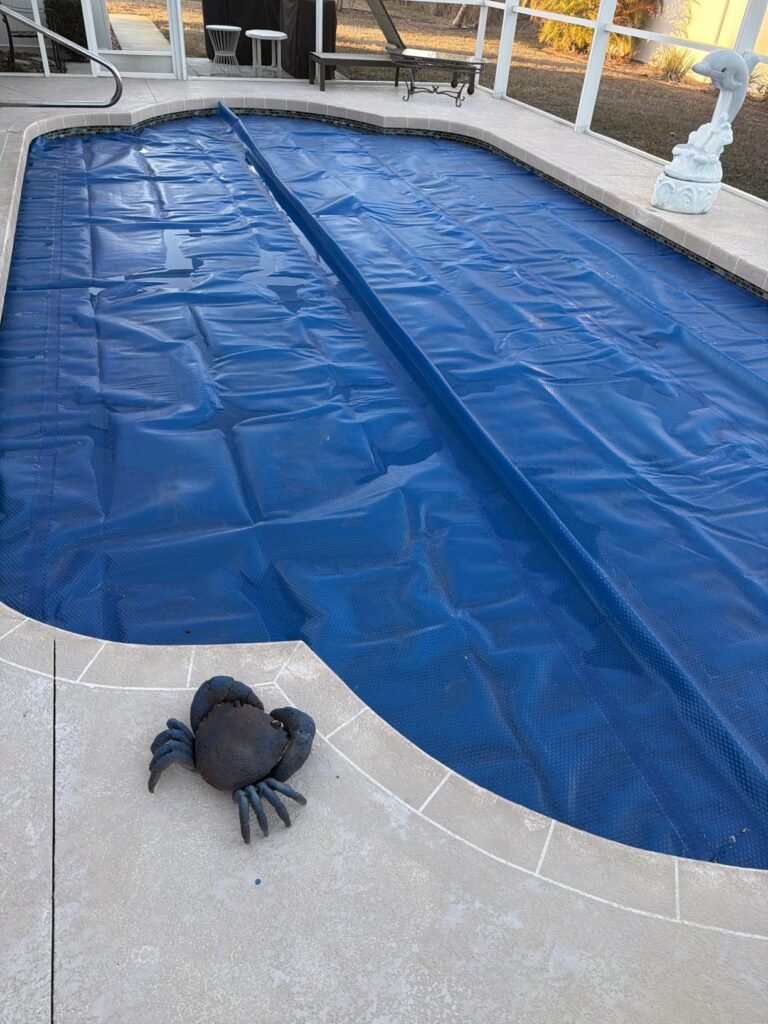
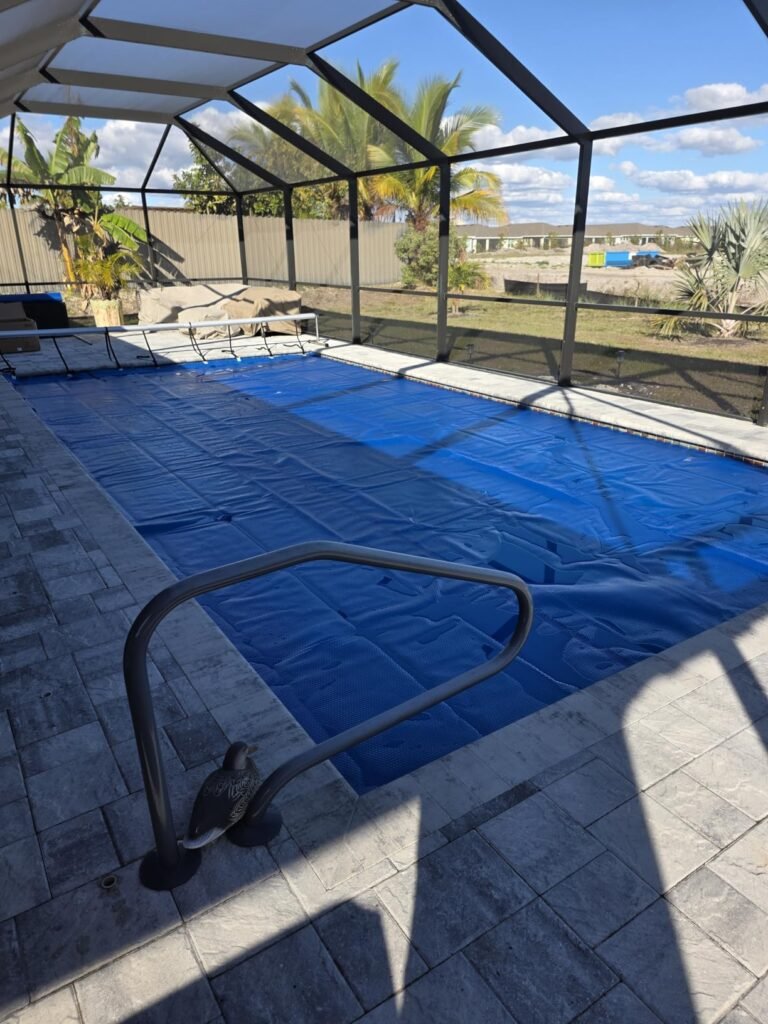
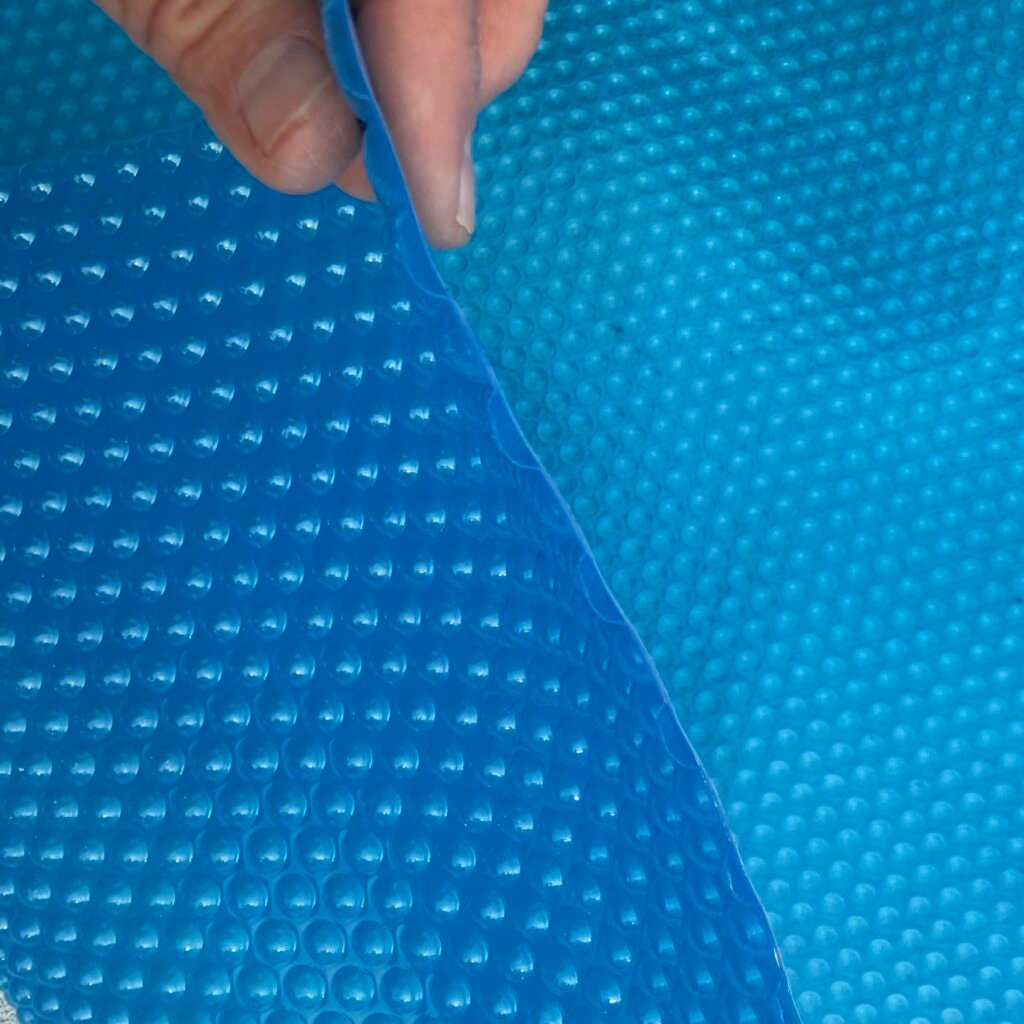
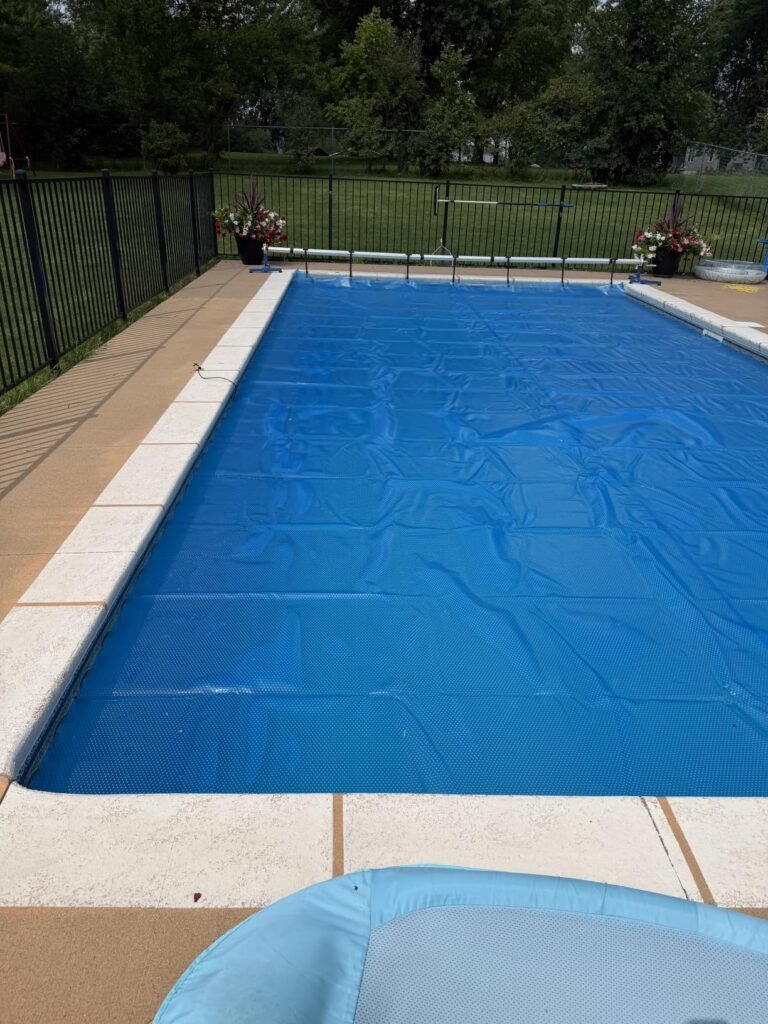
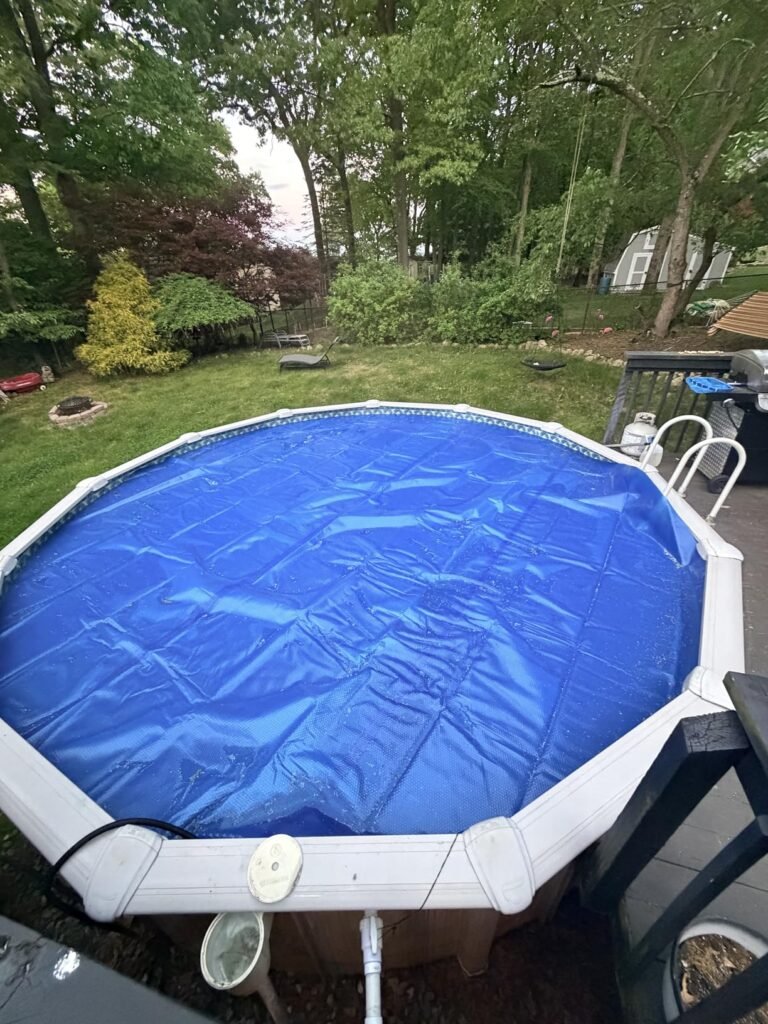
VEVOR 32×16 Solar
8.6Editor score16 mil thickness
32 x 16 ft
Blue and black
PE bubble construction
Find the right pool solar covers for 2026. We compare 10 standout options by build quality, useful features, owner feedback, value, and everyday trade-offs.
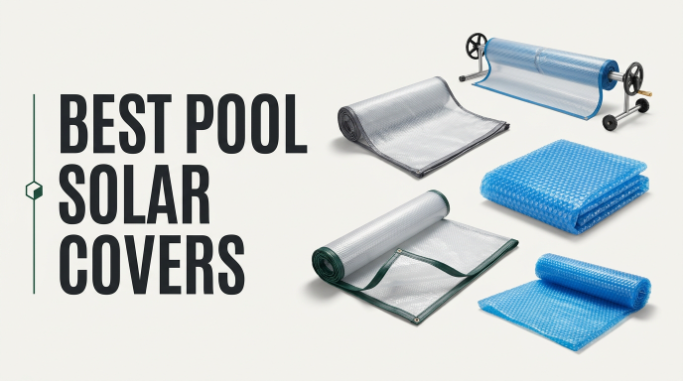
Find the right pool solar covers for 2026 with a clear side-by-side comparison. We break down 10 standout options across the factors that matter most: bubble thickness in mils, pool shape and size compatibility, heat retention performance, evaporation control, PE material durability, ease of trimming, and long-term value for both inground and above-ground pools.
Solar blankets vary widely in build quality. A 12-mil cover is lighter and easier to handle, while 16-mil options trap more heat and last longer under intense sun. Rectangle covers dominate the market, but round shapes matter for above-ground setups. Sizing accuracy, seam strength, and UV resistance all determine how many seasons a cover survives.
This guide focuses on practical buying decisions rather than marketing claims. You will find honest tradeoffs for each product, including which pool shapes fit best, when a thicker cover justifies the higher price, and how to match a solar blanket to your climate. Real evaporation reduction, heat gain expectations, and maintenance advice are covered throughout.
We compared 10 pool solar covers using the details that actually help a buyer decide: bubble thickness in mils, pool size and shape compatibility, PE material durability, heat retention performance, evaporation reduction, UV resistance, seam construction, trim-to-fit flexibility, and overall value. The notes focus on practical tradeoffs so each pick connects to how people actually install, use, and maintain a solar blanket across the swimming season on both inground and above-ground pools.
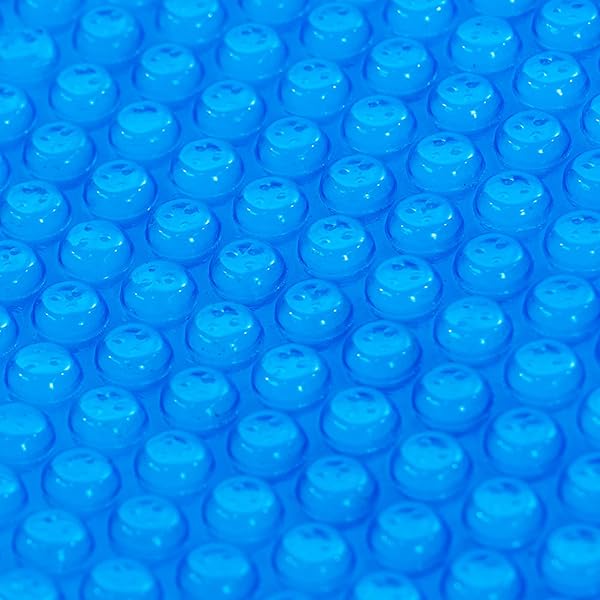

Compare key features, scores, and current prices side by side. A shorter feature list means fewer details were available, not necessarily fewer capabilities.
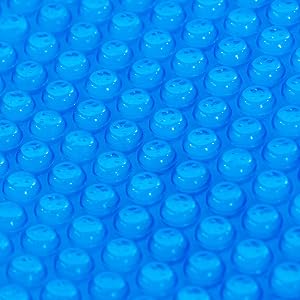



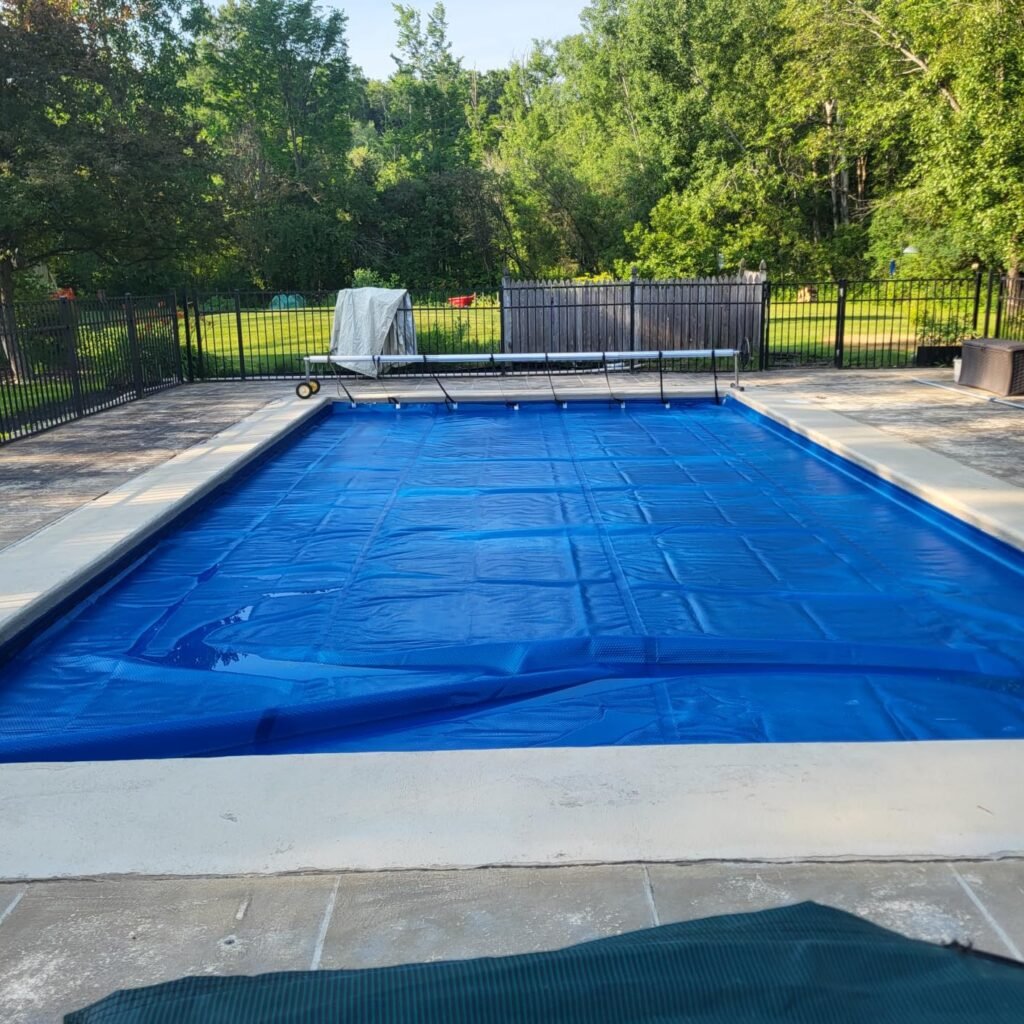
The Real Relax solar blanket earns the Editor's Choice slot on the strength of its rating and its combination of practical features. A 16 mil thickness paired with a standard 16 x 32 ft footprint fits the most common inground pool size on the market, which makes it a straightforward upgrade for the majority of homeowners.
We may earn a commission when you buy through this link, at no additional cost to you.
The cover uses a bubble-side-down orientation to absorb solar heat during the day and slowly transfer it into the water. At night, the same bubble layer works as insulation, slowing the natural cooling that occurs when heat radiates back into the atmosphere. The result is measurably warmer water in the morning and less reliance on gas or electric heaters.
Evaporation reduction of up to 95 percent is one of the more underrated benefits. Beyond conserving water, less evaporation means less loss of dissolved chemicals like chlorine and cyanuric acid, which stabilizes chemistry between service visits. The PE construction cuts cleanly with scissors, so custom trimming to fit skimmers or steps is manageable.
For best results, install the cover during peak sun hours and remove it just before swimming to give the top surface time to dry. Leaving the cover on overnight is where most heat retention actually happens. In cooler climates, keeping the cover on all day when not swimming can add significantly to your effective season length.
This cover is a smart pick for owners of standard rectangular inground pools who want a well-reviewed 16 mil blanket without paying premium pricing. If your pool is oval or round, look at a shape-specific option instead.
Owners of round or oval above-ground pools who need a shape-matched cover rather than a rectangle.
We may earn a commission when you buy through this link, at no additional cost to you.
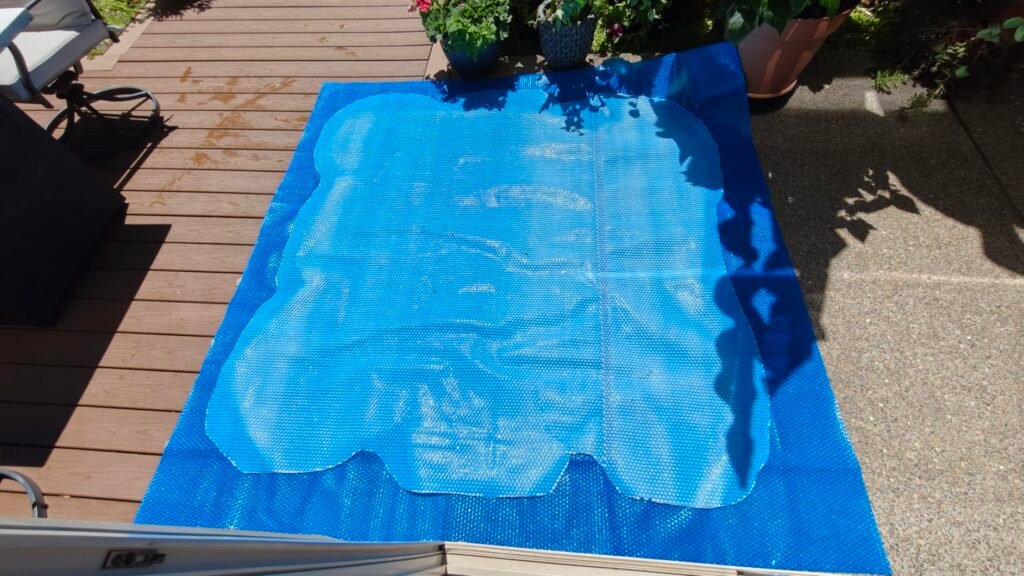
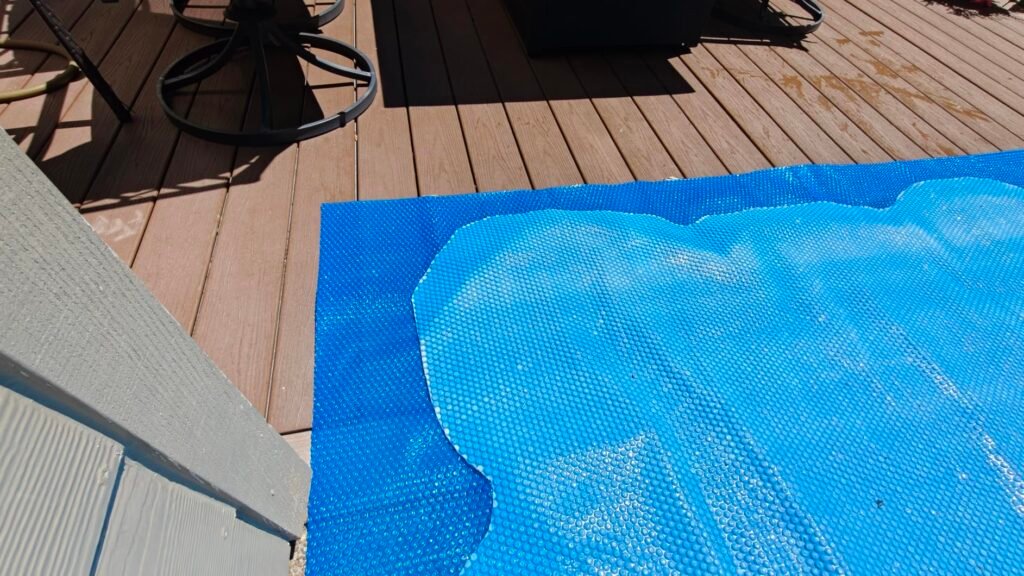
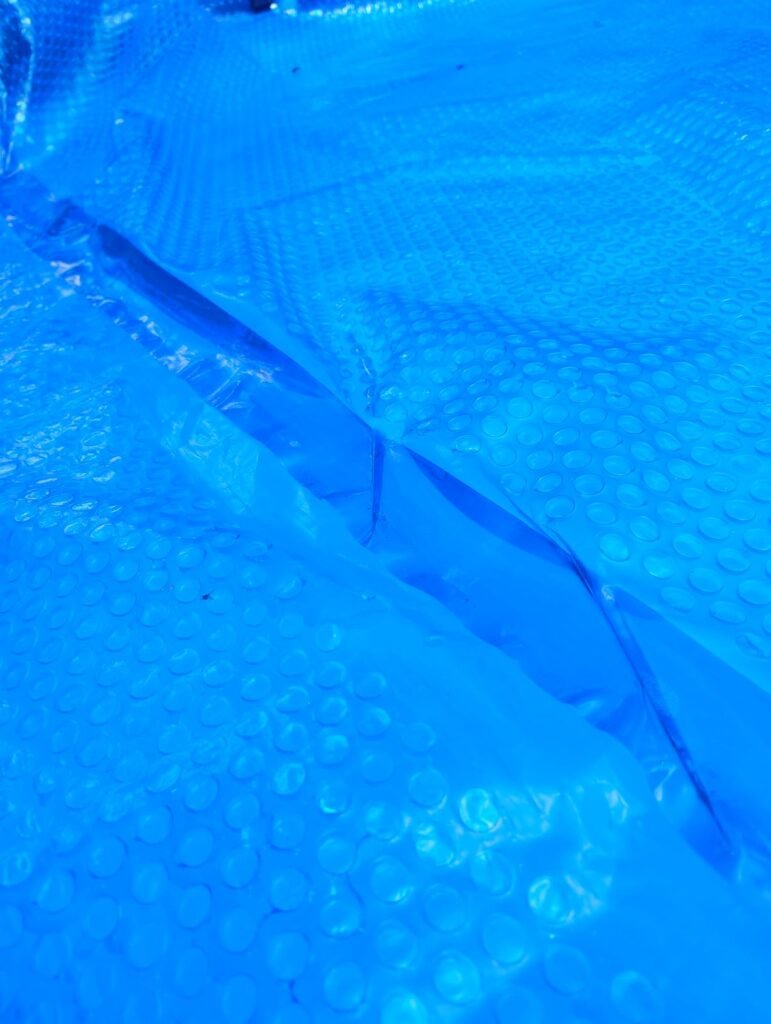
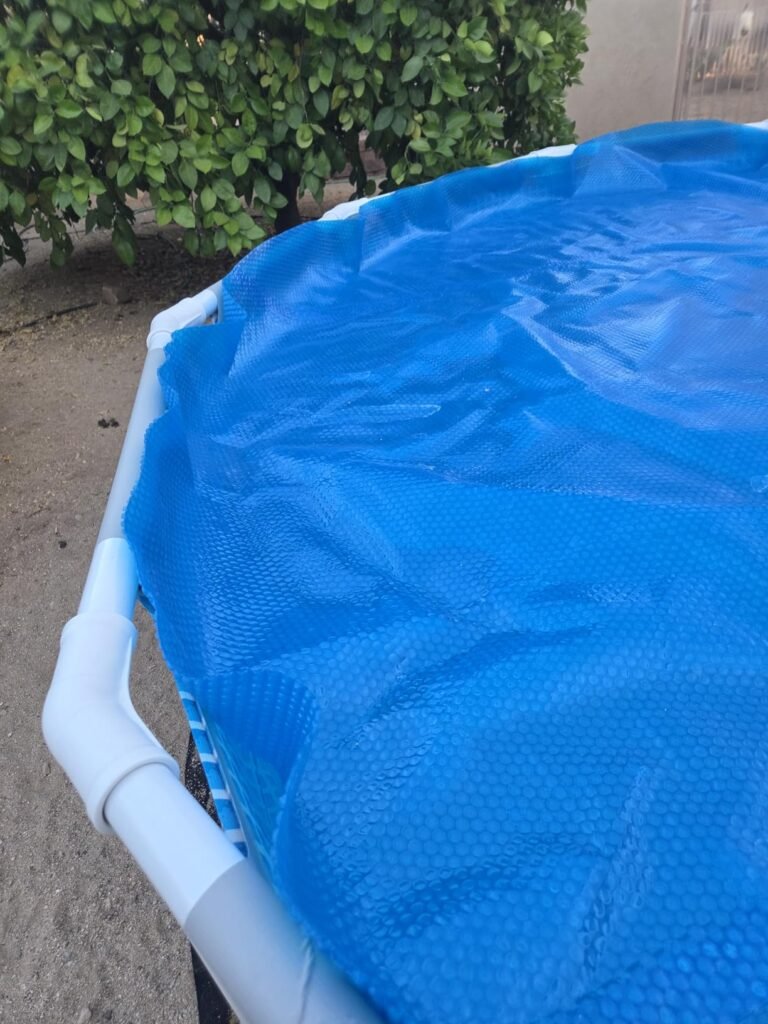
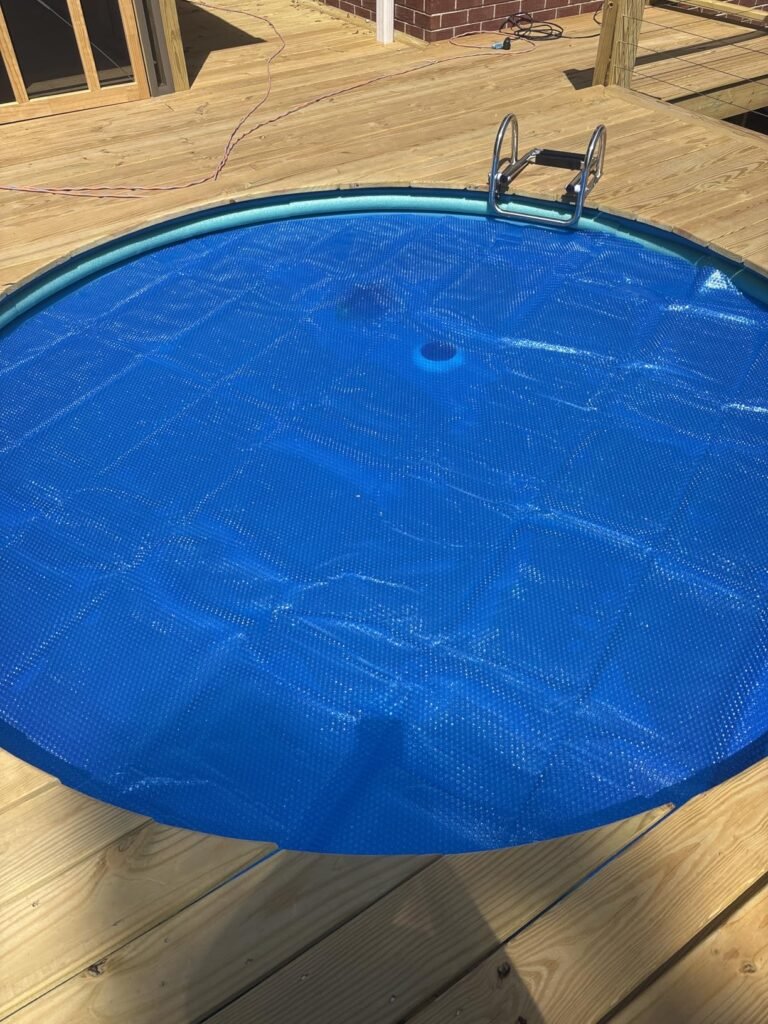
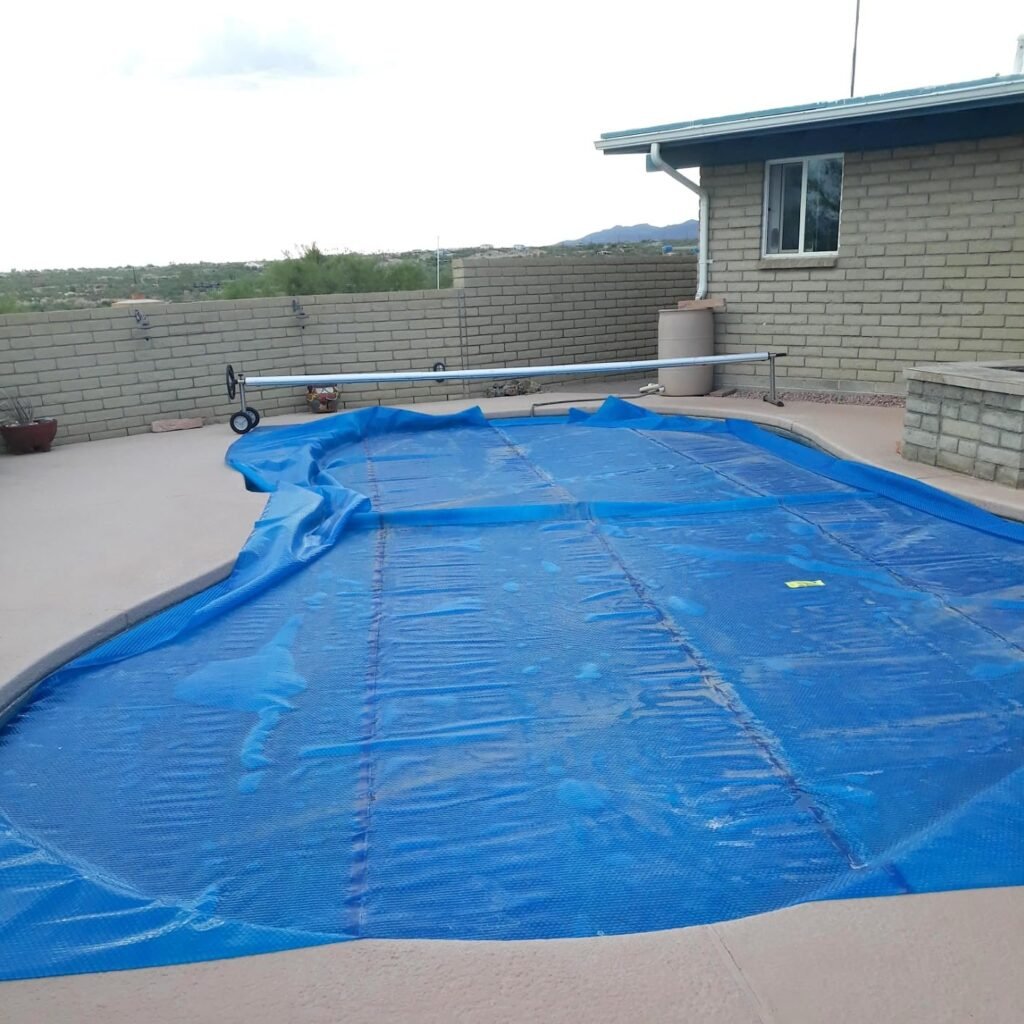
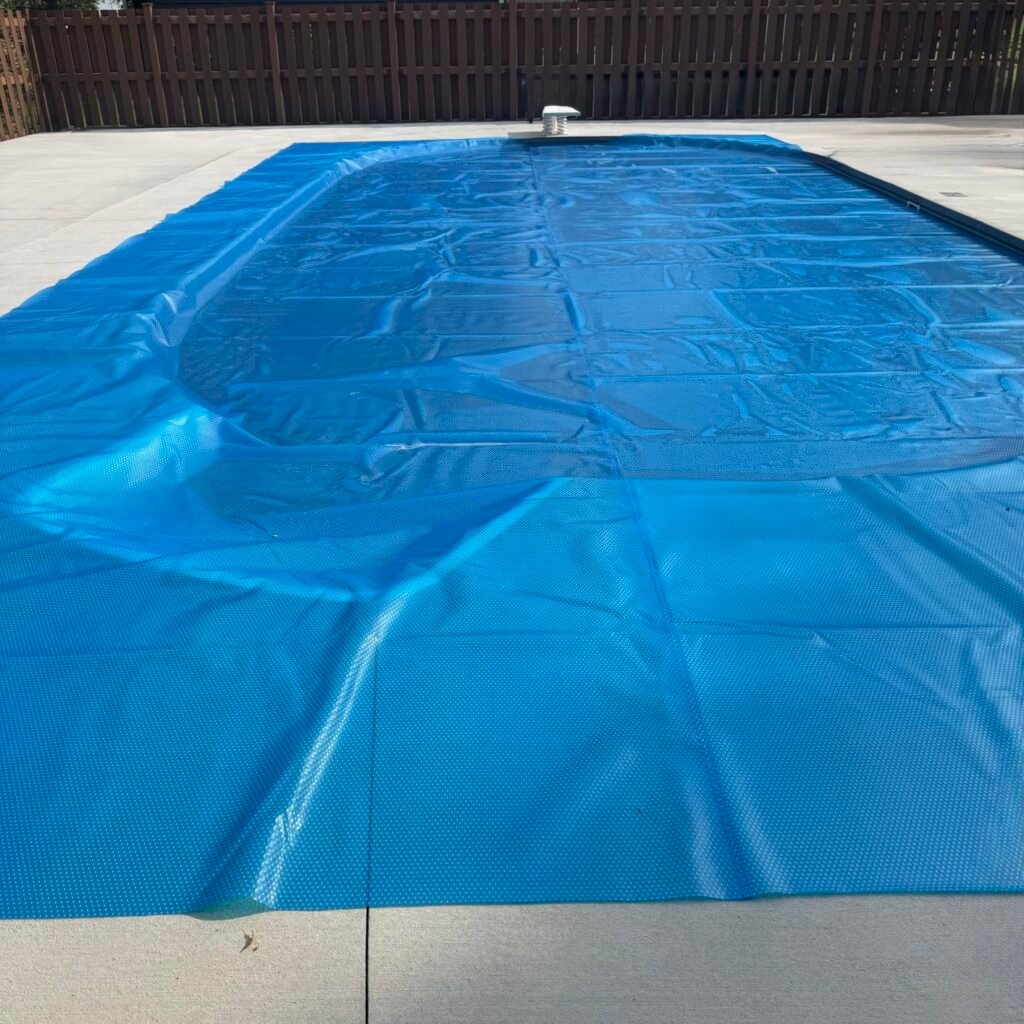
The VEVOR 32 x 16 ft solar cover is built for owners of larger rectangular pools who want a serious heat-retention upgrade. The 16 mil PE construction sits on the thicker end of the market, giving it more resistance to UV breakdown and mechanical stress than budget 8 to 12 mil options that tend to fail within a season or two.
We may earn a commission when you buy through this link, at no additional cost to you.
The blue and black dual-color layout is designed to absorb solar energy on the dark side while reflecting heat back into the water. Combined with dense micro-bubble spacing, it creates a consistent thermal barrier that keeps daytime warmth in the pool overnight. Evaporation reduction of up to 95 percent also translates into fewer top-offs and less chemical dilution across the season.
Handling a cover this size takes some planning. A pool cover reel is highly recommended because dragging a 32-foot blanket by hand becomes tedious quickly, especially when wet. The PE material trims cleanly with regular scissors, so shaping around ladders, steps, or curved corners is straightforward during initial setup.
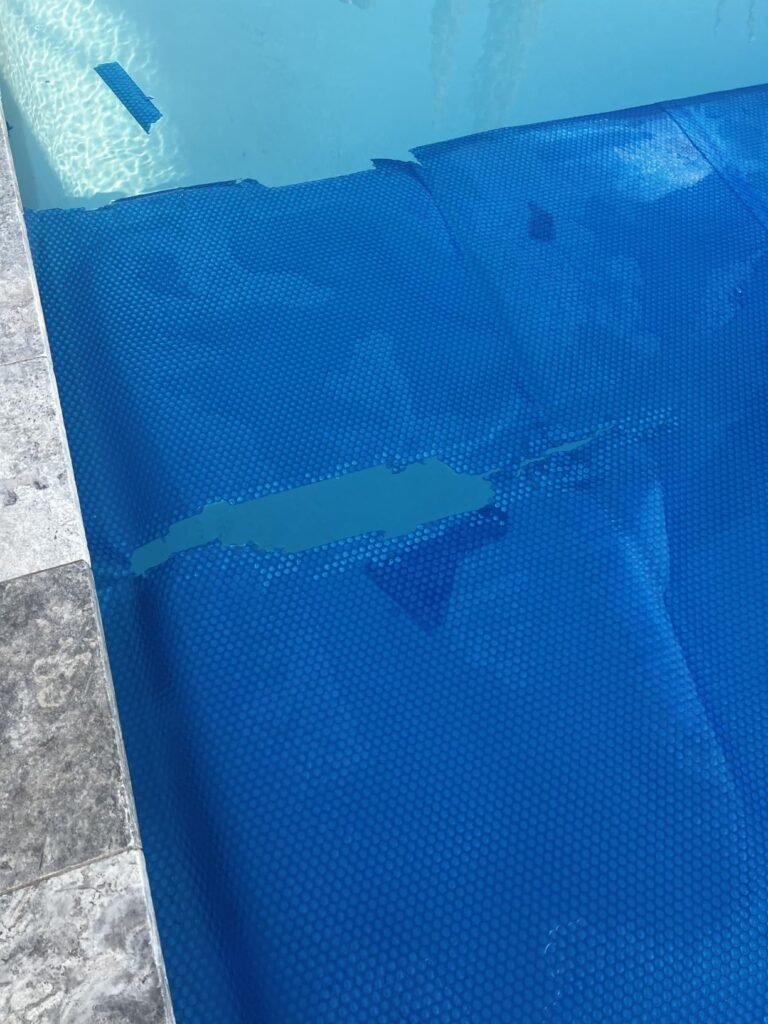
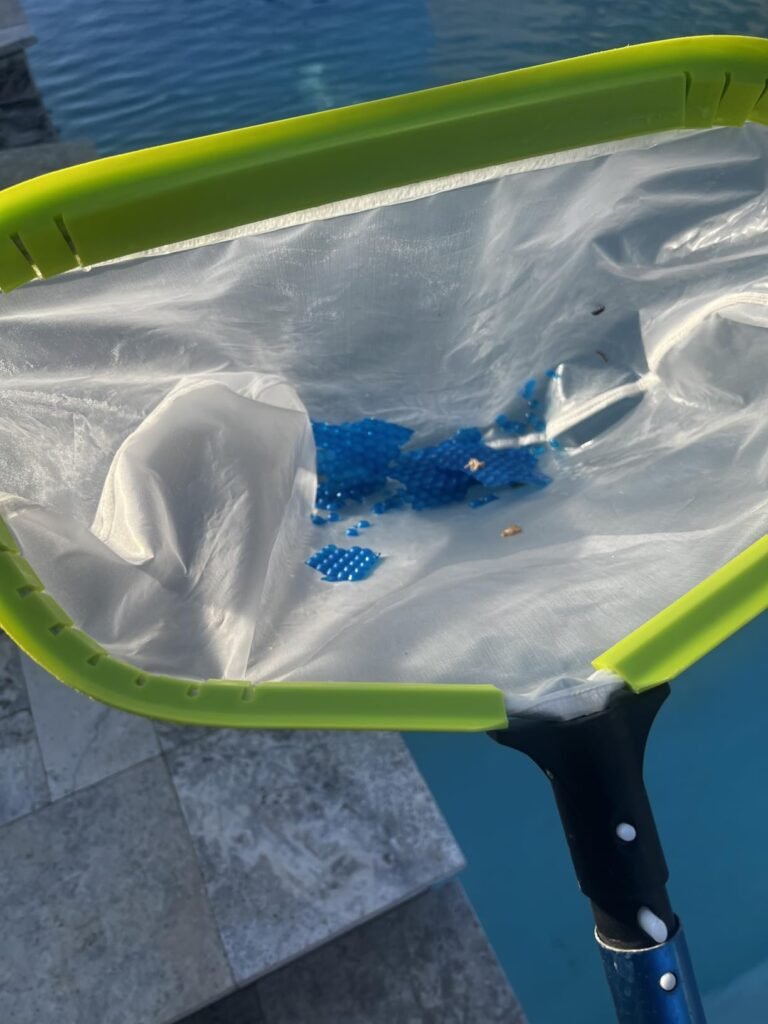
PE bubble covers do not tolerate concentrated chlorine well. Always allow chlorine levels to drop back to normal ranges after shocking before replacing the cover on the water. Storing the cover directly over a freshly shocked pool is one of the most common reasons blankets deteriorate months earlier than expected.
This is the right choice for owners of standard 16 x 32 ft inground pools or slightly smaller layouts who want extra material to trim. If your pool sits in an area with heavy debris or you run high chlorine levels, plan on more careful maintenance to protect the bubble layer over time.
Pool owners who regularly run high chlorine levels or who do not have space to store or roll a large cover when not in use.
We may earn a commission when you buy through this link, at no additional cost to you.
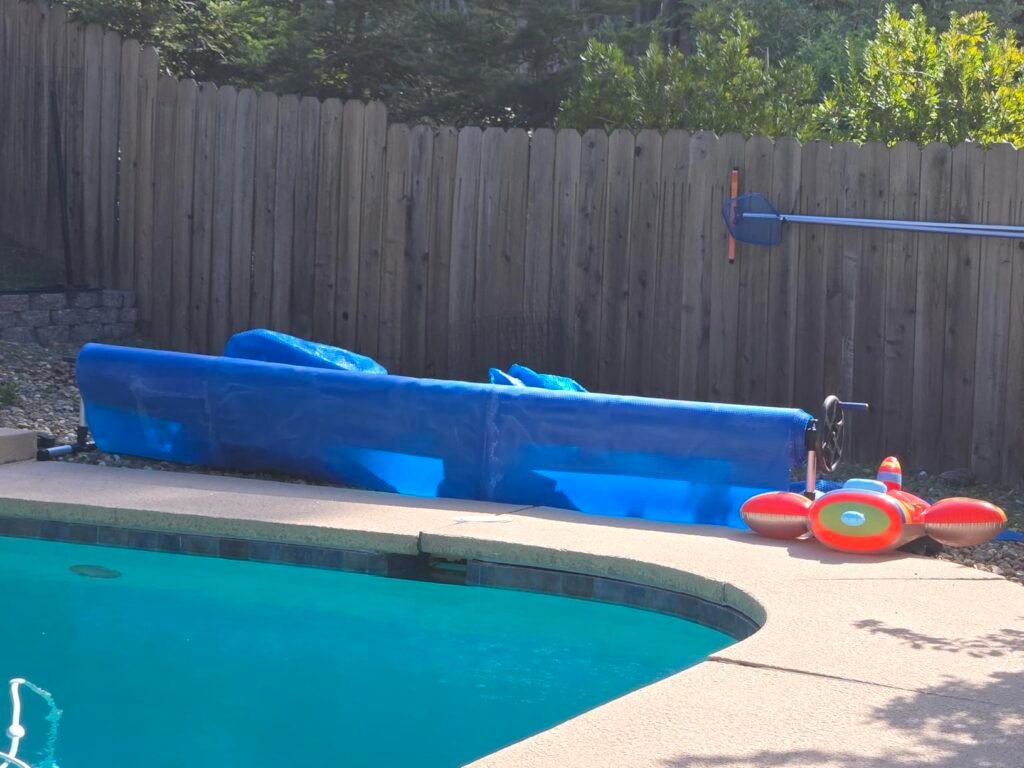
The BigXwell heavy-duty cover targets buyers who want a premium blanket for a standard 16 x 32 ft pool. Its 16 mil thickness is a meaningful step up from the more common 8 to 12 mil range, and it directly translates into better resistance to punctures, seasonal UV wear, and general handling abuse across multiple summers.
We may earn a commission when you buy through this link, at no additional cost to you.
Thousands of thermal bubbles line the underside of the cover, capturing daytime solar heat and slowly releasing it back into the water. This design shines in shoulder-season use, when nights are cooler and heat loss otherwise cuts into your usable swimming time. On overcast days, the cover still helps hold whatever warmth the pool has accumulated.
Even at 16 mil, the PE material remains flexible enough to trim with household scissors, which matters if your pool has skimmers, ladders, or non-standard corners. The trade-off with heavier construction is weight when wet, so pairing the cover with a reel makes a noticeable difference in how often you actually bother to remove and replace it.
Thicker covers cost more but generally last longer under UV exposure and tend to retain heat more effectively due to larger air pockets. If you plan to leave the cover on the pool most of the time, or you live in a climate with strong summer sun, the extra thickness usually pays back within one or two seasons compared to buying a thinner replacement more often.
This is a solid pick for homeowners who plan to keep the same cover in use for multiple seasons rather than replacing a cheap one each year. If a lower upfront cost matters more than long-term durability, a 12 mil alternative may be more appropriate.
Buyers focused strictly on the lowest upfront cost or those with smaller pools who don’t need the full 16 x 32 ft coverage.
We may earn a commission when you buy through this link, at no additional cost to you.
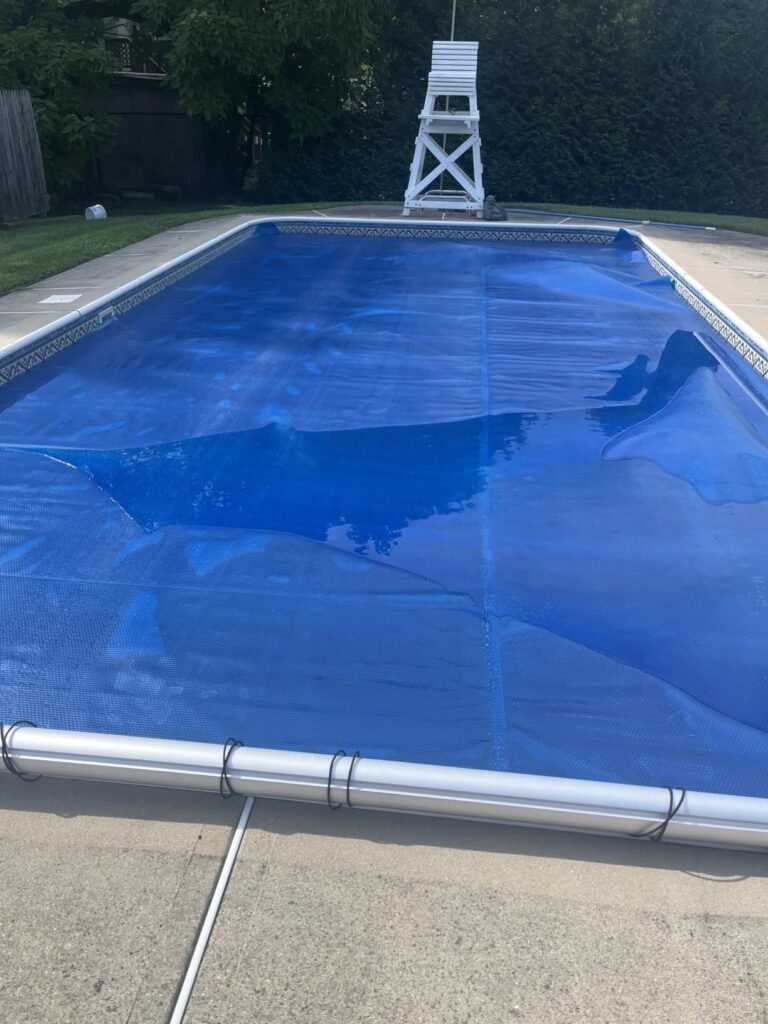
The VINGLI 18 x 36 ft cover is designed for owners of larger inground pools where standard 16 x 32 blankets leave gaps at the edges. The extra footprint gives you comfortable coverage plus roughly two inches of trim margin, which is genuinely useful when working around skimmer plates or non-square corners.
We may earn a commission when you buy through this link, at no additional cost to you.
The transparent blue bubble layer captures solar energy during the day and releases heat back into the water after sundown. This helps extend the practical swimming season, especially during spring and fall when unheated pools cool off quickly overnight. Evaporation drops sharply when the cover is in place, which means fewer refills and less chemical loss.
Welded seams are the standout construction feature here. Cheaper covers often rely on adhesive bonding that weakens under UV exposure, while welded seams typically hold up better across multiple seasons. The 12 mil thickness keeps the cover relatively light and easy to install by one or two people, especially when paired with a reel.
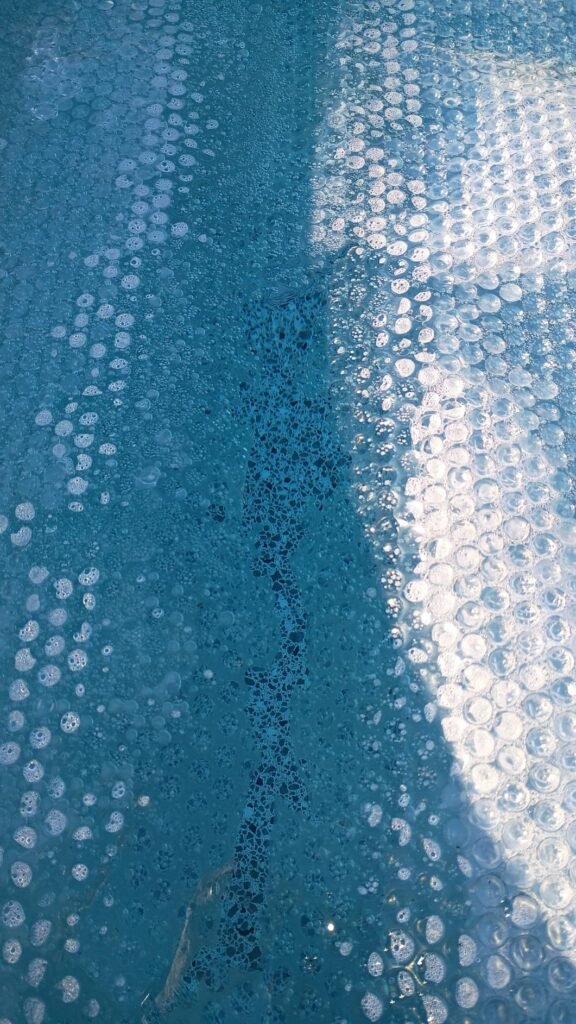
The bubbles should always face the water surface when the cover is installed. This orientation lets the air pockets create a heat-trapping layer against the water while the smooth top side reflects and absorbs solar radiation. Installing the cover upside down significantly reduces heat retention and can also accelerate bubble wear.
This cover fits owners of larger pools who want reliable heat retention at a moderate price. If you have a smaller pool, buying an oversized cover and trimming down is possible, but you may be paying for material you don’t need.
Owners of small or oddly shaped pools who would waste significant material trimming this down to fit.
We may earn a commission when you buy through this link, at no additional cost to you.
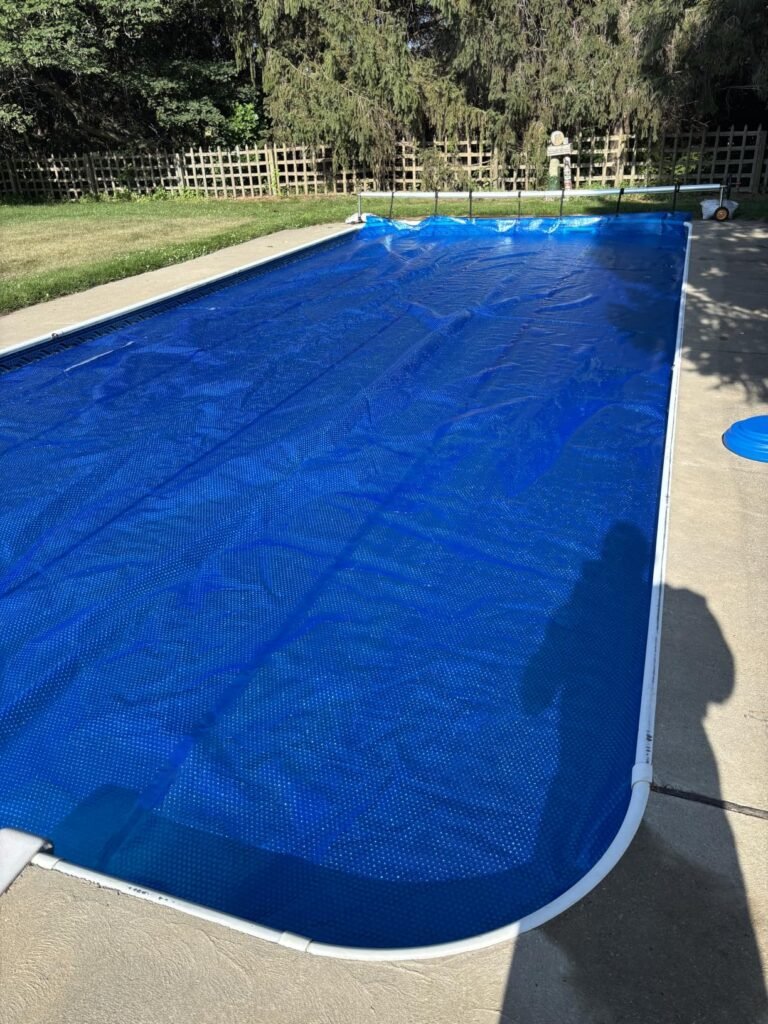
Sun2Solar is one of the more established names in the solar cover market, and this 18 x 36 ft, 16 mil version represents the upper end of their lineup. The generous size covers larger inground pools while the heavier gauge material adds durability that many budget alternatives simply cannot match after a full swim season.
We may earn a commission when you buy through this link, at no additional cost to you.
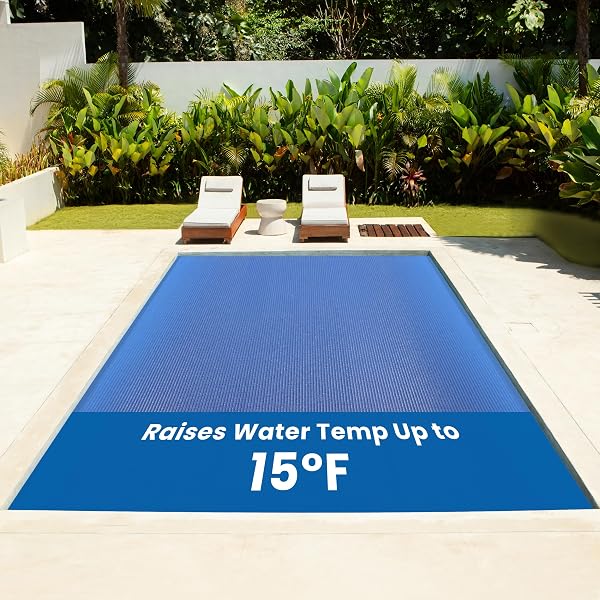
The cover is designed to raise water temperature by up to 15 degrees under favorable conditions, which is a meaningful boost for shoulder-season swimming. Thousands of small bubbles form the insulating layer, and the blue tint helps balance heat absorption with light penetration to warm the water column rather than just the surface.
Beyond heating, this cover also acts as a physical barrier that keeps leaves, pollen, and general debris out of the water. Reduced skimming time is a real quality-of-life benefit, especially for owners of larger pools where manual cleaning can be time-consuming. The resin material holds up well against extended UV exposure.
Sun2Solar covers come in rectangle, round, and oval versions, which helps if your pool doesn’t match a standard rectangular footprint. If you have a round above-ground pool or an oval inground layout, choosing the correct base shape reduces trimming and provides more consistent edge coverage.
This is a strong option for buyers who prefer sticking with an established brand and have a larger pool that justifies the 18 x 36 ft footprint. If you have a smaller pool or want to spend less, other Sun2Solar sizes or thinner options may fit better.
Owners of smaller pools who don’t need 18 x 36 ft coverage or shoppers looking for the absolute lowest sticker price.
We may earn a commission when you buy through this link, at no additional cost to you.
This Sun2Solar 12 mil cover targets buyers who want a well-known brand at a moderate price point for a standard 16 x 32 ft rectangular pool. The 12 mil thickness represents the traditional mid-tier of the solar cover market and balances upfront cost against expected lifespan.
We may earn a commission when you buy through this link, at no additional cost to you.
Solar heating performance is comparable to other 12 mil options, capturing sunlight during the day and holding warmth into the evening. The blue tint helps the cover absorb solar radiation while still transmitting light to the water below. Under favorable conditions, water temperatures can rise noticeably with regular use.
The extra overlap material is a practical touch. Real-world pool dimensions rarely match specifications exactly, and having a few extra inches to trim gives you flexibility around skimmers, ladders, and non-square corners. Installation is straightforward and doesn’t require special tools beyond scissors.
A 12 mil cover typically lasts 2 to 4 seasons under normal conditions, while 16 mil versions often stretch to 4 to 6 seasons with proper care. If you use your pool heavily and store the cover carelessly, the practical lifespan of both drops. Rolling the cover onto a reel and rinsing it periodically extends the working life meaningfully.
This cover suits shoppers who want a middle-of-the-road option from a known brand and are comfortable replacing the cover somewhat more frequently than a 16 mil model. If you want the longest possible service life, the thicker Sun2Solar option is a better long-term value despite the higher upfront cost.
Buyers seeking maximum durability or the highest possible customer rating in this category.
We may earn a commission when you buy through this link, at no additional cost to you.
The BigXwell 1200 series is the lighter-duty sibling of the heavy 16 mil model, aimed at buyers who want a 12 mil cover at a more accessible price point. For a standard 16 x 32 ft inground or above-ground pool, this hits a comfortable middle ground between disposable budget covers and premium builds.
We may earn a commission when you buy through this link, at no additional cost to you.
Thermal performance follows the same principles as most bubble blankets. Thousands of air pockets trap solar heat during daylight and hold warmth as ambient temperatures drop overnight. On cloudy days, the cover primarily works as insulation rather than a heater, which helps prevent the water from losing accumulated warmth quickly.
The lighter 12 mil construction is genuinely easier to install and remove than heavier alternatives, which matters if you don’t have a reel. Rolling a wet 16 mil cover across a large pool by hand can be a two-person job, while 12 mil is more manageable solo. Trimming with scissors remains straightforward for irregular pool layouts.
Rinse the cover with fresh water occasionally to wash away pool chemicals and prevent buildup that can degrade the bubbles. Storing the cover out of direct sunlight when not on the pool also helps significantly. Never leave a folded wet cover in a hot garage for extended periods, as trapped moisture and heat can accelerate breakdown.
This cover fits buyers who prioritize ease of daily handling over maximum multi-season durability. If you tend to remove the cover frequently for swimming and want lighter weight, this is a reasonable choice. For less frequent removal, the heavier 16 mil version is a longer-term investment.
Owners who want maximum longevity or who leave the cover on the pool for months at a time under intense sun.
We may earn a commission when you buy through this link, at no additional cost to you.
Blue Wave is a longstanding name in the pool accessory market, and this 16 x 32 ft, 12 mil cover is one of the more widely stocked options for standard rectangular pools. The straightforward design keeps things simple, focusing on core solar heating and evaporation control rather than premium features.

We may earn a commission when you buy through this link, at no additional cost to you.
The downward-facing bubbles capture sunlight and transfer warmth into the water throughout the day. At night, the same layer slows heat loss, helping the pool retain temperature until the next morning. This performance profile matches what most owners expect from a mid-tier solar blanket at this thickness.
The 12 mil construction is light enough for easy handling by one person on a smaller pool or two people on a larger one. Placement is straightforward, and the cover works equally well on above-ground or inground pools. It fits into typical pool cover reel systems without modification.
A 12 mil cover in a temperate climate typically delivers reliable performance for around three swim seasons before bubbles start failing noticeably. Aggressive UV exposure in sunny southern climates can shorten this, while cooler regions with shorter swim seasons often see the cover last longer. Plan replacement based on your local conditions rather than a fixed timeline.
Choose this cover if you value brand familiarity from a mainstream pool supply company and don’t need the extra longevity of a 16 mil blanket. If you want maximum durability, look at heavier options with higher ratings.
Buyers who want the highest customer rating available or plan to leave the cover on year-round.
We may earn a commission when you buy through this link, at no additional cost to you.
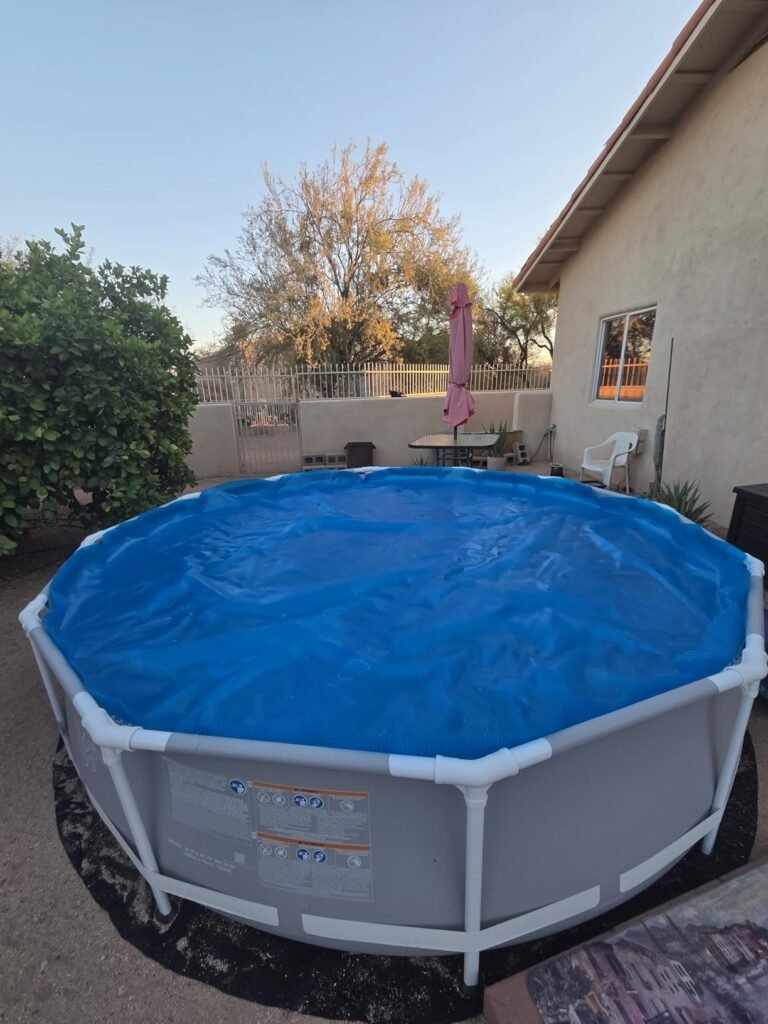
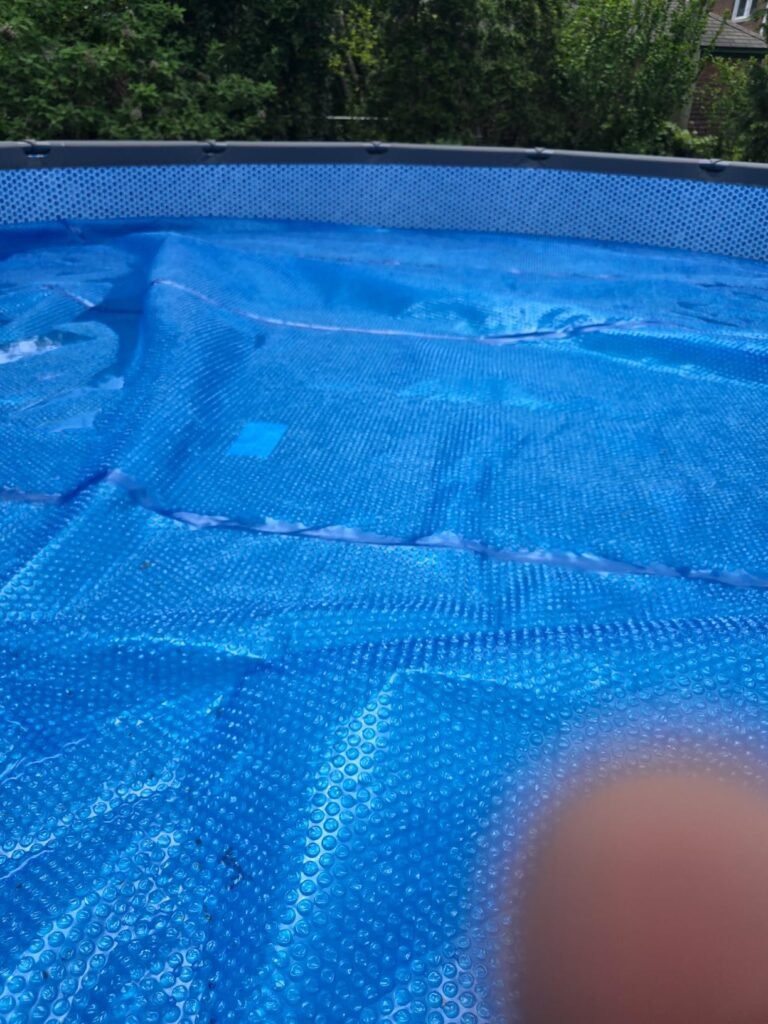
Owners of round above-ground pools often struggle to find covers that fit properly without extensive trimming. This 24 ft round Sun2Solar cover solves that directly by matching the most common above-ground pool diameter, which reduces installation hassle and provides more consistent edge coverage.
We may earn a commission when you buy through this link, at no additional cost to you.
Solar performance is comparable to other 12 mil Sun2Solar products, with claims of up to 15 degrees of water temperature increase under favorable conditions. The bubble layer traps daytime heat and slows overnight loss, which is particularly valuable for above-ground pools that tend to cool faster than inground pools due to greater surface-area exposure.
Extra overlap material is built into the sizing, allowing you to trim slightly for a cleaner fit once installed. The 12 mil thickness is light enough to handle without a reel on a 24 ft pool, though a small above-ground reel makes daily use much more convenient. The cover also blocks leaves and debris from entering the water.
Above-ground pools benefit especially from solar covers because their exposed walls promote faster heat loss than inground designs. A simple above-ground pool reel or a lightweight roller mounted on the pool frame makes daily cover use practical. Without a reel, folding a wet 24 ft cover onto the deck can be awkward and slow.
This is the right choice specifically for owners of 24 ft round above-ground pools who want a properly shaped cover. If you have a different diameter, look for the matching Sun2Solar size rather than trying to trim this one down.
Owners of rectangular, oval, or non-24-foot round pools that need a different shape or size.
We may earn a commission when you buy through this link, at no additional cost to you.
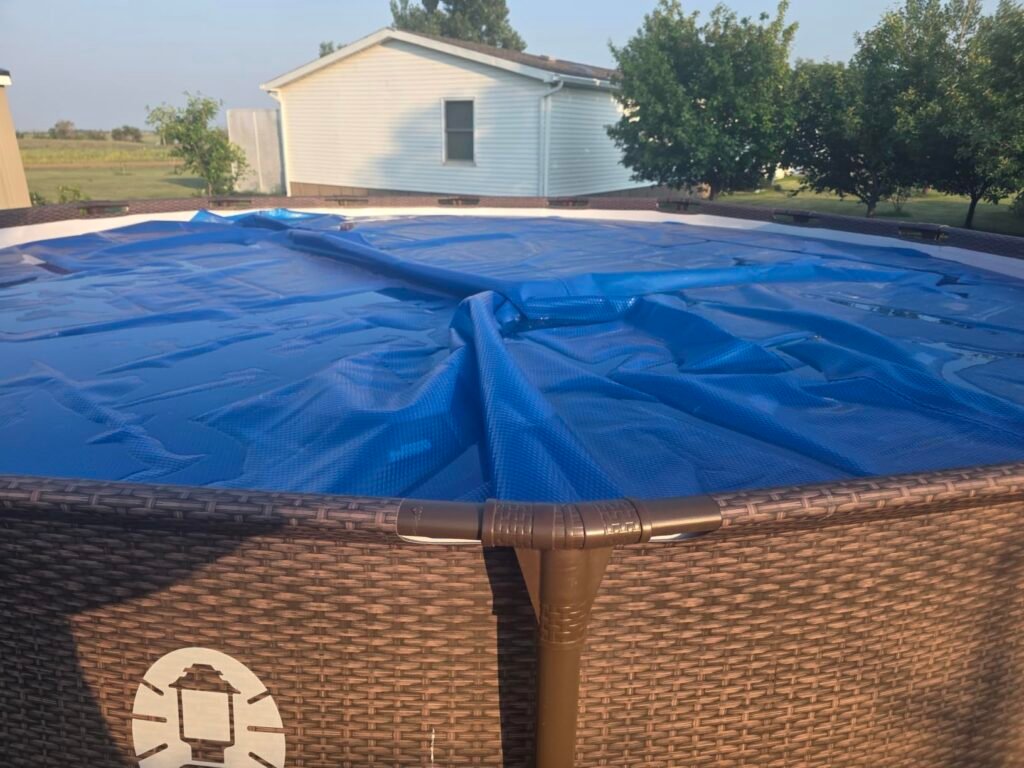
The VINGLI 12 x 24 ft cover targets a segment that's often overlooked: owners of smaller inground or above-ground pools who don't want to overpay for oversized coverage. At the lowest price in this comparison, it delivers a 16 mil thickness that many higher-priced covers can't match at their respective sizes.
We may earn a commission when you buy through this link, at no additional cost to you.
Thermal performance follows the same bubble-side-down principle as other quality covers. Sunlight is absorbed through the transparent blue material during the day, then trapped near the water surface to slow overnight cooling. Evaporation drops sharply when the cover is in place, protecting both water levels and pool chemistry.
Welded seams are a genuine construction advantage over adhesive-bonded alternatives, especially at this price. Seam failure is one of the most common ways cheap covers fail after a single season, and the welded design here helps the blanket hold together through repeated rolling and unrolling. Trimming remains simple with household scissors.
Buying a smaller cover that matches your actual pool is smarter than purchasing a larger one and trimming heavily. Trimming a large cover down works, but it creates waste and often leaves you with uneven edges. Matching pool dimensions to the cover size from the start gives you a cleaner fit and better cost efficiency.
This is the ideal pick for owners of 12 x 24 ft or slightly smaller pools who want serious thickness without a premium price tag. If your pool is significantly larger, choose one of the 16 x 32 or 18 x 36 options instead of oversizing this one.
Owners of standard 16 x 32 ft or larger pools who need more coverage area than this cover provides.
We may earn a commission when you buy through this link, at no additional cost to you.
Choosing a solar blanket involves more than picking the largest or thickest option. Pool shape, mil thickness, climate, and how often you plan to remove the cover all affect which product delivers the best real-world results. This section breaks down the factors that matter most for a confident purchase decision.
Solar cover thickness is measured in mils, where one mil equals one thousandth of an inch. Most covers on the market range from 8 mil at the entry level up to 16 mil for premium options. Thicker covers generally hold more heat because the air pockets are larger, and they resist punctures and UV degradation better than thinner alternatives.
A 12 mil cover typically delivers 2 to 4 seasons of usable life under normal conditions, while 16 mil versions often stretch to 4 to 6 seasons with proper care. In hot, sunny climates with intense UV exposure, the practical lifespan of any cover drops noticeably. If you leave the cover on the water most of the time or run high chlorine levels, expect faster wear regardless of thickness.
For most homeowners who use their pool regularly for several years, a 16 mil cover pays back its higher upfront cost within one or two seasons. Choose 12 mil only if budget is the primary concern or you plan to replace the cover more frequently.
Solar covers come in rectangle, round, and oval shapes to match the most common pool layouts. Matching the cover shape to your pool provides cleaner edge coverage and reduces the amount of trimming required during installation. Round covers work well on above-ground pools with standard diameters like 24 feet, while rectangular covers dominate the inground pool market at sizes like 16 x 32 or 18 x 36 feet.
Most quality covers include an extra inch or two of overlap beyond the stated dimensions. This is helpful because real-world pool sizes rarely match the nominal specification exactly, and the extra material lets you trim around skimmers, ladders, and non-square corners for a proper fit. All the PE bubble covers here cut cleanly with household scissors, so custom shaping is straightforward.
Choose the closest standard size to your pool rather than significantly oversizing. Buying a much larger cover and trimming down wastes material and money, while an undersized cover leaves gaps that undermine both heat retention and evaporation control.
Solar covers work in two ways. First, the bubble layer captures sunlight and transfers warmth into the water during the day. Second, and more important, the same layer acts as insulation that slows heat loss at night when the pool would otherwise cool rapidly. Overnight heat retention is where solar covers deliver most of their measurable benefit, especially in shoulder-season use.
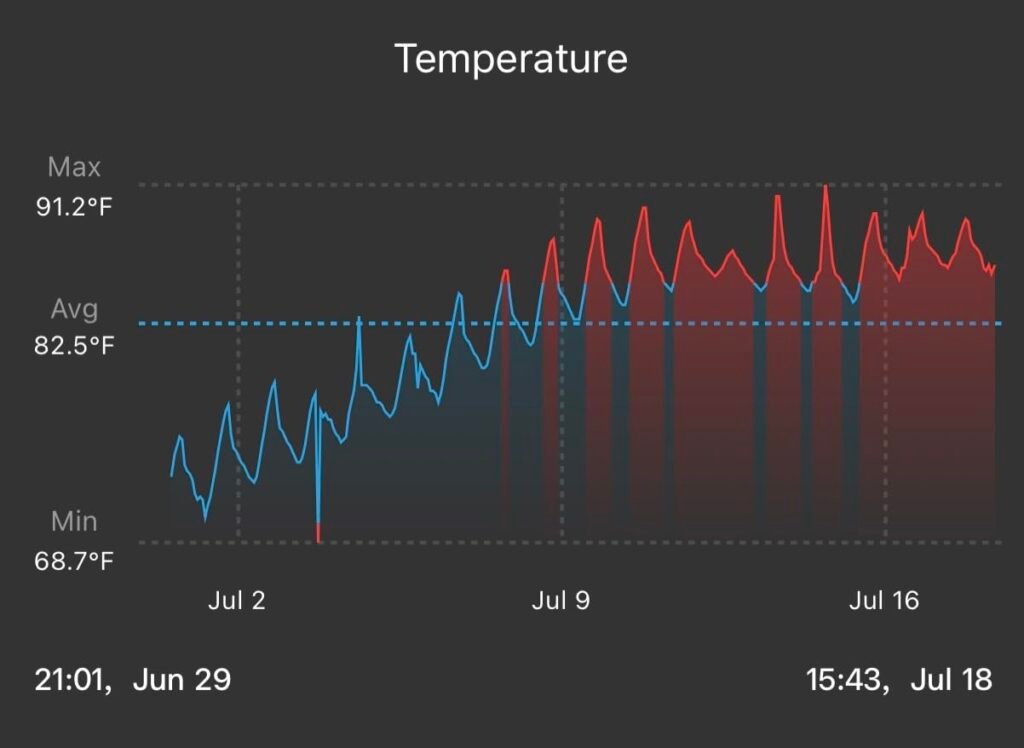
Under favorable conditions with strong sunlight and calm weather, a quality solar cover can raise pool water temperature by up to 15 degrees Fahrenheit over the course of a week. Real-world gains depend heavily on cloud cover, ambient temperature, wind, and how many hours per day the cover is actually on the water. Leaving the cover on overnight and during non-swim hours maximizes results.
If you live in a cooler climate or want to extend your swim season by weeks on each end, heat retention should be your top priority. In hot southern climates, evaporation control and debris protection may matter more than temperature gain.
Most quality solar blankets reduce water evaporation by up to 95 percent when in place. This has two practical benefits beyond simply saving water. First, less evaporation means fewer refill sessions and lower water bills, particularly meaningful for owners of large pools in dry climates. Second, evaporation carries dissolved chemicals with it, so reducing evaporation stabilizes chlorine levels and pH between service visits.
The combined chemistry benefit is often underappreciated. Owners who install a solar cover typically report using noticeably less chlorine and other pool chemicals over the season. This lowers ongoing maintenance costs and reduces the frequency of chemical adjustments needed to keep the water balanced and comfortable for swimming.
If you’re in a dry region with high evaporation rates, or if you struggle with unstable pool chemistry between service visits, a well-fitting solar cover addresses both issues simultaneously. The chemistry benefits alone often justify the cover cost over a single season.
The vast majority of solar covers are made from polyethylene, commonly called PE. This material is lightweight, flexible, and reasonably UV-resistant at higher mil thicknesses. Better-quality covers include UV inhibitors in the plastic formulation to slow degradation from sunlight exposure. Without proper UV protection, covers can become brittle and start losing bubbles within a single season.
Seam construction is another quality indicator. Welded seams, where the panels are heat-fused together, typically outlast adhesive-bonded seams under repeated stress from rolling, sun exposure, and pool chemistry. Look for covers that specifically mention welded seams, particularly if you plan to use a reel or handle the cover frequently.
Avoid the cheapest covers available if you want reliable multi-season performance. The savings on a low-quality cover rarely offset the cost of replacing it more frequently, and the poor heat retention can make the initial purchase feel wasteful.
Installing a solar cover is straightforward on smaller pools but becomes more challenging as pool size increases. A single person can typically manage a 12 x 24 ft cover without help, while an 18 x 36 ft cover often requires two people or a dedicated reel system. The bubble side must face down against the water, and getting the cover to lay flat without wrinkles takes a few tries the first time.
A pool cover reel is a worthwhile accessory for any pool larger than about 16 x 32 feet. Reels dramatically reduce the effort of removing and replacing the cover, which means you’ll actually use it consistently rather than leaving it off for convenience. Some solar covers are compatible with brand-matched reels, while others work with universal reel systems.
If you know you’ll be removing the cover several times per week for swimming, invest in a reel from day one. Without one, most pool owners give up on daily cover use within a few weeks because the manual effort simply isn’t sustainable across a full season.
Your local climate significantly affects which cover features matter most. In hot, sunny regions, UV resistance and evaporation control take priority because covers face intense sun exposure and rapid water loss. In cooler climates, overnight heat retention and shoulder-season warming become more important because they extend the usable swim season by weeks on each end.
Regions with heavy tree cover or frequent storms benefit from covers that also serve as debris barriers, reducing the burden on skimmer baskets and filtration systems. In coastal areas with high humidity, evaporation rates may be lower but salt air can affect cover materials over time. Match cover characteristics to your specific climate rather than choosing based on generic recommendations.
Consider your typical swim season length when deciding how much to spend. Owners in warm climates with 6-plus months of swimming justify premium covers more easily than owners in cool regions with only a 3-month season.
Install the cover with the bubble side facing down against the water. This orientation is critical for both heat retention and cover longevity, as the smooth top surface handles direct sun exposure better while the bubbles create the insulating layer against the water. Take your time positioning the cover so it lays flat without wrinkles, and trim gently around skimmers, ladders, and steps using regular scissors for a clean fit.
Remove the cover before swimming and while running significant chlorine shock treatments. Concentrated chlorine can degrade the PE bubble material and shorten cover life substantially. Wait until chlorine levels return to normal ranges before replacing the cover on the water. Between uses, rinse the top surface occasionally with fresh water to remove pool chemistry residue and prevent buildup that accelerates deterioration.
For storage, roll the cover onto a reel whenever possible rather than folding it. Folding creates permanent creases that weaken the material and can lead to bubble failure along the fold lines. If you must remove the cover for winter or extended storage, dry it completely, roll it loosely, and store it in a shaded location away from extreme heat. Never leave a wet, folded cover in a hot garage, as trapped moisture and heat accelerate breakdown noticeably.
Under favorable conditions with strong sunlight and consistent daily use, a quality solar cover can raise water temperature by up to 15 degrees Fahrenheit over the course of a week. Real-world gains depend heavily on cloud cover, ambient air temperature, wind exposure, and how many hours per day the cover stays on the water. Owners who leave the cover on overnight see the biggest temperature increases because most heat loss happens after sundown.
The bubble side should always face down against the water. This orientation lets the air pockets create an insulating layer directly against the water surface while the smooth top handles sun exposure. Installing the cover upside down significantly reduces heat retention and accelerates bubble wear from direct UV contact. This is one of the most common installation mistakes new pool owners make.
A 12 mil cover typically delivers 2 to 4 seasons of usable life, while 16 mil versions often last 4 to 6 seasons with proper care. Aggressive UV exposure in hot southern climates, high chlorine levels, and rough handling all shorten actual lifespan. Rolling the cover onto a reel instead of folding, rinsing it occasionally, and removing it during chlorine shock treatments all help extend service life meaningfully.
A reel is highly recommended for any pool larger than 16 x 32 feet. Manually handling a wet cover of that size takes two people and becomes tedious enough that most owners stop using the cover consistently. A reel makes daily use practical, which is when solar covers deliver their real benefits. Smaller pools under 12 x 24 feet can usually be managed by hand, though a reel still improves the experience.
Yes, all the covers in this guide work on both inground and above-ground pools. Above-ground pools actually benefit more from solar covers in some cases because their exposed walls cause faster heat loss. Round covers matched to your above-ground pool diameter provide the cleanest fit, while rectangular covers can be trimmed to size for rectangular above-ground pools.
Yes, a properly installed cover reduces evaporation by up to 95 percent, which prevents dissolved chemicals like chlorine and cyanuric acid from evaporating along with the water. Many owners report using noticeably less chlorine over the season after installing a solar cover. The chemistry stability benefit also reduces how often you need to test and adjust the water between service visits.
Solar covers can generally handle normal rain without issues, but severe storms with high winds may lift or damage the cover, especially on larger pools. In areas with frequent severe weather, consider removing the cover before major storms or using cover clips to secure it. Heavy debris accumulation from storms can also stress the material and should be cleared promptly.
Rinse the cover with a garden hose occasionally to remove dust, debris, and pool chemistry residue that can accumulate on the surface. Avoid harsh cleaners or scrub brushes that could damage the bubbles. If the cover develops algae or organic buildup, a diluted solution of mild soap and water applied gently with a soft cloth handles most cleaning tasks. Rinse thoroughly and allow to dry before rolling for storage.
Solar covers are not designed for winter use and should be removed and stored properly before freezing weather arrives. Use a dedicated winter cover for cold weather protection instead. Store the solar cover rolled loosely, completely dry, in a shaded location away from extreme heat. This preserves the material and prevents damage that would shorten the cover's usable life.
Solar covers cut cleanly with household scissors thanks to their PE construction. Lay the cover on the water first and let it settle into position, then mark cutting lines with a marker before removing and trimming on a flat surface. Cut slightly larger than needed on the first pass, then refine the fit gradually. Always leave a small overlap at the edges rather than cutting the cover exactly to the water line.
The Real Relax 16 mil cover stands out as the strongest overall choice for most buyers. Its combination of heavy 16 mil PE construction, standard 16 x 32 ft sizing, and the highest customer rating in this comparison makes it a straightforward upgrade for owners of standard inground pools. The thicker build translates directly into better heat retention and longer expected service life across multiple seasons.
For buyers with larger pools, the Sun2Solar 18 x 36 ft in 16 mil and the VINGLI 18 x 36 ft in 12 mil both offer generous coverage from established or growing brands. Round above-ground pool owners should look at the Sun2Solar 24 ft round cover for a shape-matched fit. On the budget end, the VINGLI 12 x 24 ft is the standout value with 16 mil thickness at the lowest price in this lineup, ideal for smaller pools where oversizing would be wasteful.
Match your choice to three factors: your pool's actual dimensions, how often you'll remove the cover, and your local climate. Buyers in sunny climates who leave the cover on most of the time should prioritize 16 mil thickness for longevity. Owners who swim frequently and handle the cover often may prefer lighter 12 mil options that install more easily. Whichever cover you choose, using it consistently overnight is where the real benefits show up in warmer water and lower maintenance costs.