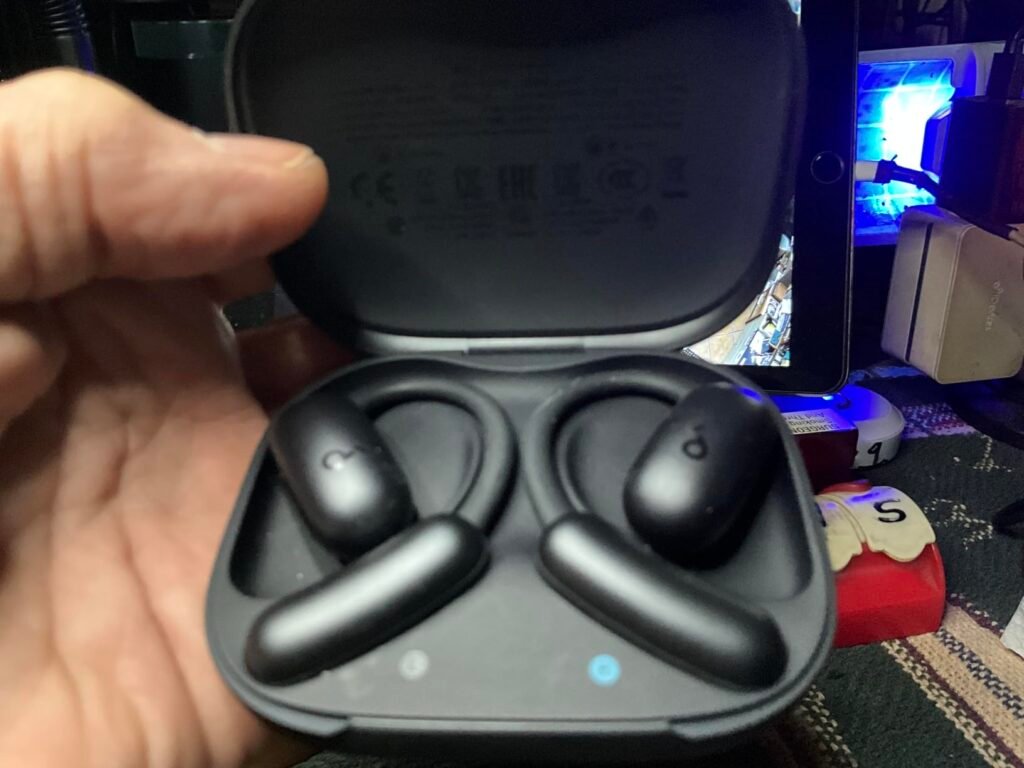
Soundcore V20i
8.8Editor score16mm driver units
Four adjustable positions
Four-microphone array
Soundcore app support
Compare 10 top open ear headphones for running, workouts, and daily use. Find the right pick for sound, comfort, battery, and value.
Open ear headphones let you enjoy music and calls without blocking your ears, which matters for outdoor exercise safety, office awareness, and long-wear comfort. We compare 10 standout picks for 2026 across earhook designs, clip-on styles, and bone conduction options, weighing sound quality, fit stability, battery life, water resistance, microphone clarity, and everyday practical use.
The category now includes several distinct design approaches. Earhook models wrap over the ear with drivers pointing at the ear canal, clip-on designs pinch around the ear ridge with directional drivers, and bone conduction transmits sound through cheekbones. Each style suits different activities and preferences, and understanding the trade-offs makes shopping much easier.
This guide breaks down each pick’s strengths, limitations, and ideal buyer so you can match a set to your actual routine. Whether you need durable running headphones, discreet office earbuds, or premium clip-ons for all-day wear, the picks below cover a broad range of budgets and priorities without unnecessary hype or exaggeration.
We compared 10 open ear headphones by the details that matter for real daily use: sound quality and driver design, fit stability across earhook and clip-on styles, weight and comfort during long wear, battery life, Bluetooth version and connection stability, water and sweat resistance ratings, microphone clarity for calls, sound leakage, EQ customization through companion apps, and value relative to price. The notes focus on practical trade-offs so each pick reflects how runners, cyclists, office workers, and casual listeners actually use open-ear audio throughout their day.


Compare key features, scores, and current prices side by side. A shorter feature list means fewer details were available, not necessarily fewer capabilities.

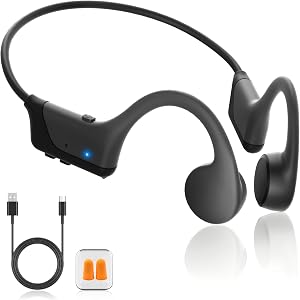




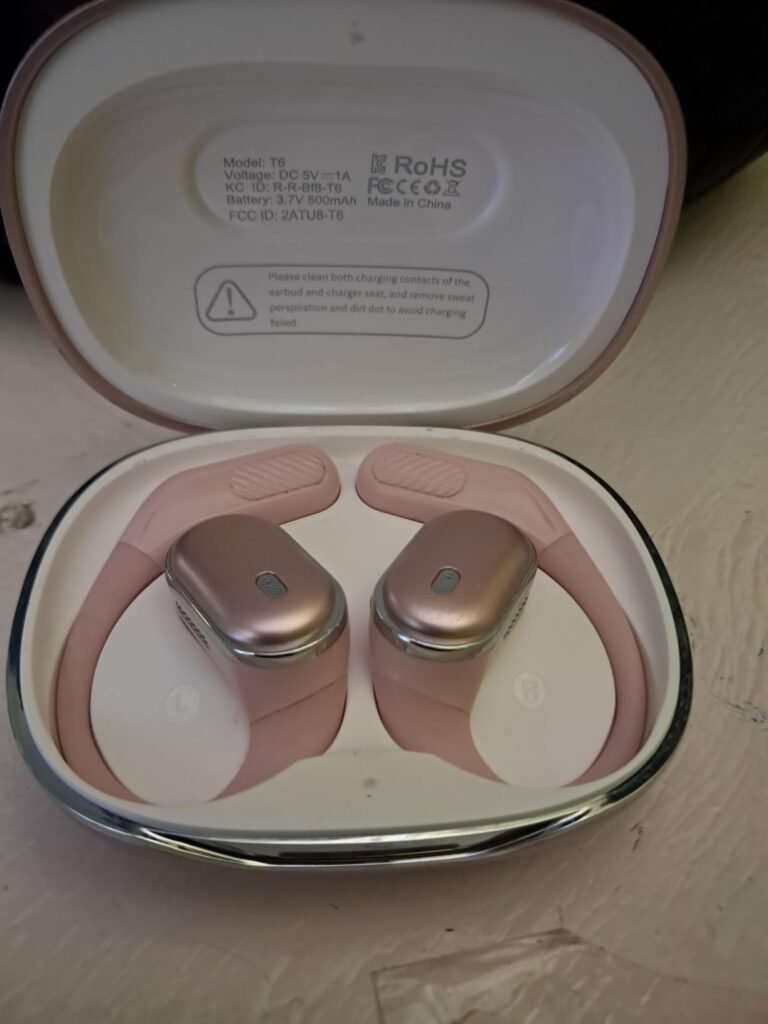
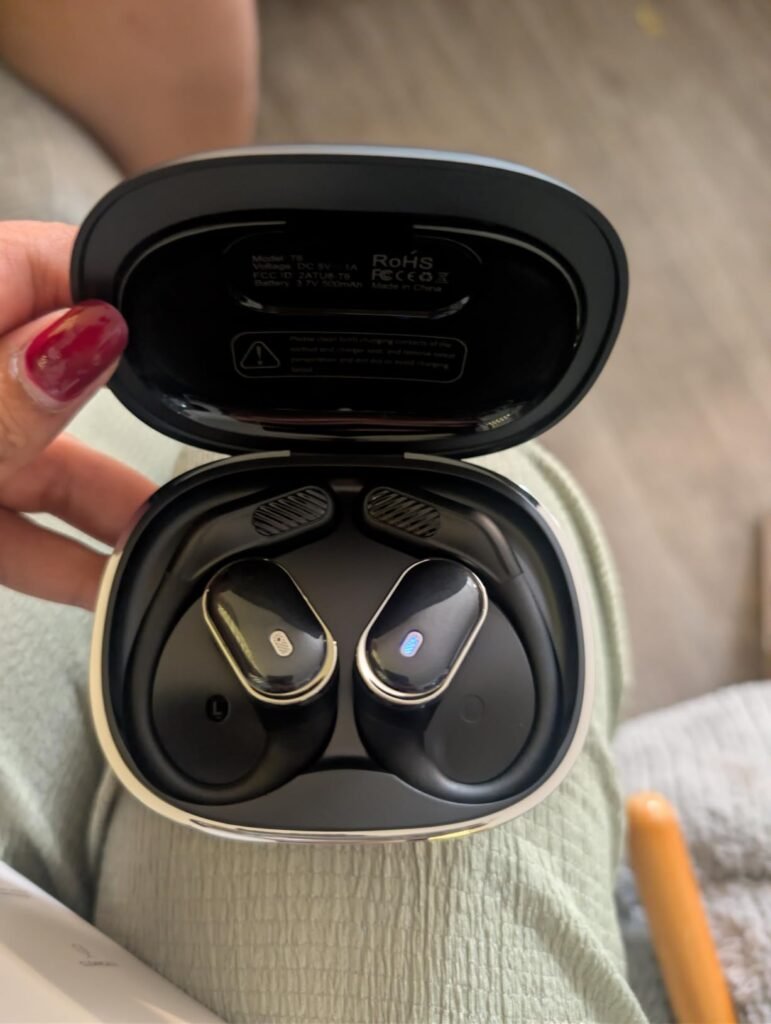
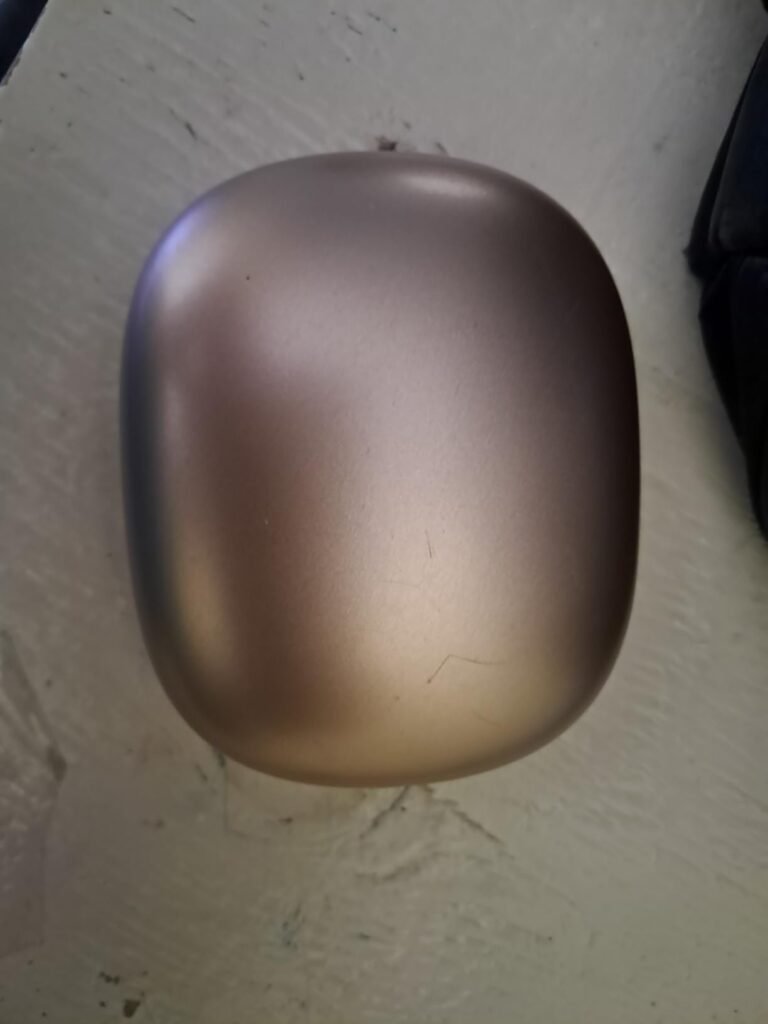
This earhook-style earbud pair delivers something genuinely rare in the sub-$30 category: 80 hours of total playtime across the buds and charging case combined. For buyers who forget to charge or want headphones that can last a full week of workouts between top-ups, that endurance meaningfully reduces battery anxiety. The 4.8-star rating suggests initial buyers are consistently impressed with the value.
We may earn a commission when you buy through this link, at no additional cost to you.
The IPX7 waterproof rating is another standout. Most budget open-ear headphones stop at IPX5 or IPX6, which handles sweat and rain but not immersion. IPX7 covers temporary submersion, meaning these can survive being dropped in a puddle or briefly rinsed under a tap. Combined with the secure earhook design, that makes them genuinely capable for intense sweat sessions and unexpected weather.
Bluetooth 5.4 keeps the connection stable across the typical 30-plus foot range, and instant pairing simplifies switching between phones, tablets, and laptops. The touch controls handle play, pause, track skipping, calls, volume, and voice assistant activation without needing to reach for your phone. ENC noise cancellation on the microphone improves call clarity in windy or noisy environments.
Total playtime figures combine the earbuds themselves (typically 8-12 hours) with additional charges from the case. Eighty hours means you can go roughly a week of daily workouts before needing to plug in the case. That’s genuinely useful for travelers who don’t want to pack chargers, or for anyone who dislikes managing device charging. Even at heavy daily use, weekly charging becomes the norm rather than daily.
The main tradeoff is brand maturity. Generic Amazon-only brands often lack the software polish, firmware updates, and customer service reliability of established names like Anker or Shokz. For buyers who want maximum battery life and waterproofing at rock-bottom pricing, though, the value proposition here is difficult to match. Consider these an excellent entry point or reliable backup pair.
Buyers who need established brand support with polished companion apps and long-term firmware updates.
We may earn a commission when you buy through this link, at no additional cost to you.
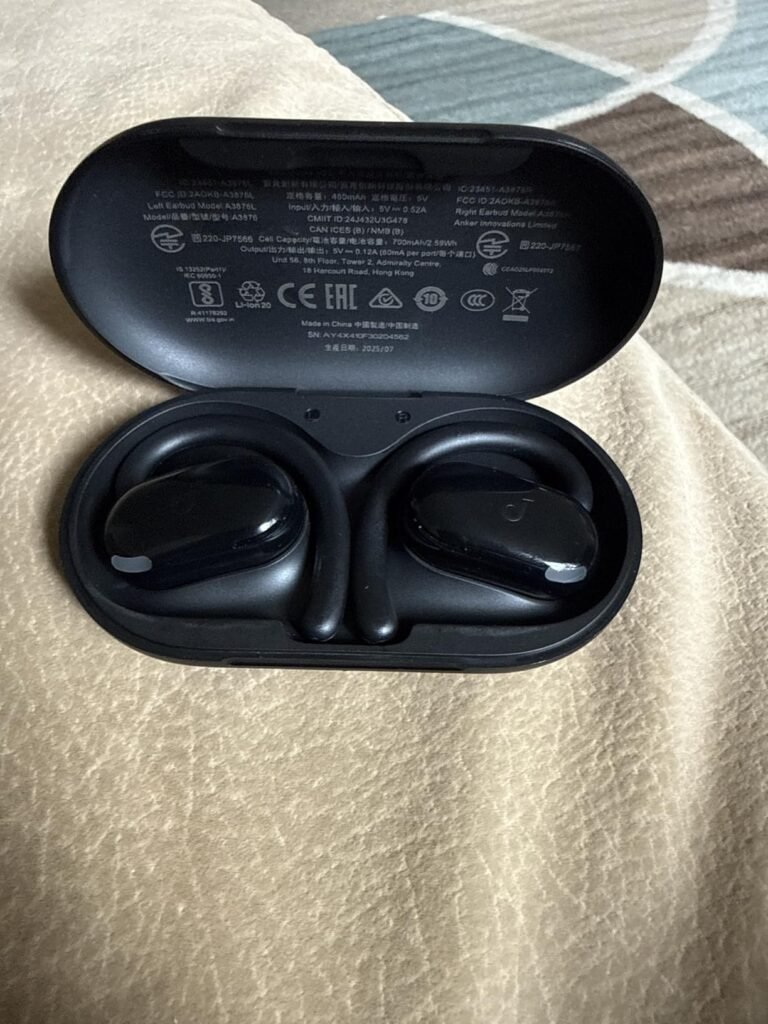
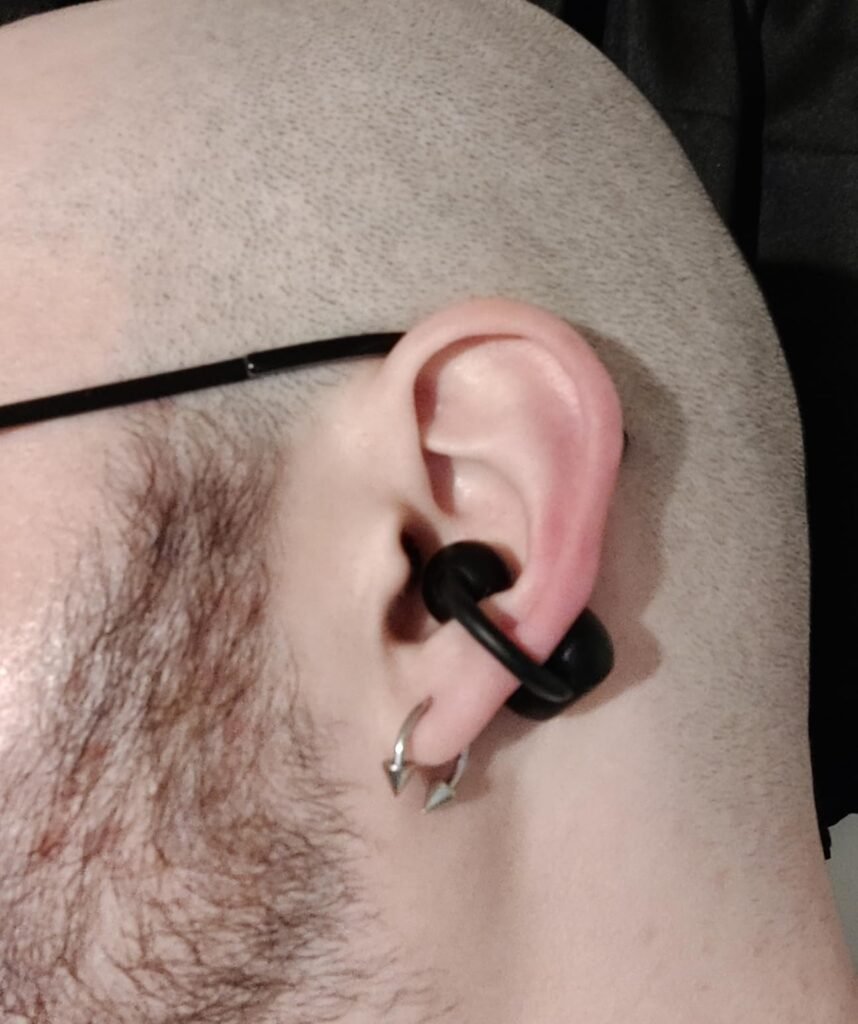
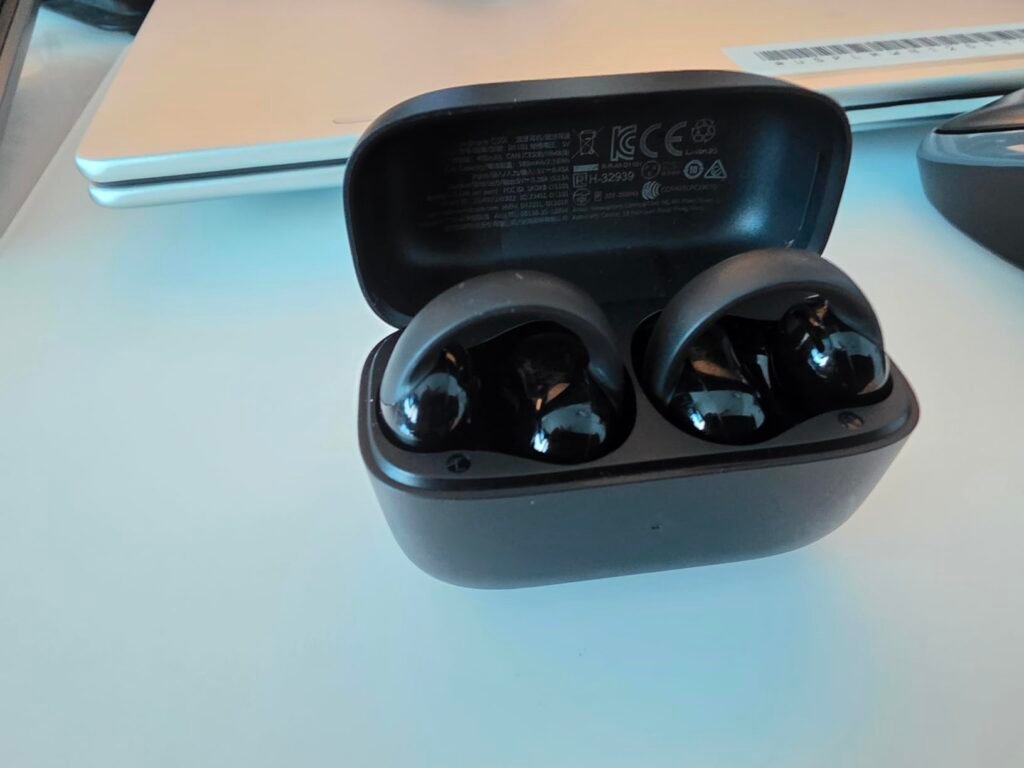
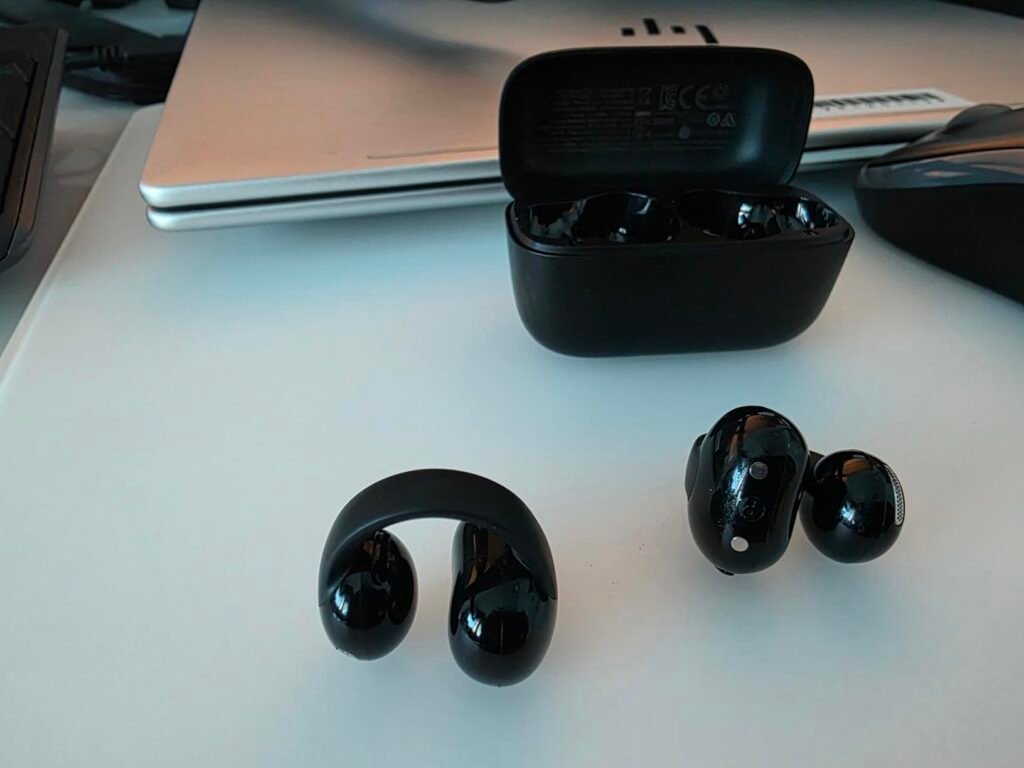
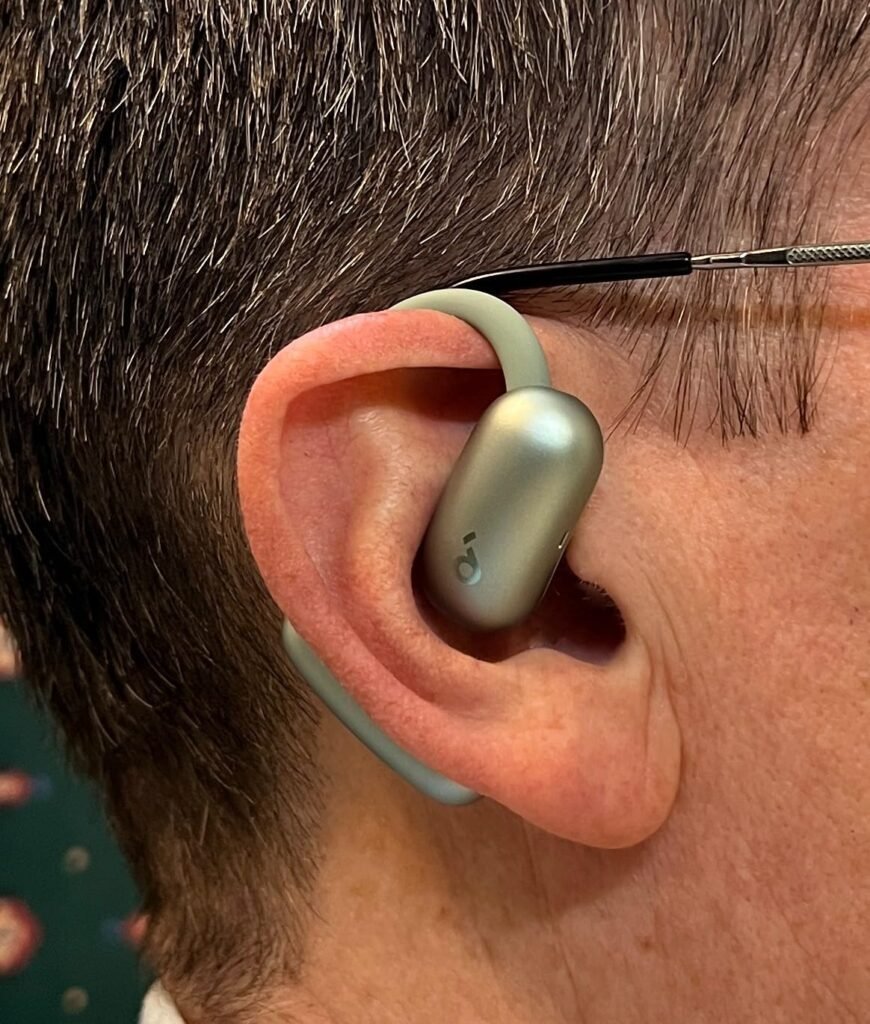
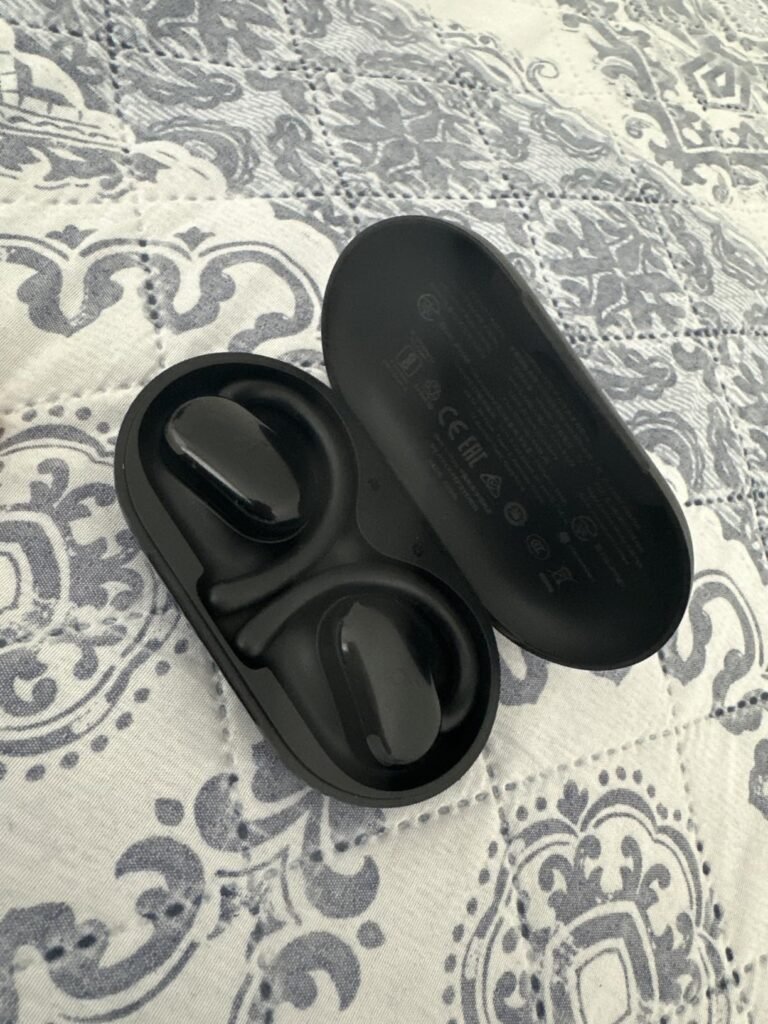
Anker's Soundcore V20i takes a customization-focused approach that helps address the biggest challenge of open-ear headphones: getting a secure, comfortable fit. Four adjustable positions let you rotate each earbud to find the sweet spot for your specific ear shape, which meaningfully improves stability during movement. For buyers who've struggled with fit issues on other open-ear designs, this flexibility is genuinely valuable.
We may earn a commission when you buy through this link, at no additional cost to you.
The 16mm drivers are among the largest in this comparison, with titanium-coated domes and Soundcore’s proprietary BassUp technology working to deliver deeper bass than typical open-ear designs achieve. Bass response is one of the biggest weaknesses of the open-ear category since sound isn’t sealed in the ear canal, so any technology that improves low-frequency reproduction is worth noting.
Four microphones combined with an AI noise reduction algorithm keep calls clear in outdoor and noisy environments. The Soundcore app adds HearID personalization, EQ modes, and spatial audio options, plus over-the-air firmware updates that improve the product over time. That software ecosystem is a genuine advantage over generic alternatives.
Ear shapes vary significantly between people, and a fixed-position open-ear earbud that fits one person perfectly may sit awkwardly on another. Adjustable rotation lets you find the position where the driver points most directly at your ear canal, which improves both sound clarity and perceived volume. It also lets you optimize for security during specific activities like running versus office wear.
The customizable synchronized lights are a genuine differentiator, adding visual flair that matches your music. Whether this appeals to you depends on style preferences, but it’s a feature no other option in this comparison offers. The lights do consume battery, so expect shorter playtime with them enabled. For style-conscious buyers who want reliable Anker quality and personalized fit at around $30, this delivers strong value.
Buyers who dislike LED lights on wearable devices or want the longest possible battery life.
We may earn a commission when you buy through this link, at no additional cost to you.
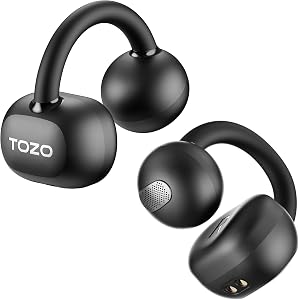
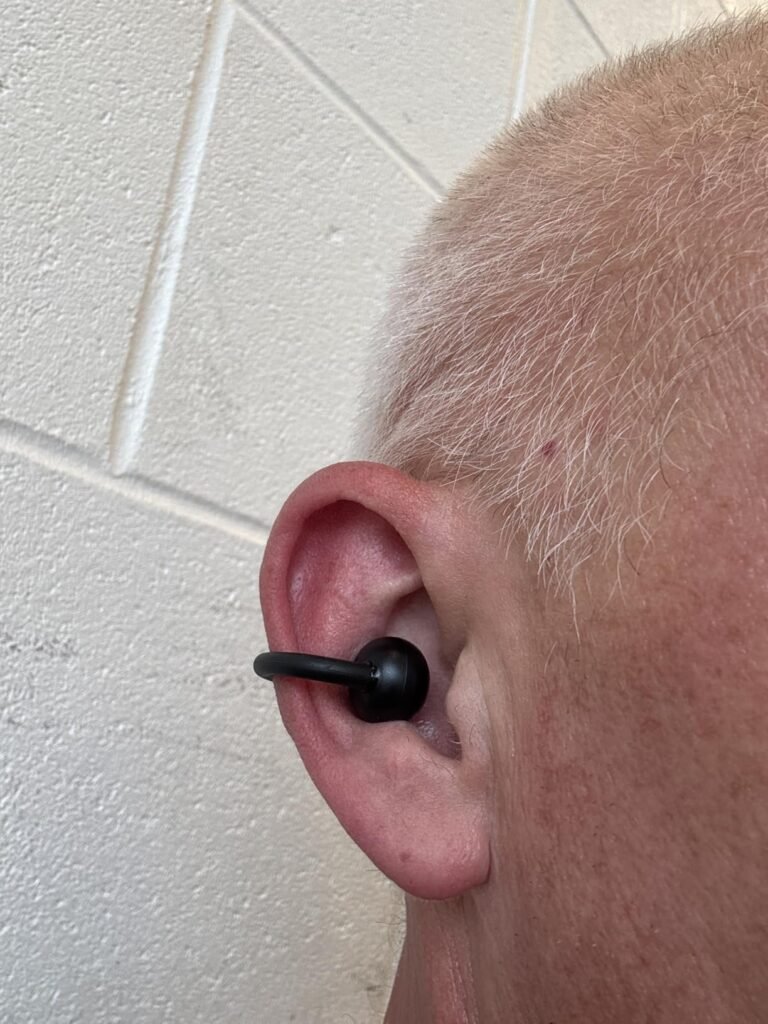
The TOZO OpenEarRing takes the clip-on approach and pushes it to an extreme: just 5.1 grams per earbud, which makes each one lighter than a US quarter. For buyers who find earhook designs bulky or ear-canal earbuds uncomfortable, this featherlight approach can feel almost invisible during wear. That's especially valuable during long-duration use like all-day office work or extended reading sessions.
We may earn a commission when you buy through this link, at no additional cost to you.
The clip-on design is specifically engineered with glasses wearers in mind. Traditional earhook headphones can clash with glasses arms, causing pressure at the contact point that becomes uncomfortable over hours. The OpenEarRing clips around the ear cartilage instead of hooking over the top, sidestepping this conflict entirely. Skin-friendly silicone prevents irritation even during marathon wear sessions.
OrigX acoustic technology delivers clear stereo resolution that’s designed to reproduce both music vocals and movie dialogue with crisp detail. Thirty-two EQ modes accessible through the TOZO app let you tune the sound signature for different music genres and content types. The digital display charging case shows exact battery percentage rather than vague LED indicators, which is genuinely useful.
Clip-on open-ear headphones like the OpenEarRing avoid three common issues: pressure from earhooks against the top of the ear, conflict with glasses arms, and the seal that in-ear designs create. For long-wear scenarios where comfort matters more than absolute stability during high-intensity movement, clip designs can be genuinely superior. The tradeoff is that they may not stay as securely in place during running or heavy exercise as earhook alternatives.
The IPX5 rating handles sweat and rain without concern but isn’t rated for immersion or pool use. Bluetooth 5.4 maintains stable connection out to about 15 meters, and the total 40-hour playtime covers roughly a week of daily use. For glasses wearers, side sleepers, or anyone prioritizing minimum-weight comfort in an open-ear design, this is one of the most thoughtful picks available.
Runners doing high-impact training who need earhook stability, or those wanting IPX7 waterproofing for pool use.
We may earn a commission when you buy through this link, at no additional cost to you.
Anker's Soundcore C50i combines clip-on comfort with materials designed specifically for active use. The FlexiClip memory titanium frame adapts to individual ear shapes and returns to its original form, delivering a personalized fit that stays secure through workouts. For buyers who want clip-on comfort without sacrificing stability during running or gym sessions, this hits an appealing balance.

We may earn a commission when you buy through this link, at no additional cost to you.
The 12mm custom drivers deliver deep bass with 86dB maximum output, which is louder and clearer than most bone conduction alternatives at similar prices. That volume matters in noisy gym environments or on windy outdoor runs where ambient sound competes with your music. AI-filtered background noise on the microphone keeps calls clear in outdoor and commuting scenarios.
Bluetooth 6.0 is the newest standard among open-ear headphones, offering improved multi-device handling, lower latency for video watching, and better stability in wireless-crowded environments like gyms full of active devices. IP55 protects against significant dust and water spray, which is more than adequate for sweaty workouts and occasional rain exposure.
Standard clip-on earbuds use fixed-shape clips that either fit your ears well or don’t. Memory titanium adjusts to the specific contours of your ear ridge over time while maintaining its overall clip pressure, creating a personalized fit that traditional materials can’t match. This is particularly valuable for buyers who’ve struggled with fit issues on other clip-on designs, since the frame gradually customizes to your anatomy.
The 28-hour total playtime is shorter than several competitors offer, and single-charge earbud life caps at 8 hours. For daily gym users, that’s still more than enough for typical workout sessions, but heavy commuters or all-day wearers may find themselves charging more often than with 40-plus hour alternatives. For buyers wanting Anker quality with modern Bluetooth 6.0 in a clip-on form factor, this delivers solid overall value.
Buyers who need 40-plus hour battery life or prefer earhook stability over clip-on style.
We may earn a commission when you buy through this link, at no additional cost to you.
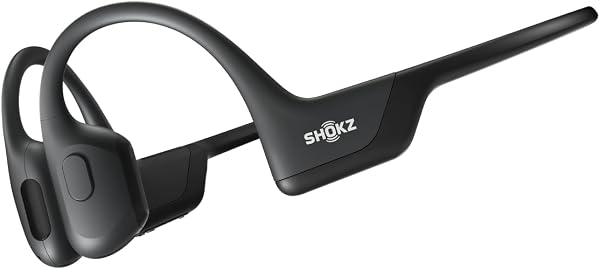
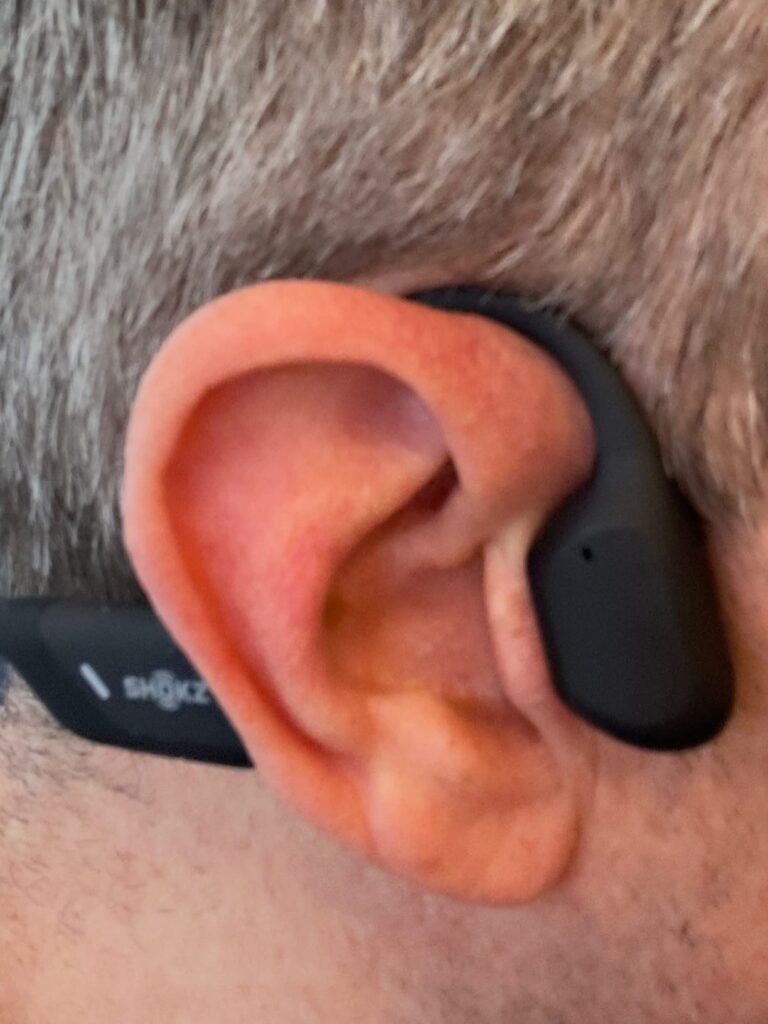
The Shokz OpenRun Pro takes a fundamentally different approach to open-ear audio by using bone conduction rather than tiny speakers pointing at your ear canals. Vibrations transmit sound through your cheekbones directly to your inner ear, leaving your ear canals completely open. For runners, cyclists, and anyone who values maximum awareness of surroundings, bone conduction remains the most complete solution.

We may earn a commission when you buy through this link, at no additional cost to you.
Shokz’s 9th generation bone conduction technology combined with TurboPitch delivers noticeably better bass response than earlier bone conduction generations achieved. Bass has traditionally been the weakness of bone conduction because vibrating bone doesn’t reproduce low frequencies as efficiently as air moving through an ear canal, but progressive improvements have narrowed that gap considerably.
The wraparound titanium frame keeps the fit stable through intense training sessions, and the design specifically avoids the discomfort of in-ear designs during long wear. Ten hours of continuous playback covers marathon training days, and the 5-minute quick charge adds up to 1.5 hours when you’re running out the door with a dead battery. Universal Bluetooth compatibility works reliably across all major platforms.
Bone conduction wins over speaker-based open-ear designs when maximum situational awareness matters. Because your ear canals remain completely unobstructed, you hear traffic, teammates, and environmental sounds with full clarity while music plays. Speaker-based open-ear designs still partially obstruct sound entering your ears. For safety-critical activities like cycling in traffic or running on unfamiliar trails, bone conduction has a real advantage.
The tradeoff is price and remaining bass limitations. At around $160, this costs significantly more than clip-on or earhook alternatives, and even with TurboPitch, bass depth doesn’t fully match sealed traditional headphones. For serious runners, cyclists, and anyone who prioritizes maximum awareness of surroundings during outdoor activities, though, Shokz’s mature bone conduction technology remains the benchmark.
Buyers prioritizing deep bass or those unwilling to pay premium pricing for bone conduction technology.
We may earn a commission when you buy through this link, at no additional cost to you.
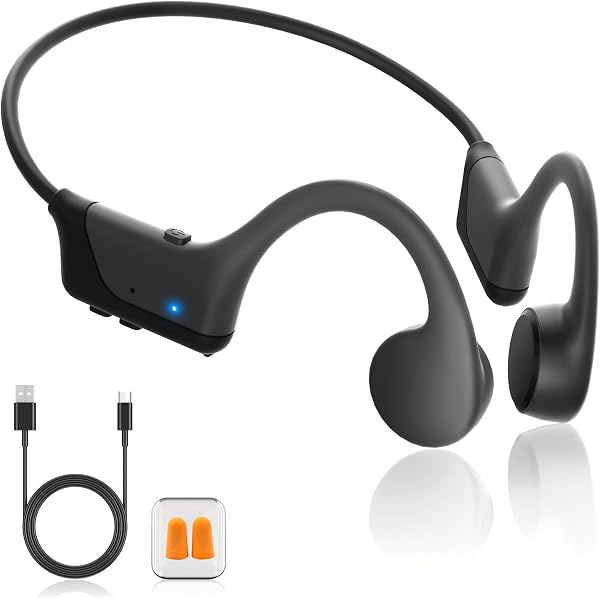
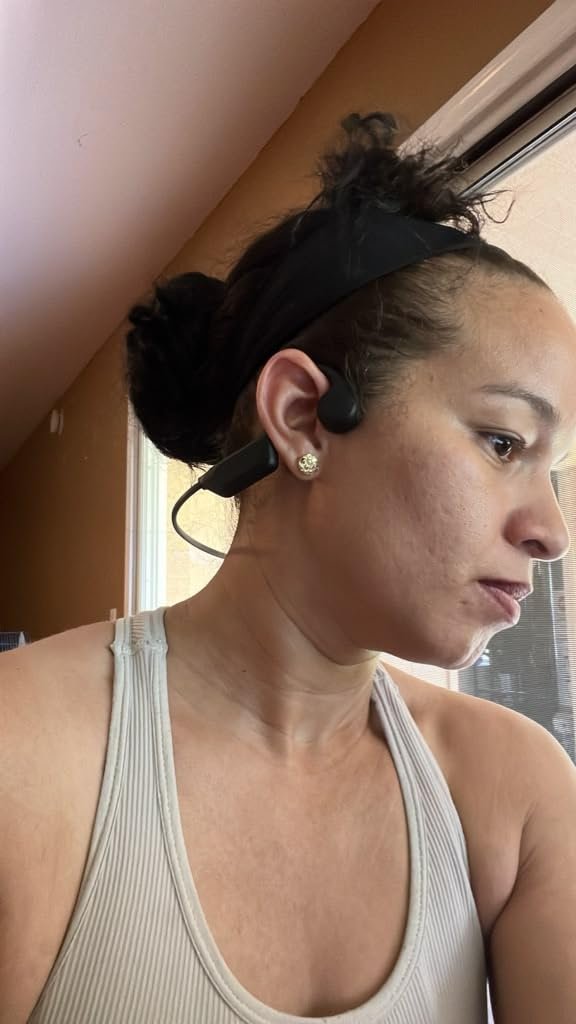
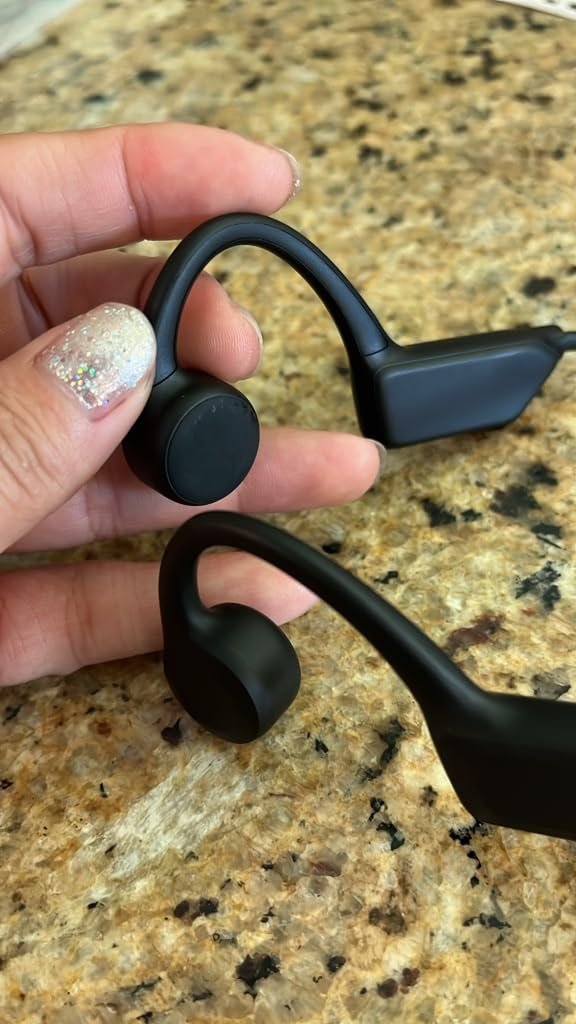
This budget-friendly bone conduction headphone earns a 4.8-star rating from buyers who use it for running, hiking, cycling, and gym workouts. At around $60, it brings modern Bluetooth 6.0 technology and a fully enclosed acoustic cavity design that reportedly reduces sound leakage by up to 50% to a price point where Shokz alternatives cost two to three times more.
We may earn a commission when you buy through this link, at no additional cost to you.
The Bluetooth 6.0 chip is the newest standard available, offering faster pairing, improved stability, and better multi-device handling than older Bluetooth versions. Combined with the 29-gram titanium frame that keeps weight comfortable during long wear, this delivers many of the practical benefits of premium bone conduction at a much more accessible price point.
The reduced sound leakage claim is genuinely important for bone conduction headphones. Traditional models can leak audible sound at higher volumes, which becomes embarrassing on public transit or in shared quiet spaces. The improved acoustic cavity design here specifically addresses this weakness. Ten-hour battery life covers most training sessions and daily use without needing frequent charging.
Bone conduction headphones inherently leak more sound than sealed earbuds because the transducers vibrate against your cheekbones near your ears. Older bone conduction models could produce audible leakage at moderate volumes, making them less suitable for quiet offices or public transit. Improved acoustic designs that reduce leakage make bone conduction genuinely more practical for shared spaces without needing to reduce volume.
The main considerations are brand maturity and IPX5 waterproofing that handles sweat but not immersion. Generic Amazon-branded products lack the software polish and firmware support of established brands like Shokz. For buyers who want to try bone conduction without the Shokz price premium, though, the combination of high user ratings, modern Bluetooth, and reduced leakage makes this a genuinely appealing budget alternative.
Buyers who want established Shokz brand quality or those seeking IPX7 immersion-rated waterproofing.
We may earn a commission when you buy through this link, at no additional cost to you.
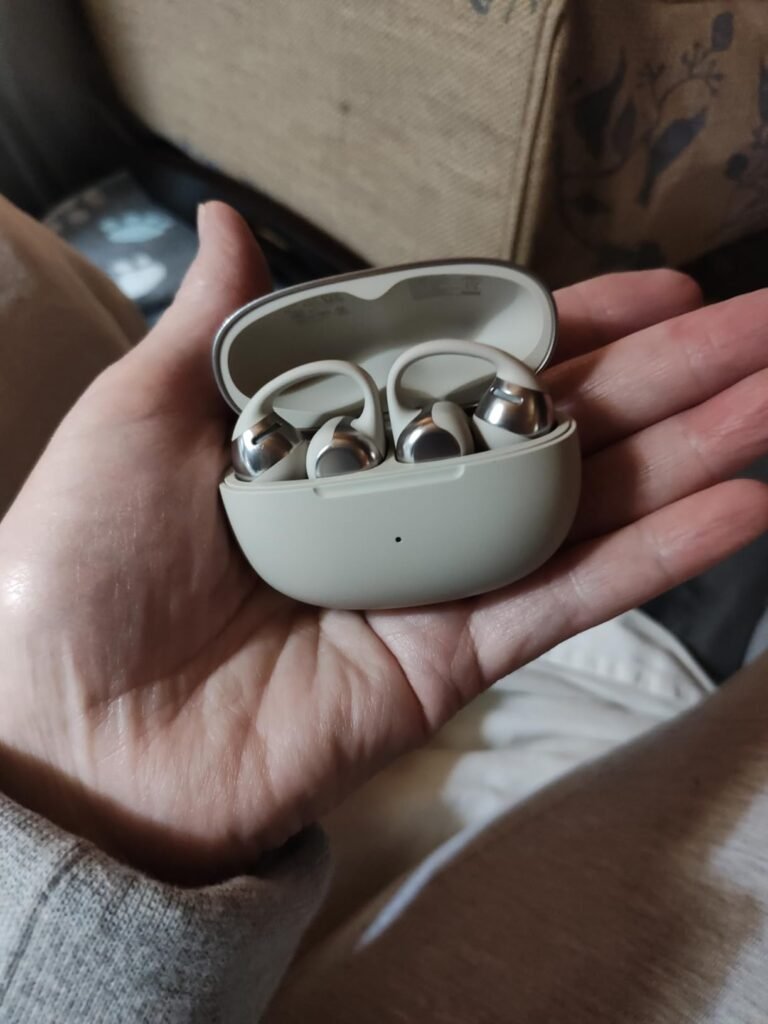
Shokz's OpenDots ONE represents the brand's expansion beyond bone conduction into premium clip-on territory. The nickel-titanium plate combined with soft silicone grip creates a fit that conforms to your ear while remaining virtually unnoticeable during all-day wear. At just 6.5 grams per earbud, these disappear into your ears in a way that few open-ear designs achieve.
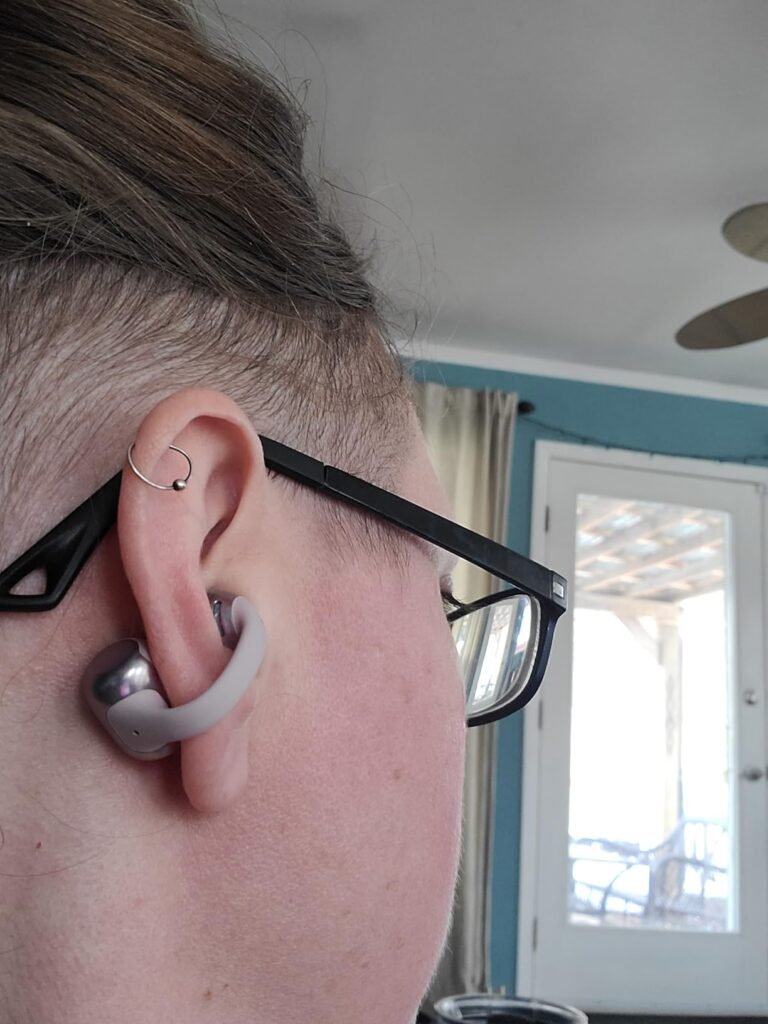
We may earn a commission when you buy through this link, at no additional cost to you.
Dolby Audio and Shokz’s proprietary Bassphere Technology deliver sound quality that stands out in the open-ear category. Bass response in particular benefits from the specialized acoustic engineering, addressing the biggest historical weakness of open-ear designs. DirectPitch technology minimizes sound leakage, making these viable for offices and quiet shared spaces where cheaper open-ear alternatives would be too disruptive.
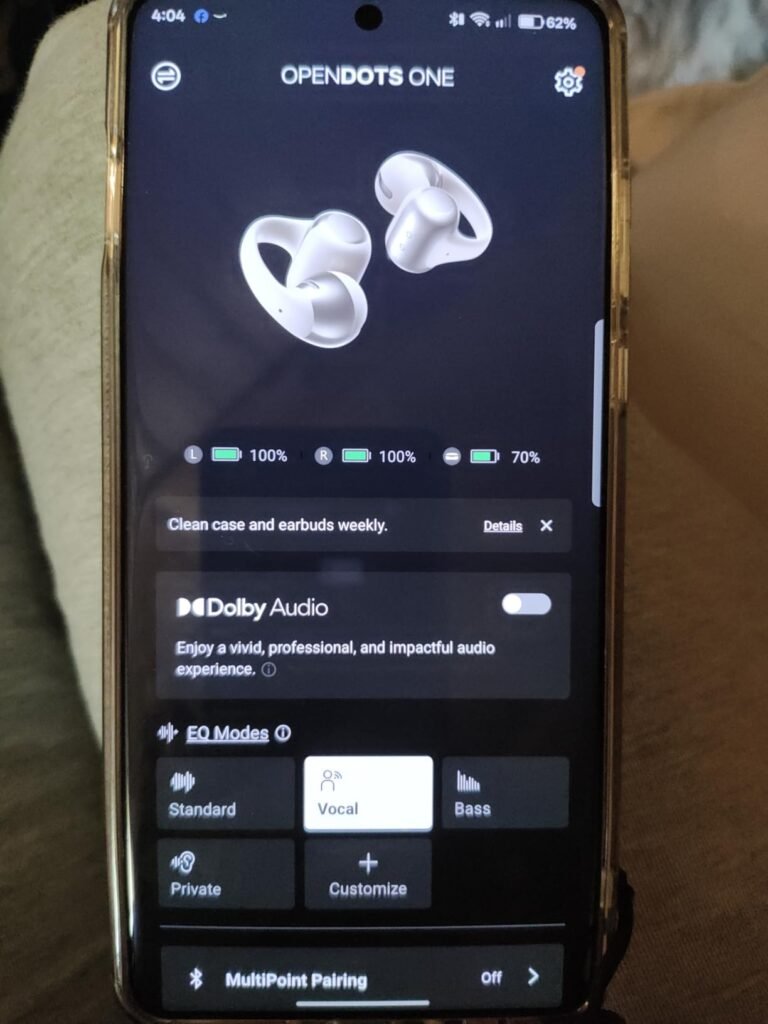
The earbuds are interchangeable between left and right ears, which is genuinely convenient and unusual in the category. Multipoint pairing allows seamless switching between two devices, perfect for hybrid workers who use headphones with both phone and laptop throughout the day. The Shokz app adds EQ customization, touch control configuration, battery tracking, and even earbud location features.
Multipoint pairing lets you connect to two devices simultaneously, typically a phone and laptop. When a call comes in on your phone while you’re listening to music from your laptop, the headphones automatically switch audio sources without manual re-pairing. For hybrid workers who juggle multiple devices throughout the day, this feature meaningfully improves daily convenience and is worth paying extra for.
At $140, this occupies premium territory that requires justification against cheaper alternatives. The Dolby Audio support, Shokz brand quality, multipoint pairing, and wireless charging capability collectively earn the premium for buyers who value refinement over rock-bottom pricing. The IP54 rating handles sweat and rain but isn’t intended for pool use or heavy submersion, which is worth noting for serious athletes.
Athletes who need higher water resistance for pool use or budget-conscious buyers who can’t justify the premium price.
We may earn a commission when you buy through this link, at no additional cost to you.
The Raycon Essential targets buyers who want an established consumer brand with heavy marketing presence rather than the generic alternatives that dominate budget open-ear pricing. Raycon has built strong retail presence and celebrity endorsements, and their Essential Open Earbuds deliver a solid earhook design at a price roughly double what generic alternatives cost.
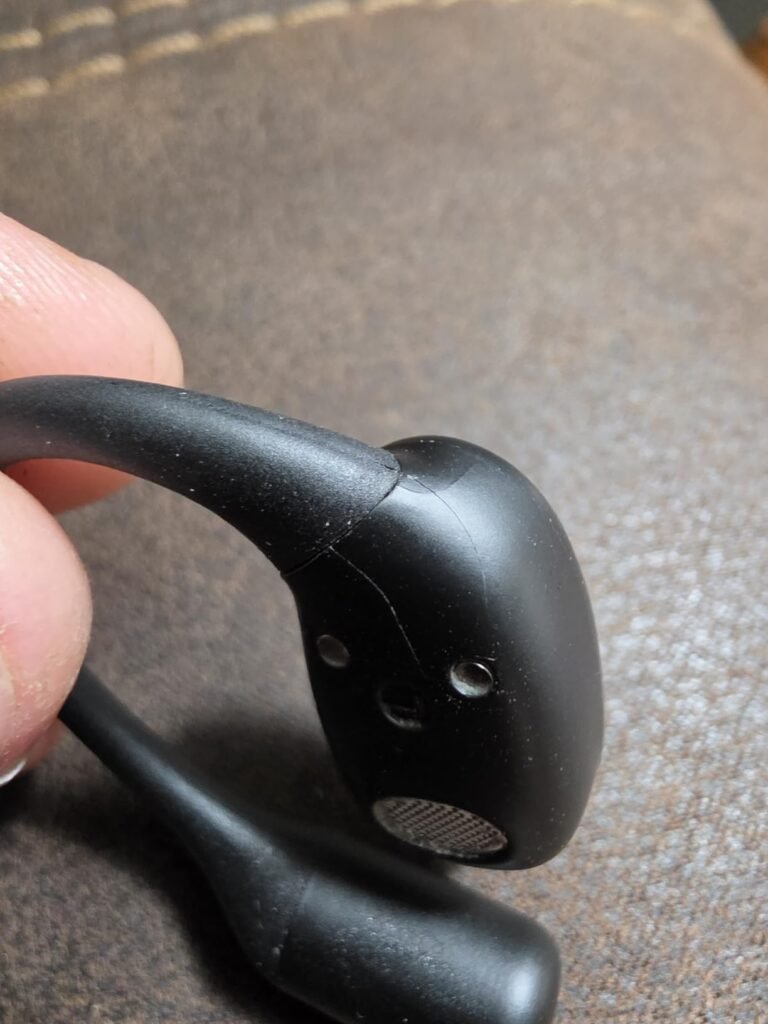
We may earn a commission when you buy through this link, at no additional cost to you.
Thirty-six hours of total battery life covers a full week of typical use, and the featherlight comfort hook design keeps the earbuds secure during workouts and everyday movement. The compact charging case fits easily in pockets or bags, which matters for travelers or anyone who dislikes bulky accessory cases. The overall aesthetic reads as intentionally designed rather than functional-only.
Sweat resistance handles gym workouts and casual outdoor use, though the specific IP rating isn’t as prominently advertised as with competing sport headphones. The comfort hook design goes behind the ear and holds the driver in the correct position pointing at the ear canal, which is a standard and generally reliable open-ear approach.
Established brands like Raycon typically offer more consistent customer service, easier warranty claims, and better long-term support than generic Amazon-only brands. Whether that justifies paying two to three times more depends on how much you value peace of mind. For buyers who’ve had bad experiences with cheap electronics failing without recourse, the modest premium for a recognized brand can genuinely reduce future headaches.
The main considerations are the 4.0 star rating and premium-for-specs pricing. Raycon products often cost more than equivalent generic alternatives with similar features, reflecting the marketing overhead that comes with celebrity endorsements. For buyers who value brand recognition and established customer support over pure specifications, these deliver a reliable if unspectacular open-ear experience.
Buyers focused on maximum value per dollar or those seeking the highest user ratings in the category.
We may earn a commission when you buy through this link, at no additional cost to you.
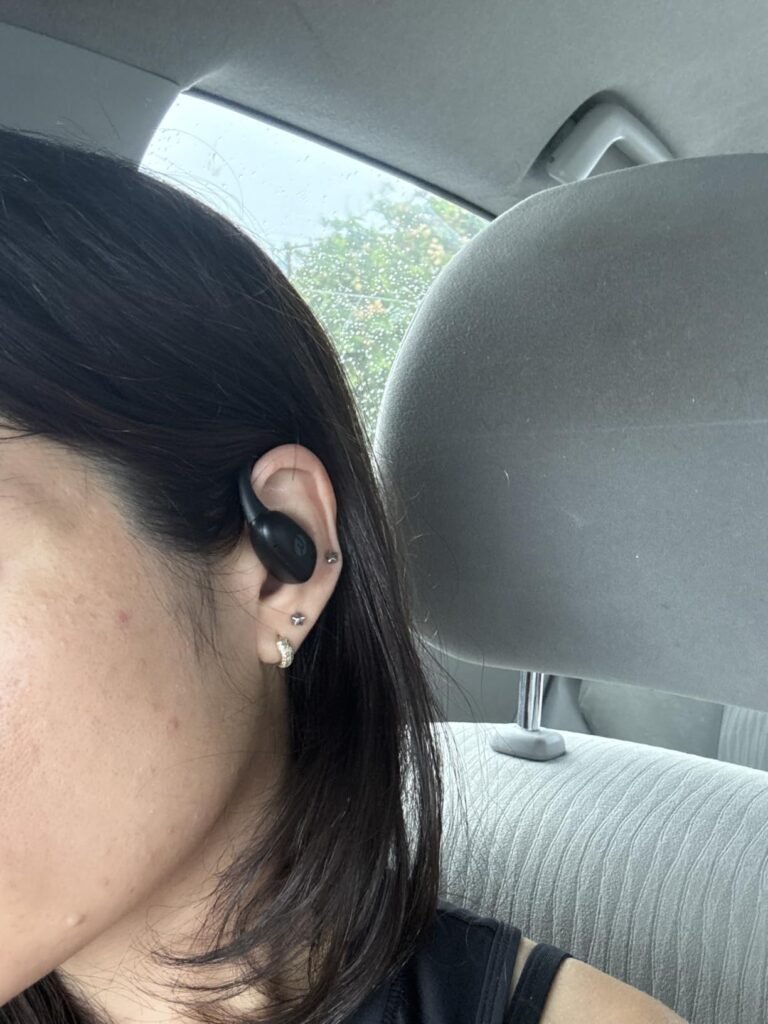
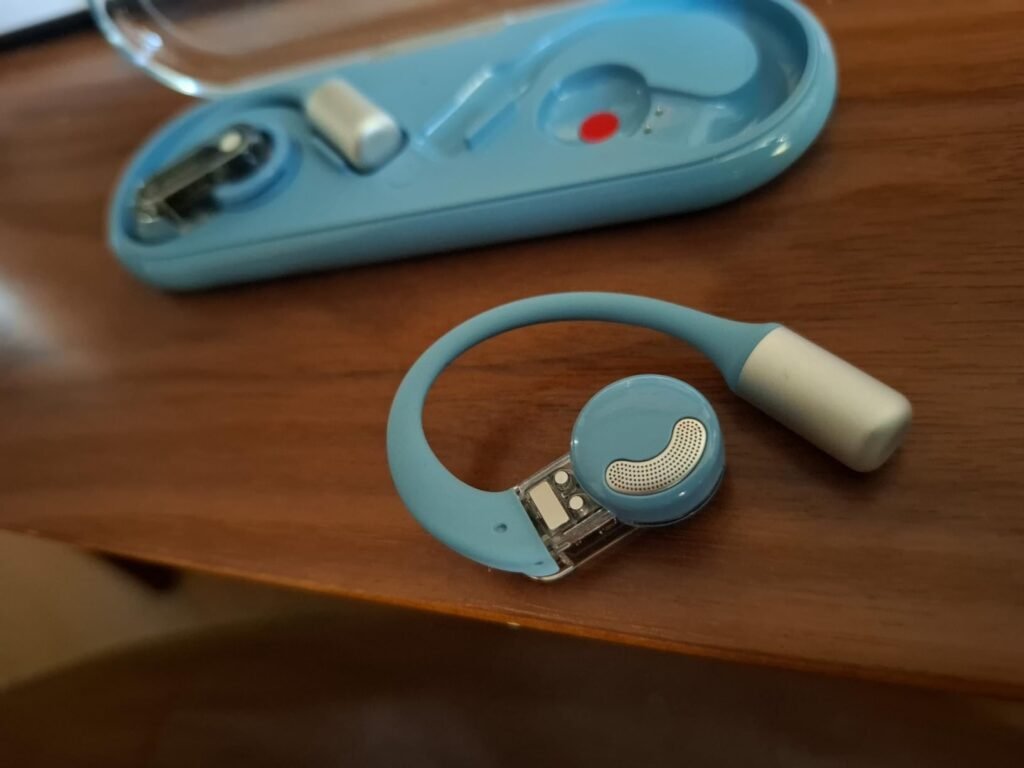
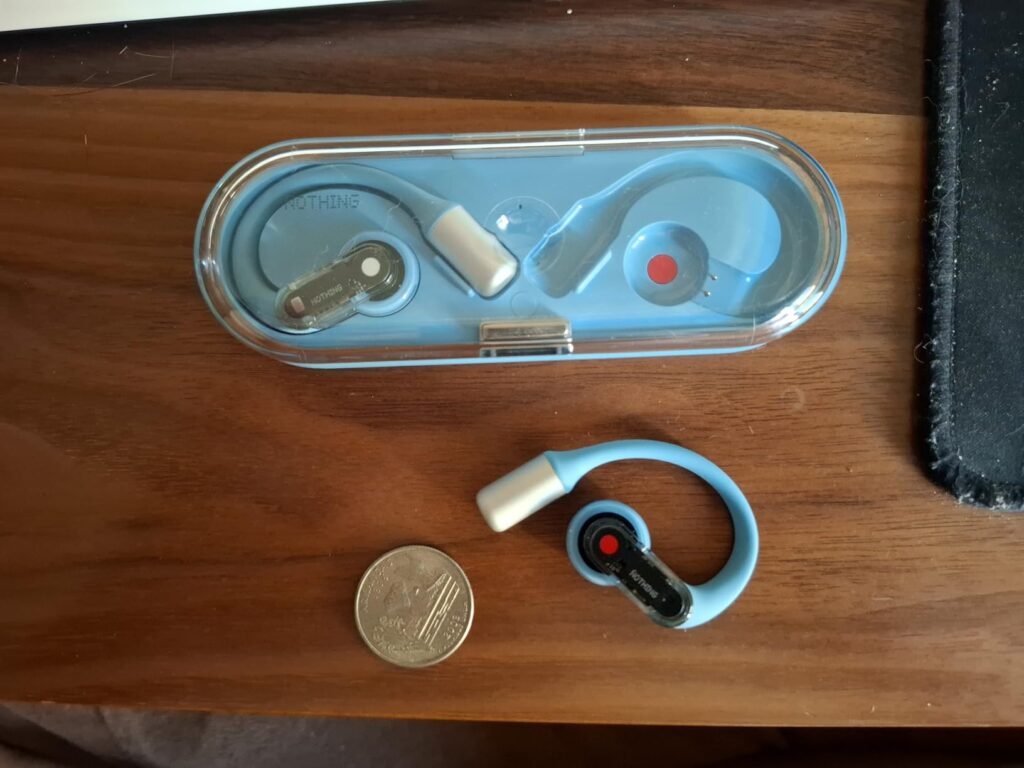
Nothing has built a devoted following through distinctive industrial design that stands apart from the sea of black-and-white generic tech. Ear (Open) continues that aesthetic tradition with a transparent case and unique visual identity that appeals to buyers who care about how their tech looks alongside how it performs. For anyone who wants headphones that spark conversation, this is one of the most distinctive picks available.
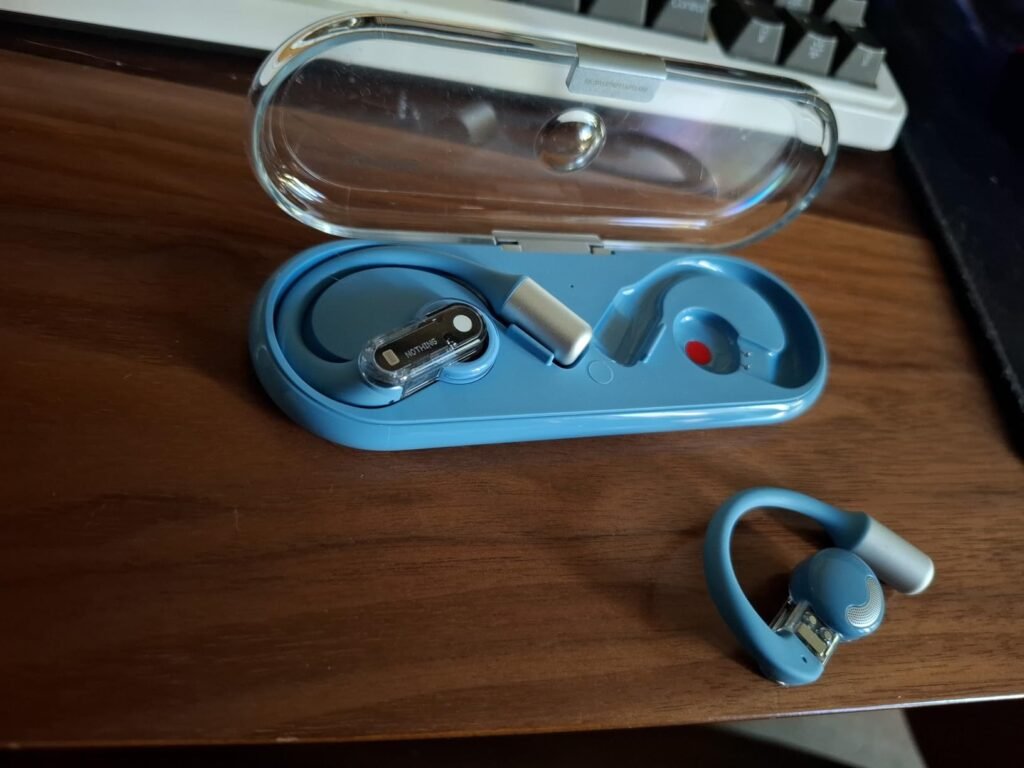
We may earn a commission when you buy through this link, at no additional cost to you.
The stepped driver with titanium alloy coating delivers rich bass and crisp treble that punches above typical open-ear expectations. The ergonomic ear hook design uses a 50-degree tilt with three-point balance to distribute weight comfortably during all-day wear. Skin-friendly silicone contacts prevent the irritation that some materials cause during extended sessions.
Bluetooth 5.3 with multipoint pairing enables smooth switching between phone and laptop, which matters significantly for hybrid workers. AI noise reduction trained on 28 million samples keeps calls clear in outdoor and busy environments. The dedicated sound isolation system minimizes leakage to protect privacy in shared spaces. ChatGPT integration through the Nothing X app opens up voice-based AI interaction directly from the earbuds.
Direct ChatGPT access through wearable devices is genuinely useful for quick questions, translations, or brainstorming without needing to unlock your phone. You can ask complex questions and get thoughtful responses hands-free, which works well for cooking, exercising, or driving scenarios. However, it requires a paid ChatGPT Plus subscription for optimal experience, so factor that ongoing cost into value calculations.
The main considerations are the IP54 rating that handles rain and sweat but isn’t rated for immersion, and the distinctive visual style that appeals to some buyers more than others. At $89, the pricing sits in a reasonable middle range that reflects genuine premium features without reaching flagship territory. For buyers who want unique design paired with modern AI features and multipoint convenience, Nothing Ear (Open) is uniquely positioned.
Buyers who prefer conservative aesthetics or need higher water resistance for pool and heavy weather use.
We may earn a commission when you buy through this link, at no additional cost to you.
The Soundcore AeroFit 2 represents Anker's more premium open-ear offering, combining refined ergonomics with genuinely capable audio technology. The 4-level adjustable ear hooks accommodate over 99% of ear shapes and sizes according to Anker's fit engineering, which addresses the biggest challenge open-ear designs face across diverse anatomy. For buyers who've struggled with fit on fixed-position alternatives, this adjustment range is meaningful.
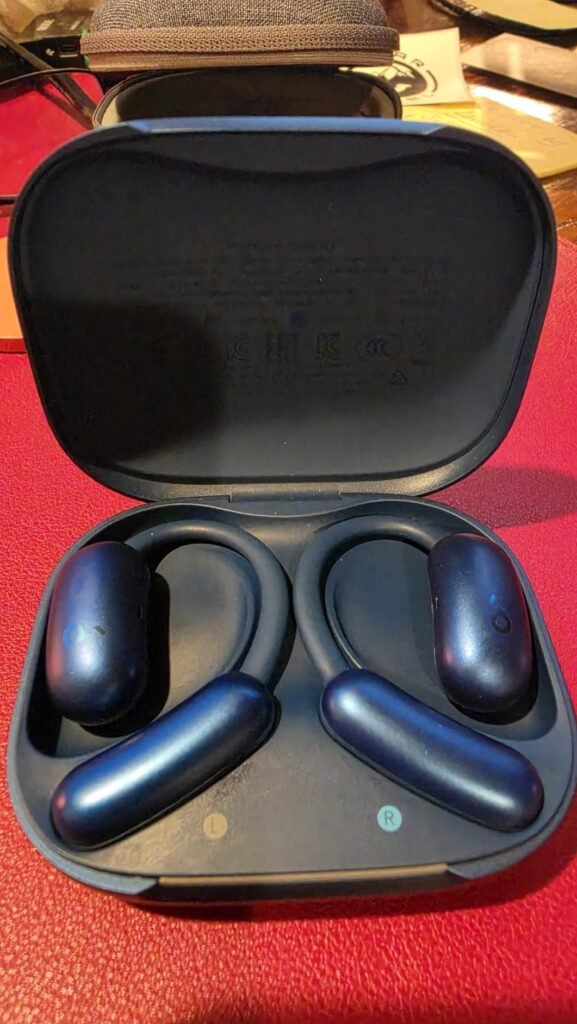
We may earn a commission when you buy through this link, at no additional cost to you.
Audio performance stands out thanks to the 20mm by 11.5mm racetrack drivers combined with BassTurbo acoustics, delivering the deeper bass and clearer mids that open-ear designs historically struggled to achieve. LDAC codec support enables Hi-Res audio transmission at up to 990 kbps, which is significantly higher than standard SBC or even AAC, providing genuinely improved sound quality when paired with compatible source devices.
Battery life reaches 42 hours total, and wireless charging support eliminates cable hassles at home or office. The directional acoustic technology guides sound precisely toward your ear canal, which helps maintain privacy by reducing the leakage that plagues many open-ear designs. Free AI translation supporting 100 languages adds practical utility for travelers or anyone in multilingual environments.
Standard Bluetooth audio uses SBC codec which compresses audio to fit within Bluetooth bandwidth limitations. LDAC transmits up to three times more data, preserving audio detail that gets lost with SBC. For music lovers streaming high-quality audio from services like Tidal or Apple Music Lossless, LDAC delivers noticeably better sound. However, both your source device and headphones must support LDAC, and the codec is primarily available on Android rather than iOS.
The main considerations are that LDAC Hi-Res streaming consumes battery faster than standard codecs, and Bluetooth 5.4 is one version behind the newest 6.0 standard. For audiophiles who want the best possible open-ear sound quality and value features like multipoint pairing, wireless charging, and 4-level fit adjustment, though, the AeroFit 2 delivers one of the most complete premium packages in this comparison at around $80.
iPhone users who can’t take advantage of LDAC codec support or those who want the newest Bluetooth 6.0 standard.
We may earn a commission when you buy through this link, at no additional cost to you.
Open ear headphones let you enjoy audio while staying aware of your surroundings, but the category includes several distinct design approaches with different strengths. This guide walks through the decision factors that most affect long-term satisfaction with your purchase.
Open ear headphones come in three primary design categories. Earhook models wrap over the top of your ear with a small speaker aimed at your ear canal. Clip-on designs pinch around the ear cartilage without hooking over the top. Bone conduction sits on your cheekbones and transmits sound through vibration to your inner ear entirely. Each approach has genuine strengths and weaknesses for different users.
Earhook designs like the Raycon Essential and Nothing Ear (Open) typically offer the most secure fit for high-impact activities like running. Clip-on designs like the TOZO OpenEarRing and Shokz OpenDots ONE excel at all-day comfort and work particularly well with glasses. Bone conduction like the Shokz OpenRun Pro provides maximum situational awareness since your ear canals remain completely unobstructed. Match the design to your primary use case for the best experience.
For running and gym use, choose earhook or bone conduction for stability. For office and casual wear, clip-on offers superior comfort. For maximum outdoor awareness, bone conduction remains the benchmark despite compromises in sound quality.
Open ear designs face inherent challenges reproducing bass because sound isn’t sealed in your ear canal. Driver size matters more here than in traditional in-ear headphones, since larger drivers move more air to compensate for the open design. The 16mm drivers on the Soundcore V20i and 20mm racetrack drivers on the AeroFit 2 significantly outperform smaller drivers found on ultra-compact designs.
Codec support also affects sound quality meaningfully. Standard SBC codec compresses audio noticeably, while LDAC (found on the Soundcore AeroFit 2) transmits up to three times more data for Hi-Res audio quality. AAC provides good performance on iOS devices. Directional audio technologies like Shokz DirectPitch or Anker’s directional acoustics reduce leakage while improving perceived clarity by focusing sound toward your ear canal.
For casual listening to speech-heavy content like podcasts, most open-ear headphones work well. For serious music enjoyment, prioritize larger drivers and LDAC or premium codec support. Expect bass depth to remain the weakness of open-ear designs regardless of technology.
Fit is arguably the most important factor for open-ear headphone satisfaction, since a poorly fitting pair will constantly shift, feel uncomfortable, or produce inconsistent sound. Weight matters significantly for all-day comfort. The 5.1-gram TOZO OpenEarRing and 6.5-gram Shokz OpenDots ONE nearly disappear during wear, while heavier earhook designs can create fatigue during marathon sessions.
Adjustability helps ensure the fit works for your specific ear shape. The Soundcore V20i offers four rotation positions, the AeroFit 2 provides four hook levels, and the Soundcore C50i uses memory titanium that adapts to individual ears. These adjustment systems meaningfully improve fit for buyers whose ears don’t match manufacturers’ assumed average shapes. Fixed-position designs work well when they happen to match your anatomy but can be uncomfortable when they don’t.
Try to find headphones with return policies if possible, since fit is highly personal. Prioritize adjustable designs if you’ve struggled with fit issues on other open-ear headphones, and pay attention to weight if you plan all-day wear.
Battery life in this comparison ranges from 8 hours single-charge (Bone Conduction 8H) to 80 hours total playtime with case (80H Earhook). Total playtime includes the earbuds plus additional charges from the case, while single-charge earbud life determines how long you can use them continuously without returning to the case. Both numbers matter for different use cases.
For daily commuters who charge nightly, 6 to 8 hours of single-charge life is sufficient. For long workouts, all-day office wear, or travel where charging opportunities are limited, prioritize longer single-charge earbud life and larger total case capacity. Wireless charging support on models like the Shokz OpenDots ONE and Soundcore AeroFit 2 eliminates cable hassles at home or office. Fast charging capabilities like Shokz’s 5-minute quick charge for 1.5 hours of use provide meaningful convenience when time is short.
For casual daily use, 20-30 hours total playtime is adequate. For heavy use or travel, prioritize 40-plus hour total capacity with fast charging. Wireless charging is a genuine convenience if you have compatible pads at home or office.
IP ratings use two digits: the first for dust protection and second for water. IPX5 handles sweat and rain but not immersion. IPX7 covers temporary submersion up to one meter. IP54 protects against limited dust ingress and splashes. IP55 adds better dust protection. For most workout use, IPX5 or IP54 is adequate. For pool use or extreme sweat conditions, prioritize IPX7 like the 80H Earhook Earbuds.
Different open-ear designs typically carry different ratings. Earhook designs often achieve IPX5 or higher since they can be fully sealed. Clip-on designs frequently rate IP54 since the clip mechanism creates some water entry paths. Bone conduction typically ranges from IPX5 to IP67. Match the rating to your actual use case rather than assuming higher is always better, since more waterproofing often adds cost without practical benefit for casual use.
For gym and indoor workouts, IP54 or IPX5 is sufficient. For outdoor running in variable weather, IPX5 or IPX7 provides confidence. For pool use or heavy immersion, only IPX7 or higher offers real protection.
Call quality varies significantly across open-ear headphones. Basic single-microphone designs capture voice adequately in quiet environments but struggle with wind, traffic noise, or busy office backgrounds. Multi-microphone arrays with AI noise reduction like those on the Soundcore V20i (4 mics) or Nothing Ear (Open) (dual mics trained on 28 million samples) deliver notably clearer calls in challenging environments.
For hybrid workers who use headphones for video meetings, microphone quality matters as much as audio quality. Look for models advertising multiple microphones, AI noise reduction, or ENC (environmental noise cancellation) features. Bone conduction headphones often struggle more with microphone placement since the transducers focus on cheekbones rather than voice pickup, though premium models like Shokz’s use dedicated boom microphones for improved call clarity.
For casual call use, basic microphones work fine. For frequent calls in outdoor or noisy environments, prioritize models with 4-microphone arrays and AI noise reduction. Test call quality specifically if possible before committing to a purchase.
Bluetooth 6.0 is the newest standard among these picks, offering improved connection stability, better multi-device handling, lower latency, and enhanced coexistence with other wireless devices. Bluetooth 5.4 and 5.3 versions work well but offer slightly less refinement. For most listening scenarios, the practical difference is subtle unless you use headphones in crowded wireless environments like busy gyms.
Multipoint pairing, available on the Shokz OpenDots ONE and Nothing Ear (Open) among others, lets you connect to two devices simultaneously. This is genuinely valuable for hybrid workers who switch between phone and laptop throughout the day, since audio automatically routes to whichever device is playing. Companion apps like Soundcore, Shokz, and Nothing X add EQ customization, firmware updates, and feature configuration that can meaningfully extend the useful life of your headphones.
For most users, Bluetooth 5.3 or later is fine. For hybrid workers or heavy multi-device users, prioritize multipoint pairing. Companion app support is a nice-to-have that becomes more valuable over years of ownership through firmware improvements.
All open-ear headphones leak some sound to people nearby because they don’t seal your ear canals. The amount varies significantly by design and volume. Cheaper models often leak audibly at moderate volumes, which becomes disruptive in offices, libraries, or on public transit. Premium models with directional acoustic technology like Shokz DirectPitch or Anker’s directional audio focus sound toward your ear canal to minimize leakage while maintaining volume for you.
Bone conduction designs have historically leaked more than speaker-based open-ear designs, though newer bone conduction models like the Bone Conduction 8H with fully enclosed cavity design reduce leakage by up to 50% compared to earlier generations. For shared quiet spaces, prioritize models specifically advertising leakage reduction or directional acoustic technology.
For outdoor use, leakage matters little since ambient sound masks it. For office, library, or public transit use, prioritize models with directional acoustic technology and keep volume moderate. Test leakage specifically if you’ll use headphones in shared quiet spaces.
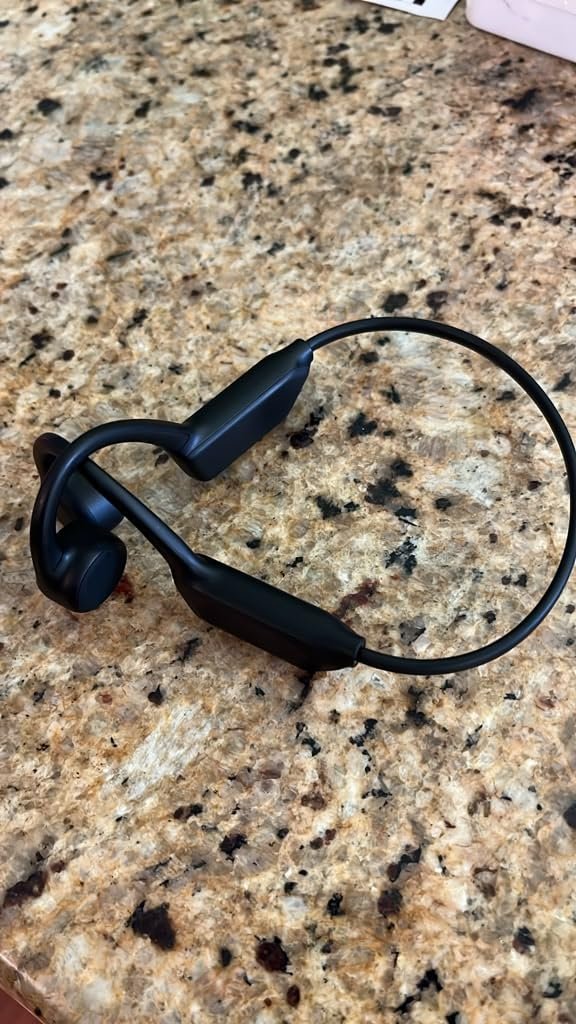
Getting the best experience from open ear headphones starts with proper fit adjustment. For earhook designs, position the hook comfortably behind your ear with the driver aimed at your ear canal, not your temple. For clip-on designs, gently squeeze the clip to open it and position it around your ear cartilage where it feels secure without pinching. For bone conduction, the transducers should rest directly on your cheekbones just in front of your ears. Take time to experiment with placement, since small adjustments can significantly change sound quality and comfort. Pair the headphones with your primary device once during initial setup and rely on automatic reconnection thereafter for the smoothest daily use.
Battery care extends useful lifespan meaningfully. Charge fully before first use and avoid letting the battery deplete to zero regularly, since deep discharge cycles accelerate battery wear. Modern lithium batteries handle everyday charging well, so there’s no need to obsess over exact charge percentages. Use the included cable or a certified replacement, and never plug in while the earbuds or case are wet. If your headphones support wireless charging, occasional wired charging can help balance charge cycles and maintain optimal battery health. Store the case with some charge remaining if you won’t use the headphones for extended periods.
Clean the headphones regularly to prevent skin oil, sweat, and debris buildup that can degrade materials over time. Wipe the earbuds and any surface that contacts skin with a soft, slightly damp cloth after workouts or hot weather use. For deeper cleaning, use isopropyl alcohol on a soft cloth to disinfect the contact surfaces, being careful to avoid getting liquid into charging ports or speaker openings. Silicone tips and coatings can be gently cleaned with mild soap and water, then dried thoroughly before returning to the case. Update firmware through the companion app when prompted, since updates often improve battery life, connection stability, and sometimes sound quality on premium models. Store the case in a cool, dry location and avoid extreme temperatures that can affect battery performance and material longevity.
Open ear headphones don't seal your ear canal, leaving it free to hear ambient sound. Regular earbuds and in-ear designs create a seal that blocks external audio, providing better bass and noise isolation but reducing awareness of surroundings. Open ear designs work best for outdoor exercise, office use, and situations where hearing your environment matters. Regular earbuds work better for commuting on noisy transit or for maximum audio immersion when noise blocking is welcome.
Quality earhook and bone conduction designs stay securely in place during running, cycling, and gym workouts. Clip-on designs work well for casual running but may shift during high-impact activities like sprinting or intense jumping. Adjustable models like the Soundcore V20i (four positions) or AeroFit 2 (four hook levels) let you customize the fit for your specific activity and ear shape. Test fit stability during your typical activities before committing to any particular design.
Both keep your ears open but work differently. Speaker-based open ear designs use tiny drivers pointed at your ear canal, delivering fuller sound but requiring the drivers to be positioned correctly. Bone conduction uses vibration through cheekbones to reach your inner ear, providing maximum situational awareness but historically weaker bass. Bone conduction excels for safety-critical activities like cycling in traffic, while speaker-based open ear provides better audio quality for casual listening.
Some sound leakage is inevitable since these designs don't seal your ears. At moderate volumes, most people won't notice unless they're very close. At high volumes, people within a few feet may hear a faint audio bleed. Premium models with directional acoustic technology minimize leakage significantly compared to cheaper alternatives. If you frequently use headphones in quiet shared spaces, prioritize models advertising leakage reduction and keep volume moderate.
Yes, most modern open ear headphones handle calls well, especially in quiet environments. Models with multi-microphone arrays and AI noise reduction like the Soundcore V20i (4 mics) or Nothing Ear (Open) deliver clear call quality even in outdoor environments. For frequent calls in noisy conditions, prioritize models specifically advertising dual or quad microphone arrays with noise cancellation technology.
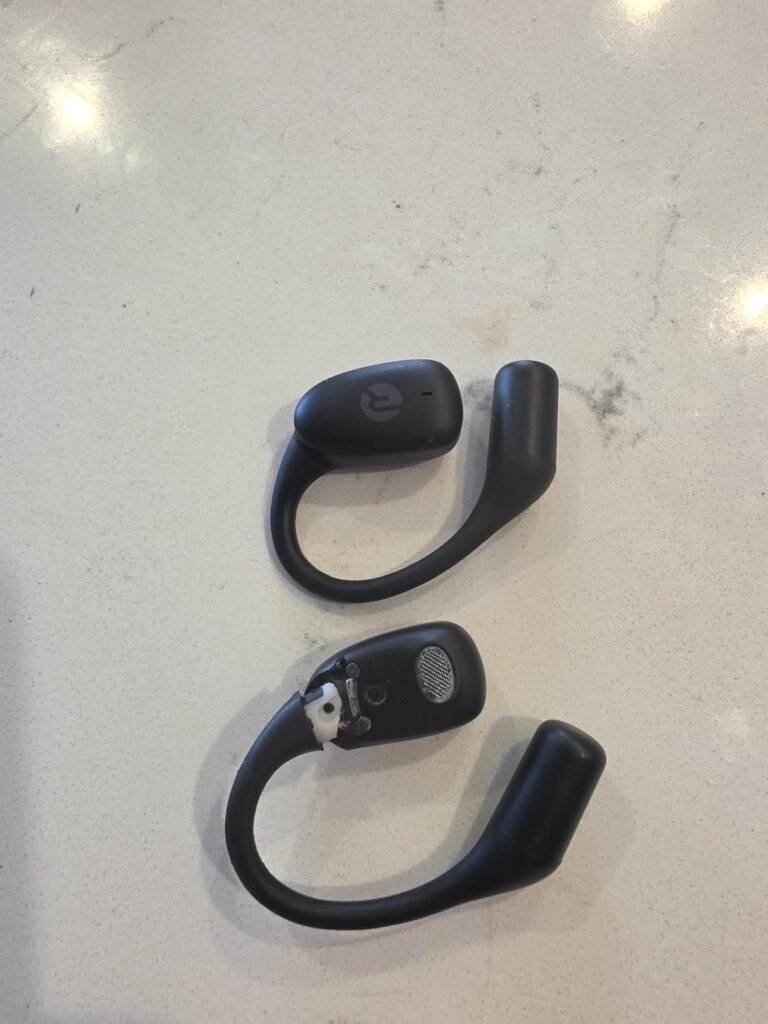
Quality open ear headphones from established brands typically last 3-5 years with reasonable care. The battery is usually the first component to weaken, and few models offer user-replaceable batteries. Silicone components can wear from regular skin contact over time. Sweat exposure accelerates aging, so wiping headphones after workouts extends useful life significantly. Established brands like Anker, Shokz, and Nothing generally last longer than generic Amazon-only alternatives.
Clip-on designs like the TOZO OpenEarRing and Shokz OpenDots ONE work particularly well with glasses since they don't compete for space with glasses arms behind your ears. Bone conduction generally works well since transducers sit on cheekbones rather than at the ear. Earhook designs can sometimes conflict with glasses arms, though many buyers find comfortable positions with practice. If you wear glasses full-time, prioritize clip-on or bone conduction designs.
Most open ear headphones in this comparison are not rated for swimming, even those with IP55 or IP56 water resistance. Only IPX7 rated models like the 80H Earhook Earbuds can handle temporary submersion, and most manufacturers still don't recommend actual swimming due to pressure and prolonged water exposure. For pool use specifically, look for dedicated waterproof swimming headphones with onboard music storage rather than Bluetooth models.
Open ear headphones typically have less bass depth and slightly less overall clarity than sealed traditional earbuds. The tradeoff is that your ears stay open to environmental sounds. Premium open-ear models with larger drivers and technologies like BassUp, TurboPitch, or Dolby Audio narrow the gap significantly. For pure audio quality, sealed earbuds still win. For situational awareness and comfort during long wear, open ear designs offer benefits sealed earbuds cannot match.
The Shokz OpenDots ONE stands out as the strongest overall pick for buyers who want a premium clip-on design with genuinely refined audio. Dolby Audio support with Bassphere Technology delivers sound quality that addresses the biggest historical weakness of open-ear designs, and the 6.5-gram per earbud weight nearly disappears during all-day wear. Combined with multipoint pairing, wireless charging, and Shokz's established brand quality, it earns its premium price for buyers who prioritize refinement.
Meaningful alternatives fill important niches for different buyers. The 80H Earhook Earbuds deliver exceptional battery life and IPX7 waterproofing at ultra-budget pricing. The Shokz OpenRun Pro remains the benchmark for bone conduction if maximum situational awareness matters most. The Nothing Ear (Open) brings distinctive design and AI features for style-conscious buyers, while the Soundcore AeroFit 2 delivers LDAC Hi-Res audio for audiophiles. Budget-conscious clip-on shoppers find great value in the TOZO OpenEarRing.
The right choice depends on how you'll actually use the headphones and what matters most to you. For running and outdoor exercise, prioritize earhook stability or bone conduction awareness. For office and all-day wear, choose clip-on designs for maximum comfort. For music enthusiasts, invest in premium models with larger drivers and better codec support. Match the design to your genuine use case rather than the flashiest specifications, and you'll get headphones that improve your daily routine for years to come.