Estes Wizard 12-Pack
8.8Editor scoreTwelve rocket kits
Up to 1,600 feet
Intermediate skill level
Wide engine compatibility
Find the right model rocket kits for 2026. We compare 8 standout options by build quality, useful features, owner feedback, value, and everyday trade-offs.
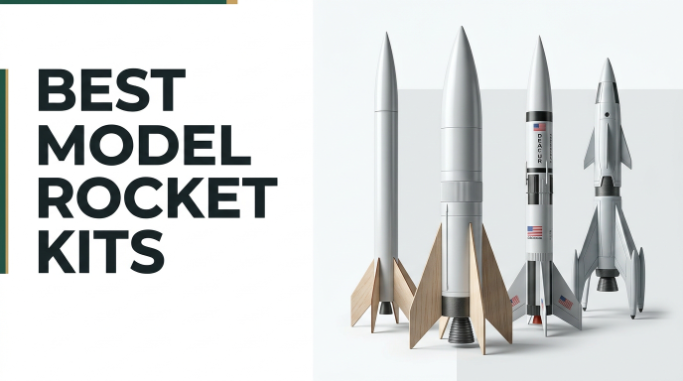
Choosing model rocket kits for 2026 comes down to a handful of practical details: build difficulty, projected altitude, engine compatibility, whether a launch pad and controller are included, and how much prep time each rocket demands before its first flight. This guide compares 10 popular kits so you can match the right build to the right rocketeer.
Some kits arrive fully assembled and only need a parachute pack, an engine, and a countdown. Others involve laser-cut fins, glue, decals, and an hour or more of careful building. Neither approach is better on its own, but the difference matters if the rocket is a gift, a classroom project, or a stepping stone toward advanced flights.
You will also see a big spread in altitude and power. Small starter rockets top out around 1,000 to 1,150 feet on common C6 engines, while larger E-powered builds trade altitude for a taller, more dramatic profile. Understanding those trade-offs early helps you pick a kit that fits your launch field, your skill level, and your budget.
We compared 10 model rocket kits using the factors that actually shape a good buying decision: build difficulty, assembly time, engine compatibility, projected altitude, included launch gear, recovery system, age suitability, classroom or gift value, and long-term reusability. The notes highlight practical trade-offs so each pick lines up with how people really build, launch, and recover rockets in backyards, open fields, and school STEM programs.


Compare key features, scores, and current prices side by side. A shorter feature list means fewer details were available, not necessarily fewer capabilities.


The Mean Machine is what beginner rocketeers eventually graduate toward. At 80 inches tall, it is a genuinely large airframe that turns heads on the launch pad and produces one of the most memorable liftoffs in the hobby. The trade-off is that it demands real building skill and more than three hours of assembly.
We may earn a commission when you buy through this link, at no additional cost to you.
On an E12-6 engine, the projected altitude sits around 700 feet. That is lower than smaller rockets on this list, and that is intentional. The Mean Machine trades altitude for a slow, dramatic climb that shows off its huge silhouette. The 24-inch parachute helps bring it back down gently to protect the long airframe on landing.
You will need the Porta-Pad E and E launch controller because the standard beginner pad is not rated for this rocket. You will also need six AA batteries, D or E class engines, starters, and recovery wadding. The upfront investment is meaningful, but the payoff is a rocket that keeps drawing attention at every launch.
An 80-inch rocket is awkward to transport and store, so plan for a long carrying case or roof rack and a garage shelf that can accommodate it fully assembled. You will also want a large, obstruction-free launch field.
Only pick this kit if you have already built a few smaller rockets and are ready for a more serious project. It is not a first rocket, but for the right builder it is one of the most rewarding kits on the market.
Not for absolute beginners or anyone flying in small parks with tight tree lines.
We may earn a commission when you buy through this link, at no additional cost to you.
This 12-pack is designed for teachers, scout leaders, and club organizers who need enough kits to outfit a full group. The per-rocket cost is far lower than buying individual Wizards, which is what makes it the go-to option for a science class or STEM after-school program that wants to run a real launch day.
We may earn a commission when you buy through this link, at no additional cost to you.
The Wizard itself is a small, light, high-performing rocket that can reach up to 1,600 feet on a C6-7. That kind of altitude makes it ideal for wind-drift studies, altitude tracking projects, and simple flight competitions between students. Its versatility with 1/2A through C engines also lets instructors match power to skill level.
You do need to supply your own launch pad, controller, engines, starters, and wadding, so factor those into your budget. The upside is that most schools and clubs already own a pad, and the Wizards are compact enough that a single Porta-Pad II can service the whole group during a launch session.
Twelve rockets go up quickly once launches begin. Prep engines and wadding ahead of time, assign a safety officer, and rotate students through pad duty so everyone gets a hands-on turn without crowding the launch controller.
Skill-wise, the Wizard sits at the intermediate level, which is a good stretch for students who have already built one or two beginner kits. If you are outfitting a class of complete first-timers, plan on extra instruction time or pair the build with a demonstration rocket.
Not the right pick for a single hobbyist who only wants one rocket to build and fly.
We may earn a commission when you buy through this link, at no additional cost to you.
The Alpha III is arguably the most recognizable first rocket in the hobby, and there is a good reason it keeps showing up on beginner lists. The molded plastic fin unit means you cannot glue fins on crooked, which removes one of the most common causes of a bad first flight.
We may earn a commission when you buy through this link, at no additional cost to you.
With the included Porta-Pad II and Electron Beam controller, this set truly is a full launch kit. Assembly takes about an hour, and the finished rocket flies up to 1,150 feet on a C6-7. Starting with an A8-3 engine keeps things low and easy to recover while you learn what to expect from ignition, ejection, and parachute deployment.
Engine compatibility is generous. You can fly the Alpha III on anything from 1/2A6-2 up through C6-7, which lets you scale altitude to your field. That flexibility also means one rocket can serve a small child for gentle backyard flights and a teenager for higher, more dramatic launches on the same weekend.
Uneven fins are the number one reason beginner rockets spiral off course. The Alpha III sidesteps that problem entirely, giving first-time builders far better odds of a straight, textbook first flight.
For price, simplicity, and reliability, this is the kit to buy if someone in the family has never launched a rocket before. It is also a smart replacement kit if you loved another rocket that got lost in a tree.
Not aimed at experienced flyers who want the challenge of aligning laser-cut wood fins from scratch.
We may earn a commission when you buy through this link, at no additional cost to you.
Not every gift recipient wants to sit down with glue and decals. The Rascal and Hijinks set skips assembly entirely by delivering two fully built and decorated rockets alongside the Porta-Pad II and Electron Beam controller. Add engines, starters, wadding, and batteries, and you can be launching in under an hour.
We may earn a commission when you buy through this link, at no additional cost to you.
Both rockets share the same basic profile and can reach around 1,100 feet on a C6-7. Engine compatibility spans A8-3 up through C6-5, which is enough range to keep flights manageable in a small park and still allow bigger climbs in a larger field. Having two rockets means one can be sacrificed to bold engine choices while you keep the other for safer flights.
The trade-off is that you miss the building experience, which is a genuine part of the hobby for many enthusiasts. If the goal is to introduce a curious kid to rocketry without a long build session, that is exactly the point. If the goal is to teach construction skills, a build-your-own kit is a better fit.
Prebuilt rockets shine at events, birthday parties, and family reunions where you want maximum flights per hour. Everyone gets to press the launch button quickly, which keeps the excitement level high across a whole group.
This is a strong pick as a birthday or holiday gift, especially for younger flyers who might lose interest during a longer build. It also works well as a travel or campground kit because there is nothing fragile to assemble on site.
Not for hobbyists who consider the construction process the most rewarding part of model rocketry.
We may earn a commission when you buy through this link, at no additional cost to you.
The Athena is a good pick when you already own a launch pad and just want a low-cost, high-performing rocket to add to your fleet. It ships fully assembled and only needs about 15 minutes of prep, so you can pick it up on the way to a launch site and still fly it the same day.
We may earn a commission when you buy through this link, at no additional cost to you.
On a C6-7 engine, the Athena reaches roughly 1,125 feet, which is right in the sweet spot for open fields. The 12-inch parachute is bright enough to track visually against a blue sky, which reduces the number of lost rockets on windy afternoons. Engine compatibility includes A8-3, B4-4, B6-4, and C6-5, giving good flexibility for stepping up power.
Because there is no pad included, this kit is best thought of as an add-on rather than a first purchase. If you already have a Porta-Pad II from another set, the Athena essentially doubles your launch capacity for very little money. It is also a smart backup if you fly often and expect to occasionally lose one.
Once you have a working launch pad, buying additional ready-to-fly rockets is far cheaper than buying more full sets. The Athena is one of the easiest ways to add altitude and variety to your existing setup.
For hobbyists who prioritize flight time over build time, the Athena delivers. It is not the flashiest rocket in the lineup, but its combination of quick prep, decent altitude, and low price makes it a repeat-purchase favorite.
Not the right choice as a very first purchase because you still need a launch pad and controller.
We may earn a commission when you buy through this link, at no additional cost to you.
The Pathfinder set walks a careful line between building experience and manageable flight altitude. You get two rockets, a launch pad, and a controller, and each rocket tops out at about 1,000 feet on a C6-5. That slightly lower ceiling actually helps beginners because it keeps recovery inside more modest fields.
We may earn a commission when you buy through this link, at no additional cost to you.
Both rockets can be built in about an hour, which makes this a good weekend project for a parent and child. Because the set includes two identical builds, it is also a nice way for two siblings or friends to each finish their own rocket and then launch together side by side on the pad.
Engine compatibility is a bit narrower than some other sets, limited to A8-3, B6-4, and C6-5. That is not a big drawback for beginners, since those three engines cover almost every practical use case, but seasoned flyers may prefer kits that also accept 1/2A or C6-7 options for wider experimentation.
A 1,000-foot ceiling drifts far less than a 1,600-foot flight, which means fewer trips to retrieve rockets from far corners of the field. That predictability makes launch days shorter, calmer, and easier to organize.
Consider this kit if you want a beginner package that includes construction, a full launch system, and altitudes that stay reasonable for smaller parks. It is not the highest-flying set on this list, and that is a genuine advantage when tree lines are close.
Not intended for advanced flyers hunting maximum altitude or E-engine performance.
We may earn a commission when you buy through this link, at no additional cost to you.
Looking at the Tandem-X from a different angle, it is worth calling out how well it teaches flight profile differences. The Amazon and Crossfire share the same launch pad but behave very differently in the air, which is a great teaching tool for anyone curious about how mass, length, and engine choice affect altitude.
We may earn a commission when you buy through this link, at no additional cost to you.
The larger Amazon flies slower and lower, roughly 600 feet on a C6-5, which makes it easier for a beginner to track and recover. The smaller Crossfire ISX is aerodynamic and climbs much higher, around 1,150 feet on a C6-7. Flying both back-to-back gives you a hands-on comparison of altitude, drift, and descent time.
Because the pad and controller are included, this kit continues to double as your launch infrastructure for future rockets like the Athena or Alpha III. Buying it early in your hobby saves money down the road since you will not need to purchase another launch system for basic rockets.
Launching both rockets on similar engines is an easy way to visually demonstrate how rocket size and drag affect altitude. It is a mini physics lesson that requires nothing more than the two kits and a clear field.
For families or classrooms that want one purchase to serve as both an introduction and a stepping stone, this remains the strongest overall value on the list. Just be prepared to spend an evening or two on the pair of builds.
Not for buyers who only want a single rocket or dislike back-to-back build sessions.
We may earn a commission when you buy through this link, at no additional cost to you.
Coming back to the Journey with a different lens, this is the best pick when you specifically want one rocket that punches well above its weight. It offers roughly 1,100 feet of altitude on a C6-7, which puts it in the same performance neighborhood as intermediate rockets while keeping the build friendly to first-timers.
We may earn a commission when you buy through this link, at no additional cost to you.
The clean modern design tends to appeal to older beginners and teens who might find some of the vintage-styled rockets childish. That matters more than it sounds because a rocket the builder is proud of is a rocket that gets flown more often and cared for better between launches.
Because the launch pad and controller are included, this is one of the few kits on the list that can serve as both a complete starter set and a longer-term platform. You can add ready-to-fly rockets like the Athena later without buying another launch system, which stretches your dollar over time.
The Tandem-X gives you two rockets and a broader teaching experience. The Journey gives you one rocket that flies higher and looks more modern. Both use the same launch system, so the choice really comes down to whether you value variety or focus.
Pick this kit if you want a single serious first rocket rather than a pair of smaller ones, and if you have access to a wide open field for those higher C-engine flights. It is a satisfying combination of simple build and dramatic performance.
Not the right fit if you prefer a two-rocket set or need lower, easier-to-track flights.
We may earn a commission when you buy through this link, at no additional cost to you.
A great model rocket purchase depends on skill level, field size, whether launch gear is included, and how much time you want to spend building versus flying. These factors will help you narrow the list to the kit that actually fits your situation.
Model rocket kits are usually labeled beginner, intermediate, or advanced, and those labels genuinely matter. Beginner kits like the Alpha III use molded plastic fin units that cannot be glued on crooked, which prevents the most common cause of a bad first flight. Intermediate kits like the Wizard involve more careful alignment of separate parts, and advanced kits like the Mean Machine involve multiple body tube sections, precise fin work, and hours of assembly time.
Matching skill level to the builder is just as important as matching a rocket to a launch site. A first-time ten-year-old will lose interest during a three-hour advanced build, while a returning teenager who has already flown a few rockets may find a simple molded-fin design too easy. If you are buying as a gift, err on the side of a slightly easier kit. A successful first build almost always leads to a second, more complex project down the road.
If you are unsure, start with a beginner kit that includes a launch pad. You can always add more challenging rockets later once you know what your builder actually enjoys.
Some kits are launch sets, meaning they include the rocket, a Porta-Pad II launch pad, and an Electron Beam launch controller. Others are just the rocket, which assumes you already own a pad. This distinction is easy to miss and can turn an exciting unboxing into a frustrating delay if you did not realize you also needed to buy the launch system separately.
A first purchase should almost always be a full launch set. The Tandem-X, Journey, Alpha III, Rascal and Hijinks, and Pathfinder all include the pad and controller. Once you own a working pad, standalone rockets like the Athena or bulk packs like the Wizard become much more attractive because you are only paying for the airframe.
Advanced rockets sometimes require a heavier launch pad rated for larger engines. The Mean Machine, for example, needs the Porta-Pad E instead of the standard Porta-Pad II, which is an extra purchase to plan for.
Model rocket engines are classified by letter, with each letter representing roughly double the impulse of the previous one. A- and B-class engines are for small, low-altitude flights that are easy to recover. C-class engines push most beginner rockets close to their maximum projected altitude. D- and E-class engines are reserved for larger, heavier rockets like the Mean Machine.
Every kit lists its compatible engines and its projected altitude on the top engine. The Alpha III can reach 1,150 feet on a C6-7 but can also fly gently on a 1/2A6-2. That range is a huge practical advantage because it lets one rocket serve both cautious first flights and higher, more exciting launches later.
Match altitude to your field. A 1,600-foot flight on a windy day can drift several hundred yards, so a smaller field calls for smaller engines regardless of what the rocket can technically handle.
Most beginner and intermediate rockets recover on parachutes. Parachute size affects descent speed and drift, with larger canopies producing slower, longer descents that drift further in wind. Bright-colored parachutes and body tubes are much easier to track visually, especially against blue skies, and can be the difference between a recovered rocket and a lost one.
Field size dictates how much altitude and drift you can safely handle. A small park with tree lines under 30 feet high is a poor match for a 1,600-foot Wizard flight but works nicely for a low-power Alpha III on a 1/2A engine. A large soccer field or empty schoolyard is closer to ideal for most C-class flights, and dedicated club fields are needed for D- and E-class launches.
When in doubt, size down on your first flight of any new rocket. A quick, low test flight confirms the recovery system works before you commit to a bigger engine.
Prebuilt rockets like the Rascal, Hijinks, and Athena skip the assembly step entirely. They arrive ready to fly, decorated, and only need about 15 minutes of prep before launch. This is ideal for events, gifts to younger kids, and hobbyists who want maximum flight time per weekend without extra work.
Build-your-own kits are where much of the traditional rocketry experience lives. The satisfaction of aligning fins, applying decals, and watching a rocket you built climb 1,000 feet is a big part of why people stay in the hobby. For a curious builder who enjoys hands-on projects, skipping the build removes half the fun.
Think about the recipient rather than the price tag. Prebuilt kits win for instant gratification, while build kits win for long-term engagement.
Bulk packs like the 12-rocket Wizard set exist for classrooms, scout troops, and clubs that need enough rockets for a whole group. Per-rocket cost drops dramatically compared to buying individual kits, and having everyone launch the same design makes it easy to compare performance across builders and engine choices.
For educational use, rockets that support altitude tracking, wind-drift studies, or simple flight competitions add real STEM value. Consistent designs help students isolate variables, and shared launch equipment keeps costs manageable for schools working under tight budgets.
If you are equipping a group, plan for extra engines, wadding, and starters, since a bulk pack of rockets will burn through consumables faster than a single kit.
Read the instructions completely before opening glue or applying decals. Dry-fit every part first so you understand how the fin unit, engine mount, shock cord, and parachute all interact. Use quality wood glue or plastic cement as specified, let seams dry fully, and take extra time to align fins straight because uneven fins are the single biggest cause of unstable flights.
On launch day, always follow the National Association of Rocketry safety code. Pick an open field free of trees, buildings, and power lines. Insert recovery wadding to protect the parachute from ejection heat, connect fresh 1.5-volt AA batteries to the controller, and stand back at least 15 feet from the pad. Give a clear countdown, launch only when the airspace is clear, and never approach a rocket that failed to ignite until you have disconnected the launch controller and waited at least 60 seconds.
After each flight, inspect the body tube for creases, check the shock cord and mount for wear, and repack the parachute loosely so it deploys cleanly next time. Store rockets vertically in a dry place away from direct sunlight, and keep engines in their original packaging separated from starters and batteries. With basic care, most rockets will handle dozens of flights before they need retirement or replacement parts.
Most kits on this list are rated for ages 10 and up, and that guidance is realistic. Younger children can absolutely enjoy watching launches, but building involves small parts, glue, and careful fin alignment that is easier for older kids. Adult supervision is required for the actual launch regardless of age, mainly because engines and starters need careful handling.
Not usually. Even complete launch sets like the Tandem-X and Journey require you to buy engines, starters, recovery wadding, and four AA batteries separately. Standalone rockets like the Athena also require a launch pad and controller. Always check the product details for what is included and budget a small follow-up order for consumables before your first flight.
For low-power A- and B-engine flights, a soccer field is usually enough. For C-engine flights that can climb 1,000 feet or more, you want a larger open area with no nearby trees, buildings, or power lines. Advanced D- and E-engine flights typically require a dedicated club field. Always check local regulations, since some parks and school grounds prohibit rocket launches.
It depends on the rocket and the engine. Small beginner rockets like the Alpha III and Journey reach about 1,100 to 1,150 feet on a C6-7. The intermediate Wizard can hit 1,600 feet, while the large Mean Machine tops out around 700 feet because of its size and weight. Using a smaller engine on any of these rockets produces a lower, easier-to-recover flight.
Yes, almost all of these rockets are designed to fly many times. The engine is the single-use component, while the rocket itself recovers on a parachute for reuse. As long as you avoid hard landings, tree impacts, and lost rockets, one airframe can easily last a full season of launches. Basic maintenance like inspecting the shock cord and repacking the parachute helps extend life.
Both approaches have real advantages. Build-your-own kits teach construction skills and are more rewarding for hobbyists who enjoy hands-on projects. Prebuilt rockets like the Rascal, Hijinks, and Athena are better for younger kids, gifts, and event launches where you want to fly quickly without any assembly. Consider the recipient rather than defaulting to one style.
For a first flight with any new rocket, start with the smallest recommended engine, usually an A8-3 or 1/2A6-2 if compatible. Lower-power engines produce lower altitudes, which makes it easier to confirm that the rocket flies straight and that the parachute deploys correctly. Once you are confident everything works, step up to B- or C-class engines for higher flights.
Yes, and the Wizard bulk pack is specifically designed for group use. Rockets make excellent teaching tools for physics concepts like thrust, drag, gravity, and aerodynamic stability. Bulk pricing keeps per-student costs manageable, and running altitude comparisons across multiple identical rockets is a straightforward way to introduce data collection and analysis in a hands-on setting.
Occasionally a parachute can burn, tangle, or fail to eject. Rockets that come in ballistic without a parachute usually suffer body tube damage or broken fins, though many are still repairable with replacement parts. Using fresh recovery wadding and repacking the parachute loosely between flights are the two most effective ways to prevent deployment issues in the first place.
In most regions, yes, weather permitting. The main constraints are wind and dry conditions. Winds above roughly 15 miles per hour can cause serious drift and unsafe flight paths, and very dry grass fields may create fire risk from engine ejection. Cold weather is generally fine for the rockets themselves, though batteries perform better when kept warm before use.
For most buyers, the Estes Tandem-X is the strongest overall pick because it delivers two very different rockets, a complete launch system, and a full introduction to the hobby in a single box. It teaches building and launching without requiring a follow-up equipment purchase, and the two rockets keep launch days interesting even after the initial excitement wears off.
If you want something simpler, the Alpha III set is the friendliest first build thanks to its molded fin unit and included launch gear. The Rascal and Hijinks and the Athena are the best picks when you want to skip assembly entirely, and the Journey set is ideal for someone who wants one high-flying rocket rather than a pair. For classrooms and clubs, the Wizard 12-pack is unmatched for cost per rocket, and the Mean Machine is the clear reward for advanced builders who want a truly dramatic airframe.
Start with a full launch set that matches your skill level and field size, then expand your fleet with cheaper standalone rockets like the Athena as your interest grows. Focus on beginner-friendly altitudes at first, work up to higher-power engines as you gain confidence, and prioritize safety and a proper recovery field. Approached that way, any kit on this list can turn into a long-running hobby rather than a one-weekend experiment.