Zeee 2S Shorty
9.2Editor score7.4V 2S configuration
2200mAh capacity
50C discharge rating
XT60 connector included
Find the right lipo batteries for 2026. We compare 9 standout options by build quality, useful features, owner feedback, value, and everyday trade-offs.
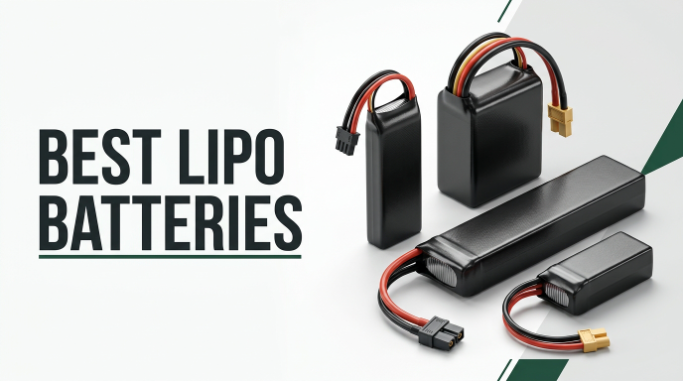
Choosing the right LiPo battery for 2026 comes down to matching voltage, capacity, discharge rate, and connector type to your specific RC platform. We compare 10 standout picks across drones, tiny whoops, RC cars, and FPV builds, along with essential safety accessories like fireproof bags, chargers, and voltage checkers that every hobbyist needs.
LiPo battery selection is not just about buying the highest capacity available. Cell count sets the voltage, C-rating determines how much current the pack can deliver, and physical dimensions must fit your model’s battery bay. Getting these factors right prevents damage, extends flight or drive time, and keeps every session safer and more predictable.
This guide covers small 1S packs for micro drones, mid-range 2S packs for scale RC vehicles, and higher-voltage 4S options for performance FPV quads. It also includes fireproof storage bags, a multi-chemistry charger, and a voltage checker so you can build a complete, reliable LiPo setup from the ground up.
We compared 10 LiPo batteries and accessories using the factors that actually shape purchase decisions: cell configuration, nominal voltage, capacity in mAh, continuous discharge rating, connector compatibility, physical dimensions, chemistry type, safety features, and included accessories. The notes focus on practical trade-offs so each pick connects to how hobbyists actually power drones, RC cars, tiny whoops, and FPV builds while keeping charging and storage safe.


Compare key features, scores, and current prices side by side. A shorter feature list means fewer details were available, not necessarily fewer capabilities.


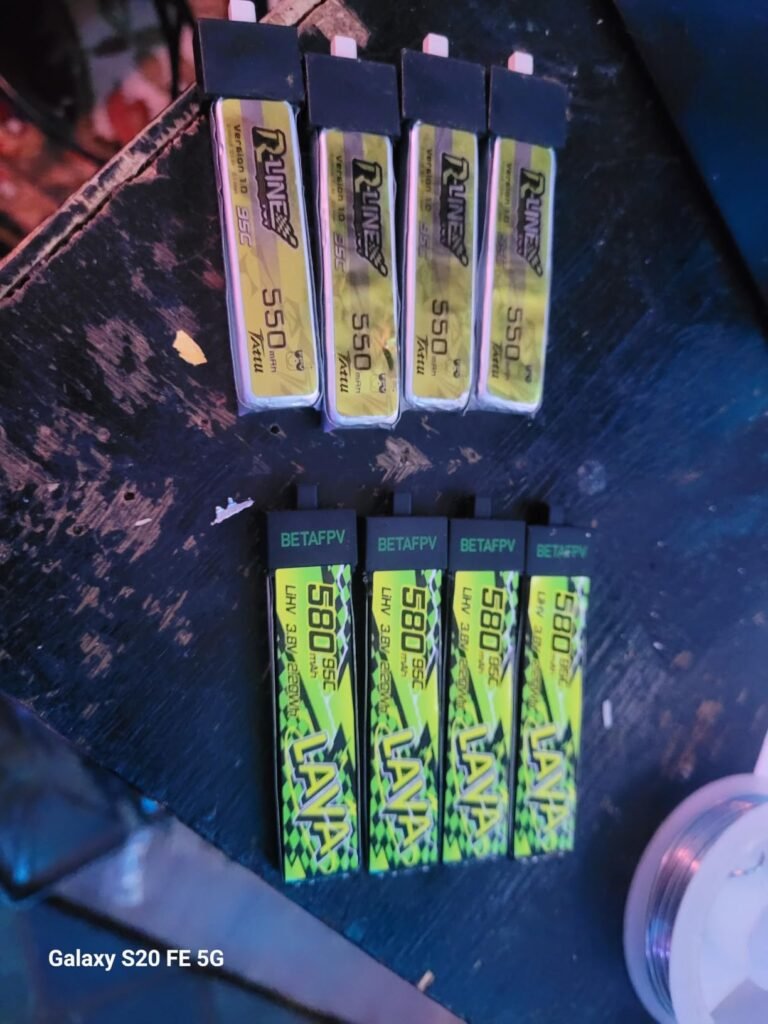
The BETAFPV Lava II 580mAh sits at the top of the 1S whoop battery category, combining a substantial capacity for its class with high-C discharge and BETAFPV's proprietary Z-folding cell construction. It is aimed at pilots who want longer flight times on 1S whoops without sacrificing the punch needed for freestyle tricks or racing.
We may earn a commission when you buy through this link, at no additional cost to you.
The 580mAh capacity is roughly 25 percent higher than the common 450mAh 1S packs, which typically translates to noticeably longer hover and flight times on the same drone. The 95C rating provides ample current for aggressive maneuvers, and the Z-folding manufacturing process is designed to improve energy density and reduce voltage drop under load compared to conventional wound cells.
Compatibility spans popular BT2.0 whoops including the Air75, Meteor75 Pro, Cetus Pro 1S, and Cetus X 2S. The bright green and yellow livery makes the packs easy to identify in a mixed battery collection, which is useful when you accumulate multiple capacities over time. As with any LiHV pack, you must use a charger that supports the 4.35V per cell endpoint to charge fully and safely.
Larger capacity packs weigh more, which affects flight dynamics on ultra-light whoops. A 580mAh pack typically adds a few grams over a 450mAh, which reduces peak agility but extends flight time. For freestyle and cruising, the tradeoff usually favors the larger battery. For competitive racing where every gram matters, a lighter pack often wins despite the shorter runtime.
Pick the Lava II 580mAh if you fly BT2.0 whoops and value longer flights slightly more than absolute peak punch, or if you own a drone platform BETAFPV explicitly lists as compatible. Pilots on the smallest ultralight builds may still prefer 300 to 450mAh packs to keep weight down.
Ultralight tinywhoop builds where minimal battery weight is more important than extended flight time.
We may earn a commission when you buy through this link, at no additional cost to you.
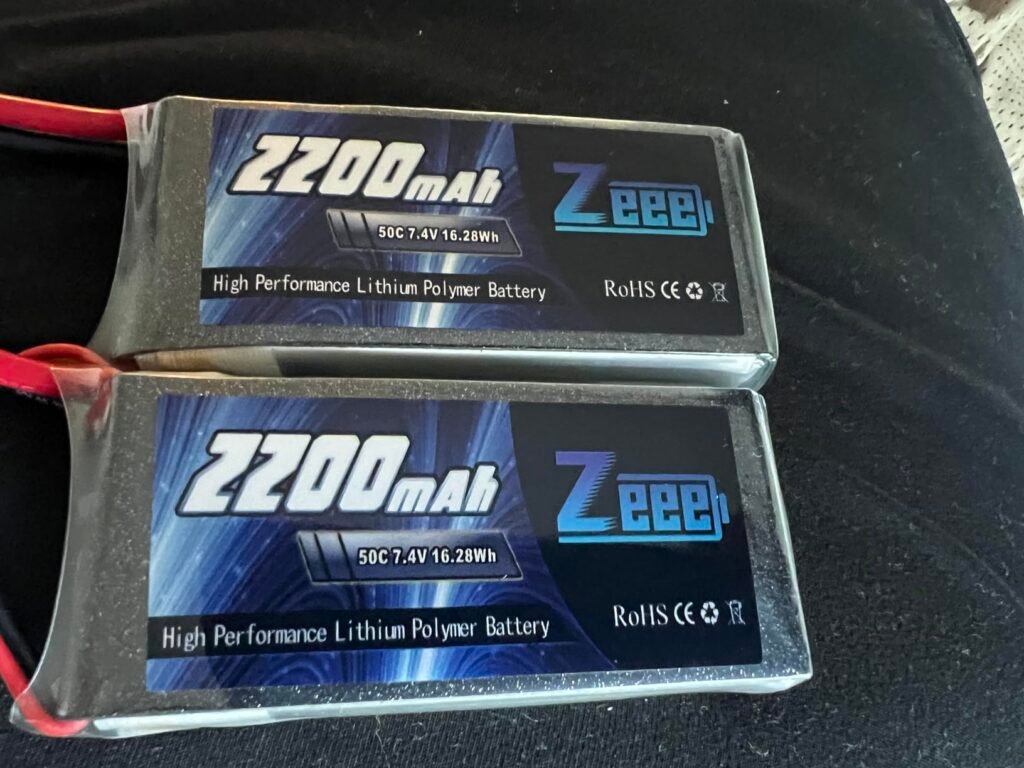
The Zeee 2S Shorty is aimed at hobbyists running 1/16 scale RC cars, small trucks, planes, and boats that need a compact 7.4V pack with a good balance of runtime and current delivery. Shipping in a two-pack, it offers meaningful value for anyone who likes to run one battery while the other charges, which effectively doubles session time at the track or in the yard.
We may earn a commission when you buy through this link, at no additional cost to you.
The 2200mAh capacity paired with a 50C continuous discharge rating delivers roughly 110 amps of theoretical peak current, which is comfortably above the demands of most brushed and mid-power brushless setups in this size class. The shorty form factor, measuring roughly 73 by 34 by 18.5 millimeters, fits tight battery bays where a standard-length pack would not, and at around 98 grams it keeps overall vehicle weight in check.
The XT60 connector is the de facto standard for RC batteries in the mid-power range, meaning most modern ESCs and chargers work with it out of the box. Charging should be done on a proper LiPo balance charger at 0.5 to 1C, which translates to roughly 1.1 to 2.2 amps for this pack. Following those charge rates helps preserve cell health and keeps the pack performing well over many cycles.
Shorty packs shave length off the battery to fit tight compartments in scale crawlers, short-course trucks, and drift chassis. The compact footprint also shifts weight distribution slightly forward or centered depending on placement, which some drivers prefer for handling. Before buying, measure your battery bay in millimeters and compare directly to the pack dimensions to confirm a proper fit.
This is the pack to buy if you want a dependable everyday 2S battery for scale RC use without paying premium prices. If your platform runs 3S or 4S, or if you need extreme burst current for competitive FPV racing, look at higher cell counts or higher C-rated options elsewhere in this guide.
Hobbyists running high-voltage 3S, 4S, or 6S platforms that require higher cell counts.
We may earn a commission when you buy through this link, at no additional cost to you.
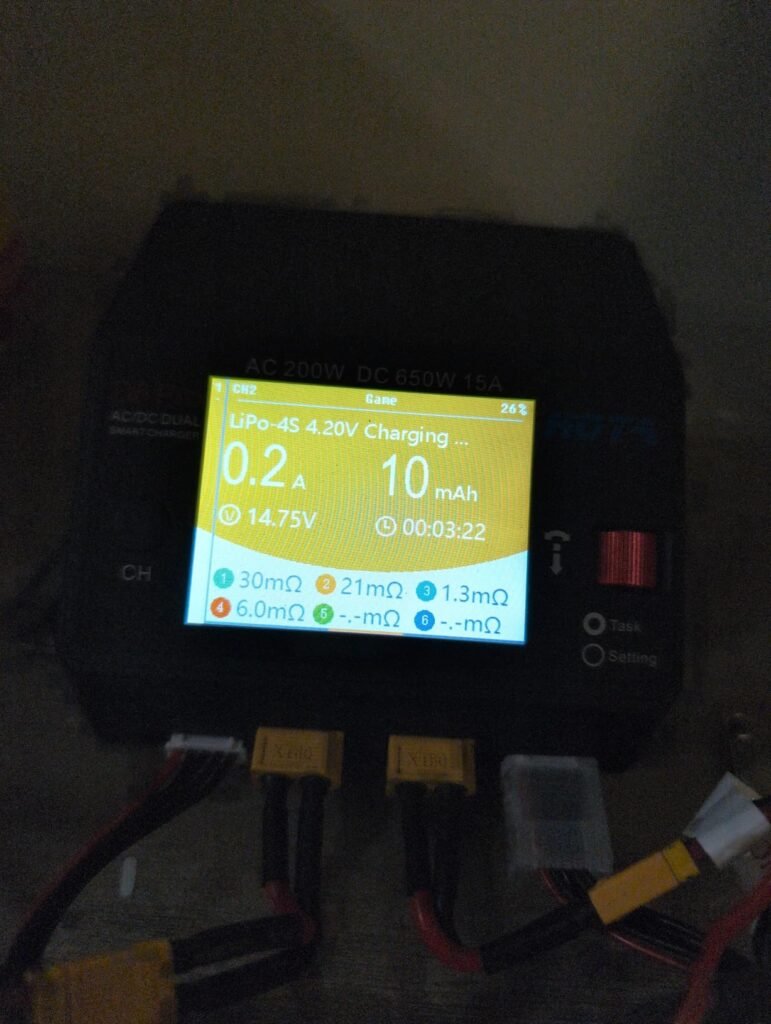
The Tattu R-Line is a purpose-built racing pack for 4S FPV quads and micro long-range builds where instant throttle response matters more than raw flight duration. Tattu's R-Line series has earned a strong reputation in the FPV community for delivering consistent power under aggressive throttle punches, and the 850mAh 4S configuration hits a sweet spot for many 3-inch and 4-inch racing frames.
We may earn a commission when you buy through this link, at no additional cost to you.
The 95C discharge rating is where this pack shines. On paper that translates to roughly 80 amps of continuous current, which is well above what most racing setups actually pull, providing headroom for peak throttle demands without noticeable voltage sag. The advanced stacking construction and premium Japanese and Korean lithium polymer materials contribute to better energy density and more stable output during hard maneuvers.
The XT30 connector keeps the pack light and matches the smaller wiring typically found on micro and mid-size FPV builds. If your ESC uses XT60, you will need an adapter or a solder swap, so confirm connector compatibility before buying. Local after-sales support based in Livermore, California is a genuine advantage for warranty questions or shipping issues, which is not always the case with imported RC batteries.
The C rating multiplied by capacity in amp-hours gives theoretical continuous current. For this 850mAh pack, 95C times 0.85Ah equals about 80 amps. Manufacturer C ratings are often optimistic marketing figures, so real-world sustained current is typically lower. Still, a genuine high-C pack sags less under load, holding voltage better during aggressive throttle punches, which translates directly to more consistent flight performance.
Choose the R-Line 850 4S if you fly a racing or freestyle quad in the 3-inch to 4-inch class and prioritize punch and consistency over long endurance. For cinematic flying, long-range builds, or anything requiring 5-inch props at moderate throttle, look for higher-capacity 4S packs instead.
Long-range or cinematic FPV pilots who need extended flight times over raw power.
We may earn a commission when you buy through this link, at no additional cost to you.
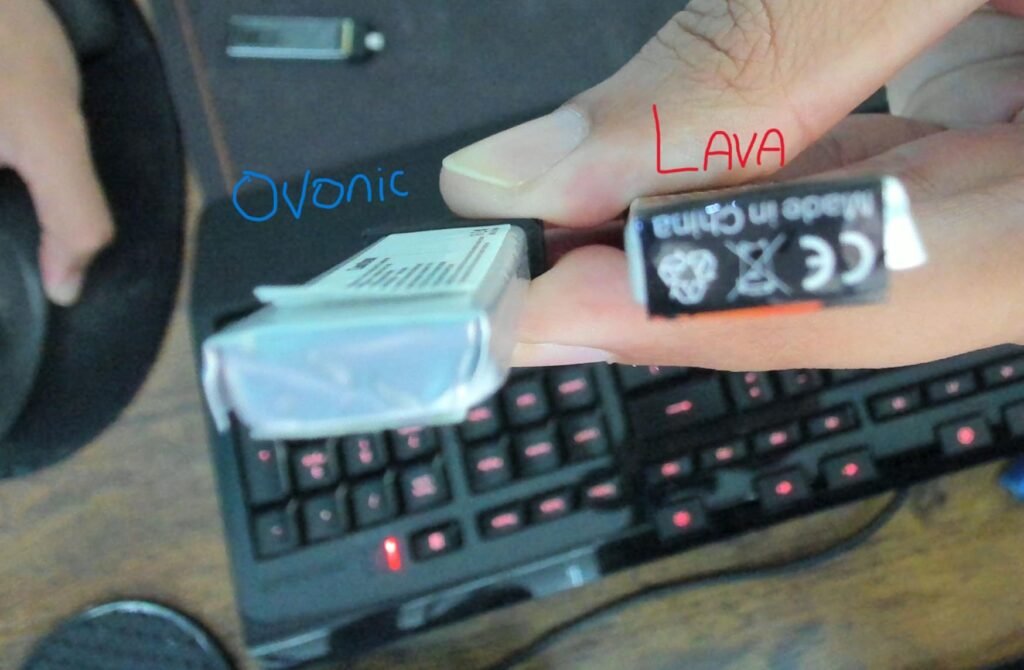
The OVONIC 1S HV pack is designed specifically for tiny whoop drones and other 1S FPV micros that benefit from the extra voltage headroom of high-voltage lithium polymer chemistry. Shipping four packs per order, it gives whoop pilots enough batteries to fly consecutive sessions without long charging pauses between packs.
We may earn a commission when you buy through this link, at no additional cost to you.
LiHV chemistry charges to 4.35 volts per cell instead of the standard 4.2 volts, delivering more initial power and slightly longer punch at the top of the discharge curve. Paired with a 100C rating, the pack provides strong current delivery during aggressive throttle inputs, which whoop pilots notice as crisper acceleration and better response during flips and dives.
The BT2.0 connector has become the standard for many modern 1S whoop builds because it handles higher current more reliably than the older PH2.0. At roughly 13 grams and dimensions of about 62 by 18 by 8 millimeters, the pack slots into most BT2.0-equipped whoops without modification. Just verify your frame’s battery holder length before ordering to confirm fit.
Standard LiPo cells charge to 4.2 volts, while LiHV cells charge to 4.35 volts. That extra 0.15 volt per cell provides a small but noticeable performance boost at the start of each pack. Always use a charger that supports LiHV mode when charging these batteries. Charging a LiHV pack in standard LiPo mode simply undercharges it, while charging a regular LiPo in LiHV mode can be dangerous.
This is a strong pick for anyone flying BT2.0-compatible whoops who wants a four-pack of dependable HV batteries at a reasonable per-unit cost. Owners of older PH2.0 whoops or larger FPV drones will need to look at different connector or cell-count options.
Pilots with older whoops that use PH2.0 connectors or standard LiPo chargers without HV support.
We may earn a commission when you buy through this link, at no additional cost to you.
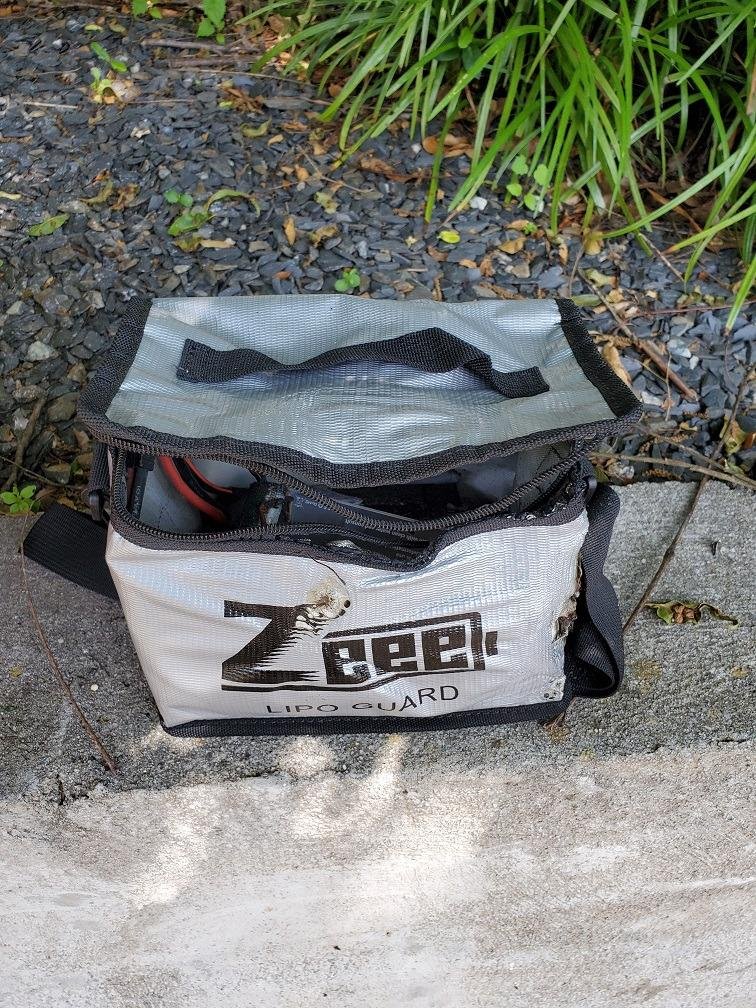
Every LiPo owner needs a fireproof bag, and the Zeee compact bag is a strong choice for hobbyists who charge, transport, and store a moderate collection of packs. The 8.46 by 6.5 by 5.71 inch interior holds roughly 25 3S 2200mAh packs, which comfortably covers most casual RC users and many active FPV pilots.
We may earn a commission when you buy through this link, at no additional cost to you.
Construction uses a 100 percent fireproof inner fabric, a flame-retardant non-woven interlayer, and a durable PVC outer shell. The layers are designed to contain heat and flames if a LiPo goes into thermal runaway during charging or storage, with heat insulation rated to 1000 degrees Fahrenheit. That rating covers typical LiPo fire temperatures for the crucial early containment period, though no fabric bag is invincible.
The bag also isolates the batteries from ambient air, which reduces the chance of a smoldering cell reaching full ignition. Zippered closure keeps everything sealed, and the compact footprint fits on a workbench or in a hobby cabinet. Use it for both charging and storage rather than leaving packs loose on a shelf, which is a common and dangerous habit.
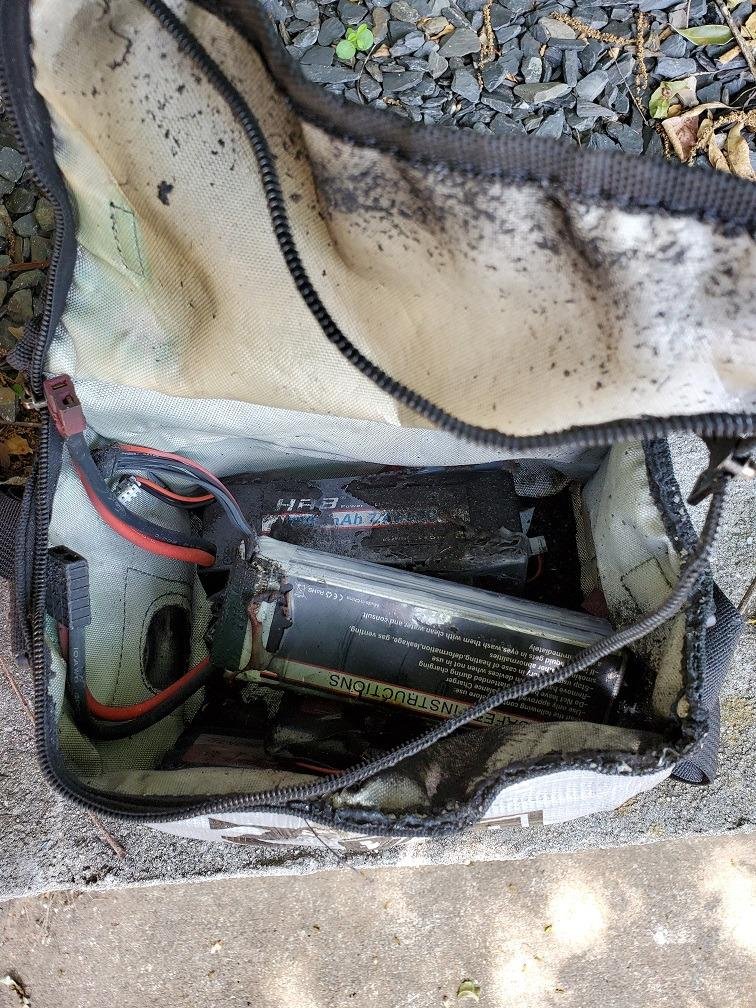
LiPo fires can start during charging, after physical damage, or from internal cell defects. Once thermal runaway begins, the reaction can spread and ignite nearby materials in seconds. A fireproof bag contains initial flames and heat long enough to move the battery outside or extinguish it safely. Never charge or store LiPo packs on carpet, on wood workbenches, or anywhere near flammable materials without a bag.
This bag is the right choice for solo hobbyists and small workshops storing modest quantities of packs. If you regularly work with dozens of batteries at once, or need a bag with a dedicated charging port cutout, look at larger or specialized options.
Users who need a much larger bag for bulk battery storage or a dedicated charging port cutout.
We may earn a commission when you buy through this link, at no additional cost to you.
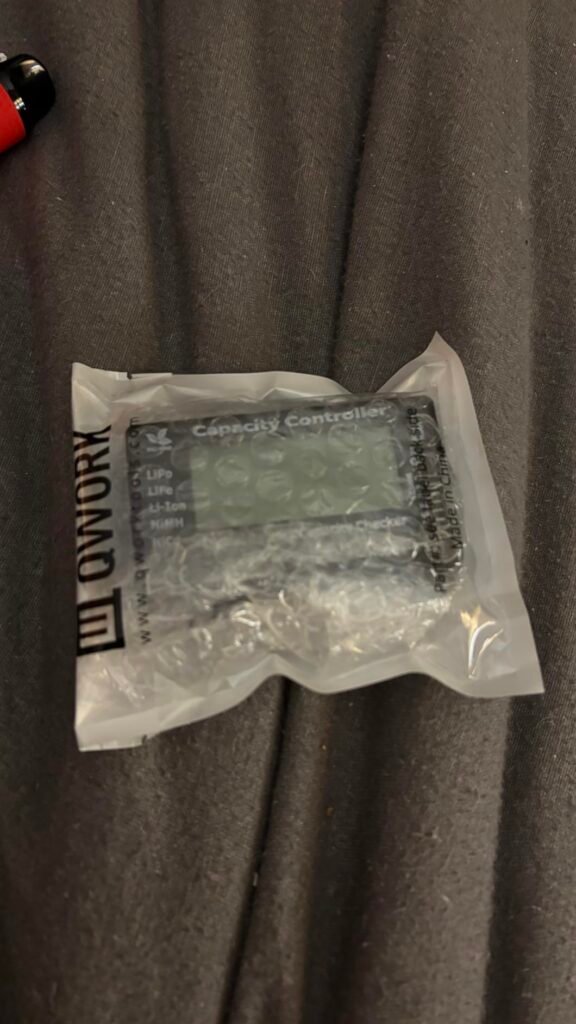
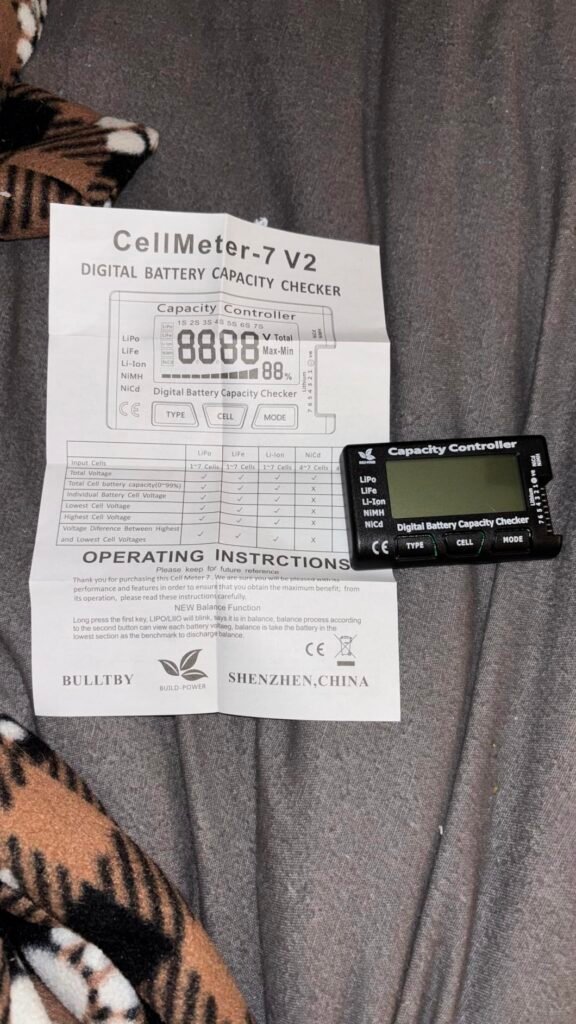
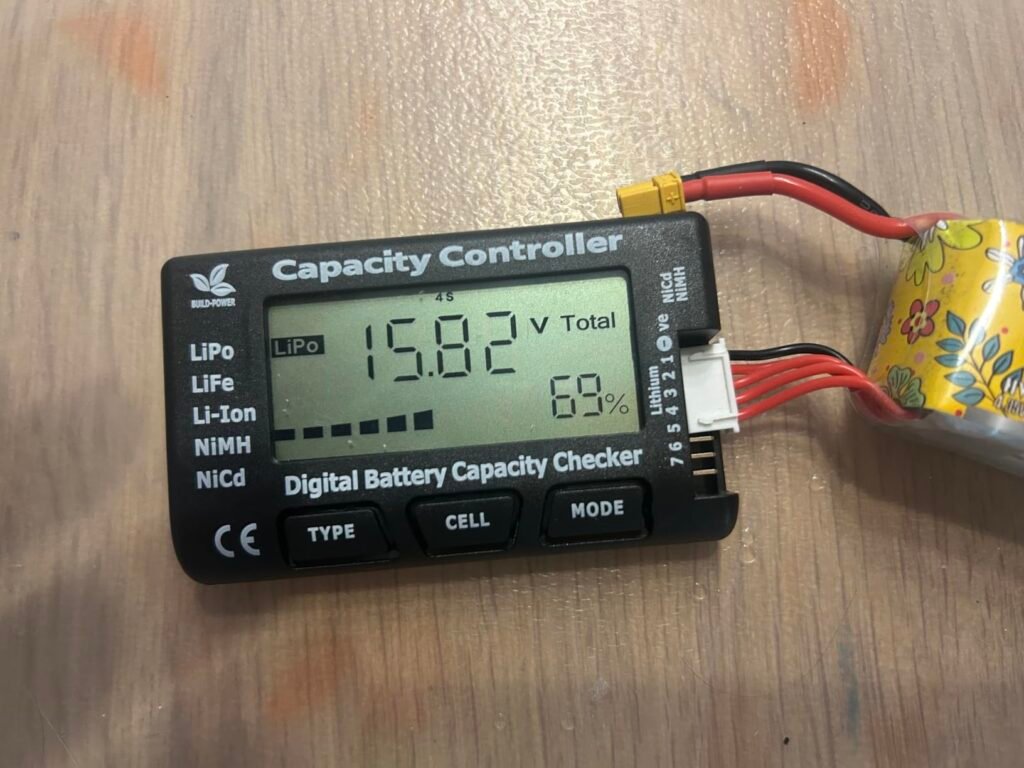
A voltage checker is one of the most useful and affordable tools any LiPo user can own. The QWORK checker plugs into the balance connector on any 2S through 7S pack and instantly displays total voltage, individual cell voltages, minimum and maximum cell readings, and the voltage difference between cells, which is the key indicator of pack health.
We may earn a commission when you buy through this link, at no additional cost to you.
The compatibility list covers LiPo, Li-ion, LiFe, and NiMH or NiCd chemistries, making it a versatile field tool for hobbyists who run multiple types of packs. The digital display is bright and easy to read outdoors, and readings appear within a second of plugging in the balance connector. Cell imbalance greater than about 0.05 volts is a warning sign that a pack needs a full balance charge or should be retired.
Because the checker requires a balance connector, it cannot test single 1S packs that use only a power connector or bare cells without leads. For 2S through 7S packs, however, it provides instant confirmation of storage state, charge state, or discharge cutoff, which helps you decide whether a pack is ready to fly, needs charging, or should be moved to storage voltage.
A healthy fully charged LiPo cell reads 4.20 volts, storage voltage is around 3.80 volts per cell, and the safe discharge cutoff is typically 3.30 volts under load. If one cell in a pack consistently reads noticeably lower than the others, the pack is developing an imbalance that shortens lifespan and can lead to over-discharge damage. Retire packs where cell voltages diverge significantly to prevent field failures.
This is essentially a must-have accessory for anyone with more than a couple of LiPo packs. Its low price and diagnostic value make it one of the best investments a new hobbyist can make. If you only run 1S whoop packs without balance leads, you may need a different type of tester instead.
Users who only run 1S batteries without balance leads that plug into a balance port.
We may earn a commission when you buy through this link, at no additional cost to you.
This dual 10A balance charger is aimed at hobbyists who run through multiple packs per session and need to keep batteries turning around quickly. Two independent channels let you charge two different packs at the same time, provided they are on separate channels, which effectively doubles throughput compared to a single-channel unit.

We may earn a commission when you buy through this link, at no additional cost to you.
Compatibility covers 1S through 6S lithium chemistries including LiPo, LiHV, Li-ion, and LiFe, plus 1S through 15S NiCd and NiMH, and 2V to 20V lead acid. That range covers virtually every common RC and hobby battery type. Each channel handles up to 10 amps of charging current, which is enough for fast charging most packs up to about 5000mAh capacity, while the 2-amp discharge current supports storage and balancing operations.
Operating modes include charge, balance charge, discharge, storage, and cycling. Storage mode is particularly useful for LiPo longevity, bringing packs to roughly 3.80 volts per cell for long-term storage. The 20-memory profile system lets you save common battery configurations and skip repetitive setup steps. AC input maxes at 150 watts combined across both channels, while DC input from a compatible power supply can push 240 watts total.
Storing LiPo packs at full charge accelerates capacity loss and can cause puffing over time. Storage mode automatically charges or discharges each cell to about 3.80 volts, which is the optimal resting voltage for lithium polymer chemistry. Get into the habit of running storage mode on any pack that will sit unused for more than a week. This one habit can extend battery life by many additional cycles.
Choose this charger if you have a growing battery collection and want to cut charging time significantly, or if you run mixed chemistries and need one flexible unit. Beginners charging just one or two packs at a time may be better served by a simpler single-channel model to reduce initial complexity.
First-time hobbyists who want the simplest possible plug-and-charge experience without menu navigation.
We may earn a commission when you buy through this link, at no additional cost to you.
The large Zeee bag steps up the storage capacity substantially, measuring 14.17 by 7.87 by 9.84 inches internally. It is aimed at hobbyists who need to store a large collection of packs or want room for both batteries and a charger inside the same protective enclosure during charging sessions.
We may earn a commission when you buy through this link, at no additional cost to you.
Construction mirrors the smaller Zeee bag with a fireproof inner fabric, flame-retardant interlayer, and PVC outer shell rated to 1000 degrees Fahrenheit. The extra volume means you can consolidate an entire hobby battery collection into one protected location, which reduces clutter and lowers the risk of a stray pack ending up somewhere unsafe.
One meaningful design feature is the side hole, which allows charger cables to pass through while the main zipper stays closed. That means the bag can protect batteries during the entire charging cycle, which is the highest-risk period for LiPo fires. The 12-month warranty adds a layer of purchase confidence that not every safety accessory offers.
Charging inside a fireproof bag with cables routed through a side hole gives you full-cycle protection rather than only storage protection. If a pack goes into thermal runaway during charging, the bag contains initial flames and gives you time to react. Always keep the bag on a non-flammable surface like tile or concrete, and never leave charging batteries unattended even inside a bag.
Choose this bag if you have a growing collection of packs, run a small hobby workshop, or want to charge inside a sealed protective enclosure. Solo hobbyists with just a few packs may find the compact Zeee bag more practical for a smaller workspace or field bag.
Hobbyists with a small collection of packs who want a compact bag for occasional use.
We may earn a commission when you buy through this link, at no additional cost to you.
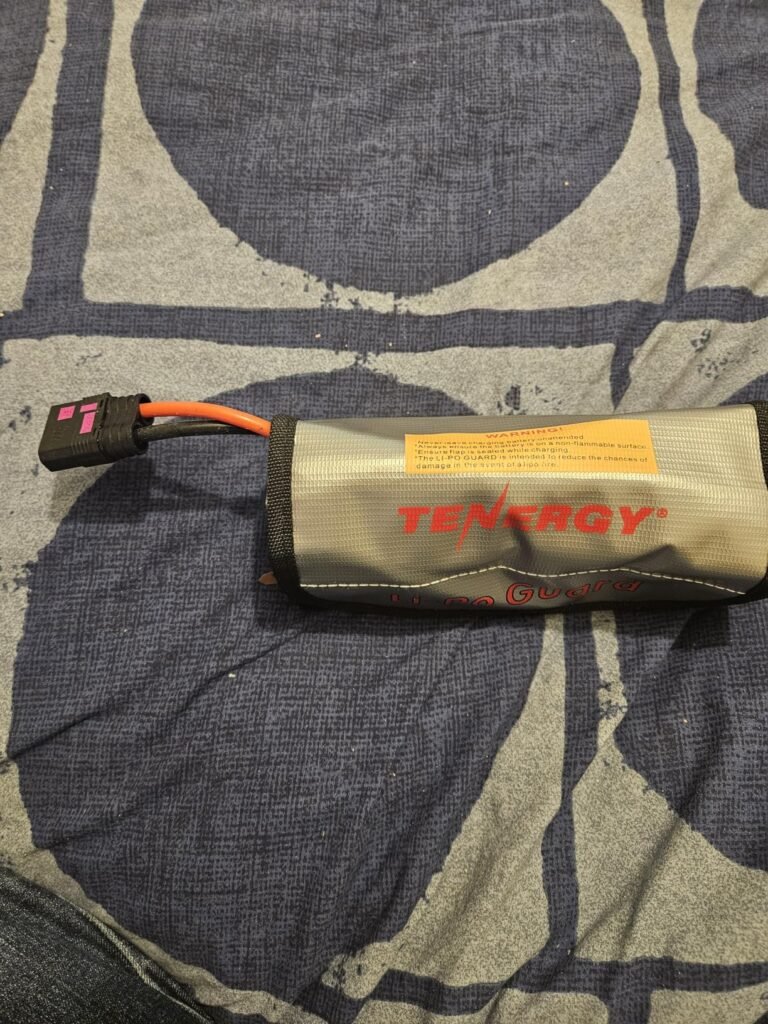
The Tenergy two-pack offers a smart entry into LiPo safety storage for hobbyists who want protection at multiple locations, such as one bag on the workbench and another in a field kit. The 7 by 9 inch dimensions are ideal for individual packs up to about 6 inches long, which covers most common RC and FPV batteries.

We may earn a commission when you buy through this link, at no additional cost to you.
Construction uses triple-layered flame-retardant material that meets UL 94 international flammability standards, which is a meaningful certification distinguishing serious safety products from generic pouches. The multi-layer design isolates heat and flames while reducing airflow inside the bag, both of which help contain a thermal runaway event.
The Velcro closure design intentionally reduces air and oxygen inside the bag compared to more open pouches, which slows any combustion reaction that might start. Velcro is quicker to open and close than a zipper, which some users prefer for frequent access, though it is slightly less sealed than a zippered enclosure.
UL 94 is an internationally recognized flammability standard for plastic and fabric materials used in electronics and safety products. Materials that meet this standard have been tested for resistance to ignition and flame spread. Choosing bags with UL 94 certification provides more confidence than generic marketing claims about fire resistance. Look for this rating when comparing safety bags side by side.
Buy the Tenergy two-pack if you want multiple smaller bags for individual packs, if you travel to different flying or driving locations, or if you want a certified UL 94 rated product at a low per-bag cost. Users needing a single large bag for bulk storage should consider the larger Zeee option instead.
Users who need a single large bag to consolidate an entire battery collection and charger.
We may earn a commission when you buy through this link, at no additional cost to you.
Selecting the right LiPo battery involves matching several technical specifications to your specific RC platform, then adding the safety accessories that make ownership responsible and enjoyable. The factors below cover the key decision points every buyer should understand before purchasing.
LiPo batteries are built from individual cells, each with a nominal voltage of 3.7 volts for standard LiPo or 3.8 volts for high-voltage LiHV. Cell count is described as 1S, 2S, 3S, 4S, and so on, where the number indicates how many cells are wired in series. A 2S pack delivers 7.4V nominal, a 3S delivers 11.1V, and a 4S delivers 14.8V. Your model’s electronic speed controller, motor, and receiver are designed for a specific voltage range, and using the wrong cell count can either underperform or destroy components.
Always check your model’s manual or ESC specifications for the supported cell count before purchasing. Running a 4S pack in a system designed for 2S will typically fry the electronics almost immediately. Running a 2S pack in a 4S system generally results in weak performance and possible motor stalling. Some ESCs support a range, such as 2S to 4S, which gives more flexibility, but always confirm before connecting a pack.
For beginners, start with the specific cell count recommended by your model’s manufacturer. Only step up voltage after you understand how the additional current draw affects motors, ESCs, and gearing on your platform.
Capacity, measured in milliamp-hours, tells you how much energy the pack stores. A 2200mAh pack holds more energy than an 850mAh pack of the same voltage, which translates directly to longer runtime or flight time. However, higher capacity also means more physical size, more weight, and typically a higher price. For flying models, added weight reduces agility and can shorten flight time gains, so the highest capacity is not always the best choice.
Compare capacity to your typical session length and to the physical space in your model’s battery bay. For scale RC cars and boats, a 2200 to 5000mAh pack usually balances runtime and weight well. For racing quads, 850 to 1500mAh in 4S is common. For tiny whoops, 300 to 680mAh in 1S covers most builds. Larger long-range FPV builds may use 5000mAh or higher 6S packs.
Prioritize capacity within the limits of your battery bay and your model’s weight tolerance. Buy the largest capacity that fits comfortably and does not degrade handling for your use case.
The C rating indicates how much current the pack can safely deliver relative to its capacity. A 2200mAh pack rated at 50C can theoretically deliver 110 amps continuously. Real-world sustained current is usually somewhat lower than the marketing rating, but a higher C number generally means less voltage sag under load and better performance during peak throttle demands. Racing FPV pilots often prioritize C rating because it directly affects punch and responsiveness.
Match the C rating to your platform’s peak current draw. Casual RC use rarely stresses a 50C pack, while aggressive FPV racing benefits from 75C or higher. Undersizing the C rating causes voltage sag, poor performance, excessive heat, and shortened battery life. Oversizing costs more but adds a safety margin and often produces slightly better feel under load. When in doubt, buy a modestly higher C rating than the minimum specification.
For most hobby applications, a genuine 50C to 100C pack from a reputable brand provides plenty of headroom. Extreme high-C claims from unknown brands are often optimistic and worth verifying through user reviews.
LiPo packs come with various connector types including XT30, XT60, XT90, EC3, EC5, Deans T-plug, and specialized micro connectors like BT2.0 and PH2.0 for tiny whoops. The connector must match your ESC’s input, or you will need to solder a new plug or use an adapter. XT60 is the most common connector for mid-range RC and FPV work, handling roughly 60 amps continuous. XT30 is smaller and lighter for micro FPV and small quads. BT2.0 is the modern standard for 1S whoop builds.
Before purchasing, verify the connector on your existing packs, chargers, and models to avoid a mismatch. Adapters add resistance and a potential failure point, so soldering the correct connector is usually the better long-term solution if you need to change. Many hobbyists standardize on one connector across their entire fleet to simplify battery interchange between models.
Choose packs with connectors that match your existing hardware. If you are just starting, XT60 is the safest default for RC cars and mid-size drones, while BT2.0 is the modern choice for 1S whoops.
A LiPo pack must physically fit in your model’s battery bay. Length, width, and height all matter, and even a few millimeters of oversize can prevent installation or force awkward mounting. Shorty packs shorten the length dimension to fit tight compartments in scale RC vehicles. Slim packs reduce height for low-profile FPV builds. Standard packs offer the most capacity for a given cell count but require more space.
Measure your battery bay in millimeters before shopping and compare directly to published pack dimensions. Weight also matters, especially for aircraft, where every gram affects flight dynamics. Manufacturers publish dimensions and weight in product specifications, so use those numbers rather than guessing from photos.
Buy the largest pack that fits your battery bay with room for wiring and any protective foam. Never force a pack into a tight space, as pressure damage can compromise cell integrity over time.
LiPo batteries require specific safety practices that other chemistries do not. Always charge on a LiPo-specific balance charger that supports your pack’s chemistry and cell count. Charge inside a fireproof bag on a non-flammable surface, and never leave charging batteries unattended. Standard charge rate is 1C, meaning a 2200mAh pack charges at 2.2 amps, though some modern packs support higher rates. Faster charging generates more heat and shortens battery life.
A voltage checker lets you verify pack state before flying or driving, catching low-voltage or imbalanced packs before they cause a problem in the field. Storage mode on your charger brings packs to about 3.80 volts per cell for long-term storage, which is the single most important habit for extending LiPo lifespan. Never store packs fully charged for more than a day or two.
Invest in a quality charger, at least one fireproof bag, and a voltage checker before buying multiple packs. These accessories protect your investment and your workspace, and they cost far less than replacing a damaged home or vehicle.
Before first use, inspect each new pack for physical damage, puffing, or unusual smell. Check the voltage with a checker or your charger to confirm it arrived at safe storage voltage, typically around 3.80 volts per cell. Set your charger to the correct chemistry, either LiPo or LiHV, and select the cell count that matches your pack. Charge at 1C or the manufacturer’s recommended rate, and always use balance charging mode to keep individual cells matched in voltage.
During use, avoid discharging packs below 3.30 volts per cell under load. Most modern ESCs include a low-voltage cutoff that reduces power before this point, but relying entirely on the cutoff shortens battery life over time. Landing or stopping when you notice reduced performance protects the pack. After each session, let packs cool to room temperature before recharging, as hot batteries under charge stress cells and shorten lifespan.
For long-term storage, bring packs to 3.80 volts per cell using your charger’s storage mode. Store them in a fireproof bag in a cool, dry location away from direct sunlight and flammable materials. Ideal storage temperature is between 40 and 70 degrees Fahrenheit. Check stored packs every few months and top them up to storage voltage if they have drifted downward. Retire any pack that shows puffing, physical damage, significant cell imbalance, or a noticeable drop in capacity.
The C rating indicates the maximum continuous discharge current relative to capacity. Multiply the C rating by the capacity in amp-hours to get theoretical maximum current. For example, a 2200mAh pack rated 50C can deliver 110 amps continuously. Real-world sustained current is often somewhat lower, but higher C ratings generally mean less voltage sag under load and better peak performance.
Check the manual or ESC specifications for your specific model. Cell count is written as 1S, 2S, 3S, and so on, indicating how many cells are wired in series. Using the wrong cell count can destroy your ESC and motor almost instantly. Some ESCs support a range like 2S to 4S, which gives more flexibility for experimentation.
Yes. LiPo batteries can enter thermal runaway during charging or after physical damage, producing intense flames and heat within seconds. A fireproof bag contains initial flames long enough to move the battery outside or extinguish it safely. Never charge or store LiPo packs on carpet, wood, or near flammable materials without a bag. The small cost of a bag is trivial compared to fire damage.
Standard LiPo cells charge to 4.20 volts each, while LiHV cells charge to 4.35 volts. The extra 0.15 volt per cell provides more initial power and a small performance boost. LiHV packs require a charger that supports HV mode. Charging a LiHV pack in standard LiPo mode simply undercharges it, while charging a regular LiPo in LiHV mode can be dangerous.
Store LiPo packs at storage voltage, which is about 3.80 volts per cell, in a fireproof bag in a cool, dry location. Most modern balance chargers have a storage mode that automatically brings packs to this voltage. Never leave packs at full charge for extended periods, as this accelerates capacity loss and can cause puffing. Check stored packs periodically and top them up if voltage has drifted.
A well-cared-for LiPo pack typically delivers 150 to 300 useful charge cycles before capacity or performance drops noticeably. Poor charging practices, extreme discharge, physical damage, and storage at full charge all shorten lifespan significantly. Following proper charge, discharge, and storage habits can extend usable life. Retire packs that show puffing, damage, or significant cell imbalance regardless of cycle count.
Yes, but only with a charger designed for multiple channels or by parallel-charging with a dedicated parallel board. Never simply connect two packs together and charge them on a single channel without proper equipment. A dual-channel charger like the 10A model in this guide lets you charge two independent packs safely and simultaneously, which is far safer than improvised parallel setups.
Match the connector to your existing ESC and charger. XT60 is the most common for mid-range RC and FPV applications. XT30 is lighter for micro FPV. BT2.0 is the modern standard for 1S tiny whoops. If you have a mixed fleet, either standardize on one connector by soldering plugs to match, or keep quality adapters on hand for occasional cross-compatibility.
A LiPo cell that drops below 3.00 volts under no load is likely damaged and should be retired. Cell imbalance greater than about 0.10 volts between the highest and lowest cell in a pack indicates developing problems. Physical signs like puffing, discoloration, or unusual smell also mean the pack should be retired. Continuing to use damaged packs risks fire and destroys expensive electronics.
The Zeee 2S Shorty 2200mAh stands out as the strongest all-around pick for hobbyists running scale RC cars, trucks, planes, and boats. Its balanced 50C discharge rating, widely compatible XT60 connector, and two-pack pricing make it a dependable everyday choice that fits most 1/16 scale platforms without complications, delivering solid performance at an accessible price point.
For FPV pilots, the Tattu R-Line 850mAh 4S and the BETAFPV Lava II 580mAh 1S each excel in their respective niches. The R-Line brings serious punch to racing and freestyle quads, while the Lava II delivers extended flight times for BT2.0 tiny whoops. On the accessory side, no LiPo user should skip a fireproof bag, a voltage checker, and a quality balance charger, all of which are represented well in this guide.
Before finalizing your purchase, verify your model's supported cell count and voltage, measure your battery bay dimensions, and confirm connector compatibility with your ESC and charger. Match capacity and C rating to how you actually use your platform rather than chasing the highest possible numbers. The right combination of battery, charger, and safety gear delivers reliable performance and years of enjoyable use from every pack.