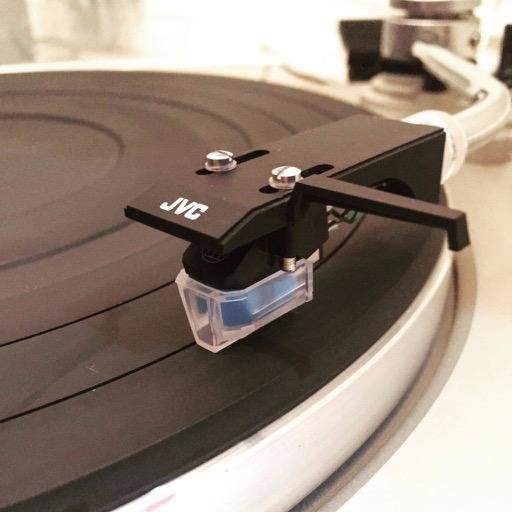
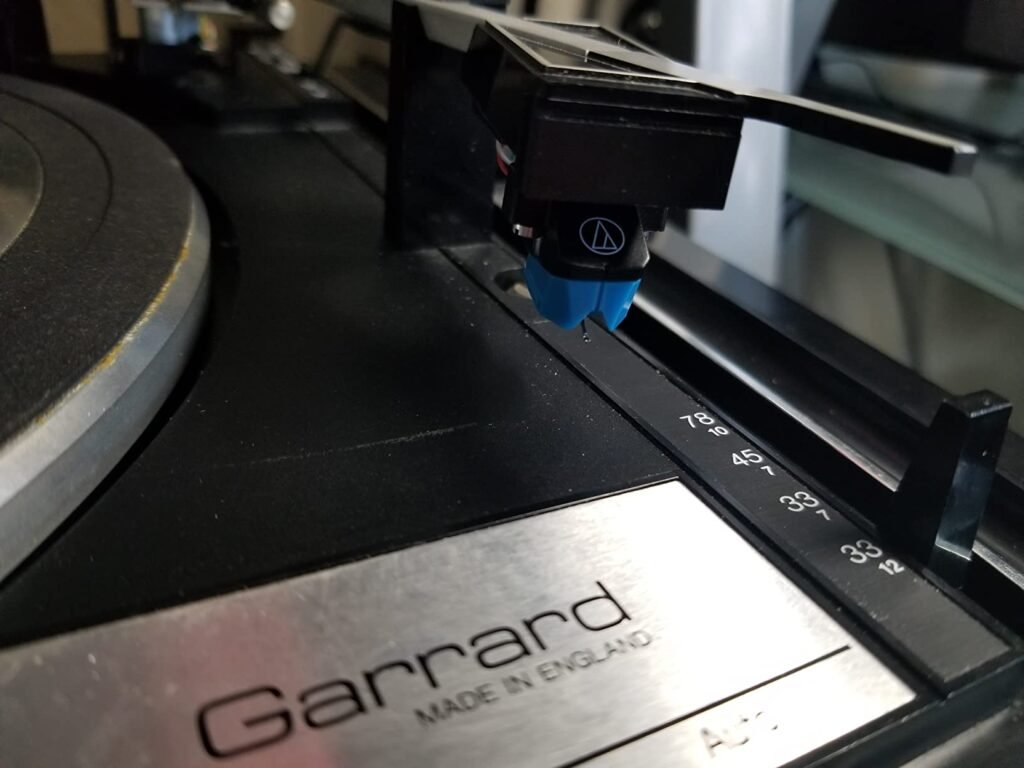
Ortofon 2M Blue
9.4Editor scoreNude elliptical diamond
Moving magnet design
Replaceable stylus unit
Universal turntable fit
Compare 10 top turntable cartridges for vinyl listening. Moving magnet options from Audio-Technica, Ortofon, and NAGAOKA with specs and buying tips.

Find the right turntable cartridge for your vinyl setup in 2026. We compare 10 standout moving magnet options by the factors that matter most, including stylus profile, output voltage, tracking ability, build quality, mounting compatibility, and overall sound character across different budgets.
Choosing between conical, elliptical, micro-linear, and Shibata stylus shapes directly affects how much detail your records reveal. Each profile traces the groove differently, and the right match depends on your tonearm, listening preferences, and the condition of your record collection.
This guide breaks down specifications, sonic strengths, and practical limitations for every cartridge. Whether you need an affordable replacement for a stock unit or a high-end upgrade that extracts every nuance from your pressings, the comparisons below should help you decide with confidence.
We compared 10 moving magnet cartridges using the specifications that actually influence a buying decision: stylus profile, cantilever material, output voltage, tracking force range, mounting type, build construction, replacement stylus availability, and price-to-performance ratio. The notes focus on practical trade-offs so each pick connects to how people actually listen to records at home and what they hear from their vinyl collections.


Compare key features, scores, and current prices side by side. A shorter feature list means fewer details were available, not necessarily fewer capabilities.




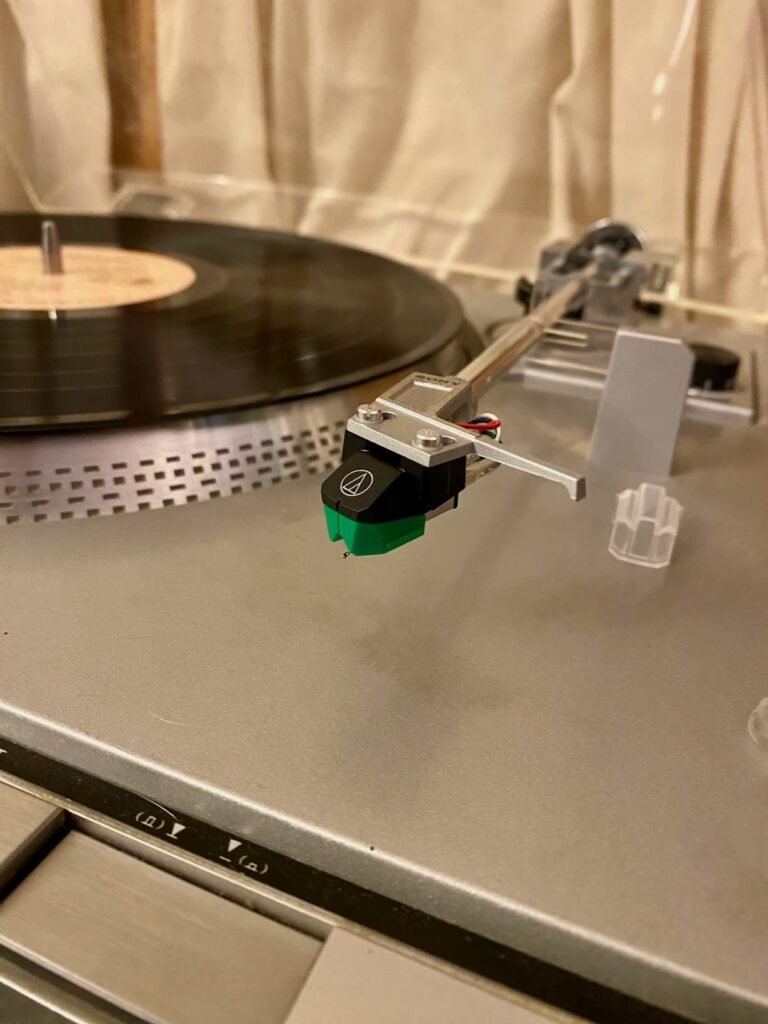
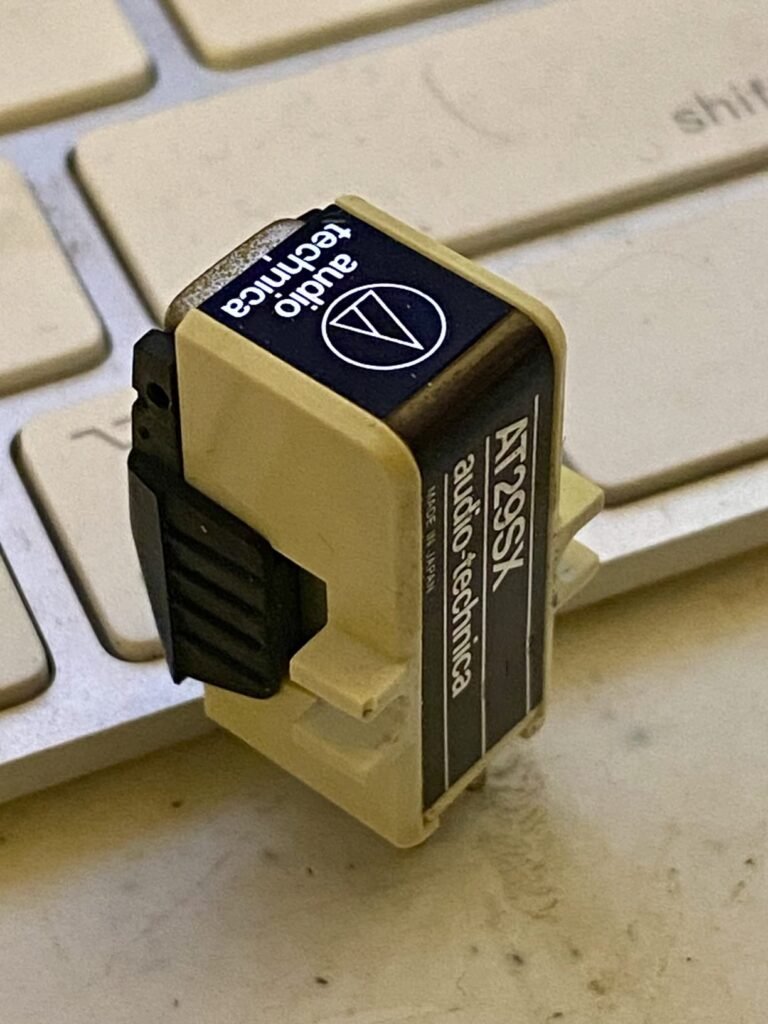
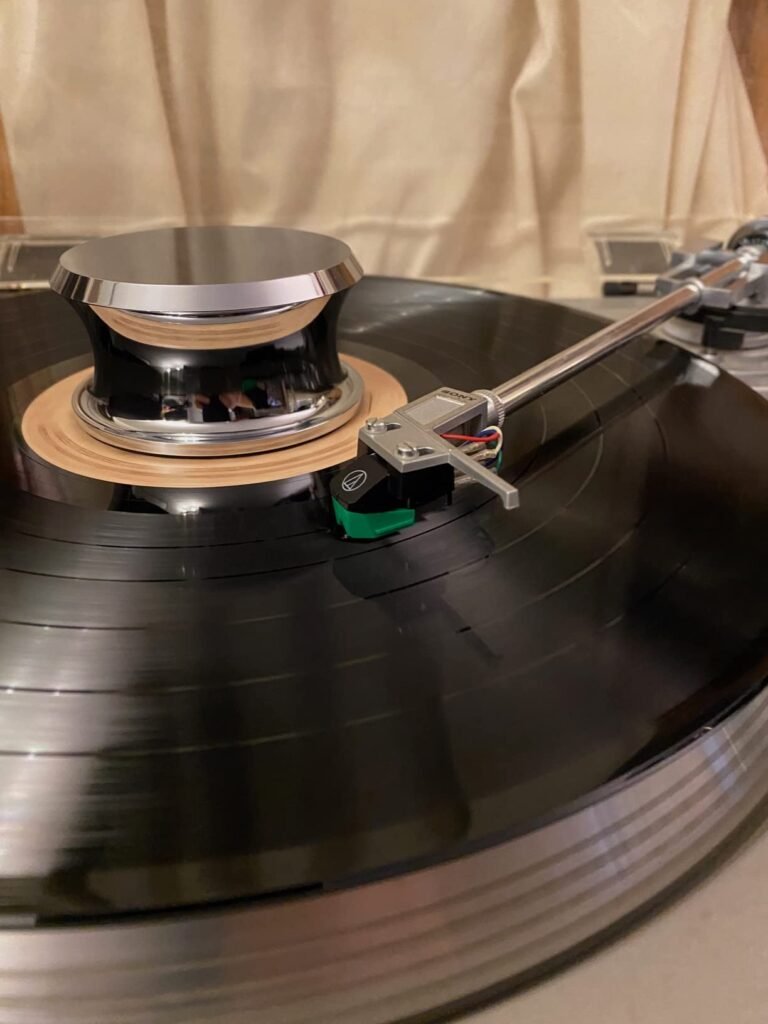
The Audio-Technica AT-VM95E is one of the most popular entry-to-mid-range moving magnet cartridges available, and for good reason. Its 0.3 x 0.7 mil elliptical stylus traces record grooves more accurately than a basic conical tip, pulling noticeably more detail from the midrange and treble without demanding a premium price. For anyone replacing a worn stock cartridge on a budget turntable, this model represents a meaningful step up in clarity.
We may earn a commission when you buy through this link, at no additional cost to you.
The dual moving magnet construction uses specially wound coils that increase output voltage, which helps the cartridge pair well with a wider range of phono preamps, including the built-in stages found in many entry-level receivers and powered speakers. The aluminum cantilever is lightweight and rigid, translating groove vibrations into clean electrical signals with minimal coloration. The result is a balanced, engaging sound that works across genres from jazz to rock to classical.
Installation is straightforward thanks to threaded inserts molded into the cartridge body. You mount it to your headshell with just two screws and no fiddly nuts, which simplifies alignment and reduces the chance of cross-threading. The low-resonance polymer housing dampens unwanted vibrations that can muddy the sound, a design choice that matters more than many buyers realize when the cartridge is tracking through louder, more dynamic passages.
One of the biggest advantages of the AT-VM95 series is that all stylus replacements in the lineup share the same cartridge body. This means you can start with the elliptical AT-VM95E and later swap in a micro-linear or Shibata stylus from the same family without replacing the entire cartridge. This modular approach lets you experiment with higher-end stylus profiles as your budget and listening priorities evolve, making the initial investment even more practical.
This cartridge is a strong fit for listeners who want a genuine improvement over a stock conical cartridge without spending over $100. The main trade-off is that it does not extract the same level of micro-detail as a micro-linear or Shibata stylus, and you will need to purchase a headshell separately if your tonearm does not already have one. If your collection is in good shape and your phono stage is decent, the AT-VM95E delivers excellent value.
Not ideal for audiophiles who demand the highest level of groove detail retrieval from pristine pressings.
We may earn a commission when you buy through this link, at no additional cost to you.
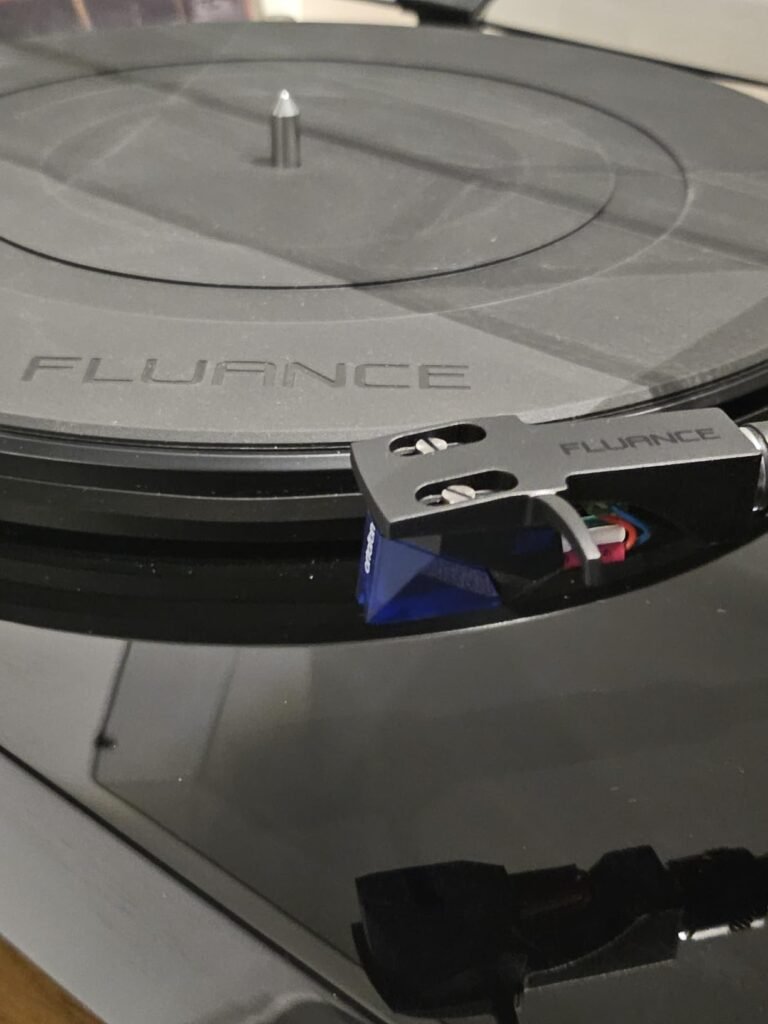
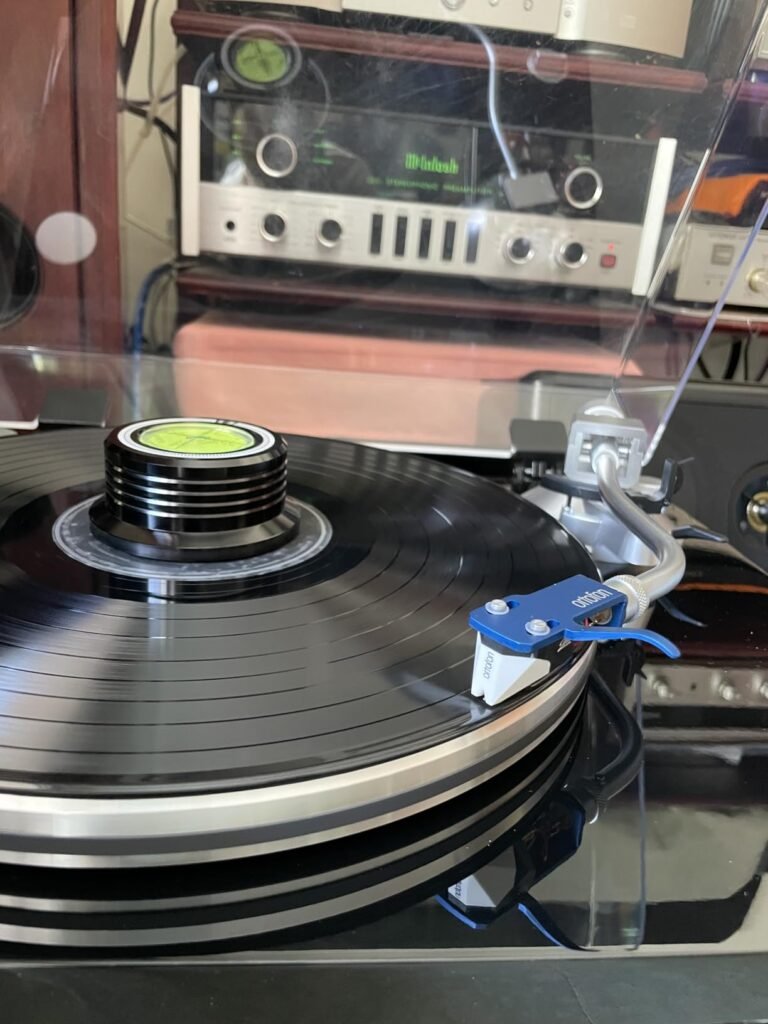
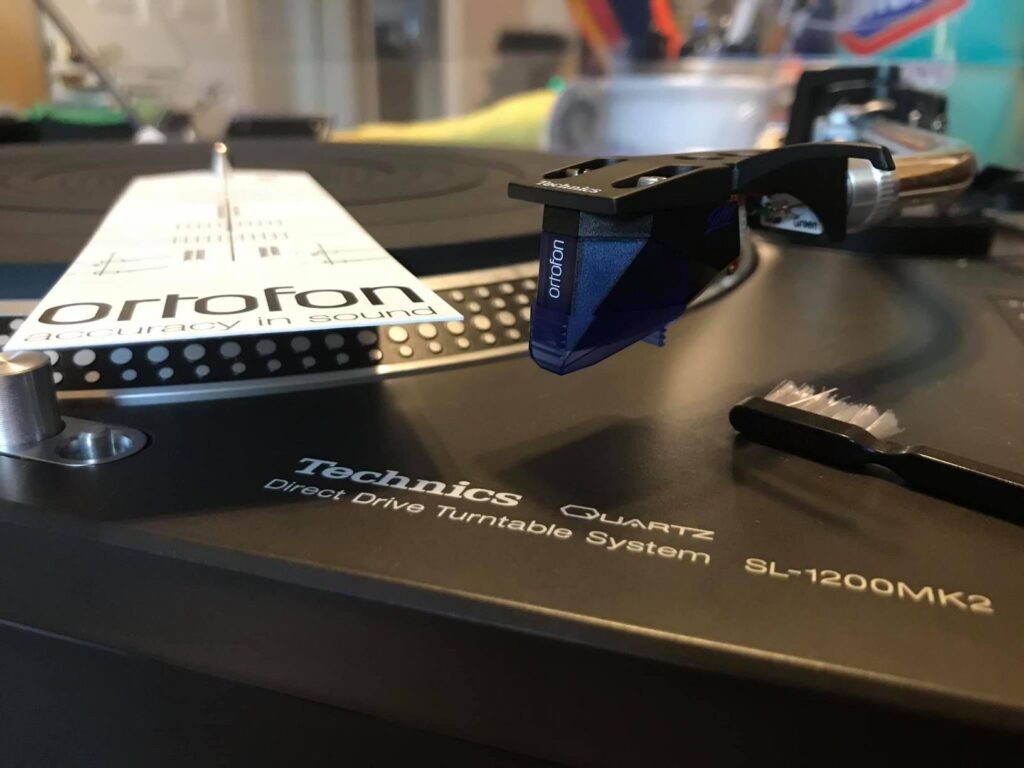
The Ortofon 2M Blue sits in the sweet spot of the widely respected 2M series, offering a meaningful sonic upgrade over the entry-level 2M Red without approaching the steep cost of the Bronze or Black models. Its nude elliptical diamond stylus is mounted directly to the cantilever without a metal shank, which reduces the tip mass and allows the stylus to respond more quickly to rapid groove modulations. The result is a more open, detailed, and dynamic presentation.
We may earn a commission when you buy through this link, at no additional cost to you.
Compared to the 2M Red, the Blue reproduces more spatial information and instrumental separation, particularly in complex orchestral or live recordings. The improved resolution means you will hear deeper into the mix, picking up subtle reverb tails and background details that a bonded elliptical stylus might smooth over. This level of clarity is most noticeable on well-recorded, clean pressings where the additional information is actually present in the groove.
The 2M Blue uses the same universal mounting system as the rest of the Ortofon 2M family, fitting most standard half-inch headshells without modification. The stylus is user-replaceable, so when the diamond eventually wears out after hundreds of hours of play, you can swap in a fresh 2M Blue stylus without realigning the entire cartridge. This is a practical advantage that reduces long-term ownership costs and downtime.
A bonded elliptical stylus has a small diamond tip glued to a metal shank, which adds mass at the end of the cantilever. A nude elliptical diamond is cut from a single piece of diamond and mounted directly to the cantilever, eliminating the extra weight of the shank. This lower tip mass allows the stylus to track high-frequency groove modulations more accurately, producing clearer treble and better transient response. The difference is subtle but audible on quality recordings and well-aligned tonearms.
This cartridge suits listeners who have moved past the entry level and want a more revealing, engaging sound from their vinyl collection. The trade-off is that the increased detail retrieval also exposes surface noise, pops, and crackle on worn or dirty records more readily than a less resolving cartridge. If your collection is well-maintained and your turntable is properly set up, the 2M Blue delivers a compelling balance of refinement and musicality.
Not the best choice for listeners with heavily worn or scratched records who prefer a warmer, more forgiving sound.
We may earn a commission when you buy through this link, at no additional cost to you.
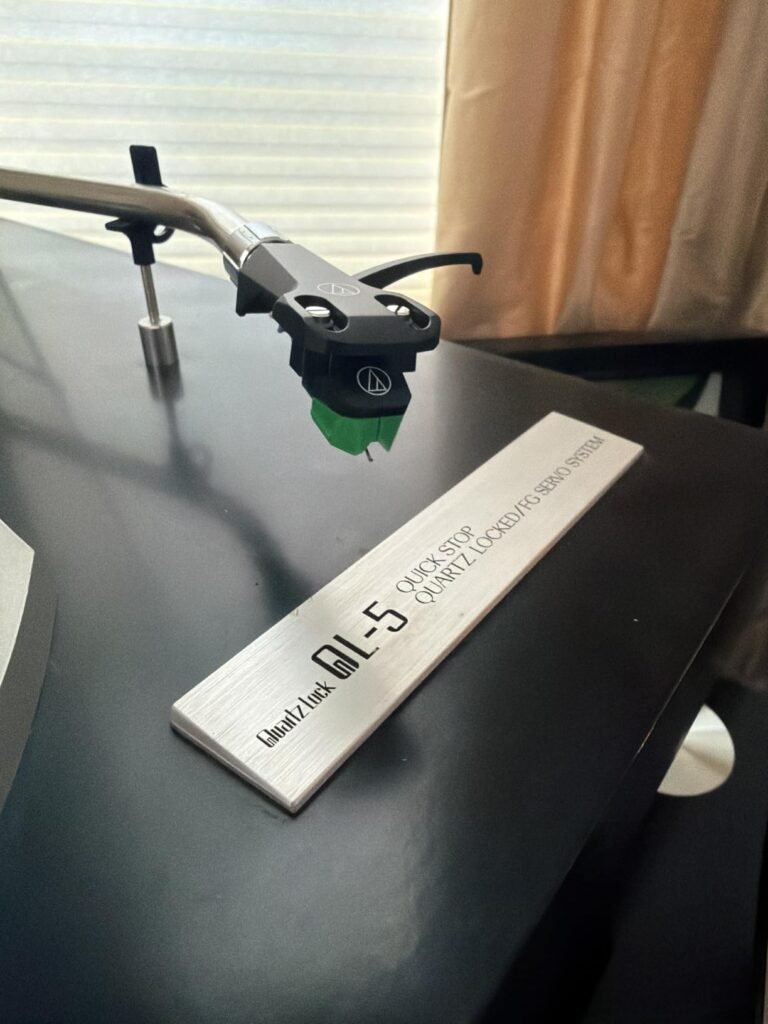
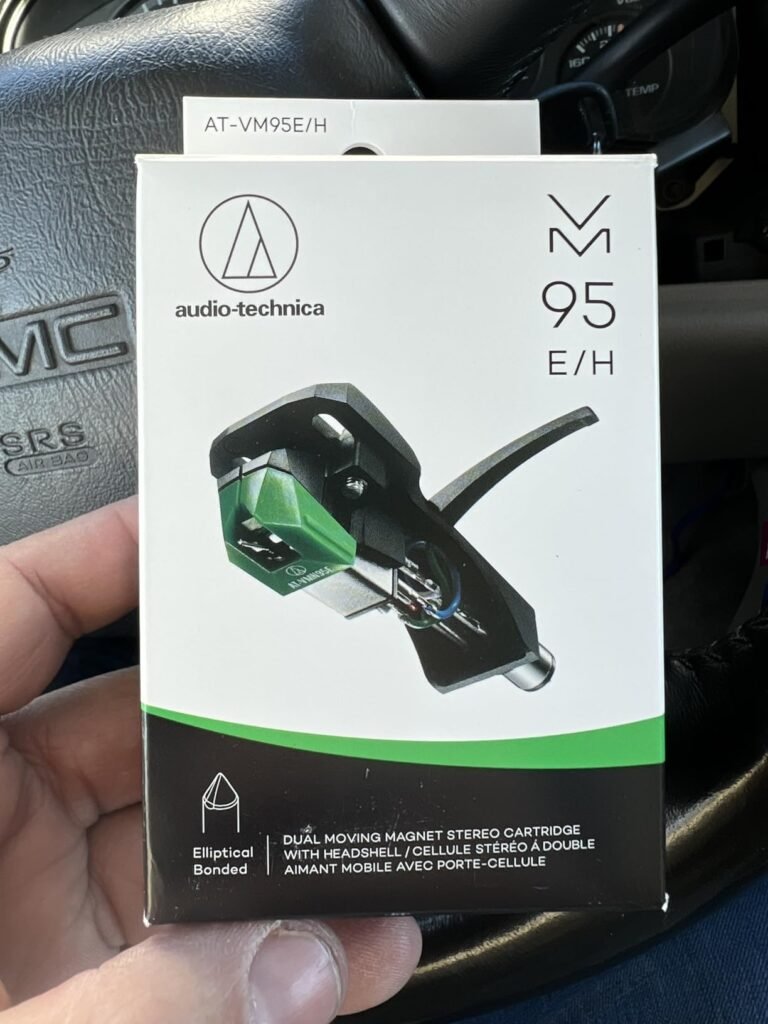
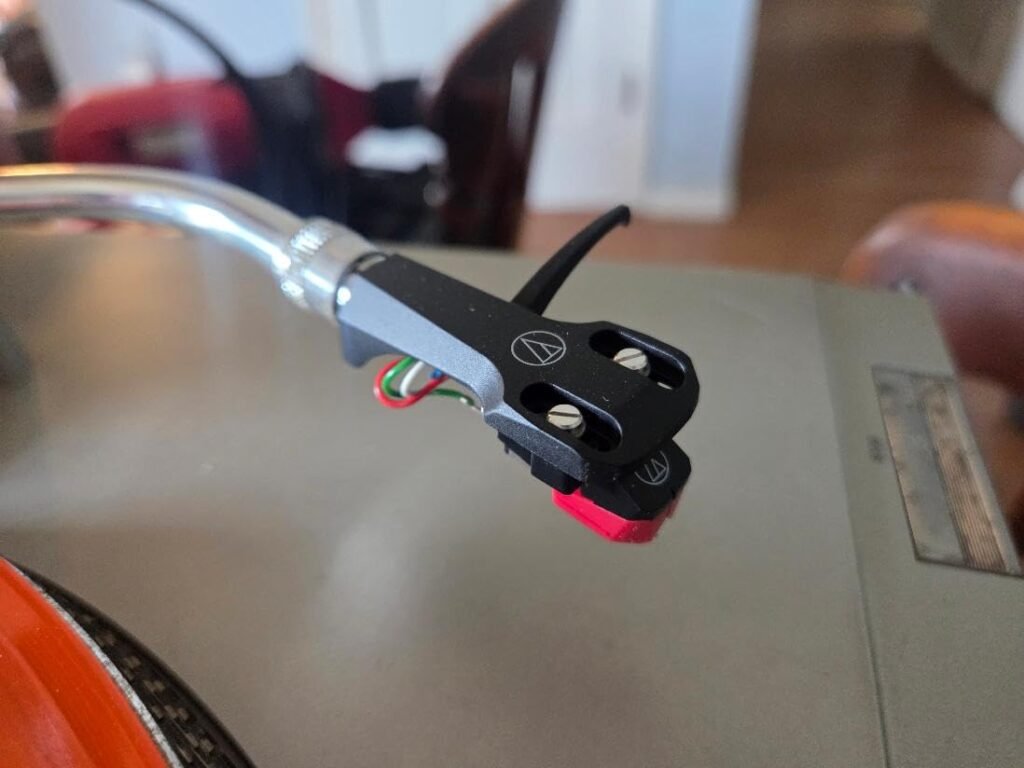
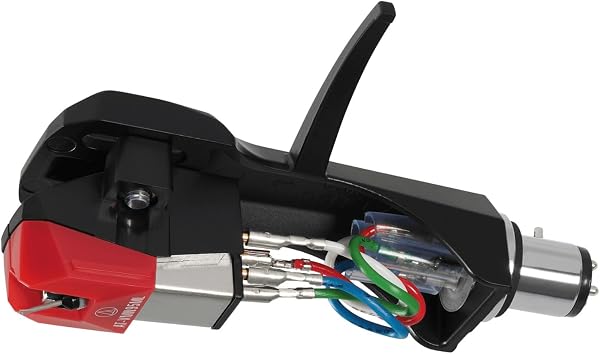
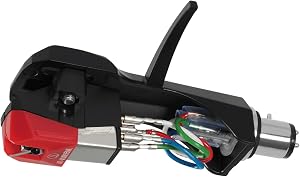
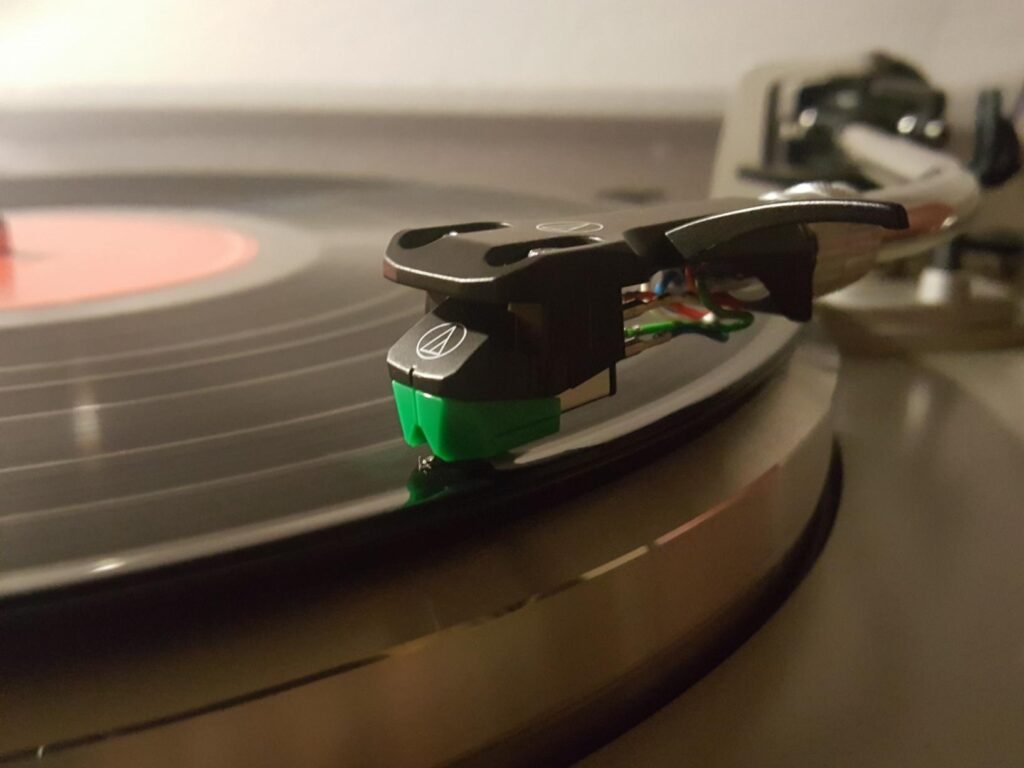
The Audio-Technica AT-VM95E/H takes the same well-regarded VM95E cartridge and pre-mounts it on a universal half-inch headshell, eliminating the most frustrating part of cartridge installation for many turntable owners. If you have ever struggled with tiny mounting screws, cartridge alignment protractors, and fiddly headshell wires, this combo kit removes most of that complexity. You simply attach the headshell to your S-shaped or straight tonearm and set the tracking force.
We may earn a commission when you buy through this link, at no additional cost to you.
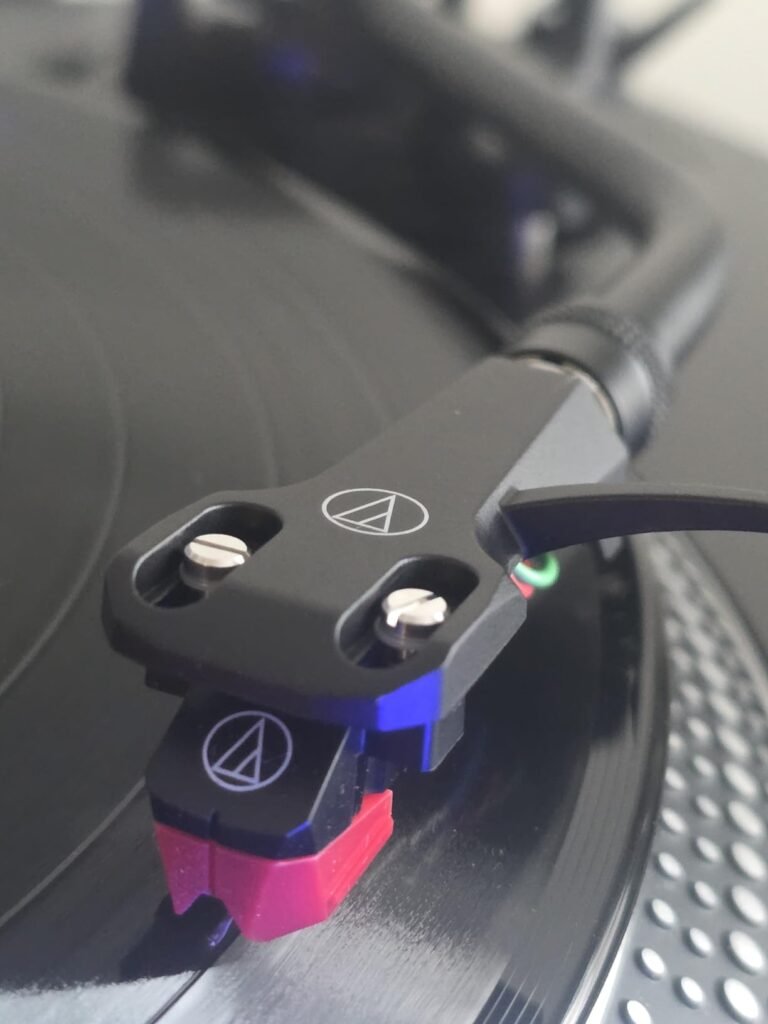
The cartridge itself is identical to the standalone AT-VM95E, featuring the same 0.3 x 0.7 mil elliptical stylus, aluminum cantilever, and dual moving magnet construction with specially wound coils for increased output. The sonic performance is the same balanced, clear presentation that makes the VM95E a popular upgrade choice. The difference is entirely in the convenience of the pre-assembled package.
The included headshell uses a standard four-pin connector that fits most tonearms with a half-inch mount, which covers the vast majority of turntables from brands like Audio-Technica, Technics, Pioneer, and Fluance. The threaded inserts in the cartridge body mean the two mounting screws thread directly into the cartridge without separate nuts, which keeps the assembly compact and reduces the chance of loosening over time.
Most S-shaped and straight tonearms on belt-drive and direct-drive turntables use a standard half-inch headshell mount with four color-coded wires. However, some turntables, particularly older linear-tracking models and certain compact designs, use proprietary connectors or P-mount systems that will not accept a standard headshell. Check your turntable’s manual or look at the existing headshell connection before purchasing this combo kit to confirm compatibility.
This combo kit is ideal for anyone who wants a cartridge upgrade but lacks the tools, patience, or confidence to mount and align a bare cartridge from scratch. The slight price premium over the cartridge-only version buys you a significant reduction in setup time and frustration. Just verify that your tonearm accepts a standard half-inch headshell before ordering, as some turntables with proprietary or P-mount connections will not be compatible.
Not compatible with P-mount or linear-tracking turntables that lack a standard half-inch headshell connection.
We may earn a commission when you buy through this link, at no additional cost to you.
The Ortofon 2M Red is one of the most widely recommended entry-level moving magnet cartridges, and it serves as the default upgrade for countless turntable owners looking to move beyond their factory-installed unit. Its elliptical diamond stylus delivers an open, dynamic sound with a slight warmth that makes it forgiving on older or less-than-pristine records. This tonal character is a deliberate design choice that appeals to listeners who prioritize musical enjoyment over clinical analysis.

We may earn a commission when you buy through this link, at no additional cost to you.
The 2M Red uses a bonded elliptical diamond, meaning the diamond tip is attached to a metal shank before being mounted on the cantilever. This construction is slightly less resolving than the nude elliptical diamond found on the 2M Blue, but it also makes the stylus more durable and more tolerant of minor tracking errors. For listeners who are still learning to set up their turntable or who play a lot of thrift-store finds, this forgiveness is a genuine advantage.
One of the most practical features of the 2M Red is its upgrade path. The cartridge body is shared across the 2M series, so you can later install a 2M Blue stylus on the same body to gain the benefits of a nude elliptical diamond without buying an entirely new cartridge. This modular approach makes the 2M Red a low-risk investment that can grow with your listening ambitions.
If you find yourself wanting to hear more separation between instruments, clearer vocal articulation, and more air around the high frequencies, it may be time to swap in a 2M Blue stylus. The upgrade is most noticeable on well-recorded jazz, classical, and acoustic music where spatial cues and transient detail matter. Before upgrading, make sure your tonearm is properly aligned and your tracking force is set correctly, as the nude elliptical stylus on the Blue is less forgiving of setup errors.
This cartridge is best for newcomers to vinyl or anyone replacing a worn stock cartridge on a mid-range turntable. The sound is engaging and musical without being overly analytical, and the universal fit works with most standard tonearms. If you eventually want more detail and resolution, the stylus upgrade path keeps your options open without requiring a full cartridge swap.
Not the best choice for critical listeners who want maximum groove detail and the most resolving stylus profile available.
We may earn a commission when you buy through this link, at no additional cost to you.
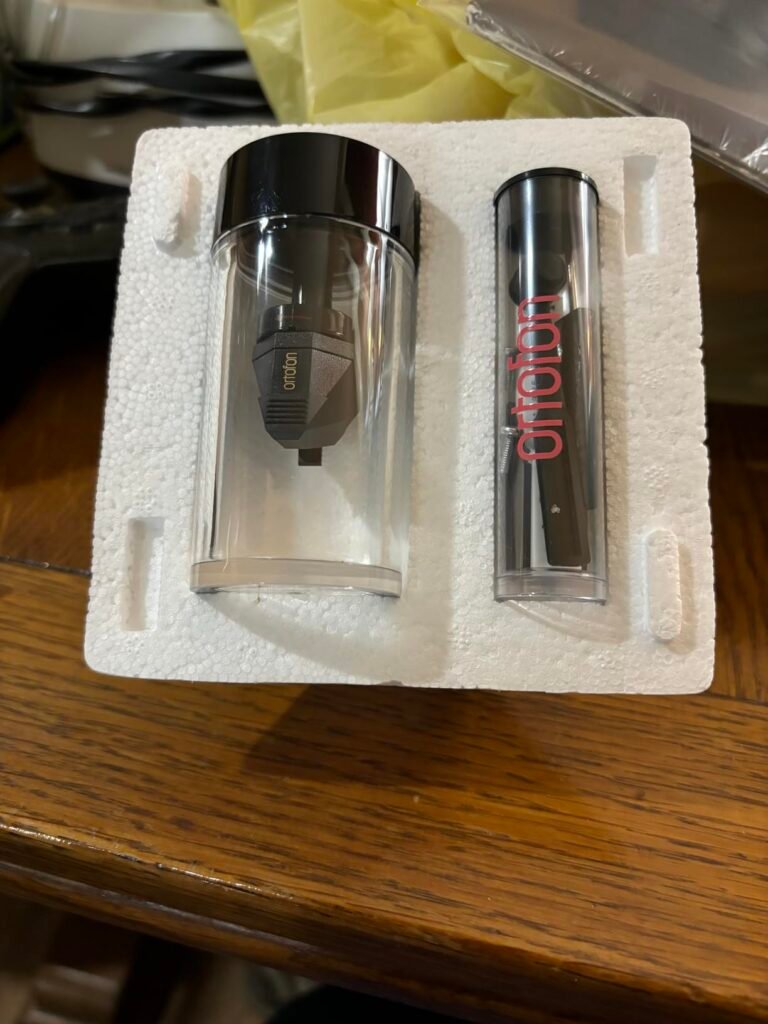
The Ortofon 2M Black is the flagship of the 2M moving magnet series and represents the upper limit of what this cartridge topology can achieve. Its Shibata diamond stylus features a slim, highly polished profile that contacts the groove walls over a much larger surface area than an elliptical or even micro-linear tip. This extended contact area allows the stylus to trace the finest high-frequency modulations in the groove, producing a level of detail and air that approaches moving coil performance.
We may earn a commission when you buy through this link, at no additional cost to you.
The sonic signature of the 2M Black is remarkably transparent and true to the groove, with exceptional channel separation, precise imaging, and an extended frequency response that reveals information most moving magnet cartridges simply cannot access. Orchestral recordings gain depth and dimensionality, vocals acquire a lifelike presence, and the subtle decay of cymbals and room ambience becomes clearly audible. This is a cartridge that rewards high-quality pressings and meticulous turntable setup.
Like the rest of the 2M family, the Black uses a universal mounting system and a replaceable stylus assembly. The stylus replacement is more expensive than those for the Red or Blue models, reflecting the precision of the Shibata diamond, but the ability to swap it without realigning the cartridge body is still a practical advantage. The cartridge demands careful alignment and a well-matched tonearm to deliver its full potential.
The Shibata diamond has a very narrow contact radius that sits deep in the groove, which is what enables its extraordinary high-frequency tracking. However, this same geometry makes the stylus highly sensitive to azimuth, vertical tracking angle, and anti-skate settings. Even small alignment errors can cause uneven channel balance, increased inner-groove distortion, or premature stylus wear. If you invest in a 2M Black, take the time to align it with a precision protractor and consider having a professional set it up if you are not confident in your alignment skills.
The 2M Black is the right choice for serious vinyl enthusiasts who have invested in a quality turntable, a good phono preamp, and a well-maintained record collection. The price is substantial, and the Shibata stylus will expose any setup deficiencies or record wear more ruthlessly than a simpler profile. If your system and collection can support it, the 2M Black delivers a listening experience that few moving magnet cartridges can match.
Not recommended for casual listeners with entry-level turntables or poorly maintained record collections.
We may earn a commission when you buy through this link, at no additional cost to you.
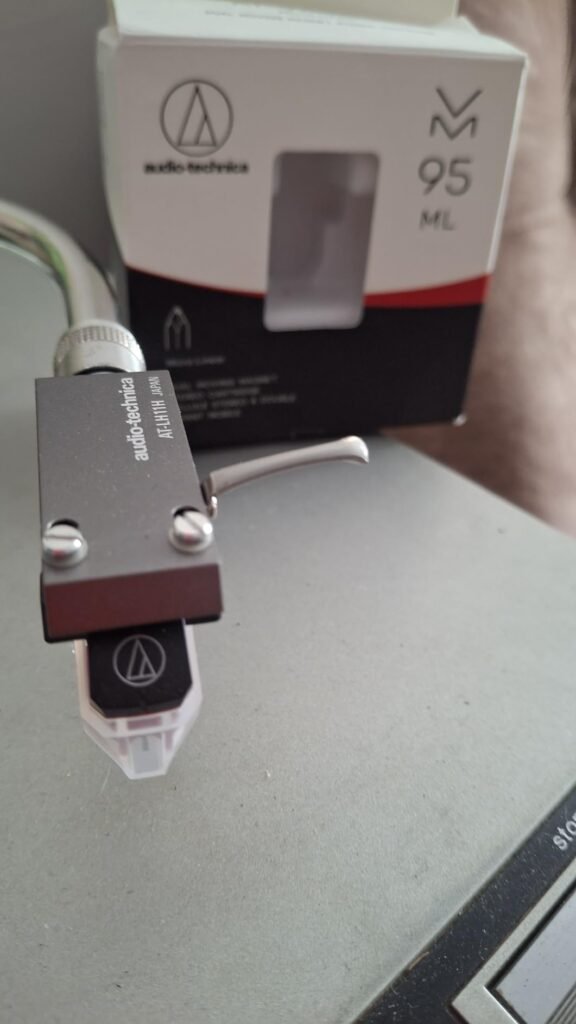
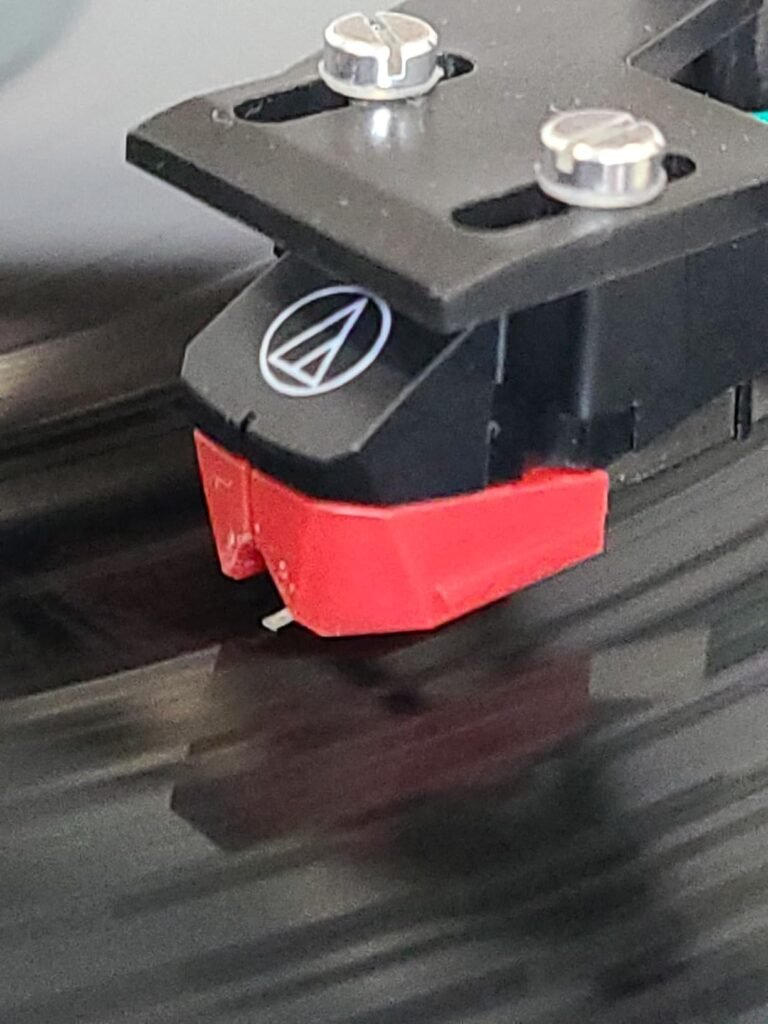
The Audio-Technica AT-VM95ML brings a micro-linear stylus profile to a price point that undercuts most competing cartridges with similar tip geometry. The 2.2 x 0.12 mil micro-linear stylus has a very narrow contact radius that traces the groove walls with exceptional accuracy, particularly in the inner grooves of a record where elliptical styli tend to lose high-frequency detail and introduce distortion. For listeners who play full albums from start to finish, this improvement in inner-groove tracking is immediately noticeable.
We may earn a commission when you buy through this link, at no additional cost to you.
The dual moving magnet construction and aluminum cantilever are shared with the rest of the VM95 series, providing a familiar foundation of clean output and reliable performance. The low-resonance polymer housing keeps unwanted vibrations from coloring the sound, and the threaded mounting inserts simplify installation. The micro-linear profile extracts more high-frequency detail and spatial information than the elliptical VM95E, placing this cartridge in a higher performance tier.
One practical advantage of the VM95 platform is that the AT-VM95ML is compatible with any AT-VMN95 replacement stylus. If you ever need a cheaper conical or elliptical replacement for casual listening or for playing damaged records, you can swap in a less expensive stylus without changing the cartridge body. This flexibility is unusual at this price point and extends the long-term usefulness of the investment.
An elliptical stylus contacts the groove wall at two points, which works well for most of the record surface but can struggle in the tightly packed inner grooves where high-frequency modulations are compressed into a smaller physical space. A micro-linear stylus has a much narrower contact profile that more closely mimics the shape of the cutting stylus used to create the master lacquer. This geometry allows it to track high frequencies more accurately throughout the entire side of a record, reducing inner-groove distortion and preserving treble detail where elliptical styli begin to roll off.
This cartridge is an excellent choice for listeners who want the tracking benefits of a micro-linear stylus without paying the premium that brands like Ortofon charge for similar profiles. The trade-off is that micro-linear styli are less forgiving of alignment errors than conical or elliptical tips, so you will want to take extra care during setup. If your tonearm is well-aligned and your records are in good condition, the AT-VM95ML delivers a level of detail that punches well above its price.
Not ideal for users who frequently play heavily worn or scratched records where a simpler stylus profile would be more forgiving.
We may earn a commission when you buy through this link, at no additional cost to you.
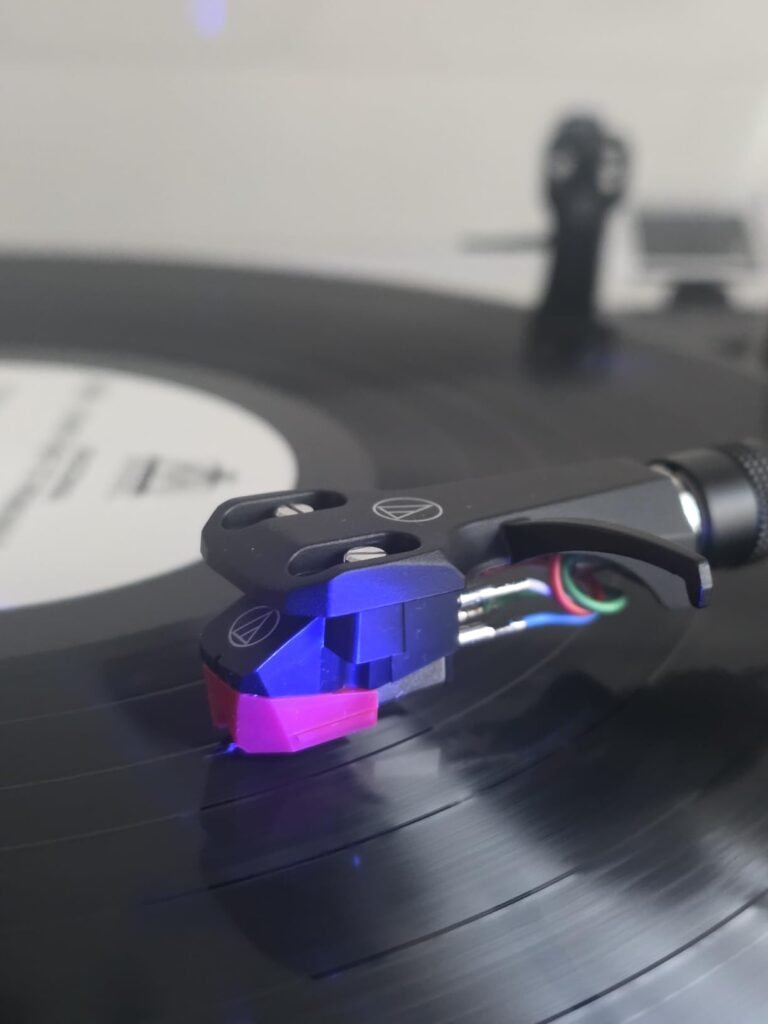
The Audio-Technica AT-VM95ML/H combines the high-resolution micro-linear stylus of the VM95ML with a pre-mounted universal headshell, offering the best of both worlds for listeners who want advanced tracking performance without the hassle of bare cartridge installation. The 2.2 x 0.12 mil micro-linear stylus delivers the same exceptional groove tracing and inner-groove detail as the standalone version, but arrives ready to attach to your tonearm in minutes.
We may earn a commission when you buy through this link, at no additional cost to you.
The sonic advantages of the micro-linear profile are most apparent on complex recordings with dense instrumentation, where the improved channel separation and high-frequency extension help untangle overlapping sounds. Classical music benefits from more precise string texture and hall ambience, while electronic and jazz recordings gain tighter bass definition and cleaner cymbal decay. The difference over an elliptical stylus is not subtle on a well-set-up system.
The included headshell uses a standard four-pin half-inch mount that fits most S-shaped and straight tonearms. The threaded inserts in the cartridge body allow secure two-screw mounting without separate nuts, and the low-resonance polymer housing minimizes coloration from external vibrations. As with all VM95 models, you can swap in any AT-VMN95 replacement stylus if you need a different profile for specific records or listening situations.
To fully benefit from the micro-linear profile, ensure your turntable is on a stable, level surface and your tonearm bearings are in good condition. Set the tracking force to the manufacturer’s recommended value using a digital stylus gauge rather than relying on the tonearm’s built-in counterweight markings, which can be imprecise. Clean your records before playback, as the narrow stylus profile will track deeper into the groove and pick up more embedded dust and debris than a conical tip.
This combo kit is the right choice for listeners who want micro-linear performance but do not have the tools or experience to mount and align a bare cartridge. The price premium over the cartridge-only version is reasonable given the convenience and the quality of the included headshell. Just make sure your tonearm is properly balanced and your anti-skate is correctly set, as the micro-linear stylus will reveal any setup shortcomings more readily than a simpler profile.
Not recommended for turntables with worn tonearm bearings or significant wow and flutter that would undermine the stylus precision.
We may earn a commission when you buy through this link, at no additional cost to you.
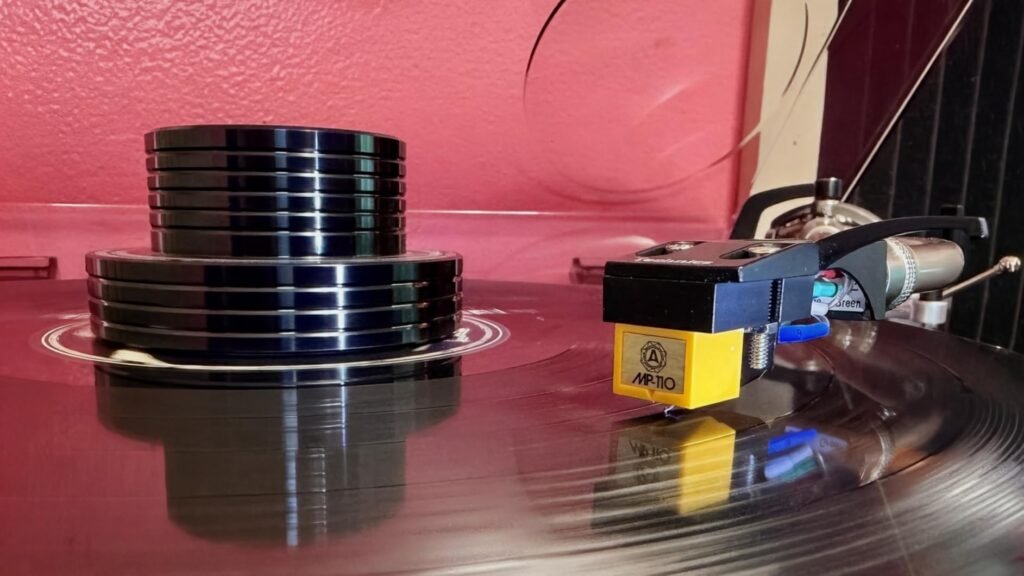
The NAGAOKA MP-110 occupies a unique position in the moving magnet market, offering a sound character that differs noticeably from the more analytical Audio-Technica and Ortofon options. NAGAOKA cartridges are known for their smooth, fluid midrange and a natural warmth that makes vocals and acoustic instruments sound particularly lifelike. The MP-110 delivers crystal clear clarity across the frequency spectrum while maintaining a musical coherence that many listeners find more engaging than technically brighter alternatives.
We may earn a commission when you buy through this link, at no additional cost to you.
The cartridge uses modern construction materials and a design philosophy focused on full dynamic range reproduction. This means the MP-110 handles both quiet passages and loud crescendos with composure, preserving the natural ebb and flow of the music without compressing dynamics or adding harshness at high volumes. The result is a presentation that feels effortless and natural, particularly on jazz, vocal, and classical recordings where tonal accuracy matters more than extreme detail retrieval.
The MP-110 is a moving magnet design with a standard half-inch mount, making it compatible with most turntables. NAGAOKA cartridges have a loyal following among vinyl enthusiasts who prioritize musicality over measurement-bench performance, and the MP-110 is often cited as one of the best values in the brand’s lineup. The build quality reflects the Japanese manufacturing heritage that NAGAOKA is known for.
The NAGAOKA MP-110 works well with a wide range of phono preamps, but its warm character pairs particularly nicely with neutral or slightly bright-sounding phono stages that can benefit from the cartridge’s natural fullness. If your current phono stage already sounds warm or dark, the MP-110 may push the overall tonal balance too far in that direction. Consider the sonic signature of your entire signal chain when choosing a cartridge to ensure a balanced result.
This cartridge is best for listeners who value tonal richness and natural timbre over the last degree of high-frequency sparkle. If you find that highly resolving cartridges make your records sound thin or fatiguing, the MP-110 offers a more relaxed and musically satisfying alternative. The trade-off is that replacement styli can be harder to find than those for Audio-Technica or Ortofon, and the price sits above the entry-level options from those brands.
Not ideal for listeners who prioritize the absolute highest level of treble detail and analytical sound reproduction.
We may earn a commission when you buy through this link, at no additional cost to you.
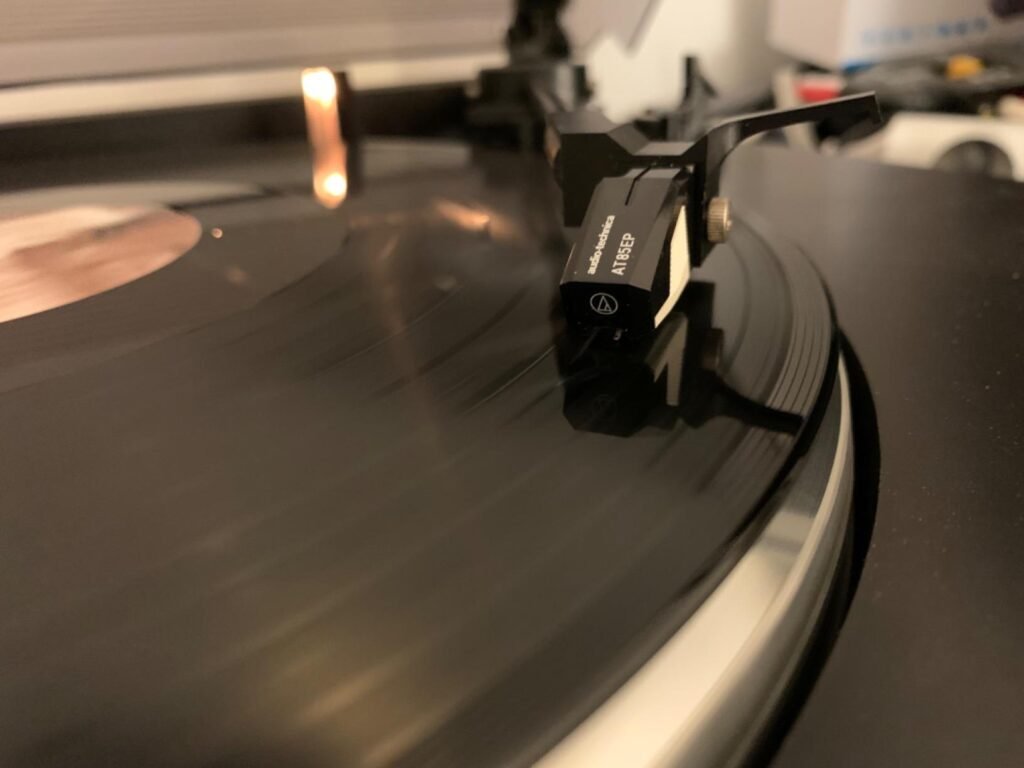
The Audio-Technica AT85EP fills a specific and increasingly niche role in the cartridge market: it is designed exclusively for linear-tracking turntables that use the T4P or P-mount plug-in connector. If you own a Technics SL-7, SL-10, SL-15, or a similar linear-tracking model from the 1980s, finding a quality replacement cartridge can be challenging, and the AT85EP is one of the few current-production options that fits directly without adapters.

We may earn a commission when you buy through this link, at no additional cost to you.
The 0.3 x 0.7 mil elliptical stylus provides a meaningful improvement over the conical styli that came stock on many vintage linear trackers. Audio-Technica’s dual moving magnet construction and para-toroidal coil design deliver excellent sonic clarity and wide channel separation, which helps the cartridge produce a clean, well-defined stereo image. The P-mount format means the cartridge plugs directly into the tonearm with a single set screw, eliminating the need for alignment or tracking force adjustment.
The P-mount standard was designed for simplicity, and the AT85EP takes full advantage of that philosophy. Installation takes seconds: unplug the old cartridge, plug in the new one, and tighten the set screw. There is no need for a protractor, stylus gauge, or anti-skate adjustment, as the tonearm’s preset geometry handles everything. This makes the AT85EP one of the easiest cartridge swaps in the entire hobby.
P-mount turntables have a rectangular socket at the end of the tonearm where the cartridge plugs in directly, secured by a single small set screw on the side or top. Standard half-inch mount turntables have a headshell with four tiny color-coded wires that connect to pins on the back of the cartridge. If you are unsure which type your turntable uses, check the model number against online databases or look for the T4P designation in the owner’s manual. The AT85EP only works with the P-mount type.
This cartridge is essential for owners of P-mount linear-tracking turntables who want to keep their machines playing at their best. The limitation is obvious: it will not fit any turntable with a standard half-inch headshell mount. If your turntable uses the T4P connector, the AT85EP offers excellent performance at a very reasonable price and is one of the few modern options available for this format.
Not compatible with any turntable that uses a standard half-inch headshell mount or proprietary non-P-mount connection.
We may earn a commission when you buy through this link, at no additional cost to you.
The Audio-Technica AT-VM95C is the entry point of the VM95 series, offering a 0.6 mil conical stylus at the lowest price in the lineup. While a conical tip does not trace the groove as precisely as an elliptical or micro-linear profile, it has distinct advantages that make it the right choice for certain listeners. The rounder contact shape is more forgiving of minor alignment errors, worn groove walls, and surface imperfections, making the VM95C a practical workhorse for everyday listening.
We may earn a commission when you buy through this link, at no additional cost to you.
The dual moving magnet construction and aluminum cantilever are identical to the more expensive VM95 models, so the fundamental build quality and output characteristics remain solid. The specially wound coils increase output voltage for better compatibility with a range of phono stages, and the low-resonance polymer housing keeps vibrations under control. The sound is clean and balanced, if less detailed than the elliptical VM95E.
The most compelling reason to choose the VM95C is the upgrade path it shares with the rest of the VM95 family. You can start with the affordable conical stylus and later swap in an elliptical, micro-linear, or Shibata replacement stylus from the same series without buying a new cartridge body. This makes the VM95C a smart first purchase for anyone new to vinyl who wants to keep future upgrade options open.
While audiophile discussions tend to favor elliptical and more advanced stylus profiles, a conical tip has real practical advantages in certain situations. Its larger contact area distributes tracking force over a wider section of the groove wall, which reduces wear on both the stylus and the record. This makes conical styli more durable and more forgiving of records with surface noise, scratches, or groove wear from previous owners. If you buy a lot of used vinyl or play records that have seen decades of use, a conical stylus may actually sound better than a more resolving profile that amplifies every imperfection.
This cartridge is best for beginners, casual listeners, and anyone who plays a lot of older or well-loved records that may have surface wear. The conical stylus will not extract the last degree of high-frequency detail, but it will track reliably and produce a pleasant, musical sound without demanding perfect setup. If your budget is tight and your records are not in mint condition, the VM95C is a sensible and capable starting point.
Not recommended for critical listeners who want maximum detail retrieval from high-quality pressings on a well-aligned turntable.
We may earn a commission when you buy through this link, at no additional cost to you.
Selecting a turntable cartridge involves understanding how stylus geometry, output level, mounting type, and build quality interact with your specific turntable and listening habits. The factors below cover the most important decision points so you can narrow the field quickly and avoid common mistakes.
The stylus profile is the single most important factor in determining how much musical information a cartridge can extract from a record groove. A conical stylus has a simple round tip that contacts the groove at a single point on each wall. It is durable, forgiving of setup errors, and gentle on worn records, but it cannot trace the finest high-frequency modulations, especially in the inner grooves where the groove velocity is lowest. Conical styli are best for casual listening and heavily used record collections.
Elliptical styli have an oval cross-section that contacts the groove wall at two points, providing better high-frequency tracking and more detail than a conical tip. Nude elliptical diamonds, which are mounted directly to the cantilever without a metal shank, offer even lower tip mass and faster transient response than bonded elliptical designs. Micro-linear styli have a very narrow contact profile that closely mimics the cutting stylus used to create the master disc, delivering superior inner-groove performance and extended treble. Shibata styli take this concept further with an even slimmer, highly polished profile that maximizes groove contact area for the highest level of detail retrieval.
Match the stylus profile to the condition of your records and the quality of your turntable setup. A high-resolution Shibata or micro-linear stylus on a poorly aligned tonearm with wobbly bearings will sound worse than a well-tracked conical stylus on a properly set-up deck. Start with the best stylus your setup can support, and upgrade the profile as your turntable and alignment skills improve.
Moving magnet cartridges typically produce output voltages between 3 and 7 millivolts, which is significantly higher than moving coil cartridges. This higher output makes them compatible with the built-in phono stages found in most receivers, integrated amplifiers, and powered speakers. However, the exact output level still matters, as a cartridge with very high output may overload a sensitive phono stage and cause distortion, while a lower-output model may sound thin or quiet through a less sensitive preamp.
Most modern moving magnet cartridges, including the Audio-Technica VM95 series and Ortofon 2M family, are designed to work well with standard MM phono inputs that expect around 4 to 5 millivolts of output. If your phono stage has adjustable gain or loading settings, you can fine-tune the match to your specific cartridge for optimal sound quality. Check your phono preamp’s specifications for its recommended input range and compare it to the cartridge’s output voltage before purchasing.
If you are unsure about compatibility, choose a cartridge with a mid-range output voltage around 4 to 5 millivolts, which will work well with the vast majority of phono stages. Cartridges with unusually high or low output may require specific preamp adjustments that not all equipment supports.
The two most common cartridge mounting standards are the half-inch mount and the P-mount, also known as T4P. Half-inch mount cartridges attach to a headshell using two screws spaced half an inch apart, with four tiny color-coded wires connecting the cartridge pins to the headshell leads. This is the standard used by the vast majority of modern turntables and allows for precise alignment adjustments using a protractor. All of the Ortofon 2M cartridges and most Audio-Technica VM95 models use this mounting type.
P-mount cartridges plug directly into a rectangular socket at the end of a linear-tracking tonearm and are secured with a single set screw. They require no alignment or tracking force adjustment, as the tonearm’s geometry is preset at the factory. The Audio-Technica AT85EP is the only P-mount option in this guide, designed specifically for vintage linear-tracking turntables from the 1980s. P-mount cartridges are not interchangeable with half-inch mount systems.
Before purchasing any cartridge, confirm which mounting type your turntable requires. Check the tonearm end for either a headshell with four wire leads or a rectangular P-mount socket. Buying the wrong type will result in a cartridge that physically cannot be installed on your turntable, regardless of its sonic merits.
Every cartridge has a recommended tracking force range, typically expressed in grams, that determines how much downward pressure the stylus exerts on the record groove. Too little tracking force causes the stylus to mistrack, producing distortion and potentially damaging the groove walls as the tip bounces erratically. Too much force accelerates stylus and record wear without improving sound quality. Most moving magnet cartridges track between 1.5 and 2.5 grams, and the optimal setting is usually near the middle of the recommended range.
Your tonearm must be capable of applying the correct tracking force for the cartridge you choose. Most modern tonearms with adjustable counterweights can handle the full range of moving magnet tracking forces without difficulty. However, some vintage or budget tonearms have limited adjustment range or imprecise counterweight markings that make it difficult to dial in the exact force. A digital stylus gauge is an inexpensive tool that takes the guesswork out of this critical adjustment.
When selecting a cartridge, verify that its recommended tracking force falls within your tonearm’s adjustment range. If your tonearm is on the lighter side, choose a cartridge that tracks well at 1.5 to 2.0 grams. Heavier-tracking cartridges may require a tonearm with a wider counterweight range or an auxiliary weight to achieve the correct downforce.
All stylus diamonds wear out over time, typically after 500 to 1,000 hours of playback depending on the profile, tracking force, and record condition. When the stylus wears down, it begins to distort the sound and can damage your records, so timely replacement is essential. The cost and availability of replacement styli vary significantly between brands and models, and this long-term expense should factor into your purchasing decision.
Cartridges with user-replaceable styli, such as the Ortofon 2M series and Audio-Technica VM95 family, allow you to swap in a fresh stylus without removing the cartridge body from the headshell or redoing the alignment. This is both convenient and cost-effective, as replacement styli are less expensive than complete cartridges. Some systems, like the VM95 series, even allow you to change stylus profiles within the same cartridge body, giving you the flexibility to experiment with different sound characteristics.
Before buying a cartridge, check the availability and price of replacement styli for that specific model. A cartridge with an affordable, readily available replacement stylus will cost less to maintain over its lifetime than one with an expensive or hard-to-find replacement, even if the initial purchase price is similar.
The cartridge housing plays a more important role in sound quality than many buyers realize. The body must be rigid enough to resist resonances that can color the sound, yet light enough to avoid overloading the tonearm’s effective mass. Low-resonance polymer housings, like those used on the Audio-Technica VM95 series, dampen vibrations effectively while keeping weight low. Metal-bodied cartridges can offer greater rigidity but may introduce their own resonance characteristics if not carefully designed.
Internal construction details also matter. The cantilever material, typically aluminum in this price range, affects how quickly and accurately vibrations are transmitted from the stylus to the magnet assembly. The coil winding quality and magnet configuration determine the output voltage and channel separation. While these details are harder to evaluate from specifications alone, they contribute to the overall sonic character and performance consistency of the cartridge.
When comparing cartridges at similar price points, pay attention to the housing material and construction details. A well-damped polymer body with a quality aluminum cantilever and precision-wound coils will generally outperform a cartridge with a resonant metal body and cheaper internal components, even if the stylus profiles are similar.
Proper installation is the foundation of good cartridge performance. Mount the cartridge securely to the headshell using the correct screws, connect the four color-coded wires to the matching pins on the back of the cartridge, and align the stylus using a protractor designed for your tonearm’s geometry. Set the tracking force to the manufacturer’s recommended value using a digital stylus gauge, and adjust the anti-skate to match. Take your time with this process, as even small alignment errors can significantly affect sound quality and stylus longevity.
During daily use, always lower the tonearm gently onto the record using the cueing lever rather than dropping it by hand, which can damage the stylus tip or scratch the record surface. Keep your records clean by using a carbon fiber brush before each play and a wet cleaning system for deeper maintenance. Dust and debris in the groove act as an abrasive against the stylus diamond, accelerating wear and degrading sound quality over time. Avoid touching the stylus tip with your fingers, as skin oils can attract dust and affect tracking.
Monitor stylus wear by listening for increasing distortion, particularly on inner grooves and during loud passages with complex high-frequency content. A worn stylus will also produce more surface noise and may begin to skip or mistrack on heavily modulated passages. Most elliptical styli last around 500 to 800 hours, while conical tips can last longer due to their larger contact area. When you notice a decline in sound quality, replace the stylus promptly to protect your records from damage caused by a worn diamond.
Most moving magnet styli last between 500 and 1,000 hours of playback, depending on the stylus profile, tracking force, and record condition. Conical styli tend to last longer than elliptical or micro-linear tips due to their larger contact area. Listen for increasing distortion, loss of high-frequency detail, or excessive surface noise as signs that the stylus is wearing out and needs replacement.
Many moving magnet cartridges feature user-replaceable styli that snap or slide into the cartridge body without requiring realignment. The Audio-Technica VM95 series and Ortofon 2M family both offer this convenience, and the VM95 platform even allows you to change stylus profiles within the same cartridge body. Check your cartridge model's specifications to confirm whether the stylus is replaceable and which replacement options are available.
In a moving magnet cartridge, small magnets attached to the cantilever move within fixed coils to generate the electrical signal. In a moving coil design, the coils move within a fixed magnetic field. Moving coil cartridges typically offer lower moving mass and higher resolution but produce much lower output voltages that require a dedicated MC phono stage or step-up transformer. Moving magnet cartridges are more affordable, easier to set up, and compatible with standard phono inputs.
Most moving magnet cartridges work with any standard MM phono input, which is built into many receivers, integrated amplifiers, and powered speakers. The output voltage of a typical MM cartridge falls within the range that standard phono stages are designed to handle. If your equipment only has a line-level input without a phono stage, you will need to purchase a separate MM phono preamp to boost and equalize the cartridge signal.
A more expensive cartridge will generally offer better detail retrieval, channel separation, and tracking ability, but the improvement is only fully realized if the rest of your system can support it. A high-end Shibata cartridge on a poorly aligned turntable with a basic phono stage may sound worse than a well-set-up elliptical cartridge on the same equipment. Match the cartridge quality to the capabilities of your turntable, tonearm, and phono preamp for the best results.
No, half-inch mount and P-mount cartridges use physically incompatible connections and cannot be interchanged without specialized adapters that are rarely available and often compromise performance. If your turntable uses a P-mount connection, you must choose a cartridge specifically designed for that format, such as the Audio-Technica AT85EP. Check your turntable's tonearm connection type before purchasing.
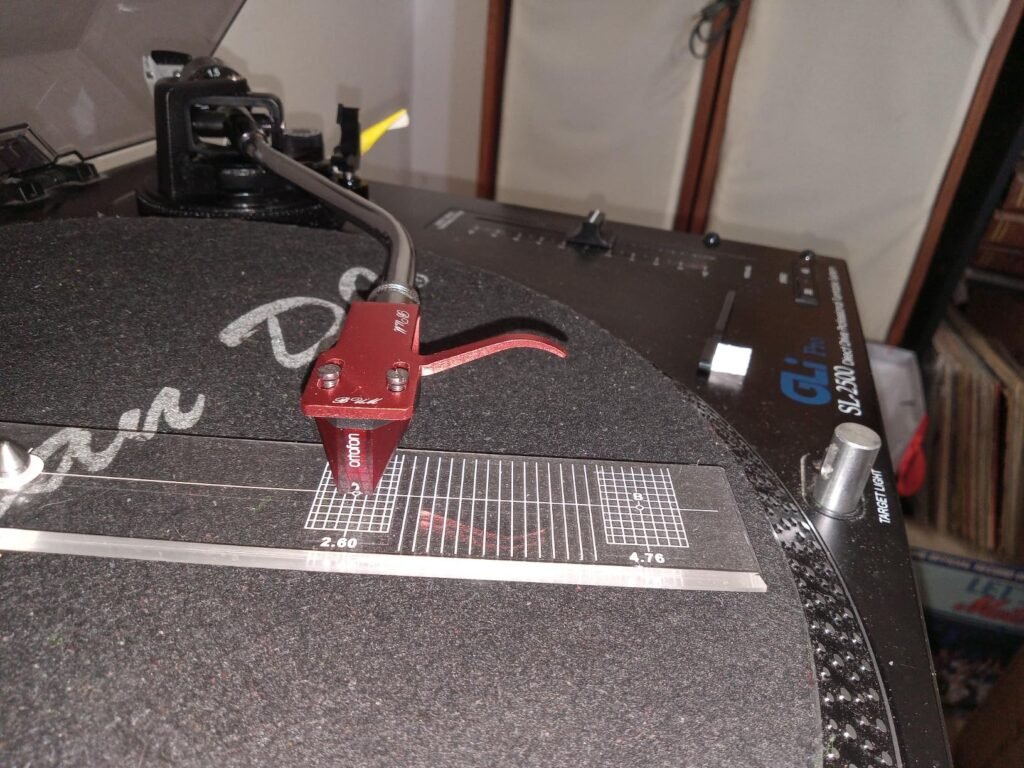
Proper alignment means the stylus sits tangent to the record groove at two specific points on the record surface, minimizing tracking distortion across the entire side. You can check alignment using a cartridge protractor that matches your tonearm's geometry, such as a Baerwald, Lofgren, or Stevenson template. Place the protractor on the platter, lower the stylus onto the grid points, and adjust the cartridge position in the headshell until the cantilever aligns with the reference lines at both null points.
The cartridge itself does not directly affect platter speed or wow and flutter, which are determined by the turntable's motor, belt, and bearing system. However, a cartridge with incorrect tracking force can introduce speed variations if the stylus drags excessively in the groove or mistracks during demanding passages. Setting the tracking force correctly ensures the stylus tracks the groove smoothly without adding mechanical load to the platter.
Always start with the manufacturer's recommended tracking force, which is typically listed in the product specifications or owner's manual. For most moving magnet cartridges, this falls between 1.8 and 2.2 grams. Use a digital stylus gauge for accuracy rather than relying on the tonearm's counterweight markings, which can be imprecise. If the sound is distorted or the stylus skips, try increasing the force slightly within the recommended range.
The Audio-Technica AT-VM95E stands out as the strongest overall choice for most vinyl listeners seeking a meaningful upgrade from a stock cartridge. Its elliptical stylus delivers a clear, balanced sound that works across genres, the dual magnet construction provides reliable output for standard phono stages, and the VM95 upgrade path lets you experiment with more advanced stylus profiles as your listening priorities evolve.
For buyers with different needs, the Ortofon 2M Blue offers a more refined and detailed presentation with its nude elliptical diamond, while the Ortofon 2M Black delivers flagship-level Shibata performance for serious audiophiles with well-matched systems. Budget-conscious listeners can start with the AT-VM95C and upgrade the stylus later, and owners of vintage linear-tracking turntables will find the AT85EP to be one of the few quality P-mount options still in production.
The right cartridge depends on your turntable's mounting type, your tonearm's tracking capabilities, the condition of your record collection, and your listening priorities. Match the stylus profile to your setup quality and record condition rather than simply chasing the most expensive option, and you will enjoy a significant improvement in your vinyl listening experience regardless of which model you choose.