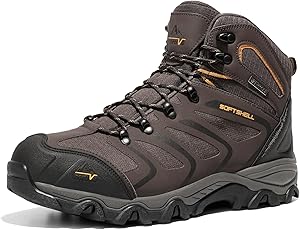
NORTIV 8 Ankle
8.8Editor scoreAnkle high waterproof upper
Flexible EVA foam midsole
Removable shock absorbent insole
Slip resistant rubber outsole
Find the right hiking boots for 2026. We compare 10 standout options by build quality, useful features, owner feedback, value, and everyday trade-offs.
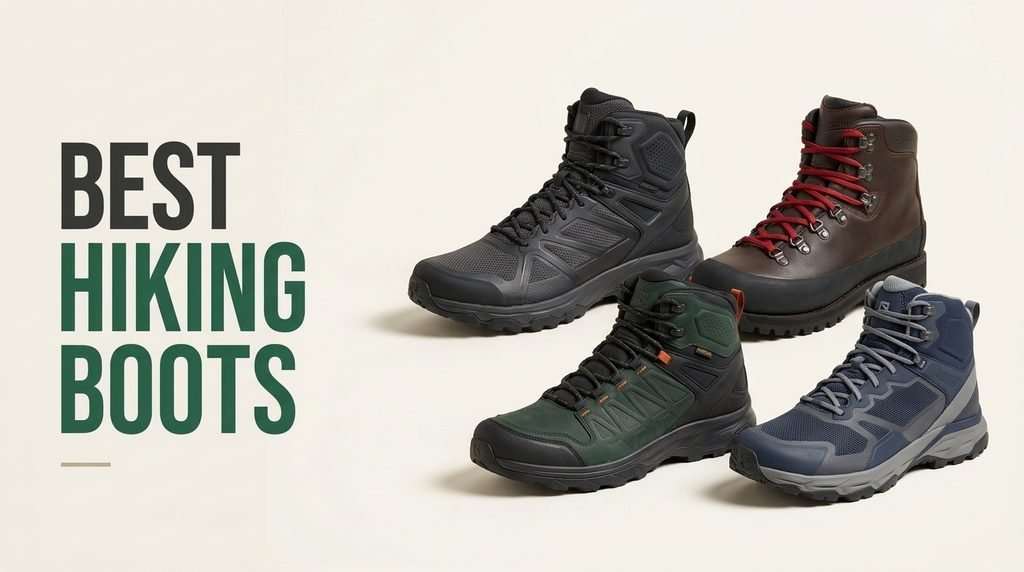
Find the right hiking boots for 2026. We compare 10 standout options by the factors that matter in this category, such as waterproofing, outsole traction, underfoot support, ankle stability, upper materials, owner feedback, value, and everyday trail trade-offs so you can match your footwear to your terrain and pack weight.
Foot fatigue, wet socks, and unstable footing on loose rock can quickly ruin a day in the backcountry. While entry-level hikers focus on lightweight flexibility and casual comfort for short trails, technical boots add torsional shanks, protective toe rands, and deeper lugs designed to handle rugged terrain and heavier packs.
Before choosing a pair, consider whether you prioritize immediate out-of-the-box softness, generous toe box room, full-grain leather durability, or multi-surface winter grip. Our guide breaks down how each boot performs on the trail so you can invest in reliable protection without paying for heavy features you do not need.
We compared 10 hiking boots using the details that actually help a buyer decide: waterproof membrane design, upper leather and mesh durability, midsole shock absorption, arch support, outsole lug traction, toe protection, ankle collar height, owner feedback, and overall value. The notes focus on practical trail trade-offs so each pick feels connected to how hikers actually walk, climb, and protect their feet across wet mud, rocky switchbacks, and long miles.

Compare key features, scores, and current prices side by side. A shorter feature list means fewer details were available, not necessarily fewer capabilities.



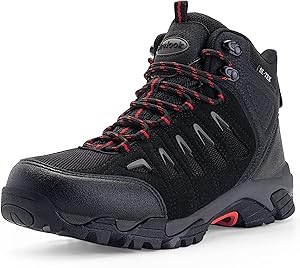

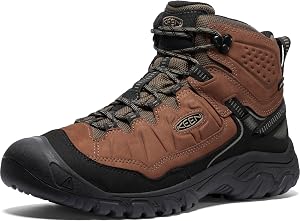
For hikers who regularly venture onto rugged, rock-strewn trails where standard mid-cut boots feel under-armored, the Danner Panorama 6-Inch Waterproof delivers a noticeable step up in protection and ankle authority. Its full 6-inch shaft rises higher above the ankle bone to stabilize your joint on off-camber slopes, while a tough PU-coated leather rand runs completely around the lower base and forefoot to deflect sharp rocks and abrasive scree.
We may earn a commission when you buy through this link, at no additional cost to you.
Beneath the rich suede upper sits the breathable Danner Dry waterproof barrier, engineered to block standing water and rain while letting internal heat and perspiration escape. Inside, Danner skips thin single-layer foam inserts in favor of a removable, triple-density OrthoLite footbed made from open-cell polyurethane. This footbed resists flattening out over long miles while promoting air circulation under your arch and heel.
Midsole shock absorption is handled by Danner’s lightweight Plyolite compound, which cushions heavy steps without adding clumsy bulk. That midsole is cradled by the wrap-around Panorama outsole, whose climbing-inspired perimeter and large, deep lugs bite aggressively into loose dirt, mud, and steep rocky inclines. The wrap-around sole edges also add lateral stability when traversing narrow, uneven ledges.
On rocky mountain trails, the lower half-inch of a boot upper takes constant abuse from granite edges and roots. Danner’s PU-coated leather rand acts like a bumper guard around the entire base and forefoot, keeping sharp stones from slicing into the suede or compromising the Danner Dry waterproof barrier.
Because the Panorama rises a full six inches and wraps the lower perimeter in protective rand material, it is naturally more substantial than casual park boots. If you only stroll flat, paved nature paths, you may not need this level of armor. However, for serious trail hikers and backpackers who want high-rated ankle support, long-lasting OrthoLite cushioning, and rock-proof lower protection, the Danner Panorama is well worth the investment.
Casual walkers who prefer low-cut freedom around the ankle or entry-level pricing.
We may earn a commission when you buy through this link, at no additional cost to you.
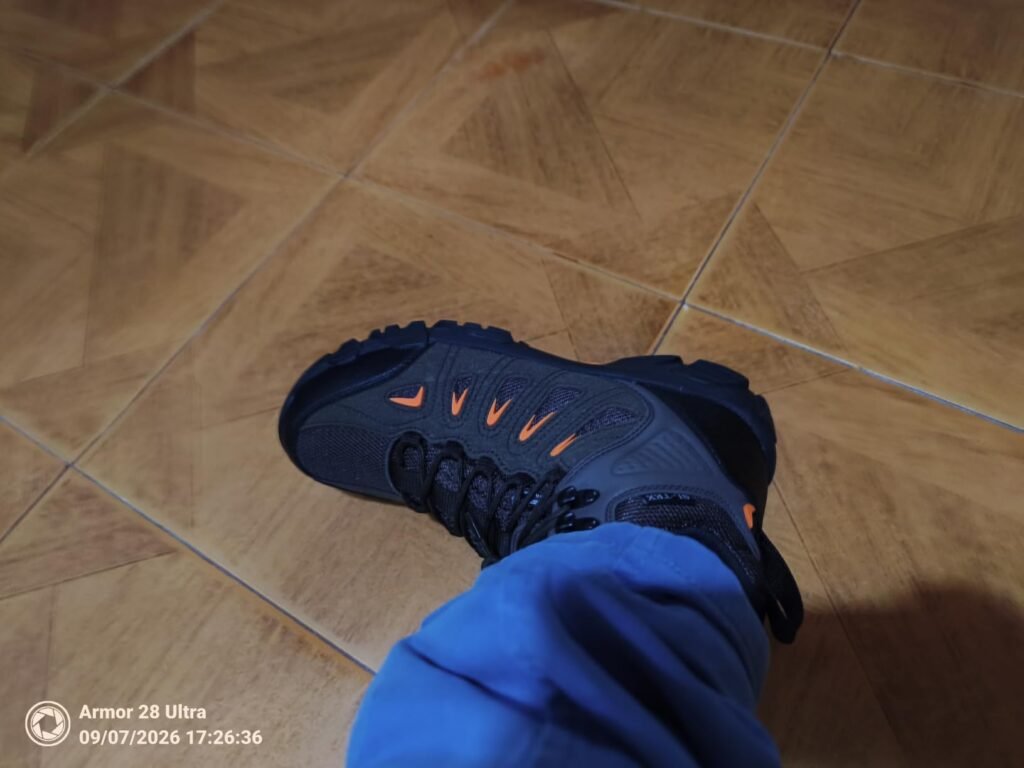
The NORTIV 8 Men's Ankle High Waterproof Hiking Boot serves casual weekend hikers, campers, and outdoor workers who want practical weather protection without spending heavily on specialized mountaineering gear. Instead of using stiff, unforgiving upper panels that require weeks of painful breaking in, this boot prioritizes immediate step-in softness for moderate day trips, dog walks on forested paths, and everyday utility chores.
We may earn a commission when you buy through this link, at no additional cost to you.
Underfoot comfort relies on a lightweight, flexible EVA midsole paired with a removable shock-absorbent insole. EVA foam excels at absorbing repetitive heel-strike impacts on hard-packed dirt and gravel roads while returning energy as you push off. Because the factory footbed lifts right out, hikers with particularly high arches or plantar sensitivity can easily drop in a custom aftermarket insole without crowding the interior volume.
Traction and weather defense are handled by a waterproof exterior structure and a slip-resistant rubber outsole. The tread pattern is designed to bite into damp soil and slick trail approaches, helping prevent sideways slips when traversing muddy park trails or wet grass. Its ankle-high profile wraps comfortably around the joint to block stray pebbles and twigs while still permitting natural forward flex on uphill grades.
Because this boot uses a flexible EVA midsole rather than a rigid chassis, pairing it with medium-weight merino wool hiking socks helps fill out the ankle collar nicely and reduces internal heel slip on steeper climbs. If you use thick aftermarket orthotics, loosen the lower lace runs slightly to keep pressure off your instep.
The main trade-off with a flexible, budget-friendly design is lower torsional rigidity compared to higher-end boots equipped with nylon shanks or dense polyurethane midsoles. If you plan to haul a heavy multi-day backpack across jagged talus fields, you will want a stiffer platform. However, for recreational hikers and outdoor enthusiasts who want an affordable, cushioned boot for light-to-moderate terrain, NORTIV 8 delivers strong everyday utility.
Backcountry trekkers carrying heavy overnight packs over sharp, uneven rock fields.
We may earn a commission when you buy through this link, at no additional cost to you.
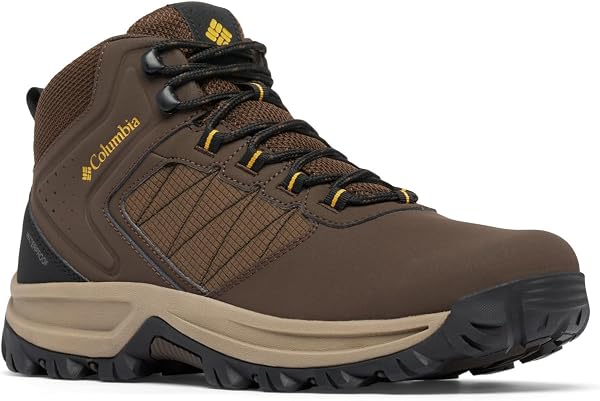
The Columbia Men's Transverse Hike Waterproof is built for day hikers who want the protective coverage of a traditional leather boot blended with the lighter, cooler feel of a modern trail runner. By combining sturdy leather overlays in high-wear zones with breathable mesh panels across the flex points, Columbia reduces dead weight on your feet while preserving structural lock around the heel and midfoot.
We may earn a commission when you buy through this link, at no additional cost to you.
Weather protection comes from Columbia’s multilayered Omni-Tech seam-sealed construction. Unlike basic water-repellent coatings that wear off after a few wet outings, this internal membrane blocks sustained rain, shallow stream splashes, and slushy snow from seeping inward while allowing warm sweat vapor to vent out. Beneath your foot, the Techlite midsole absorbs sharp trail impacts and maintains lively rebound over multi-hour walks.
On the ground, the Omni-Grip rubber compound uses strategically blended lug shapes to maintain footing across varied surfaces, transitioning smoothly from loose gravel switchbacks to wet tree roots and flat rock slabs. Metal lacing hardware at the top of the generously padded collar lets you cinch the ankle snugly before descending steep grades, preventing your toes from sliding forward into the front of the boot.
Solid leather boots often trap heat during brisk summer climbs, leading to damp socks from perspiration alone. Placing mesh panels over the forefoot crease areas allows internal vapor to escape through the Omni-Tech membrane faster and stops stiff leather pleats from pinching the top of your toes.
While the hybrid leather-and-mesh upper vents heat much better than solid all-leather boots during warm summer hikes, the exposed fabric sections hold onto dried mud a bit longer and lack the raw abrasion armor of a full wrap-around rubber rand. For three-season trail hikers seeking a dependable, well-cushioned waterproof boot from an established outdoor brand, the Transverse Hike hits an appealing sweet spot.
Off-trail bushwhackers who constantly scrape their footwear against sharp granite or dense briars.
We may earn a commission when you buy through this link, at no additional cost to you.
The Merrell Men's Moab 3 Mid Waterproof stands out as our top overall recommendation because it addresses every mechanical need of a trail hiker without requiring a grueling break-in period. Designed for everything from brisk five-mile state park loops to demanding all-day mountain ascents, it combines a pigskin leather and mesh upper with an internal waterproof membrane that seals out puddle water while letting foot heat escape.
We may earn a commission when you buy through this link, at no additional cost to you.
What separates the Moab 3 from casual budget boots is its multi-layered underfoot engineering. A molded nylon arch shank sits embedded inside the lightweight EVA foam midsole, providing crucial torsional stiffness so your arch does not flex painfully over jagged roots and pointed trail rocks. In the rearfoot, Merrell’s signature Air Cushion works alongside the removable Kinetic Fit Advanced contoured insole to absorb downward shock and center your heel on uneven sidehills.
Traction is anchored by a Vibram TC5+ rubber outsole, a proven compound that bites reliably into wet granite slabs, loose scree, and packed forest duff. Around the upper, a protective rubber toe cap shields your forefoot from accidental rock kicks, while a full bellows tongue connects to the sides of the boot so sand, pine needles, and pebbles cannot slip past the 100% recycled laces and mesh lining.
On flat pavement, a soft foam sole feels plush, but after three hours of stepping on angled rocks, a boot without a shank forces your plantar fascia to do all the stabilizing work. The Moab 3’s molded nylon arch shank acts as a structural bridge under your midfoot, drastically reducing arch soreness on rocky trails.
Because the Moab 3 uses generous mesh venting zones paired with pigskin leather rather than a single slab of heavy full-grain hide, it prioritizes immediate flexing comfort and breathability over extreme winter insulation. If you want one trusted, versatile waterproof boot that stabilizes your arches and grips unpredictable trails right out of the box, the Moab 3 Mid is the benchmark to beat.
Ultralight fast-packers who prefer zero-drop trail runners over structured mid-cut boots.
We may earn a commission when you buy through this link, at no additional cost to you.
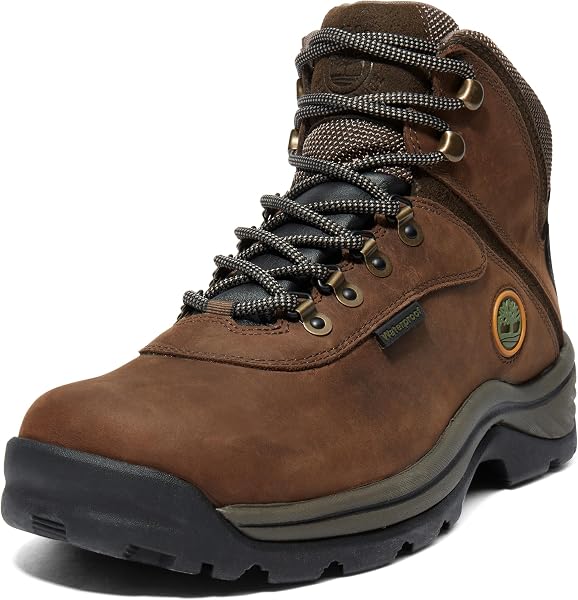
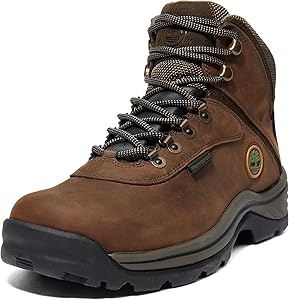
The Timberland Men's White Ledge Mid Waterproof is an ideal match for hikers who prefer the traditional durability and clean look of a full-leather upper over modern synthetic mesh patchwork. Crafted with waterproof Premium Timberland Leather, the exterior shrugs off thorny brush, muddy ruts, and wet tall grass while cleaning up easily with a damp cloth at the end of the day.
We may earn a commission when you buy through this link, at no additional cost to you.
To keep water from sneaking in around the instep, Timberland pairs the leather shell with a fully gusseted tongue that remains stitched to the upper along its edges. This creates a continuous barrier up toward the ankle collar so stepping briefly into a unexpected trail puddle or soggy bog will not flood your socks. Inside, a ReBOTL fabric lining manages moisture next to your foot while an EVA footbed and midsole cushion your stride.
Lacing convenience is a highlight on the White Ledge thanks to its rustproof speed-lace hardware and top lace hooks. Metal D-rings and open top hooks allow you to pull the laces taut in seconds and customize tension between your forefoot and ankle—leaving the toe box relaxed for swelling feet on flat sections or locking the collar tight before a steep downhill pitch.
When descending steep trails, gravity pushes your foot forward inside the boot. By crossing your laces firmly right below the Timberland’s top metal speed hooks before wrapping the upper ankle, you create a heel-lock knot that anchors your calcaneus in the rear pocket and protects your toenails from bruising.
The primary consideration with a full-leather boot is thermal regulation: without open mesh windows, leather retains more warmth on hot July afternoons and benefits from occasional leather care after muddy seasons. However, if you want a rugged, puddle-proof boot that handles woodland trails, camp chores, and cool-weather street wear with equal confidence, the White Ledge is a proven performer.
Desert hikers trekking exclusively in high summer heat where maximum mesh ventilation is mandatory.
We may earn a commission when you buy through this link, at no additional cost to you.
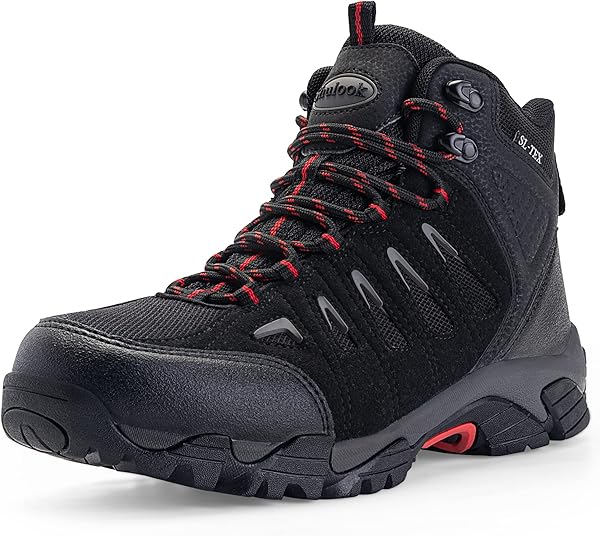
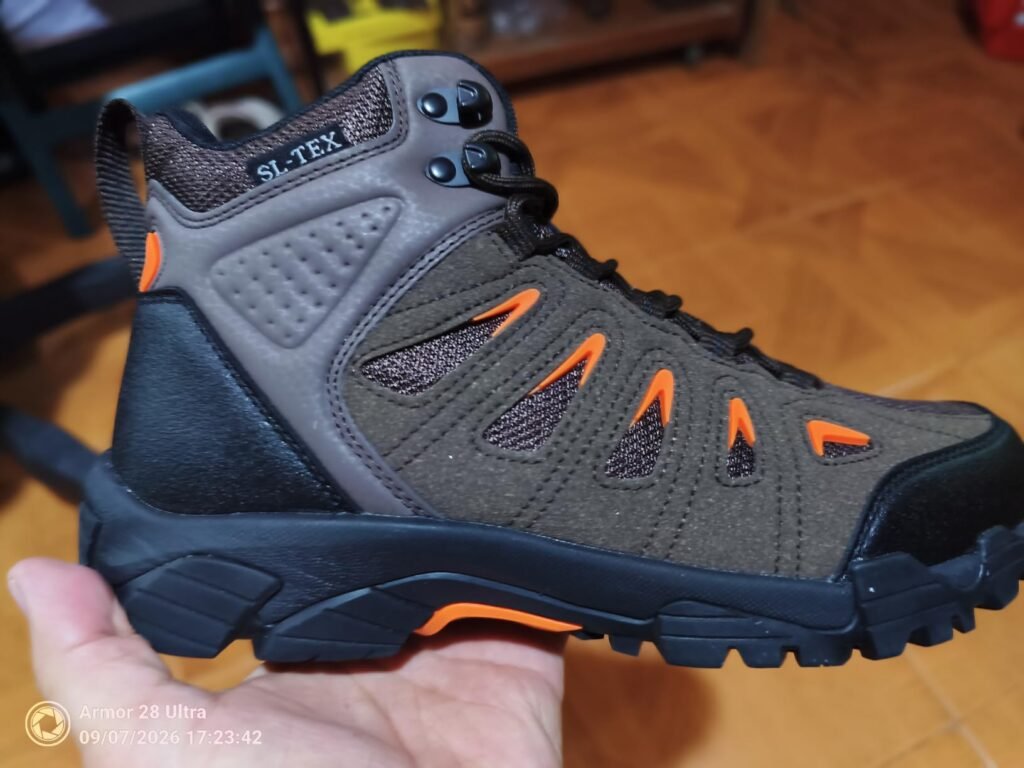
Heavy footwear is one of the fastest ways to drain your energy on a casual hike, which is where this SL-TEX Lightweight Mid Top Trekking Boot carves out its advantage. Weighing roughly 1.25 pounds in a men's size 10, it is built for budget-conscious walkers, travelers, and beginner hikers who want mid-top ankle coverage and rain protection without feeling like they are dragging heavy work boots up every hill.
We may earn a commission when you buy through this link, at no additional cost to you.
The upper combines synthetic suede with an SL-TEX waterproof breathable membrane and a skin-friendly D01 ventilated lining. Together with a closed-cell tongue design, this sealing structure prevents rain, wet sand, and trail muck from entering the shoe while allowing internal humidity to dissipate. Up front, a molded rubber anti-collision toe bumper wraps over the tip to absorb impacts when you accidentally clip a hidden root or stair edge.
Inside the boot, comfort starts with a removable memory foam insole featuring targeted heel cushioning and contoured arch support, backed by a flexible, shock-absorbing EVA midsole. This combination molds gently to the bottom of your foot, taking the sting out of gravel paths and paved park connectors. Underneath, an advanced traction rubber outsole provides dependable grip across damp soil and everyday outdoor surfaces.
Lifting an extra half-pound on your feet requires noticeably more energy over 10,000 steps than carrying that same weight inside a daypack. Choosing a 1.25-pound synthetic suede boot keeps your stride natural and nimble during sightseeing trips, nature walks, and light camping weekends.
Because it relies on lightweight synthetic suede and plush memory foam rather than heavy leather and rigid shanks, this boot is best viewed as a nimble trekking shoe with ankle height rather than a heavy-duty alpine boot. For travelers packing footwear into luggage, budget day hikers, and daily walkers who prioritize low weight and soft underfoot cushioning, it offers impressive accessibility.
Technical scramblers who need stiff sole edging on steep, rocky mountain ledges.
We may earn a commission when you buy through this link, at no additional cost to you.
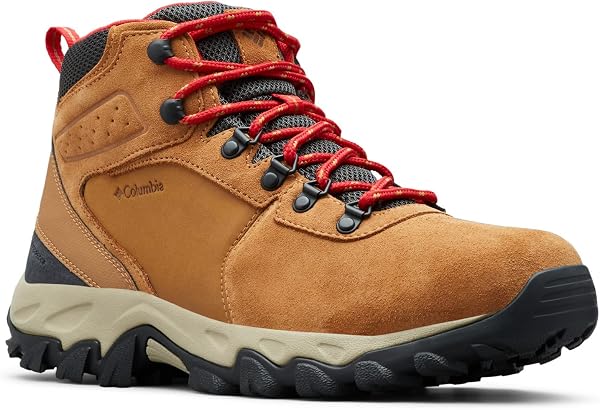
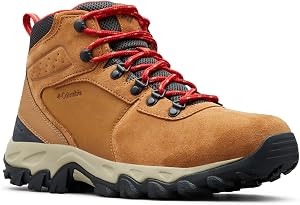
The Columbia Men's Newton Ridge Plus II Waterproof has earned its reputation as a staple trail boot by pairing a classic full-grain leather exterior with a forgiving, athletic midsole. It is designed for three-to-four-season day hikers who want the scuff resistance and structured support of real full-grain leather around the lower foot without sacrificing step-in comfort or spending triple-digit prices.
We may earn a commission when you buy through this link, at no additional cost to you.
To solve the common problem of full-grain leather boots feeling overly clammy, Columbia constructs the main shell as a waterproof leather-and-mesh bootie and installs a durable mesh tongue down the center. This lets excess heat escape through the top of your foot where sweat glands are active while the waterproof full-grain leather sidewalls deflect mud puddles, wet brush, and light snowdrifts.
Traction is a major strength thanks to the Omni-Grip rubber outsole, which incorporates a specialized dual-zone winter tread pattern. Unlike summer-only soles that turn slick when frost hits the trail, this tread geometry is engineered to maintain solid purchase on packed snow, slush, and wet forest dirt alike. Above the sole, a lightweight midsole cushions hard impacts and rebounds smoothly from heel strike to toe-off.
Many hikers do not want to buy separate boots for summer trails and cold shoulder-season walks. The dual-zone winter tread pattern on the Omni-Grip outsole bridges that gap by spacing outer lugs to shed mud while using finer central tread zones to grip slick, frosty ground.
Expect the full-grain leather panels to feel slightly firmer during your first couple of short walks compared to all-suede or all-mesh models, though they quickly soften to match your foot shape. Hikers seeking a handsome, resilient leather boot that handles muddy spring thaws and crisp autumn or winter trails with ease will find the Newton Ridge Plus II a reliable companion.
Deep-water forders who need a solid leather tongue all the way to the top eyelet.
We may earn a commission when you buy through this link, at no additional cost to you.
The Columbia Women's Newton Ridge Plus Waterproof Amped takes the classic mountaineering heritage of the Newton Ridge line and upgrades it with targeted durability reinforcements and a women-specific fit profile. It is built for female hikers who want reliable ankle security, seam-sealed weather protection, and standout styling for three-season day hikes and national park adventures.
We may earn a commission when you buy through this link, at no additional cost to you.
A common failure point on lightweight hiking boots is premature wear at the very front of the toe box and back of the heel counter where rocks constantly scrape the upper. Columbia counters this on the Amped edition by adding reinforced toe and heel barriers along with an extended outsole toe overwrap. Combined with the supportive leather and suede upper and seam-sealed waterproofing, the boot holds up admirably against rocky trail steps and wet creekside paths.
Underneath, Columbia’s Techlite midsole provides long-lasting cushioning and high energy return without weighing down your stride. That responsive foam is paired with a non-marking Omni-Grip traction rubber outsole engineered to grip across loose dirt, wet roots, and dry stone. Metal lacing eyelets and top speed hooks allow precise adjustment around narrower heels and insteps so your foot stays centered on uneven grades.
Every time you step up a rocky staircase on the trail, the front tip of your boot scrapes against stone. By extending the rubber outsole wrap higher over the toe barrier, the Amped model protects the seam-sealed leather stitching from fraying and cushions your toes against accidental impacts.
While the rich suede and leather exterior gives the boot an upscale mountain aesthetic, suede naturally shows trail dust and dried mud spots until brushed clean. For women looking for a supportive, seam-sealed mid-cut hiker that blends reinforced toe protection with lightweight underfoot bounce, the Newton Ridge Plus Waterproof Amped is a standout choice.
Men’s sizing shoppers or hikers seeking an ultra-minimalist low-cut trail shoe.
We may earn a commission when you buy through this link, at no additional cost to you.
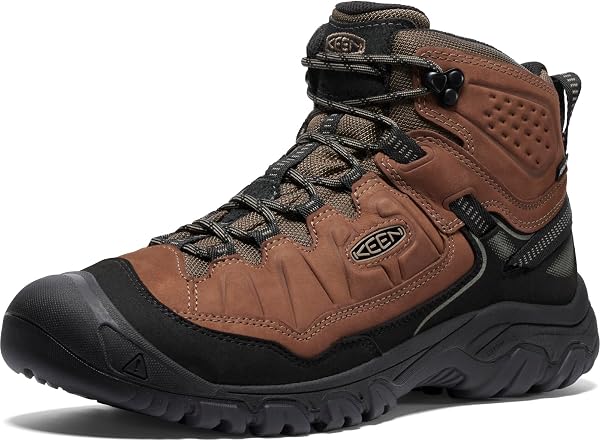
Cramped toes and delaminating soles are two of the most frustrating issues in hiking footwear, and the KEEN Men's Targhee 4 Mid Waterproof is engineered specifically to eliminate both. Built around KEEN's signature Original Fit last, this boot provides generous horizontal space across the forefoot so your toes can spread out naturally when climbing or when your feet swell during the afternoon miles.
We may earn a commission when you buy through this link, at no additional cost to you.
To maximize structural longevity, the Targhee 4 utilizes direct-attach construction, bonding the upper and midsole together mechanically rather than relying solely on standard contact glue that can dry out and separate over time. Underfoot, a removable Luftcell footbed cradles the natural contours of your arch, while an internal bruise plate sits between your foot and the ground to deflect the upward jab of sharp, uneven stones.
Traction and weather defense are equally robust. The KEEN.DRY waterproof breathable membrane keeps puddle water out while venting vapor through the breathable mesh lining, and the KEEN.ALL-TERRAIN rubber outsole bites firmly into muddy ruts and rocky slabs. Up front, KEEN’s iconic high-abrasion rubber toe guard wraps solidly over the forefoot, complemented by 100% recycled PET laces and a plushly padded collar and tongue.
Traditional cemented boots use adhesive layers that can weaken after repeated cycles of soaking mud and closet drying. KEEN’s direct-attach method fuses the cushioning compound directly to the upper without relying on vulnerable glue seams, preserving both bounce and structural bond over the life of the boot.
Hikers with particularly slender, low-volume feet may find the spacious toe box wider than necessary unless paired with thicker trail socks. For anyone who values room for their toes to breathe, an underfoot bruise plate for rocky paths, and direct-attach durability built to last season after season, the Targhee 4 Mid is one of the smartest investments on the trail.
Hikers with narrow feet who prefer a tight, precision-climbing forefoot fit.
We may earn a commission when you buy through this link, at no additional cost to you.
The Columbia Men's Newton Ridge Plus II Suede Waterproof captures our Best Value badge by combining the dependable trail mechanics of the Newton Ridge platform with a supple suede-and-leather upper that requires almost zero break-in time. While smooth full-grain leather can feel stiff across the forefoot flexing creases during your first few miles, waterproof suede bends softly with your stride right out of the box.
We may earn a commission when you buy through this link, at no additional cost to you.
Weather protection is reinforced through a full seam-sealed construction that prevents water from wicking through stitch holes when you hike through wet grass, rain showers, or muddy trail bottoms. Sturdy metal eyelets and top speed hooks anchor the lace-up closure, allowing you to dial in firm heel retention without worrying about plastic lace loops snapping in cold weather.
Beneath the foot, Columbia’s signature lightweight midsole absorbs trail chatter and provides high energy return to keep your legs fresh over multi-hour excursions. That cushioning sits atop the multi-terrain Omni-Grip rubber outsole, which features a dual-zone winter tread pattern engineered to maintain traction across dirt, wet rock, and icy winter patches alike.
Both versions of the Newton Ridge Plus II share the same cushioned midsole and Omni-Grip outsole, so your choice comes down to upper feel. Pick this Suede edition if you prioritize softer initial flex and textured mountain styling; pick the smooth full-grain version if you regularly hike in deep mud that you want to wipe off quickly with a wet rag.
The main trade-off of choosing suede over smooth full-grain leather is cosmetic maintenance: thick mud can mat the suede nap if left unbrushed, so using a simple suede brush after messy trips helps keep the boots looking sharp. For shoppers who want proven seam-sealed waterproofing, four-season traction, and plush step-in comfort at a highly accessible price point, this suede edition is tough to beat.
Hikers who want a glossy, smooth leather boot that never needs brushing after muddy treks.
We may earn a commission when you buy through this link, at no additional cost to you.
Matching a hiking boot to your terrain, foot shape, and typical pack weight prevents blisters and premature wear. Focus on the seven core construction factors below before making your decision.
The upper material of a hiking boot dictates how quickly it breaks in, how well it resists sharp rocks, and how effectively it breathes during warm climbs. Full-grain leather models—such as the Timberland White Ledge Mid and the smooth leather Columbia Newton Ridge Plus II—offer excellent natural water resistance and abrasion strength, and they wipe clean easily after muddy hikes. However, solid leather panels are denser and less permeable to air, meaning they retain more foot warmth and can take a few short walks to soften along your forefoot flex points.
Split-grain suede and hybrid leather-and-mesh uppers—found on boots like the Merrell Moab 3 Mid, Columbia Transverse Hike, and Columbia Newton Ridge Plus II Suede—reduce weight and bend much more easily right out of the box. Adding mesh windows over the instep and sides allows internal moisture vapor to escape faster during summer hikes. To counter the softer nature of suede on rocky trails, premium boots like the Danner Panorama 6-Inch add a PU-coated leather rand around the lower base, while the KEEN Targhee 4 uses a thick rubber toe bumper.
If you mostly hike in warm weather or want zero break-in stiffness, choose a suede-and-mesh hybrid upper. If you frequently walk through wet brush, muddy ruts, or thorny undergrowth and want easy wipe-down maintenance, opt for full-grain leather or a boot with a protective lower rand.
True trail waterproofing relies on more than just a surface spray; it requires an internal breathable membrane—such as Columbia’s Omni-Tech, KEEN.DRY, Danner Dry, or SL-TEX—combined with seam-sealed construction. These microscopic membranes feature pores small enough to block liquid water droplets from rain, puddles, and wet snow while remaining large enough for warm sweat vapor to pass outward so your socks stay dry from the inside out.
Equally critical is how the tongue connects to the body of the boot. A standard detached tongue leaves gaps along the laces where water and pebbles can pour in the moment you step into a shallow stream or deep mud rut. Look for boots described as having a fully gusseted, bellows, or closed-cell tongue—like the Merrell Moab 3 Mid, Timberland White Ledge, or NORTIV 8—which stitches the tongue sides directly to the upper shell to raise the flood line up toward your ankle.
Prioritize a seam-sealed membrane with a gusseted tongue if your trails involve morning dew, creek crossings, mud, or shoulder-season snow. Always pair waterproof boots with moisture-wicking merino wool or synthetic hiking socks rather than cotton, which traps sweat against the skin and hinders membrane breathability.
The midsole is the structural engine between your foot and the ground, responsible for absorbing shock and preventing trail rocks from bruising your soles. Most day-hiking boots use compression-molded EVA foam—including Columbia’s Techlite or Danner’s Plyolite—because it is lightweight, energetic, and cushy from the very first step. Some boots also upgrade the removable insole with open-cell triple-density OrthoLite foam, memory foam, or Merrell Air Cushion heel pods to reduce joint stress during long descents.
When trails turn rocky and uneven, soft foam alone is not enough. Stepping repeatedly on pointed roots and angled stones causes a flexible sole to bend under your arch, leading to severe foot fatigue. Boots engineered for rougher terrain solve this by adding a molded nylon arch shank (like the Merrell Moab 3 Mid) for torsional rigidity or an underfoot bruise plate (like the KEEN Targhee 4 Mid) to deflect sharp stone impacts.
For flat park trails, packed dirt paths, and light daypacks, a flexible EVA midsole with a cushioned insole offers the lightest, most comfortable ride. For rocky mountain trails, uneven switchbacks, or heavier loads, choose a boot equipped with an internal nylon shank or underfoot bruise plate.
Your outsole is your only point of contact with slick granite, wet tree roots, and loose gravel descents. High-performance outsoles—such as the Vibram TC5+ rubber on the Merrell Moab 3, the wrap-around Panorama lugged sole on the Danner Panorama, KEEN.ALL-TERRAIN rubber, and Columbia’s Omni-Grip—blend durability with surface friction so the lugs do not shear off on sharp rock while remaining tacky enough to hold on damp stone.
Pay attention to lug depth, spacing, and seasonal tread design. Deep, widely spaced lugs bite aggressively into soft dirt and shed clumping mud easily as the sole flexes. Meanwhile, boots like the Columbia Newton Ridge Plus II incorporate a dual-zone winter tread pattern that mixes coarse perimeter lugs for dirt with finer sipping and winter-ready tread blocks in the center to maintain footing on frost, packed snow, and icy patches.
Match the outsole to your primary surfaces: choose deep, wide lugs with wrap-around edges for steep, loose backcountry dirt and rock, or select a blended dual-zone multi-terrain tread if you want one boot that transitions smoothly from autumn trails to snowy winter walks.
Hiking boots in this category generally come in two height profiles: standard mid-cut ankle boots (typically around 4.5 to 5 inches high) and taller 6-inch boots. Mid-cut models—which make up the majority of day hikers like the KEEN Targhee 4, Merrell Moab 3, and Columbia Transverse Hike—cover the ankle bone to guard against rock scrapes and debris while leaving your Achilles tendon free to flex naturally on steep climbs.
Taller 6-inch boots—represented by the Danner Panorama 6-Inch Waterproof—extend higher up the lower calf and include an extra set of top lacing hooks. This extra height provides firmer lateral leverage if your ankle starts to roll on off-camber scree slopes, and it raises the top opening higher above deep mud, snowdrifts, and brush.
Most three-season trail hikers will feel faster and more agile in a padded mid-cut boot. Step up to a 6-inch shaft if you have a history of ankle sprains, carry a heavier pack off-trail, or frequently hike through deeper mud and brush.
During a multi-hour hike, increased blood flow and downward pressure cause your feet to swell both in length and width. If a boot has a narrow, tapered forefoot, your outer toes will rub against the sidewall and develop painful blisters. Hikers with wider forefeet or bunions benefit greatly from anatomical lasts like KEEN’s Original Fit on the Targhee 4, which intentionally widens the toe box while keeping the heel cup snug.
At the front of the toe box, check how the boot defends against accidental impacts. A molded rubber toe cap or extended outsole overwrap—featured on the KEEN Targhee 4, Merrell Moab 3, Columbia Women’s Newton Ridge Amped, and SL-TEX Trekker—absorbs the shock of kicking a hidden root on the trail and stops the upper leather from peeling back from the sole.
Finally, inspect the lacing hardware. Rustproof metal speed hooks at the top of the collar (found on the Timberland White Ledge, Danner Panorama, and Columbia models) let you unlace quickly at camp and allow independent tension adjustment between your forefoot and ankle.
Before taking new hiking boots on an all-day trek, wear them around the house and on a few short local walks with the exact merino wool or synthetic hiking socks you plan to use on the trail. When lacing up, tap your heel firmly against the ground to seat it into the back of the heel pocket, keep tension moderate across the flat of your forefoot so blood circulation remains unrestricted, and use a firm cross-over lock at the ankle hooks to prevent your toes from sliding forward into the front cap on steep descents.
After every muddy or dusty hike, take two minutes to clean the exterior before putting your boots away. Pull out the removable insoles to air dry separately, knock dried mud clumps off the outsole lugs, and use a soft nylon brush with lukewarm water to clear grit out of leather seams, suede nap, and mesh panels. Leaving caked mud on leather or suede draws moisture out of the hide as it dries, causing the material to stiffen and crack prematurely along the forefoot crease.
Never place wet waterproof boots directly next to a campfire, radiator, or high-heat boot dryer, as intense heat can warp EVA midsoles, shrink leather panels, and weaken the adhesive bonds holding the outsole and toe bumper in place. Instead, stuff crumpled newspaper into the toe boxes to draw out internal dampness at room temperature, and store your boots unbuckled in a cool, ventilated closet out of direct sunlight.
Hiking boots should generally fit about a half-size larger—or offer roughly a thumb's width of extra space in front of your longest toe—when you are standing up wearing your trail socks. Your feet naturally swell during long miles, and extra length prevents your toes from slamming into the front toe cap when walking downhill. At the same time, the midfoot and heel cup should feel snug enough that your heel does not lift and rub when climbing.
Any waterproof membrane adds an extra barrier compared to open, non-waterproof mesh, which slightly slows heat transfer on hot days. However, boots that combine breathable membranes with mesh upper panels and ventilated tongues—such as the Merrell Moab 3 Mid or Columbia Transverse Hike—allow water vapor to escape much more effectively than solid all-leather boots. Wearing lightweight merino wool socks also prevents moisture from pooling against your skin.
When you walk over uneven ground carrying a pack, your forefoot naturally splays outward to balance your body weight. A generous toe box gives your toes room to spread without pinching nerves or rubbing neighboring toes together, which is one of the primary causes of trail blisters. It is especially helpful for hikers with wide feet, bunions, or feet that swell significantly in warm weather.
A nylon arch shank gives the middle of the boot torsional stiffness so the sole does not twist or fold in half when you step on the edge of a rock or tree root. An underfoot bruise plate acts as a protective shield embedded in the sole that disperses the upward point pressure of sharp stones. Both features drastically reduce arch fatigue and foot soreness on rocky mountain trails.
Neither is universally better; each serves a different trail priority. Full-grain leather is tougher against sharp brush, resists water saturation longer, and wipes clean of mud in seconds, making it great for wet, messy conditions. Suede and mesh hybrids weigh less, breathe better in warm weather, and flex comfortably right out of the box with minimal break-in time.
First, ensure your heel is kicked all the way back into the heel cup before tightening the laces across your instep. Next, use a surgeon's knot—wrapping the lace around itself twice instead of once—right at the ankle flex point before hooking the top speed hooks, which locks your heel down without over-tightening the toe box. Replacing a flat factory insole with a contoured footbed that has a deeper heel cup can also lock your rearfoot in place.
Yes, for active winter day hikes on packed snow trails, a waterproof boot with a winter-ready tread—like the dual-zone Omni-Grip sole on the Columbia Newton Ridge Plus II—works very well when paired with heavy wool winter hiking socks. Because you are moving continuously, your feet generate plenty of heat without needing bulky insulated snow boots. Just add ankle gaiters if the snow is deeper than the boot collar.
Depending on your body weight and trail roughness, EVA foam midsoles generally provide strong shock absorption for 500 to 800 trail miles before the microscopic air cells compress permanently. Direct-attach polyurethane constructions, like the one used on the KEEN Targhee 4, tend to retain their rebound and structural bond even longer. Keeping grit washed out of the interior lining also stops sand from abrading the waterproof membrane.
For most trail hikers, the Merrell Men's Moab 3 Mid Waterproof earns top honors as our Editor's Choice by combining a high-traction Vibram TC5+ outsole, a stabilizing nylon arch shank, heel air cushioning, and a debris-blocking bellows tongue in a chassis that feels comfortable from day one. It delivers the structural support needed for rocky all-day hikes without the stiffness of traditional mountaineering footwear.
If your trails demand higher ankle stability and tougher lower-boot armor against sharp scree, the Danner Panorama 6-Inch Waterproof is well worth stepping up to for its PU-coated leather rand and triple-density OrthoLite footbed. Hikers who want maximum toe room and long-term sole durability should look closely at the KEEN Targhee 4 Mid, while budget-focused shoppers will find outstanding four-season grip and immediate comfort in the Columbia Newton Ridge Plus II Suede and Columbia Transverse Hike.
Ultimately, the right boot is the one that matches your typical trail surface and foot anatomy. Weigh whether you need lightweight mesh breathability for summer walks, full-grain leather for muddy woodland chores, or stiffer underfoot shanks for rocky climbs, and you will step onto the trail with dry, well-supported feet.