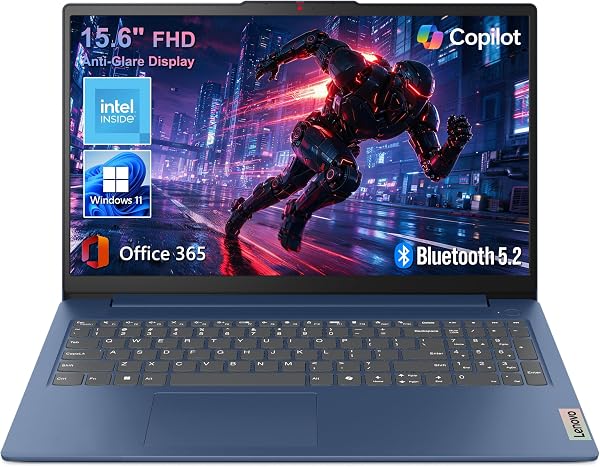
Lenovo 15.6" Essential
9.0Editor scoreFull HD 1080p display
8GB LPDDR5 system memory
128GB UFS 2.2 storage
3.42 pound lightweight body
Find the right heated socks for 2026. We compare 10 standout options by build quality, useful features, owner feedback, value, and everyday trade-offs.

Finding the right everyday laptops for 2026 means looking past similar outer shells to compare what genuinely shapes daily speed and comfort. We evaluate 10 standout budget notebooks by processor efficiency, memory capacity, UFS versus SSD storage, display resolution, webcam quality, port versatility, owner feedback, and bundled Microsoft 365 value.
Entry-level Windows notebooks look nearly identical at a glance, yet small hardware differences dramatically change real-world responsiveness. Some models pair 4GB of memory and 768p screens with long battery runtimes and Office subscriptions, while others prioritize sharp Full HD IPS panels, 8GB to 12GB of RAM, or roomy NVMe drives.
Before choosing, match screen size and internal specs to how you actually work. Commuters and students benefit from sub-3.5-pound designs and USB-C charging, whereas home desktops thrive on 15.6-inch or 17.3-inch displays and dedicated number pads. Use our side-by-side specs and reviews below to pinpoint the smartest fit.
We compared 10 everyday laptops using the details that genuinely guide a smart purchase: CPU architecture, RAM headroom, UFS flash versus NVMe SSD storage, Full HD IPS versus 768p screen clarity, battery runtime, USB-C capabilities, webcam privacy shutters, bundled Microsoft 365 value, and owner feedback. Our notes focus on practical trade-offs, such as weighing major-brand support and battery longevity against extra memory or sharper displays, so each pick matches real school, travel, and home-office routines.


Compare key features, scores, and current prices side by side. A shorter feature list means fewer details were available, not necessarily fewer capabilities.




Shopping below three hundred dollars almost always forces an uncomfortable compromise between cramped 4GB memory or a washed-out 768p display. This 14-inch notebook breaks both conventions at once, combining 12GB of RAM, a 128GB SSD, and a true 1920×1080 Full HD IPS anti-glare panel inside a 2.9-pound shell that slips effortlessly into commuter totes and student backpacks.
We may earn a commission when you buy through this link, at no additional cost to you.
Day-to-day responsiveness benefits from the pairing of Intel’s 7W Pentium Gold 6500Y processor—capable of turbo boosting up to 3.4GHz when launching apps or loading complex web pages—with triple the RAM of typical entry-level competitors. Having 12GB of memory overhead means online classroom portals, cloud spreadsheets, and streaming video coexist smoothly without grinding to a crawl, while the IPS screen preserves wide viewing angles and sharp font edges in compact 14-inch proportions.
Despite measuring 0.8 inches thin, the chassis avoids the dongle trap by fitting USB 3.2, USB-C, HDMI for external monitors or projectors, a TF card slot for quick file expansion, and a 3.5mm headphone jack. A built-in sliding webcam privacy shutter lets you physically block the lens after meetings, backed by one-year customer support.
At 2.9 pounds, this is the lightest notebook in our entire comparison, making it effortless to carry all day. To get the full 5-hour runtime between outlets during lectures or flights, drop screen brightness to around 60 percent indoors and enable Windows 11 Energy Saver mode whenever you unplug from wall power.
The main real-world trade-off is battery endurance: the 5000mAh internal pack is rated for up to 5 hours of use, roughly half the unplugged runtime of HP’s 14-inch N150 notebooks, and you will supply your own office suite such as free Google Docs, LibreOffice, or an existing Microsoft account. Provided you can plug in after a morning block of classes or coffee-shop work, no other sub-$300 laptop here delivers this blend of 12GB multitasking memory, 1080p IPS clarity, and sub-3-pound portability.
Travelers needing 10-plus hours away from wall outlets or buyers who strictly prefer household-name PC brands with bundled Office 365.
We may earn a commission when you buy through this link, at no additional cost to you.
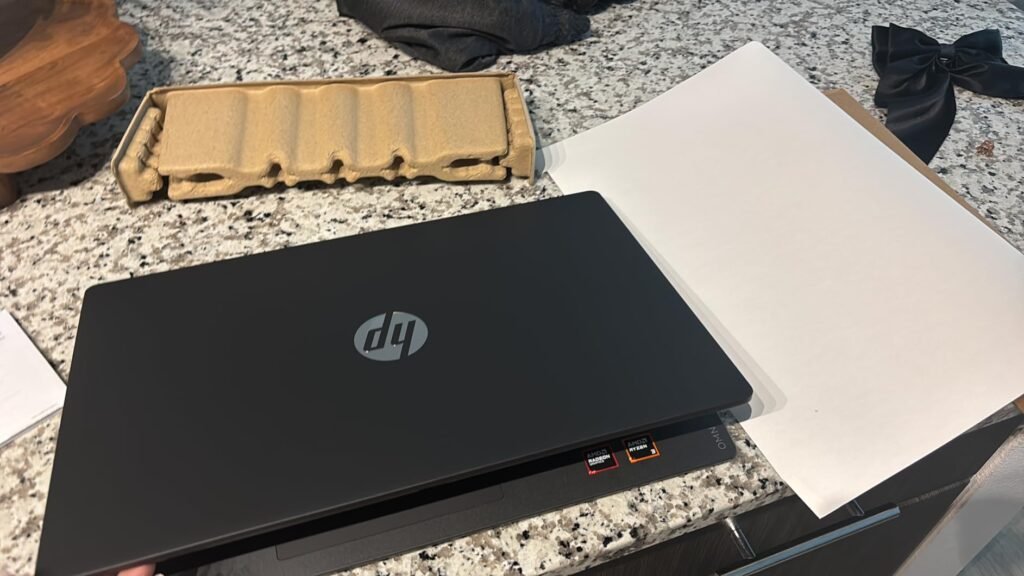
Students, hybrid employees, and frequent commuters often struggle to find a full 15.6-inch notebook that does not feel fragile or heavy inside a daily backpack. Starting at just 3.42 pounds and 0.70 inches thin in Abyss Blue, the Lenovo 15.6-inch FHD Essential solves that portability challenge while passing 21 MIL-STD-810H durability items designed to shrug off everyday bumps between home, campus, and office desks.
We may earn a commission when you buy through this link, at no additional cost to you.
Inside, pairing an Intel processor with 8GB of fast LPDDR5 memory and 128GB of UFS 2.2 flash storage keeps Windows 11 Home noticeably smoother than entry-level 4GB machines when you keep research tabs, email, and video meetings open simultaneously. Viewing clarity gets an equally welcome boost from the 1920×1080 Full HD anti-glare display, which pairs an 88 percent active-area ratio with TÜV Rheinland Low Blue Light software so spreadsheets and side-by-side documents look crisp during long study blocks.
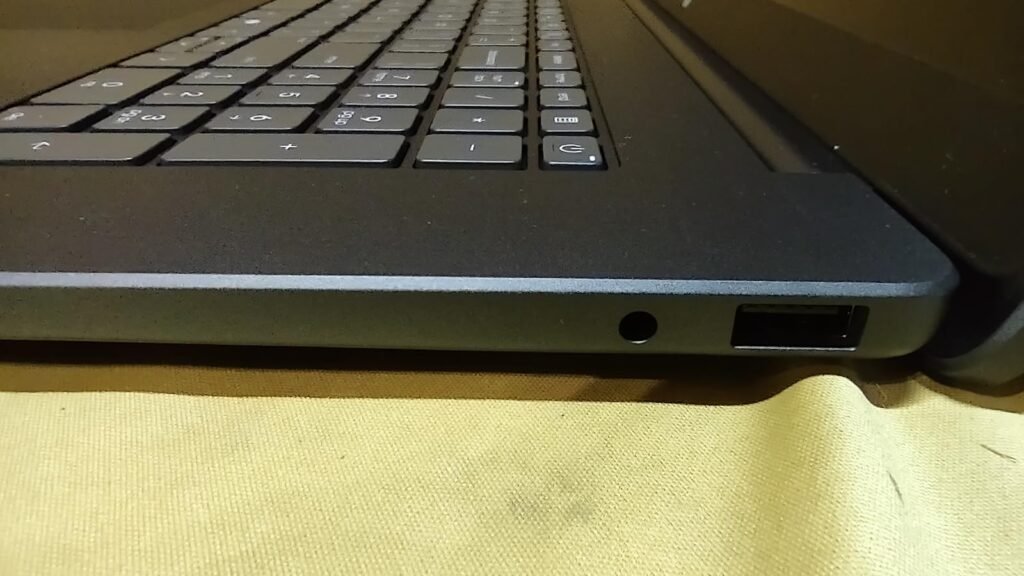
Port capability is a quiet standout at this price tier. Unlike many budget laptops whose USB-C port only transfers files, Lenovo equips this USB-C port with both Power Delivery and DisplayPort output, alongside two USB-A ports, HDMI 1.4, a full SD card reader, Wi-Fi 6, and Bluetooth 5.2. You also get a 65W charger, Dolby Audio speakers, dual microphones, a 720p webcam with a physical sliding privacy shutter, a dedicated Copilot key, and Microsoft 365 Personal ready for coursework or office tasks.
Many affordable laptops advertise a USB-C connector that handles 5Gbps data transfers and nothing else. Because Lenovo wired both Power Delivery and DisplayPort video into this port, you can plug a single USB-C cable from a compatible desktop monitor or hub straight into the laptop to charge the battery, drive an external screen, and connect a mouse and keyboard simultaneously.
The primary limitation to plan around is the 128GB internal storage ceiling, which works fine for cloud workflows and Office files but fills quickly if you store raw video or large game installs locally—making that built-in SD card slot especially handy. Buyers who stay mostly at a desk will get four times the local storage from the 17.3-inch HP OmniBook 3, yet for commuters wanting rugged 15.6-inch portability and true single-cable USB-C docking, Lenovo hits an impressive mark.
Users storing large local photo or video libraries without cloud or SD card offloading, or outdoor workers needing bright sunlight visibility.
We may earn a commission when you buy through this link, at no additional cost to you.
School-focused shoppers and household buyers who prioritize long unplugged study sessions, clear virtual-class audio, and a bundled Office subscription will find a lot to like in the HP 15.6-inch Laptop 2027 Edition. Finished in clean matte Natural Silver across both the lid and keyboard deck, it steps up to Intel's quad-core N250 processor while keeping total cost comfortably below four hundred dollars.
We may earn a commission when you buy through this link, at no additional cost to you.
Compared against the more common N150 and older dual-core Celeron chips in budget notebooks, the 4-core, 4-thread Intel N250 reaches up to 3.8GHz with 6MB of L3 cache, helping web pages render briskly alongside 128GB of UFS flash storage. Keep in mind that HP pairs that nimble chip with 4GB of LPDDR5 memory and ships Windows 11 Home in S mode, a combination best suited to focused single-app coursework, browser portals, and the included 1-year Microsoft 365 Personal suite rather than heavy multitasking. Its 15.6-inch anti-glare panel runs at 1366×768 HD resolution and 250 nits, trading pixel sharpness for power savings that help stretch video playback battery life up to 10 hours and 45 minutes.
Remote-learning hardware is thoughtfully executed. An HP True Vision 720p camera with a physical privacy shutter works alongside dual-array microphones, AI Noise reduction for filtering background household chatter, a dedicated microphone mute key, and a Copilot shortcut button. Wireless speed stays current via 2×2 Wi-Fi 6 and Bluetooth 5.4, complemented by HDMI 1.4b, two 5Gbps USB-A ports, a 5Gbps data-only USB-C port, and a 45W smart-pin AC adapter.
Windows 11 Home in S mode only installs verified apps from the Microsoft Store and defaults to Microsoft Edge, blocking stray background installers that often bog down 4GB laptops. If a school class eventually requires an outside desktop program like Zoom or Chrome, you can switch out of S mode permanently at no charge through the Microsoft Store settings in under two minutes.
If crisp 1080p text or keeping fifteen research tabs open at once matters most, spending moderately more on an 8GB Full HD model like the Lenovo Essential or HP OmniBook 3 is well worth the jump. For cloud-first students who value nearly eleven hours of battery stamina, strong call privacy controls, and ready-to-go Microsoft 365 software, this N250 configuration is a dependable daily companion.
Heavy multitaskers needing 8GB or more RAM, or detail-oriented readers who want 1080p sharpness on a 15.6-inch screen.
We may earn a commission when you buy through this link, at no additional cost to you.
Running out of memory and disk space are the two fastest ways an entry-level notebook starts feeling sluggish after six months. This 15.6-inch FHD laptop directly targets both bottlenecks for home-office and student users who keep numerous reference documents, PDFs, and web tabs open simultaneously, supplying 12GB of RAM alongside a 256GB solid-state drive that can expand up to 512GB.
We may earn a commission when you buy through this link, at no additional cost to you.
Visual quality is another bright spot thanks to a native 1920×1080 Full HD IPS widescreen framed by slim 5mm bezels, an anti-glare finish, and blue-light filtering for extended study or streaming sessions. Underneath, however, sits an important architectural contrast: the Intel Celeron 5205U is a 14nm dual-core, two-thread processor running at a fixed 1.9GHz base clock without turbo boost. While 12GB of RAM keeps open programs resident in memory without constant disk swapping, the modest dual-core chip favors steady office tasks, streaming, and writing rather than CPU-intensive workloads.
Everyday peripheral hookups are straightforward and plentiful. Three USB 3.0 ports let you attach a wired mouse, printer, and flash drive all at once while still leaving Type-C, full HDMI, a Micro TF slot, and a 3.5mm audio jack open. A 38Wh internal battery powers the system via a dedicated DC barrel charger, and standard Windows 11 comes pre-installed without S-mode restrictions alongside dual-band 2.4G/5G Wi-Fi and Bluetooth 4.2.
Think of RAM as desk surface area and the processor as how fast your hands move. Twelve gigabytes of RAM lets you spread dozens of browser tabs and Word files across the desk without constantly filing them away to storage, eliminating annoying tab refreshes—even though heavy web scripts or software updates will still pace themselves to the 1.9GHz dual-core Celeron clock speed.
Because its retail price sits higher than both the AMD Ryzen 3 HP OmniBook 3 (which includes 8GB RAM and a 512GB NVMe SSD) and the Intel Core 3 Dell 15, value-conscious shoppers should check current pricing carefully before ordering. Choose this machine if having 12GB of memory inside a 15.6-inch 1080p IPS frame is non-negotiable for your tab-heavy routine, or step over to our 14-inch Pentium Gold pick to get 12GB of RAM for less than half the outlay.
Shoppers seeking maximum CPU speed per dollar or modern Wi-Fi 6 and Bluetooth 5.4 wireless radios.
We may earn a commission when you buy through this link, at no additional cost to you.
Most slim budget notebooks solder flash storage permanently to the motherboard, leaving you stuck at 128GB forever. Designed for students, collaborative study groups, and home users who want flexible physical ergonomics alongside easy storage growth, this 15.6-inch laptop pairs a 128GB M.2 SSD with support for up to a 2TB SSD upgrade and up to a 1TB TF memory card.
We may earn a commission when you buy through this link, at no additional cost to you.
Core computing centers on a quad-core Intel Celeron J4105 processor and 6GB of RAM—a welcome breathing-room bump over strict 4GB entry models—driving a sharp 15.6-inch 1920×1080 Full HD narrow-bezel display. Software readiness is tailored for immediate productivity out of the box: a 1-year Office 365 subscription comes pre-installed alongside a built-in five-mode AI assistant organized into Chat, Write, Read, Meet, and Draw tools for summarizing notes or drafting emails.
Physical flexibility sets the chassis apart during group projects or kitchen-table tutoring. A 180-degree hinge allows the screen to fold completely flat against the desk so classmates or colleagues sitting across from you can read charts comfortably, and it reduces hinge strain if the lid gets bumped open. Connectivity covers Wi-Fi 5, Bluetooth 4.2, USB 3.2, Type-C, and a Mini-HDMI video output.
If you plan to hook this laptop up to a classroom projector, living-room TV, or home-office monitor, remember that standard HDMI cables will not plug directly into a Mini-HDMI jack. Picking up a compact Mini-HDMI-to-HDMI adapter for a few dollars at checkout keeps your laptop bag ready for any external display.
Keep two practical hardware caveats in mind when comparing against similarly priced machines in the low-$400 bracket. Both the Celeron J4105 chip and the Wi-Fi 5 / Bluetooth 4.2 wireless card trail newer Ryzen 3, Intel N-series, and Core 3 architectures in raw efficiency, and connecting an external monitor requires a Mini-HDMI cord or inexpensive adapter. Choose this model specifically when its 180-degree lay-flat screen, bundled Office 365 license, and 2TB M.2 upgrade ceiling fit your long-term storage plans.
Users wanting modern Wi-Fi 6 speeds or maximum processor horsepower in the four-hundred-dollar price range.
We may earn a commission when you buy through this link, at no additional cost to you.
Travelers, campus commuters, and remote workers who prioritize leaving the charger at home without carrying a dull gray plastic slab get a refreshing option in this 14-inch HP 2027 Everyday Laptop. Weighing 3.24 pounds and measuring 0.71 inches thin, its Honey Lavender matte exterior and brushed natural-silver keyboard deck house a battery rated for up to 11 hours of video playback alongside a 1-year Microsoft 365 Personal subscription.
We may earn a commission when you buy through this link, at no additional cost to you.
Everyday tasks run on Intel’s quad-core N150 processor (boosting up to 3.6GHz with 6MB L3 cache), paired with 4GB of high-bandwidth LPDDR5-4800 memory and snappy 128GB UFS flash storage on full Windows 11 Home with a dedicated Copilot AI key. While 4GB of RAM and the 14-inch HD micro-edge anti-glare screen (250 nits, 62.5% sRGB) clearly target cloud documents, email, and video calls rather than photo editing or heavy tab hoarding, those frugal components help stretch unplugged runtime across a full school or travel schedule.
Connectivity punches well above typical $300 notebooks. Alongside fast 2×2 Wi-Fi 6, Bluetooth 5.4, two 5Gbps USB-A ports, HDMI 1.4b, and a multi-format SD card reader, HP includes a 10Gbps USB-C port with DisplayPort 1.2 support—giving you dual external display capability at a home desk. Calls also sound polished thanks to an HP True Vision 720p camera with temporal noise reduction and dual-array microphones backed by AI Noise Reduction.
Even though the built-in 14-inch travel panel uses standard HD resolution to conserve battery on the road, having both HDMI 1.4b and DisplayPort 1.2 over the 10Gbps USB-C port means you are not stuck with low resolution at home. Plugging into a 24-inch or 27-inch Full HD desk monitor instantly transforms this lightweight traveler into a spacious home workstation.
Buyers who stay near power outlets and want sharper 1080p visuals with triple the memory can save money on the 2.9-pound 14-inch 12GB Pentium Gold laptop. However, if you want major-brand build polish, modern Wi-Fi 6, dual-display video outputs, bundled Word and Excel, and true 11-hour travel endurance around three hundred dollars, this Honey Lavender HP hits a very practical sweet spot.
Power users running memory-hungry desktop apps or creators needing accurate 1080p IPS color on the built-in display.
We may earn a commission when you buy through this link, at no additional cost to you.
Shoppers hunting strictly below $250 for a secondary kitchen-counter PC, a child's first homework computer, or a straightforward household bill-paying machine often hesitate to buy unfamiliar off-brand electronics. The Jet Black HP 14-dq6199nr delivers recognizable HP support and an included 1-year Microsoft 365 Personal subscription at an entry-level price that leaves very little net cost assigned to the hardware itself.
We may earn a commission when you buy through this link, at no additional cost to you.
Inside, HP equips the 14-dq6199nr with Intel’s current N150 processor, integrated Intel Graphics, 4GB of RAM, and 128GB of Universal Flash Storage running Windows 11 Home. UFS storage is a meaningful step up from the sluggish 64GB eMMC chips that used to plague $250 laptops, giving you noticeably quicker boot times and Windows updates. Still, its modest 3.8-star owner rating reflects a classic mismatch of expectations: buyers who treat a 4GB machine like an all-purpose gaming or 25-tab multitasking rig quickly hit memory limits, whereas users sticking to Word, Excel, email, and streaming stay well within its comfort zone.
Everyday usability touches keep remote check-ins simple. Slim micro-edge bezels frame the 14-inch HD display, an HP True Vision HD camera pairs with dual noise-reducing microphones for clear low-light video chats, and a dedicated Copilot key launches built-in AI assistance with one press. When the battery runs low between rooms, HP Fast Charge restores 0 to 50 percent capacity in approximately 45 minutes.
A standalone 1-year Microsoft 365 Personal subscription—covering desktop Word, Excel, PowerPoint, and cloud storage—represents a substantial chunk of a $250 laptop budget. If you were already planning to buy or renew an individual Office plan this year, activating the included subscription effectively drops your out-of-pocket cost for the laptop itself below two hundred dollars.
Be honest about your workload before choosing between this and similarly priced rivals. If you do not need the HP nameplate or bundled Microsoft 365 license, spending ten dollars more on the 14-inch 12GB Pentium Gold laptop gets you triple the memory and a much sharper 1080p IPS display. Choose the HP 14-dq6199nr when brand familiarity, fast top-up charging, and an included year of Microsoft 365 for light single-tasking are your top priorities.
Multitaskers keeping more than half a dozen heavy browser tabs open, or buyers expecting Full HD 1080p screen sharpness.
We may earn a commission when you buy through this link, at no additional cost to you.
For budget shoppers who want the lowest possible price without squinting at a small, washed-out 768p screen, the Unowo 15.6-inch FHD Laptop delivers standout visual value at just under $230. Where most ultra-cheap notebooks cut display quality first, this model centers the entire experience around a spacious 15.6-inch Full HD 1920×1080 IPS panel with narrow bezels and wide viewing angles—ideal for streaming movies, reading full-page textbooks, and attending online lectures.
We may earn a commission when you buy through this link, at no additional cost to you.
Acoustic comfort and modern charging are two unexpected bonuses at this entry tier. An internal fanless cooling design dissipates heat passively with zero moving parts, meaning the laptop runs in complete silence inside quiet libraries, lecture halls, or late-night bedrooms without ever developing high-pitched fan whine. Even better, Unowo includes a 45W Type-C Power Delivery adapter that handles both fast charging and high-speed data over a modern reversible USB-C port, eliminating proprietary barrel bricks.
Processing hardware is intentionally modest to hit this price point, pairing an Intel Celeron N4020 CPU with 4GB of LPDDR4 RAM, 128GB of internal storage, Dual-Band AC Wi-Fi, Bluetooth, an HD webcam, and Windows 11 Home. That lightweight silicon sips power and generates very little heat, handling web portals, cloud documents, email, and 1080p video playback reliably as long as you close unused background tabs.
Beyond eliminating distracting fan noise next to a sleeping partner or open microphone, a sealed fanless chassis never sucks dust, pet hair, or blanket lint into tiny internal heatsink fins. Just rest the laptop on hard, flat surfaces during longer video calls so natural airflow underneath the base keeps the Celeron N4020 cool and responsive.
Do not buy an N4020 and 4GB LPDDR4 system expecting to edit videos, run complex Excel macros, or juggle heavy desktop suites. Instead, treat the Unowo 15.6-inch laptop for what it excels at: an affordable, silent, USB-C-powered big-screen 1080p IPS terminal for writing, reading, and everyday streaming.
Users running heavy desktop software, multi-app office workflows, or anyone needing fast multi-core CPU performance.
We may earn a commission when you buy through this link, at no additional cost to you.
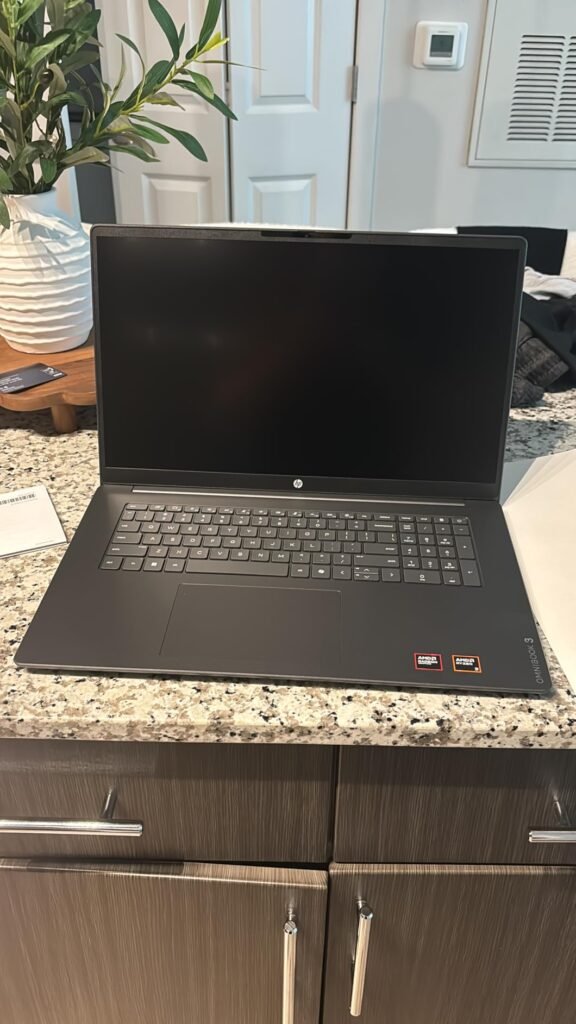
When you compare raw hardware value across every sub-$500 machine in this guide, the Mica Silver HP OmniBook 3 17-dp0199nr pulls decisively ahead as our overall Editor's Choice. Priced within ten dollars of basic 128GB 15.6-inch notebooks, it upgrades nearly every component that shapes daily satisfaction: a generous 17.3-inch Full HD IPS screen, modern AMD Ryzen 3 processing, 8GB of fast LPDDR5 RAM, and a full 512GB PCIe NVMe M.2 solid-state drive.
We may earn a commission when you buy through this link, at no additional cost to you.
That internal combination transforms everyday speed and longevity. Where 128GB UFS drives eventually feel cramped after a couple of years of Windows updates and family photo backups, a 512GB PCIe NVMe SSD delivers four times the room alongside substantially faster sustained read and write speeds. Meanwhile, the AMD Ryzen 3 30 processor and Radeon 610M graphics handle multi-tab productivity, crisp HDR video streaming, light photo touch-ups, and casual games without breaking a sweat across the 178-degree IPS panel.
Video conferencing and battery endurance also punch well above the budget norm. Rather than settling for a grainy 720p sensor, HP fits a sharp Full HD 1080p camera with HDR auto-switch to balance tricky window backlighting, paired with Advanced AI Noise Reduction featuring a Personal Mode that isolates only your voice during busy calls. Wi-Fi 6 and Bluetooth 5.4 keep wireless links fast, a Copilot key sits right on the deck, and the battery stretches up to 14 hours and 15 minutes with 45-minute HP Fast Charge recovery to 50 percent.
Windows 11 system files, hibernation reserves, and browser caches routinely claim 40GB to 50GB before you save a single personal document. Starting with a 512GB PCIe NVMe M.2 drive not only accelerates large app launches and file transfers compared to flash UFS storage, it also spares you from constantly juggling SD cards or cloud cleanups three years down the road.
Size is the sole meaningful reason to look elsewhere: a 17.3-inch notebook will not fit inside standard 15-inch backpack sleeves or tiny lecture-hall tablet arms. Frequent daily commuters should grab the 3.42-pound Lenovo 15.6-inch Essential instead, while anyone working primarily at home tables, dorm desks, or offices gets unmatched screen real estate, storage speed, and battery headroom here.
Daily commuters carrying small 14-inch or 15-inch bags, or frequent flyers working on cramped economy tray tables.
We may earn a commission when you buy through this link, at no additional cost to you.
Small-business owners, remote bookkeepers, accounting students, and administrative professionals rely on two things entry-level student laptops frequently skimp on: genuine Core-series CPU responsiveness and zero-downtime warranty backup. The Dell 15 addresses both needs directly, pairing Intel's mainstream Core 3 100U processor and 8GB of RAM with 1 Year of Dell Onsite Service on Windows 11 Home.
We may earn a commission when you buy through this link, at no additional cost to you.
Stepping up from Intel Celeron, Pentium Gold, or N150/N250 chips to the Core 3 100U delivers stronger single-core burst performance and multi-threaded headroom when recalculating large spreadsheets, exporting PDFs, or screen-sharing over Teams and Zoom simultaneously. Visual comfort stays steady across the 15.6-inch Full HD panel thanks to Dell ComfortView software, which trims harsh blue-light emissions during eight-hour workdays.
Ergonomic details cater directly to heavy data entry and typing. Opening the lid engages a lifted hinge that tilts the keyboard deck toward your wrists at a more natural typing slope while improving airflow underneath, and the roomy layout integrates a dedicated ten-key numeric pad plus an instant calculator hotkey. Express Charge support minimizes outlet tether time during lunch breaks, and if a covered hardware fault cannot be resolved remotely, Dell dispatches a technician to your home or office.
Standard budget laptop warranties require boxing up your computer and mailing it to a repair depot for one to three weeks if a fan, port, or motherboard fails—leaving remote employees or students stranded without a work machine. Having 1-Year Dell Onsite Service means covered hardware repairs happen right at your home or office desk after remote diagnostics.
Before clicking checkout, double-check the exact storage configuration selected on the store page to make sure local capacity matches your file volume, and remember that Microsoft 365 is not bundled for free. Shoppers prioritizing entertainment value and massive local storage will save money on the 17.3-inch HP OmniBook 3, whereas spreadsheet-heavy office users who cannot afford mail-in repair downtime will appreciate Dell’s Core 3 muscle and onsite warranty peace of mind.
Strict sub-$350 budget buyers or casual home users who prefer a larger 17-inch media screen for less money.
We may earn a commission when you buy through this link, at no additional cost to you.
Budget and midrange Windows 11 laptops often share similar price tags while hiding dramatic differences in processor capability, screen sharpness, memory longevity, and port wiring. Use the eight practical factors below to separate long-term workhorses from frustrating compromises.
The processor inside an affordable notebook dictates how snappy web apps feel today and how gracefully the machine handles software updates two years from now. At the top of this comparison sit mainstream mobile architectures—specifically the Intel Core 3 100U in the Dell 15 and the AMD Ryzen 3 30 in the HP OmniBook 3 17.3-inch. Both chips deliver noticeably stronger multi-tasking headroom, faster media encoding, and smoother video conferencing while sharing your screen than strictly entry-level silicon.
One rung below sit modern efficiency quad-cores like the Intel N250 (boosting up to 3.8GHz) and Intel N150 (up to 3.6GHz), alongside ultra-low-power dual-cores like the 7W Pentium Gold 6500Y (up to 3.4GHz). These chips feel surprisingly responsive for everyday browsing, streaming, and Microsoft Word while sipping battery power. At the base sit older Celeron designs such as the quad-core J4105, fixed-clock 1.9GHz Celeron 5205U, and dual-core Celeron N4020, which keep prices down—including the sub-$230 Unowo—but require patience if Windows runs background updates while you browse.
Prioritize the Intel Core 3 100U or AMD Ryzen 3 30 if this laptop serves as your main daily work or college computer. Choose an Intel N150, N250, or Pentium Gold 6500Y for light mobile study, and reserve Celeron N4020 models strictly for light streaming, writing, and single-tab tasks.
System memory—or RAM—acts as your computer’s active workbench, and most modern slim laptops solder memory chips permanently onto the motherboard so you cannot add more later. On Windows 11, 4GB of RAM is the bare functional floor. Models with 4GB—such as the HP 14-dq6199nr, HP Honey Lavender 14, HP 15.6 N250, and Unowo 15.6—work fine when you keep three or four browser tabs and one Word document open, especially in streamlined S mode, but opening fifteen heavy tabs triggers slow storage swapping.
Stepping up to 6GB, 8GB, or 12GB transforms daily fluidity. Eight gigabytes of fast LPDDR5 memory—found in the Lenovo 15.6 Essential and HP OmniBook 3—gives Windows 11 comfortable room to run Zoom or Teams, cloud spreadsheets, Spotify, and ten browser tabs without constantly reloading background pages. Meanwhile, the 12GB configurations in the 14-inch Pentium Gold laptop and the 15.6-inch 12GB/256GB model offer extra tab-hoarding cushion, though buyers should still pair generous RAM with a capable turbo-boosting CPU for balanced performance.
Aim for at least 8GB of RAM—or the high-value 12GB 14-inch Pentium Gold model—if you routinely keep multiple research tabs and chat apps running together. Only settle for 4GB when budget or ultra-long N-series battery life outweighs heavy multitasking.
Two storage specs matter equally on a budget laptop: total gigabytes and the underlying flash interface. Many modern entry notebooks from HP and Lenovo now use 128GB of Universal Flash Storage (UFS). UFS is much quicker and more responsive than the sluggish 64GB eMMC storage found on older budget laptops, delivering fast startups and snappy app launches, yet 128GB leaves roughly 70GB to 80GB of usable space once Windows 11 and Office are installed.
True solid-state drives give you more room to grow and faster sustained file transfers. The HP OmniBook 3 leads the pack with a 512GB PCIe NVMe M.2 SSD—four times the space of 128GB rivals—while the 15.6-inch Celeron J4105 laptop includes an M.2 slot expandable up to a 2TB SSD alongside 1TB TF card support, and the 15.6-inch 12GB model starts at 256GB (expandable to 512GB). If you pick a soldered 128GB UFS notebook, check for a built-in SD or TF card reader or leverage the 1TB of OneDrive cloud space included with Microsoft 365 Personal.
Choose the 512GB NVMe SSD in the HP OmniBook 3—or an expandable SSD model—if you store photos, videos, or multiple years of local files offline. A 128GB UFS drive works smoothly if your digital life lives primarily in OneDrive, Google Drive, and streaming platforms.
You stare at the display every minute you use a laptop, making resolution and panel chemistry critical to eye comfort. Avoid confusing ‘HD’ (1366×768) with ‘Full HD’ (1920×1080). At 14 or 15.6 inches, 1366×768 packs roughly half as many pixels as 1080p, making small spreadsheet text look slightly blocky and cramping two windows placed side by side. Full HD 1920×1080 displays—and especially Full HD IPS (In-Plane Switching) panels like those on the Unowo 15.6, 14-inch Pentium Gold, 15.6-inch 12GB/256GB, and 17.3-inch HP OmniBook 3—keep colors consistent and text sharp even when viewed off-center.
Screen diagonal also dictates ergonomics and bag compatibility. Compact 14-inch frames weigh right around 2.9 to 3.24 pounds and fit easily onto campus lecture desks or café tables. Versatile 15.6-inch screens balance widescreen room—and occasionally full numeric keypads like on the Dell 15—while staying manageable at 3.42 pounds on slim designs like the Lenovo Essential. Stepping up to the 17.3-inch HP OmniBook 3 minimizes squinting and replaces an external monitor at home, at the cost of requiring a larger 17-inch backpack.
Prioritize a 1920×1080 Full HD screen—ideally IPS—whenever you read dense documents, stream movies, or split two windows side by side. Pick 14 inches for daily walking commutes, 15.6 inches for all-around versatility, and 17.3 inches for a roomy home-desk workstation.
Not all USB-C ports are wired alike, and overlooking the fine print is one of the most common mistakes laptop shoppers make. On models like the HP 15.6 N250, the USB-C port is data-only (5Gbps), meaning you must carry the barrel AC charger and use HDMI for external monitors. By contrast, the Unowo 15.6 supports 45W USB-C Power Delivery charging, the HP 14 Honey Lavender supports 10Gbps data plus DisplayPort 1.2 video out, and the Lenovo 15.6 Essential supports both USB-C Power Delivery and DisplayPort for true single-cable docking.
Check physical video jacks and wireless generations at the same time. Full-size HDMI ports on HP, Lenovo, Dell, and the 14-inch Pentium Gold model plug straight into any monitor or TV cable, whereas the Mini-HDMI port on the 15.6-inch AI Assistant laptop needs a Mini-HDMI adapter. On the wireless side, Wi-Fi 6 and Bluetooth 5.2 or 5.4—found across the Lenovo Essential, HP N250, HP Honey Lavender, and HP OmniBook 3—deliver steadier video calls on busy family routers and lower-latency wireless headphone links than older Wi-Fi 5 and Bluetooth 4.2 cards.
If you want to dock to a desk monitor or travel with one universal USB-C charger, verify explicit Power Delivery and DisplayPort support as found on the Lenovo 15.6 Essential. Also favor Wi-Fi 6 models if several people stream and Zoom simultaneously on your home network.
Battery ratings vary widely even among low-wattage notebooks because screen pixel count and battery capacity pull in opposite directions. Efficiency-tuned models like the 17.3-inch HP OmniBook 3 (up to 14 hours and 15 minutes), HP 14 Honey Lavender (up to 11 hours), and HP 15.6 N250 (up to 10 hours and 45 minutes) stretch through full school or travel days, backed by HP Fast Charge or Dell Express Charge features that recover roughly half a battery during a 45-minute break.
Conversely, ultra-light budget notebooks sometimes use smaller internal cells to save weight and cost—such as the 2.9-pound 14-inch Pentium Gold laptop, whose 5000mAh battery tops out around 5 hours and calls for packing your charger on full campus days. Cooling noise is worth weighing too: while standard laptops spin a quiet internal fan under sustained load, the Unowo 15.6-inch laptop uses a completely fanless cooling architecture that stays dead silent in libraries and bedrooms.
Choose an 11-to-14-hour HP configuration if you frequently study or travel away from power outlets all day. Pick the fanless Unowo for silent bedroom or library reading, and simply pack the slim adapter if you opt for the lightweight 14-inch 12GB value pick.
Remote classes, telehealth visits, and hybrid team standups turn basic webcam and microphone specs into daily quality-of-life features. Most affordable laptops rely on 720p HD cameras, which look fine in bright rooms yet struggle when a sunny window sits behind your chair. Stepping up to the HP OmniBook 3 brings a sharper 1080p Full HD camera with HDR auto-switch to balance tricky backlighting automatically, alongside Advanced AI Noise Reduction that isolates your voice from barking dogs or kitchen clatter.
Privacy hardware is just as comforting once your meeting ends. Instead of sticking adhesive tape over your display bezel, models like the Lenovo 15.6 Essential, HP 15.6 N250, and 14-inch 12GB Pentium Gold laptop build a physical sliding shutter right over the camera lens—and the HP 15.6 N250 adds a dedicated keyboard microphone mute button with clear status feedback so you never second-guess whether your camera or mic is live.
Prioritize the HP OmniBook 3 if you spend hours every week on camera in uneven home lighting. For campus dorms and shared apartments, look for a built-in physical camera shutter on the Lenovo Essential, HP N250, or 14-inch Pentium Gold notebook.
Software licensing and post-purchase support can easily swing the real-world cost of a budget PC by seventy to one hundred dollars. Several notebooks here—including the Lenovo 15.6 Essential, HP 15.6 N250, HP 14 Honey Lavender, HP 14-dq6199nr, and the 15.6-inch AI Assistant laptop—bundle a 1-year Microsoft 365 Personal or Office 365 subscription, giving you full desktop Word, Excel, PowerPoint, and cloud backup immediately. Also check whether Windows 11 arrives as standard Windows 11 Home or Windows 11 Home in S mode; S mode locks app installs to the Microsoft Store by default for security, though switching out to full Windows 11 Home is free and permanent.
Finally, weigh hardware warranty coverage and build testing if downtime would disrupt your job or semester. Most entry laptops carry standard one-year mail-in support, whereas the Lenovo Essential adds 21-item MIL-STD-810H travel durability testing and the Dell 15 includes 1 Year of Onsite Service—bringing a technician to your home or office if a covered hardware issue cannot be solved remotely.
Factor in roughly seventy dollars of added value if you will actively use an included Microsoft 365 subscription this year, and lean toward the Dell 15 with Onsite Service or ruggedized Lenovo Essential when business continuity or daily commuter durability comes first.
During your first hour out of the box, plug in the AC or USB-C power adapter, complete initial Windows 11 setup, and run Windows Update completely until no cumulative patches or driver updates remain pending. Budget processors work hardest while indexing files and installing initial system updates in the background, so letting those finish before judging speed makes a noticeable difference. If your model ships in Windows 11 S mode, decide whether Microsoft Store apps cover your routine or switch out to standard Windows 11 Home for free, and remember to redeem any bundled 1-year Microsoft 365 subscription promptly while setting up automatic OneDrive backup for critical school or tax folders.
Keep daily multitasking snappy—especially on 4GB and 6GB systems—by auditing Windows Startup Apps inside Task Manager and disabling nonessential launchers you do not use every morning. Modern browsers like Edge and Chrome also include built-in sleeping-tab settings that automatically pause inactive background tabs after five minutes, freeing precious RAM without closing your research pages. On 128GB UFS or SSD models, toggle on Windows Storage Sense to clear temporary update caches automatically, and slip an inexpensive SD or TF card into the side slot for storing large offline movies or photo folders.
Good physical habits extend both battery lifespan and chassis durability for years. Always use laptops—including silent fanless designs—on hard desks, lap trays, or tables rather than thick duvets that trap heat underneath the base, and avoid letting lithium batteries sit completely drained at zero percent for weeks at a time. Wipe anti-glare screens gently with a dry or slightly distilled-water-dampened microfiber cloth while powered off—never spraying household glass cleaner directly onto the bezel—and carry 14-inch, 15.6-inch, or 17.3-inch machines inside a properly sized padded sleeve so textbooks or chargers never press against the closed LCD lid.
Four gigabytes of RAM is enough for light, focused tasks such as writing papers in Word, checking email, streaming Netflix, and keeping a handful of web tabs open—especially when paired with fast LPDDR5 memory and UFS storage on models like the HP N150 and N250 notebooks. However, if you regularly keep fifteen browser tabs open alongside Zoom or Teams, 4GB will slow down as Windows swaps data to storage. Stepping up to 8GB or 12GB of RAM provides far smoother everyday multitasking and longer-lasting headroom.
Universal Flash Storage (UFS), found in several 128GB Lenovo and HP budget laptops, is compact flash memory soldered to the motherboard that boots Windows and opens everyday apps much faster than older eMMC drives while using minimal battery power. A PCIe NVMe M.2 SSD, like the 512GB drive inside the HP OmniBook 3, connects over high-speed PCIe lanes to deliver significantly faster sustained file transfers and smoother heavy Windows updates. M.2 SSD slots also allow future capacity upgrades on supported models, whereas UFS capacity is fixed.
Yes, switching out of Windows 11 Home in S mode is completely free and takes about two minutes through the Microsoft Store app. Leaving S mode lets you install standard desktop software downloaded from outside the Microsoft Store, such as Google Chrome, Steam, or specialized school utilities. Keep in mind that the switch is one-way—once you move a laptop to standard Windows 11 Home, you cannot revert back to S mode later.
On a 14-inch or 15.6-inch display, 1920×1080 Full HD packs more than twice as many pixels as 1366×768 HD, making small text noticeably crisper and letting you view two documents side by side without constant horizontal scrolling. Panels that also use IPS technology—such as the HP OmniBook 3, Unowo 15.6, and 14-inch 12GB Pentium Gold laptop—prevent colors from washing out when you tilt the lid slightly. Standard 768p screens remain workable for basic single-window browsing and help extend battery life, but 1080p is much easier on your eyes during long sessions.
No—a USB-C port only accepts charging power if the manufacturer wired it for USB Power Delivery (PD). In this lineup, both the Lenovo 15.6 Essential and the Unowo 15.6 explicitly support USB-C Power Delivery charging, whereas models like the HP 15.6 N250 restrict their USB-C port to 5Gbps data transfers and charge exclusively through their dedicated AC barrel port. Always check for explicit Power Delivery or DisplayPort specifications before buying a USB-C dock or travel charger.
Intel's Core 3 100U (in the Dell 15) and AMD's Ryzen 3 30 (in the HP OmniBook 3) sit a full performance tier above Intel's efficiency-focused N150 and N250 processors. Both the Core 3 and Ryzen 3 handle large Excel workbooks, multi-participant video calls with screen sharing, and heavy web apps with noticeably more breathing room. Intel's quad-core N150 and higher-clocked N250 remain great low-wattage choices for cloud coursework and 10-to-11-hour unplugged battery life.
On sealed 128GB UFS laptops from HP and Lenovo, the easiest plug-and-play expansion is inserting a high-speed SD or microSD/TF card into the built-in card reader for storing photos, videos, and course PDFs, paired with cloud storage like the OneDrive space included in Microsoft 365 Personal. If you want true internal drive upgrades, choose a model built around a standard M.2 slot—such as the 15.6-inch AI Assistant laptop, which supports SSD expansion up to 2TB alongside up to a 1TB TF card.
These notebooks use integrated graphics tuned for battery efficiency, Full HD video streaming, office suites, and web apps rather than demanding 3D gaming or multi-track 4K video editing. Lightweight browser games, classic 2D indie titles, cloud gaming services, and basic photo cropping run best on the 8GB AMD Ryzen 3 HP OmniBook 3 (with Radeon 610M graphics) or the Intel Core 3 Dell 15. Buyers planning serious gaming or heavy creative rendering should step up to a laptop with 16GB of RAM and dedicated graphics.
When your bundled 12-month Microsoft 365 Personal period expires, you never lose access to reading or downloading the files you already created, though editing inside desktop Word, Excel, and PowerPoint pauses unless you renew. At that point, you can either renew your subscription, use Microsoft's free browser-based Office web apps, or switch seamlessly to free alternatives like Google Docs or LibreOffice.
For buyers who want the most complete everyday computer for the money, the HP OmniBook 3 17.3-inch earns top honors by combining an AMD Ryzen 3 30 processor, 8GB of fast LPDDR5 memory, a roomy 512GB PCIe NVMe SSD, an upgraded 1080p HDR webcam, and over 14 hours of rated battery life across a wide-angle Full HD IPS screen. Unless you commute daily with a compact backpack, no other model in this lineup delivers as much storage longevity and visual comfort per dollar.
Shoppers with tighter budgets or travel-first routines have standout specialized alternatives. Commuters wanting rugged 15.6-inch portability and true single-cable USB-C charging plus DisplayPort output are well served by the 3.42-pound Lenovo 15.6-inch FHD Essential, while spreadsheet-heavy office workers gain Core 3 100U speed, a numeric keypad, and 1-Year Onsite Service from the Dell 15. Below $260, the 2.9-pound 14-inch Pentium Gold laptop packs an unmatched 12GB of RAM with a 1080p IPS display, and the silent fanless Unowo 15.6-inch FHD IPS notebook claims the lowest price of all.
Before finalizing your pick, double-check three essentials against your daily habits: at least 8GB of RAM if you juggle many browser tabs, Full HD 1080p resolution if you read dense documents for hours, and sufficient battery runtime or USB-C charging support for how often you work away from an outlet. Matching those practical specs up front ensures your new laptop stays responsive and comfortable well past semester one.