Skar SDR Single
8.4Editor score1200W peak power
600W RMS handling
Single 12-inch driver
Vented loaded enclosure
Find the right car subwoofers for 2026. We compare 10 standout options by build quality, useful features, owner feedback, value, and everyday trade-offs.
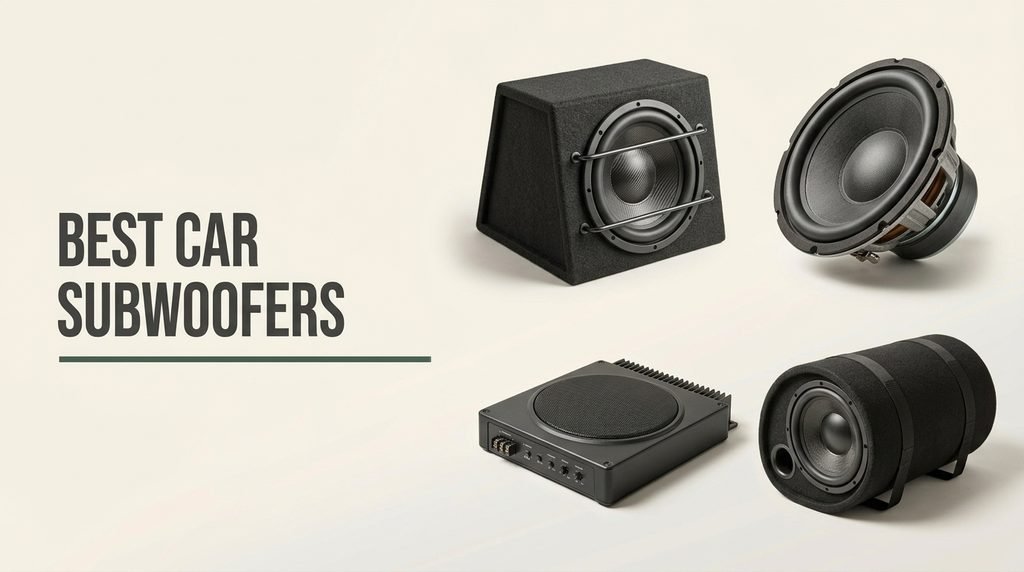
Upgrading your car audio with the right subwoofer in 2026 means matching driver size, power handling, enclosure type, impedance, and installation requirements to your vehicle and listening preferences. We compare 10 standout options spanning component woofers, loaded enclosures, complete bass packages, and compact powered units for every budget and trunk size.
Car subwoofers vary enormously in what they deliver and what they demand from your electrical system. A raw component driver like the American Bass XFL offers massive power handling but requires a separate amplifier and custom enclosure, while a complete Skar Audio package bundles everything you need in one box for a faster install.
This guide breaks down each option by real-world performance, installation complexity, space requirements, and value so you can choose a subwoofer setup that fits your car, your budget, and the kind of bass you actually want to hear on your daily drive.
We compared 10 car subwoofers using the specifications that directly affect your listening experience and installation: peak and RMS power handling, driver size and count, enclosure type, impedance, frequency response, amplifier compatibility, wiring requirements, physical dimensions, and overall value. The notes focus on practical trade-offs so each pick connects to how people actually install, tune, and listen to bass in real vehicles every day.


Compare key features, scores, and current prices side by side. A shorter feature list means fewer details were available, not necessarily fewer capabilities.


The American Bass Elite 12-inch carries the highest star rating in this guide at 4.7, which reflects strong owner satisfaction with its build quality and performance. Like the XFL 10-inch, this is a component driver that requires a separate enclosure and amplifier, but it offers a more accessible power profile at 2,400 watts peak that is easier to match with commonly available monoblock amplifiers.
We may earn a commission when you buy through this link, at no additional cost to you.
Construction quality is the defining characteristic of the Elite series. The heavy stamped steel basket with a black powder-coated finish provides a rigid foundation that resists flexing under high excursion, which keeps the voice coil aligned and the cone movement controlled. The high-roll, high-density foam surround with silver stitching allows for significant cone travel without distortion, and the fiber-reinforced non-press paper cone delivers a warm, natural bass tone that many listeners prefer over synthetic cone materials.
The 12-inch driver size is the most popular choice for car audio because it strikes a balance between low-frequency extension and installation flexibility. A 12-inch driver can reproduce deeper bass than a 10-inch model while still fitting in a reasonably sized enclosure that most sedan and SUV trunks can accommodate. The Elite 12 works well in both sealed and ported enclosures, giving you tuning flexibility based on your musical preferences.
Fiber-reinforced paper cones, like the one used in the Elite 12, tend to produce warmer, more natural-sounding bass compared to polypropylene or aluminum cones, which can sound more clinical or bright. Paper cones are also typically lighter, which improves transient response and efficiency. The tradeoff is that paper is more susceptible to moisture damage over time, so if you live in a very humid climate or frequently leave your car windows open in the rain, a synthetic cone may be more durable.
This driver is an excellent choice for buyers who want a high-quality component subwoofer with proven reliability and a forgiving power range. You will need to budget for an enclosure and an amplifier in the 600 to 1,200-watt RMS range, but the total system cost remains reasonable for the performance you get. The 4.7-star rating suggests that most owners are very satisfied with the results once the system is properly installed and tuned.
Buyers who want a complete plug-and-play system or who need a moisture-resistant cone for open-air vehicle applications.
We may earn a commission when you buy through this link, at no additional cost to you.
The Skar Audio SDR Single 12-inch package is designed for buyers who want a complete bass upgrade without the hassle of matching individual components. The bundle includes a loaded vented enclosure, an RP-800.1D Class D monoblock amplifier rated at 800 watts, and a full 4-gauge CCA wiring kit, so everything you need arrives in one shipment. This eliminates the guesswork of pairing an amp to a sub and ensures the electrical specifications are compatible from the start.
We may earn a commission when you buy through this link, at no additional cost to you.
Power handling is solid for a single-driver setup, with 1,200 watts peak and 600 watts RMS. The vented enclosure design emphasizes output and extension in the lower frequencies, which translates to the kind of booming, room-filling bass that works well for hip-hop, EDM, and modern pop. The SDR-1X12D2 driver uses a dual 2-ohm voice coil configuration, giving you wiring flexibility when connecting to the included monoblock amplifier.
Installation is more straightforward than assembling separate components, but you will still need to run the power wire from the battery, ground the amplifier, and connect the signal input from your head unit or a line output converter. The included 4-gauge CCA wiring kit is adequate for the 800-watt amplifier, though some installers prefer OFC copper wire for better conductivity over long runs. Plan for a few hours of installation time if you are doing it yourself.
A vented enclosure like the one in this Skar package uses a tuned port to reinforce low-frequency output, which typically produces louder bass in the 35 to 50 Hz range compared to a sealed box of similar size. The tradeoff is that vented boxes are physically larger and can sound less precise on fast, punchy bass lines. If your priority is maximum volume and low-end rumble, vented is the right choice. If you prefer tight, accurate bass for rock or jazz, a sealed enclosure may suit you better.
This package makes the most sense for buyers who want noticeable bass improvement in a sedan or SUV trunk without investing in a dual-subwoofer system. The single 12-inch driver will not shake the mirrors off your car, but it delivers a meaningful upgrade over factory audio. If you want more output, the dual 12-inch Skar package in this guide is the logical step up.
Buyers who need maximum bass output for SPL competitions or who prefer the tight, precise bass response of a sealed enclosure.
We may earn a commission when you buy through this link, at no additional cost to you.
The MTX Terminator Dual 12-inch loaded enclosure is one of the most popular entry points into serious car bass, and the price makes it easy to see why. At around $167, you get two 12-inch drivers in a sealed 5/8-inch MDF box wrapped in black carpet, which is a significant step up from factory door speakers for a relatively modest investment. The sealed design produces tight, controlled bass that works well across a wide range of music genres.
We may earn a commission when you buy through this link, at no additional cost to you.
Each driver features a 2-inch aluminum voice coil with a 2-ohm impedance and a 48-ounce magnet, which together deliver responsive low-frequency output in the 37 to 150 Hz range. The 400-watt RMS rating across the pair is moderate, meaning you will want to pair this enclosure with an amplifier that can deliver roughly 400 to 600 watts RMS at 1 ohm or 2 ohms to get the most from the drivers without overdriving them.
The sealed enclosure measures roughly 29.7 inches wide, 14 inches tall, and tapers from 13.5 inches deep at the bottom to 11.1 inches at the top, which helps it fit against the back seat of many sedans and coupes. The carpet-wrapped MDF construction reduces resonance and vibration, keeping the bass clean even at higher volumes. The iconic Terminator logo on the front gives the box a finished look that does not require additional customization.
Matching amplifier power to subwoofer RMS ratings is critical for clean bass and long-term reliability. The Terminator dual 12-inch enclosure handles 400 watts RMS total, so an amplifier that delivers 400 to 600 watts RMS into the enclosure’s final impedance is the sweet spot. Undersizing the amp leads to clipping and distortion that can damage the voice coils, while dramatically oversizing it risks blowing the drivers if the gain is not set carefully.
The main consideration is that this listing does not include an amplifier or wiring kit, so you will need to budget for those separately. A mono block amplifier in the 500 to 800-watt RMS range and a 4-gauge wiring kit will add to the total cost but are essential for proper performance. Even with those additions, the total system cost remains competitive, making this one of the best-value dual-subwoofer options available.
Buyers who want a complete plug-and-play package with amplifier and wiring included, or those seeking high-SPL output above 1,000 watts RMS.
We may earn a commission when you buy through this link, at no additional cost to you.
The American Bass XFL 10-inch is a component subwoofer built for serious bass enthusiasts who want to design their own enclosure and pair the driver with a high-output amplifier. With 3,000 watts peak and 1,500 watts RMS power handling, this single 10-inch driver can absorb more power than many complete dual-subwoofer packages, which makes it a compelling foundation for a custom system that prioritizes output and durability.
We may earn a commission when you buy through this link, at no additional cost to you.
The motor structure is where the XFL really stands out. A massive 200-ounce magnet and a 3-inch voice coil give this driver the thermal capacity and magnetic force to maintain control at high power levels without the voice coil overheating or the cone losing composure. The dual 2-ohm voice coil configuration provides wiring flexibility, allowing you to wire the driver to 1 ohm or 4 ohms depending on your amplifier’s stable impedance range.
Because this is a raw component driver, you will need to build or purchase a separate enclosure that matches the XFL’s Thiele-Small parameters for optimal performance. A sealed box will give you tight, accurate bass, while a ported enclosure tuned to the driver’s specifications will maximize output in the low frequencies. You will also need an amplifier capable of delivering at least 1,000 to 1,500 watts RMS to take full advantage of the driver’s capabilities.
A larger voice coil, like the 3-inch coil in the XFL, can dissipate heat more effectively than a smaller coil, which allows the driver to handle more continuous power without thermal compression or failure. The increased surface area also provides better motor control over the cone, resulting in tighter, more accurate bass reproduction at high output levels. This is why competition-grade subwoofers typically feature voice coils of 2.5 inches or larger.
This subwoofer is best suited for experienced car audio enthusiasts who enjoy the process of designing and tuning a custom system. If you are looking for a simple plug-and-play solution, one of the complete packages in this guide will save you significant time and effort. But if you want maximum performance per dollar and are willing to invest in the supporting components, the XFL 10-inch is a powerhouse.
Beginners who want a complete, ready-to-install bass package without the need for a custom enclosure and high-output amplifier.
We may earn a commission when you buy through this link, at no additional cost to you.
The Skar Audio SDR Dual 12-inch package is the most powerful complete system in this guide, delivering 2,400 watts peak and 1,200 watts RMS through two 12-inch drivers in a vented enclosure. The included RP-1200.1D Class D monoblock amplifier is matched to the enclosure's power handling, and the premium OFC 4-gauge wiring kit provides better conductivity than the CCA wire found in the single-driver package. This is a serious bass system for buyers who want to feel the low end in their chest.
We may earn a commission when you buy through this link, at no additional cost to you.
The dual SDR-12D4 drivers use dual 4-ohm voice coils, which can be wired down to 1 ohm at the amplifier for maximum power output from the monoblock. The vented enclosure is tuned to maximize output in the low-frequency range, producing the kind of deep, rumbling bass that transforms hip-hop, EDM, and action movie soundtracks into a physical experience. The 1,200-watt RMS rating gives you substantial headroom for sustained high-volume listening without pushing the drivers into distortion.
Installation requires a vehicle with adequate trunk space, as the dual 12-inch vented enclosure is significantly larger than the single-driver or sealed options in this guide. You will also need a healthy electrical system to support the 1,200-watt amplifier; a stock alternator and battery may struggle to keep up during extended high-volume sessions. Upgrading to a high-output alternator or adding a secondary battery is recommended for reliable performance.
A 1,200-watt RMS amplifier can draw over 100 amps from your vehicle’s electrical system at full output, which exceeds what most stock alternators can sustain. Symptoms of an undersized electrical system include dimming headlights, voltage drops below 12 volts, and amplifier protection mode shutdowns during heavy bass passages. If you plan to run this system at high volumes regularly, consider upgrading your alternator, adding a capacitor, or installing a secondary battery to maintain stable voltage.
This package is the right choice for buyers who want the loudest, deepest bass possible from a complete, pre-matched system without the complexity of sourcing individual components. If your vehicle has the trunk space and the electrical capacity to support it, the Skar Dual 12 delivers the most impactful bass experience in this lineup. Just be prepared for the physical size of the enclosure and the electrical demands of the amplifier.
Drivers with small trunks, compact cars, or stock electrical systems that cannot support a 1,200-watt amplifier without upgrades.
We may earn a commission when you buy through this link, at no additional cost to you.
The Seventour 10-inch under-seat subwoofer solves the most common obstacle to adding bass in a car: lack of trunk space. At just 3.1 inches thick, this powered subwoofer slides under most front or rear seats, leaving your trunk completely free for cargo. The built-in amplifier eliminates the need for a separate amp and most of the associated wiring, making this one of the simplest bass upgrades you can install.
We may earn a commission when you buy through this link, at no additional cost to you.
The cast aluminum enclosure serves double duty as both the housing and a heat sink for the built-in amplifier, which helps maintain reliable performance during extended listening sessions. Power output is rated at 800 watts peak and 220 watts RMS, which is modest compared to the larger systems in this guide but sufficient to add noticeable low-frequency fullness to factory audio. The frequency response extends from 20 Hz to 500 Hz, and the adjustable low-pass filter lets you dial in the crossover point between 50 and 150 Hz.
Convenience features include a wired bass remote for adjusting output from the driver’s seat, adjustable gain and bass boost controls, and both RCA low-level and speaker-level high-level inputs for compatibility with factory and aftermarket head units. The blue LED ambient light ring is a cosmetic touch that adds a subtle glow when the system is powered on. Protection circuitry covers thermal overload, short circuits, and DC offset, which helps prevent damage from wiring mistakes.
Under-seat powered subwoofers are ideal for trucks, compact cars, and SUVs where trunk or cargo space is at a premium. They are also a good choice for leased vehicles where you want to avoid permanent modifications, since the installation typically involves running a power wire and connecting a signal source without cutting into the vehicle’s interior panels. The tradeoff is reduced output and low-frequency extension compared to a full-size trunk-mounted system.
The main limitation is physics. A 10-inch driver in a compact sealed enclosure with 220 watts RMS simply cannot produce the same deep, chest-thumping bass as a full-size 12-inch system with 600 or more watts. If your goal is to fill in the low end and add warmth to your factory speakers without sacrificing cargo space, the Seventour is a practical and affordable solution. If you want serious bass impact, you will need a larger system.
Bass enthusiasts who want deep, high-output low frequencies or who plan to compete in sound pressure level events.
We may earn a commission when you buy through this link, at no additional cost to you.
The KICKER Hideaway HS10 brings one of the most respected names in car audio to the compact powered subwoofer category. The all-aluminum frame is both lightweight and extremely rigid, which reduces unwanted resonance and improves bass accuracy compared to plastic or MDF enclosures. At just two millimeters taller than the smaller HS8 model, the HS10 delivers noticeably more low-frequency impact while maintaining a footprint that fits under most vehicle seats.
We may earn a commission when you buy through this link, at no additional cost to you.
Tuning controls are comprehensive for a compact unit, with an adjustable low-pass crossover, a variable +6dB bass boost, and a phase switch that lets you align the subwoofer’s output with your main speakers for smoother integration. The included remote bass control allows you to adjust the subwoofer level independently from the head unit volume, which is useful when switching between music genres or adjusting for passenger comfort.
Installation is simplified by the quick-connect Molex plug and harness, which combines power, signal, and remote turn-on into a single connector. Both high-level and low-level inputs are provided, so the HS10 integrates with virtually any factory or aftermarket head unit without requiring a line output converter. Two automatic turn-on modes, DC-offset and signal sensing, eliminate the need to run a separate remote turn-on wire in many installations.
KICKER’s Molex quick-connect system bundles all power, ground, signal, and remote connections into a single plug that snaps into the subwoofer chassis. This dramatically simplifies installation and makes it easy to remove the subwoofer for vehicle service or cargo space without disconnecting multiple wires. If you frequently need access to the area where the subwoofer is mounted, this feature saves significant time and frustration compared to traditional screw-terminal connections.
The KICKER Hideaway commands a premium price compared to the Seventour under-seat model, but you are paying for build quality, brand reputation, and more refined tuning controls. If you want a compact powered subwoofer that delivers clean, well-integrated bass and is built to last through years of daily use, the HS10 is the stronger investment. If budget is the primary concern, the Seventour offers similar functionality at a lower price.
Buyers who need high-output bass for large vehicles or who want the deepest possible low-frequency extension below 35 Hz.
We may earn a commission when you buy through this link, at no additional cost to you.
This MTX Terminator kit bundles the popular dual 12-inch sealed enclosure with a mono block amplifier and a 4-gauge wiring kit, creating a more complete package than the standalone Terminator enclosure. The sealed design prioritizes tight, accurate bass response over raw output, which makes this system a good match for listeners who enjoy rock, jazz, country, and other genres where bass precision matters more than sheer volume.
We may earn a commission when you buy through this link, at no additional cost to you.
The 5/8-inch MDF enclosure with carpet wrap provides solid structural rigidity that minimizes panel resonance and vibration, keeping the bass clean even at moderate to high volumes. The sealed air suspension inside the box acts as a spring that controls cone movement, which improves transient response and reduces the risk of over-excursion damage compared to a ported design. The dual 12-inch drivers are wired for low-impedance operation, which allows the included mono amplifier to deliver its maximum power output.
The included 4-gauge wiring kit handles the power delivery from your battery to the amplifier, and the mono amp features high and low-level inputs for compatibility with both factory and aftermarket head units. The sealed enclosure’s universal cutout design means you could theoretically swap in different 12-inch drivers in the future if you want to upgrade without replacing the entire box.
Sealed enclosures provide a gradual, predictable roll-off below the system’s resonant frequency, which results in a smoother and more natural-sounding bass response compared to the sharper peak and steeper drop-off of a ported box. This gradual roll-off preserves the tonal balance of acoustic instruments and vocals, making sealed systems the preferred choice for audiophiles and listeners who value accuracy over maximum volume.
This kit is ideal for buyers who want the controlled, musical bass of a sealed enclosure with the convenience of a bundled amplifier and wiring. The tradeoff is that sealed boxes produce less peak output than vented designs of similar size, so if your primary goal is maximum loudness, the Skar Audio vented packages will deliver more impact. For balanced, accurate bass that integrates smoothly with your existing speakers, this MTX kit is a strong choice.
Buyers who prioritize maximum bass output and low-frequency extension for hip-hop, EDM, or SPL competition use.
We may earn a commission when you buy through this link, at no additional cost to you.
The MTX Terminator Full Kit takes the concept of a complete bass package to its logical conclusion by including the dual 12-inch loaded enclosure, a Planet Audio 1,500-watt monoblock amplifier, and a Soundstorm 8-gauge wiring kit in a single purchase. This is the most turnkey option in the guide for buyers who want dual-subwoofer bass without researching and matching individual components. The system is designed to work together out of the box, which reduces the risk of impedance mismatches or power supply issues.
We may earn a commission when you buy through this link, at no additional cost to you.
The loaded enclosure uses the same proven 5/8-inch MDF construction with aircraft-grade black carpet wrap as the standalone Terminator box, measuring roughly 13.5 inches deep, 26.6 inches wide, and 14 inches tall. The Planet Audio monoblock amplifier features high and low-level inputs, a variable bass boost, and a low-pass filter for tuning the system to your vehicle’s acoustics and your musical preferences.
One practical consideration is the 8-gauge wiring kit, which is adequate for moderate power levels but may restrict current flow if the amplifier is driven to its maximum output for extended periods. Many installers recommend upgrading to a 4-gauge kit for systems above 800 watts RMS to ensure stable voltage delivery and prevent the power wire from heating up. This is a relatively inexpensive upgrade that can improve reliability and performance.
Peak power ratings represent the maximum instantaneous power a system can handle in short bursts, while RMS ratings reflect the continuous power it can sustain over time. A system rated at 1,200 watts peak may only handle 400 to 600 watts RMS continuously, which is the more meaningful number for matching amplifiers and setting gain levels. Always use RMS ratings as your primary reference when sizing components, and treat peak numbers as a safety margin rather than a performance target.
The 1,200-watt peak rating refers to the maximum momentary system load, not continuous output, so the real-world RMS power will be lower. Even so, the dual 12-inch drivers in a sealed enclosure deliver satisfying bass for most daily listening scenarios. This kit is best suited for buyers who want a straightforward, all-inclusive bass upgrade and are willing to consider a wiring upgrade for optimal performance.
Experienced installers who prefer to select each component individually for optimal matching, or buyers who need 4-gauge wiring for high-current applications.
We may earn a commission when you buy through this link, at no additional cost to you.
The JBL SUBBP12AM brings JBL's decades of professional audio engineering to a self-contained powered subwoofer that is designed for easy integration into factory and aftermarket car audio systems. The 12-inch polypropylene driver is paired with a built-in 150-watt RMS amplifier that is specifically matched to the driver's characteristics, ensuring clean, distortion-free output within the system's power envelope. The 35 to 120 Hz frequency response covers the critical bass range that most factory speakers cannot reproduce.
We may earn a commission when you buy through this link, at no additional cost to you.
The standout feature is JBL’s Slipstream port design, which uses a flared, aerodynamically shaped port opening to eliminate the chuffing and turbulence noise that conventional ported enclosures produce at high output levels. This means you get the increased low-frequency output of a ported design without the annoying port noise that can degrade sound quality during demanding bass passages. The result is cleaner, more powerful bass than a standard ported box of similar size.
The included remote sub level control lets you adjust bass output from the driver’s seat, which is useful for adapting to different music genres or passenger preferences without reaching into the trunk. The polypropylene cone is durable and moisture-resistant, making it a practical choice for vehicles that experience temperature and humidity fluctuations. The powered design means you only need to run a power wire and connect a signal source, simplifying installation compared to separate component systems.
Traditional ported enclosures use a simple cylindrical tube that creates air turbulence at high velocities, producing an audible chuffing sound that masks low-frequency detail. JBL’s Slipstream port uses a flared, contoured shape that smooths airflow through the port opening, reducing turbulence and eliminating the noise. This allows the enclosure to produce higher output through the port without the distortion that would normally accompany it, resulting in cleaner bass at all volume levels.
The 150-watt RMS output is modest compared to the larger systems in this guide, so the JBL is best suited for buyers who want a meaningful improvement over factory bass without overwhelming the rest of their audio system. If you drive a sedan or compact SUV and want clean, well-engineered bass from a trusted audio brand, the SUBBP12AM delivers a refined listening experience that prioritizes quality over raw volume.
Buyers who want high-SPL output above 500 watts RMS or who need a compact under-seat solution for vehicles with limited trunk space.
We may earn a commission when you buy through this link, at no additional cost to you.
Selecting a car subwoofer involves matching power handling, enclosure type, driver size, and installation requirements to your vehicle, your audio goals, and your budget. This buying guide covers the key factors that will determine how your bass system sounds and performs in the real world.
RMS, or Root Mean Square, power is the continuous power a subwoofer can handle without damage, and it is the most important specification for matching a subwoofer to an amplifier. Peak power ratings, which are often prominently displayed on product packaging, represent momentary bursts and are not a reliable indicator of real-world performance. A subwoofer rated at 1,200 watts peak but only 400 watts RMS needs an amplifier that delivers roughly 400 watts RMS, not 1,200 watts.
The ideal amplifier output should match or slightly exceed the subwoofer’s RMS rating at the correct impedance. An underpowered amplifier driven into clipping produces distorted square-wave signals that generate excessive heat in the voice coil and can destroy a subwoofer faster than a properly sized amplifier running at full output. When in doubt, choose an amplifier that delivers 75 to 150 percent of the subwoofer’s RMS rating and set the gain carefully to avoid clipping.
Always match your amplifier’s RMS output to the subwoofer’s RMS handling at the wiring impedance you plan to use. Ignore peak power numbers when making this decision.
The most common car subwoofer sizes are 10-inch and 12-inch, with 8-inch and 15-inch models filling out the extremes. Larger drivers move more air and generally produce deeper bass with less distortion at high output levels, which is why 12-inch and 15-inch subwoofers dominate the high-SPL segment. Smaller drivers like 8-inch and 10-inch models are faster and more responsive, which can produce tighter, more musical bass in a compact enclosure.
Driver size also affects installation flexibility. A single 10-inch subwoofer in a sealed box can fit in the trunk of a compact sedan with room to spare, while a dual 12-inch vented enclosure may consume the entire cargo area of a mid-size SUV. Consider your vehicle’s available space before committing to a driver size, and remember that a properly tuned 10-inch system can outperform a poorly installed 12-inch setup in both sound quality and output.
Choose 12-inch drivers for maximum low-end impact and output. Choose 10-inch drivers for tighter bass and easier installation in smaller vehicles.
Sealed enclosures trap air inside the box to control cone movement, producing tight, accurate bass with a gradual low-frequency roll-off. They are the most forgiving enclosure type for beginners and work well across all music genres, but they require more amplifier power to achieve the same output as a ported box. The MTX Terminator sealed enclosures in this guide are good examples of this design philosophy.
Ported enclosures use a tuned vent to reinforce bass output at a specific frequency range, typically producing 3 to 6 dB more output than a sealed box of similar size around the tuning frequency. This makes them louder and more efficient for hip-hop, EDM, and other bass-heavy genres, but the tradeoff is a larger physical footprint and less precise transient response. The Skar Audio SDR vented packages and the JBL Slipstream ported design represent this approach.
Choose sealed for accuracy, compact size, and musical versatility. Choose ported for maximum output and deep bass extension. If you are unsure, a sealed enclosure is the safer starting point because it is more forgiving of amplifier mismatches and tuning errors.
Impedance, measured in ohms, determines how much electrical resistance the subwoofer presents to the amplifier. Most car subwoofers use dual voice coils in 2-ohm or 4-ohm configurations, which can be wired in series or parallel to achieve different final impedances. A dual 2-ohm subwoofer can be wired to 1 ohm in parallel or 4 ohms in series, giving you flexibility to match your amplifier’s stable impedance range.
Lower impedance allows the amplifier to deliver more power, but it also generates more heat and stresses the amplifier’s output stage. Many monoblock amplifiers are stable down to 1 ohm, but running at this impedance for extended periods can trigger thermal protection or reduce the amplifier’s lifespan. Higher impedance wiring is easier on the amplifier but delivers less power, so the best choice depends on your specific amplifier’s specifications and your cooling setup.
Check your amplifier’s rated output at 1 ohm, 2 ohms, and 4 ohms, then wire your subwoofers to the impedance that delivers the closest match to the subwoofer’s RMS rating. When in doubt, a 2-ohm final load is a safe middle ground for most monoblock amplifiers.
Complete bass packages like the Skar Audio SDR bundles and MTX Terminator kits include the subwoofer, enclosure, amplifier, and wiring in a single purchase. These systems are designed to work together, which eliminates the risk of impedance mismatches and simplifies the buying process for first-time installers. The tradeoff is that you have less control over individual component quality, and the included amplifier and wiring may be entry-level to keep the package price competitive.
Component systems, where you select the subwoofer, enclosure, amplifier, and wiring separately, offer the best performance per dollar for experienced installers who understand how to match specifications. The American Bass XFL and Elite drivers in this guide are component subwoofers that can be paired with high-quality amplifiers and custom enclosures for superior results, but the total cost and installation complexity are higher.
Choose a complete package if you want a straightforward installation with minimal research. Choose components if you want to optimize every part of the system for your specific goals and are comfortable with the additional complexity.
Powered subwoofers combine the driver, amplifier, and enclosure into a single compact unit that requires only a power wire and a signal connection. Models like the KICKER Hideaway HS10, JBL SUBBP12AM, and Seventour under-seat subwoofer are designed for buyers who want to add bass without dedicating trunk space to a full-size enclosure or running complex amplifier wiring. The built-in amplifiers are matched to the drivers, which ensures compatibility and simplifies gain setting.
The tradeoff is limited power output. Most powered subwoofers deliver 150 to 250 watts RMS, which is enough to fill in the low frequencies and add warmth to factory audio but not enough to produce the chest-thumping bass of a full-size system. Under-seat models are even more constrained by their ultra-slim enclosures, which limit the air volume available for the driver to work with. These are best viewed as complementary upgrades rather than primary bass systems.
Choose a powered or under-seat subwoofer if trunk space is limited, you are leasing your vehicle, or you want a simple, reversible bass upgrade. Choose a full-size system if output and low-frequency extension are your top priorities.
Every watt of amplifier output draws current from your vehicle’s electrical system, and high-power subwoofer setups can easily exceed the capacity of a stock alternator and battery. A 1,200-watt RMS amplifier can draw over 100 amps at full output, while most factory alternators produce 80 to 120 amps total for the entire vehicle. When the amplifier demands more current than the alternator can supply, the system voltage drops, headlights dim, and the amplifier may enter protection mode.
For systems above 800 watts RMS, consider upgrading to a high-output alternator, adding a secondary battery in the trunk, or installing a stiffening capacitor to handle transient current demands. Upgrading the power and ground wiring to 0-gauge or 1/0-gauge OFC copper also reduces voltage drop and improves current delivery. These upgrades add cost but are essential for reliable high-power performance.
For systems under 600 watts RMS, a stock electrical system is usually sufficient with a proper 4-gauge power wire and a solid ground connection. Above 800 watts RMS, plan for electrical upgrades as part of your total system budget.
Installing a car subwoofer involves running a power wire from the battery through the firewall to the trunk, connecting a ground wire to the vehicle chassis, routing a signal cable from the head unit to the amplifier, and mounting the enclosure securely. For complete packages and powered subwoofers, the process is relatively straightforward and can be completed by a motivated DIY installer in an afternoon with basic tools.
Component systems and high-power setups are more complex, requiring custom enclosure construction, precise impedance wiring, gain setting with a multimeter or oscilloscope, and potentially electrical system upgrades. If you are not comfortable working with automotive electrical systems, professional installation is a worthwhile investment that typically costs $100 to $300 depending on the complexity of the job. A professional installer can also tune the system to your vehicle’s acoustics for better sound quality.
Be honest about your skill level and available tools before deciding between DIY and professional installation. A poorly installed system can damage your vehicle’s electrical system, produce disappointing sound quality, or create safety hazards from loose wiring and unsecured enclosures.
After installation, take time to properly set the amplifier gain before turning the system up to full volume. Start with the gain at its minimum setting, play a familiar track at about 75 percent of your head unit’s maximum volume, and gradually increase the gain until you hear the first hint of distortion, then back it off slightly. This process ensures the amplifier is delivering clean power to the subwoofer without clipping, which is the most common cause of voice coil damage in car audio systems.
Allow new subwoofers to break in for the first 20 to 40 hours of use by playing music at moderate volume levels. During this period, the suspension components, including the surround and spider, loosen up and reach their designed compliance, which improves low-frequency extension and overall sound quality. Avoid pushing the system to maximum output during the break-in period, as the voice coil and suspension are more vulnerable to damage before they have fully settled.
Periodically check the amplifier’s power and ground connections for tightness and corrosion, especially in regions with high humidity or road salt exposure. Inspect the subwoofer’s surround and cone for signs of cracking, tearing, or separation from the basket, which can indicate over-excursion damage or age-related deterioration. Keep the enclosure interior dry and free of debris, and avoid placing heavy objects on top of the subwoofer box that could vibrate and create unwanted noise during playback.
Peak power is the maximum instantaneous wattage a subwoofer can handle in very short bursts, while RMS power is the continuous wattage it can sustain over time without damage. RMS is the more meaningful specification for matching amplifiers and setting gain levels. A subwoofer rated at 1,200 watts peak may only handle 400 to 600 watts RMS continuously, so always use the RMS rating as your primary reference when building a system.
Yes, almost all car subwoofers require an external amplifier to produce meaningful bass output. Factory head units typically deliver only 15 to 25 watts per channel, which is not enough to drive a subwoofer effectively. Powered subwoofers like the KICKER Hideaway and JBL SUBBP12AM have built-in amplifiers, so they do not require a separate amp, but component and loaded-enclosure subwoofers always need an external amplifier matched to their RMS power rating.
The most popular sizes are 10-inch and 12-inch, and the right choice depends on your vehicle's available space and your bass preferences. A 12-inch subwoofer produces deeper, louder bass but requires a larger enclosure, while a 10-inch model offers tighter, faster response in a more compact package. For most sedans and SUVs, a single or dual 12-inch setup provides the best balance of output and fit. For compact cars and trucks, a 10-inch or powered under-seat model may be more practical.
Neither is objectively better; they serve different purposes. Sealed enclosures produce tighter, more accurate bass with better transient response, making them ideal for rock, jazz, and acoustic music. Ported enclosures deliver louder, deeper bass around the tuning frequency, which suits hip-hop, EDM, and bass-heavy genres. Sealed boxes are also smaller and more forgiving of amplifier mismatches, while ported boxes require more space and careful tuning to avoid distortion.
Yes, many car subwoofer installations can be completed by a DIY installer with basic tools, a wiring kit, and a few hours of time. Powered subwoofers and complete packages are the simplest to install, while component systems with custom enclosures and high-power amplifiers may require more advanced skills. If you are not comfortable running power wires through your vehicle's firewall or setting amplifier gain, professional installation is a worthwhile investment that typically costs $100 to $300.
A properly installed subwoofer system should not drain your battery when the vehicle is off, as the amplifier's remote turn-on wire ensures it only powers up when the head unit is active. However, high-power systems can strain the alternator and battery during use, especially at high volumes. If you notice dimming headlights or voltage drops, you may need to upgrade your alternator or add a secondary battery to handle the increased electrical demand.
A dual voice coil subwoofer can be wired in series or parallel to achieve different impedance loads. Wiring two 2-ohm coils in parallel produces a 1-ohm load, while wiring them in series produces 4 ohms. Wiring two 4-ohm coils in parallel gives 2 ohms, and in series gives 8 ohms. Choose the wiring configuration that best matches your amplifier's rated output and stable impedance range for optimal power delivery and reliability.
Wire gauge depends on the amplifier's power output and the length of the wire run. For amplifiers up to 500 watts RMS, 8-gauge wire is typically sufficient. For 500 to 1,000 watts RMS, use 4-gauge wire. For systems above 1,000 watts RMS, 0-gauge or 1/0-gauge wire is recommended to minimize voltage drop and heat buildup. OFC copper wire is preferred over CCA aluminum-clad wire for better conductivity and long-term reliability.
Distortion at high volume is most commonly caused by amplifier clipping, which occurs when the gain is set too high and the amplifier tries to deliver more power than it can produce cleanly. Other causes include an underpowered amplifier being pushed beyond its limits, a subwoofer receiving more power than its RMS rating, or an enclosure that is too small or improperly tuned for the driver. Start by lowering the amplifier gain and checking that the RMS power match is correct.
A well-installed car subwoofer that is properly matched to its amplifier and operated within its power ratings can last 5 to 10 years or more. The most common causes of premature failure are amplifier clipping from improper gain settings, over-powering the voice coil, and physical damage to the surround or cone from over-excursion. Regular maintenance, including checking connections and avoiding sustained maximum volume, will extend the life of your subwoofer significantly.
The Skar Audio SDR Dual 12-inch package stands out as the strongest complete system in this lineup, delivering 2,400 watts peak and 1,200 watts RMS through two matched drivers, a vented enclosure, a monoblock amplifier, and premium OFC wiring. For buyers who want maximum bass output from a pre-matched system and have the trunk space and electrical capacity to support it, this package offers the most impactful listening experience without the complexity of sourcing individual components.
For more budget-conscious buyers, the MTX Terminator Dual 12-inch sealed enclosure delivers reliable, tight bass at the lowest price in this guide, and pairing it with a mono amplifier creates a capable system for under $300 total. The American Bass Elite 12-inch component driver is the highest-rated option for enthusiasts who want to build a custom system, while the KICKER Hideaway HS10 and JBL SUBBP12AM provide clean, compact powered bass for vehicles where trunk space is limited.
The right car subwoofer depends on your vehicle, your budget, your installation comfort level, and the kind of bass you want to hear. Match the RMS power carefully, choose an enclosure type that suits your music preferences, and do not underestimate the importance of a proper electrical system and clean installation. A well-tuned subwoofer system transforms your daily drive into a genuinely enjoyable listening experience, and the options in this guide cover every path to getting there.