5-Level Volume Hearing
9.4Editor score16-channel chip
100-hour total battery
40dB sound amplification
RIC speaker design
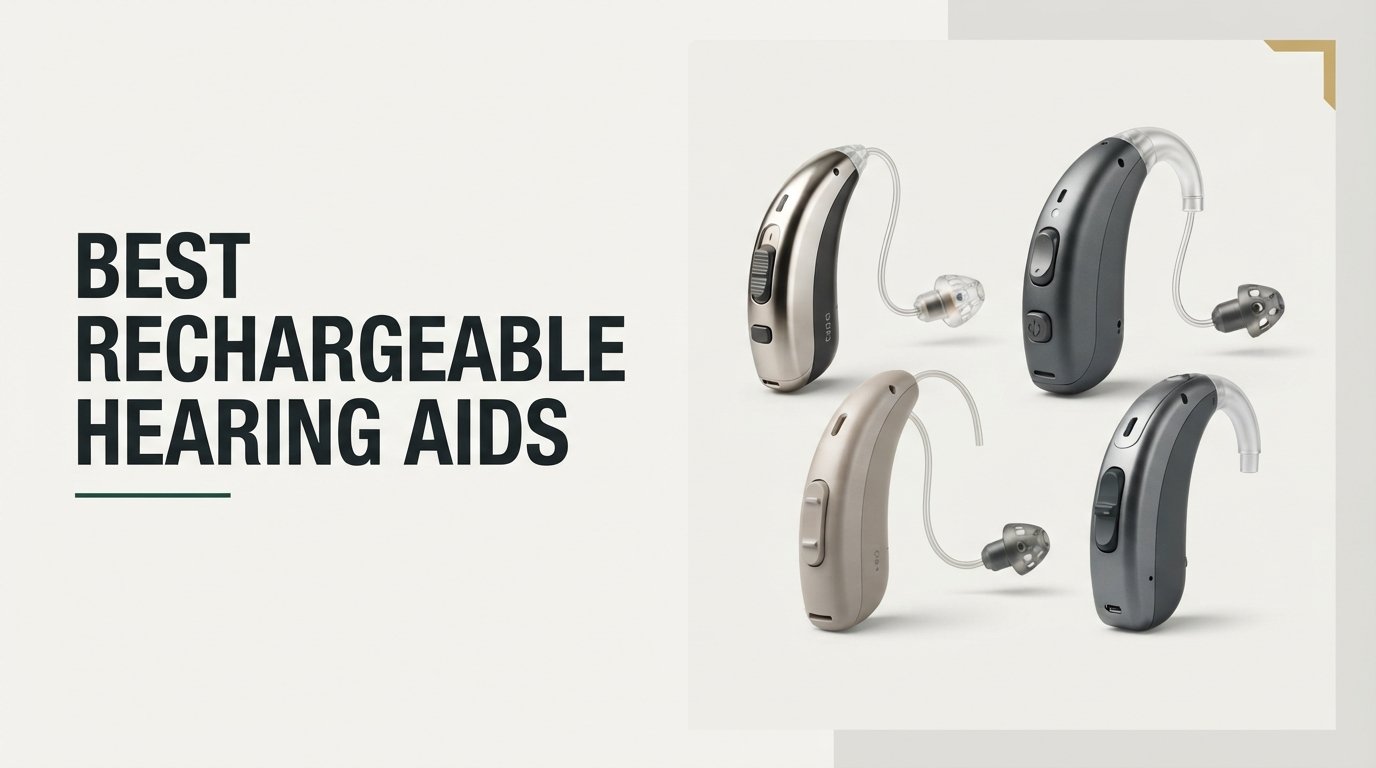
Find the right hearing aids for 2026. We compare 10 standout options by build quality, useful features, owner feedback, value, and everyday trade-offs.
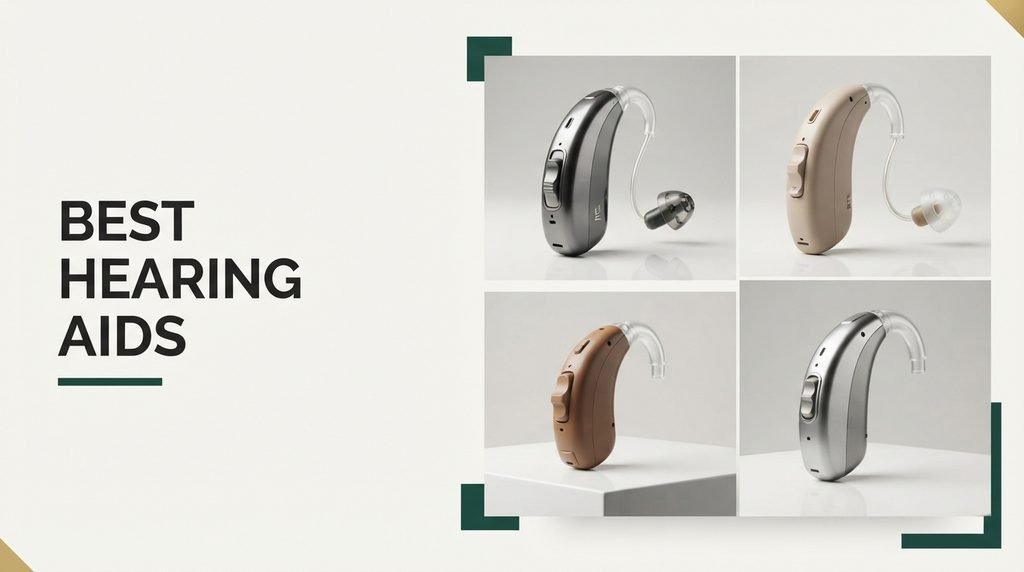
Find the right hearing aids for 2026. We compare 10 standout over-the-counter options by the factors that matter most in this category, including sound clarity, noise reduction technology, battery life, control simplicity, discreet fit, Bluetooth streaming, listening modes, charging convenience, and overall value for adults with mild to moderate hearing loss.
Over-the-counter hearing aids have changed what shoppers can expect at every price point. Entry-level models now offer rechargeable batteries and basic noise reduction, while premium picks add app control, Bluetooth streaming, and AI-driven speech enhancement. Understanding where your needs fall on that spectrum is the key to spending wisely.
The models in this guide range from under one hundred dollars to premium devices approaching seven hundred. Each one targets a different buyer, from seniors who want simple buttons and long battery life to tech-savvy users who want smartphone integration. The right pick depends on your hearing profile, lifestyle, and comfort with technology.
We compared 10 over-the-counter hearing aids using the details that actually help a buyer decide: sound processing quality, noise reduction technology, feedback suppression, battery runtime, charging case capacity, control simplicity, comfort and fit, Bluetooth capabilities, listening modes, warranty coverage, owner feedback, and value. The notes focus on practical trade-offs so each pick feels connected to how adults with mild to moderate hearing loss actually use these devices in conversations, at home, and in noisy public settings.

Compare key features, scores, and current prices side by side. A shorter feature list means fewer details were available, not necessarily fewer capabilities.




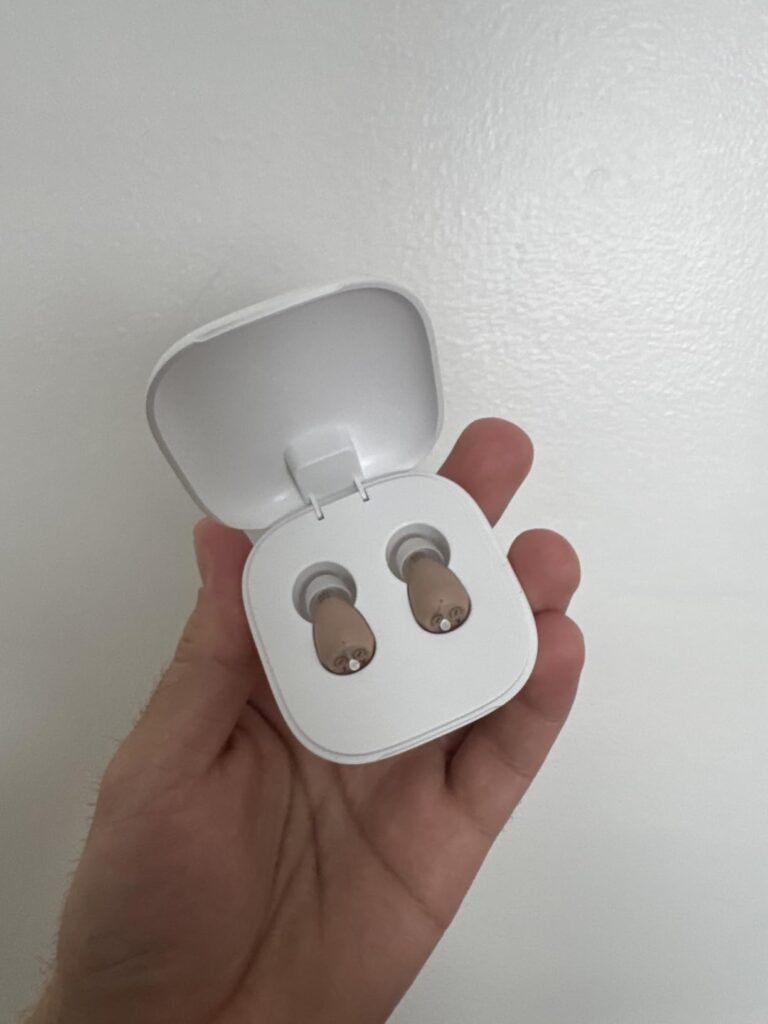
This white rechargeable model is a strong pick for adults who want a nearly invisible fit without sacrificing sound quality. The compact design sits deep in the ear canal, making it difficult for others to notice, which matters for buyers who feel self-conscious about wearing hearing aids. The 16-channel digital signal processor handles sound separation in real time, prioritizing speech while suppressing background noise.
We may earn a commission when you buy through this link, at no additional cost to you.
The two-mode system is simple but effective. Quiet Mode is tuned for everyday indoor conversations and television, while Noise-Canceling Mode kicks in for restaurants, grocery stores, and other busy environments. Switching between them takes a single button press, and the smart chip actively suppresses the screechy feedback that can occur when putting on glasses or hugging someone.
Battery performance is impressive for a device at this price. A two-hour charge yields more than 24 hours of use, and the portable charging case extends total runtime to 80 hours or more. That is enough for a full week of typical use between wall charges. The compact case slips into a pocket or bag easily, making the system practical for travel or long days away from home.
The in-ear form factor is particularly appealing to younger adults and professionals who want hearing support without drawing attention. The white color blends well with lighter skin tones, and the deep-fit design keeps the device out of sight from most angles. For social settings where discretion matters, this model delivers on appearance without compromising functionality.
The main limitation is the lack of connectivity. There is no Bluetooth, so streaming phone calls or music directly through the aids is not possible. For buyers who view hearing aids strictly as hearing assistance rather than a hybrid audio device, this is not a drawback. The combination of noise reduction, long battery life, and a discreet fit at a reasonable price makes this an excellent value pick.
Buyers who need Bluetooth streaming or want behind-the-ear comfort with glasses should consider a RIC model instead.
We may earn a commission when you buy through this link, at no additional cost to you.
This pair of hearing aids is aimed squarely at seniors who want a dependable device without a learning curve. The receiver-in-canal design places the speaker close to the eardrum for a more natural sound profile, and the 16-channel chip handles the noise reduction work in the background. For someone who just wants to put them in and hear conversations more clearly, the simplicity is a genuine advantage.
We may earn a commission when you buy through this link, at no additional cost to you.
Sound amplification tops out at around 40 decibels, which falls comfortably within the range appropriate for mild to moderate hearing loss. The intelligent noise cancellation separates speech from background sounds like a running dishwasher or a television in another room, reducing the fatigue that comes from straining to follow a conversation. The system also addresses the whistling feedback that often frustrates new hearing aid users.
Battery life is a standout feature. A single charge delivers roughly 25 hours of use, and the pocket-sized charging case stores enough power for three to four additional full charges. That adds up to about 100 hours of listening time before the case itself needs to be plugged in. The LED battery indicator removes the guesswork, and holding the plus button for three seconds powers the device on or off without fumbling.
The volume memory feature saves the last setting so you do not have to readjust every time you turn the device on. This small convenience eliminates one of the most common frustrations with basic hearing aids. Over the course of a week, those saved adjustments add up to meaningful time and comfort.
The tradeoff is the absence of smart features. There is no Bluetooth streaming, no app, and no automatic environment detection. If your priority is reliable amplification with controls that make sense without reading a manual, this pair delivers excellent value. If you want to stream phone calls or customize settings from your phone, consider one of the ELEHEAR or Audien Atom X models instead.
Buyers who want Bluetooth streaming, app-based customization, or more granular volume control should look at a premium model instead.
We may earn a commission when you buy through this link, at no additional cost to you.
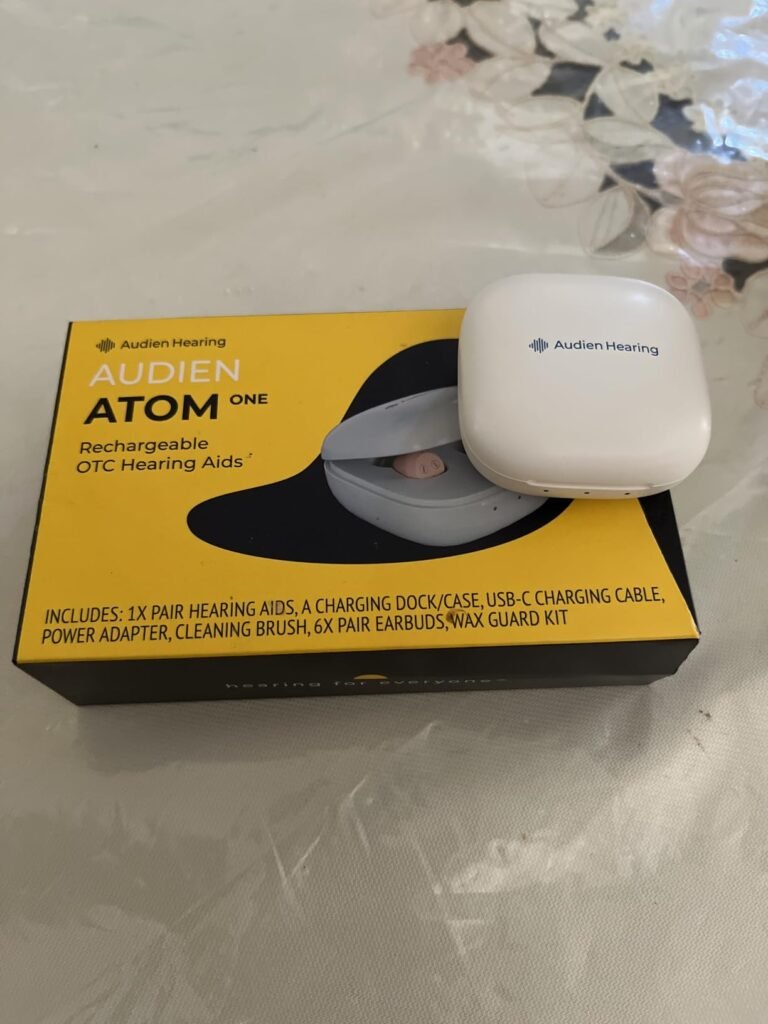
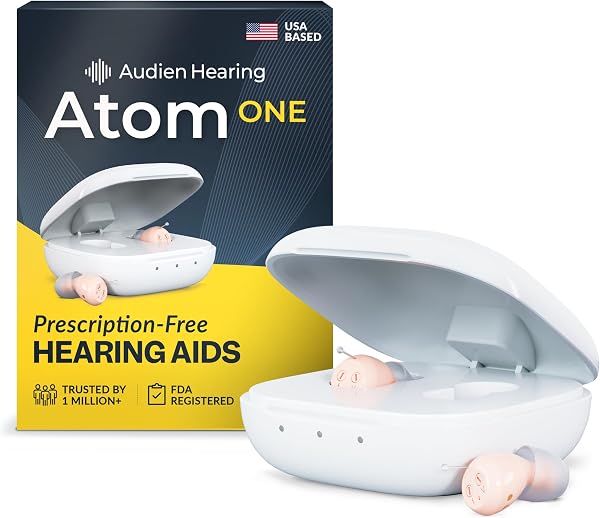
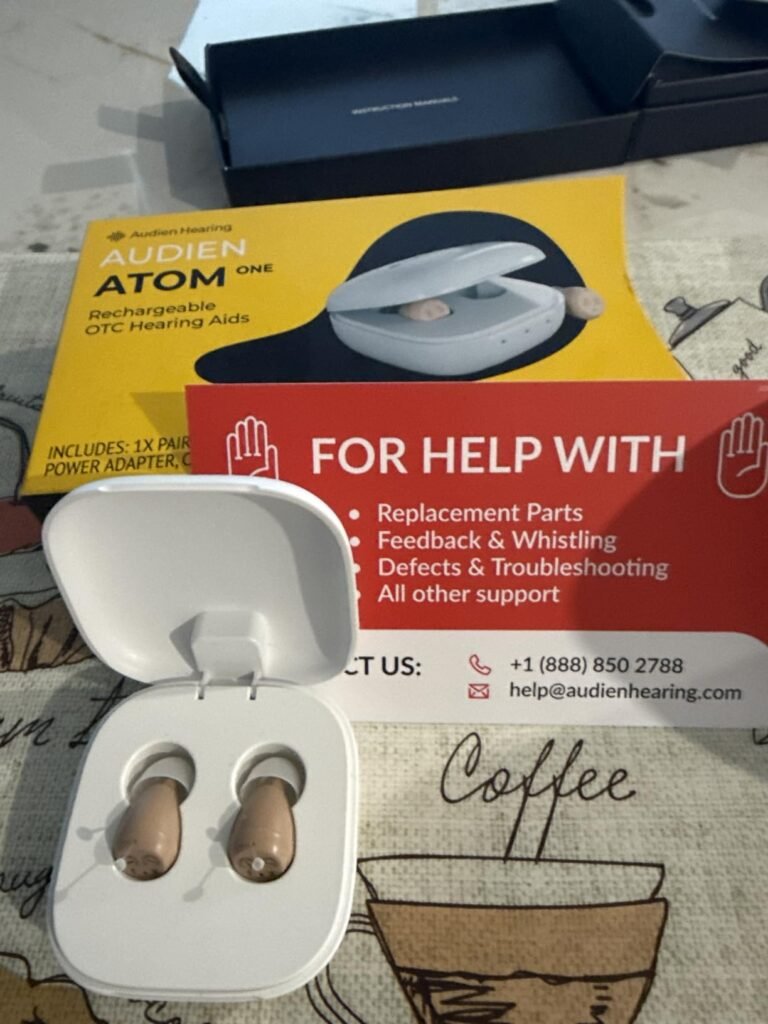
The Audien Atom One takes a deliberately low-tech approach that will appeal to seniors and first-time hearing aid users who find apps and buttons frustrating. Instead of a touchscreen or smartphone pairing, the device uses two small analog dials, one for volume and one for frequency. Turn clockwise to increase, counterclockwise to decrease. The simplicity is the whole point.
We may earn a commission when you buy through this link, at no additional cost to you.
This is a true FDA-registered over-the-counter hearing aid rather than a basic sound amplifier, which matters for buyers who want a legitimate medical device at a lower price point. The frequency dial lets users adjust the tonal balance to emphasize higher or lower sounds, which can be useful for compensating for specific types of hearing loss. The lack of preset listening modes means more hands-on adjustment, but also fewer menus to navigate.
The nano form factor sits discreetly in the ear, and three sizes of silicone domes come in the box to help find a comfortable fit. The devices are universal, meaning either aid can fit either ear, which simplifies setup. A full day of use runs on a single charge, and the USB-C charging dock refills the batteries in about three hours. Devices power on automatically when removed from the dock and off when returned, removing another step for users who struggle with small switches.
Every Atom One purchase includes a complimentary expert-guided setup session. A specialist walks you through proper insertion, dial adjustment, and finding your ideal settings. For first-time hearing aid users who feel overwhelmed by setup, this human support is genuinely useful and often missing from lower-priced competitors.
The relatively modest owner rating suggests that this model works well for the right buyer but may not satisfy everyone. The two-dial system has limits, and users with more complex hearing needs or those who move frequently between quiet and noisy environments may prefer a device with preset modes. For someone who simply wants hearing support without any technology learning curve, however, the Atom One is one of the most approachable options available.
Buyers who want preset listening modes, Bluetooth streaming, or more advanced noise reduction should consider the Atom X or an ELEHEAR model.
We may earn a commission when you buy through this link, at no additional cost to you.
The Audien Atom X solves a specific problem: how do you give users control over listening modes and volume without forcing them to use a smartphone app or press tiny buttons on the devices themselves? The answer is a touchscreen built into the charging case. Tap the case to adjust volume or switch modes, and the changes transmit to the hearing aids automatically. For seniors who struggle with smartphones or dexterity-limited users, this approach removes real friction.
We may earn a commission when you buy through this link, at no additional cost to you.
Four preset listening modes cover the most common environments. Conversation Mode optimizes one-on-one talks, Crowd Mode handles noisy restaurants and gatherings, TV Mode improves dialogue clarity without turning the volume up, and Comfort Mode offers a gentler setting for easing into hearing aid use. Switching between them takes seconds from the touchscreen, which is a meaningful improvement over devices that require app navigation.
Battery life is practical rather than exceptional. A single charge delivers up to 16 hours of use, enough for a typical day, and the portable charging case extends that to 48 hours of total runtime. The case itself serves as both storage and power bank, so you only need to find a wall outlet every couple of days. The device is FDA-registered as an over-the-counter hearing aid, which places it in a different category than basic amplifiers.
Smartphone apps can be powerful, but they also require charged phones, software updates, and comfort with digital menus. The CaseControl touchscreen keeps all the adjustment power in a single physical object that lives alongside the hearing aids. For users who do not want their hearing experience tied to their phone, this is a meaningful advantage worth the price premium.
The price is higher than many competitors, and the owner rating is modest, suggesting that the touchscreen interface may not work equally well for all users. For buyers who specifically value physical, intuitive controls without an app, however, the Atom X offers a genuinely different approach. It is best suited to users who find apps overwhelming but still want the flexibility of multiple listening modes.
Budget-focused buyers or those who want Bluetooth streaming of music and calls will find other models more cost-effective.
We may earn a commission when you buy through this link, at no additional cost to you.
This model is positioned for adults with moderate hearing loss who need slightly more amplification than entry-level devices provide. The 43-decibel maximum gain gives users more headroom in challenging environments, while the five-level volume system keeps adjustment simple. A single button handles power and volume, so there is nothing to memorize and no risk of pressing the wrong control by accident.
We may earn a commission when you buy through this link, at no additional cost to you.
The noise reduction chip actively suppresses feedback and background sound, which is particularly important at higher amplification levels where feedback issues typically worsen. The smart memory function restores the last volume setting when the device powers on, saving users from readjusting throughout the day. This is a small convenience that makes a real difference during routine use.
Battery life matches the strongest performers in this guide. A full charge supports about 25 hours of use, and the included charging case holds enough power for three to four additional recharges, bringing total runtime to approximately 100 hours. A three-hour charge restores the device to full capacity, which is reasonable for a product in this price range. The compact charging case travels well.
Hearing loss that affects conversation at normal volumes typically requires more amplification than milder loss. The 43-decibel maximum gain provides enough boost to make television dialogue and speech in moderately noisy settings significantly clearer. If you often ask people to repeat themselves even in quiet rooms, this level of amplification is likely to help.
The device lacks Bluetooth and app features, which keeps the price down but limits flexibility. For buyers who want the highest amplification available in a simple OTC device and value button-based control, this model delivers. Those with milder hearing loss may find the 43-decibel gain more than they need, and anyone looking for streaming or app-based customization should look higher up the price range.
Buyers with only mild hearing loss may find the higher gain unnecessary and would do better with a lower-amplification model.
We may earn a commission when you buy through this link, at no additional cost to you.
The Oricle hearing aid uses a completely-in-canal design that places the entire device inside the ear canal, making it nearly invisible from the outside. For buyers who prioritize discretion above all else, this form factor is as subtle as consumer hearing aids get. The compact profile also stays stable throughout the day without the behind-the-ear hardware that some users find uncomfortable with glasses or hats.
We may earn a commission when you buy through this link, at no additional cost to you.
Five adjustable sound levels let users tune the amplification to their environment, and the smart memory feature retains the last setting between uses. Noise cancellation targets the background interference that typically makes conversations difficult to follow, which is particularly helpful in restaurants and social gatherings. The silicone ear tips are soft enough for extended wear, though the deep-fit design does take some getting used to.
Battery performance is a highlight, with up to 60 hours of use per charge. That is significantly longer than many competing devices and reduces the frequency of charging routine. The portable charging case supports on-the-go recharging, and the auto on/off function activates the device when removed and powers it down when returned. This hands-free operation is especially helpful for users with limited dexterity.
Completely-in-canal hearing aids typically require a short adjustment period as your ear canal adapts to the sensation of a device sitting deep inside. The occlusion effect, where your own voice sounds echoey or boomy, usually subsides within a few days. Try all three ear tip sizes to find the one that creates a comfortable seal without pressure.
The modest owner rating suggests that fit and sound quality may vary between users, which is worth considering before buying. In-canal designs can feel occlusive, meaning your own voice may sound unnaturally loud until you adjust. For buyers who want the most invisible profile available and are willing to accept the fit learning curve, this model fills a specific niche that other designs cannot match.
Users who want behind-the-ear comfort, Bluetooth streaming, or who find in-canal designs physically uncomfortable should consider a RIC model.
We may earn a commission when you buy through this link, at no additional cost to you.
The ELEHEAR Beyond 2 Pro is the flagship pick in this guide, bringing features that approach prescription-level performance to the over-the-counter market. The VocClear 3.0 processing system lifts target speech out of noisy backgrounds while suppressing feedback caused by movement, glasses, or hats. The result is noticeably clearer conversation in environments that typically defeat lower-priced devices.
We may earn a commission when you buy through this link, at no additional cost to you.
Bluetooth 5.3 connectivity enables direct streaming from iPhone and Android devices for music, podcasts, calls, and video. The sub-9-millisecond latency keeps audio synchronized with on-screen action, which matters for anyone who watches videos or participates in video calls. Built-in Auracast support also allows the aids to tune into shared broadcast audio in supported venues, a forward-looking feature that will become more useful as public spaces adopt the standard.
The physical design has been refined compared to earlier ELEHEAR models. Each aid weighs just 4.3 grams, about 10 percent lighter than the previous Beyond Pro, and the slimmer receiver-in-canal body stays clear of glasses frames. The IP67 rating means the devices can handle dust, sweat, and light rain, which expands their use to outdoor activities and workouts. Battery life delivers 20 hours per charge with four additional charges in the case.
One of the biggest limitations of over-the-counter hearing aids has traditionally been the lack of professional customization. The ELEHEAR remote tuning service bridges that gap, allowing licensed hearing professionals to adjust your device without an in-person visit. For buyers who want personalized sound without clinic trips, this feature alone can justify the price premium over simpler devices.
The ELEHEAR app brings full control over both aids together or independently, with mode switching and battery monitoring. Perhaps most importantly, licensed hearing professionals can remotely fine-tune the devices through the ElePro Basic service, bringing a layer of personalized care that is typically only available with prescription hearing aids. The price is the highest in this guide, but for buyers who want the most capable OTC option available, the Beyond 2 Pro justifies the investment.
Budget-focused buyers or those who do not use a smartphone will not benefit from the premium features and should choose a simpler device.
We may earn a commission when you buy through this link, at no additional cost to you.
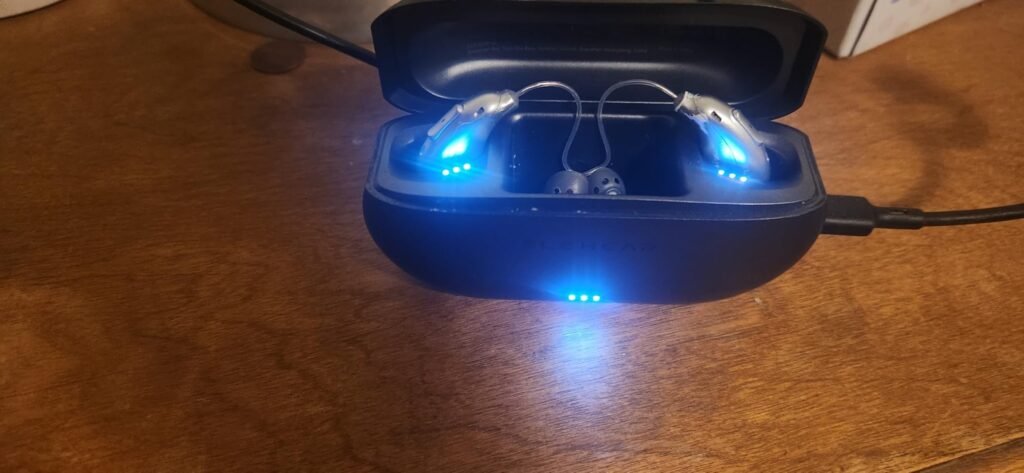
This behind-the-ear model is designed for seniors and adults who want clearer TV dialogue and everyday conversation without any smartphone involvement. The receiver-in-canal design keeps the main housing behind the ear while placing the speaker inside the canal, which produces natural sound and keeps the device comfortable for extended wear. At just 0.1 ounce per aid, the weight is barely noticeable.
We may earn a commission when you buy through this link, at no additional cost to you.
The 16-channel digital signal processor separates speech frequencies from background noise, which is especially helpful when watching television or following conversations at family gatherings. Seven volume levels provide finer adjustment than the common five-level systems, letting users dial in exactly the right level for different situations. A single button handles volume control, and a long press switches between the two listening modes.
Battery performance is among the strongest in this guide. A full charge supports up to 30 hours of use, enough for several days of typical wear, and the charging case extends total runtime to 100 hours. A 15-minute quick charge provides approximately six hours of use, which is useful when you forget to charge overnight. The physical switch for powering on and off is easy to find without looking.
If you wear glasses, a lightweight RIC design can be more comfortable than in-canal models because the hardware sits above and behind your ear rather than competing for space. The 0.1-ounce weight of this model is light enough that most users forget they are wearing it, even after hours of continuous use.
The device deliberately avoids Bluetooth and app features, which keeps the setup simple and the price reasonable. The soft tulip tips create a secure fit that works well with glasses, and the behind-the-ear position avoids the occlusion effect that some users dislike about in-canal designs. For buyers who want comfort, long battery life, and straightforward controls, this model is an excellent choice.
Buyers who want a nearly invisible fit or Bluetooth streaming should consider in-canal or premium models instead.
We may earn a commission when you buy through this link, at no additional cost to you.
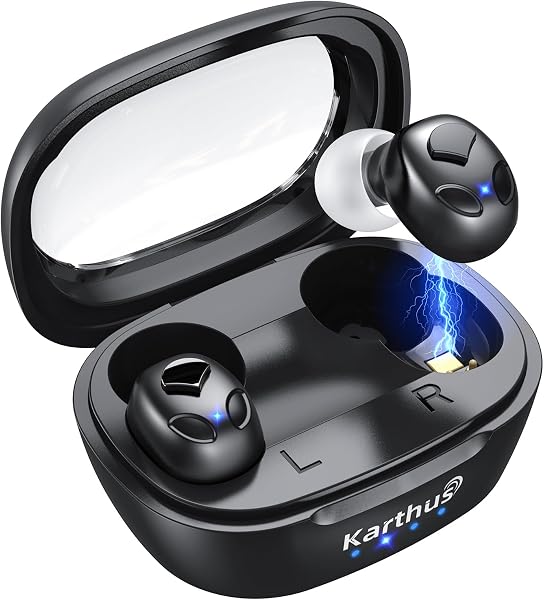
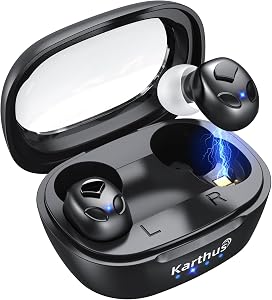
This black variant shares the same core technology as its white counterpart but offers a different aesthetic choice. The deep black color blends well with darker hair and skin tones and is also preferred by some users who want a more technology-forward look. The 16-channel digital signal processor delivers the same noise reduction and feedback suppression performance, so sound quality is identical between the two colorways.
We may earn a commission when you buy through this link, at no additional cost to you.
The two-mode system covers the practical range of everyday situations. Quiet Mode handles indoor conversations and television viewing, while Noise-Canceling Mode suppresses the ambient sound in restaurants, shops, and other active environments. The smart chip prevents the screechy feedback that can occur during normal activities like putting on glasses or receiving hugs, which is one of the most common complaints new hearing aid users have.
Battery life delivers more than 24 hours per charge, with the portable charging case extending total runtime to 72 hours or more. A full charge takes about two hours, which is faster than many competitors. The compact charging case is pocket-friendly for travel, and the deep in-ear fit keeps the devices stable during movement, including exercise and daily errands.
Hearing aid color is often overlooked but can affect how comfortable you feel wearing the device. Darker colors like deep black can appear more technology-oriented, which some users prefer over the medical device look of beige and skin-tone options. Try matching the color to your hair tone for the most discreet appearance.
The absence of Bluetooth and app features keeps the price accessible while maintaining the core performance that matters for most users. For buyers who want a discreet, reliable hearing aid in a darker finish, this model delivers the same strong value proposition as the white version. The choice between the two really comes down to personal preference about appearance.
Buyers who prefer a lighter color to blend with lighter skin tones should choose the white version with identical specifications.
We may earn a commission when you buy through this link, at no additional cost to you.
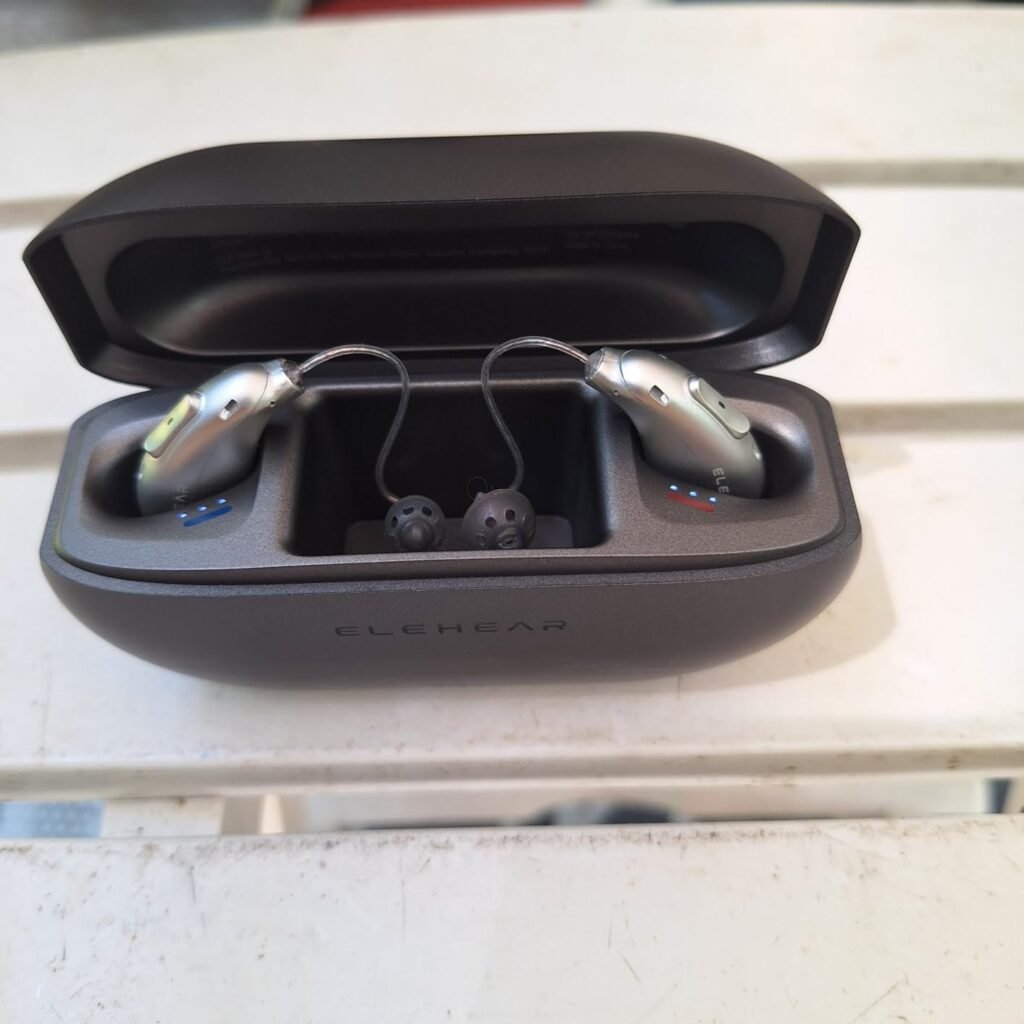
The ELEHEAR Beyond was the predecessor to the Beyond 2 Pro and remains a strong choice at a lower price point. It brings VocClear AI technology, Bluetooth connectivity, and app-based customization to buyers who want premium features without the latest flagship pricing. The 50-decibel maximum gain is the highest in this guide, making this model suitable for users with moderate hearing loss who need significant amplification.
We may earn a commission when you buy through this link, at no additional cost to you.
The AI-powered speech enhancement separates speech from background noise more effectively than basic digital signal processing, which translates to clearer conversation in restaurants, meetings, and social gatherings. The 24-decibel noise attenuation reduces ambient sound without flattening the overall audio experience. The receiver-in-canal design places the speaker close to the eardrum for natural sound while keeping the main housing discreetly behind the ear.
The ELEHEAR app unlocks the device’s full capabilities. Beyond basic volume adjustment, the app includes AI translation for conversations across languages, serene sound relief for tinnitus comfort, and telephone speech enhancement for clearer calls. User-customized compensation lets you fine-tune the sound to your specific hearing profile, going beyond preset modes. Battery life delivers 20 hours per charge and 100 hours total with the case.
AI translation can be a useful feature for frequent travelers, professionals who work across language barriers, or households where multiple languages are spoken. The feature is not perfect and works best for structured conversation rather than fast-paced exchanges, but for the right buyer it adds genuine value beyond standard hearing enhancement.
The owner rating is lower than the newer Beyond 2 Pro, which suggests that the latest flagship has refined the formula. However, the Beyond still offers meaningful features at a lower price, including the AI translation capability that few competitors match. For buyers who want advanced features and are comfortable with a smartphone-dependent setup, this model offers strong value in the premium segment.
Buyers who want the latest flagship features should spend more for the Beyond 2 Pro, and those with mild loss may not need the 50-decibel gain.
We may earn a commission when you buy through this link, at no additional cost to you.
Shopping for over-the-counter hearing aids involves balancing sound quality, control preferences, battery life, discretion, and budget. The right choice depends on how severe your hearing loss is, where you spend most of your time, and how comfortable you are with technology. This section walks through the factors that genuinely matter so you can match a device to your needs.
Over-the-counter hearing aids are designed for adults with perceived mild to moderate hearing loss. Severe or profound hearing loss generally requires a prescription device and professional fitting. Before shopping, consider whether you can usually follow conversations in quiet rooms but struggle in restaurants or group settings. If so, you likely fall in the mild to moderate range that OTC devices address.
Amplification gain is the specification that most directly addresses severity. Devices in this guide range from around 40 decibels of gain for mild loss up to 50 decibels for moderate loss. Higher gain is not automatically better, because excessive amplification can cause discomfort and increase feedback issues. Choose a device whose maximum gain matches your actual needs rather than defaulting to the highest number available.
If you are uncertain about your hearing loss level, a free online hearing test can provide a general estimate, though a professional audiogram remains the gold standard. Starting with a lower-gain device and upgrading if needed is often more comfortable than starting with maximum amplification.
Modern hearing aids use digital signal processing to separate speech from background noise, suppress feedback, and shape the frequency response for clearer sound. Channel count is one indicator of processing sophistication. The 16-channel systems found in several models in this guide divide the sound into enough frequency bands to make meaningful adjustments without becoming overcomplicated. More channels can offer finer control but also increase price and complexity.
Noise reduction and feedback suppression are the two features that most directly affect everyday comfort. Noise reduction helps you follow conversations in busy environments by lowering the volume of ambient sounds relative to speech. Feedback suppression prevents the whistling that occurs when amplified sound leaks out of the ear and gets picked up again by the microphone. Both features work automatically on quality devices and dramatically improve usability.
If you spend most of your time in quiet environments, basic digital processing is likely sufficient. If restaurants, gatherings, and other noisy settings are a regular part of your life, prioritize models with advanced noise reduction and feedback suppression such as the ELEHEAR Beyond series.
Nearly all current OTC hearing aids use rechargeable batteries, which eliminate the hassle and recurring cost of disposable button cells. Battery life per charge typically ranges from 16 to 30 hours, which is sufficient for a full day of wear. Total runtime with the charging case can extend to 48, 80, or even 100 hours between wall charges, making travel and extended trips easier to manage.
Charging time varies between models. Some devices reach a full charge in two to three hours, while others require longer. Quick charge features that provide several hours of use from a short charging session can be genuinely useful when you forget to charge overnight. Consider your daily routine and how often you can realistically plug in the charging case.
If you travel frequently or spend long days away from home, prioritize models with high total battery capacity like the 100-hour options in this guide. For users who are consistently home at night, a shorter total runtime is less of a concern.
Hearing aids come in three main form factors, each with different tradeoffs. Behind-the-ear with receiver-in-canal designs place the main housing behind the ear and run a thin wire to a speaker in the ear canal. These models tend to be comfortable, work well with glasses, and offer the longest battery life, but they are more visible than in-canal options. Completely-in-canal designs sit entirely inside the ear canal and are nearly invisible from outside.
In-ear or in-canal designs occupy a middle ground, sitting at the entrance of or partially inside the ear canal. These models offer a good balance of discretion and ease of handling. Color choice also affects visibility, with lighter tones blending better with lighter skin and darker tones being more visible but sometimes preferred for a tech-forward look.
If discretion is your top priority, consider a completely-in-canal design like the Oricle. If comfort and compatibility with glasses matter more, choose a RIC design. For most buyers, in-ear designs offer the best overall balance.
Hearing aid controls range from simple analog dials to smartphone apps with dozens of options. The right level of control depends on your comfort with technology and how often you need to adjust the device. Analog dials and physical buttons work without a phone and offer the most predictable experience, which is ideal for seniors or users who prefer physical controls. Smartphone apps unlock more features but require ongoing comfort with digital menus.
Innovative hybrid approaches like the touchscreen case on the Audien Atom X offer middle-ground solutions. These keep adjustment power in a physical device without requiring app navigation. Volume memory features that save your last setting between uses can significantly reduce daily adjustment effort regardless of control type.
If you avoid smartphones or struggle with apps, choose a device with physical controls like the 5-level volume models or the Audien Atom One. If you want maximum flexibility and are comfortable with technology, the ELEHEAR app-based options offer the most customization.
Bluetooth streaming transforms hearing aids from pure amplification devices into hybrid audio tools. With Bluetooth 5.3 connectivity like the ELEHEAR Beyond 2 Pro provides, you can stream phone calls directly to your aids, listen to music or podcasts, and participate in video calls with synchronized audio. For users whose phone is a significant part of their daily life, this feature meaningfully improves the hearing experience.
The tradeoff is complexity. Bluetooth devices require pairing, occasional reconnection, and sometimes firmware updates. They also depend on your phone being present and charged. For users who view hearing aids strictly as hearing assistance, Bluetooth features add cost and complication without benefit. For users who want integrated audio across all their devices, Bluetooth is a game-changer.
If your phone plays a central role in your daily life and you want streaming for calls and media, choose a Bluetooth-enabled model. If you want hearing support without additional technology, a simpler device will likely satisfy you better.
Hearing aid comfort depends heavily on getting the right fit, and the right fit starts with the ear tips. Most quality OTC devices include multiple ear tip sizes, typically small, medium, and large, so you can experiment to find what works best. The correct size creates a comfortable seal without pressure and keeps the device stable during normal movement. A tip that is too small will let sound leak out and may fall out, while one that is too large can cause discomfort and feedback issues.
Different tip styles suit different ears. Closed tips create a tighter seal and work well for higher-amplification devices, while open and tulip tips allow more natural sound to reach the ear alongside the amplified signal. Open tips often feel more comfortable for users with primarily high-frequency hearing loss who still hear low frequencies well naturally.
If possible, try each included ear tip size before settling on one. A proper fit is often the difference between a hearing aid you forget you are wearing and one that becomes uncomfortable within hours.
Over-the-counter hearing aid prices range from under $100 to several hundred dollars, with premium models approaching $700. In general, higher prices bring more advanced sound processing, Bluetooth connectivity, app control, and professional support features like remote tuning. However, the price-to-performance curve is not perfectly linear, and some mid-priced models offer excellent value for buyers whose needs match their feature set.
Compare total cost of ownership rather than just purchase price. Rechargeable devices eliminate the recurring expense of disposable batteries, which can add up over time. Warranty length and included accessories also factor into value. Many manufacturers offer 30-day return windows that let you try the device risk-free, which is particularly valuable for first-time buyers.
If you are new to hearing aids and uncertain about your needs, start with a mid-priced model that offers the core features you want. You can always upgrade later if you find yourself wishing for more advanced capabilities, and starting modestly reduces the risk of overpaying for features you do not use.
When you first receive your hearing aids, start with a quiet environment and a low volume setting. Sounds you have not heard clearly in years may feel unexpectedly loud or sharp at first, and gradually increasing the volume over several days gives your brain time to adapt. Try the included ear tip sizes to find the most comfortable fit, and expect a short adjustment period as your ears get used to the sensation of wearing the devices.
Daily care extends the life of your hearing aids significantly. Wipe the devices with a soft, dry cloth after each use to remove earwax and skin oils. If your model includes a cleaning brush, use it to clear the speaker opening and microphone ports regularly. Avoid exposing the devices to water, high humidity, or extreme temperatures unless the model has a specific water resistance rating like the IP67-rated ELEHEAR Beyond 2 Pro. Store the aids in the charging case when not in use to protect them from dust and physical damage.
Replace ear tips when they show signs of wear, typically every one to three months depending on use. Wax guards, if your device uses them, should be replaced according to the manufacturer’s schedule to prevent sound quality degradation. Keep the charging case clean and verify that the charging contacts remain free of debris. For rechargeable devices, aim to charge the case before the battery runs completely flat, as this habit extends overall battery lifespan. If sound quality degrades or feedback increases unexpectedly, clean the device thoroughly before assuming a hardware problem.
No. Over-the-counter hearing aids are available without a prescription, hearing test, or doctor's visit. The FDA created this category specifically to make hearing support more accessible for adults with mild to moderate hearing loss. If you suspect severe hearing loss or have specific medical concerns, consulting an audiologist is still a good idea.
Most users need two to four weeks to fully adjust to new hearing aids. During this period, your brain is relearning how to process sounds you may not have heard clearly in years. Start with lower volumes in quiet environments and gradually increase both the volume and the complexity of your listening situations. Patience during this adjustment period significantly improves long-term satisfaction.
Hearing aids amplify and clarify sound but do not restore natural hearing. They can significantly improve your ability to follow conversations and enjoy daily life, but even the best devices have limits in extremely noisy environments. Setting realistic expectations helps you appreciate the real benefits without feeling disappointed by situations where no device would perform perfectly.
Most adults with hearing loss benefit from wearing two hearing aids because our brains are designed to process sound from both ears. Two aids improve speech understanding in noise, help with sound localization, and reduce listening fatigue. All the models in this guide come as pairs. If your hearing loss is clearly asymmetric, consult a professional for personalized guidance.
No. Remove hearing aids before sleeping, showering, swimming, or any other activity involving water or extended lying down. Even water-resistant models like the IP67-rated ELEHEAR Beyond 2 Pro are rated for incidental exposure like sweat and light rain, not submersion. Removing the devices at night also gives your ear canals time to breathe and reduces moisture buildup.
Ear tips typically last one to three months before needing replacement, depending on how much you wear the device and your earwax production. Wax guards, if applicable, should be changed according to the manufacturer's recommendation, often every few weeks. The rechargeable battery inside the device itself usually lasts several years before capacity noticeably degrades.
Premium OTC models like the ELEHEAR Beyond 2 Pro approach prescription performance for mild to moderate hearing loss, particularly with features like remote professional tuning. However, prescription devices still offer more sophisticated customization for complex hearing profiles and severe loss. For many adults with straightforward mild to moderate loss, OTC devices provide excellent value compared to prescription alternatives that can cost ten times more.
It depends on the model. Bluetooth-enabled devices like the ELEHEAR Beyond and Beyond 2 Pro pair directly with iPhone and Android phones for streaming calls, music, and app-based customization. Many simpler OTC models have no smartphone connectivity, which is a deliberate design choice for users who prefer standalone devices. Check the specifications before buying if phone integration matters to you.
Feedback often indicates a poor ear tip fit, so try a larger tip size for a better seal. Earwax buildup in the ear canal or on the device can also cause feedback, so clean the aid and consider professional ear cleaning if needed. Modern devices with digital feedback suppression dramatically reduce whistling, but no technology eliminates it entirely in all situations.
Many OTC hearing aids are eligible for purchase with Flexible Spending Account (FSA) or Health Savings Account (HSA) funds, including models like the Audien Atom series and ELEHEAR devices. Traditional health insurance coverage for hearing aids varies widely and is often limited. Check with your plan administrator for specific coverage details, and keep purchase receipts for FSA or HSA reimbursement claims.
The ELEHEAR Beyond 2 Pro stands out as the strongest overall choice for buyers who want the most capable over-the-counter hearing aid available. Its combination of VocClear 3.0 speech enhancement, Bluetooth 5.3 streaming, IP67 water resistance, lightweight design, and remote professional tuning brings features that approach prescription-level performance at a fraction of the cost. For users who are comfortable with a smartphone-connected device, it is hard to beat.
Several alternatives serve different buyers well. The OTC Rechargeable models in white and black deliver excellent noise reduction and 80-hour battery life at a value price for buyers who want quality without premium features. The 5-Level Volume Hearing Aids and 5-Level Button Hearing Aid provide dependable amplification with simple controls, which is ideal for seniors or anyone who prefers physical buttons. The Audien Atom X stands out for its touchscreen case, bridging the gap between app-dependent and button-only designs.
Ultimately, the right choice depends on honest self-assessment about your hearing needs, comfort with technology, and budget. Buyers with mild loss who primarily want help in quiet environments can succeed with sub-$150 options, while those with moderate loss or active social lives benefit from investing in premium features like advanced noise reduction and Bluetooth connectivity. Take advantage of return windows to try your top pick in your actual daily life, and remember that any properly chosen OTC hearing aid is far better than struggling without one.