5-Level Volume Hearing
9.4Editor score16-channel chip
100-hour total battery
40dB sound amplification
RIC speaker design
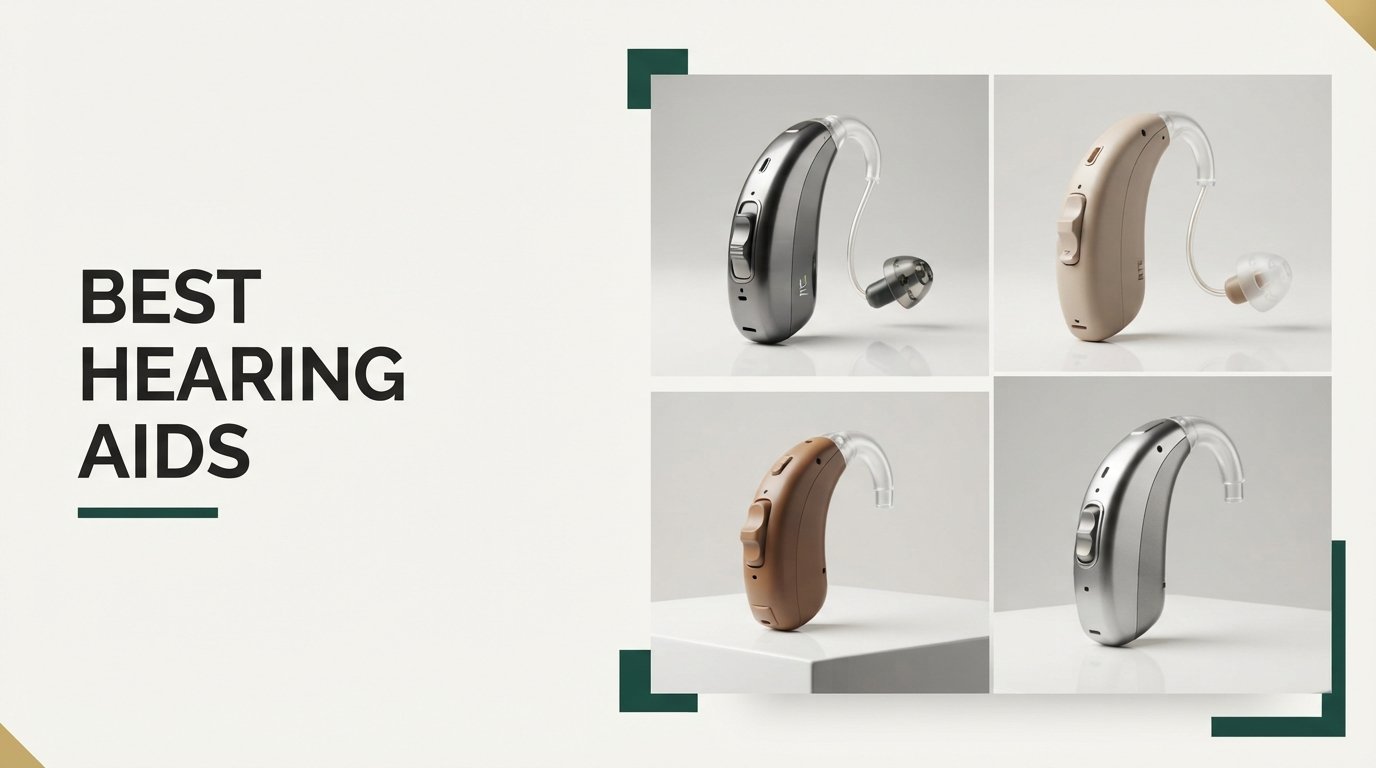
Compare 10 rechargeable hearing aids by battery life, noise reduction, comfort, controls, and value to find the right fit for daily listening needs.
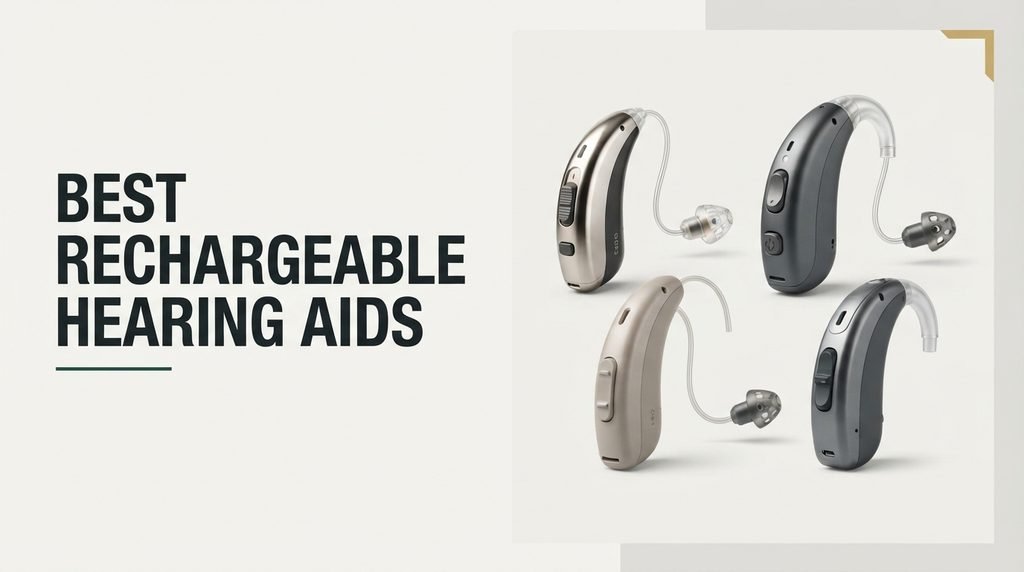
Finding the right rechargeable hearing aids for 2026 means balancing sound clarity, battery runtime, comfort, and ease of use against your real listening environments. This guide compares 10 standout options by the factors that matter most, including noise cancellation quality, channel count, charging case capacity, fit style, control simplicity, app features, and overall value for daily wear.
Rechargeable models vary widely in how they handle background noise, how long they run per charge, and whether they offer app-based customization or simple analog dials. Some suit tech-savvy users who want Bluetooth streaming and AI features, while others prioritize one-button operation for seniors who prefer straightforward daily use without a smartphone.
Price points in this category span from under one hundred dollars to several hundred, and the differences often come down to processing sophistication, dome variety, and support services. Understanding which features genuinely improve your listening experience, versus which are marketing extras, is the key to choosing wisely without overspending or underbuying.
We compared 10 rechargeable hearing aids using the details that actually help a buyer decide: sound processing channels, noise reduction effectiveness, single-charge battery life, charging case capacity, fit style and comfort, control simplicity, app or Bluetooth capability, included accessories, owner feedback, and overall value. The notes focus on practical trade-offs so each pick connects to how adults and seniors actually wear, charge, and maintain hearing devices across quiet homes, noisy restaurants, and travel environments.


Compare key features, scores, and current prices side by side. A shorter feature list means fewer details were available, not necessarily fewer capabilities.


This OTC model is built for adults who want a straightforward rechargeable hearing device without the complexity of app-based controls. The 16-channel digital signal processing handles speech frequencies separately from background noise, which helps conversations stand out in moderately busy settings. For first-time users intimidated by advanced hearing aid technology, the simple design removes most of the learning curve.
We may earn a commission when you buy through this link, at no additional cost to you.
The smart chip automatically works to suppress whistling feedback before it starts, which is one of the most common complaints new wearers have. Noise reduction processing focuses on speech while cutting distracting ambient sound, so TV dialogue and face-to-face conversations tend to come through more clearly. The two environment modes let you switch between quiet daily settings and noisier public spaces with a single interaction.
Battery life is a real strong point here. A two-hour charge delivers 24 or more hours of use, and the portable charging case extends total runtime to over 80 hours before you need to find an outlet. This makes it practical for weekend trips or days when you forget to charge the night before. The compact in-ear shape sits deep enough to stay discreet while remaining comfortable for extended wear.
Many first-time hearing aid users find that two well-tuned modes cover the vast majority of their daily listening situations. A quiet mode works for home conversations, reading in the living room, or watching TV, while a noise-canceling mode handles grocery stores, restaurants, and family gatherings. Avoiding more complex mode selection keeps daily use simple and reduces the chance of being stuck in the wrong setting.
Choose this model if you want reliable sound processing, a strong battery, and simple controls at a reasonable price. If you need more granular volume levels, Bluetooth streaming, or multiple scene presets, one of the premium app-controlled models in this guide will serve you better.
Users who want Bluetooth streaming, smartphone app control, or more than two listening environment presets.
We may earn a commission when you buy through this link, at no additional cost to you.
This 5-level model is designed around a simple truth: seniors who find a comfortable volume setting rarely want to readjust it every time they turn the device on. The built-in volume memory saves your last setting, so each power-on starts exactly where you left off. For users who want to avoid daily fiddling, this one feature can make a surprising difference in overall satisfaction.
We may earn a commission when you buy through this link, at no additional cost to you.
The 16-channel chip paired with noise-canceling technology works to separate human voices from ambient background sound. The RIC configuration places the speaker directly at the entrance of the ear canal, which can produce a more natural sound than traditional behind-the-ear tubing. Amplification tops out at 40dB plus or minus 5dB, which fits the typical mild to moderate hearing loss range these devices are designed for.
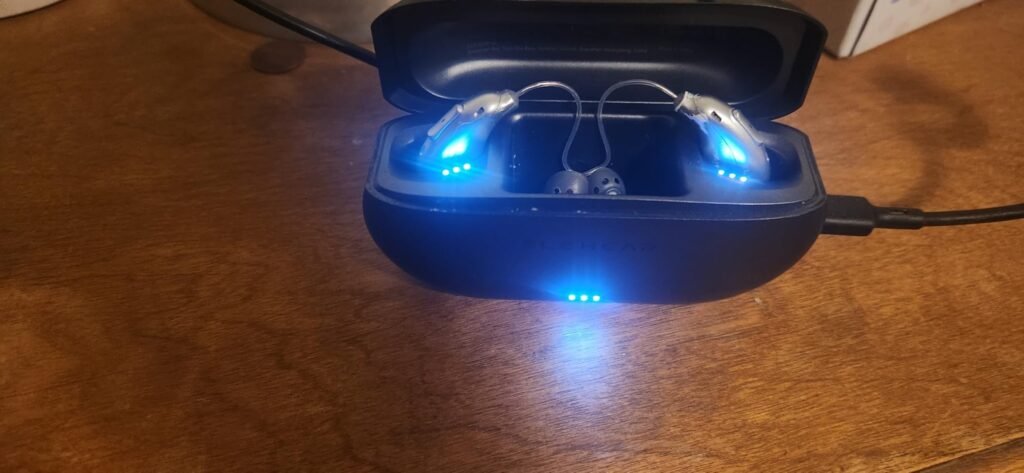
A single charge delivers around 25 hours of use, and the charging case holds three to four full recharges for a total of about 100 hours between wall-outlet visits. The LED display shows battery level at a glance, which eliminates the uncertainty of wondering whether you have enough power for the day. Multiple ear tip sizes come in the box, including small, medium, and large options, to help you find a secure, comfortable fit.
Many hearing aids require the user to adjust volume each time they power on. For seniors with limited dexterity or those who simply want fewer daily tasks, volume memory removes a small but recurring frustration. Once you dial in a comfortable level, the device remembers it across power cycles, so you can focus on your day rather than on small button presses before every outing.
This is a good match for seniors or caregivers who want set-and-forget volume behavior combined with respectable battery life. If you need stronger amplification for more significant hearing loss, or you want advanced noise processing for very loud environments, a premium app-controlled model may be worth the step up.
Users with severe hearing loss requiring more than 40dB of amplification, or those who want smartphone-based customization.
We may earn a commission when you buy through this link, at no additional cost to you.
This behind-the-ear model earns an Editor's Choice nod for hitting the sweet spot of clear speech processing, long battery life, and simple operation. The 16-channel digital signal processor handles speech across multiple frequency bands and works to reduce background distractions, which is particularly helpful for family conversations and TV dialogue. For adults with mild to moderate hearing loss, this balance of capability and simplicity is hard to beat.
We may earn a commission when you buy through this link, at no additional cost to you.
Daily usability is where this model really shines. A physical switch turns it on, one button cycles through seven volume levels, and a long press changes modes. No app, no Bluetooth pairing, no smartphone required. For seniors who want a hearing aid that works like a tool rather than a tech gadget, this approach removes nearly every potential point of confusion.
Battery performance is strong, with up to 30 hours per single charge and up to 100 hours when combined with the charging case. A 15-minute quick charge delivers up to 6 hours of use, which is a lifesaver when you forget to charge overnight. The receiver-in-canal design weighs just 0.1 ounce and uses soft tulip tips for a glasses-friendly fit, which matters for anyone who already wears eyeglasses throughout the day.
A 15-minute top-up that provides six hours of listening is more useful than it sounds. If you wake up and realize you forgot to put the devices in the charging case overnight, you can get ready for the morning while they sit on the charger, and still have a full morning of listening ready to go. Quick charge removes much of the anxiety that older rechargeable hearing aid designs introduced.
This is the right pick if you want excellent speech clarity, long battery life, and the simplest possible controls. Buyers who want app-based customization, Bluetooth phone calls, or support for severe hearing loss will need to look at prescription devices or the premium models further down this list.
Users with severe or profound hearing loss, or those who want Bluetooth streaming for phone calls and music.
We may earn a commission when you buy through this link, at no additional cost to you.
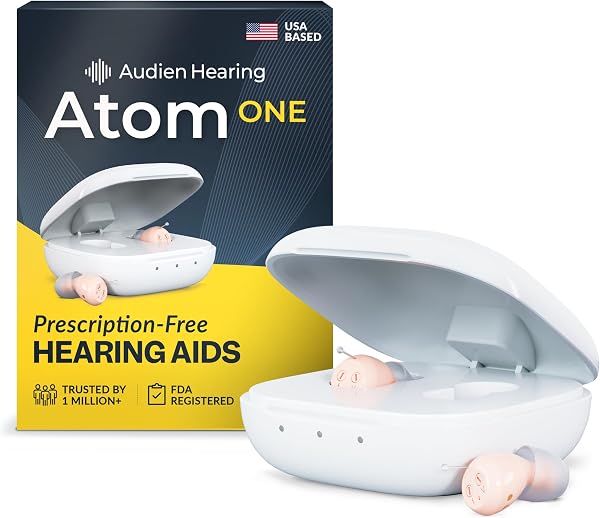
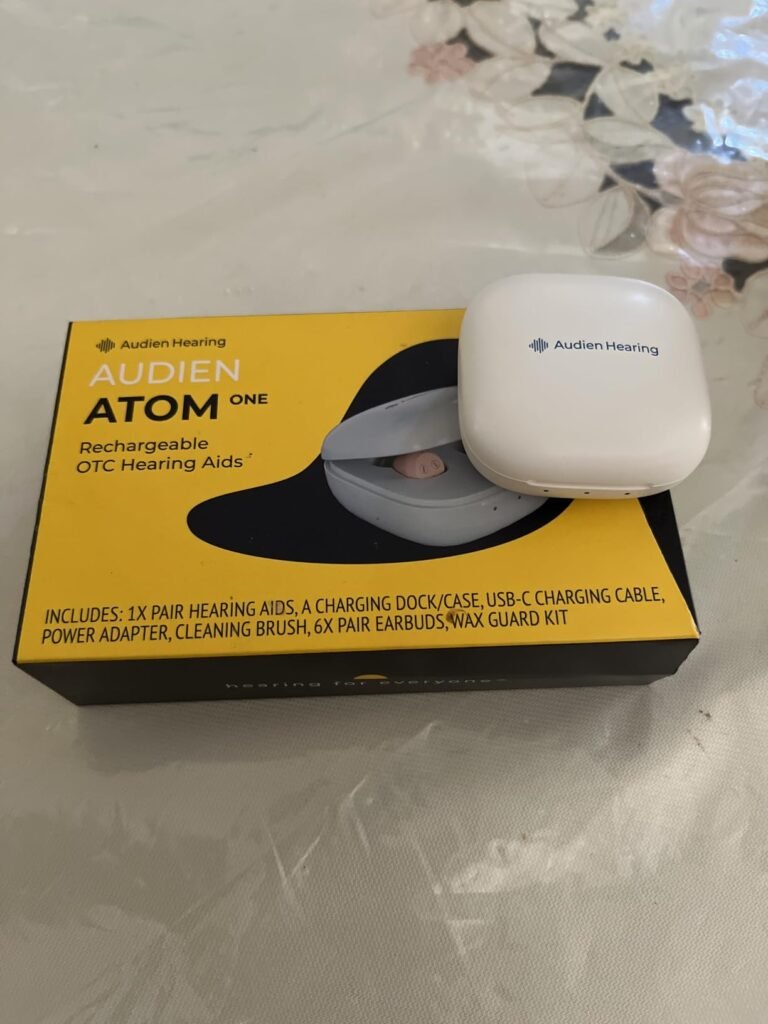
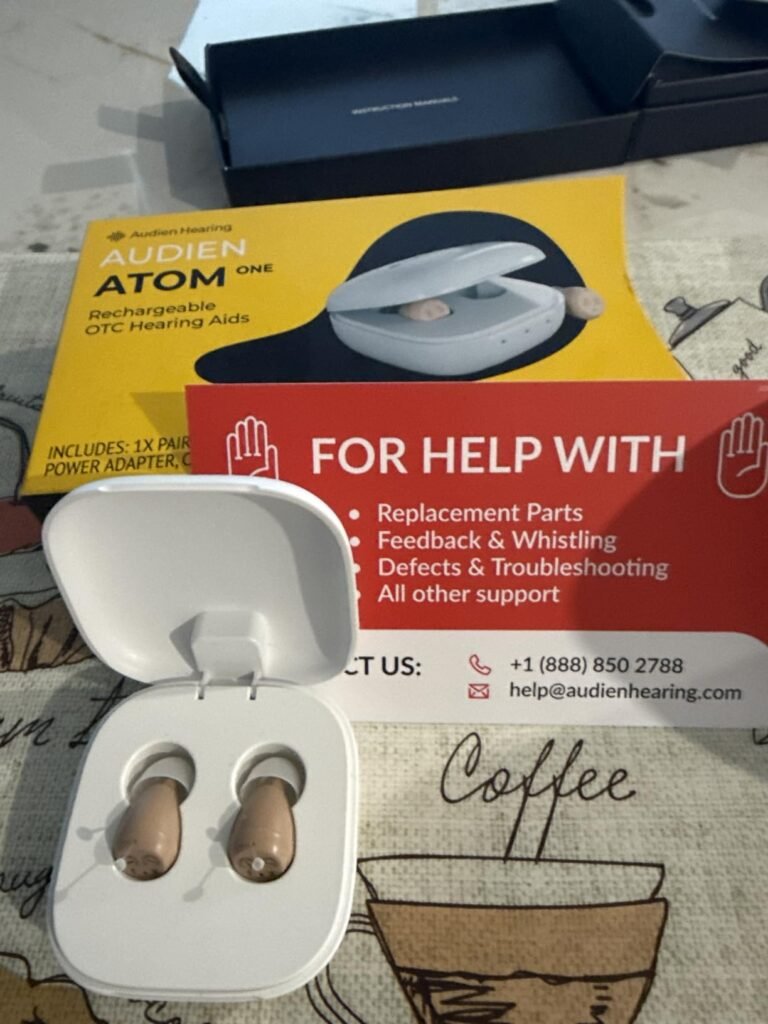
The Audien Atom One takes a deliberately low-tech approach that will appeal to users who dislike buttons, apps, and complicated settings. Two analog dials, one for volume and one for frequency, let you tune the device by feel. Turn clockwise to increase and counterclockwise to decrease. This simplicity is a legitimate feature for seniors who struggle with tiny buttons or anyone who wants hearing support without a tech learning curve.
We may earn a commission when you buy through this link, at no additional cost to you.
As an FDA-registered OTC hearing aid, it is positioned as a real hearing aid rather than a basic amplifier, and it is designed for adults with mild to moderate hearing loss. The frequency dial is particularly useful because it lets you emphasize different parts of the sound spectrum, which can help if your hearing loss affects certain pitches more than others. Starting low and working up is the recommended approach to find a comfortable setting.
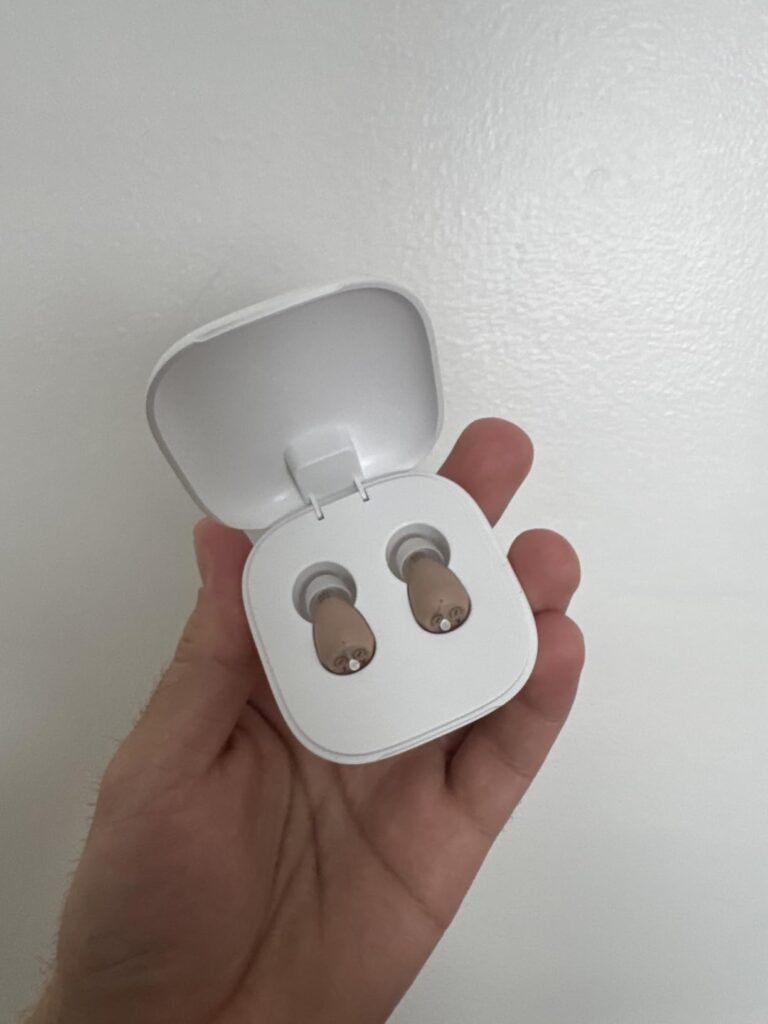
Battery life covers a full day on a single charge, with the USB-C charging dock delivering a full recharge in about three hours. The devices automatically power on when removed from the dock and off when placed back, so there is no on-off switch to fumble with. The nano in-ear design is small enough to be nearly invisible, and three sizes of silicone ear domes help you find the right fit. A pull-wire is included for safe removal.
Not every user benefits from digital modes and multi-channel processing. Some people simply want a predictable amplifier that boosts the sounds they are missing, with the ability to dial in volume and frequency to taste. Analog dials respond immediately and consistently, with no software menus or button sequences to remember. For a certain type of user, this straightforward approach produces more satisfaction than a feature-rich alternative.
Pick this model if you specifically want analog dial controls and a very discreet fit at a lower price point. The lower average owner rating suggests mixed experiences, so be prepared to use the included Audien Sound Check expert setup session to get the most out of the device. Users expecting advanced digital noise cancellation will want to look elsewhere.
Users who want digital noise reduction modes, app-based customization, or Bluetooth connectivity.
We may earn a commission when you buy through this link, at no additional cost to you.
This model stands out for its exceptional battery performance. A single charge delivers up to 60 hours of use, and the portable charging case provides over 110 hours of backup power. For travelers, caregivers who help someone else manage charging, or anyone who just hates thinking about battery life, this runtime removes battery anxiety almost entirely.
We may earn a commission when you buy through this link, at no additional cost to you.
Sound processing uses adaptive noise cancellation that automatically adjusts to your surroundings rather than requiring you to switch modes manually. The latest-generation digital chip prioritizes speech frequencies and works to filter background noise, which is particularly useful in environments where sound conditions change frequently throughout the day. The practical benefit is less fiddling with controls and more consistent listening.
The design keeps things simple. A single button cycles through five volume levels, and a long press of five seconds powers the devices on or off. Even easier, the smart charging case automatically turns the devices off when you insert them and on when you remove them. At just 2 grams per earpiece, the devices are among the lightest available, which supports comfortable all-day wear without ear fatigue.
Adaptive noise reduction shines when you move through many environments in a single day: quiet morning at home, drive with road noise, errands in a store, lunch at a cafe, afternoon back home. Rather than switching modes at each transition, the device adjusts in the background. For users with a predictable daily routine in similar environments, however, manual mode selection may still produce slightly better results in each specific setting.
This is a smart choice for users who prioritize battery life and automatic sound adaptation over manual mode selection. If you prefer to control your own mode changes based on the specific environment you are entering, a model with dedicated environment buttons may suit you better.
Users who prefer to manually select specific listening modes for different environments throughout the day.
We may earn a commission when you buy through this link, at no additional cost to you.
The EarCentric EasyCharge differentiates itself by including both a desktop charging dock and a portable charging case in the box. One stays on your nightstand for overnight charging, and the other travels in a bag for weekend trips, hotel stays, or longer vacations. For users who split time between home and travel, this dual-charger approach removes the common hassle of unplugging a dock and taking it on the road.
We may earn a commission when you buy through this link, at no additional cost to you.
Battery life is substantial. A single quick charge delivers three full days of hearing, and the portable case holds three more charges, totaling up to 12 days between wall-outlet visits. This makes the device particularly well suited for extended travel, including trips where consistent power access is uncertain. The behind-the-ear configuration includes both regular and long tubes to accommodate different ear shapes and preferences.
The device is designed for real-life comfort with a discreet behind-the-ear fit, simple volume control, and multiple ear dome options for finding a secure fit. The behind-the-ear style works especially well with glasses, since the hearing aid body sits above the ear and the thin tube runs down to the dome. US-based support is available for setup and everyday questions, which is a meaningful advantage over brands with only overseas email support.
Hearing aid owners who travel often learn the hard way that forgetting the charging dock at home means scrambling for alternatives. Having a dedicated travel case that lives in your luggage eliminates the risk of leaving the primary charger behind. It also means you can keep the desktop dock plugged in and ready at your nightstand without the daily routine of packing and unpacking it when you take a short trip.
Choose this model if you travel frequently or value having redundant chargers so you never worry about forgetting the dock at home. If you want in-ear invisibility, a different form factor will suit you better, since the behind-the-ear design is visible to anyone looking directly at your ears.
Users who want an invisible in-ear design or app-based customization features.
We may earn a commission when you buy through this link, at no additional cost to you.
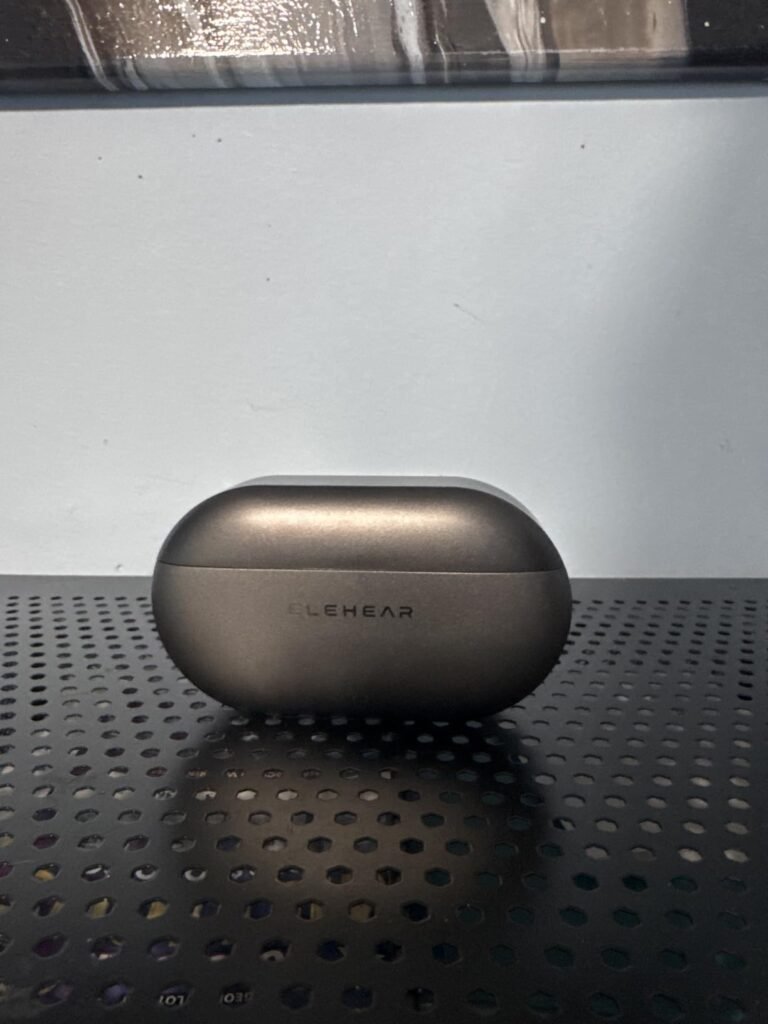
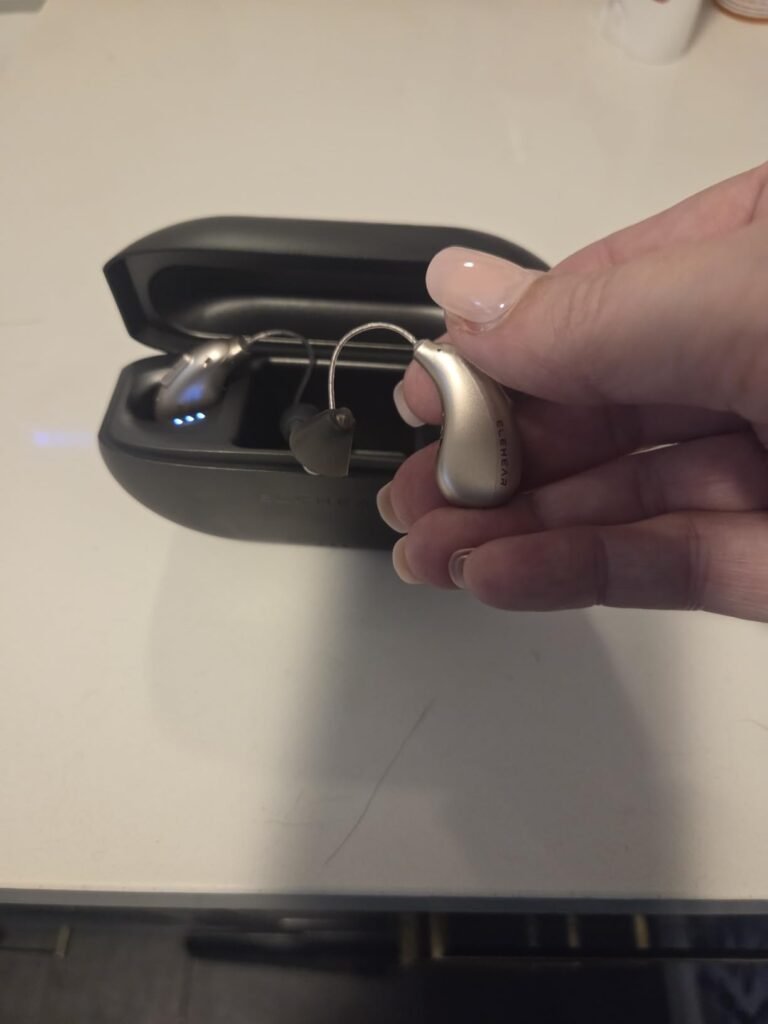
The ELEHEAR Beyond with 50dB amplification is a step up from basic rechargeable models, aimed at users who want adjustable scene modes and AI-driven noise processing. The VocClear AI technology is designed to boost speech clarity while reducing background noise, with the manufacturer citing 17 percent speech clarity improvement and 24dB of noise reduction. For users who struggle in restaurants, meetings, or other speech-in-noise situations, these features can make a meaningful difference.
We may earn a commission when you buy through this link, at no additional cost to you.
Four scene modes let you switch between tailored settings for different environments. Rather than relying on a single automatic adjustment, you can choose a profile designed for the specific situation you are in. This gives experienced users more granular control than two-mode or auto-only devices, which is especially valuable if your daily routine includes very different acoustic environments.
Battery performance offers up to 20 hours of runtime on a single charge, with the case providing four additional charges for 100 hours total. A 15-minute quick charge delivers 6 hours of use, which is helpful for emergencies or forgotten overnight charges. The behind-the-ear design is lightweight and discreet, with nine dome sizes to help you find a snug fit regardless of ear shape.
Automatic processing adjusts in the background without user input, which is simpler but can occasionally choose the wrong setting for your preference. Manual scene modes give you direct control, so you can prioritize what matters most in each specific environment. Many experienced hearing aid users find they prefer manual mode selection once they identify which setting works best for their regular locations and activities.
This model suits users who want more customization than entry-level devices offer and are comfortable using a smartphone app to manage settings. If you prefer purely physical controls without a phone, or if you need prescription-level support for severe hearing loss, look to other models in this guide.
Users who do not use a smartphone or prefer purely physical controls without app involvement.
We may earn a commission when you buy through this link, at no additional cost to you.
The Flaygo model is engineered around comfort, with each earpiece weighing just 3.5 grams. For users who find traditional hearing aids heavy or uncomfortable after a few hours, this lightweight profile can extend wearable time significantly. The ergonomic shape is designed to follow the contours of the ear canal, which helps keep the device in place without pressure points.
We may earn a commission when you buy through this link, at no additional cost to you.
Under the hood, a 16-channel digital chip handles intelligent noise reduction to filter out background sound. A dedicated whistling suppression system works to eliminate the feedback that frustrates many new hearing aid users. The combination is aimed at producing a natural, high-definition sound profile that supports comfortable listening without the processing artifacts of cheaper amplifiers.
Operation is deliberately simple. One button cycles through four volume levels, which is enough granularity for most users without becoming overwhelming. USB-C fast charging delivers a full charge in two hours, and the charging case holds four recharges, totaling about 80 hours of smooth listening between wall-outlet visits. For a week of normal daily use, you can leave the charger at home.
Hearing aid weight is one of the most underrated comfort factors. A device that feels fine in the first hour can become noticeable or irritating after six or eight hours of continuous wear. Lightweight models reduce pressure on the ear canal and outer ear, which supports longer comfortable wear time. For users who wear hearing aids from morning until bedtime, every gram makes a difference.
This is a solid pick for users who prioritize lightweight comfort and simple controls at a competitive price. The beige color is slightly less discreet than clear or skin-matched options, so if you want maximum invisibility, consider a model with a less visible housing color.
Users who want more than four volume levels or app-based customization.
We may earn a commission when you buy through this link, at no additional cost to you.
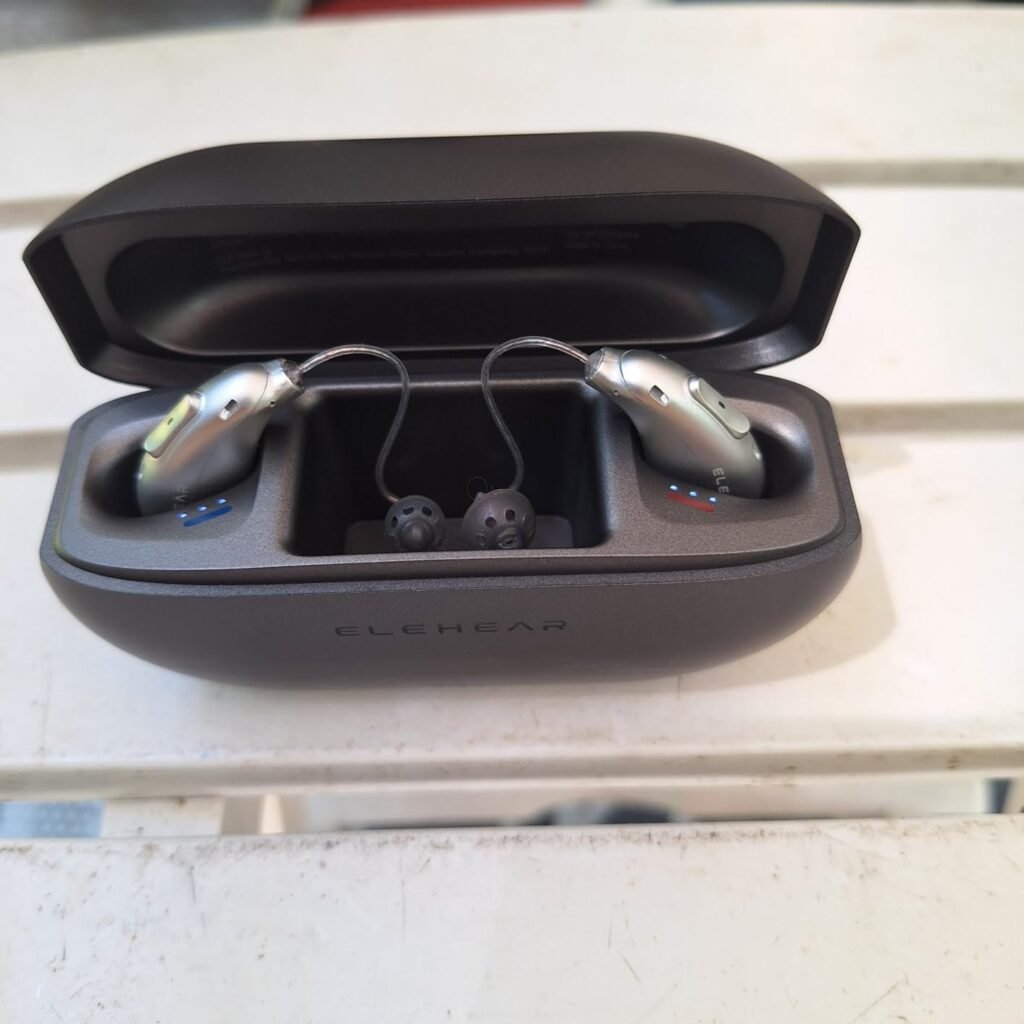
The ELEHEAR Beyond AI model is the most feature-rich option in this comparison, built for users who want deep customization and smart app features. It pairs with iOS and Android via Bluetooth and offers volume adjustment, AI translation, serene sound relief, telephone speech enhancement, and user-customized compensation profiles. For tech-comfortable users who want a hearing device that doubles as a smart audio accessory, this model offers capabilities beyond traditional hearing aids.
We may earn a commission when you buy through this link, at no additional cost to you.
The VocClear AI technology delivers maximum gain of up to 50dB with 24dB of noise attenuation, which is suitable for mild to moderate hearing loss. The combination of noise cancellation and feedback control is designed to produce naturally clear sound without background noise or whistling. The AI translation feature is a standout addition, allowing users to translate conversations in real time through the hearing aids themselves.
Battery life totals 100 hours with the charging case, delivered as 20 hours per single charge plus four additional charges in the case. The receiver-in-canal design is lightweight and discreet, with multiple dome sizes included for a secure fit. The devices automatically turn on when removed from the case and off when placed back, which simplifies daily use even with the advanced features.
Smart features add real value if you actually use them. Translation can be transformative for international travel or multilingual family situations. App-based volume and frequency adjustment helps you fine-tune your settings over time as you learn what works. Remote audiologist care provides a safety net if you have questions after purchase. If none of these features appeal to you, a simpler and less expensive device will likely serve you just as well.
This model is a strong fit for users who want full app-based customization, AI translation, and remote audiologist support via the ElePro service. The premium price reflects the feature set, and the lower average owner rating suggests mixed experiences, so budget-conscious buyers or those who prefer simpler devices should consider other options in this guide.
Users who do not use smartphones, want the simplest possible controls, or need prescription-level support for severe hearing loss.
We may earn a commission when you buy through this link, at no additional cost to you.
This discreet in-ear model is the most affordable entry in this guide, aimed at users who want to try rechargeable hearing aids without a significant upfront investment. The compact in-ear design uses built-in rechargeable batteries, and the included charging case provides dedicated storage and charging for both devices. For first-time users or caregivers buying a backup pair, this price point lowers the barrier to entry significantly.
We may earn a commission when you buy through this link, at no additional cost to you.
Volume control uses a physical dial on the device: clockwise to increase, counterclockwise to decrease. The recommendation to start at a lower level and gradually increase helps new users avoid the discomfort of over-amplification, which is a common early mistake. The devices automatically turn on when removed from the charging case and off when placed back, so there is no on-off switch to manage.
The charging case includes a digital display that shows battery status for both the case and the hearing devices, which is useful for planning your day. The display activates when you open or close the case and turns off after about 10 seconds of inactivity to conserve power. Multiple earplug options are included to help find a comfortable fit, and the included cleaning brush helps remove earwax and debris during routine maintenance.
Entry-level rechargeable hearing aids are a reasonable way to test whether this category of devices will help your specific hearing situation before committing to a higher-end model. If a budget pair improves daily listening noticeably, you can upgrade with confidence knowing the technology works for you. If they do not help enough, you have avoided a much larger investment, and the learning helps you better evaluate what features might be worth the step up.
Choose this model as an affordable introduction to rechargeable hearing aids, or as a backup pair for travel. Users expecting advanced digital noise processing, multiple listening modes, or app-based features should budget for one of the mid-range or premium devices in this guide instead.
Users who need digital noise reduction modes, Bluetooth streaming, or support for more significant hearing loss.
We may earn a commission when you buy through this link, at no additional cost to you.
Selecting a rechargeable hearing aid involves balancing sound quality, battery life, comfort, and ease of use against your real-world listening environments and budget. The factors below cover the most important decision points to help you choose a device that actually improves your daily life.
Over-the-counter rechargeable hearing aids are designed for adults with perceived mild to moderate hearing loss. If you have difficulty following conversations in quiet settings, often ask people to repeat themselves, or need to turn the TV up louder than others prefer, you likely fall within this range. Devices in this category typically provide amplification between 30 and 50 decibels, which is enough to meaningfully improve speech clarity for most users with mild to moderate loss.
Users with severe or profound hearing loss will not get adequate benefit from OTC devices and should pursue a hearing evaluation with a licensed audiologist. Prescription hearing aids can provide significantly higher amplification along with professional fitting and ongoing adjustments. Attempting to use OTC devices for severe loss typically results in frustration and inadequate hearing improvement, so an honest self-assessment of your hearing level is the critical first step.
Choose an OTC model if your hearing loss is mild to moderate and conversations in quiet settings are mostly understandable. Pursue a professional evaluation and prescription device if you consistently struggle to hear even in optimal conditions or if family members express concern about your hearing.
Rechargeable hearing aids come in several form factors. In-ear or in-canal designs sit entirely within the ear and offer the most discreet appearance, often described as nano or invisible designs. Behind-the-ear models have a small housing that sits above the ear with a thin tube or wire running to a dome in the ear canal. Receiver-in-canal designs place the speaker directly at the ear canal entrance, which can produce more natural sound.
Fit comfort depends on both the form factor and the available ear tip or dome sizes. Multiple sizes in the box, typically small, medium, and large silicone options, give you a better chance of finding a secure, comfortable fit. For glasses wearers, behind-the-ear models can sometimes conflict with eyeglass temples, though modern designs are usually thin enough to coexist. In-ear designs avoid this issue entirely but may feel more occlusive to some users.
Try different ear tip sizes before deciding a model does not fit well. A device that feels loose may need a larger tip, while one that feels uncomfortably tight may need a smaller tip. Comfort improves significantly with the right fit, so experiment with the included sizes before concluding the device is not right for you.
Rechargeable hearing aid battery life has two components: runtime per single charge and total runtime with the included charging case. Single-charge runtime typically ranges from 20 to 60 hours across OTC models, while total runtime with the case can reach 80 to 110 hours or more. Longer runtimes reduce the frequency of overnight charging and provide more flexibility for travel and busy days.
Quick-charge capability is a meaningful convenience feature. Devices that provide several hours of use from a 15-minute top-up charge can save you from being without hearing on days when you forget to charge overnight. Automatic on-off functionality tied to the charging case removes the need to remember to turn devices off at the end of the day, which simplifies the daily routine and extends battery life.
Prioritize longer runtime if you travel frequently or dislike thinking about charging. Prioritize quick-charge capability if you have an irregular schedule or often forget overnight charging. For most daily users, any device offering 20+ hours per charge with a case will cover normal routines comfortably.
Modern rechargeable hearing aids use digital signal processing to separate speech from background noise. The number of processing channels, often advertised as 16-channel or similar, indicates how finely the device can analyze and adjust different frequency bands. More channels generally allow for more precise sound shaping, though the quality of the underlying algorithms matters more than the channel count alone.
Noise reduction is particularly important for listening in restaurants, stores, family gatherings, and other active environments where background sound competes with speech. Devices with adaptive noise reduction automatically adjust to changing conditions, while mode-based devices require you to switch settings manually. Feedback suppression is another critical processing function, as it eliminates the whistling that frustrates many new hearing aid users.
If you spend most listening time in quiet home environments, basic noise reduction is sufficient. If you regularly navigate noisy restaurants, meetings, or crowded venues, prioritize models with more advanced processing or multiple scene modes designed for those specific environments.
Control preferences vary dramatically between users. Some prefer simple physical buttons that cycle through volume levels and modes without any app or smartphone involvement. Others want full app-based customization with Bluetooth connectivity for phone calls, music streaming, and advanced personalization. Choosing the right style has a huge impact on daily satisfaction with the device.
App-controlled devices offer the most flexibility but require a smartphone and some comfort with technology. Features can include volume and frequency adjustment, scene profiles, AI translation, telephone enhancement, and remote audiologist support. Button-controlled devices offer simpler operation at the cost of some flexibility, with typical controls limited to volume cycling and mode selection via physical buttons. Analog dial designs sit at the simplest end, offering direct physical control without any digital interface.
Match the control style to the user’s comfort level with technology. For seniors who do not use smartphones, button or dial controls will produce more satisfaction than feature-rich apps. For tech-comfortable users, app control unlocks genuine daily benefits that justify the added complexity.
OTC rechargeable hearing aid prices range from under one hundred dollars for basic entry-level pairs to several hundred dollars for premium app-controlled devices with AI features. The price difference typically reflects processing sophistication, feature count, included accessories, and brand support. Higher prices do not always mean better results for your specific hearing needs.
Consider total ownership cost beyond the initial purchase. Rechargeable models eliminate the ongoing expense of disposable batteries, which can add up significantly over years of use. However, the rechargeable battery itself has a finite lifespan, typically a few years, after which the device may need replacement or battery service. Factor warranty length, replacement part availability, and customer support quality into your decision.
Start with a lower-priced model if you are new to hearing aids and uncertain whether they will help enough to justify a larger investment. Step up to a premium model if you have specific needs like Bluetooth streaming, AI features, or professional remote support that justify the added cost.
In the United States, OTC hearing aids are regulated by the FDA and must meet specific safety and performance standards. Look for devices explicitly described as FDA-registered OTC hearing aids rather than simple amplifiers, as the latter are not held to the same standards. FDA-registered devices have been evaluated for safety and basic performance, which provides a baseline of confidence in the product.
Personal sound amplification products are a different category and are not intended to treat hearing loss. While some amplifiers may provide useful sound boost, they are not held to the same standards as OTC hearing aids and may lack features like feedback suppression and noise reduction. For users with actual hearing loss, choosing an FDA-registered OTC hearing aid is generally the safer and more effective option.
Verify FDA-registered OTC status when shopping, especially when comparing low-priced options. The regulatory distinction matters for both safety and performance, and the small price difference between amplifiers and true OTC hearing aids is usually worth paying.
Hearing aids are devices you wear every day, which means they are exposed to earwax, moisture, drops, and general wear. Warranty coverage of at least one year is standard, with some manufacturers offering longer terms. Read the warranty details carefully to understand what is covered, how to make a claim, and whether loss or accidental damage is included.
Customer support quality varies significantly between brands. US-based support with phone and email access provides faster, more reliable assistance than overseas email-only support. Setup assistance, troubleshooting help, and answers to everyday questions all matter more than they might seem, especially for first-time hearing aid users who are still learning what to expect from the devices.
Prioritize brands with responsive US-based support if you anticipate needing setup help or ongoing questions. For experienced users who prefer to troubleshoot independently, support quality matters less than other factors like sound quality and battery life.
Start by charging the devices fully before first use, which usually takes two to three hours in the included case or dock. Try different ear tip sizes to find the one that feels secure without pressure, inserting the device so the tip sits comfortably in the ear canal without being pushed too deep. Begin with a lower volume setting and gradually increase it over several days as your brain adjusts to amplified sound. The first week often involves some adjustment as everyday sounds like paper rustling or footsteps become more prominent than you remember.
Clean the devices daily using the included cleaning brush to remove earwax and debris from the ear tip, microphone openings, and any sound ports. Earwax buildup is the single most common cause of reduced sound quality and premature device failure, so this simple habit protects your investment significantly. If the ear tips are removable, rinse them with warm water periodically and allow them to dry completely before reattaching. Avoid using harsh chemicals, alcohol wipes, or submerging the devices themselves in any liquid.
Charge the devices consistently each night to maintain predictable readiness and extend overall battery lifespan. Store them in the charging case when not in use, which protects them from dust, moisture, and accidental damage. Keep the devices away from heat sources like direct sunlight, car dashboards, or heating vents, and never wear them in the shower or while swimming unless the manufacturer explicitly states they are waterproof. Replace ear tips every few months as they wear or lose their soft, flexible feel, and consult the manufacturer if you notice persistent sound quality issues that cleaning does not resolve.
The rechargeable batteries inside hearing aids typically last three to five years before capacity degrades noticeably. During this period, daily charging should provide consistent runtime. After this point, you may notice shorter runtimes or need to replace the device entirely, as the internal battery is often not user-replaceable. Factor this lifespan into your long-term cost planning when comparing models.
Most rechargeable hearing aids are not designed for sleeping or showering. Wearing them during sleep can damage the devices through pressure and moisture, and showering exposes them to water that can cause permanent damage unless the model is explicitly rated as waterproof. Remove the devices before bed and store them in the charging case overnight, which also keeps them ready for the next day.
A hearing test is not legally required for OTC hearing aids, which is one of their key advantages over prescription devices. However, getting a baseline hearing evaluation can help you understand the type and severity of your hearing loss. This information helps you choose a device appropriate for your needs and rule out underlying medical issues that may require professional treatment rather than hearing aids.
Hearing aids are medical devices regulated by the FDA and designed to treat hearing loss with features like noise reduction, feedback suppression, and frequency-specific amplification. Personal sound amplifiers simply boost all sounds and are not intended to treat hearing loss. For users with actual hearing loss, FDA-registered OTC hearing aids typically provide significantly better results than basic amplifiers, even at similar price points.
Most users need two to four weeks to fully adjust to new hearing aids. During this adjustment period, previously unnoticed sounds like refrigerator hum, air conditioning, or footsteps become more prominent as your brain relearns to process them. Wear the devices consistently each day during the adjustment period, starting with quieter environments and gradually introducing more challenging listening situations. Starting at a lower volume and increasing gradually also helps smooth the transition.
Hearing aids can indirectly reduce tinnitus perception for many users by amplifying external sounds that help mask the ringing. Some premium models include specific tinnitus management features like serene sound relief or masking tones. If tinnitus is your primary concern, look for models with dedicated tinnitus features, and consider consulting an audiologist for a comprehensive tinnitus management plan that may include multiple approaches.
Sharing hearing aids is not recommended for hygiene reasons and because fit and volume settings are personal. Each user needs their own ear tips sized to their ears, and sharing increases the risk of ear infections from transferred bacteria. If multiple family members need hearing support, each should have their own dedicated pair with settings tuned to their specific hearing needs and ear anatomy.
Feedback whistling usually indicates that the ear tip is not fitted properly or has become loose in the ear canal. Try a different ear tip size or reinsert the current tip more securely. Earwax buildup in the ear canal can also cause feedback by reflecting sound back into the microphone. Many modern hearing aids include automatic feedback suppression, so persistent whistling despite good fit may indicate a hardware issue worth contacting the manufacturer about.
Insurance coverage for hearing aids varies widely by plan and typically favors prescription devices over OTC options. However, most OTC rechargeable hearing aids are eligible for purchase with FSA and HSA funds, which can effectively reduce the cost by your marginal tax rate. Save receipts and confirm eligibility with your plan administrator. Some employers also offer hearing aid benefits that may apply to OTC devices.
Clean the devices daily by brushing away earwax and debris from the ear tip and microphone openings. A quick 30-second cleaning each evening before placing them in the charging case prevents buildup that can reduce sound quality and shorten device lifespan. Perform a more thorough cleaning weekly, removing and rinsing the ear tips if they are detachable, and inspecting all openings for debris.
The Hearing Aids for Seniors RIC model earns the strongest overall recommendation for its balance of 16-channel digital signal processing, excellent 30-hour single-charge battery life, seven-level volume control, and simple no-app operation. For most adults with mild to moderate hearing loss who want clearer conversations and TV dialogue without the complexity of smartphone pairing, this receiver-in-canal design hits the practical sweet spot of capability, comfort, and daily usability.
Several alternatives suit different buyer priorities. The Discreet In-Ear Hearing Aids offer the lowest price point for first-time users or budget-conscious buyers who want to try rechargeable technology before committing to more expensive models. The ELEHEAR Beyond AI delivers premium app-based features including AI translation and remote audiologist care for tech-comfortable users who want deep customization. The EarCentric EasyCharge excels for frequent travelers thanks to its dual-charger design and 12-day total battery life.
Your best choice depends on your specific listening environments, control preferences, and budget. If you want simple, reliable daily use with excellent speech clarity, choose a mid-range model with physical controls and strong battery life. If you want smart features and are comfortable with smartphone apps, step up to a premium model with Bluetooth connectivity. Whatever you choose, commit to consistent daily wear during the adjustment period and regular cleaning habits, both of which have more impact on long-term satisfaction than any single product specification.