Philips OnSite Slim
9.4Editor scoreSlim carry case
8-second shock delivery
Daily self-test diagnostics
4-year battery life
Find the right home defibrillators for 2026. We compare 10 standout options by build quality, useful features, owner feedback, value, and everyday trade-offs.
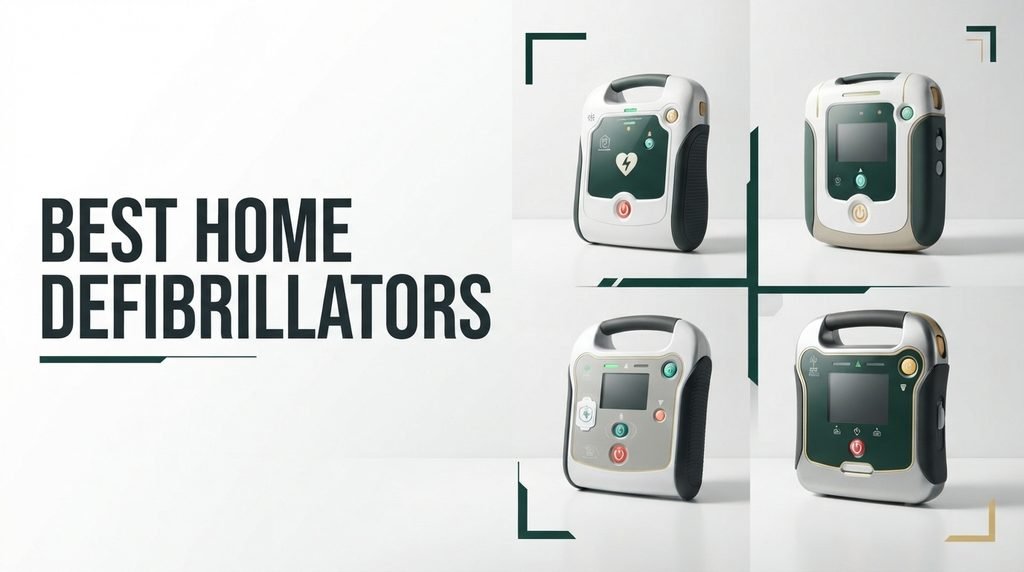
Find the right home defibrillators for 2026. We compare 10 standout options by the factors that matter most in this category, including shock delivery speed, rhythm analysis technology, voice-guided instructions, battery longevity, self-test reliability, warranty coverage, and overall readiness for cardiac emergencies.
Sudden cardiac arrest can happen without warning, and every minute without treatment reduces survival odds significantly. Having an AED at home gives your household a critical advantage during those first moments before emergency services arrive, especially if a family member has a known heart condition.
The models in this guide range from straightforward home units to comprehensive packages with cabinets, wall mounts, and spare pads. Understanding which features justify the price difference will help you choose a defibrillator that fits your living situation and peace-of-mind requirements.
We compared 10 home defibrillators using the details that actually help a buyer decide: shock delivery speed, rhythm analysis accuracy, voice prompt clarity, battery lifespan, self-test frequency, included accessories, warranty length, pad expiration timelines, and overall value. The notes focus on practical trade-offs so each pick feels connected to how families and caregivers actually prepare for and respond to sudden cardiac emergencies at home.


Compare key features, scores, and current prices side by side. A shorter feature list means fewer details were available, not necessarily fewer capabilities.


This portable AED stands out primarily on price, coming in several hundred dollars below most Philips HeartStart models. For households on a tighter budget or for buyers who need to equip multiple locations such as a home gym, a small office, or a community space, the lower cost per unit can make a meaningful difference. The device is marketed for use across a wide range of environments, from private residences to schools and public transit areas.
We may earn a commission when you buy through this link, at no additional cost to you.
The unit is designed for dry-environment operation, which is standard for most consumer-grade AEDs. Users should avoid exposing the device to water or excessive moisture and should perform a quick visual inspection before relying on it. While this may sound basic, establishing a routine check habit is good practice with any emergency medical device, regardless of brand. The manufacturer recommends wiping surfaces with a damp lint-free cloth and storing the unit within specified temperature ranges.
One consideration is that this model does not come with the same depth of published technical specifications as the Philips options. Details about shock waveform type, exact energy levels, and long-term battery replacement costs may require additional research or a direct conversation with the seller. For some buyers, this lack of granular spec information is a minor inconvenience; for others, it may be a deciding factor when comparing against more thoroughly documented alternatives.
The purchase price is only part of the total cost of owning a defibrillator. Replacement pads and batteries have finite lifespans and must be swapped out on schedule to keep the device operational. Before choosing a lower-priced AED, check the availability and cost of these consumables to make sure the long-term ownership expense aligns with your budget.
If your primary goal is to have an AED on hand at the lowest possible cost and you are comfortable with a less established brand name, this model fills that role. It is particularly worth considering for secondary locations where a premium unit may not be justified. Just be sure to verify pad and battery replacement availability and pricing before committing, since ongoing consumable costs can add up over the life of the device.
Buyers who want extensive published specifications, a well-known medical brand, or bundled training materials may prefer one of the Philips HeartStart models.
We may earn a commission when you buy through this link, at no additional cost to you.
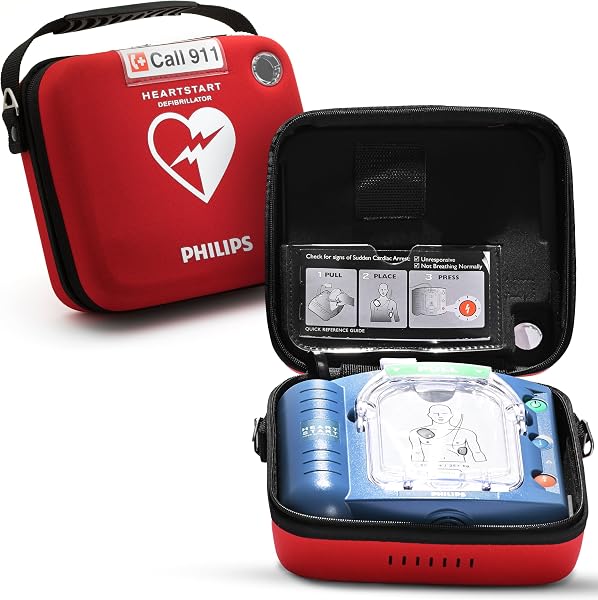
The Philips HeartStart OnSite with the slim carry case is a strong choice for households that want a reliable AED without taking up much room. The streamlined case tucks easily into a closet, kitchen cabinet, or bedside area, which matters when you need to locate the device quickly during a cardiac emergency. Its compact footprint makes it one of the more practical options for smaller homes or apartments where storage space is limited.
We may earn a commission when you buy through this link, at no additional cost to you.
Under the hood, this model shares the same core technology as other HeartStart OnSite units. The SMART Analysis system evaluates the heart rhythm before delivering a shock, and the Quick Shock feature can administer treatment within roughly eight seconds of pad placement. That speed is significant because survival rates decline sharply with each passing minute during sudden cardiac arrest. The device also walks the user through CPR with real-time voice prompts, which can be invaluable for someone who has never performed chest compressions.
Maintenance is straightforward thanks to the automated self-test schedule. The unit runs daily, weekly, and monthly diagnostics on its own, so you do not need to remember to perform manual calibration checks. A small status indicator on the front of the device lets you confirm at a glance that everything is functioning properly. The pre-installed battery is rated for approximately four years of standby life, and the SMART Pads cartridge comes sealed and ready to use right out of the box.
In a residential setting, an AED that is easy to store and easy to grab can make a real difference. The slim carry case reduces the chance that the device gets pushed to the back of a shelf or buried under other items. Keeping the defibrillator visible and accessible in a known location is one of the simplest ways to ensure your household is prepared.
The main tradeoff with the slim case configuration is that it does not provide dedicated storage for a spare battery or extra pads cartridge. If you want backup supplies immediately at hand, you will need to store them separately or consider one of the standard or Ready-Pack configurations instead. For buyers who prioritize a small footprint and are comfortable keeping spare supplies in a nearby drawer, this model delivers dependable performance in a tidy package.
Buyers who want spare pads and a backup battery stored inside the same case should look at the standard or Ready-Pack configurations instead.
We may earn a commission when you buy through this link, at no additional cost to you.
The Philips HeartStart Home is one of the few AEDs on the market explicitly designed and labeled for residential use. That distinction matters because it signals that the user interface, voice prompts, and overall workflow have been optimized for people with no medical background. If a family member, neighbor, or caregiver needs to respond to a sudden cardiac arrest, this device guides them through every step from pad placement to chest compressions with calm, clear audio instructions.
We may earn a commission when you buy through this link, at no additional cost to you.
The underlying technology is robust. The SMART Analysis algorithm evaluates the heart rhythm and determines whether a shock is appropriate, reducing the risk of unnecessary or incorrect treatment. When a shock is advised, the Quick Shock feature delivers it within approximately eight seconds. After the shock, the device continues to provide CPR coaching, helping the rescuer maintain effective compressions until professional help arrives. This end-to-end guidance is one of the strongest reasons to choose a home-specific AED.
Maintenance is largely hands-off. The unit performs daily, weekly, and monthly self-tests automatically, and a visible status indicator confirms readiness at a glance. The battery carries a four-year warranty, and the device itself is covered for eight years, which provides long-term peace of mind. An interesting bonus is that the unit can be converted into a training device by swapping in a separate training pads cartridge, allowing family members to practice the workflow before an actual emergency.
The ability to convert this AED into a trainer is a genuinely useful feature for home buyers. By purchasing a separate training pads cartridge, family members can walk through the full rescue sequence without the device being armed for a real shock. Practicing the steps a few times a year can build confidence and reduce hesitation if an actual emergency occurs.
The slim carry case keeps the device compact but does not include dedicated compartments for spare supplies. Buyers who want everything in one place may need to organize their own storage solution for backup pads and batteries. Overall, this model is a strong fit for households where someone has a known cardiac risk factor and the family wants a device that is as intuitive and reassuring as possible during a high-stress moment.
Buyers who need a rugged public-access setup with wall cabinets and signage should look at the OnSite business packages instead.
We may earn a commission when you buy through this link, at no additional cost to you.
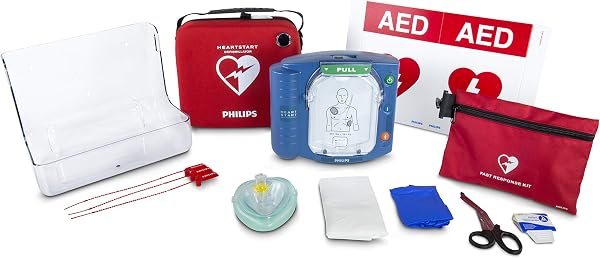
The Philips HeartStart OnSite Business Package bundles the core defibrillator with a wall cabinet, an AED location sign, and a fast response kit. While the name says business, this configuration is equally relevant for larger homes, home-based businesses, or residential properties where multiple people come and go, such as rental properties or shared living spaces. Having a dedicated wall mount and visible signage means anyone on the premises can quickly locate the device.
We may earn a commission when you buy through this link, at no additional cost to you.
The defibrillator itself is the same reliable OnSite unit found in other configurations, featuring SMART Analysis rhythm detection and Quick Shock delivery within eight seconds. Voice prompts guide the user through pad placement, rhythm analysis, and CPR in real time. The sturdy carry case provides more protection than the slim version and is better suited for environments where the device may be moved between rooms or buildings.
The fast response kit typically includes items like scissors for cutting clothing, a razor for shaving chest hair if needed, gloves, and a breathing barrier. These small additions can save critical seconds during an actual emergency. The wall cabinet keeps the AED secure yet accessible, and the signage ensures that visitors or guests know where to find it without having to ask.
If you run a home-based daycare, fitness studio, or any operation that brings visitors into your space regularly, the business package provides a professional level of preparedness. The wall cabinet and signage also make sense in multi-generational homes where caregivers or extended family members need to know exactly where the AED is stored.
The main consideration is cost. This package runs significantly more than a standalone home unit, and some of the included accessories may be unnecessary for a typical single-family household. If you do not need a wall cabinet or public-facing signage, a simpler configuration will save money while delivering the same core defibrillation performance. For buyers who want a turnkey deployment solution, however, this bundle eliminates the need to source accessories separately.
Buyers in a standard single-family home who do not need wall mounting or public signage will likely find this package more expensive than necessary.
We may earn a commission when you buy through this link, at no additional cost to you.
The Ready-Pack configuration addresses one of the most common concerns among AED owners: what happens if the primary pads are expired, damaged, or already used? This model ships with a spare set of Adult SMART Pads pre-installed inside the carry case alongside the primary set on the device. That built-in redundancy means you are less likely to find yourself without functional pads when an emergency strikes.
We may earn a commission when you buy through this link, at no additional cost to you.
The core defibrillator is the standard OnSite unit with SMART Analysis and Quick Shock technology. Rhythm assessment is automatic, and the device delivers a shock within approximately eight seconds when appropriate. Voice prompts guide the rescuer through the entire process, including post-shock CPR coaching. The daily, weekly, and monthly self-test schedule runs in the background, so the device monitors its own readiness without requiring manual intervention.
The Ready-Pack carry case is slightly larger than the slim version to accommodate the spare pads, but it remains portable enough for home use. The case keeps everything organized in one place, which reduces the chance of misplacing critical supplies. For households where the AED may sit unused for months or even years, having the backup pads sealed and stored inside the same case is a practical safeguard against forgetfulness.
AED pads have a finite shelf life, typically between two and five years depending on the manufacturer. Once expired, the adhesive and conductive gel may not perform reliably. Having a spare set already in the case means you have a buffer period to order replacements without leaving your household unprotected.
The tradeoff is a modest price premium over the slim and standard carry case configurations. If you are disciplined about checking pad expiration dates and ordering replacements well in advance, the extra cost may not be justified. However, for buyers who want the most hands-off approach to AED readiness and prefer not to manage separate supply orders, the Ready-Pack offers genuine peace of mind.
Buyers who actively track expiration dates and reorder supplies on schedule may not need the built-in redundancy and can save money with a simpler configuration.
We may earn a commission when you buy through this link, at no additional cost to you.
This version of the Philips HeartStart Home adds a set of training pads and a training DVD to the standard package. For families who have never used an AED and want to build confidence before an emergency, the included training materials provide a structured way to learn the workflow. The training pads allow household members to practice pad placement and follow the voice prompts without the device being armed for a real shock.
We may earn a commission when you buy through this link, at no additional cost to you.
The defibrillator itself is identical to the base Home model, featuring SMART Analysis rhythm detection, Quick Shock delivery, and real-time CPR coaching. The voice prompts are calibrated for lay rescuers, meaning the instructions avoid medical jargon and focus on clear, actionable steps. This is particularly important in a home setting where the person responding to the emergency is likely a family member under extreme stress.
The training DVD walks viewers through the basics of sudden cardiac arrest recognition, AED operation, and CPR technique. While it is not a substitute for a certified CPR course, it provides a useful introduction that can reduce hesitation during a real event. Combining the DVD with hands-on practice using the training pads gives household members a more complete preparation experience than reading the manual alone.
Research consistently shows that bystander hesitation is one of the biggest barriers to effective AED use. Practicing with training pads even once or twice can significantly reduce that hesitation. The included training materials make this model a strong choice for households where no one has prior experience with defibrillators or CPR.
The price premium over the base Home model reflects the added training accessories. If your household already includes someone with current CPR and AED certification, the training pads and DVD may be redundant. However, for families starting from scratch who want the most comprehensive at-home preparation package, this configuration offers meaningful value by bundling everything needed to learn and practice the rescue sequence.
Households that already have certified CPR and AED training may not benefit enough from the bundled training materials to justify the higher price.
We may earn a commission when you buy through this link, at no additional cost to you.
With the highest owner rating among the models in this guide, the Philips HeartStart OnSite with the standard carry case strikes a compelling balance between portability and preparedness. The standard case is slightly larger than the slim version but provides dedicated storage space for a spare battery and an extra pads cartridge. This means you can keep your backup supplies organized and immediately accessible without needing a separate storage location.
We may earn a commission when you buy through this link, at no additional cost to you.
The defibrillation technology is the same proven OnSite platform used across the Philips lineup. SMART Analysis evaluates the heart rhythm automatically, and the Quick Shock feature can deliver treatment within approximately eight seconds. Voice prompts guide the rescuer through pad placement, shock delivery, and CPR with clear step-by-step instructions. The device requires no prior training to operate, making it suitable for any household member or bystander.
The automated self-test schedule runs daily, weekly, and monthly checks to verify that the battery, pads, and internal electronics are functioning correctly. A green status indicator on the front of the unit provides a quick visual confirmation that the device is ready. This hands-off maintenance approach is ideal for home users who may not think about their AED on a regular basis but need it to work flawlessly when the moment arrives.
Keeping spare pads and a backup battery in the same case as the AED reduces the risk of misplacing critical supplies. During an emergency, you will not have to search through drawers or cabinets for replacements. The standard case makes this organizational simplicity possible without adding the complexity of a full business deployment kit.
The standard carry case configuration is a strong all-around choice for most home buyers. It offers more storage flexibility than the slim case without the added cost and bulk of the Ready-Pack or business bundles. If you want a well-regarded, versatile AED that keeps your backup supplies neatly organized, this model deserves serious consideration as the centerpiece of your household emergency preparedness plan.
Buyers who need the smallest possible footprint may prefer the slim carry case version, and those wanting pre-installed spares should consider the Ready-Pack.
We may earn a commission when you buy through this link, at no additional cost to you.
The Philips HeartStart Value Package combines the Ready-Pack defibrillator with a wall mount, wall sign, and fast response kit. This configuration is designed for buyers who want a complete deployment solution without having to source individual components separately. The Ready-Pack core means the device already includes pre-installed spare pads inside the carry case, adding an extra layer of readiness on top of the bundled accessories.
We may earn a commission when you buy through this link, at no additional cost to you.
The defibrillator features the familiar SMART Analysis rhythm detection and Quick Shock delivery system. Voice prompts guide the user through the entire rescue sequence, and the automated self-test schedule ensures the device remains operational without manual calibration. The fast response kit adds practical items like scissors, gloves, and a breathing barrier that can save valuable seconds during an actual cardiac emergency.
The wall mount and signage are particularly useful in larger homes, multi-story residences, or properties where guests and visitors may need to locate the AED quickly. Mounting the device in a visible, central location with clear signage reduces the time spent searching during a crisis. The wall mount also keeps the AED off countertops and out of the way during everyday life while ensuring it remains accessible.
When comparing package prices, consider what you would spend buying each component separately. A wall cabinet, signage, and response kit can add up quickly when purchased individually. If you need all of these items anyway, the bundled package often represents a genuine savings compared to assembling the same setup piece by piece.
The main drawback is the price, which reflects the bundled accessories and Ready-Pack configuration. For a standard single-family home where the AED will sit in a known location, some of these extras may be unnecessary. However, for buyers who value the convenience of a single purchase that covers every aspect of AED deployment, this package eliminates guesswork and ensures nothing is overlooked.
Buyers who only need the defibrillator itself and plan to store it in a carry case will find the bundled accessories add unnecessary cost.
We may earn a commission when you buy through this link, at no additional cost to you.
This value package pairs the standard Philips HeartStart OnSite defibrillator with a wall mount, AED location sign, and fast response kit. Unlike the Ready-Pack-based value package, this configuration uses the standard carry case without pre-installed spare pads. The result is a slightly lower price point while still providing the essential deployment accessories for visible, wall-mounted storage.
We may earn a commission when you buy through this link, at no additional cost to you.
The defibrillator delivers the same SMART Analysis rhythm detection and Quick Shock performance as other OnSite models. Voice prompts guide the rescuer through every step, and the automated self-test schedule handles ongoing maintenance in the background. The fast response kit includes practical items that can make a real difference during the first minutes of a cardiac emergency, such as tools for clearing the chest area and protective barriers for rescue breathing.
Wall mounting the AED in a central location with clear signage is one of the most effective ways to ensure rapid access during an emergency. In a home setting, this approach works well in hallways, near staircases, or in mudrooms where family members and visitors pass frequently. The visible placement also serves as a regular reminder to check the device status indicator and verify that the unit is ready.
The ideal wall mount location is a spot that is visible, accessible to all household members, and close to the areas where a cardiac event is most likely to occur. Avoid placing the AED behind locked doors, in basements that are rarely visited, or in areas prone to extreme temperature fluctuations that could affect battery and pad longevity.
The main limitation is the absence of pre-installed spare pads. Buyers will need to order replacement pads separately and track expiration dates independently. If you are comfortable managing your own supply schedule and want a wall-mounted setup at a lower price than the Ready-Pack value bundle, this configuration provides a practical middle ground between a bare-bones purchase and a fully loaded deployment kit.
Buyers who want built-in spare pad redundancy should choose the Ready-Pack-based value package instead.
We may earn a commission when you buy through this link, at no additional cost to you.
The Philips HeartStart OnSite Business Package with the Ready-Pack core is the most comprehensive configuration in this guide. It combines the wall cabinet, AED signage, and fast response kit of the standard business package with the pre-installed spare pads of the Ready-Pack. The result is a turnkey deployment solution that covers every aspect of AED readiness, from secure storage to backup supplies to emergency response tools.
We may earn a commission when you buy through this link, at no additional cost to you.
The defibrillator itself features the full suite of OnSite technology, including SMART Analysis rhythm detection, Quick Shock delivery within eight seconds, and real-time CPR voice coaching. The automated self-test schedule runs daily, weekly, and monthly diagnostics, and the eight-year device warranty provides long-term assurance. The pre-installed spare pads inside the Ready-Pack carry case add an extra layer of security against expired or damaged primary pads.
The wall cabinet keeps the AED secure and visible, while the signage ensures that anyone on the premises can locate it quickly. The fast response kit includes scissors, gloves, a razor, and a breathing barrier, all organized for rapid access. This level of preparation is common in commercial settings but can also be appropriate for large residential properties, group homes, or home-based care facilities where multiple caregivers are present.
If your household includes someone with a serious cardiac condition, or if you operate a home-based care facility, the comprehensive nature of this package can provide genuine peace of mind. The combination of secure cabinet storage, visible signage, spare pads, and response tools means that every aspect of the rescue chain is addressed in a single purchase.
The price reflects the comprehensive nature of the package, and for most single-family homes, this level of deployment infrastructure will be more than necessary. However, for buyers who want the absolute highest level of preparedness and are willing to invest in a complete solution, this package leaves nothing to chance. It is the most expensive option in the lineup, but it also provides the most thorough coverage for serious emergency planning.
Most single-family households will find this package unnecessarily expensive and complex for their needs.
We may earn a commission when you buy through this link, at no additional cost to you.
Selecting a home defibrillator involves more than comparing prices. The right choice depends on your household size, cardiac risk factors, storage preferences, and how much ongoing maintenance you are willing to manage. This section breaks down the most important decision factors so you can match a device to your specific situation.
The first decision is whether the AED will be used exclusively in a private home or whether it also needs to serve a semi-public space such as a home gym, daycare, or shared office. Home-specific models like the Philips HeartStart Home are designed with lay rescuers in mind and feature voice prompts optimized for people with no medical training. Public-access models tend to come with more rugged cases, wall cabinets, and signage to accommodate a wider range of users and environments.
If your home is a standard single-family residence with a small number of occupants, a home-specific or slim-case model will typically be sufficient. If your property sees regular foot traffic from visitors, clients, or tenants, a business package with wall mounting and signage may be more appropriate. The key is to match the deployment level to the actual risk profile and usage scenario rather than over-investing in accessories you will never use.
Start by honestly assessing who might need to use the device and where it will be stored. A simple home model in a known location is more effective than an elaborate cabinet setup that no one remembers how to open.
During sudden cardiac arrest, every minute without defibrillation reduces the chance of survival by roughly seven to ten percent. This makes shock delivery speed one of the most critical specifications to evaluate. Most modern AEDs, including all Philips HeartStart models in this guide, can deliver a shock within eight seconds of completing rhythm analysis. This rapid response time is a significant improvement over older devices that required longer analysis periods.
The rhythm analysis algorithm is equally important. Philips uses a system called SMART Analysis that evaluates the heart’s electrical activity and determines whether a shockable rhythm is present. This automated assessment prevents the device from delivering an unnecessary shock to someone whose heart rhythm does not require defibrillation. The algorithm also adapts to the rescuer’s actions, adjusting its prompts based on whether pads are properly placed and whether CPR is being performed effectively.
When comparing models, look for devices that specify both shock delivery time and the type of rhythm analysis used. Vague descriptions that omit these details may indicate a less sophisticated system, which could matter during a real emergency.
In a cardiac emergency, the person operating the AED is likely under extreme stress and may have no medical training. Clear, calm voice guidance is essential for helping the rescuer navigate the process from opening the device to delivering a shock and performing CPR. The best home defibrillators provide step-by-step audio instructions that anticipate common mistakes and correct them in real time.
Philips HeartStart models are known for their intuitive voice prompts, which walk the user through pad placement, rhythm analysis, shock delivery, and post-shock CPR coaching. The prompts are designed for lay rescuers and avoid medical terminology that could cause confusion. Some models also adjust the pacing of their instructions based on the rescuer’s actions, slowing down if the user seems hesitant or speeding up if the rescue is progressing smoothly.
If possible, listen to a demonstration of the voice prompts before purchasing. A device that sounds clear and reassuring in a quiet room will be much easier to follow during the chaos of an actual emergency. Training pads and practice modes can also help household members become familiar with the audio instructions before they are needed.
AED batteries are designed for long standby life, typically lasting four to five years before requiring replacement. The Philips HeartStart models in this guide carry a four-year battery warranty, which provides a reliable baseline for planning your maintenance schedule. It is important to note that battery life is measured from the date of installation, not from the date of purchase, so check the manufacturing date on the battery before installing it.
Self-testing is another critical maintenance feature. All Philips HeartStart defibrillators perform automated daily, weekly, and monthly diagnostic checks that verify the battery charge, pad connectivity, and internal electronics. A visible status indicator on the front of the device confirms whether the unit is ready or requires attention. This hands-off approach is ideal for home users who may not think about their AED on a regular basis but need absolute confidence that it will function when needed.
Set a calendar reminder to check the battery expiration date at least once a year, even if the self-test indicator shows green. Proactive battery replacement ensures you are never caught with a dead unit during an emergency, and ordering replacements well before the expiration date avoids supply chain delays.
AED packages vary widely in what they include beyond the defibrillator itself. At the basic end, you get the device, a carry case, a pre-installed battery, and a set of pads. More comprehensive packages add wall mounts, cabinets, signage, fast response kits with scissors and gloves, and spare pad cartridges. The right level of accessories depends on your storage preferences and deployment needs.
For most home buyers, a standard carry case with space for spare supplies is sufficient. Wall mounts and cabinets are more relevant for larger properties or semi-public spaces where the AED needs to be visible to multiple people. Fast response kits are a nice addition but can also be assembled separately for less money if you prefer to customize the contents.
Before purchasing a bundled package, make a list of the accessories you actually need and compare the bundle price against buying those items individually. In some cases, the convenience of a single purchase justifies the premium; in others, you can save money by assembling your own kit.
The total cost of owning an AED extends well beyond the initial purchase price. Replacement pads, batteries, and occasional servicing all contribute to the long-term expense. Philips HeartStart models come with an eight-year warranty on the device itself, a four-year warranty on the battery, and pad warranties that last until the printed expiration date. This coverage is among the most comprehensive in the consumer AED market and provides meaningful protection against manufacturing defects.
When budgeting for an AED, factor in the cost of at least one battery replacement and two to three sets of replacement pads over the first eight years of ownership. These consumable costs can add several hundred dollars to the total expense, so it is worth comparing pad and battery prices across brands before committing to a particular model. Some less expensive AEDs may have higher consumable costs that narrow the initial price advantage over time.
Check whether the manufacturer offers subscription programs or bulk pricing for replacement supplies. Some companies provide discounted pad and battery bundles for registered owners, which can reduce the long-term cost of keeping your device operational.
Training pads are a valuable addition for households where no one has prior AED experience. These special cartridges allow family members to practice the full rescue sequence, including pad placement and voice prompt navigation, without the device being armed for a real shock. The Philips HeartStart Home with Training Pads configuration includes both the training pads and an instructional DVD, providing a structured introduction to AED use.
Even if you choose a model that does not include training pads in the box, most Philips HeartStart defibrillators can be converted to training mode by purchasing a separate training pads cartridge. This flexibility means you can start with a basic model and add training capability later if your needs change. Practicing the rescue sequence a few times a year can build muscle memory and reduce hesitation during a real emergency.
Consider whether your household would benefit from formal CPR and AED certification in addition to at-home practice. Many local fire departments, hospitals, and community organizations offer affordable courses that provide hands-on training with professional instructors. Combining formal certification with at-home practice using training pads offers the most comprehensive preparation.
Home defibrillators are generally compact and lightweight, but there are meaningful differences between configurations. Slim carry cases minimize the device footprint and make it easier to store the AED in a drawer, closet, or bedside table. Standard cases are slightly larger but provide room for spare supplies. Business packages with wall cabinets are the bulkiest option and require dedicated wall space for installation.
Weight is less of a concern for home use than for mobile applications, but it still matters if the device needs to be carried between floors or taken outside during an emergency. Most home AEDs weigh between three and five pounds including the case, which is manageable for most adults. If your household includes elderly members or young teenagers who may need to retrieve the device, consider whether the weight and case design are practical for them to handle under stress.
Measure your intended storage location before purchasing to ensure the case will fit comfortably. A device that is too large for its designated spot may end up stored in a less accessible location, which defeats the purpose of having it readily available.
When you first receive your AED, take a few minutes to read the quick-start guide and familiarize yourself with the device layout. Identify the power button, pad connector, status indicator, and speaker. Install the battery if it is not pre-installed, and verify that the status indicator shows a ready condition. Store the device in a known, accessible location and make sure every household member knows where it is and how to retrieve it quickly.
During an actual emergency, call emergency services immediately and then turn on the AED. The device will begin issuing voice prompts that guide you through pad placement on the patient’s bare chest, rhythm analysis, and shock delivery if needed. Follow the instructions exactly as spoken, and do not touch the patient during rhythm analysis or shock delivery. After the shock, the device will coach you through CPR until professional help arrives or the patient shows signs of recovery.
For ongoing care, check the status indicator at least once a month to confirm the device is ready. Replace the battery and pads before their expiration dates, and store the AED in a clean, dry location within the manufacturer’s recommended temperature range. Avoid exposing the device to direct sunlight, extreme cold, or excessive humidity, as these conditions can degrade battery life and pad adhesive. If the device has been used in an actual emergency, contact the manufacturer for guidance on resetting and re-equipping the unit.
No. Modern home AEDs are designed for use by people with no medical background. The device provides step-by-step voice instructions that guide you through every stage of the rescue, from pad placement to CPR. While formal CPR training is always beneficial, it is not a prerequisite for operating an AED effectively during an emergency.
Most home AED batteries last between four and five years in standby mode. The Philips HeartStart models in this guide carry a four-year battery warranty. It is important to check the expiration date printed on the battery and replace it before it expires to ensure the device remains operational.
AED pads typically have a shelf life of two to five years, depending on the manufacturer and model. The expiration date is printed on the sealed pad package. Once the pads expire, the adhesive and conductive gel may no longer perform reliably, so timely replacement is essential for maintaining readiness.
No. Modern AEDs use automated rhythm analysis to evaluate the heart's electrical activity before delivering a shock. If the device detects a rhythm that does not require defibrillation, it will not charge or deliver a shock. This safety feature prevents unnecessary treatment and protects both the patient and the rescuer.
Store your AED in a clean, dry location that is easily accessible to all household members. Avoid areas with extreme temperatures, high humidity, or direct sunlight. A central location such as a main-floor hallway, kitchen, or living area is ideal. Make sure everyone in the household knows where the device is stored.
Home AEDs are optimized for use by lay rescuers in residential settings and typically feature simplified interfaces and home-specific voice prompts. Public-access AEDs are designed for a wider range of environments and may include more rugged cases, wall cabinets, and signage. The core defibrillation technology is often the same, but the packaging and accessories differ to match the intended use case.
Yes, older children and teenagers can operate an AED in an emergency. The voice prompts are designed to be clear enough for anyone to follow. For pediatric patients under eight years old or under 55 pounds, pediatric pads or a pediatric mode should be used if available. Some AED models offer separate pediatric pad cartridges that adjust the shock energy to a safer level for smaller bodies.
After an AED has been used in an actual emergency, the pads will need to be replaced because they are single-use. The battery may also need to be replaced depending on how much charge was consumed during the rescue. Contact the manufacturer for guidance on resetting the device, downloading event data if applicable, and ordering replacement supplies.
Coverage varies by insurance provider and plan. Some health insurance plans and flexible spending accounts may cover part or all of the cost of a home AED, particularly if a physician documents a medical necessity. It is worth contacting your insurance provider to ask about coverage before purchasing.
Most AEDs have a visible status indicator on the front of the device. A green light or checkmark typically means the unit has passed its most recent self-test and is ready for use. A red light, chirping sound, or error symbol indicates that the device needs attention, which could mean a low battery, expired pads, or an internal fault. Check this indicator at least once a month.
The Philips HeartStart OnSite with the standard carry case stands out as the strongest overall choice for most home buyers. Its combination of the highest owner rating, spare supply storage, proven SMART Analysis technology, and eight-second shock delivery makes it a reliable centerpiece for household emergency preparedness. The standard case strikes the right balance between portability and organization, keeping backup pads and batteries within reach without adding unnecessary bulk.
For buyers on a tighter budget, the portable AED emergency unit offers the lowest entry price while still providing essential defibrillation capability. For families who want the most intuitive home-specific experience, the Philips HeartStart Home with its lay-rescuer voice prompts and training mode conversion is an excellent alternative. And for those who want a complete deployment solution with cabinet, signage, and spare pads, the business and value packages eliminate the need to source accessories separately.
Ultimately, the best home defibrillator is the one that you will actually keep maintained and accessible. Choose a model that fits your budget, storage space, and household needs, then commit to checking the status indicator regularly and replacing consumables before they expire. Having any AED on hand and ready to use is far better than having no AED at all, and the devices in this guide all provide the core technology needed to respond effectively during a sudden cardiac emergency.