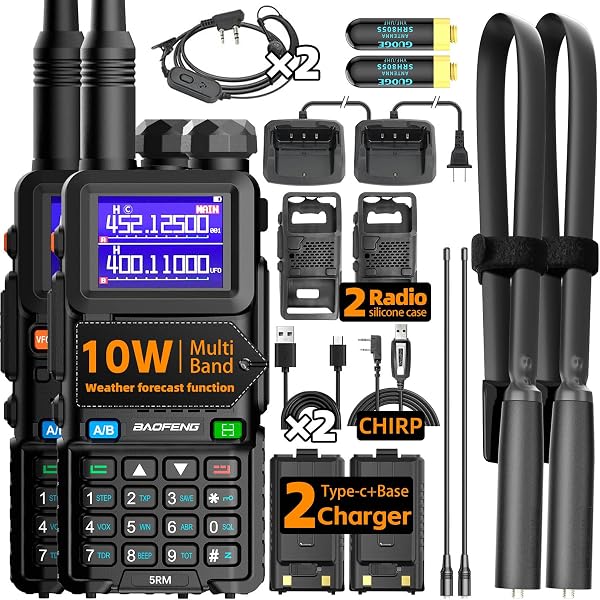
Baofeng AR-5RM 2-Pack
9.0Editor score10W transmit power
999 memory channels
NOAA weather receiver
USB-C charging port
Find the right ham radios for 2026. We compare 10 standout options by build quality, useful features, owner feedback, value, and everyday trade-offs.
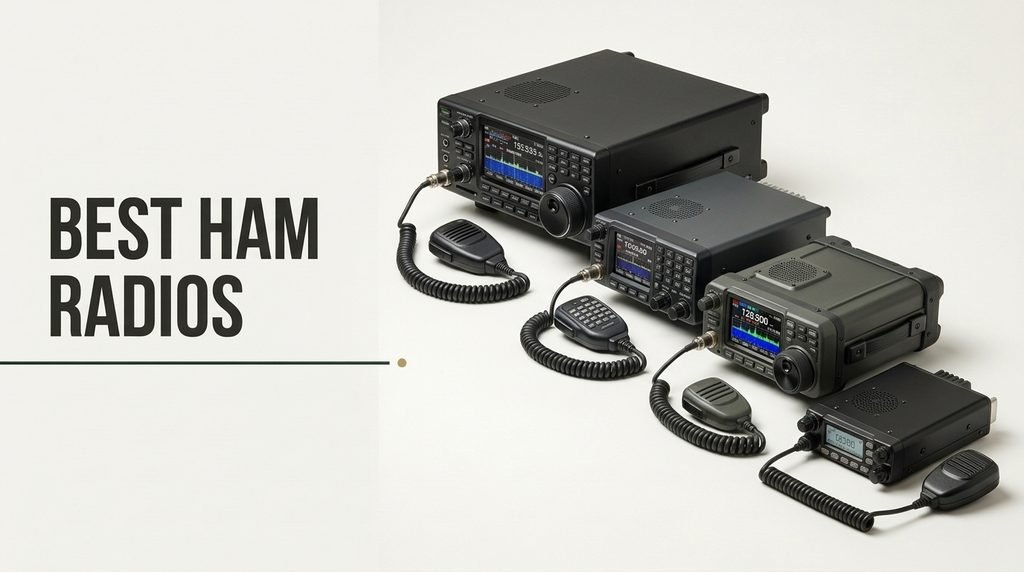
Choosing the right amateur radio in 2026 comes down to a focused set of factors: transmit power, band coverage, programming flexibility, NOAA weather reception, build quality, battery life, and whether you need a handheld transceiver or a mobile base station. This guide compares 10 standout models so you can match a radio to your license class, your typical use, and the environments where you plan to operate.
Ham radios vary more than new operators often realize. Entry-level handhelds get you on the air for less than the cost of a nice dinner, while premium models bring GPS, APRS, Bluetooth, IP67 waterproofing, and digital modes like DMR. Understanding where each radio fits on that spectrum is the key to buying something that matches your actual operating style.
The reviews below break down what each model does well and where it falls short. Expect clear notes on frequency ranges, charging options, scanning features, and the kinds of operators each unit serves best. Whether you are prepping for emergencies, joining a local repeater net, or building a mobile shack, there is a right choice here for your situation.
We compared 10 ham radios using the factors that genuinely shape a buying decision: transmit power, VHF and UHF band coverage, number of memory channels, NOAA weather alert reception, programming compatibility with tools like CHIRP, charging method, battery capacity, build durability, included accessories, FCC compliance, and value for the price. Each review focuses on real trade-offs so you can match a radio to how you actually operate, from first-license use to multi-radio shacks.

Compare key features, scores, and current prices side by side. A shorter feature list means fewer details were available, not necessarily fewer capabilities.
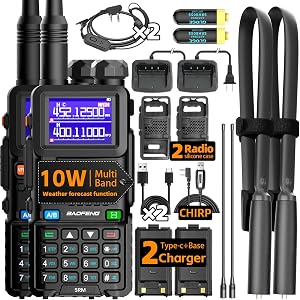


The UV-5RM single-unit version earns the highest star rating of any radio in this guide, which speaks to how well this specific configuration lands with buyers. The combination of a 1.77-inch color display, 999 memory channels, and a 2500mAh battery hits a comfortable sweet spot for licensed operators who want a dependable handheld without stepping up to premium pricing.
We may earn a commission when you buy through this link, at no additional cost to you.
Receive coverage spans air band through UHF business and public safety ranges, with transmit limited to the 2-meter and 70-centimeter amateur bands as required by FCC rules. CHIRP compatibility means you can program the radio from a laptop using free, well-supported software, which saves significant time compared to keypad entry when loading dozens of memories.
The included accessory kit covers the essentials: USB-C cable, desktop charging base, speaker mic, upgraded antenna, earpiece, belt clip, and hand strap. For first-time operators, that saves you the research and separate purchases that usually come with building out a radio setup. The frequency copy function also makes it easy to sync settings with other compatible radios in your group.
CHIRP is free open-source software that lets you edit channels on a computer and upload the whole list to your radio in one step. Setting up 50 channels by keypad takes hours. Doing it in CHIRP takes minutes and lets you save backup files you can reload after a factory reset or share with other operators.
Pick this UV-5RM if you want the best-reviewed Baofeng option in this guide at a reasonable price. For buyers who want IP67 waterproofing or digital modes, premium picks like the UV-PRO or DM-32UV are the natural next steps up.
Shoppers who need waterproofing, DMR, or digital modes.
We may earn a commission when you buy through this link, at no additional cost to you.
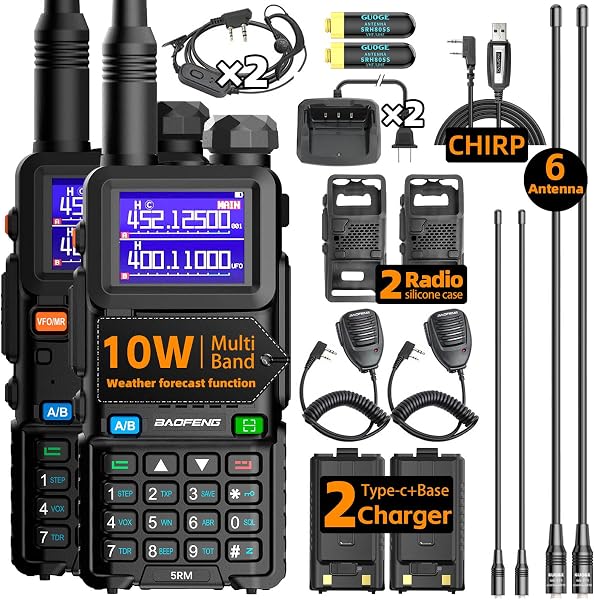
The Baofeng AR-5RM two-pack is a strong first purchase for licensed operators who want to put two radios in service at the same time, whether that is pairing up with a spouse, outfitting a search and rescue team, or keeping a backup unit in a go-bag. The bundle approach removes the extra steps of ordering accessories separately, which makes it one of the most practical starter kits in the category.
We may earn a commission when you buy through this link, at no additional cost to you.
The 10W transmit power is meaningful for anyone operating in rural areas or working repeaters at the edge of coverage. Combined with 999 memory channels and a 1.77-inch color display, the AR-5RM gives you room to organize frequencies for local repeaters, simplex channels, and NOAA weather reception without constantly re-tuning. The frequency copy feature also makes it quick to clone settings between the two radios.
Charging flexibility is another practical advantage. Each unit ships with a USB-C cable and a desktop charging base, so you can refuel from a wall outlet at home or any USB source on the road. The 2500mAh battery holds up well for a day of casual operation, and the included speaker mics free your hands for driving, hiking, or working with equipment.
NOAA weather radio broadcasts carry real-time severe weather alerts for storms, tornadoes, and hurricanes. Having that reception built into your handheld means you still get critical warnings when cell networks go down, which is one of the main reasons many preppers and outdoor operators keep a Baofeng in their emergency kit.
Choose the AR-5RM pack if you want serious value in a licensed handheld bundle. For solo operators who only need one radio, the single-unit UV-5RM or the entry-level UV-5R will stretch your dollar further without the second unit you may not use.
Unlicensed users or operators who only need a single radio for occasional use.
We may earn a commission when you buy through this link, at no additional cost to you.
The BF-F8HP PRO is aimed at operators who found earlier Baofeng menus confusing. Clear English menus, a full keypad, and up to 1,000 memories organized into 10 named zones make it much easier to manage a growing channel list for home, travel, club nets, and events. For anyone frustrated by cryptic menu codes on older models, this is a meaningful quality-of-life upgrade.
We may earn a commission when you buy through this link, at no additional cost to you.
The tri-band amateur transmit capability expands your options over standard dual-band handhelds, and airband AM and NOAA weather reception add useful listening modes for monitoring aviation traffic and severe weather. Dual Watch alternates between two displayed channels, while Single Watch mode offers a full-screen view of the active channel with name, zone, and frequency details.
BTECH has committed to firmware updates for this specific model, which has already added scanning options, display improvements, and airband behavior refinements. Updates require the BTECH CPS software and the separately sold PC03 programming cable, so plan on that accessory purchase if you want to take advantage of ongoing improvements.
Zones let you group related channels together, like all local repeaters in one zone and all simplex channels in another. Instead of scrolling through hundreds of memories to find the right one, you jump to the zone and only see what belongs there. This makes a real difference as your channel list grows beyond a few dozen entries.
Pick the BF-F8HP PRO if you want a more organized interface and ongoing firmware support in a familiar Baofeng form factor. For buyers who just need basic transmit on common bands, simpler models in this guide cost less and get the job done.
Operators who want the absolute cheapest handheld to start out with.
We may earn a commission when you buy through this link, at no additional cost to you.
This UV-5RM listing covers the same core radio with slight configuration differences in battery capacity and bundled accessories. For operators comparing listings side by side, the practical performance is essentially the same as the higher-rated UV-5RM. The decision usually comes down to current price, availability, and included extras rather than any meaningful hardware difference.
We may earn a commission when you buy through this link, at no additional cost to you.
The dual-band design handles both 2-meter and 70-centimeter amateur bands, which covers the vast majority of local repeater traffic in most U.S. areas. Receive coverage reaches into air band, VHF business ranges, and UHF public safety segments, giving you broad scanning capability even if you only transmit on authorized amateur frequencies.
Battery life depends heavily on how you use the radio. Expect a full day of casual listening with occasional transmit from the included 2504mAh pack. For heavy transmit duty or continuous scanning, carrying a spare battery is a smart move. USB-C charging via the included base or any standard USB port keeps replenishing easy whether you are at home, in a car, or on the road.
Baofeng often ships the same radio in slightly different accessory bundles under separate listings. Always compare the included items and current prices rather than assuming one listing is better than another. The core transceiver performance stays consistent across these variations.
Pick this UV-5RM when it offers a better price than the other variants or when the bundled accessories match what you need. Functionally, you are getting the same reliable dual-band handheld platform that has made this model a long-running favorite.
Buyers who want a radio with firmware updates or advanced digital features.
We may earn a commission when you buy through this link, at no additional cost to you.
The UV-PRO is the clear premium pick in this guide, aimed at operators who want a modern feature set that goes well beyond basic voice. The IP67 rating makes it suitable for wet, dusty, and rough environments, with protection against dust ingress and water immersion up to one meter for 30 minutes. For emergency responders, SAR volunteers, and backcountry users, that durability matters.
We may earn a commission when you buy through this link, at no additional cost to you.
The built-in GPS and APRS functionality unlock location sharing, smart beaconing, and tracking workflows that typically require add-on hardware on other handhelds. Combined with text messaging support and Bluetooth HFP for hands-free audio, this radio turns into a connected communications hub rather than a simple transceiver. The BTECH UV app streamlines setup and group channel management from your phone.
FCC Part 90 PLMR capability and dual-band amateur use make the UV-PRO versatile for licensed users across both public safety and amateur bands. Aviation receive and NOAA alerts round out the monitoring capabilities, and the Frequency Sync Rapid Scanning feature helps you lock onto active traffic quickly on-site at events or deployments.
APRS lets you broadcast your position over amateur radio so other operators and online services can see where you are. For hiking, cycling, and emergency coordination, this is a genuine safety feature. It also enables short text messaging between stations, which is useful when voice contact is not practical.
Choose the UV-PRO if the GPS, APRS, Bluetooth, and rugged build will see regular use. For casual operators who just want to hit a local repeater, you can save significant money with a simpler Baofeng. The premium only makes sense when the premium features earn their place in your routine.
Operators who only need basic voice communication on local repeaters.
We may earn a commission when you buy through this link, at no additional cost to you.
The Retevis RT95 is the one true mobile radio in this guide, designed for permanent installation in a vehicle, RV, or home base station setup. The compact dimensions make it easy to mount in trucks, jeeps, or on a shack desk without dominating the space, and the detachable microphone with illuminated buttons supports both daytime and night operation comfortably.
We may earn a commission when you buy through this link, at no additional cost to you.
The 180-degree rotatable TFT color screen is a thoughtful detail that solves a real problem with mobile installations. Depending on where you mount the main unit, you can rotate the display to match your viewing angle without hunting for the right position. Multi-level brightness keeps the screen visible under strong sunlight and non-glaring during night driving.
Dual-band operation on 2-meter and 70-centimeter bands lets you monitor two frequencies at once, which is useful for keeping an ear on both a local repeater and simplex calling frequency. VFO mode supports instant frequency adjustment without needing a laptop, while CHIRP compatibility handles larger channel plans when you want to program from a computer.
Mobile radios like the RT95 typically push higher power than handhelds, which translates to stronger signals and better repeater access from your vehicle or home. The trade-off is portability. Handhelds go anywhere, while mobiles live in one spot and need external power. Many operators run both for different situations.
Choose the RT95 when you want to build a mobile or base station setup rather than relying on handhelds alone. Remember to budget for a 13.8V 10A power supply if you are using it at home, since the mobile radio is designed to run from vehicle power or a bench supply rather than batteries.
Shoppers who need a portable handheld or want an all-in-one package.
We may earn a commission when you buy through this link, at no additional cost to you.
This UV-5RM variant covers the same core platform as other UV-5RM listings in this guide with slightly different accessory configurations. For operators comparing options, the choice typically comes down to current pricing and whichever bundle best matches your needs. Core radio performance and feature set remain consistent across these variants.
We may earn a commission when you buy through this link, at no additional cost to you.
The 999 memory channels and 1.77-inch color display give you ample room for organizing frequencies, with the included speaker mic making hands-free operation practical in field conditions. Frequency copy support simplifies the usually tedious process of syncing settings between radios, which is helpful when outfitting a group or replacing a lost unit.
NOAA weather reception is one of the most practical features for emergency preparedness and outdoor use. Severe weather alerts come through even when cell networks are down, giving you advance warning for hurricanes, tornadoes, and severe storms. Combined with the included accessory kit covering charger, cable, antenna, and speaker mic, this is a complete field-ready package.
Amazon frequently has multiple listings for essentially the same Baofeng radio with slightly different packaging. Compare bundle contents and ratings carefully, since the core radio behaves identically across these variants. Focus on what accessories you actually need and current price rather than assuming one listing is superior.
Pick this UV-5RM variant when the bundle configuration or current pricing fits your plans. For buyers who want the absolute best-rated version, the higher-rated UV-5RM listing is nearly identical in function but has stronger owner feedback in this guide.
Operators who need public safety certification or professional-grade digital features.
We may earn a commission when you buy through this link, at no additional cost to you.
The BF-F8HP has been one of the most popular ham radios on the market for years, and for good reason. It upgrades the original UV-5R platform with double the output power at 8 watts, a hardened durable shell, a 30 percent larger battery, and the V-85 high-gain antenna that significantly improves signal reach over the stock antenna shipped with cheaper variants.
We may earn a commission when you buy through this link, at no additional cost to you.
Three selectable power levels at 8W, 4W, and 1W let you balance range against battery life depending on the situation. For hitting distant repeaters or working through weak signal paths, the high power setting helps. For local simplex contacts or extending battery life during long operating sessions, the lower settings make better sense.
BTECH ships this radio with a detailed user guide written specifically for operators who are not already radio experts, which is genuinely useful for licensed newcomers. Access to BTECH’s U.S.-based customer support and warranty service is also a meaningful upgrade over no-name Baofeng clones. A PC03 programming cable is recommended for computer-based setup and is sold separately.
Stock antennas on budget handhelds are often the weakest link in overall performance. The V-85 is a longer, dual-band antenna that noticeably improves transmit and receive performance compared to the small stock antennas. If you buy another radio without one, upgrading the antenna is often the single best performance improvement you can make.
Pick the BF-F8HP when you want a proven, well-supported platform at a reasonable price. For buyers who want USB-C charging, a color screen, and the newest features, the UV-5RM or BF-F8HP PRO are the natural next steps up.
Shoppers who want modern USB-C charging and a color display.
We may earn a commission when you buy through this link, at no additional cost to you.
The DM-32UV steps into digital mode territory with full DMR support alongside traditional analog operation. For operators who want access to DMR repeaters and talk groups while retaining the ability to work analog nets and simplex channels, this dual-mode flexibility is the main selling point. Voice coding and anti-interference algorithms deliver notably clear audio even in challenging environments.
We may earn a commission when you buy through this link, at no additional cost to you.
The 10W output and three selectable power levels give you solid range control, while the massive 4000 channel capacity is well beyond what most casual operators will ever use. TDMA dual time slot technology, standard on DMR, makes efficient use of frequencies and allows multiple conversations to share a single channel. Encryption options like ARC4, AES128, and AES256 add security for private communications where permitted.
Built-in GPS and APRS add location tracking and reporting features, with the ability to send distress signals through the emergency alarm function. Text messaging between radios in both Chinese and English allows short message exchange when voice is not practical. The 2.0-inch screen and full keyboard support manual programming when you need to make quick changes in the field.
DMR is a digital voice protocol that offers clearer audio, text messaging, and more efficient use of radio spectrum compared to analog FM. Access depends on local DMR repeaters and understanding concepts like talk groups, color codes, and time slots. If your area has active DMR infrastructure, the capability is valuable. If not, analog remains the primary mode you will use.
Pick the DM-32UV if you want to explore digital modes without buying a separate radio. The learning curve is steeper than analog-only Baofengs, so expect to spend time learning DMR concepts like color codes, time slots, and talk groups before you are fully productive. For analog-only operators, simpler models in this guide offer better value.
Operators who only need analog voice on local repeaters and simplex channels.
We may earn a commission when you buy through this link, at no additional cost to you.
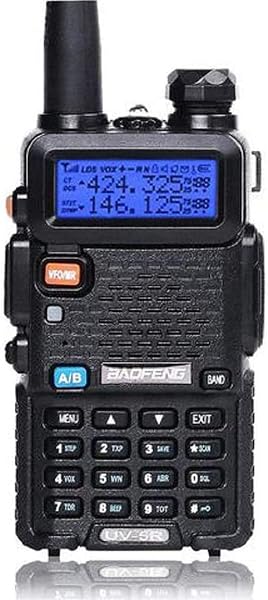
The original UV-5R remains the easiest way for new licensed operators to get on the air at the lowest possible cost. At this price point, you can buy a radio for every member of a family, hand them out at a club meeting, or keep spares in multiple vehicles without serious investment. The platform has been in the field long enough that community support, documentation, and accessories are abundant.
We may earn a commission when you buy through this link, at no additional cost to you.
Core functionality covers the 2-meter and 70-centimeter amateur bands with 128 memory channels, CTCSS and DCS tone support, dual watch, keypad lock, and VOX voice-activated transmission. Programming works through the keypad for occasional changes or through CHIRP software for larger channel plans. For an operator just learning the ropes, this basic feature set covers everything you need to work local repeaters and simplex contacts.
The trade-offs compared to newer models are expected at this price. The battery is smaller than the UV-5RM, the charger uses an older base design rather than USB-C, and the display is monochrome rather than color. For a first radio or a backup unit, those compromises are easy to live with and come with the benefit of unmatched value.
The UV-5R was one of the first dual-band Chinese handhelds to combine functional performance with a surprisingly low price. That combination made ham radio accessible to a huge new audience and built a community that produced extensive guides, programming resources, and third-party accessories. Even newer models carry forward much of its interface and layout.
Pick the UV-5R when budget is tight or you want to buy multiple radios without spending much. For a daily driver you plan to use for years, stepping up to the UV-5RM gives you a color display, more memories, USB-C charging, and a larger battery for a modest premium.
Operators who want modern USB-C charging, color displays, or advanced features.
We may earn a commission when you buy through this link, at no additional cost to you.
A good amateur radio is one that matches your license class, your typical operating patterns, and the environments where you plan to use it. The factors below cover what genuinely matters when choosing between models.
Your amateur radio license class determines which bands and modes you can legally transmit on. Technician class licensees in the United States get full access to VHF and UHF bands above 30 MHz, which covers everything these handheld and mobile radios transmit on. General and Extra class licensees unlock HF bands for long-distance work, but those bands require separate HF-capable equipment not represented in this guide.
Dual-band VHF and UHF coverage on 2 meters and 70 centimeters handles the vast majority of local repeater and simplex activity in most areas. Tri-band models add 1.25 meter capability where it is active locally. If your area has strong activity on specific bands, pick a radio that transmits on those bands. Receive-only coverage on air band, broadcast FM, and NOAA weather adds listening value without affecting your license requirements.
For most new Technician licensees, a dual-band VHF and UHF handheld is the right starting point. Add tri-band or digital capabilities only if you have specific local activity that would benefit.
Transmit power on handheld radios typically ranges from 1 watt to 10 watts. Higher power helps punch through weak signal paths and reach distant repeaters, but it drains the battery faster and generates more heat. Mobile radios like the Retevis RT95 can push significantly higher power because they run from vehicle or shack power supplies rather than batteries.
Battery capacity varies from around 2000mAh on basic models to 2500mAh and beyond on upgraded packs. Larger batteries deliver longer operating time, which matters most for emergency preparedness, extended outdoor use, or heavy transmit duty. USB-C charging has become common on newer models and simplifies refueling since the same cable powers your phone and other devices.
Match power to your real needs. If you only hit local repeaters within a few miles, higher power buys you little. For rural operation or weak-signal paths, more power genuinely helps. Carry a spare battery or portable charger for extended trips regardless of which model you choose.
Memory channel capacity ranges from around 128 on basic UV-5R models to 1000 on BF-F8HP PRO and 4000 on the DM-32UV. Most operators use far fewer than 100 channels in regular rotation, but having headroom is helpful as you add repeaters from travel locations, special events, and emergency plans. Named zones or categories make large channel lists manageable rather than overwhelming.
Programming method matters as much as capacity. Keypad entry works for occasional changes but becomes painful for larger plans. Computer programming with CHIRP, BTECH CPS, or manufacturer software lets you edit channels on a laptop, save backup files, and share plans with other operators. Most radios in this guide support CHIRP, which is free and widely documented.
If you plan to maintain more than a dozen channels, invest in a programming cable from the start. The time savings pay for themselves on your first programming session.
NOAA weather radio broadcasts carry severe weather warnings, forecasts, and advisories across the United States. Having NOAA reception built into your amateur radio means you get these alerts without carrying a second device. For areas prone to hurricanes, tornadoes, flooding, or wildfires, this capability is one of the most practical reasons to choose a radio over a basic walkie-talkie.
Emergency features extend beyond weather alerts. Emergency alarm functions, SOS modes, and distress signal capabilities can summon help or alert other operators to your situation. GPS and APRS on premium models like the UV-PRO and DM-32UV add location sharing, which is valuable for search and rescue coordination, event management, and backcountry safety.
If preparedness or outdoor use is part of your plan, prioritize NOAA reception and emergency features. For casual repeater operators, these capabilities are a nice bonus rather than a deciding factor.
Most ham radio handhelds are built from plastic housings with varying levels of durability. Entry-level models like the UV-5R handle normal use well but are not rated for serious weather or impact exposure. Upgraded models often add reinforced shells, better buttons, and improved weather sealing. The BTECH UV-PRO stands out with full IP67 dust and water protection, suitable for immersion up to one meter.
For indoor and casual outdoor use, standard construction is fine. For fieldwork in rain, dust, or rough environments, pay for actual IP ratings rather than vague marketing claims. Impact resistance also matters if the radio will clip to a tactical vest, ride in a vehicle console, or get dropped on hard surfaces regularly.
Match durability to your operating environment. A dedicated field radio justifies higher cost for IP67 protection. A radio that lives on a desk and travels in a padded case rarely needs that level of protection.
Digital voice modes like DMR offer clearer audio, text messaging, and more efficient use of radio spectrum compared to traditional analog FM. The DM-32UV supports both analog and DMR, giving you access to digital talk groups while retaining compatibility with standard analog repeaters. Other digital modes include D-STAR and System Fusion, which require model-specific support.
Bluetooth connectivity, APRS, GPS, and text messaging add capabilities that go well beyond basic voice. These features make sense if you participate in events, coordinate groups, or want hands-free operation from vehicle Bluetooth systems. The learning curve for advanced features is real, so budget time for setup and training alongside the radio purchase.
Only pay for digital modes and advanced features you will actually use. For first-license operators focused on basic voice, these capabilities add cost and complexity without immediate benefit. Add them later as your operating interests evolve.
The included accessories vary widely between listings. Full bundles like the Baofeng AR-5RM two-pack include everything from charging bases to speaker mics and programming cables, while basic listings may only ship the radio and antenna. Factor accessory costs into your total purchase price, especially for programming cables that are often sold separately on premium models.
Common useful accessories include an upgraded antenna like the Nagoya NA-771, a quality programming cable such as the FTDI PC03, a speaker mic for hands-free operation, a spare battery or external battery eliminator, and a car charger for vehicle use. Earpiece kits add discreet listening for public events or security roles.
Prioritize a programming cable and an upgraded antenna as your first accessory purchases. Both deliver immediate improvements to usability and performance that make the radio significantly more enjoyable to operate.
Get your amateur radio license before transmitting on any amateur frequencies. The FCC Technician exam covers basic operating rules, radio theory, and safety practices that make you a competent operator rather than a nuisance on the air. Study resources are freely available online, and the exam fee is minimal. Programming a handful of local repeaters, learning the correct way to make contacts, and practicing on simplex channels builds confidence quickly.
Program your radio thoughtfully for the way you actually operate. Group local repeaters together, add simplex calling frequencies, include NOAA weather channels, and build in channels for the areas you travel to regularly. Use CHIRP or your manufacturer’s software with a programming cable to save time and keep backup copies of your plans. Label channels with recognizable names rather than cryptic codes so you can find what you need quickly.
Keep your radio in good shape with simple maintenance. Charge the battery regularly even when the radio sits unused, since lithium cells degrade faster when stored at zero percent for long periods. Keep the antenna connection clean and tight, replace worn antennas and belt clips as needed, and wipe down the housing and buttons occasionally to remove dirt and skin oils. Store radios in a dry location away from extreme heat and cold to maximize battery lifespan.
Yes, you need an amateur radio license to transmit on amateur frequencies. In the United States, the entry-level Technician class license is relatively easy to earn through a multiple-choice exam. Operating without a license carries real penalties and interferes with other operators. Listening on amateur bands without transmitting is legal and often a good way to learn before you take the exam.
The UV-5RM is a newer model with upgrades over the original UV-5R, including a 1.77-inch color display, 999 memory channels, a larger 2500mAh battery, USB-C charging, and NOAA weather reception built in. The UV-5R remains an excellent budget starter radio with 128 memories and a simpler monochrome display. For most new buyers, the modest price difference makes the UV-5RM the better long-term value.
Yes, all the handhelds in this guide support keypad programming for channels, tones, and basic settings. This works fine for a handful of channels or quick changes in the field. For managing dozens or hundreds of channels, a programming cable and CHIRP software save hours of tedious keypad entry. Most experienced operators use both methods depending on the situation.
NOAA weather radio is a nationwide network of broadcasts carrying weather forecasts, severe weather warnings, and emergency alerts. Having NOAA reception built into your ham radio means you get critical warnings for storms, tornadoes, and hurricanes without needing a separate device. During cellular network outages or widespread emergencies, this capability becomes especially valuable for personal and family safety.
DMR stands for Digital Mobile Radio, a digital voice protocol that offers clearer audio, text messaging, and more efficient spectrum use than analog FM. Radios like the Baofeng DM-32UV support both DMR and analog modes. Whether you need DMR depends on local repeater availability. If your area has active DMR infrastructure and talk groups you want to join, a DMR-capable radio opens that door. Otherwise, analog-only radios work fine.
Realistic range for a 5-10 watt handheld on simplex is typically 1-5 miles depending on terrain, antenna, and surroundings. Working through a repeater can extend range to tens or even hundreds of miles because the repeater sits on high ground with powerful antennas. Flat open terrain, upgraded antennas like the Nagoya NA-771, and higher ground all improve range significantly compared to stock conditions.
CHIRP is free open-source programming software that works with most popular ham radios including nearly every model in this guide. It lets you edit channels on a computer and upload the complete plan to your radio in one step. You can save backup files, share plans with other operators, and import channel lists from online repeater databases. For anyone programming more than a few channels, CHIRP is well worth the small investment in a compatible programming cable.
It depends on your use. Premium models like the BTECH UV-PRO justify their price through IP67 waterproofing, GPS, APRS, Bluetooth, and app-based programming that casual operators will not use. For emergency responders, SAR volunteers, or operators who need rugged weatherproof gear, the premium is well spent. For local repeater work and casual operation, a well-chosen budget radio delivers excellent performance for a fraction of the cost.
Transmitting on amateur frequencies requires licenses for every operator, not just the group owner. For unlicensed family use, consider FRS radios instead, which require no license but offer limited power and features. GMRS radios offer more power and range but require a single license that covers an entire family. For dedicated amateur use with multiple operators, each person needs their own Technician class license at minimum.
The two most impactful upgrades are a programming cable and an upgraded antenna. A programming cable lets you use CHIRP or manufacturer software to manage channels efficiently. An upgraded antenna like the Nagoya NA-771 significantly improves transmit and receive performance over most stock antennas. After those, a speaker mic for hands-free operation and a spare battery for extended use are the next most practical additions.
The BTECH UV-PRO earns the top overall spot thanks to its IP67 waterproof build, built-in GPS and APRS, Bluetooth hands-free audio, and app-based programming. For operators who want a modern, feature-rich handheld that handles emergency response, outdoor use, and daily operation without compromise, it is the clearest premium recommendation in this guide.
Several alternatives stand out for specific needs. The Baofeng AR-5RM two-pack delivers excellent value for operators outfitting two radios at once with full accessories. The UV-5RM is the strongest single-unit choice with the highest rating in this guide. For first-time buyers on a tight budget, the classic UV-5R remains the easiest way to get on the air. The Retevis RT95 is the right pick for mobile and base station installations, while the DM-32UV opens the door to DMR digital operation.
Match your radio to how you actually plan to operate. Prioritize ruggedness and advanced features if you need field reliability, choose multi-unit bundles if you are outfitting a group, and stick with proven budget models like the UV-5R or UV-5RM if you just want to get licensed and on the air without overspending. The right ham radio is the one that fits your license class, your budget, and the way you want to use it over the next several years.