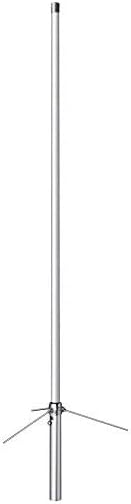
JYR8010-150W End Fed
9.0Editor score80m to 10m
150W SSB power
1:64 balun transformer
40m radiating element
Find the right ham radio antennas for 2026. We compare 10 standout options by build quality, useful features, owner feedback, value, and everyday trade-offs.
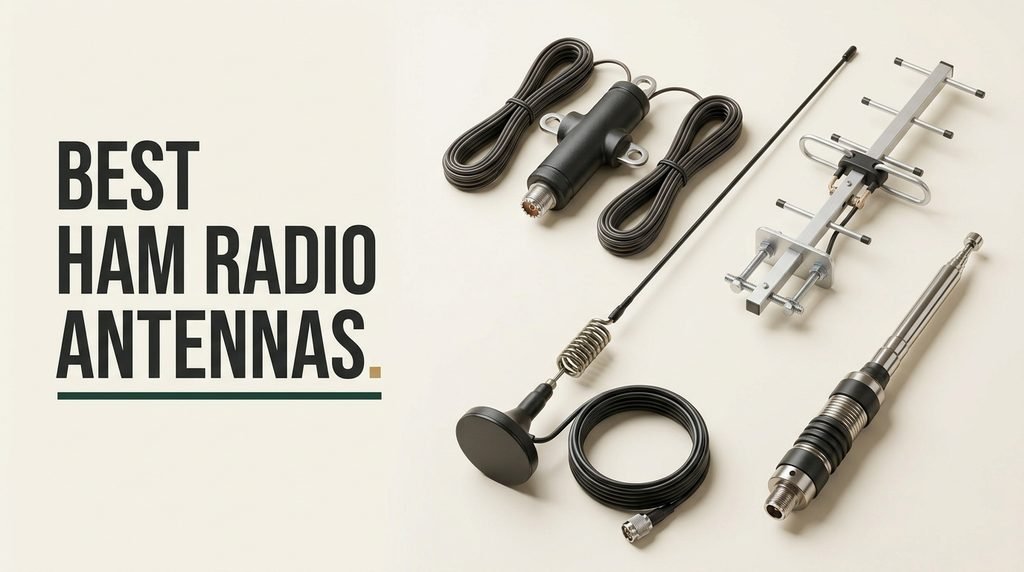
Choosing the right ham radio antenna in 2026 means balancing frequency coverage, gain, portability, and installation style for your specific operating goals. We compare 10 standout options by the factors that matter most in amateur radio: band coverage, SWR performance, power handling, construction quality, connector type, deployment speed, and whether the design suits base, mobile, or portable use on the air.
Antennas differ significantly in what they can do. HF multi-band verticals and end-fed wires excel at long-distance work on 80m through 10m, while dual-band VHF/UHF antennas handle local repeaters and simplex on 2m and 70cm. Handheld whips, magnetic mount mobiles, and fiberglass base antennas each serve a different operating environment.
Whether you need a packable antenna for Parks on the Air, a reliable base station setup for daily repeater work, or an upgraded whip for your handheld, the picks below cover the most practical options available. Read on to find the antenna that matches your radio, your bands of interest, and the way you actually get on the air.
We compared 10 ham radio antennas using the details that actually help an operator decide: frequency coverage, gain figures, SWR behavior, power handling, connector compatibility, construction materials, mounting options, portability, and value. The notes focus on real operating trade-offs so each pick connects to how amateur radio operators actually use their stations, from handheld repeater work to portable HF activations and fixed base installations in demanding outdoor conditions.


Compare key features, scores, and current prices side by side. A shorter feature list means fewer details were available, not necessarily fewer capabilities.


The JPC-12 is built for portable HF operators who want serious band coverage without hauling a full dipole system into the field. Spanning 7 to 50 MHz across eight amateur bands, it opens the door to 40m DX, 20m daytime work, and 6m sporadic E openings from the same compact setup. For Parks on the Air, Summits on the Air, and Field Day, this is the kind of antenna that fits in a backpack and still delivers meaningful on-air results.
We may earn a commission when you buy through this link, at no additional cost to you.
The upgraded coil design is the most practical improvement over earlier portable verticals. Instead of fiddling with screws or swapping plugs, you slide a block along the coil to change bands. Combined with a reinforced spring contact, this reduces intermittent SWR spikes and speeds up band changes significantly. Marking your preferred positions after the first tuning session lets you jump between bands in seconds during a POTA activation.
Deployment is where the JPC-12 really shines. The ground anchor and included radial mesh let one operator set up the antenna on grass, sand, or soft soil in roughly five minutes, with no need to toss wires into trees or raise a mast. The entire system weighs about 3 pounds and packs into a 36 by 20 by 6 cm carry bag that fits easily into a daypack alongside a QRP radio and battery.
A vertical antenna’s efficiency depends heavily on the ground system beneath it. The JPC-12 includes a 10-strand radial mesh that lays flat on the ground and provides the return path for RF currents. Without adequate radials, more of your transmit power is lost as ground heating rather than radiated as signal. For best results, lay all included radials flat and perpendicular to the antenna, and add more wire radials if you have the space and time at your operating location.
This antenna is the right choice for operators who prioritize portability and band flexibility over absolute maximum performance. A full-size dipole or beam will outperform any loaded vertical on a given band, but neither will fit in a backpack. If your operating style involves driving to a park, hiking to a summit, or setting up quickly at a campsite, the JPC-12 delivers excellent value and genuine multi-band capability.
Operators who want a set-and-forget base station antenna or who need to run more than 100 watts SSB on HF.
We may earn a commission when you buy through this link, at no additional cost to you.
The JYR8010-150W end-fed half-wave antenna offers one of the most practical paths to multi-band HF operation without the complexity of a tuner or trap system. Its 1:64 impedance transformer and 40-meter radiating element provide low SWR across 80m through 10m, letting most radios transmit directly without an external matching unit. For portable and home operators who want simple deployment with broad band coverage, this design hits a sweet spot.
We may earn a commission when you buy through this link, at no additional cost to you.
Power handling is a meaningful upgrade over many basic end-fed wires. With 150 watts SSB, 120 watts CW, and 80 watts FT8 capability, this antenna can keep up with most non-amplified HF transceivers and even some modest amplifier setups. The large ferrite core in the balun helps maintain stable impedance transformation during longer transmissions, which matters for digital modes that run continuous duty cycles.
Installation flexibility is one of the strongest practical advantages here. The antenna can be hung horizontally between trees, run vertically up a mast, or deployed as a sloper from a tall support. The waterproof M-J connector and UV-resistant housing make it suitable for permanent outdoor installation, while the lightweight single-wire design packs down small enough for portable use. Keeping the wire at least 3 meters from obstacles and 5 meters from metal surfaces will yield the best SWR.
A horizontal end-fed produces mostly broadside radiation with good high-angle characteristics for regional contacts, while a sloping deployment biases the radiation pattern toward the low end of the wire. For DX work, a sloper or near-vertical configuration tends to favor lower-angle radiation. For general US-wide contacts on 40m and 80m, a horizontal deployment at 20 to 30 feet usually produces excellent results. Experiment with configurations at your site to find what works best for the bands you use most.
This antenna works well for operators who have access to trees, a tall pole, or a rooftop and want to cover multiple HF bands without a tuner. The main tradeoff is that end-fed wires need physical length and clearance to perform, so if you live in an apartment or small lot, a loaded vertical may be more practical. For backyards, portable sites, and emergency communications setups, this is a strong multi-band choice.
Operators without access to trees, a pole, or a rooftop who need a compact self-supporting antenna.
We may earn a commission when you buy through this link, at no additional cost to you.
The Tram 1477 is a straightforward dual-band base antenna aimed at operators who want a reliable permanent installation for 2m and 70cm work without the headaches of tuning. Pre-tuned at the factory for the amateur VHF and UHF segments, it can be mounted and connected without an antenna analyzer or trimming adjustments. For repeater work, local nets, and APRS, it provides a solid everyday performer.
We may earn a commission when you buy through this link, at no additional cost to you.
Gain figures of 3.5 dBd on VHF and 6 dBd on UHF translate to meaningful reach, especially on the UHF side where the 5/8 over 5/8 wave design concentrates the signal toward the horizon. In practical terms, this helps you hit distant repeaters more reliably and copy weaker signals on simplex. The omnidirectional pattern means you do not need to rotate the antenna to work stations in different directions, which simplifies installation and daily operation.
Construction uses white fiberglass that resists UV damage and blends into most residential environments better than a bare aluminum antenna. The single-section design simplifies assembly, and the standard SO-239 connector accepts common PL-259 coaxial cable terminations. The antenna fits masts between 1-13/16 and 2-7/16 inches in diameter, which covers most standard tower and chimney mount hardware.
VHF and UHF signals travel largely by line of sight, so antenna height has a dramatic effect on range. Mounting the Tram 1477 at 20 feet versus 10 feet can double your effective coverage area for repeater and simplex work. If possible, mount the antenna above the roofline on a mast or chimney bracket. Use quality low-loss coax like LMR-400 for runs longer than 50 feet to preserve the gain you paid for in the antenna itself.
This antenna is a strong choice for amateur operators building their first fixed base station or upgrading from a mag-mount setup on the roof. The main tradeoff is that it only covers 2m and 70cm, so if you need HF coverage you will need a separate antenna. For dedicated VHF/UHF repeater and simplex work, however, the Tram 1477 delivers excellent value and dependable long-term performance.
HF operators or anyone who needs a mobile or portable antenna rather than a fixed base installation.
We may earn a commission when you buy through this link, at no additional cost to you.
The Nagoya NA-771 has become the near-default upgrade for handheld radio operators who find their stock rubber duck antenna disappointing. At 15.6 inches, it is long enough to deliver meaningful gain over the short factory whip, with reports of 3 dBi making a noticeable difference on marginal repeater contacts and simplex work. For Baofeng, BTECH, and similar handhelds using SMA-female connectors, it is one of the most cost-effective performance upgrades available.
We may earn a commission when you buy through this link, at no additional cost to you.
Build quality is where the authentic Nagoya separates itself from the many counterfeit versions on the market. The whip flexes without permanently deforming, and the connector is precisely machined for a snug fit. Each antenna is tuned at the factory to deliver consistent SWR across the 2m and 70cm amateur bands, which matters because a poorly tuned whip can actually damage a handheld’s finals over time.
In practical use, the extra length transforms a handheld’s performance for both transmit and receive. Distant repeaters that were previously unreachable become usable, and weak signals that disappeared into the noise with the stock antenna come through clearly. The tradeoff is physical: 15.6 inches sticking up from a belt-clipped radio can be awkward to manage in a car or when moving through brush, so many operators keep the stock antenna for pocket carry and swap to the NA-771 when operating.
The NA-771 is one of the most counterfeited amateur radio accessories, and fake versions perform noticeably worse than the real thing. Purchase from authorized sellers to ensure you receive a genuine Nagoya antenna with proper tuning and build quality. Authentic units typically include holographic authentication stickers and consistent markings. If the price seems too good to be true compared to typical retail, it is probably a counterfeit.
This antenna is essential for anyone who uses a Baofeng, BTECH, or similar handheld as a primary radio rather than just an emergency backup. Confirm your radio uses an SMA-female connector before ordering, since Yaesu and some other brands use SMA-male and require a different version. For the price, no other single accessory delivers as much practical improvement to a budget handheld.
Operators whose handheld uses SMA-male connectors or who need a shorter antenna for pocket carry.
We may earn a commission when you buy through this link, at no additional cost to you.
The Bingfu dual-band mobile antenna is designed to bridge the gap between mobile and base operation on a budget. The strong magnetic base mounts securely to a vehicle roof, trunk lid, or any flat ferrous metal surface, while the included ground plane kits let you set it up as a temporary base antenna indoors or on a non-metallic surface. At 42 cm tall with 16.4 feet of RG58 cable, it is ready to deploy out of the box.
We may earn a commission when you buy through this link, at no additional cost to you.
Compatibility is broad, covering amateur VHF and UHF bands, marine VHF, and GMRS. The included SO-239 to SMA female adapter makes it usable with handheld radios in addition to mobile units, which adds flexibility if you want one antenna that serves multiple radios. The PL-259 connector on the cable fits standard mobile radio antenna jacks on brands like Yaesu, Icom, AnyTone, and most Baofeng mobile units.
The dual ground plane kits are a practical touch for operators who want to use the antenna in a stationary setup. Short planes tune the radiation pattern for UHF performance, while longer planes support VHF operation. This makes the Bingfu a reasonable choice as a starter base antenna before investing in a dedicated fiberglass model like the Tram 1477 or Diamond X30A.
A magnetic mount antenna requires a metal surface that acts as the ground plane. On a vehicle, a steel roof provides the best ground plane and radiation pattern. Mounting on a trunk lid or hood works but produces a slightly asymmetric pattern. Aluminum bodies, fiberglass vehicles, and plastic surfaces will not hold the magnet and will not provide a proper ground plane, so you will need the included ground plane kits or an alternative mount for those situations.
This antenna works best for new amateur operators who want one package that handles mobile use in a vehicle and basic base operation at home. The main compromise is the RG58 cable, which has more loss than LMR-400 or similar low-loss coax, so performance will not match a dedicated base antenna with better feedline. For the price and included accessories, however, it is a practical introduction to dual-band mobile operation.
Operators who need low-loss coax for long cable runs or who want a permanent high-performance base antenna.
We may earn a commission when you buy through this link, at no additional cost to you.
The ABBREE 42.5-inch tactical antenna is designed for operators who prioritize maximum signal reach from a handheld radio. At nearly 108 cm fully extended, it delivers approximately 5.0 dBi of gain, which translates to a meaningful improvement in both transmit range and receive sensitivity compared to shorter whips. For field operations, hiking in remote areas, or emergency communications, this kind of extended whip can make the difference between a successful contact and nothing but noise.
We may earn a commission when you buy through this link, at no additional cost to you.
The foldable design is the key practical feature. Unlike a rigid long whip that would be impossible to transport or use while moving, this antenna folds down for storage and can be bent during use without permanent damage. The flexible construction withstands the rough handling that comes with outdoor and emergency communications work, which is where many stiffer antennas eventually fail.
Compatibility covers the vast majority of SMA-female handhelds, including the full Baofeng UV-5R family, the newer UV-21R and 5RM, Quansheng UV-K5 variants, and tactical radios like the AR-152. For operators who already own one of these popular budget radios, the ABBREE 42.5-inch is one of the lowest-cost ways to extract significantly more performance from the same handset.
Long antennas like the 42.5-inch ABBREE put more mechanical stress on your radio’s SMA connector than short whips. If you plan to use this antenna frequently, consider adding a short SMA extension cable so the whip hangs from your pack or belt rather than hanging directly off the radio’s connector. Also avoid snagging the whip on branches or vehicle doorframes, which can bend the SMA pin and ultimately require a connector repair.
This antenna is best suited for stationary or deliberate operating scenarios where you can hold the radio or lay it on a surface rather than carry it on a belt. The 108 cm length is awkward in dense brush or inside a vehicle, and the leverage of a long whip can stress the SMA connector on your radio over time. Consider using an SMA extension cable with a counterpoise to reduce stress during extended use.
Operators who carry their handheld on a belt during active movement or who need a compact antenna for discreet use.
We may earn a commission when you buy through this link, at no additional cost to you.
The ABBREE 18.8-inch tactical antenna offers a sensible middle ground between the stubby stock antennas that ship with most handheld radios and the extreme length of a 40-inch tactical whip. At roughly 48 cm, it provides enough length to deliver measurable gain over the factory rubber duck without being so long that it becomes impossible to manage during normal use. For daily handheld operation, this is often the better practical choice.
We may earn a commission when you buy through this link, at no additional cost to you.
Gain of 2.15 dBi is modest but meaningful. In real-world terms, you will hear more repeaters, make more simplex contacts, and generally get more use out of the same handheld compared to the stock antenna. The foldable construction means you can tuck the whip against the side of the radio when moving through tight spaces or storing the radio in a pack, which is a genuine convenience advantage.
Compatibility matches the broader ABBREE lineup, covering popular SMA-female handhelds from Baofeng, Quansheng, and similar brands. The low price makes it an easy addition when ordering a new budget handheld, and the compact size means you can keep it attached to the radio permanently without the awkwardness of a longer whip.
A longer antenna generally produces more gain, but the practical benefit depends on your environment. Inside a car, during urban movement, or in dense terrain, a very long whip is more trouble than it is worth. The 18.8-inch length folds easily into a cargo pocket, fits in a radio case alongside the handheld, and stays out of the way during normal activities. For most users doing routine amateur operation, this length delivers a worthwhile upgrade without disrupting daily carry.
This antenna is the right choice for operators who want a modest performance boost without the practical compromises of a long tactical whip. If you need maximum range for Field Day or emergency communications, the 42.5-inch version will outperform it. For everyday repeater work, local nets, and casual simplex, the 18.8-inch length is often the better balance of performance and usability.
Operators who need maximum possible range from a handheld for marginal communications scenarios.
We may earn a commission when you buy through this link, at no additional cost to you.
The Nagoya UT-72 brings the brand's reputation for quality to the mobile magnetic mount category. The 20-inch stainless steel whip combined with a super loading coil delivers notably better UHF reception than typical budget mag mounts, which matters for operators who work 70cm repeaters or GMRS frequencies regularly. The included kit covers both mobile radios via the PL-259 connector and handhelds via the included SMA adapter.
We may earn a commission when you buy through this link, at no additional cost to you.
The magnetic base uses rare earth magnets rather than ceramic, providing a much stronger grip on vehicle surfaces. This matters at highway speeds where wind pressure can shift or dislodge weaker mounts. The weatherproof construction handles rain, snow, and sun exposure without degrading, which is important for an antenna that typically lives on a vehicle year-round.
The super loading coil is the technical feature that distinguishes this antenna from similar-length mobile whips. The tightly wrapped coil design improves efficiency on UHF, extending usable range compared to simpler whip designs. On VHF the gain is more modest, but still a solid performer for 2m repeater work in and around populated areas.
Even a strong magnetic base can scratch paint if debris gets trapped under the magnet or if the antenna is dragged across the surface during installation. Keep the mounting area clean, lift the magnet straight up when removing it rather than sliding, and consider a thin protective pad between the magnet and paint if your vehicle has a particularly soft finish. These small habits preserve both the antenna base and your vehicle’s cosmetic condition over years of use.
This antenna is a strong choice for operators who want a durable, long-term mobile solution and are willing to pay a modest premium for authentic Nagoya quality. The heavy-duty magnet and weatherproof construction justify the higher price compared to generic mag mounts that may fail after a season or two. Confirm your vehicle has a suitable steel mounting surface and clearance for the 20-inch whip, especially if you park in a garage with low door height.
Operators with aluminum or fiberglass vehicle bodies that cannot support a magnetic mount.
We may earn a commission when you buy through this link, at no additional cost to you.
The Baofeng dual-band whip is the manufacturer's own replacement for the stock antennas that ship with their popular handhelds. At 15.3 inches with 2.15 dBi gain, it provides a modest but meaningful upgrade over the shorter rubber duck that comes in the box with most UV-5R family radios. For operators who want improved performance without stepping up to a premium Nagoya, this is a budget-friendly alternative.
We may earn a commission when you buy through this link, at no additional cost to you.
Compatibility is comprehensive across the Baofeng lineup, including the full UV-5R series, UV-5R Mini, BF-F8HP, UV-21R, BF-888S, UV-82 series, and newer models like the UV-32 and DM-32. It also works with Quansheng UV-K5 and similar SMA-female handhelds. The 10-watt maximum power rating comfortably exceeds the output of all Baofeng handhelds, so there is no concern about overpowering the antenna.
The flexible soft whip design makes the antenna practical for outdoor use. It bends rather than breaking when snagged on brush or caught in a vehicle door, and the lightweight construction does not add noticeable bulk to a handheld radio on a belt clip. The SMA-female connector matches the female jack on the top of standard Baofeng radios.
Antenna connectors on handheld radios see repeated stress every time the antenna is bent, snagged, or bumped. Having a replacement whip on hand means you can swap in a new antenna if the original develops a loose connector or cracks internally. Keeping a spare in your go-bag, vehicle, or shack also prepares you for emergencies when a damaged antenna could compromise your ability to communicate when it matters most.
This whip is a sensible choice for operators who want a modest performance upgrade without spending much. It will not match the refined performance of an authentic Nagoya NA-771, but it is also significantly cheaper and still a clear improvement over the stock stubby antenna. For operators building out multiple handhelds or outfitting a go-bag with spare parts, buying several of these is an economical approach.
Operators who want the absolute best performance from a handheld or who prefer the quality tier of authentic Nagoya.
We may earn a commission when you buy through this link, at no additional cost to you.
The Diamond X30A represents the professional end of amateur dual-band base antennas. Diamond has been building amateur and commercial radio antennas since 1956, and the X30A reflects that experience with a design optimized for reliable long-term performance on 2m and 70cm. For operators building a serious home station or installing a repeater, this is the kind of antenna that gets specified and simply works for years.
We may earn a commission when you buy through this link, at no additional cost to you.
The 6.5 dB gain concentrates radiated energy toward the horizon, which maximizes range for both transmit and receive on the amateur VHF and UHF bands. At 4.5 feet tall, it is compact enough to install on a modest mast or chimney bracket while still delivering performance that approaches larger antennas. The fiberglass construction resists UV damage, ice loading, and the general punishment of year-round outdoor exposure.
Installation is straightforward with the included mounting hardware. The antenna attaches to standard masts and brackets, and the weatherproof sealing at the base and connector area prevents water ingress that can degrade performance over time. Use quality low-loss coaxial cable like LMR-400 for the feedline to preserve the gain this antenna provides, especially if the run from your shack to the antenna is longer than 25 to 30 feet.
An antenna with 6.5 dB of gain can lose much of its advantage if you feed it with high-loss coax. RG-58 loses roughly 6 dB per 100 feet at UHF, which would effectively cancel out the X30A’s gain over a 100-foot run. LMR-400 or similar low-loss cable loses around 2.7 dB per 100 feet at the same frequency, preserving most of your signal. Budget for quality coax when planning your installation; it is as important as the antenna itself for overall system performance.
This antenna is the right choice for operators who view their station as a long-term investment and want a base antenna they will not need to replace for a decade or more. The higher price compared to budget alternatives like the Tram 1477 reflects Diamond’s build quality and brand reputation. For dedicated repeater operators, EmComm volunteers, and serious VHF/UHF enthusiasts, the X30A delivers the kind of reliability that justifies the premium.
Portable operators or anyone who needs HF band coverage rather than VHF and UHF only.
We may earn a commission when you buy through this link, at no additional cost to you.
Selecting an amateur radio antenna involves matching your operating goals, available space, and radio equipment to the right design. The antennas in this guide cover a wide range of use cases, from pocket-sized handheld whips to full HF multi-band verticals. This guide walks through the factors that genuinely matter when narrowing down your options.
The first question to answer is which amateur bands you plan to use. HF bands from 80m through 10m enable long-distance contacts via skywave propagation and are the domain of multi-band verticals like the JPC-12 and end-fed wires like the JYR8010-150W. VHF and UHF bands, specifically 2m and 70cm, cover local repeater work, simplex contacts, and digital modes like DMR and D-STAR. These bands primarily rely on line-of-sight propagation and are served by antennas like the Tram 1477, Diamond X30A, and various handheld whips.
Your operating goals determine which bands matter most. If you want to make contacts across the country or around the world, HF is essential and you need an antenna designed for those bands. If you primarily use repeaters for local communication, VHF/UHF antennas will serve you better and are generally easier to install and maintain. Many amateurs eventually run antennas for both HF and VHF/UHF, but starting with the band segment that matches your immediate goals keeps the initial purchase focused.
Think carefully about which bands you will actually use day to day. An HF antenna is wasted money if you never get around to earning or using HF privileges, and a premium VHF/UHF base antenna delivers more real-world value than a mediocre HF setup that rarely gets activated.
Amateur antennas come in several form factors, each suited to specific use cases. Handheld whips like the Nagoya NA-771 and ABBREE tactical antennas attach directly to a portable radio and go wherever you go. Mobile antennas like the Bingfu and Nagoya UT-72 use magnetic bases to mount on a vehicle for operation while driving or parked. Base antennas like the Tram 1477 and Diamond X30A install permanently on a mast at a fixed station. HF portable antennas like the JPC-12 fall into a hybrid category, meant for temporary field setups.
Your mounting situation often dictates what is practical. Apartment dwellers may be limited to indoor or balcony-mounted antennas, which rules out most HF options except compact loops or short verticals. Homeowners with yard space can install permanent HF antennas, VHF/UHF base antennas on masts, or portable systems that deploy quickly for Field Day and POTA activations. Vehicle-based operators need magnetic or permanent mount antennas suited to automobile use.
Match the antenna form factor to your actual installation environment. The best antenna on paper is useless if you cannot install it legally, physically, or safely at your location.
Antenna gain describes how effectively the antenna concentrates radiated energy in useful directions. Higher gain generally means better performance in the preferred direction but at the cost of coverage in other directions. For omnidirectional base antennas like the Diamond X30A with 6.5 dB gain, the pattern is squeezed toward the horizon to improve range for both transmit and receive. For handheld whips, modest gain figures like 2.15 or 3 dBi still deliver meaningful real-world improvement over stock antennas, even though the pattern is less tightly controlled.
Standing wave ratio, or SWR, measures how well the antenna matches your radio’s output impedance. A low SWR means more of your transmit power actually radiates as RF rather than reflecting back into the radio. Most modern antennas aim for SWR below 2:1 across the intended frequency ranges, with 1.5:1 or lower considered excellent. The JPC-12, JYR8010-150W, and Tram 1477 all deliver low SWR across their rated bands when properly set up, which protects your radio and maximizes efficiency.
Pay attention to both gain and SWR, but prioritize correct installation over chasing specifications. An antenna with modest gain installed properly will outperform a high-gain antenna installed poorly, with mismatched coax, or at insufficient height.
Antenna connectors must match your radio’s antenna jack, and the amateur radio world uses several standards. Handheld radios typically use SMA connectors, with SMA-female common on Baofeng and BTECH units and SMA-male common on Yaesu handhelds. Mobile and base radios usually use SO-239 jacks that accept PL-259 connectors. BNC connectors appear on some older handhelds and specialized equipment. Buying an antenna with the wrong connector type means you need an adapter, which adds minor signal loss and another potential failure point.
The Nagoya NA-771, Baofeng dual-band whip, and ABBREE tactical antennas all use SMA-female connectors appropriate for popular budget handhelds. The Bingfu mobile antenna and Nagoya UT-72 use PL-259 connectors for mobile radio compatibility, with the UT-72 including an SMA adapter for optional handheld use. The Tram 1477 and Diamond X30A base antennas accept standard PL-259 feedline connections.
Verify your radio’s connector type before ordering, and avoid relying on adapters when a direct-fit antenna is available. Adapters add physical length, mechanical stress, and small amounts of signal loss that add up in a complete system.
Antennas have maximum power ratings that must not be exceeded without risk of damage. Handheld-grade antennas like the Baofeng dual-band whip are rated for 10 watts, matching typical handheld output. HF portable antennas like the JPC-12 handle up to 100 watts SSB, suitable for most non-amplified HF transceivers. The JYR8010-150W steps up to 150 watts SSB, giving operators headroom for modest amplifier use. Base antennas from Diamond and Tram handle higher power levels suitable for serious station operation.
Construction quality affects long-term reliability, especially for antennas installed outdoors year-round. Fiberglass housings resist UV damage better than painted metal. Stainless steel elements resist corrosion in coastal and humid environments. Weatherproof connectors prevent water infiltration that degrades performance over time. The Diamond X30A, Tram 1477, and Nagoya UT-72 all reflect construction choices aimed at long-term outdoor durability.
Match power handling to your actual transmit power with a margin for safety, and favor construction quality for any antenna that will live outdoors. The small premium for a well-built antenna pays back many times over in service life.
For operators who travel to parks, summits, or emergency sites, how quickly and easily an antenna sets up becomes a primary buying consideration. The JPC-12 assembles in roughly five minutes and packs into an included carry bag, making it suitable for backpack transport. The JYR8010-150W is a wire antenna that unrolls quickly between supports but requires trees, poles, or masts to hang from. Permanent base antennas like the Diamond X30A are not meant to be moved and require full installation each time.
Weight and bulk also matter for portable work. A 3-pound antenna in a compact carry bag is realistic for SOTA activations where you hike to a summit. A 15-pound base antenna requires vehicle access and more effort to deploy. Think about how far you typically carry your gear and whether you set up alone or with help. These practical factors often matter more than small differences in gain or band coverage.
If portable operating is your focus, prioritize setup speed, pack size, and single-operator deployment. For fixed stations, these factors do not matter and you can focus on performance and durability instead.
Proper installation is the foundation of good antenna performance. For base antennas like the Tram 1477 and Diamond X30A, mount as high as practical while maintaining structural safety and compliance with any local height restrictions. Use quality low-loss coaxial cable like LMR-400 for runs longer than 25 feet to preserve gain, and weatherproof all outdoor connections with self-amalgamating tape or dedicated coax weatherproofing kits. For HF portable antennas like the JPC-12, lay out all included radials flat and perpendicular to the vertical element to achieve the designed radiation pattern.
Routine inspection extends antenna life significantly. Check guy ropes, mounting hardware, and coax connections every six months, especially after severe weather. Look for cracked fiberglass, corroded connectors, and chafed cable jackets. End-fed antennas like the JYR8010-150W benefit from annual inspection of the balun housing and radiating wire for signs of UV degradation or physical damage. Replacing a $5 connector early is far cheaper than troubleshooting mysterious signal loss months later.
Handheld antennas like the Nagoya NA-771 and ABBREE whips benefit from careful handling to protect the SMA connector on your radio. Avoid putting lateral stress on long whips by snagging them in doorframes or branches. If you frequently use long tactical antennas, consider a short SMA extension cable to isolate the whip’s leverage from the radio’s connector. Store antennas straight rather than coiled or bent to preserve the internal elements, and keep spare whips in your go-bag for emergency replacement if a primary antenna fails.
Yes, operating on amateur radio frequencies in the United States requires an FCC amateur radio license. The Technician class license grants privileges on VHF and UHF bands plus some HF segments, while General and Extra class licenses expand HF privileges significantly. Antennas themselves do not require a license, but transmitting with them on amateur frequencies does. Some antennas can also be used for GMRS, which requires a separate FCC license, or for receive-only shortwave listening, which requires no license.
SMA-female connectors have an internal thread and a center socket, while SMA-male connectors have external threads and a center pin. Baofeng and BTECH handhelds use SMA-female jacks and require SMA-female antennas like the Nagoya NA-771. Yaesu and some other handhelds use SMA-male jacks and require SMA-male antennas. Installing the wrong gender requires an adapter and may not be possible without one. Always verify your radio's connector type before ordering.
Some HF antennas like the JYR8010-150W end-fed are designed to work across multiple bands without an external tuner thanks to their integrated balun and impedance matching. Others, including many portable verticals, achieve low SWR on specific bands through physical adjustment of the coil and elements. A general-purpose antenna tuner provides additional flexibility by matching higher SWR to your radio, which can expand usable bands or improve efficiency on marginal frequencies. For simplest operation, choose an antenna rated for the bands you want without requiring a tuner.
Antenna height is extremely important for VHF and UHF because signals on these bands primarily travel by line of sight. Doubling antenna height can significantly extend your effective range for repeater and simplex contacts. Mount base antennas like the Tram 1477 or Diamond X30A above surrounding obstacles when possible, ideally above the roofline. Even a modest height increase from 10 to 20 feet can transform your station's reach, often more than upgrading to a higher-gain antenna at a lower height.
SWR, or standing wave ratio, measures how well your antenna matches your radio's output impedance. A perfect match produces 1:1 SWR, meaning all transmit power goes to the antenna. Higher SWR means some power reflects back toward the radio, which can damage the transmitter's final amplifier over time, especially above 2:1 or 3:1. Most modern amateur radios include built-in SWR protection that reduces power as SWR rises, so a mismatched antenna produces weaker signals even before damage occurs.
Yes, mobile antennas can serve as temporary or budget base antennas, though they usually require a ground plane. The Bingfu mobile antenna includes ground plane kits for exactly this purpose. For permanent base installation, dedicated base antennas like the Tram 1477 and Diamond X30A deliver better performance thanks to designs optimized for fixed mounting rather than vehicle use. If budget is tight, starting with a mobile antenna on a mag mount or ground plane is a reasonable interim solution.
HF verticals like the JPC-12 require less horizontal space and provide good low-angle radiation for DX work, but they need a good radial system and have a narrower bandwidth per band. Wire antennas like the JYR8010-150W end-fed cover more bands with less tuning effort and often perform better for regional contacts due to higher-angle radiation. Verticals suit smaller lots and portable operation, while wire antennas suit larger properties with available supports. Many operators eventually use both to cover different operating styles.
Generally yes, within reason, because longer antennas typically provide higher gain and better radiation efficiency. However, physical length must match the operating frequency to be useful. A longer whip like the ABBREE 42.5-inch outperforms a stock 6-inch rubber duck on 2m and 70cm, but a random length of wire is not necessarily better than a properly designed shorter antenna. Always choose antennas designed and tuned for your target frequencies rather than assuming length alone determines performance.
Grounding your antenna system is important for lightning protection and electrical safety. The mast and feedline shield should connect to a dedicated ground rod outside your home, with a lightning arrestor on the coax at the ground point. This does not eliminate lightning risk but can divert damaging surges away from your radio equipment. Local electrical codes may also require grounding for permanent outdoor antenna installations. Consult an experienced ham or electrician for proper grounding at your specific site.
Several factors could explain poor performance from a new antenna. Common issues include high SWR from improper tuning, water infiltration in connectors, insufficient ground plane for vertical antennas, feedline problems like bad coax or kinked cable, or installation height that puts the antenna below nearby obstructions. Check SWR first with a meter or analyzer, inspect all connections, and verify the antenna is installed as designed. Sometimes a seemingly inferior antenna in a good location outperforms a premium antenna in a poor one.
The JPC-12 HF Vertical stands out as the strongest overall choice for amateur operators who want serious HF capability in a portable package. Its 8-band coverage from 40m through 6m, fast tool-free tuning, and 3-pound packable design make it one of the most practical ways to get on the air from parks, summits, and campsites. For operators active in POTA, SOTA, and Field Day, this antenna delivers meaningful performance with minimal setup effort.
For base station operation, the Diamond X30A and Tram 1477 both offer dependable dual-band VHF/UHF performance, with the Diamond providing a modest step up in gain and build quality at a higher price. For HF home operation with multi-band coverage, the JYR8010-150W end-fed wire delivers excellent flexibility if you have the space to deploy it. Handheld radio operators get the most practical upgrade from the authentic Nagoya NA-771, while budget-conscious users will find solid value in the Baofeng dual-band whip or the ABBREE tactical options.
Choosing the right antenna comes down to matching your bands, operating environment, and radio equipment. Start by identifying which bands you actually use, where you plan to install the antenna, and what connector type your radio requires. Any of the 10 antennas in this guide will deliver reliable performance when matched correctly to your situation, so focus on fit rather than chasing the highest specifications. The right antenna makes amateur radio significantly more enjoyable, so take the time to choose one that genuinely matches how you operate.