MGEX Strike Freedom
9.4Editor scoreMGEX grade kit
1/100 scale
Metallic molded parts
Multiple frame gimmicks
Find the right gundam model kits for 2026. We compare 10 standout options by build quality, useful features, owner feedback, value, and everyday trade-offs.

Find the right Gundam model kits for 2026. We compare 10 standout Gunpla releases across grades such as Entry Grade, HG, RG, MG, MGEX, and Perfect Grade, weighing build difficulty, articulation, part count, color separation, included accessories, display presence, and long-term value so you can match a kit to your skill level and budget.
The differences between grades are significant. An Entry Grade kit snaps together in an hour with no nippers required, while a Perfect Grade release can take weeks and involves hundreds of internal frame parts. Choosing the wrong grade for your experience level often leads to frustration, wasted money, or an unfinished project on the shelf.
This guide breaks down what each grade delivers, which kits stand out within their tier, and how to match a Gunpla to your goals. Whether you want a quick display piece, a poseable RG for photography, or a centerpiece build, the picks below cover the range without hype or padding.
We compared 10 Gundam model kits using the factors that actually shape a builder’s experience: grade and scale, articulation and posability, color separation quality, included weapons and accessories, part count and build complexity, sticker versus molded detail, display presence, owner feedback, and price-to-value. The picks span Entry Grade to Perfect Grade so beginners, intermediate hobbyists, and collectors can each find a kit that fits their skill level, budget, and shelf space.


Compare key features, scores, and current prices side by side. A shorter feature list means fewer details were available, not necessarily fewer capabilities.


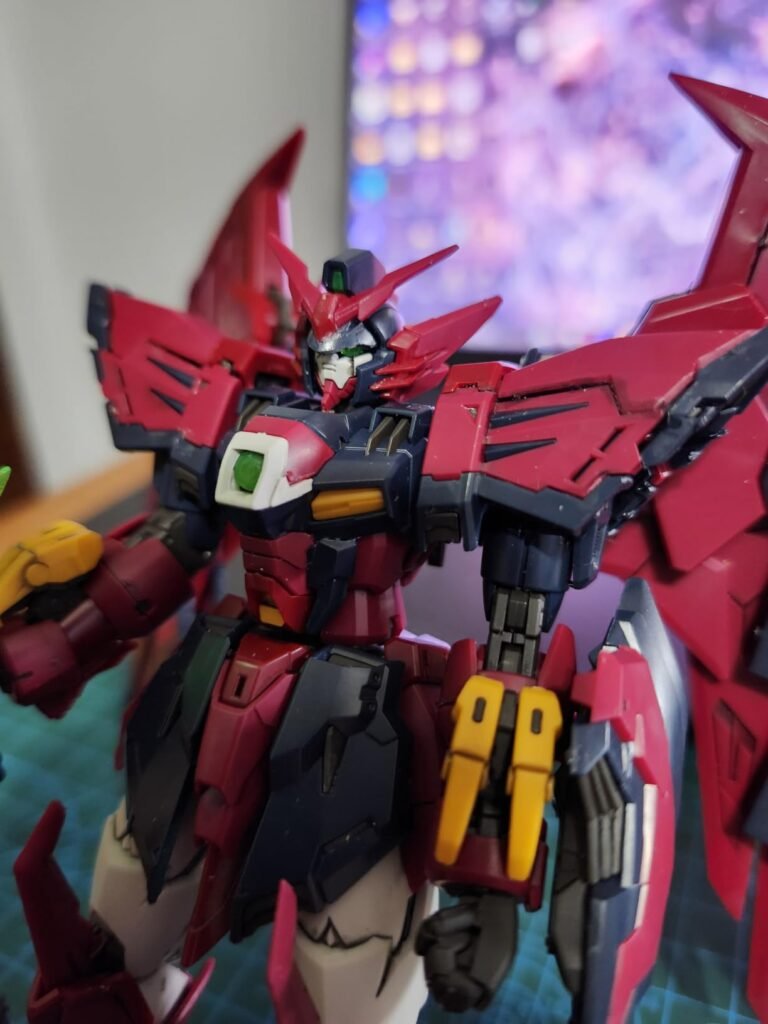
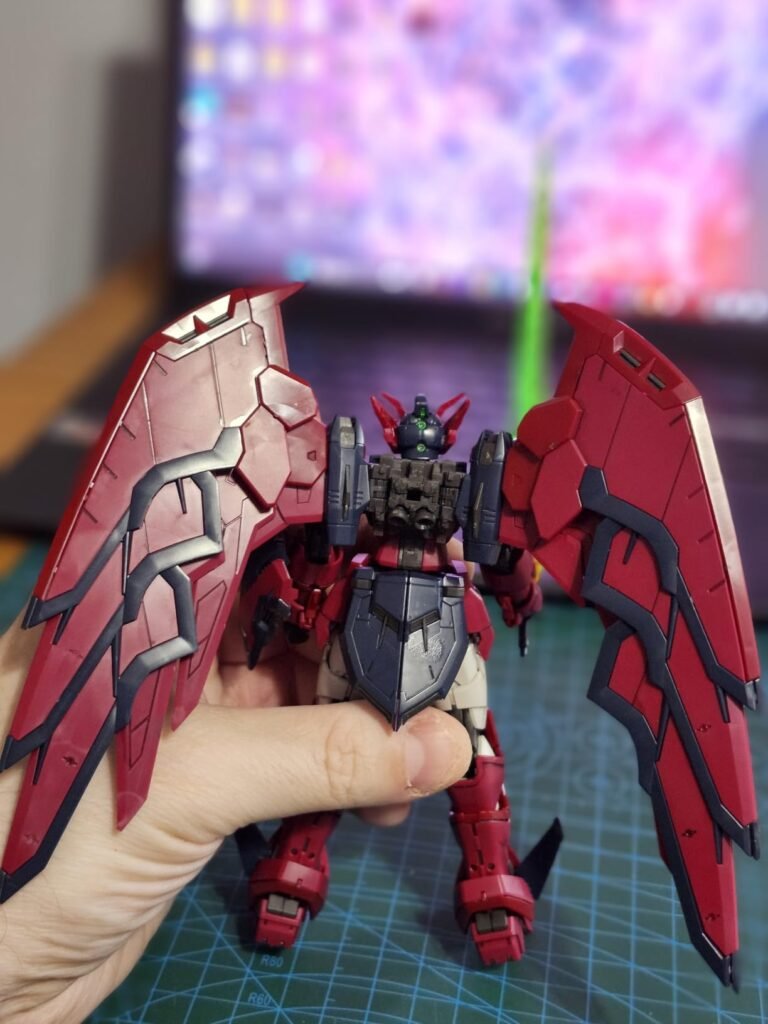
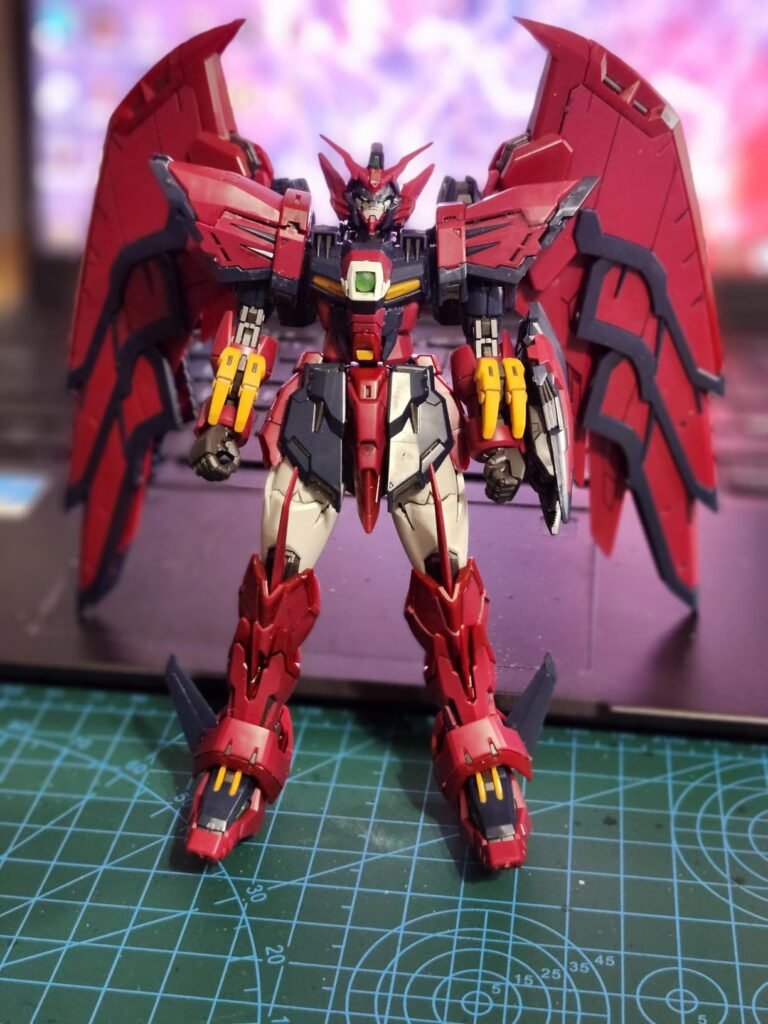
Gundam Epyon has always been one of the more visually distinctive designs in the Wing timeline, and this Real Grade release captures its wyvern-like silhouette while packing in a full mobile suit transformation. For hobbyists who love the RG line's ability to compress Master Grade detail into a 1/144 footprint, this kit stands out as one of the most engineered releases in the series. The 4.9 owner rating reflects how well the design comes together in hand.
We may earn a commission when you buy through this link, at no additional cost to you.
The articulation is the highlight. New joint gimmicks let you swing the beam sword through wide, natural arcs, and the advanced MS joint system allows the heat rod to hold spiraling poses that would collapse on a lesser kit. The transformation from mobile suit to mobile armor mode uses cleverly engineered parts that stay in place once locked, though you should read the instructions carefully the first time through.
Because the design leans heavily on curved wyvern-inspired armor, the color separation and part fit matter more than usual. Bandai’s engineering delivers accurate colors straight from the runners with minimal reliance on stickers, which means the finished kit looks clean without paint work. That said, the small parts and detailed joints reward patience during assembly, so plan for a build spread across a few focused sessions.
Both RG and HG kits are built at 1/144 scale, but the internal engineering is very different. RG kits use a pre-assembled inner frame, more advanced articulation joints, and finer part separation to achieve detail levels closer to Master Grade. HG kits prioritize simplicity and lower cost. If you want maximum posability and detail in a compact footprint, RG is the better choice, though you will pay more and spend longer building it.
This is the kit to choose if you want a poseable, transformable Gundam that punches well above its scale in visual impact. It works equally well for photography, dynamic display, or as a satisfying build experience for intermediate hobbyists. Absolute beginners may find the small parts and transformation steps intimidating, but anyone with a few HG builds under their belt should be able to handle it.
First-time builders who have never used a hobby nipper or worked with small parts.
We may earn a commission when you buy through this link, at no additional cost to you.
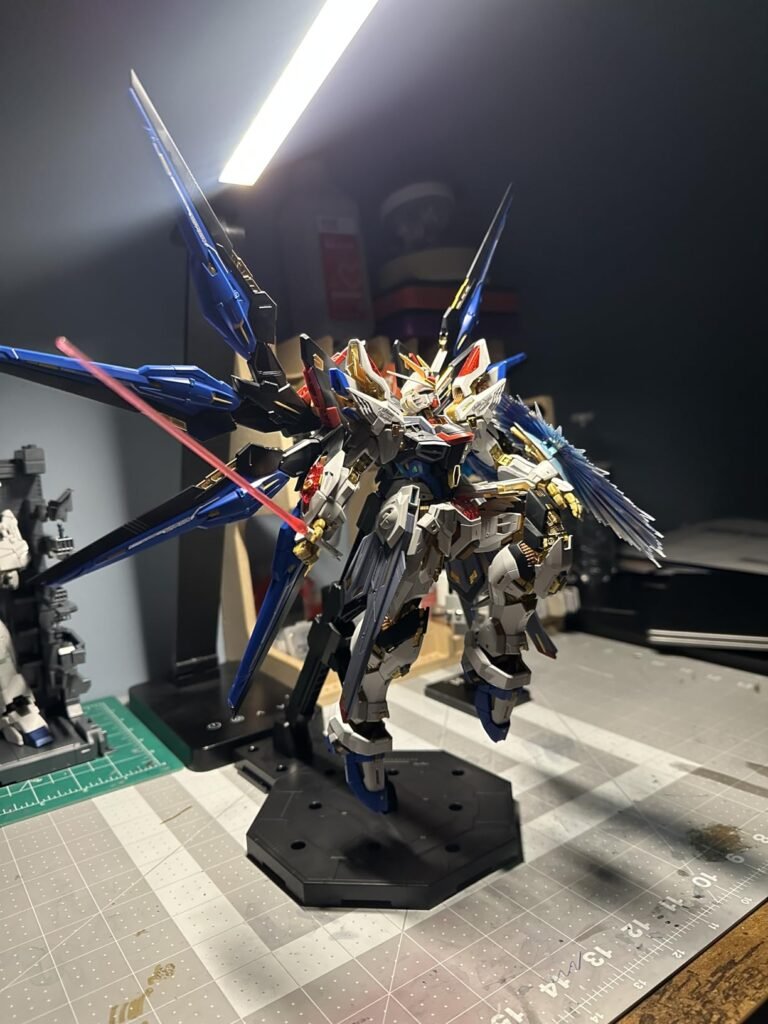
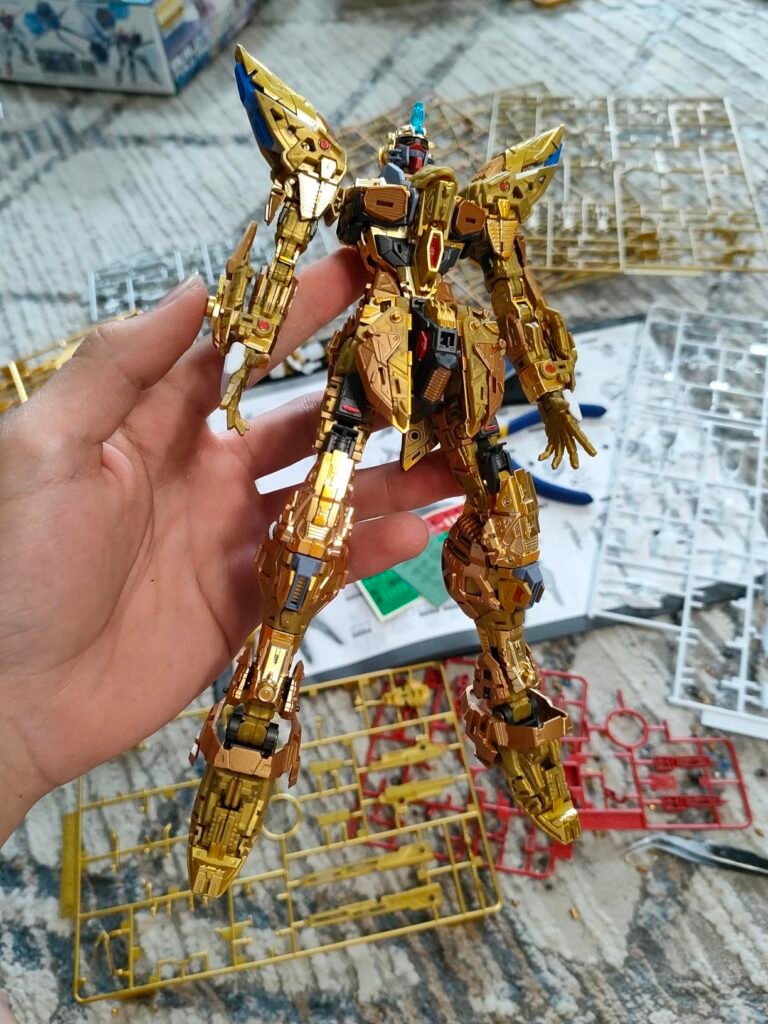
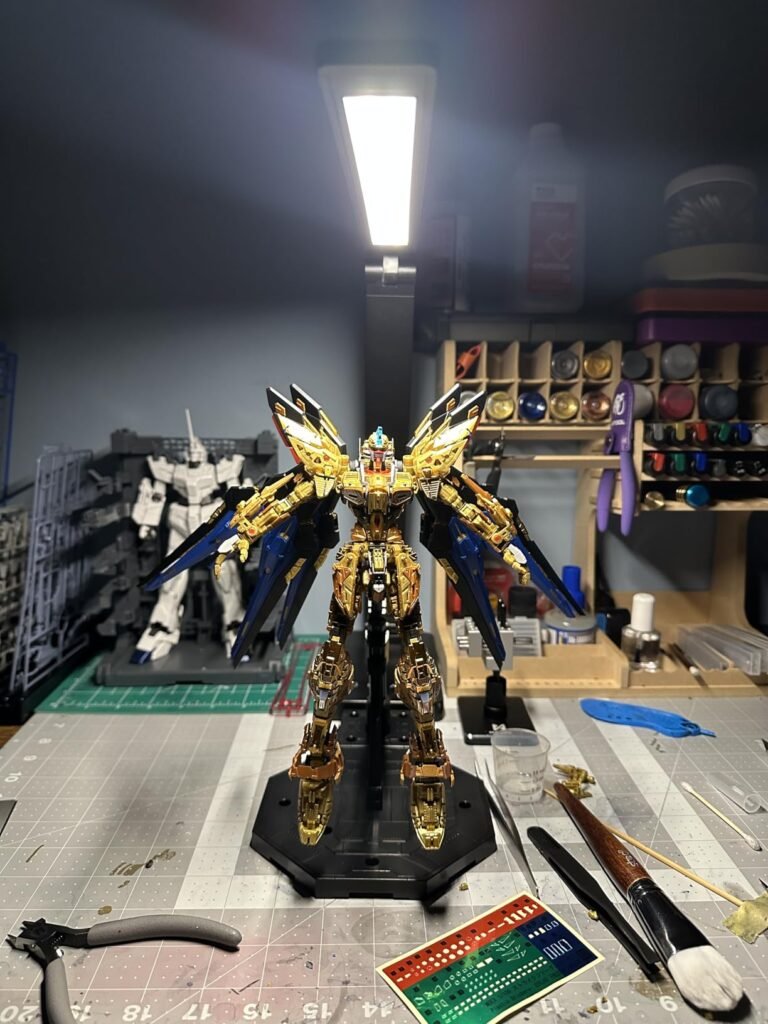
The MGEX Strike Freedom sits at the top tier of the Master Grade lineup, and its main draw is the metallic-molded golden inner frame that shines through the outer armor panels. If you already own a few Master Grade kits and want to see how far the format can be pushed, this release is designed exactly for that audience. It rewards careful assembly with a finished piece that reads as a premium display centerpiece rather than a casual shelf model.
We may earn a commission when you buy through this link, at no additional cost to you.
The engineering focuses on linked frame articulation, meaning that moving one joint often triggers coordinated motion in surrounding parts. This allows for dynamic action poses that would require significant modification on lesser kits. The wing binders, dragoon system components, and beam weapons all include their own gimmicks, so posing sessions can produce dramatically different silhouettes from the same figure.
Build time is substantial. Expect multiple sittings across several days if you take your time with panel lining and decal placement. The included paper-crafted runner stand is a thoughtful touch that helps keep your workspace organized during long build sessions. Because so much of the visual impact comes from the metallic frame, careful nub removal and sanding pay off more here than on standard Master Grade releases.
MGEX stands for Master Grade Extreme, a small sub-line that pushes the format beyond typical MG offerings. Compared to a standard Master Grade release, MGEX kits include more elaborate internal frames, additional engineering gimmicks, and often specialty materials like metallic-molded parts. The tradeoff is a higher price and longer build time, but the finished result carries a level of detail that puts it closer to Perfect Grade territory in overall presence.
This kit is the right choice if you have the experience, patience, and budget to do it justice. Newer builders will likely find the part count and gimmick complexity overwhelming, and the price is hard to justify without prior MG experience. For seasoned hobbyists who want a showpiece from the Strike Freedom lineage, however, it delivers a build experience and finished appearance that few other kits can match.
Beginners or budget-conscious buyers looking for a quick weekend build.
We may earn a commission when you buy through this link, at no additional cost to you.
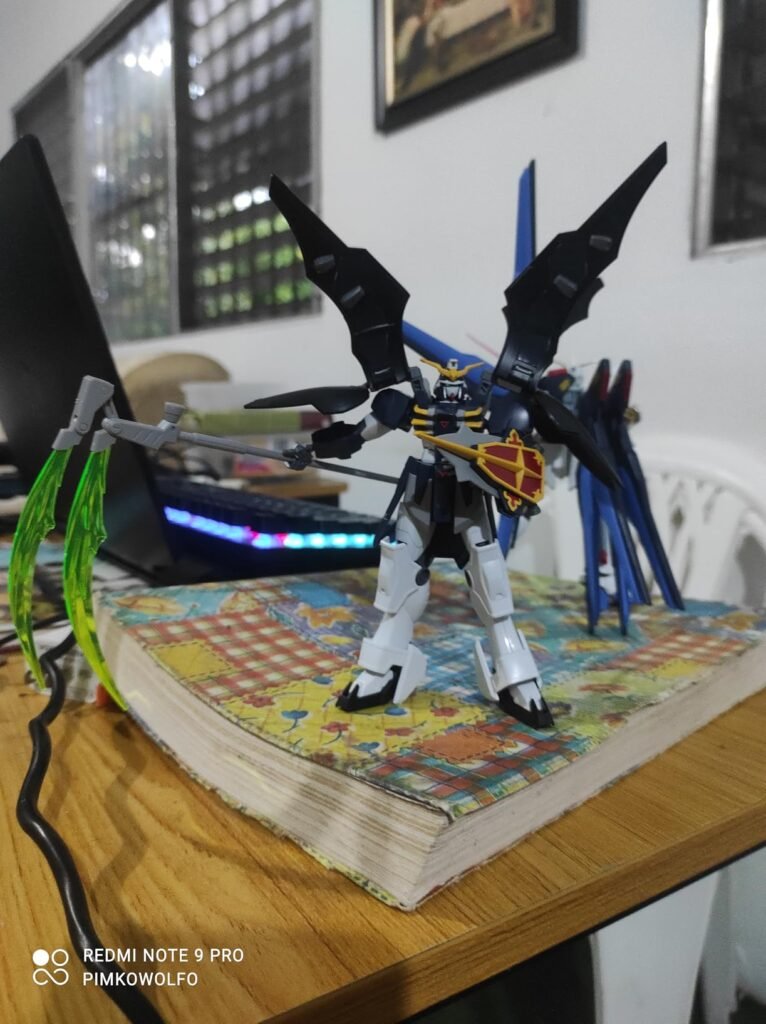
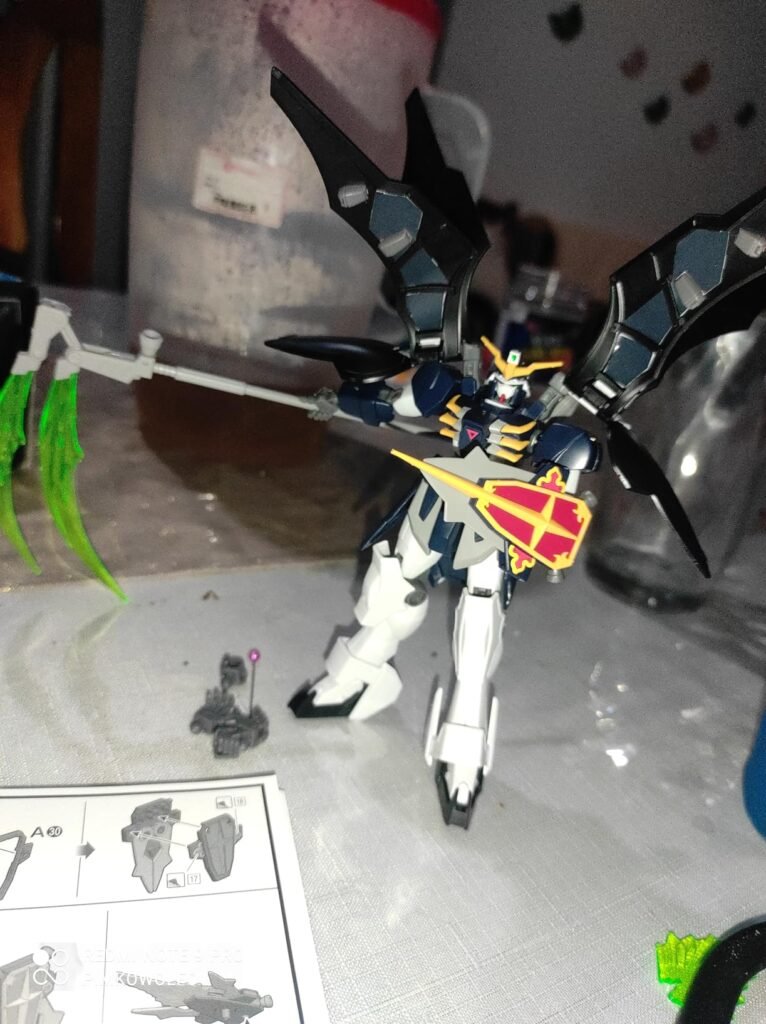
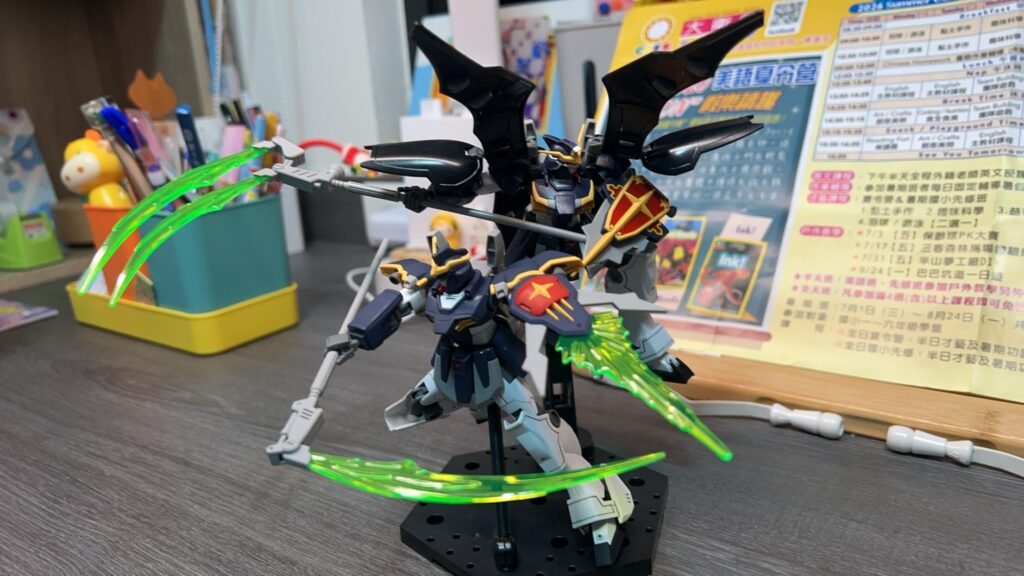
The HGAC Deathscythe Hell brings one of the most iconic Wing series mobile suits into a build that stays approachable for less experienced hobbyists. HGAC stands for High Grade After Colony, a sub-line dedicated to the Wing universe's Gundams, and this release captures the character's dark, scythe-wielding aesthetic in a compact 1/144 scale. It is a strong pick for fans of the show who want a straightforward build.
We may earn a commission when you buy through this link, at no additional cost to you.
Bandai’s multi-color runner technology packs multiple plastic colors onto a single sprue, which means you get respectable color separation without needing to paint the finished kit. The snap-fit assembly requires no glue, and the parts click together securely once removed from the runners. A hobby nipper is still recommended for clean cuts, though careful use of side cutters or a similar tool works in a pinch.
Articulation is adequate for the price tier but noticeably more limited than what you would find on an RG or MG kit. The scythe poses well and the wings can be positioned for classic combat stances, but do not expect the deep dynamic posing of higher grades. For display in a fixed action pose, the kit performs its job without complaint.
HGAC releases focus specifically on the After Colony timeline, which is the setting for Mobile Suit Gundam Wing. If you are building a collection tied to a specific series, sub-lines like HGAC, HGUC, and HG IBO make it easy to identify kits that belong together stylistically. All are still High Grade builds, so the assembly complexity and articulation are broadly similar across the sub-lines.
This kit makes the most sense for Wing series fans who want an affordable Deathscythe Hell without stepping up to the more expensive RG or MG versions. It also works well as a second or third HG build for newer hobbyists who want to expand their collection. If you need extensive posability or want a build that showcases advanced engineering, look at the RG line instead.
Builders who need RG-level articulation or advanced posability features.
We may earn a commission when you buy through this link, at no additional cost to you.
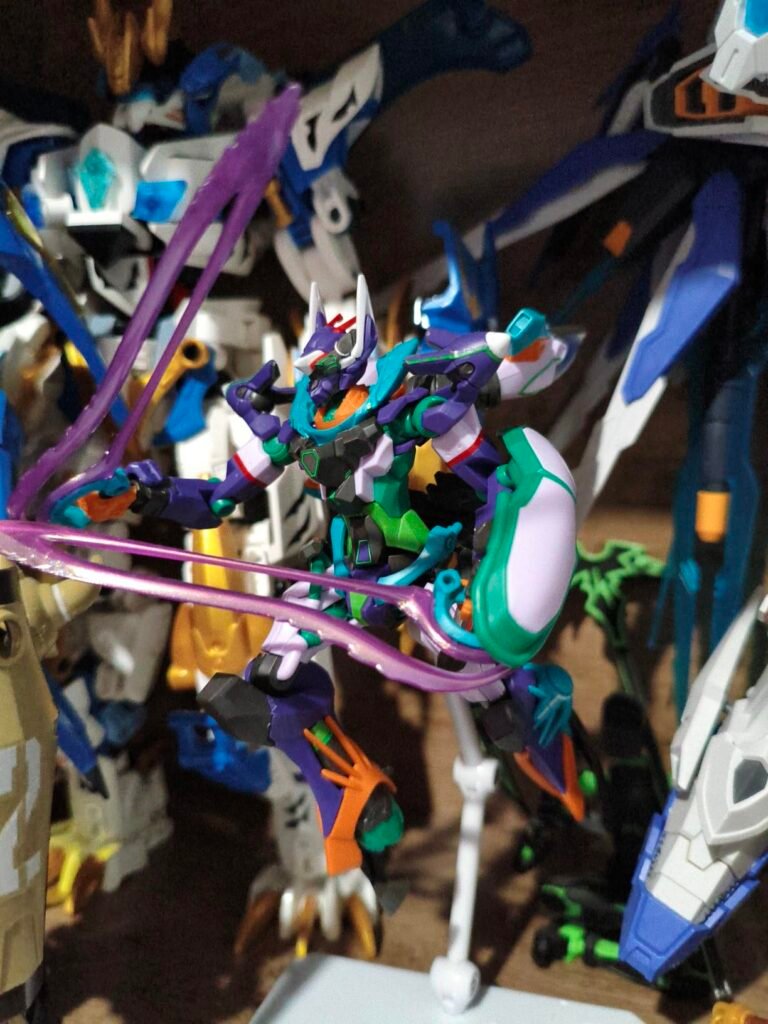
The HG GFreD comes from the newer Mobile Suit Gundam GQuuuuuuX series, and it brings a fresh silhouette to the HG lineup. If you like to keep your collection current with recent Gundam releases rather than sticking exclusively to legacy designs, this kit represents one of the more interesting picks. The 4.8 star rating from early owners suggests that the engineering lives up to the design.
We may earn a commission when you buy through this link, at no additional cost to you.
The standout feature is the swappable head that lets you display the mobile suit in either its closed or deployed state. This kind of visual option is rare at the HG tier and adds meaningful display flexibility without complicating the build itself. The joint articulation in the torso and hips supports dynamic action poses, and the backpack uses flexible joints so you can angle it for cinematic compositions.
Build complexity sits in the standard HG range, meaning it is approachable for hobbyists who have finished a few kits but still contains enough engineering to feel rewarding. Parts fit is clean, color separation is respectable straight from the runners, and the overall footprint is compact enough for shelf display alongside other 1/144 kits. Panel lining will bring out the surface detail nicely for builders who want to add a finishing touch.
Interchangeable parts like the deployable head on this kit let you change the character of your display without repainting or heavy modification. Over time, you can rotate between display modes to keep a shelf feeling fresh, or pose two of the same kit in different states for a dramatic comparison. This is a genuine convenience feature that adds long-term display value, especially for hobbyists who like to update their arrangements periodically.
Choose this kit if you want to bring a newer Gundam design into your collection or if you enjoy display features like swappable heads. It pairs well with other HG kits and does not require the time commitment of an RG or MG build. If you prefer legacy designs from Wing or Universal Century, however, other picks on this list may hold more nostalgic appeal.
Traditionalists who prefer classic Universal Century or Wing series designs exclusively.
We may earn a commission when you buy through this link, at no additional cost to you.
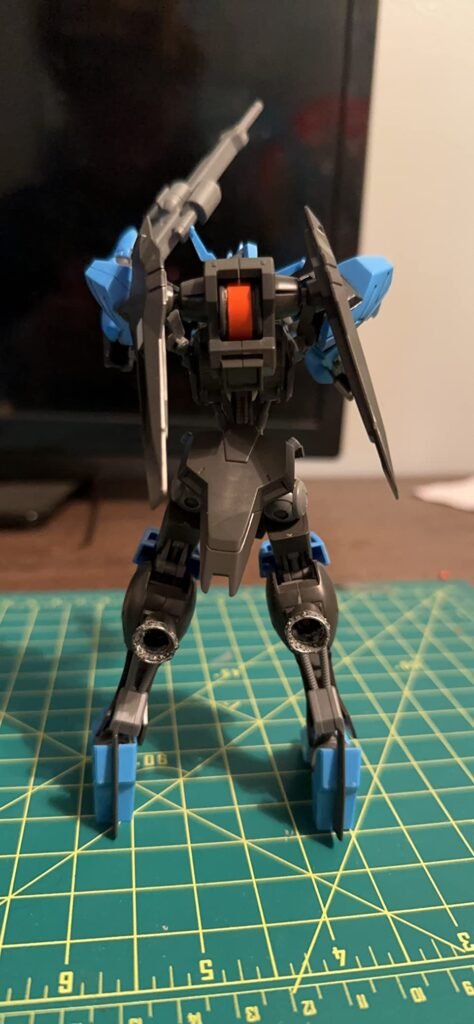
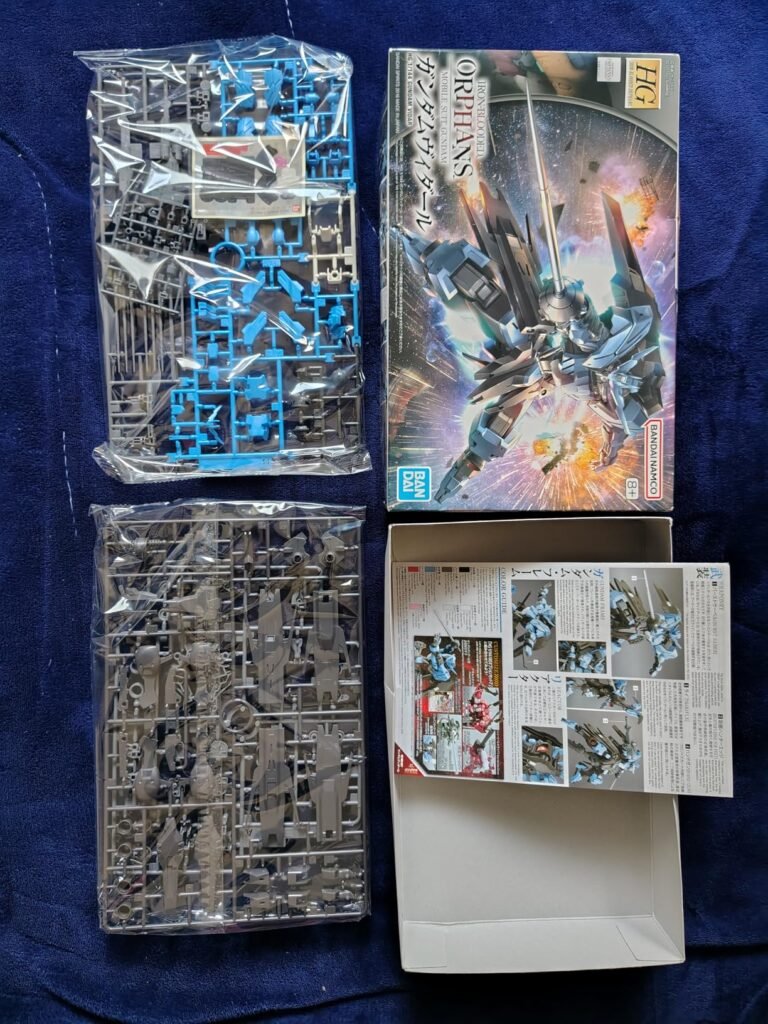
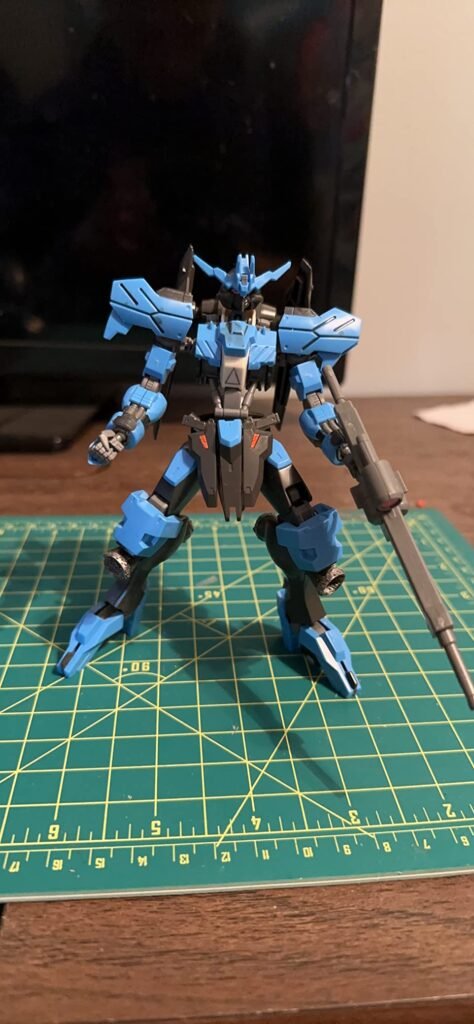
The HG Vidar from Iron-Blooded Orphans delivers one of the more distinctive character designs in the IBO lineup at a very approachable price. If you enjoy the darker, mechanical aesthetic of the IBO series or want to build a themed shelf of Iron-Blooded Orphans mobile suits, this kit is a natural addition. The included weapon loadout is generous for the price tier.
We may earn a commission when you buy through this link, at no additional cost to you.
You get a saber, a rifle, and two handguns, which is more than most HG kits at this price offer. This weapon variety supports different pose setups, whether you want a close-combat sword stance or a ranged dual-pistol composition. The four runners deliver solid part separation, and the foil sticker sheet handles color accents that would otherwise require paint work.
Build complexity is standard for the HG range, meaning it is well-suited to newer hobbyists as well as experienced builders looking for a quick weekend project. The parts snap together cleanly with a hobby nipper, and the finished kit has enough joint mobility for the classic action poses associated with the IBO series. It stands roughly to scale with other 1/144 kits, making it easy to display alongside a broader collection.
Foil stickers handle small color accents that would otherwise require careful painting. To apply them cleanly, use a toothpick or small tweezers to lift the sticker from its backing sheet, then position it slowly on the part surface. Press down from the center outward to avoid trapping air bubbles. If a sticker is placed slightly off, you can usually lift and reposition it once or twice before the adhesive weakens.
This is a smart pick if you want to add IBO representation to your shelf without spending much. The generous weapon count and clean design make it satisfying to pose, and the low price makes it a low-risk way to try the sub-line if you have not built one before. Buyers who want deeper articulation should look at RG releases, though there are fewer IBO options at that tier.
Builders who prefer molded color detail over foil stickers or want RG-level joint mobility.
We may earn a commission when you buy through this link, at no additional cost to you.
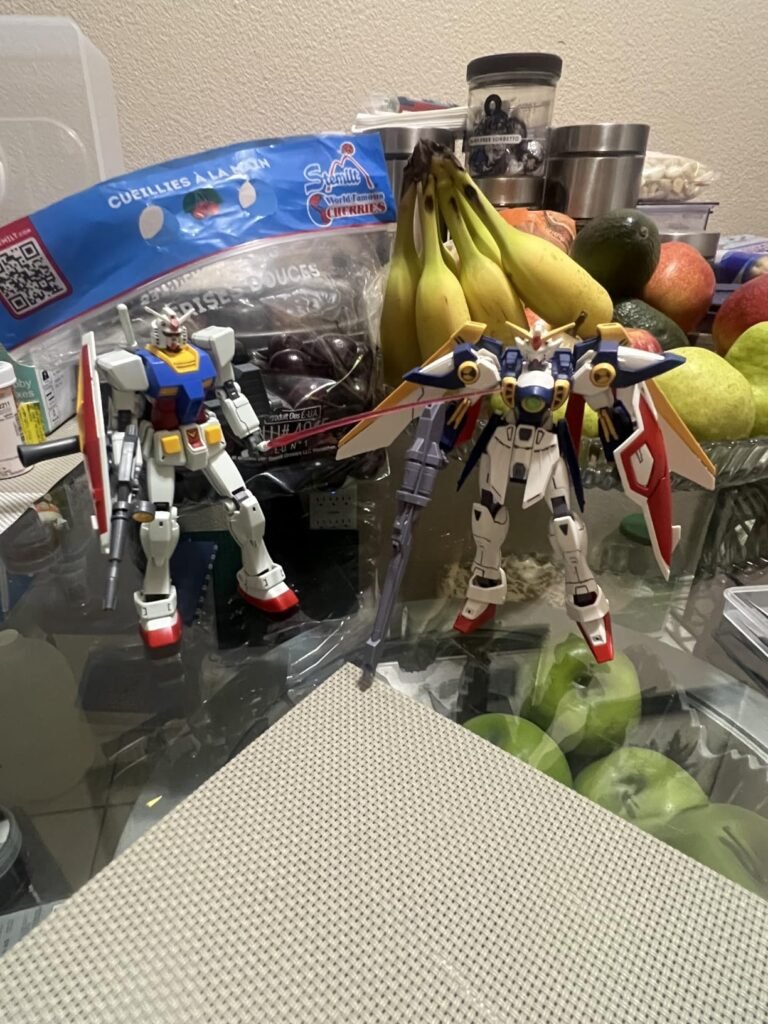
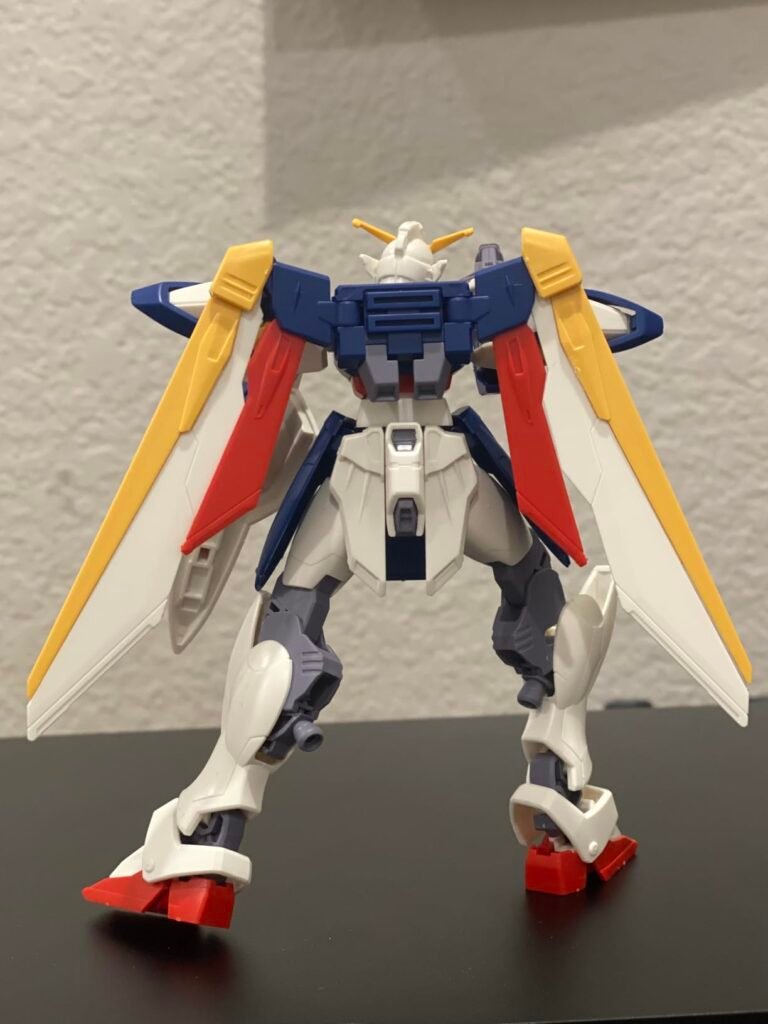
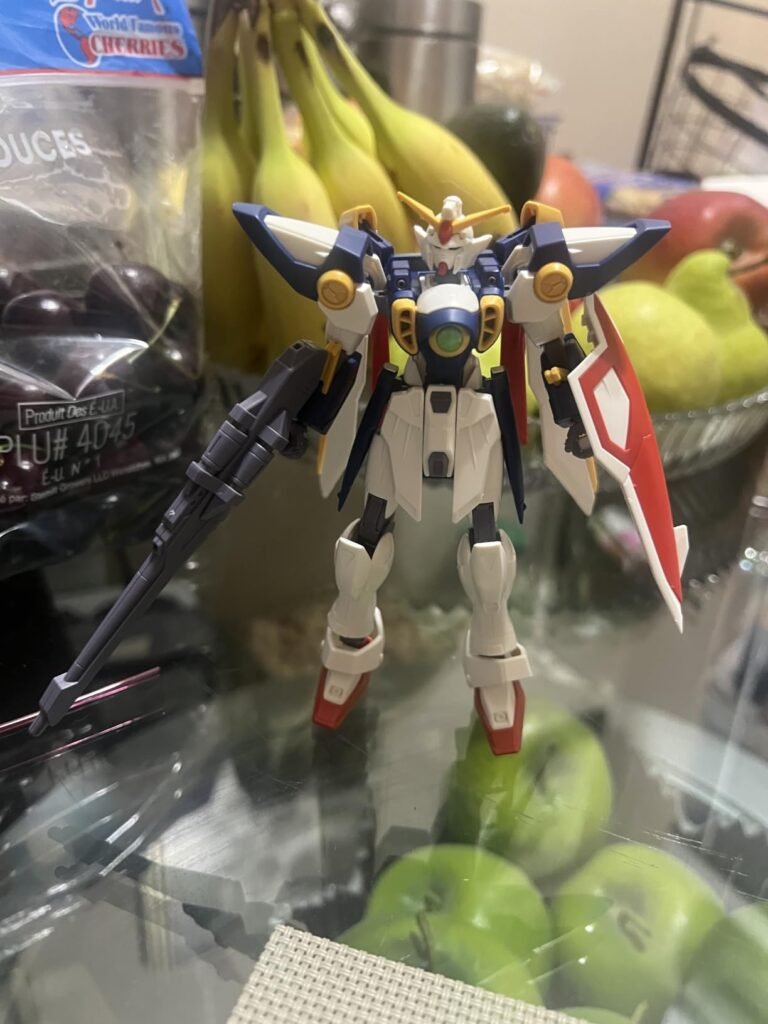
The Entry Grade Wing Gundam is designed to introduce complete beginners to the Gunpla hobby without any of the usual barriers. The parts use touch-gates, which means you can twist them off the runners by hand without needing a hobby nipper. That single design choice removes the biggest obstacle for first-time builders who might otherwise hesitate to invest in tools before knowing if they enjoy the hobby.
We may earn a commission when you buy through this link, at no additional cost to you.
Despite the beginner-friendly assembly, the color separation is achieved through multi-color molding rather than stickers, so the finished kit looks accurate straight from the box. All of the character’s signature armaments are included, giving new builders a chance to pose the finished Wing Gundam in familiar stances from the show. The articulation range is broader than you might expect at this entry-level tier.
At under twelve dollars, this kit is also one of the most affordable ways to try Gunpla for the first time. It makes an excellent gift for someone who has expressed curiosity about the hobby or for younger builders who need something forgiving. The instruction booklet uses clear visual steps that make it easy to follow along without prior experience.
Even though this kit does not require nippers, a basic pair costs very little and is worth having if you plan to continue with Gunpla. Nippers produce cleaner cuts than twisting parts off by hand, which reduces visible stress marks and leaves smoother surfaces. If this Entry Grade build convinces you to try HG or RG kits, a pair of nippers will be essential for those next steps.
Choose this kit if you are new to Gunpla and want to learn the basics before committing to more expensive builds. It is also a great buy for parents who want to build alongside a younger child, since the tool-free assembly reduces the safety concerns of using nippers. Experienced hobbyists will find it too simple for a serious project, though it can still serve as a quick, relaxing build between larger kits.
Advanced hobbyists looking for complex engineering or deep detail.
We may earn a commission when you buy through this link, at no additional cost to you.
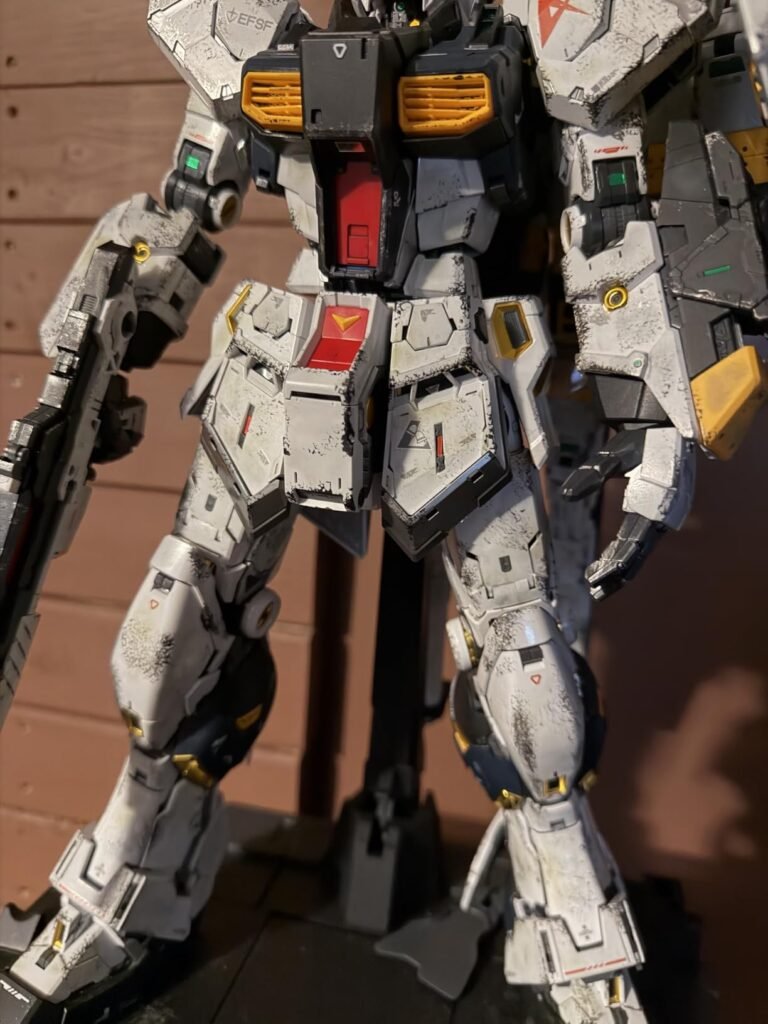
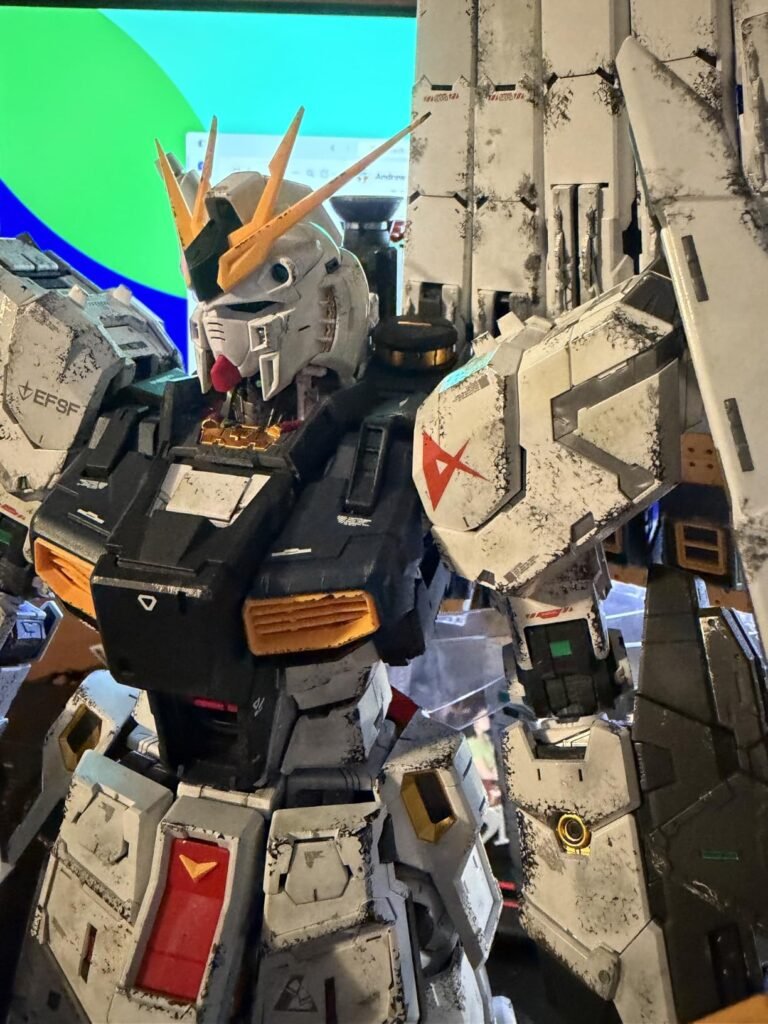
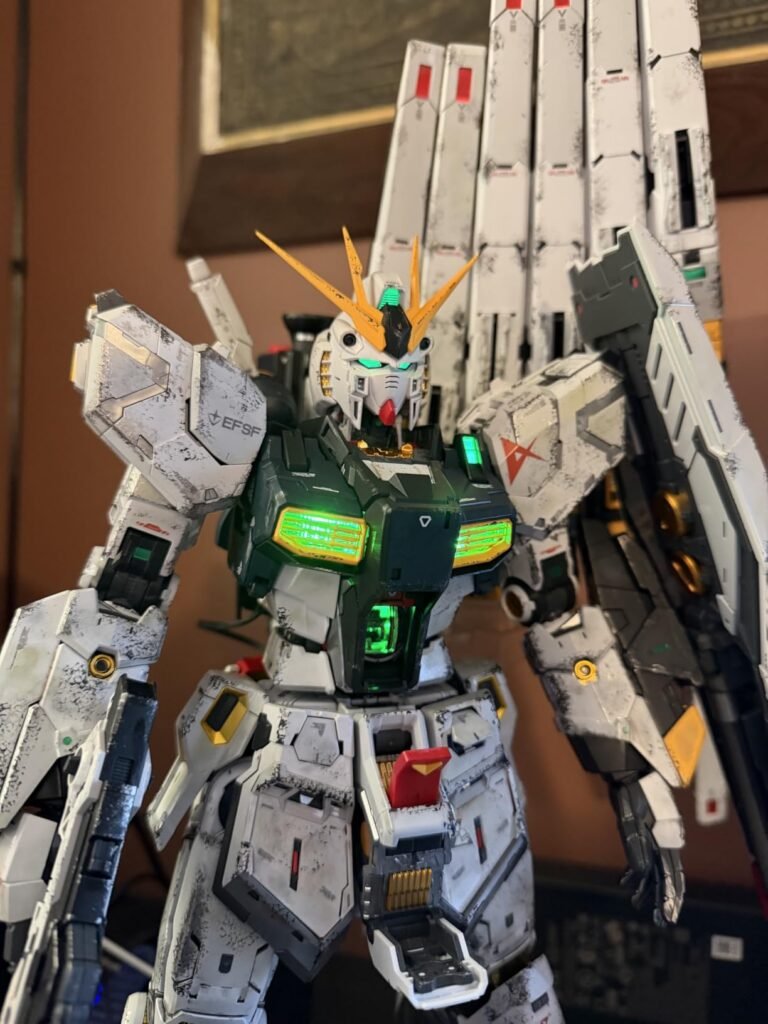
The PG Unleashed Nu Gundam is the largest and most ambitious kit in this guide, and it represents the top of the Bandai Spirits Gunpla lineup. At roughly 380mm tall on its own, or about 560mm with the fin funnel array deployed on the included display base, this build produces a display piece that anchors an entire shelf or dedicated display case. If you have wanted to try a Perfect Grade release, this is one of the most impressive current options.
We may earn a commission when you buy through this link, at no additional cost to you.
The engineering centers on what Bandai calls the Ultimate Unit System, which is essentially a highly detailed inner frame that gives builders a layered mobile suit construction experience. You are not just assembling armor onto a simple skeleton, you are building a mechanical structure that mirrors the depth of the anime design. Metallic-molded frame parts, multi-layered 3D stickers for glowing accents, and metal parts on the thruster nozzles and head Vulcans all contribute to the premium feel.
The armament suite includes a beam rifle and shield with deployable gimmicks, two types of beam sabers, and the New Hyper Bazooka with a support arm designed for stable posing. The large-scale fin funnel Psycommu weapon system is the visual centerpiece, and the included display base with support parts keeps everything stable even when the funnels are fully deployed. Expect the base itself to occupy roughly 290mm by 220mm of shelf space.
Before purchasing a PG kit, measure your intended display area carefully. With the fin funnels deployed and the display base included, you need roughly 40 to 50 centimeters of vertical clearance and around 30 centimeters of depth. A glass display cabinet or dedicated shelf keeps dust off the intricate details and prevents accidental damage. Also consider the build space you need during assembly, since Perfect Grade runners take up significant desk area during the multi-week construction process.
This kit is only for buyers who are committed to Perfect Grade builds and have both the budget and the display space to do it justice. The build time can stretch across weeks depending on how much detail work you add, and the finished piece needs a dust-free environment to preserve its appearance. For serious collectors who want a definitive Nu Gundam centerpiece, however, it delivers a build and display experience that no smaller kit can match.
First-time builders, budget shoppers, or anyone without dedicated display and build space.
We may earn a commission when you buy through this link, at no additional cost to you.
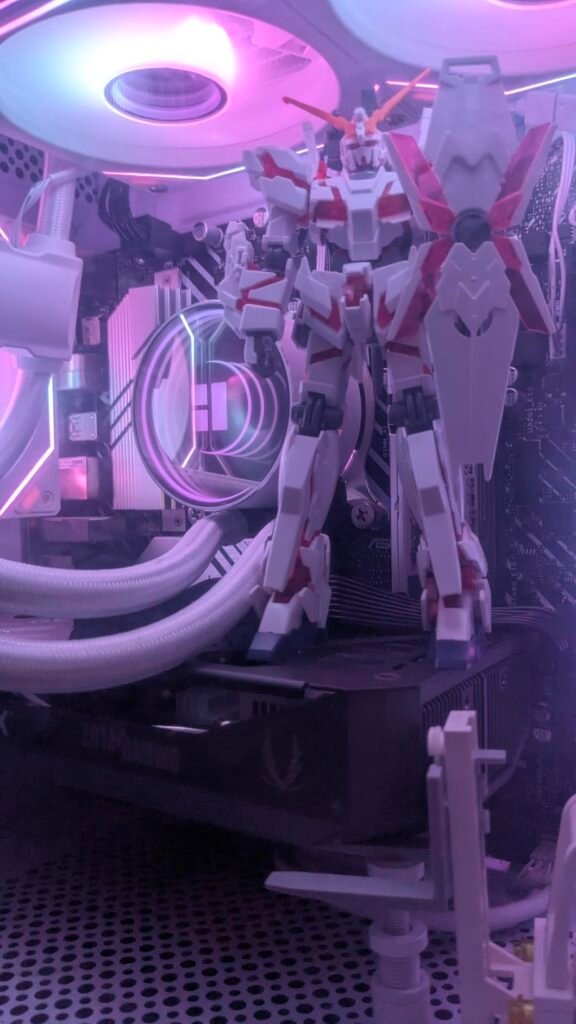
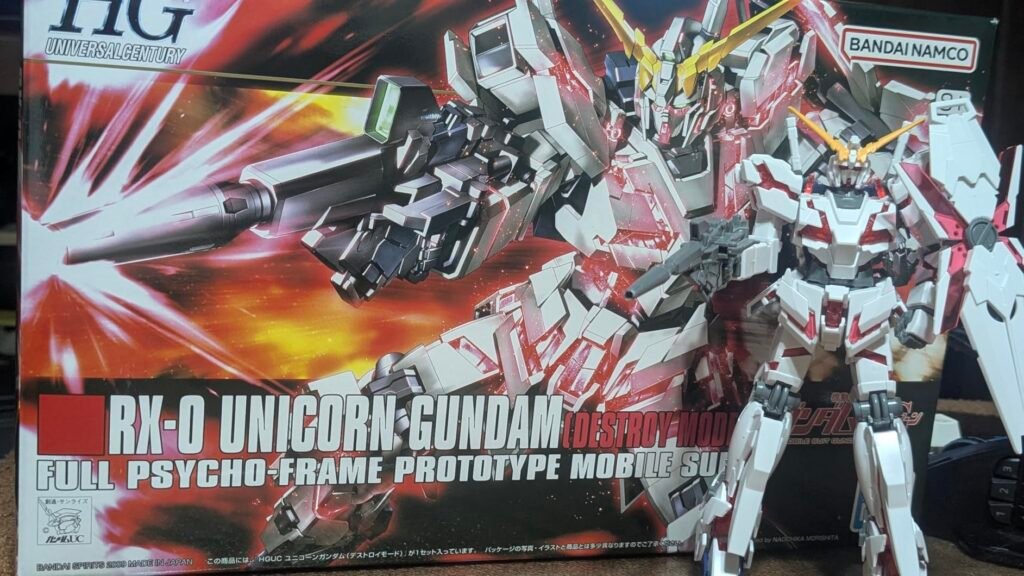
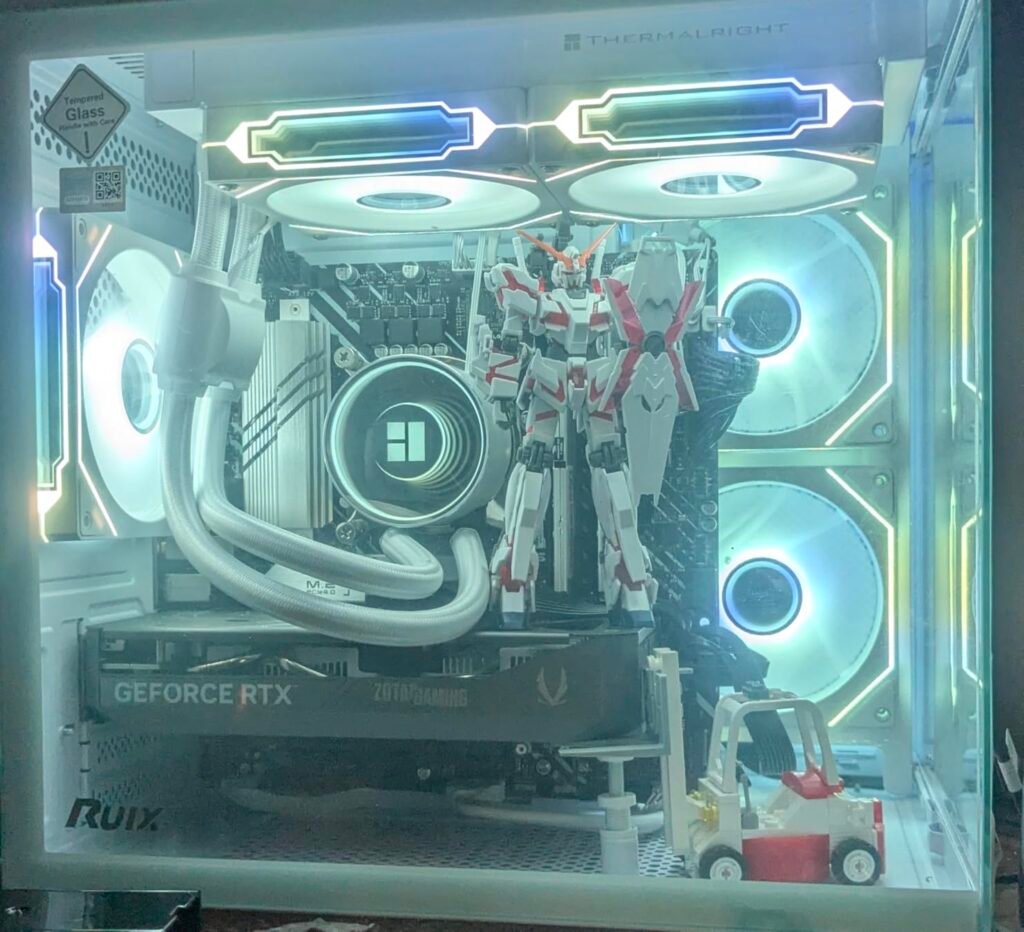
The HGUC Unicorn Gundam in Destroy Mode remains one of the most recognizable and popular kits in the Universal Century line. If you have watched the Gundam Unicorn OVA series and want to bring one of its signature moments to your shelf, this HGUC release captures the transformed Destroy Mode silhouette without requiring a big investment. It has been in production for years and still holds up well against newer HG releases.
We may earn a commission when you buy through this link, at no additional cost to you.
The standout feature is the translucent pink and red plastic used for the exposed psycho frame elements. This gives the finished kit a striking visual accent that stands out from the white armor without needing paint work. Combined with the included beam magnum rifle and shield, the loadout supports iconic poses from the anime series that fans will recognize immediately.
Articulation is impressive given the compact 1/144 scale, allowing the Unicorn to hold action stances that echo scenes from the show. Assembly requires no glue, though a hobby nipper is necessary to remove parts cleanly from the runners. The build complexity sits comfortably in the standard HG range, making it accessible for hobbyists at any level.
Translucent parts add visual depth by letting light pass through in ways that solid plastic cannot. On the Unicorn Gundam, the pink psycho frame elements create the impression of energy glowing beneath the armor, even without actual illumination. Some builders enhance this effect by installing small LEDs behind the translucent sections, though the base kit already delivers strong visual impact on its own.
This kit is an easy recommendation for Universal Century fans and anyone who wants to add an iconic Unicorn Gundam to their collection without stepping up to the more expensive RG or MG versions. The translucent psycho frame gives it visual presence that many HG kits lack. Builders who want deeper detail or a light-up effect will need to look at higher grades or add aftermarket LEDs themselves.
Buyers who want the latest engineering advances or built-in LED lighting effects.
We may earn a commission when you buy through this link, at no additional cost to you.
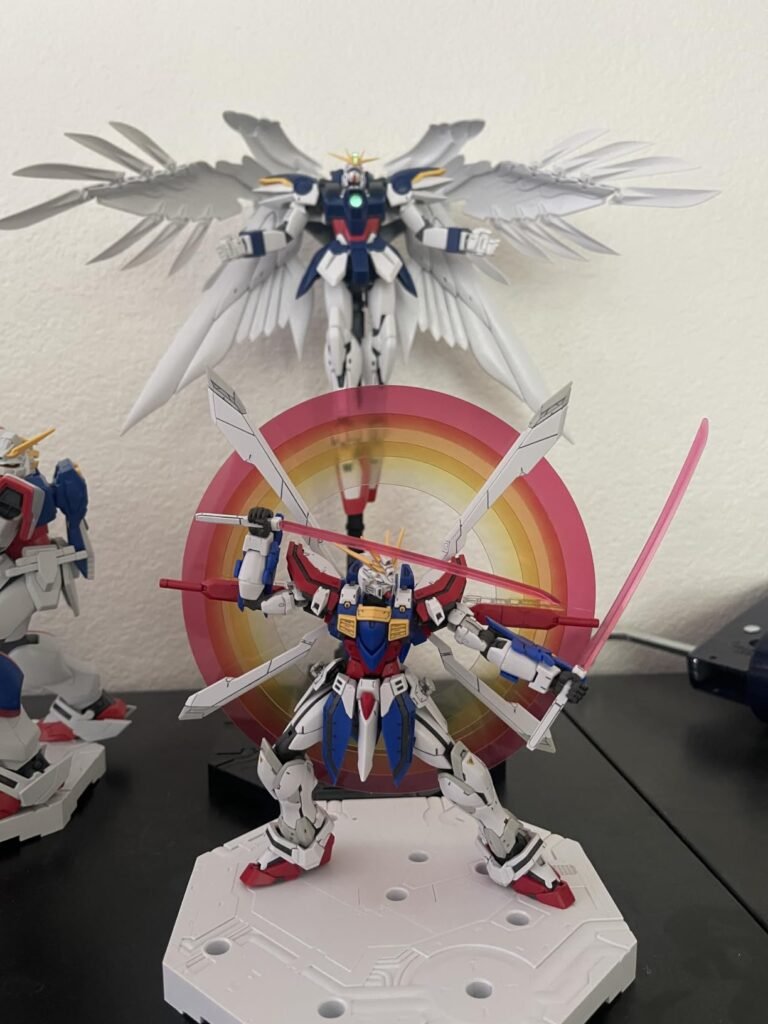
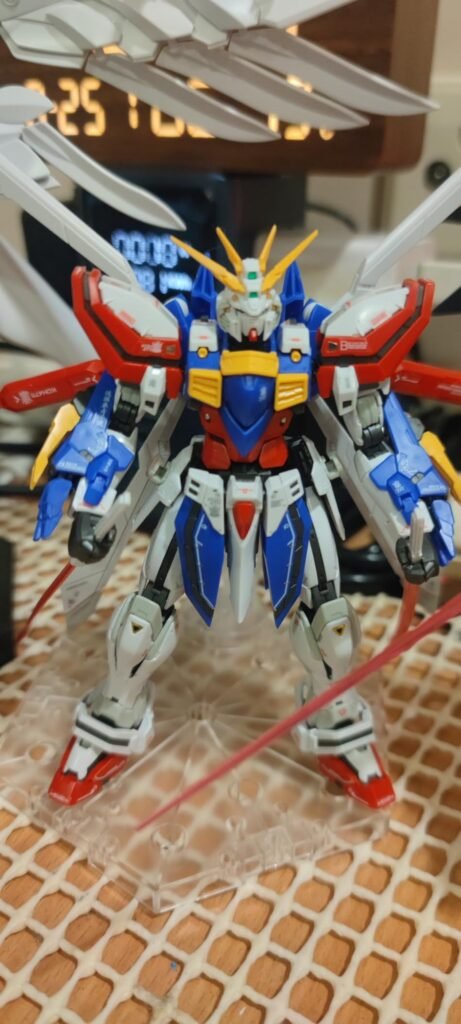
The RG God Gundam pushes the Real Grade format toward the widest range of motion Bandai has attempted in the line, and the result is a kit that can hit poses no other Gundam release can match. The engineering borrows from actual human body structure, which lets the finished figure recreate the martial arts stances that define the Mobile Fighter G Gundam series. If you love dynamic display or Gunpla photography, this is one of the best RG releases available.
We may earn a commission when you buy through this link, at no additional cost to you.
Advanced MS joints in the shoulders and wrists make it possible to reproduce the character’s signature arms-crossed stance, which is nearly impossible on standard Gunpla kits. The God Finger technique gets its own dedicated engineering, with movable joints at the nail base and thumb cover that let you reproduce the finger extension exactly as shown in the anime. Two God Slash beam weapons are included for close-combat poses.
The included sun wheel effect parts add another display dimension, letting you set up the finished God Gundam with a dramatic energy effect for photography or display. The effect connects through a dedicated joint, and a clear PET sheet handles the visual element. Realistic decals are provided for surface detail that brings the finished kit closer to Master Grade appearance despite the 1/144 scale.
Effect parts like the included sun wheel add drama to display poses but require thoughtful setup. Position the effect so it complements the kit’s stance rather than competing with it, and consider your background carefully if you plan to photograph the setup. A neutral dark backdrop tends to make translucent effect parts pop, while busy backgrounds can wash them out. Store the effect parts in a small container when not displayed to prevent scratches.
Choose this kit if you want to display the God Gundam in poses that would be impossible on other releases, or if you enjoy the deep engineering of the RG line. G Gundam fans will find this one of the most faithful representations available at any grade. Builders who prefer simpler kits or larger scales should look elsewhere, since the small parts and complex articulation require patience during assembly.
Builders who prefer larger scales or find small-part assembly frustrating.
We may earn a commission when you buy through this link, at no additional cost to you.
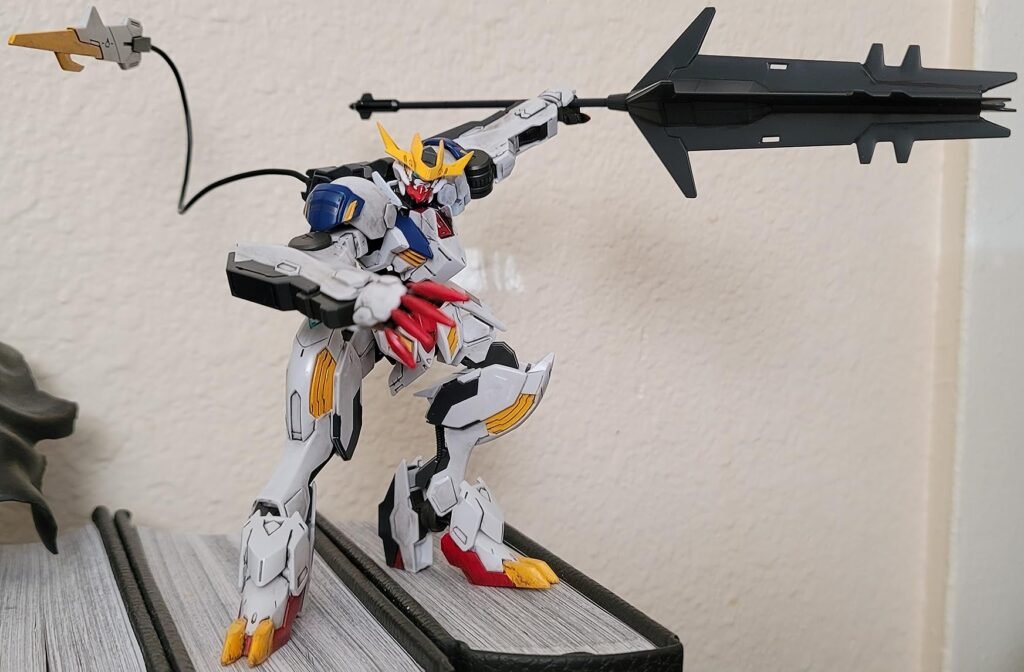
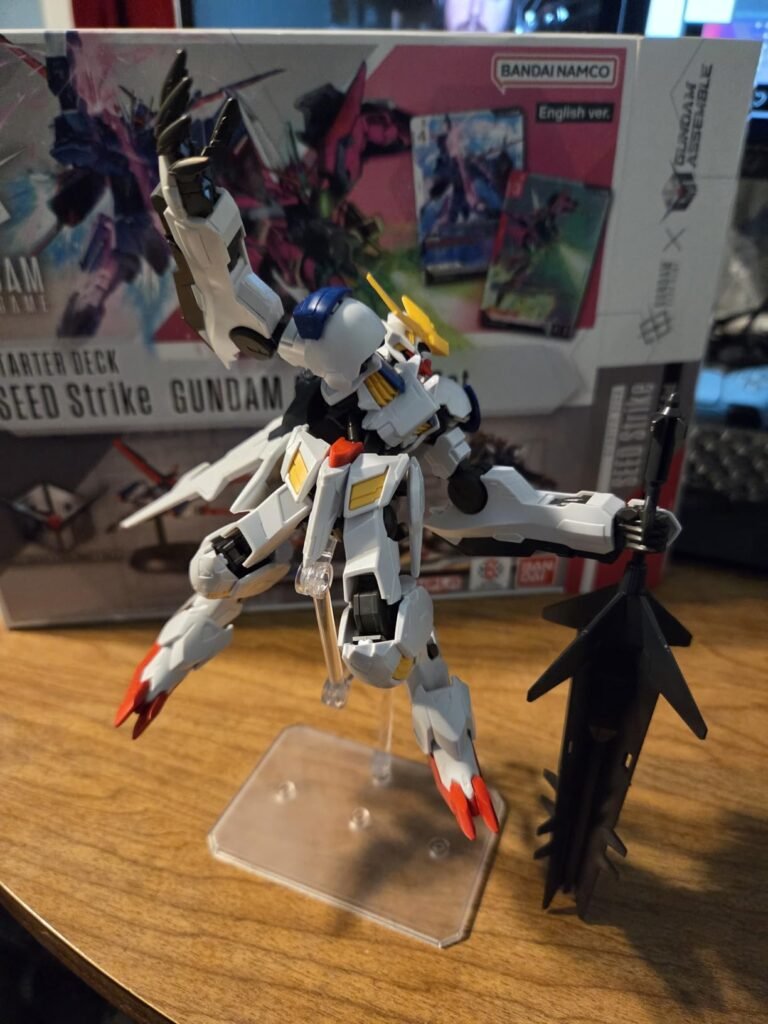
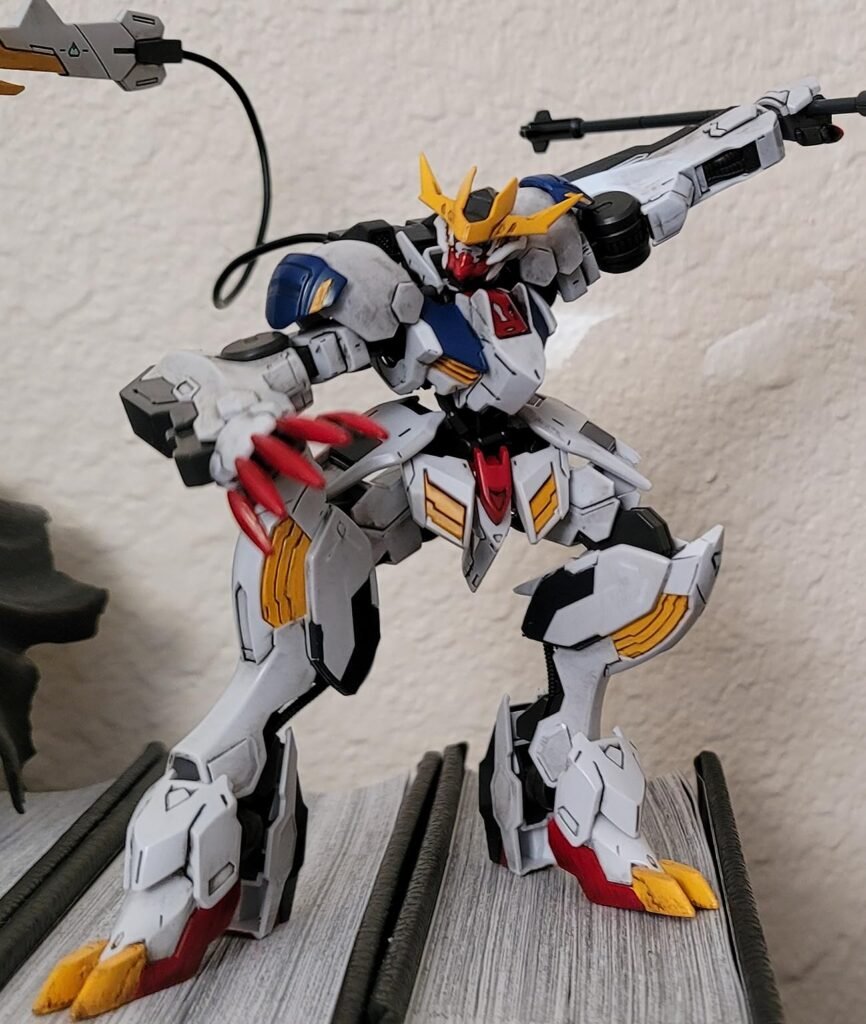
The HG Barbatos Lupus Rex represents one of the most aggressive designs in the Iron-Blooded Orphans series, and this kit captures its feral, close-combat character with impressive detail. If you enjoy melee-focused mobile suit designs and want a kit with unusual weapon gimmicks, this Barbatos variant delivers more than the average HG release. The massive arms and razor-tipped claws give it a distinct silhouette on any shelf.
We may earn a commission when you buy through this link, at no additional cost to you.
The tail weapon is the most memorable engineering feature. Using an included wire, it can extend from the back for dramatic reach, capturing a signature moment from the anime series. The forearm compartments open and close to reveal sub-arms designed for grasping additional weapons, and the kit is compatible with the various IBO Mobile Suit Option Sets if you want to expand the loadout with additional gear from other releases.
The included mace is the largest ever made for the Barbatos line, and it features a retracting gimmick that lets you store it on the rear skirt armor when not in use. Five runners plus a sticker sheet and instruction manual make up the full package, which gives you enough parts to build a detailed finished piece without overwhelming complexity. The assembly sits comfortably in the standard HG difficulty range.
The Iron-Blooded Orphans series includes several dedicated Option Set releases that provide additional weapons and accessories compatible with IBO mobile suit kits. If you enjoy customizing your builds, picking up an Option Set alongside this Barbatos Lupus Rex gives you extra melee and ranged weapons to swap between poses. The sub-arm compartments in the forearms are designed specifically to interact with these accessories, extending the display possibilities well beyond the base kit.
This is the right pick if you gravitate toward aggressive, melee-oriented designs or want to build a themed IBO collection. The extending tail and swappable weapons add display versatility that most HG kits lack. Buyers who prefer clean, minimalist Gundam designs may find the aggressive Barbatos aesthetic too extreme, and builders who want maximum posability should consider RG releases instead.
Fans of clean, streamlined Gundam designs or collectors who avoid IBO’s aggressive aesthetic.
We may earn a commission when you buy through this link, at no additional cost to you.
Buying a Gundam model kit for the first time can feel confusing because of the many grades, scales, and series involved. This guide breaks down the factors that actually matter so you can match a kit to your skill level, budget, and display goals.
The grade of a Gunpla kit is the single most important factor in determining how the build will go. Entry Grade kits are the simplest, requiring no tools and taking about an hour to complete. High Grade sits one step up, offering more detail and slightly more complex assembly while remaining approachable for newcomers. Real Grade compresses Master Grade level detail into a 1/144 footprint with advanced articulation joints and finer part separation.
Master Grade increases both the scale and the complexity, adding an internal frame and hundreds more parts. Master Grade Extreme pushes those elements even further with specialty materials and advanced gimmicks. Perfect Grade sits at the top, delivering the largest scale, the most detailed inner frame, and build times that can stretch across weeks. Matching your grade to your experience level prevents both boredom on the low end and frustration on the high end.
If you have never built a Gunpla kit before, start with an Entry Grade or standard HG release. Once you feel comfortable with nippers and basic assembly, RG kits offer a satisfying next step. Reserve Master Grade and Perfect Grade for when you know you enjoy the hobby and have both the time and budget for a serious project.
Gunpla scales are expressed as ratios such as 1/144, 1/100, and 1/60. A 1/144 kit produces a finished model roughly 12 to 15 centimeters tall, which fits easily on any shelf. A 1/100 kit stands around 18 to 22 centimeters, offering more visual presence without demanding excessive space. A 1/60 Perfect Grade kit can reach 38 centimeters or taller with accessories, which requires dedicated display planning.
Larger scales generally allow for more detail and engineering, but they also increase build time and cost proportionally. If you plan to build a diverse collection, sticking primarily to 1/144 keeps the visual scale consistent when displaying multiple kits side by side. Mixing scales can work if you plan the display carefully, but a small Entry Grade kit next to a large Perfect Grade release can look awkward without deliberate arrangement.
Choose the scale based on your available display space and how many kits you plan to build. If shelf space is limited, 1/144 is the practical default. If you want a single showpiece rather than a collection, 1/100 or 1/60 delivers more visual impact for the effort invested.
Articulation refers to how many points on the kit can move and how far each joint can rotate. Entry Grade kits offer basic articulation suitable for standing poses and simple gestures. HG kits improve on this with more joints, though the range of motion at each joint remains modest. RG kits introduce advanced MS joint systems that dramatically increase what poses are possible, often rivaling or exceeding Master Grade posability despite the smaller scale.
Master Grade and above add fully articulated internal frames that allow deep dynamic posing, including recreations of specific anime scenes. If you enjoy Gunpla photography or want to change your display poses periodically, prioritize kits with strong articulation. If you plan to set the finished kit in a single fixed pose and leave it there, extensive articulation matters less and simpler grades will serve you well.
For most builders, RG kits offer the best balance of articulation and buildability. If you specifically want maximum posing flexibility, look for RG releases that highlight advanced joint systems in their engineering. If a fixed action pose is your goal, an HG kit is more affordable and produces solid results without the added complexity.
Modern Gunpla achieves accurate color separation through multi-color molding, meaning different colors are molded directly into the plastic without requiring paint or extensive stickers. Higher grades tend to have better color separation, with RG and MG kits often reaching near-complete accuracy straight from the box. Entry Grade and some HG releases rely more heavily on stickers for small color accents or fine detail work.
Stickers can look great when applied carefully, but they are more prone to peeling over time and can appear less refined than molded color. If you want a clean, low-maintenance finish without painting, look for kits that emphasize sticker-free color separation. If you plan to paint your kits anyway, sticker use matters less since you can achieve any color arrangement you want with the right paints.
Beginners should prioritize kits with good molded color separation to avoid the need for painting. Experienced builders who paint their kits can choose based on other factors, since color accuracy becomes a matter of skill rather than kit engineering.
The weapon loadout included with a kit affects both display versatility and value. Some kits ship with just a rifle and shield, while others include multiple beam sabers, alternate hands, effect parts, and specialty weapons. More accessories mean more pose options and often more visual drama, though they also increase assembly time and can clutter the display if not curated carefully.
Effect parts like beam blades, muzzle flashes, and energy effects add cinematic quality to display poses but require setup time and thoughtful placement. Some higher-grade kits include display bases specifically designed to support dynamic poses that would otherwise be impossible to stand on their own. Check the accessory list before buying if certain weapons or effects matter to your intended display.
For your first few kits, focus on the character design rather than the accessory count, since more weapons often add complexity without necessarily improving the build experience. Once you know what kind of displays you enjoy building, use the accessory list to narrow choices between similar kits.
Gundam kits come from a wide range of series set in different fictional timelines, including the Universal Century, After Colony, Cosmic Era, Post Disaster, and newer settings. Each series has its own visual style, so builders often gravitate toward the timelines they know from watching the anime. If you have not seen any Gundam series, the character design alone can guide your choice, since Gunpla stands on its own visually regardless of source material.
Sub-lines like HGUC, HGAC, HG IBO, and others correspond to specific series, making it easy to build themed collections tied to your favorite show. Universal Century releases have the deepest catalog by far, thanks to the setting’s decades of storytelling. Newer series like GQuuuuuuX have smaller but rapidly growing lineups.
If you already have a favorite Gundam series, start there. If you are new to the franchise, browse kit images and pick the designs that visually appeal to you. Watching the associated anime later often deepens your appreciation for kits you have already built.
Gunpla pricing spans a wide range, from under fifteen dollars for Entry Grade and basic HG releases to several hundred dollars for Perfect Grade kits. Beyond the kit itself, expect to invest in basic tools such as a hobby nipper, a hobby knife, and eventually panel-lining pens or paints if you want to add finishing touches. These tool costs are one-time investments that improve every future build.
As you build more kits, incidental costs like display stands, topcoat spray, and storage containers add up. Perfect Grade builds can also require dedicated display cases to protect the intricate detail from dust and accidental damage. Factor these ongoing costs into your budget rather than focusing only on the kit price.
Start with an affordable kit to learn the hobby before committing to expensive builds. If you enjoy the process after a few HG or RG releases, stepping up to Master Grade or Perfect Grade becomes a more informed decision rather than a leap of faith.
Most Gunpla kits above Entry Grade require at least a basic hobby nipper for clean part removal. Investing in a quality pair of nippers early makes every subsequent build easier and produces cleaner results with less visible stress marking. A hobby knife helps with cleaning up nub marks left after cutting, and fine-grit sandpaper smooths surfaces further if you want a polished finish.
Optional upgrades include panel-lining pens that darken recessed lines to add depth, top coat sprays that unify surface finish, and Gundam markers or paints for custom color work. None of these are required for a satisfying build, but they can significantly improve the appearance of finished kits. Photography-focused builders often add display bases, effect parts, and lighting setups over time.
For your first kit, buy nippers at minimum. Add other tools gradually as you identify specific improvements you want to make. Trying to master every technique on your first build usually leads to frustration, while building skills incrementally keeps the hobby enjoyable.
For assembly, start by organizing the runners and reading through the instruction booklet before cutting any parts. Use a hobby nipper to cut each part slightly away from the runner, then trim the remaining nub close to the surface with a second cut. This two-step approach reduces stress marks on visible surfaces. Work on a clean, well-lit surface with a small container nearby to catch runner scraps, and take breaks during long build sessions to maintain focus and precision.
Once assembled, apply any panel-lining pens or stickers before display to bring out the surface detail. If you plan to use a top coat spray for a unified matte or gloss finish, apply it in light, even layers in a well-ventilated area away from dust. Foil and waterslide decals should be positioned carefully with tweezers, then pressed down with a soft cloth to remove trapped air. Take your time here, since rushed decal work is one of the most common ways a finished kit ends up looking less polished than it could.
For long-term display, keep your kits away from direct sunlight to prevent color fading, especially on white and clear parts. Dust regularly using a soft brush or a can of compressed air rather than a cloth, which can scratch delicate surfaces. Store weapons and effect parts in a small container if you swap poses periodically, and avoid leaving joints in extreme positions for extended periods, since the stress can weaken plastic over time. A display case or enclosed shelf offers the best protection for high-value kits.
Entry Grade kits are the easiest starting point because they require no tools and take about an hour to build. If you want a bit more complexity, a standard HG kit offers more parts and better detail while remaining approachable. Both grades cost under thirty dollars, making them low-risk ways to try the hobby. Save RG, MG, and PG builds for after you have finished at least one or two simpler kits.
No, modern Gunpla kits use multi-color molded plastic to achieve accurate colors straight from the box. Painting is entirely optional and mostly done by hobbyists who want custom finishes or extra detail. Higher grades like RG and MG have particularly good molded color separation. If you want to enhance the finished appearance without painting, panel-lining pens are the easiest first step.
At minimum, you need a hobby nipper to cut parts cleanly from the runners. A hobby knife helps clean up any remaining nubs, and a small file or sandpaper smooths surfaces further. If you want to add detail, panel-lining pens are a popular first upgrade. Entry Grade kits skip the nipper requirement thanks to touch-gate parts, but every other grade benefits from having proper tools.
Build times vary widely by grade. Entry Grade kits take about an hour, HG kits usually take two to four hours, and RG kits often stretch across four to eight hours. Master Grade builds can require ten to twenty hours or more depending on detail work, while Perfect Grade kits often take multiple weeks of dedicated sessions. Panel lining and decal application add more time on top of the base assembly.
Yes, RG kits are more complex than HG kits despite being the same 1/144 scale. RG builds include a pre-assembled inner frame, smaller and more detailed parts, and advanced articulation joints that require careful assembly. The finished result is much more poseable and detailed, but the build takes longer and requires more patience. If you have finished a few HG kits, RG is a natural next step.
There is no wrong answer, since Gunpla kits stand on their own visually. Universal Century has the deepest catalog and includes classic designs like the Unicorn Gundam. After Colony includes iconic Wing series kits, while Iron-Blooded Orphans offers more aggressive melee-focused designs. Pick the visual style that appeals to you most, then explore the associated series if you enjoy the character.
Perfect Grade kits are worth the investment only for committed hobbyists who want a definitive showpiece. The scale, detail, and engineering are unmatched, but the price, build time, and display space requirements are all significant. If you have built and enjoyed multiple Master Grade kits, a PG release is a rewarding next step. For newer hobbyists, the investment usually does not match the experience level.
Direct sunlight fades Gunpla colors over time, particularly on white plastic and clear parts. Yellowing is a common issue for kits displayed in sunny rooms for months or years. If you want to display kits near windows, use UV-filtering film on the glass or rotate kits periodically to distribute exposure. A shaded shelf or enclosed display case offers the best long-term color preservation.
HG stands for High Grade and delivers approachable builds at 1/144 scale with moderate detail. RG stands for Real Grade and packs MG-level detail into the 1/144 footprint with advanced joints. MG stands for Master Grade at 1/100 scale with detailed internal frames. PG stands for Perfect Grade at 1/60 scale with the highest detail level and most complex engineering. Build time, price, and complexity all increase moving up the grades.
Entry Grade kits are excellent gifts for kids because they require no tools and use simple snap-fit assembly. HG kits work well for older children who can handle a hobby nipper safely. Save RG, MG, and PG kits for teens or adults with the patience for complex builds. Always check age recommendations on the box, and consider building the first kit together to introduce the hobby properly.
The RG Gundam Epyon stands out as the strongest overall pick thanks to its full transformation gimmick, advanced articulation, and outstanding 4.9 owner rating. It delivers the depth of engineering that makes the Real Grade line special while remaining affordable enough for most hobby budgets. For builders who want a memorable centerpiece that also poses beautifully, it is one of the most complete packages available at 1/144 scale.
For different priorities, the Entry Grade Wing Gundam is the ideal starting point for first-time builders and offers exceptional value under twelve dollars. The PG Unleashed Nu Gundam sits at the opposite extreme, serving committed collectors who want a definitive showpiece with metallic frame parts and a full fin funnel display base. The MGEX Strike Freedom, RG God Gundam, and HG Barbatos Lupus Rex each earn their place for specific tastes and skill levels.
The right Gunpla for you depends on your experience level, budget, display space, and which designs you find most appealing. Beginners should start with an Entry Grade or HG kit, intermediate builders will find RG kits offer the best balance of detail and buildability, and experienced hobbyists can consider MG, MGEX, or PG releases as showpieces. Any of the 10 kits in this guide will reward the time you put into building it, so choose the one that speaks to you and enjoy the process.