Bouncie GPS Tracker
9.2Editor scoreOBD2 plug-in install
Real-time location updates
Engine health monitoring
Unlimited trip history
Find the right gps trackers for 2026. We compare 10 standout options by build quality, useful features, owner feedback, value, and everyday trade-offs.
Find the right GPS tracker for your needs in 2026. We compare 10 standout options by the factors that matter most, including tracking accuracy, battery life, subscription costs, installation methods, waterproofing, alert features, and everyday trade-offs between vehicle monitoring and personal asset protection.
GPS trackers range from tiny magnetic pucks to OBD port plug-ins and hardwired units. The biggest decision is whether you want a subscription-powered cellular model with frequent location updates or a no-fee Bluetooth-based device with more limited range.
This guide breaks down each option by real-world use case, from fleet management and teen driver monitoring to anti-theft protection and pet tracking. Use the comparison table and detailed reviews to match features to your priorities.
We compared 10 GPS trackers using the details that matter most to buyers: tracking accuracy, update frequency, battery life, subscription costs, installation method, waterproofing, size, alert options, and platform compatibility. The notes focus on real-world trade-offs like ongoing fees versus upfront cost, hardwired versus portable setups, and whether a model works best for vehicles, assets, or family tracking so each pick connects to how people actually use location devices.


Compare key features, scores, and current prices side by side. A shorter feature list means fewer details were available, not necessarily fewer capabilities.

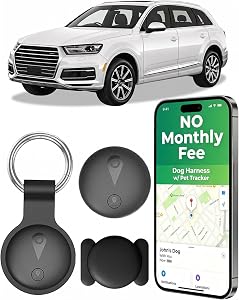


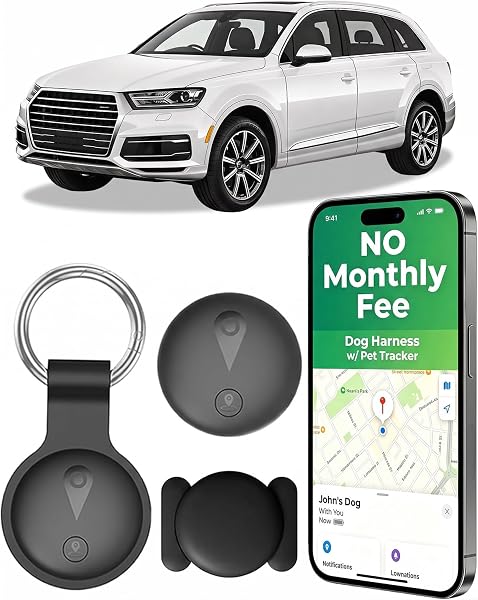
At just 1.1 by 1.1 by 0.3 inches and half an ounce, this tracker is one of the smallest options in the lineup. The compact size makes it easy to hide in a pocket, attach to a keychain, tuck inside a backpack, or magnetically mount to a vehicle frame. For buyers whose primary concern is discretion and portability, the form factor is a significant advantage over bulkier cellular trackers.
We may earn a commission when you buy through this link, at no additional cost to you.
The device uses a high-performance positioning chip designed to reduce power consumption, delivering up to 180 days of standby time under normal location acquisition frequency. It is important to note that standby time differs from active tracking time: if the device is pinging its location frequently, the battery will drain faster. The waterproof and rainproof case protects it from weather exposure during outdoor use.
Setup works with both Android and iOS devices, and there are no subscription fees, SIM cards, or hidden costs. The magnetic shell attaches firmly to metal surfaces on cars, trucks, and trailers, and the small profile means it is unlikely to be noticed during casual inspection. The tracker can also double as a pet locator or personal item finder, giving it flexibility beyond vehicle use.
Standby time refers to how long the tracker lasts when it is powered on but only occasionally reporting its location. Active tracking time, which applies when the device is pinging frequently, is always shorter. Before choosing a tracker based on battery claims, check whether the manufacturer specifies standby or active use. For this model, adjusting the location update frequency in the app can help you balance battery longevity against tracking precision.
The main consideration is that the 180-day figure represents standby time, not continuous active tracking. Buyers who expect months of real-time location updates without any battery management may be disappointed. For occasional location checks, asset recovery, and backup tracking of parked vehicles, the battery life is more than adequate. If you need constant live tracking, a cellular model with a rechargeable battery will serve you better.
Not recommended for buyers who need continuous high-frequency real-time tracking over long periods.
We may earn a commission when you buy through this link, at no additional cost to you.
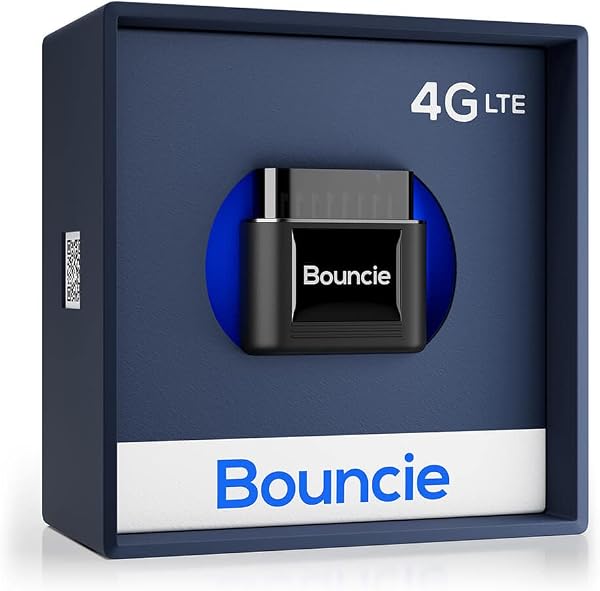
Bouncie is built for drivers who want a single device that handles location tracking, driving behavior analysis, and vehicle health monitoring all at once. It plugs directly into the OBD2 port found under the dashboard of most cars and trucks built after 1996, which means there is no wiring, no magnets, and no battery to charge. That simplicity makes it a strong fit for families managing teen drivers or small fleet operators who need consistent data without complex installations.
We may earn a commission when you buy through this link, at no additional cost to you.
The real-time location updates arrive up to every minute while the vehicle is running, and the companion app logs every trip with route details, idle time, and speed data. Color-coded speed bands make it easy to spot where a driver exceeded safe limits, and the system flags hard braking and rapid acceleration automatically. Beyond location, Bouncie reads engine diagnostic codes continuously, so you may learn about a maintenance issue before a check-engine light becomes a roadside problem.
Geo-fencing and accident detection round out the feature set. You can draw virtual boundaries around school zones, work areas, or home and receive push notifications when the vehicle crosses those lines. If the built-in accelerometer detects a significant impact, the system sends an SMS alert immediately, which can be valuable for parents or fleet managers who cannot be in the vehicle. The subscription is $9.65 per month with no activation or return fees, and you can cancel at any time.
Most GPS trackers focus exclusively on location, but Bouncie taps into the OBD2 data stream to surface engine fault codes and maintenance alerts. This means the device doubles as a basic vehicle health monitor, potentially saving you from unexpected breakdowns. If you manage multiple family vehicles or a small commercial fleet, catching a minor issue early through the app can prevent costly repairs down the road.
The main tradeoff is that Bouncie only works with OBD2-equipped vehicles, so classic cars and older models are excluded. The ongoing subscription also adds up over time compared to no-fee Bluetooth trackers. However, for anyone who values engine diagnostics and detailed driving insights alongside location data, the monthly cost is modest relative to the amount of information the device delivers.
Not suitable for vehicles older than 1996 or for buyers who want a zero-subscription tracker.
We may earn a commission when you buy through this link, at no additional cost to you.
The LandAirSea 54 is a compact, waterproof GPS tracker designed for buyers who need a device they can attach quickly to a vehicle, ATV, golf cart, or other asset and forget about. Its internal magnet grips metal surfaces firmly, and the small form factor makes it easy to tuck under a bumper, inside a wheel well, or beneath a seat. The company is based in the USA and backs the device with an unconditional lifetime warranty against manufacturing defects, which is uncommon in this price range.
We may earn a commission when you buy through this link, at no additional cost to you.
Location updates can arrive as frequently as every three seconds when the tracker is in active mode, and the SilverCloud app or web dashboard lets you view live positions on Google Maps. Historical playback is available for up to one year, so you can review past routes and stop locations long after a trip ends. Geofencing alerts notify you when the tracker enters or leaves a defined area, making it practical for monitoring equipment or vehicles that should stay within a job site.
Battery management is handled through a motion-activated sleep mode. When the tracker is stationary, it enters a low-power state that significantly extends runtime. Once movement is detected, it wakes up and begins reporting again. This approach works well for vehicles that sit parked for long stretches, but frequent short trips will drain the battery faster because the device wakes up repeatedly. Charging is straightforward via the included cable.
Motion-activated sleep mode is one of the most important features on any battery-powered GPS tracker. Instead of pinging satellites and cell towers around the clock, the LandAirSea 54 conserves energy by sleeping when stationary. This can extend battery life by weeks or even months depending on how often the vehicle moves. If you plan to track a car that is driven daily for long commutes, expect shorter intervals between charges compared to a trailer that only moves once a week.
Subscription plans start at $9.95 per month on an annual commitment or $19.95 on a month-to-month basis. There are no contracts beyond the plan you choose, and cancellation is available at any time. The LandAirSea 54 is a solid option for buyers who want a rugged, magnetic tracker with fast update rates and the security of a lifetime warranty, as long as the ongoing subscription cost fits the budget.
Not ideal for buyers who want to avoid monthly subscription fees entirely.
We may earn a commission when you buy through this link, at no additional cost to you.
The Cube Pro stands out for its remarkable battery endurance, offering up to one full year of continuous use on a single charge. That kind of longevity is rare among real-time cellular GPS trackers and makes the Cube Pro especially appealing for anyone who wants to install a device and avoid frequent recharging. It connects over 4G LTE for reliable coverage and works with cars, trucks, trailers, and boats through the Cube Tracker app on iOS and Android.
We may earn a commission when you buy through this link, at no additional cost to you.
Tracking accuracy is strong, with the app displaying live routes, speed data, and exact pin locations on a map. The built-in magnet and screw-mount options let you secure the device under a seat, inside a trailer frame, or on any metal surface where it will stay hidden and protected. An IP67 waterproof rating means it can handle rain, road spray, and dusty conditions without failing, which is important for outdoor and under-vehicle mounting.
Alerts and geofencing are customizable through the app. You can set virtual boundaries for teen drivers or fleet vehicles and receive instant push notifications when those boundaries are crossed. A built-in 100dB ring feature helps you locate the tracker itself if it has been moved or misplaced. The system stores up to five years of location history, giving you an unusually deep archive for reviewing past trips and patterns.
A year-long battery is most valuable when the tracker is mounted in a hard-to-reach location, such as inside a trailer frame, under a chassis, or within a storage compartment. In those spots, pulling the device out every few weeks to recharge becomes a real hassle. The Cube Pro eliminates that chore, making it a practical choice for long-term asset tracking, seasonal equipment, or vehicles that are not driven frequently.
Subscription plans run $16.50 per month on annual billing or $19.95 month to month, which is on the higher side compared to some competitors. The tradeoff is the extended battery life and robust feature set. If you want a set-and-forget tracker that you only need to charge once a year and you need dependable 4G connectivity, the Cube Pro is one of the strongest options available.
Not the best fit for buyers on a tight budget who want to minimize ongoing subscription costs.
We may earn a commission when you buy through this link, at no additional cost to you.
This compact tracker taps into Apple's Find My network, which uses hundreds of millions of Apple devices worldwide to relay location data without any SIM card, cellular plan, or monthly subscription. If you already carry an iPhone, the setup is straightforward: pair the tracker through the Find My app and it appears alongside your other Apple devices. The lack of recurring fees makes it one of the most affordable long-term tracking options available.
We may earn a commission when you buy through this link, at no additional cost to you.
The device measures just 1.3 inches across and weighs 0.4 ounces, making it small enough to slip into a glove box, attach under a seat, or stick to a metal surface with the built-in magnet. Location accuracy depends on the density of nearby Apple devices, so urban and suburban areas tend to deliver more frequent and precise updates than remote rural locations. This is an inherent limitation of crowdsourced Bluetooth tracking rather than a flaw in the device itself.
Privacy is handled through Apple’s encryption framework. Once paired, only your authorized devices can see the tracker’s location, and the device remains invisible to unauthorized users on the network. This makes it suitable for tracking personal vehicles, luggage, or valuables without exposing your data to third-party platforms. The tracker also works for pets, bags, and everyday items, giving it versatility beyond vehicle use.
Cellular GPS trackers communicate directly with satellites and cell towers, delivering frequent updates regardless of nearby devices. Crowdsourced trackers like this one rely on Bluetooth signals picked up by passing Apple devices, which then relay the location to Apple’s servers. In a busy city, updates can be nearly as frequent as cellular models. On a remote highway or in a rural parking lot, updates may be delayed or sparse. Understanding this difference helps set realistic expectations for coverage.
The main limitation is that it requires an Apple ecosystem. Android users cannot pair or view this tracker, which rules it out for households or fleets with mixed devices. Location updates are also less frequent than cellular GPS trackers, so it is better suited for recovering a parked car or finding lost luggage than for monitoring a moving vehicle in real time. If you live in the Apple ecosystem and want zero ongoing costs, this is a compelling choice.
Not compatible with Android phones or suitable for real-time fleet tracking in remote areas.
We may earn a commission when you buy through this link, at no additional cost to you.
The DEONETAG tracker addresses a common frustration: many no-fee trackers only work with Apple devices, leaving Android users without a subscription-free option. This model pairs with both iPhone and Android smartphones through the free DEONETAG app via Bluetooth, eliminating the need for a SIM card or monthly plan. That cross-platform compatibility makes it practical for families and small businesses where people use different phone brands.
We may earn a commission when you buy through this link, at no additional cost to you.
The ultra-slim design is one of the thinnest in this comparison, which helps it fit into tight spaces under vehicle panels, inside seat cushions, or along a chassis rail. A heavy-duty magnetic mount holds it securely to metal surfaces without tools, and the IP68 waterproof rating means it can withstand rain, snow, car washes, and dusty roads. The rugged build is designed for long-term exposure to vibration and temperature swings typical of under-vehicle mounting.
Location data is protected through professional-grade encryption, so only paired devices can access the tracker’s position. This is a meaningful privacy feature for anyone concerned about unauthorized access to vehicle location information. The app provides real-time monitoring within Bluetooth range and crowdsourced updates when the device is farther away, though the exact mechanism depends on the surrounding device density.
The IP68 rating on the DEONETAG means it is fully dust-tight and can withstand prolonged submersion in water, which is a step above the IP67 rating found on many competing trackers. For a device mounted under a vehicle where it will encounter road spray, puddles, and high-pressure car wash jets, that extra margin of protection can extend the tracker’s usable lifespan significantly.
Buyers should understand that no-fee Bluetooth trackers inherently have more limited range and update frequency than cellular GPS models. The DEONETAG is best suited for recovering a parked vehicle, monitoring a car in an urban area, or keeping tabs on a nearby asset. If you need continuous live tracking of a vehicle crossing state lines, a subscription-based cellular tracker will deliver more consistent results. For zero-fee cross-platform use, however, this model is a strong contender.
Not ideal for continuous long-distance real-time tracking across rural areas with sparse device density.
We may earn a commission when you buy through this link, at no additional cost to you.
This tracker is marketed for a wide range of uses, from vehicles and motorcycles to pets, children, and elderly family members, and its standout feature is the claimed 720-day battery life. That extraordinary runtime comes from an upgraded lithium cell that does not require recharging during its lifespan. When the battery eventually depletes, you replace it rather than plugging the device in, which is a different approach than most rechargeable trackers.
We may earn a commission when you buy through this link, at no additional cost to you.
The device measures 1.3 inches in diameter and weighs half an ounce, making it small enough to clip onto a pet collar, slip into a child’s backpack, or magnetically attach under a vehicle. The built-in magnet is strong enough to hold onto car bumpers, gas cap interiors, and other metal surfaces without vibrating loose. Compatibility spans both iOS and Android through native Find My and Works With features, so no separate app download is required for basic pairing.
A built-in finding reminder lets you trigger an audible ticking sound from the tracker when you are nearby, which helps locate a misplaced bag, a parked car in a crowded lot, or a pet hiding under furniture. This proximity feature is particularly useful in situations where you know the item is close but cannot see it. The tracker’s location data is private to your paired devices once setup is complete.
A replaceable battery eliminates the need to remove the tracker from its mounting location to recharge it, which is convenient for hard-to-reach installations. The downside is that you will eventually need to buy a new battery and swap it out, which adds a small recurring cost and requires you to open the device. Rechargeable models like the Cube Pro avoid battery purchases but need to be plugged in periodically. Your preference depends on how accessible the tracker’s mounting location is.
The main tradeoff is that the non-rechargeable battery means you will need to purchase replacement cells after roughly two years of use. Location accuracy also depends on the Bluetooth crowdsourcing model, so updates will be less frequent than a cellular GPS tracker in areas with few nearby smartphones. For buyers who want a maintenance-free, multi-purpose tracker with an extremely long battery and no subscription, this model offers a unique combination of features.
Not suitable for buyers who prefer a rechargeable battery or need cellular-grade real-time tracking.
We may earn a commission when you buy through this link, at no additional cost to you.
The Optimus 3.0 bundle pairs a compact GPS tracker with a heavy-duty twin-magnet case, making it a practical solution for anyone who needs to attach a device quickly to a vehicle, piece of machinery, or valuable asset. The twin magnets provide a much stronger grip than single-magnet designs, reducing the risk of the tracker vibrating loose on rough roads or construction sites. The bundle approach means you get the mounting hardware without purchasing accessories separately.
We may earn a commission when you buy through this link, at no additional cost to you.
Tracking updates can be customized down to every 10 seconds, which is among the fastest intervals available in this comparison. That level of granularity is useful for monitoring high-value cargo, tracking a vehicle during a specific trip, or reviewing detailed route data after the fact. The default one-minute update setting extends battery life to roughly two months, giving you flexibility to balance precision against runtime based on your current needs.
Alerts are fully customizable through the Optimus tracking platform. You can configure instant text and email notifications for movement, geofence crossings, speed thresholds, and other events. The software is accessible from any web browser or smartphone, and the learning curve is minimal. Coverage spans the United States, Canada, and Mexico, which is sufficient for most North American use cases but may not meet the needs of international travelers.
When a vehicle or piece of equipment is stolen, the difference between a 10-second update and a five-minute update can determine whether law enforcement can intercept the asset in motion. Faster updates provide a more precise real-time trail, which is critical during active recovery situations. For routine monitoring, slower updates conserve battery and are perfectly adequate. The Optimus 3.0 lets you switch between these modes depending on the situation.
A monthly subscription is required to power the cellular connectivity and app access. The cost is competitive within the cellular tracker category, and the ability to adjust update frequency helps you manage both battery life and data usage. If you need a rugged, magnetically mounted tracker with fast update options and straightforward alert configuration, the Optimus 3.0 bundle is a dependable choice for vehicle and asset monitoring.
Not suitable for international tracking outside North America or for buyers avoiding subscription fees.
We may earn a commission when you buy through this link, at no additional cost to you.
The Optimus Wired GPS Tracker takes a different approach from the portable models in this guide by connecting directly to the vehicle's battery through a two-wire installation. This hardwired setup means the tracker draws power from the car itself, eliminating battery charging entirely. Once installed, the device operates continuously without any maintenance, making it a strong fit for fleet vehicles, company cars, or any vehicle where you want permanent, reliable tracking.
We may earn a commission when you buy through this link, at no additional cost to you.
Location updates arrive every 30 seconds by default, with an option to upgrade to 10-second reporting for more granular route data. The system tracks on every turn, which produces a more accurate route replay than trackers that only ping at fixed time intervals. Harsh driving detection monitors acceleration, braking, and cornering patterns, providing fleet managers and parents with actionable insights about driving behavior that go beyond simple speed data.
Alerts are delivered via email and text message for events such as speeding, geofence entry and exit, power disconnection, and harsh driving incidents. The one-year historical data archive lets you review driving patterns and optimize routes over time. The $12.95 monthly subscription is one of the more affordable cellular plans in this comparison, and there are no contracts or hidden fees.
Hardwired trackers like this Optimus model offer the most reliable power source and the hardest-to-detect installation, but they require more effort to set up. OBD trackers like the Bouncie plug into a standardized port in seconds and are easy to move between vehicles. Battery-powered magnetic trackers offer the most flexibility but need periodic recharging. The right choice depends on whether you prioritize permanence, convenience, or portability.
The main tradeoff is the installation requirement. Connecting the tracker to the vehicle battery involves working under the hood or behind the dashboard, which may require professional help if you are not comfortable with basic automotive wiring. The device is also less portable than magnetic or OBD trackers, so swapping it between vehicles is not as simple. For a permanent, low-maintenance installation with comprehensive driving analytics, the Optimus Wired is a practical and cost-effective solution.
Not ideal for buyers who want a portable tracker they can easily move between multiple vehicles.
We may earn a commission when you buy through this link, at no additional cost to you.
The Tracki Universal is the most affordable cellular GPS tracker in this comparison at under $15, and it packs a surprising number of features into a device that measures roughly 1.77 by 1.46 by 0.55 inches. It connects over 4G LTE Cat1 for broad coverage and works with iOS, Android, and web browsers through the Tracki app. The low entry price makes it an attractive option for buyers who want to try GPS tracking without a large upfront investment.
We may earn a commission when you buy through this link, at no additional cost to you.
The device includes an SOS button and two assignable buttons that can be programmed for custom alerts, which is useful for elderly family members, children, or lone workers who may need to signal for help. An audible beep locator and Bluetooth proximity mode help you find the tracker itself when it is nearby, functioning similarly to a Bluetooth item finder. Auto updates arrive every minute, and manual pings can be triggered every five seconds for more immediate location checks.
Battery life is the Tracki’s most significant limitation. The replaceable 600mAh cell delivers five to seven days of active use or up to 45 days in battery save mode. For vehicle tracking, that means you will need to recharge or swap the battery roughly once a week unless you use the optional waterproof magnetic box or battery extender accessory. The hardwire kit and OBD micro wiring cable are also available separately for buyers who want a more permanent installation.
If the five-to-seven-day battery life feels too short for your needs, Tracki offers a waterproof magnetic box with a built-in battery extender that can significantly increase runtime. A hardwire kit is also available for permanent vehicle installation, which eliminates battery concerns entirely by drawing power from the car. These accessories add to the total cost but transform the Tracki from a short-term portable tracker into a more permanent vehicle monitoring solution.
A subscription is required to power the built-in global SIM and access real-time tracking, alerts, and app features. The plan can be canceled at any time. While the short battery life may be a dealbreaker for some, the combination of a very low device cost, SOS functionality, Bluetooth proximity, and expandable accessory options makes the Tracki Universal a versatile entry point into GPS tracking for vehicles, luggage, and personal safety.
Not suitable for buyers who need long battery life without frequent recharging or accessory purchases.
We may earn a commission when you buy through this link, at no additional cost to you.
Selecting a GPS tracker involves more than comparing prices. The right model depends on how you plan to use it, how often you want to charge or maintain it, and whether you are willing to pay a monthly subscription. This section breaks down the key decision factors so you can match a tracker to your specific needs.
GPS trackers use different technologies to determine and relay location. Cellular GPS trackers communicate with satellite constellations to fix their position and then transmit that data over 4G LTE or similar cellular networks to your phone or computer. This approach delivers the most consistent real-time updates and works anywhere with cell coverage, making it the standard choice for vehicle tracking, fleet management, and long-distance asset monitoring. Models like the Bouncie, Cube Pro, and Optimus series all use cellular connectivity.
Bluetooth-based trackers, including those that integrate with Apple’s Find My network or Android-compatible crowdsourced systems, rely on nearby smartphones to pick up their signal and relay location data. These devices do not need a SIM card or cellular plan, which eliminates subscription costs entirely. The tradeoff is that location updates depend on the density of nearby devices, so coverage can be inconsistent in rural areas, parking garages, or remote highways. If you primarily need to recover a parked car in a city or find a lost bag at the airport, a Bluetooth tracker may be sufficient.
Before buying, consider where the tracker will spend most of its time. Urban commuters and city dwellers can often get good results from Bluetooth-based models, while anyone tracking vehicles across state lines, monitoring rural equipment, or managing a fleet that covers wide territories should invest in a cellular GPS tracker with reliable network coverage.
The most significant ongoing cost of GPS tracking is the subscription fee that powers cellular connectivity, app access, and data storage. Monthly plans in this comparison range from roughly $9.65 to $19.95, with annual billing typically offering a discount. Over the course of a year, those fees can add $115 to $240 to the total cost of ownership, which often exceeds the price of the device itself. It is important to factor in at least 12 to 24 months of subscription costs when comparing models.
No-fee trackers avoid this expense by using Bluetooth crowdsourcing or local device-to-phone communication. Models like the Apple Find My tracker, the DEONETAG, and the mini magnetic options in this guide charge nothing beyond the initial purchase price. The tradeoff is reduced update frequency, limited range in low-density areas, and fewer advanced features like driving behavior analysis or engine diagnostics. For many casual users, these limitations are acceptable given the significant cost savings.
If you are tracking a high-value asset, managing a fleet, or monitoring a teen driver, the reliability and feature depth of a subscription-based cellular tracker usually justify the monthly cost. For occasional use, such as finding a parked car or keeping tabs on luggage during travel, a no-fee model can deliver adequate performance at a fraction of the long-term expense.
Battery life varies enormously across GPS tracker types. Hardwired models like the Optimus Wired draw power directly from the vehicle battery and never need charging. OBD port trackers like the Bouncie also use vehicle power, though they can be unplugged easily. Battery-powered magnetic trackers range from the Tracki’s five to seven days of active use to the Cube Pro’s impressive one-year runtime. The right battery life depends on how accessible the tracker’s mounting location is and how frequently you are willing to maintain it.
Motion-activated sleep mode is a key feature that extends battery life on portable trackers. Devices like the LandAirSea 54 enter a low-power state when stationary and wake up only when movement is detected. This can stretch battery life from weeks to months depending on driving patterns. If the vehicle is driven daily for long commutes, the battery will drain faster than if it sits parked most of the week. Understanding your typical usage pattern helps set realistic expectations.
When comparing battery claims, pay attention to whether the manufacturer specifies standby time or active tracking time. Standby figures are always higher because the device is not actively pinging its location. A tracker advertising 180 days of standby may only deliver a few weeks of continuous active tracking. Choose a model whose real-world active battery life matches your maintenance comfort level.
GPS trackers come in three main installation styles: OBD plug-in, magnetic mount, and hardwired. OBD trackers plug into the diagnostic port under the dashboard in seconds and require no tools or technical knowledge. They are easy to move between vehicles and draw power from the car, but they are visible to anyone who looks under the dash and only work with OBD2-equipped vehicles from 1996 or newer. The Bouncie is the primary OBD option in this guide.
Magnetic trackers attach to any metal surface on or under the vehicle using built-in magnets. They offer the most flexibility in placement and can be hidden in wheel wells, under bumpers, or inside chassis frames. The strength of the magnet matters significantly: twin-magnet designs like the Optimus 3.0 bundle provide a more secure hold than single-magnet models, especially on rough roads. Magnetic trackers are battery-powered and portable, making them easy to transfer between vehicles or assets.
Hardwired trackers connect directly to the vehicle battery through a two-wire installation. This approach provides permanent power and the most concealed installation, but it requires basic automotive wiring knowledge or professional help. Hardwired models are best for fleet vehicles or long-term installations where you do not plan to move the tracker frequently. Consider your technical comfort level and whether you need portability before choosing an installation method.
Tracker size ranges from coin-sized Bluetooth pucks weighing less than half an ounce to larger cellular units with extended batteries. Smaller devices are easier to conceal and more versatile for personal item tracking, but they typically have shorter battery life and fewer features. Larger models like the Cube Pro sacrifice some discretion for year-long battery life and robust cellular connectivity. Think about whether the tracker needs to be invisible or simply unobtrusive.
Durability is critical for any tracker mounted on the exterior or underside of a vehicle. Look for an IP67 or IP68 waterproof rating, which indicates the device can withstand rain, road spray, and even temporary submersion. The DEONETAG’s IP68 rating offers the highest level of protection in this comparison, while the Cube Pro’s IP67 rating is still more than adequate for most weather conditions. Impact resistance and temperature tolerance also matter for trackers exposed to bumpy roads and seasonal extremes.
If discretion is your top priority, choose a compact magnetic tracker with a low-profile design and strong waterproofing. If you need the tracker to survive harsh industrial environments or long-term outdoor exposure, prioritize the IP rating and build quality over size. A slightly larger but more rugged tracker will outlast a tiny device that cannot handle the elements.
Alerts transform a GPS tracker from a passive location logger into an active monitoring tool. The most useful alert types include geofence notifications, which trigger when a vehicle enters or leaves a defined area; speed alerts, which flag excessive velocity; movement alerts, which notify you when a parked vehicle starts moving; and impact or accident detection, which can signal a collision. The Bouncie and Optimus models offer particularly comprehensive alert systems with customizable thresholds.
Geofencing is especially valuable for parents monitoring teen drivers and fleet managers overseeing job-site boundaries. You can draw virtual perimeters around schools, workplaces, or restricted zones and receive instant push notifications when those boundaries are crossed. Some trackers also offer SOS buttons, like the Tracki Universal, which allow the person carrying the device to send an emergency alert with their current location. This feature extends the tracker’s usefulness beyond vehicle monitoring to personal safety.
When evaluating alert features, check whether notifications are delivered via push notification, email, SMS, or a combination of all three. SMS alerts are particularly important for accident detection because they can reach you even when you are not actively using the app. Choose a tracker whose alert options match the urgency and type of monitoring you need.
Some GPS trackers are designed exclusively for vehicles, while others double as personal item finders, pet locators, and family safety devices. Vehicle-specific models like the Bouncie and Optimus Wired offer features such as engine diagnostics, harsh driving detection, and OBD integration that are irrelevant for non-automotive use. If your sole purpose is monitoring a car or fleet, these specialized features provide meaningful added value.
Multi-use trackers like the Tracki Universal, the Apple Find My model, and the mini magnetic options in this guide are more versatile but may lack vehicle-specific analytics. They are better suited for buyers who want a single device that can track a car today, a suitcase tomorrow, and a pet next week. The tradeoff is that multi-use trackers typically offer simpler feature sets and less detailed driving data.
Decide whether you need deep vehicle analytics or flexible multi-purpose tracking before narrowing your choices. If you manage a fleet or want to monitor teen driving habits, a vehicle-specific model is the better investment. If you want a general-purpose location tool for everyday life, a compact multi-use tracker will serve you well across a wider range of scenarios.
Start by reading the setup instructions carefully and downloading the companion app before installing the tracker. For cellular models, activate the subscription and confirm that the device has a clear view of the sky during initial setup, as the first GPS fix can take several minutes. For Bluetooth-based trackers, pair the device with your phone while you are in close proximity and verify that location permissions are enabled for the tracking app. Test the tracker in a known location before mounting it permanently to confirm that updates are arriving as expected.
Mount the tracker in a location that balances discretion with signal quality. Magnetic trackers perform best when attached to a flat metal surface with minimal obstruction above them, such as the underside of a chassis rail or inside a wheel well. Avoid placing the device inside a metal enclosure or directly against the engine block, as heat and signal interference can degrade performance. For OBD trackers, ensure the plug is fully seated in the port and that the device does not interfere with the driver’s footwell.
Check the tracker’s battery level or power status regularly, especially during the first few weeks of use, to establish a baseline for how quickly it drains under your typical driving conditions. Keep the firmware and app updated to ensure you receive the latest features and security patches. If the tracker is exposed to road salt, mud, or debris, inspect it periodically for buildup that could compromise the waterproof seal or magnetic attachment. A few minutes of maintenance every month can significantly extend the device’s useful life.
No. Cellular GPS trackers require a subscription to cover the cost of cellular data transmission and app services, with plans typically ranging from about $10 to $20 per month. Bluetooth-based trackers that use crowdsourced networks like Apple Find My or Android-compatible systems do not require any subscription or SIM card. The tradeoff is that no-fee models generally offer less frequent location updates and more limited range in remote areas.
Most cellular GPS trackers provide location accuracy within 10 to 30 feet under open sky conditions. Accuracy can decrease in urban canyons with tall buildings, inside parking garages, or under dense tree cover. Bluetooth-based trackers depend on nearby devices for location relay, so their accuracy varies more widely depending on the surrounding environment and device density.
Portable magnetic and OBD trackers can be moved between vehicles easily, though each device can only track one vehicle at a time. If you need to monitor multiple vehicles simultaneously, you will need a separate tracker for each one, and each cellular device will require its own subscription. Hardwired trackers are more difficult to transfer and are best treated as permanent installations.
Battery life varies dramatically by model and usage pattern. Active cellular trackers like the Tracki Universal may last five to seven days, while the Cube Pro can run for up to a year on a single charge. Motion-activated sleep mode can extend battery life significantly on models like the LandAirSea 54. Hardwired and OBD trackers draw power from the vehicle and do not have a separate battery to charge.
Many vehicle GPS trackers carry an IP67 or IP68 waterproof rating, meaning they can withstand rain, road spray, and temporary submersion. The DEONETAG in this guide has an IP68 rating, the highest available. However, not all trackers are waterproof, so check the specifications before mounting a device on the exterior or underside of a vehicle where it will be exposed to the elements.
OBD and hardwired trackers draw a small amount of power from the vehicle's electrical system, but the draw is minimal and unlikely to drain a healthy car battery under normal use. If a vehicle sits unused for several weeks, any parasitic draw could theoretically contribute to a dead battery, but this is rare with modern trackers. Battery-powered magnetic trackers do not connect to the vehicle's electrical system at all.
In most jurisdictions, it is legal to place a GPS tracker on a vehicle you own or have legal authority to monitor, such as a company fleet vehicle or a car driven by your minor child. Placing a tracker on someone else's vehicle without their knowledge or consent may violate privacy laws. Regulations vary by state and country, so it is wise to check local laws before installing a tracker on any vehicle you do not solely own.
Cellular GPS trackers with global SIM cards, like the Tracki Universal, can work in many countries where compatible cellular networks are available. However, some models are limited to specific regions, such as the Optimus 3.0, which covers the USA, Canada, and Mexico. Bluetooth-based trackers rely on nearby devices and can work anywhere in the world as long as there are compatible smartphones in the vicinity. Always check the coverage specifications before traveling internationally with a tracker.
Magnetic trackers can be attached to any metal surface on the vehicle, including under the chassis, inside wheel wells, behind bumpers, or under seats. The most effective hiding spots are areas that are not visible during a casual walk-around but still allow the GPS antenna to receive satellite signals. Avoid placing the tracker inside fully enclosed metal compartments, as this can block the signal. Compact models like the DEONETAG and mini magnetic trackers are easier to conceal than larger units.
Real-time GPS trackers transmit location data continuously or at frequent intervals, allowing you to monitor a vehicle's position live on a map. Passive trackers store location data internally and require you to retrieve the device and download the data later. All 10 models in this guide offer real-time tracking, though the update frequency varies from every few seconds to every few minutes depending on the model and settings.
The Bouncie GPS Tracker earns the top spot for its combination of real-time location monitoring, engine diagnostics, and detailed driving insights, all delivered through a simple OBD2 plug-in installation. For families managing teen drivers or small fleet operators who need comprehensive vehicle data, it offers the most complete feature set at a reasonable subscription price. The unlimited trip history and accident detection add layers of value that go well beyond basic location tracking.
Buyers with different priorities have strong alternatives. The Cube Pro delivers unmatched battery life for set-and-forget installations, the DEONETAG provides cross-platform no-fee tracking with excellent waterproofing, and the Tracki Universal offers the lowest entry price with SOS functionality for personal safety. Each of these models addresses a specific use case that the Bouncie does not cover as effectively, whether that is avoiding subscription fees, minimizing maintenance, or tracking assets beyond vehicles.
Start by identifying your primary use case, whether that is fleet management, teen driver monitoring, anti-theft protection, or personal item tracking. Then decide whether you are willing to pay a monthly subscription for cellular reliability or prefer a no-fee Bluetooth model with more limited range. Use the comparison table and detailed reviews above to match the features that matter most to your situation, and you will find a GPS tracker that delivers reliable performance without unnecessary complexity or cost.