HHH Tank 200
7.8Editor score168cc EFI engine
62 mph top speed
52-inch long wheelbase
12-inch alloy rims
Find the right gas scooters for 2026. We compare 10 standout options by build quality, useful features, owner feedback, value, and everyday trade-offs.
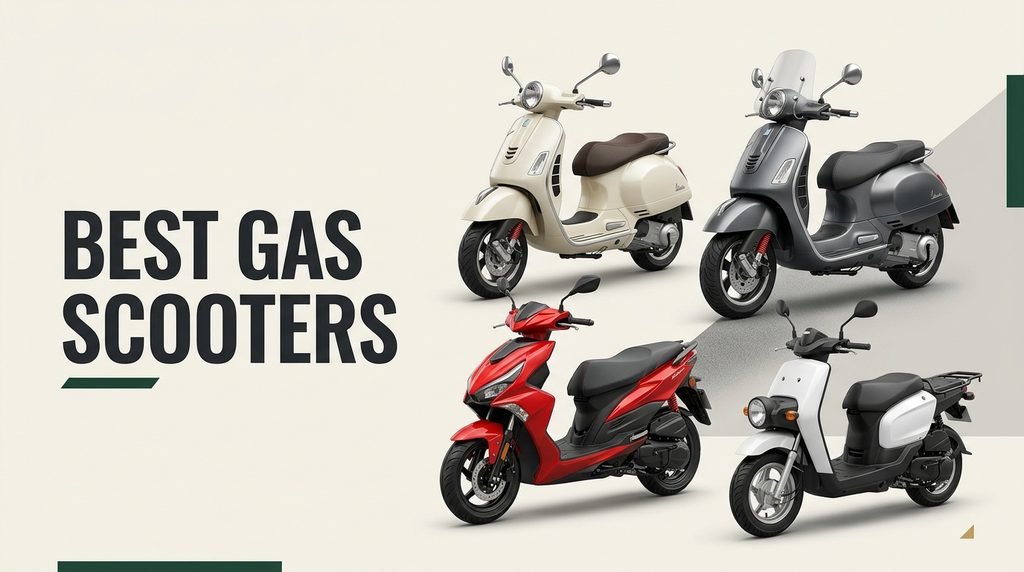
Find the right gas scooters for 2026 without wading through confusing specs. We compare 10 standout models by the factors that matter on real roads, including engine displacement, fuel system, top speed, braking hardware, suspension comfort, wheel size, storage options, owner feedback, and overall value for daily commuting or casual riding.
Gas scooters range from efficient 49cc city runabouts that sip fuel at over 100 mpg to powerful 200cc EFI machines that cruise at 60 mph and handle highways. Smaller engines prioritize economy and simplicity, while larger displacements deliver stronger acceleration, higher payloads, and more stable wheelbases for longer trips.
This guide highlights practical tradeoffs so you can match a scooter to your riding plans. Whether you need a lightweight errand runner, a comfortable two-up commuter, or a highway-capable cruiser with trunk storage, the detailed reviews and buying advice below will narrow your choices quickly.
We compared 10 gas scooters using the details that actually help a buyer decide: engine displacement and fuel delivery, transmission type, top speed and fuel economy, braking setup, suspension and wheel size, seat height and weight capacity, storage configuration, assembly requirements, and owner feedback. The notes focus on practical tradeoffs so each pick connects to how riders actually commute, run errands, and cruise on city streets or highways.

Compare key features, scores, and current prices side by side. A shorter feature list means fewer details were available, not necessarily fewer capabilities.


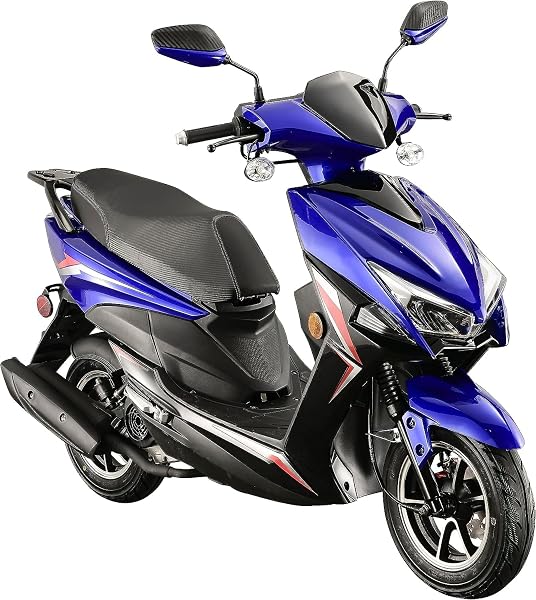
The HHH X18 in blue hits a practical middle ground for riders who want more capability than a 50cc without the larger footprint and cost of a 200cc. The upgraded GY6 engine with automatic CVT shifts seamlessly, delivering predictable power for commuting, light two-up riding, and moderate hills while keeping operation as simple as twist and go.
We may earn a commission when you buy through this link, at no additional cost to you.
The air-cooled, single-cylinder four-stroke stays cool at stoplights and in traffic, which supports longer engine life and steady efficiency. Lightweight 10-inch aluminum wheels reduce rotational weight for easier handling compared with steel, and the 3.50-10 tires provide a stable contact patch for confident cornering. Bright headlights and a thickly padded seat add comfort and visibility for daily use.
Underseat storage covers everyday carry needs, and the combination of electric start with a kickstart backup means you are not stranded by a weak battery. The muffler cover is a thoughtful safety detail that helps prevent accidental burns, especially for passengers. Overall length near 72.8 inches keeps the scooter garage friendly while still offering a full-size riding position for adults and youth.
Aluminum wheels resist corrosion and lower unsprung weight, so steering feels lighter and suspension recovers faster over bumps. The GY6 platform is widely supported with affordable service parts, which simplifies long-term ownership and routine maintenance. Keeping tires properly inflated and checking belt condition on schedule helps preserve both handling and fuel economy.
The main limitations are the rear drum brake, which needs more lever effort than a rear disc when loaded, and the factory crate assembly that requires installing handlebars, wheels, and brakes carefully. If your routes involve sustained speeds above 50 mph, a 200cc EFI model will feel stronger at the top end; for most city and suburban commuting, the X18’s balance of power, economy, and 4.4-star owner satisfaction makes it an easy recommendation.
Riders who regularly cruise at 60 mph and want the extra top-end headroom of a 200cc EFI scooter.
We may earn a commission when you buy through this link, at no additional cost to you.
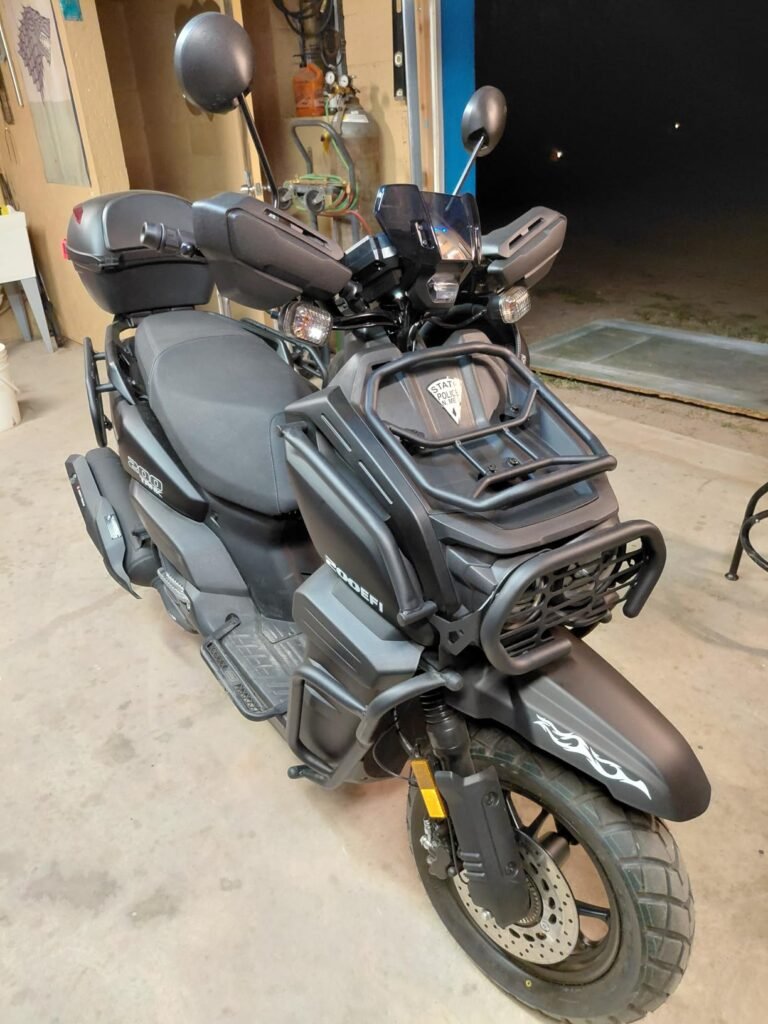
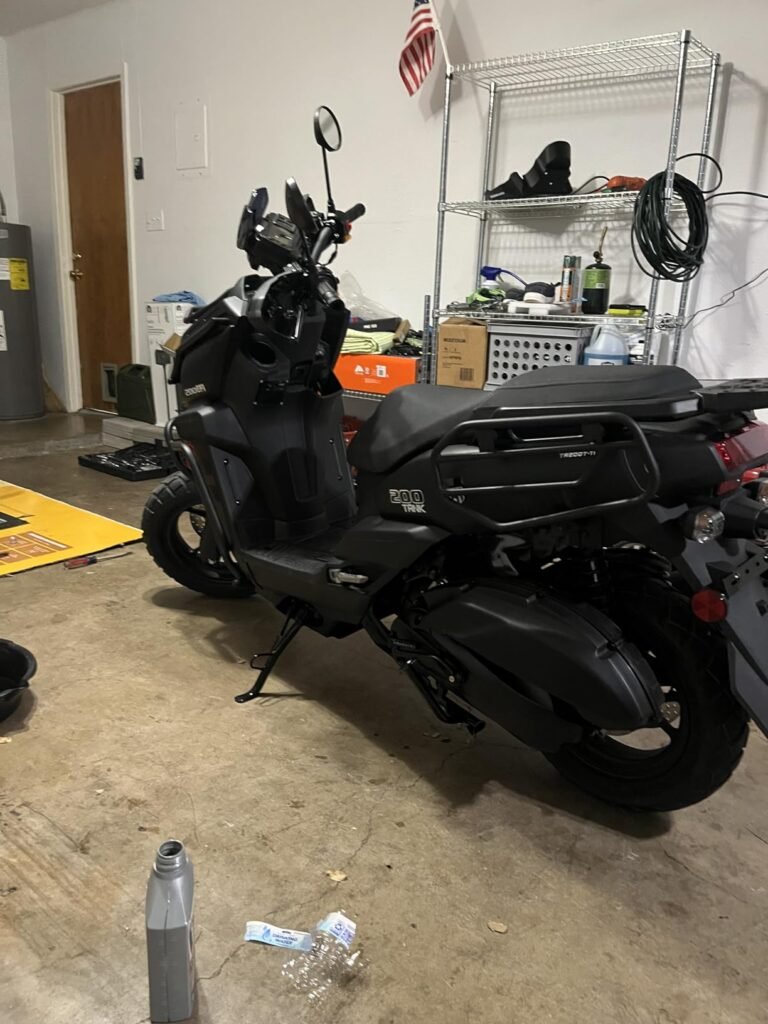
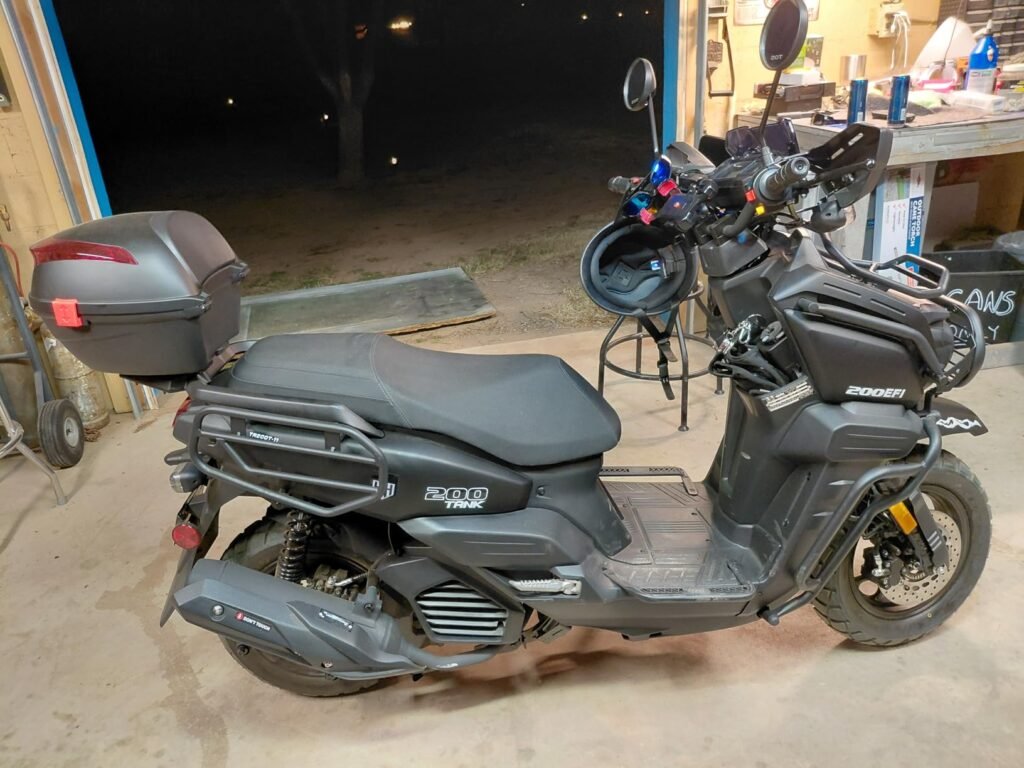
The HHH Tank 200 EFI is built for riders who need more than a neighborhood runabout and want comfortable speed on faster arterials and short highway stretches. The 168cc air-cooled EFI engine paired with a fully automatic CVT delivers strong torque for quick city maneuvers while still cruising smoothly at 62 mph, which puts it well beyond typical 50cc limits.
We may earn a commission when you buy through this link, at no additional cost to you.
Electronic fuel injection gives this scooter sharper throttle response, easier cold weather starting, and better fuel efficiency with lower emissions compared with carbureted alternatives. Hydraulic disc brakes up front and a combination of telescopic front and spring hydraulic rear suspension provide more controlled stopping and a steadier ride over rough pavement, which matters when you carry speed or a passenger.
At 76 by 29 by 46 inches with a 52-inch wheelbase and 31.5-inch seat height, the Tank feels planted at speed without feeling unwieldy in town. Premium alloy rims keep wheel weight down, LED headlights improve nighttime visibility, and the spacious underseat storage plus detachable rear trunk handle groceries or a helmet without extra bags. Ground clearance of 4.3 inches covers speed bumps without scraping.
EFI automatically adjusts fueling for temperature and altitude, so morning starts are quicker and throttle feel stays consistent across seasons. The 52-inch wheelbase spreads weight for calmer straight-line tracking, which reduces fatigue on longer rides and helps the scooter hold its line in crosswinds. Riders moving up from a 50cc scooter will notice both benefits immediately on faster roads where carbureted, short-wheelbase models feel busier.
The tradeoff is size and complexity. The longer wheelbase and heavier build improve stability but require more room to park and turn in tight lots, and EFI electronics benefit from clean fuel and a healthy battery. If your rides regularly include 45 to 60 mph roads, the Tank’s power and stability justify the step up; for purely local errands under 35 mph, a lighter 50cc will be easier and cheaper to live with.
Riders who only need short, low-speed trips and prefer the lightest, most nimble city scooter.
We may earn a commission when you buy through this link, at no additional cost to you.
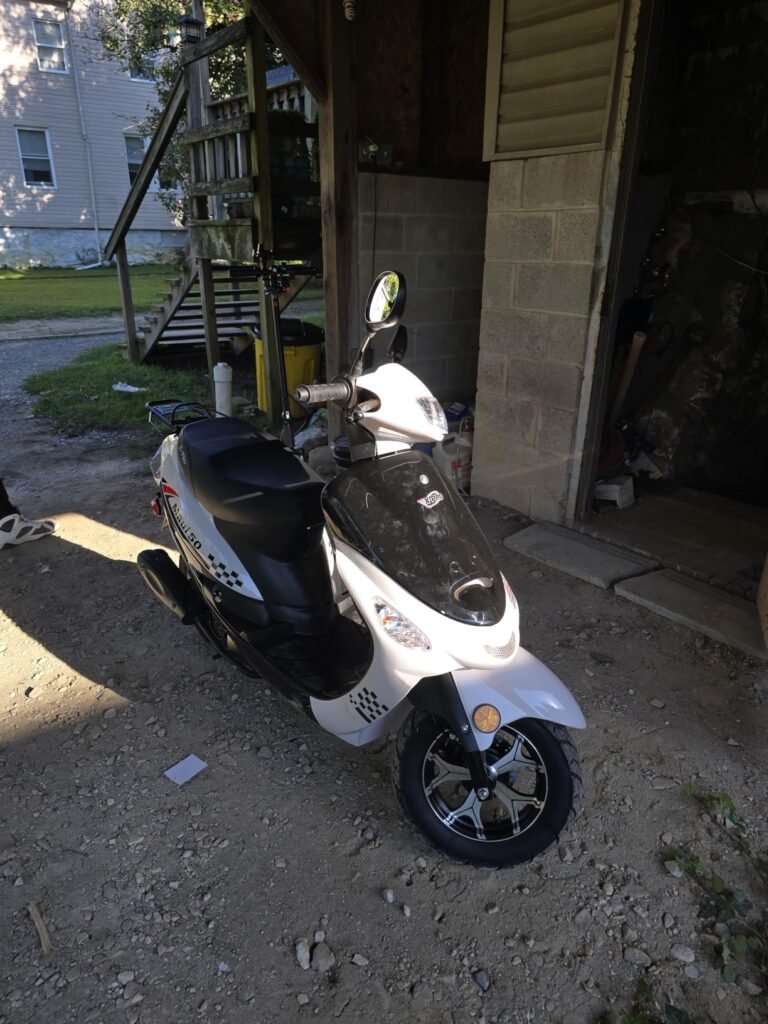
The X-PRO 50 in red focuses on affordable, practical transportation for short commutes and errands where low running cost matters more than top speed. The 49cc fully automatic engine with CVT belt drive makes riding as simple as throttle and brakes, which helps new riders build confidence quickly while keeping fuel use very low for frequent stop-and-go trips.
We may earn a commission when you buy through this link, at no additional cost to you.
Aluminum wheels are a clear upgrade over steel at this price, cutting weight for livelier handling and resisting corrosion from daily outdoor parking. The wide, thickly padded seat improves comfort for both rider and passenger on longer neighborhood rides, and the included rear trunk adds secure, lockable space for groceries or a small bag without wearing a backpack.
Ownership details are straightforward but worth noting. The scooter requires assembly of handlebars, wheels, brakes, hub odometer, trunk, and battery, so plan for tools and careful brake setup. The Manufacturer Statement of Origin and Bill of Sale are mailed separately, so verify everything is correct before you register and title, and keep your delivery phone number accurate for the freight appointment.
At the 50cc level, wheel weight has an outsized effect on agility. Aluminum rims spin up faster and let the suspension work more freely over bumps, which makes the scooter feel lighter when pushing it manually or threading through tight parking. They also hold their finish better than painted steel when exposed to rain and road grit over time.
As a 50cc, expect modest hill climbing and a practical top speed suited to 25 to 35 mph streets rather than fast arterials. If your daily route includes steep grades or sustained 45 mph roads, a 150cc will feel less strained. For flat city use where light weight, easy parking, and low fuel cost are priorities, this model delivers strong value.
Riders who need sustained speed above 40 mph or frequent two-up hill climbing.
We may earn a commission when you buy through this link, at no additional cost to you.
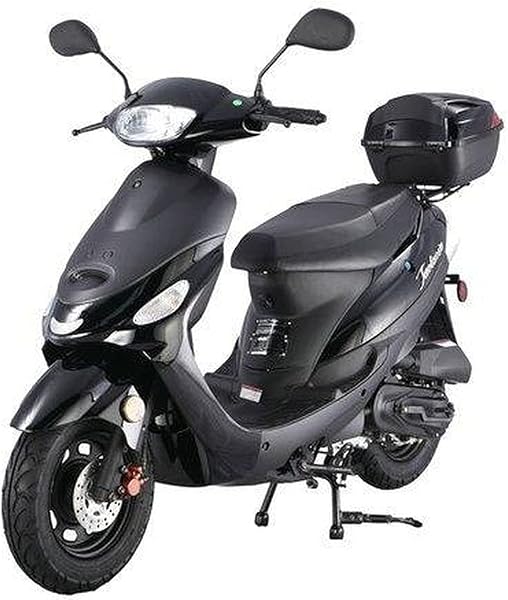
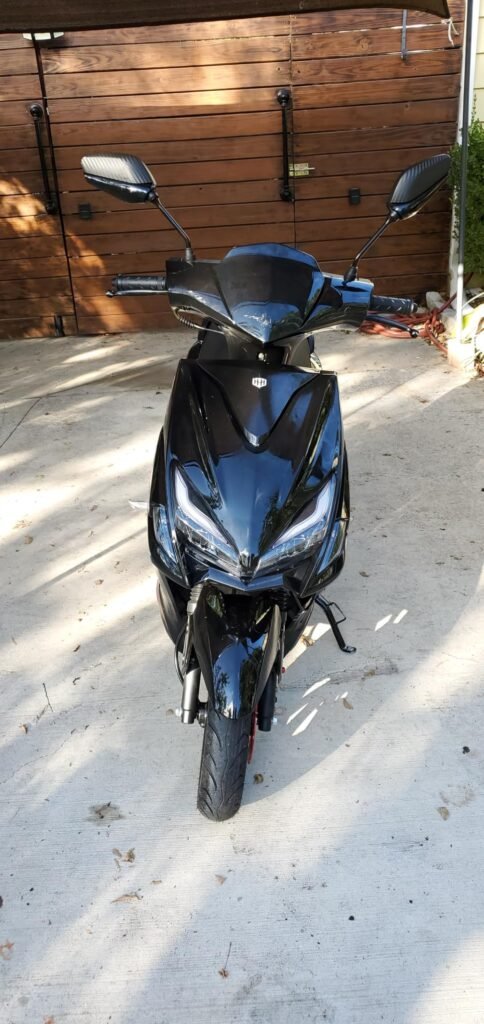
The HHH 50cc in black is oriented toward first-time riders, youth, and adults who want a simple, street-legal scooter for local travel. The 49cc fully automatic CVT frees you from shifting, so learning focuses on throttle control, braking, and scanning traffic, while the aerodynamic styling keeps the scooter compact enough for easy storage.
We may earn a commission when you buy through this link, at no additional cost to you.
Front and rear hand brakes, 10-inch steel rims, and hydraulic suspension deliver predictable handling at city speeds. The automatic belt drive makes takeoffs smooth, and the dash places electric start, speedometer, lights, and turn signals within easy reach. Twist throttle response is gentle, which helps new riders modulate speed without jerky acceleration when pulling away from stops.
Practical specs support daily errands: overall length near 67.3 inches, net weight around 220 pounds, and a top speed near 35 mph that suits 25 to 35 mph roads. The matching rear trunk is well sized for quick grocery runs, and the under-seat area adds extra carry space. The bike arrives factory packaged and needs handlebars, tires, and other final assembly, with step-by-step videos available to guide the process.
Keep speeds under 25 mph for the first few weeks and vary throttle instead of holding one speed for long. Change oil as soon as assembly is complete, then again near 200 and 400 miles to flush break-in particles. This gentle period lets piston rings seat correctly, which improves long-term power and fuel economy and reduces the chance of early engine wear.
Steel rims add durability at the cost of extra weight compared with aluminum, and like other 50cc scooters this one is happiest on flat ground and modest hills. If you want lighter wheels or stronger hill performance, consider the aluminum-wheeled X-PRO 50 or a 150cc step-up. For a straightforward, budget-friendly starter with useful storage, this model covers the essentials well.
Riders who need regular travel on 45 mph roads or strong hill climbing with a passenger.
We may earn a commission when you buy through this link, at no additional cost to you.
The HHH Rocket 150 targets riders who want 150cc power with more stability and clearance than typical 10-inch wheeled scooters. The larger 12-inch aluminum wheels and long 54.3-inch wheelbase give the bike a calm, straight-tracking feel that helps on rough pavement and at higher commuting speeds, while the air-cooled 150cc GY6 engine provides smooth, quiet pull for daily travel.
We may earn a commission when you buy through this link, at no additional cost to you.
Braking pairs a front disc with a rear drum for balanced stopping at commuting speeds, and LED lighting improves visibility for early morning or evening rides. Suspension travel and premium wheel size work together to absorb bumps better than smaller-wheel designs, which reduces fatigue when you cross speed bumps or uneven city blocks regularly.
Dimensions of 73.6 by 26 by 44 inches assembled make the Rocket noticeably longer than compact 50cc models, and the 35.4-inch seat height places taller riders in a comfortable, legs-extended position. The wide, thickly padded seat and bright triple LED taillights add comfort and conspicuity, and the large headlight with electroplated housing improves nighttime presence.
The 9.8 inches of ground clearance lets you roll over speed bumps and driveway lips without the belly scraping that lower scooters risk. This is especially useful in neighborhoods with steep aprons or on routes with frequent traffic calming. Taller clearance does raise the center of gravity slightly, so practice low-speed turns and parking maneuvers in a quiet lot until the balance feels natural.
The taller seat can be a stretch for shorter riders at stops, and the 242-pound capacity is lower than some 200cc models, so check your typical passenger plus cargo total. If you frequently ride broken pavement or want the most stable 150cc feel in this guide, the Rocket’s wheel and clearance combination is a strong advantage over 10-inch alternatives.
Shorter riders who need a low seat height for confident footing at stops.
We may earn a commission when you buy through this link, at no additional cost to you.
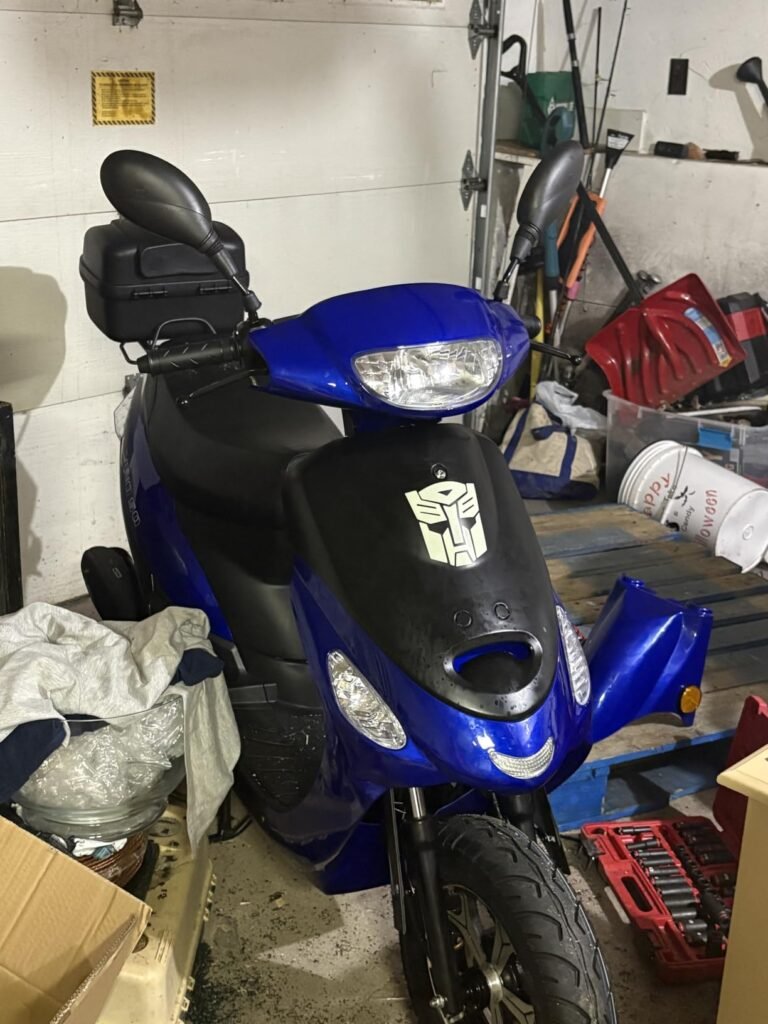
The TAO 49cc and 50cc scooter emphasizes low running costs and broad appeal with six color choices and a practical trunk for daily use. The fully automatic CVT and belt drive keep operation simple, while front and rear hand brakes, 10-inch steel rims, and hydraulic suspension provide familiar, forgiving handling for new riders learning city traffic.
We may earn a commission when you buy through this link, at no additional cost to you.
Fuel economy near 90 to 110 mpg is the standout benefit, stretching a small tank across many errands and short commutes. Top speed around 35 to 40 mph suits 25 to 35 mph streets and light suburban routes where constant high speed is not required. The included rear trunk plus underseat storage cover groceries, school bags, or a helmet when parked, and wide footboard space improves comfort on longer neighborhood rides.
Scooters arrive 70 percent assembled in a metal crate, so expect to install tires, handlebars, and related hardware with the help of available step-by-step videos. Simple dash controls with electric start, speedometer, lights, and turn signals keep the learning curve short, and the sturdy steel rims handle pothole impacts well even if they add a bit of weight.
Gentle acceleration, steady cruising, and keeping tires at the recommended pressure have a large effect on real-world economy. Avoid prolonged wide-open throttle and carry only what you need, since extra weight quickly reduces the mpg advantage of a small engine. Regular air filter and spark plug checks also help maintain the high efficiency these scooters are known for.
Steel rims and a carbureted engine keep the price down but add maintenance attention like occasional carb cleaning and slightly heavier steering than aluminum-wheeled rivals. If you prioritize the absolute lowest purchase price and excellent mpg for flat city use, this model delivers strong value; for lighter steering and stronger hill pull, consider an aluminum-wheeled 50cc or a 150cc upgrade.
Riders who need strong hill climbing or sustained 45 mph cruising.
We may earn a commission when you buy through this link, at no additional cost to you.
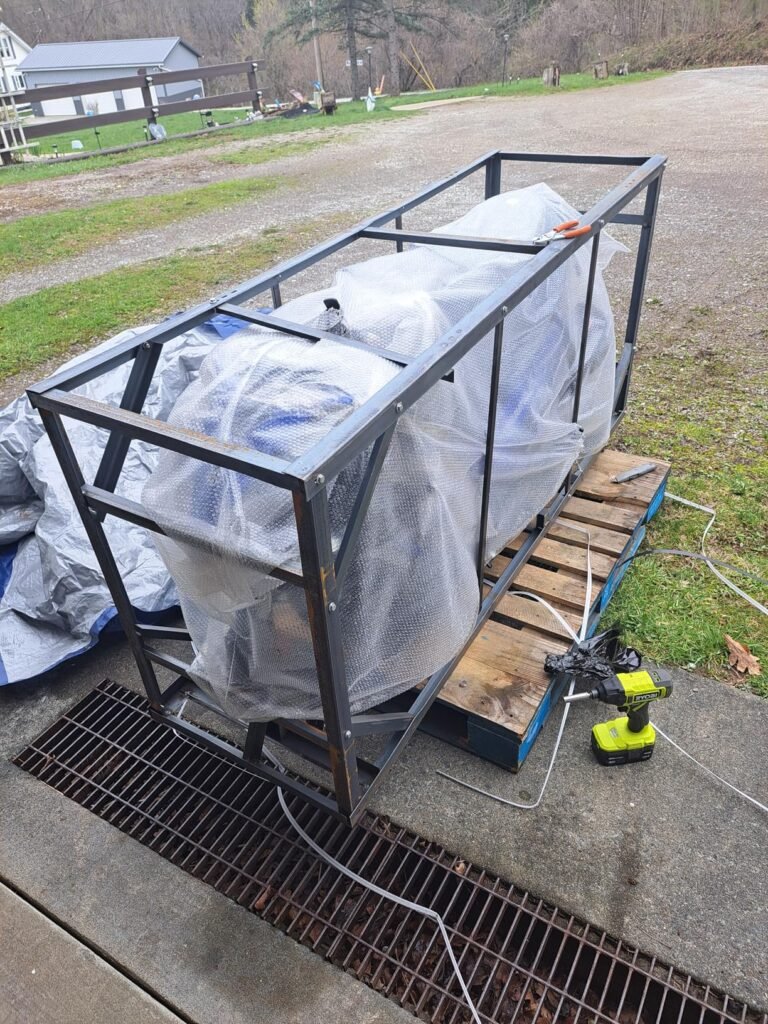
The HHH Spider 200 EFI Clash aims for the top of the scooter range with deluxe features and the strongest straight-line performance here. The 168cc EFI engine and fully automatic CVT pull cleanly to 65 plus mph, which makes longer arterial rides and brief highway connections realistic without needing to shift gears, while the sporty look and removable trunk keep the scooter practical for daily use.
We may earn a commission when you buy through this link, at no additional cost to you.
EFI brings easy electric starting in varied weather and more precise fueling that helps keep maintenance lower over time. The long 52-inch wheelbase spreads weight for stable high-speed tracking, and a front hydraulic disc supplies strong, even stopping power as speeds climb. An open step-through frame simplifies mounting and dismounting, which is helpful when carrying bags or riding in casual clothing.
At 81.4 by 28.7 by 44.4 inches with a 29.5-inch seat height and 4.72 inches of clearance, the Spider is long but relatively easy to reach the ground. The 14-inch DOT tires offer excellent traction and roll over pavement imperfections more smoothly than smaller wheels, and the 320-pound curb weight with a 330-pound capacity balances two-up potential with the need for careful low-speed handling.
Larger-diameter DOT tires lengthen the contact patch and reduce how sharply bumps are felt, which improves grip on grooved pavement and confidence in crosswinds. The tradeoff is slightly slower initial turn-in compared with 10-inch wheels, so practice figure eights in a parking lot to calibrate steering input. Keep pressures at spec, since even small losses affect handling more with taller tires.
You pay more and manage more weight than with 150cc or 50cc options, and crate assembly still requires attention to wheels, bars, and brakes. If your commute includes sustained 55 mph stretches, the Spider’s speed reserve and larger tires are meaningful; for slow city errands, a smaller, lighter scooter will be more nimble and economical.
Riders who prioritize the lightest weight and smallest footprint for dense urban parking.
We may earn a commission when you buy through this link, at no additional cost to you.
The X-PRO 50 in burgundy keeps the focus on simple, economical errands with minimal fuss. The 49cc four-stroke, air-cooled engine makes about 2.1 horsepower and moves loads up to 225 pounds at 31 to 35 mph depending on terrain and rider weight, which aligns well with neighborhood and downtown streets while delivering more than 100 mpg.
We may earn a commission when you buy through this link, at no additional cost to you.
Function is straightforward: fully automatic CVT belt drive, hydraulic suspension, 10-inch steel rims with 100/60-10 tires, and front and rear hand brakes that feel familiar to bicycle riders stepping up to a scooter. The included rear trunk handles quick grocery trips, and compact overall size near 67.3 inches long makes parking and garage storage easy. Aerodynamic styling and vibrant color choices help visibility in traffic.
Dash-mounted controls place electric start, speedometer, horn, lights, and turn signals within easy reach, and the twist throttle offers smooth takeoffs without sudden surges. That simplicity is especially helpful for new riders who want to concentrate on scanning intersections and braking points rather than managing gears. Steel rims add ruggedness for daily potholes at the cost of a bit of extra weight.
Check tire pressure weekly, since low pressure quickly raises rolling resistance and hurts both handling and mpg on small wheels. Use fresh fuel, keep the air filter clean, and avoid long high-speed runs during break-in. These small habits preserve the easy starting and crisp throttle that make 50cc scooters pleasant for daily errands.
Top speed and hill ability reflect the 50cc class, so steep grades and sustained 45 mph roads will feel strained, especially two-up. Follow the break-in guidance and keep the first rides gentle to let the new engine seat properly. If you need more headroom for hills or passengers, step to a 150cc; for flat, short trips where fuel cost dominates, this model is hard to beat.
Riders who need regular 50 mph cruising or strong two-up hill performance.
We may earn a commission when you buy through this link, at no additional cost to you.
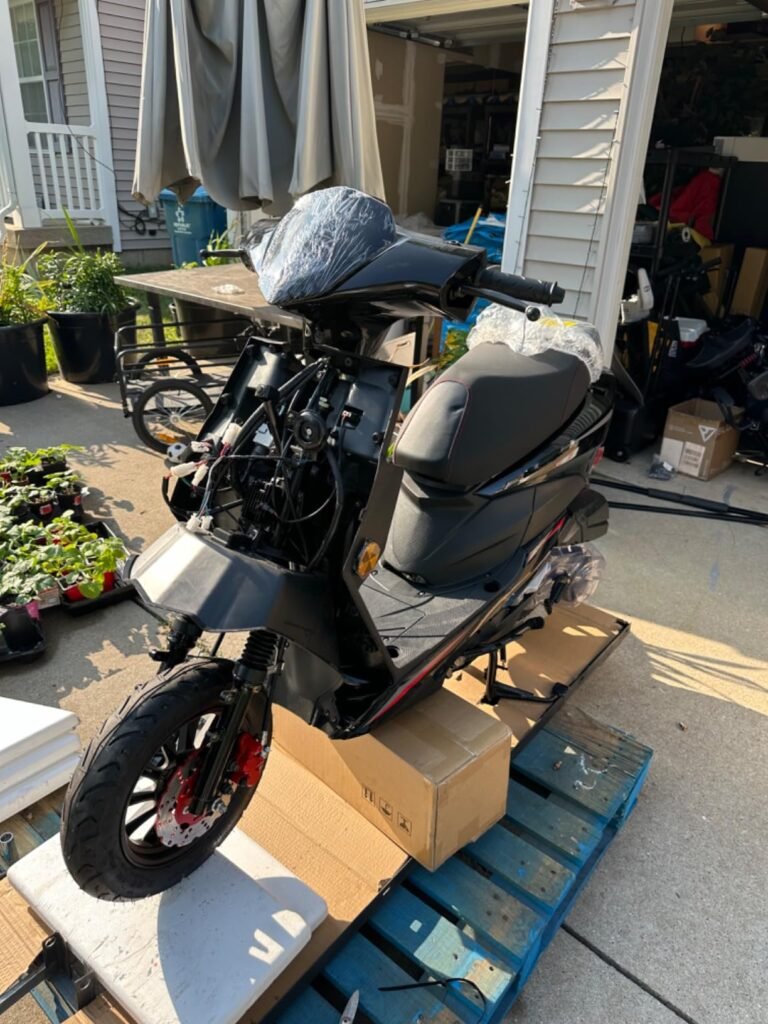
This X18 variant offers the same upgraded 150cc street bike foundation as the blue model but lets you choose among red, black, and blue finishes. The GY6 engine with automatic CVT delivers smooth, predictable power for commuting and community travel, with strong but manageable acceleration that suits both adults and youth moving up from a 50cc.
We may earn a commission when you buy through this link, at no additional cost to you.
The air-cooled four-stroke design keeps temperatures under control even when idling at lights, which supports consistent efficiency and longer life. Ten-inch aluminum wheels with a muffler cover show the same attention to weight and safety as the higher-rated blue version, helping the scooter feel light on its feet while protecting against accidental contact with hot components.
As with other crate-shipped scooters, final assembly includes handlebars, wheels, and brakes, and all registration documents are mailed after shipment. That paperwork support simplifies titling, but do not purchase a plate or title until you have inspected the scooter after delivery. Step-by-step videos help keep assembly orderly for first-time owners.
Darker finishes hide road dust better, while brighter colors improve conspicuity in traffic. Consider adding reflective tape or a high-visibility trunk bag regardless of base color if you ride at dawn or dusk. A quick ceramic spray after washing helps keep any color looking fresh with minimal effort.
The 3.6-star rating is lower than the blue X18’s 4.4, which suggests more varied owner experiences, possibly tied to assembly quality or setup. If you value the color choice, buy with a plan to double-check brake and wheel installation carefully. If you want the highest reported satisfaction in the 150cc group, the blue X18 and Rocket 150 currently show stronger ratings.
Buyers who want the highest owner rating in the X18 family without extra setup diligence.
We may earn a commission when you buy through this link, at no additional cost to you.
The HHH MP50-02 in sporty red is a classic 50cc package that emphasizes approachability and city practicality. The fully automatic CVT with belt drive makes riding intuitive, while the compact 48-inch wheelbase and 27-inch seat height give shorter riders confident footing at stops and easy low-speed maneuvering in tight neighborhoods.
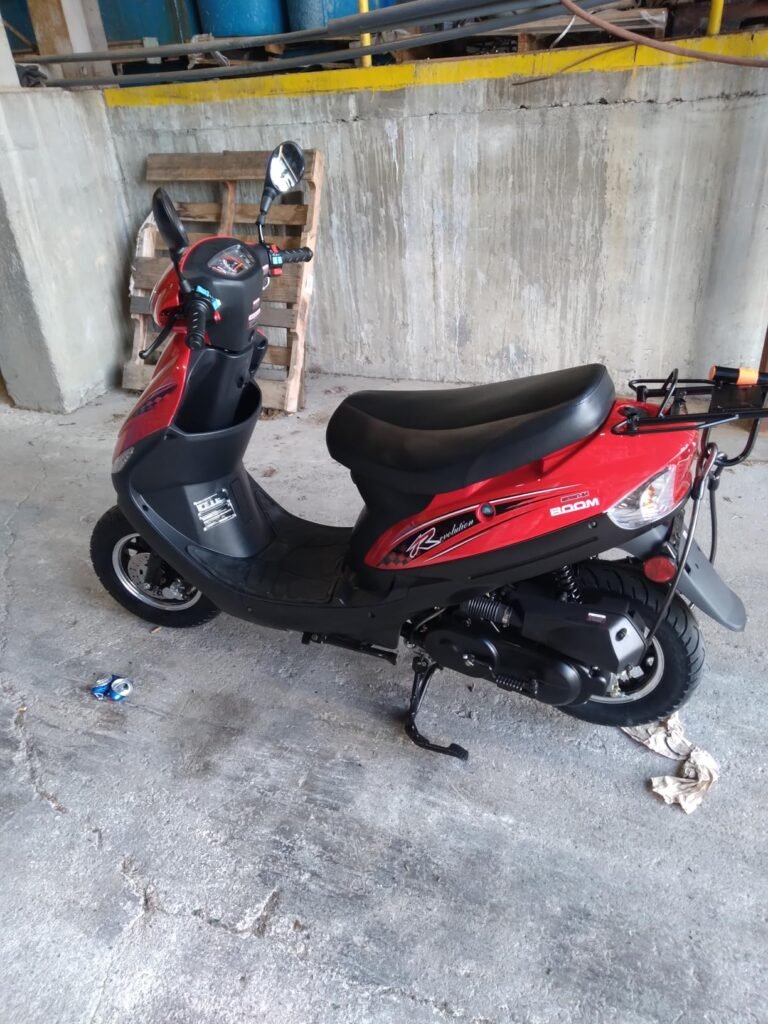
We may earn a commission when you buy through this link, at no additional cost to you.
The feature set covers daily needs without complexity: front and rear hand brakes, 10-inch steel rims, hydraulic suspension, twist throttle, and dash-mounted electric start, speedometer, lights, and turn signals. Sporty aerodynamic lines and a matching rear trunk add useful storage for errands and a clean, finished look that stands out in a row of parked scooters.
Dimensions of 67.32 by 30.7 by 51.57 inches and a shipping crate of 64 by 18 by 32 inches keep the scooter garage friendly, and overall handling is light at city speeds. As with other models here, ensure your phone number is accurate for freight delivery scheduling, and note that this specific model cannot be sold or shipped to California, so verify state compatibility before ordering.
Freight delivery requires an appointment, so keep your phone accessible and inspect the crate for damage before signing. Title and registration documents are mailed separately after shipment, which is normal for this category. Do a thorough post-assembly check of brakes, wheels, and lights before visiting the DMV to avoid titling a scooter that still needs setup corrections.
Steel rims and a carbureted setup trade a bit of weight and ultimate efficiency for durability and simple service, and the 3.7-star rating trails some newer 50cc options. If you need the lowest seat height and a compact footprint for confident stops and easy parking, this model’s geometry is a real advantage; for lighter wheels and slightly stronger reviews, look to aluminum-wheeled 50cc alternatives.
California buyers or riders who want aluminum wheels and the highest owner rating in the 50cc class.
We may earn a commission when you buy through this link, at no additional cost to you.
A good match depends on where you ride, how far, and what you carry. Use the factors below to weigh engine size, fuel system, brakes, comfort, storage, and legal details before you decide.
Engine displacement determines how much power a scooter can produce and where it feels comfortable. A 49cc or 50cc four-stroke typically tops out near 30 to 40 mph and delivers excellent fuel economy above 90 mpg, which makes it ideal for short city trips and neighborhood errands. Stepping up to a 150cc air-cooled engine, as seen on the HHH X18 and Rocket 150, pushes top speed past 50 mph, adds stronger hill climbing, and allows a passenger or modest cargo without feeling strained. The 168cc EFI engines in the Tank 200 and Spider 200 extend usable speed to 62 to 68 mph, which opens up brief highway stretches and faster arterial roads while maintaining automatic CVT ease.
Fuel delivery further separates everyday economy from performance convenience. Most 50cc and 150cc models in this guide use carbureted, air-cooled four-stroke designs that are simple to service and proven over years of use, with predictable maintenance needs like regular oil changes and air filter checks. Electronic fuel injection on the 200cc Tank and Spider models meters fuel more precisely, which improves cold-weather starting, sharpens throttle response, and reduces emissions while often lowering long-term upkeep. The tradeoff is slightly more complex electronics that benefit from stable battery health and clean fuel.
Choose displacement by your typical route. If you stay under 35 mph on local streets and prioritize low running costs, a 50cc option keeps insurance and registration simpler in many states. If you regularly ride 40 to 55 mph, carry a passenger, or face hills, a 150cc balances power and economy well. Pick EFI-equipped 200cc models only if you need highway-capable speed and the extra stability of their longer wheelbases.
Every scooter here uses a fully automatic CVT with belt drive, which eliminates manual shifting and lets you focus on throttle, brakes, and steering. Twist the throttle to accelerate and the transmission varies ratios smoothly without clutch work, which is especially helpful for new riders and stop-and-go city traffic. This simplicity also makes two-up riding less stressful, since the rider does not need to manage gears while balancing a passenger and cargo.
Ease of use extends to starting and low-speed handling. Electric start with a backup kick starter appears on models like the X18 and X-PRO 50, which provides reliable ignition in cold mornings or after storage. Low seat heights on many 50cc scooters near 27 inches help shorter riders plant feet confidently at stops, while larger 150cc and 200cc frames add longer wheelbases that track straight and feel more planted at higher speeds, at the cost of a slightly wider turning circle in tight parking lots.
If you are new to powered two-wheelers or plan frequent short errands, prioritize low seat height, light weight, and simple CVT behavior over peak power. Experienced commuters who ride longer distances will appreciate the steadier feel of longer wheelbases and the stronger midrange pull of 150cc and 200cc engines, even though those scooters weigh more when pushing them manually.
Braking hardware directly affects stopping confidence in traffic. Many 50cc models pair a front hydraulic disc with a rear drum, which is adequate for their lower speeds and lighter weight. The 150cc and 200cc scooters increasingly use front discs with stronger hydraulic systems that provide more even stopping force as speeds climb past 50 mph. Always check both front and rear setups, since rear drums require more lever effort and longer distances when fully loaded or riding two-up.
Suspension and wheel size shape ride comfort more than most buyers expect. Telescopic front forks combined with spring-hydraulic rear shocks smooth out potholes and speed bumps, and larger wheels roll over rough pavement with less deflection. The 10-inch wheels common on 50cc and 150cc X18 models keep the scooter nimble and low, while 12-inch aluminum wheels on the Rocket 150 and 14-inch DOT tires on the Spider 200 add stability and improve traction at higher speeds. Aluminum rims also reduce unsprung weight compared with steel, which helps handling feel lighter.
Match brakes and wheels to your roads. For mostly smooth city streets under 35 mph, standard 10-inch wheels and disc-drum brakes are sufficient and keep costs down. If you face rough pavement, carry a passenger often, or ride at 45 mph and above, lean toward scooters with larger wheels, stronger front discs, and more travel in the suspension for a safer, more comfortable ride.
Physical fit determines whether daily riding feels relaxed or tiring. Seat height ranges from about 27 inches on compact 50cc scooters to 35.4 inches on the taller Rocket 150, which affects how easily you can reach the ground at stops. Wheelbase length, from roughly 48 inches to over 54 inches, influences straight-line stability; longer scooters feel calmer at speed but need more room to maneuver. Overall dimensions also affect garage storage and the ability to thread through tight parking spaces.
Weight capacity and seat padding matter for real-world use. Most 50cc scooters in this lineup list capacities between 225 and 270 pounds, while larger frames like the Spider 200 handle up to 330 pounds, which provides headroom for a passenger and gear. Wide, thickly padded seats improve comfort on longer rides and reduce fatigue, and features like muffler heat shields and step-through frames make mounting easier and safer for riders wearing casual clothing. Ground clearance between 4.3 and 9.8 inches also affects how confidently you can handle speed bumps and uneven shoulders.
Try to match capacity and height to your body and typical load. If you are lighter and ride solo on short trips, a compact 50cc with lower seat height will feel easier to manage. Taller riders or those who regularly carry a passenger should prioritize higher weight limits, more seat room, and longer wheelbases, even if that means a heavier scooter that is slightly harder to push when the engine is off.
Practical storage transforms a scooter from a toy into a useful errand vehicle. Nearly every model here includes a matching removable rear trunk plus underseat storage, which together handle grocery bags, a small backpack, or a helmet when parked. The Tank 200 and Spider 200 highlight spacious underseat compartments alongside detachable top cases, while compact 50cc scooters still provide enough trunk space for quick trips without needing a separate backpack.
Dash layout and lighting also affect daily convenience and safety. Dash-mounted controls with electric start, speedometer, turn signals, horn, and twist throttle keep operation intuitive, and LED headlights with bright taillights improve visibility during dawn, dusk, or evening rides. Premium alloy rims and two-tone paint schemes add style without affecting function, but bright, visible colors and large headlight housings do help other drivers notice you in traffic, which is a practical safety benefit.
List what you carry most often before choosing. If you make frequent small shopping trips, prioritize a secure locking trunk and underseat volume over peak engine power. If you mainly commute with just a backpack, a basic trunk may be enough and you can focus your budget on comfort and braking instead of maximum storage size.
All of these scooters ship 70 percent assembled inside a metal crate and require final assembly of handlebars, wheels, brakes, battery, and trunk, with step-by-step videos provided by most sellers. Budget an afternoon, basic tools, and careful attention to brake and wheel installation, since these steps directly affect safety. An initial oil change right after assembly, followed by changes near 200 and 400 miles, helps break in the engine correctly and prevents premature wear, especially during the recommended gentle break-in period under 25 mph for the first few weeks.
Street legality and paperwork deserve early attention. Most models include the Manufacturer Statement of Origin and supporting documents mailed separately for registration, but requirements vary by state for engine size, license class, and insurance, and the MP50-02 specifically cannot be sold or shipped to California. Confirm local rules before you register or purchase plates, and inspect the scooter thoroughly before titling, since fixing shipping damage after registration is more difficult. Fuel economy ranging from about 60 mpg on 150cc models to over 100 mpg on 50cc scooters keeps running costs low, but factor in periodic maintenance like oil, filters, and brake checks.
Plan ownership like you would for any small vehicle. If you prefer minimal setup, consider whether a local shop can assist with crate assembly for a fee. If you need easy registration, verify that document support and state compliance are clear for your chosen model before ordering, and keep your delivery phone number accurate so freight scheduling goes smoothly.
Start with careful assembly and break-in. Follow the included videos to install handlebars, wheels, brakes, battery, and trunk in order, torquing fasteners and adjusting brake cables until wheels spin freely and levers feel firm. Change oil immediately after assembly, then again near 200 and 400 miles, and keep speed under 25 mph with varied throttle for the first few weeks so rings seat properly. Check tire pressure, lights, horn, and turn signals before the first ride, and confirm that the Manufacturer Statement of Origin and other documents are correct before titling.
Ride with smooth inputs and regular scanning. Use progressive braking with both levers, look well ahead through intersections, and cover the brakes in traffic where cars may turn across your path. Keep throttle changes gentle, especially on new engines, and avoid holding a single speed for long during break-in. Wear a helmet and eye protection, choose visible gear, and use the rear trunk and underseat storage to keep the handlebar area clear and balanced.
Maintain on a simple schedule to keep the scooter reliable and efficient. Inspect oil level, tire pressure, and brake function weekly, clean or replace the air filter as needed, and use fresh fuel to prevent carburetor issues on non-EFI models. Store under cover, keep the battery charged if the scooter sits, and rinse off road grit without spraying high-pressure water directly at electronics or bearings. A little regular care preserves easy starting, strong fuel economy, and confident braking year round.
Requirements depend on your state and engine size. Many states treat 49cc and 50cc scooters as mopeds with lighter licensing, while 150cc and 200cc models usually require a motorcycle endorsement, registration, and insurance. Check your DMV for age, helmet, and plate rules before you buy, and confirm the scooter’s documents support street legal registration in your state.
Most 49cc and 50cc scooters in this guide top out near 31 to 40 mph, which suits 25 to 35 mph streets. A 150cc typically reaches 50 to 55 mph with stronger hill climbing, while 168cc EFI models like the Tank 200 and Spider 200 reach 62 to 68 mph for faster arterials and brief highway stretches. Choose speed headroom based on your regular roads, not just occasional needs.
Each model described as street legal includes headlights, taillights, horn, turn signals, and braking needed for road use, plus paperwork such as the Manufacturer Statement of Origin mailed after shipment. You still must assemble correctly, inspect, and register according to local rules. Some models have state restrictions, so verify California compliance and other local requirements before ordering.
Efficiency varies by displacement and riding style. Most 50cc models deliver roughly 90 to over 100 mpg in gentle city use, while 150cc scooters are often near 60 mpg and still very economical for daily commuting. Smooth acceleration, steady cruising, proper tire pressure, and clean air filters all help you reach the higher end of those ranges.
Expect 70 percent assembly in a metal crate with final installation of handlebars, wheels, brakes, battery, hub odometer, and trunk. Manufacturers provide step-by-step videos, but you should still budget several hours and basic tools. Pay special attention to brake adjustment and wheel torque, and do a thorough safety check before the first ride.
Many are designed as double seaters, but real capability depends on weight capacity and power. Compact 50cc models often list 225 to 270 pounds total, which is tight for two adults plus cargo, especially on hills. The larger 150cc and 200cc scooters offer higher limits and stronger midrange pull, making two-up riding more comfortable when you stay within the stated capacity.
EFI, as on the Tank 200 and Spider 200, meters fuel electronically for easier cold starts, crisper throttle response, and lower emissions with generally less routine tuning. Carbureted 50cc and 150cc models are simpler to service with widely available parts and proven reliability. If you ride in cold weather or want the easiest starting, EFI is a clear advantage; for lowest cost and simple service, carbureted models remain appealing.
Go easy for the first few weeks, staying under about 25 mph and varying throttle instead of holding a constant speed. Change oil immediately after assembly, then again near 200 and 400 miles to flush break-in debris. Avoid wide-open throttle or carrying heavy loads early, and check fasteners and tire pressure frequently until everything settles.
Most beginners find a 50cc with fully automatic CVT, low seat height near 27 inches, and light weight easiest to learn. It keeps speeds modest while you practice scanning, braking, and throttle control, and it is simple to park and push. If your commute requires sustained 45 mph or steep hills, a 150cc with the same automatic ease adds useful headroom without adding complexity.
For the best balance of power, ease, and owner satisfaction, the HHH X18 150cc in blue stands out with a 4.4-star rating, proven GY6 engine, automatic CVT, and lightweight aluminum wheels that make daily commuting feel effortless without stepping into 200cc size and cost.
If you prioritize low purchase price and maximum fuel economy for flat city errands, the X-PRO 50 models and TAO 49cc options deliver more than 90 mpg with simple operation and included rear trunks. Riders who need highway-capable speed and the calm stability of 14-inch tires and a long wheelbase will appreciate the HHH Spider 200 EFI, while the Rocket 150 offers a tall, stable 150cc alternative with generous ground clearance.
Match the scooter to your roads and body first, then to storage and style. Choose 50cc for the lightest, most nimble local use, 150cc for comfortable mixed commuting with occasional passenger duty, and EFI 200cc only if you regularly ride 55 mph and above. With the right size, careful assembly, and gentle break-in, any of these picks can become an economical, enjoyable daily rider.