MGI Zip Navigator
8.6Editor scoreTwin 230W motors
36-hole lithium battery
37.31 lb loaded
Variable speed 1-9
Compare 10 electric golf carts by battery range, motor power, folding size, remote control, and terrain capability to find the right model for your game.
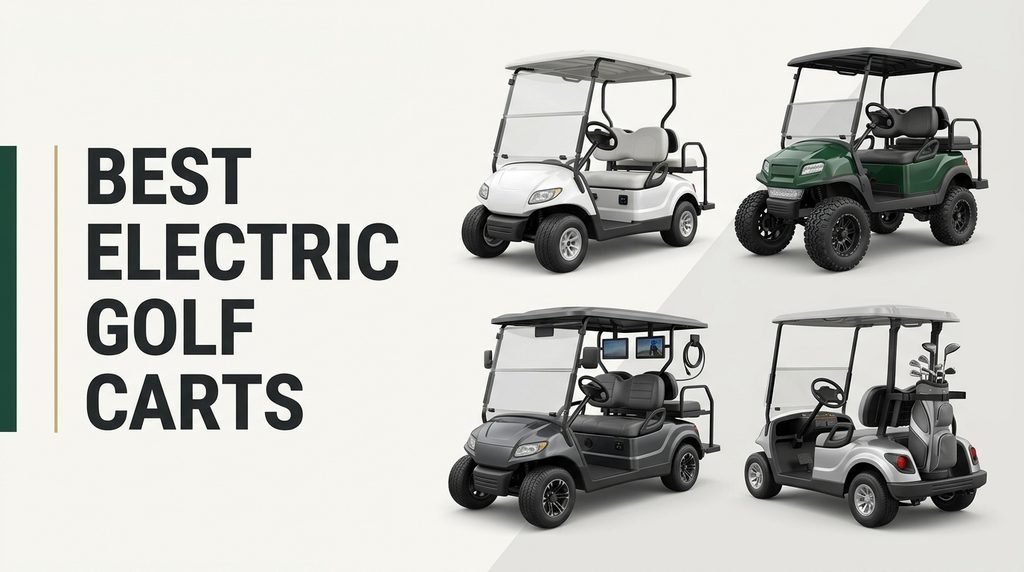
Choosing an electric golf cart for 2026 means navigating a wide range from compact remote-controlled push caddies to full-size four-seater vehicles with 44-mile range and advanced suspension. This guide compares 10 standout options by battery capacity, motor power, folding size, control features, terrain capability, and the real-world tradeoffs that matter when you walk or ride a course regularly.
The category splits into two distinct groups. Electric push caddies like the MGI Zip Navigator and Alphard Cybercart carry your clubs across 18 or 36 holes while you walk, while full-size ride-on carts like the GIYI 4-seater and 60V 4-passenger model serve as transportation vehicles for recreation, hotel shuttles, or utility use. Your use case determines which group fits.
The reviews below focus on practical factors like battery life per round, folding dimensions for trunk storage, remote control range and reliability, motor power for hills, and build quality. You will see honest limitations alongside strengths so you can match the right cart to your course walking preferences or ride-on transportation needs.
We compared 10 electric golf carts using the specifications that genuinely affect ownership: battery capacity and holes-per-charge, motor power and terrain handling, folding size and transport weight, remote control range and responsiveness, display quality, warranty coverage, and owner feedback. The notes focus on practical tradeoffs so each pick connects to how golfers actually walk courses with electric caddies or use larger ride-on carts for recreation, utility work, and community transportation.

Compare key features, scores, and current prices side by side. A shorter feature list means fewer details were available, not necessarily fewer capabilities.




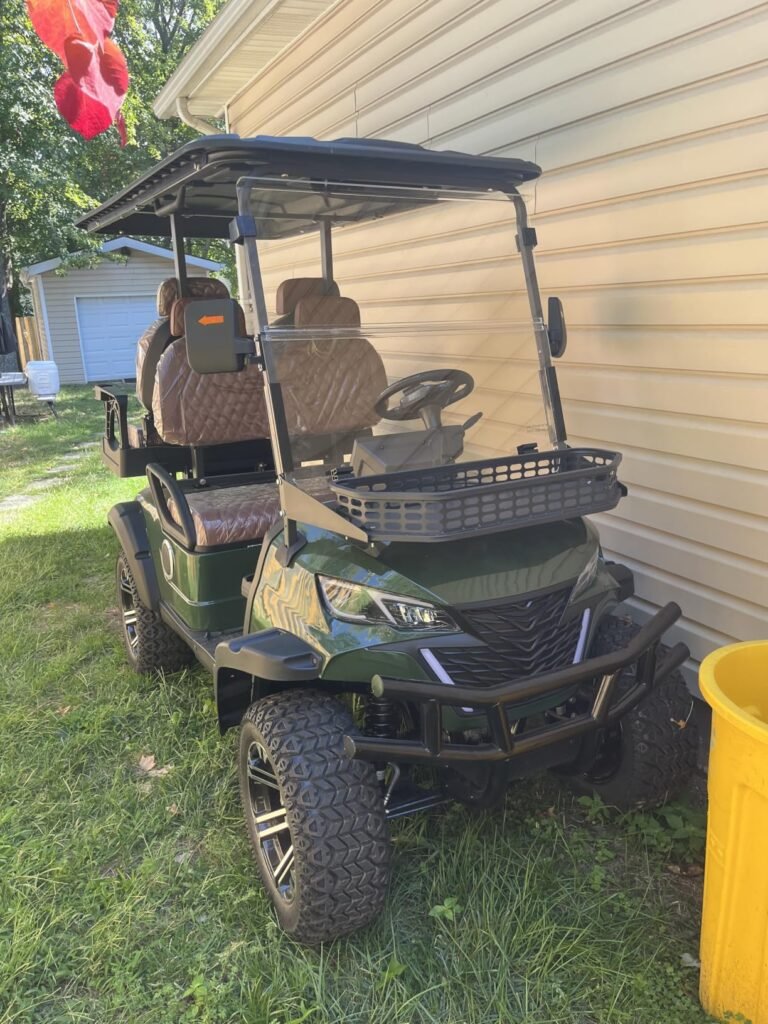
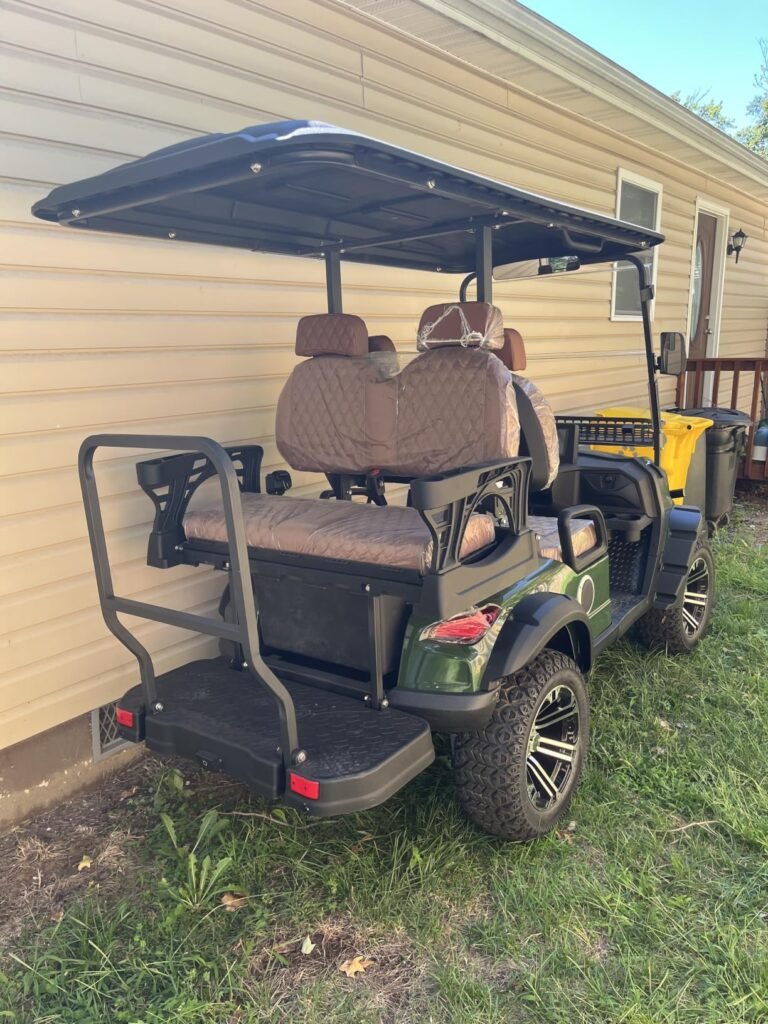
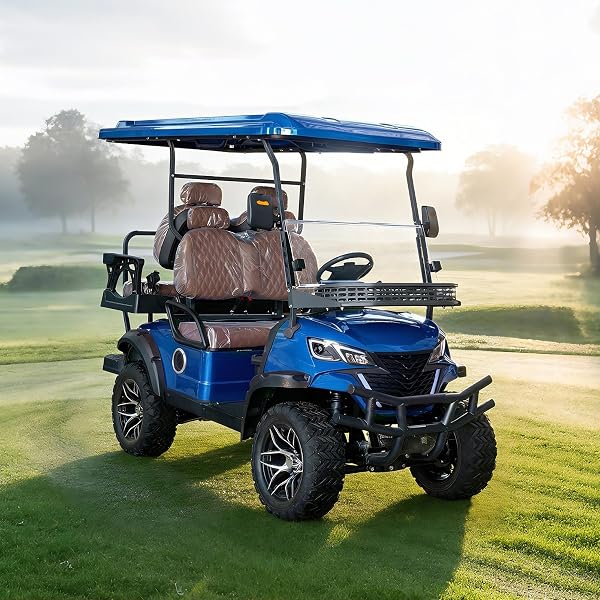
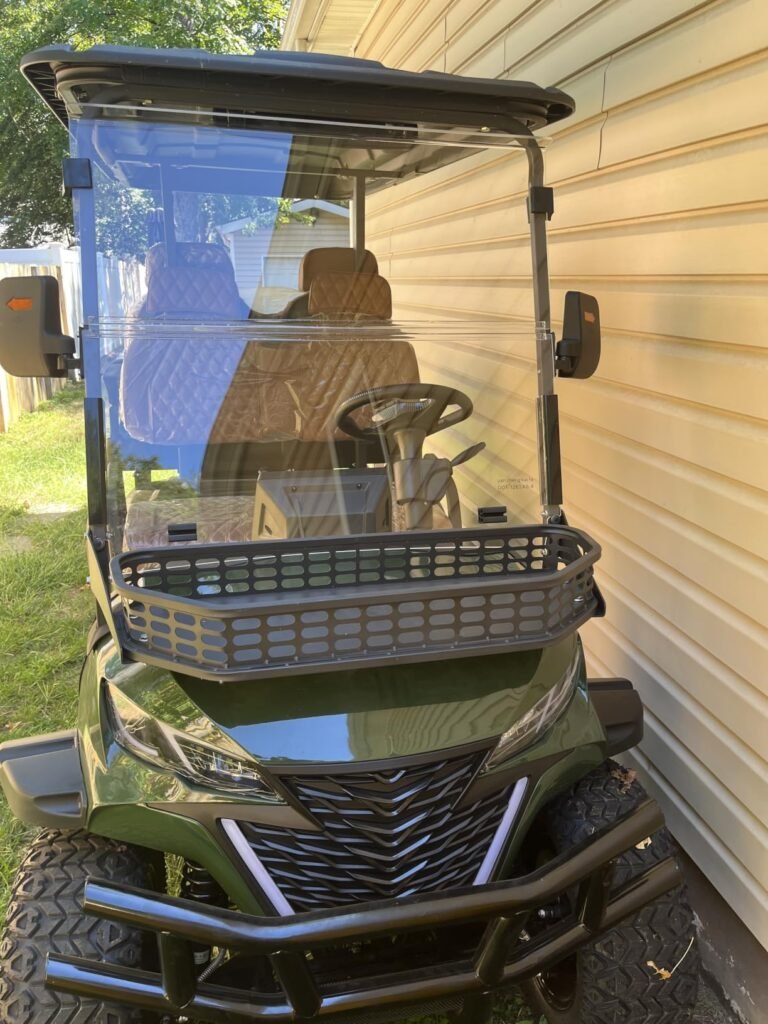
The GIYI 4-Seater is a full-size ride-on golf cart designed for recreational property owners, hotels, parks, and large private estates rather than for walking a course. The 5KW motor delivers enough torque to handle hills, grass, gravel, and mixed terrain while carrying four passengers comfortably at speeds up to 20 MPH, which makes it suitable for serious transportation duties beyond just golf.
We may earn a commission when you buy through this link, at no additional cost to you.
The 60V 100Ah lithium battery provides approximately 44 miles of range on a single charge, which covers a typical day of use at a large property or multiple rounds of golf for a family or small group. The built-in fast charger reduces full charge time to around 8 hours using the included charging gun, so overnight charging easily restores capacity for the next day’s activities without complex setup.
Advanced features include MacPherson independent suspension for smoother rides on uneven terrain, a 9-inch IPS central display showing battery level, mileage, and real-time reversing camera feed, plus full lighting with headlights, taillights, and turn signals. The complete safety package includes seat belts, mirrors, horn, parking brake, and canopy, meeting the standards expected for residential or course use.
Plan your charging location before delivery. The 8-hour full charge cycle works well overnight in a garage or covered area with standard outlet access. Consider installing a dedicated circuit if you plan heavy daily use, and keep the cart under cover during charging to protect the electronics from weather exposure. Battery longevity benefits significantly from avoiding deep discharges when possible.
This cart is the right choice for buyers who need serious ride-on capability for property maintenance, hotel shuttle service, large estate transportation, or private course use. The investment reflects the full-size vehicle class rather than the walking caddy category. For golfers who want to walk their round with club transport assistance, a compact electric caddy makes far more sense at a fraction of the cost.
Golfers who want to walk their course for exercise and only need a motorized caddy to carry their bag during the round.
We may earn a commission when you buy through this link, at no additional cost to you.
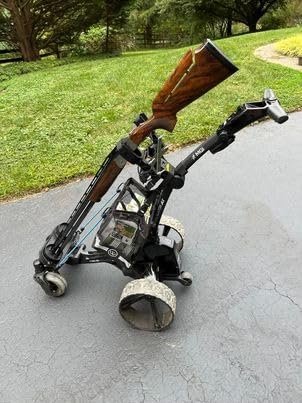
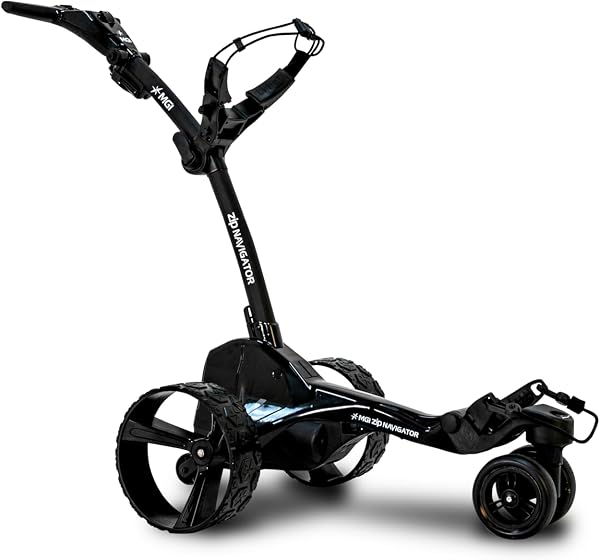
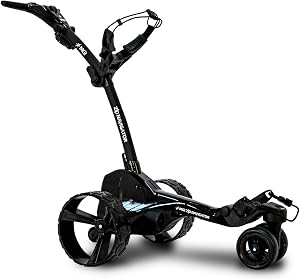
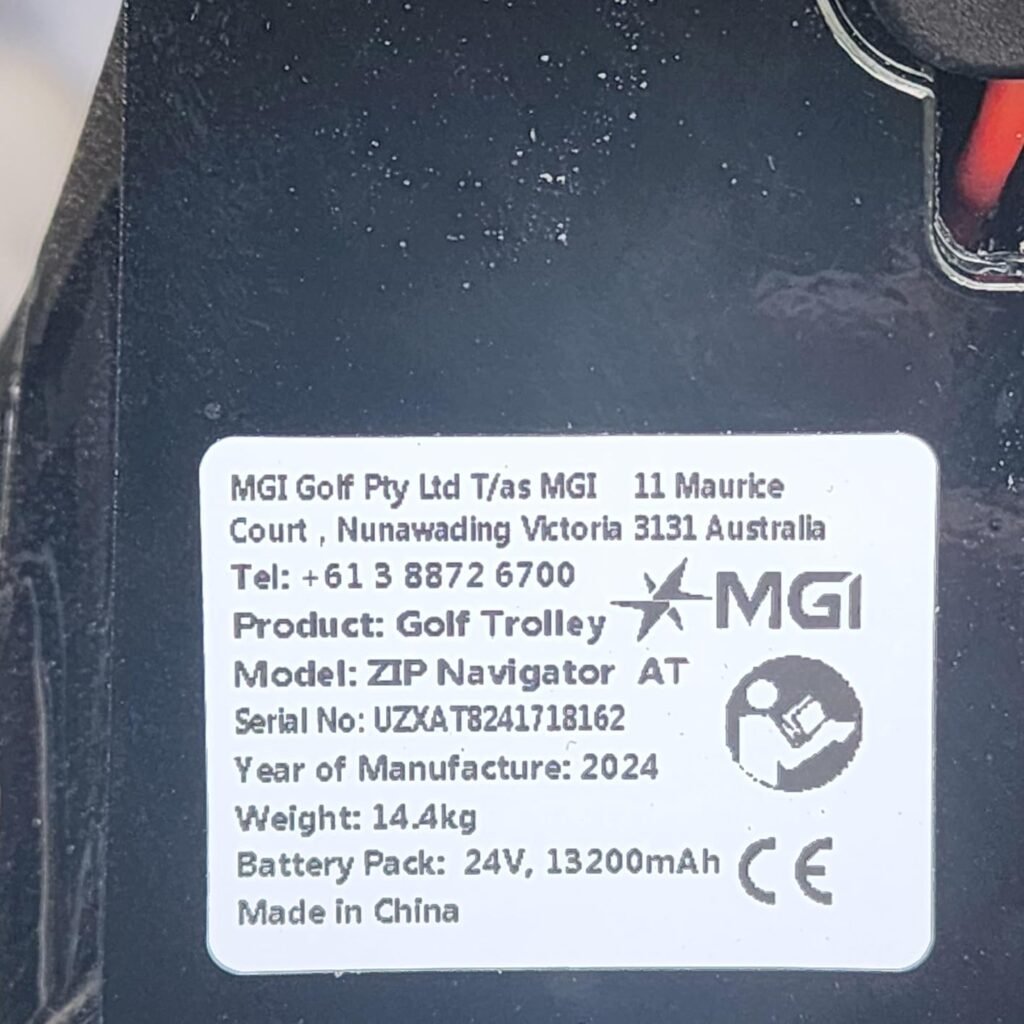
The MGI Zip Navigator All-Terrain brings together remote control convenience and proven engineering from a company that has specialized in electric golf caddies since 1993. The twin 230-watt motors deliver smooth, whisper-quiet power that handles hills, soft ground, and varied course terrain while you focus on your game rather than pushing a loaded bag across the course.
We may earn a commission when you buy through this link, at no additional cost to you.
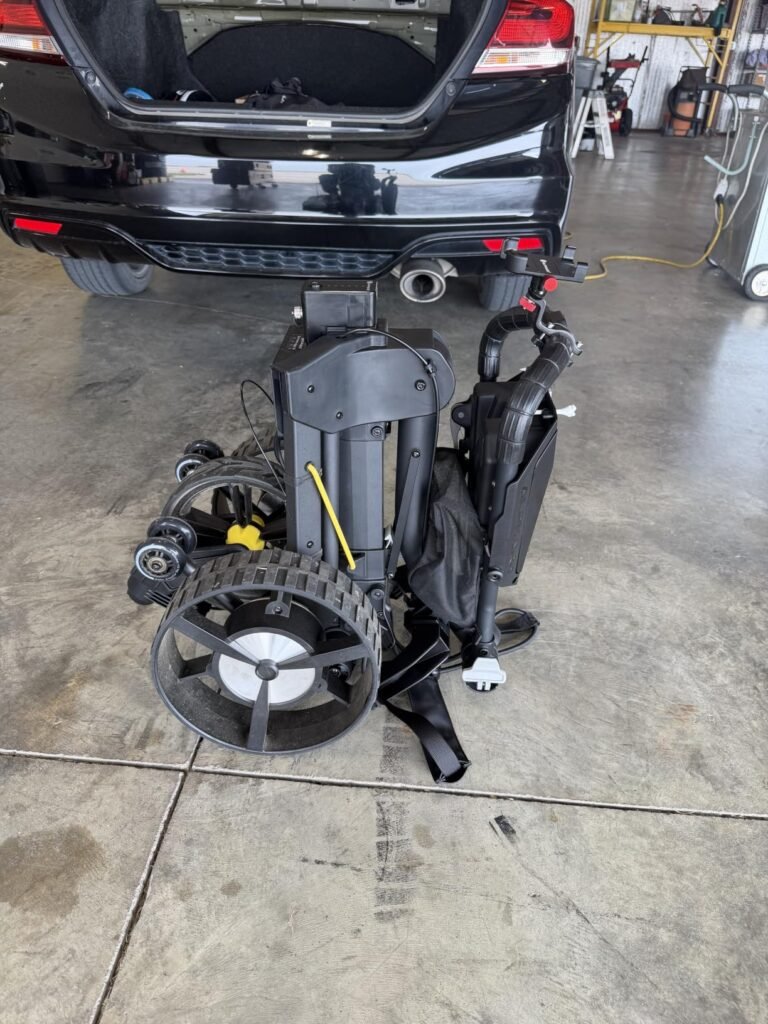
The zip-fold technology produces a one-piece frame that collapses to just 27.55 by 18.5 by 16.5 inches with the rear wheels inverted on the axle. At 37.31 pounds including battery, it fits easily in most car trunks and the newly engineered folding mechanism is 12 percent lighter and 25 percent smaller than previous generations, which addresses the primary complaint many golfers have about transporting electric caddies.
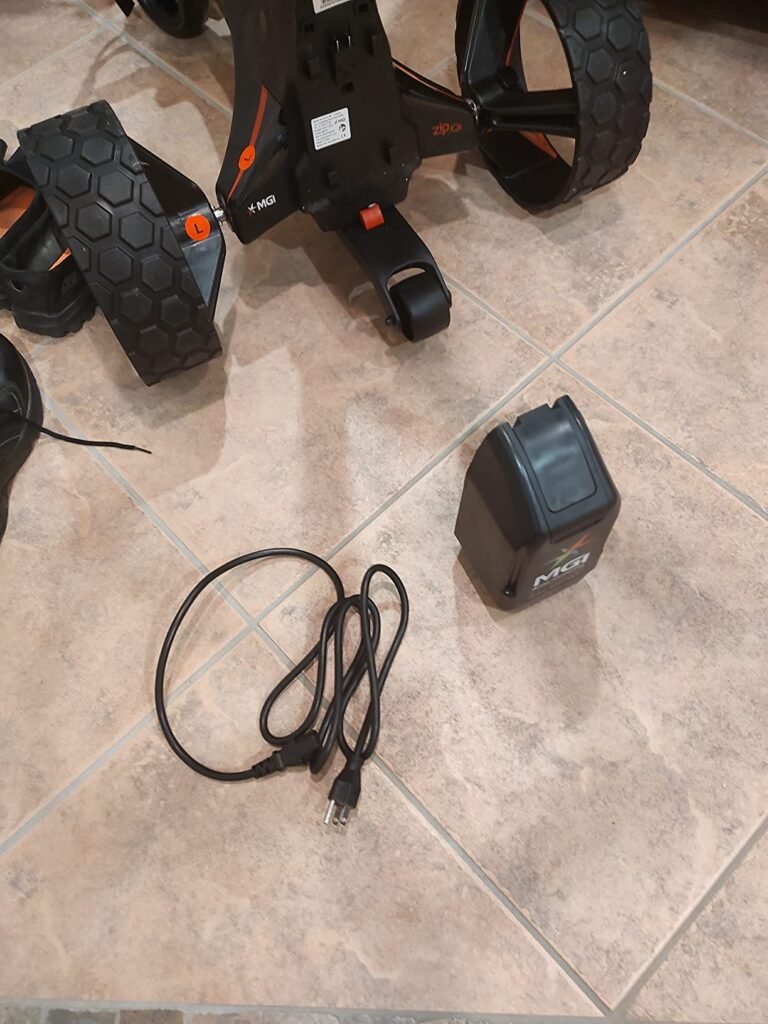
The click-and-go lithium battery system clicks on vertically via an easy-access lifting handle, with color-coded charge ports and chargers that eliminate guesswork during setup. The battery provides enough power for 36 holes on a single charge, which comfortably covers a full day of golf with margin to spare. The variable speed control from 1 to 9 lets you match the cart’s pace to your natural walking rhythm.
Lithium battery technology dramatically outperforms older lead-acid alternatives in weight, charging speed, and lifespan. The removable click-and-go design lets you charge the battery indoors overnight rather than hauling the entire cart inside, and the color-coded indicators tell you charge status at a glance. Expect several years of reliable service with proper care, including avoiding complete discharge whenever possible.
This cart is a strong choice for serious walking golfers who want remote control convenience and premium build quality from an established brand. The included accessories such as drink holder, umbrella holder, and GPS phone mount add real daily value. The investment is significant but the long-term reliability and the time-saving convenience of hands-free walking justify the cost for regular players.
Casual occasional golfers who may not justify the premium price over simpler single-motor models or manual push carts.
We may earn a commission when you buy through this link, at no additional cost to you.
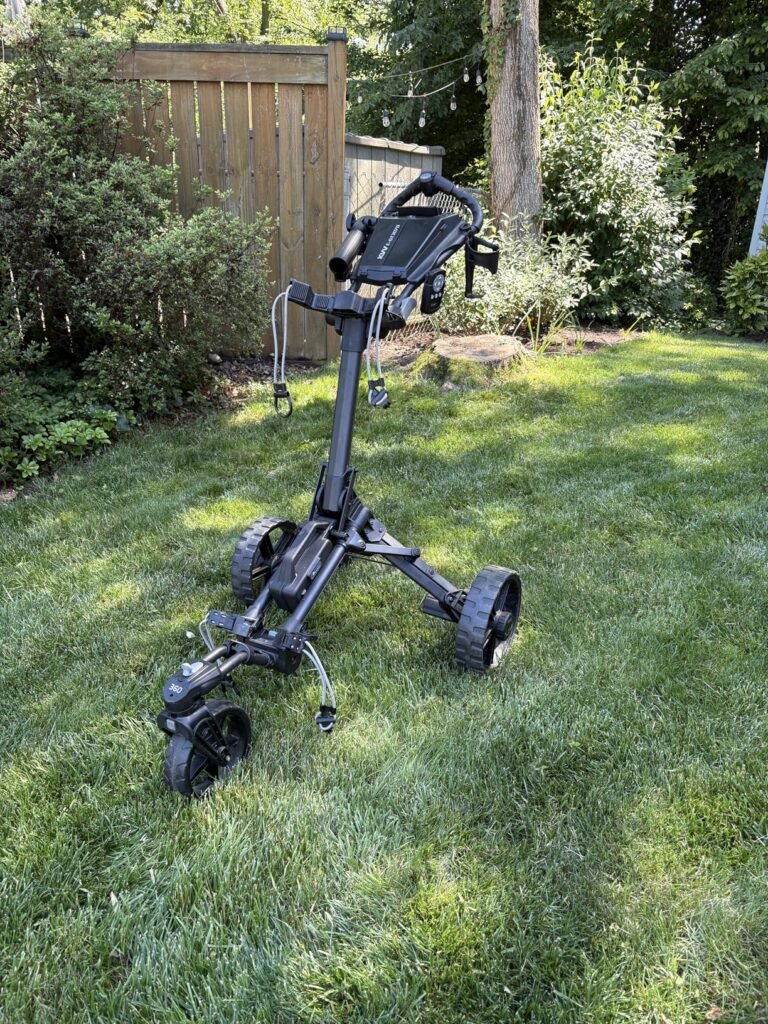
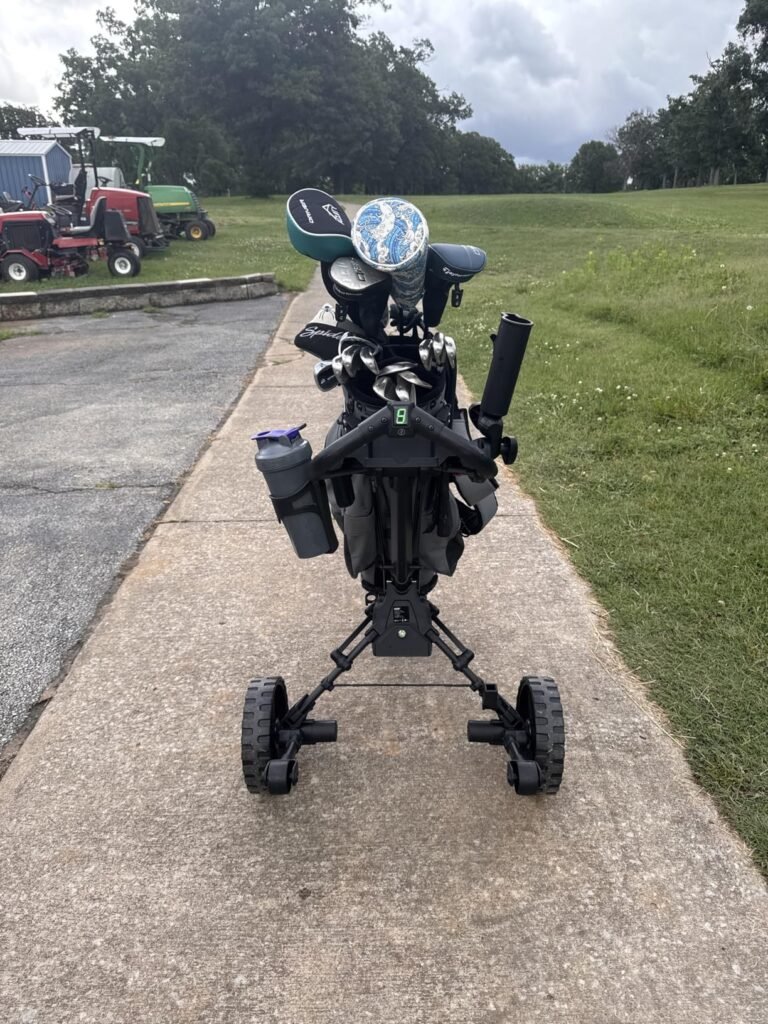
The KVV Electric Golf Cart targets golfers who prioritize compact storage and transport flexibility over maximum battery capacity. The folded dimensions of 17.5 by 18.7 by 22 inches represent one of the smallest footprints in the category, which makes a real difference for drivers with smaller vehicles or anyone who needs to store the cart in a tight closet or garage corner between rounds.
We may earn a commission when you buy through this link, at no additional cost to you.
The responsive remote control offers 9 speed settings for navigating varying terrain from flat fairways to hills and rough patches. The 360-degree front wheel rotation provides exceptional maneuverability during turns and tight navigation, which makes the cart easier to handle in crowded tee areas or on narrow cart paths. Supplementary training wheels and a Straight Line Tracker add balance and stability on uneven surfaces.
The lithium battery provides enough capacity for 18 holes or more with reserves, and the dual-mode design lets you switch to manual push mode when the battery runs low or when you prefer hands-on control. This flexibility is particularly valuable for golfers who sometimes play beyond the standard 18 holes or who want the option to disengage the motor for shorter walks around the practice area.
The 18+ hole rating assumes typical course conditions. Hilly terrain, cold weather, and heavy bag loads can all reduce actual range compared to flat-course testing. If you regularly play more than 18 holes or play courses with significant elevation change, a cart with 36-hole capacity provides important margin. Match capacity to your typical playing patterns rather than minimum requirements.
This cart suits golfers who regularly play 18-hole rounds and value compact storage over extended battery life. The included cooler bag, drink holder, umbrella holder, and remote control holder add practical value out of the box. For 36-hole marathon days, choose a cart with the larger battery capacity rather than relying on the manual mode as a frequent backup.
Golfers who regularly play 27 or 36 holes in a single outing and need the extended battery capacity of larger lithium systems.
We may earn a commission when you buy through this link, at no additional cost to you.
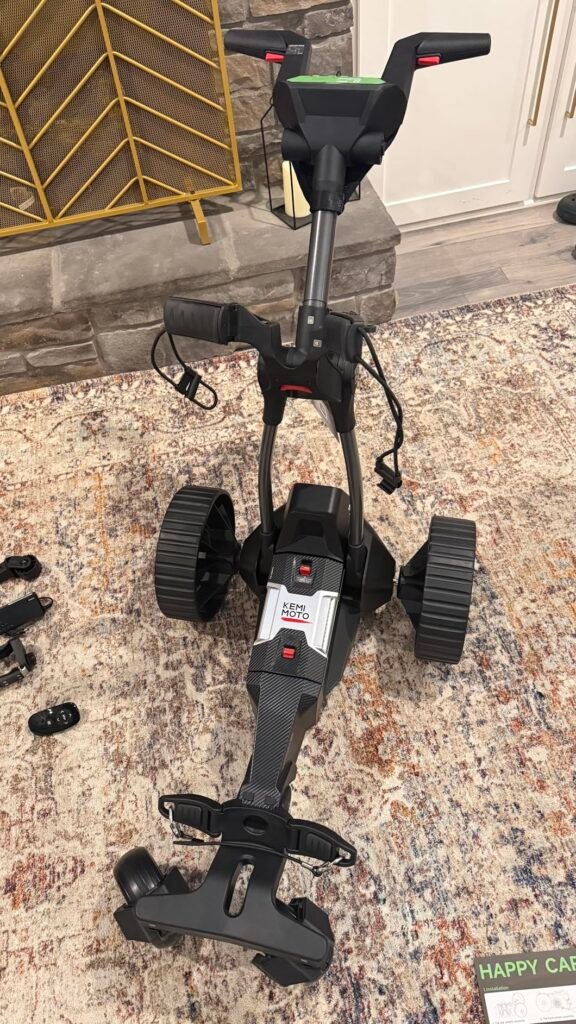
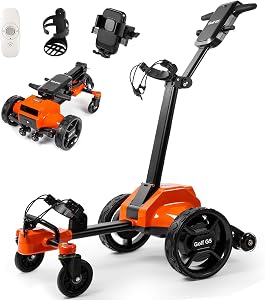
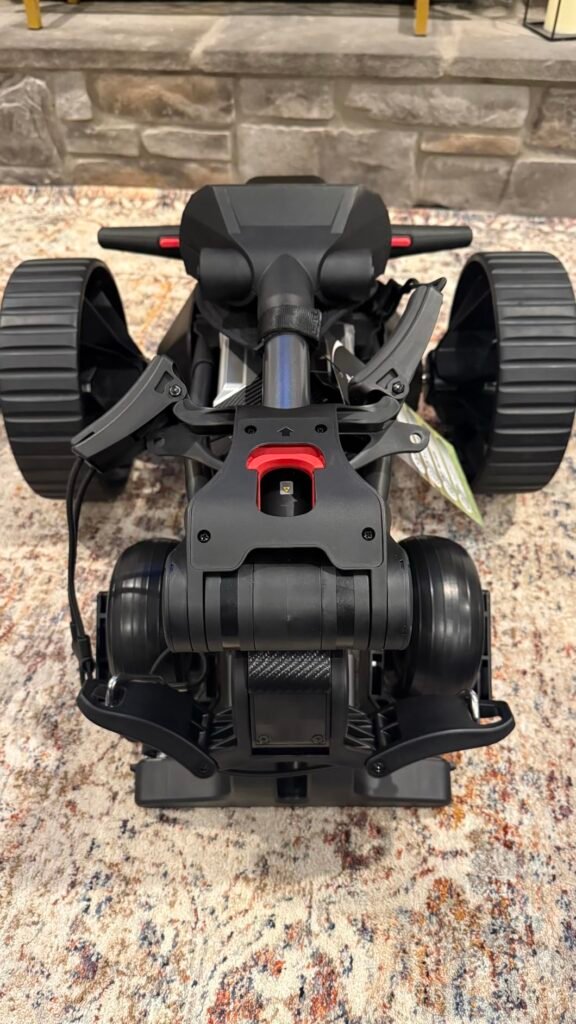
The KEMIMOTO ApexR targets tech-focused golfers who want advanced remote control range and smart assist modes at a competitive price point. The 492-foot remote range dramatically exceeds the typical 100-foot range of simpler remotes, which lets you send the cart to a distant hole or green while you handle an approach shot without worrying about losing connection.
We may earn a commission when you buy through this link, at no additional cost to you.
Dual 240-watt motors paired with an intelligent steering system handle slopes up to 25 percent, which translates to roughly 14 degrees of incline. This power envelope covers hilly courses, wet grass, gravel paths, and other challenging surfaces where single-motor carts can struggle under load. The IPX5 water resistance rating allows reliable operation in morning dew, light rain, and damp fairways without worrying about electronics damage.
The Power Assist Mode matches the cart’s pace to your walking speed by sensing your push and releasing when you stop, which provides precise manual control in crowded areas or on narrow paths. The 5.68-inch LED display shows speed level, battery status, and remote connection at a glance, and the USB-C port keeps your phone or GPS device charged during the round.
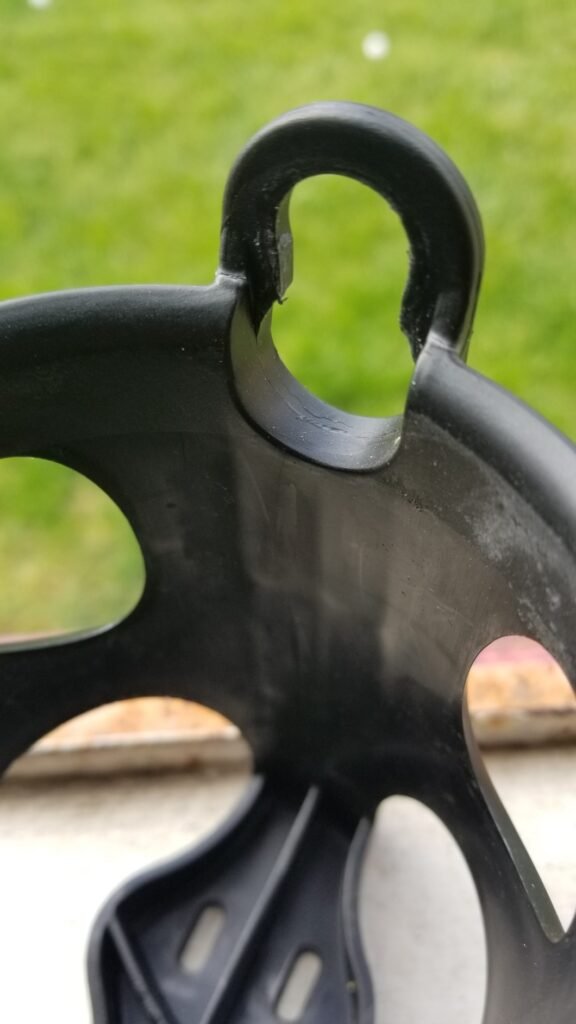
The most frequently reported setup problem involves rear wheels not fully seating or locking into place, which causes the cart to pull left or right during travel. Take time during initial assembly to snap each wheel completely onto the axle until you feel a positive lock. This small step prevents the single most common complaint about this model and ensures proper tracking from day one.
This cart offers compelling technology at an attractive price, but the 3.7-star rating suggests some owners encounter setup challenges, particularly with proper wheel installation. Follow the instructions carefully during initial assembly to avoid the straight-line tracking issues that come from incorrectly seated wheels. For tech-oriented golfers who value remote range and are willing to invest time in proper setup, the feature set delivers meaningful value.
Golfers who prefer established brand reliability and consistent quality control over cutting-edge features at a lower price point.
We may earn a commission when you buy through this link, at no additional cost to you.
The MGI Zip Navigator standard model refines the all-terrain version with finer speed control precision while maintaining the same proven twin-motor drivetrain and compact folding design. The variable speed control from 1 to 20 provides more than twice the granularity of the 1-to-9 range on the all-terrain version, which lets you dial in the exact walking pace that suits your natural rhythm.
We may earn a commission when you buy through this link, at no additional cost to you.
At 34.96 pounds including battery, this version is slightly lighter than the all-terrain configuration, which makes car-to-course transport marginally easier. The twin 230-watt motors deliver the same smooth, quiet power that handles typical course terrain without strain, and the whisper-quiet operation lets you focus on your game rather than motor noise during the round.
The click-and-go lithium battery provides reliable 36-hole capacity with color-coded charging indicators that make status checking simple. The zip-fold mechanism collapses the cart to 27.55 by 18.5 by 16.5 inches for easy trunk storage, and the three-year warranty backing from MGI provides long-term confidence in the investment. All the standard accessories including drink holder, umbrella holder, and GPS phone mount come included.
A 20-step speed control lets you match the cart’s pace precisely to your natural walking rhythm, which prevents the frustrating experience of a cart that is slightly too fast or too slow for your stride. This precision matters more than it sounds, since walking out of sync with your cart for 18 or 36 holes causes small irritations that add up over the course of a long round.
This cart is a strong choice for golfers who want MGI reliability and twin-motor smoothness with the finest available speed control granularity. The main consideration is whether the extended speed range justifies the price over simpler single-motor alternatives in the MGI lineup. For precise pace matching during the round, the extra investment pays off in walking comfort.
Budget-conscious buyers who do not need the finer speed control granularity of the 1-20 range over the simpler 1-9 range on other models.
We may earn a commission when you buy through this link, at no additional cost to you.
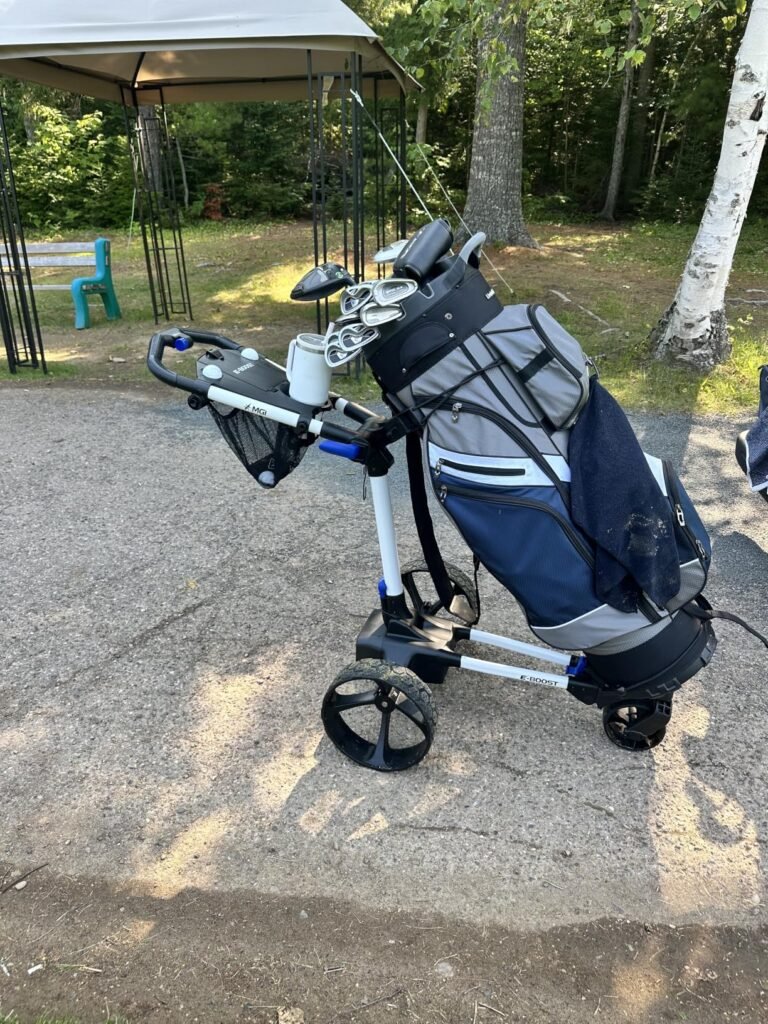
The MGI E-Boost takes a different approach from remote-controlled carts by focusing on electric-assist walking rather than hands-free operation. You still push and steer from the handle, but the brushless motor provides power when needed to reduce effort on hills and long distances. This hybrid approach suits golfers who enjoy the control of pushing but want relief from fatigue on challenging terrain.

We may earn a commission when you buy through this link, at no additional cost to you.
At approximately 25.1 pounds with battery, this is one of the lightest options in the MGI lineup, which makes lifting in and out of the trunk noticeably easier than full remote-controlled models. The compact frame allows convenient handling in and out of vehicles for daily course use, and the lightweight design is particularly welcome for golfers with back concerns who want to minimize lifting strain.
The single brushless motor provides smooth, on-demand electric assist without complex controls or multiple speed settings. The MGI click-and-go lithium battery system offers simple plug-and-play charging, and the removable design lets you charge indoors between rounds. The three-year warranty backing provides confidence in the long-term investment despite the lower price point compared to remote-controlled alternatives.
Electric-assist carts work best for golfers who enjoy the walking experience and the hands-on control of pushing but want help on hills, long carries, and when fatigue sets in late in the round. If you prefer walking entirely hands-free so you can focus on your phone, GPS, or scorecard, a remote-controlled model better matches that preference. Match the control style to your actual walking preferences.
This cart is the right choice for walking golfers who want to maintain hands-on control while gaining relief from the physical effort of pushing a loaded bag across hills. The simplified operation appeals to golfers who find remote-controlled carts overly complex, and the lighter weight is a real daily advantage. For hands-free operation during the round, remote-controlled models deliver that specific benefit at higher cost.
Golfers who want fully hands-free operation with remote control functionality rather than hands-on walking with electric assist.
We may earn a commission when you buy through this link, at no additional cost to you.
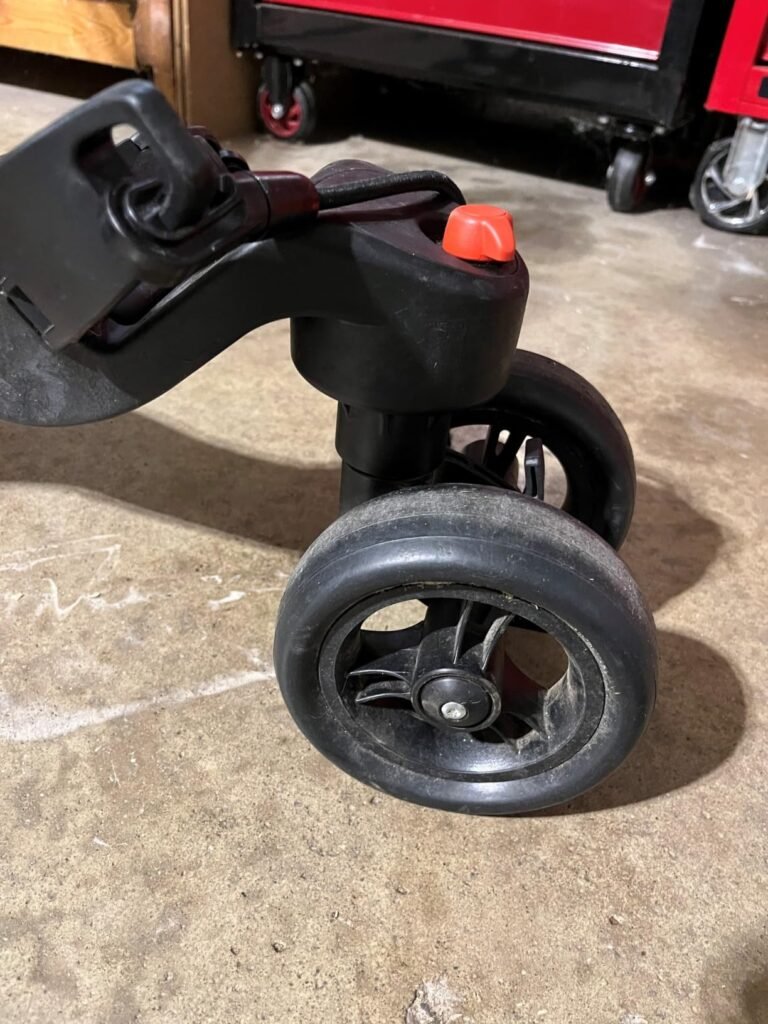
The MGI Zip X3 serves as the entry point into the MGI electric caddy lineup for golfers who want proven brand quality without the premium pricing of remote-controlled or dual-motor models. The hands-on steering approach combined with adjustable speed from 1 to 20 gives you precise pace control without the complexity of remote operation, which some golfers actively prefer.
We may earn a commission when you buy through this link, at no additional cost to you.
The single 230-watt motor provides adequate power for typical course terrain while keeping the cart lightweight at 29.47 pounds with battery. The 36-hole battery capacity matches the premium MGI models despite the lower price, which means you get the same all-day reliability for daily rounds without concerns about running out of power during a long day on the course.
The 2.5-inch LCD display shows speed level, battery status, and other key information clearly, and the start-stop dial for speed control from 1 to 20 provides fine-grained pace matching for comfortable walking. The MGI click-and-go lithium battery system clicks in and out easily for indoor charging, and the three-year warranty applies the same long-term protection as premium models in the lineup.
Many experienced walking golfers actually prefer hands-on steering because it keeps the cart precisely where they want it without worrying about remote connection, battery drain on the remote, or the cart drifting off course. The adjustable handle and precise speed control make hands-on walking comfortable even over 36 holes, and the simpler system has fewer potential failure points than remote-controlled alternatives.
This cart is a strong value choice for golfers who want MGI reliability and the practical 36-hole battery capacity without paying for remote control functionality they may not use. The included accessories like drink holder, umbrella holder, and GPS phone mount round out the package. For golfers who do want remote control, the Navigator models justify their higher cost through that specific functionality.
Golfers who specifically want hands-free remote control operation rather than hands-on steering with electric power assist.
We may earn a commission when you buy through this link, at no additional cost to you.
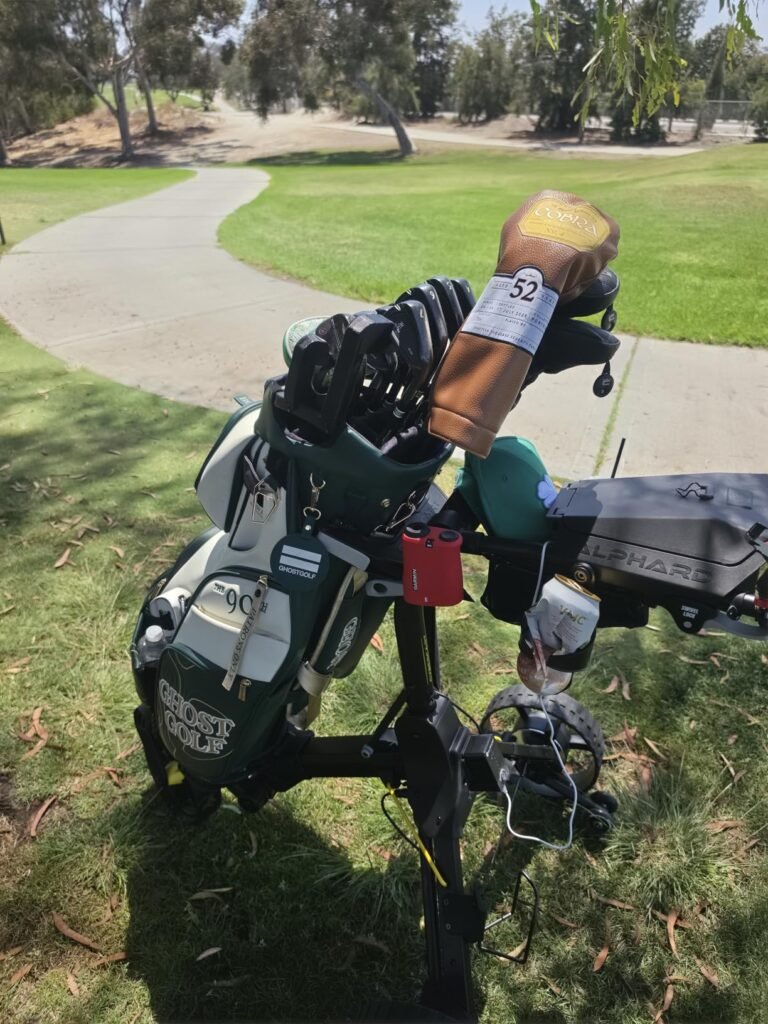
The Alphard Cybercart focuses on safety and stability features that address real concerns golfers have about remote-controlled carts on hilly or varied terrain. The LCD remote with out-of-range auto-stop prevents the cart from continuing uncontrolled if you move too far away, which eliminates the worry of chasing down a runaway cart that has lost signal connection on a longer hole.
We may earn a commission when you buy through this link, at no additional cost to you.
The low center of gravity design maximizes stability during turns, slope traversal, and uneven ground handling. Combined with the automatic parking brake that holds the cart in place on any slope and the downhill speed control that prevents the cart from accelerating uncontrollably on descents, this cart addresses the two scenarios where remote-controlled carts most commonly cause problems for new users.
The one-click folding system simplifies the car-to-course transition significantly, and the extra-large storage console provides room for the gear and accessories that accumulate during a round. The freewheel manual mode lets you easily use the cart as a traditional push cart when battery runs low or when you prefer hands-on control for specific holes, which adds flexibility that pure electric carts cannot match.
Standard electric carts can accelerate dangerously on steep descents as gravity adds to motor power, creating the risk of the cart running away from you or tipping on uneven ground. Active downhill speed control uses the motors to limit descent speed regardless of slope angle, which keeps the cart under control through challenging terrain. This single feature can prevent damage, injury, and the frustration of chasing a loaded cart down a hill.
This cart suits golfers who want remote control convenience with the safety margins to use it confidently on challenging courses. The 4.5-star rating reflects solid owner satisfaction with the complete feature set. For buyers who prioritize safety features and have the budget for premium functionality, the investment addresses real concerns that cheaper remote carts often ignore.
Budget-conscious golfers who do not need advanced safety features and would prefer to invest the price difference in other equipment.
We may earn a commission when you buy through this link, at no additional cost to you.
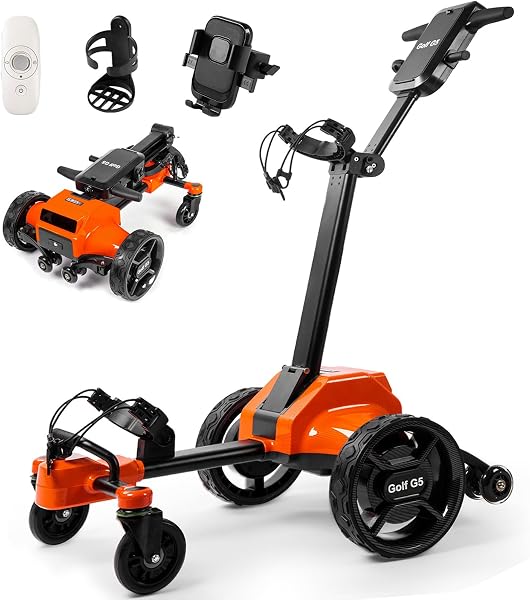
The Tianhong G5 brings auto-follow smart caddy technology to golfers who want the ultimate hands-free experience. Advanced sensors in the cart detect your position and movement, keeping the cart following you throughout the round without any manual steering or remote operation. This frees your hands and mind completely to focus on your swing, course management, and conversation with playing partners.

We may earn a commission when you buy through this link, at no additional cost to you.
The 45-hole lithium battery capacity exceeds the typical 36-hole rating of competing caddies, which means you can play two full rounds of 18 holes plus warm-up without charging concerns. The removable design allows easy indoor charging, and the smart LED color display shows real-time speed, battery level, mode, mileage, and other data clearly in both day and night conditions.
Five operating modes including hand push, remote control, one-touch recall, follow me, and constant speed cruise cover virtually any scenario you encounter on the course. The three-second quick folding mechanism collapses the cart to 28.7 by 24.8 by 14.1 inches for easy trunk storage. All-terrain tires with dual anti-tip wheels maintain stability on slopes up to 30 degrees, which handles even challenging hilly courses safely.
The cart automatically stops when it comes within 5.9 feet of the remote, which prevents it from running into you when you stop walking. Pay attention to this safe distance when standing over shots or searching for balls to prevent the cart from stopping too close for your comfort. The follow technology works best in open fairway situations and may require manual mode on crowded tee boxes or narrow cart paths.
This cart suits golfers who want cutting-edge technology and premium battery capacity with the UL 2271 safety certification and IPX5 waterproof rating as additional confidence builders. The main consideration is that the auto-follow function requires both the battery and the handheld remote to be active, so pay attention to remote battery status alongside the cart battery. The one-year warranty is shorter than MGI’s three-year coverage but the overall feature set is more advanced.
Golfers who prefer established brand warranty backing like MGI’s three-year coverage over cutting-edge auto-follow features.
We may earn a commission when you buy through this link, at no additional cost to you.
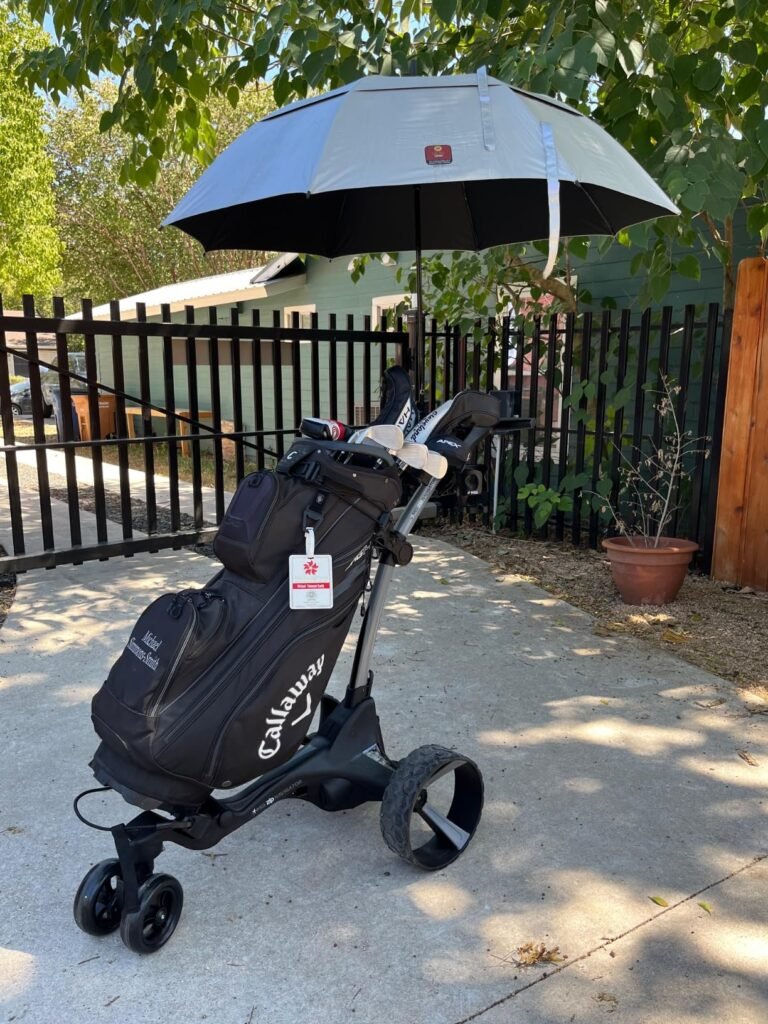
The MGI Zip X5 sits in the middle of the MGI non-remote lineup, adding electronic parking brake and downhill speed control to the proven Zip platform. These safety features address the two scenarios where simpler electric caddies create user concerns: holding position on slopes while you take shots, and preventing uncontrolled acceleration on descents through the course.
We may earn a commission when you buy through this link, at no additional cost to you.
At 30.57 pounds with battery, this model sits slightly heavier than the Zip X3 but adds the active safety features that justify the extra weight. The single 230-watt motor provides reliable power for typical course terrain, and the 36-hole lithium battery capacity matches other MGI models for all-day reliability without charging anxiety during long playing sessions.
The 2.5-inch LCD display shows speed level, battery status, and other key information, and the start-stop speed dial from 1 to 20 provides fine pace control. The MGI click-and-go lithium battery system makes indoor charging convenient, and the three-year warranty applies the same long-term protection as premium models in the lineup. The USB port keeps your phone or GPS device powered during rounds.
Manual parking brakes require you to engage and release them deliberately each time you stop, which becomes tedious across 18 or 36 holes. Electronic parking brakes engage automatically when you release the speed control and release automatically when you resume, which removes a small but repeated friction point from your walking rhythm. The convenience adds up noticeably across a long day on the course.
This cart suits golfers who want hands-on steering with safety features that handle slope scenarios automatically. The electronic brake and downhill control earn their place for anyone playing hilly courses regularly. For golfers who want remote control functionality, the Navigator models justify their price premium, but for hands-on walkers who want enhanced safety features, the Zip X5 strikes a sensible balance in the MGI lineup.
Golfers who want remote control functionality or who play flat courses where downhill speed control and electronic braking add less practical value.
We may earn a commission when you buy through this link, at no additional cost to you.
Choosing an electric golf cart depends on whether you want to walk the course with a motorized caddy or ride in a full-size vehicle, how far you typically play, your storage and transport constraints, and the control features that match your preferences. The factors below walk through what matters most for making a smart purchase in this category.
Electric golf carts fall into two fundamentally different categories. Walking caddies like the MGI Zip Navigator, KEMIMOTO ApexR, Alphard Cybercart, and Tianhong G5 carry your clubs across the course while you walk, replacing the physical effort of pushing or carrying a bag. These compact products fold for trunk storage and are designed exclusively for golf use. Full-size ride-on carts like the GIYI 4-seater function as actual vehicles for recreation, utility work, or community transportation, serving golf alongside many other applications.
Walking caddies further divide into remote-controlled models that operate hands-free and hands-on models where you still steer and push but the motor provides power assist. Remote-controlled caddies like the MGI Navigator, Alphard Cybercart, and KEMIMOTO ApexR let you walk completely free of the cart, while electric-assist models like the MGI E-Boost and non-remote Zip X3 and X5 require you to steer by hand but reduce physical effort through motor power. The right choice depends on whether you value hands-free freedom or hands-on control.
Define your primary use case before shopping. Golfers walking a course should choose a caddy, while property owners needing transportation should choose a ride-on cart. Mixing these categories wastes money and leads to disappointment.
Battery capacity determines how many holes you can play on a single charge, which directly affects your playing patterns. Most quality walking caddies advertise 36-hole capacity, which comfortably covers a full day of golf with reserves. The Tianhong G5 extends this to 45 holes for marathon days or multi-round outings, while budget options like the KVV cart offer 18-plus hole capacity that works for standard rounds but limits extended play. Full-size ride-on carts like the GIYI 4-seater offer much larger batteries with 44-mile range for all-day transportation use.
Lithium battery technology has become the standard across quality electric caddies and offers significant advantages over older lead-acid alternatives in weight, charging speed, and lifespan. Removable click-and-go battery designs let you charge indoors overnight without hauling the entire cart inside. Pay attention to actual watt-hour ratings when comparing products, since manufacturer hole-count claims assume ideal conditions and real-world usage varies with hill climbs, grass type, and bag weight.
For most golfers, 36-hole capacity hits the right balance of range and cost. Choose higher capacity only if you regularly play 27-plus hole rounds, play in hilly conditions, or want long-term margin for battery degradation.
Motor power determines how well a cart handles hills, soft ground, and heavy loads without laboring or draining the battery faster. Dual-motor configurations like the MGI Zip Navigator’s twin 230-watt motors and the KEMIMOTO ApexR’s dual 240-watt motors provide smoother power delivery and better slope handling than single-motor alternatives. Single-motor models like the MGI Zip X3 and X5 handle typical course terrain adequately but may struggle on steep inclines or in challenging conditions like wet grass.
Full-size ride-on carts operate in a completely different power class. The GIYI 4-seater’s 5KW motor delivers the torque needed to transport four passengers and equipment at up to 20 MPH across varied terrain, which bears no comparison to walking caddy motors measured in watts. If you need actual vehicle performance for property transportation or recreational use, invest in appropriate motor power rather than trying to repurpose a walking caddy.
For hilly courses or heavy bag loads, choose dual-motor walking caddies. For flat courses with lighter loads, single-motor models deliver adequate performance at lower cost.
Folded dimensions and transport weight dramatically affect daily usability for walking caddies that must fit in car trunks between rounds. The KVV cart’s compact 17.5 by 18.7 by 22-inch folded size represents the smallest footprint in the category, while the MGI Zip Navigator folds to 27.55 by 18.5 by 16.5 inches with inverted rear wheels. Check your trunk dimensions before buying, especially if you drive a sedan or compact vehicle where storage space is at a premium.
Weight matters significantly for repeated lifting in and out of vehicles. The MGI E-Boost at 25.1 pounds with battery represents the lightest option in this guide, while remote-controlled models typically weigh 35 to 40 pounds including battery. Removable batteries let you lift the cart body separately from the battery pack, which reduces individual lifting weight and lets you charge the battery indoors without hauling the full cart.
If you drive a smaller vehicle or have back concerns about repeated heavy lifting, prioritize compact folding dimensions and lower total weight. The daily convenience benefit easily justifies choosing a slightly less feature-rich cart that fits your life better.
Control style represents a fundamental choice between remote-controlled hands-free operation and hands-on steering with electric assist. Remote-controlled caddies like the MGI Navigator and KEMIMOTO ApexR let you walk completely free of the cart, using a handheld remote to adjust speed and direction. The KEMIMOTO’s 492-foot remote range dramatically exceeds typical 100-foot limits, while the Alphard Cybercart adds out-of-range auto-stop safety for peace of mind on longer holes.
Auto-follow technology on the Tianhong G5 takes hands-free operation further by using sensors to track your position and movement without any remote operation required. Hands-on models like the MGI Zip X3, X5, and E-Boost require you to steer and control pace by hand, but the fine-grained speed control from 1 to 20 on these models provides precise pace matching that some golfers actively prefer over remote operation.
Match control style to your actual walking preferences. If you want to focus on scorecards and conversation during the round, choose remote or auto-follow. If you enjoy hands-on walking and prefer simpler controls, choose electric-assist models.
Warranty coverage reflects manufacturer confidence in product longevity and provides important protection on these significant investments. MGI backs its entire lineup with a three-year warranty, which represents industry-leading coverage for electric golf caddies. The Tianhong G5 includes a one-year warranty with step-by-step setup video and 24/7 after-sales support, while other brands offer varying terms. Keep purchase documentation accessible since warranty service can save substantial repair costs on these electromechanical products.
Brand reputation matters particularly in a category where quality control and parts availability affect long-term ownership experience. MGI has specialized in electric golf caddies since 1993, which translates to proven engineering, extensive dealer networks, and parts availability for repairs years down the road. Newer brands may offer competitive features and prices, but the lack of established service infrastructure can complicate issues when problems arise after warranty expiration.
For high-use serious golfers, prioritize established brands with strong warranty coverage. For occasional use or trying remote control functionality for the first time, newer brands at lower prices can represent sensible entry points into the category.
Initial setup starts with following the included instructions carefully, particularly for proper wheel installation on walking caddies. The most common new-user problem across electric caddies involves rear wheels that are not fully seated, which causes the cart to pull left or right during travel. Take time during assembly to ensure each wheel locks completely onto the axle, and verify tracking on a flat surface before taking the cart to the course. Watch the setup video that most manufacturers provide if assembly questions arise.
Battery management is the single most important ongoing care practice for electric golf carts. Lithium batteries last longest when kept between 20 and 80 percent charge and avoid being left in extreme hot or cold conditions. Charge the battery indoors between rounds rather than leaving it in a hot car trunk during summer months. Avoid completely discharging the battery when possible, and keep the battery stored at approximately 50 percent charge during long off-season periods. Expect several years of reliable service with proper care, with gradual capacity loss toward the end of battery life.
Clean the cart body after each round to prevent grass clippings, mud, and moisture from accumulating on electronics or mechanical components. Pay particular attention to the wheels, which collect debris that can affect bearing life. For full-size ride-on carts, follow a seasonal maintenance schedule that includes checking tire pressure, inspecting brakes, and verifying all lights function properly. Keep the charging port and electrical connections clean and dry to prevent corrosion issues that can develop over time in humid or coastal environments.
Most quality walking caddies rate at 36 holes per charge, which comfortably covers a full day of golf with reserves. The Tianhong G5 extends this to 45 holes for marathon days, while budget options offer 18 holes. Real-world range varies based on terrain difficulty, bag weight, and temperature. Hilly courses and cold weather both reduce actual range compared to flat-course ratings.
Remote control adds meaningful value for golfers who want hands-free walking to focus on scorecards, phones, or conversation. The MGI Zip Navigator and Alphard Cybercart deliver this freedom reliably. However, many experienced walkers actually prefer hands-on steering for precise control. Try pushing an electric-assist cart first if you are new to the category before investing in remote functionality.
Electric caddies like the MGI Zip Navigator are compact walking companions that carry your clubs while you walk the course. Ride-on carts like the GIYI 4-seater are full-size vehicles with seating for passengers, designed for transportation across golf courses, hotels, parks, or private properties. The cost difference is substantial, with caddies starting around a thousand dollars and ride-on carts in the eight to ten thousand dollar range.
Quality lithium batteries typically last three to seven years with proper care, with gradual capacity loss over that time. Avoid completely discharging the battery, store it at approximately 50 percent charge during off-season, and keep it indoors in moderate temperatures. Expect to notice reduced hole-per-charge capacity after four to five years of regular use, with full replacement eventually necessary.
Dual-motor models like the MGI Zip Navigator twin 230-watt and KEMIMOTO ApexR dual 240-watt handle slopes up to 25 percent and varied terrain well. Single-motor caddies manage typical course terrain but may struggle on steep inclines. For hilly courses, choose dual-motor configurations. Full-size ride-on carts with 5KW motors like the GIYI handle serious terrain challenges that walking caddies cannot approach.
Folded dimensions range from the KVV's compact 17.5 by 18.7 by 22 inches up to the MGI Navigator's 27.55 by 18.5 by 16.5 inches. Most quality caddies fit in standard sedan trunks when folded, but check specific dimensions against your trunk before buying. Compact models work best for smaller vehicles, while larger trunks accommodate any option without concern.
Models with IPX5 water resistance ratings like the KEMIMOTO ApexR and Tianhong G5 handle morning dew, light rain, and damp fairways without issues. Avoid using electric caddies in heavy rain or standing water regardless of rating. Dry the cart thoroughly after wet rounds, and inspect electrical connections periodically for signs of moisture damage, particularly on budget models with lower water resistance ratings.
Most quality caddies include drink holders, umbrella holders, and phone or GPS mounts as standard. The KVV cart adds an insulated cooler bag, and MGI models typically include complete accessory packages. Full-size ride-on carts like the GIYI come with headlights, taillights, turn signals, mirrors, horn, canopy, and seat belts as standard safety equipment. Check specific accessory lists before buying since inclusions vary significantly.
Walking caddies fold into compact packages that fit most car trunks. Lift the folded cart in and out as needed, or remove the battery separately for easier individual lifting. Full-size ride-on carts require a trailer for transport if moving between locations. Most owners of ride-on carts keep them permanently at a single property such as a lake house or golf community rather than transporting them regularly.
Policies vary by course. Most courses allow walking caddies without restriction since they function similarly to push carts. Some courses may restrict certain remote-controlled models during specific hours or on particular holes. Call ahead to confirm policies for the specific caddy you plan to use, particularly at private clubs or courses with strict cart path rules. Public courses generally accommodate electric caddies without issues.
The MGI Zip Navigator All-Terrain stands out as the strongest overall choice for walking golfers who want proven reliability, remote control convenience, and 36-hole battery capacity in a compact folding package. The three-year warranty backing from MGI's decades of golf caddy specialization provides long-term confidence, and the twin 230-watt motors handle varied course terrain smoothly. For most serious walking golfers, this cart represents the right balance of features, build quality, and investment protection.
For buyers with different priorities, several meaningful alternatives deserve consideration. The GIYI 4-Seater serves property owners needing full-size ride-on transportation rather than walking assistance. The Tianhong G5 pushes technology forward with auto-follow sensors and 45-hole battery capacity for golfers who want cutting-edge features. The MGI Zip X3 delivers excellent value for walkers who prefer hands-on control, while the Alphard Cybercart adds safety features like out-of-range auto-stop and downhill speed control for challenging courses.
Your best decision starts with honestly identifying your use case. Walking golfers who want hands-free operation should prioritize remote-controlled or auto-follow caddies, while hands-on walkers benefit from simpler electric-assist models at lower cost. Property owners needing transportation should invest in a full-size ride-on vehicle rather than trying to adapt a walking caddy. Match battery capacity to your typical playing patterns, motor power to your course terrain, and control style to your walking preferences. With the right cart matched to your actual needs, electric assistance will transform your relationship with the course.