Sizzix Big Shot
9.2Editor scoreSix inch cutting opening
Seventy three Thinlits dies
Three D embossing folder
Assorted cardstock paper bundle
Compare the 10 best die cutting machines for cardmaking and scrapbooking. Expert guide covering feed width, roller pressure, manual cranks, and electric fe...
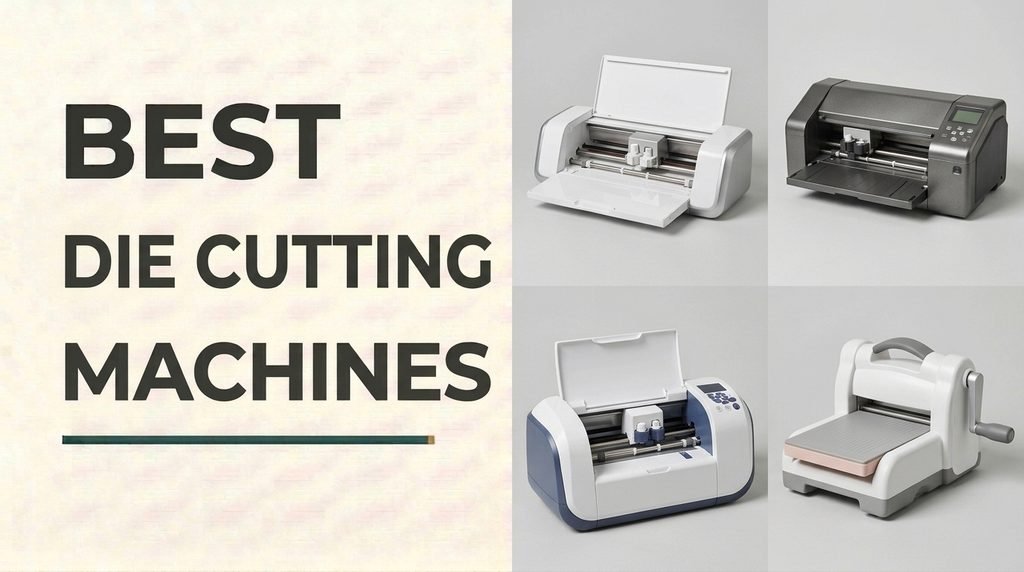
Find the right die cutting machines for 2026. We compare 10 standout options by the factors that matter in this category, such as feed throat width, roller pressure consistency, manual versus electric drive, plate sandwich thickness, benchtop footprint, material clearance, and everyday crafting value.
Whether you assemble handmade greeting cards, detailed scrapbook layouts, or fabric applique pieces, selecting the right machine dictates how cleanly your intricate dies cut. Modern desktop units balance roller leverage with manageable weight, giving papercrafters reliable pressure without requiring permanent workshop tables or exhausting hand strain during extended cutting sessions.
Our comparison spans compact traveling units with narrow throats up to wide-format nine-inch models capable of processing full letter sheets. By examining roller construction, bundled starter accessories, and platform mechanics, this guide clarifies the practical trade-offs so you can invest in a die cutter that matches your creative workflow.
We compared 10 die cutting machines using the details that actually help a buyer decide: roller feed width, mechanical drive style, internal roller construction, sandwich plate compatibility, footprint portability, accessory bundle value, and long-term durability signals. The notes focus on practical trade-offs like hand-crank effort versus motor convenience, ensuring each recommendation reflects how crafters genuinely shape paper, cardstock, felt, and mixed media at home.


Compare key features, scores, and current prices side by side. A shorter feature list means fewer details were available, not necessarily fewer capabilities.


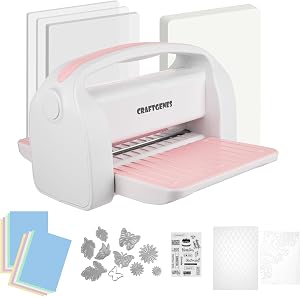


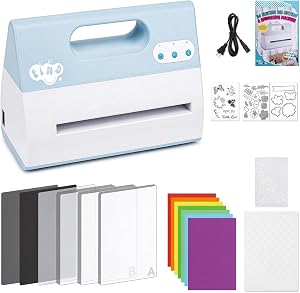


The redesigned Sizzix Big Shot represents the benchmark against which almost all standard desktop manual die cutters are evaluated. Built primarily for crafters who focus on A2 card fronts, planner accents, and modest scrapbook elements, this standalone machine delivers dependable roller leverage without complicated motor mechanisms or software setups. For artisans who already own a library of chemical-etched dies and embossing folders, this base unit upgrades workspace aesthetics while preserving familiar mechanical tolerances.
We may earn a commission when you buy through this link, at no additional cost to you.
At the heart of the machine is a solid roller assembly driven by a direct manual hand crank. The feed opening measures six inches across, which comfortably clears standard five-and-a-half-inch cards, folded invitations, and standard cardstock strips. The roller mechanism generates uniform downward force across the entire bed, preventing weak cuts along the outer edges of detailed wafer-thin dies. Because the core roller spacing is factory-calibrated for standard acrylic sandwiches, you achieve crisp cut lines on cardstock, vellum, and lightweight vinyl on the first pass.
Usability benefits significantly from thoughtful modern revisions. The updated body features a clip-on crank handle that unlatches easily, allowing crafters to stash the handle underneath the main body when sliding the machine onto a craft cart shelf. Even with its reduced storage profile, the base maintains a broad, rubber-footed footprint that grips smooth cutting mats without skidding while you crank through stubborn materials. The included multipurpose platform features clear graphical sandwich guides right on its surface, eliminating guesswork when stacking shims.
Crafting desks frequently suffer from tool sprawl, and traditional die cutters with fixed protruding handles occupy awkward, bulky space on open shelving. By implementing a clip-on crank that tucks neatly into the molded underbelly of the machine, this redesign reduces overall width during downtime. The chassis slides into standard cubby storage units without snagging on adjacent bins or requiring specialized carry bags.
The primary tradeoff of this standalone package is the complete absence of bundled cutting dies or embossing folders. Beginners will need to purchase dies, embossing folders, and cardstock separately before starting their first project. However, if your studio already possesses an abundant collection of dies and simply needs a fresh, durable, and space-conscious manual press, this workhorse configuration avoids unnecessary bundle clutter.
Not for crafters wanting an all-inclusive starter package or those needing wide nine-inch clearance for full-size scrapbook pages.
We may earn a commission when you buy through this link, at no additional cost to you.
The Sizzix Big Shot Starter Kit takes the celebrated mechanical durability of the core Big Shot platform and pairs it with an extensive creative bundle, making it the premier option for aspiring papercrafters. Instead of leaving newcomers to research compatible die styles, shims, and folder depths, this package provides everything required to create sophisticated, multilayered greeting cards right on day one. It balances approachable operation with serious production quality.
We may earn a commission when you buy through this link, at no additional cost to you.
Mechanical performance mirrors the standalone unit, offering an exact six-inch feed width powered by direct gear-driven rollers. Where this kit shines is the inclusion of 73 Thinlits dies alongside an intricate 3D embossing folder. Thinlits dies feature delicate filigree patterns and sharp nested contours that quickly reveal whether a roller applies even pressure. Driven through the Big Shot’s rigid frame, these wafer dies cleanly punch out intricate sentiments, floral stems, and geometric frames without leaving ragged paper bridges.
The supplied cardstock pack includes varied opulent finishes and dimensional textures that let crafters test deep embossing techniques immediately. Because 3D embossing folders exert substantial resistance as paper fibers stretch across raised steel profiles, the smooth mechanical leverage of the Big Shot crank is essential. Turning the handle requires minimal arm torque, and the feed rollers guide the thick sandwich smoothly without slipping or stalling midpoint.
Standard shallow embossing folders create subtle surface bumps, but the included 3D embossing folder pushes heavyweight cardstock into striking sculptural relief. Achieving these crisp dimensional textures requires extreme roller tolerances that do not bow across the center of the bed. The Big Shot maintains uniform gap pressure across its six-inch throat, ensuring your card backgrounds look professionally manufactured rather than lightly creased.
While seasoned makers with packed supply cabinets may find the bundled designs redundant, newcomers avoid the frustration of mismatched accessories. The premium price tag over the bare machine pays for itself quickly when compared against purchasing 73 standalone brand-name metal dies and specialized textured papers individually. It remains our definitive top pick for beginners and dedicated cardmakers alike.
Not for experienced crafters who already own a massive library of wafer dies and basic embossing folders.
We may earn a commission when you buy through this link, at no additional cost to you.
The Sizzix Sidekick Starter Kit rethinks desktop die cutting for papercrafters who primarily cut small sentiment banners, planner icons, mini gift tags, and delicate floral clusters. Weighing just 0.7 kilograms with a footprint measuring under eight inches long, this diminutive tool solves the hassle of hauling a heavy ten-pound machine onto your desk just to punch out a single two-inch phrase. It serves as an agile companion tool alongside your main workstation.
We may earn a commission when you buy through this link, at no additional cost to you.
Operating with a narrow 2.5-inch (6.35 cm) opening, the Sidekick is built exclusively for smaller wafer-thin metal dies such as Sizzix Thinlits, Framelits, and narrow embossing strips. Despite its miniature stature, the internal gearing produces surprisingly crisp, concentrated cutting pressure. Because the cutting path is narrow, the contact area under the rollers is small, concentrating downward force to sever intricate paper details on lightweight to medium cardstock with minimal cranking effort.
Stability is the primary engineering challenge for featherweight desktop tools, but Sizzix resolves this using an integrated mechanical vacuum seal base. Flipping the front lever lowers a high-grip rubber diaphragm, locking the machine firmly onto glass mats, laminate desks, or smooth melamine craft tables. Once suctioned down, the Sidekick stays anchored while you spin the crank with one hand, letting you feed multiple sentiment tags in rapid succession without chasing the machine across your desk.
Because the Sidekick weighs under two pounds, cranking through dense cardstock would easily tip the machine if not properly anchored. The mechanical vacuum base creates an airtight pocket between the silicone pad and your workspace. For maximum holding power, wipe both your desk surface and the bottom rubber seal with a damp cloth before engaging the cam lever.
The obvious operational boundary is the rigid 2.5-inch throat width, which prohibits cutting A2 card panels, standard greeting card blanks, or larger scrapbook backgrounds. Furthermore, the suction mechanism requires a clean, non-porous surface to hold vacuum; unsealed wood and textured desks will allow air leakage. For crafters who routinely assemble intricate greeting cards and want rapid access to sentiment cuts without clutter, the Sidekick provides remarkable specialized utility.
Not for crafters building full card bases, large scrapbook layouts, or those working on textured timber desks.
We may earn a commission when you buy through this link, at no additional cost to you.
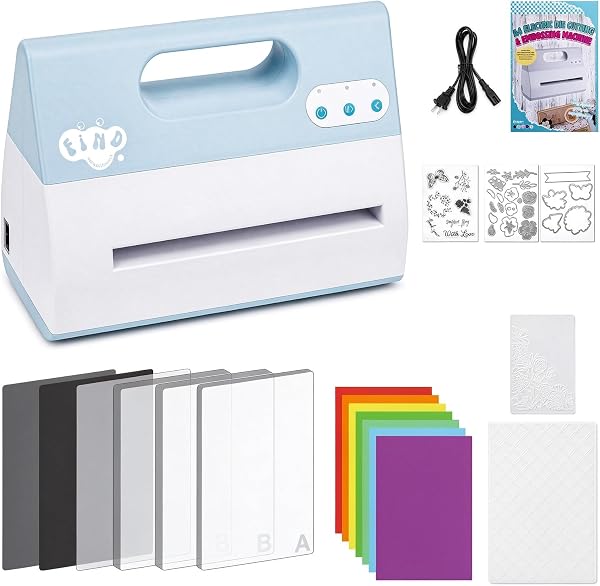
For papercrafters suffering from joint fatigue, arthritis, or repetitive strain injuries, turning a manual crank through hundreds of wedding invitations or holiday card layers is physically daunting. The Findscrapblooms Automatic A4 Machine addresses this barrier directly by replacing human muscle with an electric roller motor. With a broad nine-inch throat, it accommodates full-sized cardstock sheets, making it ideal for high-volume makers and serious paper artists.
We may earn a commission when you buy through this link, at no additional cost to you.
The automated roller feed draws plate sandwiches through the machine at a steady, electronically governed velocity. This smooth, continuous movement eliminates the jerky pauses and pressure hesitations often introduced when shifting hand grips on a manual lever. By maintaining consistent mechanical speed, the internal rollers deliver uniform cuts through complex, filigree metal dies, crepe paper, lightweight fabrics, and multi-layer cardstock without distorting delicate design elements.
Everyday convenience is amplified by the nine-inch feed width, which accepts full letter and A4 paper sheets oriented either vertically or horizontally. Crafters can gang up several small dies across a single cutting plate, punching out dozens of elements in one motorized pass rather than feeding plates individually. A molded top handle helps you lift and store the unit when bench space is needed for assembling cards, though at electrical motor weights, it remains happiest stationed near a power outlet.
Hand cranking creates localized repetitive stress across wrist, elbow, and shoulder joints, particularly when pushing thick embossing sandwiches through rigid rollers. The motorized feed operates via simple push-button controls, allowing makers with mobility limitations to guide plates gently into the throat without exerting physical force. This makes production batches of event stationery or classroom materials far more accessible.
Prospective buyers should note that electric machines introduce mechanical motor noise and rely strictly on electrical access, precluding mobile crafting at outdoor markets or unplugged weekend retreats. Additionally, because the motor applies continuous torque, crafters must carefully inspect plate sandwich thickness before engaging the feed to prevent accidental roller jams. For crafters seeking ergonomic relief and high throughput, this automatic machine delivers tangible production speed.
Not for off-grid travel crafting or users who prefer the tactile resistance feedback of a manual hand crank.
We may earn a commission when you buy through this link, at no additional cost to you.
Crafters who attend weekend scrapbooking crops or share dining room tables need equipment that packs down neatly without leaving loose parts scattered about. This Compact 6-Inch Manual Machine integrates dedicated internal organization directly into its chassis. By building a concealed storage bay into the platform base and utilizing a foldable crank handle, it delivers practical, mobile crafting utility at an approachable entry-level cost.
We may earn a commission when you buy through this link, at no additional cost to you.
Functionally, the unit provides a standard six-inch cutting throat capable of processing common A2 card designs, photo framing borders, and standard embossing folders. The manual gearing translates steady hand rotations into reliable roller force suitable for cutting cardstock, decorative vellum, and metallic foils. Included in the package is a basic starter collection of metal dies, a texture folder, sample cardstock, and clear stamps, enabling immediate project experimentation right out of the shipping carton.
The defining mechanical touch is the fold-down crank arm. Rather than detaching the handle or allowing a rigid arm to stick out and catch on fabric bags during transit, the arm folds flush against the machine body. Lifting the upper platform cover exposes a shallow cavity tailored for holding craft tweezers, pick tools, washi tape rolls, and small die sets. Having your alignment tools enclosed within the machine keeps your active table space tidy.
Small metal dies and fine-tipped weeding tools are notoriously easy to misplace beneath paper scraps during intense crafting sessions. The built-in storage compartment beneath the platform lid keeps essential tweezers, die picks, and frequent cutting shapes organized inside the machine housing. This prevents small, sharp accessories from rolling off work tables or getting lost in transit.
While the integrated storage and folding handle are convenient, the lighter overall chassis means users must place one hand firmly on the machine’s top surface while turning the crank to prevent minor lifting on heavier passes. For cardmakers wanting a self-contained, grab-and-go manual press for social craft meetups, this smart design provides solid utility without demanding major desk real estate.
Not for heavy industrial mixed-media cutting or crafters requiring an immovable, heavyweight cast-metal desktop anchor.
We may earn a commission when you buy through this link, at no additional cost to you.
The 6-Inch Manual Die Cutting Machine Kit in its Blue Gift Box Edition is tailored for crafters seeking an accessible, visually cheerful entryway into cardmaking and papercrafting. Designed primarily as an all-in-one introductory package, it removes the intimidation factor often associated with specialized hobby equipment. Its cheerful exterior and bundled accessories make it a thoughtful gift for budding hobbyists, teenagers, or casual holiday crafters.
We may earn a commission when you buy through this link, at no additional cost to you.
The machine utilizes a time-tested manual roller mechanism matched to a six-inch feed width. This dimension accommodates standard greeting card panels, envelope liners, and decorative journal tags. The roller assembly provides solid compression across conventional cardstock weights, delivering clean releases when paired with thin metal craft dies. Turning the hand crank feels balanced, generating steady linear momentum as the plate sandwich passes beneath the main internal roller.
In everyday use, the unit behaves as a straightforward desktop press. The package includes the essential cutting and embossing pads needed to build standard stacks, allowing users to start experimenting immediately. The manual drive requires no cords, software updates, or electrical outlets, meaning you can comfortably craft on a kitchen island, an outdoor patio table, or anywhere inspiration strikes.
Many craft machines arrive in austere industrial brown shipping boxes packed with polystyrene blocks. This gift edition is packaged in an attractive, organized presentation box that makes unboxing an exciting creative event. It serves as an inviting present for young makers and new hobbyists exploring decorative paper arts for the first time.
Because this bundle is targeted at casual crafters and gift recipients, the included manual provides only basic sandwich diagrams; newcomers may need to spend a little time learning how cardstock shims adjust pressure for intricate wafer dies. Nevertheless, as an affordable, attractive entry point into embossing and shape cutting, this blue edition offers reliable fundamental performance.
Not for advanced crafters seeking motorized feed systems or large nine-inch format paper capacity.
We may earn a commission when you buy through this link, at no additional cost to you.
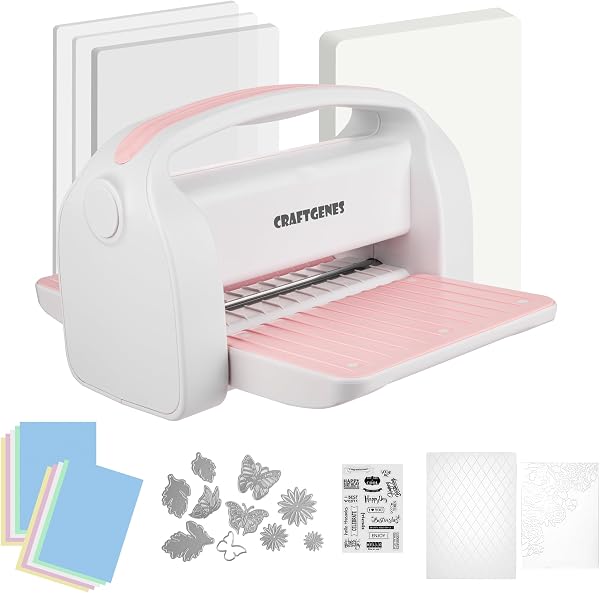
A recurring dilemma for scrapbookers is balancing the desire for wide nine-inch cutting capacity against the reality of limited desk space. The Foldable 9-Inch Pink Machine solves this friction with hinged side beds that fold upward when crafting concludes. This design provides the freedom to process large-format paper projects without permanently sacrificing half your worktable to a sprawling mechanical tool.
We may earn a commission when you buy through this link, at no additional cost to you.
Internally, the machine utilizes heavy-duty rollers seated within a resilient ABS housing. The nine-inch feed path accepts full A4 and standard US letter cardstock, allowing you to emboss full-page scrapbook backgrounds, cut multi-layer gift boxes, or run expansive banner dies in a single motion. Manual hand-crank operation gives the user real-time tactile feedback, allowing you to feel plate resistance and ensure you never force an improperly calibrated sandwich through the roller assembly.
Operation is simplified by explicitly labeled plate thicknesses included in the instructions. Crafters use a tiered combination of 13mm base platforms, 3mm cutting plates, and 2mm shims to dial in exact pressure for either wafer dies or deep embossing folders. When work is finished, both feeding wings fold upward toward the central chassis, locking into an upright vertical profile that tucks neatly into tight storage cubbies.
Fixed-platform nine-inch machines can dominate up to twenty inches of horizontal tabletop width. The dual-hinged platform wings on this model fold vertically against the body, cutting its benchtop footprint in half during storage. When deployed, the platforms form a continuous, stable feed bed that guides long nine-inch plate stacks cleanly through the rollers.
The trade-off of any folding bed design lies in the structural hinges; when feeding very dense chipboard sandwiches, crafters must keep the machine positioned entirely on a flat, solid table so the extended wings do not flex downward under cantilevered weight. Handled with care, this pink manual press strikes an exceptional balance between wide-format cutting liberty and everyday storage practicality.
Not for crafters with unstable, uneven work surfaces or those who prefer a narrow, ultra-lightweight travel unit.
We may earn a commission when you buy through this link, at no additional cost to you.
The Joelver Maker 9-Inch Starter Kit is engineered specifically for scrapbooking enthusiasts who need wide-format capabilities and an immediate array of versatile dies. Large-format scrapbooking regularly calls for ten-inch decorative borders, full-page embossed textures, and complex multi-window photo mats. This manual press combines wide nine-inch clearance with a durable steel drive system to deliver dependable performance on expansive paper projects.
We may earn a commission when you buy through this link, at no additional cost to you.
Underneath its shell, precision-machined steel rollers apply uniform downward force across the entire nine-inch bed. This steel foundation is vital on wide machines, as cheaper plastic or hollow alloy rollers can bow slightly in the center, causing missed cuts in the middle of broad die sets. Turning the crank feels robust and positive, easily driving plate stacks through the rollers without slipping or chattering against internal gear teeth.
The included starter collection features over 20 steel dies alongside matching embossing folders and cutting pads. This allows crafters to dive directly into layered album embellishments, holiday card sets, and dimensional floral pieces without supplementary purchases. Foldable side wings collapse against the body when you wrap up your session, keeping the footprint manageable on standard utility shelves.
As roller width expands from six to nine inches, the risk of center-roller deflection increases exponentially under high pressure. This unit counteracts structural bending by employing solid steel roller axles that maintain flat, parallel contact across the full nine-inch span. This ensures that dies placed in the middle of your cutting pad cut just as cleanly as those along the edges.
Crafters should bear in mind that manually cranking a full nine-inch wide plate sandwich packed with intricate steel dies requires more physical effort than rolling a small two-inch tag. The mechanical leverage is well-engineered, but pushing broad sandwiches through high-pressure rollers naturally demands steady wrist strength. For scrapbookers seeking broad paper clearance backed by rugged steel gearing, this starter kit represents strong overall value.
Not for crafters seeking zero-effort motorized feeding or those with chronic wrist weakness.
We may earn a commission when you buy through this link, at no additional cost to you.
The A4 Electric 9-Inch 110V Die Cutting Machine merges broad format capabilities with motorized roller automation, creating a streamlined workstation for avid cardmakers and stationery creators. By removing the manual hand crank, this electric unit allows crafters to focus entirely on precision die placement and paper alignment, confident that the motorized feed will draw the plate assembly smoothly beneath the rollers.
We may earn a commission when you buy through this link, at no additional cost to you.
Calibrated specifically for cardstock ranging from 80 to 250 GSM, this electric press generates consistent, controlled roller speed. Included in the comprehensive starter bundle is a 0.7mm flexible magnetic sheet, which provides a major practical benefit: it prevents delicate steel dies from wandering or shifting when you lay down the top acrylic plate. Wafer dies stay precisely anchored over stamped images or patterned paper for flawless registration.
The starter kit is exceptionally rich, supplying two B cutting plates, one C plate, a thin plastic shim, a rubber embossing mat, two embossing folders, multiple die sets including a full alphabet, and sample cardstock sheets. This broad array allows users to switch seamlessly between cutting intricate alphabet titles and creating deep dimensional embossing on card blanks. The unit’s modern casing looks tidy and professional on any permanent craft table.
One of the most frequent frustrations in die cutting is having tiny sentiment dies slide out of position when placing the heavy top cutting plate down. The included 0.7mm magnetic sheet holds steel dies securely against your paper stock during transport into the feed mouth. This magnetic grip guarantees accurate margins around stamped designs without needing low-tack masking tape.
A critical operational consideration is sandwich depth: the motor is designed for working plate stacks approximately 8 to 9 mm thick. Because electric motors lack the instant sensory feedback of a human hand on a crank, forcing an oversized sandwich will cause the motor to stall and risk internal gear damage. Adhering strictly to the recommended plate configurations ensures reliable, hands-free cutting across hundreds of creative projects.
Not for crafters cutting dense laminated leather or those who frequently experiment with non-standard, unmeasured plate stacks.
We may earn a commission when you buy through this link, at no additional cost to you.
The VEVOR Manual Die Cutting and Embossing Machine is engineered for crafters whose creative ambitions extend beyond lightweight cardstock into dense mixed-media. Built with reinforced internal mechanical gearing, a heavy-duty steel roller assembly, and a robust metal-cored crank handle, this nine-inch manual workhorse is designed to withstand intense compressive pressures without warping, cracking, or slipping out of alignment.
We may earn a commission when you buy through this link, at no additional cost to you.
Mechanical integrity is the defining virtue of this unit. While many craft presses rely heavily on molded plastic gears and thin alloy axles, VEVOR integrates solid steel rollers designed to maintain uniform contact force across the complete nine-inch bed. This rigid structural framework allows crafters to cut not only standard cardstock and paper, but also tough felt, craft leather, thin craft foils, and heavy chipboard when paired with appropriate steel-rule or high-grade wafer dies.
Usability remains intuitive despite its industrial strength. The nine-inch feed opening provides full A4 compatibility, enabling crafters to emboss broad background textures, cut expansive gift boxes, or produce batches of DIY leather earrings and fabric appliques. The machine ships with a comprehensive starter kit including two cutting pads, an embossing plate, an A6 texture folder, six steel cutting dies, and sample cardstock sheets, allowing immediate proof-of-concept testing.
Cutting dense fibrous materials like felt or genuine leather requires substantial roller force without chassis deflection. The reinforced steel rollers inside this machine maintain precise, unyielding pressure that severs thick fibers cleanly instead of creasing them. This capability opens creative doors for home sewists, jewelry makers, and mixed-media artists working outside paper crafting.
Given its reinforced steel construction, this machine carries noticeable heft. It is not an ultra-light travel companion like smaller mini cutters, and it demands a stable, dedicated workspace. However, for makers who demand unyielding roller rigidity, broad paper clearance, and the durability to cut diverse craft materials, the VEVOR manual machine represents one of the most rugged, capable platforms available.
Not for crafters seeking a lightweight, portable crop companion or those who only punch out occasional small paper tags.
We may earn a commission when you buy through this link, at no additional cost to you.
Selecting the best die cutting machine requires understanding how mechanical construction, feed clearance, and drive styles intersect with your specific crafting goals. This guide breaks down the core technical and practical factors that separate an agile desktop tool from an unyielding mixed-media press.
The throat width of a die cutting machine establishes the absolute physical boundary of every project you can create. Desktop machines generally fall into three standard size classes: mini cutters featuring openings around 2.5 inches, standard workhorses with six-inch openings, and wide-format models offering full nine-inch (A4 or US letter) clearance. Choosing the right width depends entirely on whether your work centers on small greeting cards, large scrapbook layouts, or mixed-media home decor.
Compact 2.5-inch units like the Sizzix Sidekick excel at punching out tiny sentiment strips, floral centers, and planner icons with rapid turnaround. Standard six-inch models accommodate roughly eighty percent of common commercial cardmaking dies, folded A2 envelopes, and popular embossing folders. However, if you routinely create 3D gift boxes, full-page 8.5×11-inch embossed scrapbook backgrounds, or multi-panel album pockets, a nine-inch machine is virtually indispensable, as it allows you to pass whole sheets through the rollers without trimming.
Select a six-inch machine if your primary focus is cardmaking and desk space is at a premium, but step up to a nine-inch model if you produce scrapbooks, packaging, or high-volume batches requiring multiple dies to run simultaneously.
The debate between manual hand-crank machines and motorized electric units centers on tactile control versus physical ergonomics. Manual die cutters utilize a direct gear-driven handle that you rotate by hand. This mechanical linkage provides immediate tactile feedback: your fingers can instantly feel whether a plate sandwich is passing smoothly or encountering dangerous over-compression, allowing you to stop and back out before damaging internal gears.
Electric die cutting machines replace the crank arm with an internal electric motor that draws plate sandwiches through at a steady, automated velocity. This eliminates wrist and shoulder strain, making electric models a transformative upgrade for crafters with arthritis, tendonitis, or physical fatigue. Electric motors also ensure perfectly even linear momentum, which prevents pressure hesitation lines across wide embossing folders. However, motorized units require proximity to wall outlets, generate mechanical hum, and can suffer motor stalls if fed an improperly measured sandwich.
Opt for a manual hand-crank machine if you value tactile feedback, portability, and mechanical simplicity; choose an electric model if joint comfort and high-volume, hands-free production are your main priorities.
A die cutting machine is fundamentally a precision rolling press, and its longevity depends entirely on how well its internal rollers resist deflection. When a cutting sandwich containing dense steel dies passes between the two rollers, outward compressive force pushes against the center of the roller axles. In poorly engineered machines with hollow alloy cores or flexible plastic housings, the rollers bow slightly in the middle, leaving intricate dies uncut across their center sections.
Heavy-duty units incorporate solid steel roller bars supported by reinforced metal framework and precision internal gear teeth. This rigid construction guarantees that the downward gap remains perfectly uniform from the far left edge of the bed to the far right. Steel-core machines can handle multiple dense passes through cardstock, craft leather, and dense felt without loosening factory tolerances or developing mechanical gear chatter over years of frequent use.
Prioritize machines built with solid steel internal rollers and metal drive components if you plan to cut thick cardstock, chipboard, or mixed-media materials on a regular basis.
Every die cutting and embossing technique requires a specialized ‘sandwich’—a calibrated stack of plastic base platforms, cutting pads, shims, paper, and metal dies. Standard plate stacks range from approximately 8 to 15 millimeters in total depth depending on whether you are running an ultra-thin etched wafer die, a thick steel-rule die, or a deeply sculpted 3D embossing folder. Understanding plate combinations is critical to achieving clean cuts without breaking acrylic pads.
A frequent pitfall for beginners is forcing an over-thick sandwich into the rollers. High-quality machines provide multi-tier hinged platforms or clearly labeled base plates that illustrate exact recipes for various die categories. When cutting delicate filigree dies, micro-thin cardstock shims or metal adapter plates are often placed underneath the cutting pad to add micro-fractions of pressure, bridging the tiny gaps where intricate paper shapes might otherwise fail to release.
Always verify that your machine includes versatile base platforms or clear thickness diagrams, and never force a plate sandwich into the roller mouth if turning the crank requires extreme, unnatural effort.
Die cutting machines are inherently substantial tools that take up valuable tabletop space. Standard fixed-bed models require a permanent bench footprint of twelve to eighteen inches in length, plus clearance on either side for plate entry and exit. For makers who craft on multipurpose dining tables or in compact studio apartments, an unwieldy machine often ends up packed away in a closet where it rarely gets used.
To combat workspace crowding, modern manufacturers employ clever space-saving engineering. Models like the Sizzix Big Shot feature clip-on handles that detach and nestle underneath the machine base, while units like the Foldable 9-Inch Pink Machine incorporate dual-hinged platform wings that fold upward into a compact vertical wedge. Smaller units like the Sizzix Sidekick rely on high-grip vacuum suction bases that anchor securely to smooth desks, delivering stability without requiring heavy ballast weight.
Measure your storage shelves and active desk surface before purchasing; if your workstation is shared or multipurpose, prioritize models with folding platform wings or detachable handle mechanisms.
When shopping for a die cutter, you will frequently encounter two purchasing paths: bare ‘machine-only’ listings and all-inclusive ‘starter kit’ bundles. A standalone machine includes only the essential roller press, base platform, and a standard pair of acrylic cutting pads. Starter kits bundle the machine with dozens of metal dies, textured cardstock packs, stamps, and 3D embossing folders in a single box.
For absolute beginners, starter kits represent outstanding financial and practical value. Purchasing brand-name wafer dies, alphabet sets, and specialized texture folders individually can easily cost more than the machine itself. An inclusive bundle lets you test various papercrafting techniques immediately and discover your stylistic preferences. Conversely, experienced crafters who already possess drawers full of compatible thin metal dies should opt for standalone units to avoid paying for redundant accessories.
Choose an all-inclusive starter kit if you are new to the craft and want immediate creative variety; purchase a standalone machine if you already own an established collection of dies and folders.
To maximize the lifespan of your cutting pads and achieve consistently clean cuts, develop a disciplined plate rotation routine. As metal dies press into clear acrylic cutting pads, they etch fine lines into the plastic. Over time, concentrated cutting on one side will cause the plate to bow or warp, leading to uneven roller contact. Prevent this by flipping your cutting pad upside down and rotating it end-to-end after every few passes, ensuring wear is evenly distributed across both surfaces.
Never force a plate sandwich through the roller assembly if you encounter extreme resistance. A properly calibrated sandwich should feed smoothly with steady, moderate hand pressure on the crank. If the stack binds or jams at the roller entrance, stop immediately, reverse the handle, and remove the sandwich. Forcing an overly thick plate stack can permanently crack acrylic pads, warp roller axles, or strip internal gear teeth. If a die fails to cut cleanly through paper, add a single thin sheet of cardstock as a shim rather than stepping up to a thicker rigid plate.
Keep your machine clean and free from accumulated paper chads, lint, and adhesive residue. Small fragments of cardstock can work their way into internal roller housings or cling to cutting pads, creating localized high spots that distort cutting pressure. Periodically wipe down acrylic plates and roller surfaces with a dry microfiber cloth, and use a soft brush to clear paper debris from hinge joints and platform beds. When storing your machine, keep it covered or folded in a dry environment to protect internal steel gears from dust and humidity.
A manual die cutting machine uses heavy metal rollers to press pre-formed steel dies through paper, cardstock, or fabric, requiring no software, computers, or internet connection. Digital plotters use computer-guided blades to slice custom digital vector shapes out of materials, offering limitless custom designs but requiring software familiarity and mat maintenance. Manual machines excel at instant setup, deep tactile embossing, and cutting heavy materials that digital blades struggle to slice.
Acrylic cutting plates warp because steel dies displace microscopic amounts of plastic every time they press into the plate surface. When you cut repeatedly on one side, that surface expands faster than the opposing side, causing the plate to bow upward into a curve. You can minimize warping by routinely flipping your pads over and rotating them end-to-end between cuts to balance surface tension.
Yes, a six-inch throat width is perfectly matched for standard greeting card projects, including popular A2 (4.25 x 5.5 inches), A6, and A7 card formats. It comfortably clears standard card fronts, background panels, envelope flaps, and decorative sentiment tags. Only crafters creating oversized gatefold cards or full 12×12-inch scrapbook layouts require wider nine-inch machines.
A correctly sized sandwich should engage the rollers with slight resistance and feed smoothly with moderate, steady effort. If you have to lean your body weight onto the crank handle or if the plate stack wedges rigidly at the roller mouth, the sandwich is too thick. Immediately reverse the crank, disassemble the stack, and remove a shim or substitute a thinner base plate to prevent gear damage.
Yes, standard thin metal wafer dies and embossing folders are largely universal across major desktop manual machines. As long as the die or folder fits within the physical width of your machine's throat, you can cut or emboss it by adjusting your plate sandwich. Most base platforms include printed conversion charts showing the exact plate combination needed for different die thicknesses.
Depending on roller rigidity and die construction, manual machines can cut vellum, metallic foils, adhesive vinyl, craft foam, felt, cotton fabric, burlap, and lightweight chipboard. Wafer-thin chemical-etched dies cut paper, cardstock, and thin foils cleanly, while heavy-duty steel-rule dies can slice through dense leather, denim, and multiple layers of fabric when passed through rigid steel rollers.
An electric machine is well worth the investment if you suffer from arthritis, carpal tunnel syndrome, or hand fatigue, or if you regularly produce high-volume projects like wedding invitations or classroom materials. The motorized feed eliminates physical cranking and maintains steady speed across plates. However, if you craft occasionally or prioritize portable, unplugged operation, a manual crank machine remains more cost-effective and dependable.
For highly intricate dies with dense lace details, add a thin paper or metal shim underneath your cutting plate to add micro-pressure, or pass the sandwich through the rollers, turn the die 90 degrees, and run it through a second time. Rolling the die at a slight angle rather than straight against the roller edge also distributes cutting force more effectively across intricate design bridges.
Scratches, cut marks, and cloudiness on your acrylic cutting pads are completely normal and indicate that the tool is doing its job. You do not need to replace plates simply because they look etched or scuffed. Only replace your cutting pads when they become severely warped, deeply grooved, or crack through their structural core.
For most papercrafters and cardmaking enthusiasts, the Sizzix Big Shot Starter Kit stands out as the most balanced, reliable overall investment. Its proven roller geometry, robust internal frame, and space-conscious clip-on handle deliver dependable cutting pressure across all popular wafer dies. Paired with 73 starter dies and a premium 3D embossing folder, it provides everything necessary for immediate creative success without mechanical frustration.
If your creative focus demands wide-format freedom or motorized speed, compelling alternatives exist across this lineup. High-volume crafters and those seeking ergonomic relief will appreciate the effortless push-button feed of the Findscrapblooms Automatic A4 Machine or the A4 Electric 9-Inch 110V unit. Meanwhile, scrapbookers requiring full letter clearance and mixed-media toughness will find heavy-duty reliability in the VEVOR 9-Inch Manual Machine or space-saving efficiency in the Foldable 9-Inch Pink Machine.
Ultimately, the best die cutting machine is the one that aligns with your available workspace, physical comfort, and primary project scale. If you specialize in small planner tags or travel frequently, a compact mini press like the Sizzix Sidekick is an agile companion. By matching your feed width needs and drive preferences to the practical specifications evaluated in this guide, you can invest confidently in a machine that supports your craft for years to come.