VEVOR 3500W 60J
9.0Editor score3500-watt industrial motor
60-joule impact energy force
Heavy-duty aluminum housing
Double-spring shock absorption
Find the right demolition hammers for 2026. We compare 10 standout options by build quality, useful features, owner feedback, value, and everyday trade-offs.
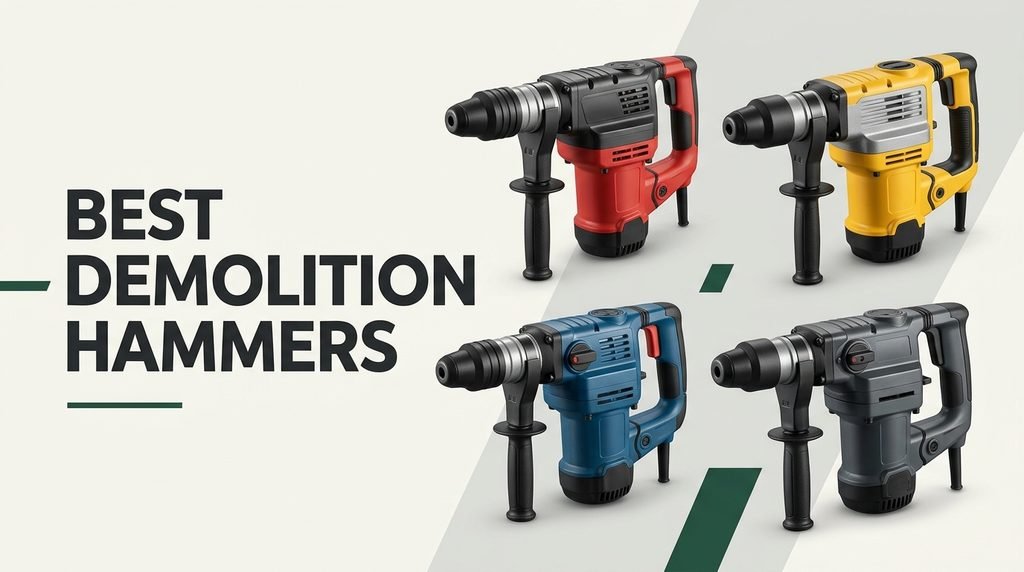
Find the right demolition hammers for 2026. We compare 10 standout options by the factors that matter most in this category, including impact energy, motor power, weight, bit compatibility, vibration control, build quality, and real-world project suitability.
Demolition hammers vary dramatically in size and capability, from compact 12-pound chipping tools to 35-pound concrete breakers built for foundation removal. Matching the tool to your material and project scale prevents both underperformance and unnecessary fatigue.
This guide breaks down the specifications and trade-offs that separate a good purchase from a frustrating one. Whether you are tackling a weekend patio removal or a full commercial slab teardown, the details below will help you choose with confidence.
We compared 10 demolition hammers using the specifications that directly affect buyer decisions: impact energy, motor amperage, weight, bit system compatibility, vibration reduction, cooling design, included accessories, and overall value. The notes focus on practical trade-offs so each pick connects to how people actually break concrete, remove tile, and handle trenching or chipping work on real job sites.


Compare key features, scores, and current prices side by side. A shorter feature list means fewer details were available, not necessarily fewer capabilities.




The BOSCH 11321EVS earns the highest rating in this guide thanks to its remarkable power-to-weight ratio, delivering 6.1 foot-pounds of impact energy from a tool that weighs just 13.7 pounds. That combination means you get meaningful breaking force without the physical toll of hauling around a 30-pound breaker all day.
We may earn a commission when you buy through this link, at no additional cost to you.
BOSCH’s vibration control system addresses both the hammer mechanism and the grip area, significantly reducing the hand and arm fatigue that limits productive work time with heavier tools. The constant response circuitry maintains consistent speed under load, provides soft-start control, and includes overload protection for reliable operation across varied materials.
The SDS-max bit system enables tool-free changes with automatic locking, and the Vario-Lock positioning feature lets you optimize the chisel angle for the best chiseling location. A 360-degree auxiliary handle and padded rear grip add further comfort, while the Auto-Max variable-speed dial ensures maximum power every time you plug in.
A demolition hammer that delivers strong impact from a lighter body lets you work in more positions and for longer stretches before fatigue sets in. The BOSCH 11321EVS achieves this balance better than any other model in this lineup, making it particularly valuable for jobs that involve both floor and wall demolition in a single session.
This demolition hammer is ideal for professionals and serious DIYers who value comfort and control alongside solid breaking performance. It excels at chipping, trenching, and medium-duty concrete removal where its lightweight design lets you work longer. For the heaviest slab demolition, a larger hammer with higher impact energy may still be necessary.
The heaviest foundation and thick reinforced concrete demolition where maximum joule output is the primary requirement.
We may earn a commission when you buy through this link, at no additional cost to you.
The VEVOR 3500W sits at the top of this lineup in terms of raw impact energy, delivering 60 joules per blow through a 3500-watt industrial motor. That level of force places it squarely in the category of tools meant for thick concrete slabs, foundation sections, and heavy masonry that smaller hammers simply cannot crack efficiently.
We may earn a commission when you buy through this link, at no additional cost to you.
The heavy-duty aluminum housing provides strong corrosion resistance and helps dissipate heat during extended sessions. An internal cooling system keeps motor temperatures manageable even after prolonged use, which matters when you are working through a large driveway or commercial floor that requires hours of continuous breaking.
A 360-degree rotary handle and double-spring shock absorption system help offset the significant force this tool generates. The locking button lets you maintain operation without holding the trigger constantly, reducing hand fatigue during long trenching or slab removal jobs. Two chisel bits, a flat and a point, come in the box along with a carrying suitcase.
One practical advantage of this VEVOR model is its dedicated motor cooling design. When a demolition hammer runs hot, internal components wear faster and the tool may shut down to protect itself. The active cooling in this unit helps maintain consistent performance over longer stretches, which is especially valuable on full-day demolition jobs where downtime costs money.
This hammer makes the most sense for contractors or serious DIYers who regularly face thick reinforced concrete and need maximum breaking force. If your projects are limited to thin tile or light block work, the extra power and weight will be more than you need, and a lighter model will serve you better.
Light-duty chipping or overhead work where a lighter hammer would be far easier to control.
We may earn a commission when you buy through this link, at no additional cost to you.
The XtremepowerUS 2200W occupies a practical middle ground between compact chipping hammers and full-size concrete breakers. Its 2200-watt motor and 1800 blows-per-minute impact rate give it enough force to handle concrete floors, pavement sections, and block walls without stepping up to the heaviest tools in this guide.
We may earn a commission when you buy through this link, at no additional cost to you.
The heavy-duty metal construction provides durability that holds up well on active job sites. The 360-degree adjustable front handle lets you reposition your grip for horizontal floor work, vertical wall chipping, and angled trenching without losing control. That flexibility matters when a single project involves multiple surfaces and orientations.
XtremepowerUS includes a useful accessory bundle with two 16-inch heat-treated alloy steel chisels, protective gloves, goggles, and hex wrenches. Having safety gear in the box is a practical touch for buyers who may not already own demolition-rated personal protective equipment.
The included gloves and goggles may seem like small additions, but they address a real gap for first-time demolition hammer buyers. Flying concrete fragments and dust are genuine hazards, and having proper protection ready to go means you can start working safely without an extra trip to the hardware store.
This model is a strong fit for homeowners tackling garage floor removal, patio demolition, or plumbing trench work. It delivers reliable power at a moderate price point, though buyers who need precise speed control for delicate tile work should look at models with variable-speed dials.
Precision tile removal or delicate chiseling where variable speed and lighter weight are more important than raw power.
We may earn a commission when you buy through this link, at no additional cost to you.
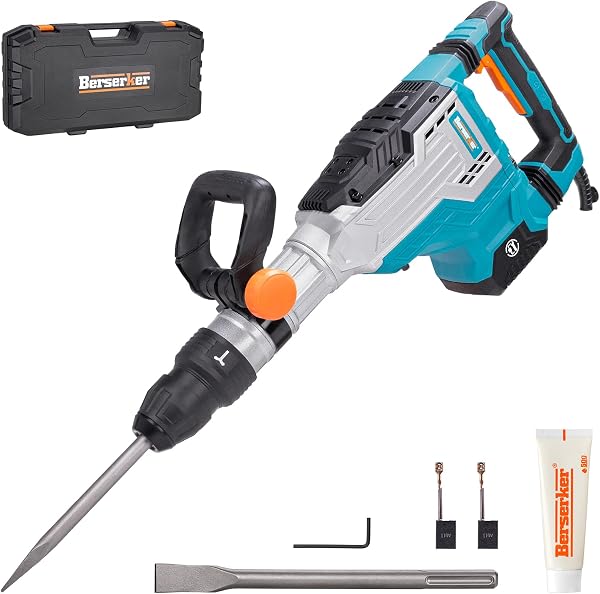
At just 12 pounds, the Berserker 45HM is the lightest demolition hammer in this guide, and that weight advantage translates directly into less fatigue during overhead and vertical chiseling. When you are removing ceiling plaster, chipping wall tile, or working at chest height for extended periods, every pound matters significantly.
We may earn a commission when you buy through this link, at no additional cost to you.
Despite its compact size, the 1300-watt motor delivers 4100 blows per minute and 15 joules of impact energy, which is sufficient for chipping stucco, breaking thin concrete layers, and removing tile and block. The SDS-Max bit system allows tool-free bit swaps with automatic locking, so transitions between a flat chisel and a point chisel take seconds.
The triple vibration control system combines a longer air cushion in the hammer mechanism, a spring-loaded rear handle, and upgraded anti-vibration technology in the grip area. This layered approach noticeably reduces the buzzing sensation that causes hand numbness during long sessions, making the 45HM more comfortable than many heavier competitors.
The 12-position vario-lock feature lets you rotate and lock the chisel at different angles without changing your grip or body position. This is particularly useful when chiseling around pipes, electrical boxes, or corners where a fixed chisel angle would force you into awkward postures that accelerate fatigue.
This is an excellent choice for electricians, plumbers, and remodelers who need a nimble chipping tool for wall and ceiling work rather than a heavy slab breaker. If your primary task involves breaking thick reinforced concrete floors, you will want a model with higher impact energy.
Heavy slab demolition or foundation removal where higher joule ratings are essential for productive progress.
We may earn a commission when you buy through this link, at no additional cost to you.
The Berserker 55HD shares the same 1300-watt motor platform as the lighter 45HM but delivers a substantial jump to 25 joules of impact energy. That extra force makes it far more capable on medium-duty concrete breaking, block wall removal, and stucco demolition while still remaining manageable at roughly 16 pounds.
We may earn a commission when you buy through this link, at no additional cost to you.
A standout feature is the anti-scald front shell, which shields your hands from heat buildup near the chuck during prolonged operation. This is a thoughtful safety addition that becomes especially noticeable on warm days or during continuous breaking sessions where the tool housing can become uncomfortably hot.
The D-shaped handle rotates 360 degrees on the main axis and 180 degrees on the secondary axis, giving you a wide range of grip positions for floor, wall, and angled work. Three SDS-Max chisels come in the package, including a scaling chisel, flat chisel, and point chisel, which covers most common demolition tasks right out of the box.
During extended demolition work, friction and motor heat can raise the temperature of the front housing significantly. The anti-scald shell on the 55HD adds a layer of insulation between the hot internal components and your forward hand, reducing the risk of discomfort or minor burns during long sessions.
Buyers who found the 45HM slightly underpowered for their concrete work but do not want to jump to a 30-pound breaker will find the 55HD a well-balanced middle option. It handles medium-thickness slabs and block walls effectively without the physical toll of a full-size demolition hammer.
Users who need a drilling function alongside demolition, since this model operates in hammer-only mode.
We may earn a commission when you buy through this link, at no additional cost to you.
The Berserker 65F is built for serious concrete demolition, delivering 55 joules of impact energy through a 1700-watt, 14-amp motor and a large-diameter cylinder. That force level puts it in the same performance tier as much more expensive professional breakers, making it a compelling option for foundation removal, thick slab breaking, and heavy trenching.
We may earn a commission when you buy through this link, at no additional cost to you.
The 1-3/16-inch hex shank bit system provides a secure, tool-free connection with automatic locking and dust protection. It is important to note that this model accepts only 1-3/16-inch hex bits, not the more common 5/8-inch or 1-1/8-inch sizes, so verify your existing bit inventory before purchasing.
A flexible two-handed design with a 360-degree adjustable handle helps you maintain a stable working posture during horizontal floor breaking. The upgraded anti-vibration system and longer air cushion in the hammer mechanism reduce the transmitted shock that causes arm fatigue over a full workday.
Before ordering, confirm that you have or plan to purchase 1-3/16-inch (30mm) hex shank bits. This size is less common than 5/8-inch or 1-1/8-inch hex shanks, and using the wrong bit size will simply not fit the chuck. Checking compatibility upfront avoids a frustrating return.
This hammer is best suited for contractors and advanced DIYers who regularly break thick concrete and need high impact energy without paying premium brand prices. The weight and bit specificity make it less practical for light chipping or users who already own a large collection of SDS-Max accessories.
Users who already own a large SDS-Max or 5/8-inch hex bit collection and do not want to buy new accessories.
We may earn a commission when you buy through this link, at no additional cost to you.
At the lowest price point in this guide, the VEVOR 1400W offers a practical entry into demolition hammer ownership for homeowners and weekend warriors who face occasional concrete removal, tile chipping, or small trenching projects. The 1400-watt motor and 19 joules of impact energy are modest by professional standards but adequate for light to medium tasks.
We may earn a commission when you buy through this link, at no additional cost to you.
The 2900 BPM impact rate and 5/8-inch hex shank compatibility mean this tool works with a wide range of commonly available replacement bits. That broad compatibility is a genuine advantage for budget-conscious buyers who want to source affordable chisels from multiple brands without being locked into a proprietary system.
VEVOR includes a carrying case and protective gloves, which adds practical value at this price. The spring-loaded shock absorption handle and 360-degree rotary grip help manage vibration during use, though the overall comfort level will not match the more advanced anti-vibration systems found on higher-priced models.
To maximize performance from a lower-powered demolition hammer, work in smaller sections and let the tool’s weight do most of the work rather than forcing it downward. Starting with a point chisel to create fracture lines and then switching to a flat chisel for cleanup will help you make faster progress on concrete surfaces.
This hammer is a sensible choice if you need to remove a small patio, break up a thin garage floor section, or chip out old tile a few times a year. For daily professional use or heavy reinforced concrete, investing in a more powerful model will save time and reduce physical strain.
Daily professional demolition or thick reinforced concrete that demands higher impact energy and more robust construction.
We may earn a commission when you buy through this link, at no additional cost to you.
The Berserker 65H combines a powerful 1700-watt motor with a six-level variable speed dial that ranges from 200 to 2100 blows per minute. That speed control is a significant advantage for users who switch between aggressive concrete breaking and more delicate chiseling on tile or block, since you can match the impact rate to the material.
We may earn a commission when you buy through this link, at no additional cost to you.
With 45 joules of impact energy, this hammer handles heavy demolition tasks including concrete road surfaces, thick wall sections, and foundation work. The SDS-Max bit system provides tool-free changes with automatic locking, and the 25-pound weight strikes a reasonable balance between breaking force and manageable handling.
The double anti-vibration design uses springs at the handle and a longer internal air cushion to reduce transmitted shock. The aluminum-magnesium alloy housing integrates the body into a single unit that resists oil leakage, a common issue in demolition hammers that can lead to messy operation and internal wear over time.
The ability to dial down to 200 BPM is particularly useful when starting a cut in brittle tile or working near plumbing lines where excessive force could cause collateral damage. You can then increase the speed for aggressive concrete removal once the initial precision work is complete.
This model is well suited for professionals and serious renovators who need both high impact energy and the versatility of variable speed control. If your work involves a single material type and you do not need speed adjustment, a simpler model may offer better value.
Buyers on a tight budget who only need basic chipping power for occasional light-duty projects.
We may earn a commission when you buy through this link, at no additional cost to you.
The Makita HM1307CB is a full-size professional demolition hammer designed for the most demanding concrete and masonry applications. Its 14-amp motor delivers 25.7 foot-pounds of impact energy, and the constant speed control circuitry automatically applies additional power under load to maintain consistent breaking performance even in the hardest material.
We may earn a commission when you buy through this link, at no additional cost to you.
The soft start feature suppresses the initial jolt that occurs when you trigger a powerful hammer, giving you better accuracy during the first few blows. This matters when you are positioning the chisel precisely at the edge of a cut line or working near structural elements where an uncontrolled strike could cause unwanted damage.
LED indicator lights provide practical maintenance feedback: a service light alerts you approximately eight hours before the carbon brushes need replacement, and a power light confirms that the electrical feed is live and the switch and cord are functioning properly. These small features reduce unexpected downtime on busy job sites.
Soft start technology is more than a comfort feature on a 35-pound hammer. Without it, the initial torque spike can cause the chisel to skid across the surface before biting in, potentially damaging adjacent material or creating an inaccurate starting point. The HM1307CB’s controlled ramp-up helps you place each blow exactly where you intend.
This is the right tool for professional demolition contractors who need reliable daily performance on thick concrete, asphalt, and heavy masonry. The premium price reflects Makita’s build quality and long-term durability, making it a sound investment for high-volume users who cannot afford tool failures mid-project.
Casual homeowners or light-duty users who will not benefit from professional-grade power and durability at this price level.
We may earn a commission when you buy through this link, at no additional cost to you.
The Makita HM1211B brings the brand's professional build quality to a more compact and affordable 20-pound package. Its 10-amp motor produces 2000 blows per minute, which is well suited for chipping concrete edges, removing tile and stucco, and light trenching rather than full-scale slab demolition.
We may earn a commission when you buy through this link, at no additional cost to you.
The rubber D-shaped side handle absorbs vibration and locks into four different positions, giving you solid control whether you are working horizontally on a floor or vertically on a wall. The one-touch latch bit retainer makes swapping 3/4-inch hex chisels quick and straightforward without needing additional tools.
An automatic brush cut-out feature protects the motor by stopping operation when the carbon brushes reach the end of their service life. This prevents the kind of internal motor damage that can occur when worn brushes are used past their limit, extending the overall lifespan of the tool.
Many demolition hammer owners overlook brush maintenance until the motor starts sparking or loses power. The HM1211B’s automatic cut-out removes that guesswork by shutting the tool down when service is due, preventing costly motor damage and giving you a clear signal that it is time for maintenance.
This model is a smart choice for professionals who need a reliable secondary hammer for lighter tasks or for experienced DIYers who want Makita durability without the cost and weight of the larger HM1307CB. It handles daily chipping and light breaking well but will struggle with thick reinforced concrete.
Heavy foundation removal or thick reinforced concrete demolition that requires significantly higher impact energy.
We may earn a commission when you buy through this link, at no additional cost to you.
Selecting a demolition hammer involves balancing power, weight, bit compatibility, and the specific demands of your project. The factors below cover the most important considerations so you can match a tool to your actual work rather than overbuying or underestimating what you need.
Impact energy, measured in joules or foot-pounds, is the single most important specification for a demolition hammer. It determines how much force each blow delivers to the material surface. Higher impact energy breaks thicker, harder concrete more efficiently, while lower impact energy is better suited for chipping tile, stucco, and thin masonry layers. Motor wattage and amperage support the impact mechanism, with higher-wattage motors generally sustaining consistent performance under heavy loads.
For light chipping and tile removal, 10 to 20 joules is typically sufficient. Medium-duty concrete breaking and block wall demolition benefit from 20 to 45 joules. Heavy slab removal, foundation work, and reinforced concrete demand 45 joules or more. Keep in mind that higher impact energy usually comes with increased weight and power consumption, so there is a practical tradeoff between brute force and maneuverability.
Match the impact energy to your most common task rather than your most extreme one. If 90 percent of your work involves chipping and light breaking, a 15-joule hammer will serve you better daily than a 60-joule breaker that exhausts you within the first hour.
Demolition hammers in this guide range from 12 pounds to 35 pounds, and that difference has a dramatic effect on usability. Lighter hammers are far easier to control for overhead work, vertical wall chipping, and precision tasks in tight spaces. Heavier hammers use their mass to assist the breaking action on horizontal surfaces, which can actually reduce the downward force you need to apply during floor demolition.
Ergonomic features such as adjustable side handles, D-grips, padded rear handles, and balanced weight distribution all contribute to how comfortable a hammer feels during extended use. A well-balanced 25-pound tool may feel less tiring than a poorly balanced 20-pound model, so weight alone does not tell the full story. Look for handles that rotate and lock in multiple positions to accommodate different working angles.
If your projects involve a mix of floor and wall work, aim for a hammer in the 15 to 25-pound range that offers enough impact energy for concrete without making overhead use impractical. For dedicated floor demolition, a heavier model can actually be more productive.
Demolition hammers use three main bit connection types: SDS-Max, hex shank, and proprietary systems. SDS-Max is the most common standard for mid-range to professional hammers and offers tool-free bit changes with automatic locking. Hex shank systems come in several sizes, including 5/8-inch, 3/4-inch, 1-1/8-inch, and 1-3/16-inch, and each size is incompatible with the others.
Before purchasing a demolition hammer, check which bit system it uses and whether you already own compatible chisels. SDS-Max bits are widely available from many manufacturers, making replacements easy to find. Hex shank bits are also common but vary by size, so a hammer that accepts 5/8-inch hex bits will not work with 1-1/8-inch hex chisels and vice versa. This compatibility issue is one of the most common sources of buyer frustration.
If you are building a tool collection from scratch, SDS-Max offers the broadest selection of chisel types and sizes. If you already own a set of hex shank bits, choose a hammer that matches your existing size to avoid unnecessary accessory costs.
Prolonged exposure to hammer vibration can cause hand-arm vibration syndrome, a real occupational health concern that leads to numbness, tingling, and reduced grip strength over time. Modern demolition hammers address this through several mechanisms: internal air cushions that absorb recoil, spring-loaded handles that isolate the grip from the hammer mechanism, and counterbalance systems that reduce overall vibration output.
The effectiveness of vibration control varies significantly between models. Budget hammers may include basic rubber grips that provide minimal isolation, while premium models from brands like BOSCH and Makita incorporate multi-layered systems that address vibration at both the mechanism and the handle. If you plan to use a demolition hammer for more than a few hours per week, investing in better vibration control will pay dividends in comfort and long-term hand health.
When comparing vibration control, look for specific design features rather than vague marketing claims. Spring-loaded handles, longer air cushions, and dual-axis isolation systems are concrete indicators of effective vibration reduction.
Demolition hammers operate under extreme mechanical stress, and build quality directly affects how long the tool will last under regular use. Metal housings, particularly aluminum and aluminum-magnesium alloys, provide better heat dissipation and impact resistance than plastic bodies. Integrated housing designs that minimize seams and joints also reduce the risk of oil leaks, which are a common failure point in cheaper models.
Motor cooling is another critical factor. Demolition hammers generate significant internal heat, and models with dedicated cooling systems or ventilated housings maintain more consistent performance during extended operation. A hammer that overheats quickly will either shut down to protect itself or suffer accelerated wear on internal components, both of which slow your project progress.
For occasional use, a basic build quality is acceptable and keeps costs low. For daily professional use, prioritize metal construction, integrated housing, and active cooling to ensure the tool survives the demands of a job site.
The most practical way to choose a demolition hammer is to honestly assess the scale and frequency of your projects. A homeowner removing a single bathroom floor once every few years has fundamentally different needs than a contractor who breaks concrete five days a week. Overbuying leads to unnecessary expense and a tool that is too heavy for comfortable use, while underbuying results in frustratingly slow progress and premature tool failure.
For light residential tasks like tile removal, thin concrete chipping, and small trenching, a 12 to 16-pound hammer with 10 to 20 joules of impact energy is usually sufficient. For medium-duty work including patio removal, block wall demolition, and plumbing trenching, a 16 to 25-pound model with 20 to 45 joules provides a good balance. For heavy commercial demolition, foundation removal, and thick reinforced concrete, a 25 to 35-pound hammer with 45 or more joules is the right choice.
Consider both your current needs and your likely future projects. If you anticipate taking on larger demolition jobs within the next year or two, stepping up to a slightly more powerful model now may save you from buying a second hammer later.
Before starting any demolition work, wear appropriate safety gear including impact-resistant goggles, heavy-duty gloves, hearing protection, and a dust mask or respirator. Position the chisel at a shallow angle to the surface for initial breaking, then increase the angle as the material fractures. Let the weight of the hammer and the impact mechanism do the work rather than pressing down forcefully, which can overload the motor and accelerate bit wear.
For efficient concrete removal, work in a grid pattern and break the material into manageable sections rather than trying to chip away at a large area randomly. Start with a point chisel to create fracture lines, then switch to a flat chisel to lift and remove broken sections. When working near walls or foundations, maintain a safe distance from structural elements to avoid unintended damage to load-bearing surfaces.
After each use, clean the bit shank and chuck area to remove concrete dust and debris that can interfere with bit locking. Lubricate the bit shank periodically with the grease recommended by the manufacturer to ensure smooth insertion and removal. Store the hammer in a dry location, preferably in its carrying case, and inspect the power cord and brushes regularly for signs of wear that could lead to electrical issues or motor failure.
For standard residential concrete floors that are four to six inches thick, a demolition hammer with 20 to 45 joules of impact energy and a weight of 16 to 25 pounds is typically effective. Thicker reinforced slabs may require a heavier hammer with 45 or more joules. The key is matching the impact energy to the concrete thickness and reinforcement level.
Most demolition hammers are hammer-only tools and do not have a rotary drilling function. They are designed exclusively for chipping, breaking, and trenching. If you need to drill holes, a rotary hammer with a drill mode is the appropriate tool. Some combination tools offer both functions, but dedicated demolition hammers focus on breaking power.
SDS-Max bits use a slotted shank that locks into the chuck with a push-and-twist motion, allowing tool-free changes and efficient energy transfer. Hex shank bits have a hexagonal cross-section that fits into a matching collet and is secured with a locking mechanism. The two systems are not interchangeable, and hex shanks come in multiple sizes that are also incompatible with each other.
Tile removal generally requires only 10 to 15 joules of impact energy. Using a hammer with significantly more power than necessary can damage the underlying substrate and make the work harder to control. A lightweight chipping hammer with a flat chisel is usually the most efficient choice for tile and thin masonry work.
Cordless demolition hammers exist but are generally limited to lighter chipping tasks due to battery capacity constraints. For sustained heavy demolition, corded models provide consistent power without the downtime of battery swaps. If portability is essential and your tasks are light to medium duty, a cordless option may work, but expect reduced runtime and impact energy compared to equivalent corded tools.
Carbon brushes wear down over time and need periodic replacement to maintain motor performance. Many professional-grade hammers include service indicator lights that alert you when brushes are nearing the end of their life. Check your owner's manual for the recommended inspection interval and replacement procedure, and always use manufacturer-specified brush replacements to avoid motor damage.
At minimum, wear impact-rated safety goggles, heavy-duty work gloves, hearing protection rated for high-decibel impact noise, and a respirator or dust mask rated for silica dust. Steel-toed boots are also recommended when breaking concrete overhead or on uneven surfaces. The combination of flying debris, loud noise, and fine particulate dust makes full protective gear essential.
Yes, demolition hammers work effectively on brick and block walls. For brick removal, a flat chisel is usually the best choice because it can slide between mortar joints and separate bricks cleanly. Start at the top of the wall and work downward to maintain stability, and be cautious near load-bearing sections that may require structural support before demolition.
Most demolition hammers can run for extended periods, but it is good practice to take a brief break every 30 to 45 minutes to let the motor cool and to rest your hands and arms. Models with active cooling systems can sustain longer continuous operation, but even these benefit from periodic pauses to prevent overheating and reduce operator fatigue.
A demolition hammer delivers straight-line impact blows for breaking and chipping, with no rotational drilling function. A rotary hammer combines rotation with a hammering action, allowing it to drill holes in concrete as well as perform light chipping. Demolition hammers generally deliver higher impact energy for their weight class, making them more effective for pure breaking tasks.
The BOSCH 11321EVS stands out as the strongest overall choice in this lineup, combining the highest customer rating with an exceptional power-to-weight ratio and advanced vibration control. It delivers reliable breaking performance in a package that is light enough for extended use across floor and wall applications, making it a versatile pick for professionals and serious DIYers alike.
For buyers with different priorities, the VEVOR 1400W offers the most affordable entry point for occasional light demolition, while the Makita HM1307CB provides the heavy-duty power and professional durability needed for the most demanding concrete removal projects. The Berserker 65H fills an important middle ground with its variable speed control and strong 45-joule output for mixed-material work.
The best demolition hammer for you depends on the specific materials you break, the scale of your projects, and how often you use the tool. Focus on matching impact energy and weight to your most common tasks, verify bit compatibility before purchasing, and prioritize vibration control if you plan to use the hammer for more than a few hours per week. A well-matched tool will make your demolition work faster, safer, and far less exhausting.