Gueray Bluetooth Player
8.4Editor scoreBluetooth 5.0 dual mode
FM radio tuner
USB and TF
Built-in HiFi speakers
Find the right cd players for 2026. We compare 10 standout options by build quality, useful features, owner feedback, value, and everyday trade-offs.
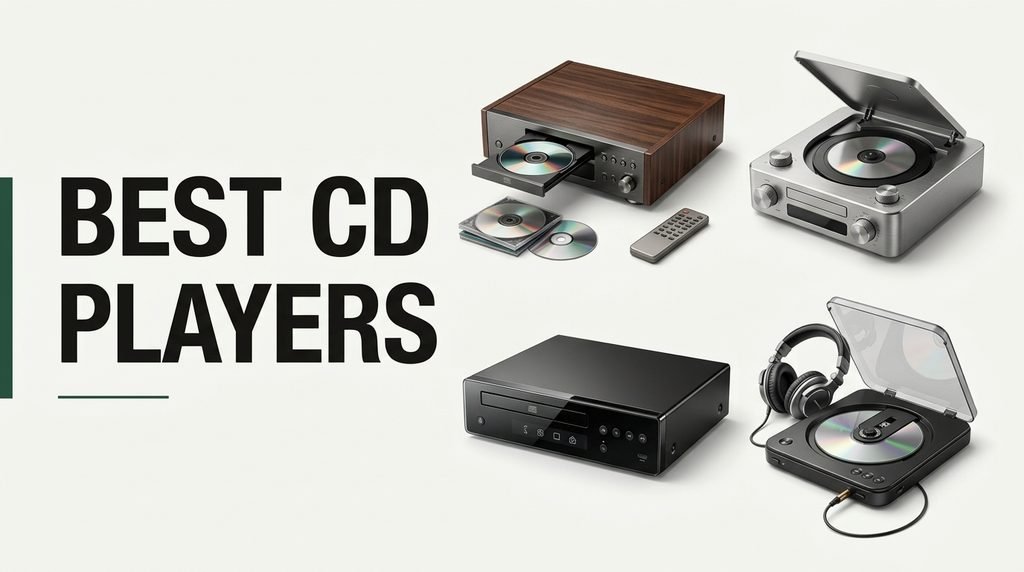
Find the right CD player for 2026 whether you want a compact desktop unit, a portable boombox, or a reference-grade hi-fi component. We compare 10 standout options by the details that matter in this category, including audio quality, disc format support, Bluetooth options, connectivity, build materials, remote controls, and the everyday trade-offs between simple all-in-one designs and dedicated audiophile players.
The category spans a wide range, from sub-fifty-dollar bedside units with built-in speakers to serious separates that connect to a stereo amplifier. The right choice depends on whether you want portability, integrated sound, multi-disc convenience, or the highest possible audio fidelity from your CD collection and high-resolution music files.
Format support, output types, and connectivity options separate a casual player from a versatile hub. Some models add FM radio, USB playback, Bluetooth streaming, or optical outputs for TV use. Read on to match the right player to your listening habits, room setup, and budget.
We compared 10 CD players using the factors that shape a real buying decision: audio quality and DAC performance, disc format compatibility, output connections such as coaxial, optical, and analog RCA, extra features like Bluetooth, FM radio, and USB playback, build quality, remote control inclusion, portability, and overall value. The notes focus on practical trade-offs so each pick reflects how people actually listen to CDs at home, in a shop, on the go, or through a dedicated hi-fi stereo system.


Compare key features, scores, and current prices side by side. A shorter feature list means fewer details were available, not necessarily fewer capabilities.


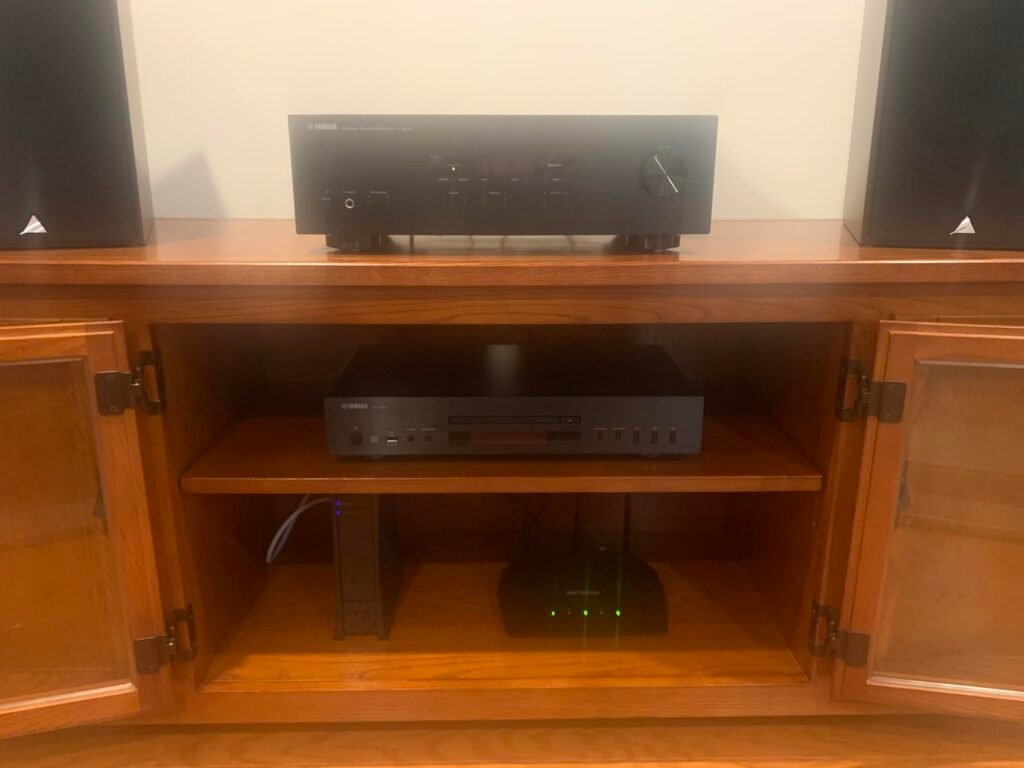
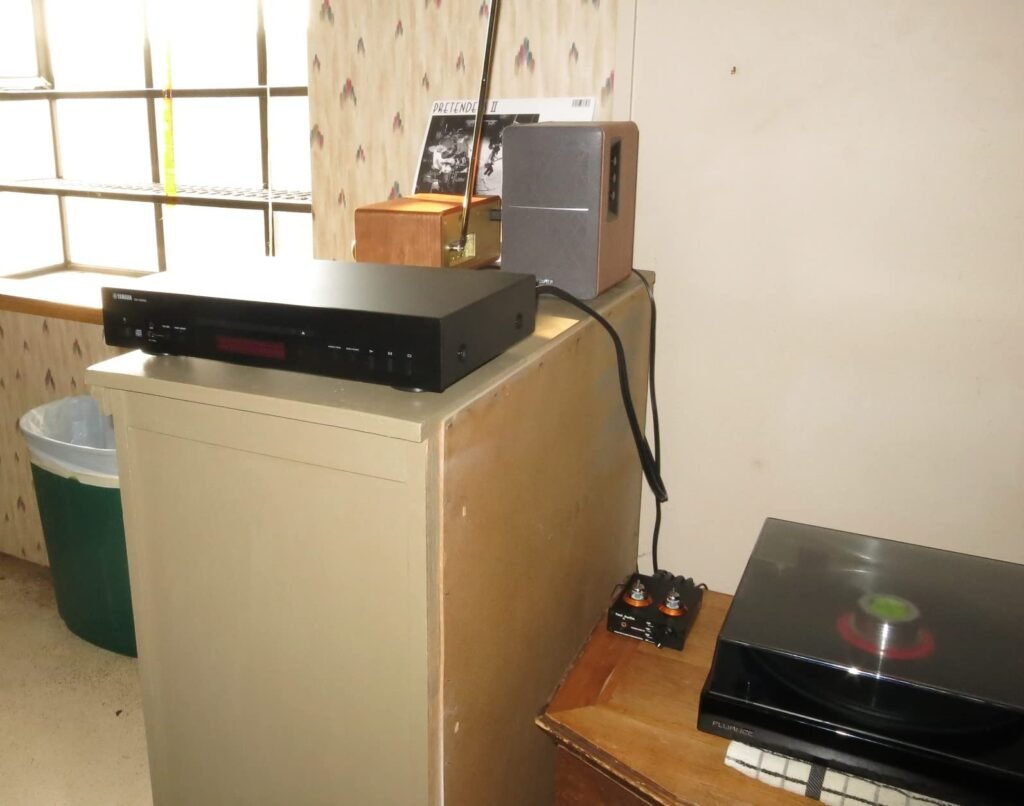
The Yamaha CD-S303 is a single-disc component player aimed at buyers building a proper two-channel stereo system. Yamaha's long history with audio components shows in the clean design, the emphasis on low-noise circuitry, and the well-executed USB playback for high-resolution digital files.
We may earn a commission when you buy through this link, at no additional cost to you.
The high-performance DAC delivers precise conversion with low noise, which pays off when the player is connected to a quality amplifier and speakers. Support for FLAC, WMA, LPCM, AAC, and MP3 files via the front USB port turns the CD-S303 into a hub for both physical media and digital music libraries stored on flash drives. CD-R and CD-RW compatibility covers burned collections and archival discs.
A floating laser pickup mechanism helps isolate the transport from vibration, which improves reading accuracy and reduces jitter. The 2 V analog output level matches standard amplifier inputs cleanly, and the included remote makes track navigation and USB browsing straightforward from your listening chair. The front panel keeps controls minimal for a clean look in a stereo rack.
A floating pickup mechanism uses springs or damping to isolate the laser assembly from external vibration and shock. That isolation helps the laser read discs more accurately, which reduces error correction and can result in a cleaner audio signal. It is one of several small engineering choices that separate hi-fi CD players from basic units.
This is a strong pick for buyers who want a dedicated hi-fi CD player with modern USB playback and Yamaha’s reputation for reliability. The trade-offs are the lack of built-in Bluetooth and the need for an external amplifier and speakers. For all-in-one convenience, an integrated system makes more sense.
Not the right choice for buyers who want built-in speakers, Bluetooth streaming, or portability.
We may earn a commission when you buy through this link, at no additional cost to you.
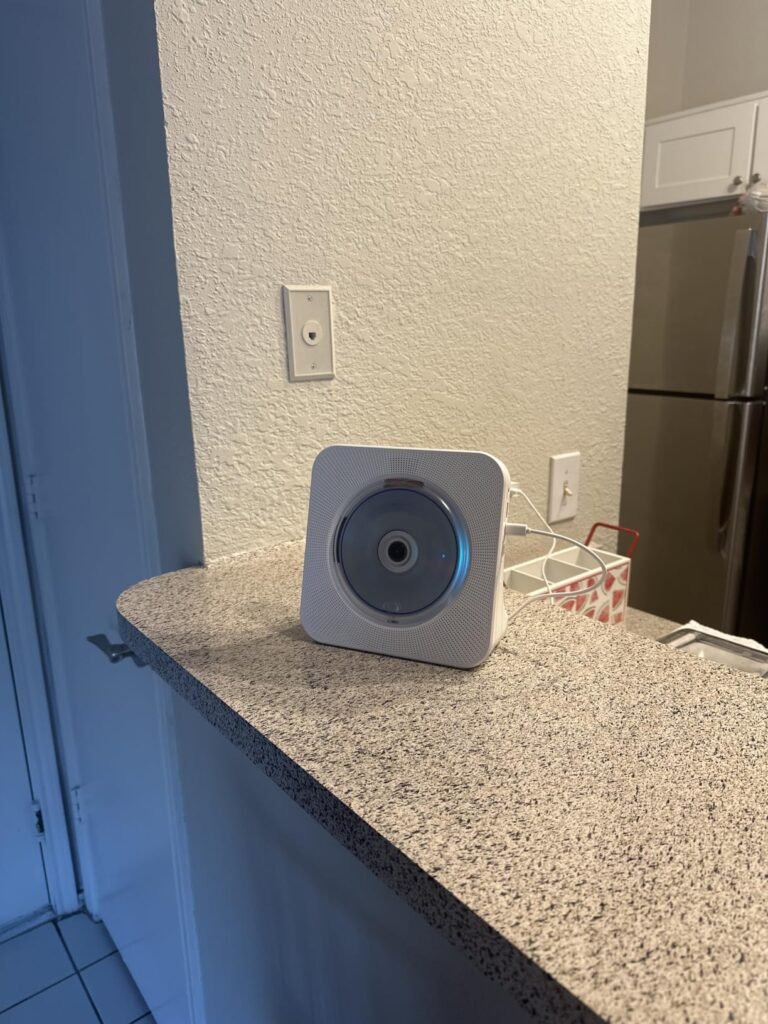
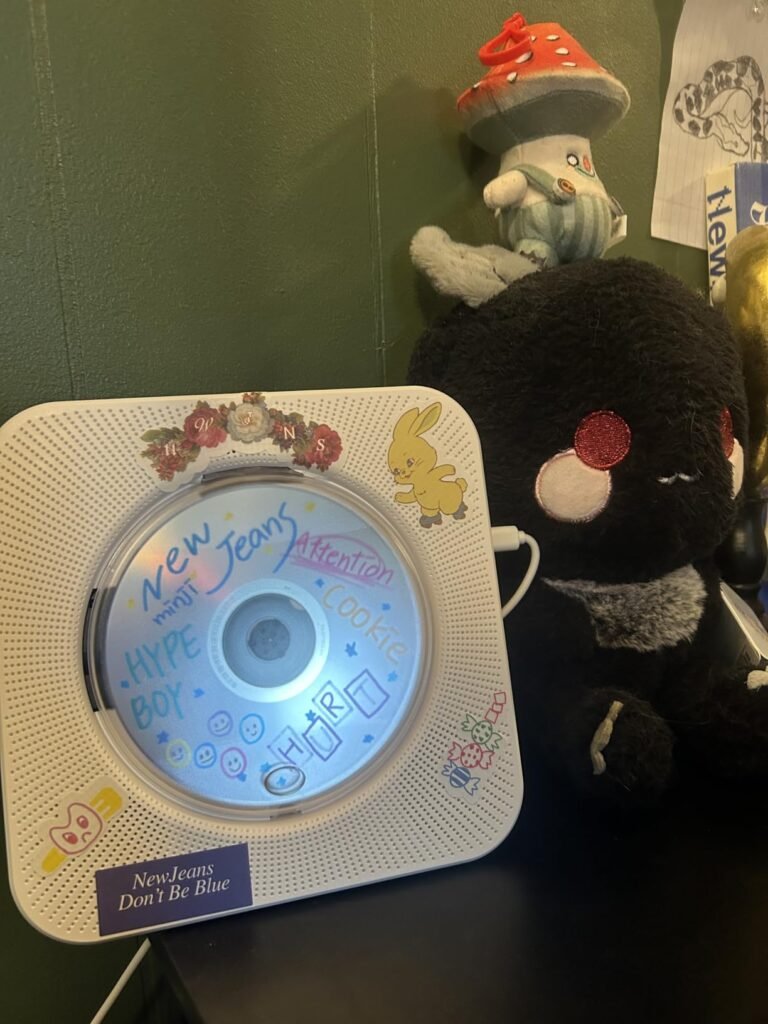
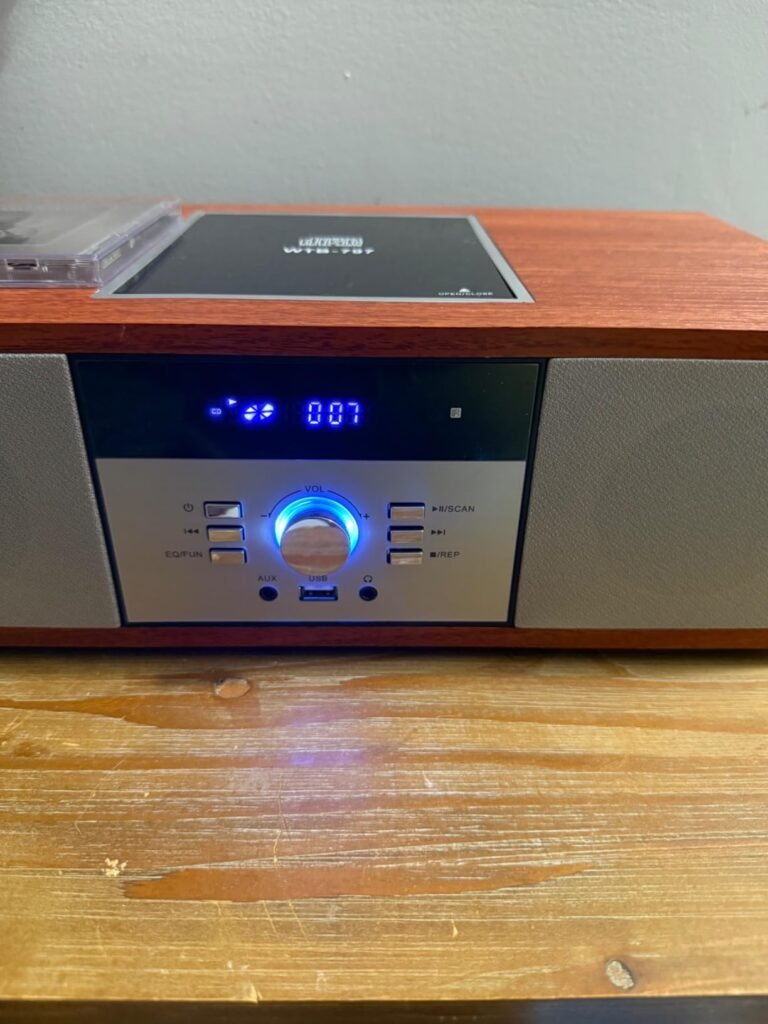
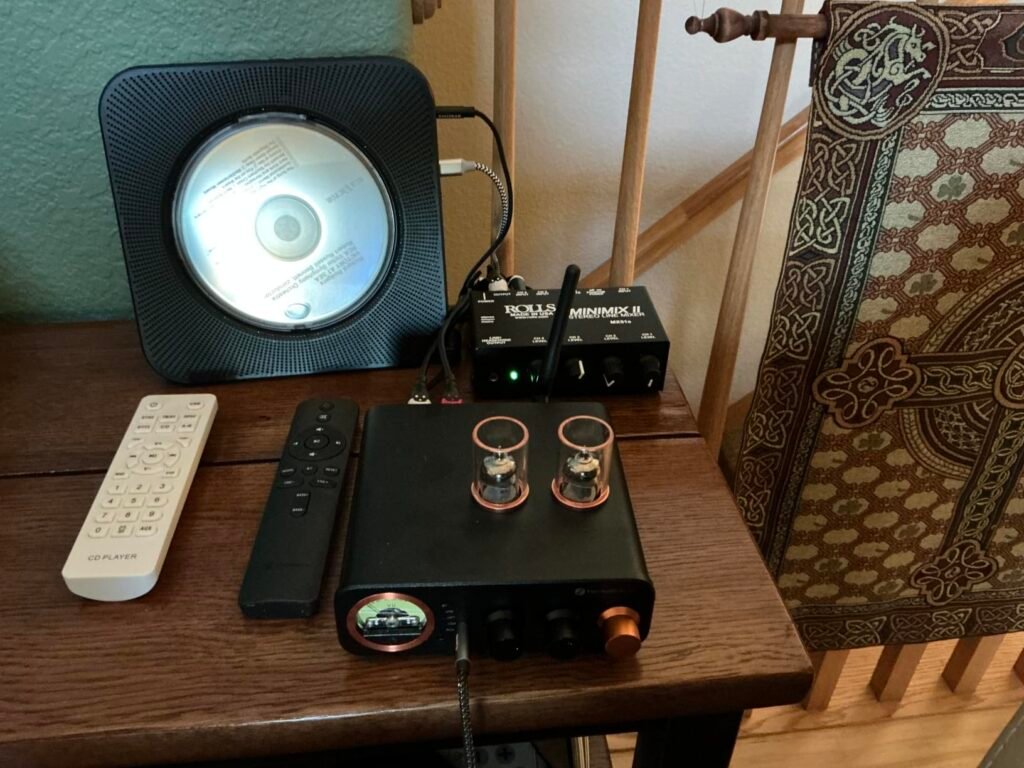
The Gueray desktop CD player is aimed at buyers who want a simple, all-in-one music source without complicated setup or a separate amplifier. Its combination of a top-loading CD mechanism, built-in speakers, and multiple input options makes it a genuinely practical pick for bedrooms, classrooms, or a home office where space and budget both matter.
We may earn a commission when you buy through this link, at no additional cost to you.
Disc compatibility covers standard CDs, CD-R, CD-RW, and MP3 or WMA data discs, which is enough for most home collections and burned playlists. The unit also plays music from USB flash drives, TF memory cards, and a 3.5mm auxiliary input, giving you flexibility beyond physical discs. FM radio adds a broadcast option for morning listening or background news.
Bluetooth 5.0 works in both directions, so you can stream from a phone to the player’s speakers or send CD audio out to a wireless headphone or Bluetooth speaker. That dual-mode design is unusual at this price and adds real everyday value. A clear LCD screen shows track number, play time, and current mode, and the included remote handles playback from across a small room.
A player that both receives and transmits Bluetooth gives you two useful workflows. You can play a CD and send the audio to wireless headphones for private listening late at night, or you can stream Spotify from your phone through the unit’s built-in speakers when a disc is not available. That flexibility is uncommon in budget models.
This player suits buyers who want a low-cost, do-it-all desktop unit for casual listening and language learning. The trade-off is that it runs on AC power only and does not include batteries for the remote. If you need audiophile-grade sound quality or portability on battery power, look at a boombox or a dedicated hi-fi player instead.
Not the right pick if you need battery-powered portability or dedicated hi-fi sound quality for a stereo system.
We may earn a commission when you buy through this link, at no additional cost to you.
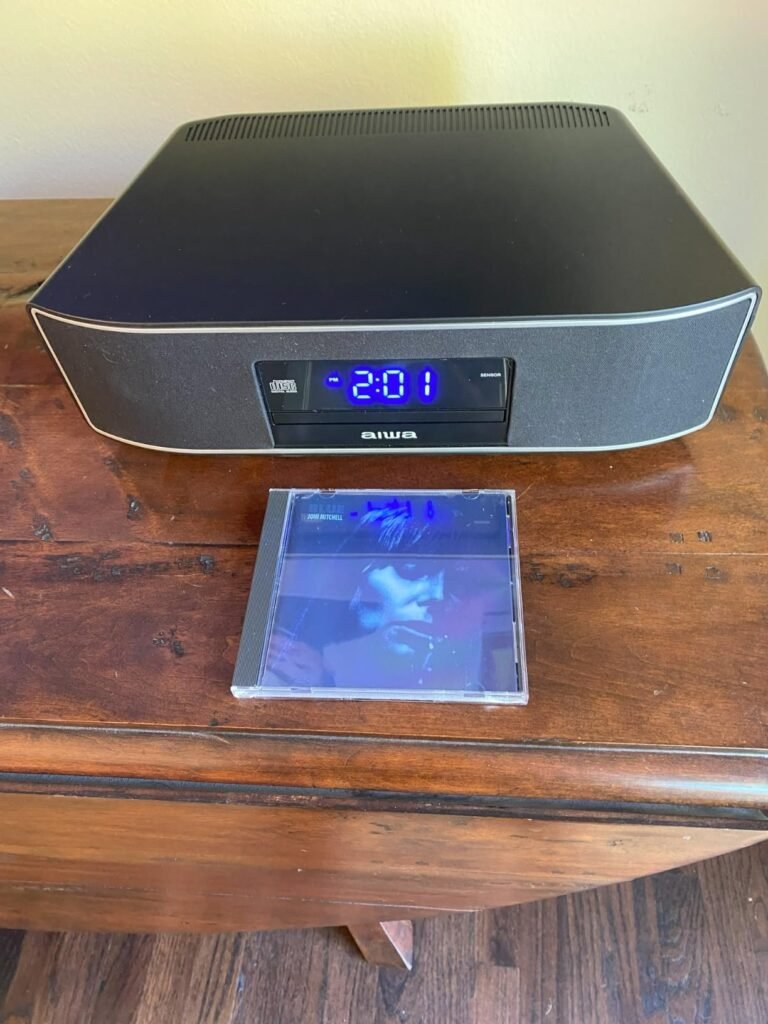
The Aiwa Exos Home is designed for buyers who want a single unit that handles CD playback, streaming, and even TV audio. Its 30 watts of RMS power and dedicated tweeters plus bass drivers deliver noticeably fuller sound than the tiny drivers found in budget desktop players, making it a good centerpiece for a living room or bedroom.

We may earn a commission when you buy through this link, at no additional cost to you.
Beyond the built-in CD player, the Exos Home accepts Bluetooth from phones and tablets, which covers Spotify, Apple Music, and any other streaming service. An optical digital input is a genuinely useful addition for connecting a TV, since it can replace weak built-in TV speakers with much clearer dialogue and stronger low end for movies. Aux input rounds out the physical connections.
The built-in FM tuner stores up to 20 preset stations for quick access to local broadcasts, morning news, or sports. Aiwa includes an infrared remote so you can adjust volume, change inputs, and control playback without walking over to the unit. The overall layout keeps things simple: pop in a CD, press play, and enjoy without navigating menus.
Most modern TVs include an optical output that carries clean, uncompressed audio. Connecting the Exos Home via optical bypasses the TV’s small internal speakers and gives you noticeably clearer dialogue and stronger low end for movies. It is one of the most practical upgrades you can make to a bedroom or small living room setup without buying a dedicated soundbar.
This system is a smart pick for buyers who want stronger sound than a compact desktop model can provide, along with the flexibility to serve as a TV soundbar alternative. The main trade-off is a larger footprint and the lack of a USB port for playing MP3 files from a flash drive. For dedicated audiophile listening through separates, a component player is a better match.
Not the best choice for buyers who want a truly portable CD player or a dedicated hi-fi separate.
We may earn a commission when you buy through this link, at no additional cost to you.
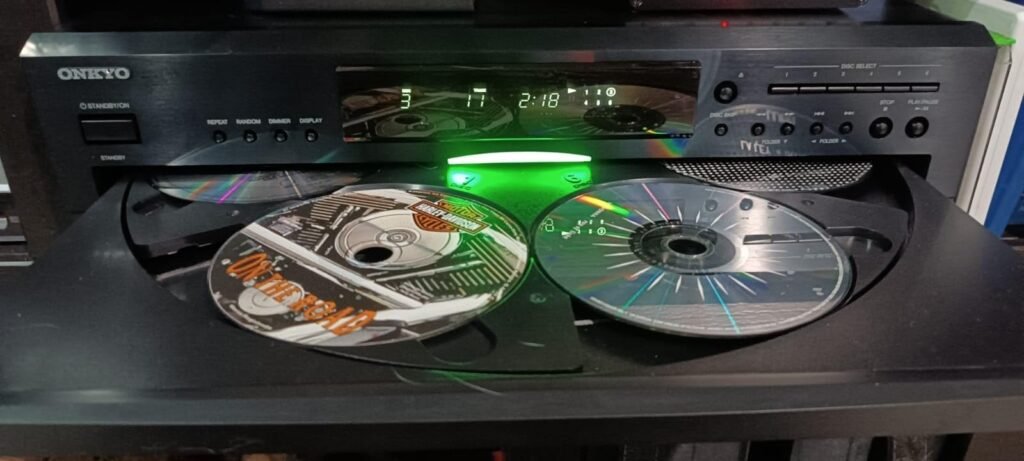
The Onkyo DXC390 is a traditional component-style CD changer built for buyers who want hours of continuous playback without swapping discs. Its six-disc carousel is a genuine convenience for hosting dinner parties, running background music at a business, or working through long classical pieces spread across multiple discs.

We may earn a commission when you buy through this link, at no additional cost to you.
Audio performance benefits from a 192kHz/24-bit DAC and a direct digital signal path, which help the player produce a clean, detailed signal for your amplifier or receiver. It handles standard audio CDs, MP3-encoded CDs, and CD-R/RW discs, giving you flexibility for both commercial releases and burned collections. Frequency response reaches from 5 Hz to 20 kHz for full-range playback.
Practical extras include 40-track programming for building custom playback sequences and six different repeat modes covering entire discs, all discs, random tracks, programmed tracks, random memory, and single track. The brushed hairline aluminum front panel gives the unit a classic hi-fi look that pairs well with matching stereo components, and the RI remote provides full remote control.
The DXC390 lets you remove and replace five of the six discs while the sixth continues to play. That means you can keep music going indefinitely by cycling in new discs during quiet moments. It is a genuinely useful feature for restaurants, retail shops, or long gatherings where uninterrupted background music matters.
This changer is a strong pick for buyers who already own an amplifier or receiver and want the convenience of multi-disc playback. The trade-offs are the larger component footprint and the need for external amplification and speakers. If you want a self-contained player with built-in sound, look at a boombox or micro system instead.
Not suitable for buyers who need a self-contained player with built-in speakers or a portable design.
We may earn a commission when you buy through this link, at no additional cost to you.
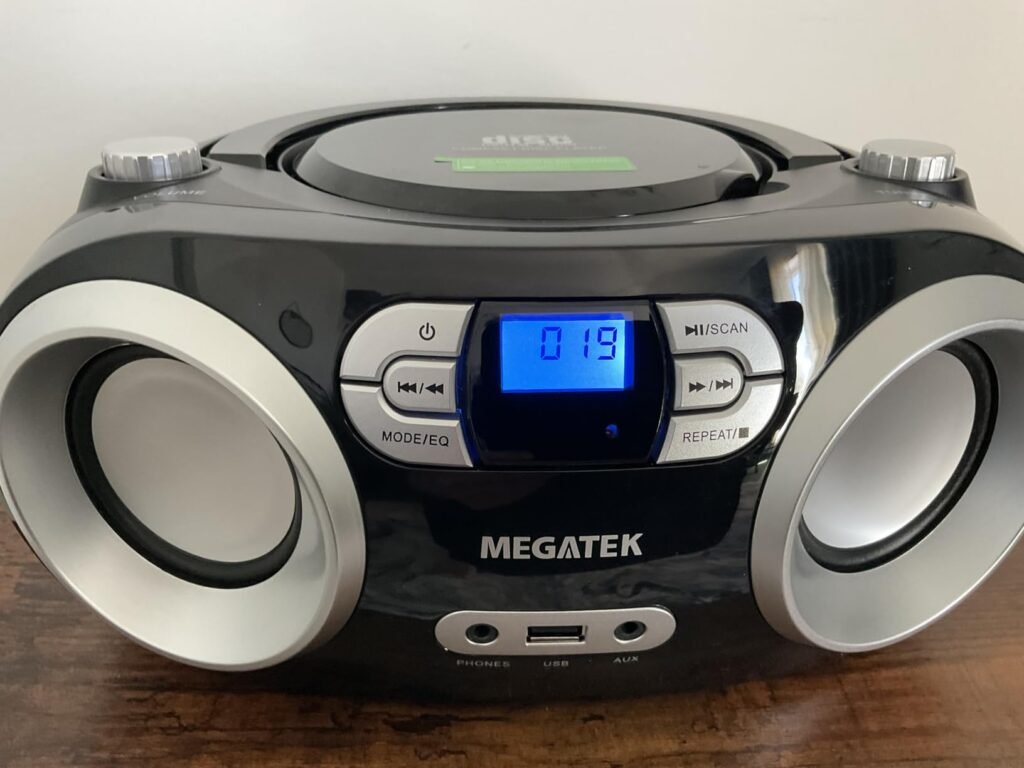
The MEGATEK boombox is a straightforward, portable CD player built for buyers who want music that can move with them. Its combination of AC and battery power, top-loading disc mechanism, and dual front-firing speakers makes it a good fit for shops, garages, patios, or any space where a fixed system is not practical.

We may earn a commission when you buy through this link, at no additional cost to you.
The top-loading design plays audio CDs, CD-R and CD-RW, CD-G karaoke discs, audiobook CDs, and MP3 or WMA data discs, which covers essentially every common format. Shuffle, repeat, and resume functions add flexibility, and five EQ modes let you tune the sound for spoken word, rock, jazz, or general listening. Dual 3-inch speakers deliver balanced stereo sound at moderate volumes.
Beyond disc playback, the boombox includes Bluetooth for wireless streaming from phones and tablets, USB playback for MP3 and WMA files on drives up to 128 GB in FAT32 format, and a 3.5mm aux input for older MP3 players. A digital FM tuner with 30 station presets covers broadcast listening, and a headphone jack allows private late-night use.
For the longest battery life, use fresh alkaline C cells and keep the volume at a moderate level. Higher volumes and continuous CD playback drain batteries faster than USB or radio use. Rechargeable NiMH C batteries work too, though runtime may be slightly shorter than with alkalines. Always remove batteries during long storage to prevent leaks.
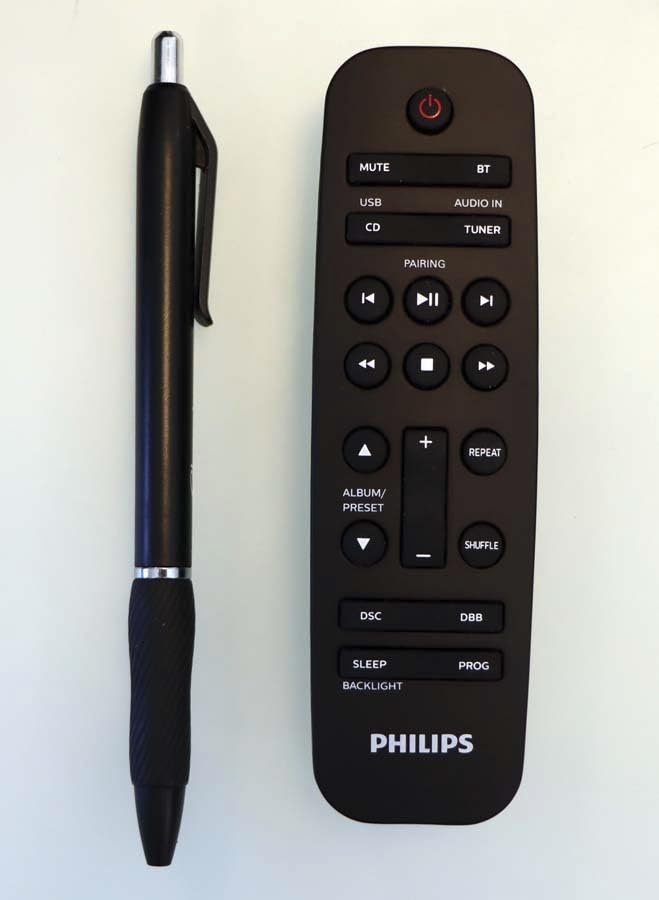
This boombox is a smart pick for buyers who want a portable, self-contained music source with wide format support. The trade-offs are no AM radio and no included remote control. If you want higher fidelity or need cassette tape support alongside CDs, look at a dedicated hi-fi component or the Philips cassette boombox.
Not ideal for buyers who need audiophile-quality sound or a large-format home stereo experience.
We may earn a commission when you buy through this link, at no additional cost to you.
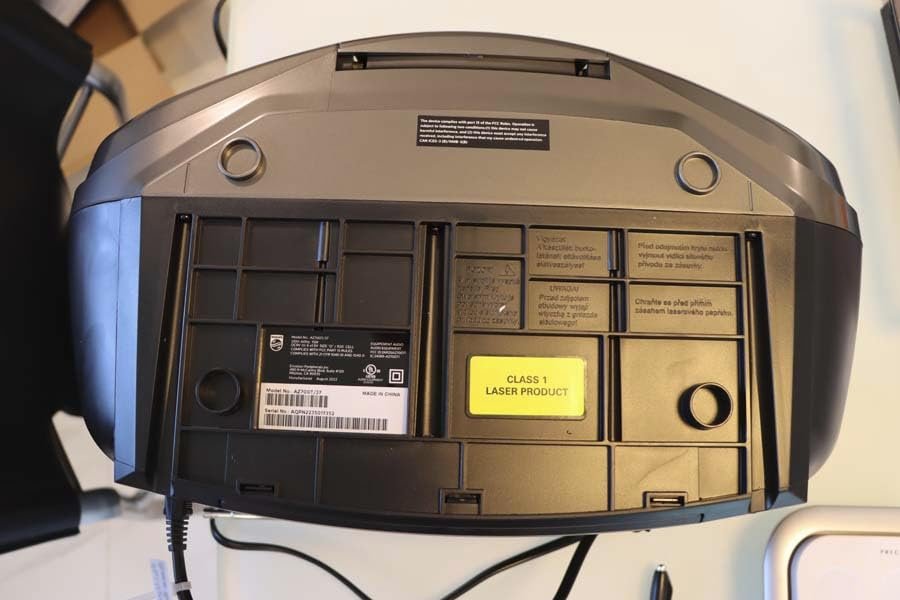
The Philips boombox is one of the few current CD players that also includes a cassette deck, making it a natural pick for buyers who want to play both discs and old tapes on the same device. That dual-format support is genuinely valuable for anyone still holding onto a cassette collection from the 80s and 90s.
We may earn a commission when you buy through this link, at no additional cost to you.
Sound comes from dual stereo speakers built with bass reflex technology, which uses a tuned port to extend low-frequency response. That design gives the unit more bass presence than the tiny drivers in most budget boomboxes provide. A backlit LCD display keeps track numbers and radio frequencies visible in dim rooms, and large front-panel buttons are easy to operate.
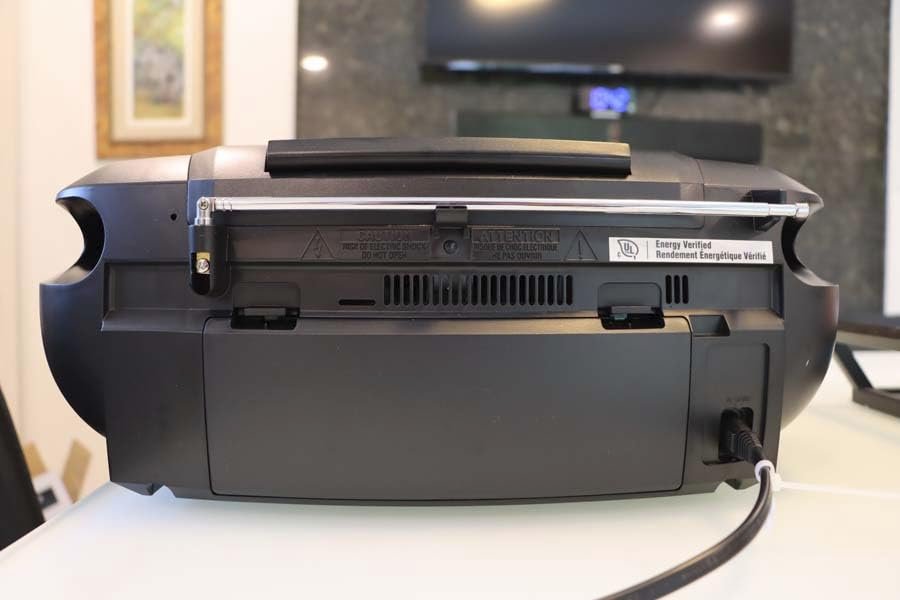
Beyond CDs and cassettes, the Philips supports Bluetooth streaming for wireless playback from phones and tablets, USB playback for MP3 and WMA files on drives up to 128 GB in FAT32 format, and a 3.5mm aux input for wired connections. The FM tuner stores 30 station presets and includes an upgraded antenna for better reception in weaker signal areas.
Cassettes need occasional head cleaning to maintain playback quality. Use a dedicated cleaning cassette or isopropyl alcohol on a cotton swab every few dozen hours of tape playback. CDs benefit from being stored in cases away from direct sunlight and cleaned with a soft, lint-free cloth wiping from center to edge, not in circles, when smudged or dusty.
This boombox is a smart pick for buyers who want a genuine all-in-one solution that bridges digital and analog media. The trade-offs are its larger size and the requirement for six D batteries for portable use, which adds weight. For pure CD listening in a compact form, a smaller desktop player is more practical.
Not the best choice for buyers who want a compact, lightweight player without cassette functionality.
We may earn a commission when you buy through this link, at no additional cost to you.
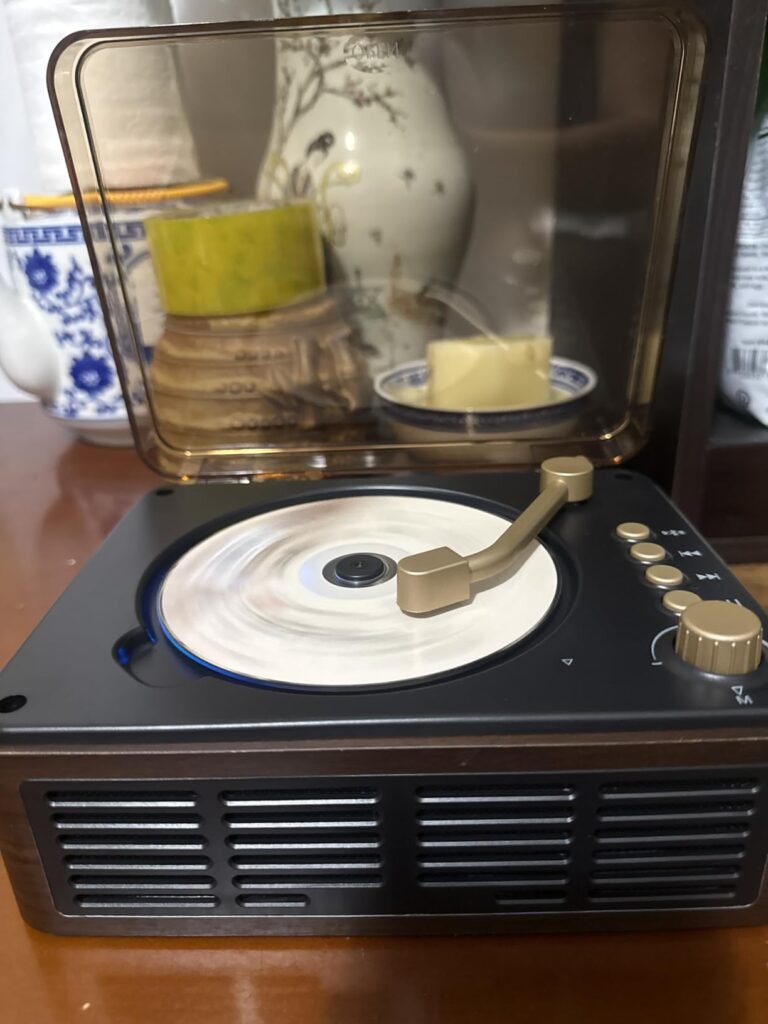
The CARONSORT retro CD player targets buyers who want a good-looking, all-in-one music source that fits a shelf, nightstand, or desk. Its wooden cabinet and turntable-inspired design give it more personality than plastic desktop players, and the sealed enclosure helps improve the sound quality from the built-in speakers.

We may earn a commission when you buy through this link, at no additional cost to you.
Format support covers CD, CD-R, CD-RW, CD-G, MP3, WMA, and WAV files, so both commercial releases and burned data discs work without issue. The top-loading mechanism is easy to use and adds to the retro feel. Bluetooth works in both directions for streaming from a phone or sending CD audio to a wireless speaker, and an FM radio mode adds broadcast listening.
Connectivity is more extensive than most players in this price range, including a 3.5mm aux jack, AUX input, and an S/PDIF digital output for connecting to a separate DAC or amplifier if you outgrow the built-in speakers. Remote-controlled bass boost and treble adjustment let you tune the sound to match spoken word, music, or personal preferences without leaving your seat.
The S/PDIF digital output lets you send the raw digital signal from the CD to an external DAC, receiver, or powered speaker system that supports digital input. This bypasses the built-in speakers entirely and can meaningfully improve sound quality if you already own a better audio setup. It is a useful upgrade path that many budget players do not offer.
This player is a smart pick for buyers who prioritize appearance and simple operation while still wanting modern connectivity. The trade-offs are the modest speaker size and the lack of battery power. If you need more room-filling sound or portability, look at a larger boombox or micro system.
Not the right choice for buyers who need loud, room-filling sound or portable battery operation.
We may earn a commission when you buy through this link, at no additional cost to you.
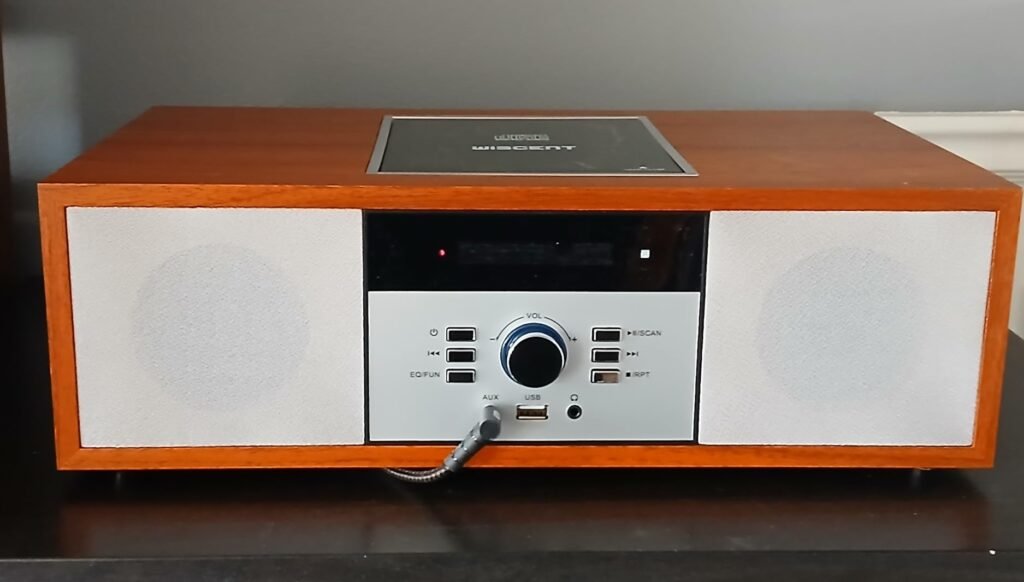
The WISCENT micro HiFi system is designed for buyers who want a small, complete stereo setup for a bedroom, dorm room, or small living room. The two-piece design with detachable stereo speakers provides better channel separation than single-box units, which improves the sense of stereo space during music playback.
We may earn a commission when you buy through this link, at no additional cost to you.
Two 3-inch full-range drivers deliver 15 watts RMS per speaker, or 30 watts peak total power, which is enough to fill a small to medium room comfortably. The top-loading CD player handles standard audio CDs, CD-R and CD-RW, MP3 CDs, and audiobook CDs, with three repeat modes and five EQ presets covering flat, classic, rock, pop, and jazz sound profiles.
Beyond disc playback, the WISCENT includes Bluetooth streaming, USB playback for MP3 and WMA files, a 3.5mm aux input for external devices, and a headphone jack for private listening. The FM tuner supports both manual tuning and auto-scan, storing up to 30 station presets for one-touch recall. A soft antenna on the back needs to be placed at a higher position for the best reception.
Placing the left and right speakers a few feet apart creates a much wider stereo image than a single-box unit can produce. This makes music feel more spacious and lets you hear the intended left-right positioning of instruments and vocals. Aim for equal distances between each speaker and your listening position for the best results.
This micro system is a strong pick for buyers who want a genuine two-speaker stereo setup with modern connectivity in a compact package. The trade-off is that FM reception depends on antenna placement and there is no AM support. For buyers who want louder output or true audiophile sound quality, a boombox or component setup is a better fit.
Not suitable for buyers who need a single-box design or a portable player with battery power.
We may earn a commission when you buy through this link, at no additional cost to you.
This Onkyo DX-C390-B is another traditional carousel changer aimed at buyers who want to load six discs at a time and enjoy hours of uninterrupted playback. The design is nearly identical in concept to the DXC390, giving buyers two options depending on availability and pricing.

We may earn a commission when you buy through this link, at no additional cost to you.
Audio conversion uses a 24-bit/192kHz DAC paired with Onkyo’s Vector Quantize Audio technology to deliver a clean, detailed signal to your amplifier or receiver. Both optical and coaxial digital outputs let you send the signal to an external DAC or a modern receiver’s digital inputs, which can further improve sound quality with the right equipment. A dynamic range of 96 dB is standard for CD-quality playback.
Multiple repeat modes cover all discs, entire disc, random tracks, memory tracks, random memory, single folder, and single track, giving you flexibility for background music sessions or focused listening. The changer plays standard audio CDs, MP3 CDs, and CD-R/RW discs. It requires AC power in either 120V or 230V regional configurations, so check your voltage before buying.
Optical connections use light through a fiber-optic cable and provide immunity to electrical interference. Coaxial uses a shielded copper cable and can carry slightly higher-bandwidth signals. Both deliver identical CD-quality audio in practice, so use whichever matches an available input on your receiver or DAC. Keep cable runs short for the best signal integrity.
This player fits buyers who want a classic component-style multi-disc changer for a stereo rack. The trade-offs match the earlier Onkyo entry: it needs an amplifier and speakers to make sound, and its component footprint is larger than a compact player. For self-contained playback, choose an all-in-one system.
Not the right pick for buyers who want a self-contained player with built-in speakers or portability.
We may earn a commission when you buy through this link, at no additional cost to you.
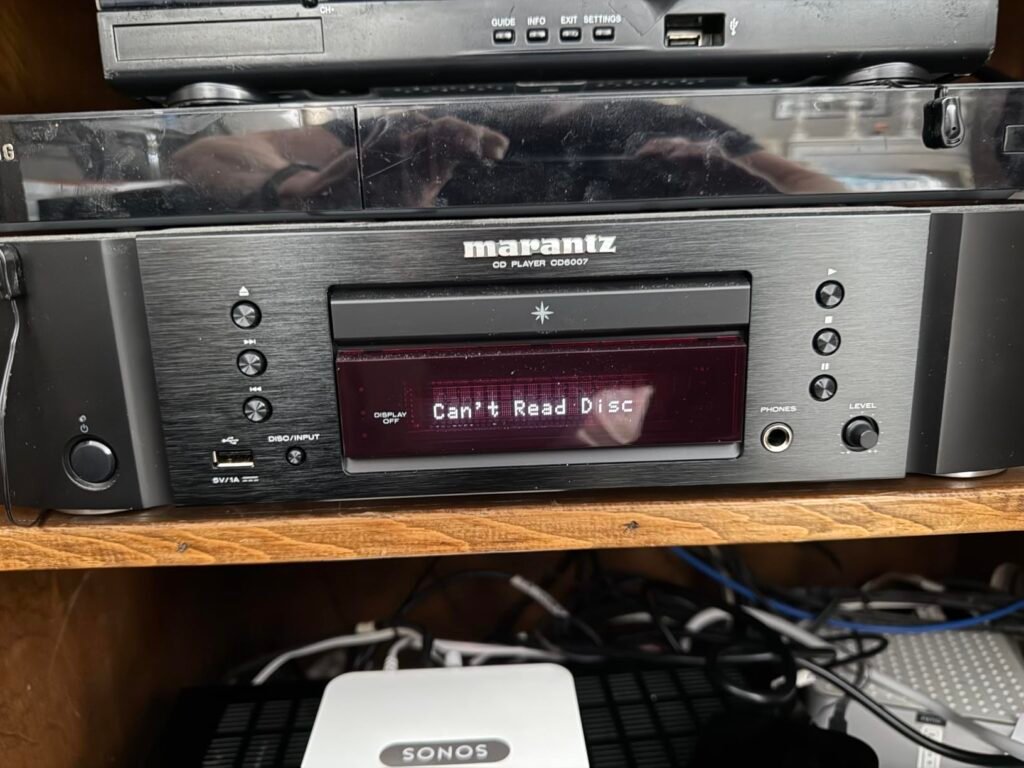
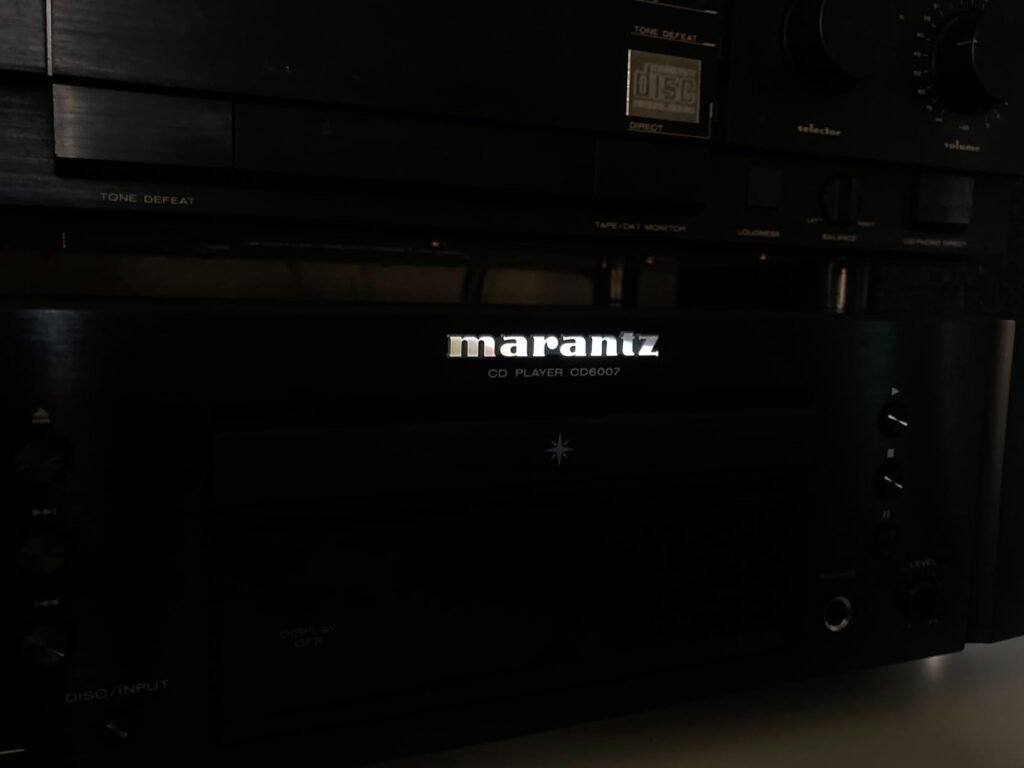
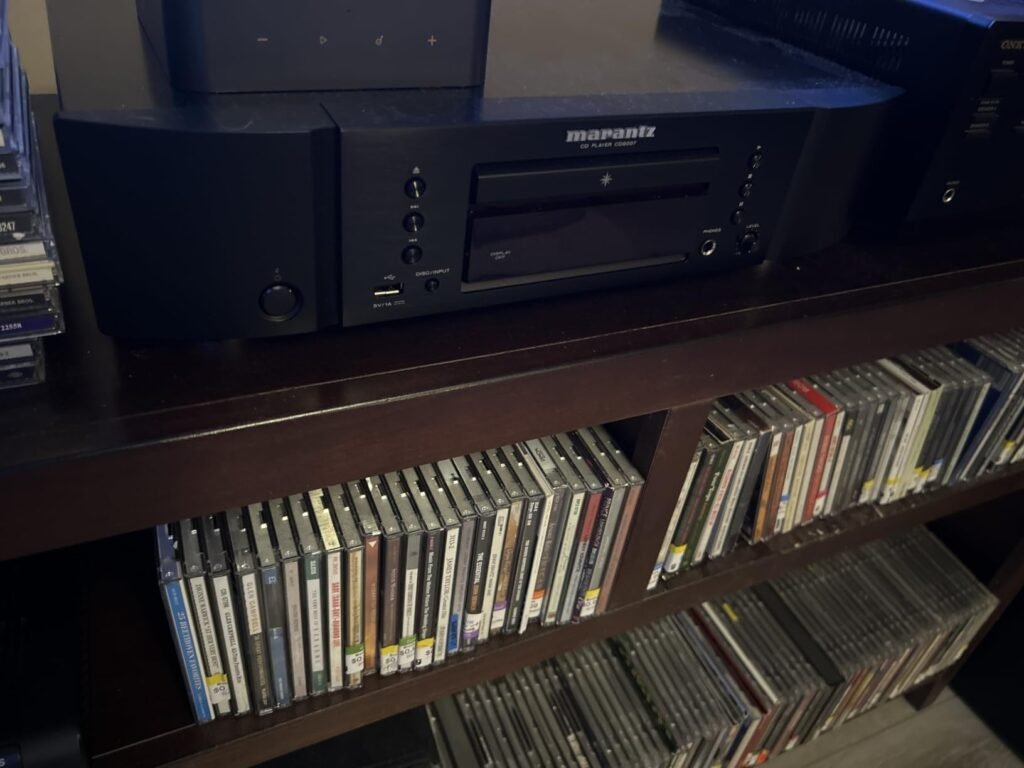
The Marantz CD6007 is the audiophile pick in this comparison, aimed at buyers who want the best possible sound from their CD collection and high-resolution digital files. Marantz builds each unit at its Shirakawa Audio Works facility in Japan and tunes the sound to a house standard shaped by decades of hi-fi engineering.
We may earn a commission when you buy through this link, at no additional cost to you.
The reference-class AK4490 DAC provides two selectable digital filters and handles digital audio up to 192kHz/24-bit as well as DSD files at 5.6 MHz. Marantz’s proprietary HDAM-SA2 discrete amplifier module replaces standard op-amps in the analog output stage, which improves slew rate and reduces noise for a more dynamic and detailed presentation than most players at any price.
Practical touches include a fully discrete headphone amplifier with three gain settings for matching demanding headphones, an auto-off circuit to prevent interference when headphones are unplugged, and USB playback for FLAC HD, ALAC, AIFF, WAV, and DSD files. A double-layered bottom plate and rigid feet minimize vibration, and gold-plated analog and coaxial outputs ensure clean signal transfer to your amplifier.
HDAM stands for Hyper Dynamic Amplifier Module. Rather than using a single integrated op-amp chip in the analog output stage, Marantz builds the module from discrete components on a small circuit board. This approach typically delivers better transient response and lower noise, which contributes to the clean, detailed sound that Marantz players are known for among audiophiles.
This is a specialist purchase aimed at buyers building a serious two-channel stereo system or a headphone rig. The trade-offs are the high price and the lack of Bluetooth, which is by design in favor of pure audio quality. For casual listening or all-in-one convenience, this level of investment is unnecessary. For anyone who cares about squeezing the best sound from their music, it is a worthwhile long-term component.
Not the right choice for casual listeners who want an all-in-one player with built-in speakers or Bluetooth streaming.
We may earn a commission when you buy through this link, at no additional cost to you.
The best CD player for you depends on where you plan to listen, how much you want to spend, and whether you need extra features like Bluetooth, radio, or multi-disc playback. Use these factors to narrow down the options and match a player to your real needs.
CD players come in several distinct form factors, each suited to different listening environments. Component-style players like the Yamaha CD-S303, Marantz CD6007, and Onkyo DXC390 are designed to sit in a stereo rack and connect to a separate amplifier and speakers. They typically offer the best sound quality but require additional equipment to make music. All-in-one desktop players like the Gueray and CARONSORT include built-in speakers and work as complete systems out of the box.
Portable boomboxes like the MEGATEK and Philips add battery power for use in shops, garages, patios, or anywhere without a nearby outlet. Micro systems like the WISCENT split the electronics from the speakers, giving you better stereo separation in a compact package. Each form factor involves trade-offs between sound quality, convenience, portability, and price, so start by deciding where the player will live and how it will be used.
Choose a component player for the best sound in a dedicated listening room, an all-in-one desktop unit for casual use, a boombox for portability, or a micro system for a small stereo setup with proper channel separation.
The digital-to-analog converter, or DAC, is the chip that converts the digital data on a CD into an analog audio signal your speakers can play. Higher-quality DACs typically produce cleaner sound with better detail retrieval, lower noise, and more accurate timing. Component players from established audio brands like Marantz and Yamaha use higher-grade DACs than budget all-in-one units, which translates to noticeable sound quality improvements with capable amplifiers and speakers.
For casual background listening, DAC quality matters less because your ears cannot easily distinguish between good and great converters at moderate volumes on modest speakers. For focused listening on a proper stereo system, DAC performance becomes one of the most important specifications to compare. High-resolution support for formats like DSD or 192kHz/24-bit PCM signals a more capable player, though CDs themselves are limited to 44.1kHz/16-bit resolution.
Prioritize DAC quality if you already own quality amplifiers and speakers. For basic use with built-in speakers, save money and focus on features instead.
Most modern CD players handle standard audio CDs plus CD-R and CD-RW discs, which covers commercial releases and burned collections. MP3 CD support is common on newer players and lets you fit hours of music on a single disc by using compressed audio files. Some players also support CD-G karaoke discs, audiobook CDs, and other specialty formats, which matters if you own those types of media.
USB playback has become nearly standard on new CD players and adds flexibility by letting you play MP3, WMA, FLAC, or other digital files from a flash drive. Players like the Yamaha CD-S303 and Marantz CD6007 handle high-resolution FLAC files, which is useful for buyers with existing digital music libraries. Check the maximum supported USB drive size and file system format, since many players require FAT32 formatting and limit drives to 128 GB or less.
Check the formats you already own before buying. If your collection includes MP3 CDs or you plan to use USB drives for additional music, confirm the player supports those formats.
Component-style CD players include analog RCA outputs for connecting to a stereo amplifier or receiver. Better players add coaxial and optical digital outputs, which let you bypass the internal DAC and send the digital signal to an external DAC or a receiver’s digital inputs. That flexibility can improve sound quality and future-proof your setup as you upgrade other components.
All-in-one players and boomboxes typically include a 3.5mm aux input for connecting external devices and a headphone jack for private listening. Some, like the CARONSORT retro player, add S/PDIF digital output for connecting to a better DAC or amplifier later. Bluetooth support has become common and allows wireless streaming from phones, though it uses lossy audio codecs that reduce quality compared to a wired connection.
If you already own a stereo amplifier or plan to build one, prioritize a player with quality analog and digital outputs. For all-in-one use, a headphone jack and aux input are the most useful connections.
Bluetooth has become a common feature on modern CD players and adds real convenience for buyers who also want to stream music from their phones or tablets. Basic Bluetooth receivers let you use the player as a wireless speaker for Spotify, Apple Music, or podcasts. Some players like the Gueray add dual-mode Bluetooth, which also transmits CD audio to wireless headphones or Bluetooth speakers for private late-night listening.
Bluetooth quality varies significantly between players. Newer versions like Bluetooth 5.0 offer better range and connection stability than older versions, though audio codec support matters more for sound quality. Standard SBC codec support is universal but sounds noticeably worse than aptX or AAC, which few budget CD players include. For serious listening, a wired connection always sounds better than Bluetooth.
Prioritize Bluetooth if you often stream music alongside CDs. Skip it if you want a pure audiophile player and prefer wired connections for the best possible sound quality.
Multi-disc changers like the Onkyo DXC390 and DX-C390-B hold six discs at once and can play them in sequence, random order, or programmed selections. This design is genuinely convenient for hosting dinner parties, running background music at a business, or working through long classical pieces spread across multiple discs. Many changers also let you swap out five discs while the sixth continues to play, keeping music going indefinitely.
Single-disc players are simpler, take less shelf space, and typically offer better sound quality than changers at the same price because the transport mechanism is less complex. Programming features vary from basic track selection to sophisticated 40-track programming with multiple repeat modes. Consider how often you actually want continuous multi-disc playback versus dedicated listening to a single album from start to finish.
Choose a changer if you regularly host events or want background music for hours without intervention. Choose a single-disc player for focused listening or if shelf space is limited.
A remote control is essential for anything more than a small desktop unit, since walking across the room to change tracks quickly becomes annoying. Most players in this comparison include a remote, though some like the MEGATEK boombox do not. Check whether batteries are included, since many players ship the remote without them. Full-featured remotes let you navigate USB folders, adjust EQ settings, and control playback from your listening position.
The physical controls on the player itself matter for hands-on use. Large, clearly labeled buttons help older users and anyone who wants quick access without hunting through menus. A backlit LCD display keeps track numbers, radio frequencies, and elapsed time visible in dim rooms. Consider who else will use the player and choose an interface that matches their comfort level with technology.
Prioritize a full-featured remote and clear display for multi-function players. For a simple bedside CD player, basic controls may be all you need.
Build quality affects both how a player sounds and how long it lasts. Component players from established audio brands typically use metal chassis, double-layered bottom plates, and higher-quality internal components to reduce vibration and interference. The Marantz CD6007 uses rigid feet and carefully selected components specifically to minimize vibration, which helps the laser read discs more accurately. Cheaper players often use lighter plastic construction that can flex under the weight of the CD mechanism.
The CD transport itself is a mechanical component with a finite lifespan. Higher-quality mechanisms in premium players tend to last longer and remain more accurate over time. Look for players with good user reviews mentioning long-term reliability rather than just first-year performance. Warranty coverage varies significantly between budget and premium players, with dedicated audio brands often offering longer coverage than generic manufacturers.
Invest in build quality if you plan to keep the player for many years. For occasional use, a budget player will serve well enough without the extra cost.
Set up your CD player on a stable, level surface away from direct sunlight, radiators, and high-humidity areas. For component players, connect the analog RCA cables to the corresponding CD input on your amplifier, or use a digital cable to a receiver’s optical or coaxial input. Give the player a few minutes to warm up before critical listening, as electronic components typically sound their best after reaching stable operating temperature. Read the manual to learn any player-specific features like digital filter selection or gain settings.
Handle CDs by their edges to avoid fingerprints on the playing surface, and store them in cases when not in use. Clean smudged discs with a soft, lint-free cloth wiping straight from center to edge rather than in a circular motion. Never use paper towels or household cleaners on CDs. If a disc skips or fails to read, try cleaning it first before assuming the player has a problem. Keep the player itself dust-free by wiping the exterior with a dry microfiber cloth periodically.
For long-term reliability, avoid moving the player while a disc is playing, since sudden shocks can damage the laser assembly. Turn the player off between listening sessions rather than leaving it in pause mode for extended periods. If the tray or drawer becomes sluggish, avoid forcing it and consult the manual or a service technician. Component players benefit from occasional professional cleaning after several years of heavy use to maintain optimal laser performance and mechanical smoothness.
CD players remain a great choice for buyers with existing disc collections, audiophiles who value uncompressed audio, and anyone who prefers physical media over streaming. CDs offer consistent, high-quality sound without depending on internet connections, subscription services, or streaming compression. Many modern players also add Bluetooth, USB playback, and radio, making them versatile hubs rather than single-purpose devices.
A single CD player holds one disc at a time and typically offers better sound quality per dollar because the transport mechanism is simpler. A CD changer holds multiple discs, often five or six, and plays them in sequence, random order, or programmed selections. Changers are more convenient for parties or background music but usually cost more and are physically larger than single-disc players.
Component-style CD players like the Marantz CD6007 or Yamaha CD-S303 require a separate amplifier and speakers to make sound because they only produce a line-level signal. All-in-one players, boomboxes, and micro systems include built-in amplification and speakers, so they work as complete systems out of the box. Choose based on whether you already own an amplifier or want a self-contained unit.
Support varies by player, but most modern CD players with USB inputs handle MP3 and WMA files. Higher-end players like the Yamaha CD-S303 and Marantz CD6007 also support FLAC, WAV, ALAC, AIFF, and DSD high-resolution files. Check the specifications for maximum drive size and required file system format, which is usually FAT32 with a limit of 128 GB or less on many players.
Quality CD players from established audio brands often last 10 to 20 years or more with normal home use. The laser assembly and transport mechanism are the components most likely to fail over time. Budget players may last only a few years, especially with heavy use. Look for players with good long-term reliability reviews and consider brands with strong service and support networks.
Yes, with the right connections. If your TV has an audio input, you can connect the analog RCA outputs of a CD player using stereo audio cables. Some players like the Aiwa Exos Home add optical digital input specifically for TV connection. The reverse setup, sending TV audio to a CD player's speakers, requires the player to have an input that matches your TV's output, such as optical or aux.
HDAM stands for Hyper Dynamic Amplifier Module. It is Marantz's proprietary discrete amplifier design that replaces standard op-amp chips in the analog output stage. Discrete circuits built from individual components typically deliver better transient response, lower noise, and cleaner sound than integrated op-amps. HDAM is one of the design choices that gives Marantz players their reputation for detailed, musical presentation.
Bluetooth adds real convenience if you also want to stream music from your phone or tablet through the same speakers. It makes the player a hub for both physical discs and streaming services. However, Bluetooth uses compressed audio codecs that reduce sound quality compared to wired connections. If you prioritize pure audio fidelity, skip Bluetooth in favor of a dedicated audiophile player.
Premium players like the Marantz CD6007 use higher-grade DACs, discrete amplifier circuits, vibration-resistant chassis construction, and carefully selected internal components that all contribute to better sound quality and longer lifespan. Budget players use simpler designs and cheaper parts. The price difference often becomes audible on a good stereo system with quality speakers, though casual listeners on modest equipment may not hear the difference.
Most modern CD players support CD-R and CD-RW discs, which are the formats used for burned CDs. MP3 CD support is common but not universal, so check the specifications if you use compressed audio discs. Some very old or basic players may only play commercial audio CDs. When burning discs, use quality media and burn at slower speeds for the best compatibility across different players.
The Marantz CD6007 earns the top spot for buyers who want the best possible sound quality from their CD collection and high-resolution digital files. Its reference-class DAC, discrete HDAM-SA2 amplifier module, DSD support, and dedicated headphone amplifier make it a genuine audiophile component that will reward pairing with quality electronics and speakers. It is the strongest long-term investment in the lineup for serious listeners.
For buyers with different priorities, several alternatives stand out. The Yamaha CD-S303 offers hi-fi component sound at a more approachable price with USB playback for high-resolution files. The Aiwa Exos Home combines CD playback with strong built-in speakers and TV audio duties. The MEGATEK boombox delivers portability and battery power, while the Gueray desktop unit provides the most affordable entry point with a surprisingly complete feature set.
Start by identifying where you will listen most often and whether you already own an amplifier and speakers. If you have a stereo system, choose a component player. If you want a complete solution in one box, pick an all-in-one design that matches your room size. Add features like Bluetooth, USB playback, or multi-disc capability based on how you actually plan to use the player, and any of the options in this comparison can serve you well.