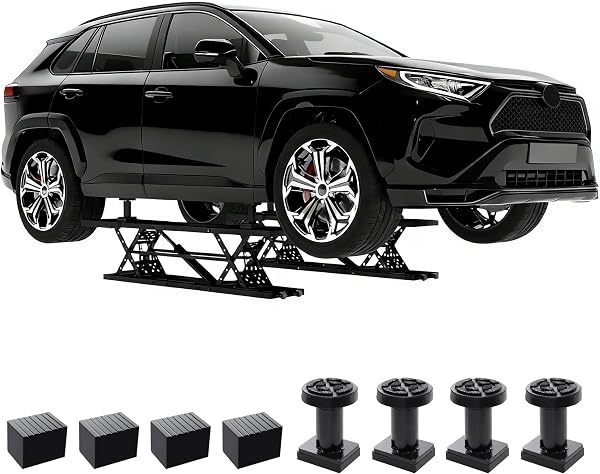
Albott 7000 LBS
8.2Editor score7000 lb capacity
28-inch max height
Q235B steel frame
Foldable with casters
Find the right car lifts for 2026. We compare 10 standout options by build quality, useful features, owner feedback, value, and everyday trade-offs.
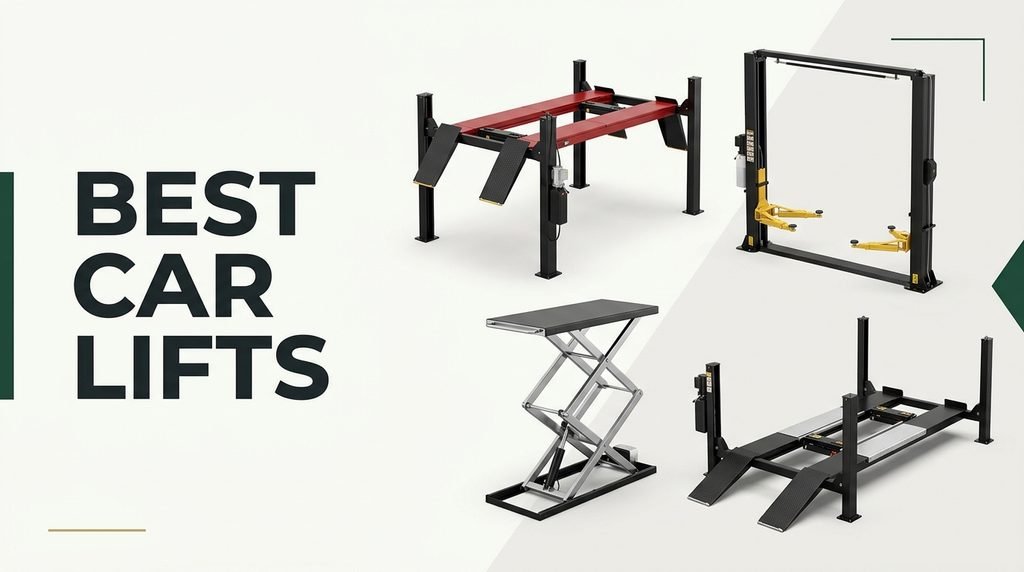
Choosing the right car lift for 2026 means balancing weight capacity, lifting height, floor space, electrical requirements, and the type of work you do most often. This guide compares 10 standout models across portable scissor, two-post, and four-post designs so you can match a lift to your garage size, vehicle fleet, and budget.
The gap between a 7,000-pound portable scissor and a 12,000-pound two-post lift is significant in both price and capability. Some buyers need overhead clearance for full-size trucks, while others want a mobile unit for occasional maintenance. Understanding these differences up front saves money and prevents a lift that cannot handle your largest vehicle.
Below you will find a side-by-side comparison, detailed reviews, and a comprehensive buying guide covering lift types, safety systems, power requirements, installation considerations, and ongoing maintenance. Use it to narrow the field to the model that fits your ceiling height, concrete slab, voltage access, and the vehicles you plan to service.
We compared 10 car lifts using the factors that matter most to garage owners and shop operators: lifting capacity, maximum lift height, lift type (portable scissor, two-post, or four-post), safety lock systems, hydraulic power unit specifications, voltage requirements, warranty coverage, installation complexity, overall footprint, and value relative to capability. The notes focus on practical trade-offs between permanent and portable installation, home and professional use, and budget versus heavy-duty performance so each pick connects to real buyer needs.


Compare key features, scores, and current prices side by side. A shorter feature list means fewer details were available, not necessarily fewer capabilities.


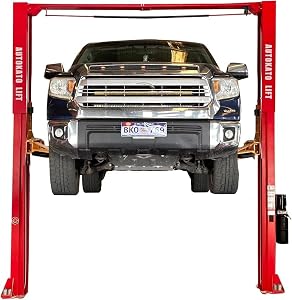


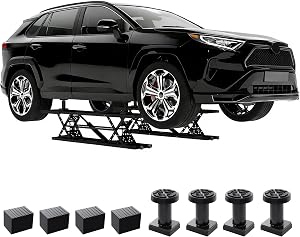

The KATOOL 8500 four-post lift with 3.0HP power unit earns the highest customer rating in this comparison, reflecting strong satisfaction from buyers who use it for both vehicle service and parking storage. The 8,500-pound capacity covers nearly all passenger vehicles, SUVs, and most half-ton pickup trucks, making it a versatile centerpiece for a serious home garage.
We may earn a commission when you buy through this link, at no additional cost to you.
The 3.0HP power unit delivers faster lifting cycles than smaller 1.5HP or 2.0HP units, which matters when you are frequently raising and lowering a vehicle during a service session. The 70.87-inch maximum lifting height provides ergonomic clearance for undercarriage work, and the dual lock system with primary and secondary safety mechanisms on each post offers redundant protection at any height. The single-point manual safety lock release lets one operator lower the lift efficiently.
Standard 110V 60Hz single-phase operation is a key convenience feature because it eliminates the need for a dedicated 220V electrical upgrade in most home garages. The included caster kit allows the empty lift to be repositioned within the garage, which is useful for seasonal rearrangements or when the lift needs to move out of the way for other projects. A 220V power unit is available by request for buyers who want faster cycle times.
One of the practical advantages of a four-post lift is the ability to double your garage parking capacity by storing one vehicle on the ground and raising another on the lift above it. This is particularly valuable for enthusiasts with multiple vehicles or seasonal cars that need indoor storage. Before using any lift for extended parking, verify the lift’s weight rating meets the stored vehicle’s curb weight and consider the structural implications for your garage.
This lift makes sense for enthusiasts and home garage owners who want a long-lasting four-post lift that handles both service and storage without major electrical modifications. The main considerations are the freight delivery logistics, the fact that casters only work for repositioning an unloaded lift, and ensuring adequate ceiling height for raised vehicles. The perfect rating suggests buyers are consistently satisfied with the overall package.
Users who need to service vehicles exceeding 8,500 pounds or who require ultra-tall lifting heights for lifted trucks.
We may earn a commission when you buy through this link, at no additional cost to you.
The Albott 7000 scissor-style lift is aimed at home garage owners and hobbyist mechanics who need to raise a vehicle for brake work, oil changes, suspension repairs, and tire rotations without committing to a permanent two-post or four-post installation. Its scissor design and compact footprint make it a practical option for garages where floor space is shared with daily parking.
We may earn a commission when you buy through this link, at no additional cost to you.
A 7,000-pound capacity covers most passenger cars, SUVs, and light trucks, and the Q235B carbon steel frame with anti-corrosion coating is built to hold up over years of occasional use. The maximum lift height of 28 inches provides enough clearance to sit or kneel underneath comfortably, though it will not allow you to stand upright. Four height increments and two extension panels add flexibility for different wheelbases and lift point locations.
The foldable design with four wheels is the standout practical feature. When you finish a project, the lift collapses and rolls out of the way, which is a significant advantage over fixed lifts that permanently occupy floor space. Multiple locking levers hold the lift at the chosen height for safety, and the upgraded spring design helps the lift recover its lowered position more quickly between uses.
Portable scissor lifts rely on an even floor to distribute load safely across their base. Any slope greater than 4 degrees creates uneven pressure on the hydraulic cylinders and locking mechanisms, which increases the risk of the lift shifting under load. Before using this lift, verify your garage floor is level with a long bubble level, and avoid using it on asphalt driveways or garages with pronounced drainage slopes.
This is the right choice for DIY mechanics who want occasional access to the undercarriage without rearranging their garage around a permanent lift. The main tradeoffs are the limited lift height, the requirement of at least 220 pounds of load to descend, and the need to use the lift only on a flat surface with less than 4 degrees of slope. For heavy-duty daily use or full-size trucks, a two-post or four-post lift is a better fit.
Users who need standing clearance underneath vehicles or who regularly service full-size commercial trucks.
We may earn a commission when you buy through this link, at no additional cost to you.
The APlusLift 8SXLT four-post lift is designed for serious enthusiasts and small shops that need a permanent lift for both maintenance and vehicle storage. With an 8,000-pound capacity and extra-tall, long, and wide dimensions, it accommodates most trucks, SUVs, and larger passenger vehicles with room to spare for comfortable undercarriage access and double-stacking vehicles for storage.
We may earn a commission when you buy through this link, at no additional cost to you.
The 82-inch lifting height is generous for a four-post lift in this capacity range and gives most adults room to stand and work underneath without stooping. The 99-inch drive-through width accommodates wide dually trucks and large SUVs that would not fit on narrower lifts. The CE-certified structure and hydraulic system are tested to 115 percent dynamic load capacity and 150 percent static load capacity, which provides meaningful safety margin above the rated capacity.
Convenience features include a free caster kit for repositioning the lift when not loaded, a jack tray for additional lifting, drip trays to catch fluid during service, aluminum ramps, and the power cord. The 110V 1.5HP hydraulic power unit is a notable advantage because it eliminates the need for a 220V electrical upgrade, which can cost hundreds of dollars in a typical home garage.
Warranty length is one of the more reliable indicators of manufacturer confidence in a car lift. A three-year warranty on structural components and the hydraulic system is well above the industry norm of one year for this price range, and the implied value is roughly $499 according to the manufacturer. For long-term buyers, this coverage reduces the risk of expensive repairs during the early years of ownership.
This lift makes sense for buyers who want a long-term investment backed by a three-year warranty and who have the ceiling height and floor space to accommodate a four-post design. The main tradeoffs are the large physical footprint, the need for a forklift to unload the shipment, and a higher price than entry-level four-post models. If you plan to use the lift for both service and storage, the extra dimensions pay off quickly.
Garages with limited floor space or low ceilings that cannot accommodate a full four-post lift with raised vehicles.
We may earn a commission when you buy through this link, at no additional cost to you.
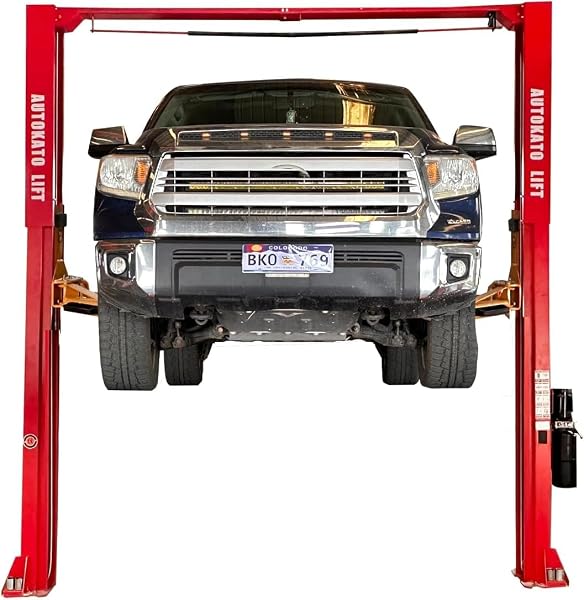
The KATOOL 12,000-pound two-post lift targets professional repair shops and serious home garages where full undercarriage access is a daily requirement. The combination of a 4.0HP motor, 12,000-pound capacity, and 70.86-inch lift height delivers the clearance and power needed to service everything from compact sedans to full-size pickup trucks and heavier SUVs.
We may earn a commission when you buy through this link, at no additional cost to you.
The single-point lock release is a meaningful workflow improvement for solo mechanics. On many two-post lifts, you must walk around to each column to disengage the safety locks before lowering, which slows down busy service cycles. With a single-point release, one motion disengages both sides simultaneously, which speeds up lowering and reduces the chance of operator error on heavy loads.
The dual hydraulic chain-drive cylinders provide synchronized lifting that keeps the vehicle level during travel, and the rubber pad door protection prevents dings when the arms swing into position near open doors. The symmetric arm and base plate design distributes load evenly, which is important for stability under heavier trucks. Screw-on pads and 100mm extension adapters add versatility for vehicles with higher or lower lift points.
Two-post lifts transfer the entire vehicle load through two anchored columns, which places significant stress on the concrete slab below. Most manufacturers specify a minimum of 4 inches of 3,000 PSI concrete, though 6 inches is often recommended for 12,000-pound capacity lifts. Before purchasing, verify your slab thickness by drilling a small test hole or consulting original construction documents, as inadequate concrete is one of the most common installation problems.
This lift is best suited for buyers who have 220V service available, a concrete slab that meets the manufacturer’s thickness and PSI requirements, and enough ceiling height to accommodate the overhead beam plus a raised vehicle. The main tradeoffs are the required electrical upgrade for homes without 220V, the need for a forklift during delivery, and the permanent nature of the installation. For a professional-grade workflow, the capability is hard to beat at this price point.
Home garages without 220V electrical service or inadequate concrete slab thickness for professional two-post installation.
We may earn a commission when you buy through this link, at no additional cost to you.
The KATOOL Clearfloor two-post lift addresses one of the most common complaints about floorplate two-post designs: the horizontal plate between the columns that interferes with rolling toolboxes, floor jacks, and transmission jacks. By routing the hydraulic lines and equalization system through an overhead beam instead, this lift keeps the floor completely clear for easy equipment movement.
We may earn a commission when you buy through this link, at no additional cost to you.
At 12,000 pounds of lifting capacity and 70.87 inches of maximum lifting height, this model matches the capability of KATOOL’s standard two-post lift while offering the clearfloor advantage. The 4.0HP motor provides fast, consistent lifting cycles that keep workflow moving in a busy shop environment, and the heavy-duty steel construction is built for daily commercial use rather than occasional home garage work.
The single-side locking release simplifies operation for a solo technician by disengaging both column locks with one motion. Combined with the clearfloor layout, this makes the lift particularly well-suited for shops where mechanics frequently roll large tool chests or transmission jacks under raised vehicles. The ergonomic 70.87-inch clearance allows most adults to stand upright underneath, which transforms long undercarriage jobs from fatiguing to manageable.
Two-post lifts come in two main configurations. Floorplate designs route the hydraulic equalization lines through a plate at ground level between the columns, which saves ceiling height but creates a small obstruction on the floor. Clearfloor designs route everything through an overhead beam, leaving the floor completely open but requiring more vertical space. If you have at least 12 feet of ceiling clearance, the clearfloor option is almost always more convenient for daily work.
Choose this model if you need professional-grade capacity and want the clearfloor advantage for easy equipment access under raised vehicles. The main consideration is ceiling height, because the overhead beam requires more vertical clearance than a floorplate design. Measure your garage ceiling carefully before ordering, and plan for the delivery and unloading logistics that come with a heavy commercial lift.
Garages with ceiling height below 12 feet that cannot accommodate an overhead equalization beam.
We may earn a commission when you buy through this link, at no additional cost to you.
This 7,000-pound portable scissor lift offers one of the most affordable entry points into dedicated car lifts for home garages. The combination of a Q235B carbon steel frame, four nylon wheels, and foldable storage makes it a practical choice for DIYers who want more capability than a floor jack and jack stands but do not have the space or budget for a permanent two-post or four-post lift.
We may earn a commission when you buy through this link, at no additional cost to you.
The adjustable column system provides a lifting range from 10.24 to 26.8 inches, with four height increments on both the columns and the lifting pads. This flexibility helps match the lift to different vehicle lift points and wheelbase lengths. The 11-inch extension plates increase the contact area for long-wheelbase vehicles, trucks, and SUVs, which addresses a common limitation of smaller portable lifts that only fit shorter cars.
Multiple safety locks hold the vehicle at the chosen height, and the manufacturer specifies that the lift requires a minimum load of about 220 pounds to lower, which is a safety feature that prevents accidental descent. The two sets of wall-mount handles allow you to hang the folded lift vertically for storage when not in use, though you will need to supply your own hooks or heavy-duty wall anchors.
Standard portable scissor lifts can struggle with longer vehicles because the lift pads may not align well with the manufacturer’s recommended lift points. The 11-inch extension plates included with this model expand the usable lifting surface, which helps distribute load across the frame rails of trucks and larger SUVs. Always consult your vehicle’s owner’s manual to identify approved lift points before positioning the lift.
This lift is best suited for budget-conscious DIY mechanics who need occasional access to the undercarriage of standard passenger vehicles, SUVs, and light trucks. The limitations include modest lifting height, the requirement for a level floor surface, and lower overall capacity than a permanent lift. For heavy-duty daily use or working on commercial trucks, step up to a two-post or four-post model instead.
Users who need standing clearance underneath vehicles or who service heavy-duty commercial trucks regularly.
We may earn a commission when you buy through this link, at no additional cost to you.
The KATOOL 8,500-pound four-post lift distinguishes itself by combining the capability of a traditional four-post design with included caster kits that let you reposition the lift inside your garage. This flexibility is particularly valuable for shared garage spaces where the lift needs to move out of the way for daily parking or seasonal projects.
We may earn a commission when you buy through this link, at no additional cost to you.
At 8,500 pounds of lifting capacity, this lift handles the vast majority of passenger vehicles, SUVs, and most half-ton pickup trucks. The 70.87-inch maximum lifting height provides ergonomic standing clearance for undercarriage work, while the dual lock system with primary and secondary safety mechanisms on each post delivers redundant protection at any height. The single-point manual safety lock release simplifies lowering by disengaging all four locks from one location.
The 110V plug-and-play power unit is a significant practical advantage because it works with standard residential electrical outlets. Many comparable four-post lifts require 220V service, which can add hundreds of dollars in electrical work before the lift is operational. The included caster kit lets you roll the lift out of parking position when not needed, though the lift must be empty to move.
This lift uses mechanical locking devices on each of its four posts, with both primary and secondary safety locks for redundant protection. When lifting, listen for all four locks to engage before releasing hydraulic pressure to let the vehicle rest on the mechanical stops. The single-point manual release allows one operator to disengage all locks simultaneously, but always verify the area under the lift is clear before lowering any vehicle.
This model fits buyers who want the stability and storage versatility of a four-post lift without the electrical infrastructure required for 220V operation. The main tradeoffs are the still-substantial footprint when the lift is set up, the need for a forklift during initial delivery, and the fact that the casters only work for repositioning an unloaded lift. For home garages that double as workshops, it is a strong compromise between portability and permanent installation.
Users servicing heavy-duty three-quarter-ton or one-ton pickup trucks that may exceed the 8,500-pound capacity.
We may earn a commission when you buy through this link, at no additional cost to you.
The KATOOL 11,000-pound four-post lift is engineered for garages that need to service and store full-size pickup trucks, large SUVs, and medium-duty vehicles. The 84.5-inch maximum lifting height is among the tallest in this guide and provides exceptional overhead clearance for comprehensive undercarriage work, including transmission removal, exhaust replacement, and complete suspension overhauls.
We may earn a commission when you buy through this link, at no additional cost to you.
The extra tall, long, and wide design accommodates vehicles that would overhang or exceed the dimensions of standard four-post lifts. Combined with the 11,000-pound capacity, this lift handles half-ton and most three-quarter-ton pickup trucks with comfortable margin. The four mechanical locking points with primary and secondary locks on each post deliver the redundant safety required for heavier loads, all controlled through a single manual release mechanism.
The dual voltage flexibility is a thoughtful design choice. The standard 110V 60Hz single-phase power unit works with residential electrical service and keeps installation simple, while the optional 220V power unit provides faster cycle times for shops where speed matters. The dual configuration lets buyers start with 110V and upgrade later if their workflow changes, which is unusual at this capacity range.
With a maximum lifting height of 84.5 inches, this lift requires substantial ceiling clearance to accommodate both the raised vehicle and the overhead crossmember. For a typical full-size pickup truck at 78 inches tall, you need roughly 7 feet from the top of the lift columns to the bottom of your ceiling, plus the vehicle height. Most residential garages have 8 to 10 foot ceilings, so measure carefully before ordering and consider whether garage door tracks or lighting will interfere.
This lift is the right choice for truck owners, serious enthusiasts, and small shops that regularly work on full-size vehicles and want the option to double-stack cars for storage. The main considerations are ceiling height, which must accommodate the raised vehicle plus the overhead beam, and the extra cost for the optional caster kit and rolling jacks if you need those accessories. For a dedicated truck garage, the 84.5-inch clearance makes a significant difference.
Garages with standard 8-foot ceilings that cannot accommodate the overhead beam plus a raised full-size vehicle.
We may earn a commission when you buy through this link, at no additional cost to you.
The KATOOL AK-M120 extra-height two-post lift is built for shops that service tall vehicles such as lifted trucks, work vans, and specialty equipment where standard two-post lifts would not provide enough overhead clearance. The 167-inch overall height gives technicians space to safely raise even the tallest vehicles while still maintaining the structural integrity of the overhead crossmember.
We may earn a commission when you buy through this link, at no additional cost to you.
A 12,000-pound capacity combined with 73 inches of lift height delivers both the strength and workspace required for professional service on heavy vehicles. The dual hydraulic chain-drive system provides synchronized, controlled elevation with balanced arm movement, and the chain-drive design typically requires less long-term maintenance than cable-based mechanisms, which can stretch and need periodic adjustment.
The 220V 4HP motor delivers fast cycle times that boost shop throughput, which matters in a busy commercial environment where every minute of lift wait time multiplies across a full day of service. CE certification confirms adherence to exacting global safety and durability standards, providing additional confidence for buyers who prioritize certified equipment. The red powder coat finish is a stylistic touch that fits well in professional shop environments.
Two-post lifts use either chain-drive or cable-drive systems to synchronize the two columns and keep the vehicle level during lifting. Chain-drive systems like this one typically offer longer service intervals because chains do not stretch and fray the way cables do over time. Cable systems often require periodic tensioning adjustments, while chain systems need primarily lubrication. For high-volume commercial use, the chain-drive design can meaningfully reduce long-term maintenance costs.
This lift is the right choice for commercial shops, specialty repair facilities, and serious enthusiasts who work on lifted trucks or need to accommodate taller vehicles that standard two-post lifts cannot handle safely. The main requirements are substantial ceiling height, 220V single-phase electrical service, and a concrete slab that meets the manufacturer’s thickness and PSI specifications. For a dedicated tall-vehicle service bay, the extra clearance pays off immediately.
Residential garages with standard ceiling heights or shops without access to 220V single-phase electrical service.
We may earn a commission when you buy through this link, at no additional cost to you.
The LM1100S two-post lift provides an attractive entry point into professional-grade lifting capacity at a price that undercuts many comparable models. With 11,000 pounds of lifting capacity, it handles everything from compact cars to most full-size pickup trucks and SUVs, making it a versatile choice for a serious home garage or small independent shop.
We may earn a commission when you buy through this link, at no additional cost to you.
The top-level hydraulic system operates on 220V 60Hz single-phase power and uses dual chain-drive cylinders for synchronized lifting. The lift adheres to the 115 percent dynamic loading capacity standard and has been tested at 150 percent static loading capacity, which provides meaningful safety margin above the rated 11,000-pound figure. The symmetric clearfloor design keeps the floor completely open for rolling toolboxes and jacks.
The included screw-on rubber pads protect vehicle lift points from scuffing, and the extension support adapters add approximately 4 inches of extra height for vehicles with higher pinch welds or unusual lift point locations. This versatility is particularly useful if you work on a variety of vehicle types rather than specializing in a single make or model.
Reputable car lift manufacturers test their lifts to standards that exceed the rated capacity. The 115 percent dynamic loading standard means the lift was tested while actively lifting and lowering at 15 percent above rated capacity, while 150 percent static loading means it was tested holding a stationary load 50 percent above its rated capacity. These margins provide confidence that occasional loads near the rated maximum will not stress the lift beyond safe limits.
This lift is best suited for buyers who want professional capacity at a competitive price and have the infrastructure to support a permanent two-post installation. The main considerations are 220V electrical service, adequate concrete slab thickness, sufficient ceiling height for the clearfloor overhead beam, and arranging for freight delivery with proper unloading equipment. For serious work on a budget, it delivers strong value.
Buyers without 220V electrical service or those who cannot coordinate freight delivery with forklift unloading.
We may earn a commission when you buy through this link, at no additional cost to you.
Selecting a car lift involves balancing capacity, lift type, physical space, electrical infrastructure, and intended use. The factors below cover the key decision points that will shape your purchase and help you avoid common mistakes that lead to installation problems or inadequate performance.
Car lifts fall into three main categories, each with distinct advantages and limitations. Portable scissor lifts fold flat for storage and roll out of the way when not in use, making them ideal for shared garage spaces where the lift must coexist with daily parking. However, they typically offer lower lifting heights of 24 to 30 inches, which allows you to kneel or sit underneath but not stand upright.
Two-post lifts raise the vehicle by the frame or pinch welds and provide full standing clearance plus unobstructed access to all four wheels, which makes them the preferred choice for comprehensive service work including brake jobs, suspension replacement, and transmission removal. Four-post lifts raise the vehicle by its wheels on runway platforms and are better suited for alignment work, long-term storage, and double-stacking vehicles in limited garage space.
Choose a portable lift for occasional DIY work in a space-constrained garage, a two-post lift for serious mechanical service, and a four-post lift for storage or alignment-focused work. Many enthusiasts eventually own more than one type for different tasks.
Weight capacity determines which vehicles your lift can safely handle. The lifts in this guide range from 7,000 pounds for portable scissor models up to 12,000 pounds for professional two-post units. For a typical passenger car weighing 3,000 to 4,500 pounds, any lift in this guide provides ample capacity. For half-ton pickup trucks and large SUVs weighing 5,000 to 7,500 pounds, you should look at lifts rated 9,000 pounds or higher to maintain a reasonable safety margin.
Three-quarter-ton and one-ton pickups, as well as heavy work vans, can approach or exceed 9,000 pounds, which pushes you toward 11,000-pound or 12,000-pound lifts. Never operate a lift at or near its maximum rated capacity, because unexpected weight distribution, cargo, or equipment on board can push the actual load above the rated figure. A safety margin of at least 20 percent above your heaviest vehicle is a conservative baseline.
Choose a capacity rating that comfortably exceeds your largest vehicle’s weight, and consider future vehicle purchases when sizing the lift. Upgrading a lift later is expensive, so overbuilding slightly is usually the smarter approach.
Four-post lifts and two-post lifts require significant ceiling clearance that often exceeds what residential garages were designed to provide. For a two-post clearfloor lift, you typically need at least 12 feet of ceiling height to accommodate the overhead beam plus a raised passenger vehicle. For four-post lifts raising full-size trucks or lifted vehicles, you may need 14 feet or more.
Measure your actual ceiling clearance from the finished floor to the lowest obstruction, including garage door tracks, lighting fixtures, and HVAC ductwork. Many garages have ceilings that are nominally 10 feet high but have garage door tracks or lights at 8 feet that effectively limit lift height. Also consider the floor footprint required for the lift itself plus adequate walkway space around a raised vehicle.
If your garage has limited ceiling height, a portable scissor lift or a floorplate-style two-post lift may be your only options. Measure carefully before ordering any permanent lift, because return shipping on a 1,500-pound freight shipment is expensive and complicated.
Car lifts in this guide operate on either 110V or 220V single-phase power. The 110V lifts can plug into a standard 20-amp residential circuit, which eliminates electrical upgrade costs and lets you install the lift the same day it arrives. The 220V lifts require a dedicated circuit with appropriate breaker sizing, which typically costs between $300 and $800 for an electrician to install depending on the distance from your main panel.
The tradeoff for 110V convenience is slower lifting cycles. A 220V 4HP power unit raises a vehicle significantly faster than a 110V 1.5HP or 3.0HP unit, which matters in a commercial shop environment but is less critical for a home garage where you lift only a few times per day. Some manufacturers offer both voltage options for the same lift, which lets you start with 110V and upgrade later if needed.
Choose 110V for a home garage with no existing 220V service, and 220V for a shop environment or a garage that already has 220V available. Factor the electrical upgrade cost into your total purchase budget when comparing lift options.
Safety is non-negotiable when working under a raised vehicle. Modern car lifts incorporate multiple safety systems including mechanical locks at various height positions, hydraulic velocity fuses that prevent sudden descent if a line fails, and secondary lock mechanisms that provide redundant protection. Four-post lifts typically offer primary and secondary locks on each column for four layers of mechanical protection.
Two-post lifts rely on mechanical locking bars that engage at fixed height intervals, usually every few inches. Before working under any two-post lift, always lower the vehicle slightly after lifting so the arms rest on the mechanical locks rather than hanging on hydraulic pressure alone. Single-point lock release systems allow one operator to disengage all safety locks simultaneously, which simplifies solo operation but requires careful attention to ensure the area is clear before lowering.
Look for lifts with primary and secondary safety locks, velocity fuses on hydraulic lines, and clear operating procedures in the manual. Never bypass or disable safety systems to speed up workflow.
Two-post lifts transfer the entire vehicle weight through two anchor points, which places significant stress on the concrete slab below. Most manufacturers specify a minimum concrete thickness of 4 inches at 3,000 PSI for standard-capacity lifts, though 12,000-pound lifts often require 6 inches of concrete at the same strength. Older residential garages sometimes have slabs as thin as 3 inches, which is inadequate for permanent two-post installation.
Four-post lifts distribute load across four columns, which reduces per-point stress and makes them more forgiving of marginal slab conditions. Portable scissor lifts distribute load across their base and generally work on any level concrete floor. Before committing to a two-post lift, verify your slab by drilling a small test hole or consulting original construction documents from your home builder.
If your slab is inadequate for a two-post lift, consider a four-post model or a portable scissor lift instead of pouring new concrete, which can cost thousands of dollars and significantly delay your project timeline.
Permanent car lifts ship via freight carrier and typically weigh between 1,500 and 2,500 pounds in their shipping configuration. The buyer is responsible for unloading at the destination, which requires either a forklift or arranging delivery to a commercial terminal with loading dock access. This is a significant logistical consideration that many first-time lift buyers underestimate.
Installation of a two-post or four-post lift involves assembling the columns, routing hydraulic lines, mounting the overhead beam, and anchoring to concrete with wedge anchors or epoxy bolts. Most buyers can complete installation themselves with a helper over a weekend, though professional installation is available in many markets for $500 to $1,000. Portable scissor lifts arrive largely assembled and require only basic setup before use.
Plan the delivery logistics before placing your order. If you do not have access to a forklift, confirm that the manufacturer can ship to a terminal for pickup, and factor terminal fees into your total cost.
Before each use, inspect the lift visually for hydraulic fluid leaks, damaged cables or chains, worn lift pads, and proper engagement of safety locks when raising a test weight. Position the vehicle so the lift pads align with the manufacturer’s recommended lift points, which are typically marked in the owner’s manual as reinforced areas of the frame or pinch welds. Never lift a vehicle by non-structural components such as the oil pan or exhaust system, as this can cause expensive damage and dangerous instability.
During lifting, raise the vehicle a few inches off the ground first and verify that it is stable and level before continuing to full height. Once at working height, lower the vehicle slightly so it rests on the mechanical safety locks rather than hanging on hydraulic pressure alone, which is the single most important safety habit when working under any lift. Always keep the work area under the lift clear of tools, parts, and other obstructions in case the vehicle needs to be lowered quickly.
Regular maintenance includes checking hydraulic fluid levels monthly, inspecting cables and chains for wear or corrosion, lubricating moving parts according to the manufacturer’s schedule, and torquing anchor bolts annually to maintain proper hold. Use the specified hydraulic oil grade such as No. 46 for scissor lifts, and never substitute motor oil or other fluids. Store portable lifts in a dry location to prevent corrosion, and cover permanent lifts when not in use to protect hydraulic components from dust and moisture.
For a home garage servicing passenger cars, SUVs, and light trucks, a 7,000 to 9,000-pound lift provides adequate capacity with reasonable safety margin. If you own a half-ton pickup truck weighing around 5,500 pounds, a 9,000-pound lift leaves comfortable headroom. For three-quarter-ton or one-ton trucks, step up to an 11,000 or 12,000-pound lift. Always choose capacity that exceeds your heaviest vehicle by at least 20 percent.
Yes, but you need to verify three critical factors: ceiling height, concrete slab thickness, and electrical service. Most two-post and four-post lifts require 11 to 14 feet of ceiling clearance, 4 to 6 inches of concrete at 3,000 PSI, and either 110V or 220V single-phase power. Portable scissor lifts have more flexible requirements and work in most standard residential garages.
Two-post lifts raise the vehicle by its frame or pinch welds, providing unobstructed access to all four wheels and the complete undercarriage. Four-post lifts raise the vehicle by its wheels on runway platforms, which is better for alignment work, vehicle storage, and double-stacking. Two-post lifts are preferred for comprehensive mechanical service, while four-post lifts excel at storage and wheels-on-platform work.
Not necessarily. Several lifts in this guide operate on standard 110V residential power, including the APlusLift 8SXLT and KATOOL 8500 four-post models. Lifts with 220V power units typically offer faster lifting cycles, which matters in commercial shops but is less critical for home garage use. Factor the cost of 220V electrical installation into your total budget if the lift you want requires it.
Most car lift manufacturers specify a minimum of 4 inches of concrete at 3,000 PSI for standard-capacity lifts, with 6 inches recommended for 12,000-pound two-post lifts. Four-post lifts distribute load across four columns and are more forgiving of marginal slabs. Verify your slab thickness by drilling a small test hole or consulting original construction documents before purchasing a permanent lift.
For occasional DIY work on standard passenger vehicles, a portable scissor lift provides many of the benefits of a permanent lift without the installation complexity. However, portable lifts typically offer only 24 to 30 inches of lifting height, which allows kneeling or sitting underneath but not standing. For professional service work or heavy daily use, a permanent two-post or four-post lift remains the better choice.
Portable scissor lifts and four-post lifts with caster kits can be repositioned when empty by rolling them to a new location. Permanent two-post lifts are anchored to the concrete slab and cannot be moved without unbolting and relocating, which requires significant effort and may damage the slab. Plan the lift's permanent location carefully before installation, considering ceiling height, electrical access, and workflow around the lift.
Essential safety features include mechanical locking devices at multiple height positions, hydraulic velocity fuses that prevent sudden descent if a line fails, and secondary lock mechanisms for redundant protection. Four-post lifts typically offer primary and secondary locks on each column. Single-point lock release systems simplify solo operation. Always verify the lift meets recognized safety standards such as CE certification.
Professional installation of a two-post or four-post lift typically costs between $500 and $1,000 depending on your location and the complexity of the installation. Many buyers successfully install lifts themselves with a helper over a weekend, following the manufacturer's detailed instructions. Portable scissor lifts arrive largely assembled and require only basic setup. Add electrical work costs separately if you need 220V service installed.
Yes, four-post lifts are well-suited for vehicle storage because they support the vehicle by its wheels on runway platforms rather than the frame. This distributes weight naturally and avoids stressing specific lift points over extended periods. Many enthusiasts use four-post lifts to double their garage parking capacity by storing a seasonal vehicle above a daily driver. Verify the lift's capacity exceeds the stored vehicle's weight.
The KATOOL 12,000-pound two-post lift stands out as the strongest overall choice for serious home garages and professional shops, combining heavy-duty capacity, a powerful 4.0HP motor, and a single-point lock release that streamlines solo operation. Its 70.86-inch lift height and symmetric clearfloor design provide the standing clearance and open floor space needed for comprehensive undercarriage service work.
For buyers with different priorities, the Albott 7000 portable scissor lift offers the most flexibility for shared garage spaces, while the APlusLift 8SXLT four-post model provides exceptional warranty coverage and 110V plug-and-play installation. If you service tall vehicles, the KATOOL AK-M120 with 167-inch overall height delivers unmatched overhead clearance, and the top-rated KATOOL 8500 four-post lift combines service capability with vehicle storage versatility.
Your final decision should come down to three factors: the weight and type of vehicles you plan to lift, the dimensions and electrical capacity of your garage, and whether you prioritize portability, storage, or professional service capability. Measure your ceiling height carefully, verify your concrete slab meets manufacturer specifications, and choose a capacity that comfortably exceeds your heaviest vehicle.