FOXWELL NT604 Elite
8.8Editor scoreEngine ABS SRS
Transmission diagnosis
AutoVIN identification
Lifetime updates
Compare 10 top car diagnostic tools including OBD2 scanners, Bluetooth code readers, and bidirectional scan tools for DIY mechanics and pros.
Find the right car diagnostic tools for your garage in 2026. We compare 10 standout OBD2 scanners and code readers by the factors that matter most when a check engine light appears: system coverage, vehicle compatibility, live data capability, bidirectional control, reset services, app integration, update policy, and overall value for the price you pay.
A modern car diagnostic tool ranges from a simple code reader that costs less than a tank of gas to a professional bidirectional scanner that rivals dealership equipment. The right choice depends on whether you just want to know why the check engine light is on or need to program modules, reset service intervals, and communicate with every ECU in the vehicle.
This guide covers plug-and-play code readers, mid-range scanners with ABS and SRS support, Bluetooth models that pair with your phone, and full-feature bidirectional tools with reset services. Whether you are a first-time DIYer or a serious home mechanic, the picks below help you match capability to budget without overpaying for features you will never use.
We compared 10 car diagnostic tools using the details that genuinely help a buyer decide: OBD2 protocol coverage, supported systems beyond engine, live data and graphing capability, bidirectional and reset services, vehicle brand compatibility, app or standalone interface, update policy, subscription cost, owner ratings, and price positioning. The notes focus on practical trade-offs so each pick connects to how people actually diagnose check engine lights, verify repairs, and prepare vehicles for emissions inspections.


Compare key features, scores, and current prices side by side. A shorter feature list means fewer details were available, not necessarily fewer capabilities.




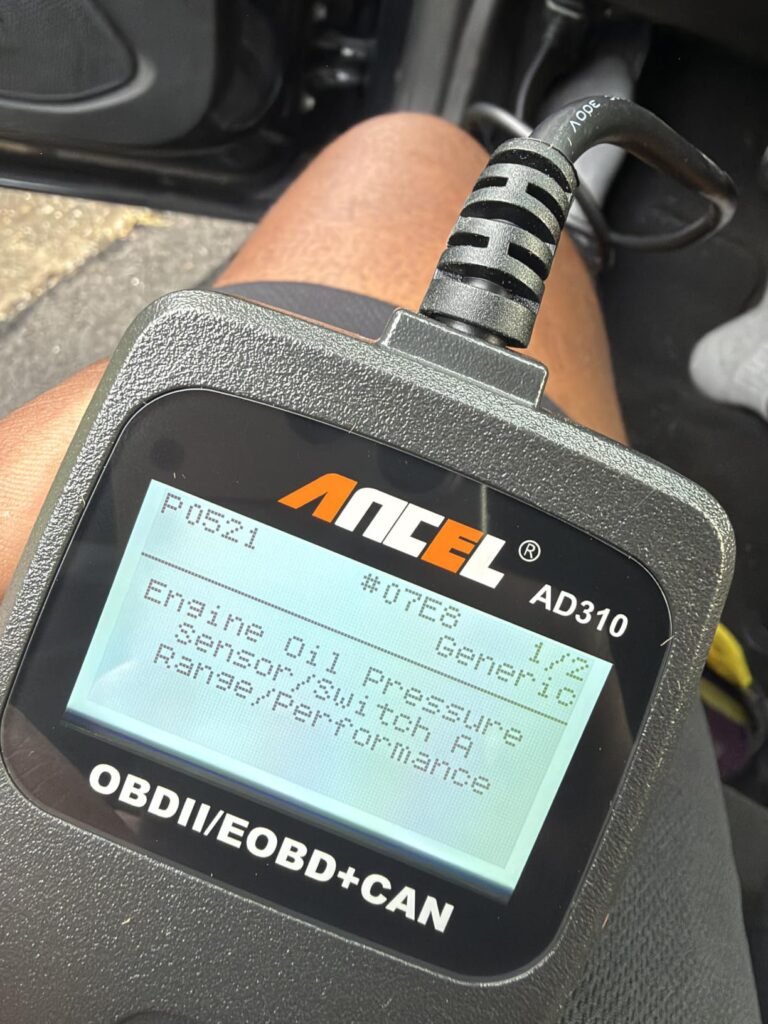
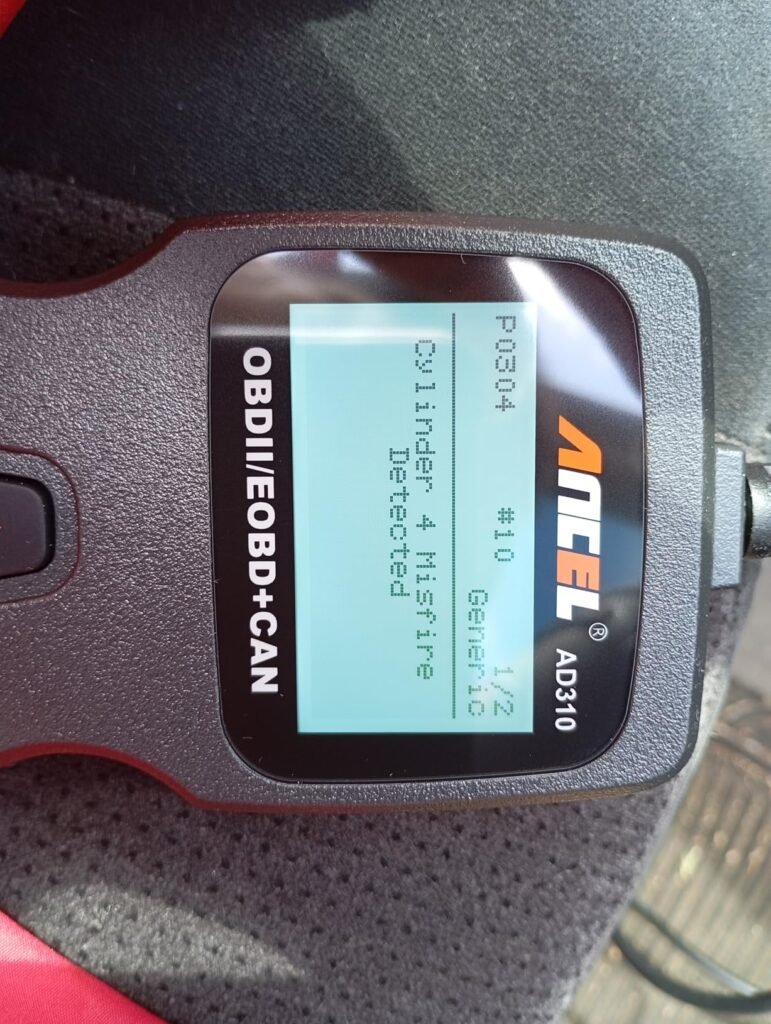
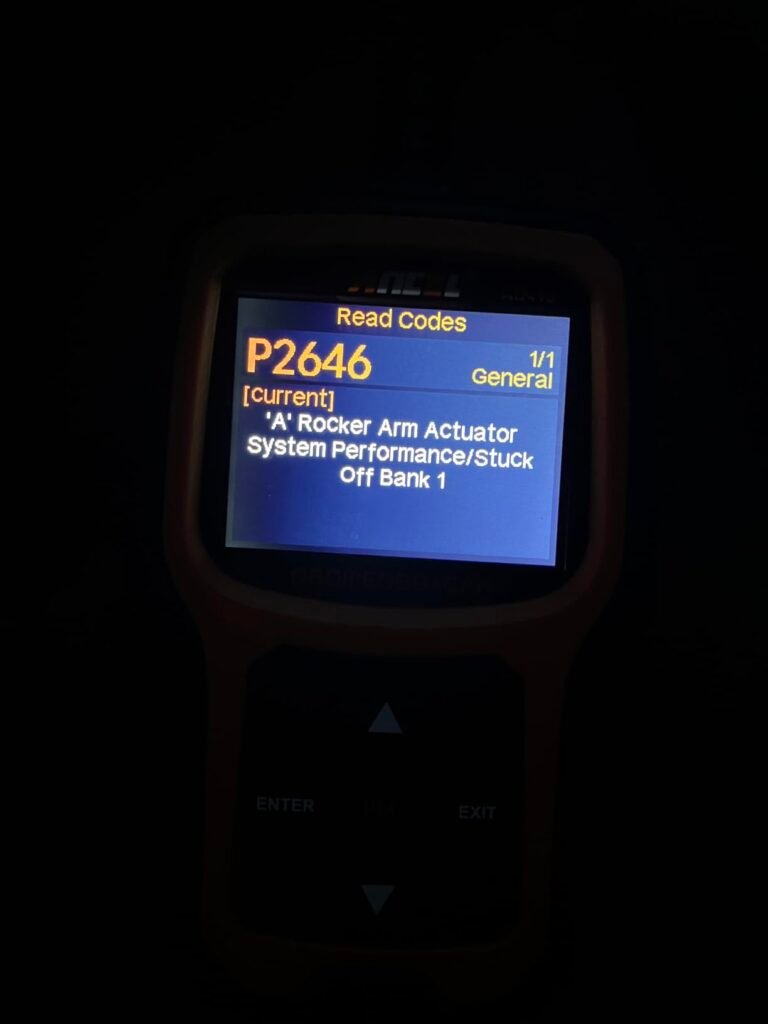
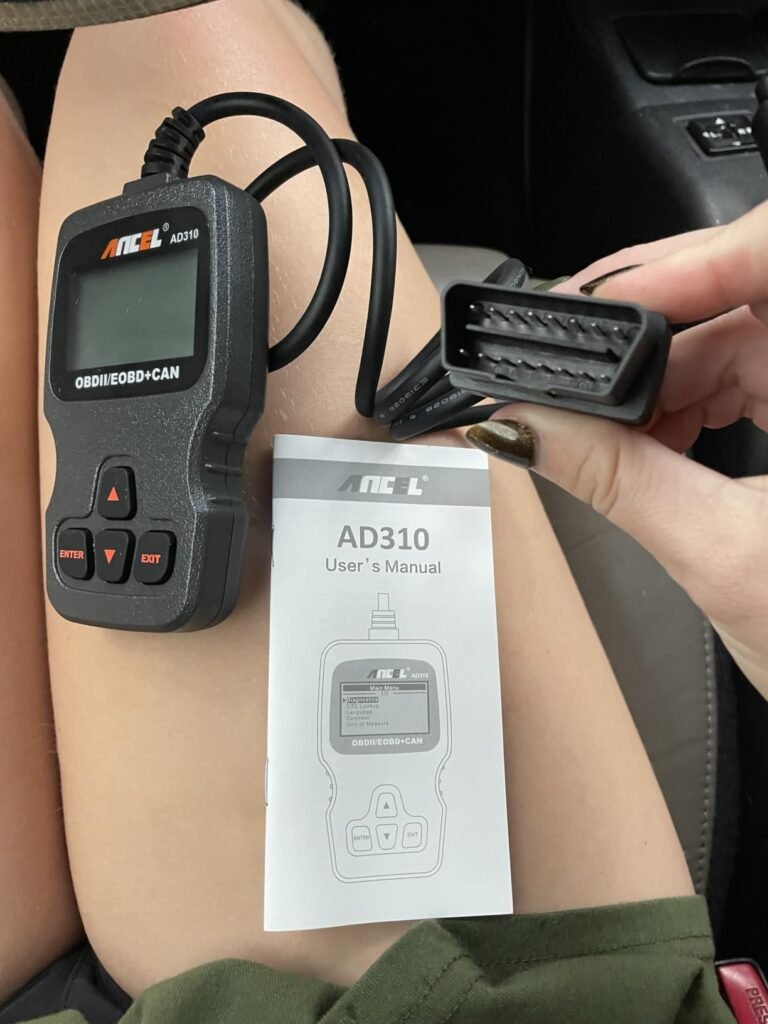
The ANCEL AD310 has earned a reputation as one of the most straightforward entry-level scanners on the market, and its longevity as a top seller reflects genuine buyer satisfaction. It targets drivers who want to know what triggered the check engine light without navigating menus, apps, or subscriptions. Plug it into the OBD2 port under the dash, turn the ignition on, and the tool reads codes within seconds.
We may earn a commission when you buy through this link, at no additional cost to you.
The AD310 supports all five OBD2 protocols including KWP2000, J1850 VPW, ISO9141, J1850 PWM, and CAN. This broad compatibility means it works with essentially any 1996 or newer US vehicle, plus most 2000 or newer European and Asian cars, light trucks, and SUVs. It reads and clears diagnostic trouble codes, displays freeze frame data, checks I/M readiness monitors, and pulls basic vehicle information.
Build quality is a genuine strength at this price point. The 2.5-foot cable uses thick, flexible insulation that resists cracking, and the housing weighs enough to feel substantial without being bulky. No batteries or charging cables are needed because it draws power directly from the vehicle’s data link connector. The 8.9-by-6.9-inch footprint fits easily in a glove box or small tool bag.
Entry-level OBD2 readers like the AD310 access only the engine and emissions systems, which is what triggers the check engine light. If your ABS warning light, airbag light, or transmission light comes on, this class of tool cannot read those codes. For those systems you need a scanner rated for all-system diagnostics or a specialty tool for the specific module.
Choose this tool if you want a no-frills code reader that handles the essential job of decoding check engine lights on almost any modern car. Buyers who need ABS, SRS, or transmission diagnostics should step up to a scanner with expanded system coverage, since the AD310 handles emission-related engine codes only.
Buyers who need to read ABS, airbag, or transmission codes beyond basic engine diagnostics.
We may earn a commission when you buy through this link, at no additional cost to you.
The FOXWELL NT604 Elite sits in the practical middle ground where most DIY mechanics benefit most. It extends beyond basic engine diagnostics to include ABS, SRS airbag, and transmission systems, which cover the four most common warning lights that leave drivers guessing. This makes it a genuine step-up from entry-level readers without requiring the investment of a professional-grade tool.
We may earn a commission when you buy through this link, at no additional cost to you.
AutoVIN is a standout convenience feature that pulls your vehicle identification number and specs automatically rather than requiring manual entry through multiple menu screens. The tool ships with the latest software preloaded so you can start diagnosing immediately without downloading updates first. Built-in DTC library, live data streaming, data playback, and print capability round out the professional-feeling feature set.
The rugged carrying case is worth noting because most scanners at this price ship in flimsy plastic bags. FOXWELL includes a proper protective case that keeps the tool safe during storage and transport, which extends useful life significantly. Lifetime free updates ensure the vehicle coverage stays current as new model years release, and 60-plus car brand compatibility covers most vehicles on the road.
This scanner reads and clears codes but does not perform physical repairs or service resets. When you clear a code without fixing the underlying issue, the code returns as soon as the vehicle detects the fault again. The right workflow is to diagnose with the scanner, physically repair the problem, then use the scanner to verify the fix and clear the code.
This scanner suits DIY mechanics who want to diagnose the four most common warning light systems without paying for professional bidirectional control or reset services. If you need to reset oil service intervals, register batteries, or perform ABS bleeding procedures, look at more advanced tools with dedicated reset functions.
Users who need service reset functions like oil light reset, ABS bleeding, or battery registration.
We may earn a commission when you buy through this link, at no additional cost to you.
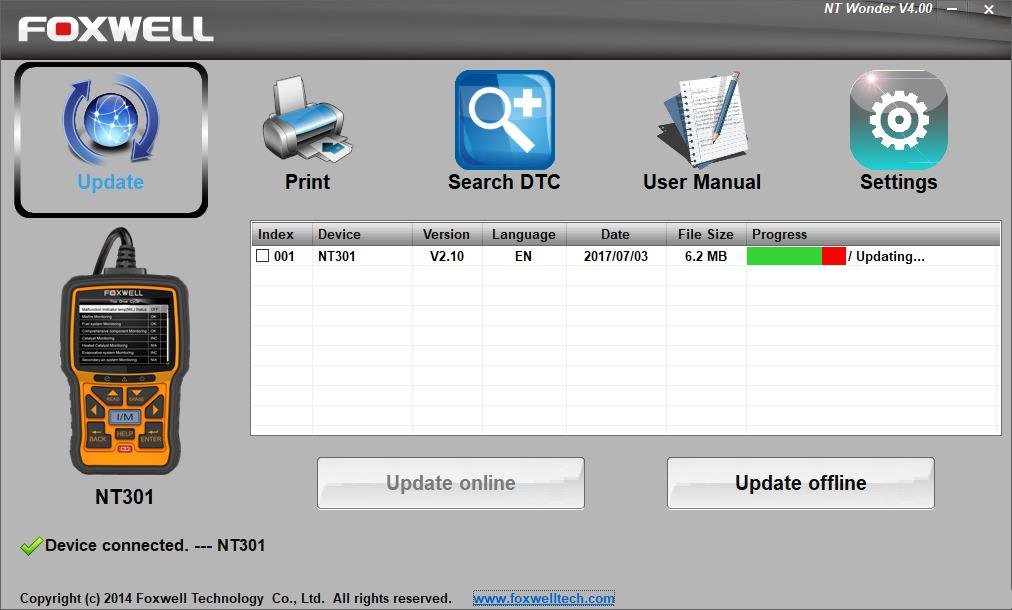
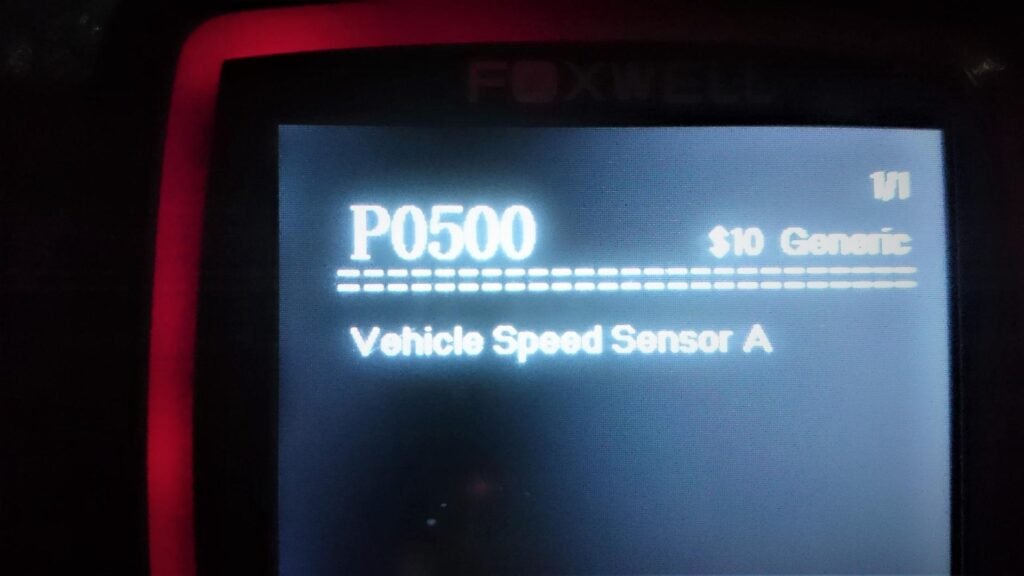
The FOXWELL NT301 hits a genuine sweet spot in the entry-to-mid range category by adding professional-level features while keeping the price accessible. It reads and clears engine codes like basic scanners, but adds live data graphing, dedicated I/M readiness hotkeys, and advanced OBD2 modes that push it into territory usually reserved for pricier tools.
We may earn a commission when you buy through this link, at no additional cost to you.
Live data graphing is the standout feature and one you rarely find at this price point. You can view and log real-time sensor readings including oxygen sensors, fuel trims, coolant temperature, and RPM in easy-to-read graph form. This makes spotting intermittent problems dramatically easier than scrolling through numerical readouts, since abnormal patterns become visually obvious against the trend line.
The red-yellow-green LED indicator and built-in audio feedback for I/M readiness is a genuinely useful convenience feature for anyone preparing a vehicle for emissions inspection. One glance at the indicator tells you whether your monitors have reset and completed after a battery disconnect or code clear. Advanced modes include EVAP system checks for fuel tank integrity and O2 sensor testing that helps optimize air-fuel ratio.
A code tells you what triggered a fault, but live data shows you why. When you can watch fuel trims climb during acceleration or see coolant temperature spike inconsistently, you can diagnose intermittent problems that never trigger a persistent code. Graphing makes these patterns visible in seconds, which is far more useful than staring at rapidly changing numbers on a text-only display.
This is the best all-around pick for DIY mechanics who want more than a basic code reader without stepping up to a full multi-system scanner. If you specifically need ABS, SRS, or transmission access, you will need to spend more, but for engine diagnostics with live data analysis this is hard to beat at the price.
Buyers who need ABS, SRS, or transmission diagnostics beyond engine and emission systems.
We may earn a commission when you buy through this link, at no additional cost to you.
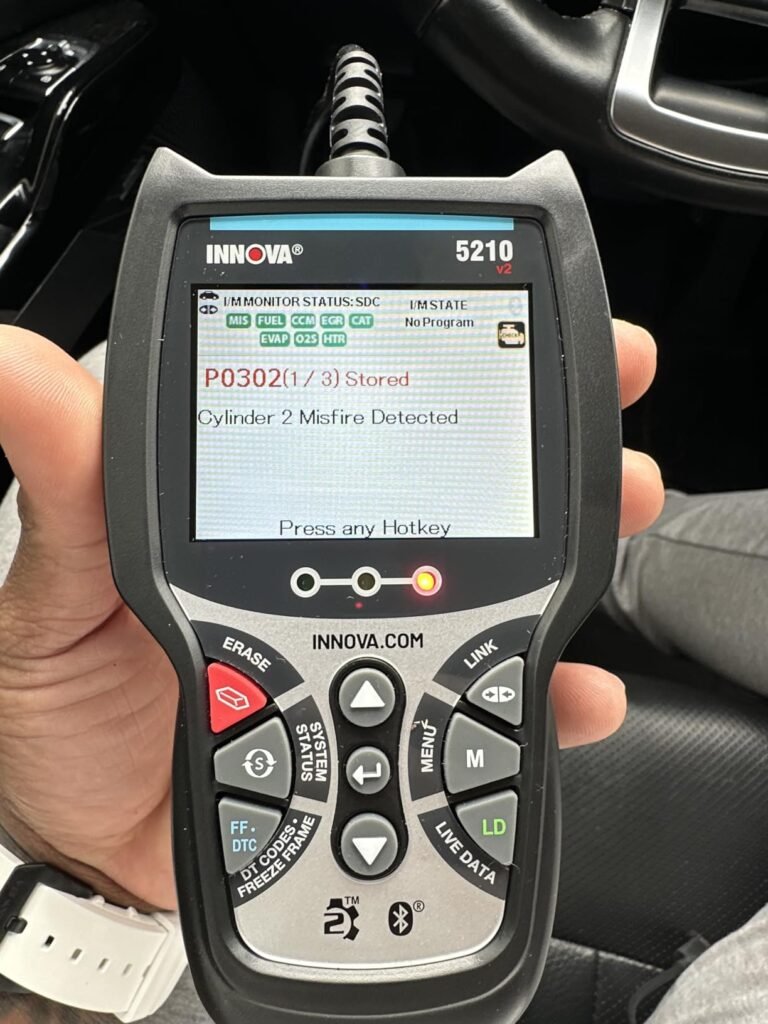
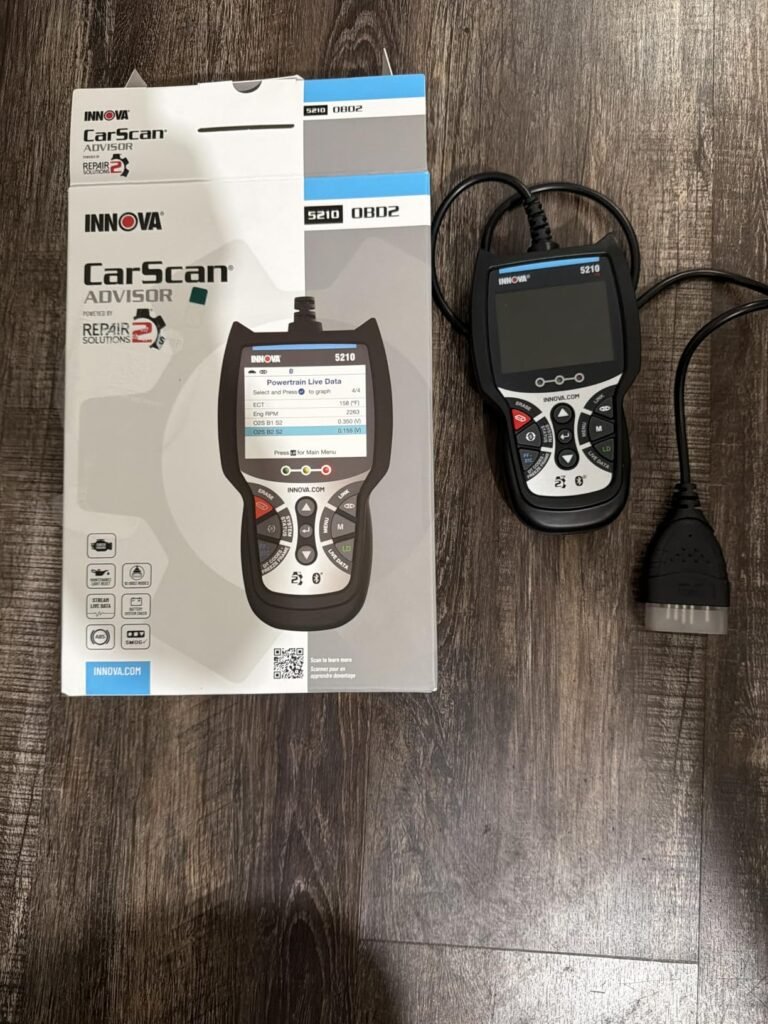
The Innova 5210 differentiates itself by combining OBD2 scanning with battery and alternator testing, addressing two of the most common vehicle problems in a single tool. This makes it particularly useful for anyone dealing with an aging battery or intermittent electrical issues that could stem from either the battery, the alternator, or the engine control system.
We may earn a commission when you buy through this link, at no additional cost to you.
Beyond standard code reading and clearing, the 5210 handles ABS codes on many vehicles though coverage varies by make and model. The oil light reset function is genuinely useful for DIYers who change their own oil, since it eliminates the need to visit a service shop just to clear the maintenance reminder. Live data access covers RPM, engine temperature, fuel trims, and oxygen sensor readings.
Bluetooth pairing with the free RepairSolutions2 app extends functionality significantly. The app database includes verified fixes from ASE-certified mechanics based on real repairs matching your specific fault codes, along with suggested parts and cost estimates. Trusted by four million users, the app operates without any subscription fees, which is an important distinction from competing tools that lock premium features behind paywalls.
Many modern vehicle problems that appear to be complex electronic faults are actually caused by weak batteries producing insufficient voltage. Built-in battery testing lets you rule out this common cause before chasing expensive computer-related repairs. Combining battery and OBD2 diagnostics saves the cost of separate tools and simplifies your troubleshooting workflow.
This scanner fits buyers who want combined OBD2 and battery testing capability plus the convenience of app-based repair guidance. If your primary need is deep multi-system diagnostics without battery testing, other tools in this range may deliver more diagnostic depth for the price.
Users who need reliable ABS coverage across all vehicle brands without checking compatibility first.
We may earn a commission when you buy through this link, at no additional cost to you.
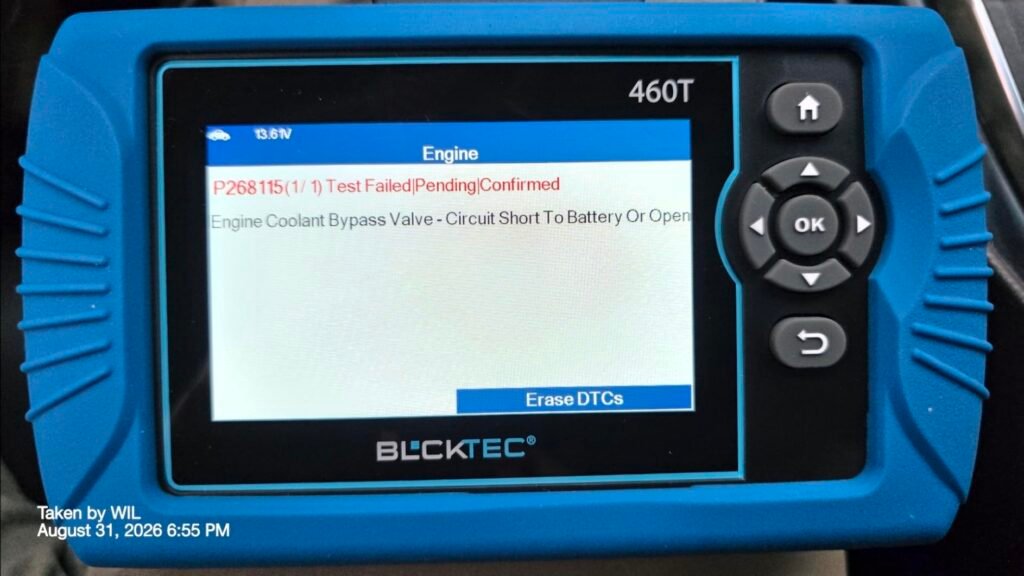
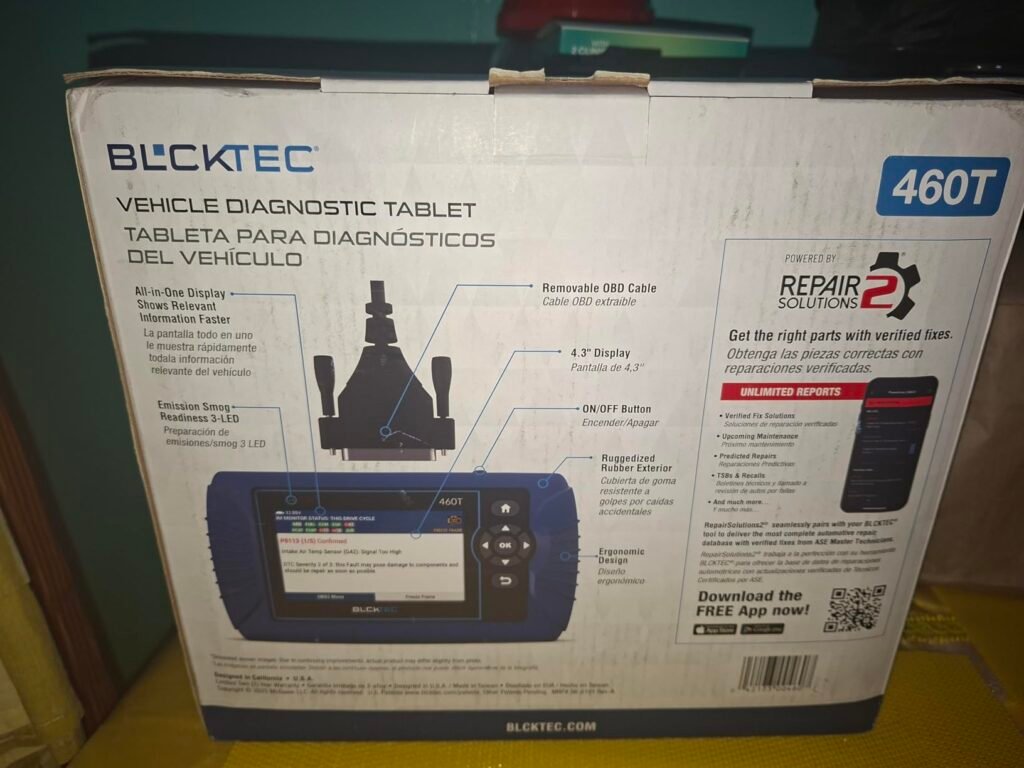
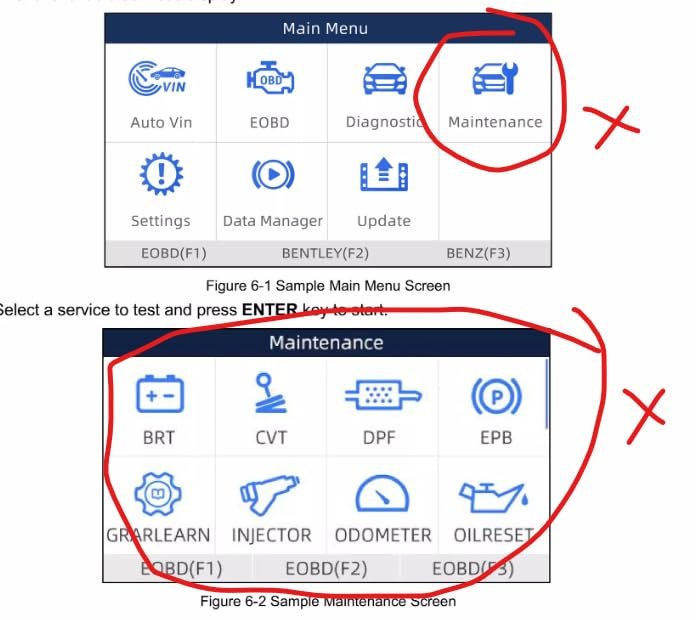
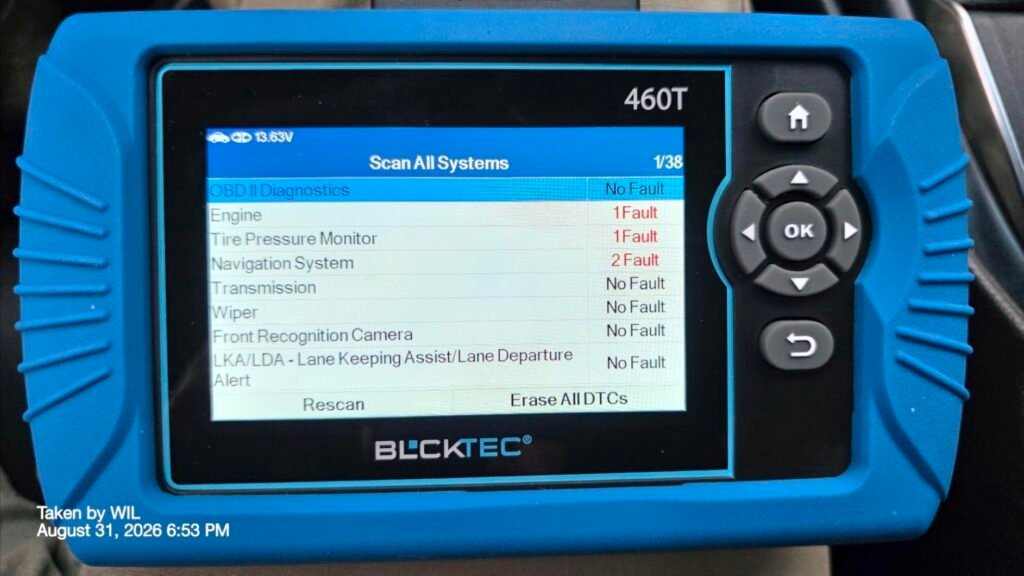
The BLCKTEC 460T brings professional-level diagnostic and service capabilities into a home mechanic's price range. Its all-system diagnostics cover engine, transmission, ABS, SRS, and beyond across every ECU in the vehicle, and its twelve reset services handle maintenance procedures that traditionally required a trip to the dealer or an independent shop with expensive equipment.
We may earn a commission when you buy through this link, at no additional cost to you.
The reset service list is genuinely impressive: oil maintenance reset, ABS bleeding, electronic parking brake reset, steering angle sensor recalibration, diesel particulate filter reset, throttle body relearn, battery registration, TPMS relearn, transmission reset, and more. Each of these procedures normally requires a shop visit costing tens to hundreds of dollars, so the tool can pay for itself in avoided service fees within a year of ownership.
AutoVIN, AutoScan, and AutoReLink work together to speed up diagnosis dramatically. The scanner identifies your vehicle automatically, scans every ECU without requiring button presses, and refreshes readiness data every 30 seconds. Pairing with the free RepairSolutions2 app adds verified fixes, OEM warranty info, maintenance schedules, and cloud storage for scan reports. Free lifetime updates keep coverage current for new vehicle models.
A single dealer visit to reset an electronic parking brake, register a new battery, or relearn a throttle body can cost anywhere from $50 to $200 in labor. If you perform even three or four of these procedures per year on your household vehicles, the diagnostic tool pays for itself quickly. The value multiplies further if you help friends and family with their vehicles too.
This scanner suits serious DIY mechanics and small shops that need professional capabilities without commercial-tier pricing. Verify compatibility on the manufacturer website before purchasing since specific reset functions vary by vehicle year and make, and coverage is limited to USA and Canada markets.
Users outside USA and Canada, or those who only need basic engine code reading.
We may earn a commission when you buy through this link, at no additional cost to you.
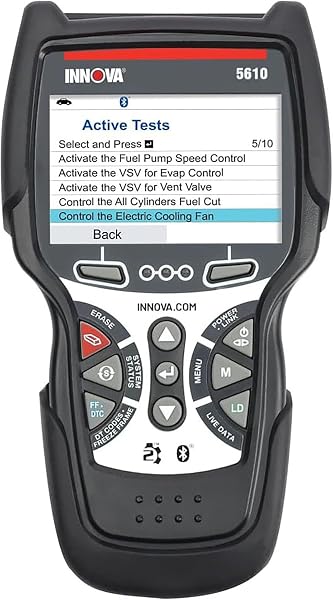
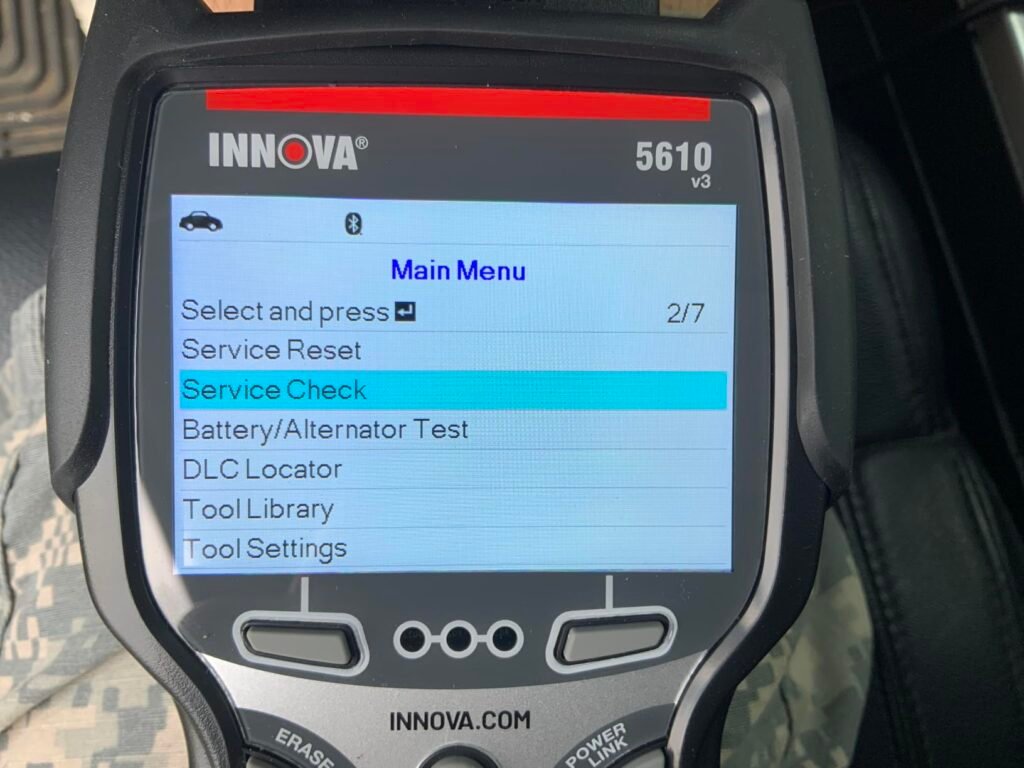
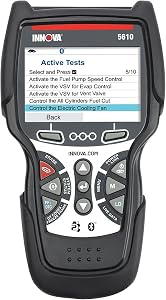
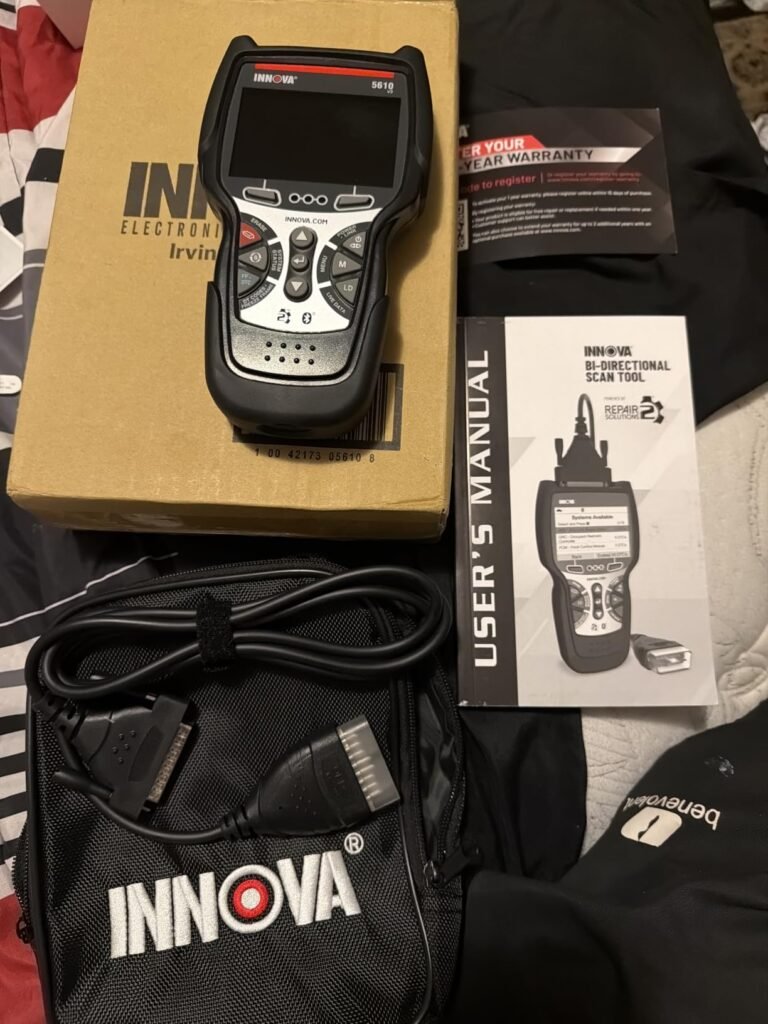
The Innova 5610 crosses into professional territory with true bidirectional control, which is what separates real diagnostic tools from code readers. Bidirectional capability lets the scanner send commands to the vehicle to activate specific components like fuel pumps, cooling fans, or the electronic parking brake, letting you test individual parts without complex manual procedures.
We may earn a commission when you buy through this link, at no additional cost to you.
Enhanced OEM data streams go beyond generic OBD2 information to access manufacturer-specific parameters for ABS, SRS, transmission, and engine systems. This depth of information is essential for diagnosing complex problems that basic scanners cannot identify. Special reset functions handle dealership-level relearn procedures that most consumer tools cannot access, making the scanner useful for advanced repairs.
US-based technical support is worth noting because the 5610 targets serious users who need real expertise when troubleshooting difficult problems. Phone and email support in English and Spanish is available Monday through Friday, backed by ASE-certified staff. The scanner pairs with the RepairSolutions2 app for verified fixes and repair guidance, and it supports most 1996 through 2026 OBD2 vehicles.
Bidirectional communication turns the diagnostic tool into an active participant rather than just a reader. You can command the vehicle to cycle a specific injector, activate the fuel pump, or retract the electronic parking brake for pad replacement. This capability transforms complex diagnostic and service procedures from guesswork into precise, controlled tests.
Choose this scanner if you regularly perform complex repairs, run a home shop, or maintain multiple vehicles including newer models with advanced electronics. If you only need basic code reading for occasional check engine lights, the price premium is not justified compared to entry-level tools.
Casual DIYers who only need basic code reading for occasional check engine lights.
We may earn a commission when you buy through this link, at no additional cost to you.
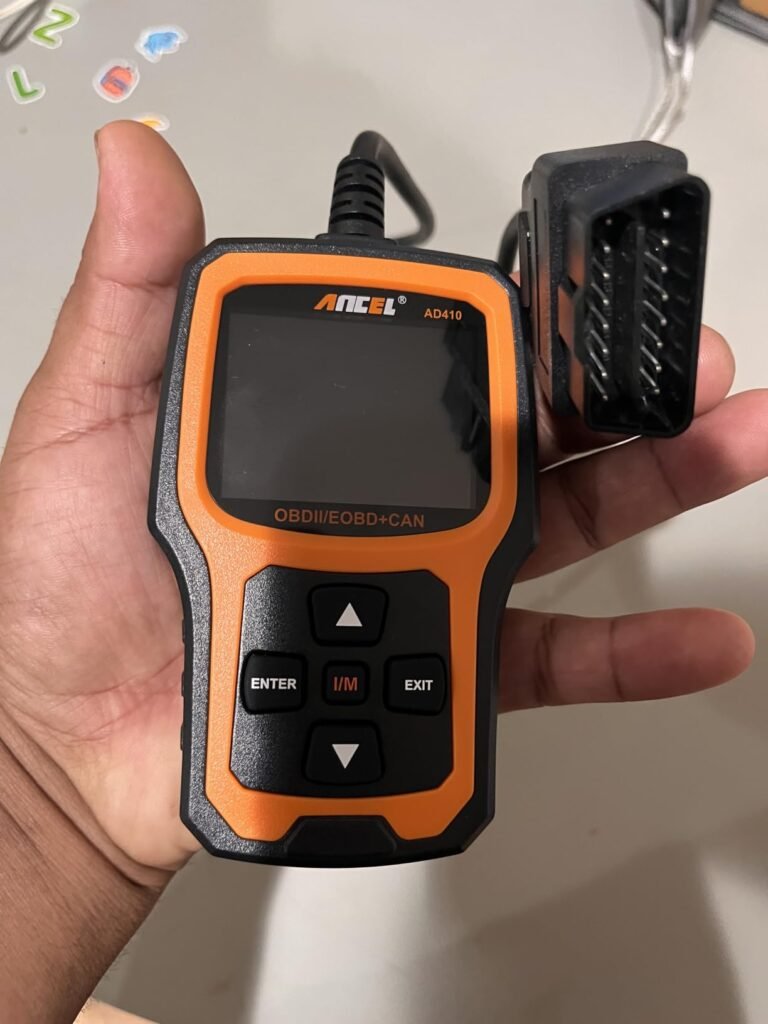
The ANCEL AD410 targets beginners who want a friendlier interface than the most basic code readers offer, without stepping up to a full multi-system scanner. Its 2.4-inch color display and clear on-screen code definitions make the tool approachable for first-time users who might feel overwhelmed by more technical scanners.
We may earn a commission when you buy through this link, at no additional cost to you.
The built-in DTC library covers over 42,000 codes with plain-language definitions, which eliminates the need to look up cryptic codes on your phone or laptop. Standard OBD2 functions include reading and clearing codes, live data viewing, freeze frame data, I/M readiness monitoring, O2 sensor testing, EVAP testing, and MIL status. Live data displays real-time engine parameters including RPM, coolant temperature, fuel trims, and oxygen sensor readings.
No batteries, chargers, Bluetooth, or app pairing are required. The tool powers directly from the vehicle’s OBD2 port and works standalone, which is genuinely convenient for users who prefer to avoid smartphone integration. Free software updates keep the code database current, and the intuitive menu supports multiple languages including English, French, German, Spanish, and more.
Older code readers show cryptic strings like P0301 that require a separate lookup to understand. A built-in library translates those codes into plain descriptions like Cylinder 1 Misfire Detected on the display itself. This small feature saves considerable time and confusion, especially for beginners who do not have a code reference guide memorized.
This scanner is a strong pick for first-time OBD2 tool buyers who want more comfort features than a bare-bones reader offers. If you need to diagnose ABS or airbag warning lights, or perform any service reset functions, you will need to look at multi-system tools instead.
Users needing ABS, airbag, transmission, or service reset capabilities.
We may earn a commission when you buy through this link, at no additional cost to you.
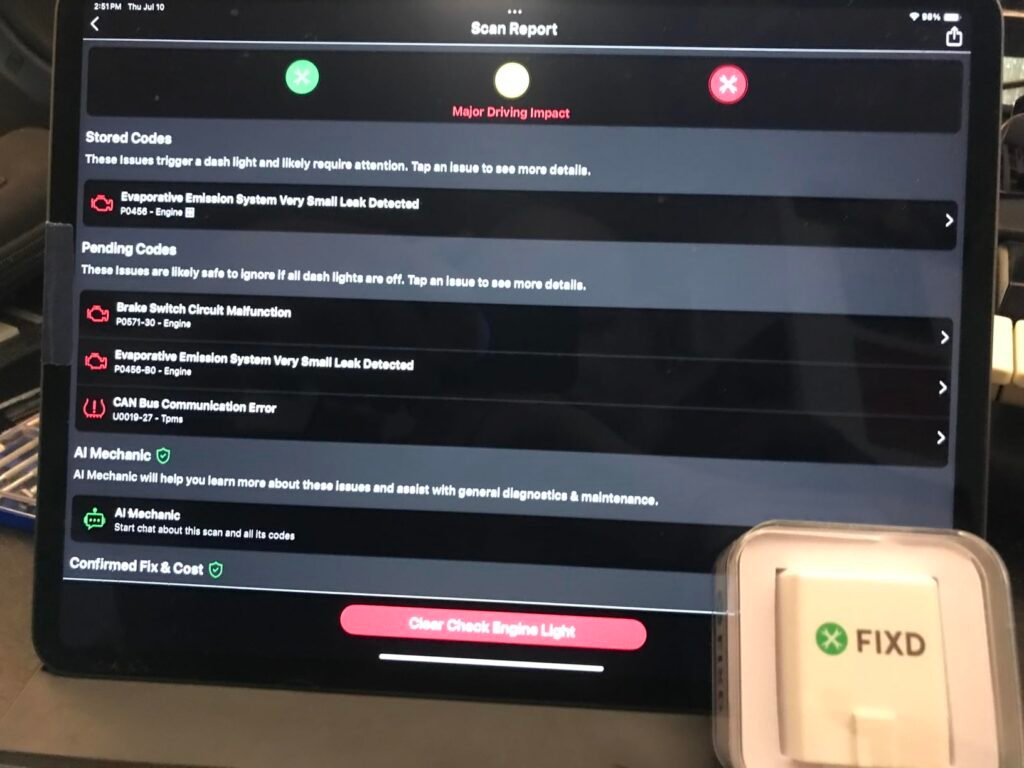
The FIXD Bluetooth scanner takes a fundamentally different approach from handheld tools by pairing a compact plug-in sensor with a smartphone app. The sensor stays hidden under the dash permanently while your phone becomes the display, controls, and diagnostic interface. This works well for anyone who wants continuous vehicle monitoring rather than pulling out a handheld tool only when a warning light appears.
We may earn a commission when you buy through this link, at no additional cost to you.
The app translates fault codes into plain English explanations rather than cryptic OBD2 code strings. It scans 39,000-plus issues across thousands of vehicles and alerts you when FIXD detects severe problems or needed maintenance. The multi-vehicle capability lets you manage several family cars in a single app, save scan history by vehicle, and share results with mechanics or family members.
Compatibility covers gasoline and hybrid vehicles from 1996 forward and diesel vehicles from 2006 forward. The sensor connects wirelessly via Bluetooth to iPhone and Android devices for fast, cable-free diagnostics. A free premium trial demonstrates the paid tier features including detailed repair recommendations, cost estimates, vehicle value tracking, and live mechanic support.
The permanent plug-in sensor design shines for daily drivers who want early warnings about developing issues rather than reactive diagnosis after the check engine light appears. Passive monitoring, maintenance reminders, and cloud-stored scan history are genuinely useful for busy households managing multiple vehicles across different drivers and repair histories.
This scanner suits drivers who want ongoing vehicle monitoring more than deep diagnostic capability. If you prefer standalone handheld tools that do not require your phone, or if you want to avoid any subscription upsells for advanced features, a traditional scanner will fit your workflow better.
Users who prefer standalone handheld scanners and want to avoid subscription upgrades.
We may earn a commission when you buy through this link, at no additional cost to you.
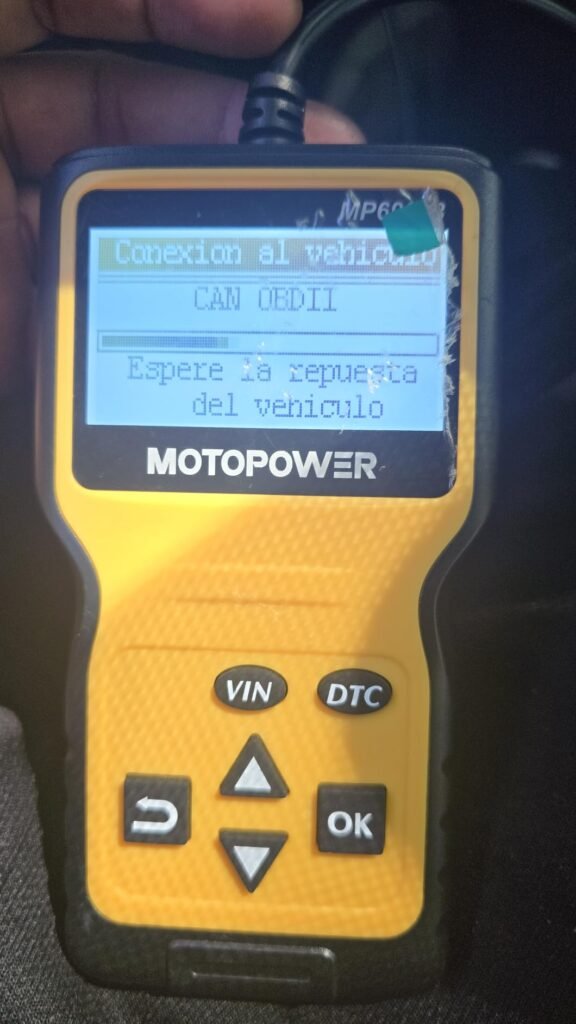
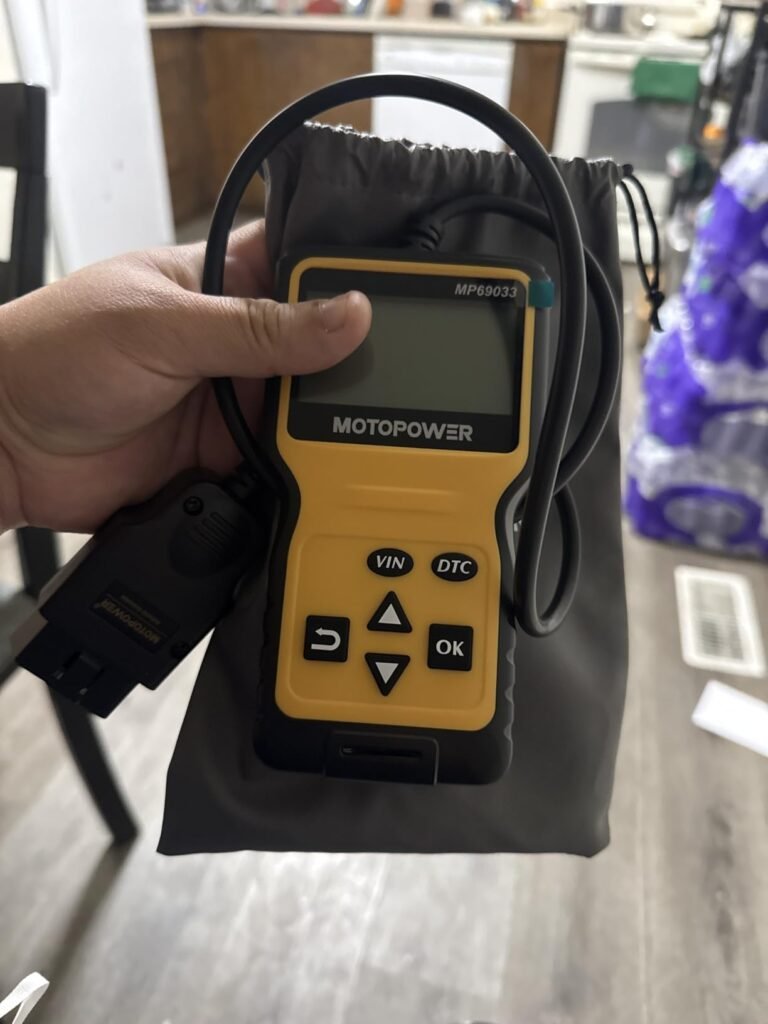
The MOTOPOWER MP69033 delivers essential OBD2 diagnostic capabilities at the lowest price in this guide. It handles the core job of any code reader: identifying why the check engine light is on and clearing the code once you have fixed the underlying problem. For occasional users who just want a tool to keep in the glove box for emergencies, it delivers real value.
We may earn a commission when you buy through this link, at no additional cost to you.
The 2.8-inch LCD display is larger than typical bargain-basement scanners and includes white backlight with contrast adjustment for readability in different lighting conditions. Nine OBD2 protocols are supported, ensuring compatibility with most 1996 and newer US, European, and Asian vehicles. The built-in DTC library translates codes into descriptions directly on the screen without requiring a separate lookup.
Six-language menu support including English, German, Dutch, Spanish, French, and Italian makes this tool more accessible internationally than many competitors that offer English only. Dedicated hotkeys for VIN retrieval and DTC lookup speed up common tasks, and the 2.5-foot cable provides comfortable reach from the OBD2 port. No batteries or charger needed since it draws power from the vehicle.
For drivers who only need to occasionally check what caused a check engine light and clear the code after a simple repair, a basic reader is genuinely sufficient. Modern cars produce clear code descriptions once translated by the built-in library, and most engine issues can be researched further using free online resources. Spending more only makes sense if you actually need the extra capabilities.
Choose this scanner if you want a reliable basic code reader without spending more than the cost of a tank of gas. Anyone needing ABS diagnostics, live data graphing, or reset services should look at more capable tools since this one handles engine codes only.
Users who need ABS, airbag, transmission diagnostics, or any service reset functions.
We may earn a commission when you buy through this link, at no additional cost to you.
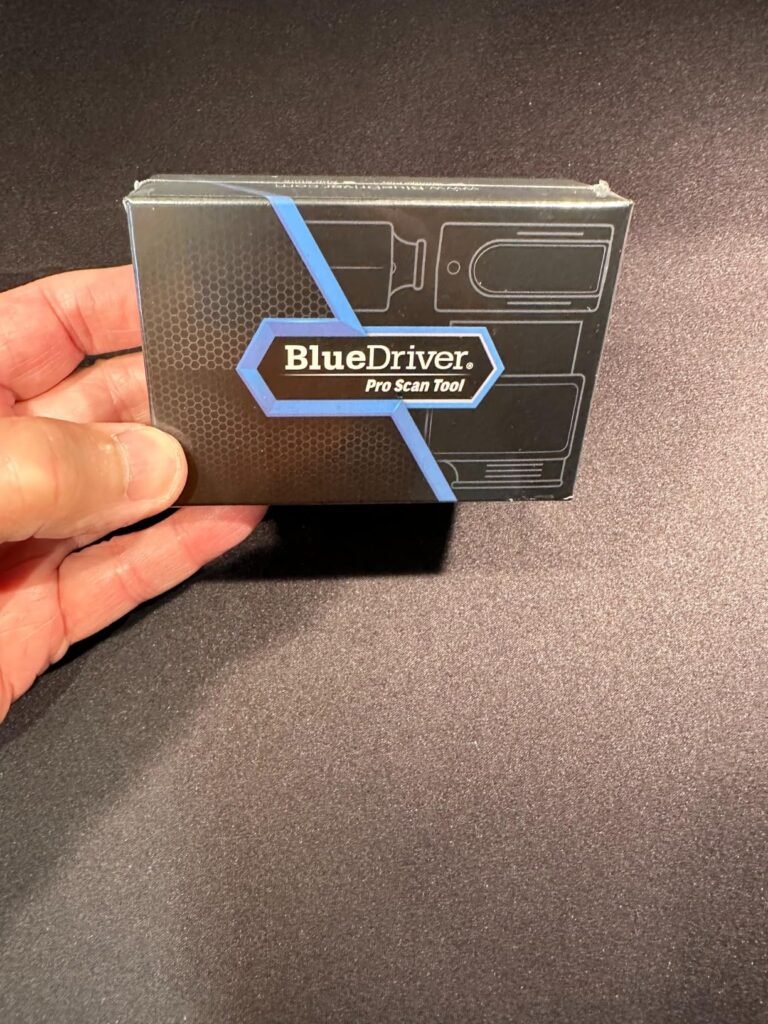
The BlueDriver Pro brings professional multi-system diagnostic capabilities to a Bluetooth-based tool with a rare no-subscription policy. Where competitors lock premium features behind monthly fees, BlueDriver includes lifetime access to all features with the one-time purchase, which meaningfully changes the long-term cost equation compared to subscription-based alternatives.
We may earn a commission when you buy through this link, at no additional cost to you.
System coverage extends well beyond basic engine diagnostics to include ABS, SRS airbag, TPMS, transmission, and enhanced OEM data on many vehicles. Unlimited repair reports use vehicle-specific verified fixes matched to your VIN, along with definitions, causes, and confirmed repairs from real technicians. Live data monitoring, freeze frames, smog readiness checks, and Mode 6 test analysis round out the professional feature set.
Brand coverage is genuinely broad including strong support for GM, Ford, Stellantis brands like RAM, Jeep, and Chrysler, Toyota, Honda, Nissan, Mazda, Subaru, Hyundai, Mercedes-Benz, BMW, and VW. Compatibility with gas-powered vehicles from 1996 onward across North American markets covers the vast majority of vehicles on the road. Wireless operation eliminates cable clutter, and the compact sensor stays plugged in permanently.
A $10 monthly subscription adds up to $120 per year and $600 over five years. Choosing a scanner with a one-time purchase price and no recurring fees often works out cheaper long-term than a cheaper tool with mandatory subscriptions for full functionality. Factor total cost of ownership over 3 to 5 years when comparing subscription and non-subscription options.
This is the premium pick for anyone who wants professional Bluetooth diagnostics without ongoing subscription fees. If your primary vehicle is a domestic gas car from the last decade and you only need basic engine diagnostics, cheaper Bluetooth options will work fine, but for serious multi-brand coverage this tool delivers unusual long-term value.
Owners of diesel vehicles or those who prefer standalone handheld scanners over app-based tools.
We may earn a commission when you buy through this link, at no additional cost to you.
Choosing a car diagnostic tool requires matching capability to your actual needs. The factors below break down what genuinely matters when comparing OBD2 scanners and how to decide with confidence.
The most fundamental buying decision is whether you need basic engine diagnostics only or full multi-system coverage. Entry-level scanners like the ANCEL AD310 read engine and emission codes only, which handles the most common check engine light scenarios. Multi-system scanners like the FOXWELL NT604 Elite extend coverage to ABS, SRS airbag, and transmission, addressing the four warning lights that leave most drivers guessing.
Full all-system scanners like the BLCKTEC 460T and Innova 5610 access every ECU in the vehicle including body control modules, climate control, immobilizer systems, and manufacturer-specific modules. This depth becomes essential for advanced repairs on newer vehicles with dozens of interconnected electronic systems, but represents overkill for occasional check engine light diagnosis.
For most DIY users, a scanner that covers engine, ABS, SRS, and transmission strikes the right balance. Only step up to all-system scanners if you regularly work on complex electronic problems or professional-grade repairs.
Bidirectional control fundamentally changes what a scanner can do. Standard readers only receive information from the vehicle, while bidirectional scanners send commands to activate specific components for testing. This lets you cycle the fuel pump to check pressure, retract the electronic parking brake for pad replacement, or activate cooling fans to verify operation without complex manual procedures.
For DIY mechanics who perform their own advanced repairs like brake work on vehicles with electronic parking brakes, bidirectional control becomes genuinely necessary rather than optional. Basic maintenance like oil changes and spark plug replacement do not require bidirectional capability, so casual users can skip this feature entirely.
Bidirectional control is worth prioritizing only if you plan to perform component testing or advanced repairs. Buyers who focus on diagnosis and simple repairs are well-served by standard code readers at a fraction of the price.
Live data streams show real-time sensor readings including RPM, coolant temperature, oxygen sensor voltages, fuel trims, and dozens of other parameters. This information becomes essential for diagnosing intermittent problems that never trigger a persistent fault code but affect performance in subtle ways. Watching fuel trims climb during acceleration or seeing coolant temperature spike inconsistently reveals problems that codes alone cannot identify.
Live data graphing takes this a step further by plotting sensor values over time in a visual chart. Patterns become obvious at a glance that would take much longer to spot in a rapidly changing numerical display. The FOXWELL NT301 offers graphing capability at an unusually affordable price point, making this professional-grade feature accessible to DIY users.
Basic live data support is worth having on any scanner beyond the most basic. Graphing capability becomes especially valuable if you diagnose intermittent problems or want to verify sensor behavior during specific driving conditions.
Reset services perform maintenance procedures that traditionally required dealer or shop tools. Common resets include oil light reset after an oil change, throttle body relearn after cleaning, battery registration when installing a new battery, and steering angle sensor calibration after alignment. Advanced tools like the BLCKTEC 460T offer twelve or more reset functions covering nearly every common service procedure.
For DIY mechanics who perform their own maintenance, reset capability can pay for the scanner within a year of ownership. A single dealer visit for battery registration or throttle body relearn can cost $50 to $200, so avoiding just a few of these charges recoups the tool investment quickly. The math changes dramatically if you also help family members with their vehicles.
Prioritize reset services if you do your own maintenance and want to avoid dealer visits for programming and relearn procedures. Skip this capability if you primarily rely on a shop for service work and only use the scanner for diagnosis.
Handheld scanners include their own display and controls, working as standalone tools without requiring a smartphone. This design offers reliability that does not depend on Bluetooth connections, phone battery life, or app updates. Handheld tools also let anyone with basic mechanical knowledge use them without navigating smartphone menus, which matters when helping friends or family.
Bluetooth-based tools like BlueDriver and FIXD use a compact sensor that plugs into the OBD2 port permanently, pairing with a smartphone or tablet for the interface. This approach offers larger displays, richer graphics, cloud-based scan history, and multi-vehicle management in a single app. The tradeoff is dependency on your phone and potential Bluetooth reliability issues.
Handheld scanners work best for occasional users, garage-based tools, and anyone who prefers dedicated equipment. Bluetooth tools shine for continuous monitoring, multi-vehicle households, and users who prefer smartphone-based interfaces.
All OBD2 scanners support the basic OBD2 standard for 1996 and newer US vehicles, but specific features vary significantly by brand and year. AutoVIN, enhanced live data, bidirectional control, and reset services depend on manufacturer-specific protocols that not all scanners implement equally well across all brands. European luxury cars, in particular, use proprietary systems that require premium scanner capability.
Before purchasing any scanner beyond basic code reading, verify compatibility with your specific vehicle’s year, make, and model using the manufacturer’s compatibility checker or by contacting customer support. This prevents the frustration of buying a capable-looking tool only to discover key features do not work on your car. Many scanner manufacturers offer coverage lookup tools on their websites.
For domestic gas vehicles under 10 years old, most quality scanners work well. For European luxury cars, diesel vehicles, or vehicles over 15 years old, verify specific compatibility before committing to a purchase.
Some scanners include lifetime free updates while others charge subscription fees for continued vehicle coverage. Free updates matter because vehicle diagnostic protocols evolve as manufacturers release new model years, and outdated firmware may not properly diagnose newer vehicles. Tools like the FOXWELL NT301, FOXWELL NT604 Elite, and BLCKTEC 460T include free lifetime updates.
Subscription-based tools may offer lower initial pricing but higher long-term cost. A $10 monthly subscription adds up to $600 over five years, often exceeding the total cost of a subscription-free premium tool like BlueDriver Pro. Always calculate total cost of ownership over 3 to 5 years when comparing tools with different pricing models.
Prioritize free lifetime updates for tools you plan to keep long-term. Subscription-based tools make sense only if you value specific features unavailable elsewhere and the total cost still works out favorable.
Locate the OBD2 port before your first use, which is typically found under the driver-side dashboard within 12 inches of the steering column. Turn the ignition to the ON position without starting the engine, then plug the scanner firmly into the port until you feel it click into place. Wait for the tool to power up and initialize before selecting your diagnostic function. For scanners with vehicle selection menus, use AutoVIN if available or manually enter your make, model, and year to ensure accurate code definitions.
When reading codes, note the exact code number and description before clearing. A code like P0301 (Cylinder 1 Misfire) tells you where to start diagnosing, but the underlying cause could range from a bad spark plug to a fuel injector problem. Never clear codes as a shortcut to avoid repairs, since the fault will return as soon as the vehicle detects the same problem. Use live data functions to observe how sensors behave during warm-up, idle, and driving to identify subtle issues before they trigger persistent codes.
Store handheld scanners in a padded case away from extreme temperatures and moisture. The connector pins can be damaged if the tool is dropped on hard surfaces, so treat it as a precision instrument rather than a general workshop tool. Keep firmware updated by connecting the scanner to a computer periodically and running the manufacturer’s update software. For Bluetooth-based tools, remove the sensor from the OBD2 port if the vehicle will sit unused for extended periods to prevent parasitic battery drain, and keep the paired smartphone app updated for continued compatibility with the sensor.
No, diagnostic tools are designed to work with the vehicle powered on. In fact, most scanners require the ignition to be in the ON position to communicate with the vehicle's computer. Never disconnect the battery while performing diagnostics, since this can cause data loss and reset your vehicle's readiness monitors.
Clearing codes turns off the check engine light temporarily, but the light will return if the underlying problem is not fixed. Modern vehicles continuously monitor their systems and will re-trigger the same code as soon as the fault is detected again. Always repair the actual problem before clearing codes to prevent the warning from returning.
Code readers handle basic OBD2 functions including reading and clearing engine fault codes and viewing basic live data. Scan tools offer more advanced capabilities like multi-system access to ABS and SRS, bidirectional control, reset services, and enhanced OEM data. The terms are sometimes used interchangeably, but scan tools generally cost more and offer significantly more capability.
Most standalone OBD2 scanners work without subscriptions, though some app-based tools charge for premium features. Verify subscription requirements before purchasing to avoid surprises. Tools like the FOXWELL NT301, BLCKTEC 460T, and BlueDriver Pro include full functionality without ongoing fees, while some competing app-based tools lock advanced features behind monthly subscriptions.
Basic engine-only scanners cannot read transmission codes, but multi-system scanners like the FOXWELL NT604 Elite include transmission diagnosis. All-system tools like the BLCKTEC 460T offer even deeper transmission diagnostics with live data and reset functions. Check the specific scanner's system coverage before assuming it can handle transmission issues.
Quality Bluetooth scanners from established brands like BlueDriver and FIXD deliver reliable performance comparable to handheld tools. Reliability depends on the sensor quality, the app design, and your phone's Bluetooth stability. Handheld scanners offer more consistent operation since they do not depend on smartphone connections, but Bluetooth tools provide larger displays and richer app features.
OBD2 was mandated for 1996 and newer US-market vehicles, so scanners work reliably on cars from that era forward. Older vehicles use OBD1 or manufacturer-specific systems that require different tools and connectors. European and Asian vehicles typically became OBD2-compliant around 2000, though verify your specific vehicle's compatibility before purchasing.
Yes, OBD2 scanners are designed to work across multiple vehicles from different manufacturers. The universal OBD2 standard ensures basic compatibility, though enhanced features like AutoVIN, live data depth, and reset services may vary by vehicle. A single quality scanner typically handles all vehicles in a typical household.
Scan whenever the check engine light or other warning lights appear, and consider periodic scans every 3 to 6 months to catch developing issues early. Bluetooth tools that stay plugged in provide continuous monitoring without requiring active scans. Before long trips or emissions inspections, run I/M readiness checks to verify all monitors are ready.
First verify the ignition is in the ON position without the engine running. Check that the OBD2 connector is fully seated in the port, since a loose connection is the most common cause of communication failures. If problems persist, try a different scanner to determine whether the issue is with the tool or the vehicle's OBD2 port. Some vehicles have specific ignition sequence requirements documented in the owner's manual.
The FOXWELL NT301 stands out as the strongest overall pick for most DIY mechanics. Its combination of live data graphing, dedicated I/M readiness indicators, advanced OBD2 modes, and lifetime free updates delivers professional-feeling capability at an approachable price. For anyone who wants to move beyond basic code reading without stepping up to a full multi-system scanner, this tool covers the essentials with meaningful depth.
For budget-conscious buyers, the ANCEL AD310 remains one of the most reliable entry-level code readers available, handling basic check engine light diagnosis on nearly any modern vehicle. Serious home mechanics who need multi-system access should consider the FOXWELL NT604 Elite for engine, ABS, SRS, and transmission coverage. Professional-grade users who need bidirectional control and dealer-level reset services will find the BLCKTEC 460T and Innova 5610 worth their premium pricing for the capabilities they unlock.
Match your choice to your specific diagnostic needs: identify which warning lights you actually need to address, decide whether smartphone integration adds or removes value for your workflow, and factor total cost of ownership including any subscription fees over 3 to 5 years. Verify vehicle compatibility before purchasing any tool with advanced features, and prioritize free lifetime updates for the best long-term value. With the right scanner selected, diagnosing car problems shifts from expensive shop guesswork to informed decisions you make in your own driveway.