BPSKNIVES Bushmate 2.0
8.6Editor score1066 carbon steel
3.9-inch blade length
Walnut wood handle
Ferro rod included
Find the right bushcraft knives for 2026. We compare 10 standout options by build quality, useful features, owner feedback, value, and everyday trade-offs.
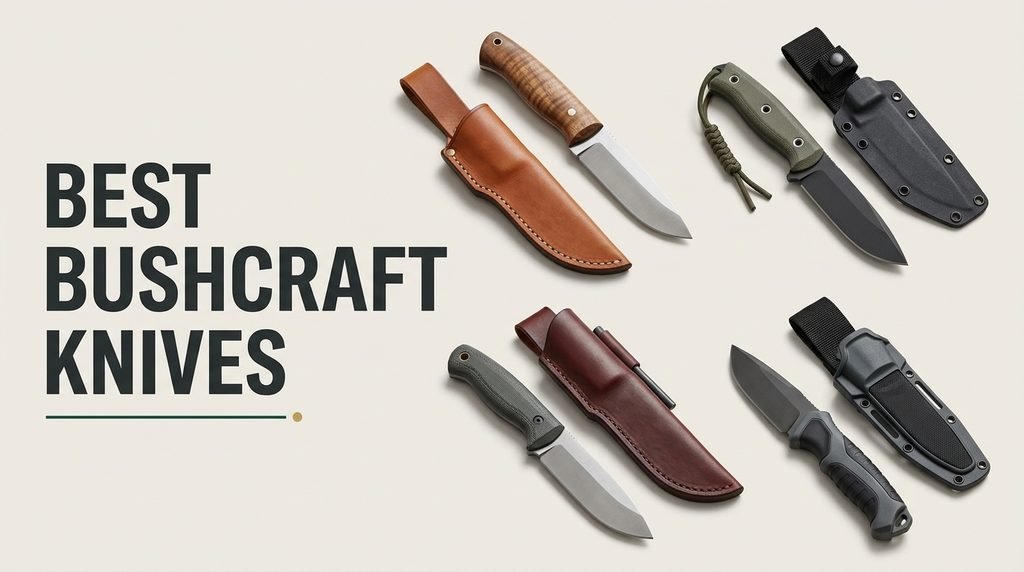
Find the right bushcraft knives for 2026. We compare 10 standout options for woodcraft, camping, and wilderness survival, evaluating blade steel composition, grind geometry, handle materials, tang construction, sheath quality, included accessories like ferro rods, and value for bushcrafters, hunters, hikers, and anyone building a reliable field knife kit.
Bushcraft knives differ meaningfully from general-purpose outdoor knives through specific design features like scandi grinds for controlled wood carving, full tang construction for batoning durability, and 90-degree spines for ferro rod striking. Blade steels range from traditional 1095 carbon steel to modern D2 tool steel and Sandvik stainless, each offering different trade-offs for edge retention, toughness, and corrosion resistance.
Choosing the right knife depends on your typical tasks, maintenance tolerance, climate conditions, and whether you prioritize traditional craftsmanship or modern engineered materials. This guide breaks down the practical differences across the lineup so you can match a knife to your actual bushcraft needs rather than paying for premium features that may not serve your specific use cases in the field.
We compared 10 bushcraft knives using the details that actually help a buyer decide: blade steel composition, hardness ratings, grind geometry, tang construction, handle material and ergonomics, sheath quality, included accessories like ferro rods, overall length and weight, warranty signals, owner feedback, and overall value. The notes focus on practical trade-offs so each pick connects to how bushcrafters, hunters, campers, and survival enthusiasts actually use fixed blade knives for carving, batoning, fire preparation, food processing, and camp chores in the field.


Compare key features, scores, and current prices side by side. A shorter feature list means fewer details were available, not necessarily fewer capabilities.





The Morakniv Companion earns its editor's choice position by combining decades of Swedish knife-making heritage with a price point that makes it accessible to any bushcrafter. The 4.8-star rating from a massive owner base confirms what experienced outdoor professionals have known for years: this knife punches far above its weight class and provides genuine bushcraft capability at a fraction of the cost of premium alternatives.
We may earn a commission when you buy through this link, at no additional cost to you.
The Sandvik 12C27 stainless steel blade offers excellent corrosion resistance that stays sharp longer than many budget stainless alternatives and is significantly less prone to rust than carbon steel options. This stainless construction makes the knife ideal for humid environments like coastal camping, river trips, or extended wilderness travel where regular blade maintenance may not be practical. The 4.1-inch blade length provides good versatility for most bushcraft tasks.
The ergonomic polymer handle with soft friction grip and finger guard provides safe operation in all weather conditions. The handle shape has been refined over decades of production and fits comfortably in nearly any hand size. The protective polymer sheath comes with a belt clip for convenient carry on belt or rucksack, and the entire package weighs only 3.9 ounces including sheath.
Morakniv has been making knives in Mora, Sweden since 1891, and the Companion represents the culmination of over 130 years of continuous refinement for outdoor use. The combination of quality Swedish steel, ergonomic polymer handles, and extremely affordable pricing has made Morakniv the standard recommendation for bushcrafters at every skill level. Experienced users often own multiple Morakniv knives alongside premium alternatives because they are so reliable and inexpensive that losing or damaging one is not catastrophic.
This knife is the right choice for virtually any bushcrafter from beginners to experienced professionals who want reliable performance without premium prices. The main consideration is that Morakniv Companions use partial tang construction rather than full tang, which is adequate for normal bushcraft tasks including light batoning but may not withstand the extreme abuse that full tang knives handle. For 95 percent of bushcraft use cases, this is the most sensible choice available.
Users who need full tang construction for extreme batoning use, or those who prefer traditional natural handle materials over polymer.
We may earn a commission when you buy through this link, at no additional cost to you.
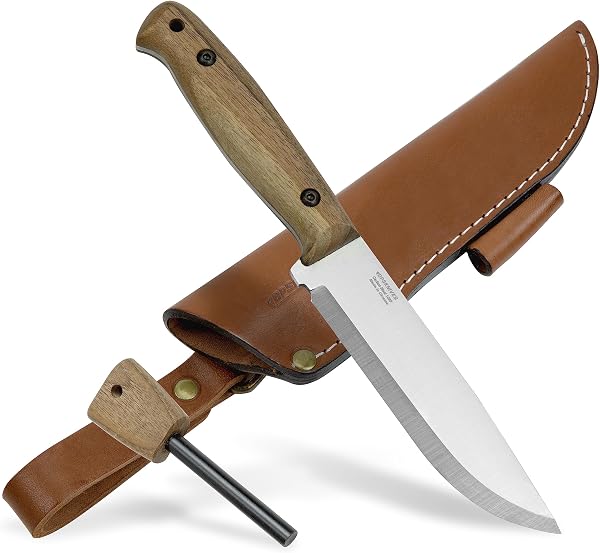
The BPSKNIVES Bushmate 2.0 was created through collaboration between BPS Knives, a Ukrainian bushcraft knife manufacturer, and the Dutch Bushcraft Knives YouTube duo. This collaborative approach brings together manufacturing expertise with the practical insights of two experienced bushcraft content creators who use knives extensively in the field. The result is a design informed by real-world use cases rather than purely theoretical blade engineering.
We may earn a commission when you buy through this link, at no additional cost to you.
The 1066 carbon steel blade offers excellent edge retention characteristic of traditional carbon steel knives, which has made it the preferred material for bushcraft work across generations. The 3.9-inch blade length falls into the compact category, which bushcrafters often prefer for precision carving tasks like feathersticks and bow drill divots. The full tang construction ensures structural integrity through the entire handle length, eliminating the head-handle joint failures that affect lesser knives.
The walnut wood handle coated with Danish oil provides excellent grip and natural shock absorption while remaining attractive and traditional in appearance. The 8.7-inch overall length with 4.8-inch handle gives good control for detailed work. The included leather sheath provides secure carry and protects the blade during transport, while the ferro rod firestarter addresses one of the most essential bushcraft tasks beyond cutting.
When experienced users with large audiences collaborate with manufacturers on product design, the result often addresses practical pain points that pure engineering approaches miss. The Dutch Bushcraft Knives team has used thousands of knives on camera and understands which features matter most during actual bushcraft work. This real-world input tends to produce balanced designs that work well across multiple tasks rather than optimizing extremely for a single use case while failing at others.
This knife is the right choice for buyers who value the input of experienced YouTube bushcrafters and want a traditional carbon steel knife with ferro rod included as a complete bushcraft starter kit. The main consideration is that carbon steel requires regular cleaning and oiling to prevent rust, which is standard for traditional bushcraft knives but adds maintenance time compared to stainless alternatives. For buyers who appreciate the craftsmanship story and want YouTube-vetted design, this delivers a thoughtful package.
Buyers who want stainless steel for minimum maintenance, or those who need a longer blade for heavy batoning and chopping tasks.
We may earn a commission when you buy through this link, at no additional cost to you.
The Gerber Ultimate Survival Knife takes a kit approach to bushcraft by integrating multiple essential outdoor tools into the knife and sheath system. The sheath houses both a sharpening stone and a ferrocerium rod fire starter, which means the three most critical outdoor cutting-related tools are always together in one package. For bushcrafters who worry about forgetting individual accessories, this integrated approach eliminates that concern entirely.
We may earn a commission when you buy through this link, at no additional cost to you.
The half-serrated stainless steel drop point blade handles both fine cutting tasks and rope work, with the serrations providing meaningful advantage when cutting cordage or seatbelt material in emergency scenarios. The 4.8-inch blade length provides good leverage for most bushcraft tasks without becoming unwieldy for detailed work. The stainless steel construction resists corrosion well, which matters for a knife that may spend extended time in a vehicle emergency kit without regular maintenance.
The textured rubber grip provides reliable traction in wet or cold conditions, which is particularly important for a knife that may be used during emergency scenarios where conditions are challenging. The hammer pommel allows the knife to be used for driving tent stakes, cracking nuts, or breaking glass in rescue situations. The included emergency whistle adds signaling capability without requiring a separate accessory.
A sharpener built directly into the knife sheath ensures that edge maintenance tools are always available when needed, eliminating the common problem of leaving sharpening stones at home or in a different pack. Extended field use inevitably dulls knife edges, and having a sharpener within reach lets you restore cutting performance before the edge becomes dangerously dull. This integrated approach is particularly valuable during extended backcountry trips where returning to civilization for sharpening is not practical.
This knife is the right choice for buyers who want a comprehensive bushcraft and survival kit in a single package rather than assembling individual components. The 4.7-star owner rating confirms consistent satisfaction with the design. The main considerations are that the half-serrated blade is less ideal for pure wood carving tasks that benefit from a clean straight edge, and the stainless steel edge retention is slightly below high-carbon alternatives. For survival-focused use with varied cutting needs, this is an excellent choice.
Pure bushcraft purists who prefer a clean straight edge for carving work, or those who want traditional carbon steel edge retention.
We may earn a commission when you buy through this link, at no additional cost to you.
The BPSKNIVES Adventurer stands out for its true scandi grind, which is the defining blade geometry for serious bushcraft work. A scandi grind features a single flat bevel from the primary edge to the main body of the blade, without the secondary micro-bevel found on most general-purpose knives. This geometry produces an exceptionally sharp edge that bites into wood on first contact and provides outstanding control for precision carving tasks like feathersticks and spoon carving.
We may earn a commission when you buy through this link, at no additional cost to you.
The 1066 carbon steel is hardened to 56 to 57 HRC, which is in the professional range for bushcraft knives and provides excellent edge retention through demanding use. The 5.33-inch blade length provides enough leverage for serious batoning work while remaining controllable for detailed carving. The full tang construction eliminates head-handle joint failures and provides balanced weight distribution that experienced users appreciate during extended use.
The walnut wood handle coated with Danish oil provides moisture and dirt resistance alongside excellent grip and tactile warmth. The handle is secured with ties that can be unscrewed for complete cleaning, which is a thoughtful feature for a knife that will see heavy use processing food and natural materials. The leather sheath with ferro rod attachment allows convenient belt or backpack carry with fire starting capability immediately accessible.
The flat bevel geometry of scandi grinds creates ideal conditions for wood carving work. The edge bites into wood with the entire bevel surface, which provides excellent control over cut depth and direction. Secondary bevels found on other grinds reduce this control by introducing additional geometry that can skip or deflect during delicate cuts. For traditional bushcraft tasks like feathersticks, bow drill construction, and camp craft projects, scandi grinds offer meaningful performance advantages that justify their maintenance requirements.
This knife is the right choice for serious bushcrafters who want authentic scandi grind geometry and traditional carbon steel materials in a longer blade format than the compact Bushmate. The hand-crafted construction in Ukraine reflects traditional knife-making heritage. The main considerations are standard carbon steel maintenance requirements and periodic verification that the handle screws remain tight. For buyers who want proper scandi grind performance for serious wood carving, this is an excellent choice at a reasonable price.
Users who want modern synthetic handle materials or stainless steel for minimum maintenance in humid conditions.
We may earn a commission when you buy through this link, at no additional cost to you.
The BeaverCraft BSH4F offers one of the highest hardness ratings in this comparison at 58 to 60 HRC, which provides exceptional edge retention through demanding bushcraft tasks. The 1066 carbon steel is a traditional bushcraft blade material that takes a very sharp edge and maintains it well through extended use. The 5-inch blade length and 3.5mm thickness provide the right balance between batoning strength and carving control.
We may earn a commission when you buy through this link, at no additional cost to you.
The blued finish on the blade surface provides meaningful protection against rust and corrosion, which is particularly valuable for carbon steel knives that would otherwise require aggressive maintenance in humid conditions. The protective coating preserves the blade’s underlying performance while reducing the maintenance burden compared to bare carbon steel finishes. The 9.8-inch overall length provides good leverage without becoming unwieldy.
The jimping on the blade spine provides traction for your finger during precision cuts and allows the spine to serve as a ferro rod striker without damaging the ferro rod with the primary cutting edge. This dual-purpose spine design is a hallmark of thoughtful bushcraft knife engineering. The included leather sheath with two belt loop attachments provides versatile carry options for different gear configurations and body types.
Bluing is a chemical process that creates a thin layer of iron oxide on the steel surface, providing meaningful corrosion resistance while preserving the underlying blade performance. Unlike paint or powder coatings, bluing bonds with the steel at the molecular level and will not chip or flake under normal use. The finish does wear gradually with heavy batoning or sharpening work, eventually requiring touch-up bluing or acceptance of some bare steel areas. For most bushcraft use, the finish provides years of corrosion protection.
This knife is the right choice for buyers who want traditional carbon steel performance with the practical benefit of a protective blued finish that reduces maintenance requirements. The 58-60 HRC hardness provides exceptional edge retention. The main considerations are that the blued finish may wear with heavy batoning use over time and carbon steel still requires some maintenance even with the protective finish. For buyers who want traditional bushcraft performance with reduced maintenance anxiety, this is an excellent choice.
Users who want zero maintenance stainless steel, or those who prefer the authentic patina development that comes with bare carbon steel finishes.
We may earn a commission when you buy through this link, at no additional cost to you.
The Morakniv Companion Carbon offers the same beloved Morakniv platform as the stainless version but with 1095 high-carbon steel instead of Sandvik stainless. This steel choice matters significantly for bushcrafters who prioritize edge retention and sharpening ease over corrosion resistance. 1095 carbon steel is the classic bushcraft blade material because it takes an exceptionally sharp edge and is easy to maintain and sharpen with simple field tools.
We may earn a commission when you buy through this link, at no additional cost to you.
The 0.08-inch thick blade provides superior strength and stability for cutting tasks while remaining thin enough for precision carving work. The 4.1-inch blade length matches the stainless Companion and provides good versatility across most bushcraft applications from food preparation to feathersticks to light batoning. Carbon steel typically develops a protective patina with use, which further reduces corrosion over time.
The ergonomic polymer handle with soft friction grip provides the same comfortable, secure hold as the stainless version. The finger guard adds safety during forceful cuts, and the overall handle shape works well for nearly any hand size. The protective polymer sheath with belt clip allows convenient carry and keeps the blade protected during transport.
The choice between 1095 carbon steel and Sandvik stainless comes down to maintenance tolerance versus corrosion concerns. Carbon steel takes a sharper edge, holds it longer under heavy use, and is easier to sharpen in the field with simple stones. Stainless steel requires less maintenance in humid conditions but typically holds a slightly less aggressive edge. For dry climates or disciplined users, carbon steel wins on performance. For humid conditions or users who prefer minimum maintenance, stainless makes more sense.
This knife is the right choice for bushcrafters who prefer traditional carbon steel over stainless and are willing to perform regular cleaning and oiling to prevent rust. The 4.7-star rating confirms strong owner satisfaction. The main considerations are that 1095 carbon steel will rust quickly if neglected in humid conditions, so this knife is better suited to drier climates or users who are diligent about maintenance. For carbon steel lovers who want Morakniv quality at the Morakniv price, this is an unbeatable choice.
Users in consistently humid environments who cannot commit to regular blade maintenance, or those who need full tang construction.
We may earn a commission when you buy through this link, at no additional cost to you.
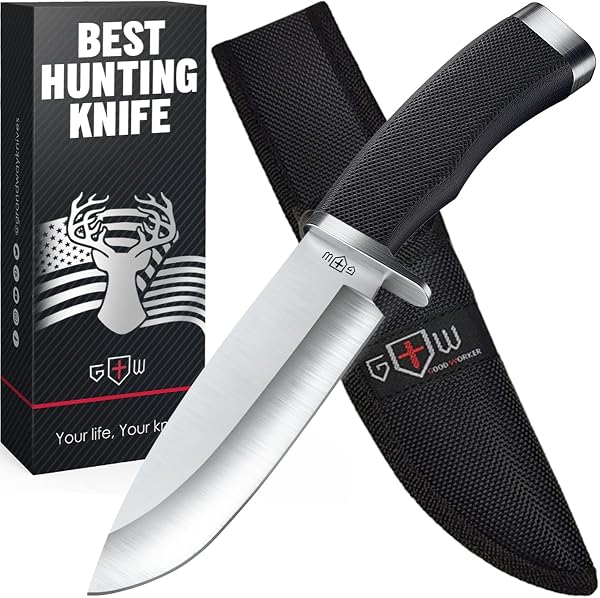
This budget hunting knife delivers surprisingly capable bushcraft performance at a price point that makes it accessible as a backup knife, loaner, or entry-level option. The 440C stainless steel blade offers reasonable edge retention and good corrosion resistance for budget stainless construction. The satin finish and full tang design provide decent durability for typical bushcraft tasks within the knife's price range.
We may earn a commission when you buy through this link, at no additional cost to you.
The 4.45-inch blade length falls into the useful general-purpose range for bushcraft work, long enough for light batoning while remaining controllable for carving tasks. The Bowie-style blade shape provides good tip strength for drilling and point work. The durable rubber handle provides reliable grip in various conditions and absorbs some vibration during impact work, which reduces hand fatigue during extended use.
The included Cordura sheath provides secure storage and transport, with a belt loop that allows convenient carry during outdoor activities. The weight of 7.05 ounces falls into the middle range for bushcraft knives of this size, providing enough mass for effective chopping while remaining comfortable for pack carry. The 8.86-inch overall length provides good leverage without becoming unwieldy.
Even bushcrafters with premium knife collections often include a budget knife or two in their active kits. Lending to friends, loaning to kids learning bushcraft, keeping in vehicle emergency bags, or using for dirty tasks that would damage premium blades all make sense with budget alternatives. The low cost means losing or damaging a budget knife is not a serious financial loss, which actually enables more aggressive use than you might risk with an expensive knife.
This knife is the right choice for budget-conscious buyers who want capable bushcraft performance without premium pricing, or for building out backup kits where the low cost matters more than premium construction. The 4.7-star rating confirms that many owners find it meets their expectations. The main considerations are that the fit and finish may be less refined than premium alternatives and 440C heat treatment quality can vary between manufacturers. For users who want to try bushcraft without significant investment, this is an excellent starting point.
Serious bushcrafters who want premium construction and consistency, or those who need the exceptional edge retention of high-carbon steel.
We may earn a commission when you buy through this link, at no additional cost to you.
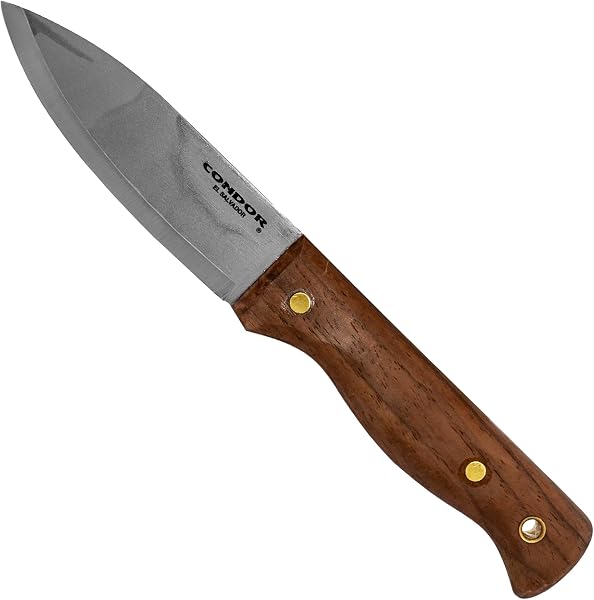
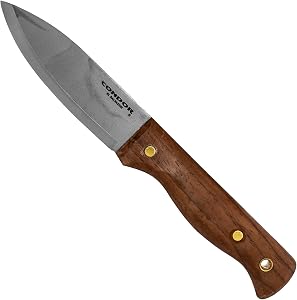
The Condor Bushlore represents classic American bushcraft knife-making tradition with modern manufacturing quality. The design pays tribute to traditional knife-making heritage while incorporating thoughtful features for modern bushcraft use. For buyers who appreciate the aesthetic and functional qualities of traditional bushcraft tools, this knife delivers craftsmanship character that mass-produced alternatives cannot match.
We may earn a commission when you buy through this link, at no additional cost to you.
The 1075 high carbon steel blade provides excellent edge retention and sharpenability characteristic of traditional carbon steel bushcraft knives. The scandi grind geometry is specifically designed for wood carving work, with the single flat bevel providing exceptional control for feathersticks, bow drill construction, and other precision tasks. The blasted satin finish gives the blade a working appearance that will develop character with use.
The grained walnut handle balances aesthetics with ergonomics, providing a comfortable and secure grip while contributing to the knife’s traditional appearance. Walnut is a premium handle material that develops beautiful character over years of use and contact with hand oils. The overall design reflects attention to how the knife will actually be used in the field rather than purely cosmetic considerations.
Premium bushcraft knives like the Condor Bushlore show the hand finishing touches that distinguish craftsman-made tools from purely machine-produced alternatives. Small variations in handle fit, blade finish, and sheath stitching give each knife individual character that mass production cannot replicate. For bushcrafters who view their knives as long-term companions rather than disposable tools, this hand-finished quality adds meaningful value that justifies premium pricing.
The handcrafted welted leather sheath provides secure protection with traditional construction methods. Welted sheaths use a leather strip between the two outer layers that keeps the blade edge away from the stitching, preventing the blade from cutting through the thread over time. This this construction detail reflects the quality orientation that distinguishes premium bushcraft knives from mass-produced alternatives. For serious bushcrafters who want American craftsmanship traditions in a modern knife, the Condor Bushlore delivers meaningful value despite the premium price.
Budget-conscious buyers or those who prefer modern synthetic materials over traditional wood and leather construction.
We may earn a commission when you buy through this link, at no additional cost to you.
The CVLIFE D2 Bushcraft Knife brings modern tool steel technology to the bushcraft category with D2 steel hardened to 59 to 61 HRC. D2 is a semi-stainless tool steel originally developed for industrial cutting applications, offering exceptional edge retention that outperforms most traditional bushcraft steels. For bushcrafters who want to maximize time between sharpening sessions, D2 steel provides meaningful performance advantages worth consideration.
We may earn a commission when you buy through this link, at no additional cost to you.
The modified scandi grind combines the woodcraft advantages of a traditional scandi geometry with a reinforced micro-bevel that prevents edge chipping during harder impact use like batoning. This hybrid approach addresses one of the common criticisms of pure scandi grinds while preserving most of their carving performance. The 5.2-inch blade length and sturdy 0.18-inch spine provide good strength for heavy batoning without becoming unwieldy for carving.
The 5-layer handle construction eliminates hot spots and hand fatigue through thoughtful material layering. The solid core provides structural strength, two red liners add impact absorption, and the outer FRN scales provide non-slip grip in wet, muddy, or heavy-duty conditions. This construction approach is more sophisticated than simple two-piece handle designs and provides noticeably better long-term comfort during extended use.
D2 is classified as a semi-stainless tool steel, meaning it offers much better corrosion resistance than true high-carbon steels like 1095 but less than pure stainless alternatives like Sandvik 12C27. The hardness range of 59 to 61 HRC provides exceptional edge retention through demanding use, though it requires more effort to sharpen than softer traditional bushcraft steels. For users who prioritize staying sharp over easy field sharpening, D2 represents an excellent choice.
The weather-resistant polymer sheath with adjustable retention screw and 360-degree rotating belt clip provides modern carry convenience with secure retention. The sharply tapered drop-point tip is specifically designed for drilling bow-drill divots and survival bushcraft carving tasks that benefit from precise tip control. For buyers who want modern tool steel performance with thoughtful ergonomic engineering, this knife delivers excellent value at a mid-range price point.
Users who prefer traditional carbon steel for easy field sharpening, or those who want purely stainless construction for humid conditions.
We may earn a commission when you buy through this link, at no additional cost to you.
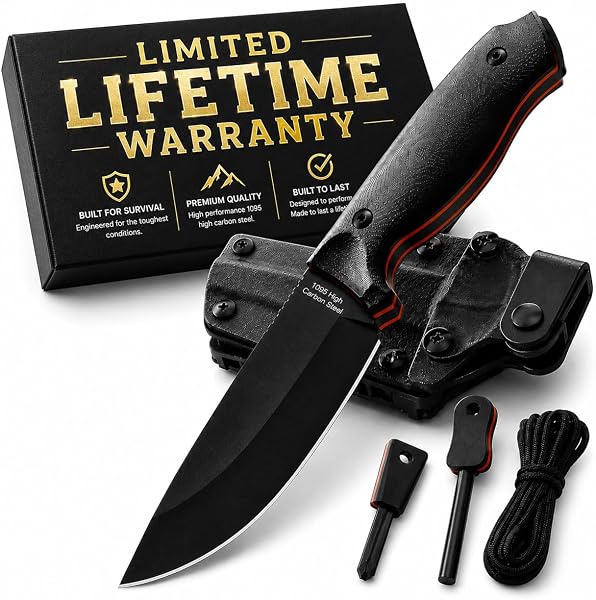
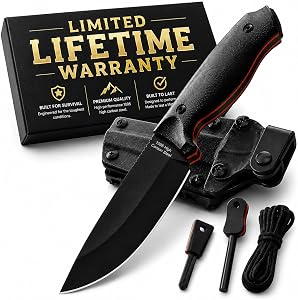
The Bloodline Survival Knife from Holtzman's Gorilla Survival takes a complete kit approach that combines a quality bushcraft knife with all the essential accessories needed for serious outdoor work. Full tang 1095 high carbon steel construction provides excellent edge retention and durability for real bushcraft use. The 1095 steel is the traditional choice for serious bushcraft knives because it takes a very sharp edge and is easy to maintain and sharpen in the field.
We may earn a commission when you buy through this link, at no additional cost to you.
The G10 handle provides exceptional grip in all conditions through its textured surface and virtually indestructible construction. G10 maintains its grip when wet, resists impact damage, and will not shrink or crack with age like natural materials can. The textured surface prevents slipping during forceful cuts while remaining comfortable for extended use. This handle material is favored by premium tactical knife makers for good reason.
The included accessories transform this from a knife purchase into a complete field kit. The custom-fit Kydex sheath provides secure retention with lightweight water-resistant protection. The ferro rod enables fire starting without separate accessories, and the scraper and paracord add practical utility. The belt clip and mounting hardware allow versatile carry configurations for different gear setups.
Assembling bushcraft gear piece by piece can quickly exceed the cost of a complete kit while taking significant time researching compatible accessories. Complete kit purchases like the Bloodline bundle guarantee that all components work together properly, with sheaths sized correctly for the specific knife, ferro rods that attach to the sheath design, and additional accessories that complement the primary tool. For buyers new to bushcraft who do not yet know what specific accessories they will prefer, complete kits provide a solid starting point.
This knife is the right choice for serious bushcrafters who want a complete field-ready kit with premium materials and construction. The combination of 1095 steel, G10 handle, Kydex sheath, and included accessories provides a comprehensive bushcraft solution in a single purchase. The main considerations are standard carbon steel maintenance requirements and the premium price that reflects the complete kit nature of the offering. For buyers who want everything they need in one package without assembling accessories separately, this delivers excellent value.
Budget-conscious buyers who want to assemble accessories separately, or those who prefer traditional wood and leather over modern synthetic materials.
We may earn a commission when you buy through this link, at no additional cost to you.
Selecting a bushcraft knife involves matching the blade steel, grind geometry, and construction method to your specific tasks, climate, and skill level. The following factors cover the most important decision points for choosing a knife that will perform reliably through years of woodcraft, camping, and wilderness use.
The fundamental steel choice is between high-carbon steels like 1095 and 1066, stainless steels like Sandvik 12C27 and 440C, and semi-stainless tool steels like D2. High-carbon steels take sharper edges, hold them longer under heavy use, and are easier to sharpen with simple field stones. The Morakniv Companion Carbon, BPSKNIVES Adventurer, Condor Bushlore, and Bloodline Survival Knife all use carbon steel in various grades. The trade-off is that carbon steel rusts quickly if neglected in humid conditions.
Stainless steels like the Sandvik 12C27 in the Morakniv Companion Stainless provide significantly better corrosion resistance with slightly reduced edge retention. For humid climates, river trips, or users who cannot commit to regular blade maintenance, stainless steel makes more sense despite the slight performance trade-off. The CVLIFE D2 occupies a middle ground as semi-stainless tool steel that offers exceptional edge retention with better corrosion resistance than true carbon steels.
For dry climates with disciplined maintenance, choose carbon steel for maximum performance. For humid conditions or low-maintenance users, choose stainless. For users who want maximum edge retention and accept moderate maintenance, consider D2 tool steel.
Grind geometry determines how the knife performs across different tasks. Scandi grinds like those on the BPSKNIVES Adventurer, Condor Bushlore, and CVLIFE D2 feature a single flat bevel from edge to body, which excels at wood carving because the entire bevel surface controls cut depth and direction. Modified scandi grinds like the CVLIFE D2 add a small micro-bevel to the primary edge for improved impact resistance during batoning, which addresses one of the main criticisms of pure scandi grinds.
Full flat grinds, convex grinds, and sabre grinds offer different performance characteristics with their own trade-offs. The Morakniv Companion uses a modified scandi grind suitable for most bushcraft tasks. For most buyers, choosing a knife with scandi or modified scandi grind geometry will provide better bushcraft performance than general-purpose grinds designed for other uses.
For traditional bushcraft focused on wood carving, prioritize pure scandi grinds. For mixed use including heavy batoning, modified scandi grinds provide better overall versatility while retaining most carving performance.
Tang construction significantly affects knife durability during heavy use like batoning. Full tang construction extends the blade metal through the entire handle length, with the handle material attached as scales on either side. Full tang knives in this comparison include the BPSKNIVES Bushmate 2.0, BPSKNIVES Adventurer, BeaverCraft BSH4F, CVLIFE D2, and Bloodline Survival Knife. This construction provides maximum durability for heavy impact work and eliminates head-to-handle failure points.
Partial tang construction uses a reduced width or thickness tang that is inserted into or molded within the handle. The Morakniv Companion models use partial tang construction, which is adequate for normal bushcraft tasks including light batoning but may not withstand the extreme abuse that full tang knives handle. For users who stay within reasonable use cases, partial tang knives can serve well, as demonstrated by Morakniv’s decades of reliability.
For users who regularly baton firewood or process heavy materials, choose full tang construction for maximum durability. For general bushcraft use within reasonable limits, partial tang construction like Morakniv’s provides adequate reliability at lower cost.
Handle material affects grip security, comfort during extended use, and long-term durability in different conditions. Traditional wood handles like the walnut on the BPSKNIVES models and Condor Bushlore provide excellent tactile warmth, shock absorption, and traditional aesthetics. Walnut specifically is a premium handle material that develops character over years of use. The main trade-off is that wood requires occasional maintenance and can crack or shrink in extreme conditions.
Modern synthetic materials like G10 on the Bloodline Survival Knife and FRN on the CVLIFE D2 provide maximum durability with excellent grip in all conditions including wet or muddy environments. G10 is virtually indestructible and maintains consistent grip across temperature ranges. Rubber handles like the budget hunting knife provide good shock absorption at lower cost. Polymer handles like Morakniv’s offer excellent ergonomics with low maintenance.
For traditional appeal and shock absorption, choose wood handles. For maximum durability and all-condition grip, choose G10 or similar synthetic materials. For budget value, polymer handles like Morakniv’s deliver excellent performance at low cost.
Blade length affects both cutting versatility and pack portability. Compact 3.9 to 4.1-inch blades like the BPSKNIVES Bushmate 2.0 and Morakniv Companion models excel at precision carving work and remain controllable for detailed tasks. These shorter blades also pack better in belt sheaths or small pouches without becoming cumbersome. For users who prioritize fine control and portability, compact blades make more sense.
Longer 5 to 5.5-inch blades like the BPSKNIVES Adventurer, BeaverCraft BSH4F, Condor Bushlore, CVLIFE D2, and Bloodline provide better leverage for serious batoning work and more cutting edge for food preparation. The additional length allows the knife to serve some of the functions that would otherwise require a small axe or hatchet. For users who process significant firewood or want maximum versatility, longer blades offer meaningful advantages.
For precision woodcraft and ultralight packing, choose 4-inch blades. For versatility across more tasks including batoning, choose 5-inch or longer blades. The Gerber Ultimate at 4.8 inches represents a middle ground that works well for mixed use.
Sheath quality affects safety, convenience, and the long-term protection of your knife investment. Welted leather sheaths like the Condor Bushlore’s and BPSKNIVES models provide traditional appearance and good protection with proper maintenance. Welted construction places a leather strip between the two outer layers to prevent the blade from cutting through the thread over time, which distinguishes quality leather sheaths from basic alternatives.
Modern Kydex sheaths like those on the CVLIFE D2 and Bloodline Survival Knife provide excellent retention, water resistance, and essentially zero maintenance. Kydex forms custom-fit protection that holds the knife securely regardless of orientation and allows modular carry configurations through adjustable retention screws and rotating belt clips. Polymer sheaths on the Morakniv models provide basic protection at low cost with belt clip convenience.
For traditional appearance and feel, choose leather sheaths with welted construction. For maximum durability and modern features like adjustable retention, choose Kydex. For budget value and reliable basic protection, polymer sheaths work well.
Before each use, inspect the blade edge for chips, rolls, or dullness that would reduce cutting effectiveness. A sharp knife is safer than a dull one because it requires less force and is less likely to slip during cuts. Touch up the edge with a diamond stone or ceramic rod if needed. For batoning work, check that the blade spine is suitable for impact use and avoid batoning near the handle junction. Always cut away from your body and keep your off hand clear of the blade path. For scandi grind knives, use the full bevel surface against wood during carving to maintain control and prevent slipping.
During use, let the blade do the work rather than forcing cuts with excessive pressure. Use proper grip techniques including the hammer grip for heavy cutting, the forward grip for precision carving, and the chest-lever grip for controlled push cuts. For feathersticks, use the scandi grind geometry by placing the bevel flat against the wood and pulling smoothly. For batoning, position the knife across the wood grain and strike the spine with a baton rather than hammering the blade itself. Avoid lateral stress on the blade during prying operations, which can cause the blade to snap at the handle junction.
After each use, wipe the blade clean with a dry cloth to remove sap, food residue, and moisture. For carbon steel blades, apply a light coat of oil to prevent rust, especially before storage. Mineral oil, 3-in-1 oil, or specialized blade oils all work well. Store the knife in its sheath in a dry location away from humidity extremes. For wooden handles, apply boiled linseed oil or similar wood treatment once or twice yearly to prevent drying and cracking. Sharpen regularly to maintain the original bevel angle, using a diamond stone or ceramic rod for touch-ups and a progression of grits for complete reconditioning when needed.
Bushcraft knives are specifically designed for woodcraft tasks like carving, feathersticks, and bow drill construction, typically featuring scandi grind geometry, strong single-blade construction, and often a 90-degree spine for ferro rod striking. Regular outdoor knives may use different grinds optimized for cutting rope or food rather than wood. Bushcraft knives also typically prioritize simplicity and reliability over tactical features like serrations or multi-tool integration. The focus is on woodworking performance that enables traditional wilderness living skills.
Carbon steel like 1095 takes a sharper edge, holds it longer under heavy use, and is easier to sharpen in the field but requires regular cleaning and oiling to prevent rust. Stainless steel like Sandvik 12C27 provides much better corrosion resistance with slightly reduced edge retention. For dry climates with disciplined maintenance, choose carbon steel for maximum performance. For humid conditions or users who cannot commit to regular maintenance, stainless steel makes more practical sense.
A scandi grind features a single flat bevel from the primary edge to the main body of the blade, without the secondary micro-bevel found on most general-purpose knives. This geometry produces an exceptionally sharp edge that bites into wood on first contact and provides outstanding control for precision carving tasks. For traditional bushcraft work like feathersticks, bow drill construction, and spoon carving, scandi grinds offer meaningful performance advantages that justify their maintenance requirements.
Full tang construction provides maximum durability for heavy use like batoning firewood and extreme bushcraft tasks. The blade metal extends through the entire handle length, eliminating the head-handle joint failures that affect lesser knives. For users who regularly process heavy wood or want maximum durability, full tang is worth the extra cost. For general bushcraft within reasonable limits, partial tang knives like the Morakniv Companion models provide excellent reliability as demonstrated by decades of successful use.
Most bushcraft knives fall between 4 and 5 inches of blade length, which represents the sweet spot between precision carving and serious cutting work. Compact 4-inch blades like the Morakniv Companion excel at detailed carving and remain controllable for fine work. Longer 5-inch blades like the Condor Bushlore and Bloodline provide better leverage for batoning and more cutting edge for food preparation. For first-time buyers, 4 to 4.5 inches offers excellent versatility.
Yes, bushcraft knives are specifically designed to handle batoning when used properly. Position the knife across the wood grain and strike the exposed blade spine with a wooden baton rather than hammering the blade directly. Full tang knives are better suited to heavy batoning than partial tang alternatives. Avoid batoning near the handle junction where blade stress concentrates, and never baton metal with your knife. For very heavy processing, a dedicated hatchet or axe is more efficient than batoning.
A good bushcraft knife sheath should provide secure retention that holds the knife regardless of orientation, protect the blade from damage, and allow convenient carry on belt or pack. Welted leather sheaths offer traditional appearance and good protection with proper maintenance. Modern Kydex sheaths provide excellent retention, water resistance, and essentially zero maintenance. Many bushcraft knives include ferro rod attachment points for fire starting capability without separate accessories.
Sharpen your bushcraft knife whenever the edge stops biting cleanly into wood on first contact. For regular use, touch-up with a diamond stone or ceramic rod every few outings maintains optimal performance. Heavy batoning or dirty cutting may require more frequent attention. Learn to recognize when your knife needs sharpening by paying attention to how it performs during feathersticks and precision carving work. A sharp knife is safer than a dull one and requires less effort to use effectively.
A ferro rod is a ferrocerium metal rod that produces hot sparks when scraped with a hard sharp edge like the back of a knife blade. These sparks easily ignite dry tinder like birch bark, cotton balls, or fatwood shavings. Many bushcraft knives include ferro rods because fire starting is one of the most essential wilderness skills and having integrated fire capability eliminates the need to carry separate matches or lighters that can fail in wet conditions. The 90-degree spine on quality bushcraft knives serves as the ferro rod striker without damaging the primary cutting edge.
The Morakniv Companion models in either stainless or carbon steel are the most commonly recommended starter bushcraft knives for excellent reasons. They provide genuine bushcraft capability at prices that are not intimidating for beginners, use ergonomic polymer handles that work for any hand size, and come from a Swedish manufacturer with 130+ years of knife-making experience. Learning on a Morakniv allows new bushcrafters to develop skills and discover their preferences before investing in premium alternatives like the Condor Bushlore or Bloodline Survival Knife.
The Morakniv Companion Stainless stands out as the strongest overall choice for most buyers because of its combination of legendary Swedish quality, Sandvik 12C27 stainless steel, ergonomic polymer handle, and the highest 4.8-star owner rating in this comparison, all at a price point accessible to any bushcrafter. The 130+ years of continuous Morakniv refinement has produced a knife that delivers genuine bushcraft capability without the premium cost of boutique alternatives. For virtually any bushcrafter from beginners to experienced professionals, this is the top recommendation.
For buyers with specific priorities, several alternatives excel in their respective niches. The Morakniv Companion Carbon offers the same legendary platform with 1095 carbon steel for superior edge retention. The Condor Bushlore delivers premium American craftsmanship with scandi grind and walnut handle. The Bloodline Survival Knife provides a complete field kit with G10 handle, Kydex sheath, and ferro rod. The CVLIFE D2 brings modern D2 tool steel to the bushcraft category. The BPSKNIVES Adventurer offers true scandi grind geometry in a longer blade format. The Gerber Ultimate integrates sharpener and fire starter for complete emergency preparedness.
Your best choice ultimately depends on your climate, maintenance tolerance, intended tasks, and whether you prioritize traditional materials or modern synthetic construction. For humid conditions and low maintenance, choose stainless steel. For maximum edge performance in dry climates, choose carbon steel. For heavy batoning work, prioritize full tang construction. For precision carving work, prioritize scandi grind geometry. Any of the ten options in this guide can serve as a reliable bushcraft companion when matched to your specific needs and skill level.