DryGuy DX
9.2Editor score4-port capacity
1-3 hour drying
Heat/no-heat switch
3-hour auto shutoff
Find the right boot dryers for 2026. We compare 10 standout options by build quality, useful features, owner feedback, value, and everyday trade-offs.
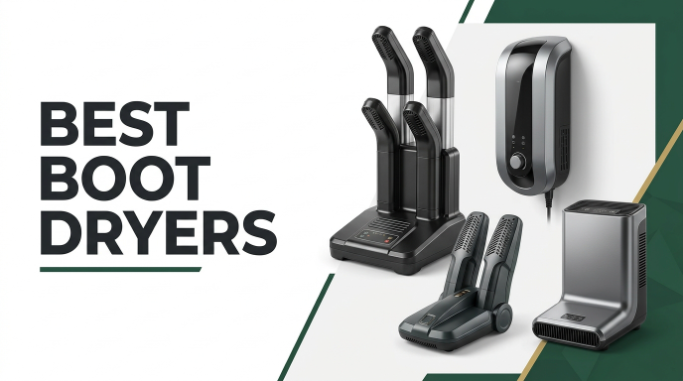
Choosing the right boot dryer for 2026 comes down to more than just wattage. We compare 10 standout models based on drying speed, capacity, heat type, noise level, odor control, port design, timer options, safety features, and how well each handles everything from soaked work boots to damp ski liners and gloves.
Some dryers use silent convection heat that runs safely overnight, while others rely on forced-air blowers that finish a soaked pair in under two hours. The right choice depends on how quickly you need dry footwear, how much gear you dry at once, and whether noise or energy use matters most in your setup.
This guide breaks down the practical trade-offs between fanless and forced-air designs, port count, expandable accessories, and odor-fighting features like ozone deodorizers. By the end, you’ll know which dryer fits your household, worksite, or gear closet without overspending on features you won’t use.
We compared 10 boot dryers using the details that actually influence a purchase: drying speed, wattage, port capacity, heat method (convection vs. forced air), noise level, timer and delay options, ozone or odor control, material safety, warranty length, and owner ratings. Each pick reflects real-world trade-offs between overnight silent drying and faster forced-air performance, so buyers can match the dryer to their footwear type, family size, and drying habits.


Compare key features, scores, and current prices side by side. A shorter feature list means fewer details were available, not necessarily fewer capabilities.


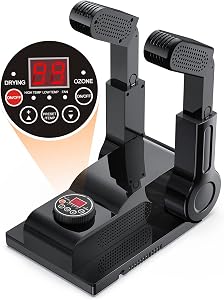
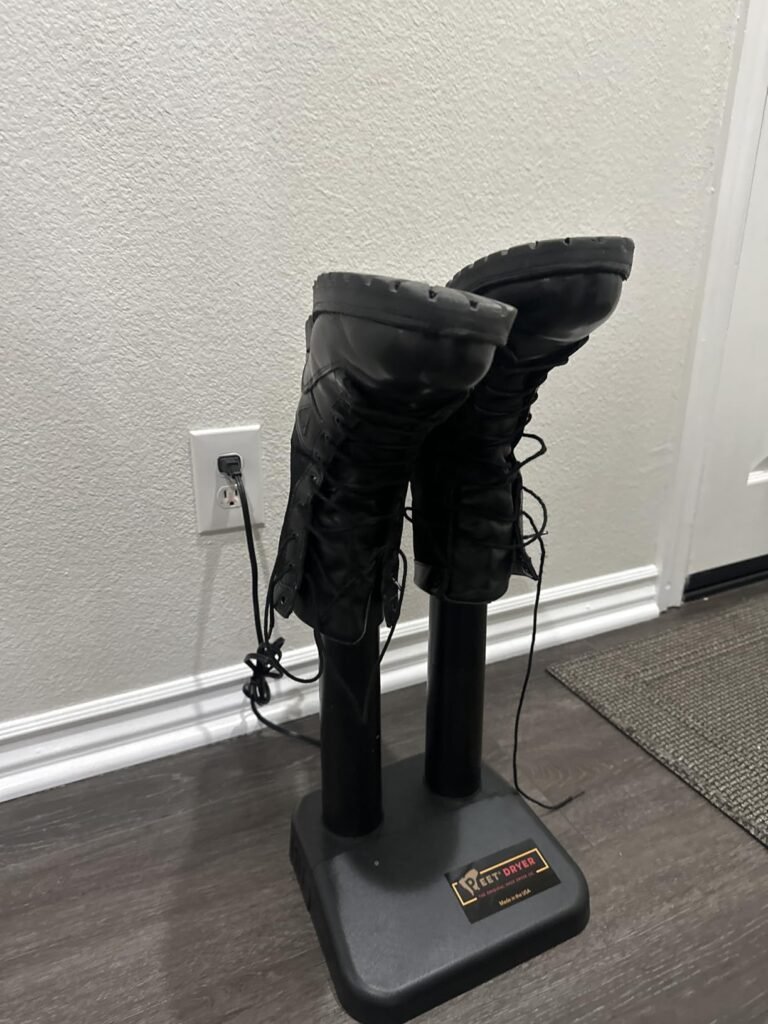
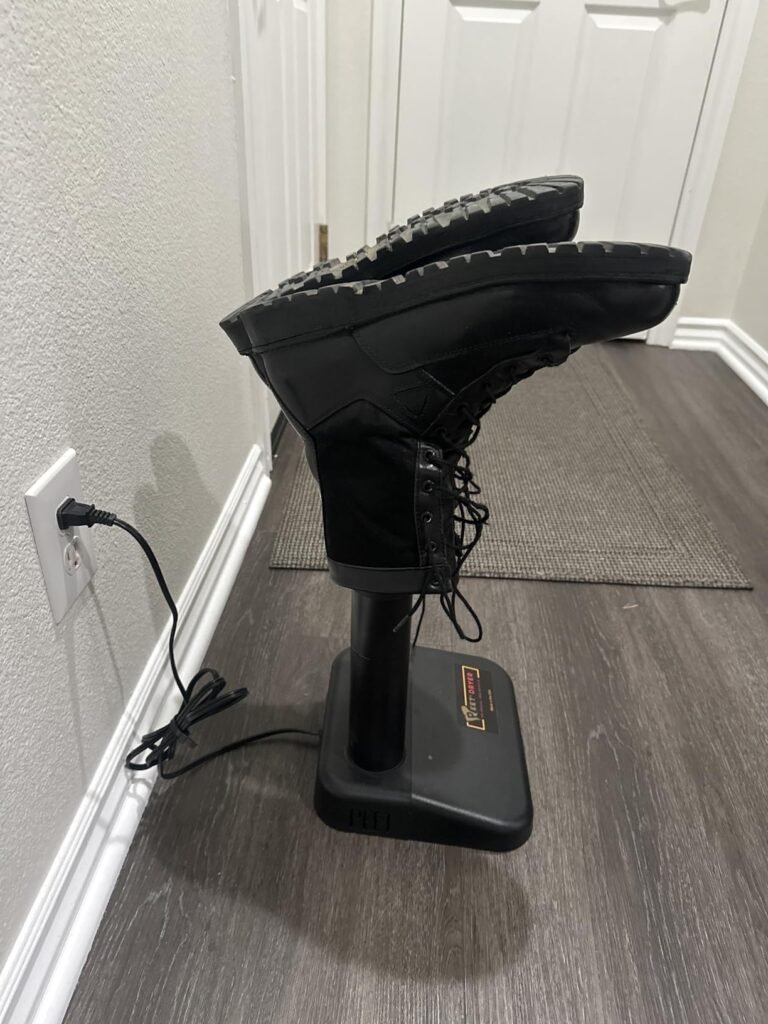
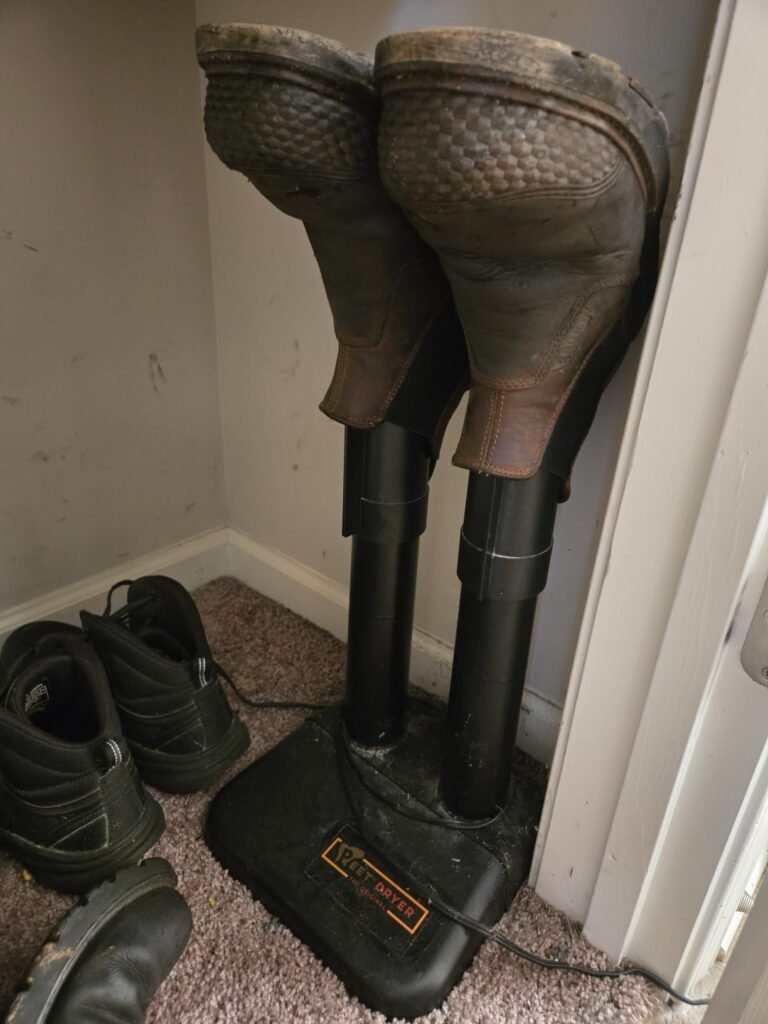
If you want a dryer you can leave plugged in every day without a second thought, the PEET Original is the benchmark. Its patented DryPort system uses gentle convection heat to circulate warm air through the inside of your footwear with no fan, no motor, and no noise. That makes it ideal for bedrooms, mudrooms, or any space where a whirring dryer would be intrusive.
We may earn a commission when you buy through this link, at no additional cost to you.
The 36W draw is genuinely minimal, using less electricity than a small light bulb, so running it overnight or 24/7 has a negligible impact on your electric bill. Because there are no moving parts, there’s nothing mechanical to wear out, which helps explain the 25-year warranty. It handles work boots, hiking boots, athletic shoes, and sneakers safely, and the gentle heat won’t damage leather, rubber, neoprene, or synthetics.
The modular design is one of the strongest reasons to invest in this system. Compatible attachments let you add helmet, glove, mitten, and 12-inch boot extension ports to the same base, so a household of skiers, hunters, or motorcycle riders can dry multiple gear types without buying separate units. For tall boots above 11 inches, the extension attachments are essential to get airflow into the shaft.
Silent convection dryers rise warm air naturally through the boot shaft without pushing air with a fan. This gentler approach avoids the risk of over-drying leather or shrinking liners, and it can run continuously in living spaces where a forced-air blower would be too loud. If you value quiet operation and long-term material care over raw speed, convection is the right technology.
The trade-off is speed. Convection drying is slower than forced-air blowers, so if you need to turn around a soaked pair in an hour or two, this isn’t the right pick. But for overnight drying and long-term reliability, few dryers match the PEET Original’s reputation, warranty coverage, or expandability.
Not the right pick if you need soaked boots dry in under two hours or want a compact desktop unit.
We may earn a commission when you buy through this link, at no additional cost to you.
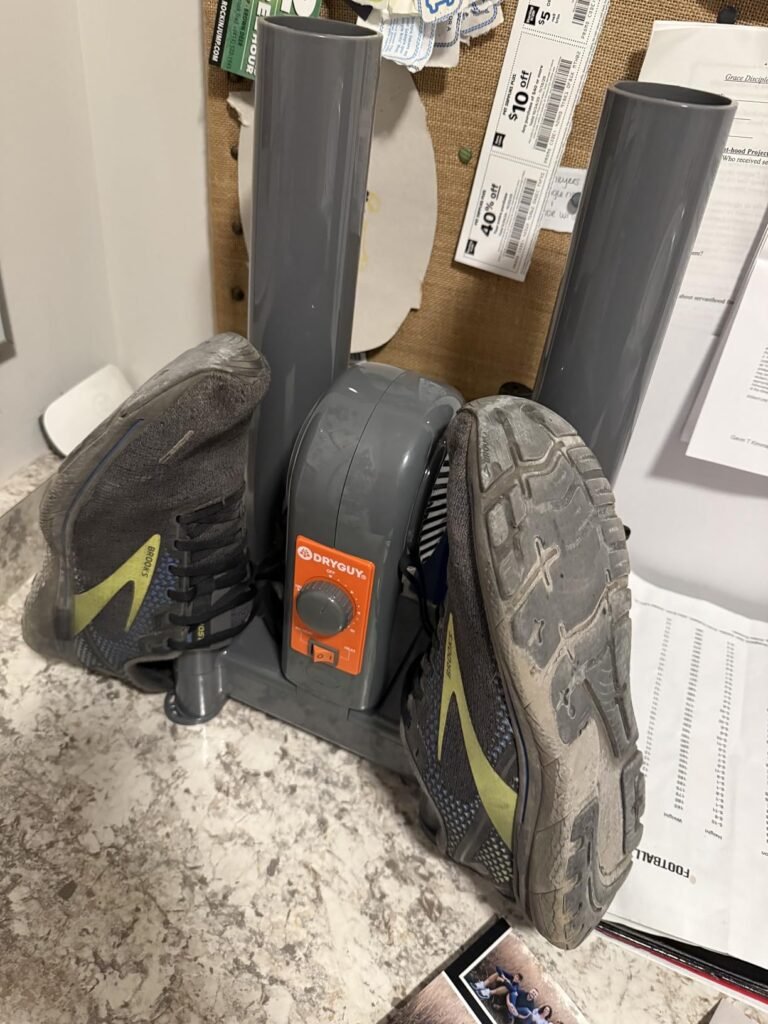
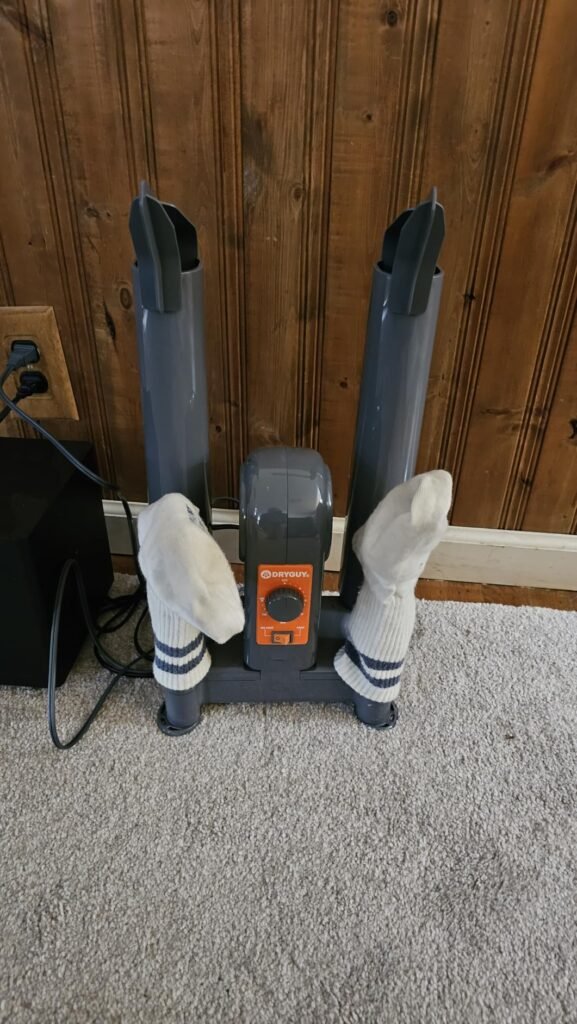
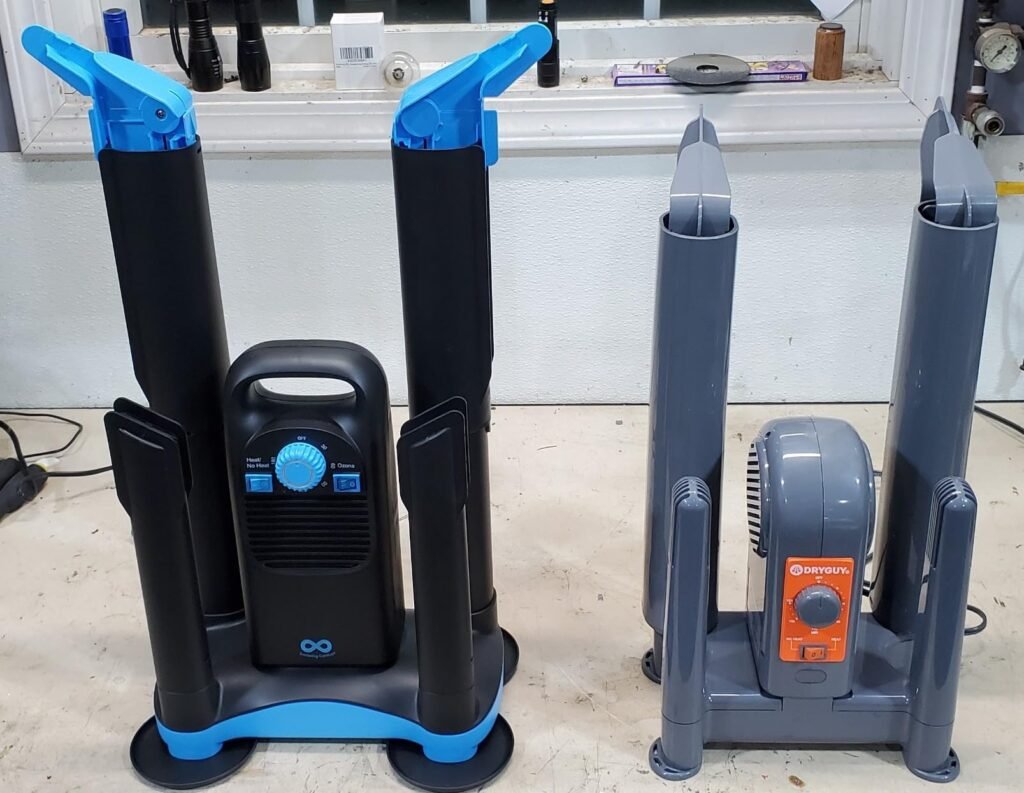
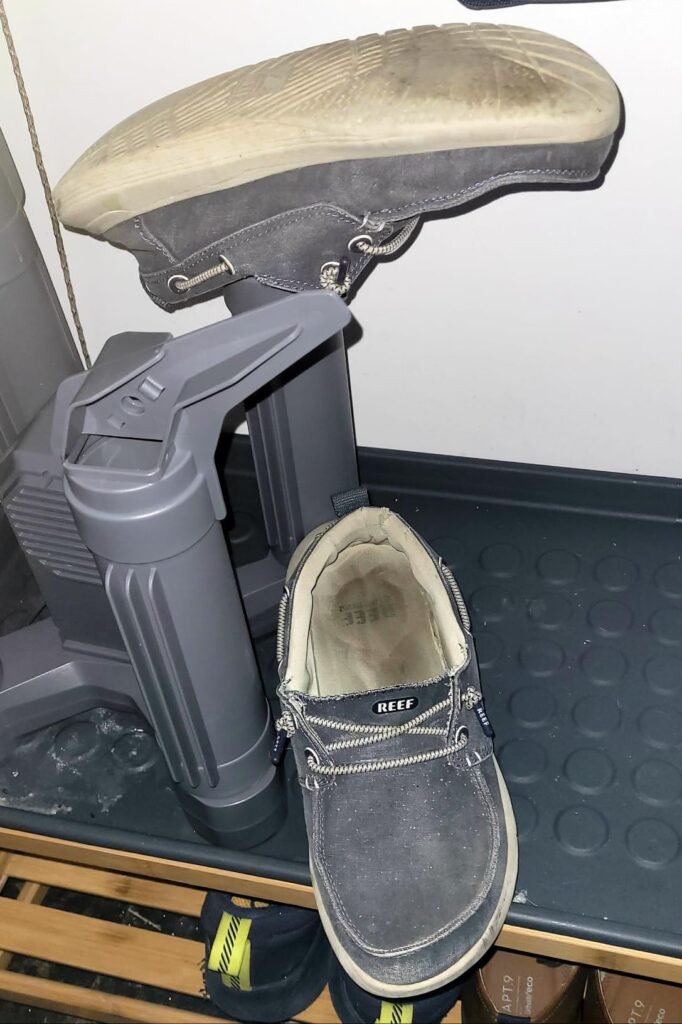
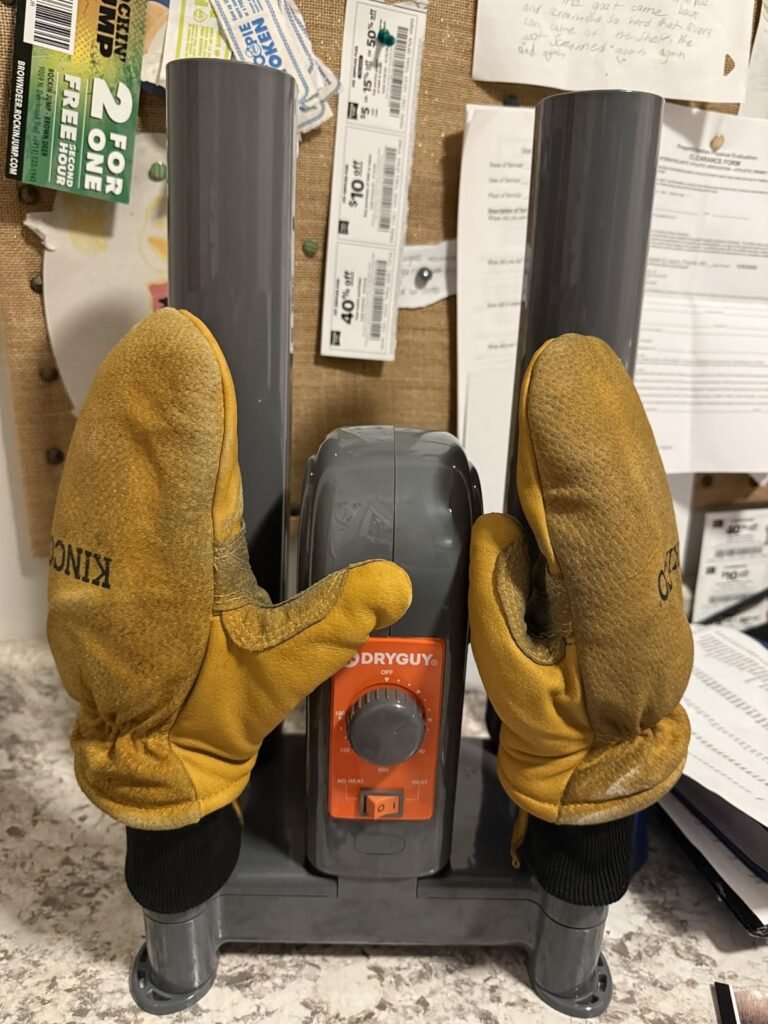
The DryGuy DX is a workhorse for households where multiple people come home with wet gear at once. With four drying ports and a central forced-air blower, it can handle two pairs of boots simultaneously or mix a pair of boots with a pair of gloves. That's a genuine time-saver for ski families, hunting cabins, and worksites where drying capacity matters.
We may earn a commission when you buy through this link, at no additional cost to you.
Drying times fall in the 1-3 hour range depending on how saturated your footwear is, which is significantly faster than pure convection units. The heat plus fan combination pushes warm air deep into the toe box and up the shaft, and a heat/no-heat switch lets you dial back to ambient air for delicate materials like ski boot liners or leather gloves that don’t need aggressive warming.
The 3-hour automatic shutoff timer is a practical safety feature that also prevents over-drying. At 12 by 7.5 by 15 inches, the unit fits in most mudrooms, garages, or laundry rooms, and the 6-foot cord provides reasonable placement flexibility. It’s also compatible with DryGuy’s accessories for waders, helmets, and taller boots, which extends its usefulness for outdoor enthusiasts.
Ambient air drying without heat is safer for materials that can degrade under sustained warm air, such as certain glued athletic footwear, delicate ski boot liners, or high-tech synthetics. It takes longer but preserves adhesives and prevents shrinkage. Use the heat setting for heavily saturated boots and switch to no-heat for daily maintenance drying.
The main consideration is noise. While DryGuy describes the blower as whisper-quiet, any forced-air dryer produces more sound than a fanless convection unit. If your dryer will sit in a garage or utility area, that’s a non-issue. If you’d prefer to run it in a bedroom overnight, a silent PEET or JobSite may be a better match.
Not the right choice for shoppers who need completely silent operation for a quiet bedroom or nursery.
We may earn a commission when you buy through this link, at no additional cost to you.
The JobSite Boot Dryer delivers the same silent, fanless drying approach as premium convection units at a noticeably lower price point. If you want overnight drying without a fan running in your bedroom or hallway, this is one of the most affordable ways to get there. The 36W design uses less electricity than a standard light bulb, so leaving it plugged in daily costs almost nothing.

We may earn a commission when you buy through this link, at no additional cost to you.
Zero moving parts is a genuine reliability advantage. There’s no fan bearing to fail, no motor to burn out, and no electronic timer to malfunction. The manufacturer publishes realistic dry times of about 30 minutes for a warm-up, 8 hours for damp boots, and 12 hours for soaked footwear, which sets accurate expectations rather than promising unrealistic speed.
It handles work boots, ski and snowboard liners, boxing gloves, hunting boots, hiking shoes, and even socks, as long as they fit over the posts. The gentle convection heat is safe for leather, rubber, and synthetic materials, and because the heat rises naturally rather than being forced in, there’s no risk of shrinking liners or damaging adhesives.
Silent convection dryers work by circulating warm air through the interior of your footwear over several hours. Damp boots typically dry overnight in about 8 hours, while fully soaked boots may need 12 hours or more. Setting realistic expectations helps you choose the right dryer type: if you need speed, go forced air; if you need silence and safety, go convection.
The trade-off is capacity and speed. This is a single-pair unit, so families with multiple wet boots each day will want a 4-port model like the DryGuy DX or POPCHOSE. For a single user or a household with staggered drying needs, the JobSite offers excellent value backed by a 2-year warranty and responsive small-business support.
Not ideal for households that need to dry multiple pairs at once or want quick 1-2 hour turnaround times.
We may earn a commission when you buy through this link, at no additional cost to you.
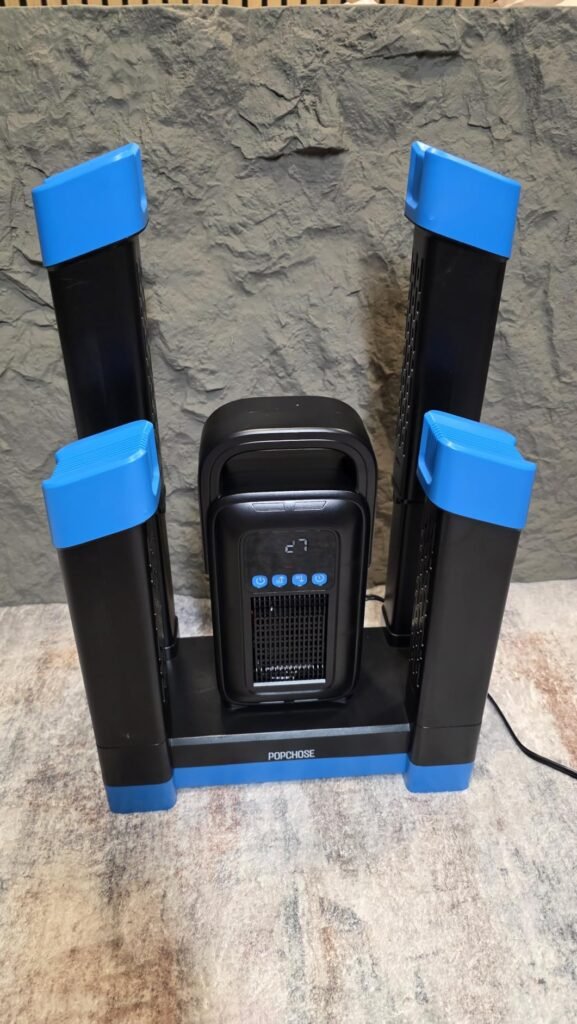
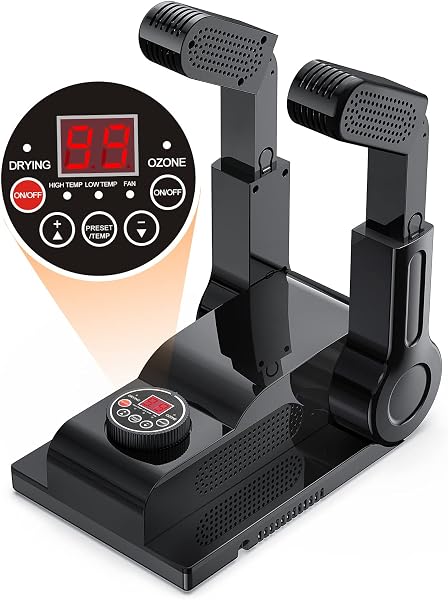
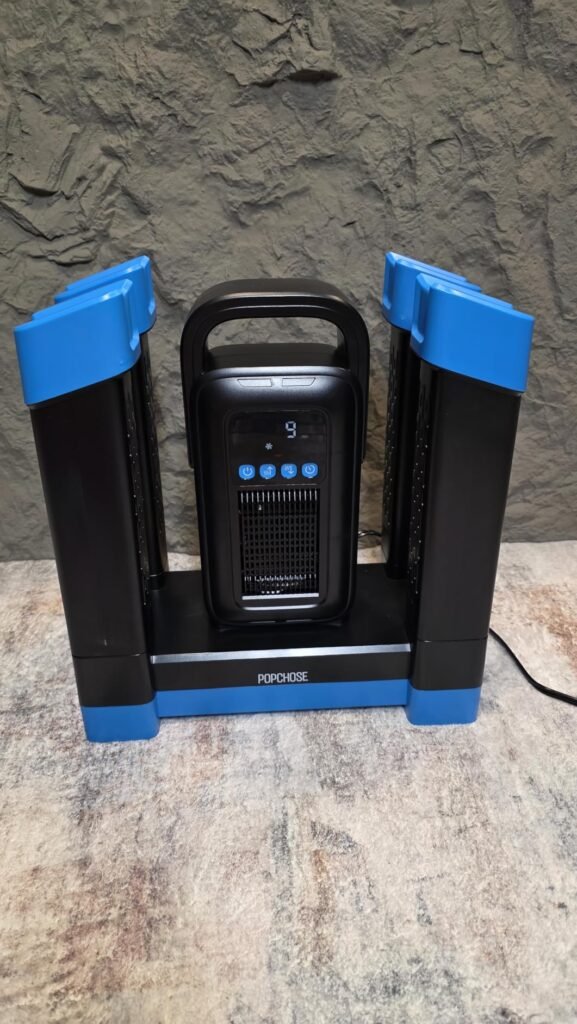
When you need soaked boots dry in under two hours, the POPCHOSE 4-Head is one of the most capable choices available. The 800W heating element delivers air at around 140°F, which the manufacturer states can dry most footwear in 40 to 90 minutes. That kind of turnaround is genuinely useful for winter workers, athletes with back-to-back sessions, or anyone who came home with soaked hiking boots and wants to wear them again the next morning.
We may earn a commission when you buy through this link, at no additional cost to you.
The dual-mode retractable duct system is the standout design feature. The front and rear tubes are independently heated, so you can run all four ports for two-pair drying or use just one zone for a single pair to save energy. The extendable tubes reach up into tall work boots, ski boots, and shaft-length hunting boots that shorter posts can’t service properly.
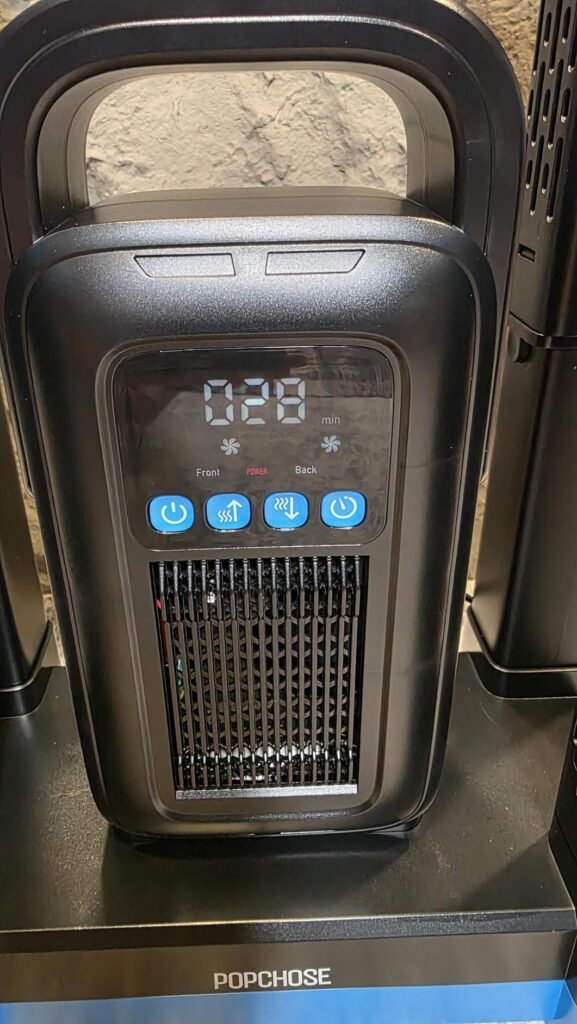
The built-in ozone deodorizer helps neutralize odor-causing bacteria that thrive in damp footwear, which is particularly useful for sneakers, cleats, and boots that see daily use. A digital timer with settings from 0 to 180 minutes gives you precise control, and built-in overheat protection helps safeguard your investment in quality footwear.
Ozone deodorizers work by breaking down the organic molecules that cause odor rather than masking them with fragrance. They’re particularly effective on sneaker and boot smells that resist regular airing out. Always follow the manufacturer’s usage instructions and run ozone cycles in well-ventilated spaces, as high ozone concentrations can irritate airways.
The considerations are power draw and ozone handling. At 800W, this uses far more electricity than a convection dryer, though only during active drying cycles. Ozone should be used in ventilated areas per the manufacturer’s guidance. If speed and odor control are top priorities and you have space in a garage or mudroom, this dryer delivers on both fronts.
Not suited for buyers who want silent, energy-efficient overnight drying or plan to run the unit in a bedroom.
We may earn a commission when you buy through this link, at no additional cost to you.
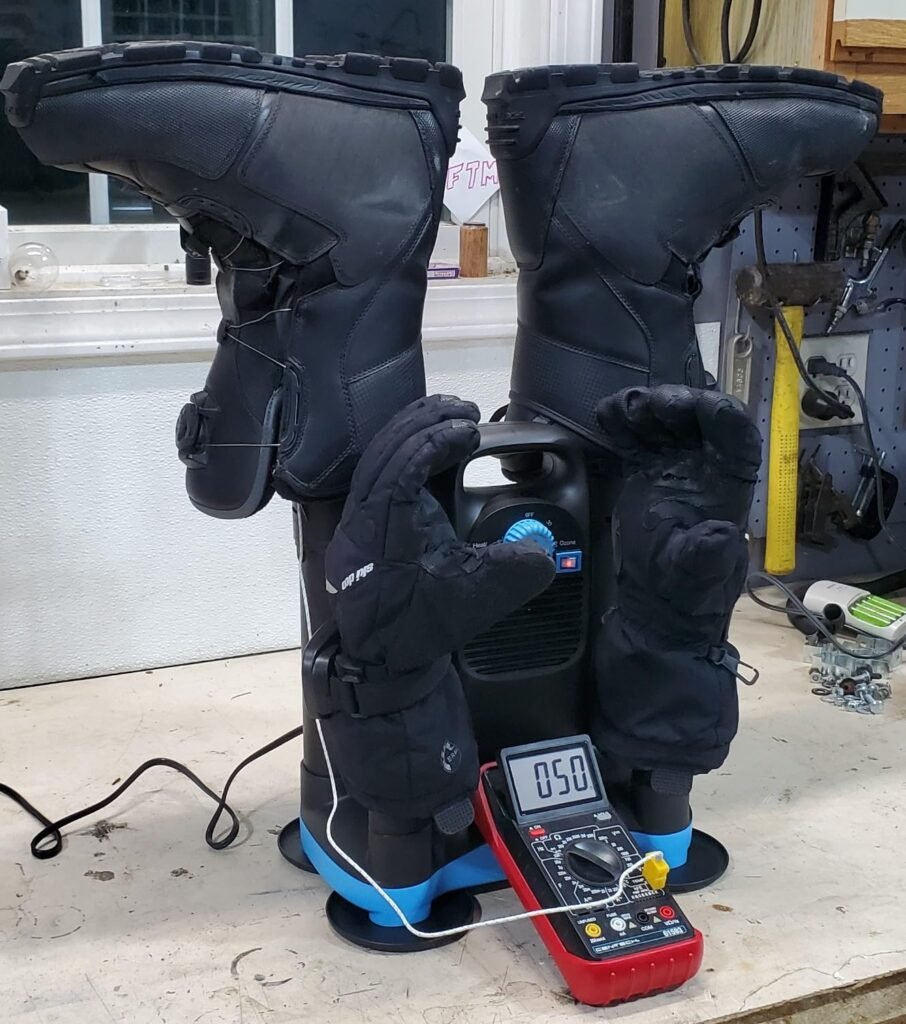
This upgraded dryer is designed for families and outdoor households where footwear comes in all sizes and shaft heights. The adjustable tube design lets you position the drying ports to match short sneakers, mid-height work boots, or tall ski boots without leaving dead air pockets where moisture can linger.
We may earn a commission when you buy through this link, at no additional cost to you.
With capacity for two pairs at once, it’s a practical choice for households with kids’ cleats and adult work boots landing in the mudroom on the same day. The strong heated air circulation is designed to dry gear quickly while the ozone switch tackles the odor buildup that damp footwear can develop over a season.
The customizable timer, adjustable up to 180 minutes, lets you set drying cycles that match how wet your gear actually is. Lightly damp sneakers may need only 30 to 45 minutes, while fully saturated work boots or thick ski gloves benefit from a longer cycle. This flexibility prevents both under-drying and unnecessary energy use on already-dry items.
Adjustable or extendable tubes let a single dryer serve multiple household members with different footwear heights. A rigid post that’s the wrong length either leaves the toe area damp or fails to reach into a tall boot shaft. Adjustable systems accommodate everything from kids’ shoes to knee-high ski boots without buying extension accessories.
It’s compatible with rubber, neoprene, synthetics, canvas, fleece, and microfiber, which covers most common footwear and glove materials. The trade-off is noise: forced-air units are inherently louder than fanless convection dryers. If it lives in a garage, laundry room, or mudroom, this isn’t an issue. In a shared living space, consider a quieter alternative.
Not the best fit for single-person households that only need to dry one pair of boots at a time.
We may earn a commission when you buy through this link, at no additional cost to you.
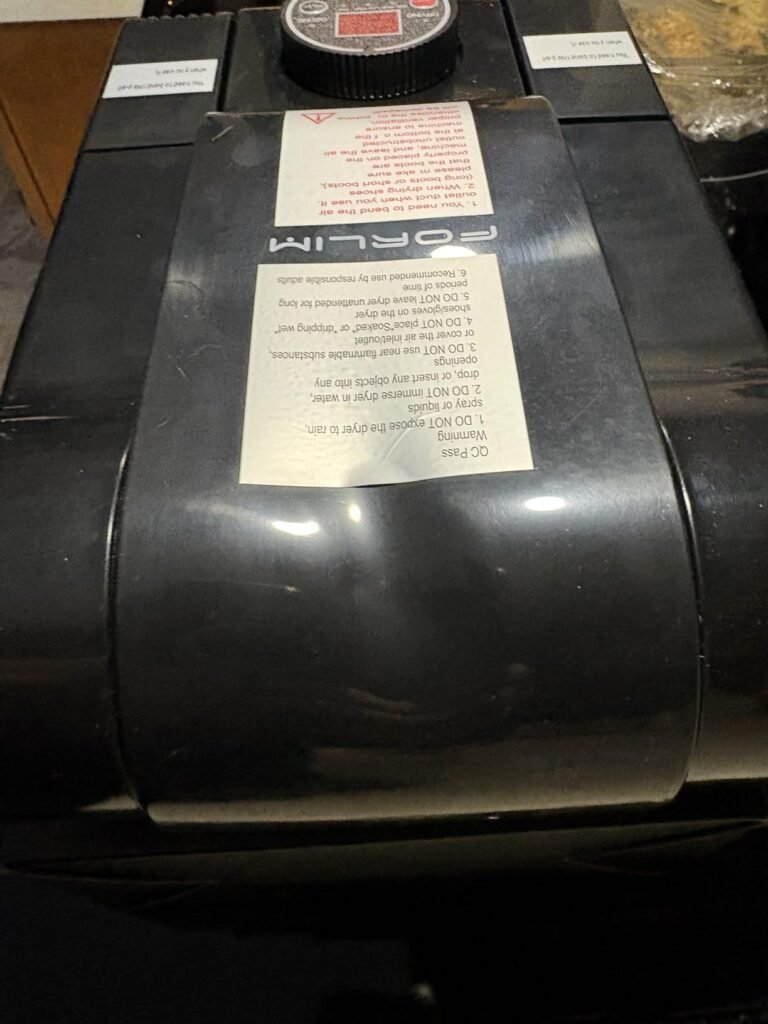
The FORLIM Forced Air dryer brings forced-air performance to a very accessible price point. The 200W airflow moves warm air through dual ports to dry damp work boots, sneakers, and gloves in about 1 to 2 hours, which is a solid speed for typical household drying needs.
We may earn a commission when you buy through this link, at no additional cost to you.
The telescopic bendable ports are a genuinely useful design touch. They extend deep into toe boxes to eliminate moisture that shorter posts miss, and they can bend to reach into taller boot shafts. This adaptability makes the unit work across sneakers, snow boots, and ski boots without dedicated attachments.
The 180° articulating dry rack rotates ports from flat to upright, which fits sneakers, slippers, gloves, and boots up to about 21 cm shaft height. A mechanical dial timer runs from 0 to 120 minutes and shuts off automatically, which is a practical safety feature for bedtime or post-shift drying without needing to remember to unplug the unit.
ETL certification confirms that a product has been tested to meet North American electrical safety standards. For a device that heats up and runs for hours near flammable materials, that third-party verification matters. When comparing budget dryers, prioritize models with ETL, UL, or equivalent certification over uncertified alternatives.
The moderate 104-140°F heat range is safe for leather, rubber, neoprene, canvas, and fleece linings, though as always you should follow garment care labels. ETL certification for North American safety standards and a 2-year FORLIM warranty round out a reliable, budget-friendly package. It’s a strong choice for shoppers who want forced-air speed without spending premium money.
Not the right pick for very tall boots that exceed the 21cm shaft height limit.
We may earn a commission when you buy through this link, at no additional cost to you.
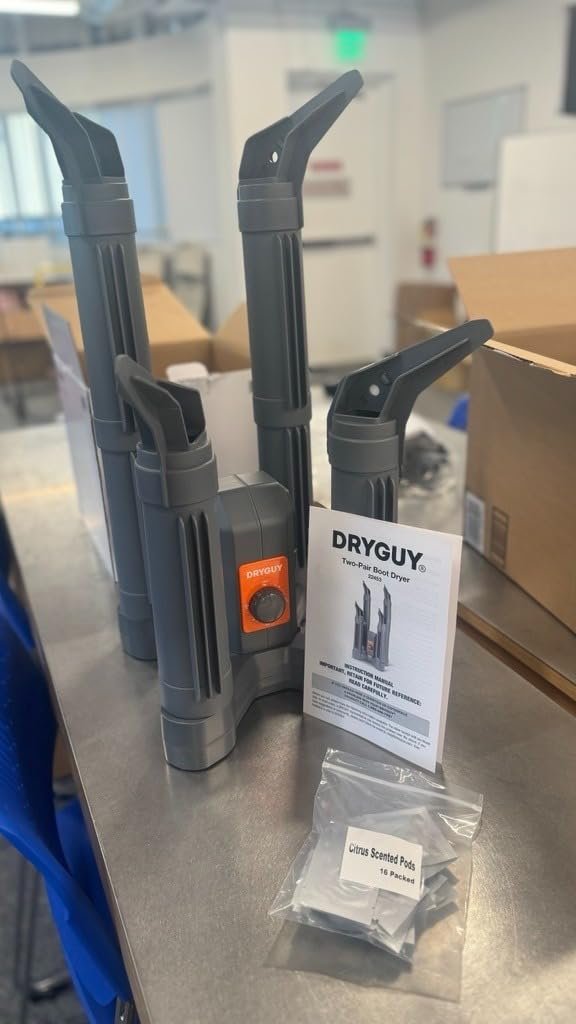
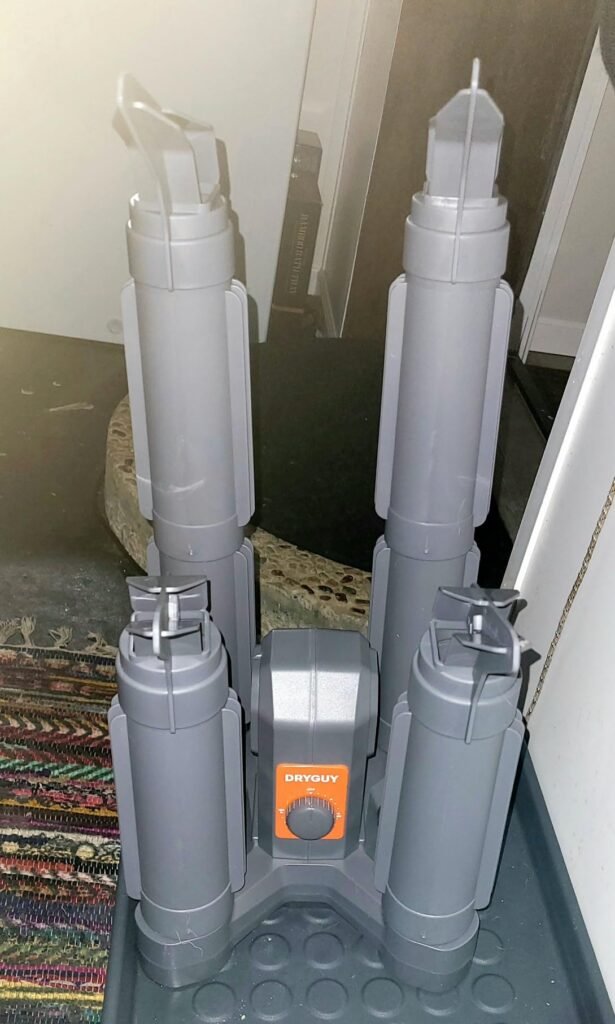
The DryGuy Two-Pair takes an interesting approach by combining convection heat with forced-air drying in a single compact unit. This dual technology lets you match the drying method to the footwear at hand: gentle convection for delicate ski boot liners and forced air for heavily saturated work boots.
We may earn a commission when you buy through this link, at no additional cost to you.
The two-pair capacity means a household can handle both partners’ boots or a parent-and-child combination in one cycle. That’s a practical time saver in winter, when everyone tends to come home with wet gear at the same time. The compact form factor is designed to fit in mudrooms and entryways without dominating the space.
Odor control is integrated into the design, which addresses the persistent smell issue that damp footwear develops when it doesn’t dry fully between uses. Combined with the flexibility to choose your drying mode, this makes the unit adaptable to a wide range of footwear types and moisture levels.
Combining both technologies gives you the best of both worlds: silent, gentle overnight drying for delicate items and fast, high-airflow drying when you need speed. For households that dry a mix of everyday sneakers, ski boot liners, and heavy work boots, having both modes in one unit eliminates the need for multiple dryers.
The trade-off is complexity and cost. A dual-technology dryer typically has more components and controls than a single-mode unit, and it usually costs more than either a pure convection or pure forced-air model of similar capacity. If you want maximum flexibility in one appliance, this is a strong choice. If you know you only need one drying method, a specialized unit may serve you better for less money.
Not the best choice for shoppers who want the simplest possible operation or the lowest possible price.
We may earn a commission when you buy through this link, at no additional cost to you.
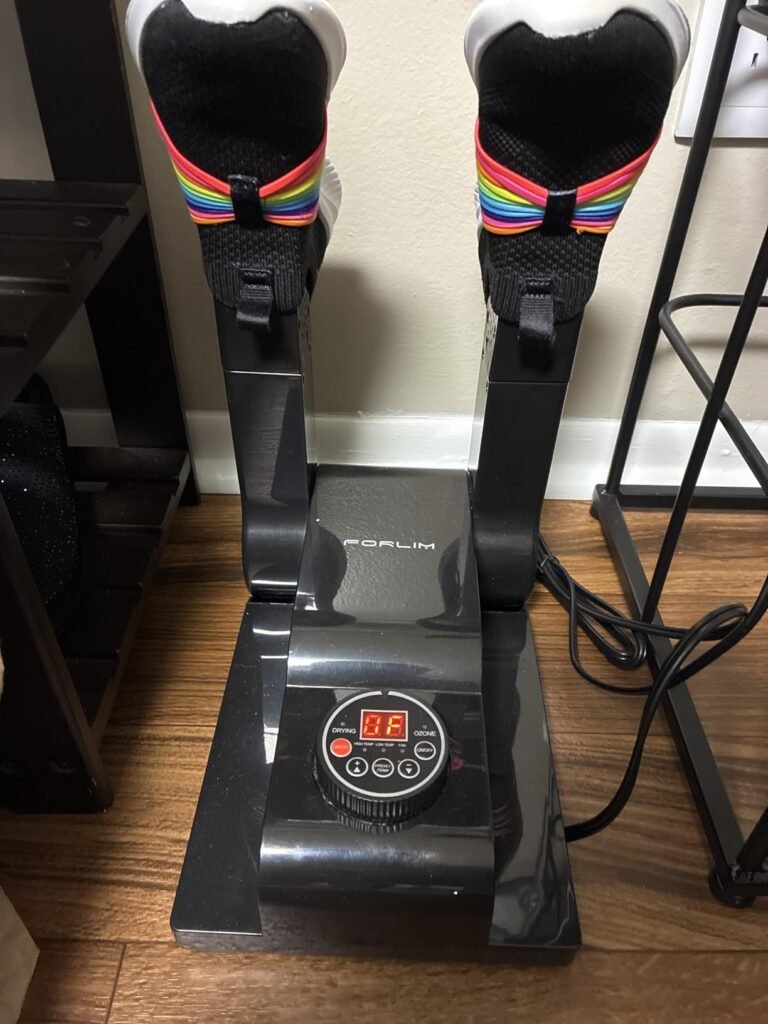
The FORLIM 3-Mode Ozone stands out for its scheduling flexibility. The 24-hour delay start lets you load damp boots after work and schedule the dryer to activate hours later, so your footwear is ready exactly when you need it in the morning. This is genuinely useful for shift workers, early risers, and anyone who wants to sync drying with their schedule.
We may earn a commission when you buy through this link, at no additional cost to you.
Three temperature modes — fan only, low heat, and high heat — let you match the drying intensity to the footwear. Fan-only mode is ideal for materials that shouldn’t be heated, low heat handles daily maintenance drying, and high heat tackles fully soaked boots after a wet workday or outdoor session. The 200W forced-air system reaches about 104-140°F, similar to other forced-air units in this range.
The telescopic bendable ports reach deep into toe boxes and taller shafts, and the 180° folding rack accommodates sneakers, slippers, gloves, cleats, and boots. The built-in ozone deodorizer helps neutralize lingering odors, and a 99-minute auto-off ensures the unit shuts down safely if you forget it.
Delay-start scheduling lets you load wet gear at any time and have it dry precisely when needed, without the dryer running longer than necessary. This is especially useful if you want quiet overnight hours followed by drying that finishes at wake-up time, or if you want to avoid running heated appliances during peak electricity rate hours.
The trade-off is the somewhat lower star rating compared to peer models, though it remains solid. If the delay-start and multi-mode features match your routine, this dryer offers meaningful flexibility. If you prefer the simplest possible controls, a single-mode dryer with a basic timer may be a more straightforward choice.
Not the right pick for shoppers who want a simple plug-and-dry unit without programming.
We may earn a commission when you buy through this link, at no additional cost to you.
The LAVIEAIR 4-Tube offers a solid middle-ground option for households that want two-pair drying capacity without stepping up to premium price tiers. The 250W heating coil combined with an internal motor is designed to dry damp shoes, boots, or gloves within about 2 hours, which handles most everyday moisture levels effectively.

We may earn a commission when you buy through this link, at no additional cost to you.
The four separate tubes and brackets give you the flexibility to dry two pairs of boots or heavy skating shoes simultaneously, which is a real convenience for families or two-person households. The 0-180 minute timer lets you set precise drying cycles based on how wet the footwear is, avoiding the waste of running long cycles on lightly damp shoes.
The unit is specifically designed around warm air rather than hot air, which is a meaningful distinction for material safety. Warm airflow at moderate temperatures reduces the risk of damaging leather, rubber, neoprene, canvas, synthetics, cloth, fleece, or felt materials. This makes the LAVIEAIR a versatile choice across athletic footwear, work boots, and winter gear.
Warm air drying uses moderate temperatures that safely evaporate moisture without stressing adhesives, shrinking liners, or drying out leather. Hot air can be faster but carries risk for delicate materials. For most household footwear, warm airflow strikes the right balance between drying speed and material preservation over the long term.
The clean white housing looks at home in mudrooms or laundry rooms and blends with most decor. As with all forced-air units, it produces more noise than a fanless convection dryer, though it’s designed for reasonable quiet operation. If you value two-pair capacity, adjustable timing, and gentle warm airflow, this is a well-balanced pick.
Not ideal for buyers who want a silent unit for bedroom use or need drying in under 60 minutes.
We may earn a commission when you buy through this link, at no additional cost to you.
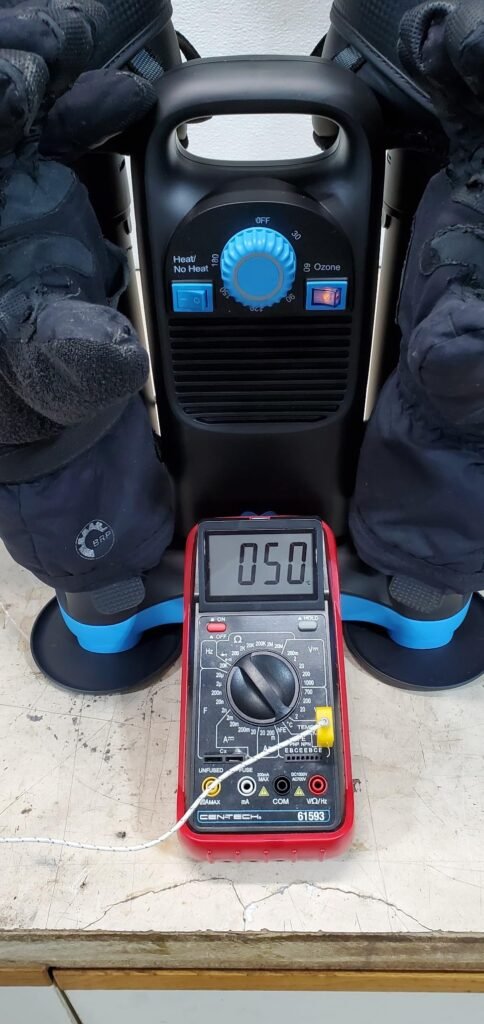
The Everlasting Comfort Boot Dryer follows the same silent convection approach as premium fanless units but keeps things simple and compact for single-pair households. If you're one person drying one pair of boots or sneakers each day, this unit does exactly what you need without wasted capacity or extra cost.

We may earn a commission when you buy through this link, at no additional cost to you.
At just 36 watts, it uses less energy than a standard light bulb and can safely run overnight without adding noticeably to your electric bill. The gentle convection heat circulates warm air evenly through the inside of your footwear, which protects materials from the shrinking, cracking, and warping that can occur with more aggressive forced-air heating.
It works well on rubber, microfiber, fleece, boxing glove leather, and synthetics that may not be laundry-machine safe. That makes it a versatile option for hunting boots, hockey gear, work shoes, or outdoor travel wear. The fanless design also means there are no moving parts to wear out, which supports long-term reliability.
If you’re the only person in your household drying footwear regularly, a single-pair unit saves money and counter space. Buying a 4-port dryer that mostly sits with empty posts wastes both. Match the capacity to your actual daily use, not to the largest possible scenario, and you’ll get more value from a properly sized unit.
The trade-offs are speed and capacity. This is a single-pair unit, so families or multi-boot households will want a 4-port model. And convection drying takes longer than forced-air, so if you need soaked boots ready in an hour, look elsewhere. For a quiet, dependable, low-cost daily dryer for one person, it’s a strong pick.
Not ideal for households with multiple people who regularly need to dry boots at the same time.
We may earn a commission when you buy through this link, at no additional cost to you.
Picking the right boot dryer comes down to matching the technology, capacity, and features to your actual drying habits. The factors below cover the decisions that make the biggest difference in daily use.
The most fundamental choice is between silent convection dryers and faster forced-air models. Convection dryers, like the PEET Original and JobSite, use gentle warm air that rises naturally through the boot shaft. They produce no noise, use very little electricity (typically around 36 watts), and are safe for virtually any material because there’s no aggressive airflow to disturb adhesives or shrink liners. The trade-off is speed: expect 8 to 12 hours for damp to soaked boots.
Forced-air dryers, such as the DryGuy DX and POPCHOSE 4-Head, use a blower to push warm air deep into footwear at higher wattages ranging from 200W to 800W. This dramatically reduces drying time, often to 1-2 hours or even under 90 minutes for the highest-powered units. The trade-off is noise: even quiet blowers produce more sound than a fanless unit, and higher wattage means more electricity use during drying cycles.
Choose convection if you value silence, energy efficiency, and long overnight drying, especially for delicate materials. Choose forced air if you need fast turnaround times or dry multiple pairs daily during heavy use seasons.
Port count directly determines how many pairs you can dry at once. Single-pair units like the JobSite and Everlasting Comfort have two posts, one for each boot, and work well for individual users. Four-port units like the DryGuy DX, POPCHOSE, and LAVIEAIR handle two pairs simultaneously, or one pair of boots plus a pair of gloves. Some models add expandable accessories for helmets, waders, or extension tubes for tall boots.
Consider your household honestly. A family of skiers or a hunting cabin with multiple users benefits significantly from four-port capacity, while a single commuter with one pair of work boots rarely needs more than two ports. Buying more capacity than you need adds cost and countertop space without providing daily value, while buying too little forces staggered drying cycles that can slow down your morning routine.
Choose two-port if only one person dries footwear regularly. Choose four-port or expandable systems if multiple household members or gear types share the dryer daily.
Timer functionality ranges from simple mechanical dials with 60-120 minute limits to digital panels offering 180 minutes or more, plus delay-start scheduling up to 24 hours. A basic auto-shutoff timer is a safety essential, ensuring the dryer turns off if you forget it and preventing over-drying that could stress leather or adhesives. Digital timers offer more precision, letting you match cycle length to actual moisture levels.
Delay-start scheduling, like the 24-hour delay on the FORLIM 3-Mode unit, adds real convenience for shift workers, early risers, or anyone who wants to coordinate drying with wake-up time. You can load boots after work at 6 PM and program the dryer to start at 4 AM so they’re dry and warm by the time you need them at 6 AM, without running the unit all night.
Choose a basic mechanical timer if you want simplicity and low cost. Choose a digital timer with delay-start if you want to align drying cycles with a specific schedule or reduce nighttime noise.
Odor is one of the most persistent problems with regularly damp footwear. Ozone deodorizers, found on the POPCHOSE, Upgraded Ozone Dryer, and FORLIM 3-Mode, use ozone gas to break down the organic molecules that cause smell rather than masking them with fragrance. This is genuinely effective on sneaker funk, ski boot liner odor, and work boot smells that don’t respond to airing out alone.
The consideration with ozone is proper use. Ozone at high concentrations can irritate airways, so these features should be run per the manufacturer’s guidance, typically in well-ventilated areas like garages or mudrooms rather than sealed bedrooms. Many units let you toggle ozone on or off, so you can use it selectively when odor is an issue and skip it for routine drying.
Choose an ozone-equipped dryer if you deal with persistent footwear odor, especially from athletic use or long work shifts. Skip ozone if you primarily dry a single pair of clean everyday shoes or plan to run the unit in a small enclosed space.
Boot height determines whether a standard dryer post can effectively push warm air to the top of the shaft or leave moisture trapped near the calf. Standard posts are typically fine for hiking boots, sneakers, and mid-height work boots, but tall western boots, ski boots, or knee-high hunting boots may require extension attachments or telescopic ports. The PEET Original notes that boots over 11 inches need 12-inch extension attachments sold separately.
Telescopic and bendable port designs, like those on the FORLIM Forced Air and 3-Mode models, adapt to different heights without buying accessories. They extend into tall shafts and can bend to reach into toe boxes at various angles, which is especially useful for households where multiple footwear styles use the same dryer. Adjustable articulating racks that pivot from flat to upright also help fit slippers, gloves, and sneakers alongside boots.
Choose extension-compatible systems if you own tall boots and want a modular approach. Choose telescopic or adjustable-port units if you want built-in flexibility without buying add-ons.
Different materials tolerate heat differently. Leather is generally safe with moderate warmth but can crack if over-dried at high temperatures. Rubber and neoprene handle warmth well. Synthetic athletic shoes with heat-sensitive adhesives can be damaged by aggressive hot air. Ski boot liners often use materials that should be dried gently to preserve their shape. Convection dryers avoid these risks by keeping temperatures low and steady.
Forced-air units with heat toggles, like the DryGuy DX, or three-mode systems like the FORLIM offer valuable flexibility. Fan-only or low-heat modes handle delicate materials safely, while high-heat modes tackle soaked heavy work boots quickly. Always check the temperature range: units running 104-140°F are generally safe for most footwear when used appropriately with timer control.
Choose gentler convection heat or an adjustable-heat forced-air unit if your gear includes delicate athletic shoes, ski liners, or premium leather. Choose high-heat forced air only if your footwear is primarily rugged work boots or heavy outdoor gear.
Where you plan to put the dryer often determines which technology makes sense. Convection dryers with zero moving parts produce zero noise, making them suitable for bedrooms, hallways, or living areas where a running fan would be intrusive. Forced-air dryers range from whisper-quiet blowers to noticeably audible units, and all are best placed in mudrooms, garages, laundry rooms, or utility spaces where the sound doesn’t matter.
Physical footprint also matters. Compact units like the PEET Original at 9.5 by 9.5 inches take minimal space, while larger four-port forced-air dryers may need dedicated shelf or floor space. Consider cord length as well: a 6-foot cord like the DryGuy DX offers reasonable placement flexibility, while shorter cords may limit your options relative to available outlets.
Choose silent convection for shared living areas or bedrooms. Choose forced air for dedicated drying spaces where speed matters more than sound.
Warranty length is a strong signal of manufacturer confidence and expected product life. The PEET Original’s 25-year warranty is exceptional and reflects the reliability of a design with no moving parts. JobSite backs its silent dryer with a 2-year warranty, and FORLIM offers 2-year coverage across its lineup. Forced-air units with motors and blowers typically carry shorter warranties because those components have a finite operational lifespan.
Consider long-term reliability alongside warranty length. Convection dryers with zero moving parts simply have less to fail, which is why they can carry such long warranties. Forced-air dryers offer speed benefits but include a motor, blower, and often a control board that can eventually wear out. If you want a dryer you can keep for a decade or more, convection is generally the more durable choice.
Choose long-warranty convection units for maximum longevity and set-and-forget reliability. Accept shorter warranties on forced-air units if their speed benefits justify the trade-off for your use case.
Before drying, wipe off excess mud, snow, or surface water with a clean cloth so the dryer only has to remove moisture that’s soaked into the material. Loosen laces and open the tongue fully to let warm air reach the entire interior. For very wet boots, remove the insoles and dry them separately on flat surfaces or over the dryer posts if they fit, since insoles hold significant moisture and slow the overall drying process when left in place.
Match the drying method to the footwear. Use silent convection dryers overnight for delicate materials, ski boot liners, and daily maintenance drying. Use forced-air dryers with heat for heavily soaked work boots when you need fast turnaround, and switch to no-heat or low-heat modes for athletic shoes with heat-sensitive adhesives. Set the timer to match how wet the boots actually are rather than always running maximum cycles, which wastes electricity and can over-dry leather.
Keep the dryer itself clean and stored properly for long-term reliability. Wipe down ports and the base occasionally to remove dust and debris that can accumulate in the airflow path. Store it in a dry area away from direct water exposure, and inspect the cord periodically for any signs of wear. If your unit has expandable accessories, keep them together in a designated spot so you can quickly reconfigure the dryer for helmets, gloves, or tall-boot extensions when needed.
Drying time depends on the dryer type and how saturated the boots are. Silent convection dryers typically take 8-12 hours for damp to fully soaked boots, making them ideal for overnight use. Forced-air dryers with 200-800W heating elements can dry most footwear in 1-3 hours, and the fastest 800W units like the POPCHOSE reach 40-90 minutes. Always check that the interior is fully dry before wearing, not just the exterior.
Silent convection dryers like the PEET Original and JobSite are specifically designed for continuous overnight and 24/7 operation because they have no moving parts and use minimal electricity. Forced-air dryers should typically use their auto-shutoff timer, which usually ranges from 2-3 hours, rather than running unattended for extended periods. Always verify the manufacturer's guidance and check that your specific model is rated for overnight use.
Properly designed boot dryers use gentle warm air rather than hot air, which is safe for leather, rubber, neoprene, and most synthetics. Convection dryers are especially gentle because heat rises naturally rather than being forced in. For premium leather boots or delicate materials, choose a low-wattage convection unit or a forced-air model with a no-heat option. Avoid pointing hair dryers or radiators directly at leather, which can cause cracking.
Yes, but through two different mechanisms. Standard dryers eliminate odor indirectly by removing the moisture that odor-causing bacteria need to survive. Models with built-in ozone deodorizers, like the POPCHOSE and FORLIM 3-Mode, actively break down odor molecules for more aggressive odor removal. If you have persistent smell issues from athletic shoes or work boots, an ozone-equipped model may be worth the extra cost.
Most boot dryers work well on gloves, and many are designed for this dual use. The PEET Original, DryGuy DX, and several other models offer optional accessories for helmets, mittens, and waders, effectively turning a single base unit into a complete gear-drying system. Check the compatibility list for your specific model before assuming an accessory will work.
Convection dryers use gentle warm air that rises naturally through the boot with no fan, producing zero noise and using minimal electricity (around 36 watts). Forced-air dryers use a blower to push warm air into footwear at higher wattages (200-800W), dramatically reducing dry time but adding noise and using more energy. Choose based on whether you prioritize speed or silence.
Convection dryers are extremely efficient, drawing only about 36 watts continuously, which is less than a standard light bulb. Even running 24/7, the electricity cost is minimal. Forced-air dryers use more power (200-800W) but only during active drying cycles of 1-3 hours, so their total energy use per cycle remains reasonable. Auto-shutoff timers help prevent unnecessary energy use.
Standard posts typically reach 11 inches or so, which fits most work boots and hiking boots. Tall ski boots, western boots, or knee-high hunting boots may need extension attachments (available separately for models like the PEET) or telescopic ports (built into models like the FORLIM). Measure your tallest boots before buying and choose either an expandable system or a dryer with adjustable-height ports.
It varies significantly by design. Silent convection dryers use about 36 watts, similar to a small light bulb, making them very cheap to run even continuously. Forced-air dryers range from 200 watts on budget models to 800 watts on the fastest units, but they typically only run for 1-3 hours per cycle. Overall monthly cost for either type is generally quite low compared to major household appliances.
It depends on your odor situation. If you regularly deal with strong footwear smells from athletic use, long work shifts, or shared ski boot rentals, ozone deodorizers actively break down odor molecules and are genuinely effective. If your footwear stays reasonably fresh with regular drying, standard warm-air drying alone typically prevents odor buildup by removing the moisture bacteria need to survive.
The PEET Original Dryer stands out as the strongest overall choice for most buyers, combining silent 36W convection heat, exceptional material safety, an expandable accessory system, and a 25-year warranty that reflects genuine long-term reliability. For anyone who wants a set-and-forget dryer they can leave plugged in every day, it's the benchmark against which other models are measured.
For buyers who need faster drying, the POPCHOSE 4-Head with its 800W output and ozone deodorizer turns around soaked boots in under 90 minutes, while the DryGuy DX offers reliable four-port capacity with a heat toggle for delicate materials. The JobSite Boot Dryer delivers silent convection performance at a more accessible price for budget-conscious single-pair users, and the FORLIM 3-Mode adds 24-hour delay scheduling for shift workers who want to time drying to their routine.
Start with the drying speed you actually need. If overnight is fine and quiet operation matters, choose a convection unit. If you need boots ready within a few hours, choose a forced-air model with enough ports for your household. Then layer in features like ozone deodorizers, adjustable heat modes, and expandable accessories based on your specific gear and habits, and you'll end up with a dryer that genuinely improves your daily routine for years to come.