Edifier R1280T
9.2Editor score13mm silk tweeter
4-inch full-range driver
Dual AUX inputs
Remote control included
Find the right bookshelf speakers for 2026. We compare 10 standout options by build quality, useful features, owner feedback, value, and everyday trade-offs.
Choosing the right bookshelf speakers in 2026 comes down to balancing sound quality, driver design, powered versus passive operation, connectivity, and how well the enclosure fits your room. We compare 10 standout pairs across tweeter and woofer construction, cabinet quality, input options, amplifier needs, aesthetic finish, owner feedback, and real value so you can shortlist confidently.
The gap between a budget desktop pair and a serious home audio pair shows up in driver materials, cabinet resonance, and how naturally the speakers reproduce voices, instruments, and low-end detail. Some models include built-in amplification and Bluetooth streaming, while others require a separate receiver but reward that extra step with cleaner, more scalable performance.
This guide breaks down each pair by the details that matter most: tweeter type, woofer size and material, port design, connectivity options, sensitivity, and how the speaker suits music listening, movies, or a hybrid desk setup. The goal is a confident purchase that matches your room size, source components, and listening priorities.
We compared 10 pairs of bookshelf speakers using the details that actually help a buyer decide: tweeter design and material, woofer size and cone composition, cabinet construction, port placement, powered versus passive configuration, connectivity options like Bluetooth and RCA, amplifier requirements, aesthetic finish, and owner feedback. The notes focus on real trade-offs so each pick connects to how people actually use these speakers for music listening, home theater, desktop audio, and mixed-source setups in real rooms.
Compare key features, scores, and current prices side by side. A shorter feature list means fewer details were available, not necessarily fewer capabilities.
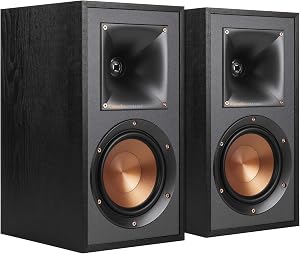






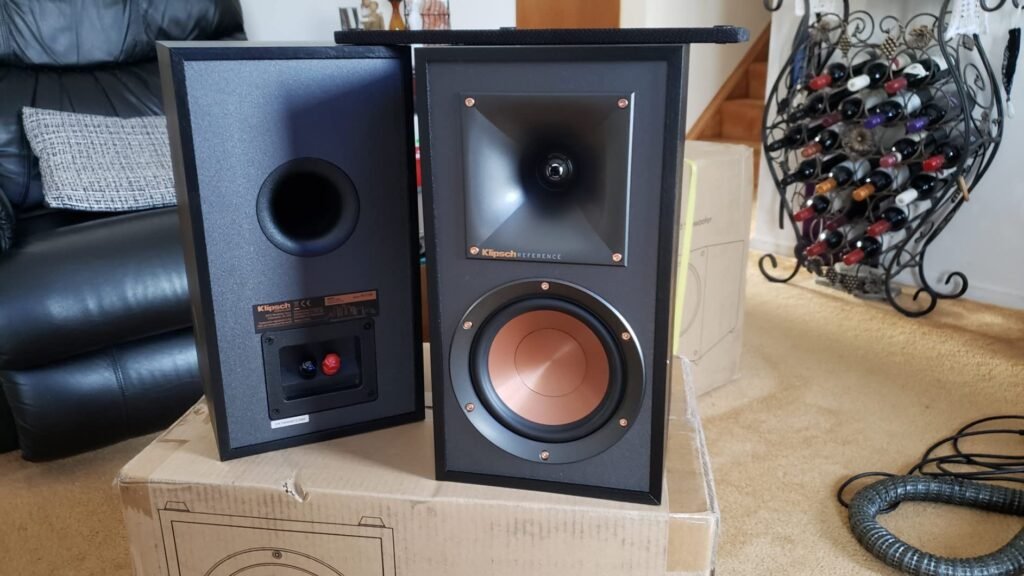
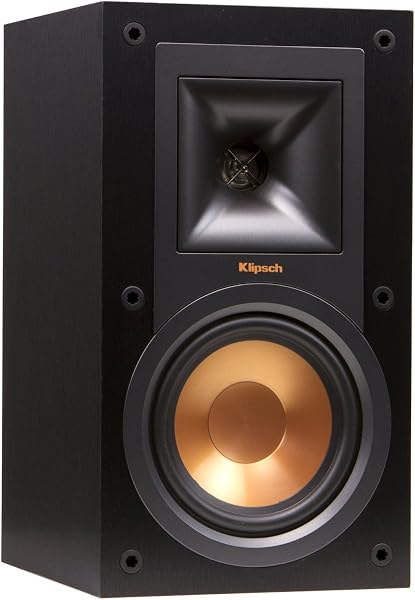
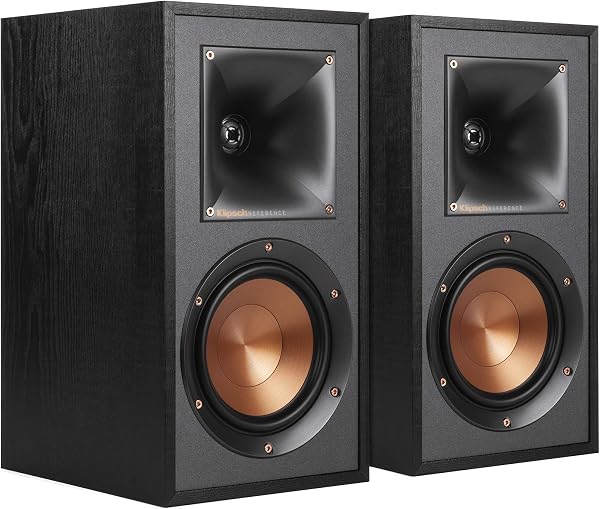
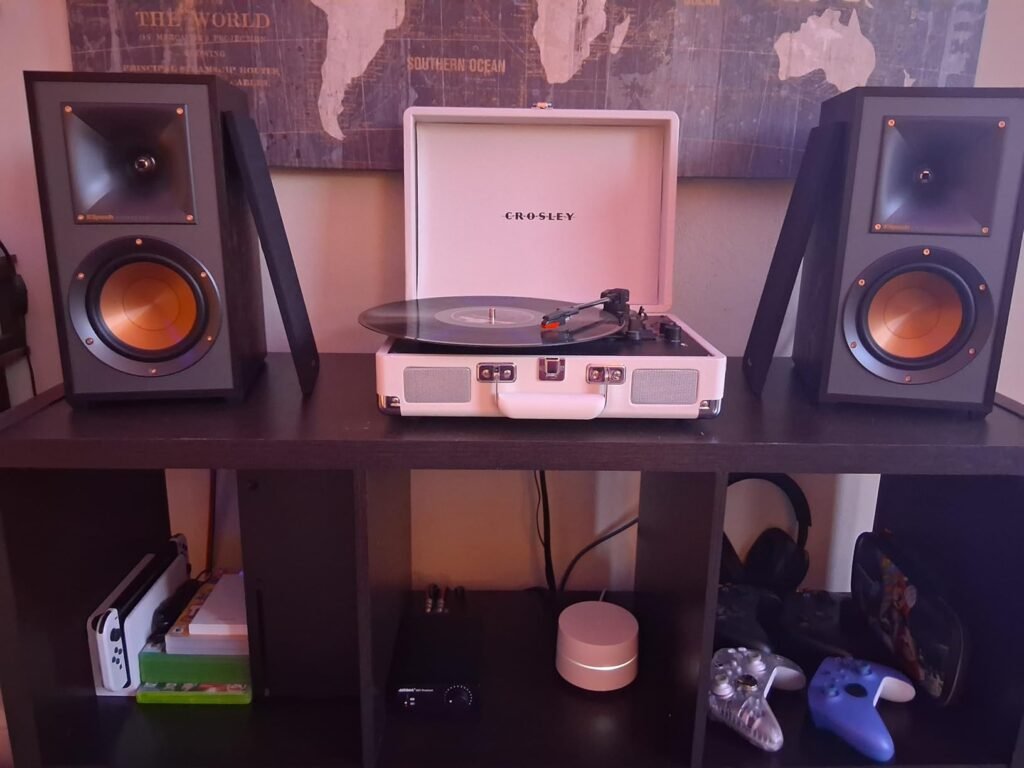
The Klipsch R-51M stands out as the strongest all-around pick in this guide because it combines dual woofers, quality horn-loaded tweeters, and Klipsch's signature high sensitivity into a compact bookshelf format. The dual 5.25-inch spun-copper IMG woofers work together to deliver more low-end presence than a single-woofer design of similar cabinet size, which matters in rooms where you cannot add a subwoofer.
We may earn a commission when you buy through this link, at no additional cost to you.
The 1-inch aluminum LTS tweeter mounted in a 90 by 90 square Tractrix horn is the technical heart of the design. Horn loading concentrates the tweeter’s output into a controlled dispersion pattern, which reduces sidewall and ceiling reflections that can muddy stereo imaging. The result is a detailed, precise high-frequency response that reveals recording details many bookshelf speakers gloss over.
High sensitivity is a Klipsch hallmark and a genuine practical advantage. These speakers play loudly with modest amplifier power, which means you do not need an expensive high-current receiver to get satisfying volume. This makes them a strong match for entry-level AVRs and dedicated stereo amplifiers alike. The rear-firing port needs some space behind the speakers to breathe, so plan for at least 6 to 12 inches of clearance from the back wall.
Speaker sensitivity measures how loudly a speaker plays with a given amount of amplifier power. Klipsch speakers are engineered for high sensitivity through their horn-loaded tweeter designs, which means they reach satisfying volume levels with less power than typical speakers. This translates to a wider range of compatible amplifiers and receivers, and it makes them a particularly good match for tube amplifiers and lower-power solid-state amps that would struggle with less efficient speakers.
This pair is the right pick for buyers who want serious performance in a bookshelf-sized package and are comfortable adding an amplifier or receiver. The Klipsch sound signature is detailed and forward, which suits rock, electronic, and movie soundtracks particularly well. Listeners who prefer a warmer, more laid-back presentation may want to audition before committing, but for most music and home theater use, the R-51M delivers exceptional value.
Not the pick for buyers who prefer a warm, laid-back sound signature or need a self-powered system.
We may earn a commission when you buy through this link, at no additional cost to you.
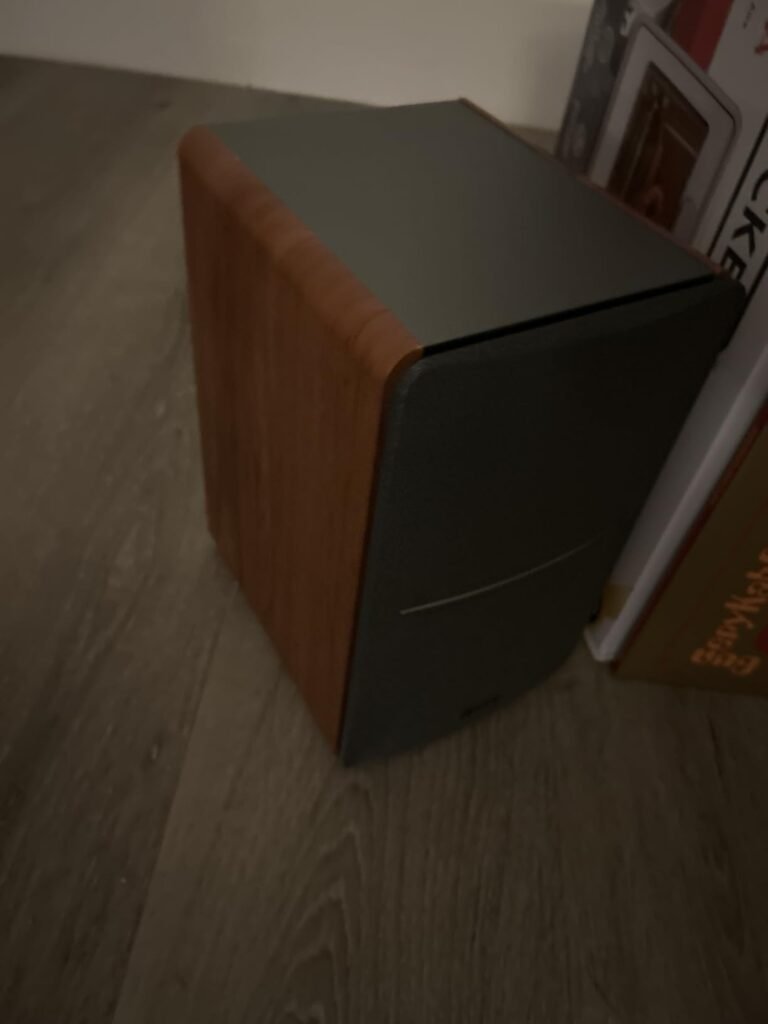
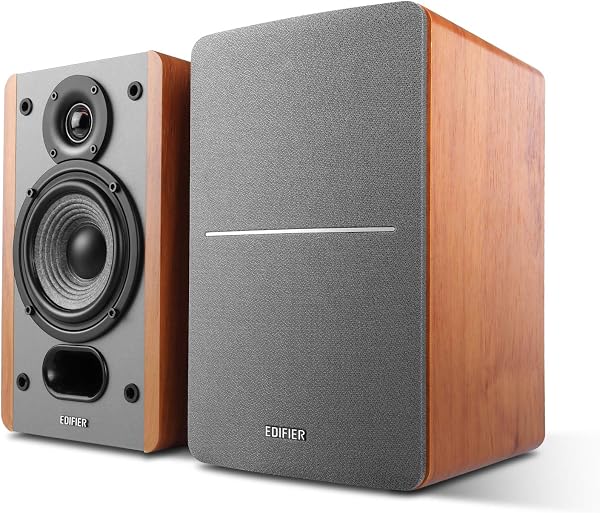
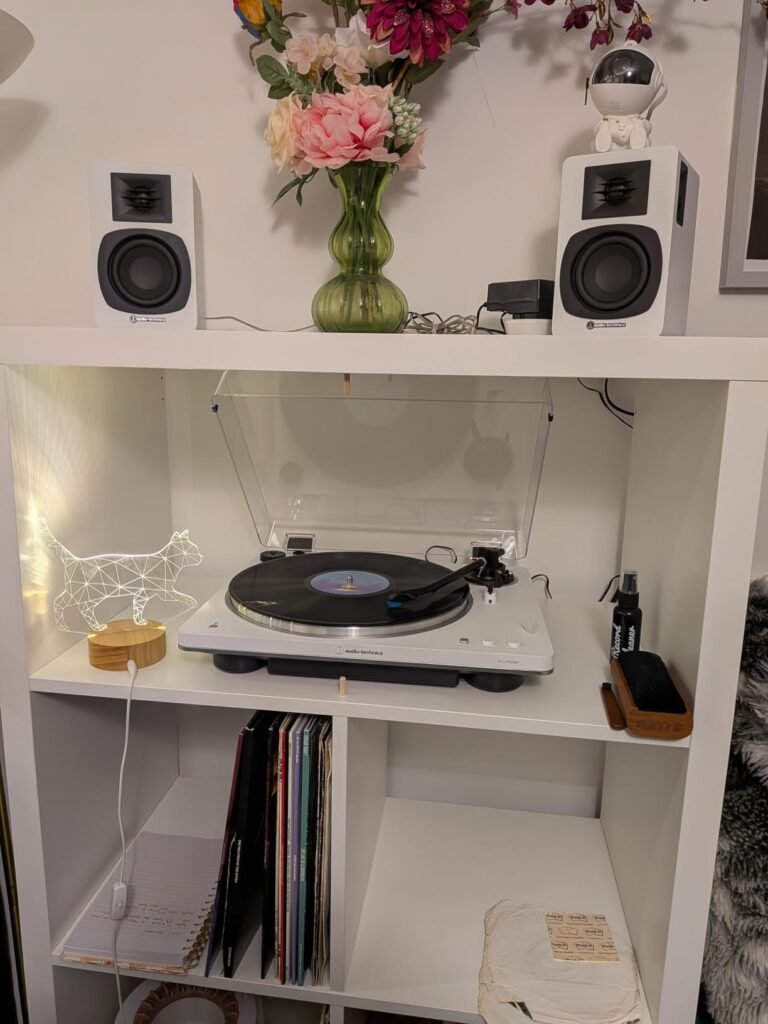
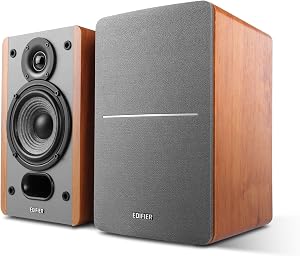
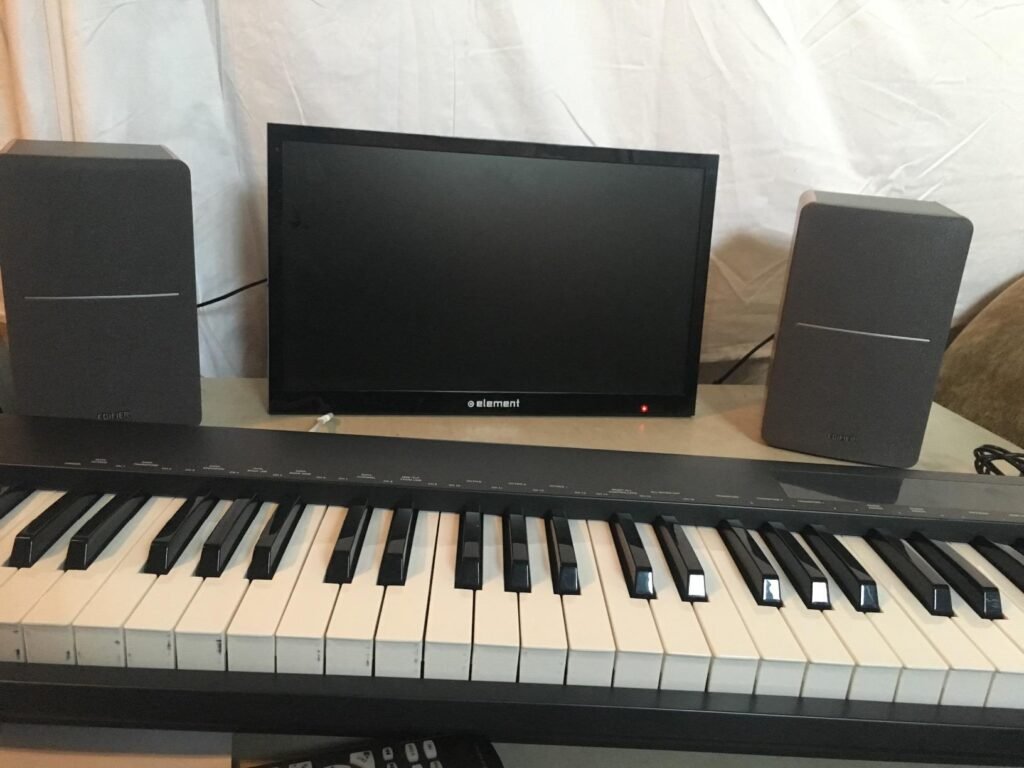
The Edifier R1280T is the pick for buyers who want quality bookshelf speakers without the added expense and complexity of a separate amplifier or receiver. Built-in amplification and a straightforward analog input system make it a plug-and-play solution for desktop use, small living rooms, and offices. If you are stepping up from computer speakers or a soundbar, this pair delivers a real upgrade in clarity and separation.
We may earn a commission when you buy through this link, at no additional cost to you.
The 13mm silk dome tweeter handles high frequencies with a smooth, non-fatiguing character that suits long listening sessions, while the 4-inch full-range driver produces natural midrange and reasonable low-end presence for a compact speaker. The MDF cabinet construction with wood-effect vinyl gives the speakers a substantial feel and helps control resonance that would color the sound in cheaper plastic housings.
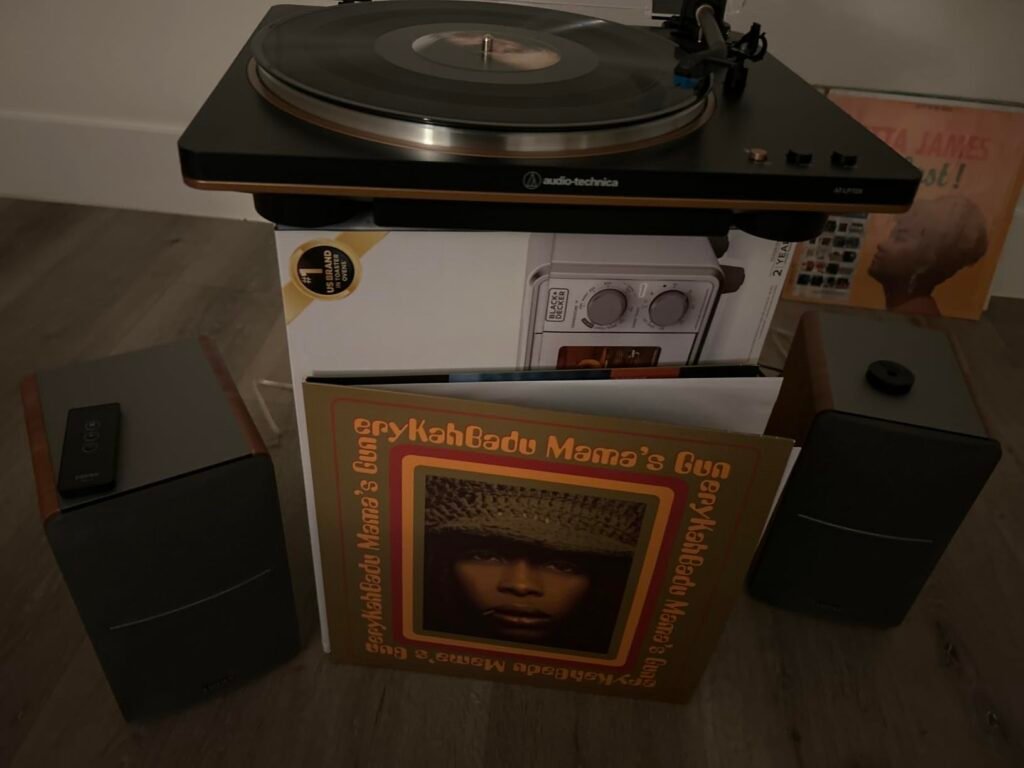
Practical usability sets this pair apart in its price range. Two AUX inputs let you connect two sources simultaneously without unplugging cables, which is genuinely useful when your desk hosts a computer and a turntable phono preamp. Side-panel knobs give you direct bass and treble control, and the included remote handles volume from across the room. These small touches add real everyday convenience.
Powered speakers integrate the amplifier directly into one of the two cabinets, which means you only need to connect a source and plug in power. This eliminates the receiver, speaker wire between the amp and speakers, and the compatibility calculations required for passive setups. For anyone new to hi-fi or building a compact system, this all-in-one design removes the biggest barriers to getting quality sound in place.
This is the right pick for buyers who value simplicity, want a complete audio solution in one purchase, and do not need wireless streaming. The trade-off is limited bass extension from the 4-inch driver and no Bluetooth for phone or tablet playback. If you need wireless streaming, look at the Audio-Technica AT-SP3X instead. For wired desktop or small-room use, the R1280T is hard to beat at this price.
Not for buyers who need Bluetooth streaming or want to build a scalable component system over time.
We may earn a commission when you buy through this link, at no additional cost to you.
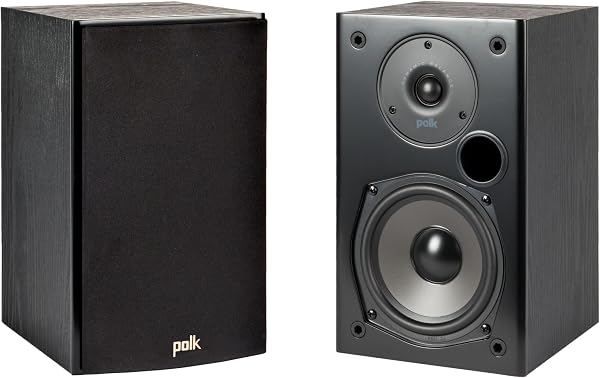
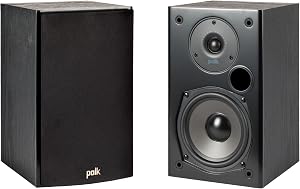
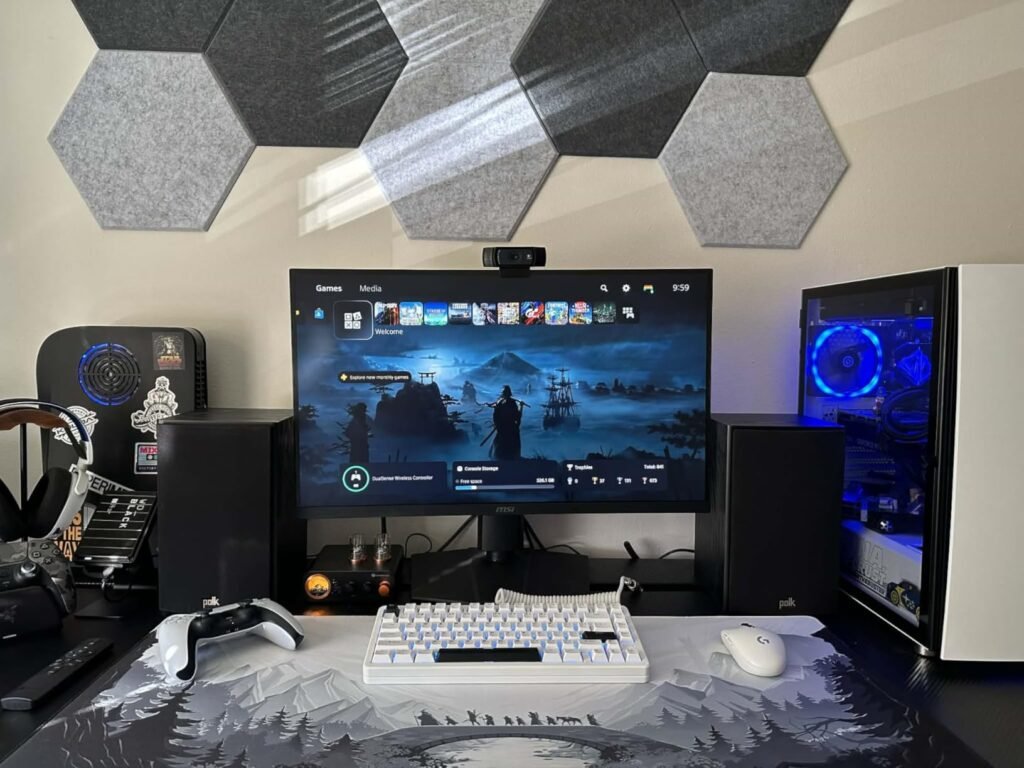
The Polk Audio T15 is aimed at buyers building a home theater system from the ground up. The pair works well as front left and right speakers in a stereo setup, or as rear surrounds when you expand into a 5.1 configuration. Polk's long history in home audio shows in the balanced tuning that handles both movie dialogue and music without favoring one over the other, which is exactly what a versatile pair of home theater speakers should do.
We may earn a commission when you buy through this link, at no additional cost to you.
The 0.75-inch tweeter paired with a 5.25-inch Dynamic Balance driver delivers clear vocals and adequate bass for typical living room listening. At 100 watts of power handling, the speakers accept the output of most mid-range AV receivers without strain, giving you headroom for the loud moments in action movies and dynamic music. The passive design means you need a receiver, but this also means the speakers scale with better amplification over time.
Wall-mountable construction is a genuinely useful feature for home theater use. Rear surrounds often work best when mounted at ear level behind the seating area, and integrated mounting hardware makes this straightforward. Setup is simple: connect the speaker wire to your receiver’s terminals, and the system is ready to play. This kind of low-friction installation matters for buyers new to component audio.
Starting a home theater with a matched-brand speaker family lets you expand without worrying about tonal mismatches between the front, center, and surround channels. Polk’s T-series lets you begin with a stereo pair and add a center channel, tower speakers, and subwoofer over time. This approach spreads the cost across multiple purchases while ensuring the final system sounds cohesive when a movie pans audio across the front stage.
This pair is the right pick for buyers starting a home theater journey who want a proven foundation they can expand later. The Polk T-series includes matching tower speakers, a center channel, and subwoofers, so you can build out a complete 5.1 setup over time with matched voicing. Buyers who want a plug-and-play desktop solution should look at powered options instead.
Not for buyers who want a self-contained powered system without the added cost of a receiver.
We may earn a commission when you buy through this link, at no additional cost to you.
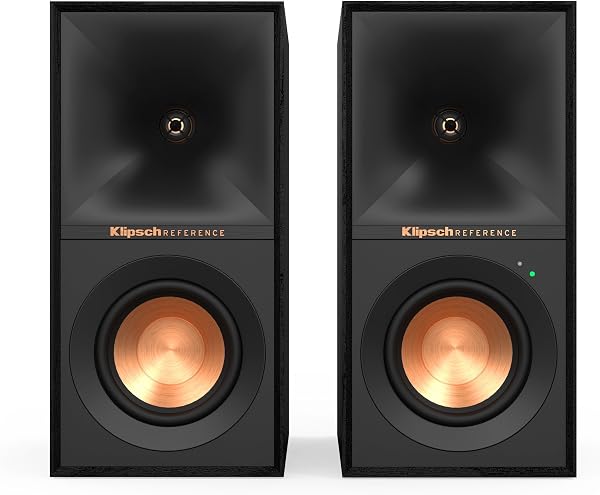
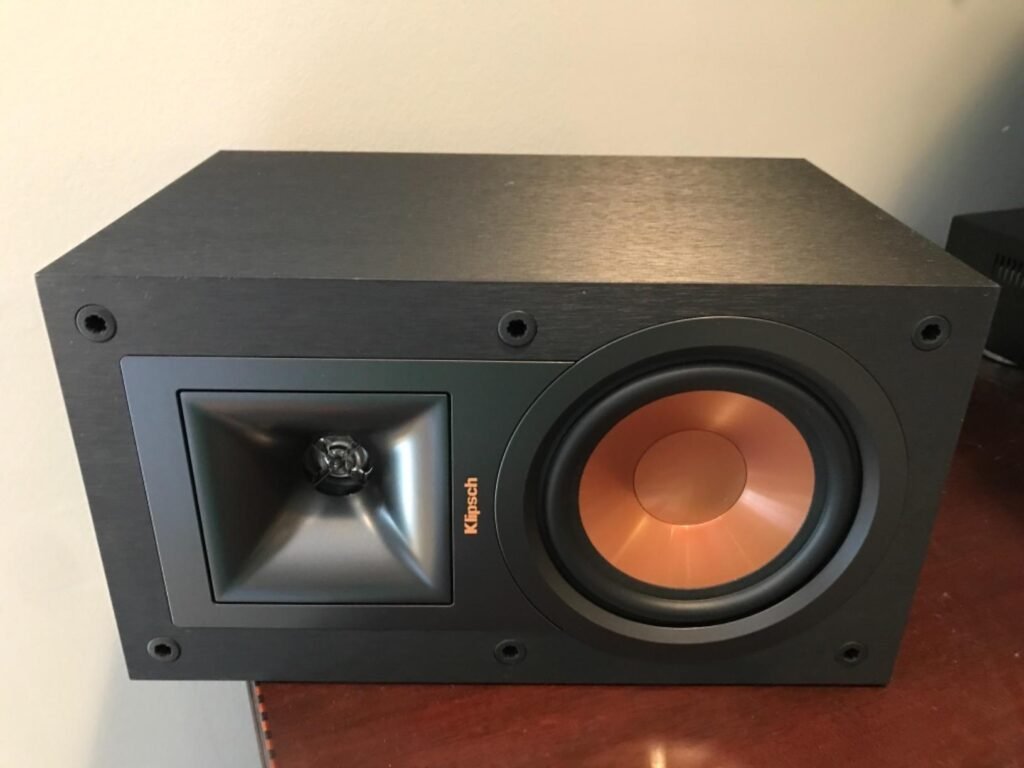
The Klipsch R-15M brings the brand's signature Reference sound to buyers who need a more compact footprint than the R-51M. A single 5.25-inch spun-copper IMG woofer and the same 1-inch aluminum LTS tweeter with 90 by 90 Tractrix horn deliver the detailed, high-efficiency character that defines the Reference line, in a cabinet that fits into tighter spaces where a larger speaker would dominate.
We may earn a commission when you buy through this link, at no additional cost to you.
The Injection Molded Graphite woofer is exceptionally light while remaining stiff, which lets it start and stop quickly for tight, controlled bass response. This matters for music with fast bass lines and for the punchy low-end in movie soundtracks. When paired with the horn-loaded tweeter, the result is a speaker that reveals detail without becoming harsh, though the Klipsch signature remains detailed and slightly forward rather than warm.
5-way binding posts on the back are a quality detail that lets you use bare wire, spades, banana plugs, or pin connectors depending on your preference. The brushed polymer veneer cabinet resists scratches and complements modern room decor, while the removable magnetic grille lets you choose between an open or covered look. The rear-firing port needs some breathing room from the back wall for optimal bass performance.
Compact bookshelf speakers work best in small to medium rooms, on desktops, or in installations where visual footprint matters. A smaller cabinet also loads more naturally in nearfield listening positions, where a larger speaker would overwhelm the space. For rooms under about 200 square feet or listening positions within 6 to 8 feet of the speakers, compact designs like the R-15M often deliver more coherent imaging than larger speakers that need more room to develop their soundstage.
This pair is the right pick for buyers who want Klipsch quality in a smaller package or need a matching surround pair for an R-15M-based home theater. The single-woofer design produces less bass presence than the dual-woofer R-51M, so buyers with larger rooms or bass-heavy music preferences should step up to the R-51M or add a subwoofer to the R-15M pair.
Not for larger rooms or buyers who want deep bass without adding a subwoofer.
We may earn a commission when you buy through this link, at no additional cost to you.
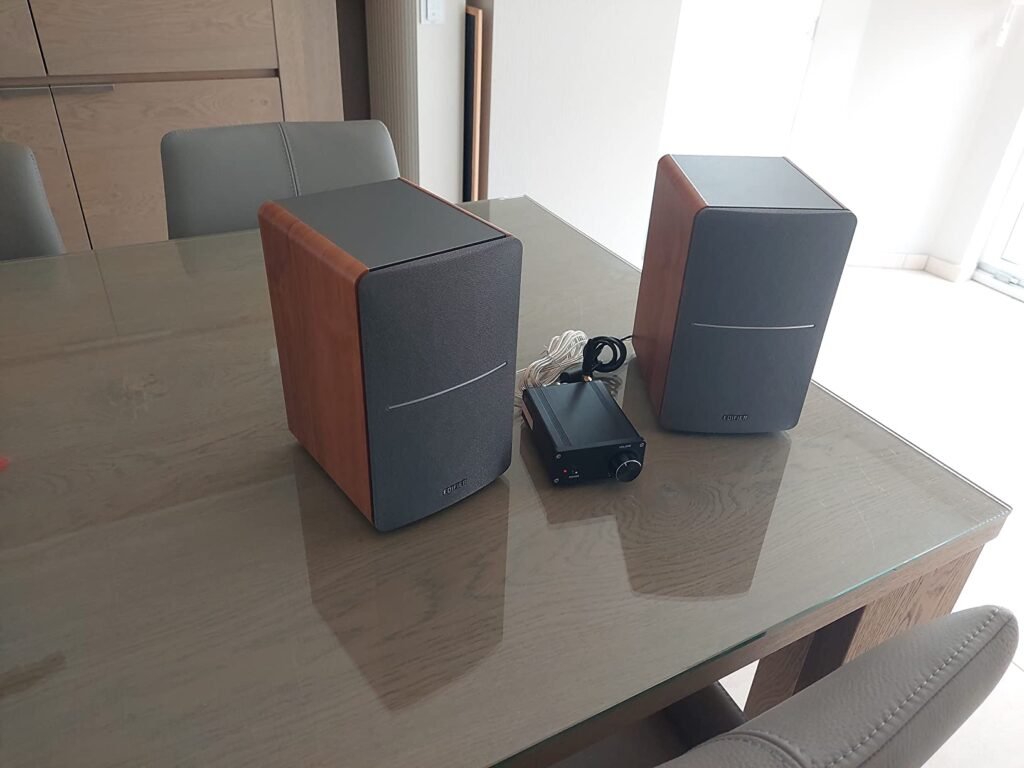
The Edifier P12 is aimed at buyers who need affordable passive bookshelf speakers for surround duty, small-room stereo, or budget-friendly home theater expansion. The built-in wall-mount bracket is the standout practical feature, making these a natural choice for rear surrounds in a 5.1 setup where the speakers need to sit at ear level behind the seating position.
We may earn a commission when you buy through this link, at no additional cost to you.
The 19mm silk dome tweeter reproduces high frequencies with a smooth character that avoids the harshness common in cheaper speakers, while the 4-inch bass driver combined with a bass reflex port delivers reasonable low-end presence for the cabinet size. The 6-ohm impedance works well with most home theater receivers and stereo amplifiers without special configuration requirements.
Passive operation means you need an amplifier or receiver to power these speakers, but that also means they scale with better amplification if you upgrade your electronics later. Speaker wires are included in the box, which is a nice touch that lets you complete the installation without a separate cable purchase. The wood-color finish blends into most room decor without drawing attention.
Surround speakers in a home theater typically sound best when positioned at ear level behind and to the sides of the seating area. This placement often requires wall mounting rather than shelf placement, and speakers with integrated mounting hardware simplify the installation significantly. Trying to wall-mount speakers without built-in brackets requires third-party mounts that may not fit properly or match the speaker aesthetically.
This pair is the right pick for buyers who need affordable passive speakers for wall-mounted surround use or as a stereo pair in a small bedroom or office. The 4-inch woofers limit standalone bass presence, so pairing them with a subwoofer in a larger room is worthwhile. For a budget-friendly foundation to a home theater or a low-cost secondary system, the P12 delivers solid value.
Not for buyers who need a self-powered system or want deep bass from the speakers alone.
We may earn a commission when you buy through this link, at no additional cost to you.
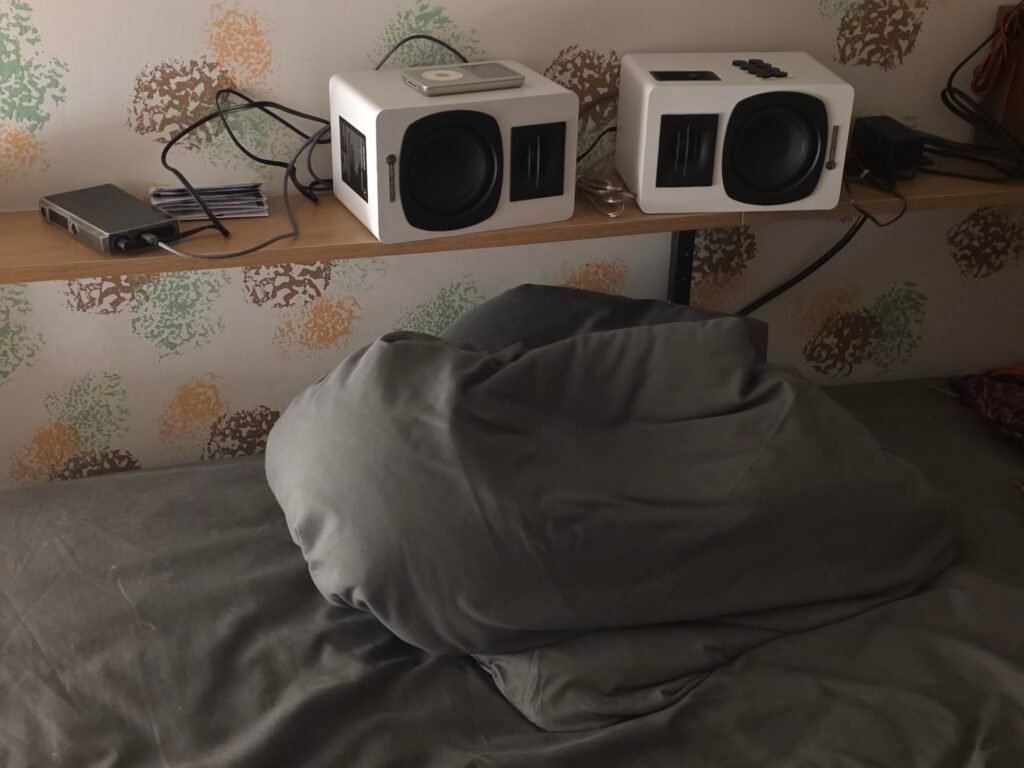
The Audio-Technica AT-SP3X is the pick for buyers who want quality bookshelf sound with modern wireless convenience. Bluetooth connectivity lets you stream from a phone, tablet, or laptop without cables, and the multipoint pairing function keeps two devices connected simultaneously, so you can switch between your phone and computer without re-pairing each time.
We may earn a commission when you buy through this link, at no additional cost to you.
The compact cabinet design is specially tuned to deliver full-range audio despite the small footprint, making these speakers a good fit for desktop use, nightstands, or small living spaces. Dual RCA jacks provide wired connection for turntables with built-in phono preamps, CD players, or other analog sources, so the speakers work as a full-featured audio system rather than a Bluetooth-only accessory.
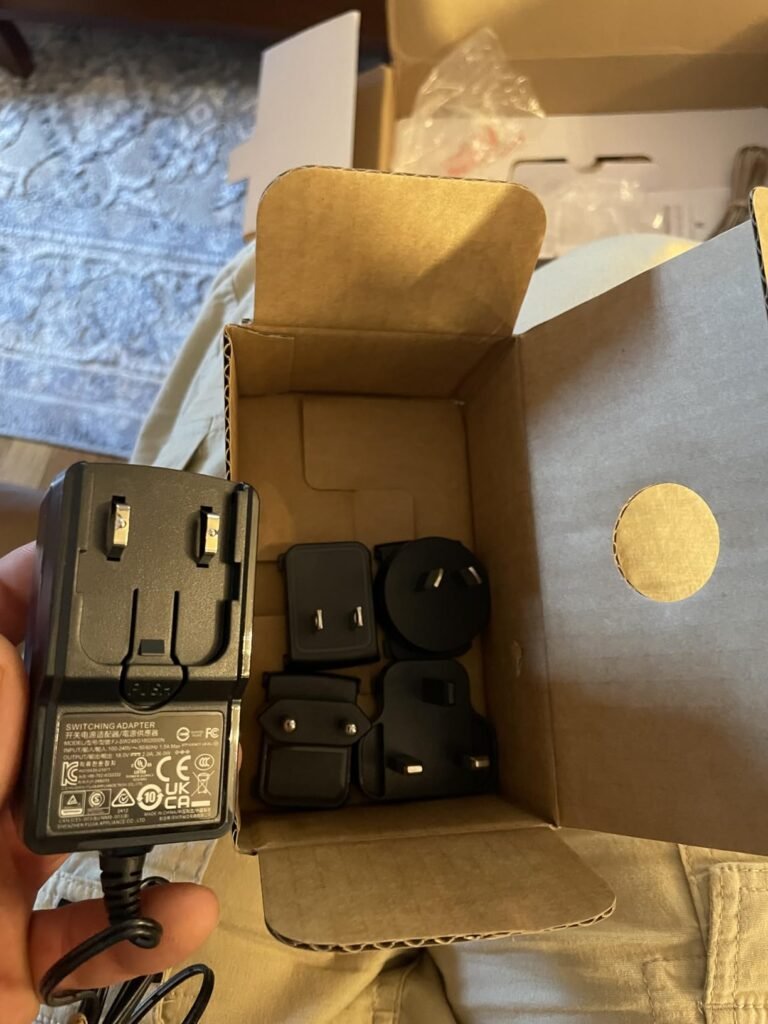
Practical usability is well handled. A power button with LED indicator and a volume control dial keep operation simple, and the AC adapter includes three international plug adapters, which is useful for travelers or buyers who may relocate internationally. The included 6.6-foot speaker cable connects the passive speaker to the active one, giving you flexibility in placement without needing to buy additional cabling.
Multipoint pairing lets a Bluetooth device maintain active connections with two source devices at the same time. In practice, this means you can be listening to music from your laptop and instantly switch to a phone call or a video from your phone without going through the pairing menu. For anyone who splits time between multiple devices at a desk or living room setup, this feature eliminates real daily friction.
This pair is the right pick for buyers who want wireless streaming as a primary feature and value the flexibility to connect wired sources when needed. The compact size limits deep bass extension, so buyers looking for room-filling low-end presence should consider larger designs or plan to add a subwoofer. For desktop and small-room use with Bluetooth as a core requirement, the AT-SP3X delivers well.
Not for audiophiles who need lossless wired-only sources or buyers who want deep bass without a subwoofer.
We may earn a commission when you buy through this link, at no additional cost to you.
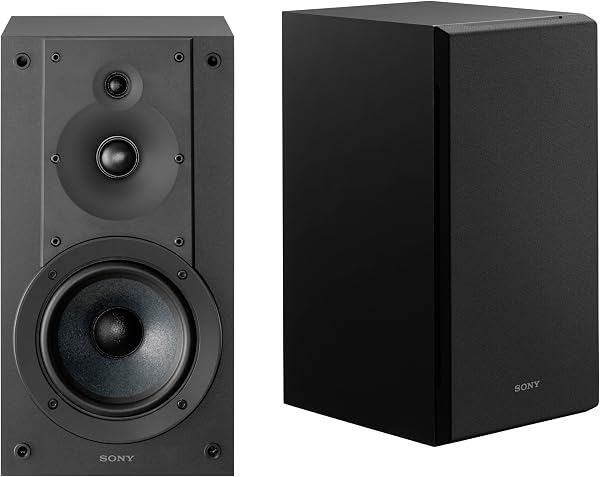
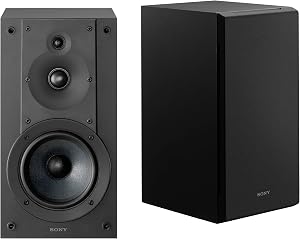
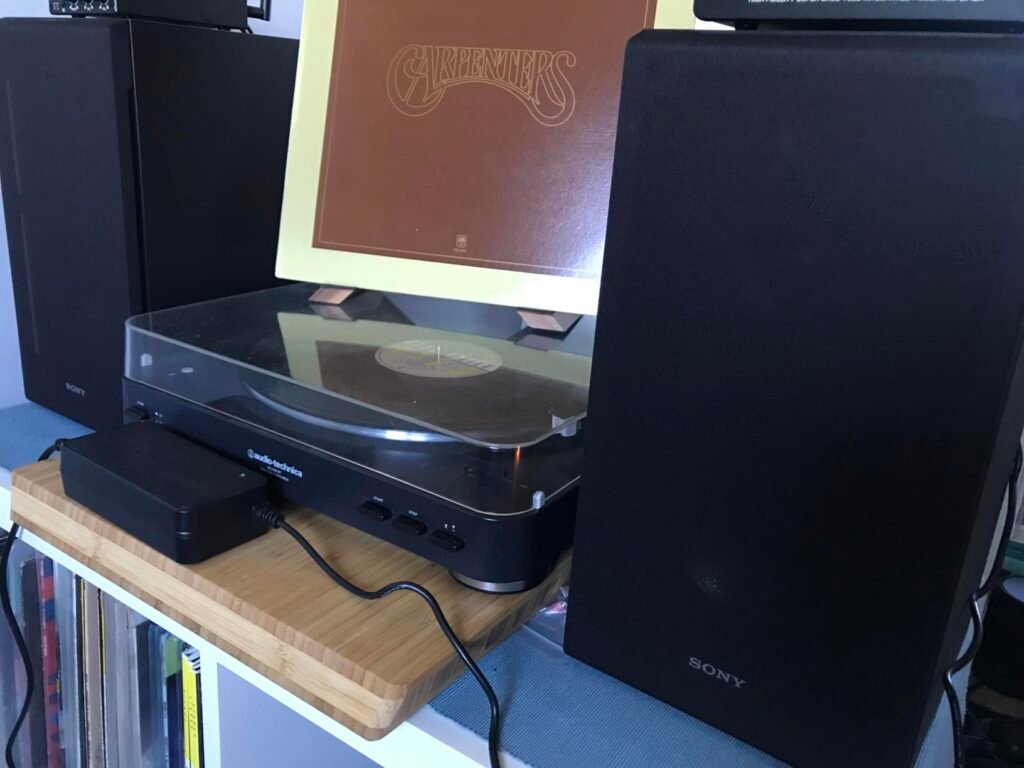
The Sony SS-CS5M2 uses a 3-way, 3-driver design that assigns different frequency ranges to specialized drivers rather than asking a single driver to handle a wide range. This approach can deliver more detailed reproduction because each driver operates within its optimal range, and the addition of a wide-dispersion super tweeter extends the high-frequency response to create an expansive soundstage that feels larger than the compact cabinet suggests.
We may earn a commission when you buy through this link, at no additional cost to you.
The 5.12-inch woofer uses a reinforced cellular cone that stays rigid under load, which translates to distortion-free bass reproduction even at higher volumes. Hi-Res Audio certification with a 53 to 50,000 Hz frequency response means the speakers can reproduce the extended range of high-resolution audio files, which matters if your source material includes 24-bit lossless recordings from streaming services or downloads.
The bass reflex enclosure is engineered to minimize turbulence at low frequencies, which reduces the chuffing sounds that plague poorly designed ported speakers. This attention to enclosure design pays off in cleaner, more articulate bass response. The speakers are voiced to pair well with Sony AV receivers, but they work fine with any quality amplifier or receiver, giving you flexibility to build your system with your preferred electronics.
A 2-way speaker uses a tweeter for highs and a woofer for mids and lows. A 3-way design adds a midrange driver, letting the woofer focus on low frequencies and the tweeter focus on high frequencies. This division of labor can produce cleaner reproduction across the frequency spectrum because each driver operates in its most efficient range. The trade-off is greater complexity in the crossover network and slightly more sensitivity to placement to ensure all three drivers integrate smoothly.
This pair is the right pick for buyers who want extended frequency response and the technical benefits of a 3-way driver configuration. The design is more complex than typical 2-way bookshelf speakers, and 3-way speakers can be slightly more sensitive to placement, so allow some time to fine-tune positioning. For hi-res audio enthusiasts and buyers who value technical driver design, the SS-CS5M2 delivers a lot for the price.
Not for buyers who want a self-powered wireless system or need the simplest possible setup.
We may earn a commission when you buy through this link, at no additional cost to you.
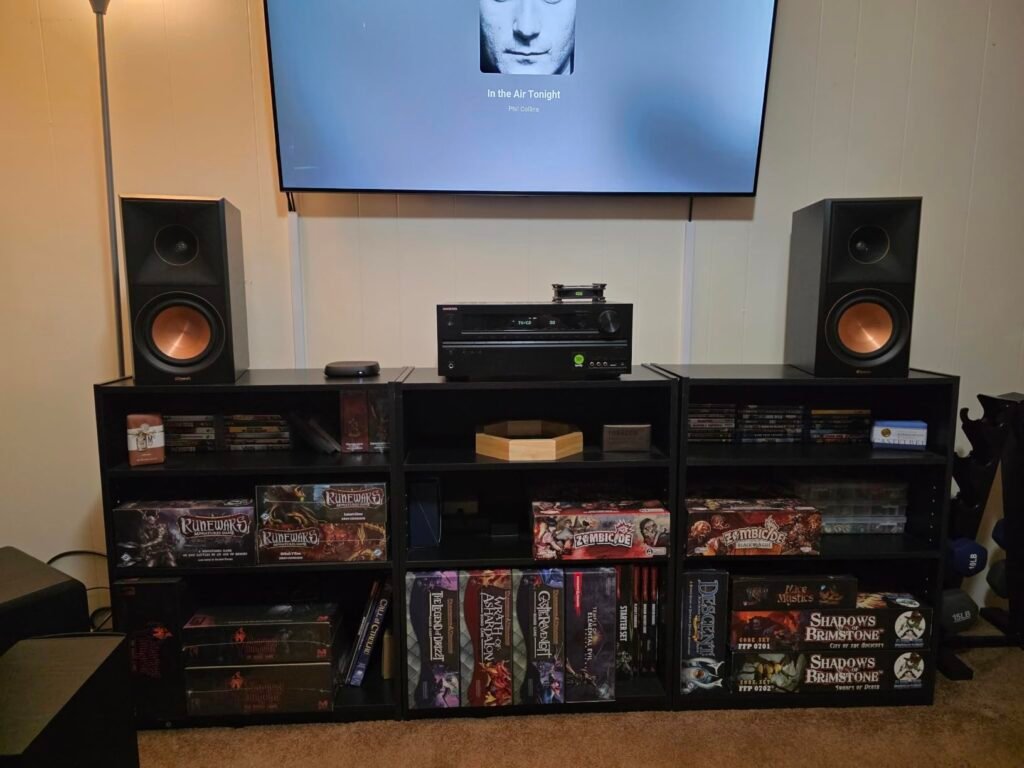
The Klipsch RP-600M II sits at the premium end of the bookshelf market and is aimed at serious listeners who want reference-quality performance without moving to floor-standing speakers. This is the pick for buyers who prioritize sound quality above cost and want speakers that will reward high-quality source components and amplification for years to come.
We may earn a commission when you buy through this link, at no additional cost to you.
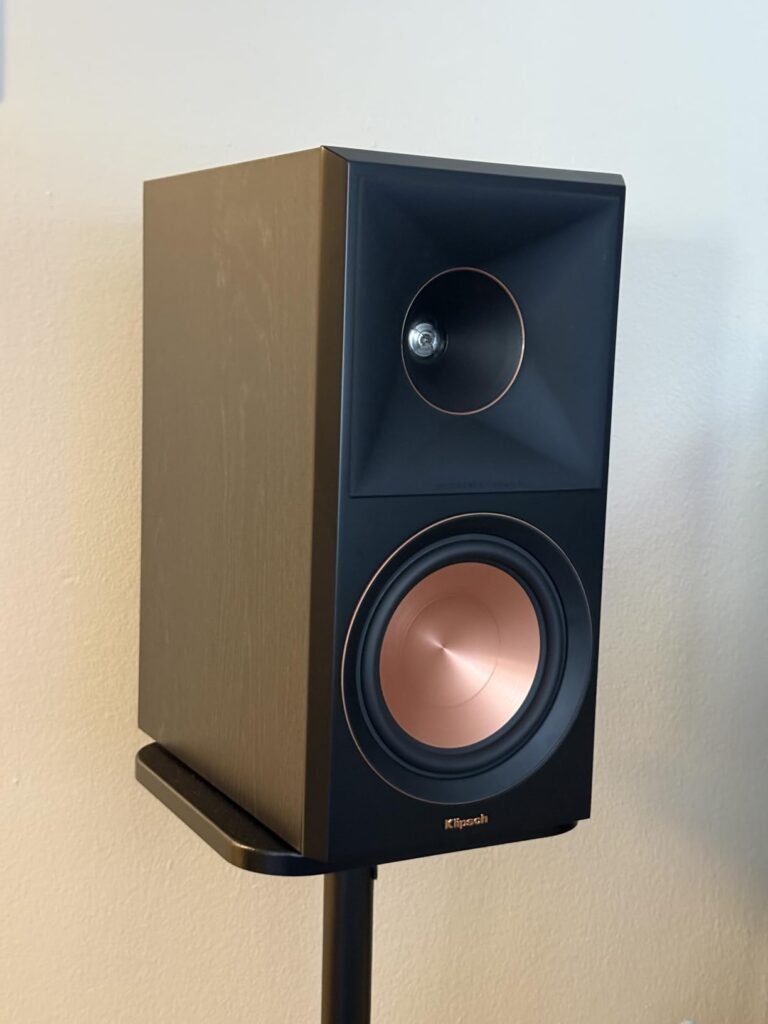
The 1-inch titanium LTS tweeter with vented housing is a step up from the aluminum tweeters in the R-51M and R-15M. Titanium’s combination of light mass and high stiffness allows the tweeter diaphragm to respond quickly to signal changes without adding distortion, which translates to more detail in high-frequency instruments and vocals. The larger 90 by 90 hybrid Tractrix horn improves directivity control, meaning the speakers image accurately across a wider listening area.
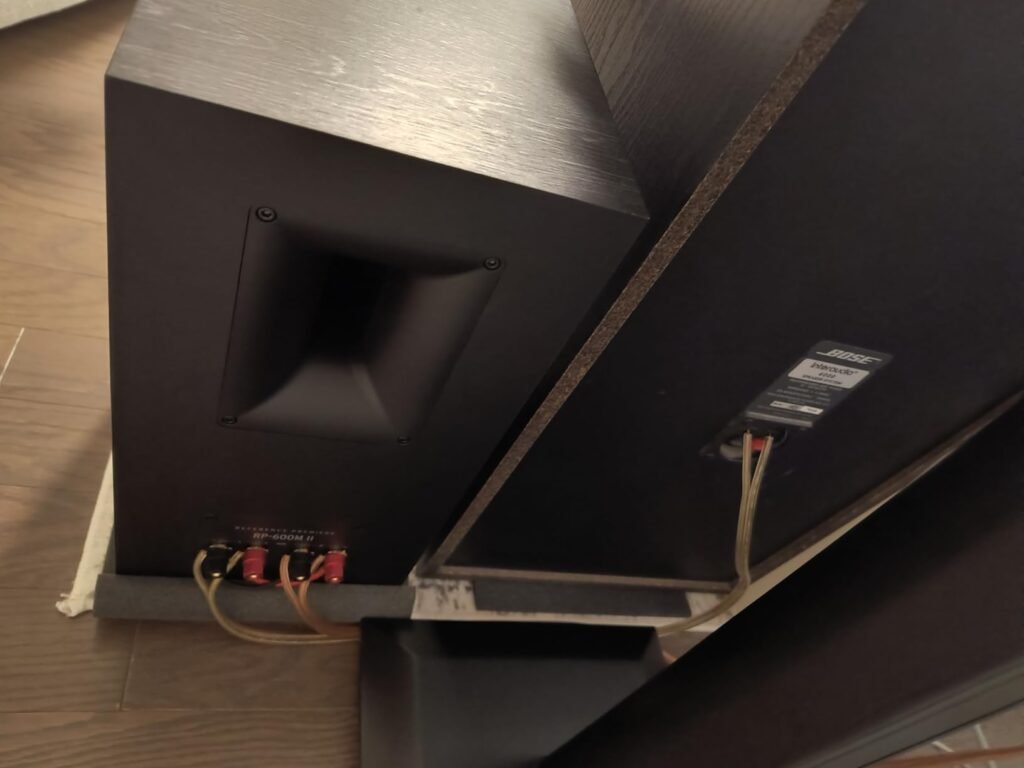
Cerametallic woofer cones represent the current state of Klipsch’s driver technology, using a ceramic-metal composite that stays rigid under load for cleaner bass reproduction with less distortion. The Tractrix port geometry allows faster, more efficient air movement, which produces tighter bass than typical straight ports. Bi-wiring and bi-amping capability through dual binding posts lets serious enthusiasts split the low and high-frequency signals into separate cables for reduced intermodulation.
Bi-wiring uses separate speaker cables for the tweeter and woofer sections of a speaker, sharing a single amplifier channel. The theoretical benefit is reduced intermodulation between the high and low-frequency signals in the cable. In practice, bi-wiring produces subtle improvements that some listeners appreciate and others cannot detect. Bi-amping, which uses separate amplifier channels for each section, generally produces more noticeable benefits and is where the dual binding posts show their full value.
This pair is the right pick for buyers who want the best of the Klipsch bookshelf lineup and have the electronics to match. The furniture-grade finish and magnetic grille give the speakers a premium visual presence, and the sound quality rewards higher-quality source material. Buyers on tighter budgets should look at the R-51M, which delivers most of the sonic character at a lower price point.
Not for buyers on tight budgets or those who lack quality amplification to justify the upgrade.
We may earn a commission when you buy through this link, at no additional cost to you.
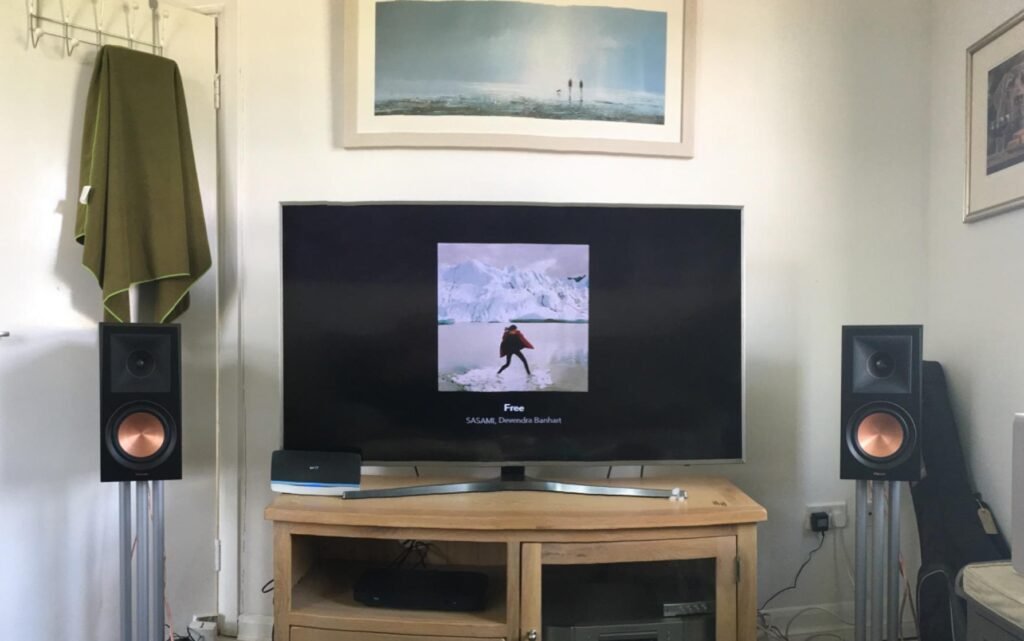
The Klipsch RP-600M is the original Reference Premiere bookshelf that established this category as a serious performer. The 6.5-inch spun-copper cerametallic woofer is noticeably larger than the woofers in the R-51M or R-15M, and that additional cone area translates directly to stronger low-end presence and dynamic capability. For buyers who want a bookshelf speaker that can serve as the main system in a medium to large room, this larger woofer size matters.
We may earn a commission when you buy through this link, at no additional cost to you.
The 1-inch titanium LTS vented tweeter paired with the hybrid Tractrix horn delivers detailed, controlled high-frequency response with the imaging precision that horn-loaded designs are known for. The cerametallic woofer cone technology provides tight, well-controlled bass that stays clean at higher volumes, and the rear-firing Tractrix port improves bass efficiency compared to standard straight ports.
Dual binding posts on the back enable bi-wiring or bi-amping for enthusiasts who want to explore those configurations. The magnetic removable grille attaches cleanly for a discrete look when the grilles are on, or comes off entirely to reveal the copper woofer and horn tweeter for a more industrial aesthetic. The Ebony finish suits modern room decor and holds up well to typical handling.
A larger woofer moves more air per stroke, which directly translates to more low-frequency output. Moving from a 5.25-inch woofer to a 6.5-inch woofer adds meaningful cone area and typically improves bass extension by a few Hz along with delivering more dynamic bass. In a bookshelf speaker without a subwoofer, this larger cone area is often the difference between adequate bass and satisfying bass, especially in medium-sized rooms.
This pair is the right pick for buyers who want more bass authority than the smaller Reference series speakers deliver but do not want to move to floor-standing speakers. The larger cabinet needs more shelf space and works best with about 6 to 12 inches of clearance behind the speaker for the rear port to breathe. For medium-sized rooms and buyers who value bass presence in their bookshelf, the RP-600M is a strong choice.
Not for small rooms or shelves without adequate space for the larger cabinet and rear port clearance.
We may earn a commission when you buy through this link, at no additional cost to you.
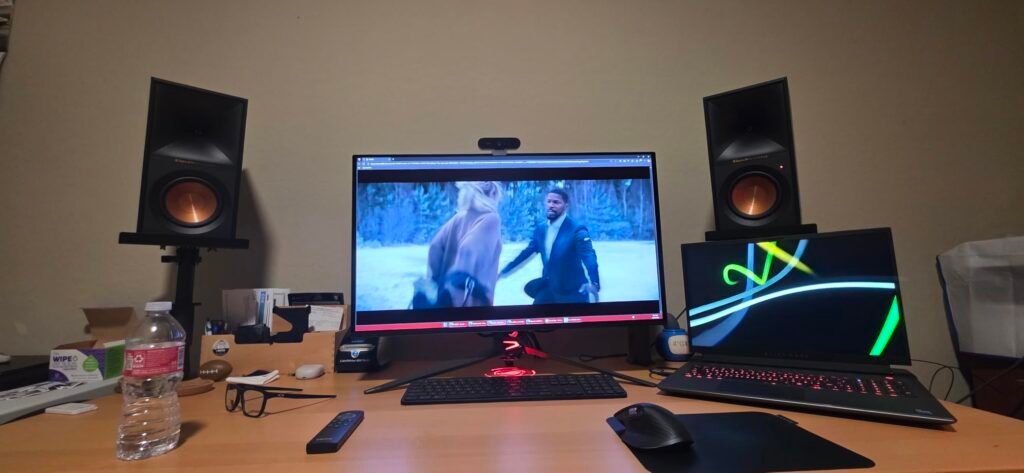
The Klipsch R-40PM combines the brand's signature Reference sound with a fully integrated powered design that eliminates the need for a separate amplifier or receiver. This is the pick for buyers who want Klipsch sound quality with the plug-and-play convenience of a powered system, including Bluetooth streaming, a dedicated phono input for turntables, and both digital and analog wired connections.
We may earn a commission when you buy through this link, at no additional cost to you.
The 1-inch LTS aluminum tweeter with 90 by 90 Tractrix horn delivers the detailed, controlled high-frequency response that defines the Klipsch Reference series. The 4-inch spun-copper thermoformed crystalline polymer woofer uses trickle-down technology from the more expensive Reference Premiere line, with steeper cone angling for smoother response and improved accuracy across the driver’s operating range.
Connectivity is a genuine strength. Bluetooth handles wireless streaming from phones and tablets, the phono input with ground screw terminal lets you connect a turntable without a separate phono preamp, and digital and analog inputs cover TVs, gaming consoles, and other sources. The customized internal amplifier is tuned specifically for these drivers, which typically produces better matching than a passive speaker paired with a generic external amp.
Turntables output a very low signal that requires phono preamplification before it reaches a standard line-level input. A dedicated phono input on a powered speaker includes the phono preamp internally, letting you connect a turntable directly with a ground wire to eliminate hum. This saves both the cost and shelf space of a separate phono preamp box and simplifies the signal path, which is particularly attractive for buyers building a compact vinyl-focused system.
This pair is the right pick for buyers who want an all-in-one premium powered system with Klipsch’s sound character. The 4-inch woofers limit deep bass extension compared to larger passive Klipsch options, so buyers who prioritize bass presence should consider passive options with 5.25-inch or 6.5-inch woofers plus a subwoofer. For a self-contained system with quality connectivity, the R-40PM delivers Klipsch character without the amplifier hunt.
Not for buyers who want deep bass without a subwoofer or prefer to build a scalable passive system.
We may earn a commission when you buy through this link, at no additional cost to you.
Picking bookshelf speakers means balancing sound quality, driver design, powered versus passive operation, connectivity, and room fit. The factors below walk through the decisions that most affect your day-to-day listening experience, so you can choose speakers that match your source components, room, and priorities.
The first major decision is whether to buy powered or passive speakers. Powered speakers include the amplifier inside one of the cabinets, so you only need to connect a source device and plug into wall power. This dramatically simplifies setup and eliminates the need to purchase a separate amplifier or receiver. Models like the Edifier R1280T and Audio-Technica AT-SP3X exemplify this all-in-one approach, and they work particularly well for desktop use and small living rooms.
Passive speakers require an external amplifier or AV receiver to provide power. The trade-off is more complexity and additional cost, but you gain flexibility to upgrade amplification independently, scale the system to larger rooms with more powerful amps, and integrate the speakers into a full home theater setup. Models like the Klipsch R-51M, Polk T15, and Sony SS-CS5M2 are passive designs that reward good amplification with better sound over time.
For simplicity and immediate setup, choose powered. For scalability, home theater integration, or long-term upgrade potential, choose passive with a quality receiver or amplifier.
The tweeter handles high frequencies from roughly 2 kHz upward, covering vocal detail, cymbals, and the airy top end of instruments. Common tweeter materials include silk domes, which produce a smooth, non-fatiguing sound, and metal domes like aluminum or titanium, which produce more detailed, extended highs. The choice between these approaches often defines a speaker’s overall character.
Horn-loaded tweeters, like the Tractrix horn designs Klipsch uses, take a different approach by placing a shaped horn in front of the tweeter to control dispersion. This design improves imaging precision and reduces reflections off nearby surfaces, which can dramatically improve the stereo image in imperfect rooms. Horn-loaded tweeters also produce higher sensitivity, meaning the speakers play louder with less amplifier power.
For a warm, forgiving sound signature, look for silk dome tweeters. For a detailed, precise sound with excellent imaging, consider metal domes or horn-loaded designs like the Klipsch Reference series.
Woofer size directly affects how much bass a speaker can produce. Common bookshelf woofer sizes range from 4 inches through 6.5 inches, and each step up typically adds meaningful low-end presence. A 4-inch woofer suits desktop use and small rooms, while a 5.25-inch woofer covers most medium rooms adequately. Stepping up to a 6.5-inch woofer, like the Klipsch RP-600M uses, provides noticeably more bass authority for medium to larger rooms.
Woofer cone material matters as much as size. Rigid, lightweight materials like Injection Molded Graphite, cerametallic composites, and reinforced polymer stay flat under load, which produces cleaner bass with less distortion. Speakers with quality woofer cones can play louder without breaking down, which is particularly important for buyers who like dynamic music or movie soundtracks at reference volume.
Match woofer size to room size. Small rooms and desktops suit 4-inch woofers, medium rooms suit 5.25-inch, and larger rooms benefit from 6.5-inch woofers or adding a subwoofer to smaller speakers.
The speaker cabinet plays a major role in sound quality by controlling resonance and reinforcing bass output. Medium-density fiberboard (MDF) is the industry standard for quality bookshelf speakers because it dampens vibration effectively while remaining rigid enough to prevent cabinet flex that would color the sound. Higher-end speakers may add internal bracing or damping material to further control resonance.
Port design affects bass extension and character. Rear-firing ports, common on Klipsch and Sony models in this guide, load the cabinet efficiently but require some space between the speaker and the wall for the bass to develop properly. Front-firing ports are more forgiving of tight placement but may produce less deep bass. Advanced designs like Klipsch’s Tractrix ports use flared geometry to reduce port turbulence, producing cleaner bass at higher volumes.
For flexible placement, look for front-ported speakers. For maximum bass performance, choose rear-ported designs and plan for 6 to 12 inches of clearance from the back wall.
Modern bookshelf speakers vary widely in their input options. Passive speakers rely entirely on external components for connectivity, receiving amplified signal through binding posts. Powered speakers often include multiple input types: RCA analog for turntables and CD players, 3.5mm AUX for phones and computers, optical or coaxial digital for TVs, and Bluetooth for wireless streaming. Some, like the Klipsch R-40PM, add dedicated phono inputs that eliminate the need for a separate phono preamp with a turntable.
Bluetooth versions and codec support also matter for wireless listeners. Newer Bluetooth versions offer more stable connections and support for higher-quality codecs like aptX HD or LDAC, which reduce the audio quality loss inherent to Bluetooth transmission. Multipoint pairing, found on the Audio-Technica AT-SP3X, lets you keep two source devices connected simultaneously for effortless switching.
Inventory your source devices before shopping. A turntable-focused setup benefits from a phono input, a modern streaming setup benefits from Bluetooth, and a home theater setup benefits from analog inputs paired with a receiver.
Speaker sensitivity measures how loudly a speaker plays with a given amplifier power. Higher-sensitivity speakers, like the Klipsch Reference line, reach satisfying volumes with less amplifier power, which makes them compatible with a wider range of receivers and amplifiers. Lower-sensitivity speakers may require more powerful amplification to reach the same volume levels without distortion.
For passive speakers, verify that your amplifier or receiver provides enough power for the speaker’s rated power handling. Most home theater receivers deliver plenty of power for typical bookshelf speakers, but very inefficient speakers or larger rooms may benefit from a dedicated stereo amplifier with more current capability. Impedance matching is also important: most home receivers work best with 6 to 8-ohm speakers.
For maximum amplifier flexibility, choose high-sensitivity speakers. If your receiver is entry-level or your room is large, high-sensitivity designs make the biggest practical difference.
Bookshelf speaker performance depends heavily on room size and placement. Small rooms and desktop setups pair well with compact speakers that have smaller woofers, since large speakers can overwhelm the space and produce boomy bass from room resonances. Medium rooms benefit from 5.25 to 6.5-inch woofer designs, while larger rooms may need bookshelf speakers with subwoofers to fill the space properly.
Placement affects sound quality significantly. Rear-ported speakers need space from the back wall to develop bass properly. Speakers placed near corners often produce exaggerated bass that can sound bloated. Ideally, position bookshelf speakers on dedicated stands at ear level, angled slightly toward the listening position, with enough space around each speaker for the sound to develop.
Measure your room and planned placement before purchasing. Speakers that look modest in the store can overwhelm small rooms, while compact designs can feel underpowered in large spaces.
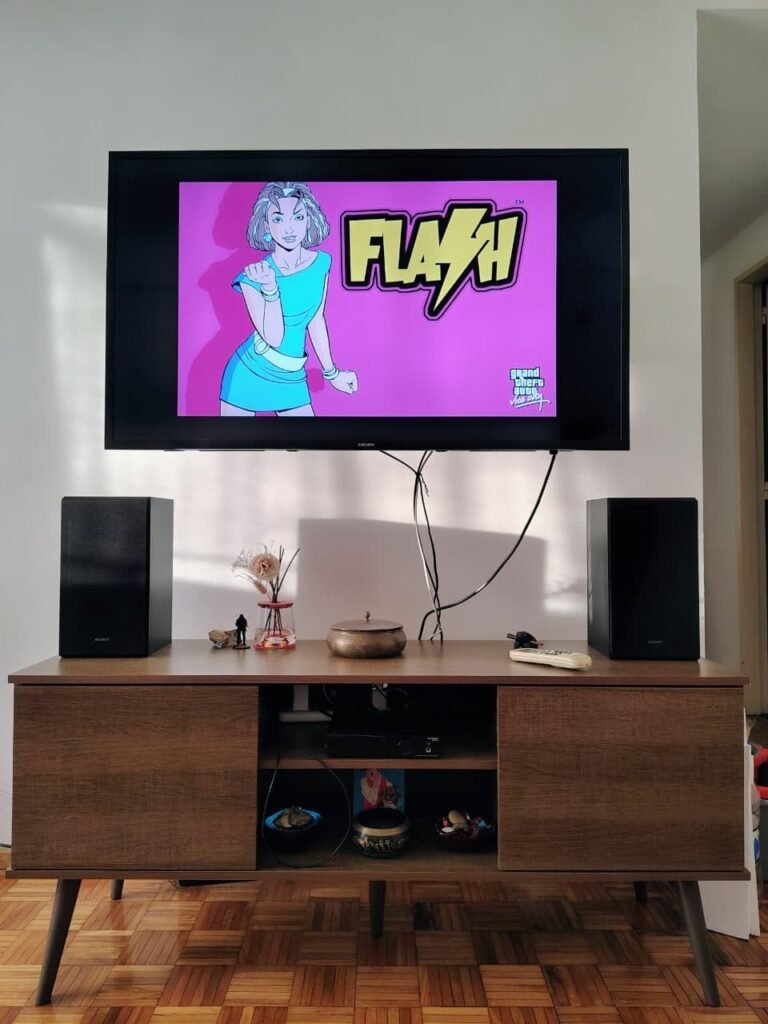
Position your speakers on stable surfaces at approximately ear level for the seated listening position. Dedicated speaker stands typically produce better sound than placing speakers on shelves crowded with books and objects, because a stable, decoupled surface reduces vibration transfer that would color the sound. Angle the speakers slightly toward the listening position to improve imaging, and ensure the speakers are placed symmetrically to maintain a balanced stereo image.
Give rear-ported speakers adequate space from the back wall for the bass to develop properly. Six to 12 inches of clearance is a good starting point for most rear-ported designs, though larger cabinets may benefit from more space. Front-ported speakers are more tolerant of tight placement. Avoid placing speakers directly in room corners unless you want exaggerated bass, and keep them away from tight bookshelves where the cabinet walls can reflect and muddy the sound.
Clean your speakers periodically with a soft, dry cloth to remove dust from the cabinet finish. For grilles, gently vacuum with a soft brush attachment to remove accumulated dust without pressing into the driver behind. Avoid using cleaning sprays or solvents on the cabinet finish, which can damage veneers or painted surfaces. For powered speakers, keep vents and heat sinks clear of dust buildup to allow proper cooling, and unplug them during electrical storms to protect the internal amplifier from surge damage.
Passive bookshelf speakers require an external amplifier or AV receiver to power them, while powered speakers include the amplifier inside one of the cabinets and only need a source and power connection. Powered options like the Edifier R1280T and Klipsch R-40PM are the simplest to set up, while passive options like the Klipsch R-51M and Polk T15 offer more flexibility for scaling and upgrading over time. Choose based on whether you already own or plan to buy amplification.
Yes, bookshelf speakers work well as front, center, or surround channels in home theater systems. Models like the Polk T15 are specifically designed for home theater use with wall-mount capability for surround duty. For the front left and right positions, higher-performing bookshelf speakers like the Klipsch R-51M or RP-600M deliver excellent movie audio. Pair with a subwoofer for the low-frequency effects that bookshelf speakers alone cannot reproduce.
Bookshelf speakers are compact designs meant to sit on stands, shelves, or wall mounts, while floor-standing speakers are larger cabinets that sit directly on the floor. Floor-standing speakers typically have larger woofers or multiple woofers, producing more bass and greater output capability. Bookshelf speakers save space and often deliver more precise imaging, especially in smaller rooms where floor-standers would overwhelm the space.
Whether you need a subwoofer depends on your room size, listening preferences, and the specific speakers. Compact bookshelf speakers with 4-inch woofers benefit significantly from a subwoofer in most rooms. Larger bookshelf designs like the Klipsch RP-600M with 6.5-inch woofers can produce satisfying bass without a subwoofer in small to medium rooms. For home theater use with movies, a subwoofer is generally recommended regardless of speaker size.
Rear-ported bookshelf speakers typically need 6 to 12 inches of clearance from the back wall for the bass to develop properly. Placing them too close to the wall exaggerates bass frequencies and can produce a boomy, muddy sound. If wall placement is unavoidable, look for front-ported or sealed-cabinet designs that tolerate tight placement better than rear-ported models.
Sensitivity measures how loudly a speaker plays with a given amount of amplifier power. Higher-sensitivity speakers, like Klipsch's Reference line, reach satisfying volumes with less power, making them compatible with a wider range of amplifiers and receivers. Lower-sensitivity speakers may require more powerful amplification to reach the same volume without distortion. Sensitivity matters most if you have an entry-level receiver or a large room.
Yes, but a turntable requires a phono preamp to boost its low-level signal before it reaches the speakers or amplifier. Some powered speakers, like the Klipsch R-40PM, include a built-in phono input that eliminates the need for a separate phono preamp. For passive speakers or powered speakers without a phono input, you need either a turntable with a built-in phono preamp, a separate phono preamp box, or an amplifier with a phono input.
Wired connections generally deliver higher audio quality than Bluetooth because they avoid the compression that Bluetooth applies to the audio stream. However, Bluetooth offers convenience for casual listening from phones and tablets, and newer Bluetooth codecs like aptX HD have narrowed the quality gap significantly. For critical listening from high-quality sources, use wired connections. For casual streaming, Bluetooth is more than adequate.
Dedicated speaker stands typically produce the best sound because they position the speakers at ear level and decouple them from surfaces that would transfer vibration. Placing bookshelf speakers directly on furniture is acceptable if the surface is stable and the speakers are at approximately ear level. Avoid placing them in tight bookshelves or on top of subwoofers, where cabinet walls or nearby objects can reflect and muddy the sound.
Meaningful quality bookshelf speakers start around 100 dollars per pair and scale up to several hundred dollars for premium models. Entry-level options like the Edifier R1280T and Polk T15 deliver solid performance for most listeners, while mid-range models like the Klipsch R-51M offer significant upgrades in detail and dynamics. Premium options like the Klipsch RP-600M II reward critical listeners with reference-grade sound. Match your budget to your source components and room quality for the best value.
The Klipsch R-51M stands out as the strongest overall pick because it combines dual woofers, quality horn-loaded aluminum tweeters, and Klipsch's signature high sensitivity into a compact, versatile package. The Tractrix horn technology delivers precise imaging and detail that reveals recording nuances, while the dual 5.25-inch woofers provide more bass presence than typical single-woofer bookshelf speakers. For most buyers building a serious stereo or home theater foundation, this pair offers exceptional value.
Different priorities point to different picks. The Edifier R1280T delivers the best value for buyers who want a complete powered solution without the added cost of a receiver, while the Audio-Technica AT-SP3X adds Bluetooth streaming for modern wireless convenience. The Klipsch RP-600M II is the premium choice for critical listeners who want reference-grade performance, and the Polk T15 makes an excellent home theater foundation with wall-mount surround capability. Sony's SS-CS5M2 offers a technically interesting 3-way design for buyers who prioritize hi-res audio.
The right decision starts with understanding your source components, room size, and listening priorities. Match powered or passive to your amplification situation, size the woofers to your room, and prioritize connectivity that fits your source devices. Any pair in this guide will deliver years of enjoyable listening when paired to the right use case, so focus on the model that fits your workflow rather than chasing the highest specifications or piece count.