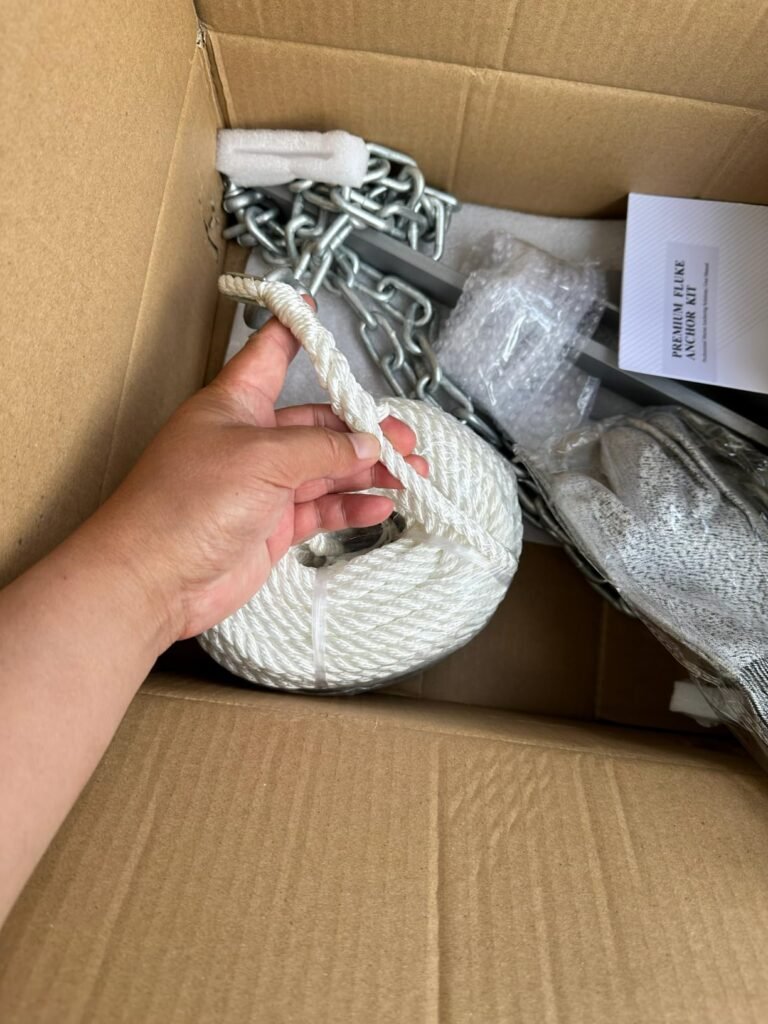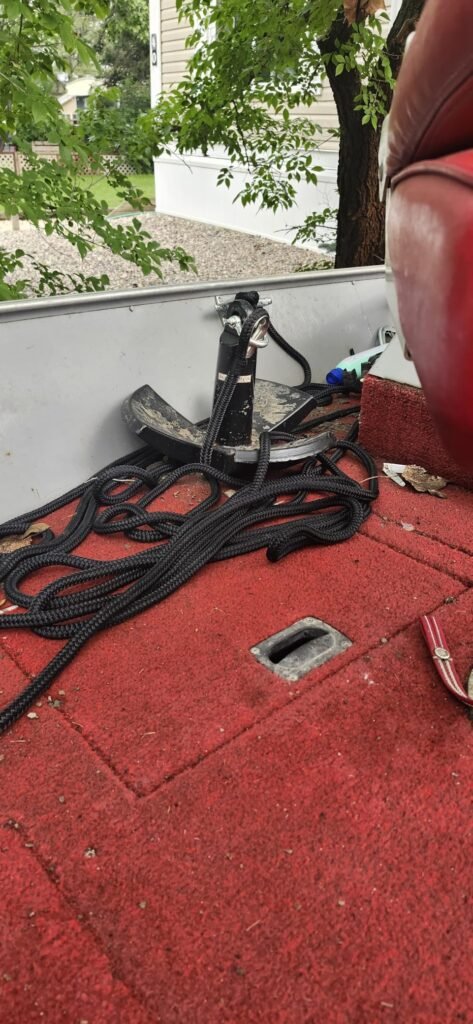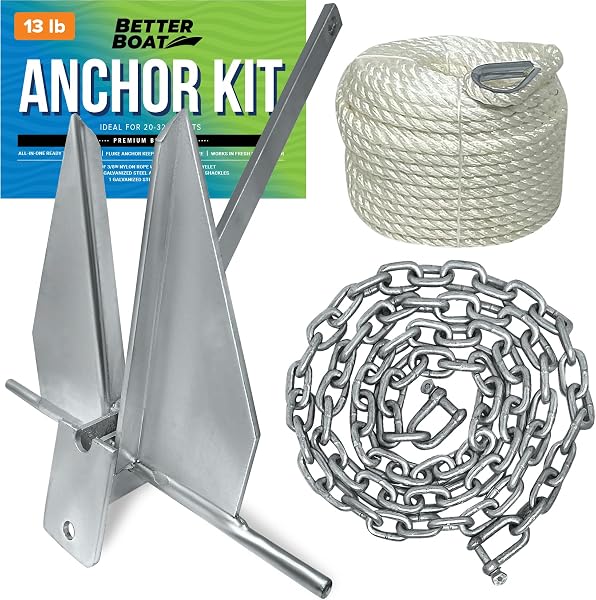
Heavy Duty Fluke
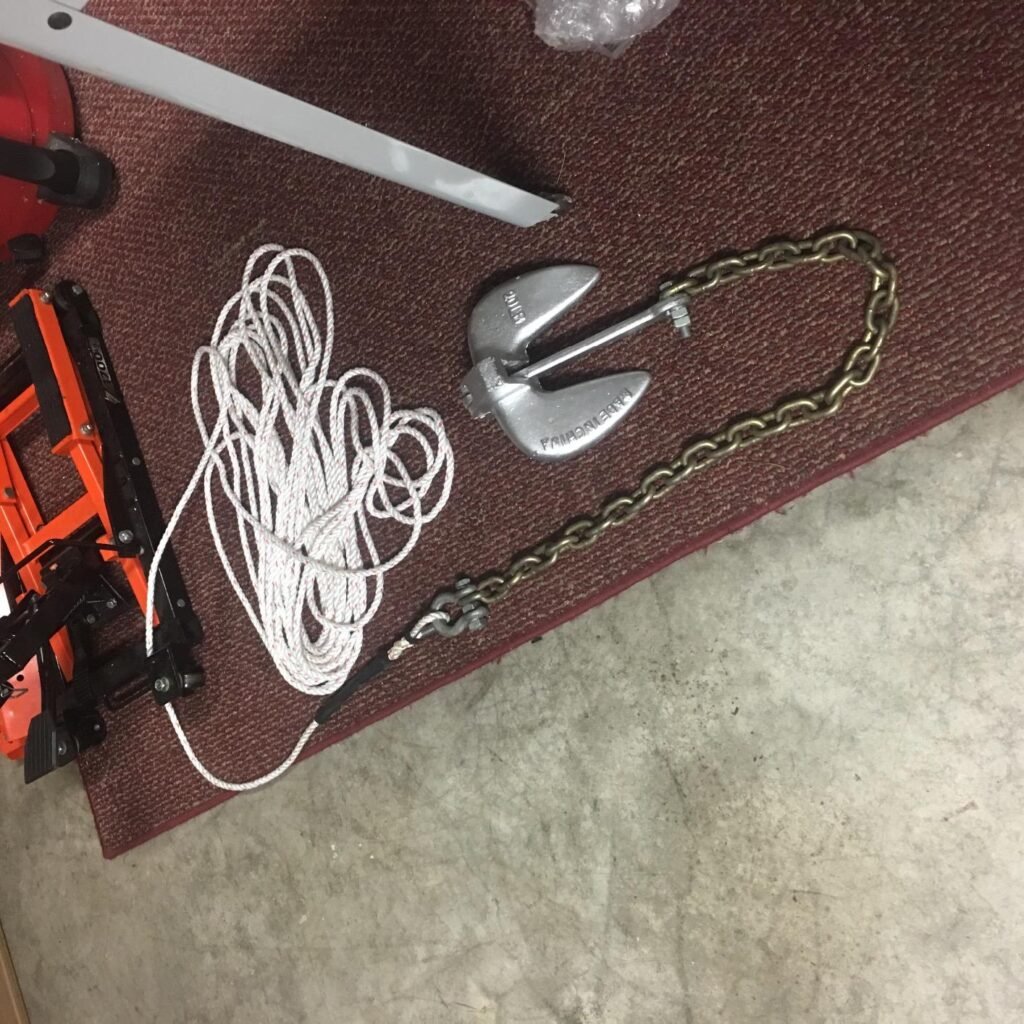
9.2Editor score13 lb fluke anchor
100 ft nylon rope
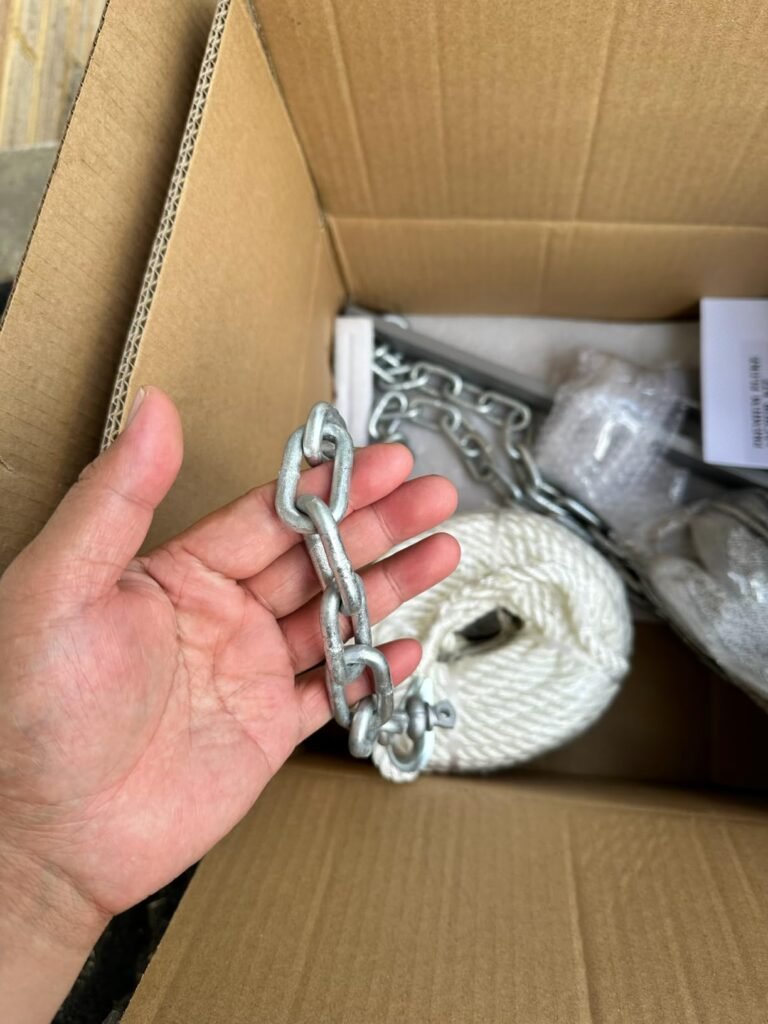
8 ft galvanized chain
Fits 20-32 ft boats
Find the right boat anchors for 2026. We compare 10 standout options by build quality, useful features, owner feedback, value, and everyday trade-offs.
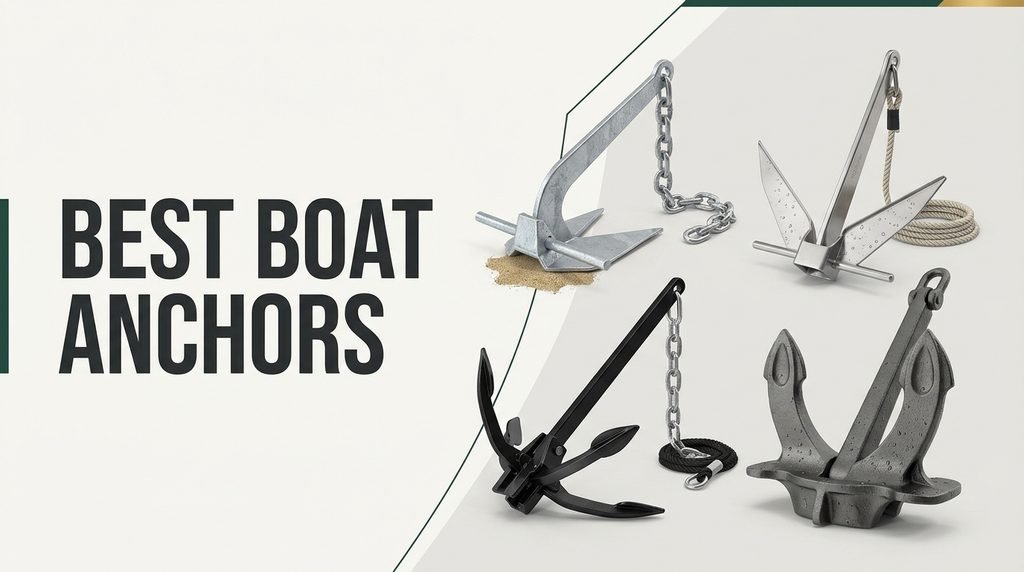
Choosing the right boat anchor for 2026 comes down to matching holding power to your boat size, seabed type, and typical wind and current conditions. We compare 10 standout anchors across fluke, box, claw, delta, and river mushroom designs, weighing materials, corrosion protection, setup speed, storage, included rigging, and real-world holding performance.
A dragging anchor at the wrong moment can mean a bent prop, a scraped hull, or a dangerous drift. Different anchor styles excel in different bottoms. Fluke anchors grip sand and mud, claw and delta designs reset after wind shifts, and river anchors hold in current where lightweight hooks slip.
This guide breaks down 10 proven options with practical trade-offs so you can match the right anchor to your typical lakes, bays, or coastal runs. Whether you need a complete rigging kit or a dedicated secondary anchor, the picks below cover the most common boating scenarios and seabed conditions.
We compared 10 boat anchors using the details that actually help a buyer decide: holding power, anchor style, weight-to-performance ratio, boat length compatibility, seabed suitability, corrosion protection, included rope and chain, shackle quality, storage footprint, owner feedback, and overall value. The notes focus on practical trade-offs so each pick feels connected to how boaters actually set, hold, and retrieve anchors across sand, mud, rock, grass, and current conditions.


Compare key features, scores, and current prices side by side. A shorter feature list means fewer details were available, not necessarily fewer capabilities.




This fluke anchor kit targets buyers who want a complete, ready-to-use anchoring system with an upgrade over standard galvanized finishes. The zinc-nickel plating produces a smoother surface than hot-dip galvanization, which means less abrasion on your hands when handling the anchor and reduced wear on ropes that contact the metal. The finish is also engineered for enhanced salt-spray resistance.
We may earn a commission when you buy through this link, at no additional cost to you.
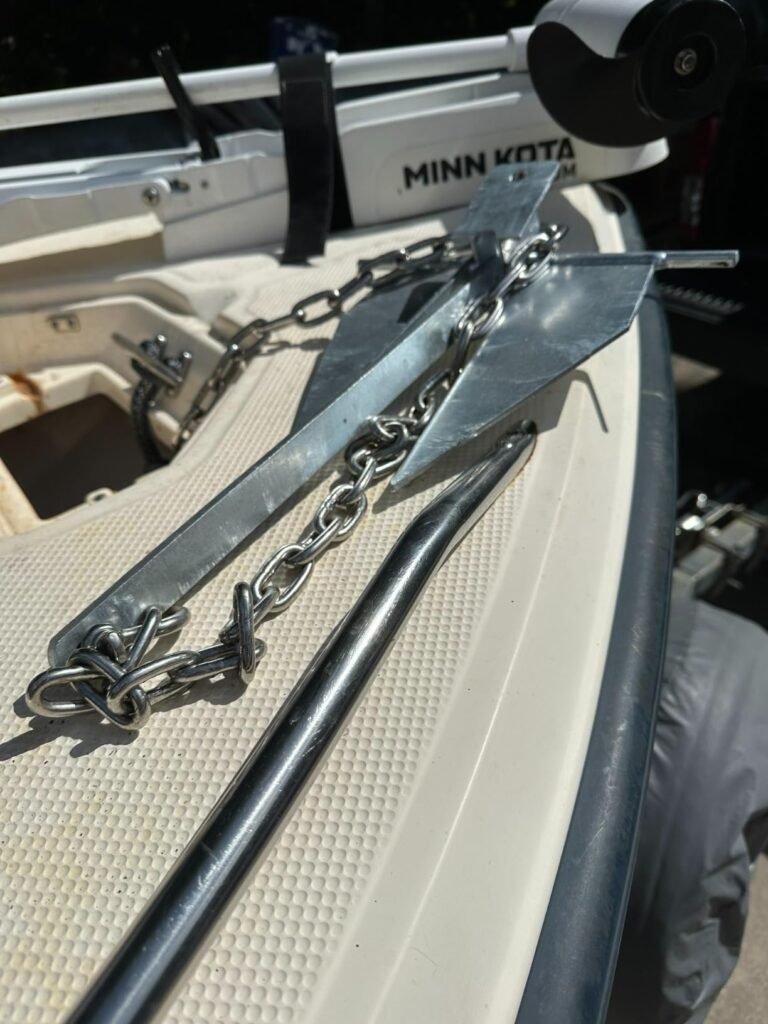
The Danforth-style fluke geometry includes a low center of gravity and self-aligning features that help the anchor orient correctly as it reaches the bottom. This is important because fluke anchors only hold well when the shank and flukes land at the right angle to dig in. The weight range from 5.5 to 18 pounds covers everything from small kayaks and inflatables up through larger fishing boats and sailboats.
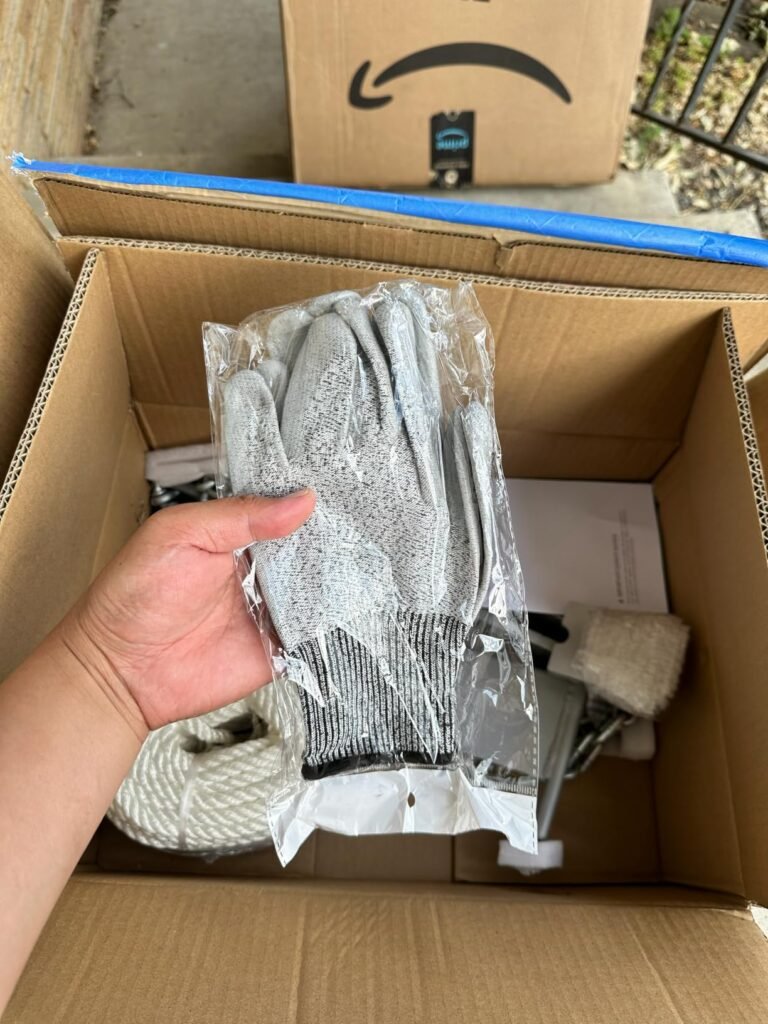
The included rigging is thoughtfully specified. The 100-foot marine-grade three-strand nylon rope provides enough length for anchoring in moderately deep water with proper scope, and nylon’s inherent stretch absorbs wave shock to reduce load spikes on the anchor. The 6.5-foot galvanized chain adds weight at the shank to keep the pull angle low, and the included D-shackles connect everything securely. Safety gloves and a user manual round out the package.
Both finishes protect steel from corrosion, but they do it differently. Hot-dip galvanization creates a thick, somewhat rough zinc coating that provides excellent sacrificial protection but can be abrasive and heavy. Zinc-nickel plating produces a thinner, smoother coating that offers strong salt-spray resistance while remaining gentler on ropes and hands. The trade-off is that hot-dip galvanization has decades of proven marine use, while zinc-nickel is a newer approach in this product category. For most recreational boating, either finish will outlast the useful life of the rope and chain in the kit.
This is the strongest value pick for buyers who want a complete anchoring solution without compromising on finish quality. The multiple weight options let you match the kit precisely to your boat size rather than overbuying. Check that the shackle bolts are tight before first use, as transit vibration can occasionally loosen them. For most recreational boaters, this kit delivers excellent performance for the money.
Not ideal for buyers who prefer the proven long-term track record of traditional hot-dip galvanized anchors.
We may earn a commission when you buy through this link, at no additional cost to you.
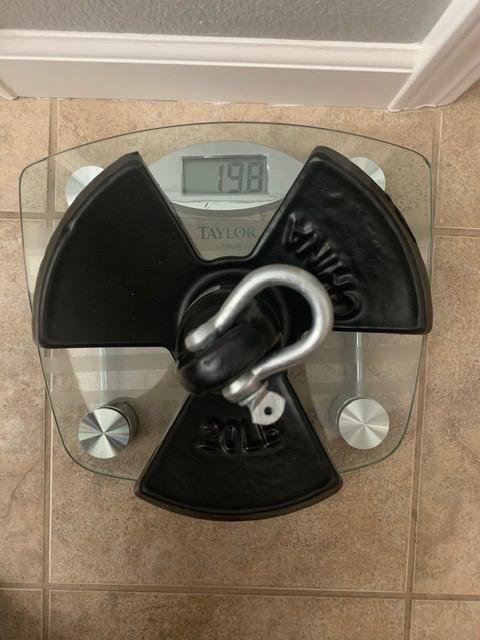
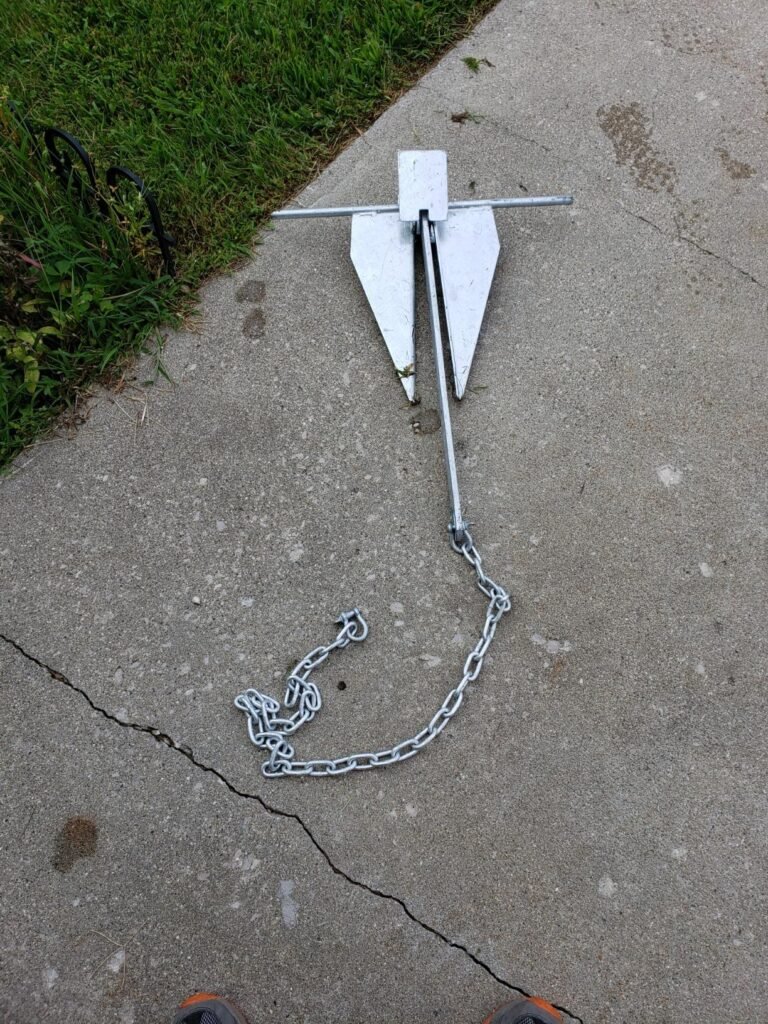
This fluke anchor kit solves the most common frustration new boat owners face: buying an anchor only to discover they still need chain, rope, shackles, and a thimble to actually use it. The complete package includes a 13 lb galvanized fluke, 8 feet of 5/16-inch chain, 100 feet of 3/8-inch nylon rope, a stainless steel thimble, and two bow shackles. Everything connects together out of the box.
We may earn a commission when you buy through this link, at no additional cost to you.
The 13 lb weight class and fluke geometry are matched to boats between 20 and 32 feet, covering pontoons, deck boats, center consoles, sailboats, and larger fishing rigs. Fluke anchors excel in sand and mud bottoms because the sharp blades pivot and dig in on the first set, and the chain keeps the pull angle low enough to maintain that hold through wind and current shifts.
Hot-dip galvanization is the real differentiator at this price point. Thin zinc plating used on bargain anchors chips and corrodes within a season, especially in saltwater. The dipped coating here is the same process used on bridge cables and lasts for years in both fresh and salt environments. The pre-drilled recovery hole in the crown lets you rig a trip line to free the anchor if it snags on rocks or debris.
Fluke anchors occasionally snag on submerged rocks, roots, or debris, and the standard retrieval technique of pulling straight up often makes the hook dig in deeper. The pre-drilled hole in the crown of this anchor lets you attach a secondary trip line that pulls from the opposite direction, breaking the fluke free without cutting your main rode. For anglers who frequent rocky lake shorelines or river mouths, this feature can save the cost of a new anchor more than once per season.
This kit is the right choice for buyers who want to anchor confidently without piecing together components from different suppliers. If your boat is smaller than 20 feet, the lighter 8.5 lb or 5 lb versions of this anchor will be a better fit. For most mid-size recreational boats, this package covers everything needed in a single purchase.
Not suitable for boats under 20 feet or for primarily rocky bottoms where fluke designs struggle to set.
We may earn a commission when you buy through this link, at no additional cost to you.
The Attwood solid cast iron anchor is a straightforward river-style mushroom anchor built for buyers who want simple, dependable holding in calm inland waters. At 15 pounds, it provides enough mass to settle into soft mud and sand bottoms where lightweight anchors would drift. The large connection eye accommodates most anchor lines and shackles without extra adapters.
We may earn a commission when you buy through this link, at no additional cost to you.
The PVC coating serves two purposes. First, it prevents the raw cast iron from scratching gelcoat, fiberglass, or aluminum when the anchor shifts in the bow locker or scrapes against the gunwale during deployment. Second, it seals the iron surface against rust and corrosion, extending the anchor’s useful life in both fresh and brackish environments.
This style of anchor relies primarily on weight and suction against the bottom rather than digging flukes, which makes it well suited to protected lakes, slow rivers, and sheltered bays. It is not the right choice for strong tidal currents, open coastal water, or rocky bottoms where a fluke or claw design would hold more securely. For temporary stops, fishing anchorages, and overnight mooring in calm water, it does the job reliably.
Mushroom anchors work by weight and bottom suction rather than aggressive digging. That makes them ideal when you want to stop over a specific fishing spot in soft mud without tearing up the bottom, or when you need a simple anchor that will hold a small pontoon or jon boat in a calm cove. They are much easier to retrieve than fluke anchors and rarely snag, which simplifies solo boating. The trade-off is that they offer limited holding in strong current or wind, so they are best used as calm-water primary anchors or as secondary stern anchors to prevent swinging.
This is a smart budget pick for owners of smaller pontoons, jon boats, and fishing boats who need a dependable secondary anchor or a primary anchor for calm inland use. If you need to anchor in current or on hard bottoms, pair it with a fluke-style anchor as a second option. For calm-water duty, the Attwood delivers predictable performance at an accessible price.
Not ideal for strong currents, open coastal water, or buyers who need a complete rigging kit.
We may earn a commission when you buy through this link, at no additional cost to you.
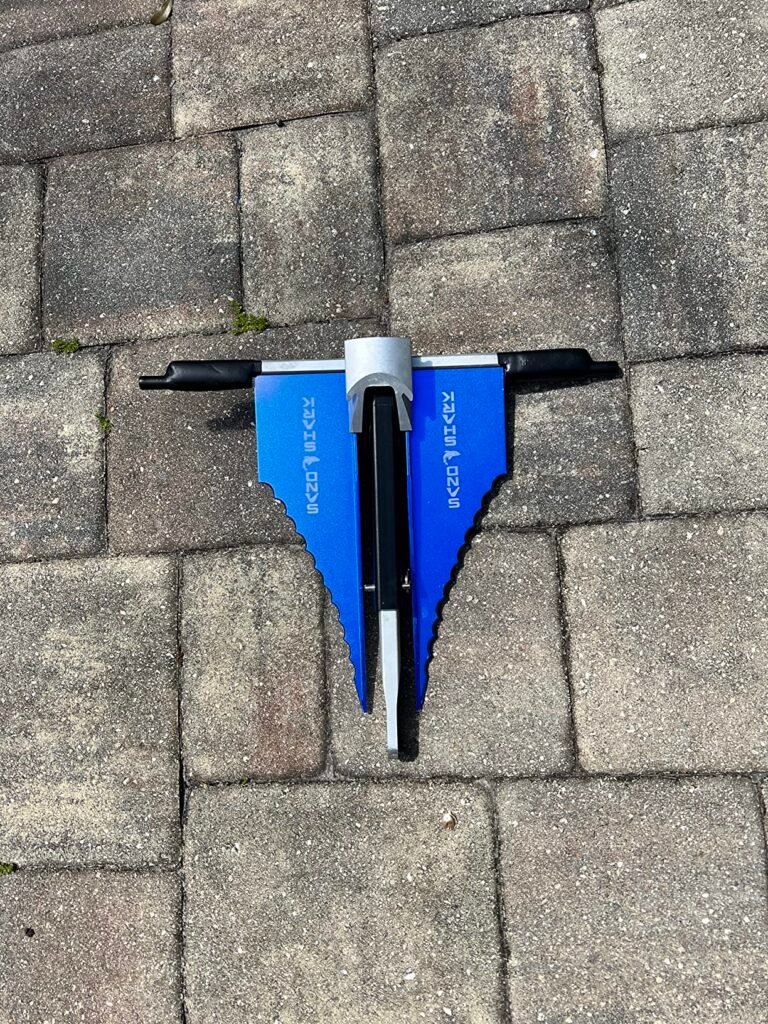
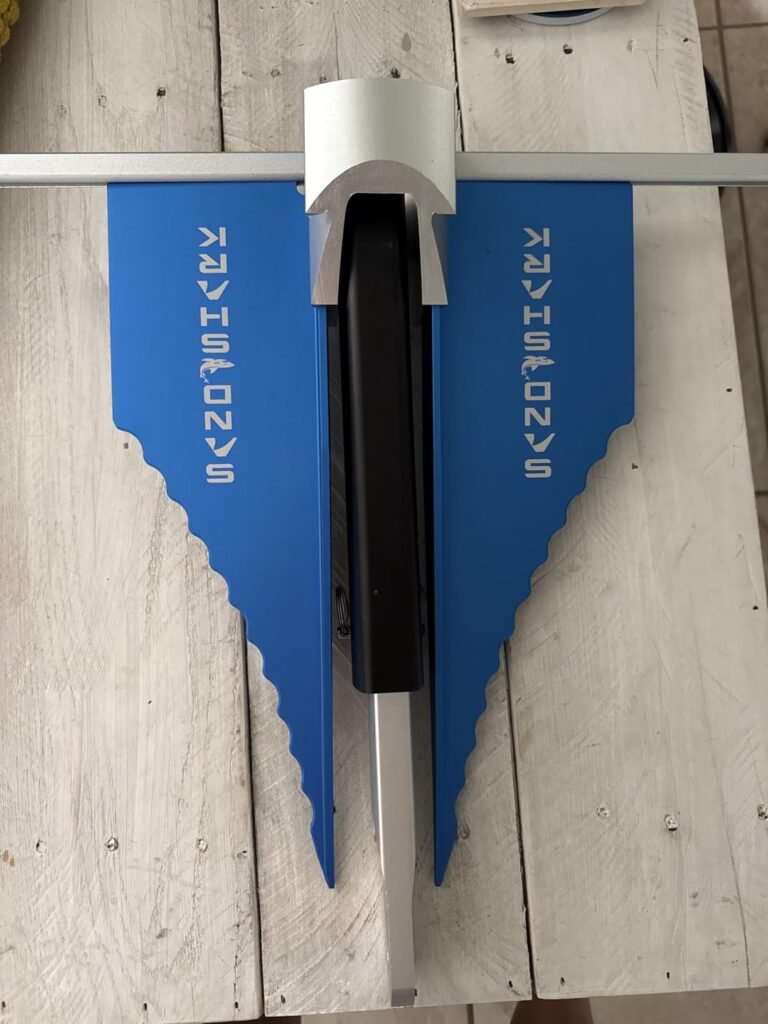
The SandShark Premium Fluke Anchor is built around a specific problem: PWC and jet ski owners need serious holding power from an anchor that fits in a small storage compartment. The aircraft-grade aluminum alloy construction delivers surprising holding strength at just 5 pounds, and the retractable shaft collapses the overall footprint from 24 inches down to 16 inches for storage.
We may earn a commission when you buy through this link, at no additional cost to you.
The serrated edges along the flukes are the key performance feature. Traditional Danforth-style anchors can slip in very soft mud or fine sand because the smooth fluke surface does not generate enough friction to set deeply. The serrations here function similar to the teeth on a saw blade, catching into the bottom material and increasing initial grip during the critical first set.
Deployment is straightforward: remove the locking pin, drop the anchor, and let the fluke angle do the work. For storage, retract the shaft and lock the fins back together. The aluminum alloy resists corrosion in both saltwater and freshwater, and the lighter weight makes it practical to handle solo from a small platform like a jet ski or kayak without straining.
Fluke anchors rely on a specific angle between the shank and the flukes to dig into the bottom. If that angle is too shallow, the anchor skips across the surface instead of biting in. If it is too steep, the flukes do not generate enough leverage to pull themselves down. The SandShark’s self-aligning geometry and serrated edges help the anchor achieve the correct bite angle quickly, which is especially important for lighter anchors where there is less mass to force the flukes into position.
This anchor is the best choice for PWC owners, small pontoon users, and boaters with limited storage space who still want fluke-anchor holding power. The lightweight design means you need to pay attention to scope, typically 7:1 line to depth, to let the anchor set properly. For larger boats in heavy wind or current, a heavier primary anchor will provide more margin, but as a dedicated small-boat solution, the SandShark is hard to beat.
Not recommended for rocky or heavily weeded bottoms, or as a primary anchor on boats over 30 feet.
We may earn a commission when you buy through this link, at no additional cost to you.
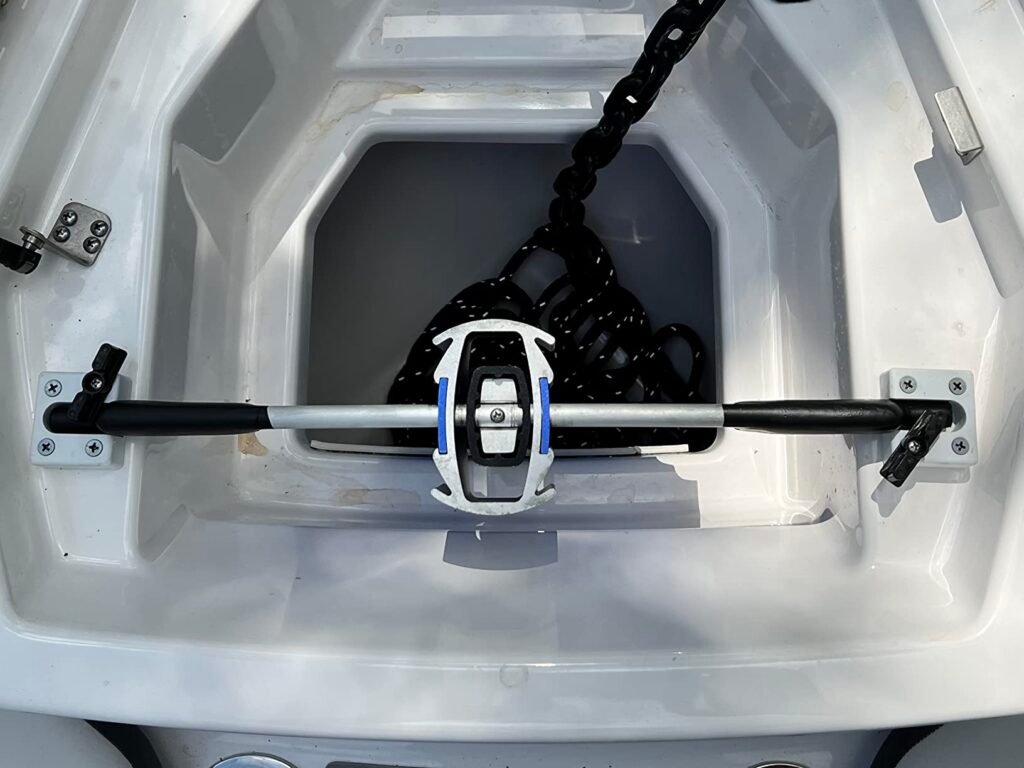
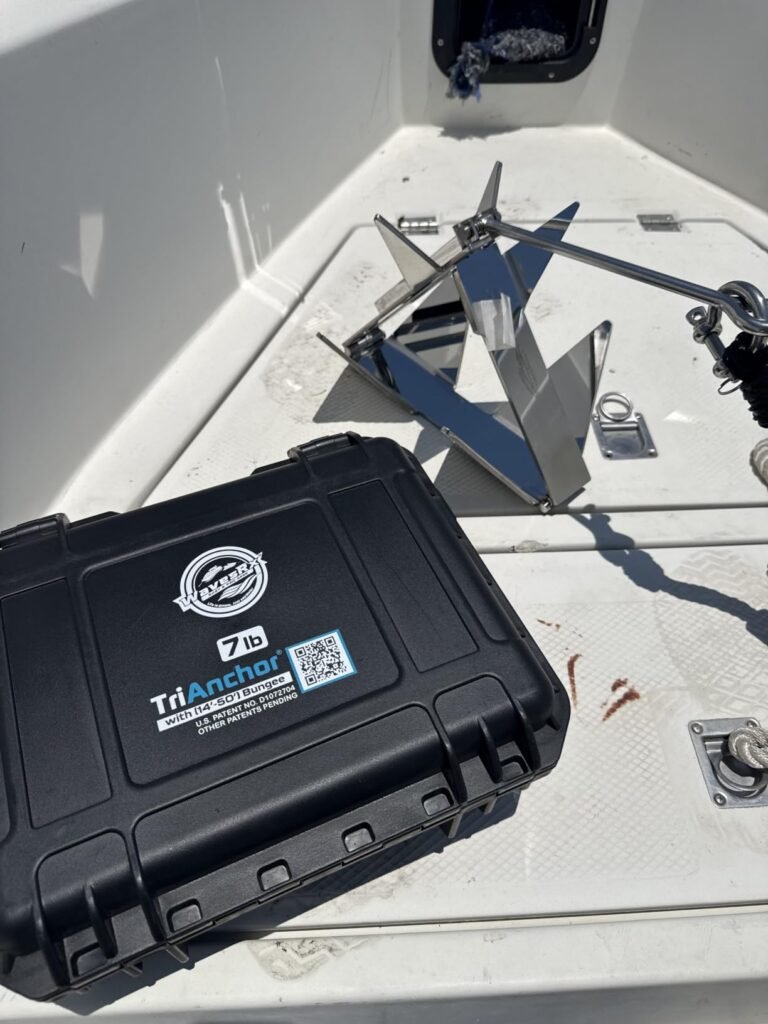
The WAVESRX TriAnchor takes a different design approach than traditional fluke, box, or plow anchors. The patent-pending three-pronged geometry is engineered to set instantly on contact and reset automatically when wind or current shifts the boat's position. At just 7 pounds, it delivers meaningful holding power without the weight penalty of larger traditional anchors.
We may earn a commission when you buy through this link, at no additional cost to you.
Material choice is where this anchor stands apart. Marine-grade 316 stainless steel resists corrosion in saltwater, freshwater, and brackish environments far more effectively than galvanized coatings, which can eventually wear through at wear points. The 316 alloy is the same specification used in high-end marine hardware, boat railings, and offshore fittings, and it maintains its appearance and strength for many seasons.
The practical advantage of the TriAnchor is bottom versatility. Where fluke anchors struggle on rock and coral, and mushroom anchors slip in current, the three-pronged design finds purchase across sand, mud, clay, coral, and rocky bottoms. This matters most for boaters who move between different anchorages and cannot predict exactly what the bottom will offer. The folding mechanism collapses the anchor into a compact shape that fits in a dock box or bow locker without consuming excessive space.
Wind shifts, tide changes, and current reversals can rotate your boat around its anchor point throughout the day. Traditional fluke anchors sometimes break free when the pull direction changes significantly, requiring a full re-set. The TriAnchor’s three-pronged geometry re-engages the bottom automatically as the boat shifts, maintaining hold through directional changes. For boaters who anchor for extended lunch stops, swim breaks, or overnight stays in open anchorages, this reduces the need to constantly monitor and re-set the hook.
This is the top overall choice for owners who want one versatile anchor that performs well across different conditions without constant worry about re-setting after wind shifts. The three-year replacement warranty signals confidence in the construction. If you anchor exclusively in deep sand or need to hold a very large vessel, a heavier traditional anchor may provide more raw holding power, but the TriAnchor is an outstanding all-around solution for most recreational boats and PWCs.
Not the lowest-cost option, and not ideal as the sole anchor for very large vessels needing heavy holding mass.
We may earn a commission when you buy through this link, at no additional cost to you.
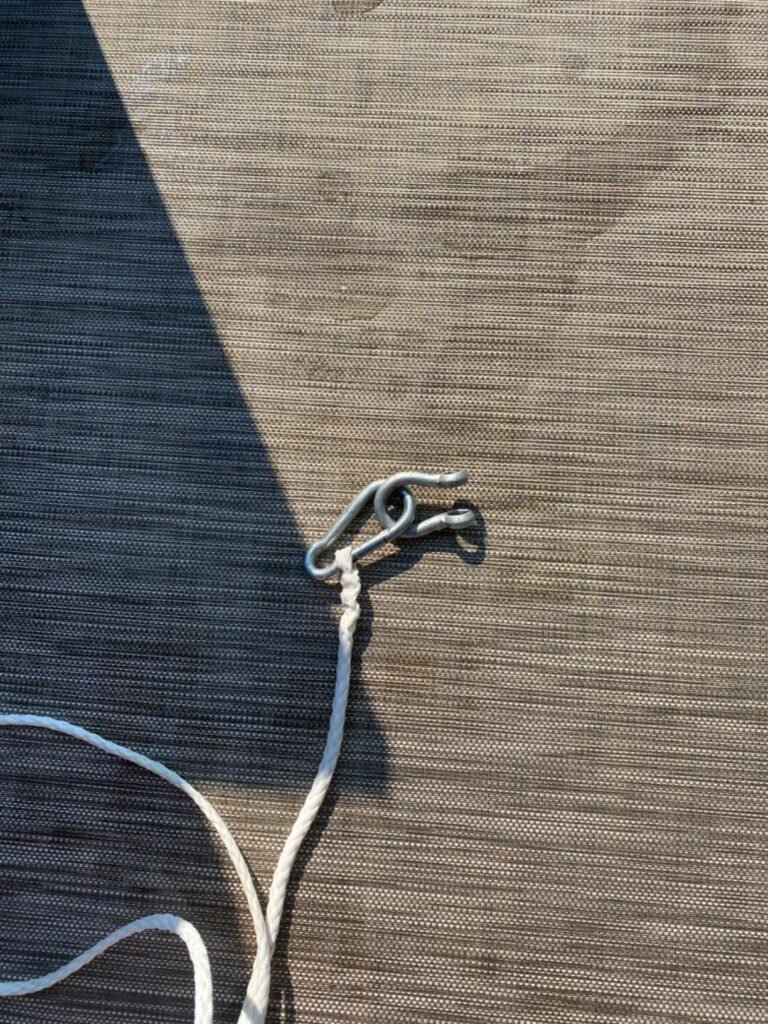
The Seachoice River Anchor is a traditional mushroom-style anchor with added fluke features that help it penetrate softer bottoms better than a pure mushroom design. At 12 pounds, it provides reliable holding mass for small to mid-size boats in lakes, slow rivers, and sheltered coves. The design combines bottom suction with a bit of digging action for improved grip in mud.
We may earn a commission when you buy through this link, at no additional cost to you.
The protective vinyl coating is a practical feature that often gets overlooked. Raw cast iron anchors can scrape gelcoat, scratch fiberglass, and leave rust stains on carpet and upholstery when they shift during travel or deployment. The thick black vinyl layer protects the boat’s finish from these impacts and also helps seal the iron against rust, extending the anchor’s useful life considerably.
The large rope eye accommodates most standard anchor lines and includes a galvanized bow shackle for secure attachment. This is a small detail but important: many budget anchors come without the shackle, forcing you to source hardware separately. Having the correctly sized shackle included out of the box means you can thread your rope and be ready to anchor without an extra trip to the marine supply store.
Pure mushroom anchors rely entirely on weight and bottom suction, which works well in soft mud but struggles when the bottom is firmer or when current pulls the anchor sideways. The Seachoice River Anchor adds subtle fluke features to the mushroom shape, giving it some digging action to supplement the suction effect. This hybrid approach makes it more versatile across different lake and river bottoms than a traditional mushroom, while still being easier to retrieve than an aggressive fluke anchor.
This anchor is a strong pick for lake anglers, pontoon owners, and small boat users who need a reliable primary anchor for calm to moderate conditions. If you boat in areas with strong wind or heavy current, consider pairing it with a fluke anchor for additional holding power. For typical freshwater recreational use, the Seachoice offers excellent value and proven dependability.
Not ideal for ocean anchoring, strong currents, or buyers who need a complete rigging kit.
We may earn a commission when you buy through this link, at no additional cost to you.
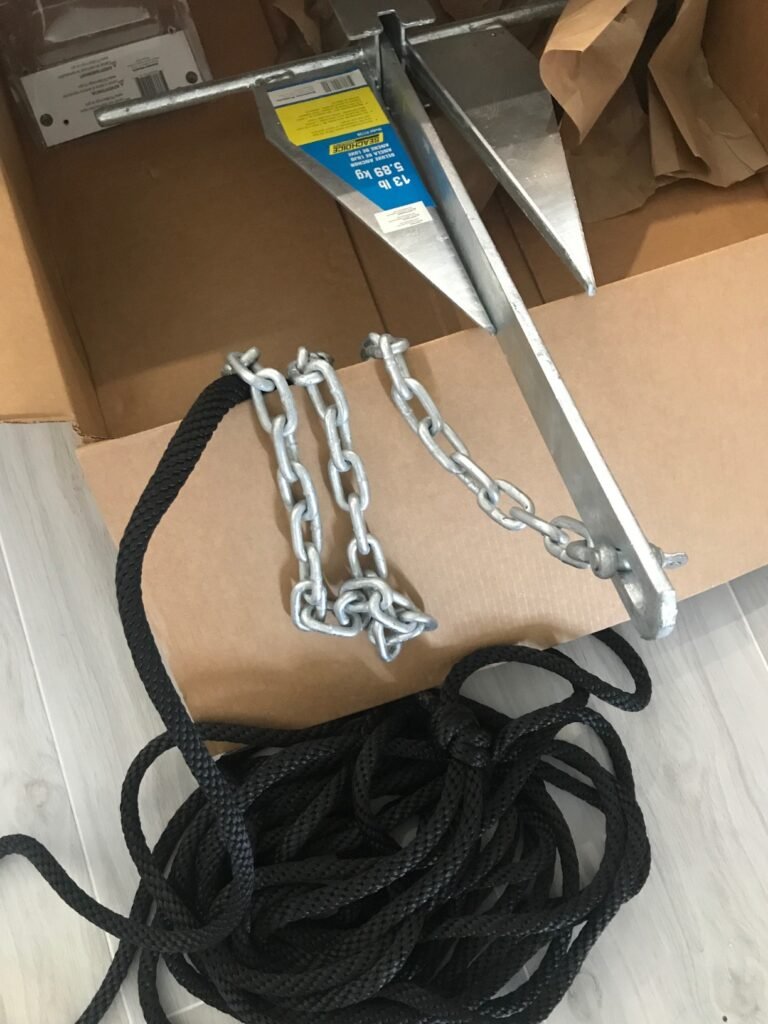
The Seachoice Deluxe Anchor is a classic Danforth-style fluke anchor built for the most common recreational boat size range of 17 to 24 feet. The wide fluke geometry is engineered to work across a variety of seafloor compositions including sand, mud, and shell bottoms, which covers the majority of lake, bay, and coastal anchorages where recreational boaters spend their time.
We may earn a commission when you buy through this link, at no additional cost to you.
What sets this anchor apart in the mid-range price tier is the weight-to-holding-power ratio. The 11.75-inch fluke length and 18-inch stock width generate significant grip relative to the anchor’s weight, which means less mass to haul up and store but still enough holding force to secure typical runabouts, bowriders, and small cabin cruisers in moderate conditions.
The hot-dipped galvanized steel construction provides long-term corrosion resistance in both saltwater and freshwater environments. This finish is the proven industry standard for marine anchors, with decades of performance history behind it. The anchor arrives ready to connect to your choice of rope and chain combination, which gives you flexibility to match the rigging to your specific boat and typical anchoring depth.
The width of an anchor’s flukes directly affects how much surface area contacts the bottom material once the anchor sets. Wider flukes displace more sand or mud and generate more friction against the surrounding material, which translates to greater holding power. The trade-off is that wider flukes also take up more storage space and can be harder to orient properly when deployed. The 18-inch stock width on this Seachoice anchor represents a well-balanced compromise between grip and manageability for mid-size recreational boats.
This is a smart choice for buyers who already own compatible anchor rope and chain, or who prefer to build a custom rigging setup tailored to their boat. If you want a complete turnkey kit, one of the bundled fluke options in this guide will be more convenient. For boaters who value proven design and a trusted brand, the Seachoice Deluxe delivers reliable performance in its target size range.
Not a complete kit solution and not ideal for boats outside the 17-24 foot range.
We may earn a commission when you buy through this link, at no additional cost to you.
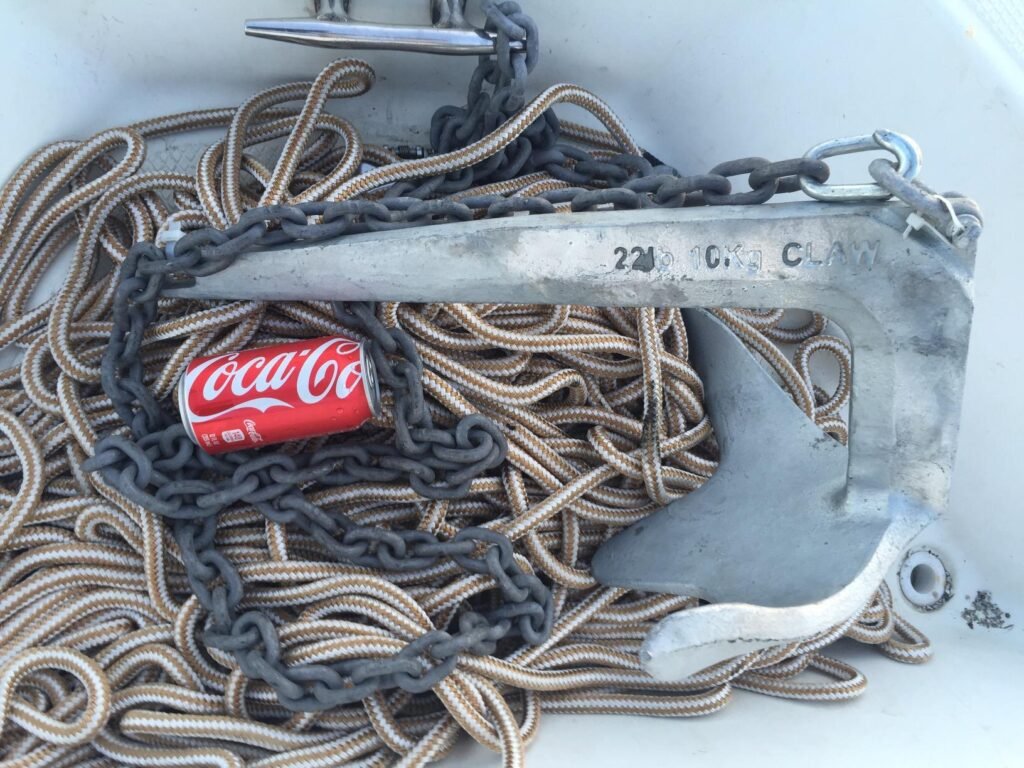
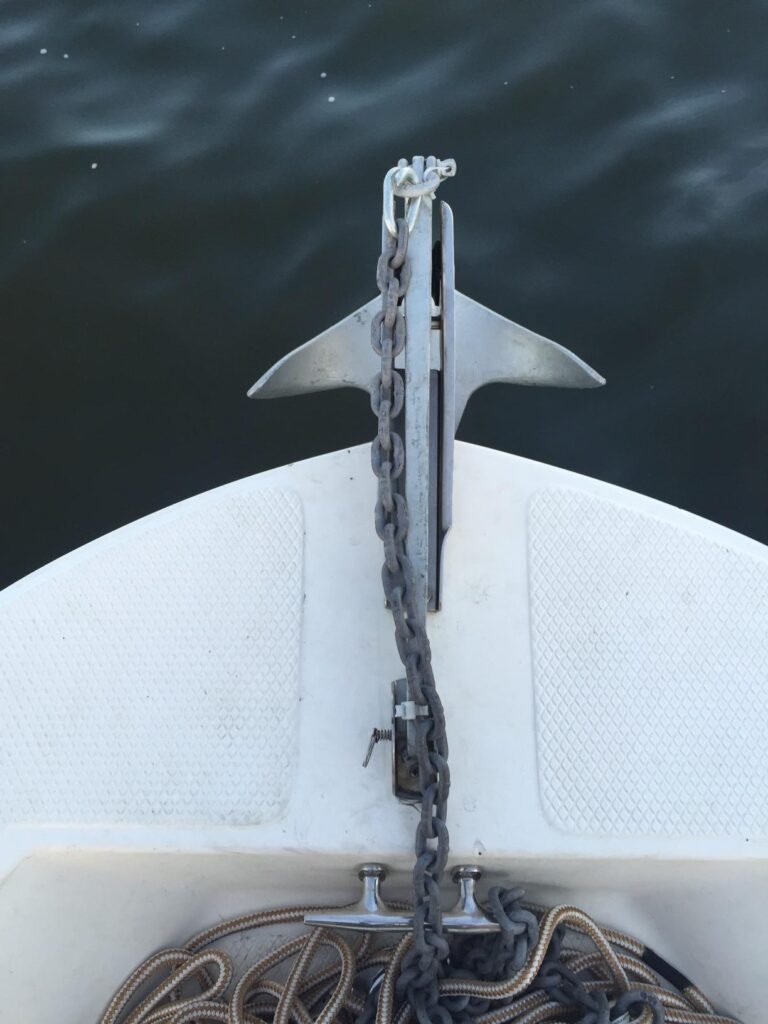
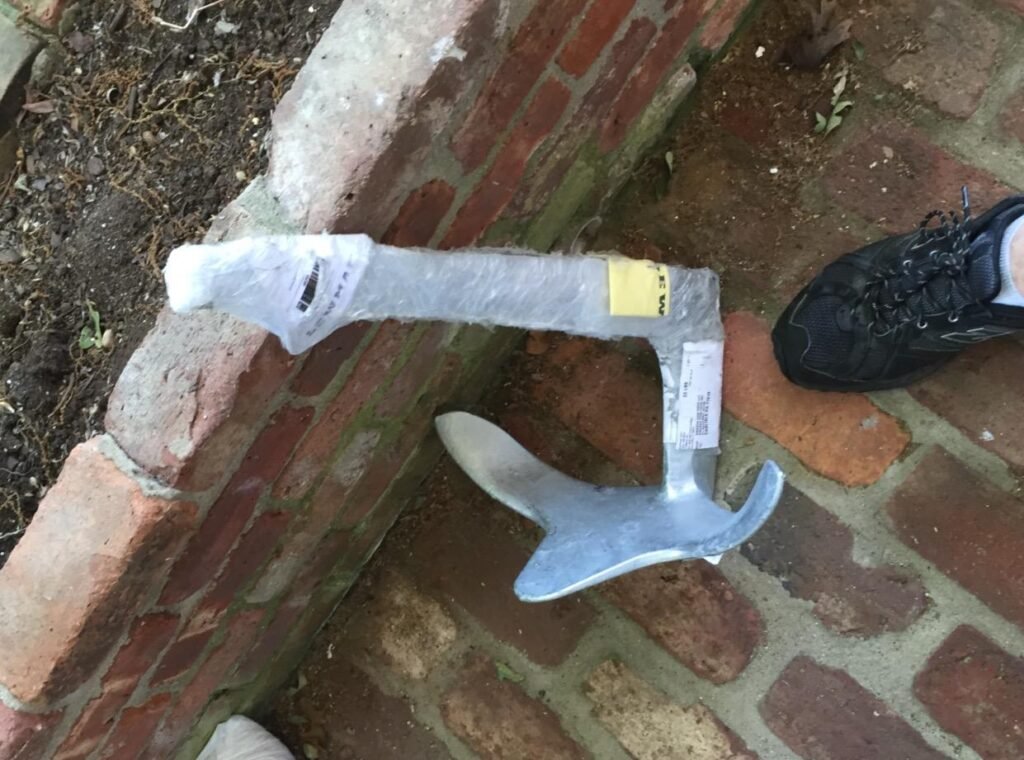
The Lewmar Claw Anchor uses the proven bruce-style design that remains popular on cruising boats worldwide. The three-pronged claw geometry sets quickly in a wide range of bottom conditions and, importantly, resets itself automatically when the boat swings on its rode due to wind or tide changes. This makes it a strong choice for boats that spend extended time at anchor in open anchorages.
We may earn a commission when you buy through this link, at no additional cost to you.
Construction uses one-piece high-tensile heat-treated steel, which eliminates the weak points found in multi-piece welded anchors. The heat treatment increases the steel’s strength without adding weight, allowing the anchor to handle shock loads from wave action and sudden wind gusts without bending or failing. The galvanized finish protects against corrosion in salt and fresh water environments.
The bruce-style claw works well across sand, mud, grass, and even some rocky bottoms, which gives it an advantage over fluke anchors that primarily excel in sand and mud. The curved shape fits most standard bow rollers for easy deployment and retrieval, and the compact profile stows reasonably well on the bow pulpit without special brackets. Lewmar offers the anchor in multiple size and weight options to match different boat lengths.
The bruce-style claw design was developed in the 1970s for offshore oil rig anchoring and later adapted for recreational marine use. The three-pronged shape ensures that the anchor always lands with at least one prong oriented to dig in, regardless of how it hits the bottom. This self-orienting behavior makes it one of the most forgiving anchor designs to deploy, especially for less experienced boaters who may struggle to set a fluke anchor correctly on the first try. The trade-off is lower peak holding power per pound compared to a well-set Danforth-style fluke.
This is a strong pick for cruisers and boaters who anchor in varied conditions and value automatic resetting over maximum pound-for-pound holding power. If you anchor primarily in deep sand or mud and rarely swing significantly, a fluke anchor will hold more per pound of weight. For boats that move between different anchorages and face shifting conditions, the Lewmar Claw delivers reliable, forgiving performance.
Not the top choice for buyers who prioritize maximum holding power per pound in sand and mud bottoms.
We may earn a commission when you buy through this link, at no additional cost to you.
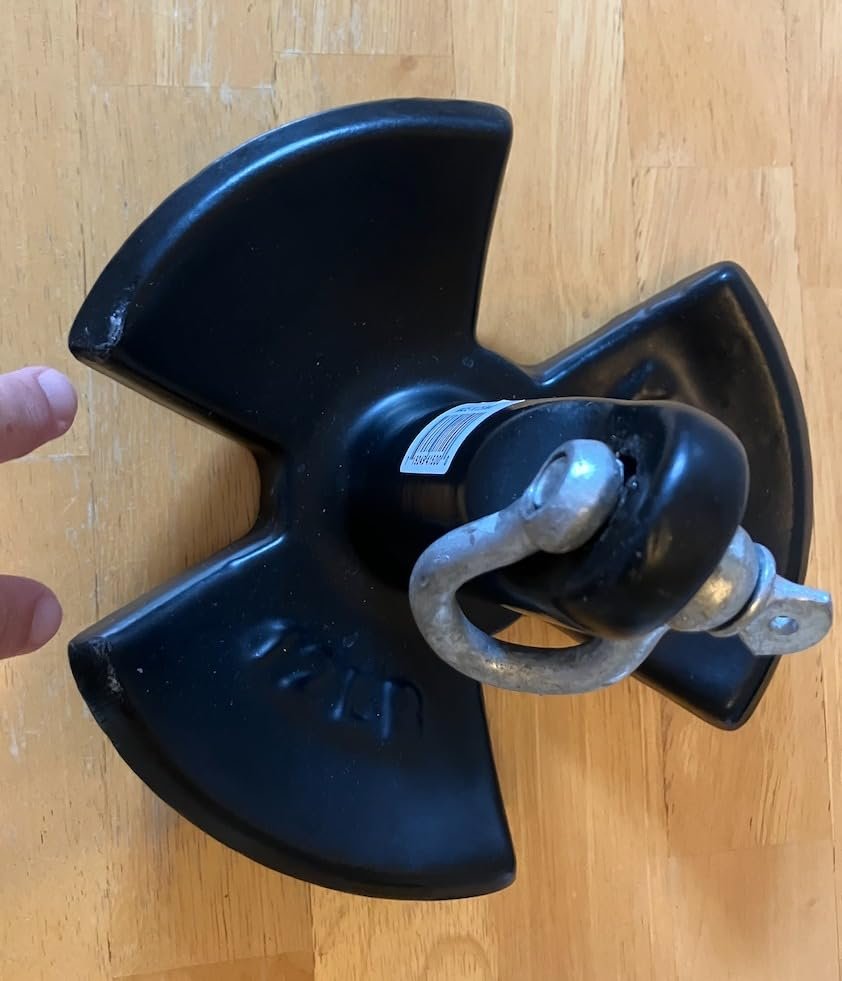
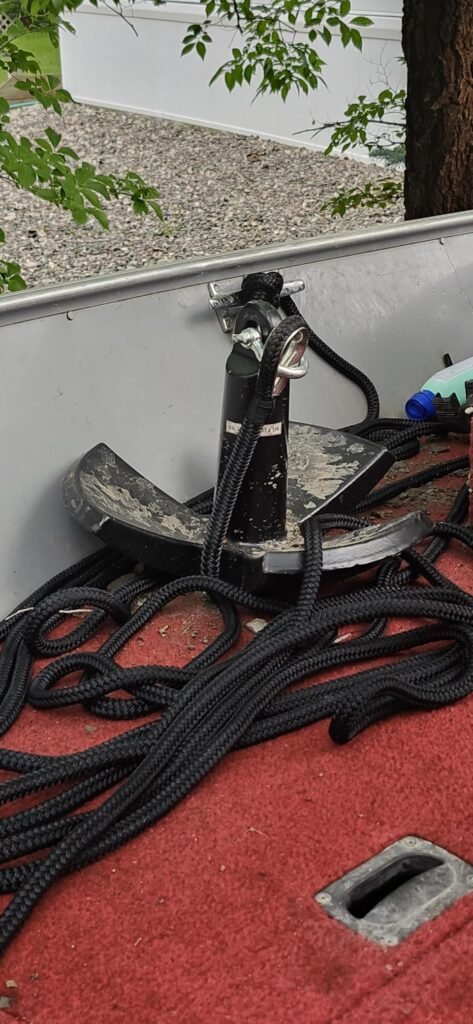
The VEVOR Delta-style anchor is a heavy-duty river anchor designed for boats up to 30 feet operating in protected inland waters. At 30 pounds, it has the mass to hold position in lakes, slow rivers, and calm bays even when wind or mild current would drag lighter anchors across the bottom. The mushroom shape combined with three claw features gives it a more aggressive grip than a pure mushroom design.
We may earn a commission when you buy through this link, at no additional cost to you.
The three-claw mushroom geometry is particularly effective on muddy or grassy bottoms where traditional fluke anchors can skip across the surface or get tangled in vegetation. The mushroom tail fin provides a wide base that resists dragging, while the three claws dig into the bottom material to generate additional holding force. This combination performs well in lake conditions where the bottom is often a mix of soft mud and submerged weeds.
The protective PVC vinyl coating serves the practical purpose of preventing the heavy cast iron from damaging gelcoat, aluminum, or fiberglass surfaces during storage, deployment, and retrieval. At 30 pounds, this anchor would easily chip a hull if left bare, and the thick coating also seals the iron against corrosion to extend its service life. The large sturdy eye hole accommodates heavy-duty bow shackles and robust anchor lines.
Modern anchor designs achieve impressive holding power with minimal weight through optimized geometry. But in some situations, raw mass is still the most reliable solution. On a soft lake bottom with no current and only mild wind, a heavy mushroom-style anchor will hold a pontoon in place through pure weight and friction, with none of the setting complexity or re-set risk of a lightweight fluke. For buyers who prioritize simplicity and bulletproof holding in calm water, a heavier anchor like this VEVOR Delta trades handling convenience for anchoring confidence.
This anchor is the right choice for pontoon owners, deck boat operators, and larger lake fishing boats that need serious holding mass for extended anchoring in calm inland water. The 30-pound weight is challenging to handle solo, so plan to use a windlass or at least have a helper for retrieval. For protected waters where mass equals confidence, the VEVOR Delta delivers dependable performance.
Not for use in strong currents, rocky bottoms, or anywhere underwater obstructions could snag the heavy design.
We may earn a commission when you buy through this link, at no additional cost to you.
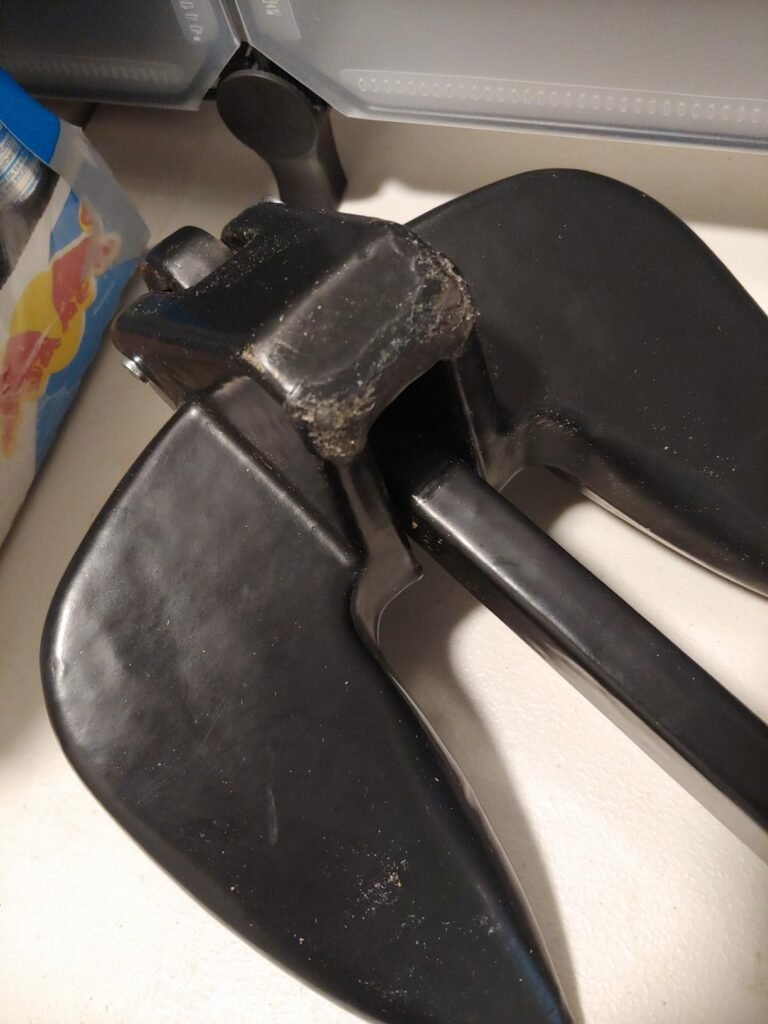
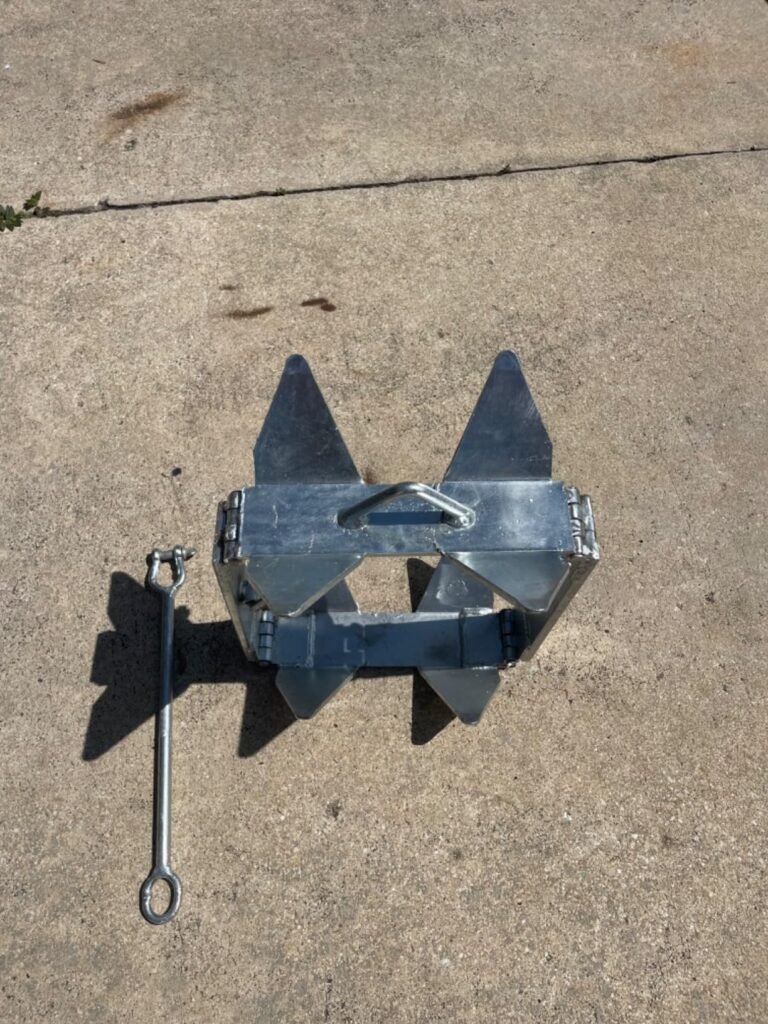
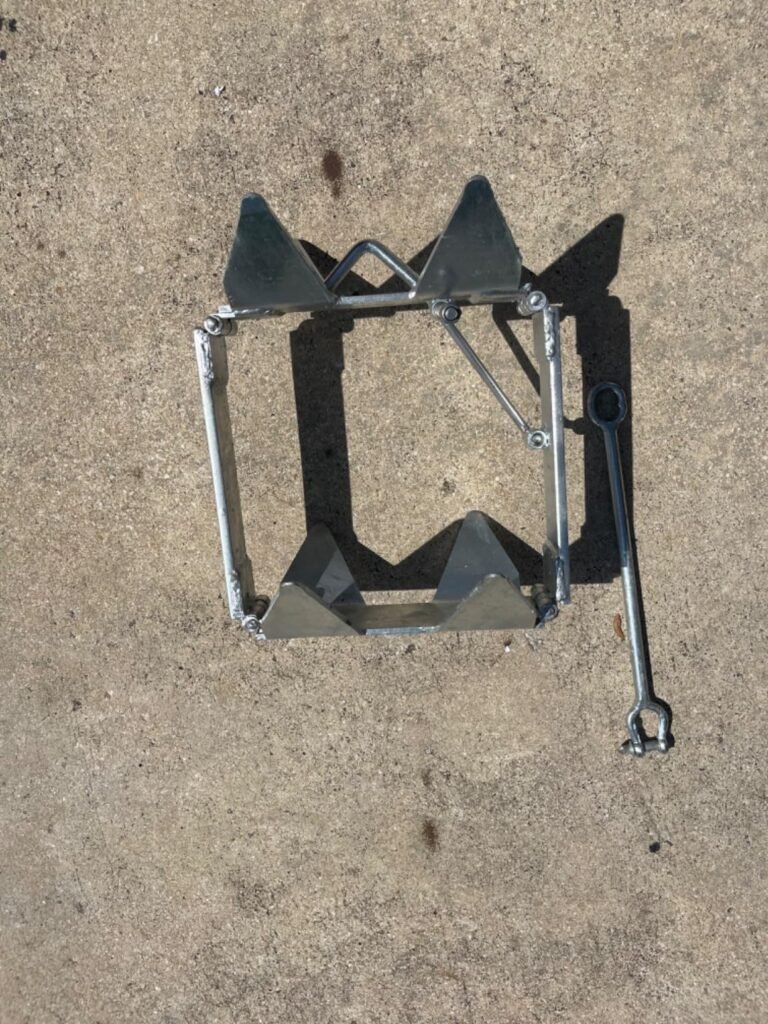
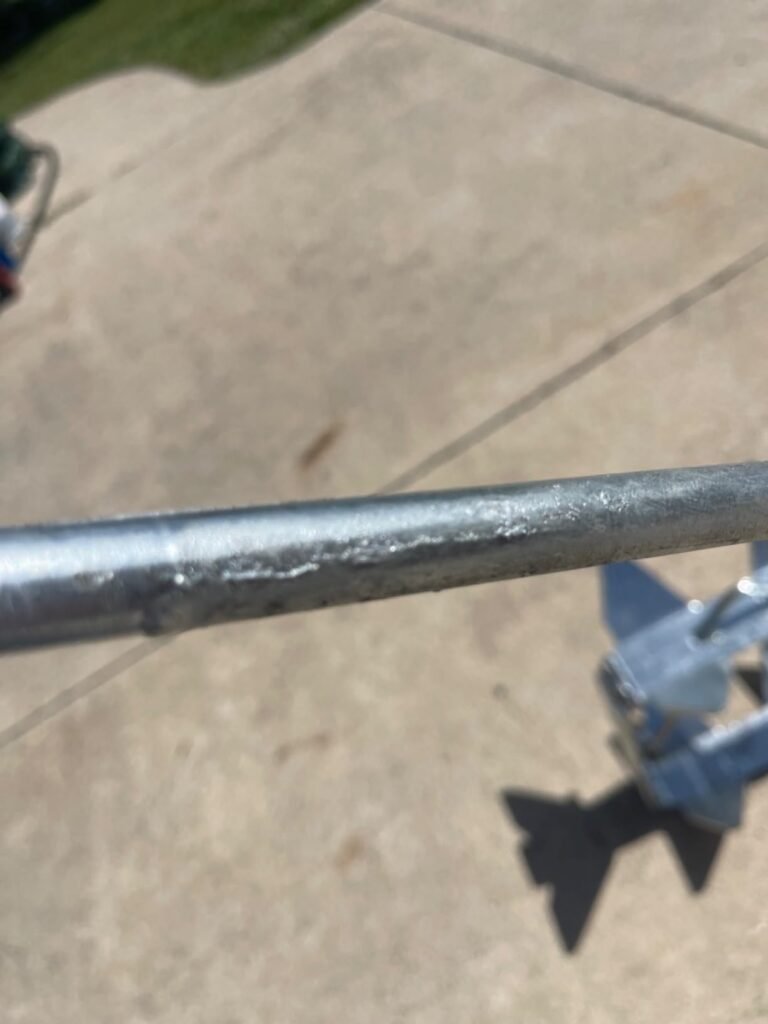
The folding box anchor takes a fundamentally different approach to anchoring than traditional fluke, claw, or mushroom designs. The double-sided box shape digs in from either direction when it hits the bottom, which eliminates the need to orient the anchor correctly during the drop. This makes setting faster and more reliable, particularly for buyers who struggle with the technique required for traditional fluke anchors.
We may earn a commission when you buy through this link, at no additional cost to you.
The 2:1 scope ratio is the standout feature. Traditional fluke anchors need a 7:1 scope, which means in 10 feet of water you need 70 feet of rode out to hold properly. The box anchor’s steep holding angle means the same depth only requires 20 feet of rode, which dramatically reduces swing radius and the amount of rope you need to deploy, haul in, and store on board. For crowded anchorages or small boats with limited rode capacity, this is a major practical advantage.
The folding mechanism uses spring-loaded pins that lock the flukes open with one hand when you deploy, then collapse the anchor flat for storage. This transforms what would otherwise be a bulky, awkward piece of gear into something that fits easily in a bow locker or cockpit storage compartment. The hot-dip galvanized coating provides years of corrosion protection in both saltwater and freshwater environments.
The amount of rode you deploy relative to water depth, known as scope, directly affects how your boat swings around the anchor point as wind and current shift. A 7:1 scope with a fluke anchor in 15 feet of water means your boat can swing through a circle 210 feet across. A 2:1 scope with a box anchor at the same depth creates a swing circle of just 60 feet. In crowded anchorages, this difference determines whether you can anchor at all without risking contact with neighboring boats, and it also means less rope to pay out and retrieve during each anchoring cycle.
This anchor is an excellent pick for boaters with limited storage space, those who anchor in crowded coves where swing radius matters, or anyone who wants a simpler alternative to fluke-and-chain systems. The 13-pound size suits boats up to 21 feet, with larger versions available for bigger vessels. For deep-sand anchoring where traditional flukes have decades of proven holding records, a Danforth-style anchor may still edge out the box design, but for most recreational scenarios the box anchor delivers excellent practical performance.
Not the top pick for buyers who prefer the proven long track record of traditional Danforth-style fluke anchors.
We may earn a commission when you buy through this link, at no additional cost to you.
Picking the right boat anchor comes down to matching the design to your boat size, typical seabed conditions, and the kind of anchoring you actually do. The factors below cover the most important decision points so you can invest in gear that holds reliably without wasting money on capacity you will never use or features that do not fit your boating style.
Anchor design should match the bottom composition where you spend most of your time on the water. Fluke anchors like the Danforth-style models in this guide excel in sand and mud because the sharp, flat blades can pivot and bury themselves efficiently in soft material. They offer excellent holding power per pound in those conditions, which is why they dominate the recreational market. However, they struggle on rocky bottoms, in heavy grass, or on hard-packed surfaces where the flukes cannot penetrate.
Claw and plow-style anchors like the Lewmar Claw sacrifice some peak holding power in sand for much better performance across varied bottom types, including rocks, grass, and shell. The TriAnchor and box anchor designs take yet another approach, using geometry that grips in multiple directions and resets automatically. River and mushroom anchors like the Attwood and Seachoice models rely on weight and bottom suction, which works well in soft mud but fails in strong current or on hard bottoms.
Think honestly about where you anchor most often. If you boat exclusively in sandy coastal bays, a fluke anchor is likely your best choice. If you move between lakes with varied bottoms or anchor in areas with rocks and grass, prioritize a claw, delta, or multi-grip design.
Anchor weight should scale with your boat’s length, windage, and typical conditions. Most manufacturer size charts assume moderate wind and current, so if you regularly anchor in exposed areas or deal with strong tidal flow, upsize by one or two weight classes beyond the standard recommendation. A 20-foot bowrider in a sheltered lake can hold with a 5 to 8 pound fluke, but the same boat in a windy coastal bay may need 13 pounds or more to feel secure.
Oversized anchors are generally safer than undersized ones, but they come with real trade-offs. A heavier anchor is harder to retrieve by hand, takes up more storage space, and shifts weight distribution forward on your boat. For boats without a windlass, choosing an anchor that is too heavy for the crew to retrieve comfortably can lead to accidents or avoiding anchoring altogether. Match the weight to what you can actually handle on a routine basis.
Follow the manufacturer’s size chart as a starting point and add weight if you anchor in exposed conditions or boat on larger, more open water. Reduce weight if you prioritize storage space and typically anchor in sheltered areas.
Boat anchors live underwater and in salt-air environments, so corrosion protection determines how many seasons you get from your purchase. Hot-dip galvanization is the industry standard and provides thick zinc coating that lasts for many years in both fresh and saltwater. Cheaper zinc-plated anchors use thinner coatings that often fail within a single season of saltwater use, so avoid them for marine applications.
Stainless steel offers the highest level of corrosion resistance, particularly in the 316 marine-grade specification used by the WAVESRX TriAnchor. Stainless anchors cost more but maintain their appearance indefinitely and never develop the rust bleed that can stain decks and gelcoat. Aluminum alloy anchors like the SandShark offer excellent corrosion resistance at low weight, trading some raw strength for easier handling. Cast iron anchors with vinyl or PVC coatings bridge the gap, protecting both the anchor and your boat’s finish from scratches.
For freshwater boating, hot-dip galvanized steel is the most cost-effective choice. For saltwater or year-round outdoor storage, consider stainless steel or aluminum alloy if the budget allows, especially for anchors that will be visible on the bow pulpit.
An anchor by itself is only part of the system. The rope, called the rode, and the chain that connects it to the anchor are equally important for holding performance. Chain adds weight at the anchor shank, which keeps the pull angle low and helps the anchor dig in rather than lifting out. Most fluke anchor kits include 6 to 8 feet of chain, which is adequate for small to mid-size boats in moderate conditions.
The amount of rode you deploy relative to water depth is called scope, and it directly affects holding power. Traditional fluke anchors require a 7:1 scope to hold properly, meaning in 10 feet of water you need 70 feet of rode. Box anchors like the folding model in this guide can hold at a steep 2:1 ratio, dramatically reducing rode length and swing radius. Match your rode length to the deepest water you typically anchor in, multiplied by your anchor’s required scope ratio, with extra margin for safety.
Buy a complete kit if you are new to anchoring or want everything matched out of the box. Build a custom rode if you have specific depth requirements or prefer higher-grade rope and chain than typical kits include.
How quickly an anchor sets and whether it resets after wind shifts are two of the most important real-world performance characteristics. Fluke anchors generally set quickly in soft bottoms when deployed correctly, but they can break free and fail to reset when the pull direction changes significantly. This becomes a problem in open anchorages where wind and tide shift the boat throughout the day.
Claw-style and TriAnchor designs are engineered specifically to reset automatically as the boat swings. The multi-directional geometry means that at least one gripping element always remains engaged with the bottom, maintaining hold through directional changes. Box anchors handle direction changes through their double-sided design that grips regardless of orientation. For boats that stay at anchor for hours or overnight in open conditions, this reset capability is often more important than peak holding power.
Choose a reset-capable design like a claw, delta, or TriAnchor if you anchor for extended periods in open water. A fluke anchor is fine for shorter stops where you can monitor and re-set if needed.
Where and how you store your anchor affects which design makes sense for your boat. Large fluke anchors with wide flukes take up substantial space in bow lockers and can be awkward to maneuver into position for deployment. Folding designs like the box anchor and the SandShark fluke collapse into compact profiles for storage, which is valuable on smaller boats and PWCs with limited storage volume.
Deployment convenience also matters for solo boaters. Heavy river anchors like the VEVOR Delta provide excellent holding mass but can be difficult to lift over the gunwale alone. Lighter designs like the WAVESRX TriAnchor at 7 pounds or the SandShark at 5 pounds trade some holding mass for one-handed handling that works well on smaller platforms. Bow rollers simplify deployment for anchors with compatible shank geometry, while anchors stored in lockers require manual handling.
Measure your available storage space and consider how often you anchor alone. If space is tight or you boat solo frequently, prioritize compact folding designs. If you have a dedicated bow pulpit with a roller, a traditional fluke or claw anchor will deploy and retrieve more easily.
Some anchors ship as standalone products, while others come as complete kits with rope, chain, shackles, and sometimes additional accessories like thimbles, floats, and safety gloves. Standalone anchors like the Lewmar Claw and Seachoice Deluxe give you flexibility to choose your own rode components, which can be valuable if you have specific preferences or already own quality rope and chain. The trade-off is that you need to source compatible hardware separately.
Complete kits like the heavy duty fluke anchor kit and the zinc-nickel fluke anchor kit eliminate the guesswork for new boaters. The included components are matched for compatibility and ready to deploy out of the box. Pay attention to rope length, chain length, and shackle sizes to ensure the kit matches your boat’s typical anchoring depth and bow configuration. Check all shackle bolts before first use, as transit vibration can occasionally loosen them.
Choose a complete kit if you are new to boating or want a simple purchase that works immediately. Build a custom setup if you need specific rode lengths, want higher-grade components, or already own compatible hardware.
Experienced boaters often carry two anchors with complementary strengths. A primary anchor matched to the typical conditions handles most anchoring situations, while a secondary anchor covers scenarios where the primary might struggle. A common combination pairs a fluke anchor for sand and mud with a claw or TriAnchor for rock, grass, and mixed bottoms. Carrying two anchors also provides redundancy if one gets fouled or lost.
A stern anchor is another consideration for specific situations. Deploying a second anchor off the stern prevents the boat from swinging on the primary anchor, which keeps you oriented in one direction when the current is strong or when you want to point the bow into waves. River anchors and lightweight mushroom designs often work well in the stern role because the holding requirements are lower than for the primary anchor.
Start with one well-matched primary anchor and add a complementary secondary anchor later if you expand your boating range or encounter conditions where the primary struggles. Most recreational boaters do fine with a single well-chosen primary anchor for the first few seasons.
Deploy your anchor by motoring slowly into the wind or current to the spot where you want to set, then lower the anchor smoothly rather than throwing it. Pay out rode as the boat drifts backward until you reach your target scope, typically 7:1 for fluke anchors and 2:1 for box anchors. Secure the rode to a cleat and then back down gently with the engine to set the anchor. If the boat continues drifting after the rode comes tight, the anchor has not set and you should retrieve and try again.
Rinse the anchor, chain, and shackles with fresh water after every saltwater outing to slow corrosion. Inspect the shackles and connection points regularly for signs of wear, bent pins, or missing seizing wire that prevents the shackle pin from backing out under load. Check the rope for abrasion, UV damage, and chafe points, especially where the rode passes through the bow roller or chock. Replace any component that shows significant wear before it fails at a critical moment.
Store the anchor in a dedicated bow locker or on a bow pulpit roller to keep it secure during travel. For anchors with vinyl or PVC coatings, inspect the coating for cracks or chips that could expose the underlying metal to corrosion, and touch up damaged spots with marine-grade coating repair products. For stainless and aluminum anchors, simple fresh water rinses and occasional inspection are usually sufficient to maintain performance for many years.
Match the anchor weight to your boat's length and typical anchoring conditions. As a general starting point, a 15 to 20 foot boat typically uses an 8 to 10 pound fluke anchor, while a 20 to 32 foot boat needs 13 pounds or more. Add weight for exposed anchorages, strong current, or high windage boats like pontoons. Follow the specific manufacturer size chart for the anchor you choose, since holding power varies by design.
Fluke anchors like the Danforth style excel at pound-for-pound holding power in sand and mud, with sharp blades that bury themselves efficiently in soft bottoms. Claw anchors like the Lewmar use a three-pronged design that works across varied bottoms including rock and grass and resets automatically when the boat swings. Fluke anchors are better for pure holding in soft bottoms, while claw anchors offer more versatility and easier setting.
Calculate rope length by multiplying your maximum anchoring depth by the scope ratio for your anchor type. Fluke anchors need 7:1 scope, so in 20 feet of water you need 140 feet of rope. Box anchors need just 2:1, so the same depth only requires 40 feet. Most anchor kits include 75 to 100 feet of rope, which covers typical recreational depths with safety margin.
Yes, chain is critical for proper fluke and claw anchor performance. The chain weight keeps the pull angle low at the anchor shank, which helps the flukes or claws dig in rather than lifting out. Most anchor kits include 6 to 8 feet of chain, which is adequate for small to mid-size boats. Box anchors are the exception since they hold at a steep angle and typically do not require chain.
Yes, but the finish matters. Hot-dip galvanized and stainless steel anchors handle both environments well for many years. Zinc-plated or uncoated steel anchors will corrode quickly in saltwater and should be avoided for marine use. Rinse any anchor with fresh water after saltwater use to extend its service life, and inspect the finish annually for signs of wear or damage.
Pontoon boats have high windage relative to their weight, which means they need more holding power than their length alone would suggest. A fluke anchor sized for one boat class above the pontoon's actual length is a safe starting point, and the box anchor's short-scope performance can be valuable for pontoon owners who anchor in crowded coves. For calm lake use, a heavier river or mushroom anchor like the VEVOR Delta also works well.
First, try motoring directly over the anchor and pulling straight up, which often breaks the hold. If that fails, motor in a wide circle around the anchor point to free it from different angles. Anchors with a pre-drilled recovery hole in the crown let you rig a trip line in advance that pulls from the opposite direction. If all else fails, you may need to cut the rode and leave the anchor behind, which is why many boaters carry a backup.
Stainless steel anchors like the WAVESRX TriAnchor cost more upfront but offer indefinite corrosion resistance, no rust bleed on the deck, and maintain their appearance for the life of the boat. For saltwater boaters, boats with visible bow pulpit storage, or buyers who want a long-term investment, the extra cost is often justified. For freshwater-only use or budget-focused buyers, hot-dip galvanized steel delivers excellent performance at a lower price.
Scope is the ratio of anchor rode length to water depth. Traditional fluke anchors need 7:1 scope to hold properly, meaning seven feet of rope for every foot of water depth. Scope matters because it determines the pull angle at the anchor, and a steeper angle causes the anchor to lift out instead of digging in. Insufficient scope is the most common cause of anchor dragging among recreational boaters.
Many experienced boaters carry two anchors with complementary strengths. A fluke anchor as the primary for sand and mud paired with a claw or TriAnchor as a secondary for rocky or grassy bottoms covers most situations. A second anchor also provides redundancy if the primary gets fouled or lost. For most casual recreational boaters, one well-chosen primary anchor is sufficient for the first few seasons.
The WAVESRX TriAnchor stands out as the strongest overall choice for most recreational boaters. Its 316 stainless steel construction, compact folding design, and multi-bottom grip across sand, mud, clay, coral, and rocks make it exceptionally versatile. The automatic reset behavior and three-year warranty add long-term confidence, and the 7-pound weight is easy for solo handling on smaller boats and PWCs.
For buyers who want a complete turnkey solution, the heavy duty fluke anchor kit delivers everything needed to anchor a 20 to 32 foot boat in a single purchase, including hot-dip galvanized hardware and a pre-drilled recovery hole. The zinc-nickel fluke kit offers excellent value with multiple size options for different boat lengths. Pontoon owners and lake anglers who need serious holding mass in calm water will appreciate the VEVOR Delta, while jet ski and PWC owners get purpose-built compactness from the SandShark.
The best anchor for you depends on your boat size, typical seabed conditions, and storage situation. Start by identifying where you anchor most often and choose a design that excels in those bottoms. Match the weight to your boat length with margin for exposed conditions, invest in proper rope and chain for the required scope, and consider adding a complementary secondary anchor as your boating range expands. A well-matched anchor system turns every stop on the water into a confident, relaxed experience.